WeOrthodox
EN UA

Orthodox posts, videos and discussions

We follow Orthodox channels, communities and blogs across the web, summarise every post and video, and highlight the conversations with real substance.

Saint Callistratus and the forty-nine soldiers who believed through his martyrdom
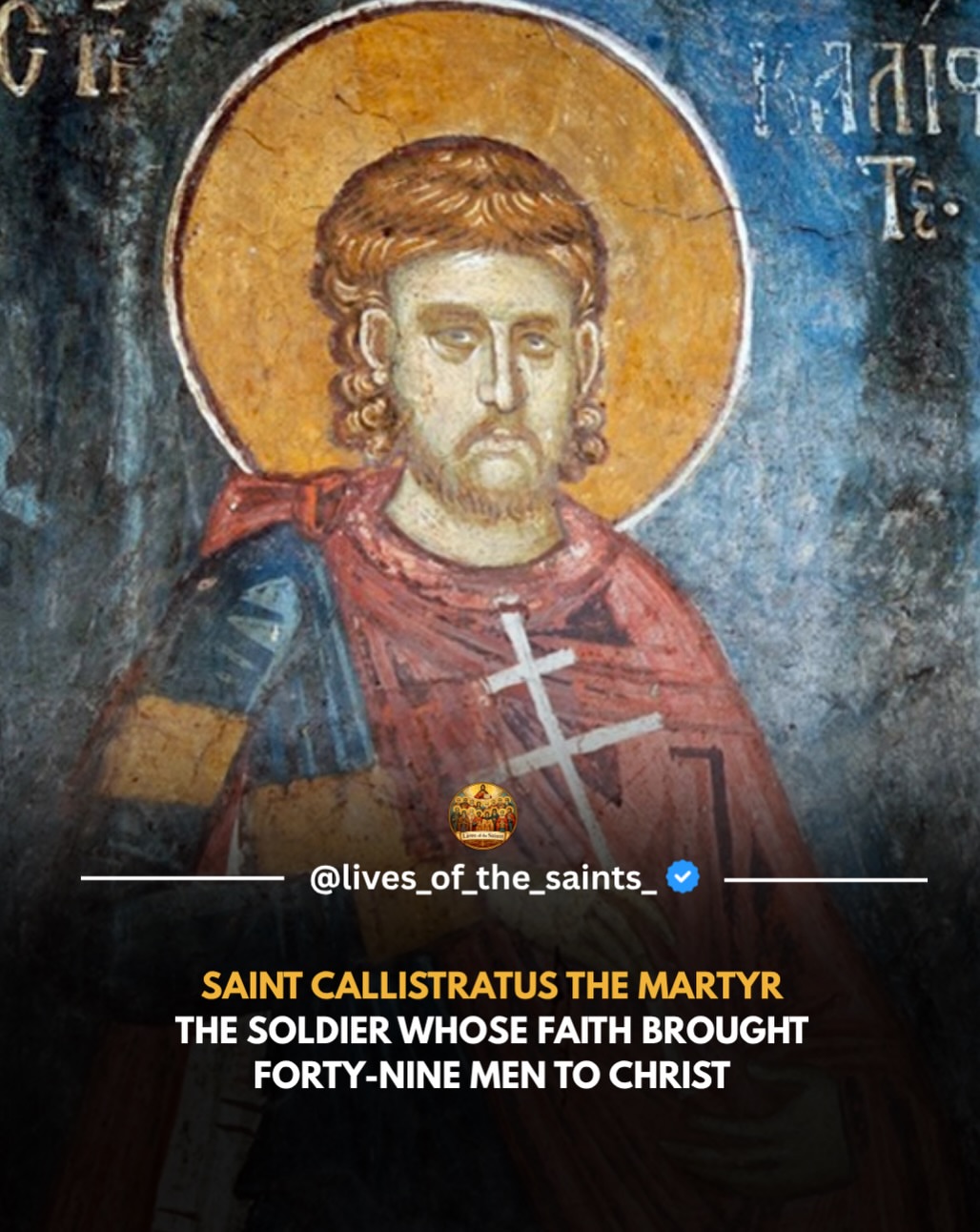
Saint Callistratus was born in Carthage and was a Christian from birth. His father and grandfather were Christians, and the faith had been passed down through his family. One of his ancestors, Neochorus, had served as a soldier in Jerusalem during the Passion of the Lord. He saw the miracles of Christ, believed in Him, was taught the faith, and was baptized by the Apostles. Generations later, Saint Callistratus was raised in that same holy…

Saint Callistratus was born in Carthage and was a Christian from birth. His father and grandfather were Christians, and the faith had been passed down through his family. One of his ancestors, Neochorus, had served as a soldier in Jerusalem during the Passion of the Lord.

He saw the miracles of Christ, believed in Him, was taught the faith, and was baptized by the Apostles. Generations later, Saint Callistratus was raised in that same holy faith. While serving in the army, he was the only Christian in his regiment.

Some of his fellow soldiers saw him rising at night to pray to God, and they reported him to the commander Persentinus, a fierce persecutor of Christians. When ordered to sacrifice to idols, Callistratus refused. He was beaten severely and thrown into the sea, but by the power of God he was saved and came out unharmed. Seeing his endurance and the miracle God worked through him, forty-nine soldiers believed in the Lord Jesus Christ.

They were beaten and thrown into prison with him. There, Saint Callistratus taught them the Christian faith and strengthened them to suffer courageously for Christ. At night, the persecutor sent soldiers into the prison, and Saint Callistratus and his forty-nine companions were killed. They suffered for the truth in the year 304.

  • Callistratus came from a Christian lineage tracing to Neochorus, who witnessed Christ's Passion and was baptized by the Apostles
  • As the only Christian in his regiment, he was reported for praying at night
  • He refused to sacrifice to idols, was beaten and thrown into the sea, but emerged unharmed
  • Forty-nine soldiers believed after seeing the miracle and were imprisoned with him
  • Callistratus and the forty-nine were killed in prison in 304
Read more

Mother-child bond begins before birth, Serbian pediatrician explains

The post examines the mother-child relationship from prenatal development through early infancy. Prof. Dr. Nedeljko Radlović, a pediatrician and gastroenterology subspecialist who teaches at the University of Belgrade Medical Faculty and belongs to the Academy of Medical Sciences of the Serbian Medical Society, describes how the bond begins during nine months of pregnancy when important developmental processes unfold. The mother's health and the…

The post examines the mother-child relationship from prenatal development through early infancy. Prof. Dr. Nedeljko Radlović, a pediatrician and gastroenterology subspecialist who teaches at the University of Belgrade Medical Faculty and belongs to the Academy of Medical Sciences of the Serbian Medical Society, describes how the bond begins during nine months of pregnancy when important developmental processes unfold.

The mother's health and the conditions of pregnancy shape the child's subsequent development. After birth, the connection continues through touch, tenderness, presence, and the sense of security the child acquires in relation to the mother. These earliest interactions lay the foundations of trust, emotional security, and future relationships with other people.

The accompanying video summary reinforces these points. It notes that the child spends nine calendar months in the mother's organism and that an instinctive connection persists after birth through breastfeeding or other contact. The child senses the parents, especially the mother. Baby cramps often result from the child's indignation at the mother's nervousness or insufficient attention.

Prenatal psychology is extremely important; by the second half of pregnancy the child reacts to sounds and speech and even kicks when the mother appears in a group. Benjamin Spock, the American pediatrician and founder of child psychoanalysis, demonstrated this complexity; we deceive ourselves when we think the child knows nothing.

Key moments

  1. The mother-child relationship is extraordinary.
  2. The child spends nine calendar months in the mother's organism.
  3. After birth, an instinctive connection continues via breastfeeding or other contact.
  4. The child senses the parents, especially the mother.
  5. Baby cramps often result from the child's indignation at the mother's nervousness or insufficient attention.
  6. Prenatal psychology is extremely important.
  7. By the second half of pregnancy, the child reacts to sounds and speech and kicks when the mother appears.
  8. Benjamin Spock, the American pediatrician and founder of child psychoanalysis, demonstrated the complexity; we deceive ourselves thinking the child knows nothing.
☦️An Orthodox Blog☦️ with Orthodoxy ☦︎ Instagram

St. Nektarios: Seek God daily with a humble heart

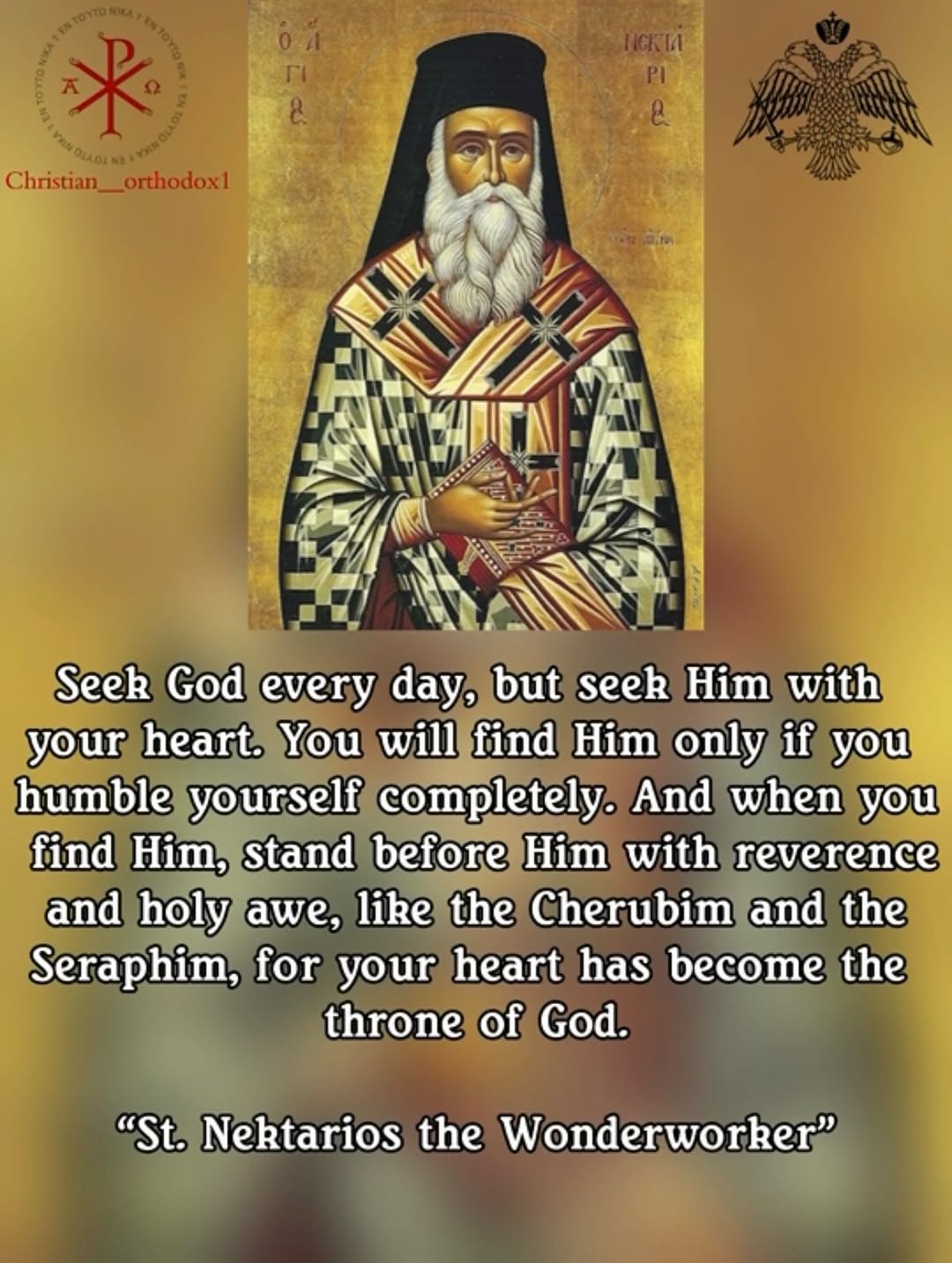
The post consists of a single block of text that presents a saying attributed to St. Nektarios the Wonderworker. The saying is composed of three sentences. The first sentence reads: "Seek God every day, but seek Him with your heart." This sentence establishes a daily practice of seeking God and specifies that the seeking must be interior, located in the heart. The second sentence reads: "You will find Him only if you humble yourself completely."…

The post consists of a single block of text that presents a saying attributed to St. Nektarios the Wonderworker. The saying is composed of three sentences. The first sentence reads: "Seek God every day, but seek Him with your heart." This sentence establishes a daily practice of seeking God and specifies that the seeking must be interior, located in the heart.

The second sentence reads: "You will find Him only if you humble yourself completely." This sentence sets a condition for the success of the search: complete humility. The third sentence reads: "And when you find Him, stand before Him with reverence and holy awe, like the Cherubim and the Seraphim, for your heart has become the throne of God."

This sentence describes the appropriate response upon finding God. It names two categories of angelic beings, the Cherubim and the Seraphim, as models of reverence and holy awe. It then provides a theological rationale: the heart of the one who has found God has become the throne of God.

Following the saying, the text includes a line with the attribution in quotation marks: "St. Nektarios the Wonderworker". After the attribution, six dots appear on a separate line. Then a series of hashtags appears: #christian #orthodox #church #faith #churchfathers. The hashtags indicate that the post is categorized under Christian, Orthodox, church, faith, and church fathers topics.

The post does not contain any additional commentary, questions, or replies. It functions as a devotional excerpt shared for edification.

  • The post shares a saying attributed to St. Nektarios the Wonderworker.
  • It urges daily seeking of God with the heart.
  • It states that finding God requires complete humility.
  • It calls for reverence and holy awe before God, like the Cherubim and Seraphim.
  • It explains that the heart becomes the throne of God.
Read more
Prayer Orthodoxy ® Instagram

Prayer Orthodoxy® announces presence on X

The post announces that Prayer Orthodoxy® is now on X. The account shares content on Orthodox Christian faith, prayer, tradition, Mount Athos, icons, Scripture, Saints, and the life of the Church. The announcement appears in both English and Greek. The handle provided is @PrayerOrthodoxy. The post includes hashtags for x, orthodoxy, prayerorthodoxy, social, and growth.

  • Prayer Orthodoxy® launches on X
  • Content covers Orthodox faith, prayer, tradition, Mount Athos, icons, Scripture, Saints, Church life
  • Bilingual announcement in English and Greek
  • Account handle: @PrayerOrthodoxy

Christ's Warning on Wealth: The Rich Young Ruler

2:23

The video presents Mark 10:17-27. A rich young man runs to Jesus and asks what he must do to inherit eternal life. Jesus lists several commandments. The man says he has kept them from youth. Jesus then tells him to sell all he has, give to the poor, and follow him. The man goes away sorrowful because he had great possessions. Jesus tells the disciples how hard it is for the rich to enter the kingdom of God. He says it is easier for a camel to go…

The video presents Mark 10:17-27. A rich young man runs to Jesus and asks what he must do to inherit eternal life. Jesus lists several commandments. The man says he has kept them from youth. Jesus then tells him to sell all he has, give to the poor, and follow him.

The man goes away sorrowful because he had great possessions. Jesus tells the disciples how hard it is for the rich to enter the kingdom of God. He says it is easier for a camel to go through the eye of a needle than for a rich man to enter the kingdom.

When the disciples ask who can be saved, Jesus replies that with God all things are possible. The speaker notes that Christ saw the man's heart was captive to wealth despite his outward righteousness. Christ looked at him and loved him before asking him to surrender his possessions, not to punish but to free him.

The Orthodox perspective emphasizes detachment from worldly possessions and placing Christ above all things.

Key moments

  1. 0:00 The video opens with Mark 10:17 where a rich young man runs to Jesus and asks what he must do to inherit eternal life.
  2. 0:32 Jesus lists several commandments and the man says he has kept them from youth; Jesus then tells him to sell all he has, give to the poor, and follow him.
  3. 1:17 The man goes away sorrowful because he had great possessions, and Jesus tells the disciples how hard it is for the rich to enter the kingdom of God.
  4. 1:50 Jesus says it is easier for a camel to go through the eye of a needle than for a rich man to enter the kingdom, and when the disciples ask who can be saved he replies that with God all things are possible.
  5. 2:20 The speaker notes that Christ saw the man's heart was captive to wealth despite his outward righteousness.
Read more
r/OrthodoxChristianity Reddit

Share your best Orthodox jokes, I'll start!

I'll share a few Orthodox jokes to begin. First, how many hermits does it take to change a lightbulb? The answer: Lightbulbs? Next, a riddle: a train travels 80 kilometres per hour on Thursday, but doubles its speed on Friday unless the conductor ate an apple on the first Tuesday before last Wednesday; which saint did Serbian immigrants just name their new church after? Saint Sava, obviously. Finally, why do many in the West prefer the Russian…

I'll share a few Orthodox jokes to begin.

First, how many hermits does it take to change a lightbulb? The answer: Lightbulbs?

Next, a riddle: a train travels 80 kilometres per hour on Thursday, but doubles its speed on Friday unless the conductor ate an apple on the first Tuesday before last Wednesday; which saint did Serbian immigrants just name their new church after? Saint Sava, obviously.

Finally, why do many in the West prefer the Russian Orthodox Church Outside Russia to the Moscow Patriarchate? Because it has a cooler acronym.

Citations Orthodoxes ☦ Instagram

Saint Basil on Animal Instinct as Proof of Divine Wisdom

Saint Basil of Caesarea writes that among animals an invincible affection unites parents to their young. He says the Creator himself replaces reason in them with the force of sentiment. A lamb springs from the enclosure amid a thousand ewes, recognizes the color and voice of its mother, runs to her and seeks its own source of milk. If the mother's teats are dry, the lamb is content and passes by those that are more abundant without stopping.…

Saint Basil of Caesarea writes that among animals an invincible affection unites parents to their young. He says the Creator himself replaces reason in them with the force of sentiment. A lamb springs from the enclosure amid a thousand ewes, recognizes the color and voice of its mother, runs to her and seeks its own source of milk.

If the mother's teats are dry, the lamb is content and passes by those that are more abundant without stopping. Basil asks how the mother recognizes her own among so many lambs when all have the same voice, color and smell, at least to human perception. He answers that these animals possess a subtler sense than human perception that lets them recognize their own.

A puppy has no teeth yet but defends itself with its mouth against anyone who torments it. A calf has no horns yet but already knows where its weapons will grow. Basil presents this as manifest proof that animal instinct is innate and that in all beings nothing is disordered or unforeseen.

All bear the marks of the Creator's wisdom and show they came to life with the means to ensure their own preservation.

  • Saint Basil cites the lamb's recognition of its mother among a thousand ewes
  • The lamb accepts its mother's dry udder and passes by fuller ones
  • The mother identifies her own lamb despite identical traits to human senses
  • A puppy defends itself without teeth; a calf anticipates horn growth
  • Basil argues this innate instinct proves the Creator's wisdom and order

Elder Filimon on silent preaching at Mount Athos

The post shares a video from the YouTube channel DIMITRIS APOSTOLOU featuring Gerontas Filimon, a righteous elder of the Holy Monastery of Pantokratoros Skete of Prophet Elijah on Mount Athos. In the video, two monks, an elder and his disciple, go to the shore, walk, and return to the Holy Mountain. The disciple tells the elder they came to preach and have done so. The elder explains that a simple, humble, dignified, pious monk does not have…

The post shares a video from the YouTube channel DIMITRIS APOSTOLOU featuring Gerontas Filimon, a righteous elder of the Holy Monastery of Pantokratoros Skete of Prophet Elijah on Mount Athos. In the video, two monks, an elder and his disciple, go to the shore, walk, and return to the Holy Mountain. The disciple tells the elder they came to preach and have done so.

The elder explains that a simple, humble, dignified, pious monk does not have many words. He cites a poet in Thessaloniki who says "gather many words, do not anger, silence." Words are many but without inner experiences they are empty. A person who has something to say often conveys it through silence.

Key moments

  1. Two monks from Mount Athos, an elder and his disciple, go to the shore and walk back.
  2. The disciple says they came to preach and they have done it.
  3. A simple, humble, dignified, pious monk does not have many words.
  4. He quotes a poet in Thessaloniki: "gather many words, do not anger, silence."
  5. Words are many but without inner experiences they are empty.
  6. A person who has something to say often gives it through silence.
Read more
Archim. Christódoulos Papadeas Instagram

Trisagion sung for Metropolitan Hierotheos in hospital chapel

The speaker recounts visiting a hospital chapel to sing a Trisagion for Metropolitan Hierotheos of Nafpaktos. The metropolitan had suffered there for two months after a stroke left him paralyzed on the left side and unable to speak, enduring prayerfully. Father Nektarios, abbot of the monastery of the Archangel Michael on Rhodes, arrived with an entourage. With the physicians' agreement, he brought the metropolitan to Rhodes when he had regained…

The speaker recounts visiting a hospital chapel to sing a Trisagion for Metropolitan Hierotheos of Nafpaktos. The metropolitan had suffered there for two months after a stroke left him paralyzed on the left side and unable to speak, enduring prayerfully. Father Nektarios, abbot of the monastery of the Archangel Michael on Rhodes, arrived with an entourage.

With the physicians' agreement, he brought the metropolitan to Rhodes when he had regained some strength. The metropolitan reposed on February 14th, a few days after arriving in Rhodes. The group returned to remember the days they spent with him in January and to ask for his blessings. The speaker closes with the greeting "Yeronda Nafpaktos. Kalimera."

Key moments

  1. Visit to the hospital chapel to sing a Trisagion for Metropolitan Hierotheos of Nafpaktos.
  2. He suffered there for two months after a stroke, paralyzed on the left side and unable to speak, enduring prayerfully.
  3. Father Nektarios, abbot of the monastery of the Archangel Michael on Rhodes, came with an entourage.
  4. With the physicians' goodwill, the metropolitan was taken to Rhodes when he became stronger.
  5. He passed into life on February 14th of this year, a few days after arriving in Rhodes.
  6. The group came to remember the days they were with him in January.
  7. Prayer that all may have his blessings.
  8. Closing greeting: "Yeronda Nafpaktos. Kalimera."
Read more
r/OrthodoxChristianity Reddit discussion

What should I do with an AI-generated icon?

I ordered an icon of the Softener of Evil Hearts on Etsy, and I'm honestly disappointed in myself. The text and the Theotokos's body don't appear edited, but the surrounding parts are clearly AI-generated. Looking back at the seller, their profile picture is a terrible AI-generated person as well. I enjoy researching tech and tech news, and I'm frustrated that I wasn't more cautious. The question is what to do now. Should I dispose of this icon,…

I ordered an icon of the Softener of Evil Hearts on Etsy, and I'm honestly disappointed in myself. The text and the Theotokos's body don't appear edited, but the surrounding parts are clearly AI-generated. Looking back at the seller, their profile picture is a terrible AI-generated person as well. I enjoy researching tech and tech news, and I'm frustrated that I wasn't more cautious.

The question is what to do now. Should I dispose of this icon, and if so, how? I don't want to be disrespectful to the Theotokos since it's an image of her, but I don't see this as a real icon either.

Help me out, thanks.

16 opinions in the discussion Why does everyone insist they must be burned? If it's just a cheap knockoff that doesn't depict any actual person, what's with treating it like something sacred? Read the discussion
Prayer Orthodoxy ® Instagram

Serigraph Icons from Mount Athos Crafted by Monks

The post presents sacred Orthodox icons produced on Mount Athos using the traditional serigraph process. Monks apply layers of paint and finish each icon by hand, creating raised details and a rich textured surface. On some icons the names of the monks who made them appear on the back, preserving a direct connection to the hands that produced each sacred image. The featured icons are Christ the King and Great High Priest, the Theotokos of the…

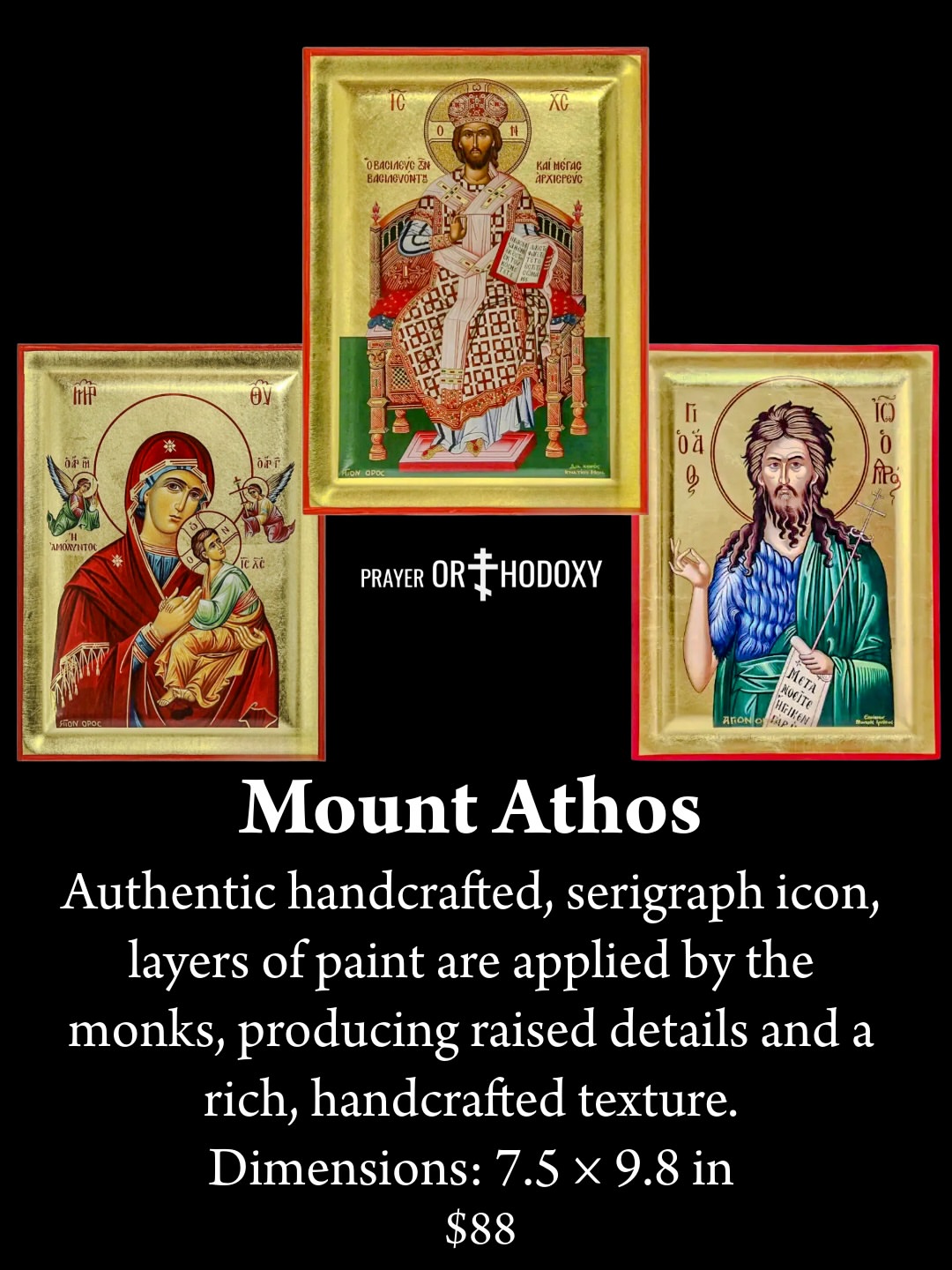
The post presents sacred Orthodox icons produced on Mount Athos using the traditional serigraph process. Monks apply layers of paint and finish each icon by hand, creating raised details and a rich textured surface. On some icons the names of the monks who made them appear on the back, preserving a direct connection to the hands that produced each sacred image.

The featured icons are Christ the King and Great High Priest, the Theotokos of the Passion, and Saint John the Baptist and Forerunner. Each icon measures 7.5 by 9.8 inches. The description is given in English and in Greek. The post is identified as an original production of Prayer Orthodoxy.

  • Icons created on Mount Athos using traditional serigraphy
  • Monks apply paint layers and finish each piece by hand
  • Raised details and textured surface result from the process
  • Some icons bear the names of the monks who made them
  • Featured subjects: Christ the King and Great High Priest, Theotokos of the Passion, Saint John the Baptist and Forerunner
Read more
Hellenic College Holy Cross Instagram

Hellenic College Open House scheduled for October 17

Hellenic College Holy Cross announces an open house event for October 17. The event will take place on the HCHC campus during the fall season. Meals will be provided for attendees. Registration is available through a link referenced in the original post's bio section. The announcement serves as an invitation for prospective visitors to tour the campus and learn about the institution.

  • Open house at Hellenic College Holy Cross on October 17
  • Event held on the HCHC campus
  • Meals provided for attendees
  • Registration required via link in bio
Read more
Orthodox Sound YouTube

Abbess Makrina on Keeping the Jesus Prayer in the Heart

Abbess Makrina on Keeping the Jesus Prayer in the Heart 21:42

The narration draws from Abbess Makrina of Portaria's collected counsel in Words from the Heart, published by St. John the Forerunner Greek Orthodox Monastery. It addresses the common experience of the mind wandering while the lips recite the Jesus Prayer, and the discouragement that follows when attention repeatedly fractures. Abbess Makrina teaches that we must actively pursue the Jesus Prayer rather than wait for desire or a peaceful mind,…

The narration draws from Abbess Makrina of Portaria's collected counsel in Words from the Heart, published by St. John the Forerunner Greek Orthodox Monastery. It addresses the common experience of the mind wandering while the lips recite the Jesus Prayer, and the discouragement that follows when attention repeatedly fractures. Abbess Makrina teaches that we must actively pursue the Jesus Prayer rather than wait for desire or a peaceful mind, making prayer the principal means by which the whole person turns toward God.

She stresses watchfulness and persistence: when the mind wanders, we gently return to the invocation of Christ, and this return is not failure but training. Prayer must accompany daily work, not remain confined to a prayer corner. We must guard our speech against idle talk, grumbling, and resentment that feed the passions.

Humility is inseparable from prayer; we bring our passions to Christ without delay, cooperate with grace through small faithful choices, and measure fruit not by feelings but by growing repentance, patience, and love for our neighbor. The heart is likened to a vineyard full of stones and weeds that must be worked repeatedly. The presentation references numerous scriptural passages including 1 Thessalonians 5:16-18, Romans 12:12, Luke 18:1-14, Proverbs 4:23, Matthew 26:41, Psalm 141:3, James 3:5-10, Ephesians 4:29-32, James 4:6-10, Matthew 5:44, Matthew 13:3-9 and 18-23, John 15:1-5, and Galatians 6:7-9.

Key moments

  1. 0:00 The mind travels far while the lips say the Jesus Prayer, and discouragement settles in when attention keeps fracturing.
  2. 0:32 Abbess Makrina counsels that we must pursue prayer actively, not wait for desire or a convenient moment.
  3. 1:35 Prayer is a principal means to turn the whole person toward God; spiritual life cannot be built on intentions alone.
  4. 2:37 Familiarity with the Jesus Prayer can conceal carelessness; we need watchfulness to notice wandering and return the mind.
  5. 5:11 Spiritual effort accompanies daily responsibilities; the Jesus Prayer becomes a companion throughout ordinary tasks.
  6. 8:19 Prayer and speech are connected; idle talk, grumbling, and rehearsing grievances nourish passions and push prayer aside.
  7. 12:01 Prayer is inseparable from humility; it brings us before God where comparison with others loses its grip.
  8. 15:10 The heart is like a vineyard full of stones and weeds that must be worked repeatedly; we cooperate with grace through small faithful acts.
Saint Wisdom Instagram

St Theophan the Recluse: Do not leave God behind when your prayers end

A short teaching attributed to St Theophan the Recluse, presented in paraphrased form, urges believers not to end their remembrance of God when prayer ends. The saint's counsel is to carry God's presence into the rest of the day: while working, walking, speaking, and resting. Prayer is not treated as a separate activity that finishes and gives way to ordinary life; instead, the heart is to keep turning toward God throughout the day. The teaching…

A short teaching attributed to St Theophan the Recluse, presented in paraphrased form, urges believers not to end their remembrance of God when prayer ends. The saint's counsel is to carry God's presence into the rest of the day: while working, walking, speaking, and resting. Prayer is not treated as a separate activity that finishes and gives way to ordinary life; instead, the heart is to keep turning toward God throughout the day.

The teaching describes a gradual fruit of this practice: when the remembrance of God becomes constant within a person, peace begins to pour quietly into the heart. The post frames this as a matter of love for God and of the saints' way of life, using tags on love and the saints. The card presents the four movements of the teaching: not leaving God behind after prayer, remembering him during work, walking, speech, and rest, turning the heart toward him continually, and the quiet peace that follows when remembrance becomes constant.

Key moments

  1. Do not leave God behind when your prayers end.
  2. Remember him while you work, walk, speak, and rest.
  3. Keep turning your heart toward him throughout the day.
  4. When the remembrance of God becomes constant within you, peace will pour quietly into your heart.
Read more
George Instagram

How to Set Up an Icon Corner at Home, and Why Damaged Icons Must Never Go in the Trash

1:24

The speaker says that many Orthodox homes set up their icons incorrectly. Icons hang like decoration next to the television or between family photos, a favorite saint is placed above Christ, and damaged icons end up in the trash. He attributes this to a simple cause: nobody ever showed people how to do it properly. He then explains step by step how to arrange an icon corner. Choose one place in the home, on the east wall if possible, because we…

The speaker says that many Orthodox homes set up their icons incorrectly. Icons hang like decoration next to the television or between family photos, a favorite saint is placed above Christ, and damaged icons end up in the trash. He attributes this to a simple cause: nobody ever showed people how to do it properly.

He then explains step by step how to arrange an icon corner. Choose one place in the home, on the east wall if possible, because we pray facing east. Put Christ on the right and the Theotokos on the left, exactly as they stand on the iconostasis in church.

Favorite saints can be placed around them, but never above Christ or the Theotokos. A vigil lamp or a candle should be added, and everything worldly kept away: no television, no photos, no decorations, only the icons. The speaker also addresses what to do with a damaged icon. It should never be thrown away.

It can be brought to a priest, or burned respectfully with the ashes buried. He grounds this in the church's teaching that the home is a little church, and the icon corner is its altar, the place where the family stands before God every morning and evening. He closes by asking viewers whether they have an icon corner and inviting them to post pictures in the comments.

The discussion covers the common mistakes, the correct arrangement of the icons, the place of the vigil lamp, and the proper handling of icons that have become damaged or unusable.

Key moments

  1. Icons are often set up wrong: scattered like decoration, placed next to the TV or between family photos, with a favorite saint hanging above Christ, and damaged icons thrown in the trash.
  2. This happens because nobody ever showed people how to do it properly.
  3. Choose one place in the home, on the east wall if possible, because we pray facing east.
  4. Put Christ on the right and the Theotokos on the left, exactly like the iconostasis in church, with favorite saints around them but never above Christ or the Theotokos.
  5. Add a vigil lamp or a candle and keep everything worldly away: no TV, no photos, no decorations, just the icons.
  6. Never throw a damaged icon away; bring it to your priest or burn it respectfully and bury the ashes.
  7. The church calls the home a little church, and the icon corner is its altar, where the family stands before God every morning and evening.
  8. The speaker asks viewers if they have an icon corner and invites them to share a picture in the comments.
Read more
Ancient Faith YouTube

We Carry You Still: An Orthodox Ministry for Miscarriage and Infant Loss

We Carry You Still: An Orthodox Ministry for Miscarriage and Infant Loss 46:51

Melanie interviews Kh. Jocelyn Abyad, president of We Carry You Still, a miscarriage and infant loss ministry. Jocelyn and her husband lost three babies in 2020 and 2021: Eden at 10 weeks, Thomas at 6, and James at 15, after six uneventful pregnancies. Unable to find faithful resources at the time, she was comforted by a Protestant ministry and told her mother that the Church needed a ministry that speaks from the sacramental heart. Her mother,…

Melanie interviews Kh. Jocelyn Abyad, president of We Carry You Still, a miscarriage and infant loss ministry. Jocelyn and her husband lost three babies in 2020 and 2021: Eden at 10 weeks, Thomas at 6, and James at 15, after six uneventful pregnancies. Unable to find faithful resources at the time, she was comforted by a Protestant ministry and told her mother that the Church needed a ministry that speaks from the sacramental heart.

Her mother, who had just retired, said "Let's do it." The ministry incorporated in 2024 and has three branches: training for clergy, ministry leaders and OBGYN offices; a website with practical, emotional and spiritual resources; and free memory boxes in the Phoenix metro area, where it packed its 1,000th box this past month. Jocelyn explains that most first trimester losses happen at home, and women are often sent home with no instruction about their baby's remains, which are sometimes treated as medical waste.

Many women carry guilt because they did not know they had a choice. The ministry rests on the belief that every person is made in God's image and willed by God from conception, and that burying even the smallest dead flows from an embodied faith and the hope of the resurrection. She cites statistics: ten to 25 percent of known pregnancies end in loss, and 43 percent of women experience at least one loss in their lifetime, yet shame keeps most women silent.

She advises people to say "I'm so sorry for your loss," "your baby's life mattered," and to offer to pray for the baby by name, while avoiding "it was God's will," "at least you can get pregnant," and "just trust God," pointing to Christ weeping at Lazarus' tomb. She encourages parishes to offer mercy meals, trisagion services, icons such as the Theotokos Protectus of the Unborn, Saturday of Souls prayers, and to mark October as infant loss awareness month.

Key moments

  1. 1:04 Jocelyn and her husband lost three babies to miscarriage in 2020 and 2021, Eden at 10 weeks, Thomas at 6, and James at 15, after having six living children.
  2. 3:10 She clung to the Theotokos in her grief because she knows what it is to bury her child, and told her mother the Church needed a ministry that speaks from the sacramental heart; her mother, just retired, said "Let's do it."
  3. 4:10 The ministry has three branches: training for clergy, ministry leaders and OBGYN offices, a website with practical, emotional and spiritual resources, and free memory boxes in the Phoenix metro area; it incorporated in 2024 and packed its 1,000th box this past month.
  4. 7:18 The ministry rests on the belief that every person is made in God's image and willed by God from conception, that the faith is embodied, and that burying even the smallest dead matters because of the hope of the resurrection.
  5. 11:28 Women with first trimester losses are often sent home with no instruction and their babies treated as medical waste, and many women carry guilt because they did not know they had a choice about their child's remains.
  6. 15:35 Ten to 25 percent of known pregnancies end in loss, and 43 percent of women experience at least one loss in their lifetime, yet shame keeps most women from talking about it.
  7. 20:50 Helpful words are "I'm so sorry for your loss," "your baby's life mattered," and an offer to pray for the baby by name; she warns against "it was God's will," "at least you can get pregnant," and "just trust God," pointing to Christ weeping at Lazarus' tomb.
  8. 28:06 Parishes can acknowledge varied paths of fertility and loss, offer mercy meals and trisagion services for lost babies, give icons such as the Theotokos Protectus of the Unborn, include babies' names in Saturday of Souls prayers, and mark October as infant loss awareness month.
Disgruntled Docs with Ники́та ☦︎ Instagram

A call to die before death and a steppe night lament

The post presents a saying: "Die before you die, and you shall not die when you die." It urges the reader to crucify the passions before they crucify the soul, to bury pride before the earth buries the flesh, and to repent before the hour when repentance is no longer possible. The text observes that people live as though time belongs to them, yet every breath is a mercy and each moment brings them closer to eternity. It states that the grave is…

The post presents a saying: "Die before you die, and you shall not die when you die." It urges the reader to crucify the passions before they crucify the soul, to bury pride before the earth buries the flesh, and to repent before the hour when repentance is no longer possible. The text observes that people live as though time belongs to them, yet every breath is a mercy and each moment brings them closer to eternity.

It states that the grave is not the greatest terror; meeting Christ unprepared is. It concludes with a call to remember death, take up the cross, and notes that the man who dies with Christ has nothing to fear when death comes. The post also includes a video summary describing a dark night on the steppe where only bullets whistle and wind hums in the wires while stars twinkle dimly.

In that scene a speaker addresses a beloved, saying he knows she is not sleeping and is secretly wiping a tear by a child's crib. The video points are given in Russian, matching the description. The post carries hashtags for Orthodox, Christian, faith, Jesus, and remember death.

Key moments

  1. В тёмную ночь только пули свистят по степи, только ветер гудит в проводах, тускло звёзды мерцают.
  2. В тёмную ночь ты, любимая, знаю, не спишь, и у детской кроватки тайком ты слезу утираешь.
Read more
Eastern Orthodoxy Daily He/Who/Is Instagram

Fr. Seraphim Rose's critique of Vedanta in "The Power of the Pagan Gods"

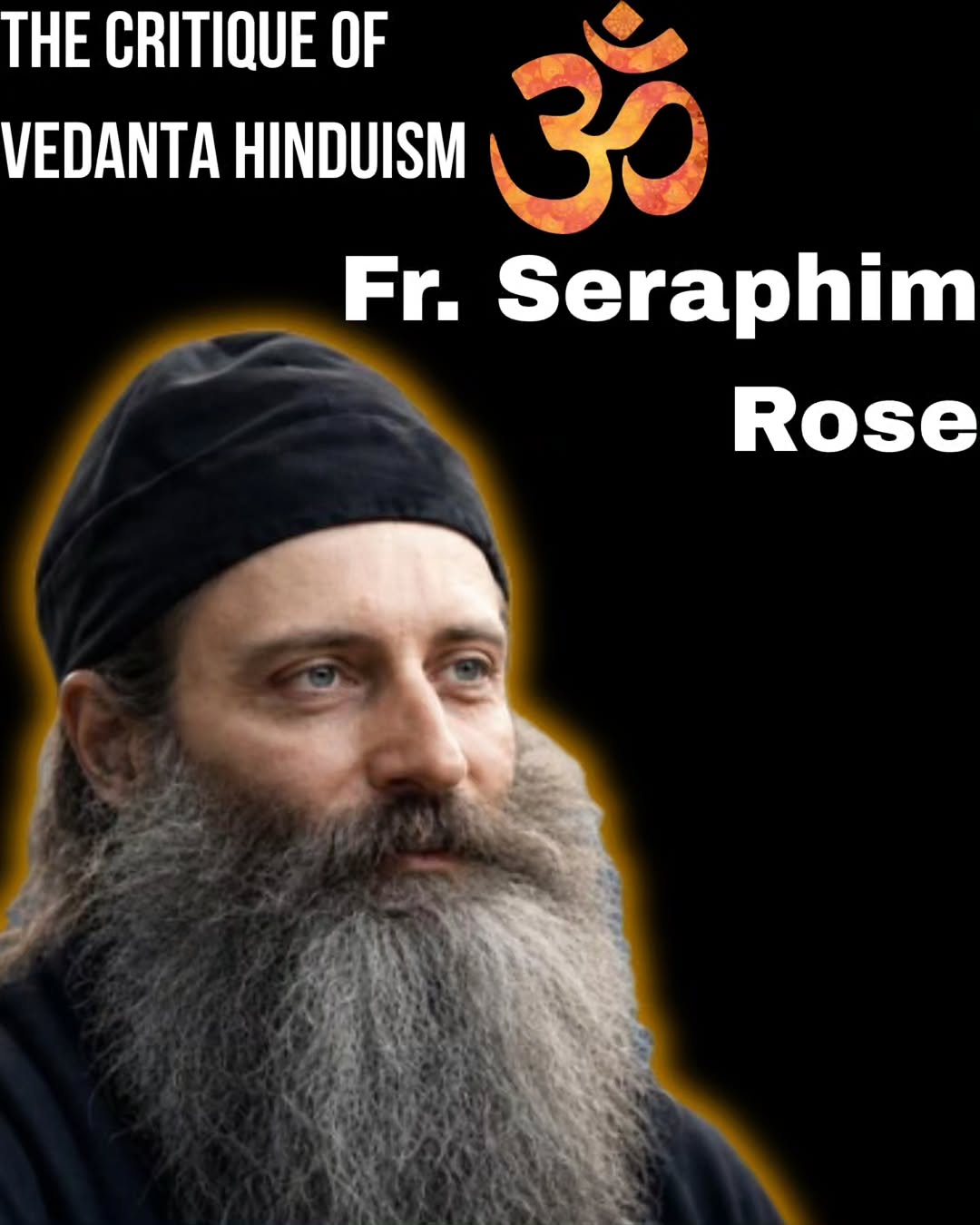
The post recommends Fr. Seraphim Rose's book and highlights Chapter II, "The Power of the Pagan Gods," which examines the Vedanta School. The author expected layman-level material but found the chapter engages deeply with metaphysical and epistemological problems in Vedanta. An Amazon link is provided for purchasing the book.

  • Fr. Seraphim Rose critiques the Vedanta School in Chapter II of his book
  • The chapter is titled "The Power of the Pagan Gods"
  • The analysis covers metaphysical and epistemological issues
  • The author found the material more rigorous than expected
  • An Amazon purchase link is included
Read more
Prayer Orthodoxy ® Instagram

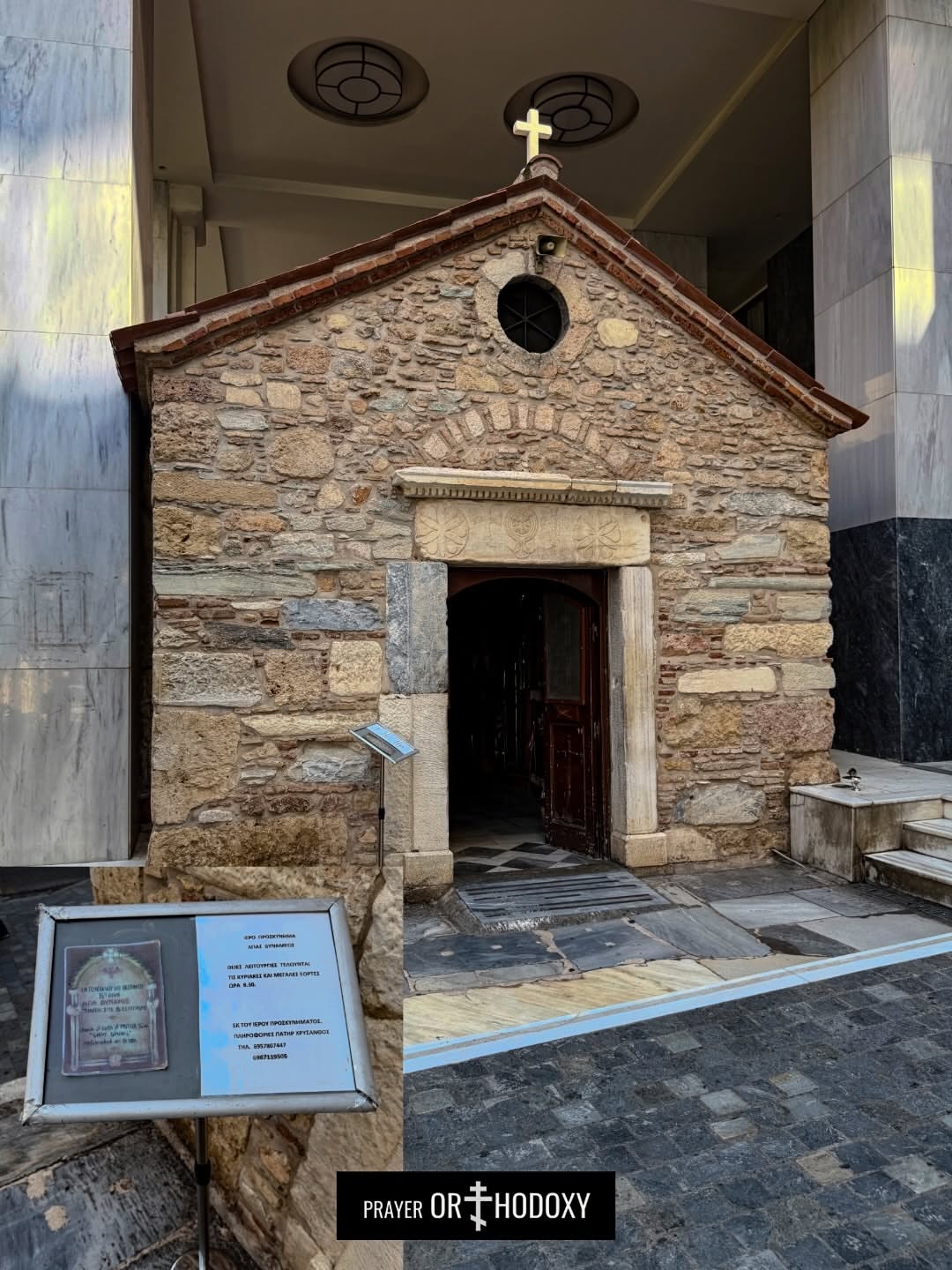
16th-century Athens chapel of Agia Dynamis linked to childbirth prayers and 1821 revolution

The post presents the chapel of Agia Dynamis, meaning Holy Power, which stands concealed beneath modern buildings in central Athens. The small chapel dates to the 16th century and is dedicated to the Nativity of the Theotokos. It once functioned as a dependency of the Monastery of Penteli. For generations, women visited the chapel to pray to the Panagia for strength and protection during childbirth. Local tradition also associates the chapel…

The post presents the chapel of Agia Dynamis, meaning Holy Power, which stands concealed beneath modern buildings in central Athens. The small chapel dates to the 16th century and is dedicated to the Nativity of the Theotokos. It once functioned as a dependency of the Monastery of Penteli.

For generations, women visited the chapel to pray to the Panagia for strength and protection during childbirth. Local tradition also associates the chapel with the Greek War of Independence; according to this tradition, ammunition was channeled secretly to Greek fighters before the Revolution of 1821. The post includes images credited to the author's brother and identifies itself as an original production of Prayer Orthodoxy.

  • 16th-century chapel dedicated to the Nativity of the Theotokos
  • Former dependency of the Monastery of Penteli
  • Women prayed for strength during childbirth
  • Tradition links it to secret ammunition supply before 1821 Revolution
  • Located in central Athens beneath modern buildings
Read more

Once a sheep of the world, now His: a short confession of faith

The author writes a short personal confession about leaving behind the desire to fit in with the crowd. They state that they no longer follow the crowd but follow Christ, and that they no longer seek acceptance from people but acceptance from Him. The author adds that they no longer live for this world but live for His Kingdom, and describes their former life as having been a sheep of the world, in contrast to belonging to Christ now. The post…

The author writes a short personal confession about leaving behind the desire to fit in with the crowd. They state that they no longer follow the crowd but follow Christ, and that they no longer seek acceptance from people but acceptance from Him. The author adds that they no longer live for this world but live for His Kingdom, and describes their former life as having been a sheep of the world, in contrast to belonging to Christ now.

The post closes with the word Amen and a set of symbols, including a cross. There is no discussion in the thread; the post is a single statement of personal commitment with no replies, questions, or further context given. The language is direct and declarative throughout, built on a series of contrasts: crowd versus Christ, acceptance by people versus acceptance by Him, this world versus His Kingdom, being the world's sheep versus being His.

  • The author no longer follows the crowd but follows Christ.
  • They seek acceptance from Christ rather than from people.
  • They say they no longer live for this world but for His Kingdom.
  • They describe their former self as a sheep of the world and now as belonging to Christ.
  • The post is a single statement of faith with no discussion or replies.
Read more