WeOrthodox
EN UA

Orthodox posts, videos and discussions

We follow Orthodox channels, communities and blogs across the web, summarise every post and video, and highlight the conversations with real substance.

Orthodox Health with Fr.TEDTalks Instagram

Why simple faithfulness offends those wanting profound answers

The author states that simple advice can be offensive when we are hoping for something profound. People want the advanced answer. They want the obscure answer. They want the thing that finally explains why everything feels scattered. Meanwhile, the fundamentals are sitting there untouched. Prayer is inconsistent. Fasting is inconsistent. Church is inconsistent. The people closest to us get whatever is left over. The body gets ignored until it…

The author states that simple advice can be offensive when we are hoping for something profound. People want the advanced answer. They want the obscure answer. They want the thing that finally explains why everything feels scattered.

Meanwhile, the fundamentals are sitting there untouched. Prayer is inconsistent. Fasting is inconsistent. Church is inconsistent. The people closest to us get whatever is left over. The body gets ignored until it becomes a problem. Then we wonder why life feels fragmented.

The author acknowledges that there is plenty of room for nuance. Circumstances differ. Vocations differ. Health, family, suffering, and responsibility all change what faithfulness looks like. But complexity can also become a hiding place. Sometimes the next faithful thing is remarkably ordinary: show up, keep your rule, care for your people, move your body, and do the thing you already know needs doing.

Then do it again tomorrow. That may not sound profound enough for Instagram. The author considers this good. The post directs attention to Episode 81 of the Orthodox Health Podcast, titled "When Life Falls Apart, You Need a Bunker," featuring Fr. Ted Paraskevopoulos. The post is tagged with topics including Orthodox health, Orthodox Christian identity, Eastern Orthodoxy, Christian living, and Brazilian Jiu-Jitsu.

  • People reject simple advice while seeking profound explanations for a fragmented life.
  • Basic practices like prayer, fasting, church, relationships, and bodily care are often inconsistent.
  • Complexity can serve as a hiding place from ordinary faithfulness.
  • The next faithful step is usually ordinary: show up, keep your rule, care for people, move your body.
  • The post references Orthodox Health Podcast Episode 81 with Fr. Ted Paraskevopoulos.
Read more

Father Rafailo: Stop pretending joy that isn't real

Father Rafailo tells listeners not to pretend. He says they often simulate joy, which is only psychological. True desire comes from the body, from the stomach. The fast is over and the feast has arrived, yet instead of resurrection joy they feel disgust, and that fact must be acknowledged.

Key moments

  1. Don't act.
  2. We do that very often.
  3. So we simulate, we are joyful, that is psychological joy.
  4. And if you want, you want bodily, it comes from the stomach.
  5. The fast has passed.
  6. Here is the feast, but it's like Christ is risen, but actually disgust comes to us.
  7. But you see, that must be acknowledged.
Read more
Ancient Faith YouTube

Fr. Stephen De Young: Joylessness Is Not Holiness

Fr. Stephen De Young: Joylessness Is Not Holiness 5:59

Fr. Stephen De Young addresses a distortion in Christian communities where pain, suffering, shame, and meaninglessness are treated as signs of God's presence rather than consequences of sin. He identifies two common failures: communities that intensify shame and judgment, leaving people feeling condemned, and communities that offer welcome without hope of change, leaving people with only commiseration. The priest argues that repentance and…

Fr. Stephen De Young addresses a distortion in Christian communities where pain, suffering, shame, and meaninglessness are treated as signs of God's presence rather than consequences of sin. He identifies two common failures: communities that intensify shame and judgment, leaving people feeling condemned, and communities that offer welcome without hope of change, leaving people with only commiseration.

The priest argues that repentance and forgiveness are the new realities that should define the Church as a place of healing and transformation. These are not opposed; non-judgment and a call to repentance can coexist, as can taking sin seriously and experiencing forgiveness. Joy is a fruit of the Spirit, and its absence signals something deeply wrong.

Confession should leave a person feeling lighter and reconciled. Fr. Stephen notes that non-Christians, including atheists, long for the forgiveness offered in Forgiveness Vespers because the world provides only cancellation and permanent records. The focus must remain on salvation in Christ.

Key moments

  1. 0:00 Pain, suffering, shame, loneliness, and meaninglessness are facts of sinful human reality, not things God brings when He draws near.
  2. 0:31 Christian communities often fail to manifest this; they fall into two poles: exacerbating shame and judgment, or offering welcome without hope or change.
  3. 1:04 In the first pole, people feel judged and condemned, and their shame is intensified.
  4. 1:36 In the second pole, people feel welcome but find no cure for meaninglessness or shame, only commiseration.
  5. 2:07 Repentance and forgiveness are new realities that should distinguish the Christian community as a place of healing and transformation.
  6. 2:37 Both non-judgment and a call to repentance are possible together, as are taking sins seriously and experiencing forgiveness.
  7. 3:07 Joylessness is not a sign of holiness; St. Paul says joy is a fruit of the Spirit, and its absence indicates something deeply wrong.
  8. 4:38 Non-Christians, including atheists, long for the forgiveness offered in Forgiveness Vespers because the world offers only cancellation and permanent records.
George Instagram

Fasting program donations refunded to help girl with cancer

The speaker launched a donation-based forty-day fasting program called "40 days to Bethlehem" and received over one hundred dollars in donations within a few hours. The account had been created less than a month earlier from a sense of God's guidance, without a strategy and with uncertainty about its future. After waking from a bad dream about their son, the speaker prayed the Jesus prayer and realized their family was healthy and had savings…

The speaker launched a donation-based forty-day fasting program called "40 days to Bethlehem" and received over one hundred dollars in donations within a few hours. The account had been created less than a month earlier from a sense of God's guidance, without a strategy and with uncertainty about its future. After waking from a bad dream about their son, the speaker prayed the Jesus prayer and realized their family was healthy and had savings for several months.

They refunded every donation because the account came from God and they did not want to turn the reach into income. Instead, they decided to direct support toward a family close to their spiritual father whose daughter has cancer and needs treatment in the United States. The daughter was recently baptized by the spiritual father. The speaker will share a donation link for that family when it becomes available and asks for prayers for the girl if people cannot give. The fasting program remains open for sign-up with the link in the bio.

Key moments

  1. 0:00 Launched 40-day fasting program "40 days to Bethlehem" donation-based, received over $100 in donations in a few hours
  2. 0:37 Account created less than a month ago from sense of God's guidance, no strategy, unsure of future
  3. 1:07 Woke from bad dream about son, prayed Jesus prayer, realized family healthy with savings for months
  4. 1:43 Refunded all donations because account came from God, did not want to turn reach into income
  5. 2:16 Family close to spiritual father has daughter with cancer needing US treatment, recently baptized by spiritual father
  6. 2:47 Will donate money to that family instead, will share link, asks for prayers if cannot give, program sign-up open with link in bio
Read more

Knocking on the door of the Theotokos after life's disappointments

The author describes a lifetime of knocking on various doors. Many opened, yet most resulted in disappointment. The author lists specific contrasts: where joy was expected, sorrow came; where strength was sought, weakness was given; where light was anticipated, darkness filled the space; where hope was desired, despair flooded in. After this catalog of failed doors, the author proposes a final door: that of the Panagia. The author states she…

The author describes a lifetime of knocking on various doors. Many opened, yet most resulted in disappointment. The author lists specific contrasts: where joy was expected, sorrow came; where strength was sought, weakness was given; where light was anticipated, darkness filled the space; where hope was desired, despair flooded in.

After this catalog of failed doors, the author proposes a final door: that of the Panagia. The author states she will open and save. The condition is knocking warmly, with faith and persistence, with warm prayer on the lips. The text ends with a direct address to the Theotokos as blessed, asking her to open the gate of compassion.

  • Life's doors often bring disappointment rather than fulfillment
  • The author contrasts expected gifts with actual outcomes: sorrow for joy, weakness for strength, darkness for light, despair for hope
  • The solution proposed is knocking on the door of the Panagia
  • This requires warm, persistent prayer with faith
  • A short prayer to the Theotokos is quoted asking her to open the gate of compassion
Read more
Giovanni Guaita YouTube

Hieromonk John (Guaita) on the Miraculous Catch and Christ's Call Not to Fear

Hieromonk John (Guaita) on the Miraculous Catch and Christ's Call Not to Fear 5:53

Hieromonk John (Guaita) delivered the sermon "Do Not Be Afraid" at the Alexander Nevsky Cathedral in Paris on October 6, 2024. The sermon examines Luke 5:1-11, the miraculous catch of fish and the calling of the first disciples. The speaker explains why Luke includes this miracle before the calling while Matthew and Mark omit it: the miracle makes the disciples' immediate response understandable. He notes from John's Gospel that the disciples…

Hieromonk John (Guaita) delivered the sermon "Do Not Be Afraid" at the Alexander Nevsky Cathedral in Paris on October 6, 2024. The sermon examines Luke 5:1-11, the miraculous catch of fish and the calling of the first disciples. The speaker explains why Luke includes this miracle before the calling while Matthew and Mark omit it: the miracle makes the disciples' immediate response understandable.

He notes from John's Gospel that the disciples already knew Jesus, having been disciples of John the Forerunner and having visited His home. In the passage, Jesus teaches from Peter's boat, then tells Peter to put out into the deep and let down the nets. Peter objects that they caught nothing all night but obeys at Christ's word.

The nets bring in such a huge catch that two boats nearly sink. Peter, seized with fear, falls at Jesus' knees saying, "Depart from me, for I am a sinful man, O Lord!" Jesus replies, "Do not be afraid; from now on you will catch men."

The disciples leave everything and follow Him. The speaker applies the miracle: faith means trusting God to change situations even when human effort and experience fail. He connects Peter's fear to the liturgical invitation to Holy Communion, "With the fear of God and with faith, draw near." The Slavic word "страх" (strakh) suggests phobia, but the true fear of God is the desire not to disappoint the One we love.

The Lord repeats "Do not be afraid" daily; we must learn to trust Him rather than our own experience and overcome our fears.

Key moments

  1. 0:00 Luke's Gospel includes the miraculous catch of fish before the calling of the disciples, making their immediate response understandable, unlike Matthew and Mark which omit the miracle.
  2. 0:36 The disciples already knew Jesus because they had been disciples of John the Forerunner and had visited His home, according to John's Gospel.
  3. 1:09 Jesus preaches from Peter's boat, then tells Peter to put out into the deep and let down the nets; Peter objects that they caught nothing all night but obeys at Christ's word.
  4. 1:48 The nets bring in such a huge catch that two boats nearly sink.
  5. 2:22 The speaker applies the miracle: faith means trusting God to change situations even when human effort fails, overcoming scepticism and professional experience.
  6. 3:37 Peter, seized with fear, says "Depart from me, for I am a sinful man, O Lord!" and Jesus replies "Do not be afraid. From now on you will catch men."
  7. 4:09 Before Holy Communion the priest or deacon says "With the fear of God and with faith, draw near!"; the Slavic word "страх" (strakh) is closer to phobia, but the true fear of God is the desire not to disappoint the One we love.
  8. 5:13 The Lord repeats "Do not be afraid" daily; we must learn to trust Him rather than our own experience and overcome our fears.
Read more
F Fr. Barnabas Powell Substack

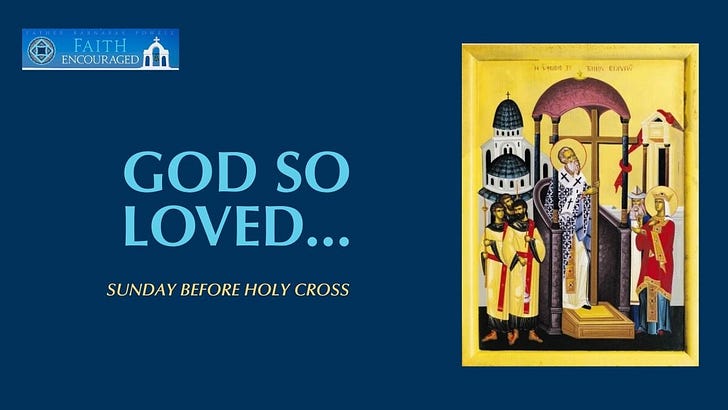
Fr. Barnabas Powell on John 3:16 and a new catechism series

The post introduces Fr. Barnabas Powell, parish priest at Sts. Raphael, Nicholas, and Irene Greek Orthodox Church in Cumming, Georgia. He founded Faith Encouraged Ministries and produces the Faith Encouraged Daily Devotional on Substack. A YouTube channel for Faith Encouraged is also referenced. The post announces "The Journey Continues…", a 16-part video series being produced to help parishes catechize the large number of converts entering…

The post introduces Fr. Barnabas Powell, parish priest at Sts. Raphael, Nicholas, and Irene Greek Orthodox Church in Cumming, Georgia. He founded Faith Encouraged Ministries and produces the Faith Encouraged Daily Devotional on Substack. A YouTube channel for Faith Encouraged is also referenced. The post announces "The Journey Continues…", a 16-part video series being produced to help parishes catechize the large number of converts entering Orthodoxy.

The series is described as a tool for busy parish priests and growing communities to share the Timeless Beauty of Orthodoxy with spiritually hungry people. Faith Encouraged operates as a reader-supported publication on Substack with free and paid subscription options.

  • Fr. Barnabas Powell serves at Sts. Raphael, Nicholas, and Irene Greek Orthodox Church in Cumming, GA
  • He founded Faith Encouraged Ministries and produces a daily devotional on Substack
  • A 16-part video series called "The Journey Continues…" is in production for catechizing converts
  • The series aims to help parish priests and communities share Orthodoxy with new converts
  • Faith Encouraged is a reader-supported Substack publication

Saint Paisios on the speed of pride and humility

0:07

The post shares a saying attributed to Saint Paisios of Mount Athos. He states that Lucifer's fall from angel to devil did not take hours but only a few seconds. In the same way, a person can become like an angel or like a devil in a single second by choosing pride or choosing humility. The saint adds that the easiest way to be saved is through love and humility.

Key moments

  1. 0:05 The crowd chants "¡Viva la Virgen de la Macarena!" repeatedly.
Read more
George Instagram

Standing on Sundays: Nicaea's Canon and the Resurrection

1:12

The First Ecumenical Council at Nicaea in 325, in its last canon, directed Christians to pray standing on Sundays and from Easter to Pentecost. The council treated Sunday as the day of the resurrection; every Sunday is a little Easter. Kneeling shows repentance and sorrow for sins, which is fitting during the week. On the day Christ rose, the faithful stand as people already raised with him. Saint Basil the Great explained that Sunday standing…

The First Ecumenical Council at Nicaea in 325, in its last canon, directed Christians to pray standing on Sundays and from Easter to Pentecost. The council treated Sunday as the day of the resurrection; every Sunday is a little Easter. Kneeling shows repentance and sorrow for sins, which is fitting during the week.

On the day Christ rose, the faithful stand as people already raised with him. Saint Basil the Great explained that Sunday standing signifies both our rising with Christ and the day as an image of the age to come, eternal life. Customs differ today; some churches still kneel at certain moments on Sundays.

The faithful should follow their priest's guidance regarding local practice. The speaker asks viewers whether their church kneels on Sundays.

Key moments

  1. The First Ecumenical Council at Nicaea in 325, in its last canon, directed Christians to pray standing on Sundays and from Easter to Pentecost.
  2. Sunday is the day of the resurrection; every Sunday is a little Easter.
  3. Kneeling shows repentance and sorrow for sins, which is fitting during the week.
  4. On the day Christ rose, the faithful stand as people already raised with him.
  5. Saint Basil the Great explained that Sunday standing signifies both our rising with Christ and the day as an image of the age to come, eternal life.
  6. Customs differ today; some churches still kneel at certain moments on Sundays.
  7. The faithful should follow their priest's guidance regarding local practice.
  8. The speaker asks viewers whether their church kneels on Sundays.
Read more
Father Moses YouTube discussion

Racism as Christological Heresy in Orthodox Teaching

Racism as Christological Heresy in Orthodox Teaching 7:04

Father Moses argues that racism is not merely a sin but a heresy about Christ himself. He cites St. Gregory the Theologian's principle that what Christ has not assumed He has not healed. Since God became man and took on the one human nature shared by every person, claiming another race is less human means Christ did not take on their nature and did not save them. St. Athanasius the Great taught that Christ entered the single race of mankind,…

Father Moses argues that racism is not merely a sin but a heresy about Christ himself. He cites St. Gregory the Theologian's principle that what Christ has not assumed He has not healed. Since God became man and took on the one human nature shared by every person, claiming another race is less human means Christ did not take on their nature and did not save them.

St. Athanasius the Great taught that Christ entered the single race of mankind, with ethnicities existing as cultures and pigments under that one nature. If Christ did not redeem every ethnicity, then no one could receive the Holy Spirit and be deified, which would invalidate saints from Africa, Asia, Alaska, and elsewhere. Father Moses insists that anyone bringing racist ideology to Orthodoxy must repent, because such views deny the incarnation and are antichrist.

He connects this to St. Paul's condemnation of the division between Jew and Gentile, saying today's racist ideologies on social media are equally anti-incarnation.

Key moments

  1. 0:02 The speaker's passion for defending the Orthodox Church stems from his love for her as Christ's bride and the salvation she brought him.
  2. 0:34 Racism is not an ideology but a christological heresy because it posits superior and inferior races.
  3. 1:06 Dividing mankind into races undermines the christology of the church fathers, especially St. Gregory Nazianzen's principle that whatever is not assumed is not redeemed.
  4. 1:36 If races are separate, Christ did not come as a white, black, or Chinese man, so he would not have redeemed those races.
  5. 2:07 St. Athanasius the Great taught that Christ became man and entered the single race of mankind, under which ethnicities exist as cultures and pigments.
  6. 3:41 Racism invalidates the incarnation for those not of Christ's ethnicity, which would eliminate saints from diverse backgrounds and deny the Holy Spirit's indwelling.
  7. 4:44 Anyone bringing racist ideology to Orthodoxy must repent, because mankind is one, redeemed in the incarnation, and every ethnicity can be deified.
  8. 6:20 St. Paul already condemned the division between Jew and Gentile; today's racist ideologies on social media are antichrist and anti-incarnation.
30 opinions in the discussion There's a big difference between believing there are distinctions between groups of people and believing that certain groups can't get into heaven. Read the discussion
Kyle YouTube

Father Deacon Anonyas on 14-Year Path from Lutheranism to Orthodoxy

Father Deacon Anonyas on 14-Year Path from Lutheranism to Orthodoxy 1:10:08

Father Deacon Anonyas recounts his 14-year journey from Lutheranism to Orthodoxy in an interview with Kyle. He describes growing up in Minnesota and California, attending Calvary Chapel, then returning to Lutheran roots with his wife and completing catechesis together before encountering Orthodoxy at Thomas Aquinas College in 1999. Intellectual pride and Lutheran skepticism of mysticism kept him from converting until a personal crisis, his…

Father Deacon Anonyas recounts his 14-year journey from Lutheranism to Orthodoxy in an interview with Kyle. He describes growing up in Minnesota and California, attending Calvary Chapel, then returning to Lutheran roots with his wife and completing catechesis together before encountering Orthodoxy at Thomas Aquinas College in 1999.

Intellectual pride and Lutheran skepticism of mysticism kept him from converting until a personal crisis, his wife's debilitating spinal injury causing chronic pain and depression, his isolation in graduate school in Ireland from 2004 to 2005, and deep despair, led to a noetic experience during an Orthodox liturgy where he sensed God "dancing" with him and saw his entire life as orchestrated.

A series of miracles through St. John Maximovich, including myrrh-streaming oil from the saint's icon, confirmed his conversion in 2013. As a philosopher of science who once pursued theistic evolution and held a PhD in philosophy of mind and philosophy of science, he explains how suffering humbled him and revealed his idolatrous trust in scientism.

He now sees philosophy as a virtue-based therapy that prepares the soul to perceive truth, not as a system that constructs autonomous knowledge, drawing on Plato and Aristotle. The transcendental argument, he argues, is not a proof but the gospel itself: either a personal Creator grounds reason, or accidentalism destroys it. The discussion also covers his break with Lutheranism over women's ordination and LGBT issues in a German-speaking church, his fascination with incorruptibles, and how an Orthodox friend challenged him on sola scriptura during his crisis.

Key moments

  1. 0:02 Father Deacon Anonyas introduced as a Lutheran convert, Orthodox deacon, CEO of Petristic Faith, and host of the annual Montanaica conference in Montana.
  2. 1:05 Background: born in Minnesota to a Lutheran family, moved to California at age four, raised in Calvary Chapel non-denominational evangelicalism, later returned to Lutheranism and completed catechesis with his wife.
  3. 4:13 First attended an Orthodox liturgy in 1999-2000 at Thomas Aquinas College; remained outside Orthodoxy for 14 years due to intellectual pride and Lutheran skepticism toward mysticism and miracles.
  4. 12:34 Graduate studies in Ireland (2004-2005); conflict with German-speaking Lutheran church over women's ordination and LGBT issues, leading to a break with Lutheranism.
  5. 15:38 Wife's severe spinal cord injury caused chronic pain and depression; he faced isolation in an atheist academic environment; reconnected with an Orthodox friend who challenged him on sola scriptura.
  6. 20:49 Became fascinated with incorruptibles, especially St. John Maximovich; experienced an indescribable noetic miracle during liturgy while in deepest despair, sensed God 'dancing' with him and saw his entire life as orchestrated.
  7. 29:12 Converted in 2013 after a series of miracles including myrrh-streaming oil from St. John's icon; holds a PhD in philosophy of mind and philosophy of science, originally planned a dissertation on theistic evolution.
  8. 36:25 Lost faith in scientism: science cannot overcome the problem of induction; philosophy re-understood as virtue epistemology (Plato, Aristotle) where truth requires virtue and philosophy serves as spiritual therapy; transcendental argument is the gospel, not a proof, only two options exist: purposeful Creator or accidentalism.
Read more

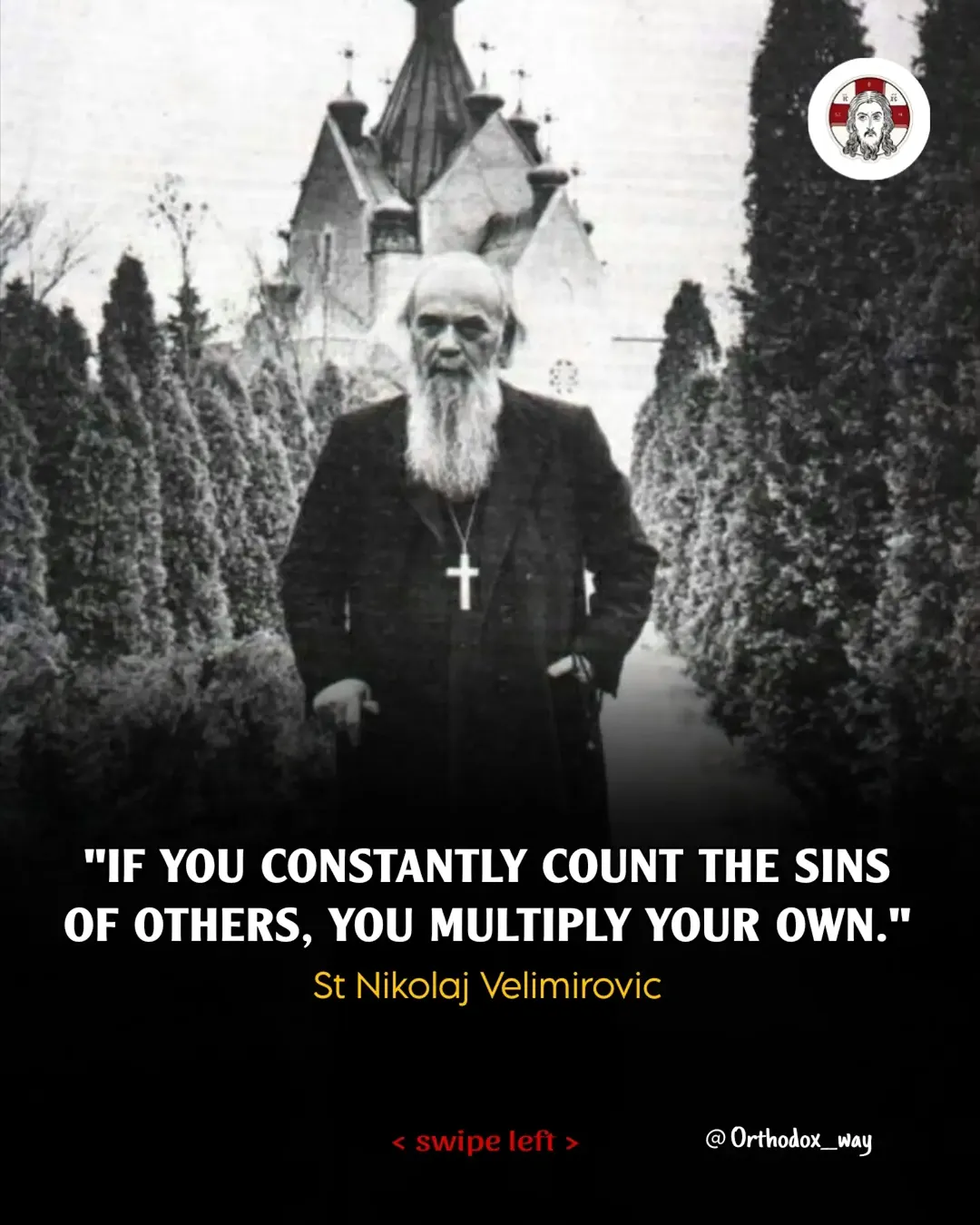
Saint Nikolaj Velimirović: New Chrysostom who endured Dachau

Saint Nikolaj Velimirović (1881-1956) was a Serbian Orthodox bishop, theologian, and spiritual writer known as the New Chrysostom for his eloquence and spiritual wisdom. From early life he devoted himself to Christ and the Orthodox Church, becoming a powerful preacher who called people to repentance, humility, prayer, and genuine Christian living. Despite his learning and influence, he embraced a life of prayer, fasting, and spiritual…

Saint Nikolaj Velimirović (1881-1956) was a Serbian Orthodox bishop, theologian, and spiritual writer known as the New Chrysostom for his eloquence and spiritual wisdom. From early life he devoted himself to Christ and the Orthodox Church, becoming a powerful preacher who called people to repentance, humility, prayer, and genuine Christian living.

Despite his learning and influence, he embraced a life of prayer, fasting, and spiritual discipline. During World War II, the Nazis imprisoned him at Dachau alongside Patriarch Gavrilo of Serbia. He endured suffering and persecution for his faith, yet remained steadfast in Christ, transforming his trials into opportunities for prayer and spiritual reflection.

After his release, Saint Nikolaj continued his ministry in exile, dedicating himself to teaching the Orthodox faith through his writings and spiritual guidance. He reposed in the Lord on March 18, 1956. The Serbian Orthodox Church canonized him in 2003. He remains an example of a saintly life rooted in prayer, humility, endurance, and complete faithfulness to Christ.

  • Serbian Orthodox bishop and theologian known as the New Chrysostom
  • Preached repentance, humility, prayer, and authentic Christian living
  • Imprisoned at Dachau with Patriarch Gavrilo during World War II
  • Continued ministry in exile through writings and spiritual guidance
  • Canonized by the Serbian Orthodox Church in 2003
Read more
radioimlemesou Instagram

Metropolitan Athanasios: We bear responsibility for how we receive God's word

The post shares a statement by Metropolitan Athanasios of Limassol on personal responsibility in spiritual life. The metropolitan says the cause of success or failure lies with the individual, not with God. God acts as the same sower offering the same seed, the word, to everyone equally. The difference appears in how the ground, meaning each person, receives it. Each person now carries responsibility for preparing ears to hear, cleansing them to…

The post shares a statement by Metropolitan Athanasios of Limassol on personal responsibility in spiritual life. The metropolitan says the cause of success or failure lies with the individual, not with God. God acts as the same sower offering the same seed, the word, to everyone equally.

The difference appears in how the ground, meaning each person, receives it. Each person now carries responsibility for preparing ears to hear, cleansing them to receive God's word, and remaining in patient expectation while Christ cultivates the soul. The metropolitan draws on the parable of the sower: the sower is the same, the seed is the same, but the soil differs.

He emphasizes that the struggle requires first having "ears that hear", a phrase from the Gospels, and that this hearing demands active cleansing of the ears to receive the word. The process continues in patience, awaiting Christ to cultivate the soul. The post includes hashtags referencing Jesus, faith, Christian, orthodoxy, Greek Orthodox, and the metropolitan's name.

Key moments

  1. Success or failure comes from ourselves, not from God.
  2. God gives the same seed, the word, to all people equally.
  3. The same sower and the same seed are present in every case.
  4. The ground, meaning the person, behaves differently in each case.
  5. We now carry the responsibility for how we receive the word.
  6. The struggle requires first having ears that can hear.
  7. We must cleanse our ears to hear the word of God.
  8. We must remain in patience, awaiting Christ to cultivate our soul.
Read more
George Instagram

Why Orthodox Communion Requires Unity, Not Just Belief

1:17

The speaker addresses a question from South Africa about why the Orthodox Church does not allow other Christians to receive holy communion despite their belief in Christ. He acknowledges the practice can feel hurtful and appear to deny their Christianity. In the Orthodox Church, communion is the sign that the faithful are one body, not only a private act between a person and God. Saint Paul teaches that because there is one bread, the many…

The speaker addresses a question from South Africa about why the Orthodox Church does not allow other Christians to receive holy communion despite their belief in Christ. He acknowledges the practice can feel hurtful and appear to deny their Christianity. In the Orthodox Church, communion is the sign that the faithful are one body, not only a private act between a person and God.

Saint Paul teaches that because there is one bread, the many become one body. Receiving from the Chalice means confessing "this is my church, this is my faith, I share everything this church believes." The pre-communion prayer "I believe Lord, and I confess" is a confession of one shared faith.

Since Christians are still divided, communion is the fruit of real unity, not a step toward unity, and even Orthodox Christians prepare by fasting and confession. Non-Orthodox are welcome to attend the Liturgy, receive the blessed bread at the end, and ask the priest for a blessing.

Key moments

  1. A question from South Africa asks why other Christians cannot receive communion even if they believe in Christ.
  2. The speaker acknowledges this can feel hurtful and appear to deny their Christianity.
  3. In the Orthodox Church, communion is the sign that the faithful are one body, not only a private act between a person and God.
  4. Saint Paul teaches that because there is one bread, the many become one body.
  5. Receiving from the Chalice means confessing "this is my church, this is my faith, I share everything this church believes."
  6. The pre-communion prayer "I believe Lord, and I confess" is a confession of one shared faith.
  7. Since Christians are still divided, communion is the fruit of real unity, not a step toward unity, and even Orthodox Christians prepare by fasting and confession.
  8. Non-Orthodox are welcome to attend the Liturgy, receive the blessed bread at the end, and ask the priest for a blessing.
Read more

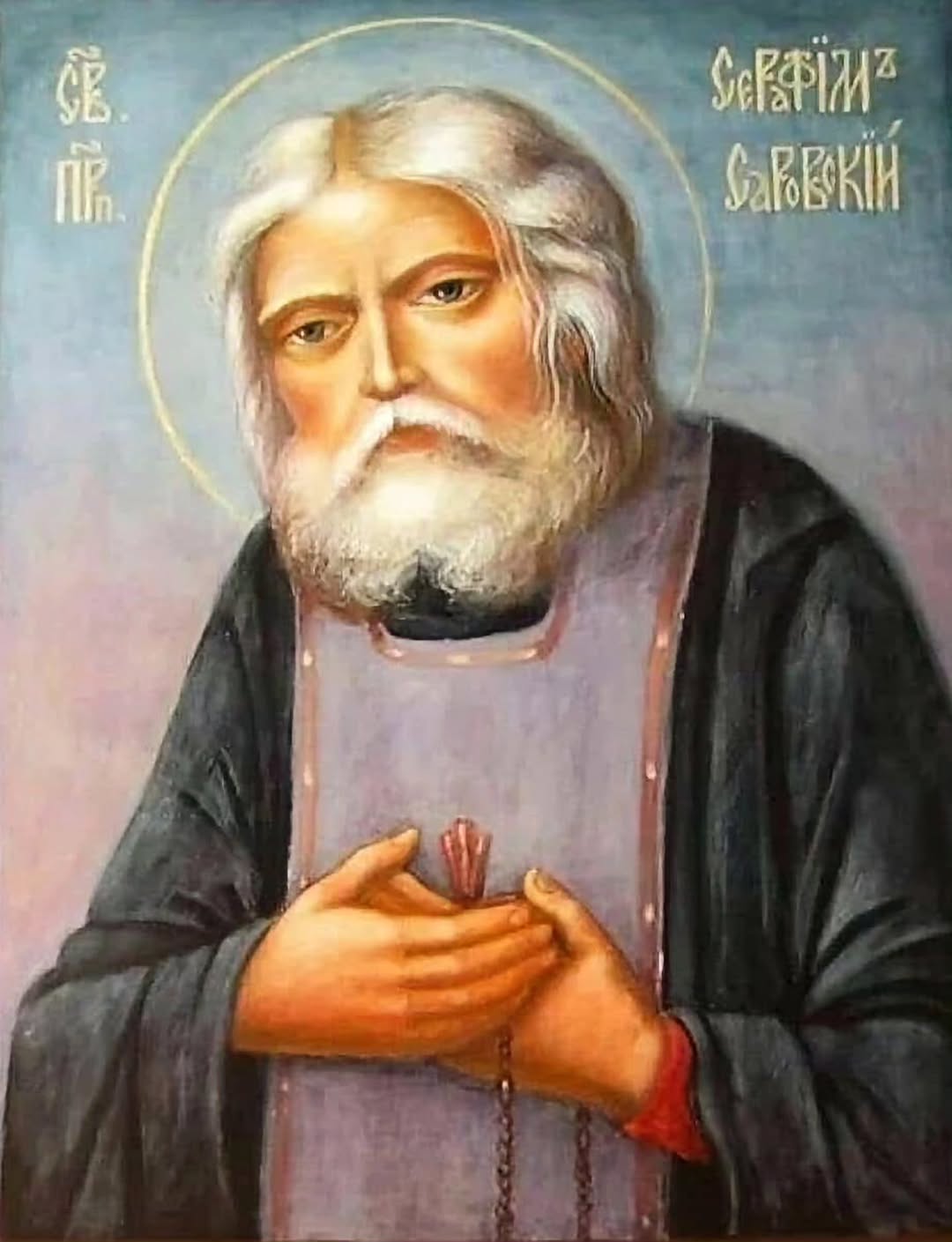
St. Seraphim on Complaint, Silence, and God's Presence

The post shares a saying attributed to St. Seraphim: do not complain against people, God, or fate, because everything is permitted for your good. The author explains that these words were not spoken to reconcile us with suffering but to open our eyes. When complaining stops, meaning begins to appear. The author then gives practical guidance for moments when irritation rises in the heart: do not speak, do not answer, do not judge. Instead, be…

The post shares a saying attributed to St. Seraphim: do not complain against people, God, or fate, because everything is permitted for your good. The author explains that these words were not spoken to reconcile us with suffering but to open our eyes. When complaining stops, meaning begins to appear. The author then gives practical guidance for moments when irritation rises in the heart: do not speak, do not answer, do not judge.

Instead, be silent. Silence is described as the medicine that heals complaining, and in silence God's presence is born.

  • St. Seraphim advises not to complain against people, God, or fate
  • Everything is permitted for one's good
  • The purpose is to open eyes, not to accept suffering passively
  • When irritation rises, the remedy is silence: do not speak, answer, or judge
  • Silence heals complaining and becomes the place where God's presence is born
Read more

God owes nothing for fasting and church attendance, speaker warns

The speaker warns against a transactional mindset in which a person believes God owes them because they fast on Wednesdays and Fridays, attend church, and keep the fasts as the Church requires. This attitude is identified as pride and wrong thinking. The speaker explains that God does not operate by transactions; He gives to both the good and the evil. What God seeks is humility and contrition. The discussion turns on the distinction between…

The speaker warns against a transactional mindset in which a person believes God owes them because they fast on Wednesdays and Fridays, attend church, and keep the fasts as the Church requires. This attitude is identified as pride and wrong thinking. The speaker explains that God does not operate by transactions; He gives to both the good and the evil.

What God seeks is humility and contrition. The discussion turns on the distinction between outward observance and inward disposition. A person may think that keeping the prescribed fasts and attending services creates an obligation on God's part. The speaker rejects this calculation. God's giving is not conditioned on human performance.

The good and the evil alike receive from Him. The required response is not a tally of practices but a humble and contrite heart.

Key moments

  1. A person may think that fasting on Wednesdays and Fridays, going to church, and keeping fasts obligates God.
  2. This mindset treats the relationship with God as a transaction.
  3. Such an attitude is pride and incorrect thinking.
  4. God does not act on a transactional basis.
  5. God gives to both the good and the evil.
  6. What God requires is humility and contrition.
Read more

Love requires freedom; the heart as chandelier needing cleaning

The speaker explains that love and freedom cannot exist apart from each other. Love without freedom becomes violence, and freedom without love becomes anarchy. God gave human beings free will because He is power but never forces Himself on anyone; He stands at the door of the heart and knocks. The heart is compared to a beautiful chandelier created to shine and give warmth. From birth, layers of dust accumulate on the heart over decades, twenty,…

The speaker explains that love and freedom cannot exist apart from each other. Love without freedom becomes violence, and freedom without love becomes anarchy. God gave human beings free will because He is power but never forces Himself on anyone; He stands at the door of the heart and knocks.

The heart is compared to a beautiful chandelier created to shine and give warmth. From birth, layers of dust accumulate on the heart over decades, twenty, thirty, forty, fifty years. This dust prevents the heart from shining and warming as God intended.

The work of the Christian life is to clean the heart through repentance, liturgical life, and life in and with Christ so that it can function as created.

Key moments

  1. Love and freedom are inseparable; love without freedom becomes violence, freedom without love becomes anarchy.
  2. God gave free will because He is power but never violent; He knocks at the door of the heart and waits to be invited in.
  3. The heart is like a beautiful chandelier created to shine and give warmth.
  4. From birth, layers of dust accumulate on the heart over 20, 30, 40, 50 years.
  5. The dust prevents the heart from shining and warming as it should.
  6. The task is to clean the heart through repentance, liturgical life, and life in Christ and with Christ.
  7. Cleaning the heart allows it to shine and warm as God originally intended.
CHRISTIANITY UNITED Instagram

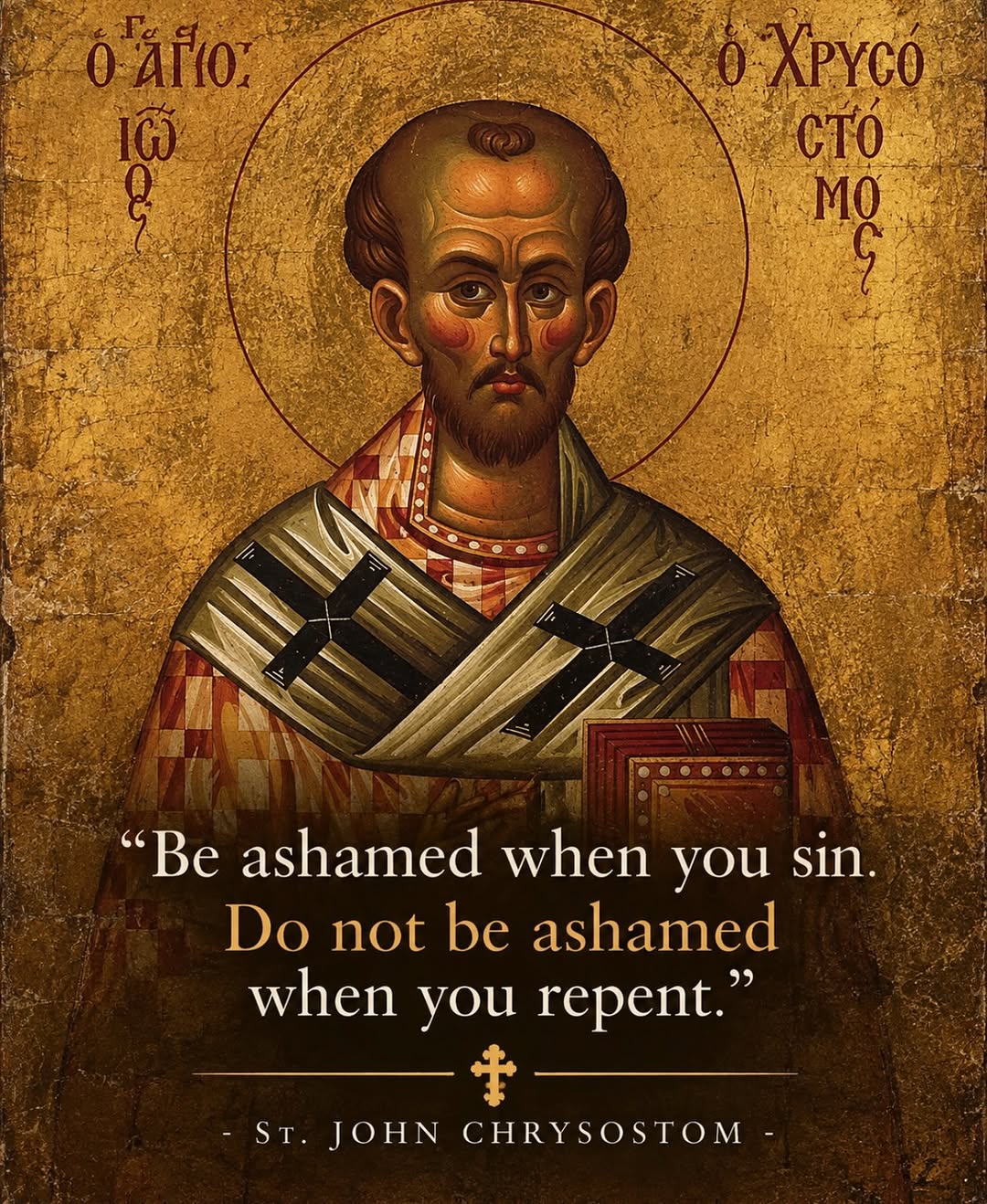
Saint John Chrysostom on shame and returning to God

The post describes a teaching attributed to Saint John Chrysostom about the role of shame in sin and repentance. It states that the devil makes a person feel no shame while committing a sin but fills them with shame when it is time to confess. A person may repeat the same mistakes for months or years, hide them, and convince themselves the actions are not serious. When the moment comes to stand before God and admit the wrongdoing, embarrassment,…

The post describes a teaching attributed to Saint John Chrysostom about the role of shame in sin and repentance. It states that the devil makes a person feel no shame while committing a sin but fills them with shame when it is time to confess. A person may repeat the same mistakes for months or years, hide them, and convince themselves the actions are not serious.

When the moment comes to stand before God and admit the wrongdoing, embarrassment, fear, and a sense of unworthiness arise. Chrysostom, who lived from approximately 347 to 407, was born in Antioch and became Archbishop of Constantinople; his name means Golden-Mouthed because of his preaching gift. He spoke against corruption and injustice and constantly called people to repentance, mercy, and a life centered on Christ.

The post uses the Parable of the Prodigal Son: after wasting his inheritance and falling into misery, the son could have remained in shame but instead rose and returned to his father, who ran to embrace him. This illustrates God's love toward a sinner who sincerely repents. In the Orthodox Church, Confession is presented not as a means of humiliation but as a place of healing where wounds are brought before Christ.

The post concludes by urging anyone with a burden on their conscience not to keep running from God, to be sorry for sin, but never to be ashamed of returning to Christ, and ends with the invocation "Saint John Chrysostom, pray to God for us."

  • The devil removes shame during sin but adds it at confession
  • Chrysostom teaches sin should trouble the conscience, repentance should give hope
  • The Prodigal Son returns to his father who runs to embrace him
  • Orthodox Confession is a place of healing, not humiliation
  • The post urges the reader to return to Christ without shame
Read more

Holy father teaches repeated glorification as spiritual therapy

A holy father teaches that one should repeatedly say "Glory to You, God" aloud so that the air fills with the power of glorification. He explains that this phrase carries energy and acts as a very powerful therapy against dark spirits that bring moods now called anxiety and depression. The father refers to this practice as glorification, or slavoslovlje, and describes it as a strong therapy. While modern medicine uses new catalogs, formulations,…

A holy father teaches that one should repeatedly say "Glory to You, God" aloud so that the air fills with the power of glorification. He explains that this phrase carries energy and acts as a very powerful therapy against dark spirits that bring moods now called anxiety and depression. The father refers to this practice as glorification, or slavoslovlje, and describes it as a strong therapy.

While modern medicine uses new catalogs, formulations, and diagnostic codes to address these conditions, the Church has its own terms and approaches. The father emphasizes that what matters is getting better and breathing freely. He also points to the Jesus Prayer, "Lord Jesus Christ, Son of God, have mercy on me," and the phrase "Glory to You, God for all" as ways that invoke God's grace.

The teaching presents glorification as a spiritual remedy that works through the power of spoken praise to counteract the influence of dark spirits on the human psyche.

Key moments

  1. A holy father says to repeat "Slava ti Bože" (Glory to You, God) aloud so the ether fills with the power of glorification.
  2. The phrase carries energy and is described as a very powerful therapy.
  3. Dark spirits bring moods now called anxiety and depression.
  4. Modern medicine uses new catalogs, formulations, and diagnostic codes.
  5. The Church has its own terms; what matters is getting better and breathing freely.
  6. Glorification (slavoslovlje) is a strong therapy.
  7. The Jesus Prayer, "Lord Jesus Christ, Son of God, have mercy on me", or "Glory to You, God for all" invokes God's grace.
Read more

St. Justin Popović on Serbs perishing from sorcery and unbelief (1964)

In a talk given at Ćelije Monastery on the Feast of the Presentation of the Theotokos in 1964, St. Justin Popović said that Serbian land had been struck by horror upon horror. He stated that Serbian souls perish in unbelief, in lack of faith, in little faith, and from sorcery. He said Serbs have forgotten the Church, which possesses remedies for every sin. He described Serbian women running from sorceress to sorceress, and unhappy men seeking a…

In a talk given at Ćelije Monastery on the Feast of the Presentation of the Theotokos in 1964, St. Justin Popović said that Serbian land had been struck by horror upon horror. He stated that Serbian souls perish in unbelief, in lack of faith, in little faith, and from sorcery. He said Serbs have forgotten the Church, which possesses remedies for every sin.

He described Serbian women running from sorceress to sorceress, and unhappy men seeking a cure for their souls from demons, from the devil. He asked who their educator is, who leads and guides them, and reminded them that they do not know to cross themselves when passing a church. He warned of the hell and eternal torment they prepare for themselves.

At the end of the talk, St. Justin offered a prayer to the Most Holy Theotokos, asking her to lead and guide them, to awaken as their chief educator together with all the saints, with St. Sava and the other Serbian God-pleasers. He prayed that death would not devour them, that the slaughter of Serbian souls would cease, that Serbs would one day rise from all deaths, and that they would serve the One True God in all ages, the Lord Jesus Christ, whom she alone leads, together with all the saints. Amen.

  • St. Justin Popović spoke at Ćelije Monastery in 1964 on the Feast of the Presentation.
  • He warned that Serbs perish from sorcery, unbelief, and forgetting the Church.
  • He described people turning to sorcerers and demons instead of the Church for healing.
  • He asked who guides them and reminded them to cross themselves near churches.
  • He concluded with a prayer to the Theotokos for guidance, an end to spiritual slaughter, and the resurrection of Serbian souls to serve Christ.
Read more