WeOrthodox
EN UA

Orthodox posts, videos and discussions

We follow Orthodox channels, communities and blogs across the web, summarise every post and video, and highlight the conversations with real substance.

Prayer Orthodoxy ® Instagram

Home Censer Tips from a Cypriot Family Tradition

A video opens the Prayer Corner series with instructions for preparing and using a censer at home. The practices come from the speaker's mother, who learned them from her own mother in the village of Patriki in Cyprus. The grandparents there lived modestly as shepherds in a clay house with a dirt courtyard, and the family passed the use of the thymiato down through the generations.

Key moments

  1. 0:00 The practices were taught to the speaker by their mother, who learned them from their grandmother in the village of Patriki in Cyprus, where the grandparents lived modestly as shepherds in a clay house.
  2. 0:39 The speaker begins this prayer corner series hoping it helps viewers develop a deeper prayer life and connection to the Orthodox faith.
  3. 1:17 Line the inside of the censer with aluminum foil to protect it and make removing charcoal and ashes easier.
  4. 1:17 Light the charcoal, then use traditional Orthodox incense or dried olive leaves; the speaker prefers incense from an Orthodox monastery or church, especially when blessed.
  5. 1:48 A family tradition: dried olive leaves are brought to church and given to the priest to be placed near the holy altar for 40 days to receive a blessing, commonly done during the Lenten fast.
  6. 2:22 Once blessed, the dried olive leaves can be placed over the burning charcoal in the censer at home.
  7. 2:54 The next episode will cover the prayers said over the lit censer, how to properly cense the home, and what to do with the remaining blessed ashes.
Read more

Father Nikola Todorović: We Are Called to Forgive

Father Nikola Todorović speaks about forgiveness in a short sermon on mission and church life. He begins with an observation about modern life: today we find time for everything except God, the liturgy, forgiveness and the thought of death. He recalls the teaching of the holy fathers, who say that if you want to save your soul, you should think often on death, because after death there is no repentance. To make this concrete, he asks the…

Father Nikola Todorović speaks about forgiveness in a short sermon on mission and church life. He begins with an observation about modern life: today we find time for everything except God, the liturgy, forgiveness and the thought of death. He recalls the teaching of the holy fathers, who say that if you want to save your soul, you should think often on death, because after death there is no repentance.

To make this concrete, he asks the listener to imagine a neighbour they are judging who dies the next day, leaving one word or one thought unforgiven between them. His counsel is to forgive now rather than wait until someone dies. He urges listeners to seek forgiveness for the sake of God from brothers, sisters, parents and neighbours.

He then notes a church commandment: a person who has not forgiven their neighbours may not receive communion. Finally, he acknowledges that forgiveness is one of the hardest labours in the Christian life, and this is why it entered the Lord's Prayer, where we ask God to forgive us as we forgive our neighbours. The sermon moves from the lack of time we make for spiritual matters, through the remembrance of death, to the practical demand to reconcile before it is too late, ending with the connection between our forgiveness of others and God's forgiveness of us in the prayer Christ taught.

Key moments

  1. Today we have time for everything except God, the liturgy, forgiveness and the thought of death.
  2. The holy fathers say: if you want to save your soul, think more often on death, because after death there is no repentance.
  3. Imagine your neighbour whom you judge dies tomorrow, and you remain holding one word or one thought unforgiven; forgive now instead of waiting for someone to die.
  4. Seek forgiveness from brothers, sisters, parents and neighbours for the sake of God.
  5. A church commandment forbids communion to those who have not forgiven their neighbours.
  6. Forgiving is one of the hardest labours in the Christian life, and that is why it entered the Our Father: forgive us as we forgive our neighbours.
Orthodox Sound YouTube

St. Sebastian the Confessor on Zeal, Fasting, and Communion Without a Blessing

St. Sebastian the Confessor on Zeal, Fasting, and Communion Without a Blessing 11:18

The narration presents the pastoral counsel of St. Sebastian the Confessor, drawing on the book about the Karaganda elder by V. Koroleva, on recorded memories of his spiritual children, and on his writing on communion and fasting. St. Sebastian taught that ascetic discipline requires discernment and that greater severity does not automatically mean greater spiritual progress. He rebuked people who imposed extra fasting before Holy Communion…

The narration presents the pastoral counsel of St. Sebastian the Confessor, drawing on the book about the Karaganda elder by V. Koroleva, on recorded memories of his spiritual children, and on his writing on communion and fasting. St. Sebastian taught that ascetic discipline requires discernment and that greater severity does not automatically mean greater spiritual progress.

He rebuked people who imposed extra fasting before Holy Communion without a blessing, while he blessed the weak and infirm to eat bread and drink hot water on the eve of receiving the Mystaries so they would not become ill. Severely with those who came to the Divine Liturgy at the last minute expecting Communion without preparation, he compared such an approach to sitting down for soup or tea.

For the sick who could no longer attend church, he blessed prayer at home with the Jesus prayer, kept their spiritual life from ending with their bodies. He counseled gradual progress in fasting, prayer and obedience, warning against beginning with extraordinary zeal and then abandoning the struggle. Younger monastics could eat meat until they were gradually accustomed to abstinence, and the sick could take milk or tea with milk during fasts if they explained this in confession.

The narration sets his instructions in their historical context, not as universal rules for fasting or sacramental preparation.

Key moments

  1. 0:00 Fasting, prayer, and preparation for Communion require seriousness but also discernment; greater severity does not automatically mean greater spiritual progress.
  2. 0:33 Saint Sebastian rebuked those who imposed extra fasting days before Communion, yet blessed the weak and infirm to eat bread and drink hot water on the eve of receiving the Mysteries.
  3. 1:34 He was severe with people who came to the Divine Liturgy at the last minute expecting Communion without preparation, even comparing such an approach to sitting down for soup or tea.
  4. 2:04 The sick were permitted milk or tea with milk during fasting periods as a remedy, provided they explained this in confession, and younger monastics could eat meat until gradually accustomed to abstinence.
  5. 3:06 Fasting can become an exercise in self-will when someone assumes that doing more must always be better than doing what has been asked of him.
  6. 4:39 He blessed the infirm to pray where they were, repeating 'Lord, have mercy' or 'God, be merciful to me, a sinner,' since their spiritual life did not end with their bodily limitations.
  7. 7:16 He warned against beginning with extraordinary zeal and then abandoning the struggle, preferring steady perseverance: 'The beginning is not precious. The middle is not precious, but the end is precious.'
  8. 5:10 His guiding principle: 'Everyone needs a different approach. What may be said for one person's benefit may be harmful to another.'
George Instagram discussion

Can an Orthodox Christian marry a non-Orthodox? A father's answer

A man whose son's mother is not religious and whom he has not married in the church answers whether an Orthodox Christian can marry a non-Orthodox person. The church, he says, can marry an Orthodox Christian to another Christian baptized in the name of the Father, the Son, and the Holy Spirit, but not to someone who is not baptized. A couple living together without a church marriage commits a sin that bars them from communion. He recalls that…

A man whose son's mother is not religious and whom he has not married in the church answers whether an Orthodox Christian can marry a non-Orthodox person. The church, he says, can marry an Orthodox Christian to another Christian baptized in the name of the Father, the Son, and the Holy Spirit, but not to someone who is not baptized.

A couple living together without a church marriage commits a sin that bars them from communion. He recalls that his village priest, who has known him since childhood, gave him communion once and then told him not to come again until he is married. That hurt, he says, but it was correct. He stopped receiving communion until he found a spiritual father and confessed everything in his first confession.

That spiritual father knows his partner and her heart, and gave him a blessing to receive communion again while he works through the situation. He says he will not force his partner to be baptized, because faith cannot be forced; he wants to show her by how he lives as his life changes. He warns listeners against looking for a priest who says yes, and urges them instead to be honest with the priest who knows them and accept what he says.

He cites Saint Peter's words that people can be won without a word, just by how we live. He closes by asking whether anyone is in a relationship like his.

Key moments

  1. The church can marry an Orthodox Christian to another Christian baptized in the name of the Father, the Son, and the Holy Spirit, but not to someone who is not baptized.
  2. A couple living together without a church marriage cannot receive communion, because it is a sin.
  3. His village priest, who has known him since childhood, gave him communion once and then told him not to come again until he is married.
  4. He stopped receiving communion until he found a spiritual father and confessed everything in his first confession.
  5. He will not force his partner to be baptized, because faith cannot be forced; he wants to show her by how he lives as his life changes.
  6. His spiritual father, who knows her and her heart, gave him a blessing to receive communion again while he works through the situation.
  7. He warns listeners not to look for a priest who says yes, but to be honest with the priest who knows them and accept what he says.
  8. He cites Saint Peter: people can be won without a word, just by how we live, and asks if anyone is in a relationship like his.
38 opinions in the discussion Married a Catholic Christian, got married in an Orthodox Church and baptized all my kids in an Orthodox Church. It can be done. Read the discussion

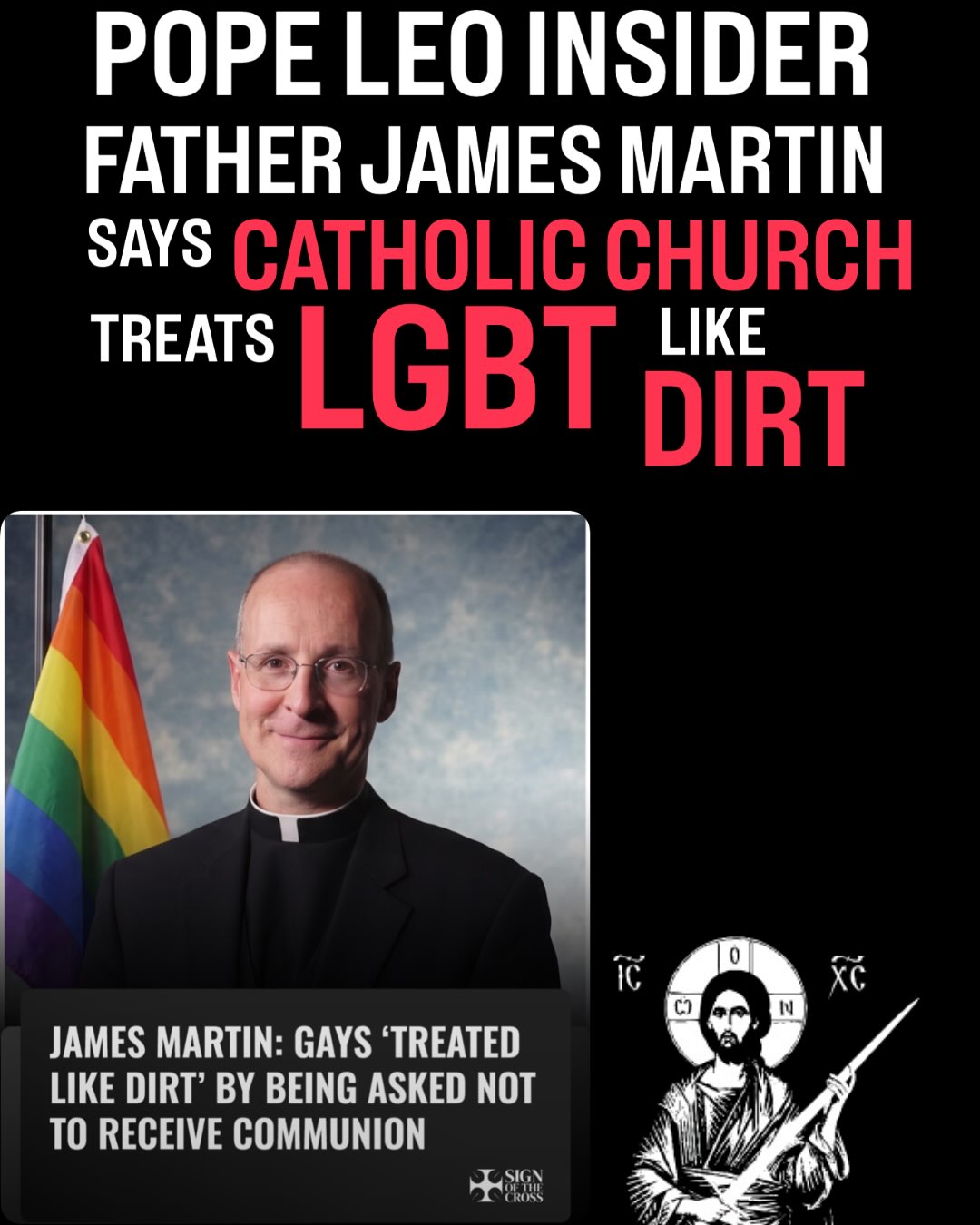
Fr James Martin says the Catholic Church treats LGBT people like dirt over the Eucharist

Fr James Martin says the Catholic Church treats LGBT people like dirt for not giving them the Eucharist.

  • Fr James Martin criticizes the Catholic Church for denying the Eucharist to LGBT people
28 opinions in the discussion Bro, if a priest knows you are in a state of mortal sin, they are required to withhold the Eucharist. Are they not? Read the discussion
Disgruntled Docs with Trust God ☦︎︎︎ Instagram

Saint Symeon the New Theologian on the Eucharist as Real Communion with Christ

The post presents the Orthodox teaching on the Holy Eucharist through the words of Saint Symeon the New Theologian. It states that the Eucharist is not merely a symbol but a real participation in the life of Christ. Saint Symeon emphasized that Christianity is not only about knowing things about God but about encountering Him, receiving Him, and being transformed by His grace. The post cites John 6:56, where Christ says: 'He who eats My flesh…

The post presents the Orthodox teaching on the Holy Eucharist through the words of Saint Symeon the New Theologian. It states that the Eucharist is not merely a symbol but a real participation in the life of Christ. Saint Symeon emphasized that Christianity is not only about knowing things about God but about encountering Him, receiving Him, and being transformed by His grace.

The post cites John 6:56, where Christ says: 'He who eats My flesh and drinks My blood abides in Me, and I in him.' For the Orthodox Church, Holy Communion is not a remembrance of something in the past. It is communion with the living Christ, the medicine of immortality, and a participation in divine life. According to the post, Saint Symeon's spirituality points toward this reality: God does not call us to believe from a distance but to become united to Him and transformed by His presence.

It closes with Psalm 34:8: 'Taste and see that the Lord is good.' The accompanying summary develops the same theme. When we approach the divine mysteries with faith and purity, we receive within ourselves the fire of the Godhead that Christ came to cast upon the earth. This fire consumes sins and illumines souls, making them shine with the brightness of the divine.

The Eucharist is the body and blood of Christ and also the spirit that grants life, light, and divine energy. Whoever partakes becomes one with God, a sharer in the divine nature, and Christ dwells in him as in a living temple. The post ends with Saint Symeon's exclamation: 'How great is the mystery. How unspeakable the condescension of God.'

Key moments

  1. Approaching the divine mysteries with faith and purity brings the fire of the Godhead, the fire Christ came to cast upon the earth, into ourselves.
  2. This fire consumes sins and illumines souls, making them shine with the brightness of the divine.
  3. The Eucharist is the body and blood of Christ and also the spirit that grants life, light, and divine energy.
  4. Whoever partakes becomes one with God, a sharer in the divine nature, with Christ dwelling in him as in a living temple.
  5. Saint Simeon the New Theologian exclaims: 'How great is the mystery. How unspeakable the condescension of God.'
Read more

The Well of Saint Sava at Hilandar: Water, Prophecy, and the End of Time

The well of Saint Sava holds a special place among the holy objects of Hilandar Monastery on Mount Athos. It lies beneath the window of the cell in which Saint Simeon the Myrrh-streaming reposed in 1200. According to tradition, Saint Sava found the spring at this spot during the building of the monastery at the end of the 12th century. The water from the well is still considered miraculous today. An old monastic tradition connects the well to…

The well of Saint Sava holds a special place among the holy objects of Hilandar Monastery on Mount Athos. It lies beneath the window of the cell in which Saint Simeon the Myrrh-streaming reposed in 1200. According to tradition, Saint Sava found the spring at this spot during the building of the monastery at the end of the 12th century.

The water from the well is still considered miraculous today. An old monastic tradition connects the well to the end of time: when the water in it dries up and the miraculous vine of Saint Simeon stops bearing fruit, that moment will mark the end of the age. In more than eight centuries of Hilandar's existence, this has never happened, according to the monastic tradition.

The account presents these details as they are preserved in the monastery's own tradition, linking the physical life of the holy site, the repose of Saint Simeon, the founding work of Saint Sava, and the sign by which, according to the fathers of Hilandar, the last days will be recognized.

Key moments

  1. The well of Saint Sava is among the greatest holy objects of Hilandar Monastery.
  2. It lies beneath the window of the cell where Saint Simeon the Myrrh-streaming reposed in 1200.
  3. Tradition says Saint Sava found the spring there during the building of the monastery at the end of the 12th century, and the water is still considered miraculous.
  4. An old tradition says the drying up of the well and the vine of Saint Simeon ceasing to bear fruit will mark the end of time.
  5. In more than eight centuries of Hilandar's existence, this has never happened, according to monastic tradition.
Read more

Rare 1992 Footage Shows Saint Paisios of Mount Athos at Koutloumousiou Monastery

The post shares an edited historical video recording from 1992, made at the Holy Monastery of Koutloumousiou on Mount Athos. On the recording, Saint Paisios of Mount Athos appears among the fathers of the Holy Mountain. The author describes him as bearing witness through his quiet presence to the monastic life, to humility, and to love for Christ. The post closes with a short prayer asking Saint Paisios to intercede before God, followed by…

The post shares an edited historical video recording from 1992, made at the Holy Monastery of Koutloumousiou on Mount Athos. On the recording, Saint Paisios of Mount Athos appears among the fathers of the Holy Mountain. The author describes him as bearing witness through his quiet presence to the monastic life, to humility, and to love for Christ.

The post closes with a short prayer asking Saint Paisios to intercede before God, followed by hashtags naming the saint, the Holy Mountain, the monastery, and Orthodox Christianity and Orthodox Christians. The post itself contains no further narration or commentary beyond this description of the footage and the prayer, so the card rests on what the author states: the year of the recording, the place where it was made, the saint who appears in it, and the themes the author sees in his presence there.

  • The video was recorded in 1992 at the Holy Monastery of Koutloumousiou on Mount Athos.
  • It shows Saint Paisios of Mount Athos among the fathers of the Holy Mountain.
  • The author sees his quiet presence as a witness to monastic life, humility, and love for Christ.
  • The post ends with a prayer asking Saint Paisios to intercede before God.
Read more
Eastern Orthodoxy Daily He/Who/Is Instagram

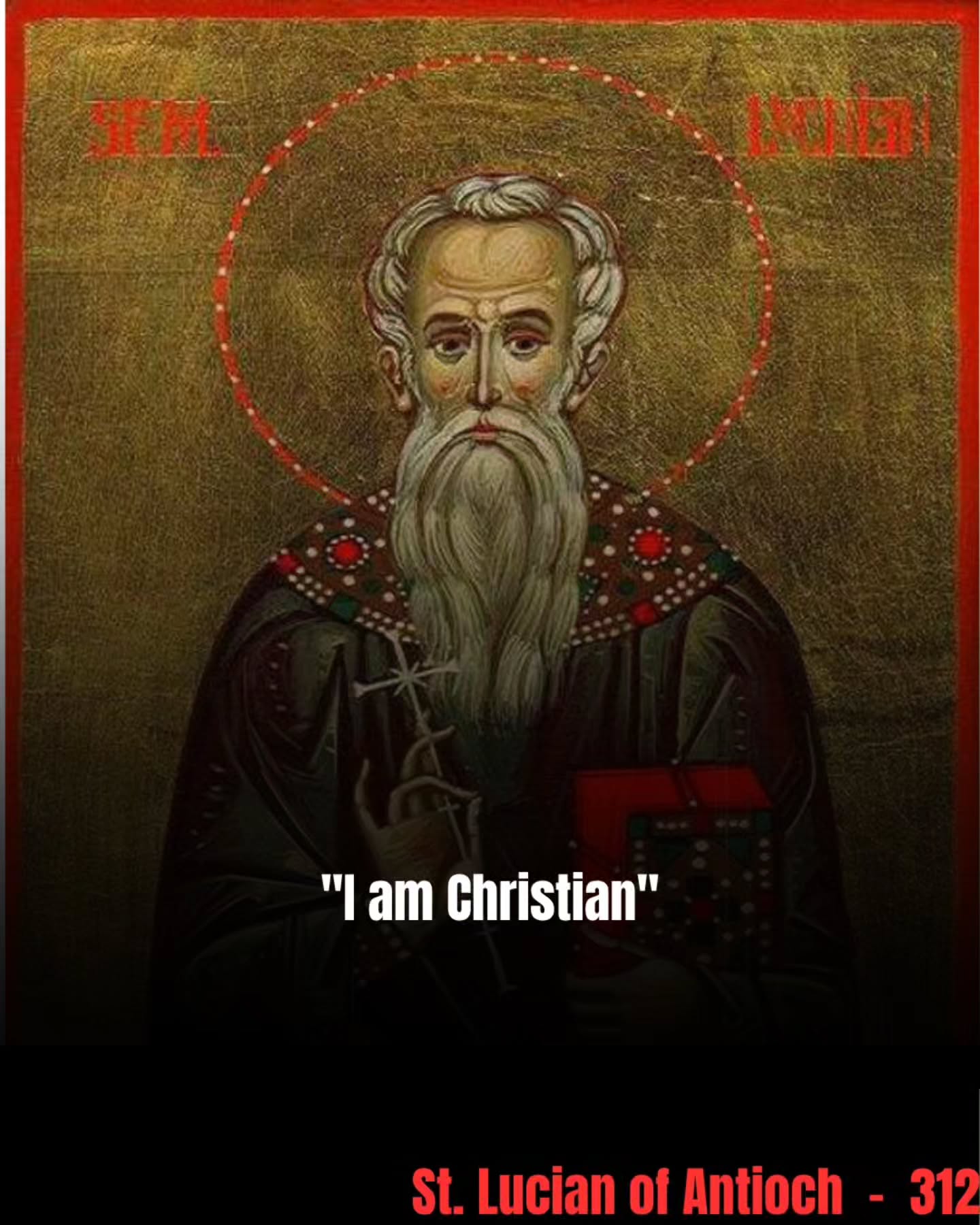
St. Lucian of Antioch: The Martyr Who Celebrated the Eucharist on His Own Chest

The post commemorates St. Lucian of Antioch, a priest, scholar and early Christian martyr remembered on October 15. Lucian died around 312 during the persecution under Emperor Maximinus Daia. The post describes his imprisonment and torture for refusing to renounce Christ: he endured starvation and was forced to lie on sharp pottery fragments. According to the sources the post cites, he celebrated his final Eucharist while in prison, using his…

The post commemorates St. Lucian of Antioch, a priest, scholar and early Christian martyr remembered on October 15. Lucian died around 312 during the persecution under Emperor Maximinus Daia. The post describes his imprisonment and torture for refusing to renounce Christ: he endured starvation and was forced to lie on sharp pottery fragments.

According to the sources the post cites, he celebrated his final Eucharist while in prison, using his own chest as the altar. When he was questioned about his faith, his confession was the short statement: 'I am a Christian.' The post gives his final words before death as the same simple declaration. The text presents these details as an account of loyalty to Christ under persecution and closes with hashtags marking it as a prayer post on Orthodox saints and Christianity.

There is no further discussion in the post itself; it stands as a brief notice of the saint's feast day and the circumstances of his witness and death.

  • St. Lucian of Antioch, priest and scholar, is commemorated on October 15 as a martyr.
  • He died around 312 under Emperor Maximinus Daia after imprisonment and torture for refusing to renounce Christ.
  • He endured starvation and was made to lie on sharp pottery fragments.
  • Sources say he celebrated his final Eucharist in prison, using his own chest as the altar.
  • Questioned about his faith, he confessed: 'I am a Christian,' given as his final words before death.
Read more

Abba Anthony and the Hunter: Why the Monks Were Laughing

A hunter in the desert comes upon Abba Anthony and the brethren enjoying themselves together, and he is shocked. Monks, in his eyes, should not be laughing. Anthony does not argue with him. Instead he asks the hunter to put an arrow in his bow and shoot it, then to shoot again, and then yet again. When the hunter refuses a third time, saying that if he bends his bow so much he will break it, Anthony answers: 'It is the same with the work of God.…

A hunter in the desert comes upon Abba Anthony and the brethren enjoying themselves together, and he is shocked. Monks, in his eyes, should not be laughing. Anthony does not argue with him. Instead he asks the hunter to put an arrow in his bow and shoot it, then to shoot again, and then yet again.

When the hunter refuses a third time, saying that if he bends his bow so much he will break it, Anthony answers: 'It is the same with the work of God. If we stretch the brethren beyond measure they will soon break. Sometimes it is necessary to come down to meet their needs.' The saying teaches that ascetic effort has limits, and that an elder must sometimes set severity aside to meet the needs of those in his care.

The hunter, pierced by compunction, goes away greatly edified by the old man, and the brethren go home strengthened. The accompanying retelling expands the scene with narrative detail: the hunter waits since before dawn downwind of desert scrub, where a missed shot means no food for a day and a broken bow no food for a week. As he draws on a Dorcas gazelle, the upper limb of his bow cracks, the startled shot misses, and the gazelle escapes.

Thirst drives him to a settlement of monks whose disciplined life he respects, and he trades hides and leather goods for their produce. There he finds the monks laughing with their elder Antony, and their laughter stirs disdain in him. Antony asks him to draw the bow further; the hunter refuses for fear of breaking it.

After giving the saying about the work of God, Antony tells the hunter to take food and water on his way out.

Key moments

  1. 0:00 A hunter waits since before dawn near desert scrub; a missed shot means no food for a day, a broken bow no food for a week.
  2. 0:32 As he draws on a Dorcas gazelle, the upper limb of his bow cracks; the startled shot misses and the gazelle escapes.
  3. 1:04 Thirst drives him to a settlement of monks, whose disciplined life he respects, and he trades hides and leather goods for their produce.
  4. 1:34 He finds the monks laughing together with their elder, Antony, and their laughter stirs disdain in him.
  5. 1:34 Antony asks him to draw the bow further; the hunter refuses, saying it will break if bent more.
  6. 2:07 Antony says it is the same with the work of God: stretching the brothers beyond their limits breaks them, and sometimes it is necessary to come down and meet their needs.
  7. 2:07 Antony tells the hunter to take food and water on his way out.
☦️An Orthodox Blog☦️ with Orthodoxy ☦︎ Instagram

16 October: Martyr Longinus the Centurion Who Stood at the Cross

The post marks 16 October and the commemoration of the Martyr Longinus the Centurion, described as the soldier who stood at the Cross of the Lord. The accompanying liturgical recording is in Greek and consists of short, partly fragmentary phrases. It opens with a verse confessing that God acts in heaven and on earth according to His will. Verses of love for the Lord follow, in which the speaker addresses God directly. The recording then…

The post marks 16 October and the commemoration of the Martyr Longinus the Centurion, described as the soldier who stood at the Cross of the Lord. The accompanying liturgical recording is in Greek and consists of short, partly fragmentary phrases. It opens with a verse confessing that God acts in heaven and on earth according to His will.

Verses of love for the Lord follow, in which the speaker addresses God directly. The recording then continues with a confession of God as strength, hope, and protector, spoken in the first person. It ends with the usual liturgical opening, the invocation of the Father, the Son, and the Holy Spirit.

Because the Greek text is fragmentary and partly unclear, the description of the recording limits itself to these identifiable elements and reports them as they were spoken. The post itself carries tags linking it to Christian and Orthodox themes, the church, faith, and the Church Fathers.

Key moments

  1. 0:07 A verse is recited: 'Our God is in heaven and on earth; all things whatsoever He wills, He does.'
  2. 0:07 Words follow about God in heaven, and the prayer 'I love You, Lord.'
  3. 0:37 The speaker confesses God as 'my strength, my God, my hope and my protector.'
  4. 0:37 The passage closes with 'In the name of the Father and of the Son and of the Holy Spirit. Amen.'

Paid spiritual mentorship versus the free keys to the Kingdom

The author recalls a conflict on TikTok with a former felon who built a platform on his criminal record, made money in trucking, and then sold courses to vulnerable people from similar backgrounds. The author says those courses actually taught freight fraud and cheated buyers. He sees the same pattern among new age spiritual creators: they may give real guidance and have testimonies to support it, but exceptions do not change the rule. The world…

The author recalls a conflict on TikTok with a former felon who built a platform on his criminal record, made money in trucking, and then sold courses to vulnerable people from similar backgrounds. The author says those courses actually taught freight fraud and cheated buyers. He sees the same pattern among new age spiritual creators: they may give real guidance and have testimonies to support it, but exceptions do not change the rule.

The world is hurting and people are lost, and selling recycled philosophy as comfort instead of offering humility is something he cannot accept. In the Orthodox view, the keys to the Kingdom are free, given by the God-man Jesus Christ, and their proof is the Gospel and the lives of the Saints. Christ, the Apostles, and the Saints never charged money for healing or miracles.

In the accompanying video, the speaker responds to a clip he identifies as new age, Gnostic, or pantheist. He agrees that God is not a man in the sky apart from us, and Orthodox prayers say God is everywhere present and fills all things. But he objects to mixing God with creation: God made the world from nothing and is present in it without being made of it, and confusing the two is what Saint Paul calls worshipping the creature rather than the creator.

He contrasts sellers of secret knowledge with the Orthodox Church, which hides nothing; monasteries freely teach prayer, fasting, repentance, and humility. He closes by saying such philosophy is meaningless because it does not solve death, which only the God-man Christ solved for all mankind, and that charging thousands of dollars for one-on-one mentorship shows its center is money, not spirituality.

Key moments

  1. 0:00 The speaker identifies the video as new age, Gnosticism, or pantheism, and says this spirituality misses salvation.
  2. 0:30 God made the world from nothing; he is present in it but not made of it, and mixing the two is what Saint Paul calls worshipping the creature rather than the creator.
  3. 0:30 The creator is not the creation; he came to meet us in it, and the invitation is to know him, not just feel him.
  4. 1:01 New age and Gnostic creators sell secret knowledge through courses and mentoring, but there is no secret in the Orthodox Church; monasteries freely teach prayer, fasting, repentance, and humility.
  5. 1:31 The playbook of the saints and elders is laid out for everyone, and new age information is repackaged and recycled philosophy.
  6. 2:03 This philosophy and progress are meaningless if they do not solve the fact that we die; only the God-man Christ solved death, and he solved it for all mankind.
  7. 2:03 The speaker criticizes the lack of humility in charging thousands of dollars for a one-on-one mentorship while people are lost and searching for meaning.
  8. 2:33 The creator says 'F the system' while being part of it, because at the center of it all is money, not spirituality.
Read more

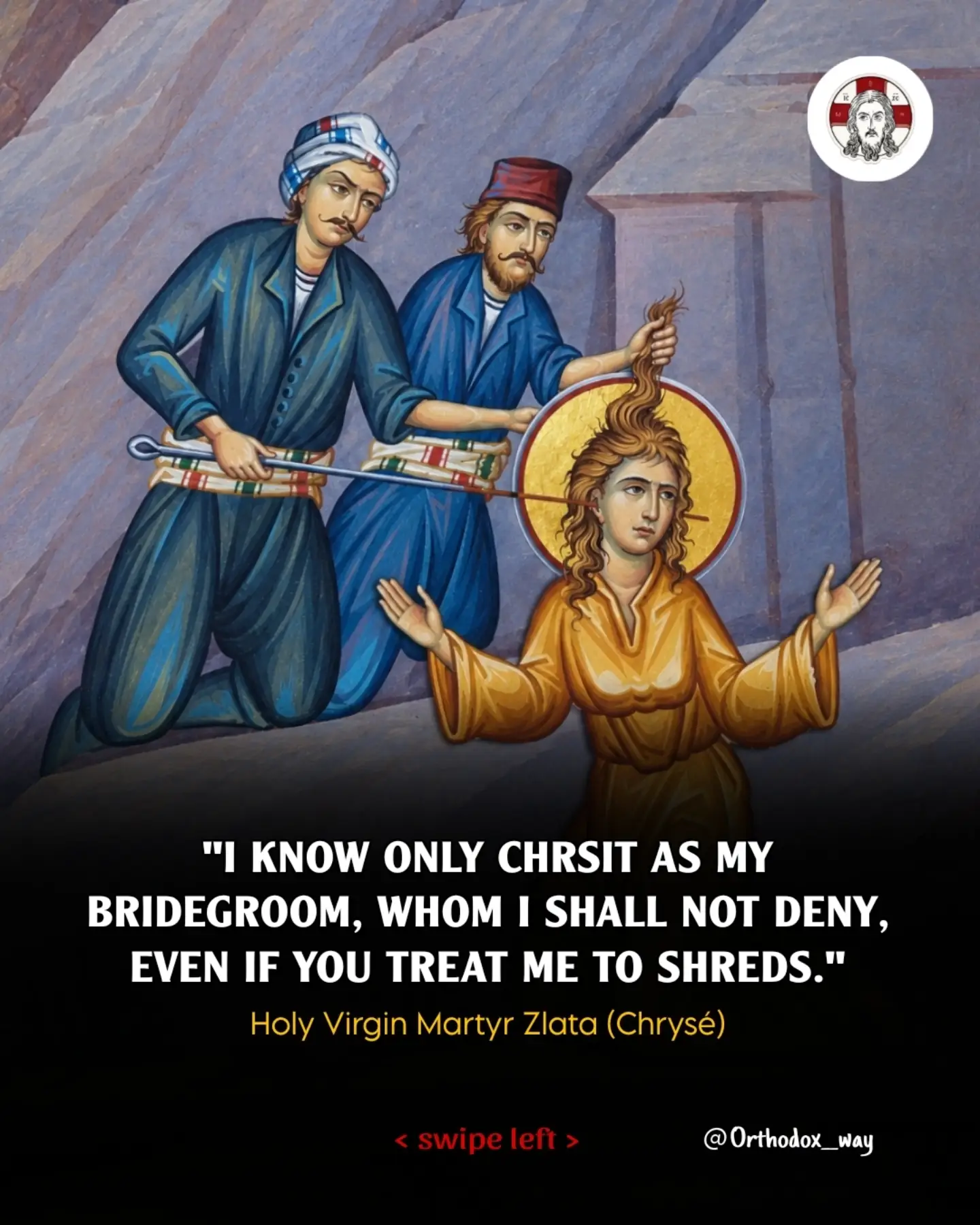
Saint Zlata of Meglena: A New Martyr Who Refused to Renounce Christ

The post tells the life of Saint Zlata of Meglena, a New Martyr of the Eastern Orthodox Church. Zlata was born in the 18th century to a poor peasant family in the village of Slatina in the Meglen region, in what is now Greece, at a time when the Balkans were under Ottoman rule. She grew up known for her piety and virtue. Her life changed when a local Ottoman man kidnapped her and demanded that she convert to Islam and marry him. For months she…

The post tells the life of Saint Zlata of Meglena, a New Martyr of the Eastern Orthodox Church. Zlata was born in the 18th century to a poor peasant family in the village of Slatina in the Meglen region, in what is now Greece, at a time when the Balkans were under Ottoman rule. She grew up known for her piety and virtue. Her life changed when a local Ottoman man kidnapped her and demanded that she convert to Islam and marry him.

For months she endured pressure, false promises of wealth, and psychological manipulation, and she refused to give up her Christian faith. When her captors saw that her resolve could not be broken, they tortured her: she was locked in a dark cell and flogged daily for months. The local authorities then brought her family to the prison, using her weeping parents and sisters to pressure her through fear for their safety.

She refused again and said that her true family was Christ, the Virgin Mary, and the saints. Having exhausted every means of coercion, her tormentors took her outside, tied her to a tree, and cut her body to pieces on October 18, 1795. Local Christians secretly gathered her relics. The Church canonized her as a New Martyr, and the post presents her as an example of steadfast faith under persecution.

  • Saint Zlata was born in the 18th century in Slatina, in the Meglen region of modern-day Greece, to a poor peasant family under Ottoman rule.
  • An Ottoman man kidnapped her and demanded she convert to Islam and marry him; she refused despite months of pressure, promises of wealth, and manipulation.
  • She was imprisoned and flogged daily, and her family was brought to the prison to pressure her; she said her true family was Christ, the Virgin Mary, and the saints.
  • She was martyred on October 18, 1795, tied to a tree and cut to pieces after her captors exhausted all means of coercion.
  • Local Christians secretly collected her relics, and the Eastern Orthodox Church canonized her as a New Martyr.
Read more
Orthodox Health Instagram

Enduring a Job You Hate Is Not Sacrifice, Says Fr. Michael Butler

Fr. Michael Butler, speaking on Episode 82 of the Orthodox Health Podcast, 'The Noonday Demon: Why You Feel Trapped in Your Career,' draws a line between sacrifice and tribute. A sacrifice, he says, has to be ordered toward something greater than yourself: God, your family, a real good, a responsibility worth carrying. Enduring a wretched environment or hateful work for money, status, approval, or ego does not meet that standard. It starts to…

Fr. Michael Butler, speaking on Episode 82 of the Orthodox Health Podcast, 'The Noonday Demon: Why You Feel Trapped in Your Career,' draws a line between sacrifice and tribute. A sacrifice, he says, has to be ordered toward something greater than yourself: God, your family, a real good, a responsibility worth carrying. Enduring a wretched environment or hateful work for money, status, approval, or ego does not meet that standard.

It starts to look less like sacrifice and more like tribute paid to something that was never worthy of it. The speaker then raises the harder question: who is actually paying the price for the life you have built? Sometimes, he notes, it is not only you. The episode centers on the feeling of being trapped in a career and asks listeners to examine what their endurance is actually for.

The post invites viewers to comment 'CAGE' to receive the full episode and to watch the complete conversation.

Key moments

  1. Enduring suffering or work without purpose is not a sacrifice but a tribute.
  2. Sacrifice needs an object: we give something to God.
  3. Work done only for money, status, or ego is a tribute, and the question is who actually pays.
George Instagram

How to Get Holy Water: Three Ways, and Why Not to Buy It Online

The speaker explains that holy water is not something to buy online unless you live far from any church, and gives three ways to obtain it. The first is to ask your priest to bless your home, usually after Theophany. During the blessing he prays for your family, blesses every room, and you can ask him to leave some holy water with you. The second is at Theophany itself, on the 6th of January, or the 19th of January on the old calendar, when the…

The speaker explains that holy water is not something to buy online unless you live far from any church, and gives three ways to obtain it. The first is to ask your priest to bless your home, usually after Theophany. During the blessing he prays for your family, blesses every room, and you can ask him to leave some holy water with you.

The second is at Theophany itself, on the 6th of January, or the 19th of January on the old calendar, when the church blesses the waters and everyone brings bottles to take holy water home. The third is the monthly blessing of water that many churches hold at the start of every month, so you can bring clean bottles and take water home all year.

If your church does not hold such a blessing, the speaker says you can ask your priest to bless water for you, and suggests asking your church when they bless water. At home, holy water should be kept in a clean bottle in your icon corner, as God's blessing in your home. The discussion centers on practical access to holy water through the parish and the priest rather than through purchase, and on the calendar dates for Theophany, the home blessing that follows it, and the simple practice of keeping a supply in the icon corner.

Key moments

  1. Holy water is not something to buy online unless you live in a rural area with no church nearby.
  2. First way: ask your priest to bless your home, usually after Theophany; he prays for your family, blesses every room, and you can ask him to leave some holy water with you.
  3. Second way: at Theophany on the 6th of January, or the 19th of January on the old calendar, the church blesses the waters and everyone brings bottles to take holy water home.
  4. Third way: in many churches, usually at the start of every month, the priest does a short blessing of the water, so you can bring clean bottles and take water home all year.
  5. Ask your church when they bless water, and if they do not, ask your priest to bless some for you.
  6. At home, keep holy water in a clean bottle in your icon corner.
Read more

How Three Can Be One: The Trinity Without Contradiction

A questioner asks how the Trinity, three co-equal and co-eternal persons, can really be one God. The answer states that the Trinity only sounds contradictory when it is defined badly. The Church does not say God is one person and three persons, or one God and three Gods. It affirms one divine essence existing in three hypostases. The persons are distinguished by their relations of origin. The Father is the one Arche, the source and cause within…

A questioner asks how the Trinity, three co-equal and co-eternal persons, can really be one God. The answer states that the Trinity only sounds contradictory when it is defined badly. The Church does not say God is one person and three persons, or one God and three Gods.

It affirms one divine essence existing in three hypostases. The persons are distinguished by their relations of origin. The Father is the one Arche, the source and cause within the Godhead. The Son is eternally begotten of the Father, and the Holy Spirit eternally proceeds from the Father.

The three are not divided in will, essence, power, or energy, so the distinction between them is hypostatic, not essential. St. Gregory the Theologian is quoted: the three have one nature, God, and the union is the Father, from whom and to whom the order of the persons runs its course. The discussion turns on how unity and distinction are held together.

Monarchy gives the unity, and relation gives the distinction. This holds without collapsing the three into one person or splitting God into three separate beings. The reply stays within classical trinitarian terminology: essence, hypostasis, begetting, procession, and monarchy of the Father.

The questioner's puzzle dissolves once the terms are used precisely, since the alleged contradiction comes from mixing categories of person and essence. The answer closes on the same point it opened with: the Church's formulation avoids both errors, the one that merges the persons and the one that divides the Godhead.

Key moments

  1. A questioner asks how three co-equal, co-eternal persons, Father, Son, and Holy Spirit, can be one God.
  2. The Trinity only sounds contradictory if defined badly; the Church affirms one divine essence in three hypostases, not one person and three persons or one God and three Gods.
  3. The Father is the one Arche, the source and cause within the Godhead.
  4. The Son is eternally begotten of the Father, and the Holy Spirit eternally proceeds from the Father; the persons are distinguished by relations of origin.
  5. The persons are not divided in will, essence, power, or energy; the distinction is hypostatic, not essential.
  6. St. Gregory the Theologian says the three have one nature, God, and the union is the Father, from whom and to whom the order of the persons runs its course.
  7. Monarchy gives the unity and relation gives the distinction, without collapsing the three into one person or splitting God into three.
10 opinions in the discussion The Nicene Creed lays it out too. I believe in ONE God the Father Almighty. The son is begotten and the spirit proceeds. So the son and the spirit share the same divine characteristics.… Read the discussion
Kyle YouTube discussion

Stop Blaming Modern Women: A Call to Men to Watch Their Own Heart

Stop Blaming Modern Women: A Call to Men to Watch Their Own Heart 26:29

A speaker addressing a mostly male audience tells men to stop blaming modern women for failed dating and to look at their own sins instead. He warns that constantly consuming content about how bad modern women are only feeds resentment, which is what the devil wants, and that the line between good and evil runs through each person's heart. Marriage, he says, is about salvation, not comfort, and a man must become what he seeks: a woman of…

A speaker addressing a mostly male audience tells men to stop blaming modern women for failed dating and to look at their own sins instead. He warns that constantly consuming content about how bad modern women are only feeds resentment, which is what the devil wants, and that the line between good and evil runs through each person's heart.

Marriage, he says, is about salvation, not comfort, and a man must become what he seeks: a woman of Proverbs 31 will have high standards, so a man must meet them himself. He rejects the phrase 'happy wife, happy life' because it makes the wife's happiness the highest goal instead of holiness. True headship, he argues, follows Christ's example: the King of Kings washed his disciples' feet and gave himself for his bride, the Church, so a husband serves rather than demands service.

He urges men to talk to real women instead of relying on rage-bait podcasts and TikTok clips, noting that many women are also frustrated with modern dating and want marriage, children, and a faithful husband. He looks for a virtuous woman in church communities and says to discern character over appearance, since virtue, not beauty, bears the burdens of marriage.

On 'the ick', he says social media promotes shallow judgments, but some cases reveal real immaturity, insecurity, poor hygiene, or emotional instability that show a man is not ready for marriage. He describes the Proverbs 31 woman as neither radically independent nor the passive, silent wife of some traditional circles: she is strong, wise, industrious, and her husband trusts her judgment.

Using Jane Eyre, he shows that a good woman will not follow a man into sin and will refuse both Rochester's immoral passion and St. John's loveless duty. He closes by urging men to build discipline and prayer now, to trust God's timing if marriage is delayed, and to become the man God wants them to be.

Key moments

  1. 0:02 The speaker tells men to stop blaming women and instead watch their own heart, focus on their sins, and repent daily, since the line between good and evil runs through every human heart.
  2. 2:04 Young men already know society is broken; the question is what they will do about it. Constantly consuming content about bad modern women makes a man more angry and bitter, feeding his passions rather than fighting them, which is exactly what the devil wants.
  3. 3:35 The phrase 'happy wife, happy life' wrongly makes the wife's happiness the highest goal instead of holiness and salvation. Marriage is about salvation, not comfort, and a virtuous woman wants a principled man who will correct and lead her.
  4. 5:38 Using 2 Corinthians on being unequally yoked, he explains that both spouses must pull together spiritually; virtue, not beauty, bears the burdens of marriage.
  5. 7:09 A king is not someone who demands submission but one who takes responsibility for those entrusted to him. Christ, the King of Kings, washed his disciples' feet and sacrificed himself for his bride, the Church, so husbands must love with crucified, selfless love.
  6. 9:43 To understand women, men must actually talk to them in the real world, not through TikTok clips or rage-bait podcasts. Many women are frustrated with modern dating too and want marriage, children, and a faithful husband.
  7. 13:20 He explains 'the ick': while social media promotes shallow judgments, some cases reveal real immaturity, insecurity, poor hygiene, or emotional instability showing a man is not ready for marriage. Women want a man they can respect.
  8. 16:24 The Proverbs 31 woman fits neither modern feminism's radically independent ideal nor the passive, silent wife of some traditional circles. She is strong, wise, industrious, and her husband trusts her judgment, as illustrated by Jane Eyre, who refuses both Rochester's immoral passion and St. John's loveless duty.
12 opinions in the discussion I'm 33 and never married. Connecting with women has been a struggle for me and still is. I quit playing the victim and whining, and instead turned toward Christ. I've learned to focus on… Read the discussion
Giovanni Guaita YouTube

Maxim the Greek: An Italian Humanist Who Became a Russian Monk

Maxim the Greek: An Italian Humanist Who Became a Russian Monk 1:33:18

A lecture by Hieromonk John (Guaita), given on 18 March 2026 at the Alexander Solzhenitsyn Cultural Centre as part of his series 'Christianity and Culture', is devoted to Maxim the Greek (1475-1556). The speaker calls him 'the first intellectual in Rus' and frames the lecture around the dialogue of cultures that his life represents. The talk opens with a reading and discussion of Psalm 145, after which the speaker poses the question 'Who is he?'…

A lecture by Hieromonk John (Guaita), given on 18 March 2026 at the Alexander Solzhenitsyn Cultural Centre as part of his series 'Christianity and Culture', is devoted to Maxim the Greek (1475-1556). The speaker calls him 'the first intellectual in Rus' and frames the lecture around the dialogue of cultures that his life represents.

The talk opens with a reading and discussion of Psalm 145, after which the speaker poses the question 'Who is he?' and turns to historical background. He then describes Maxim's activities, his connection to Savonarola, and his life as a monk. The central part of the lecture follows Maxim's path to Moscow, his conflict with the metropolitan, his imprisonment in a monastery, and the death of the prince, before tracing the final years of his life.

Toward the end the speaker brings in Antonio Possevino and Maxim's treatise on the monastic life, then opens the floor for questions and answers. Among the questions raised is one concerning the filioque, on which the speaker answers at length, followed by a further round of questions.

The lecture is available on the speaker's Boosty page, and the video is divided into chapters marked by timestamps: the opening and Psalm 145, the biographical sections on Savonarola and monastic life, the Moscow period with the conflict and imprisonment, the closing years and Possevino, the treatise on monastic life, and two question-and-answer sessions with the filioque discussion in between.

The full title of the cycle places Maxim's biography in the context of a wider theme: the meeting of Christianity and culture, with Maxim as a figure who moved between Western humanism and Eastern monasticism.

Read more
☦️An Orthodox Blog☦️ with Orthodoxy ☦︎ Instagram

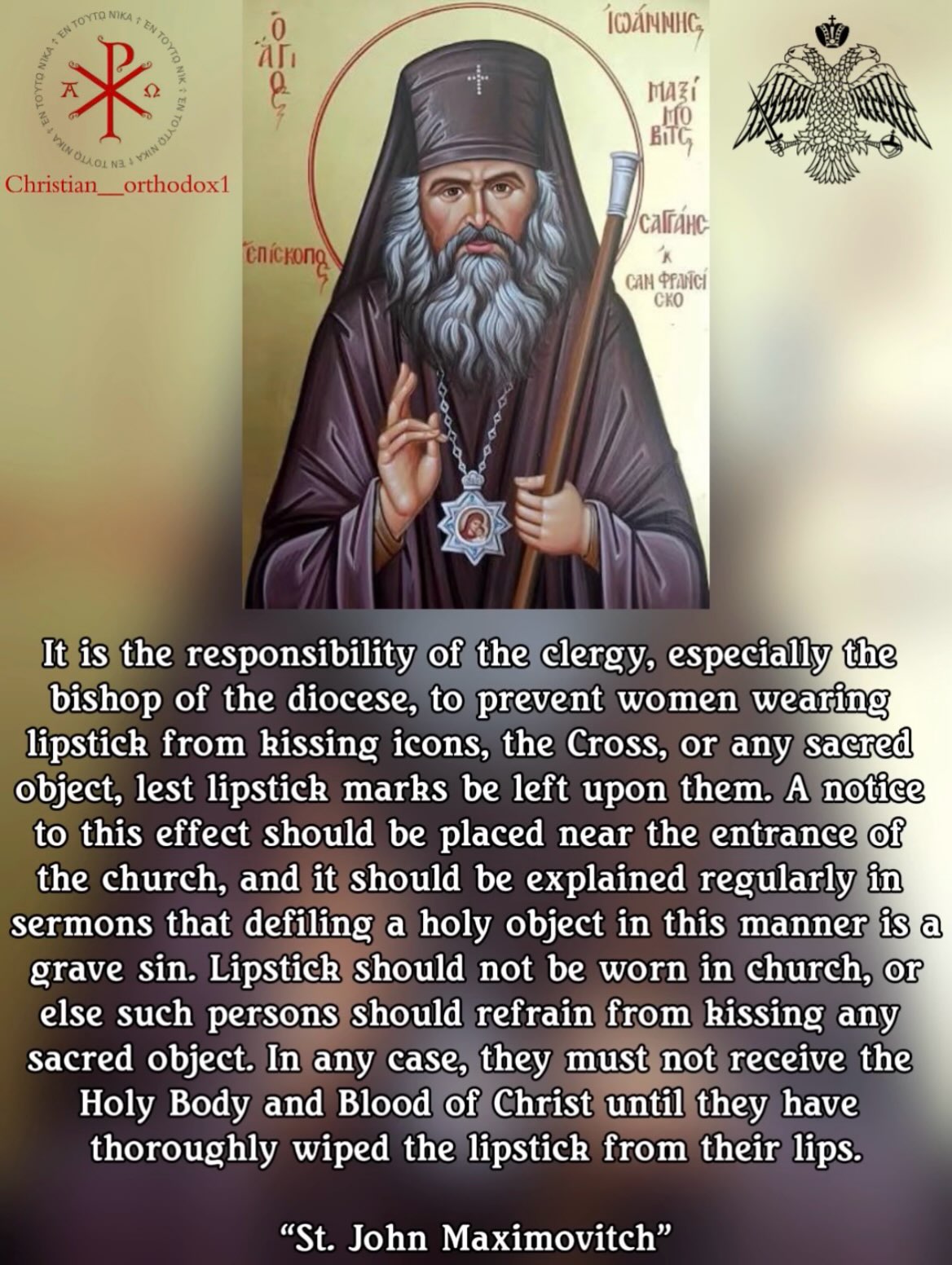
St. John Maximovitch on lipstick and kissing the icons

The post quotes St. John Maximovitch on the practice of women wearing lipstick kissing icons, the Cross, and other sacred objects. According to the quotation, it is the responsibility of the clergy, and especially the bishop of the diocese, to prevent this, because lipstick marks are left upon the holy objects. St. John directs that a notice about this be placed near the entrance of the church and that the matter be explained regularly in…

The post quotes St. John Maximovitch on the practice of women wearing lipstick kissing icons, the Cross, and other sacred objects. According to the quotation, it is the responsibility of the clergy, and especially the bishop of the diocese, to prevent this, because lipstick marks are left upon the holy objects. St. John directs that a notice about this be placed near the entrance of the church and that the matter be explained regularly in sermons, since defiling a holy object in this manner is called a grave sin.

He gives two options for women: either they should not wear lipstick in church, or they should refrain from kissing any sacred object. He adds a further restriction concerning Communion: in any case, such persons must not receive the Holy Body and Blood of Christ until they have thoroughly wiped the lipstick from their lips. The post consists of this quotation alone, attributed to St. John Maximovitch, followed by hashtags on Christian and Orthodox themes.

There is no discussion in the thread; the text stands as a short instruction attributed to the saint on reverence toward sacred objects and preparation for receiving Communion.

  • St. John Maximovitch says clergy, especially the diocesan bishop, must prevent women wearing lipstick from kissing icons, the Cross, or any sacred object.
  • A notice to this effect should be placed near the church entrance.
  • The matter should be explained regularly in sermons, since defiling a holy object this way is called a grave sin.
  • Women should either not wear lipstick in church or refrain from kissing sacred objects.
  • They must not receive the Holy Body and Blood of Christ until they have thoroughly wiped the lipstick from their lips.
George Instagram discussion

Horoscopes 'Just for Fun': Why the Church Says No

The video asks whether Christians may read horoscopes, even as entertainment, and answers from Scripture and church history. It cites the Old Testament ban on divination, omens and fortune telling, and a church council from 692 that ruled Christians who visit fortune tellers should abstain from communion for six years. The speaker gives two reasons horoscopes are a problem. First, they place trust in the stars rather than in God: instead of…

The video asks whether Christians may read horoscopes, even as entertainment, and answers from Scripture and church history. It cites the Old Testament ban on divination, omens and fortune telling, and a church council from 692 that ruled Christians who visit fortune tellers should abstain from communion for six years. The speaker gives two reasons horoscopes are a problem. First, they place trust in the stars rather than in God: instead of praying 'Lord, what is your will for me today?', a person checks what Mercury is doing.

Second, they claim a person's character and future are fixed by the day of birth, which contradicts the Christian belief that God made people free. The video says life is a relationship with the one who made the stars, not something decided by them. It adds that reading horoscopes can feel harmless but gradually teaches the heart to look for answers in the wrong place.

The practical advice: those who have read horoscopes should stop, bring the habit to confession, and pray when they want to know about the future instead of seeking it out.

Key moments

  1. The Old Testament forbids divination, reading omens and telling fortunes: 'there shall not be anyone among you who practices divination, reads omens, and tells fortunes.'
  2. In 692 a church council ruled that Christians who go to fortune tellers should stay away from communion for six years.
  3. First problem: horoscopes put trust in the stars instead of in God, so instead of praying 'Lord, what is your will for me today?' a person checks what Mercury is doing.
  4. Second problem: horoscopes claim your character and future are already written by the day you were born.
  5. Christians believe God made us free; life is not decided by the stars but is a relationship with the one who made the stars.
  6. Reading horoscopes can feel harmless but little by little teaches the heart to look for answers in the wrong place.
  7. If you have done it, stop and bring it to confession, and pray instead when you want to know about your future.
4 opinions in the discussion Numerology, astrology, Feng shui, every kind of superstition all share one thing: the belief that something besides God can affect your life. Read the discussion