WeOrthodox
EN UA

Orthodox posts, videos and discussions

We follow Orthodox channels, communities and blogs across the web, summarise every post and video, and highlight the conversations with real substance.

Salvation requires cooperation with grace, not passive righteousness

0:23

The speaker rejects the claim that a person contributes nothing to salvation. He argues that equating the righteousness of a believer who struggles with sin but has the Holy Spirit with that of any other believer contradicts Scripture's commands to persevere, obey Christ, and not fall away. He describes a scenario where he stands before God next to someone unable to stop drinking yet who has the Holy Spirit, saying both would stand on the same…

The speaker rejects the claim that a person contributes nothing to salvation. He argues that equating the righteousness of a believer who struggles with sin but has the Holy Spirit with that of any other believer contradicts Scripture's commands to persevere, obey Christ, and not fall away. He describes a scenario where he stands before God next to someone unable to stop drinking yet who has the Holy Spirit, saying both would stand on the same level of righteousness under that view.

He references Romans, stating that God will render to each one according to his works. He concludes that salvation cannot be earned but requires free cooperation with God's grace.

Key moments

  1. The speaker states that he contributes zero to his salvation.
  2. He describes standing before God next to someone unable to stop drinking but who has the Holy Spirit, saying both stand on the same level of righteousness.
  3. He says this view contradicts all of Scripture when it tells us to persevere, obey Christ, and not fall away.
  4. He references Romans, stating that God will render each one according to his works.
  5. He concludes that we cannot earn salvation but must freely cooperate with God's grace.
Read more
Timothy Instagram discussion

Orthodox life is intentionally inconvenient; conversion requires deep roots, not arguments

1:53

The speaker addresses inquirers and catechumens coming from Protestantism, explaining that the Orthodox life is intentionally inconvenient. Fasting, prayer, prostrations, and standing through services are not designed to be easy; this inconvenience is part of how Christ changes a person through self-denial and cross-bearing. Converts must know exactly why they are becoming Orthodox and build a solid case for the church's authority, the real…

The speaker addresses inquirers and catechumens coming from Protestantism, explaining that the Orthodox life is intentionally inconvenient. Fasting, prayer, prostrations, and standing through services are not designed to be easy; this inconvenience is part of how Christ changes a person through self-denial and cross-bearing. Converts must know exactly why they are becoming Orthodox and build a solid case for the church's authority, the real presence of Christ in the Eucharist, the efficacy of baptism for salvation, and the honor due to holy tradition.

The initial excitement of conversion will fade, so the foundation must be deeper than finding Orthodoxy countercultural. The speaker warns that argument will not bring loved ones into the faith. Instead, converts should answer questions with gentleness, love, and respect, while the primary witness is a life that becomes more patient, humble, forgiving, and prayerful.

If conversion only makes a person more argumentative, that is a poor witness; but if Christ is truly formed in them, that speaks louder than a hundred debates, as Christ said to let your light shine so others see good works and glorify the Father. The goal is to become the kind of Christian the Orthodox Church claims to produce, echoing St. Ignatius of Antioch: not merely to be called a Christian but actually to be one.

Converts should speak with their spiritual father about navigating relationships and not rely only on internet advice.

Key moments

  1. The Orthodox life is inconvenient in a good way, fasting, praying, prostrations, standing for liturgy, and this inconvenience is part of what changes a person, because Christ called us to deny ourselves and take up the cross, which was never meant to be convenient.
  2. Converts must know why they are choosing Orthodoxy and build an airtight case for the church's authority, the Eucharist as Christ's body and blood, baptism as efficacious for salvation, and the honor due to holy tradition, because the novelty wears off and a deeper foundation is needed.
  3. No one is argued into the faith; questions should be answered with gentleness, love, and respect, but the primary witness is a life becoming more patient, humble, forgiving, and prayerful, more like Christ.
  4. If conversion only makes a person more argumentative, that is a poor witness; but if Christ is truly formed in them, that speaks louder than a hundred debates, as Christ said to let your light shine so others see good works and glorify the Father.
  5. The goal is to become the kind of Christian the Orthodox Church claims to produce, echoing St. Ignatius of Antioch: not merely to be called a Christian but actually to be one.
  6. Converts should speak with their spiritual father about navigating relationships and not rely only on internet advice.
12 opinions in the discussion I'm Roman Catholic and I love my Orthodox brothers and sisters. Can't wait for our churches to be out of schism someday. We are the two lungs of the apostolic church. Peace and blessings to… Read the discussion
Kyle YouTube discussion

Gen Z's Turn to Historic Orthodoxy Amid Rise of 'Nones'

Gen Z's Turn to Historic Orthodoxy Amid Rise of 'Nones' 11:24

The video examines a century of American religious data showing a massive increase in the religiously unaffiliated, now the fastest-growing group. Over the past 100 years, the rise of "nones" contrasts with the Silent Generation, where nearly everyone identified with a Protestant denomination or Catholicism. Gen Z does not embrace organized cultural religion; the unaffiliated include those who left their faith, deconstructed, or were raised…

The video examines a century of American religious data showing a massive increase in the religiously unaffiliated, now the fastest-growing group. Over the past 100 years, the rise of "nones" contrasts with the Silent Generation, where nearly everyone identified with a Protestant denomination or Catholicism. Gen Z does not embrace organized cultural religion; the unaffiliated include those who left their faith, deconstructed, or were raised without religion.

Most nones are not atheists; they believe in God and the afterlife and describe their religion as "nothing in particular." Religiously unaffiliated people, especially young women, adopt spiritual practices such as yoga, Zen Buddhism, crystals, and astrology, all tracing back to the 1960s San Francisco counterculture. Meanwhile, Christianity's share has stabilized around 60 percent after decades of decline, and Gen Z men are now more religious than Gen Z women, reversing a historical pattern.

The key shift is generational: Gen Z Christians approach faith through intentional conviction rather than cultural inheritance. They are serious and intentional, unlike previous generations who treated Christianity as a cultural identity. Gen Z believers are often convicted converts who study theology, apologetics, Scripture, and church history, and are drawn to historic liturgical traditions like Orthodoxy for depth and stability.

The speaker argues that faith built on personal conviction survives secular environments because it is chosen, not inherited, and that talk of a "Gen Z revival" mistakes emotionalism for the slow work of enculturation. Gen Z Christians seek objective truth and clear doctrine, submitting to historic tradition rather than creating personalized belief.

The discussion centers on how convictional faith differs from cultural religion and why ancient Christianity appeals to serious young believers.

Key moments

  1. 0:00 Over the past 100 years there has been a huge rise in people with no formal religious affiliation, whereas previous generations like the Silent Generation all identified with a Protestant denomination or Catholicism.
  2. 0:30 Gen Z does not embrace organized cultural religion; the fastest growing group is the "nones", people who left their faith, deconstructed, or were raised without religion.
  3. 1:02 Most nones still believe in God and the afterlife; they describe their religion as "nothing in particular" rather than atheism or agnosticism.
  4. 2:07 Religiously unaffiliated people, especially young women, are adopting spiritual practices such as yoga, Zen Buddhism, crystals, and astrology, all tracing back to the 1960s San Francisco counterculture.
  5. 3:09 Gen Z men are now more religious than Gen Z women, reversing the historical pattern, and the Christian share of the U.S. population has stabilized around 60% after decades of decline.
  6. 4:12 The real story is not that Gen Z is the most religious generation, but that Gen Z Christians are serious and intentional, unlike previous generations who treated Christianity as a cultural identity.
  7. 5:13 Gen Z believers are often convicted converts who study theology, apologetics, Scripture, and church history, and are drawn to historic liturgical traditions like Orthodoxy for depth and stability.
  8. 7:15 Faith built on personal conviction survives when cultural support disappears; Gen Z Christians seek objective truth and clear doctrine, submitting to historic tradition rather than creating personalized belief.
9 opinions in the discussion Under "Christendom", lukewarm cultural Christianity was the norm. In the "Post-Christian West", a lively countercultural Christianity is coming up. It's better to be a genuine Christian in… Read the discussion
Athonite Audio YouTube

The Priest as Spiritual Father: Teachings from Elder Paisios and Saints

The Priest as Spiritual Father: Teachings from Elder Paisios and Saints 48:43

Dr. Constantine Cavarnos delivered this homily on April 3, 1995, to Orthodox priests of New Jersey at the Parish of Christ the Savior in Paramus. The address was sponsored by the Orthodox Clergy Fellowship of Northern New Jersey and the New Jersey Deanery of the Orthodox Church in America. Cavarnos draws on the teachings of contemporary elders and saints to outline how a priest becomes a true spiritual father. Elder Paisios of Mount Athos…

Dr. Constantine Cavarnos delivered this homily on April 3, 1995, to Orthodox priests of New Jersey at the Parish of Christ the Savior in Paramus. The address was sponsored by the Orthodox Clergy Fellowship of Northern New Jersey and the New Jersey Deanery of the Orthodox Church in America. Cavarnos draws on the teachings of contemporary elders and saints to outline how a priest becomes a true spiritual father.

Elder Paisios of Mount Athos teaches that a priest must first work on his own spiritual transformation through prayer, fasting, vigils, and the Jesus Prayer. Paisios states that sermons no longer influence people as they once did; instead, a priest's personal inner work quietly changes parishioners more than direct exhortation. This work involves turning attention inward to uproot faults and plant virtues, requiring effort and humble reading of the Philokalia, the Ladder of Divine Ascent, and the Evergetinos.

Paisios, citing St. Isaiah, describes the process: becoming conscious of faults, opposing them with the mind, hating them, and invoking God's help through prayer. He emphasizes noetic prayer, gathering the nous into the heart and repeating "Lord Jesus Christ, have mercy on me", which purifies and unites the intellect with God.

St. Nectarius of Aegina insists that clergy need broad theological, philosophical, and encyclopedic knowledge to defend Orthodoxy against modern attacks and to be skilled in apologetics. Elder Philotheos Zervakos identifies the qualities of a good confessor: humility, gentleness, patience, discernment, compassion, and love. These are exemplified by St. Arsenios of Paros, who received all with love and gave the medicines of repentance and God's compassion.

The story of St. Arsenios and a repentant harlot illustrates how a spiritual father heals the wounded soul with compassion rather than condemnation, leading to true repentance and imposing therapeutic penances on those who drove her away.

Elder Gabriel warns that a priest's life must be exemplary in word and deed, avoiding politics and worldly distractions, and centering his ministry on faith, hope, and love as the three great virtues of a servant of God.

Key moments

  1. 0:31 Elder Paisios says sermons no longer influence people; a priest must work on himself through spiritual training based on the Holy Fathers, and then parishioners will become better without direct effort.
  2. 1:32 Paisios explains that work on oneself means turning attention inward to uproot faults and plant virtues, requiring effort and reading the Philokalia, Ladder of Divine Ascent, and Evergetinos with humility and prayer.
  3. 3:03 St. Paisios, citing St. Isaiah, teaches that faults are uprooted by becoming conscious of them, opposing them with the mind, hating them, and invoking God's help through prayer, using anger according to nature against negative dispositions.
  4. 4:07 Paisios emphasizes prayer of the heart (Jesus Prayer) with fasting and vigils; St. Nicodemus describes noetic prayer as gathering the nous into the heart and repeating "Lord Jesus Christ have mercy on me," which purifies and unites the nous with God.
  5. 10:23 St. Nectarius of Aegina states that clergy must possess theological, philosophical, and encyclopedic knowledge to refute heresies and defend the faith, and must be skilled in argumentation (apologetics).
  6. 22:24 Elder Philotheos Zervakos identifies the qualities of a good confessor, humility, gentleness, patience, discernment, compassion, and love, exemplified by St. Arsenios of Paros, who received all with love and gave the medicines of repentance and God's compassion.
  7. 24:29 The story of St. Arsenios and the repentant harlot shows how a spiritual father heals the wounded soul with compassion rather than condemnation, leading to true repentance and imposing therapeutic penances on those who drove her away.
  8. 43:43 Elder Gabriel warns that a priest's life must be exemplary in word and deed, avoiding politics and worldly scandals, and centering his ministry on faith, hope, and love as the three great virtues of a servant of God.
George Instagram

The Lord's Prayer and the condition of forgiveness

1:17

The speaker warns that praying the Our Father while holding a grudge may actually ask God not to forgive you, because the prayer links God's forgiveness to our forgiveness of others. Jesus reinforces this directly after teaching the prayer, saying clearly that if you do not forgive others their trespasses, neither will your Father forgive your trespasses. The phrase "forgive us our trespasses as we forgive those who trespass against us" means we…

The speaker warns that praying the Our Father while holding a grudge may actually ask God not to forgive you, because the prayer links God's forgiveness to our forgiveness of others. Jesus reinforces this directly after teaching the prayer, saying clearly that if you do not forgive others their trespasses, neither will your Father forgive your trespasses.

The phrase "forgive us our trespasses as we forgive those who trespass against us" means we ask God to forgive us in the same way we forgive others. Forgiveness is not pretending harm didn't happen, trusting the person again, or saying what they did was okay. It is a decision to stop carrying the offense and give it to God as judge.

Forgiveness usually starts as a decision, not a feeling. The speaker suggests a practical step: start tonight by saying the person's name in prayer, "Lord, bless them," and repeat it daily until your heart follows. Every time you pray the Our Father, you might be asking God not to forgive you if you hold a grudge, so this practice addresses the condition Jesus sets.

Key moments

  1. Every time you pray the Our Father, you might be asking God not to forgive you if you hold a grudge.
  2. The phrase "forgive us our trespasses as we forgive those who trespass against us" means we ask God to forgive us in the same way we forgive others.
  3. Jesus says clearly: if you do not forgive others their trespasses, neither will your Father forgive your trespasses.
  4. Forgiving does not mean pretending it didn't happen, trusting the person again, or saying what they did was okay.
  5. Forgiveness usually starts as a decision, not a feeling.
  6. Start tonight by saying the person's name in prayer: "Lord, bless them," and repeat it daily until your heart follows.
Read more

Elder Thaddeus: thoughts determine life; Christ removes anxiety

The video presents a spiritual teaching on worry, despair, and the remedy found in Christ. Excessive worry is described as leading a person to despair and into contact with hell itself. Holding anxiety in the heart is compared to an atomic bomb that destroys the person when it explodes. The phone and its content may have some legitimate use, but overuse draws a person into countless additional worries. When Christ dwells in the heart, there is…

The video presents a spiritual teaching on worry, despair, and the remedy found in Christ. Excessive worry is described as leading a person to despair and into contact with hell itself. Holding anxiety in the heart is compared to an atomic bomb that destroys the person when it explodes.

The phone and its content may have some legitimate use, but overuse draws a person into countless additional worries. When Christ dwells in the heart, there is no worry, despair, depression, or anxiety, only joy. The teaching references Elder Thaddeus of Vitovnica, who said that the quality of one's thoughts determines the quality of one's life.

A sincere turn toward the Lord brings many solutions because God is truth itself and never lies. God helps the one who takes the first step, granting ten more steps in return.

Key moments

  1. Excessive worry leads a person to despair and into contact with hell.
  2. Holding worry in the heart is like an atomic bomb that destroys you when it explodes.
  3. The phone and its content may serve some good, but overuse draws a person into a million more worries.
  4. If Christ is in the heart, there is no worry, despair, depression, or anxiety, only joy.
  5. Elder Thaddeus said: "What kind of thoughts you have, such is your life."
  6. Sincere turning to the Lord brings many solutions, because God is truth itself and does not lie.
  7. God helps the one who takes the first step, giving ten more steps in return.
Read more

Theosis: the goal of Christian life beyond morality

The speaker explains that the goal of Christian life in the Orthodox Church is theosis, a real ontological transformation guarded since the apostolic era. The purpose is not simply to be a good person or avoid hell, but to enter into intimate, living, eternal union with God. God became man to raise humanity to this union, not only to forgive sins. Second Peter 1:4 states that believers are called to become partakers of the divine nature. St.…

The speaker explains that the goal of Christian life in the Orthodox Church is theosis, a real ontological transformation guarded since the apostolic era. The purpose is not simply to be a good person or avoid hell, but to enter into intimate, living, eternal union with God. God became man to raise humanity to this union, not only to forgive sins.

Second Peter 1:4 states that believers are called to become partakers of the divine nature. St. Athanasius the Great says God became man so that man might become God. St. Irenaeus of Lyons wrote that Christ became what we are to make us what He is.

St. Gregory the Theologian also affirms this teaching. Theosis does not mean humans become God by essence; only the Holy Trinity is God by nature. Rather, through uncreated grace, the sacraments, and spiritual ascent, believers are divinized by participation in God's uncreated energies. Humanity was created to receive the uncreated light, not for a moral code or lukewarm religion.

Key moments

  1. The speaker says we must stop thinking the goal of Christian life is simply being a good person or avoiding hell.
  2. The Orthodox Church guards the truth of theosis or deification, which changes everything about existence and eternal destiny.
  3. From the apostolic era, Christians understood salvation as a real ontological transformation, not merely judicial forgiveness or legalistic absolution.
  4. God became man not only to forgive sins but to raise us to an intimate, living, eternal union with Him.
  5. Second Peter 1:4 states we are called to be partakers of the divine nature.
  6. St. Athanasius the Great says God became man so that man might become God.
  7. St. Irenaeus of Lyons wrote that Christ became what we are to make us what He is.
  8. This does not mean humans become God by essence; only the Holy Trinity is God by nature.
Read more
r/OrthodoxChristianity Reddit discussion

Can someone explain why Patriarch Bartholomew is hated?

As an Orthodox Christian, I think I should be cautious about judging clergy, since I might be deeply mistaken. Being Bulgarian, I have seen the Patriarch's current visit to my country provoke insults, hatred, and criticism. The negative remarks come from both a harshly judgmental stance and a seemingly Christian one, from churchgoers and from people who do not attend church but are full of hate. The attacks are both political and church-related.…

As an Orthodox Christian, I think I should be cautious about judging clergy, since I might be deeply mistaken. Being Bulgarian, I have seen the Patriarch's current visit to my country provoke insults, hatred, and criticism. The negative remarks come from both a harshly judgmental stance and a seemingly Christian one, from churchgoers and from people who do not attend church but are full of hate. The attacks are both political and church-related.

Can someone help me understand the full picture? Is the situation in Ukraine the main issue, or is it his ecumenism? Why is he so controversial, and how should I best approach these topics?

It has been heartbreaking to watch insults fly and divisions grow. We do not need more division in the Orthodox Church, yet we also need honest assessments.

I would appreciate it if someone knowledgeable could weigh in.

God bless you all.

  • Why is Patriarch Bartholomew so hated, especially in Bulgaria during his visit?
  • Is the Ukraine issue the primary cause, or his ecumenical activity?
  • Why is he so controversial overall?
  • How should one approach these topics?
  • The post expresses sorrow over division and insults, and a desire for honest assessment.
16 opinions in the discussion There are three problems here. First, ecumenism. Some people freak out over the slightest contact with Catholics, but others are legitimately bothered that Pat. Bartholomew spends more time… Read the discussion
☦️An Orthodox Blog☦️ with Orthodoxy ☦︎ Instagram

St. John of Kronstadt: Pray for Others' Salvation as Your Own

0:30

The post consists of a single passage attributed to St. John of Kronstadt. The saint describes a condition: if you suffer for the sufferings of others and for the distress of their souls, to the point that this leads you to pray for them with a sorrowful and contrite heart. He then gives a directive: pray to God to have mercy on them and forgive their sins, just as you pray for yourself that He may forgive your own transgressions. He specifies:…

The post consists of a single passage attributed to St. John of Kronstadt. The saint describes a condition: if you suffer for the sufferings of others and for the distress of their souls, to the point that this leads you to pray for them with a sorrowful and contrite heart. He then gives a directive: pray to God to have mercy on them and forgive their sins, just as you pray for yourself that He may forgive your own transgressions.

He specifies: ask God with tears to forgive them. Pray for the salvation of others in the same way that you pray for the salvation of your own soul. The saint then states a consequence: if you succeed in this, and praying in this manner becomes a habit for you, you will receive an abundance of spiritual gifts, the gifts of the Holy Spirit.

He explains the reason: the Holy Spirit loves the soul that cares for the salvation of others, because He Himself, the Holy Spirit, desires to save us all, if we do not resist Him and harden our hearts. He provides a scriptural foundation: "For the Spirit Himself intercedes for us with groanings which cannot be uttered" (Romans 8:26).

The text ends with the attribution "St. There is no further commentary, discussion, or context provided in the source.

  • St. John of Kronstadt teaches that suffering for others should lead to tearful intercessory prayer for their forgiveness and salvation.
  • Believers are to pray for others' salvation with the same intensity as for their own.
  • Habitual prayer of this kind brings an abundance of the gifts of the Holy Spirit.
  • The Holy Spirit loves souls that care for others' salvation because He desires to save all who do not resist.
  • The teaching is supported by Romans 8:26 on the Spirit's unutterable intercession.

Father Alexey Uminsky on crisis of faith as encounter with God

Father Alexey Uminsky on crisis of faith as encounter with God 1:21:28

Father Alexey Uminsky describes crisis of faith as the collapse of rational certainties and external religious forms. He explains that a person discovers clergy can err, church history contains injustices, and emotional comfort in worship fades. The priest distinguishes between crisis as destructive judgment and crisis as divine light revealing truth. He argues that true faith begins not with rules or feelings but with a personal encounter with…

Father Alexey Uminsky describes crisis of faith as the collapse of rational certainties and external religious forms. He explains that a person discovers clergy can err, church history contains injustices, and emotional comfort in worship fades. The priest distinguishes between crisis as destructive judgment and crisis as divine light revealing truth.

He argues that true faith begins not with rules or feelings but with a personal encounter with God, as in Job's experience where God's presence, not explanations, became the answer. Father Alexey criticizes the church for imposing heavy burdens, confusing patriotism with the Gospel, and covering up abuse. He says faithfulness to Christ may require leaving familiar structures.

He emphasizes that spiritual fatherhood is not obligatory for laypeople, that freedom means trust not submission, and that suffering is not identical to the cross. Psychological healing and wise spiritual accompaniment are needed together, but many priests are now silenced from public ministry. The discussion also covers how converts encounter an overwhelming system of external rules, incomprehensible language, and aesthetic beauty that leaves no energy to seek God.

The Greek word 'crisis' means judgment: light entering a dark room reveals both good and evil, and the person either flees feeling deceived or goes deeper. Prayer is described not as sending an SMS to God but as desiring to know and speak with a Person; the liturgy originated from Christians gathering to pray and commune, not from ritual performance.

Father Alexey describes his former state of certainty where faith seemed rational and the path clear, with priests as reliable answer-givers. Crisis arrives when habitual answers lose meaning, the person doubts God and faith, and stands before a wall not knowing where to go. The crisis deepens when one realizes saints, priests, and bishops can err, and that hagiographies contain untruths.

Today's crisis for many thoughtful Christians stems from the church blessing weapons, declaring killing in war not a sin, and replacing the Gospel with patriotism. The way through crisis begins with the question 'Did you meet God?', Job's friends offered rational explanations, but Job insisted on speaking to God directly, and God's presence, not answers, became the resolution.

Key moments

  1. 4:10 Father Alexey describes his former state of certainty where faith seemed rational and the path clear, with priests as reliable answer-givers.
  2. 5:13 Crisis of faith arrives when habitual answers lose meaning, the person doubts God and faith, and stands before a wall not knowing where to go.
  3. 7:16 The crisis deepens when one realizes saints, priests, and bishops can err, and that hagiographies contain untruths.
  4. 11:27 A convert comes to church to learn faith but encounters an overwhelming system of external rules, incomprehensible language, and aesthetic beauty that leaves no energy to seek God Himself.
  5. 14:29 The Greek word 'crisis' means judgment: light entering a dark room reveals both good and evil, and the person either flees feeling deceived or goes deeper.
  6. 23:54 Today's crisis for many thoughtful Christians stems from the church blessing weapons, declaring killing in war not a sin, and replacing the Gospel with patriotism.
  7. 39:36 The way through crisis begins with the question 'Did you meet God?', Job's friends offered rational explanations, but Job insisted on speaking to God directly, and God's presence, not answers, became the resolution.
  8. 46:50 Prayer is not sending an SMS to God but desiring to know and speak with a Person; the liturgy originated from Christians gathering to pray and commune, not from ritual performance.
9 opinions in the discussion The crisis of faith is a very important topic. I came to faith in the late 80s. I joyfully took on all the traditional rules: fasting, morning and evening prayers, weekly services. I… Read the discussion
CHRISTIANITY UNITED Instagram

Cats in Samarkand cathedral recall saints' compassion for animals

1:00

The author describes a family of cats living in St. Alexius Orthodox Cathedral in Samarkand, Uzbekistan. Kittens play and rest beneath the icons while worshippers pray and light candles. The author connects this scene to the tradition of Orthodox saints showing kindness to animals, citing Saint Seraphim of Sarov's friendship with a bear and Saint Gerasimos of the Jordan's friendship with a lion. These examples illustrate that a heart growing…

The author describes a family of cats living in St. Alexius Orthodox Cathedral in Samarkand, Uzbekistan. Kittens play and rest beneath the icons while worshippers pray and light candles. The author connects this scene to the tradition of Orthodox saints showing kindness to animals, citing Saint Seraphim of Sarov's friendship with a bear and Saint Gerasimos of the Jordan's friendship with a lion.

These examples illustrate that a heart growing closer to God becomes more compassionate toward creation. The post also outlines the cathedral's history: built in the early 20th century during the Russian Empire, it suffered during the Soviet period but later returned to religious use. Today it remains an active Orthodox parish in Uzbekistan, where Christians are a small minority. The author reflects that God's creation sometimes offers simple reasons for joy.

Key moments

  1. The speaker says "I will get it out."
Read more

St. Nikon of Optina on acquiring love through forgiveness

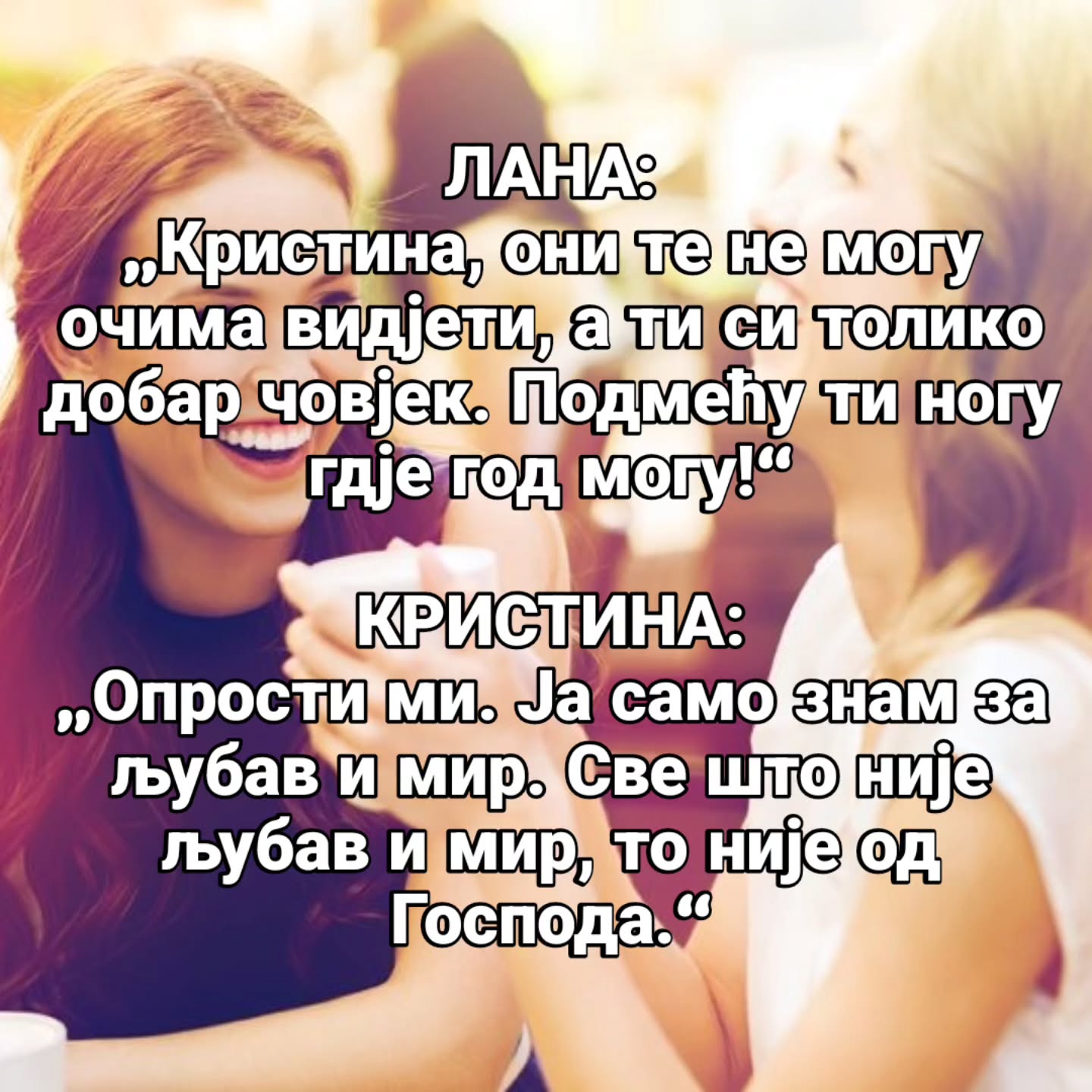
The post presents a saying of St. Nikon of Optina on Christian love. He teaches that one must love every person by seeing the image of God in them. To acquire love, a person must reject every evil and troubled thought, and even more so evil deeds and words, and must forgive all offenses, whether justified or not. The accompanying image shows a brief dialogue: Lana tells Kristina that people cannot see her with their eyes but she is a good…

The post presents a saying of St. Nikon of Optina on Christian love. He teaches that one must love every person by seeing the image of God in them. To acquire love, a person must reject every evil and troubled thought, and even more so evil deeds and words, and must forgive all offenses, whether justified or not.

The accompanying image shows a brief dialogue: Lana tells Kristina that people cannot see her with their eyes but she is a good person, and that she trips her up wherever she can. Kristina replies by asking forgiveness and saying she knows only love and peace, and that whatever is not love and peace is not from the Lord.

  • St. Nikon of Optina: love every person by seeing God's image in them
  • Acquiring love requires rejecting evil thoughts, deeds, and words
  • One must forgive all offenses, justified or not
  • Dialogue illustrates responding to provocation with love and peace
  • Kristina states that whatever is not love and peace is not from the Lord
Discover Orthodox Christianity Facebook

Patriarch Bartholomew Affirms Human Sanctity Amid AI and Robotocracy

The post features a statement by His All Holiness Patriarch Bartholomew, the Ecumenical Patriarch of Constantinople, addressing the challenges of rapid technological change. He notes the upheaval of values and dizzying advances, specifically mentioning artificial intelligence and the impending robotocracy. In response, he proclaims the Church's teaching that nothing is more sacred than the human being, with whom God shared His nature. The quote…

The post features a statement by His All Holiness Patriarch Bartholomew, the Ecumenical Patriarch of Constantinople, addressing the challenges of rapid technological change. He notes the upheaval of values and dizzying advances, specifically mentioning artificial intelligence and the impending robotocracy. In response, he proclaims the Church's teaching that nothing is more sacred than the human being, with whom God shared His nature.

The quote is accompanied by four photographs showing the Patriarch in various liturgical settings: holding a cross and staff, leading a ceremony inside a church, standing before a large icon, and blessing a crowd. The post presents the Patriarch's words as a direct affirmation of human dignity rooted in the Incarnation, set against contemporary technological developments. There is no accompanying discussion or commentary in the provided text.

  • Patriarch Bartholomew identifies rapid change, value upheaval, and technological advances including AI and robotocracy.
  • He declares the Church's proclamation that the human being is most sacred because God shared human nature.
  • The statement grounds human dignity in the Incarnation.
  • Images depict the Patriarch in liturgical vestments performing episcopal duties.

Choosing prayer over retaliation when slandered

A dialogue between two women illustrates a Christian response to false accusation. Lana asks Kristina how she remains calm when many people criticize, judge, and slander her, saying things that are not true. Kristina replies that all people bear the image of God. She suggests her critics may not see her as she is, but speak from their own wounds, fears, or misunderstanding. She states she is not called to judge their hearts. Instead, she has…

A dialogue between two women illustrates a Christian response to false accusation. Lana asks Kristina how she remains calm when many people criticize, judge, and slander her, saying things that are not true. Kristina replies that all people bear the image of God. She suggests her critics may not see her as she is, but speak from their own wounds, fears, or misunderstanding.

She states she is not called to judge their hearts. Instead, she has chosen to pray for them and to look at them with Christ's eyes. She does not return condemnation for condemnation or hatred for hatred. Their words do not have to determine the peace in her soul. She can disagree with their actions, set boundaries, and protect her dignity while still regarding them as people whom God loves.

Her peace depends not on what others say about her, but on the One to whom she has entrusted her heart. The text concludes that not all silence is weakness, not all quiet is fear; sometimes it is a conscious decision to preserve love where others choose condemnation.

  • Critics may speak from their own wounds rather than truth
  • The Christian is not called to judge others' hearts
  • Prayer and seeing others with Christ's eyes replace retaliation
  • Boundaries and dignity can be kept without ceasing to love
  • Peace comes from entrusting the heart to God, not from others' opinions

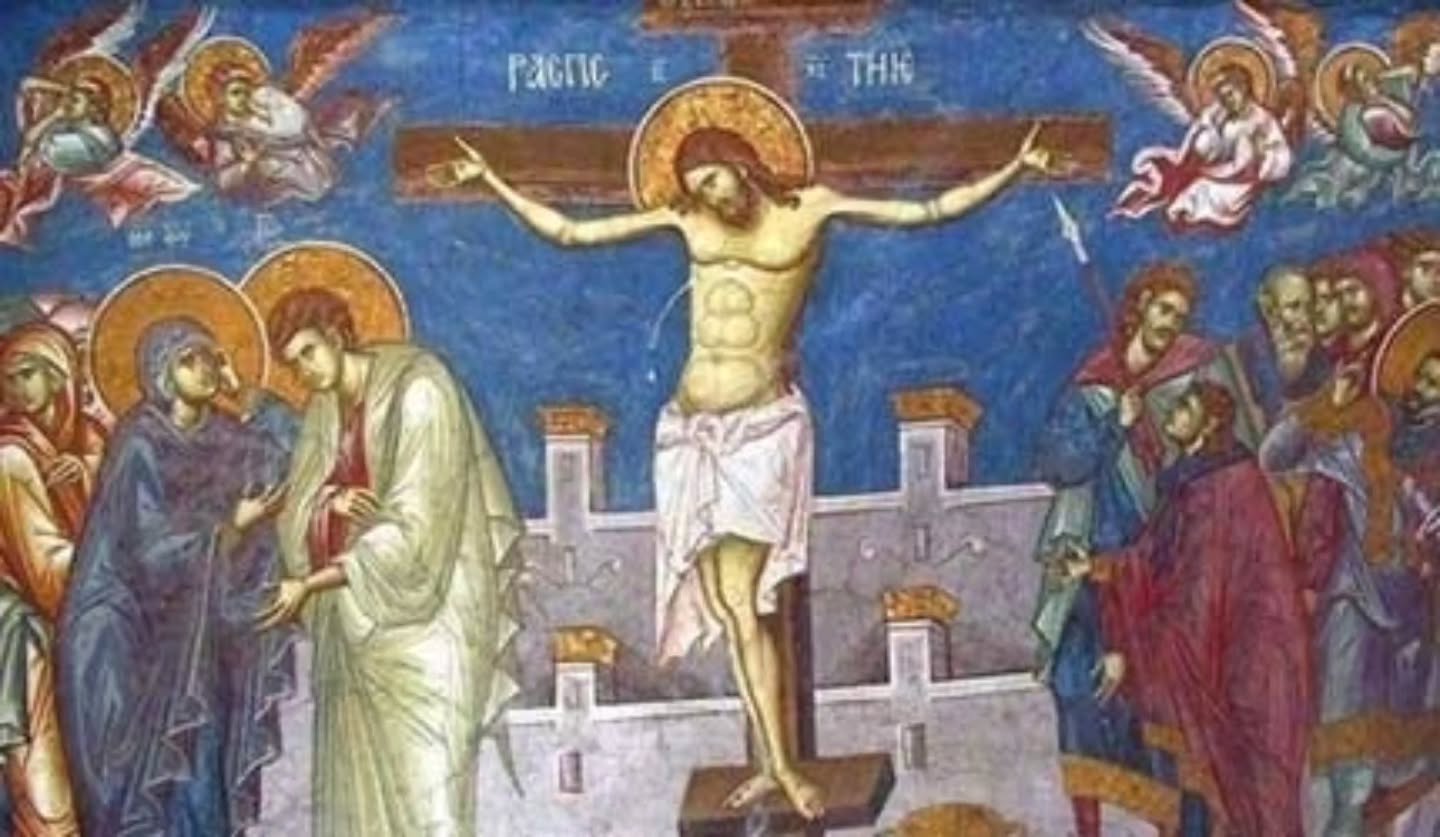
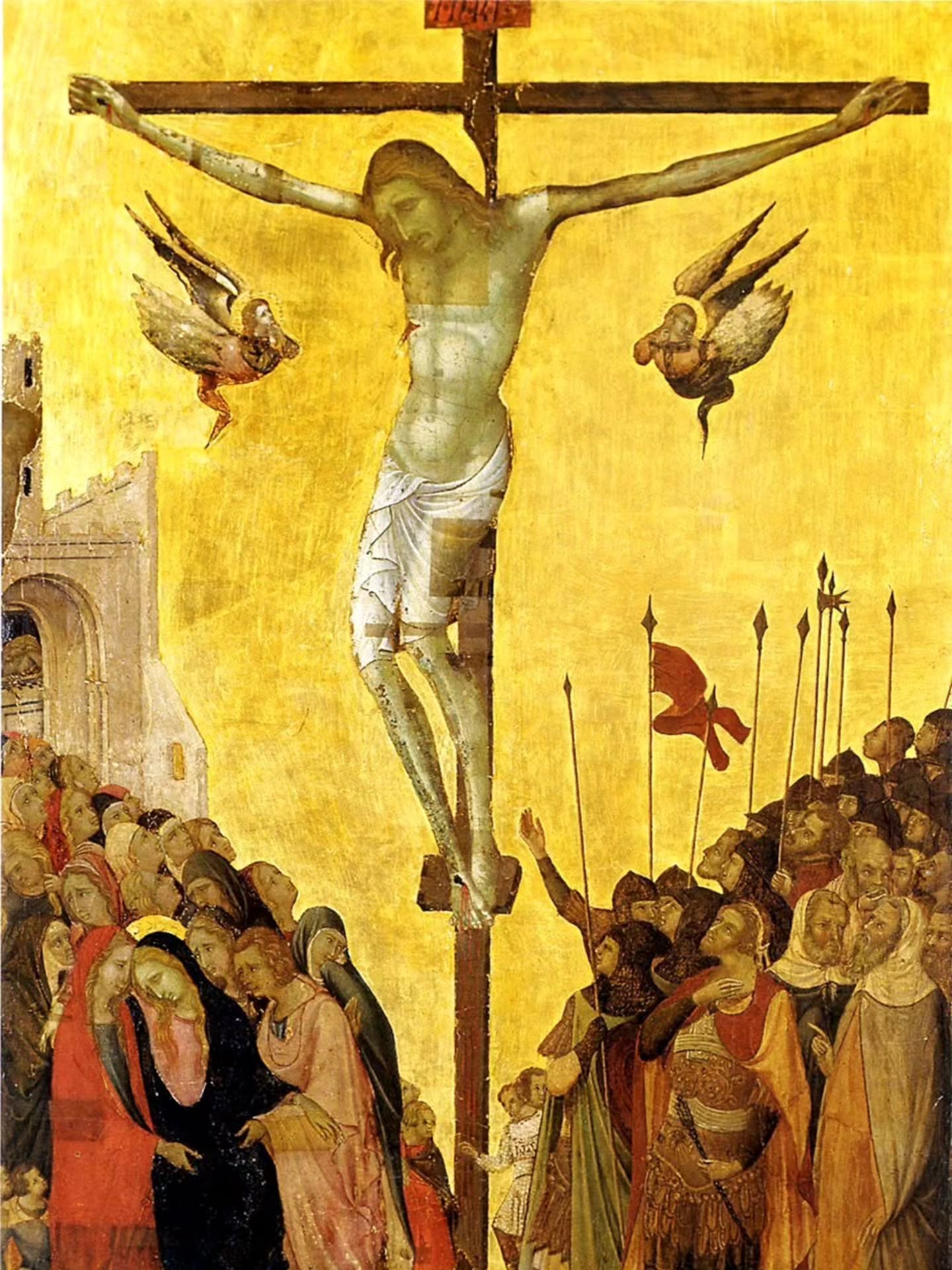
Eight Patristic Reasons for Christ's Crucifixion on the Cross

The author presents a summary of an article from "Prijatelj Božiji" that outlines eight reasons the Holy Fathers give for why Christ was crucified specifically on the Cross. First, crucifixion was regarded in antiquity as a particularly shameful death, demonstrating that Christ's salvation extends to all people regardless of nation or social standing. Second, His body suffered on the Cross so that the Risen Lord would be recognized as the same…

The author presents a summary of an article from "Prijatelj Božiji" that outlines eight reasons the Holy Fathers give for why Christ was crucified specifically on the Cross. First, crucifixion was regarded in antiquity as a particularly shameful death, demonstrating that Christ's salvation extends to all people regardless of nation or social standing.

Second, His body suffered on the Cross so that the Risen Lord would be recognized as the same One who accepted death for humanity. Third, Christ stretched out His arms on the Cross as if to embrace the whole world, calling all people into communion with God. Fourth, the four ends of the Cross signify the universality of God's saving work, encompassing all corners of the earth and all creation.

Fifth, on the Cross Christ defeated the powers of evil, showing that His suffering was not defeat but the beginning of final victory over death. Sixth, just as the disobedience of the first man brought the fall, Christ's obedience unto death on the Cross became the path of renewal for the human race. Seventh, Christ voluntarily took upon Himself the curse and consequences of sin, though He Himself was sinless, to open the way of salvation.

Eighth, by the Cross and His descent into Hades, Christ defeated the devil, conquered the power of death, and opened the path to the Heavenly Kingdom. The Cross is therefore not a sign of final defeat but of God's love, redemption, and victory, revealing the depth of God's providence for humanity and the salvation of the whole world.

  • Crucifixion's shame shows salvation is for all people, not one nation or class
  • Christ's suffering body proves the Risen Lord is the One who died for us
  • Outstretched arms on the Cross embrace the world, calling all to communion with God
  • The Cross's four ends signify the universality of God's saving work
  • Christ's obedience unto death reverses Adam's disobedience and defeats the devil and death
Read more

St. Silouan the Athonite on love and its fruits

The post presents a saying of St. Silouan the Athonite that links the degree of love to four spiritual realities. He states that greater love brings greater suffering of the soul, fuller love brings fuller knowledge, more fiery love brings more flaming prayer, and more perfect love brings a holier life. The text is given in Serbian without additional commentary or discussion.

  • St. Silouan connects the measure of love to the measure of soul suffering
  • Fuller love corresponds to fuller knowledge
  • Fiery love corresponds to flaming prayer
  • Perfect love corresponds to a holier life
Read more
Giovanni Guaita YouTube

Florensky and Men: Priest-Scholars Under Soviet Persecution

Florensky and Men: Priest-Scholars Under Soviet Persecution 1:27:33

The lecture by Hieromonk John (Guaita) examines the lives of Father Pavel Florensky and Father Alexander Men as priest-scholars who remained in the Soviet Union and suffered for their faith and intellect. It outlines the shifting intensity of Soviet persecution from the revolution through the late 1980s, noting periods of relative coexistence and renewed crackdowns. Florensky, a physicist and theologian, invented industrial materials and…

The lecture by Hieromonk John (Guaita) examines the lives of Father Pavel Florensky and Father Alexander Men as priest-scholars who remained in the Soviet Union and suffered for their faith and intellect. It outlines the shifting intensity of Soviet persecution from the revolution through the late 1980s, noting periods of relative coexistence and renewed crackdowns.

Florensky, a physicist and theologian, invented industrial materials and continued scientific work in labor camps while developing a synthetic worldview uniting faith and reason. Men, shaped by the catacomb church, built a vibrant parish near Moscow, wrote a six-volume history of religion and a biography of Christ, and became a spiritual beacon for the intelligentsia during Khrushchev's anti-religious campaign.

Both men chose to stay in Russia, refused to become passive victims, and maintained intellectual dignity under repression. Florensky was executed in 1937; Men was murdered with an axe in 1990 as glasnost advanced, which the speaker attributes to his becoming "too inconvenient" for the remaining repressive structures.

The lecturer divides Soviet church persecution into phases: intense repression in the first twenty years after the revolution, a modus vivendi from the war to Stalin's death, renewed bureaucratic and psychiatric repression under Brezhnev and Andropov, and a significant policy shift beginning in 1988. Florensky taught at VKHUTEMAS in a cassock and attended scientific symposia openly during the 1920s. From 1925 to 1933, his most fruitful creative period coincided with the worst years for Russia's intellectual elite; he invented antifreeze machine oil and a hard plastic known as "Florensky plastic."

While imprisoned in northern camps, Florensky developed permafrost construction technologies still used in Norilsk, Salekhard, and Surgut, and organized industrial iodine and agar-agar production from Solovki seaweed. Men was expelled from the Furmanov Agricultural Institute shortly before graduation because a Marxism-Leninism professor deemed him unreliable and the KGB reported his church attendance.

During Khrushchev's 1958 anti-religious campaign, Men founded Scripture study groups in village parishes that drew increasing numbers of Muscovites, earning him the description "a missionary for the intelligentsia" from Sergei Averintsev. Men was murdered on September 9, 1990 while walking to serve liturgy; despite high-level interest from Gorbachev and Yeltsin, the investigation produced only unconvincing theories of an accident or mentally unstable killer.

Key moments

  1. 1:04 The lecturer divides Soviet church persecution into phases: intense repression in the first twenty years after the revolution, a modus vivendi from the war to Stalin's death, renewed bureaucratic and psychiatric repression under Brezhnev and Andropov, and a significant policy shift beginning in 1988.
  2. 5:29 Florensky and Men share striking parallels: both were priest-scientists with a synthetic vision of science and faith, both chose to remain in Russia despite emigration opportunities, and both actively witnessed to their faith rather than passively enduring persecution.
  3. 10:54 Florensky taught at VKHUTEMAS in a cassock and attended scientific symposia openly during the 1920s, a period when the Party purged nonconformist intellectuals from cultural life.
  4. 13:10 From 1925 to 1933 Florensky's most fruitful creative period coincided with the worst years for Russia's intellectual elite; he invented antifreeze machine oil and a hard plastic known as "Florensky plastic."
  5. 22:20 While imprisoned in northern camps Florensky developed permafrost construction technologies still used in Norilsk, Salekhard, and Surgut, and organized industrial iodine and agar-agar production from Solovki seaweed.
  6. 34:48 Men was expelled from the Furmanov Agricultural Institute shortly before graduation because a Marxism-Leninism professor deemed him unreliable and the KGB reported his church attendance.
  7. 37:48 During Khrushchev's 1958 anti-religious campaign Men founded Scripture study groups in village parishes that drew increasing numbers of Muscovites, earning him the description "a missionary for the intelligentsia" from Sergei Averintsev.
  8. 54:06 Men was murdered on September 9, 1990 while walking to serve liturgy; despite high-level interest from Gorbachev and Yeltsin the investigation produced only unconvincing theories of an accident or mentally unstable killer.
Read more
Prayer Orthodoxy ® with ICXC☦︎NIKA Instagram

Four saints on gratitude, trust, and thanksgiving

The author shares a series of quotations from four Orthodox saints on the themes of gratitude, trust in God, and thanksgiving in all circumstances. The first line reads: "Thank God for what He has given, trust Him with what He has withheld. Glory to God for all things." This is followed by a saying of St Paisios the Athonite: "If a person entrusts himself to God, then God will not abandon him." St Dorotheos of Gaza adds: "When He does not grant…

The author shares a series of quotations from four Orthodox saints on the themes of gratitude, trust in God, and thanksgiving in all circumstances. The first line reads: "Thank God for what He has given, trust Him with what He has withheld. Glory to God for all things." This is followed by a saying of St Paisios the Athonite: "If a person entrusts himself to God, then God will not abandon him."

St Dorotheos of Gaza adds: "When He does not grant him what he needs, He makes him compensate for the thing he needs through the working of the mind and teaches him patience." St Anthony the Great advises: "When you sit down to eat, pray. When you eat bread, do so thanking Him for being so generous to you."

St John Chrysostom concludes: "Let us give thanks for everything, for whatever happens, this is thanksgiving." The post presents these sayings without additional commentary.

  • Opening exhortation to thank God for gifts and trust Him with what is withheld
  • St Paisios on God not abandoning those who entrust themselves to Him
  • St Dorotheos on God teaching patience and resourcefulness when needs are not granted
  • St Anthony the Great on praying and giving thanks at meals
  • St John Chrysostom on thanksgiving for all things as the essence of gratitude
Read more

St. Gabriel Urgebadze: Strive for God Constantly

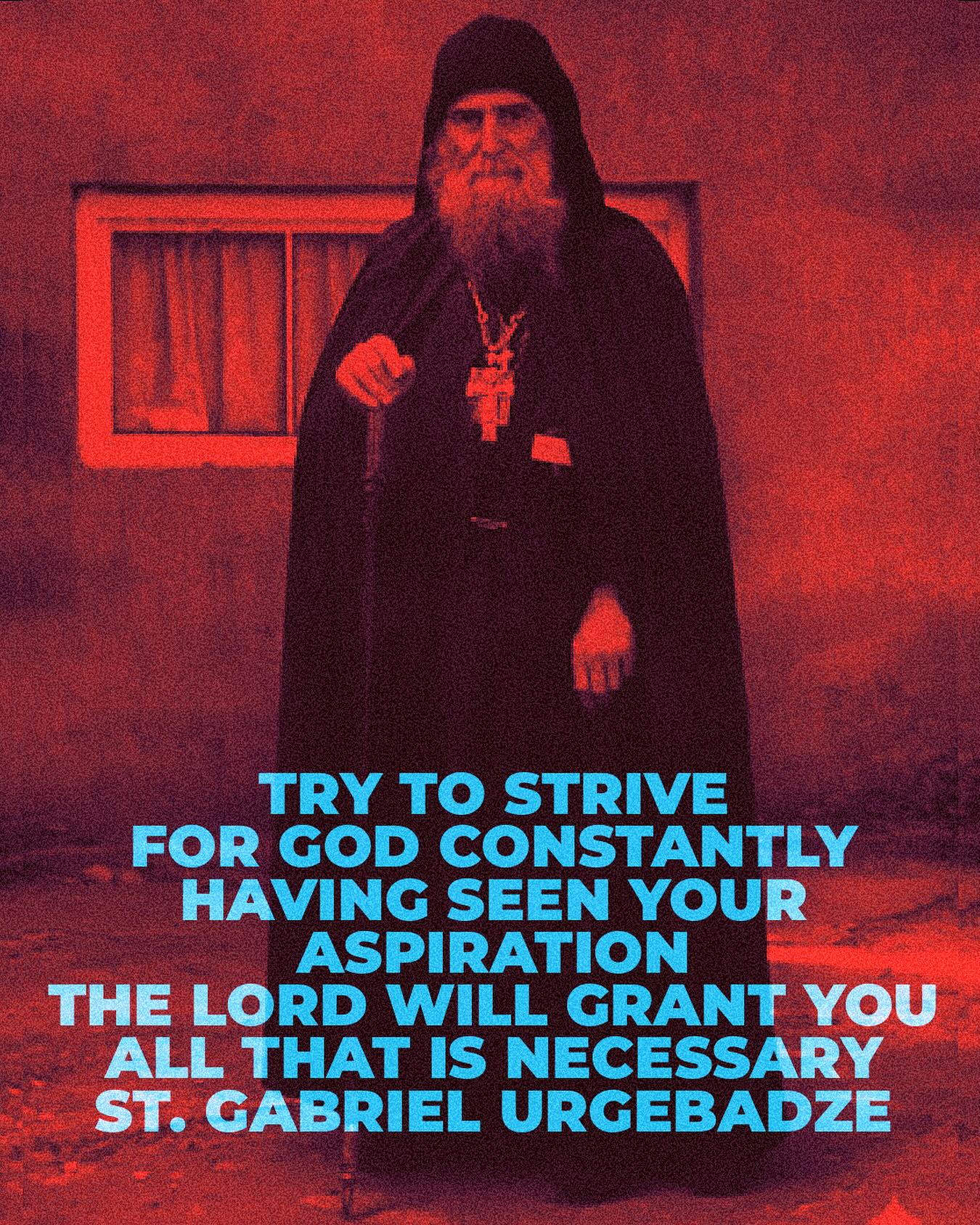
The post shares a saying attributed to St. Gabriel Urgebadze, a Georgian Orthodox saint. The quote reads: "TRY TO STRIVE FOR GOD CONSTANTLY HAVING SEEN YOUR ASPIRATION THE LORD WILL GRANT YOU ALL THAT IS NECESSARY." It encourages believers to maintain continuous effort toward God, with the assurance that God recognizes this aspiration and provides what is needed. No further discussion or commentary is present in the source.

  • Strive for God constantly.
  • The Lord sees your aspiration.
  • He will grant all that is necessary.
  • Attributed to St. Gabriel Urgebadze.
Read more
Orthodox Life Instagram

Saint Averkios, Equal-to-the-Apostles: Bishop, Wonderworker, Missionary

The post commemorates Saint Averkios, Equal-to-the-Apostles and Wonderworker, Bishop of Hierapolis in Phrygia Salutaris during the reign of Emperor Marcus Aurelius in the second century. It recounts that he grieved for the idol-worshippers and prayed for their conversion. During a festival for Apollo, prompted by a divine vision, he entered the pagan temple by night and overthrew the statues with his staff. When townspeople sought to kill him,…

The post commemorates Saint Averkios, Equal-to-the-Apostles and Wonderworker, Bishop of Hierapolis in Phrygia Salutaris during the reign of Emperor Marcus Aurelius in the second century. It recounts that he grieved for the idol-worshippers and prayed for their conversion. During a festival for Apollo, prompted by a divine vision, he entered the pagan temple by night and overthrew the statues with his staff.

When townspeople sought to kill him, he walked into the marketplace and cast demons out of three afflicted youths before the crowd. The miracle led the people of Hierapolis to ask for teaching, and he baptized hundreds. He also healed the blind mother of the provincial proconsul Publius.

His reputation reached Rome, where he traveled and cured the emperor's daughter of a severe affliction. Beyond Hierapolis, he made missionary journeys across Syria, Cilicia, and Mesopotamia, converting multitudes, defending the Church against false teachers, and strengthening believers. For his apostolic zeal, widespread travels, and numerous miracles, tradition honors him with the title Equal-to-the-Apostles.

Before his peaceful repose around 167 or 186 AD, he composed his own Christian epitaph, which was carved onto his tombstone. The post includes image descriptions showing a fresco detail of a praying bishop and Greek and Church Slavonic inscriptions naming the saint.

  • Bishop of Hierapolis in second century under Marcus Aurelius
  • Destroyed idols in Apollo's temple after a divine vision
  • Cast out demons publicly, leading to mass baptism in Hierapolis
  • Healed proconsul's mother and emperor's daughter in Rome
  • Missionary journeys in Syria, Cilicia, Mesopotamia; composed epitaph
Read more