WeOrthodox
EN UA

Orthodox posts, videos and discussions

We follow Orthodox channels, communities and blogs across the web, summarise every post and video, and highlight the conversations with real substance.

Bishop Ilarion's Metohija Poem Sung at Kosovo Monastery Feasts

The post presents a poem about Metohija attributed to Bishop Ilarion that emerged in the Istok municipality following the organized return of Serbs to the region. The return process began in 2001 in the village of Osojane and subsequently extended to other villages in the municipality. Bishop Ilarion regularly performs this poem together with the local Serbian community, particularly during the patronal feast of Saint Nicholas at Gorioč…

The post presents a poem about Metohija attributed to Bishop Ilarion that emerged in the Istok municipality following the organized return of Serbs to the region. The return process began in 2001 in the village of Osojane and subsequently extended to other villages in the municipality. Bishop Ilarion regularly performs this poem together with the local Serbian community, particularly during the patronal feast of Saint Nicholas at Gorioč Monastery. The poem was also heard during the monastic feast at Zočište Monastery this year.

The text portrays the speakers as dying, originating from their monastery and metochion, describing themselves as suffocated and experiencing "jocmira." They declare their return anew to the bosom of their homeland after wandering through the great world. The poem includes references to "holy trembling over jocmira," the "cross of the dudenicu," and offered prayers.

It concludes with an invocation to the "God of the komiru" and the "God of Freedom" for mercy, repeating the plea for freedom's mercy.

The poem functions as a spiritual expression of the Serbian return to Metohija, linking the physical resettlement with monastic and liturgical life. Bishop Ilarion's practice of singing it at major monastery feasts in Gorioč and Zočište indicates its integration into the communal worship of the returned population. The specific terms "jocmira," "dudenicu," and "komiru" appear in the translated lyrics without further explanation in the source.

Key moments

  1. The speaker says they die, they are from their monastery, metochion they are suffocated and jocmira.
  2. They return anew to your bosom, having wandered through the great world for you.
  3. Holy trembling over jocmira.
  4. Cross of the dudenicu, prayers we offer.
  5. God of the komiru, God of Freedom have mercy, his freedom have mercy on us.
Read more
Robel࿇🕊️ Instagram

St. Gregory of Nyssa on creation and redemption, then folk lyrics

The video presents a theological reflection attributed to St. Gregory of Nyssa. It states that God, despite foreknowing the evil that would result from man's creation, chose to create humanity because it was better to do so, knowing that He would become man, suffer, and die to raise humanity from its fall and restore it to original grace. Gregory's writings.

Key moments

  1. Although God foreknew the evil that would result from man's creation, he did not leave man uncreated.
  2. It was better to create him, knowing that he himself would come down, become man, and endure suffering and death to raise him from his fall and restore him to his original grace.
  3. The speaker then recites a series of lines: 'Lord, I'm one. Lord, I'm two. Lord, I'm three. Lord, I'm four. Lord, I'm 500 miles.'
Read more

Archimandrite Arsenije Papachok: Eternity Hidden in a Single Moment

The post presents the life and teaching of Archimandrite Arsenije Papachok (1914-2011), a Romanian Orthodox spiritual father. He endured communist prisons and years of suffering, then spent the last 35 years of his life as spiritual father at St. Mary's Monastery in Techirghiol. His words convey that peace or unrest does not depend on location or external circumstances but on one's connection with God. He calls this the great secret: to know how…

The post presents the life and teaching of Archimandrite Arsenije Papachok (1914-2011), a Romanian Orthodox spiritual father. He endured communist prisons and years of suffering, then spent the last 35 years of his life as spiritual father at St. Mary's Monastery in Techirghiol. His words convey that peace or unrest does not depend on location or external circumstances but on one's connection with God.

He calls this the great secret: to know how to remain connected to one's eternity from moment to moment. A person who preserves this connection does not lose hope even when everything around him changes. The accompanying video summary notes that the speaker addressed young people, spoke about sinners, mentioned a father and an older brother, called his listeners "my beloved," and said that a moment lived rightly is read with another eternity.

Key moments

  1. The speaker addresses young people and says something about sinners not knowing something well.
  2. He mentions a father and an older brother.
  3. He addresses the listeners as "my beloved" and says a moment, if lived rightly, is read with another eternity.
  4. He states this is the great secret: to know how to have a relationship with your eternity, the eternity of a moment.
Read more

St. Nikolai Velimirovich: Hate evil, not the person who does it

The post shares a saying from Saint Nikolai Velimirovich, found in the Ohrid Prologue. The quote reads: "Hate evil, but do not hate the man who does evil, for he is sick. If you can, heal the sick man, but do not kill him with your hatred." The saying distinguishes between evil as an object of hatred and the evildoer as a person afflicted by spiritual sickness. It urges the reader to pursue healing for the one who does wrong rather than…

The post shares a saying from Saint Nikolai Velimirovich, found in the Ohrid Prologue. The quote reads: "Hate evil, but do not hate the man who does evil, for he is sick. If you can, heal the sick man, but do not kill him with your hatred."

The saying distinguishes between evil as an object of hatred and the evildoer as a person afflicted by spiritual sickness. It urges the reader to pursue healing for the one who does wrong rather than destroying that person through hatred. The metaphor of illness frames the response to wrongdoing as therapeutic rather than punitive.

The quote offers a concise guide for Christian attitude toward those who commit evil acts.

  • The quote comes from St. Nikolai Velimirovich in the Ohrid Prologue.
  • Evil is to be hated; the person who commits evil is not to be hated.
  • The evildoer is compared to a sick person in need of healing.
  • If possible, one should heal the evildoer rather than kill him with hatred.
  • Hatred toward the person is presented as a destructive force.
Read more

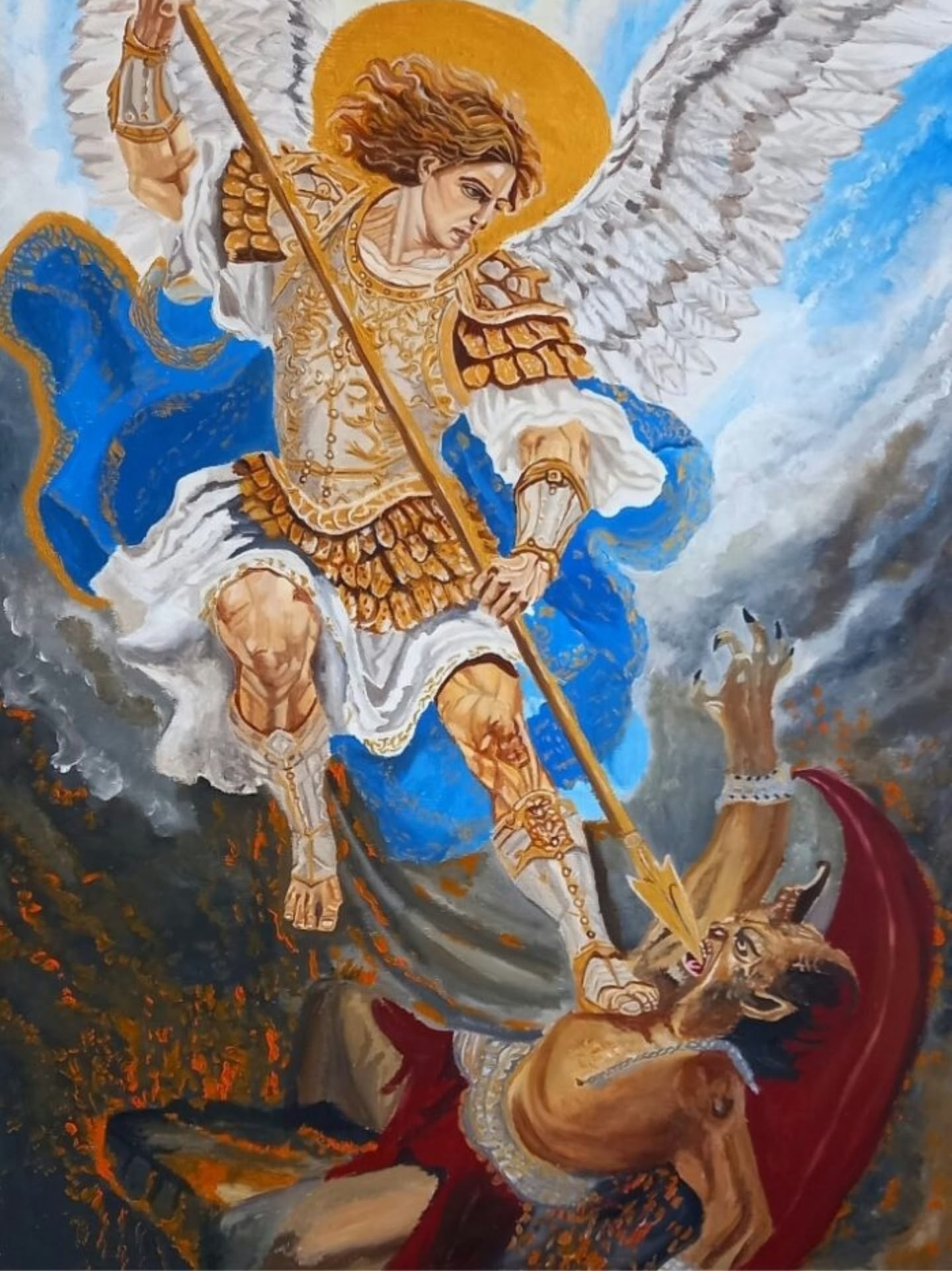
Prayer to Saint Michael the Archangel for Protection

The post presents the full text of a prayer addressed to Saint Michael the Archangel. The prayer asks God to send the archangel to help the faithful, naming them, and to deliver them from visible and invisible enemies. It invokes Michael as the commander of heavenly hosts, destroyer of demons, and guardian of God's mysteries. The petitioner asks for aid in afflictions, sorrows, grief, deserts, crossroads, rivers, and seas. The prayer calls on…

The post presents the full text of a prayer addressed to Saint Michael the Archangel. The prayer asks God to send the archangel to help the faithful, naming them, and to deliver them from visible and invisible enemies. It invokes Michael as the commander of heavenly hosts, destroyer of demons, and guardian of God's mysteries.

The petitioner asks for aid in afflictions, sorrows, grief, deserts, crossroads, rivers, and seas. The prayer calls on the power of the Cross, the prayers of the Theotokos, and a list of saints including the Apostles, Saint Nicholas, Prophet Elijah, Saint Andrew the Fool-for-Christ, Great Martyrs Nikita and Eustathius, and all saints and heavenly powers.

It seeks deliverance from earthquake, flood, fire, sword, sudden death, every evil, and demonic deceit. The prayer concludes with a doxology and the invocation "Holy Archistrategos Michael, with all the Heavenly Powers, pray to God for us."

  • Full text of a prayer to Saint Michael the Archangel in Serbian
  • Asks for protection from visible and invisible enemies
  • Invokes the Cross, the Theotokos, and numerous saints by name
  • Lists specific dangers: earthquake, flood, fire, sword, sudden death
  • Ends with the standard invocation to the archangel and heavenly hosts
Read more

Father Jacob: Faith as Fidelity, Not Intellectual Assent

In an upcoming interview, Father Jacob addresses a common Protestant framing of justification by faith alone, citing Romans 3:28. He argues that this formulation often creates a false dichotomy between faith and works, as if the two were opposed. The priest explains that the Greek term pistis should be understood as faithfulness or fidelity to God, not mere intellectual assent or doctrinal correctness. He points to James 2:19, noting that demons…

In an upcoming interview, Father Jacob addresses a common Protestant framing of justification by faith alone, citing Romans 3:28. He argues that this formulation often creates a false dichotomy between faith and works, as if the two were opposed. The priest explains that the Greek term pistis should be understood as faithfulness or fidelity to God, not mere intellectual assent or doctrinal correctness.

He points to James 2:19, noting that demons believe and shudder, to demonstrate that intellectual belief is insufficient for salvation. Father Jacob illustrates fidelity with the analogy of a husband's faithfulness to his wife, which requires an ongoing, intimate relationship rather than distant acknowledgment or occasional recognition.

He states that fidelity to God is an intimate response, not simply knowing about God or affirming propositions about Him. The priest then asks whether a person can fall away from that fidelity each day, concluding that this is why Christians must take up their cross daily. The discussion centers on the Orthodox understanding of justification as a lived, relational fidelity rather than a legal declaration based on belief alone.

He emphasizes that faith is not a static mental agreement but a dynamic commitment that must be renewed each day through the cross. The conversation also touches on how the Protestant slogan "faith alone" can obscure the biblical teaching that faith without works is dead, and that true faith inevitably produces faithfulness. Father Jacob's approach draws on the patristic tradition that sees salvation as theosis, a process of growing in communion with God through faithful obedience.

He suggests that the daily cross is the means by which believers maintain and deepen their fidelity to Christ.

Key moments

  1. The speaker notes that the Protestant formulation "justified by faith apart from works of the law" (Romans 3:28) is often turned into a false dichotomy of faith versus works.
  2. He defines faith (pistis) as faithfulness or fidelity rather than mere knowledge or belief.
  3. He cites James 2:19: "The demons have faith in God and they shudder," to show that intellectual belief is insufficient.
  4. He illustrates fidelity with the example of a husband's faithfulness to his wife, which requires ongoing relationship, not distant acknowledgment.
  5. He states that fidelity to God is an intimate response, not just knowing about God.
  6. He asks whether a person can fall away from that fidelity every day.
  7. He concludes that this is why Christians must take up their cross daily.
Read more
Fr.TEDTalks Instagram

Repentance orients us toward God; rebellion leads to eternal separation

The author explains that repentance means turning toward God, and consistent repentance sets a trajectory toward heaven. The goal is to become like the angels, with an eternal orientation toward God and communion with Him at death. Dying in rebellion against God means that state continues forever, which is hell.

The author emphasizes the importance of eternal obedience to God's will, listening and following it. We must avoid the habit of rebellion, because once accustomed to it, the condition worsens progressively.

Key moments

  1. We try to repent as much as possible in this life.
  2. The goal is to be like the angels when eternal life begins after earthly life ends.
  3. We want our decision and orientation to be eternally toward God, upward.
  4. We want communion with God at death, not rebellion.
  5. Dying in rebellion means remaining in rebellion forever, which is hell.
  6. We want to be eternally obedient to God's will, to listen and do His will.
  7. We should not get into the habit of being rebellious all the time.
  8. Once accustomed to rebellion, it gets worse and worse.
Read more
Orthodox Life Instagram

Saint Plato of Ancyra: Great Martyr Commemorated November 18

Today the Church commemorates Saint Plato the Great Martyr of Ancyra, a third-century preacher from Galatia. Born into a pious family, he was the brother of the Holy Martyr Antiochus the Physician. While still a youth, Plato traveled from city to city, using his knowledge of Greek learning and persuasive speech to preach the Gospel to pagans. His bold preaching led to his arrest by Roman authorities, who brought him before Governor Agrippinus at…

Today the Church commemorates Saint Plato the Great Martyr of Ancyra, a third-century preacher from Galatia. Born into a pious family, he was the brother of the Holy Martyr Antiochus the Physician. While still a youth, Plato traveled from city to city, using his knowledge of Greek learning and persuasive speech to preach the Gospel to pagans.

His bold preaching led to his arrest by Roman authorities, who brought him before Governor Agrippinus at the temple of Zeus. The governor attempted to persuade Plato through flattery, comparing his intellect to the philosopher Plato and offering his own niece in marriage if he would sacrifice to pagan gods. Plato rejected both offers, declaring that earthly wisdom and life are temporary compared to the eternal truth of Christ.

Enraged, Agrippinus ordered soldiers to beat Plato mercilessly and imprison him. Seven days later, Plato was brought before instruments of torture: boiling cauldrons, red-hot iron, and sharp hooks. Soldiers placed heated iron balls on his body and tore strips of skin from him; Plato urged them to torture him more harshly so his endurance for Christ would be seen more clearly.

After these tortures, guards locked Plato in prison for eighteen days without food or water. When his jailers marveled that he was still alive, he explained that while they were sustained by meat and wine, he was nourished by holy prayer and Christ, the True Vine. Seeing that nothing could break his faith, the authorities made a final offer to spare his life if he would say, "Great is the god Apollo."

Plato steadfastly refused to worship idols, and Agrippinus ordered his execution by beheading around the year 266. The post includes an image depicting a martyrdom scene with inscriptions in Greek and Slavonic.

  • Commemorated on November 18 as Great Martyr of Ancyra.
  • Youthful preacher from Galatia, brother of Martyr Antiochus the Physician.
  • Arrested and tortured under Governor Agrippinus for refusing to sacrifice to idols.
  • Endured eighteen days in prison without food or water, sustained by prayer.
  • Beheaded around 266 after refusing to proclaim Apollo as god.
Read more

Elder Philimon: Disappointment Opens the Door to Acedia

Elder Philimon of the Pantokratoros Skete of Prophet Elijah on Mount Athos teaches that disappointment is the most dangerous sin because it leads directly into acedia, the seventh deadly sin. He explains that daily spiritual effort often brings failure and discouragement, but the faithful must not accept disappointment as a continuous state; they must stop it at once. When a sinful thought arises, the elder counsels against dwelling on it or…

Elder Philimon of the Pantokratoros Skete of Prophet Elijah on Mount Athos teaches that disappointment is the most dangerous sin because it leads directly into acedia, the seventh deadly sin. He explains that daily spiritual effort often brings failure and discouragement, but the faithful must not accept disappointment as a continuous state; they must stop it at once.

When a sinful thought arises, the elder counsels against dwelling on it or treating it as an accomplished sin. Instead, one should let the thought pass like a bird hovering overhead, without examining its wings or its desire. The thought has passed; there is no need to analyze how or why the sin occurred.

The only purpose of remembering a sin is to move beyond it and leave it behind. The teaching draws on the monastic tradition of the Holy Mountain and addresses the common struggle with acedia, a state of spiritual listlessness and despair that paralyzes the soul. Elder Philimon's words are directed at anyone who finds their daily efforts met with repeated setbacks, offering a practical method for dealing with intrusive thoughts and the temptation to despair.

He emphasizes that the response to a fall is not analysis but immediate release, trusting that the thought has no power unless the mind grasps it. This approach reflects the hesychastic practice of guarding the heart and refusing to entertain logismoi, the provocative thoughts that precede sin. The elder's metaphor of the bird illustrates the proper attitude: the thought appears, it flies by, and the watchful mind does not follow it with curiosity or fear.

By refusing to engage the content of the thought, the believer avoids the trap of acedia and preserves the momentum of repentance.

Key moments

  1. Disappointment is the worst sin because it leads into acedia, the seventh deadly sin.
  2. Daily spiritual effort often throws us down or disappoints us, but we must not accept that disappointment continuously; we must stop it.
  3. When a sinful thought comes, do not think about it for a long time or treat it as a committed sin.
  4. Let the thought pass like a bird hovering over your head, do not look at the color of its wings or its desire; it has passed.
  5. Do not think about how you did the sin or why you did it.
  6. Remember the sin only to pass beyond it, then leave it behind.
Read more

Why Orthodox Christians "write" icons instead of painting them

The post explains the theological reasoning behind the Orthodox terminology of "writing" icons rather than "painting" them. It states that iconography is understood as a sacred theological expression, not merely an artistic practice. An icon functions as a visual proclamation of the Gospel, communicating the faith through sacred images.

Just as the Gospel is written in words, the icon is written in images. This linguistic distinction reflects the belief that iconography participates in the same revelatory work as Scripture.

  • Iconography is a sacred theological expression, not just art
  • Icons are visual proclamations of the Gospel
  • The Gospel is written in words; icons are written in images
  • The phrase "write an icon" reflects this theological understanding
  • The terminology distinguishes Orthodox iconography from secular painting
Read more
Lives of the Saints 🙏 Instagram

Saints Galaction and Episteme: Betrothed Couple Chooses Monastic Life and Martyrdom

The post recounts the lives of Saints Galaction and Episteme, born in Edessa of Phoenicia in the third century. Galaction's mother Leucippe, after converting to Christianity, gave birth to him and raised him in the faith. His father also converted. After Leucippe's death, Galaction's father arranged his marriage to Episteme. Galaction shared the Christian faith with Episteme, and she was baptized. Both chose monastic life over marriage,…

The post recounts the lives of Saints Galaction and Episteme, born in Edessa of Phoenicia in the third century. Galaction's mother Leucippe, after converting to Christianity, gave birth to him and raised him in the faith. His father also converted. After Leucippe's death, Galaction's father arranged his marriage to Episteme.

Galaction shared the Christian faith with Episteme, and she was baptized. Both chose monastic life over marriage, withdrawing to Mount Puplion where Galaction entered a men's monastery and Episteme a women's monastery. They lived apart in prayer, fasting, obedience, humility, and love.

During persecution, both were arrested. As Galaction was beaten, Episteme wept and was tortured. Neither renounced Christ. Their hands and feet were cut off, and they were beheaded in 253. A monk named Eutolios, who had served Episteme's family, buried their bodies and recorded their lives. The post concludes with a prayer for their intercession.

  • Galaction born to pagan parents in Edessa; mother Leucippe converts and bears him after baptism.
  • Galaction's father arranges marriage to Episteme; both convert and choose monastic life on Mount Puplion.
  • They live separately in monasteries, exemplifying prayer, fasting, obedience, humility, love.
  • Arrested during persecution; tortured but remain faithful; beheaded in 253.
  • Monk Eutolios buries them and writes their lives.
Read more

Metropolitan Job Getcha: Education Equips Orthodox for Dialogue and Unity

Metropolitan Job Getcha: Education Equips Orthodox for Dialogue and Unity 4:15

Metropolitan Job Getcha of Pisidia reflects on inter-confessional dialogue and Christian unity. He states that Orthodox Christians are called to be ambassadors and witnesses of the faith, which requires knowing the Orthodox tradition deeply enough to speak with clarity, humility, and confidence. Fear of dialogue often comes from lack of education; when believers do not know their own faith, they may fear that others will change it. When rooted…

Metropolitan Job Getcha of Pisidia reflects on inter-confessional dialogue and Christian unity. He states that Orthodox Christians are called to be ambassadors and witnesses of the faith, which requires knowing the Orthodox tradition deeply enough to speak with clarity, humility, and confidence. Fear of dialogue often comes from lack of education; when believers do not know their own faith, they may fear that others will change it.

When rooted in the Church, dialogue becomes a place of witness rather than confusion. The path toward Christian unity is slow and prayerful. It begins with bishops, theologians, and specialists addressing the wounds of the past through bilateral theological dialogues where they study sources and resolve historical differences. The wider church must then learn from these dialogues. Unity requires time, study, learning, and constant prayer.

The metropolitan compares the process to a child maturing through years of education and experience before living independently. The Orthodox Church prays for the unity of all at every service.

Key moments

  1. 0:00 Orthodox Christians must know their faith well to be ambassadors of the church and bear Orthodox witness and mission in the 21st century.
  2. 0:30 People are often scared in dialogue because they are uneducated about their own faith and cannot explain their position.
  3. 1:02 To be oneself in dialogue, one must know Orthodox tradition and be able to explain it to others; only then can dialogue bear fruit.
  4. 1:33 Without education and awareness of one's faith, a person fears others will change their faith, which is why education is so important.
  5. 2:04 Church unity requires time, like a child who must grow through years of schooling and work before living independently.
  6. 2:37 The pursuit of Christian unity began with bilateral inter-Christian dialogues so churches can learn from each other, understand sources, and solve past problems.
  7. 3:08 Specialists, bishops and theologians sent by their churches, conduct these dialogues, and then the wider church on all sides must learn from the results.
  8. 3:39 Restoring unity requires time, education, learning, study, and prayer; the Orthodox Church prays for the unity of all at every service.
Athonite Audio YouTube

Carnal Warfare in the Sayings of the Desert Fathers: Sources, Confession, and Restoration

Carnal Warfare in the Sayings of the Desert Fathers: Sources, Confession, and Restoration 50:22

The chapter from the Sayings of the Desert Fathers examines three sources of bodily desire: natural inclination, excess in food and drink that heats the blood, and demonic assault. Abba Cassian relates Abba Moses' teaching that thoughts must be disclosed to elders who possess spiritual discernment, not merely to those advanced in years, lest the penitent be driven to despair. Abba Apollo demonstrates this when he restores a brother whom a harsh…

The chapter from the Sayings of the Desert Fathers examines three sources of bodily desire: natural inclination, excess in food and drink that heats the blood, and demonic assault. Abba Cassian relates Abba Moses' teaching that thoughts must be disclosed to elders who possess spiritual discernment, not merely to those advanced in years, lest the penitent be driven to despair.

Abba Apollo demonstrates this when he restores a brother whom a harsh elder had called a miserable wretch; Apollo prays that the elder experience the same temptation, and the elder is attacked by a demon until he learns compassion. Amma Sarah models perseverance, battling the demon of fornication for thirteen years while praying only for strength, not release; when the demon appears bodily and declares her conquered, she answers, "Not I, but Christ my Lord."

A geronda gives practical resistance: at the first suggestion, rise, pray "Son of God, have mercy on me," and refuse dialogue with the thoughts, trusting the words' power even without felt compunction. The text also recounts dramatic falls and restorations: a deacon hidden in penance until the Nile floods, an anchorite who burns his fingers to resist a temptress, a monk who denies Christ yet is pursued by grace signified by a dove, and an elder who falls after following demonic thoughts disguised as virtue, only to be restored after a year of severe penance when God lights his lamp on Pascha night.

Key moments

  1. 0:01 Abba Anthony distinguishes three movements of bodily desire: one natural, one from eating and drinking to excess which heats the blood, and one from the wiles and treachery of demons.
  2. 1:35 Abba Cassian relates Abba Moses' teaching that thoughts must be revealed to an elder possessing spirituality and discernment, not merely to someone old in years, lest the one confessing be driven to despair by an inexperienced listener.
  3. 2:06 Abba Apollo restores a brother driven to despair by a harsh elder who called him a miserable wretch; Apollo prays that the elder experience the same temptation, and the elder is attacked by a demon until he learns compassion.
  4. 6:17 A geronda teaches that those freed from thoughts are those who have moved into deeds, and advises: fear not the dead past but flee the living present of consenting to sin, casting the net of prayer wider.
  5. 8:21 Amma Sarah was severely attacked by the demon of fornication for thirteen years; she never prayed to be released from the battle but only for strength, and when the demon appeared bodily and said she had conquered, she replied, "Not I, but Christ my Lord."
  6. 29:12 A geronda gives the Midianites analogy: at the first sign of an impure suggestion, do not answer but get up, pray, and repent with the words "Son of God, have mercy on me," persevering even without felt compunction, for the demons hear the words and depart in terror.
  7. 41:07 A geronda recounts seeing Satan reward a demon who spent forty years battling one monk until he fell into carnal sin; Satan embraced the demon, placed his own crown on him, and seated him on the throne, showing the magnitude of the monastic warfare.
  8. 47:18 An anchorite who fell into fornication after following demonic thoughts disguised as virtue blocked his cell door for a year of severe penance; on Pascha night, after praying for mercy and asking God to light his lamp as a sign, the lamp burned, confirming his forgiveness.

How three traditions answer which church is true after a split

The speaker compares how Catholics, Protestants, and Eastern Orthodox identify the true church after a split. Catholics rely on the Pope's authority as external confirmation. Protestants rely on private scriptural interpretation to judge each church. Eastern Orthodoxy requires submission to the bishop and does not allow private scriptural judgment of the church. The speaker then challenges the Catholic and Protestant approaches. He notes that…

The speaker compares how Catholics, Protestants, and Eastern Orthodox identify the true church after a split. Catholics rely on the Pope's authority as external confirmation. Protestants rely on private scriptural interpretation to judge each church.

Eastern Orthodoxy requires submission to the bishop and does not allow private scriptural judgment of the church. The speaker then challenges the Catholic and Protestant approaches. He notes that the Western Schism required a council to resolve competing papal claims, which challenges the Catholic method.

He also notes that when churches disagree, Protestants cannot determine whose scriptural interpretation is correct. Orthodox Christians instead appeal to the Holy Spirit working through the entire church, not one man's authority or individual interpretation. Through scripture, apostolic tradition, the fathers, and ecumenical councils, they can judge whether bishops remained faithful to the teachings handed down by the apostles.

Key moments

  1. 0:00 The question is how to know which side of a church split is the true church.
  2. 0:00 Catholics identify the true church by following the Pope as external confirmation.
  3. 0:00 Protestants identify the true church by privately judging each church against scripture.
  4. 0:00 Eastern Orthodoxy requires submission to the bishop and does not allow private scriptural judgment of the church.
  5. 0:00 The Western Schism required a council to resolve competing papal claims, challenging the Catholic method.
  6. 0:00 When churches disagree, Protestants cannot determine whose scriptural interpretation is correct.
  7. 0:00 Orthodox Christians appeal to the Holy Spirit working through the entire church, not one man's authority or individual interpretation.
  8. 0:37 Through scripture, apostolic tradition, the fathers, and ecumenical councils, we can judge whether bishops remained faithful to the teachings handed down by the apostles.
15 opinions in the discussion Beautifully put. Papalists and prots don't understand the EO position and strawman like crazy Read the discussion
Kyle YouTube discussion

Why Orthodox Call Priests 'Father' Despite Matthew 23:9

Why Orthodox Call Priests 'Father' Despite Matthew 23:9 9:51

The video addresses the Protestant objection to calling priests 'father' based on Matthew 23:9. It argues that isolating this verse ignores its context: Jesus condemns the Pharisees' pride and love of honorific titles like 'rabbi' and 'teacher,' not the words themselves. The chapter is a sustained condemnation of the scribes and Pharisees who loved prestige, outward appearances, and honorific titles. A literal reading would also forbid calling…

The video addresses the Protestant objection to calling priests 'father' based on Matthew 23:9. It argues that isolating this verse ignores its context: Jesus condemns the Pharisees' pride and love of honorific titles like 'rabbi' and 'teacher,' not the words themselves. The chapter is a sustained condemnation of the scribes and Pharisees who loved prestige, outward appearances, and honorific titles.

A literal reading would also forbid calling anyone 'teacher' in verse 10, yet Scripture everywhere acknowledges teachers and fathers as legitimate roles. The commandment to honor one's father and mother remains in force, and Paul explicitly describes spiritual fatherhood in 1 Corinthians 4:15, saying he became the Corinthians' father in Christ Jesus through the gospel.

He also refers to Timothy and Titus as his sons in the faith. The Pharisees' error was seeking honor for themselves and building a cult of personality, directing loyalty to themselves rather than to God. Christ condemns leaders who burden others, seek recognition, and accumulate disciples loyal to themselves instead of God, making an idol of a person.

Orthodox priests are called father because they participate in God's fatherhood, not because they replace it; all fatherhood derives from God, as Ephesians 3:14-15 states. The Church's liturgical structure intentionally minimizes personality cults by centering worship on Christ. The priest disappears into the liturgy, and kissing his hand venerates Christ's priesthood, which the priest shares through apostolic succession, just as honoring icons or Scripture points to God.

The video also notes that Orthodox Christians have used the title since the earliest centuries of the church, showing continuity with apostolic practice.

Key moments

  1. 0:00 Protestants cite Matthew 23:9 to forbid calling priests father, but Orthodox Christians have used the title since the earliest centuries of the church.
  2. 0:31 Matthew 23 is a sustained condemnation of the scribes and Pharisees who loved prestige, outward appearances, and honorific titles like "rabbi," not a prohibition on the vocabulary itself.
  3. 1:03 Jesus also says "neither be called teachers" in verse 10; a literal interpretation would forbid both titles, yet Scripture everywhere acknowledges teachers and fathers as legitimate roles.
  4. 2:06 The Pharisees' error was seeking honor for themselves and building a cult of personality, directing loyalty to themselves rather than to God.
  5. 2:38 The commandment "Honor your father and mother" and Paul's statement "I became your father in Christ Jesus through the gospel" (1 Cor 4:15) show spiritual fatherhood is biblical and does not contradict Christ.
  6. 4:13 Christ condemns leaders who burden others, seek recognition, and accumulate disciples loyal to themselves instead of God, making an idol of a person.
  7. 5:16 All fatherhood derives from God (Eph 3:14-15); biological and spiritual fathers reflect God's fatherhood, not compete with it.
  8. 6:48 Orthodox structure minimizes personality cults: the priest disappears into the liturgy, and kissing his hand honors Christ's priesthood received through apostolic succession.
4 opinions in the discussion In Latin, "doctor" literally means "teacher." So any Protestant with a PhD who lets people call them "Dr." has "teacher" baked into their own title, but somehow they don't see that as… Read the discussion

Elder Joseph of Vatopedi: Hesychastic Life and Sayings

The post presents a brief biography of Elder Joseph of Vatopedi (1921-2009), a renowned Athonite elder and spiritual father. It describes his early pursuit of a life devoted to Christ, his monastic tonsure on Mount Athos, and his discipleship under Elder Joseph the Hesychast. The text outlines his intense ascetic struggle, unceasing prayer, obedience, fasting, and renunciation of worldly comforts, all within the hesychastic tradition centered on…

The post presents a brief biography of Elder Joseph of Vatopedi (1921-2009), a renowned Athonite elder and spiritual father. It describes his early pursuit of a life devoted to Christ, his monastic tonsure on Mount Athos, and his discipleship under Elder Joseph the Hesychast. The text outlines his intense ascetic struggle, unceasing prayer, obedience, fasting, and renunciation of worldly comforts, all within the hesychastic tradition centered on the Jesus Prayer.

Through years of spiritual discipline, solitude, and obedience, he cultivated humility, patience, and continual remembrance of God, becoming an example of authentic Athonite spirituality. As a spiritual father, he guided many monks and helped renew the monastic brotherhood of Vatopedi Monastery. The post concludes that his life demonstrates true spiritual greatness lies not in worldly recognition but in humility, repentance, prayer, and surrender to God's will, and that his legacy witnesses to the enduring beauty of Orthodox monastic tradition.

Accompanying the biography are four sayings attributed to the elder: first, that nothing done in this world is ever lost, for whatever a person does here they will find in the life to come; second, that despondency is a dreadful thing that must never be allowed a place within us; third, that we receive grace when we do not judge others, and if we do not practice love, grace does not draw near; fourth, that we should embrace the love of labor, for it is the mightiest weapon against the devil and reveals the true meaning of the cross. A black-and-white portrait of the elder holding a cane is also included.

  • Elder Joseph of Vatopedi (1921-2009) was an Athonite monk and disciple of Elder Joseph the Hesychast.
  • He lived a life of intense asceticism, unceasing prayer, and the Jesus Prayer in the hesychastic tradition.
  • As spiritual father, he guided many monks and helped renew Vatopedi Monastery.
  • His sayings address the eternal value of deeds, the danger of despondency, grace through non-judgment and love, and labor as a weapon against the devil.
  • A portrait of the elder accompanies the post.
Read more
Athonite Audio YouTube

Desert Fathers on Self-Control: Silence, Vigil, Fasting, and Confession

Desert Fathers on Self-Control: Silence, Vigil, Fasting, and Confession 29:49

The video presents Chapter 4 of The Sayings of the Desert Fathers, published by Saint Anthony's Greek Orthodox Monastery Press. It collects sayings on self-control from eight desert elders. Abba Anthony recounts how a brother named Yandanda rebuked visitors for speaking without restraint, comparing their dwelling to one with no gateway to keep a donkey out. Abba Arsenios kept an all-night vigil, slept only briefly while sitting, and said one…

The video presents Chapter 4 of The Sayings of the Desert Fathers, published by Saint Anthony's Greek Orthodox Monastery Press. It collects sayings on self-control from eight desert elders. Abba Anthony recounts how a brother named Yandanda rebuked visitors for speaking without restraint, comparing their dwelling to one with no gateway to keep a donkey out.

Abba Arsenios kept an all-night vigil, slept only briefly while sitting, and said one hour of sleep suffices for a monk; he also kept palm-leaf water for a year, enduring its stench as penance for his past use of perfumes. Abba Agathon held a stone in his mouth for three years to learn silence, and when a disciple found a package, he asked whether the disciple had placed it there, teaching not to pick up what one did not put down.

Abba Achilles, after praying that harsh words spoken to him be taken away, spat blood and said the Lord had made those words become blood in his mouth, bringing him peace. Abba Dioscorus of Nitria observed a rotating year-long rule: one year visiting no one, one year in absolute silence, one year eating nothing cooked, one year refraining from fruit and vegetables.

Epiphanius and Hilarion met; Hilarion had not eaten meat since taking the habit, while Epiphanius said he never let anyone go to bed bearing a grudge, leading Hilarion to declare Epiphanius' way better. Abba John the Dwarf likened fasting to a king cutting off an enemy's water and food, saying fasting weakens the enemy that seeks to overcome the soul.

Abba Serapion taught that concealing thoughts from one's spiritual father harms monks and pleases the devil; Abba Moses confessed stealing bread and saw a flash of fire with a sulfur smell as confirmation of his deliverance.

Key moments

  1. 0:02 Abba Anthony tells the brothers they had good company in Yandanda, who rebukes them for speaking whatever comes to mind, saying their dwelling has no gateway to keep the ass out.
  2. 1:03 Abba Arsenios keeps vigil all night, sleeps sitting briefly, says one hour of sleep suffices for a monk, lives on a small share of harvest, and keeps palm-leaf water for a year, enduring its stench as penance for his past use of sweet fragrances.
  3. 2:37 Abba Agathon keeps a stone in his mouth for three years to learn silence, and when a disciple finds a package, he asks if the disciple put it there, teaching not to pick up what one did not put down.
  4. 3:08 Abba Achilles spits blood after praying that harsh words spoken to him be taken away, saying the Lord made those words as blood in his mouth, and he found peace.
  5. 5:10 Abba Dioscorus of Nitria keeps a year-long rule rotating among visiting no one, keeping absolute silence, eating nothing cooked, or refraining from fruit and vegetables.
  6. 6:12 Epiphanius and Hilarion meet; Hilarion refuses meat since taking the habit, and Epiphanius says he never lets anyone go to bed bearing a grudge, leading Hilarion to declare Epiphanius' way better.
  7. 7:45 Abba John the Dwarf compares fasting to a king cutting off an enemy's water and food, saying fasting weakens the enemy seeking to overcome the soul.
  8. 9:49 Abba Serapion teaches that concealing thoughts from one's spiritual father harms monks and pleases the devil; Abba Moses confesses stealing bread, sees a flash of fire and sulfur smell as confirmation of his deliverance.
Athonite Audio YouTube

Desert Fathers on Compunction: Tears, Judgment, and the Fear of God

Desert Fathers on Compunction: Tears, Judgment, and the Fear of God 13:24

Chapter 3 of the Sayings of the Desert Fathers collects teachings on compunction, the piercing sorrow that leads to repentance. Abba Arsenios wept into a basin while weaving, letting his tears flow freely. Abba Ammonas told a brother to model his mind on prisoners who weep while awaiting the judge, reproaching himself at the thought of standing before Christ's judgment seat. Abba Agathon instructed a monk to retire into himself, remember the day…

Chapter 3 of the Sayings of the Desert Fathers collects teachings on compunction, the piercing sorrow that leads to repentance. Abba Arsenios wept into a basin while weaving, letting his tears flow freely. Abba Ammonas told a brother to model his mind on prisoners who weep while awaiting the judge, reproaching himself at the thought of standing before Christ's judgment seat.

Abba Agathon instructed a monk to retire into himself, remember the day of death, the decay of the body, the torments of hell, and the joys of the righteous, keeping both alternatives in mind to drive away evil thoughts. Abba Poemen compared the fear of God to a lantern that illuminates a dark room, and said compunction consumes the body like a poker left in fire.

Abba Macarius wept before a gathering in Nitria, urging them to weep now before departing to a place where tears will burn the body. Abba Poemen, seeing a woman weeping bitterly at a grave, said a monk ought to let compunction possess his heart as that grief possessed her whole being. Abba Silvanus, caught up in ecstasy to the judgment seat, saw monastics entering torment and laypeople entering the kingdom; afterward he covered his face, refusing to gaze on earthly light.

Amma Syncletica likened the labor of repentance to lighting a fire through smoke and tears, and Abba Pior said the monk's tears draw down God's mercy. An elder compared the gift of tears to the promised land: the children of Israel wandered forty years before entering, and God wills the soul to be troubled so it constantly desires that land.

Key moments

  1. 0:01 Abba Arsenios held a basin in his lap while weaving to catch his freely flowing tears.
  2. 0:01 Abba Ammonas tells a brother to model his thinking on prisoners who weep in expectation of the judge's coming, and to reproach himself inwardly at the thought of standing before Christ's judgment seat.
  3. 0:31 Abba Agathon instructs a monk to think of the day of death, the body's decay, the torments of hell, and the joys of the righteous, keeping both alternatives in mind to rid the mind of evil thoughts.
  4. 3:12 Abba Poemen says the fear of God illuminates the heart like a lantern in a dark room, and that immersing one's nous in the fear of God consumes the body like a poker in fire.
  5. 4:13 Abba Macarius weeps before a gathering in Nitria, urging them to weep now before departing where tears will burn their bodies.
  6. 4:44 Abba Poemen, seeing a woman weeping bitterly at a grave, says the monk ought to let compunction dwell in his heart as that woman's grief possesses her whole being.
  7. 6:47 Abba Silvanus, caught up to the judgment seat in ecstasy, sees monastics entering torment and seculars entering the kingdom, and thereafter covers his face, refusing to gaze on earthly light.
  8. 13:06 A yianda says the gift of tears is like the promised land: the children of Israel wandered forty years before entering, and God wills the soul be troubled so it constantly desires that land.

Saint Gabriel and Elder Joseph on faith as gift and synergy

Saint Gabriel and Elder Joseph on faith as gift and synergy 25:18

The video presents teachings from Saint Gabriel of Georgia, Elder Joseph of Vatopaidi, Saint Paisios, Saint Seraphim of Sarov, and others on the nature of faith, free will, and salvation. Saint Gabriel teaches that not everyone will be saved because the Lord will not have mercy on someone who does not want it, yet he also says all good thoughts come from God and a person cannot do anything good alone. Elder Joseph, citing John 15, emphasizes…

The video presents teachings from Saint Gabriel of Georgia, Elder Joseph of Vatopaidi, Saint Paisios, Saint Seraphim of Sarov, and others on the nature of faith, free will, and salvation. Saint Gabriel teaches that not everyone will be saved because the Lord will not have mercy on someone who does not want it, yet he also says all good thoughts come from God and a person cannot do anything good alone.

Elder Joseph, citing John 15, emphasizes that Christianity is an experiential reality, not an abstract ideology, and notes that even demons believe God exists. Saint Gabriel defines the fear of God as the fear of grieving the One we love, not fear of punishment, and places it above beauty, wealth, or education. He outlines a progression from servant to child to brother of God.

Practical guidance includes using the evangelical greeting "peace to you" instead of casual greetings, and never losing hope, with Saint Gavrilia comparing hope to a bird that flies when its branch breaks. Saint Paisios warns that trust in worldly logic erodes faith and that we forget the sacrifices of previous generations. Saint Gabriel sets two conditions for salvation today: purity and wisdom, where wisdom is found in silence and patience, and purity means being like a child but not having the mind of a child.

He rejects violence, teaching that fighting oneself is the only true victory. The video closes with Saint Seraphim's image of life as a candle of faith, hope, and love, and the unifying word from 1 John: we love because He first loved us.

Key moments

  1. 0:30 Saint Gabriel, a Georgian monk recognized as a saint in 2012, taught that not everyone will be saved and that not even the Lord will have mercy on someone who does not want it.
  2. 1:03 Saint Gabriel said all good thoughts come from God and a person cannot do anything good on his own, raising the question of who takes the first step.
  3. 4:00 Elder Joseph of Vatopedi, citing John 15, declared that Christianity is a practical experiential reality, not an abstract ideology, noting that even demons believe God exists.
  4. 5:03 Saint Gabriel placed the fear of God on a list of virtues to envy, above beauty, wealth, or education, defining it as the fear of separation from God's love, like a child fearing to upset a parent.
  5. 7:10 Saint Gabriel taught that the correct evangelical greeting is "peace to you," not "hello, how are you," because with our sins we cannot say we are well.
  6. 9:20 Saint Gabriel urged never to lose hope, pointing to the Mother of God who accepted God's will at the Cross, and Saint Gavrilia likened hope to a bird that calmly flies when its branch breaks.
  7. 12:56 Saint Paisios warned that absolute trust in worldly logic has shaken faith, filling souls with doubt, and that we stand on the backs of those who sacrificed for Christ yet do not appreciate it.
  8. 20:10 Saint Gabriel set two conditions for salvation in our days: purity and wisdom, explaining that wisdom is found in silence and patience, and that one must be pure like a child but not have the mind of a child.
Read more
Athonite Audio YouTube

Desert Fathers on hesychia: stillness, solitude, and the cell as teacher

Desert Fathers on hesychia: stillness, solitude, and the cell as teacher 8:46

The post presents Chapter 2 of "The Sayings of the Desert Fathers" from Saint Anthony's Greek Orthodox Monastery Press, focusing on hesychia, the deep inner stillness the Desert Fathers pursued through silence, fasting, and prayer. Abba Anthony compares monks to fish that die on dry land when they leave their cells or linger with worldly people, losing inner watchfulness. He teaches that the solitary monk is spared conflicts of hearing, speech,…

The post presents Chapter 2 of "The Sayings of the Desert Fathers" from Saint Anthony's Greek Orthodox Monastery Press, focusing on hesychia, the deep inner stillness the Desert Fathers pursued through silence, fasting, and prayer. Abba Anthony compares monks to fish that die on dry land when they leave their cells or linger with worldly people, losing inner watchfulness.

He teaches that the solitary monk is spared conflicts of hearing, speech, and sight, facing only the battle in the heart. Abba Arsenios hears a divine voice commanding him to flee human beings, be silent, and dwell in hesychia so that sinlessness may grow. He refuses counsel to Archbishop Theophilos and a magistrate, telling them to go wherever he is not, and declines the archbishop's visit to avoid becoming a spectacle.

Arsenios says even a bird's song would destroy hesychia in the heart; his cell lay thirty-two miles into the desert. A Roman matron seeks him out; he rejects her indignantly, prays God wipes her memory from his heart, and she falls ill until Theophilos explains the devil uses women to attack holy men. Abba Evagrius warns against yearning for many things lest the mind become distracted.

Abba Moses says the cell teaches all things. Abba Nilus says hesychia protects from the enemy's arrows. A story of three monks illustrates that inner hesychia in solitude lets a person see their own sins clearly, like a face reflected in still water, unlike those agitated by mixing with people.

Key moments

  1. 0:01 Abba Anthony says monks are drawn away from hesychia if they linger outside their cells or spend too much time with worldly people, just as fish die on dry land.
  2. 0:32 Abba Anthony says the solitary monk is saved from three areas of conflict, hearing, speech, and sight, and faces only the battle in the heart.
  3. 0:32 Abba Arsenios hears a voice telling him to flee human beings for salvation, then later to flee, be silent, and dwell in hesychia so that sinlessness will grow.
  4. 1:05 Abba Arsenios refuses to give counsel to Archbishop Theophilos and a magistrate, telling them to go wherever Arsenios is not, and refuses the archbishop's visit to avoid becoming a spectacle.
  5. 2:07 Abba Arsenios says if someone in hesychia heard even a bird's song, they would no longer have hesychia in their heart; his cell was 32 miles into the desert.
  6. 3:08 A Roman matron seeks Abba Arsenios; he indignantly rejects her, prays God wipes her memory from his heart, and she falls ill until Archbishop Theophilos explains the devil uses women to attack holy men.
  7. 5:14 Abba Evagrius warns against yearning for many things lest the mind become distracted; Abba Moses says the cell teaches all things; Abba Nilus says hesychia protects from the enemy's arrows.
  8. 7:49 A story of three monks shows that inner hesychia in solitude lets a person see their own sins clearly, like a face reflected in still water, unlike those agitated by mixing with people.