WeOrthodox
EN UA

Orthodox posts, videos and discussions

We follow Orthodox channels, communities and blogs across the web, summarise every post and video, and highlight the conversations with real substance.

St. Nektarios on Tradition and the Seventh Ecumenical Council

The post presents a quote attributed to St. Nektarios the Wonderworker stating that Holy Synods draw from Holy Scripture and Sacred Tradition, and cites the Seventh Ecumenical Council's eighth decree: "If one violates any part of the Church Tradition, either written or unwritten, let him be anathema."

  • Holy Synods draw from both Holy Scripture and Sacred Tradition.
  • The Seventh Ecumenical Council's eighth decree anathematizes violators of written or unwritten Tradition.
  • The statement is attributed to St. Nektarios the Wonderworker.
  • The post emphasizes the authority of unwritten Tradition alongside Scripture.
CHRISTIANITY UNITED Instagram

Orthodoxy as the living apostolic way to communion with God

The post presents Orthodoxy not as a mere religion or collection of customs but as the living faith of the Apostles preserved through Scripture, the Church Fathers, the Ecumenical Councils, and the worship of the Church. It references Archimandrite Pavlos Stratigeas on the Church's self-understanding. The purpose of this faith is communion with the living God, pursued through repentance, prayer, fasting, confession, and participation in the Holy…

The post presents Orthodoxy not as a mere religion or collection of customs but as the living faith of the Apostles preserved through Scripture, the Church Fathers, the Ecumenical Councils, and the worship of the Church. It references Archimandrite Pavlos Stratigeas on the Church's self-understanding. The purpose of this faith is communion with the living God, pursued through repentance, prayer, fasting, confession, and participation in the Holy Eucharist, described as means of healing from sin and transformation by grace, not empty obligations.

Icons, churches, hymns, and the Divine Liturgy are said to point toward the Kingdom of Heaven. The text contrasts the Orthodox claim that Christ is the only Way, Truth, and Life with contemporary pluralism that treats all beliefs as equally valid. It warns that defending doctrinal truth means little if one refuses to live by it; pride, hatred, and contempt for others contradict the faith.

True faith requires humility, repentance, and love. The author urges not being ashamed of the handed-down faith while remembering every person is made in God's image. The greatest witness to Orthodoxy is not speaking of its beauty but allowing Christ to transform one's life.

Key moments

  1. The speaker says it is difficult today to proclaim there is only one God and one truth about Him.
  2. The speaker says many churches and people teach that all denominations and religions, Protestant, Catholic, Orthodox, Jewish, Buddhist, Muslim, believe in the same God.
  3. The speaker says orthodoxy does not accept that view, which appears fanatical and out of date.
  4. The speaker says orthodoxy is a window to paradise, and its icons, churches, and all its elements exist to open the gates of paradise to humanity.
Read more

Antonis Manolis, first Greek naturalized in Australia, honored by Archdiocese

The post recounts the life of Antonios (Andonis) Manolis, who arrived in Sydney on 27 August 1829 as one of seven Greek sailors from Hydra transported as convicts. They had been convicted of piracy during the Greek War of Independence after intercepting a British vessel they said was carrying supplies to Ottoman forces. After Greek independence brought a pardon, five of the men returned to Greece. Manolis and his countryman Gikas Voulgaris chose…

The post recounts the life of Antonios (Andonis) Manolis, who arrived in Sydney on 27 August 1829 as one of seven Greek sailors from Hydra transported as convicts. They had been convicted of piracy during the Greek War of Independence after intercepting a British vessel they said was carrying supplies to Ottoman forces. After Greek independence brought a pardon, five of the men returned to Greece.

Manolis and his countryman Gikas Voulgaris chose to remain. Manolis settled as a farmer and viticulturist in the Picton-Camden region of New South Wales. In 1854 he became the first Greek to be naturalised as a British subject in Australia. He died on 22 September 1880 at age 76 in Picton and was buried in Upper Picton Cemetery.

Though he had no family nearby, the local community erected a substantial headstone inscribed with the lines: "In a strange land the stranger finds a grave / Far from his home beyond the rolling wave." The Greek Orthodox Archdiocese of Australia later honoured Manolis during commemorations for the bicentenary of the Greek War of Independence, recognising his place as one of the first Greek settlers in the country.

  • Arrived in Sydney in 1829 as a convict with six other Hydra sailors
  • Pardoned after Greek independence; five returned to Greece, Manolis and Gikas Voulgaris stayed
  • Became a farmer and viticulturist in the Picton-Camden region
  • Naturalised as a British subject in 1854, the first Greek to do so in Australia
  • Honoured by the Greek Orthodox Archdiocese of Australia during the 1821 bicentenary
Read more

Four Biblical Habits for Spiritual and Mental Strength

The post outlines four biblical habits that build mental strength through surrender to Christ rather than self-reliance. The first habit is patience with God's timing, citing Ecclesiastes 7:8 that the patient in spirit is better than the proud in spirit. Unanswered prayers may require preparation and spiritual maturity, and God not answering as expected does not mean He has not heard. The second habit is accepting correction with humility,…

The post outlines four biblical habits that build mental strength through surrender to Christ rather than self-reliance. The first habit is patience with God's timing, citing Ecclesiastes 7:8 that the patient in spirit is better than the proud in spirit. Unanswered prayers may require preparation and spiritual maturity, and God not answering as expected does not mean He has not heard.

The second habit is accepting correction with humility, referencing Proverbs 15:31 that the ear that hears rebukes abides among the wise. Not every criticism is an attack; God sometimes uses others to expose weaknesses we refuse to see, and the Orthodox Church teaches humility is essential for spiritual growth. The third habit is remaining faithful without seeing results, walking by faith not by sight as stated in 2 Corinthians 5:7. Real faith means staying faithful during seasons when fasting, prayer, and church attendance do not change circumstances, trusting God even when we do not understand what He allows.

The fourth habit is finding strength through weakness, because Christ says His grace is sufficient and His strength is made perfect in weakness (2 Corinthians 12:9). Mental strength is not about becoming emotionless or pretending nothing affects us, but about developing patience, humility, perseverance, and unwavering faith in Jesus Christ.

Key moments

  1. 0:00 The first habit is learning patience with God's timing, because Ecclesiastes 7:8 says the patience of spirit is better than the proud in spirit.
  2. 0:00 The thing you are praying for may require patience, preparation, and spiritual maturity, and God not answering as expected does not mean he has not heard you.
  3. 0:32 The second habit is accepting correction with humility, since Proverbs 15:31 teaches that the ear hearing rebukes abides among the wise.
  4. 0:32 Not every criticism is an attack; God sometimes uses others to expose weaknesses we refuse to see, and the Orthodox Church teaches humility is essential for spiritual growth.
  5. 1:05 The third habit is remaining faithful without seeing results, walking by faith not by sight as 2 Corinthians 5:7 states.
  6. 1:05 Real faith means staying faithful during seasons when fasting, prayer, and church attendance do not change circumstances, trusting God even when you do not understand what he allows.
  7. 1:40 The fourth habit is finding strength through weakness, because Christ says his grace is sufficient and his strength is made perfect in weakness (2 Corinthians 12:9).
  8. 1:40 Mental strength is not about becoming emotionless or pretending nothing affects you, but about developing patience, humility, perseverance, and unwavering faith in Jesus Christ.
Read more

Barlaam of Caesarea commemorated with fragments from Paschal vigil

The post marks the 19 November commemoration of Barlaam of Caesarea. A video presents fragments of Greek liturgical text that appear to come from an Orthodox service, possibly the Paschal vigil. The wording is largely unintelligible but several recognizable elements emerge. The text opens with unintelligible phrases: "Μιαν εφημίση πανύμνητον, ματουτούτον, συ τον ξένο, λαλα και ουσοπίος." A doxology follows: "Και κέστη τη θλίψεις γίστασα δαμαζη…

The post marks the 19 November commemoration of Barlaam of Caesarea. A video presents fragments of Greek liturgical text that appear to come from an Orthodox service, possibly the Paschal vigil. The wording is largely unintelligible but several recognizable elements emerge.

The text opens with unintelligible phrases: "Μιαν εφημίση πανύμνητον, ματουτούτον, συ τον ξένο, λαλα και ουσοπίος." A doxology follows: "Και κέστη τη θλίψεις γίστασα δαμαζη και νυν και αεί και εις τους αιώνας των αιώνων αμήν." Further fragments mention death, life, Christ, and a king: "Όλων δε επίση του θανάτου το κράτος υμάνεις τε ανθρώπων, ο βασιλεύς και κυρία βασιλέα και κατά τον θάνατον ζωής, η επίκασας το είδω το μάνα Χριστών εις τους αιώνας."

The text concludes with a reference to the great and holy Sabbath as a feast: "Αυτή η κρίτη και αγία η μεγάλη η μία του Σαββάτον η βασιλής και κυρία εόρτον εορτή και." The connection between Barlaam of Caesarea and these particular Paschal fragments is not explained in the post. No further discussion or commentary accompanies the video.

Key moments

  1. The text opens with unintelligible phrases: "Μιαν εφημίση πανύμνητον, ματουτούτον, συ τον ξένο, λαλα και ουσοπίος".
  2. A doxology appears: "Και κέστη τη θλίψεις γίστασα δαμαζη και νυν και αεί και εις τους αιώνας των αιώνων αμήν".
  3. Fragments mention death, life, Christ, and a king: "Όλων δε επίση του θανάτου το κράτος υμάνεις τε ανθρώπων, ο βασιλεύς και κυρία βασιλέα και κατά τον θάνατον ζωής, η επίκασας το είδω το μάνα Χριστών εις τους αιώνας".
  4. The text concludes with a reference to the great and holy Sabbath as a feast: "Αυτή η κρίτη και αγία η μεγάλη η μία του Σαββάτον η βασιλής και κυρία εόρτον εορτή και".
Holy Resurrection YouTube discussion

St. Paisios: Grumbling Destroys the Person, Glorifying God Brings Grace

St. Paisios: Grumbling Destroys the Person, Glorifying God Brings Grace 3:50

The post shares a teaching from St. Paisios the Athonite, taken from the book Guard Your Soul! Conversations with Elder Paisios of Mount Athos on Salvation in the Modern World. The elder explains that grumbling brings misery and destroys the one who practices it, while glorifying God in every circumstance brings blessing and peace. He illustrates this with a monk on Mount Athos who grumbles whether it rains or stops raining, showing how…

The post shares a teaching from St. Paisios the Athonite, taken from the book Guard Your Soul! Conversations with Elder Paisios of Mount Athos on Salvation in the Modern World. The elder explains that grumbling brings misery and destroys the one who practices it, while glorifying God in every circumstance brings blessing and peace.

He illustrates this with a monk on Mount Athos who grumbles whether it rains or stops raining, showing how grumbling becomes an irrational habit even for a sensible man. He contrasts two farmers from Epirus: one with modest land who trusted God, worked without worry, and said "Glory to You, O God" even when his crops were ruined, and everything went well for him; the other had abundant land and livestock but no children, constantly complained, and suffered successive misfortunes despite his wealth.

St. Paisios emphasizes that experiencing God's grace depends on our disposition: those who glorify God even for little, like dry bread, receive heavenly sweetness and spiritual sensitivity, while those whose hearts are covered in "sticky mud" of dissatisfaction can never be satisfied. True happiness lies in eternity, not in worldly vanity. The teaching also notes that when a person glorifies God instead of grumbling at a difficulty, the devil bursts with rage and goes to find someone else who grumbles.

Key moments

  1. 0:12 Grumbling brings only misery and begets more grumbling, while glorifying God begets more glorification; when a person glorifies God instead of grumbling at a difficulty, the devil bursts with rage and goes to find someone else who grumbles.
  2. 0:43 The more one grumbles, the more he destroys himself; grumbling steals peace and makes one dissatisfied with everything, whereas a person who lives spiritually finds reason to glorify God in every circumstance and receives His blessing.
  3. 0:43 A monk on Mount Athos habitually grumbles whether it rains ("we will rot from all this humidity") or stops raining ("everything will dry up"), showing how grumbling becomes an irrational habit even for a sensible man.
  4. 1:44 Two farmers from Epirus illustrate the contrast: one owned a field or two, trusted God, worked without worry saying "I will do what I can accomplish," and said "Glory to You, O God" even when rain rotted his bundles or wind scattered them, and everything went well for him.
  5. 2:15 The other farmer had many fields and livestock but no children; he never said "Glory to You, O God," only grumbled and complained, and suffered successive misfortunes (a cow dying, other calamities) so that nothing prospered for him despite his wealth.
  6. 2:46 Glorifying God is a great thing; it depends on us whether we experience the graces God bestows, if God gives a banana but we wonder what the wealthy eat, we miss the blessing, while those who eat only dry bread yet glorify God day and night are nourished by heavenly sweetness.
  7. 3:18 Those who glorify God in all things acquire spiritual sensitivity and come to know God's tender touch; we do not know this because our hearts have become covered with sticky mud, and nothing can satisfy us; we fail to understand that happiness lies in eternity, not in vanity.
2 opinions in the discussion Honestly, this one is hard for me too, not going to pretend otherwise. Read the discussion

Women at church ignore me and I'm considering leaving

The women at my church don't acknowledge me. They never say hello and look annoyed when I'm around. There are plenty of other friendly, warm people there, but this is getting to the point where I almost want to switch parishes. It's making me really uncomfortable, especially because there's nothing I can do about it.

I always try to wave and smile, but they act like I don't exist. Maybe I'm being too sensitive? As a fellow woman, it's really starting to hurt my feelings.

  • Women at church ignore and appear annoyed by the author
  • Author waves and smiles but receives no acknowledgment
  • Considering switching parishes due to discomfort
  • Questions whether she is being too sensitive
  • Feels particular hurt because the exclusion comes from other women
39 opinions in the discussion Personally, I really don't care how I'm treated at church. I don't go there to make friends, I almost never interact with anyone anyway. That's not to say I'm unfriendly or haven't built… Read the discussion
Prayer Orthodoxy ® Instagram

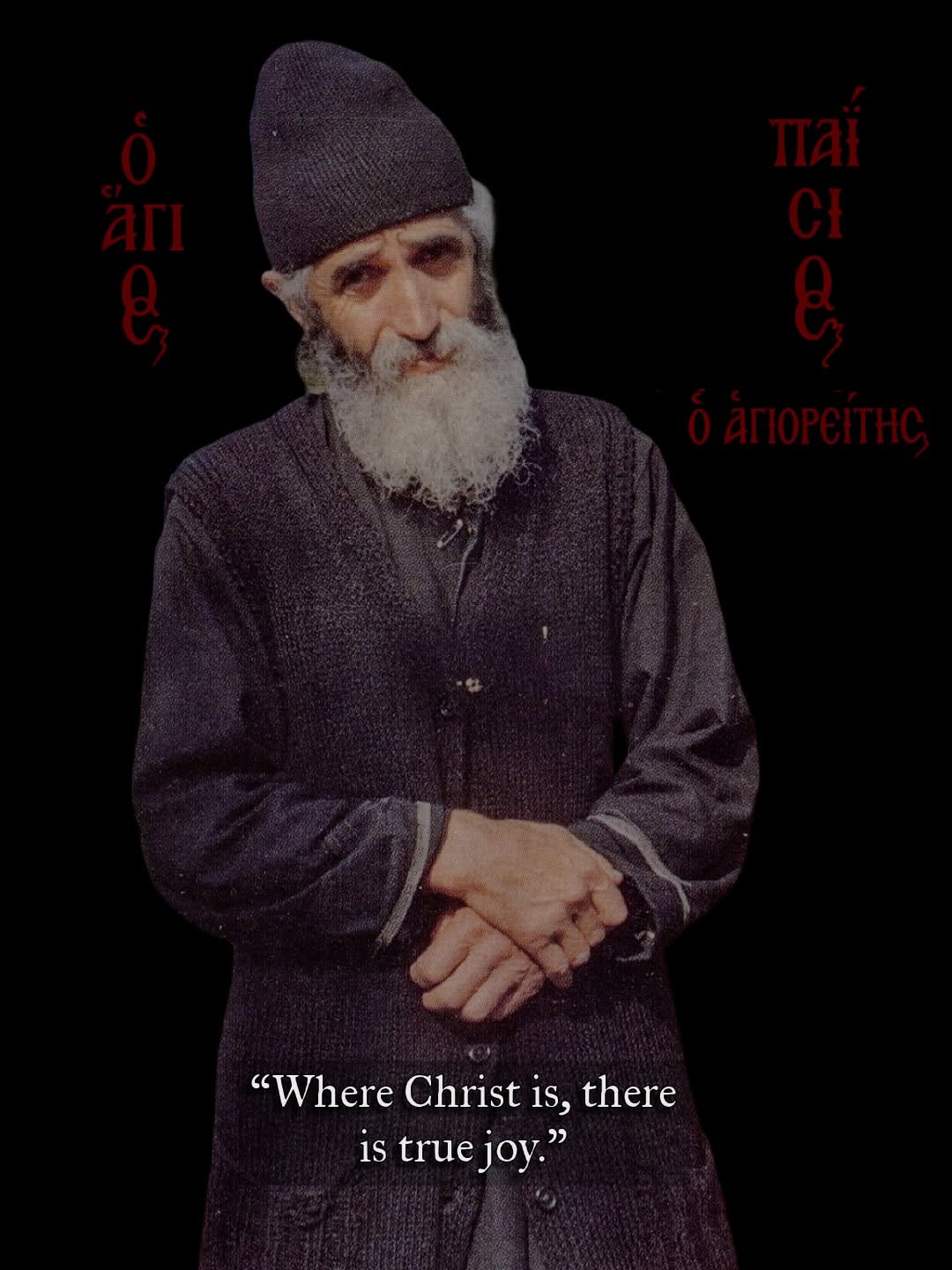
St. Paisios the Athonite: Baptized by St. Arsenios, formed on Mount Athos

The post presents the life of St. Paisios the Athonite (1924-1994). He was baptized by St. Arsenios of Cappadocia, who gave him his own name. St. Paisios later entered monastic life on Mount Athos, where Elder Tychon became one of his spiritual fathers. His life was devoted to humility, prayer, and guiding souls toward Christ. The post includes three sayings attributed to the saint, displayed on images with his icon and title in Greek. The first…

The post presents the life of St. Paisios the Athonite (1924-1994). He was baptized by St. Arsenios of Cappadocia, who gave him his own name. St. Paisios later entered monastic life on Mount Athos, where Elder Tychon became one of his spiritual fathers.

His life was devoted to humility, prayer, and guiding souls toward Christ. The post includes three sayings attributed to the saint, displayed on images with his icon and title in Greek. The first saying states that humility opens the gates of Heaven and brings down God's grace.

The second says that keeping God's commandments cultivates virtue and attains health of the soul. The third declares that where Christ is, there is true joy.

  • Baptized by St. Arsenios of Cappadocia, who gave him his name
  • Embraced monasticism on Mount Athos under Elder Tychon
  • Life devoted to humility, prayer, and guiding souls to Christ
  • Humility opens heaven's gates and draws God's grace
  • Keeping commandments cultivates virtue and soul health
Read more

Fr. Dimitrije Smirnov on the Family as a Domestic Church

Protopresbyter Dimitrije Smirnov states that happiness is a state born in a good family. He describes the goal of the Orthodox family as building a domestic church. In this domestic church, the husband serves as the priest, the wife as the deacon or his helper, and the children are the people of God who must be led to Christ.

  • Happiness originates in a good family.
  • The Orthodox family aims to become a domestic church.
  • The husband holds the role of priest in the domestic church.
  • The wife holds the role of deacon, serving as the husband's helper.
  • Children are the people of God to be brought to Christ.
Saint Wisdom Instagram

The Didache Chapter 16: Vigilance and Perseverance in Faith

The post presents Chapter 16 of the Didache, an early Christian text likely written by St. Barnabas. The speaker urges vigilance over one's spiritual life, warning not to let the lamp of faith go out because the hour of the Lord's return is unknown. He calls for frequent gathering with other believers and seeking what nourishes the soul. He concludes that a whole lifetime of faith will not help someone who falls away at the very end.

Key moments

  1. Keep watch over your life and do not let your lamp go out, staying ready because you do not know the hour your Lord is coming.
  2. Gather often and seek what nourishes your soul.
  3. A whole lifetime of faith will not help you if you fall away at the very end.
Read more

Fr Sotirios on St. Paul's cure for modern bickering: good deeds over arguments

Fr Sotirios Papifilopoulos preaches that the modern spirit of constant arguing, fighting, and complaining comes from having too much idle time. He turns to St. Paul's letter to Titus, where the apostle gives two directives for the parish. First, insist that people apply themselves to good deeds, because those who are busy doing good have no time for negativity. Second, avoid stupid controversies, genealogies, dissensions, and quarrels over the…

Fr Sotirios Papifilopoulos preaches that the modern spirit of constant arguing, fighting, and complaining comes from having too much idle time. He turns to St. Paul's letter to Titus, where the apostle gives two directives for the parish. First, insist that people apply themselves to good deeds, because those who are busy doing good have no time for negativity.

Second, avoid stupid controversies, genealogies, dissensions, and quarrels over the law, citing Titus 3:9 that these are unprofitable and futile. The sermon connects this to a deeper human condition: we are created for community yet terrified of intimacy. We build barriers to hide our true selves, good, bad, and indifferent.

Marriage is given to teach communion by forcing a husband and wife to discover each other's full reality. When fear of intimacy prevails, people naturally gripe, fuss, and argue, declaring the other group evil. St. Paul's remedy is practical: fill the time with good works, and refuse to engage in pointless disputes.

Key moments

  1. We are made for community but feel strange in disconnection because we hunger for community while fearing intimacy.
  2. Our greatest fear is that the curtain will be pulled back and people will see us for what we really are, good, bad, and indifferent.
  3. Marriage teaches communion by forcing a man and a woman to discover each other's full reality, sometimes quickly, sometimes over a long time.
  4. If given over to fear of intimacy, we naturally gripe, fuss, complain, and argue; the spirit of the age is arguing, fighting, and declaring the other group evil.
  5. St. Paul tells Titus to insist that people apply themselves to good deeds, because those busy doing good have no time to argue, complain, or focus on what they lack.
  6. St. Paul also commands avoiding stupid controversies, genealogies, dissensions, and quarrels over the law, for they are unprofitable and futile.
  7. The modern age of bickering and complaining has stemmed from people not being busy enough and having too much time on their hands.
Read more
Athonite Audio YouTube

Desert Fathers on Hospitality: Fasting, Alms, and Receiving Christ in Guests

Desert Fathers on Hospitality: Fasting, Alms, and Receiving Christ in Guests 14:07

The chapter collects sayings and stories from the Desert Fathers on hospitality. Abba Joseph teaches that receiving brothers with joy does not alter the monk, just as changing clothes does not change the person. He cites Matthew 22:21 to show that hospitality fulfills God's law while mourning belongs to solitude. An elder in Palestine tells Abba Cassian that fasting is always available but guests are temporary, so love's commandment requires…

The chapter collects sayings and stories from the Desert Fathers on hospitality. Abba Joseph teaches that receiving brothers with joy does not alter the monk, just as changing clothes does not change the person. He cites Matthew 22:21 to show that hospitality fulfills God's law while mourning belongs to solitude.

An elder in Palestine tells Abba Cassian that fasting is always available but guests are temporary, so love's commandment requires setting aside one's rule to receive them as Christ, citing Matthew 9:15. Abba Moses breaks a communal fast to feed visitors; the priests declare he broke a human rule but kept God's law. Abba Poemen refuses to shut his door during Lent, saying the door of the tongue must be kept shut, not the wooden door.

He also teaches that giving alms even if imperfect is right, because a meager harvest still sustains in famine, unlike sowing nothing. An orthodox elder welcomes a Manichaean traveler who converts after experiencing unconditional hospitality. A monk's alms to his brother only increase poverty until an elder advises redirecting the brother's own earnings to strangers with prayer, which brings blessing.

An elder's bread multiplies when shared during famine, while his companion's private store runs out; the elder's faith is confirmed when an empty bin is found full after he insists on giving.

Key moments

  1. 0:01 Abba Joseph demonstrates that receiving brothers with joy does not change the monk, just as changing clothes does not change the person, and he cites Matthew 22:21 to show that hospitality fulfills God's law while mourning belongs to solitude.
  2. 1:35 An elder in Palestine tells Abba Cassian that fasting is always available but guests are temporary, so love's commandment requires setting aside one's rule to receive them as Christ, citing Matthew 9:15.
  3. 3:11 Abba Moses breaks a communal fast to feed visitors; the priests declare he broke a human rule but kept God's law.
  4. 3:42 Abba Poemen refuses to shut his door during Lent, saying the door of the tongue must be kept shut, not the wooden door.
  5. 4:13 Abba Poemen teaches that giving alms even if imperfect is right, because a meager harvest still sustains in famine, unlike sowing nothing at all.
  6. 7:52 An orthodox elder welcomes a Manichaean traveler who converts after experiencing unconditional hospitality.
  7. 9:25 A monk's alms to his brother only increase poverty until the elder advises redirecting the brother's own earnings to strangers with prayer, which brings blessing.
  8. 12:33 An elder's bread multiplies when shared during famine, while his companion's private store runs out; the elder's faith is confirmed when an empty bin is found full after he insists on giving.
Athonite Audio YouTube

Desert Fathers on Ceaseless Prayer: Sayings from Agathon, Macarius, and Others

Desert Fathers on Ceaseless Prayer: Sayings from Agathon, Macarius, and Others 8:49

The video presents sayings of the Desert Fathers on ceaseless prayer. Aba Agathon calls prayer the most arduous work because demons oppose it, and it remains a battle until death. Abba Basarian prayed for fourteen days with hands outstretched; a vision revealed a decree to throw down the temples. After his death, a silent rope-maker was discovered to be a woman who had overcome Satan. Abba Vagrios teaches prayer with fear and trembling, using…

The video presents sayings of the Desert Fathers on ceaseless prayer. Aba Agathon calls prayer the most arduous work because demons oppose it, and it remains a battle until death. Abba Basarian prayed for fourteen days with hands outstretched; a vision revealed a decree to throw down the temples.

After his death, a silent rope-maker was discovered to be a woman who had overcome Satan. Abba Vagrios teaches prayer with fear and trembling, using tears as a sword against attacking thoughts rather than fighting thoughts with thoughts. Bishop Apanius rebukes an abbot for limiting prayer to set hours, saying a monk ought never to cease from prayer.

A monk's prayer during a meal rises like fire. Abba Joseph tells Abba Lot that if he becomes all fire, he will pray rightly. Abba Lucius shows Euchite monks how to pray without ceasing while soaking palm leaves, earning coins that others take and pray for him while he sleeps. Abba Macarius teaches a brief prayer: "Lord, as you will and as you know, have mercy on me."

Abba Sisois lowers his hands quickly during prayer so his nous is not caught up in theoria and noticed by others. A father compares a disturbed nous to troubled water that cannot reflect the face. Abba Ayan brings rain through earnest prayer, then flees veneration.

An elder tells visiting brothers that one of them has said 103 prayers while they only talked, then offers a farewell prayer.

Key moments

  1. 0:01 Aba Agathon says the work of prayer is the most difficult because demons rush to hinder it, and it is a continual battle until the last breath.
  2. 0:32 Abadulus finds Abba Basarian standing in prayer with hands stretched out for fourteen days, then Basarian leads him into the desert and provides water by prayer.
  3. 1:34 Basarian shares a vision that a decree has been issued to throw down the temples, and they later discover a silent rope-maker was a woman who had overcome Satan.
  4. 3:11 Abba Vagrios teaches to pray with fear and trembling, and to wield the sword of tears against contrary thoughts rather than fighting them with other thoughts.
  5. 3:41 Bishop Apanius rebukes an abbot for observing only the fixed hours of prayer, saying a monk ought never to cease from prayer.
  6. 4:42 Abba Lucius shows Euchite monks how to pray without ceasing while soaking palm leaves, earning coins that others take and pray for him while he sleeps.
  7. 6:44 Abba Sisois lowers his hands quickly during prayer so his nous is not caught up in theoria and noticed by others.
  8. 8:17 An elder tells visiting brothers that one of them has said 103 prayers while they only talked, then says a farewell prayer.
Athonite Audio YouTube

Desert Fathers on Watchfulness and Vigilance

Desert Fathers on Watchfulness and Vigilance 26:33

Chapter 11 of the Sayings of the Desert Fathers collects teachings on watchfulness and vigilance. Abba Arsenius teaches that an interior life according to God's will conquers outward passions, and that if we seek God he will appear to us and remain with us. Abba Agathon, at his death, stood motionless for three days and told the brothers he was standing before the judgment seat of God, not knowing whether his works were pleasing because God's…

Chapter 11 of the Sayings of the Desert Fathers collects teachings on watchfulness and vigilance. Abba Arsenius teaches that an interior life according to God's will conquers outward passions, and that if we seek God he will appear to us and remain with us. Abba Agathon, at his death, stood motionless for three days and told the brothers he was standing before the judgment seat of God, not knowing whether his works were pleasing because God's judgments differ from human ones.

He also stated that no virtue progresses without great watchfulness. Abba Alonius said that unless one says "God and I alone are in the world" peace will not be found, and that theosis could be reached in one day if truly desired. Abba John the Dwarf demonstrated watchfulness by weaving all his plates into one basket without realizing it, because his mind was fixed on the theoria of God.

He also taught a forgetful brother by lighting lamps from one another, showing the first lamp is not diminished, nor is he diminished by many visitors, nor separated from the love of God. Abba Silvanus said a genuine struggler can make a new beginning not only every day but every hour. Abba Or compared the soul to a lamp: neglect lets the Holy Spirit's heat go out and the enemy devours the heart, but God mercifully pricks the negligent conscience with the thought of punishment so they live more vigilantly.

Amma Syncletica compared the soul to a house and a ship, urging armed defense against demons both outside and within, and warned that complacency in calm waters sinks the soul. Abba Theodore of Enaton warned that God would condemn inattention in prayer and psalmody.

Key moments

  1. Abba Arsenius says to live an interior life according to God's will to conquer outward passions, and that if we seek God he will appear to us and if we hold fast to him he will stay with us.
  2. At his death Abba Agathon stands motionless for three days, tells the brothers he is standing before the judgment seat of God, and says he does not know whether his works are pleasing to God because the judgments of God are different from human judgments.
  3. Abba Agathon states that without great watchfulness one does not progress even in a single virtue.
  4. Abba Alonius says unless you say God and I alone are in the world you will never find peace, and that if you really wanted to you could reach theosis in one day.
  5. Abba John the Dwarf makes enough plates for two baskets but uses them all on one basket without realizing until his weaving touches the wall, because his mind was taken up with the theoria of God.
  6. Abba John the Dwarf teaches a forgetful brother by having him light lamps from one another, showing the first lamp is not diminished, nor is John diminished by many visitors, nor separated from the love of God.
  7. Abba Silvanus says a genuine struggler can make a new beginning not only every day but every hour.
  8. Abba Or compares the soul to a lamp: neglect lets the Holy Spirit's heat go out and the enemy devours the heart, but God mercifully pricks the negligent conscience with the thought of punishment so they live more vigilantly.
Athonite Audio YouTube

Discernment guides every ascetic practice in the Desert Fathers

Discernment guides every ascetic practice in the Desert Fathers 1:10:50

The post presents Chapter 10 of the Sayings of the Desert Fathers, which teaches that discernment is the indispensable guide for every ascetic practice. Abba Anthony warns that severe bodily discipline without discernment leaves a person far from God, and he illustrates moderation with the image of a bow that breaks if drawn too far. Abba Agathon compares manual labor to leaves and interior watchfulness to fruit, insisting that anger makes even…

The post presents Chapter 10 of the Sayings of the Desert Fathers, which teaches that discernment is the indispensable guide for every ascetic practice. Abba Anthony warns that severe bodily discipline without discernment leaves a person far from God, and he illustrates moderation with the image of a bow that breaks if drawn too far.

Abba Agathon compares manual labor to leaves and interior watchfulness to fruit, insisting that anger makes even miracle-working unacceptable to God. Abba Abraham describes a passion as something that lives in check rather than being killed, like resisting the temptation to pick up gold among stones. Abba Poemen shows that advice must fit the hearer's strength: some may engage passions and fight them, while others must cut them off at once, and he recommends eating a little less each day rather than extreme fasts.

Amma Syncletica distinguishes divine asceticism from diabolical by proportion, keeping one rule of fasting rather than gradually increasing to four or five days. The fathers also distinguish thoughts from deeds: a thought cut off immediately does not pollute, but dwelling on it leads to shipwreck, and the straight way is violence against one's own thoughts and renunciation of self-will. True renunciation is measured by the heart's change, not by external austerity.

Key moments

  1. 0:01 Abba Anthony said there are many who chastise their bodies through asceticism but because they lack discernment they are far from God.
  2. 1:03 Abba Anthony used the analogy of a bow: if you keep drawing it too far the bow will break; likewise in the work of God, if you stretch the brothers beyond measure they will break.
  3. 5:14 Abba Agathon said a human being is like a tree: manual labor is the leaves, interior watchfulness is the fruit; every tree that does not bear good fruit is cut down and cast into the fire (Matthew 3:10).
  4. 6:16 Abba Agathon said even if someone given to anger were to raise the dead, he would not be pleasing to God simply because of his anger.
  5. 8:22 Abba Abraham said a passion is not killed but lives in check; like seeing gold among stones and resisting the temptation to pick it up, the passion remains even though controlled.
  6. 17:49 Abba Poemen told Abba Joseph that some can let passions in and fight them, but others cannot safely withstand the onslaught and ought to cut them off immediately.
  7. 28:20 Abba Poemen said the best way of fasting is to eat every day but take a little less than you feel like eating, rather than going without food for two days at a time.
  8. 45:02 Amma Syncletica said the devil induces a kind of intensified asceticism; divine asceticism is distinguished from diabolical by proportion, keeping one rule of fasting rather than gradually increasing to four or five days.
Archim. Christódoulos Papadeas Instagram

Elder Christódoulos: Rejoice in Loving God and Neighbor During the Nativity Fast

Greek Orthodox Elder Christódoulos addresses his congregation at the start of the Nativity Fast, also known as the Christmas fast. He calls them to rejoice as the church continues to grow, stating that the responsibility of the one holy Catholic and Apostolic Church is second to none because it must shine brightly as Christ desires. He wishes them well, urging them to enjoy the day, the fall season, and the beginning of the fast. The elder…

Greek Orthodox Elder Christódoulos addresses his congregation at the start of the Nativity Fast, also known as the Christmas fast. He calls them to rejoice as the church continues to grow, stating that the responsibility of the one holy Catholic and Apostolic Church is second to none because it must shine brightly as Christ desires.

He wishes them well, urging them to enjoy the day, the fall season, and the beginning of the fast. The elder concludes by urging them to continually rejoice in the privilege to love God and to love their fellow man. The message frames the fasting period not as a burden but as a season for joy rooted in the dual commandment of love.

Key moments

  1. Let us rejoice as we continue growing as a church.
  2. Our responsibility is second to none in this world, because the one holy Catholic and Apostolic Church has a responsibility to shine brightly as Christ wants us to.
  3. Let us be well, enjoy this beautiful day, the beautiful fall, the beginning now that we are in the Christmas fast.
  4. Let us continually rejoice in the privilege to love God and to love our fellow man.
Read more
Athonite Audio YouTube

Desert Fathers' Warnings Against Judging Others

Desert Fathers' Warnings Against Judging Others 9:10

Chapter 9 of the Sayings of the Desert Fathers collects stories and sayings that condemn judging one's brother. Abba Anthony compares a repentant monk expelled twice to a shipwrecked vessel that has reached harbor empty, asking whether they would sink it; the brothers reinstate him at once. When a priest orders a sinner out of church, Abba Bisarian leaves with him, saying, "I too am a sinner." Abba Isaac of the Thebes mentally condemns a brother…

Chapter 9 of the Sayings of the Desert Fathers collects stories and sayings that condemn judging one's brother. Abba Anthony compares a repentant monk expelled twice to a shipwrecked vessel that has reached harbor empty, asking whether they would sink it; the brothers reinstate him at once. When a priest orders a sinner out of church, Abba Bisarian leaves with him, saying, "I too am a sinner."

Abba Isaac of the Thebes mentally condemns a brother at a cenobium; an angel blocks his cell door and tells him God asks where he wishes the guilty brother sent. Isaac prostrates and apologizes; the angel says God has forgiven him but warns him not to judge before God has judged. At a disciplinary meeting in Scetis, Abba Moses carries a leaking basket of sand, explaining his own sins trail behind him unseen while he is asked to judge another's; the brothers pardon the offender.

Abba Poemen teaches that peace comes from asking "Who am I?" and judging no one, and that God overlooks the faults of those who overlook their brother's faults. He illustrates this by gently restoring a man an anchorite had expelled and rebuking the anchorite with a parable of a man weeping over another's corpse while ignoring his own.

Abba Pior carries a large bag of sand on his shoulders and a small basket in front, saying the bag represents his many sins placed behind him unseen, the basket the brother's sins he is tempted to judge; the fathers call this the true path of salvation. An anchorite bars a priest from serving after rumors; a voice says, "Human beings are taking my judgments upon themselves," and a vision of a golden well with pure water drawn by a leper leads the anchorite to recall the priest.

Key moments

  1. 0:01 A monk expelled from Aba Elias's brotherhood goes to Aba Anthony, is sent back, expelled again, and Aba Anthony sends a message comparing him to a shipwrecked vessel that has reached harbor empty, asking if they would sink it; they reinstate him at once.
  2. 0:31 When a priest orders a sinning brother to leave the church, Aba Bisarian leaves with him, saying 'I too am a sinner.'
  3. 1:03 Aba Isaac of the thieves visits a synobium, passes judgment in his thoughts on a brother guilty of sins, returns to the desert, and an angel blocks his cell door, telling him God asks where he wishes the guilty brother to be sent; Isaac prostrates and apologizes, and the angel says God has forgiven him but warns him not to judge anyone before God has judged him.
  4. 1:34 When a brother in Skete is found guilty, the elders call a meeting and summon Aba Moses; he arrives carrying a battered wicker basket with holes filled with sand, explains that his own sins run out behind him unseen while he is asked to judge his brother's sins, and the brothers pardon the offender.
  5. 2:04 Aba Joseph asks Aba Poemen how to become a true monk, and Poemen replies that to find peace now and in the world to come one should say in every situation 'Who am I?' and pass judgment on no one.
  6. 3:07 An anchorite tells an abbot to expel a transgressing brother; the brother weeps in the marshlands, refuses to see Poemen, but when Poemen sends for him he comes, is embraced and fed, and Poemen sends a message to the anchorite leading to a meeting where Poemen tells a parable of a man who leaves his own loved one's corpse to weep for another's, pricking the anchorite's conscience so he says 'Poemen has already risen up to heaven while I am still earthbound.'
  7. 5:11 At a meeting in Skete discussing a brother's guilt, Aba Pior carries a large bag of sand on his shoulders and a small basket in front, explaining the bag represents his many sins placed behind him unseen, the basket the brother's sins he is tempted to judge, and that he should keep his own sins before him and ask God's forgiveness; the fathers say this is the true path of salvation.
  8. 6:48 A priest who regularly consecrates the oblation for an anchorite is barred after rumors; a voice tells the anchorite 'Human beings are taking my judgments upon themselves,' and in a vision he sees a golden well with pure water drawn by a leper, refuses to drink, hears 'Why are you not drinking? Does it matter who draws it?' and realizes his error, calling the priest back.
Athonite Audio YouTube

Desert Fathers Warn Against Vainglory: Hide Virtue, Shun Praise

Desert Fathers Warn Against Vainglory: Hide Virtue, Shun Praise 15:04

The chapter collects sayings and stories from the Desert Fathers showing that vainglory corrupts spiritual progress. Abba Anthony warns that a miracle-working monk is like a merchant ship laden with precious gifts that may never reach port; the monk soon dies after asking for ten days to give an account of himself. Anthony tests a praised brother by insulting him; when the brother cannot endure it, Anthony says he is like a house beautifully…

The chapter collects sayings and stories from the Desert Fathers showing that vainglory corrupts spiritual progress. Abba Anthony warns that a miracle-working monk is like a merchant ship laden with precious gifts that may never reach port; the monk soon dies after asking for ten days to give an account of himself. Anthony tests a praised brother by insulting him; when the brother cannot endure it, Anthony says he is like a house beautifully decorated outside but despoiled inside by robbers.

Elders such as Arsenius and Theodore of Phurmi flee reputation. Abba Joseph teaches Evlogios to stop trying to be different by serving ordinary food and revealing his hidden psalmody only after visitors leave. Abba Zeno advises avoiding famous places and not putting down foundations when building a cell.

Abba Theodore of Pherme refuses to speak to a brother who pesters him for advice, calling him a wholesale dealer who peddles other people's words. Abba Serapion corrects a brother who feigns unworthiness but resents advice. Abba Moses flees to the marshes and tells a governor he is a senile heretical old man so that he will not become a spectacle.

Abba Matoes warns against making a name through distinctive practices. Abba Nestoros flees a dragon to avoid vainglory. Abba Pomen refuses to plead for his nephew, saying he has fathered no one, and teaches that deeds must match words. Abba Sisoes gives food to exhausted brothers on a fast day despite the bishop's fear of gossip, and when the brothers say Sisoes will now fast several days, Sisoes says unless God gives the glory, human glory is of no account.

He tells Ammonas to acquire purity of nous rather than prepare sermons. Abba Simon feigns madness and eats in rags to repel governors. Syncletica compares virtue to treasure spent when displayed and wax melted by fire.

A gerontius rebukes a brother who announces his special diet publicly, and another gerontius advises that rigorous fasters should stay in their cells rather than show off.

Key moments

  1. 0:01 Abba Anthony says the miracle-working monk is like a merchant ship laden with precious gifts that may not reach port, and soon after the monk dies after asking for ten days to give an account of himself.
  2. 1:07 Abba Anthony tests a praised brother by insulting him; when the brother cannot endure it, Anthony says he is like a house beautifully decorated outside but despoiled inside by robbers.
  3. 1:38 Abba Joseph teaches Evlogios to stop trying to be different by serving ordinary food and revealing his hidden psalmody only after visitors leave, showing how to discipline thoughts against vainglory.
  4. 4:16 Abba Zeno says not to stay in a famous place or with famous people and not to put down foundations when building a cell.
  5. 4:47 Abba Theodore of Pherme refuses to speak to a brother who pesters him for advice, calling him a wholesale dealer who peddles other people's words.
  6. 7:25 Abba Moses flees to the marshes and tells the governor he is a senile heretical old man so that he will not become a spectacle.
  7. 10:32 Abba Sisoes gives food to exhausted brothers on a fast day despite the bishop's fear of gossip, and when the brothers say Sisoes will now fast several days, Sisoes says unless God gives the glory, human glory is of no account.
  8. 13:09 Syncletica says virtue perishes when publicly noticed like treasure brought into the open, the soul is weakened by praise like wax melted by fire, and one cannot gather heavenly fruit while basking in worldly glory.
Athonite Audio YouTube

Patience and Fortitude in the Desert Fathers

Patience and Fortitude in the Desert Fathers 12:35

Chapter 7 of The Sayings of the Desert Fathers collects teachings on endurance in spiritual struggle. Abba Anthony, afflicted by weariness and confusion, sees an angel weaving baskets and praying alternately; the angel tells him, "Do this and you will be saved." Abba Agathon advises a brother to keep his obedience despite inner battle. Abba Amounas spent fourteen years praying to overcome anger, and Abba Bessarion stood forty nights among thorns…

Chapter 7 of The Sayings of the Desert Fathers collects teachings on endurance in spiritual struggle. Abba Anthony, afflicted by weariness and confusion, sees an angel weaving baskets and praying alternately; the angel tells him, "Do this and you will be saved." Abba Agathon advises a brother to keep his obedience despite inner battle.

Abba Amounas spent fourteen years praying to overcome anger, and Abba Bessarion stood forty nights among thorns without sleep.

A restless brother seeks Abba Theodore of Fermy, who counsels humility of thought and life in community. When the brother returns still unquiet, Theodore replies that he has worn the schema seventy years without a single day of respite and that the monk's purpose is to endure tribulation. Theodore and Abba Lucius encouraged each other for fifty years to remain in the desert by postponing their departure season after season.

Abba John the Dwarf prayed for the passions to be removed and found peace, but a geronda sent him back to ask for battles to return, since the soul progresses through struggle. John then asked for strength to bear the battle rather than deliverance from it. Abba Macarius visits Abba Anthony, who initially shuts the door but later welcomes him after seeing his patient waiting; they braid rope together until dawn.

At Terenuthis Macarius uses a mummy for a pillow; when demons speak through it, he strikes it and they flee, confessing defeat.

Abba Amiles and his disciples are caught in a royal hunt's nets. Amiles confesses Christ, endures torture, and prophesies the princes' mutual death by arrows, which occurs the next day. Abba Poemen and Isidore of Scetis affirm that adversity reveals the monk's character.

Syncletica warns against moving from place to place, teaches that the devil tempts through both rigors and honors, and urges comparing present afflictions with eternal punishments, citing Second Corinthians 12:7 and Psalms 66:11, 89:30, and 4:1. She adds that illness works like fasting to dispel lust, so strenuous asceticism is no longer needed; patience in sickness is a great virtue, and even loss of sight, hearing, strength, or total bodily disease cannot prevent the inner man from growing in holiness.

Key moments

  1. 0:01 Abba Anthony, afflicted by weariness and confusion of thought, cries to the Lord for salvation and sees an angel weaving baskets and praying alternately, who tells him "Do this and you will be saved."
  2. 0:33 Abba Agathon tells a brother struggling with thoughts to carry out his obedience and thus win the battle; Abba Amounas spent fourteen years in Scete praying to overcome anger, and Abba Bessarion stood forty nights among thorn bushes without sleep.
  3. 1:35 A restless brother goes to Abba Theodore of Fermy, who tells him to humble his thoughts, be obedient, and live in community; when the brother returns saying he finds no peace there either, Theodore replies that he has worn the schema seventy years without one day of respite and that the monk's purpose is to endure tribulation.
  4. 2:38 Abba Theodore says that even if the heavens collide with earth he would have no fear, because he begged God in prayer to be delivered from all fear; he and Abba Lucius encouraged each other for fifty years to stay in the desert by saying they would leave after winter, then after summer.
  5. 3:08 Abba John the Dwarf prayed for the passions to be taken away and became peaceful, but a geronda told him to pray for battles to return, since the soul makes progress through struggle; John then asked for strength to bear the battle rather than deliverance from it.
  6. 4:08 Abba Macarius visits Abba Anthony in the mountain; Anthony initially shuts the door but later opens it joyfully after seeing Macarius waiting patiently, and they braid rope together until dawn.
  7. 5:11 At Terenuthis Macarius sleeps with a mummy under his head; demons try to frighten him by speaking through the corpse, but he strikes it and commands it to rise, and the demons flee crying "You have defeated us."
  8. 6:14 Abba Amiles and his two disciples are caught in a forty-mile net set by two princes; Amiles confesses Christ, the disciples are beheaded, Amiles is used for archery practice and prophesies the princes will kill each other with arrows the next day, which happens.
Athonite Audio YouTube

Desert Fathers on Voluntary Poverty: Complete Renunciation and Trust in God

Desert Fathers on Voluntary Poverty: Complete Renunciation and Trust in God 15:00

The post presents Chapter 6 of The Sayings of the Desert Fathers, focusing on voluntary poverty as taught by the early monastic elders. Abba Anthony illustrates the danger of keeping money while renouncing the world by telling a brother to tie meat to his body; when dogs and birds tear him, Anthony explains that demons will similarly torment anyone who holds onto possessions. Abba Arsenios refuses a large inheritance, declaring he died to the…

The post presents Chapter 6 of The Sayings of the Desert Fathers, focusing on voluntary poverty as taught by the early monastic elders. Abba Anthony illustrates the danger of keeping money while renouncing the world by telling a brother to tie meat to his body; when dogs and birds tear him, Anthony explains that demons will similarly torment anyone who holds onto possessions.

Abba Arsenios refuses a large inheritance, declaring he died to the world before the donor, and later accepts a herbal remedy as alms, thanking God for making him worthy to beg. Abba Agathon abandons a newly built cell after one week, saying some will be edified by those who move on despising all they leave behind. A brother sells his only possession, a copy of the Gospels, to feed the poor, saying he sold the very word that commanded selling everything.

Abba Macarios tells Abba Theodore that possessing nothing is better than manuscripts that profit many, so Theodore sells them and gives the money away. Abba John the Persian finds a gold coin three times while going to borrow money to repay a debt; he prays the first two times, takes it the third, gives it to Abba Jacob to announce, and when no one claims it he pays his creditor, causing Jacob to marvel he did not keep it even in debt.

Syncletica compares voluntary poverty to laundering that whitens clothing through trampling. Pelagrios returns a bag of gold and flees honor. A leper refuses alms after sixty years of divine provision. A gardener is healed after an angel rebukes him for saving money instead of trusting God.

An elder concludes that keeping even a few coins makes them one's hope, so all care must be cast upon the Lord.

Key moments

  1. 0:01 Abba Anthony tells a brother who kept possessions to tie meat to his body; when dogs and birds tear him, Anthony says anyone renouncing the world but keeping money will be tormented by demons.
  2. 0:33 Abba Arsenios refuses a large inheritance, saying "I died to the world long before him. How then at his death can he make me his heir?" and returns the will.
  3. 1:04 When Abba Arsenios accepts a herbal remedy as a gift in his illness, he thanks God for making him worthy to beg for alms.
  4. 1:35 Abba Agathon orders his disciples to leave a newly built cell after a week, saying "Arise, let us go hence," and when they fear scandal, he replies that some will be edified by those who move on despising all they leave behind.
  5. 2:39 A brother sells his only possession, a copy of the Gospels, to feed the poor, saying "I have sold that very word which said, sell everything and give to the poor."
  6. 3:11 Abba Macarios tells Abba Theodore that his manuscripts profit many but "it is better still to possess nothing," so Theodore sells them and gives the money to the poor.
  7. 3:42 Abba John the Persian finds a gold coin on the ground three times while going to borrow money to repay a debt; he prays the first two times, takes it the third, gives it to Abba Jacob to announce, and when no one claims it he pays his creditor, causing Jacob to marvel he did not keep it even in debt.
  8. 14:40 An elder tells a brother who wants to save coins for illness: "It is not a good thing to keep more than is sufficient for your immediate bodily needs. If you keep those few coins, that will be where your hope rests. And once they are spent, why should you expect God to care for you? Therefore, let us cast all our care upon the Lord, for he cares for us."