WeOrthodox
EN UA

Orthodox posts, videos and discussions

We follow Orthodox channels, communities and blogs across the web, summarise every post and video, and highlight the conversations with real substance.

First steps in an Orthodox church: entering, standing, and crossing oneself

The video addresses people who have never entered an Orthodox church and fear making mistakes. The speaker notes that many Serbs never learned proper church behavior because prayer was forbidden during the communist period. He demonstrates how to enter: cross yourself at the doors, men remove hats, women cover their heads with a scarf, enter slowly and piously, then cross yourself again inside and venerate the icon placed in the center of the…

The video addresses people who have never entered an Orthodox church and fear making mistakes. The speaker notes that many Serbs never learned proper church behavior because prayer was forbidden during the communist period. He demonstrates how to enter: cross yourself at the doors, men remove hats, women cover their heads with a scarf, enter slowly and piously, then cross yourself again inside and venerate the icon placed in the center of the ambo.

After venerating the icon, men stand on the right side of the nave and women on the left. The church is divided into three parts: the altar where the priest serves, the nave where the people stand, and the narthex at the entrance where people also stand; first-time visitors may stand anywhere on their designated side. During the service, the speaker advises listening carefully and crossing oneself whenever the names of Lord Jesus Christ or the Most Holy Theotokos are mentioned. He invites viewers to follow his profile for further explanations of Orthodox services.

Key moments

  1. The video is intended for people who have never been in an Orthodox church because they fear making mistakes, and the speaker explains that many Serbs never learned proper church behavior due to the communist period when prayer was forbidden.
  2. The speaker teaches how to enter the church: cross yourself at the doors, men remove hats, women wear headscarves, enter slowly and piously, then cross yourself again inside and venerate the icon in the center of the ambo.
  3. After venerating the icon, men stand on the right side and women on the left; the church is divided into three parts, the altar where the priest serves, the nave where the people stand, and the narthex at the entrance where people also stand, and first-time visitors may stand anywhere on their designated side.
  4. During the service, one should listen carefully and cross oneself whenever the names of Lord Jesus Christ or the Most Holy Theotokos are mentioned, and the speaker asks viewers to follow his profile for more information about Orthodox services.
15 opinions in the discussion I lived under communism too, but my parents taught me everything anyway. Communism isn't the reason for that. Read the discussion
Kyle YouTube discussion

Icon Veneration Defended Against Protestant Critique

Icon Veneration Defended Against Protestant Critique 40:05

The speaker, Kyle, responds to a Pentecostal YouTuber named Testify who rejects Eastern Orthodox icon veneration. Kyle argues that if physical objects cannot receive religious reverence, then desecrating a Bible would be permissible, but all Christians agree that is wrong; the same principle applies to icons, which are honored for whom they depict, not for their material. He states that icon veneration is not optional but a dogmatic expression…

The speaker, Kyle, responds to a Pentecostal YouTuber named Testify who rejects Eastern Orthodox icon veneration. Kyle argues that if physical objects cannot receive religious reverence, then desecrating a Bible would be permissible, but all Christians agree that is wrong; the same principle applies to icons, which are honored for whom they depict, not for their material.

He states that icon veneration is not optional but a dogmatic expression of the apostolic faith, and rejecting it entails rejecting the theology of the incarnation and the historic church. Kyle contends that Protestantism lacks apostolic succession and historical continuity, while the Orthodox Church, guided by the Holy Spirit, has preserved the apostolic deposit through ecumenical councils that anathematize heresies threatening salvation.

He presents biblical evidence from the Old Testament tabernacle, cherubim, and sacred objects, as well as New Testament relics and the command to greet with a holy kiss, establishing a pattern of material veneration that the church fathers consistently affirmed. Kyle refutes Testify's patristic citations by showing they target pagan idolatry, not Christian iconography, and that the consensus of the fathers supports the veneration of icons as passing honor to the prototype.

He cites Gregory of Nyssa, Jerome, Athanasius, John Chrysostom, Irenaeus, Justin Martyr, and Methodius as affirming that honor given to an image passes to its prototype. Testify's sources, including Origen, Marcus Felix, Arnobius, Eusebius, Epiphanius, Augustine, and Gregory the Great, are either addressing pagan idolatry, represent minority or disputed views, or actually support the Orthodox distinction between adoration and veneration.

The seventh ecumenical council's anathemas responded to iconoclast emperors who violently suppressed veneration; the condemnation targets the theological rejection of icon veneration itself, which is an expression of the apostolic faith, not merely a custom.

Key moments

  1. 0:00 The speaker introduces the dilemma: if physical objects cannot receive religious reverence, then there is nothing wrong with desecrating a Bible, but every Christian agrees that burning or trampling a Bible is wrong.
  2. 0:31 Icons are venerated because of the person depicted, not the wood and paint; rejecting reverence to the Bible separates one from Christ, so physical objects can and must receive religious reverence.
  3. 1:02 Anathema against iconoclasts is not about a required number of prostrations but about rejecting the theology of icon veneration, which is rooted in Old Testament sacred images, apostolic teaching that matter communicates grace, and the distinction between idolatry and legitimate honor.
  4. 3:36 The speaker identifies a paradigm problem: Testify reduces Christianity to a personal list of essential beliefs without authority, while Pentecostalism originated in the 1900s with no historical continuity; Christianity is the visible church established by Christ, not a set of propositions.
  5. 5:43 The church is the visible continuation of the incarnation, guided by the Holy Spirit, and apostolic succession has a stronger historical basis than the biblical canon; all ancient apostolic churches (Orthodox, Oriental, Assyrian, Catholic) share icons, saints, councils, bishops, and monasticism, proving Protestantism cannot be true.
  6. 10:55 The seventh ecumenical council's anathemas responded to iconoclast emperors who violently suppressed veneration; the condemnation targets the theological rejection of icon veneration itself, which is an expression of the apostolic faith, not merely a custom.
  7. 14:33 The speaker presents the positive patristic case: Gregory of Nyssa, Jerome, Athanasius, John Chrysostom, Irenaeus, Justin Martyr, and Methodius all affirm that honor given to an image passes to its prototype and that sacred images have legitimate devotional power.
  8. 28:02 Testify's cited sources (Origen, Marcus Felix, Arnobius, Eusebius, Epiphanius, Augustine, Gregory the Great) are either addressing pagan idolatry, represent minority or disputed views, or actually support the Orthodox distinction between adoration and veneration.
22 opinions in the discussion It honestly amazes me how many apologetics guys seem to earn a whole PhD in arguing against Islam, yet when it comes to Christian history and what the church actually is, their knowledge is… Read the discussion

Why Orthodoxy Challenges Protestants: Worship Over Personality

Why Orthodoxy Challenges Protestants: Worship Over Personality 8:30

Hank Hanegraaff, chairman of the Christian Research Institute, reflects on why Orthodoxy presents a challenge for those from a Protestant background. He explains that in many Protestant settings worship becomes centered on music, preaching, or the charisma of a particular leader, creating a personality cult. Orthodoxy redirects the heart toward the worship of God, the mystery of the Eucharist, and the liturgical life that joins earth and heaven.…

Hank Hanegraaff, chairman of the Christian Research Institute, reflects on why Orthodoxy presents a challenge for those from a Protestant background. He explains that in many Protestant settings worship becomes centered on music, preaching, or the charisma of a particular leader, creating a personality cult. Orthodoxy redirects the heart toward the worship of God, the mystery of the Eucharist, and the liturgical life that joins earth and heaven.

The church building, the icons, the dome, the saints, and the Divine Liturgy reveal a world filled with the presence of God. Orthodoxy does not teach escape from creation but the redemption and transfiguration of the whole cosmos in Christ. For many Protestants this requires leaving behind individualism and entering the ancient life of the Church.

Hanegraaff describes his own break with the evangelical church as a result of disillusionment. He says the paradigm that reduces worship to a sermon in a bare room must be broken because Orthodoxy centers on worship and mystery rather than a lecture. He notes that Protestants often conflate Orthodoxy with Roman Catholicism and must break out of that paradigm.

A personality-driven ministry becomes a cult of personality where people come for the preacher, not for Christ. Visiting St. Nectarios Orthodox Church, he immediately sensed he was there to worship God, not for music or a sermon. He describes how the dome symbolizes the cloud of witnesses and the heavenly liturgy, and how the architecture reflects Revelation 21's vision of a renewed cosmos where God dwells with humanity.

His wife and children later embraced Orthodoxy on their own after experiencing the liturgy.

Key moments

  1. 0:00 The purpose of church is worship, not a good sermon; the Protestant paradigm is sermon-centered and personality-driven.
  2. 0:30 Protestants often conflate Orthodoxy with Roman Catholicism; one must break out of the paradigm that reduces worship to a sermon in a bare room.
  3. 1:03 A personality-driven ministry becomes a cult of personality; people come for the preacher, not for Christ.
  4. 1:34 His break came through disillusionment with the evangelical church; he decided to explore Orthodoxy.
  5. 2:38 Entering St. Nectarios, he realized he was there to worship God, not for music or a sermon.
  6. 3:08 The dome of an Orthodox church symbolizes the cloud of witnesses and the liturgy extending into heaven.
  7. 3:38 The architecture also reflects Revelation 21: Christ redeems the cosmos, the new Jerusalem descends, and God dwells with men.
  8. 6:16 His family joined him; his wife was immediately smitten, and his children later entered Orthodoxy on their own.
Read more
George Instagram

Christ teaches trust in God's daily provision

The post presents Christ's teaching from Matthew 6:34 and 6:11. Jesus says not to worry about tomorrow because tomorrow will have its own concerns. He teaches his disciples to pray for today's bread, not tomorrow's. The accompanying video summary states that God gives strength for today, not for tomorrow. Worry feels heavy because it means carrying a day that has not yet been given.

The source offers these Scripture verses and the brief reflection without additional commentary or discussion.

Key moments

  1. God gives you strength for today, not for tomorrow.
  2. Worry feels heavy because you are carrying a day that he hasn't given you yet.
Read more
Lives of the Saints 🙏 Instagram

The Forty Holy Martyrs of Bitola: Monks Who Chose Death Over Apostasy

In 1385, during the Ottoman conquest of the Balkans, the city of Bitola in Macedonia fell after a four-month siege. The conquerors destroyed homes and churches, killed or captured many inhabitants, and pressured Orthodox Christians to abandon their faith. Monks of the Monastery of Saint George the Great Martyr, together with other Christians who had sought refuge there, refused to renounce Jesus Christ and accept Islam. They boldly confessed the…

In 1385, during the Ottoman conquest of the Balkans, the city of Bitola in Macedonia fell after a four-month siege. The conquerors destroyed homes and churches, killed or captured many inhabitants, and pressured Orthodox Christians to abandon their faith. Monks of the Monastery of Saint George the Great Martyr, together with other Christians who had sought refuge there, refused to renounce Jesus Christ and accept Islam.

They boldly confessed the Orthodox Faith and proclaimed the saving truth of Christ, choosing suffering rather than betraying their Lord. According to the account of their martyrdom, their words were so powerful that even Hasan, a Turkish interpreter, was moved to embrace Christianity. He openly confessed the Orthodox Faith and joined the holy confessors.

Despite threats and terrible tortures, the forty remained faithful to Christ. Finally, they were led to Bair Hill near Bitola, where they were beheaded. Their persecutors scattered the remains among the wooded slopes of Baba Mountain.

The post notes that these holy men received a double crown from Christ: the crown of monastic struggle and the crown of martyrdom. It concludes with a reflection that faith is not merely something inherited from ancestors but something that must be defended through one's own life, and a prayer for their intercession.

  • 1385 Ottoman siege and fall of Bitola in Macedonia
  • Monks of Saint George Monastery and refugee Christians refused conversion to Islam
  • Forty martyrs beheaded on Bair Hill after enduring torture
  • Turkish interpreter Hasan converted and joined the confessors
  • Relics scattered on Baba Mountain; saints honored with double crown of monasticism and martyrdom
Read more

Saint Paraskeva: Ascetic Life, Miraculous Relics, and Veneration in Iași

Saint Paraskeva, known as Saint Petka, was born in Epivates near Constantinople to wealthy and devout Christian parents. Her brother Euthymius became a monk and later a respected bishop. After the death of her parents, she left her family home and traveled first to Constantinople and then to the wilderness near the Jordan River. There she spent many years in fasting, prayer, silence, and spiritual struggle. Her life was filled with hardship,…

Saint Paraskeva, known as Saint Petka, was born in Epivates near Constantinople to wealthy and devout Christian parents. Her brother Euthymius became a monk and later a respected bishop. After the death of her parents, she left her family home and traveled first to Constantinople and then to the wilderness near the Jordan River.

There she spent many years in fasting, prayer, silence, and spiritual struggle. Her life was filled with hardship, demonic temptations, and the difficult battles of the ascetic life, yet she remained faithful to Christ. When she reached old age, an angel of God appeared to her and said: "Leave the wilderness and return to your homeland.

There you must surrender your body to the earth, while your soul will depart to the Lord." Obeying the heavenly message, Saint Petka returned to Epivates, where she spent another two years in constant prayer and fasting. There she peacefully surrendered her soul to God in the 9th century.

Her holy relics became a source of miracles and healing, and throughout the centuries they were carried to Constantinople, Tarnovo, Belgrade, and finally Iași in Romania, where they remain today. In Belgrade a holy spring dedicated to Saint Petka continues to be a place of prayer where many faithful seek healing and comfort through her intercessions.

The account concludes that Saint Petka reminds us that holiness is not found in wealth, recognition, or earthly success, but in humility, repentance, prayer, and complete devotion to Jesus Christ. Though she lived hidden from the world, God made her known to generations of Christians. The post ends with the invocation: Holy Venerable Mother Paraskeva, pray to God for us.

  • Born in Epivates to devout parents; brother Euthymius became a bishop.
  • Left for wilderness near Jordan River, lived ascetic life of fasting, prayer, and spiritual struggle.
  • Angel instructed her to return to Epivates; died peacefully in the 9th century after two years of prayer.
  • Relics transferred to Constantinople, Tarnovo, Belgrade, and Iași; spring in Belgrade remains a site of healing.
  • Presented as model of holiness through humility, repentance, and devotion to Christ.
Read more

Archimandrite Gregorios Estefan: Orthodox liturgy keeps Scripture's full doctrine

Archimandrite Gregorios Estefan states that Orthodoxy has preserved the doctrinal and spiritual depth of its liturgical life without reducing it to poetry driven by human emotion. He writes that a deep reading of Orthodox prayers reveals the detailed presence of Holy Scripture's teachings: the doctrines of the Holy Trinity, creation, the Fall, and the Incarnation; the salvation of the world through Christ's Passion and Resurrection; the birth of…

Archimandrite Gregorios Estefan states that Orthodoxy has preserved the doctrinal and spiritual depth of its liturgical life without reducing it to poetry driven by human emotion. He writes that a deep reading of Orthodox prayers reveals the detailed presence of Holy Scripture's teachings: the doctrines of the Holy Trinity, creation, the Fall, and the Incarnation; the salvation of the world through Christ's Passion and Resurrection; the birth of the Church at Pentecost; and the Second Coming, the Judgment, and the general resurrection.

The prayers also contain what Scripture and the Church's experience teach about the Theotokos and the saints, as well as the ways of spiritual struggle and the battle against demons. All these doctrines and the experience of spiritual struggle have been recorded by the Church in its prayers. Their purpose, he says, is to establish the faithful in the true faith, which alone is the sure path to eternal salvation.

  • Orthodox liturgy retains full doctrinal depth, not emotional poetry
  • Prayers detail Trinity, creation, Fall, Incarnation, salvation, Pentecost, Second Coming, Judgment, resurrection
  • Prayers include teachings on the Theotokos, saints, spiritual struggle, and battle against demons
  • Church recorded these doctrines and spiritual experience in its prayers
  • Purpose is to establish the faithful in true faith as the sure path to salvation

Why "Call No Man Father" Doesn't Forbid Spiritual Fatherhood

The speakers address the objection that Jesus forbids calling any man "father" by examining the immediate context of Matthew 23:9. They note that the verse before also forbids calling anyone "teacher," which would rule out the title "Doctor" since the Latin word means teacher. This parallel shows the difficulty of a literalist reading. They cite Acts 7, where Stephen addresses the Sanhedrin as "fathers and brothers," demonstrating that the early…

The speakers address the objection that Jesus forbids calling any man "father" by examining the immediate context of Matthew 23:9. They note that the verse before also forbids calling anyone "teacher," which would rule out the title "Doctor" since the Latin word means teacher. This parallel shows the difficulty of a literalist reading.

They cite Acts 7, where Stephen addresses the Sanhedrin as "fathers and brothers," demonstrating that the early Church did not understand Jesus' words as an absolute ban on the honorific use of "father."

The central proof text is 1 Corinthians 4:15, where Paul explicitly calls himself the father of the Corinthians because he begot them through the gospel. Paul presents himself as a father who begets believers through the gospel, claiming a fatherly role in salvation. This directly contradicts a literal reading of Matthew 23:9 that would forbid any spiritual fatherhood.

Key moments

  1. The objection is that Jesus explicitly says "call no man father" regarding the title, not biological fathers.
  2. The verse before "call no man father" forbids calling anyone "teacher," and "doctor" in Latin means teacher, so the same logic would forbid the title Doctor.
  3. In Acts, Stephen addresses the Sanhedrin as "fathers and brothers," showing biblical precedent for the honorific use of "father."
  4. In 1 Corinthians 4:15, Paul says, "I am your father that I have begotten you in the gospel," explicitly claiming spiritual fatherhood.
  5. Paul presents himself as a father who begets believers through the gospel, indicating a salvific role that a literal reading of Matthew 23:9 would forbid.
3 opinions in the discussion Funny how they don't apply the same logic to "this is my body, this is my blood" lol Read the discussion
radioimlemesou Instagram

Metropolitan Athanasios of Lemesos recalls Fr. John Romanides

Metropolitan Athanasios of Lemesos speaks in an excerpt from the program "Heartfelt Word, Nostalgia for Holy Forms" about his personal experiences with the late Fr. John Romanides. He shares memories from their time together that shed light on Fr. John's character and personality. The metropolitan's testimony describes Fr. John's deep love for Orthodoxy, which he communicated through living and academically grounded discourse, uniting theological knowledge with the life of the Church.

  • Metropolitan Athanasios of Lemesos gives a personal testimony about Fr. John Romanides
  • The excerpt comes from the program "Heartfelt Word, Nostalgia for Holy Forms"
  • Fr. John's character and personality are illuminated through shared memories
  • Fr. John conveyed his love for Orthodoxy with living and academically grounded speech
  • He combined theological knowledge with ecclesiastical experience

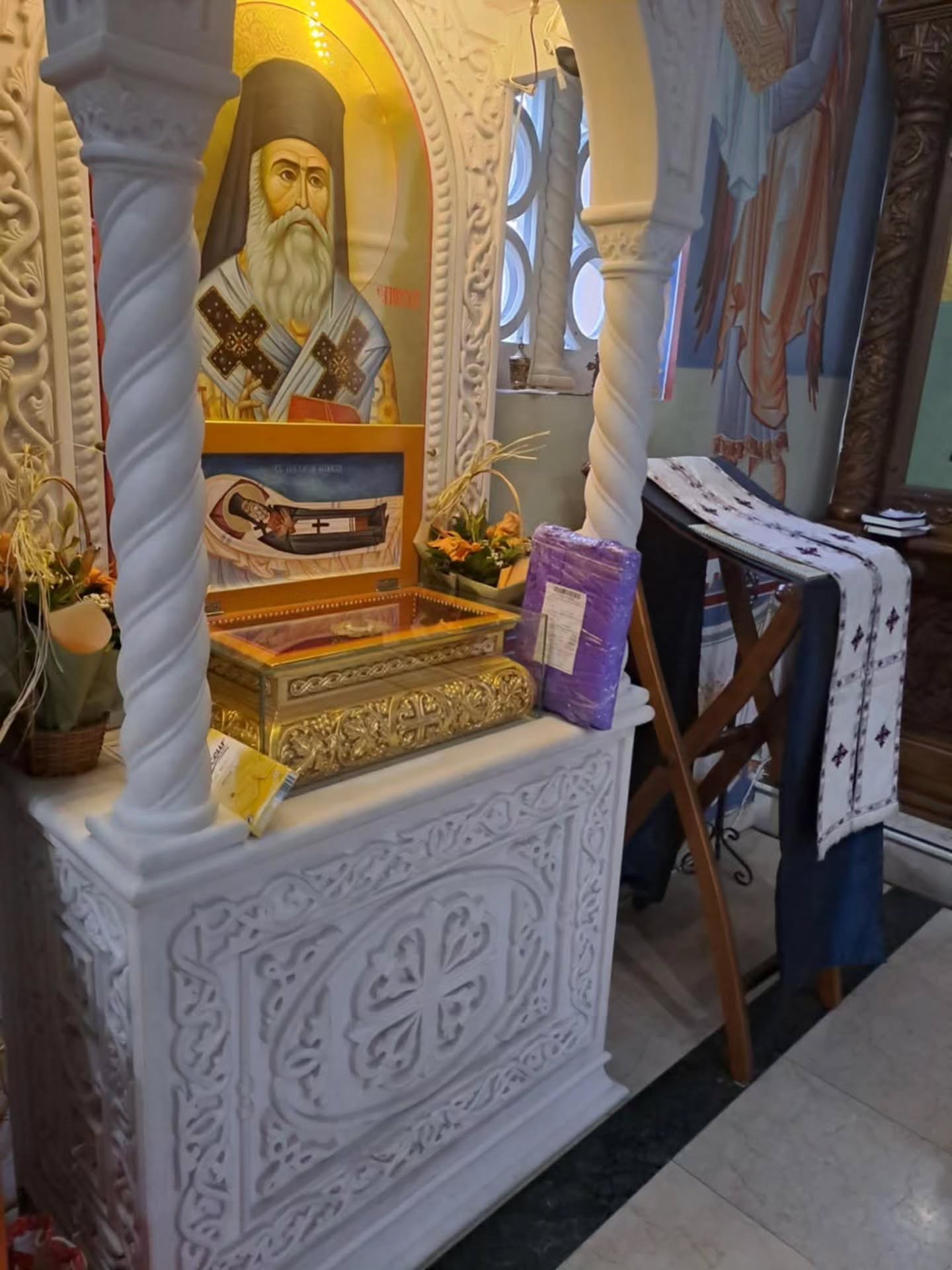
Grandmother's prayer to Saint Nektarios transforms troubled grandson

A grandmother from Faler cared for her two grandchildren, ages nine and eleven, after their mother left their father and remarried. Poverty forced her to place them in an orphanage in Vuli. The older boy stopped reading, lost interest in life, and became so difficult that the orphanage considered expelling him. Desperate, the grandmother contacted Dimitrios Panagopoulos for advice. He told her to seek help from heaven through prayer to Saint…

A grandmother from Faler cared for her two grandchildren, ages nine and eleven, after their mother left their father and remarried. Poverty forced her to place them in an orphanage in Vuli. The older boy stopped reading, lost interest in life, and became so difficult that the orphanage considered expelling him. Desperate, the grandmother contacted Dimitrios Panagopoulos for advice.

He told her to seek help from heaven through prayer to Saint Nektarios. She traveled to Aegina to the saint's shrine and prayed fervently. That same day the boy's behavior changed completely; he became the best student in his class.

Everyone was astonished at the sudden transformation. The grandmother continued praying with tears, and through her faith and prayer found comfort and hope for her family. The account is accompanied by a photograph of an icon of Saint Nektarios of Aegina in Valjevo.

  • Grandmother places grandchildren in orphanage due to poverty
  • Older grandson becomes withdrawn and problematic, faces expulsion
  • Advisor directs grandmother to pray to Saint Nektarios on Aegina
  • Boy's behavior changes dramatically the same day of prayer
  • Grandmother's tearful prayer brings lasting comfort and hope
Read more
CHRISTIANITY UNITED Instagram

Even if only twelve remain, we will not abandon the truth

The author reflects on the origins of Christianity, noting that Jesus Christ began His Church with a small group of ordinary apostles who left everything to follow Him. They faced persecution, imprisonment, beatings, and many gave their lives rather than deny what they knew to be true. They did not alter the Gospel to gain worldly acceptance. Almost two thousand years later, the Orthodox Church continues to confess the same Jesus Christ, the…

The author reflects on the origins of Christianity, noting that Jesus Christ began His Church with a small group of ordinary apostles who left everything to follow Him. They faced persecution, imprisonment, beatings, and many gave their lives rather than deny what they knew to be true. They did not alter the Gospel to gain worldly acceptance. Almost two thousand years later, the Orthodox Church continues to confess the same Jesus Christ, the same Holy Trinity, and the apostolic faith preserved through the Holy Fathers, the Ecumenical Councils, and generations of faithful Christians.

Throughout history, countless martyrs chose death rather than renounce Christ. Monks defended the faith during times of heresy. Bishops endured exile and imprisonment. Ordinary believers kept praying even when churches were closed and Christianity was persecuted.

They understood that truth is not determined by how many people believe it. Even if the whole world turns against the teachings of Christ, His words remain true. Defending the faith also means living it. There is no victory in arguing about Orthodoxy while allowing pride, hatred, and bitterness to rule the heart.

The truth must be defended with courage but lived with humility, repentance, and love. The Church does not need to become like the world to survive; it needs to remain faithful to Christ. Even if only a handful remained, the responsibility would be the same: never deny Christ, never trade the truth for acceptance, never abandon the faith handed down to us.

Key moments

  1. The speaker will defend the truth at all costs, even if reduced to just twelve again.
  2. The speaker addresses someone as a pagan and says they have seen it all.
  3. The speaker feels no pressure because their back has been secured.
  4. The speaker promises that the situation is nothing like before.
Read more

Orthodox Saints Warn Against Halloween Participation

The post warns Orthodox Christians to exercise spiritual discernment regarding Halloween celebrations. It cites three saints as authorities against engaging with occult practices. Saint Basil the Great prescribed serious penance in Canon 83 for Christians who practiced sorcery or engaged in pagan magical rituals. Saint John Chrysostom condemned fortune-telling and magical practices, rejecting the claim that labeling them Christian makes them…

The post warns Orthodox Christians to exercise spiritual discernment regarding Halloween celebrations. It cites three saints as authorities against engaging with occult practices. Saint Basil the Great prescribed serious penance in Canon 83 for Christians who practiced sorcery or engaged in pagan magical rituals.

Saint John Chrysostom condemned fortune-telling and magical practices, rejecting the claim that labeling them Christian makes them spiritually safe. Saint John Maximovitch rebuked parishioners who attended a Halloween event instead of a church vigil, demonstrating that entertainment must not take priority over worship. The author reminds readers that at baptism, Orthodox Christians or their godparents renounce Satan and all his works, turning away from darkness toward Jesus Christ.

Quoting Ephesians 5:11, "Have no fellowship with the unfruitful works of darkness, but rather expose them", the post argues that witchcraft, occult practices, and pagan rituals should have no fellowship with Orthodox Christians. The central question posed is not whether Halloween is harmless, but whether participation brings one closer to Christ.

Key moments

  1. 0:00 The speaker warns Orthodox Christians to think twice before celebrating Halloween because it may open them to spiritual dangers they do not fully understand.
  2. 0:31 Saint Basil the Great strongly condemned witchcraft, sorcery, and consulting people with supernatural powers, prescribing serious penance in Canon 83 for Christians who practiced sorcery or engaged in pagan magical rituals.
  3. 1:02 Saint John Chrysostom warned against fortune-telling, magical practices, and superstitions, and criticized those who claimed such practices were acceptable because they called themselves Christians.
  4. 1:02 Saint John Maximovitch discovered parishioners attended a Halloween event instead of a church vigil and strongly rebuked their neglect of worship.
  5. 1:34 At baptism, Orthodox Christians or their godparents renounce Satan and all his works, turning away from darkness toward Jesus Christ.
  6. 1:34 The speaker quotes Ephesians 5:11: "Have no fellowship with the unfruitful works of darkness, but rather expose them," and argues that witchcraft, occult practices, and pagan rituals should not be participated in by Orthodox Christians.
35 opinions in the discussion Halloween is literally just hallows eve, the day before all saints day, which comes before all souls day. It's a catholic holiday and there's nothing wrong with dressing up and taking your… Read the discussion
George Instagram discussion

Why Orthodox Christians Avoid Halloween and Offer Light Instead

The speaker describes how many Christian families celebrate Halloween without considering its meaning. He grew up in a village where no one dressed up for the holiday, but as an adult he attended Halloween parties because they seemed like harmless fun. After returning to the faith, he began to ask what is actually being celebrated on October 31. The name Halloween comes from All Hallows Eve, the night before the Western feast of all saints, but…

The speaker describes how many Christian families celebrate Halloween without considering its meaning. He grew up in a village where no one dressed up for the holiday, but as an adult he attended Halloween parties because they seemed like harmless fun. After returning to the faith, he began to ask what is actually being celebrated on October 31. The name Halloween comes from All Hallows Eve, the night before the Western feast of all saints, but the saints have disappeared from the observance, leaving only ghosts, witches, demons, and death.

In the Church of Satan, Halloween is one of the biggest holidays of the year. The Orthodox Church does not celebrate Halloween; although there is no official rule, Scripture warns against playing with darkness, and many priests ask Orthodox families to stay away from it. The speaker acknowledges that avoiding Halloween is not easy, especially when children see all their friends dressed up.

He advises parents not to scare their children or turn the matter into a fight. Instead, parents should give children something more beautiful: tell them the story of a saint, light a vigil lamp together, and pray together so they grow up celebrating the light and not the darkness.

Key moments

  1. Many Christian families dress their children as witches, zombies, and demons on October 31 without stopping to think about what they are actually celebrating.
  2. The speaker grew up in a village where no one dressed up for Halloween but later attended Halloween parties as an adult because it felt like harmless fun.
  3. After returning to the faith, the speaker began asking what is actually being celebrated on Halloween.
  4. The name Halloween comes from All Hallows Eve, the night before the Western feast of all saints, but the saints have disappeared from the observance, leaving only ghosts, witches, demons, and death.
  5. In the Church of Satan, Halloween is one of the biggest holidays of the year.
  6. The Orthodox Church does not celebrate Halloween; although there is no official rule, Scripture is clear that Christians do not play with darkness, and many priests ask Orthodox families to stay away from it.
  7. The speaker acknowledges that avoiding Halloween is not easy, especially when children see all their friends dressed up, and advises parents not to scare their children or turn the matter into a fight.
  8. Parents should give children something more beautiful: tell them the story of a saint, light a vigil lamp together, and pray together so they grow up celebrating the light and not the darkness.
16 opinions in the discussion One of my spiritual fathers explained that you can't accidentally worship Satan because you dressed up like a princess and got feee candy. Read the discussion
radioimlemesou Instagram

Metropolitan Athanasios: Saint Paisios distressed by false prophecies attributed to him

Metropolitan Athanasios of Limassol relates that Saint Paisios was deeply distressed by rumors attributing to him prophecies about war, famine, and the need to store food. The metropolitan states that the elder was pained when he heard people claim he had told them to gather provisions because war was coming and they would starve. He was especially upset by assertions that he had foretold wars and destructions. Saint Paisios was very careful…

Metropolitan Athanasios of Limassol relates that Saint Paisios was deeply distressed by rumors attributing to him prophecies about war, famine, and the need to store food. The metropolitan states that the elder was pained when he heard people claim he had told them to gather provisions because war was coming and they would starve.

He was especially upset by assertions that he had foretold wars and destructions. Saint Paisios was very careful about such matters and did not want his name associated with fearmongering or any form of terrorism. The metropolitan's testimony corrects widespread rumors that have circulated among the faithful, some of which have been used to justify extreme preparations or fear-based actions.

By reporting the elder's own distress, the metropolitan shows that Saint Paisios did not see himself as a prophet of geopolitical events and actively resisted being cast in that role. The account warns against spreading unverified prophecies and emphasizes the saint's humility and his rejection of sensationalist predictions that could disturb the faithful.

Key moments

  1. The Elder was very upset about people saying he told them to gather and store food because war would come and they would hunger.
  2. He was especially distressed when he heard that some claimed he had made prophecies about wars and destructions.
  3. The Elder was very careful about these matters and did not want to be associated with fearmongering.
  4. He did not like at all that there was a form of terrorism carried out in his name.
Read more

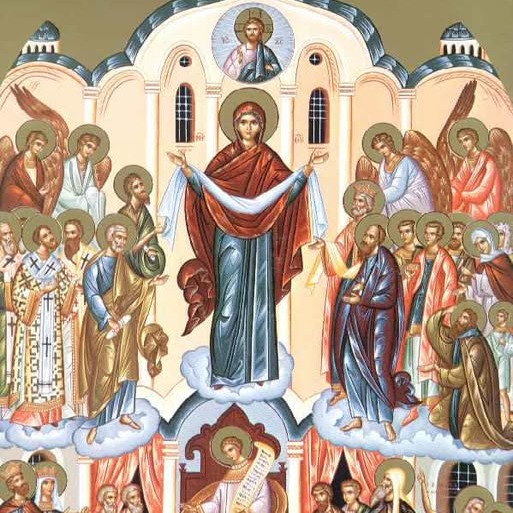
Saint Paisios on letting troubling thoughts pass like airplanes

The post shares a teaching from Saint Paisios the Athonite comparing thoughts to airplanes flying overhead. The saint explains that thoughts will come, but we do not need to give them a place to land in our minds. When a troubling thought appears, the advice is not to argue with it or keep turning it over, but to let it pass and turn the mind to the Jesus Prayer: "Lord Jesus Christ, Son of God, have mercy on me." The image includes Greek text…

The post shares a teaching from Saint Paisios the Athonite comparing thoughts to airplanes flying overhead. The saint explains that thoughts will come, but we do not need to give them a place to land in our minds. When a troubling thought appears, the advice is not to argue with it or keep turning it over, but to let it pass and turn the mind to the Jesus Prayer: "Lord Jesus Christ, Son of God, have mercy on me."

The image includes Greek text with the same analogy: thoughts are like airplanes, and paying attention to them creates an airport in the head where they can land. The post encourages sending this to someone who overthinks and ends with a request for Saint Paisios's prayers.

  • Saint Paisios compares thoughts to airplanes that fly past unless given a landing strip
  • Troubling thoughts should not be argued with or dwelled upon
  • The response is to let the thought pass and turn to the Jesus Prayer
  • The image contains the same teaching in Greek with the airport analogy
  • The post encourages sharing this with those who overthink
Read more

St. John Chrysostom: Flee Heresy, Do Not Judge Life

The post shares a saying attributed to St. John Chrysostom distinguishing between matters of faith and matters of life. It states that one should flee from anyone holding an evil heretical doctrine, even if that person is an angel from heaven, and have no dealings with them. However, one should not judge another's way of life, because the command "Judge not, that you be not judged" applies to all matters of life, not to matters of the faith.

  • St. John Chrysostom teaches to flee from heretics, even angels, and have no dealings with them.
  • The command not to judge applies to matters of life, not to matters of faith.
  • Heresy is to be rejected absolutely; personal lifestyle is not to be judged.
  • The distinction separates doctrinal error from personal conduct.
  • The quote is shared as a teaching from the Church Fathers.
Read more
Mount Athos Legacy Facebook

Church of Greece moves Feast of Holy Protection to Ohi Day

The feast of the Holy Protection of the Theotokos at Blachernae is traditionally observed on October 1. The Church of Greece transferred the celebration to October 28 to coincide with the national anniversary of the 1940 "Ohi," marking Greece's refusal to surrender to the Italo-German forces. The liturgical service for this combined observance was composed by the Athonite monk Gerasimos Mikragiannanites. The Holy Synod of the Church of Greece…

The feast of the Holy Protection of the Theotokos at Blachernae is traditionally observed on October 1. The Church of Greece transferred the celebration to October 28 to coincide with the national anniversary of the 1940 "Ohi," marking Greece's refusal to surrender to the Italo-German forces. The liturgical service for this combined observance was composed by the Athonite monk Gerasimos Mikragiannanites.

The Holy Synod of the Church of Greece approved the service and formally established the joint celebration on October 21, 1952. The decision is recorded in the Synodical Encyclicals, Volume B, Athens 1956, page 649.

  • Feast of Holy Protection at Blachernae normally on October 1
  • Church of Greece moved it to October 28 to coincide with Ohi Day
  • Service composed by Monk Gerasimos Mikragiannanites
  • Holy Synod approved service and joint celebration on October 21, 1952
  • Decision recorded in Synodical Encyclicals, Vol. B, 1956, p. 649
CHRISTIANITY UNITED Instagram

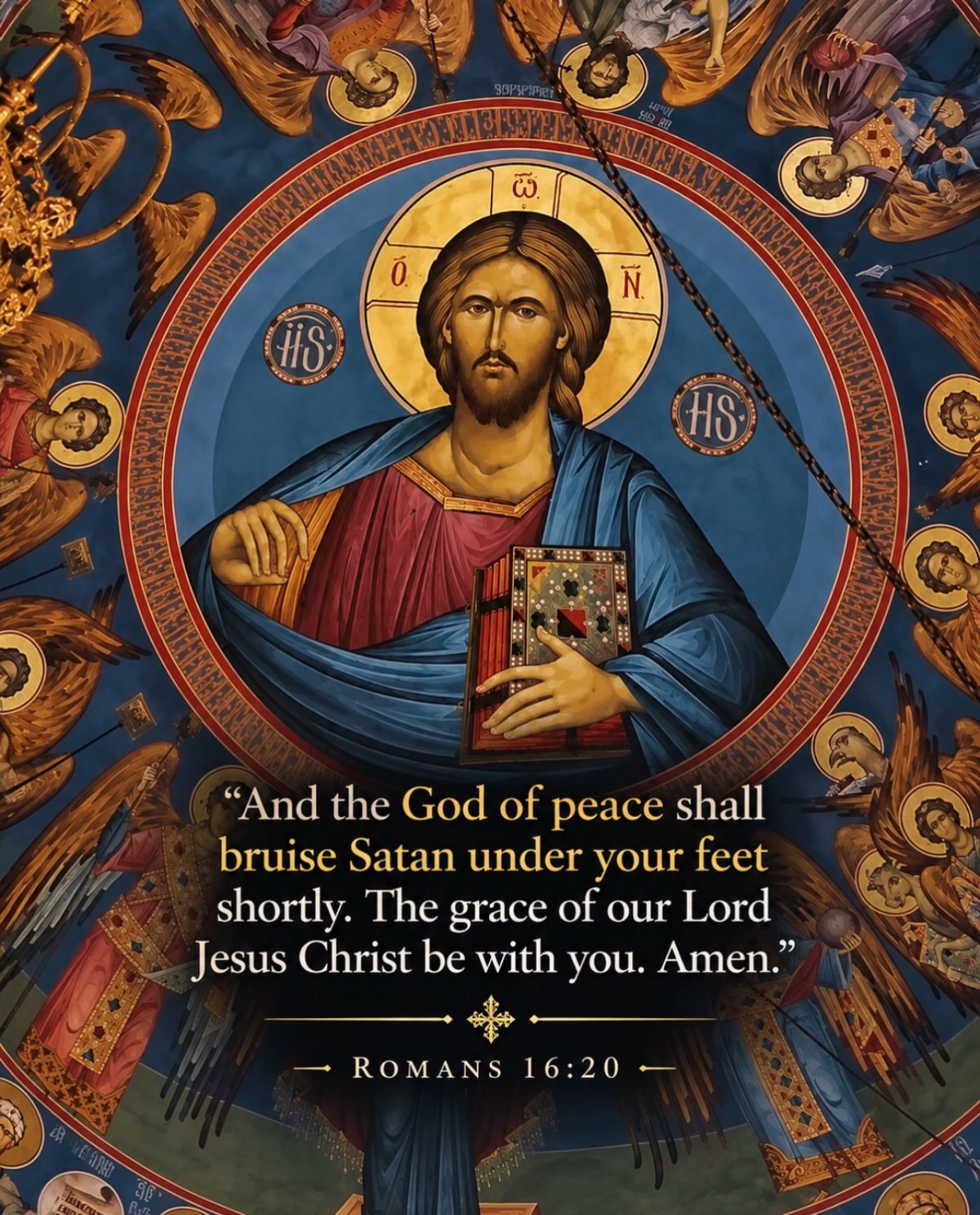
Saint Paul: God will crush Satan under our feet shortly

The post centers on Romans 16:20, where Saint Paul writes that the God of peace will bruise Satan under the feet of believers shortly. The author explains that while evil appears to prevail in the world and in personal struggles with temptation, sin, and fear, Scripture teaches that Satan's power is not eternal and his defeat is certain. The victory does not come through human strength, pride, or anger but through Jesus Christ, who conquered sin…

The post centers on Romans 16:20, where Saint Paul writes that the God of peace will bruise Satan under the feet of believers shortly. The author explains that while evil appears to prevail in the world and in personal struggles with temptation, sin, and fear, Scripture teaches that Satan's power is not eternal and his defeat is certain.

The victory does not come through human strength, pride, or anger but through Jesus Christ, who conquered sin and death by His Cross and Resurrection. In the Orthodox Church the spiritual battle is understood as real: the devil tempts, seeks to lead people away from God, and tries to fill hearts with despair. Yet he does not have the final word. Every sincere repentance, resistance to temptation, act of forgiveness, and turn to prayer instead of surrender to sin refuses evil's rule.

When believers fall, God's mercy is greater than their weakness. The same Lord who conquered death calls the faithful to remain steadfast until the end. The discussion turns on the distinction between divine action and human effort in spiritual warfare, the reality of demonic opposition, and the assurance that final victory belongs to Christ alone.

  • Romans 16:20 promises God will crush Satan under believers' feet
  • Victory over evil comes through Christ's Cross and Resurrection, not human strength
  • Orthodox spiritual warfare acknowledges real demonic temptation and attacks
  • Practical resistance includes repentance, forgiving others, and prayer instead of surrender to sin
  • God's mercy surpasses human weakness; final victory belongs to Christ
Read more

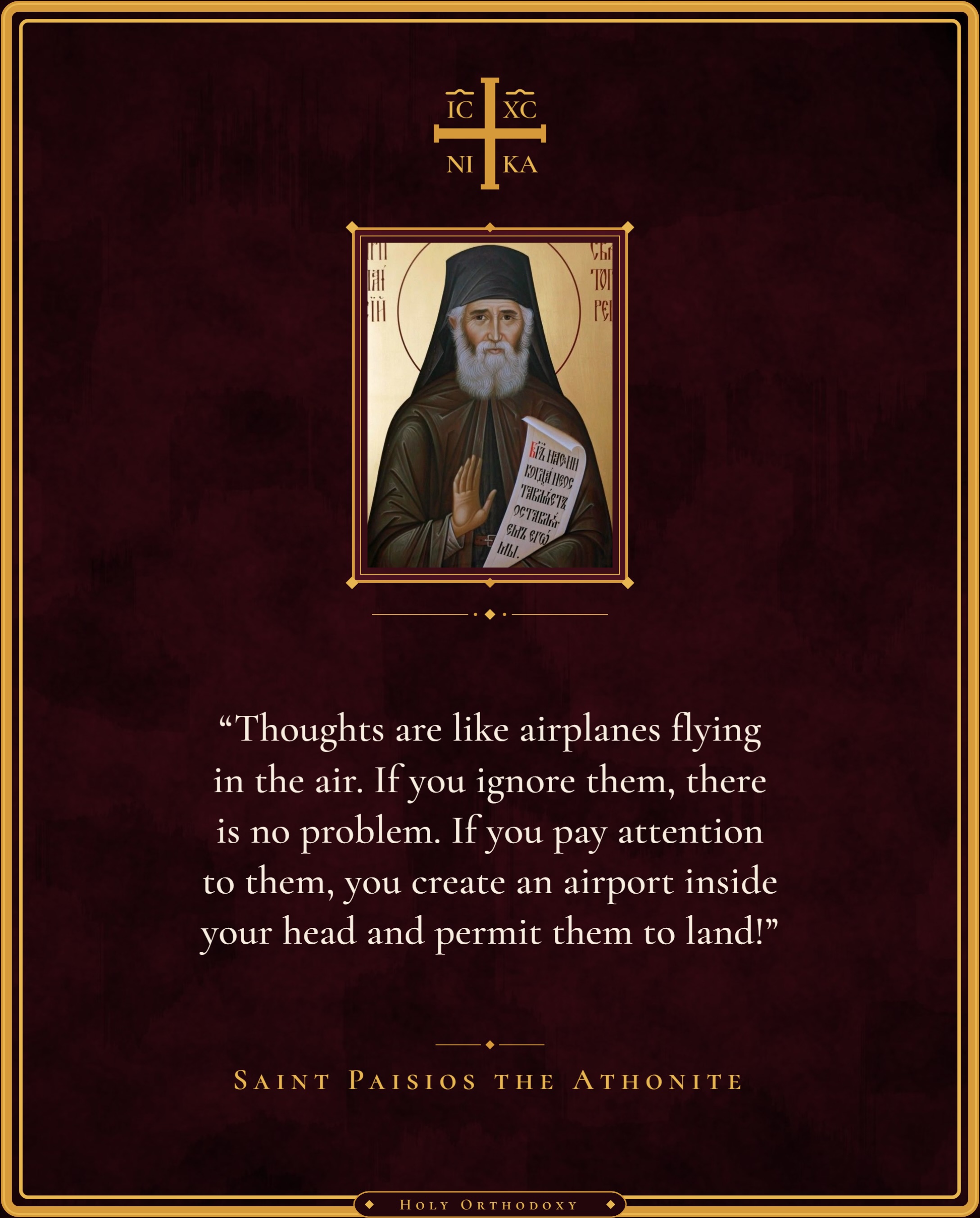
Mount Athos: The Garden of the Theotokos

The post describes Mount Athos as a center of Orthodox monasticism for over a thousand years. Known as the Garden of the Most Holy Theotokos, the Holy Mountain is dedicated to the Virgin Mary, honored by monks as its Abbess and Protectress. Generations of monks have devoted their lives to Christ there, continually seeking the intercessions of the Panagia.

  • Mount Athos has been a center of Orthodox monasticism for over a thousand years
  • It is known as the Garden of the Most Holy Theotokos
  • The Virgin Mary is honored as Abbess and Protectress of the Holy Mountain
  • Monks devote their lives to Christ and seek the Panagia's intercessions
  • The description is given in both English and Greek
Read more