WeOrthodox
EN UA

Orthodox posts, videos and discussions

We follow Orthodox channels, communities and blogs across the web, summarise every post and video, and highlight the conversations with real substance.

Three habits to fight vainglory and root identity in Christ

The post warns that caring for one's appearance can become vainglory when it turns into a source of identity and worth depends on the admiration of others. The Orthodox Church teaches that there is nothing wrong with training the body or dressing well, but the danger begins when a person becomes a prisoner of their own reflection. Three habits are offered to combat this. First, stop obsessing over appearance; the author asks how often one checks…

The post warns that caring for one's appearance can become vainglory when it turns into a source of identity and worth depends on the admiration of others. The Orthodox Church teaches that there is nothing wrong with training the body or dressing well, but the danger begins when a person becomes a prisoner of their own reflection.

Three habits are offered to combat this. First, stop obsessing over appearance; the author asks how often one checks the mirror or worries about how others see them, citing Proverbs 16:18 that pride goes before destruction. Second, learn to achieve things without seeking recognition; not every gym session needs filming and not every achievement needs posting, following Christ's words in Matthew 6 against performing good deeds to be seen by men.

Third, stop building identity around other people's approval; if a compliment makes the day but criticism destroys confidence, one has handed others control over happiness. The speaker states that Orthodox Christian identity must be rooted in Jesus Christ, not in appearance or reputation. The closing reminder notes that looking after the body God gave is good, but one should not spend life perfecting the outside while neglecting the soul, because appearance fades while the soul remains.

Key moments

  1. The speaker warns that years spent building the body and improving appearance can slowly make a person a slave to their own reflection.
  2. The first habit is to stop obsessing over appearance, asking how often one checks the mirror or worries about how others see them, citing Proverbs 16:18 that pride goes before destruction.
  3. The second habit is to learn to do things without showing the world, noting that not every gym session needs filming and not every achievement needs posting, citing Christ's words in Matthew 6 against performing good deeds to be seen.
  4. The third habit is to stop building identity around other people's approval, pointing out that if a compliment makes one's day but criticism destroys confidence, one has handed others control over happiness.
  5. The speaker states that Orthodox Christian identity must be rooted in Jesus Christ, not in appearance or reputation.
  6. The closing reminder: there is nothing wrong with looking after the body God gave, but one should not spend life perfecting the outside while neglecting the soul, because appearance fades and the soul remains.
Read more
Archim. Christódoulos Papadeas Instagram

Priest contrasts spiritual life in Greece with challenges for Orthodox in America

The speaker describes returning to Greece, specifically a place called Tatty, where encounters with taxi drivers, elderly women, young people, priests, monks, nuns, and families conveyed Christ's love and renewed the soul. He contrasts this with life in America, acknowledging the country's beauty and good people but arguing that the religious environment fails to fill the soul in the same way. In America, numerous Christian heresies and diverse…

The speaker describes returning to Greece, specifically a place called Tatty, where encounters with taxi drivers, elderly women, young people, priests, monks, nuns, and families conveyed Christ's love and renewed the soul. He contrasts this with life in America, acknowledging the country's beauty and good people but arguing that the religious environment fails to fill the soul in the same way.

In America, numerous Christian heresies and diverse religions coexist in close proximity, creating confusion for Orthodox Christians, their children, and families. The speaker insists that bishops and priests must proclaim the message of God's love daily to counteract this confusion. Orthodox Christians constitute less than one percent of the American population, leaving them surrounded by many other religious groups.

Young people face particular difficulty: pulled in many directions, they often become directionless and may reach age thirty-five without having done anything for their souls. The reflection presents the Greek experience as spiritually nourishing because of the pervasive Orthodox culture, while the American context is portrayed as a pastoral crisis requiring constant proclamation and vigilance.

Key moments

  1. The speaker is grateful to be back in Greece, particularly at Tatty, to fill up his batteries.
  2. America is a beautiful country with beautiful people but does not fill the soul as Greece does.
  3. In America there are many heresies, different Christian heresies, and many religions all together, which confuses Orthodox people, children, and families.
  4. The message of God's love needs to be constantly given every day by all bishops and all priests in America.
  5. Orthodox Christians are less than 1% of the population in America, surrounded by many other groups.
  6. Young people are influenced to go this way and that way, sometimes not knowing which way to go and not going any way.
  7. They wake up one day at 35 years old and have not done anything with their souls or for their souls.
Read more

Miracles of St. Prohor of Pčinja testified by abbot Archimandrite Methodije

The post recounts several miracles attributed to St. Prohor of Pčinja as testified by Archimandrite Methodije Marković, abbot of the monastery where the saint's relics rest. For centuries the faithful have gathered at the shrine seeking comfort, help, and the saint's intercession. The monastery preserves an archive of written testimonies from monastics and believers about healings, answered prayers, and miraculous events. One family traveling to…

The post recounts several miracles attributed to St. Prohor of Pčinja as testified by Archimandrite Methodije Marković, abbot of the monastery where the saint's relics rest. For centuries the faithful have gathered at the shrine seeking comfort, help, and the saint's intercession. The monastery preserves an archive of written testimonies from monastics and believers about healings, answered prayers, and miraculous events.

One family traveling to Greece stopped at the monastery with their five-year-old daughter who had never spoken. After venerating the relics, praying, and anointing her with holy myrrh, the girl said "mama" a few kilometers from the monastery. The family returned to the shrine, and in Greece the girl began to speak fully; her parents now visit on the feast of St. Prohor.

Another testimony concerns a girl who had been in a coma since the late 1980s or early 1990s. Her father dreamed of St. Prohor calling him to bring the child to the shrine. While en route to the monastery, the girl opened her eyes and awoke. A third testimony, recorded on June 29, 2016, describes a girl with impaired vision from early childhood who regained sight after prayer at the monastery.

The post also describes abundant myrrh flowing from a crack in the wall containing the relics. According to the testimony, the myrrh began flowing on the eve of the festal vigil, continued through the night and on the feast day itself, so that priests collected it from the church floor. Over a thousand faithful gathered for the liturgical celebration witnessed this event.

The abbot emphasizes that the shrine is a place of prayer, repentance, and hope, and that saints work not by their own power but by God's grace acting through them.

  • Healing of a mute girl after veneration and anointing with myrrh at the monastery
  • Awakening of a comatose girl after St. Prohor appeared to her father in a dream
  • Restoration of sight to a visually impaired girl after prayer, documented June 29, 2016
  • Abundant myrrh streaming from the relic wall before and during the feast day, witnessed by over a thousand faithful
  • Abbot Archimandrite Methodije Marković testifies these events from the monastery's archive of written testimonies
Read more

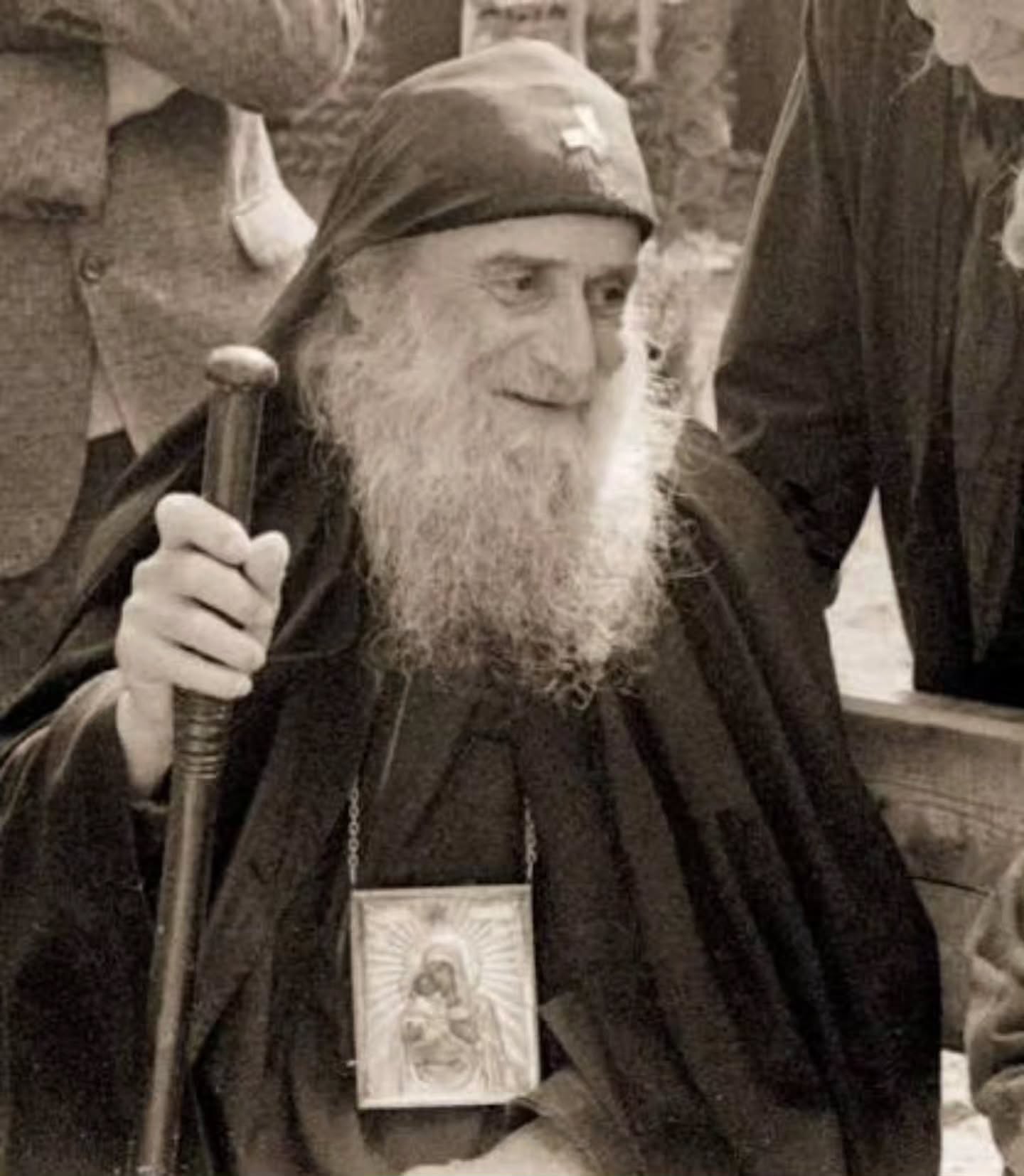
St. Gabriel of Samtavro, Georgian confessor and fool-for-Christ

The post announces the commemoration of St. Gabriel (Urgebadze), a Georgian confessor of the faith and fool-for-Christ. He reposed on 2 November 1995. The Holy Synod of the Georgian Orthodox Church canonized him on 20 December 2012 and set his feast day for 2 November. His relics rest in the Temple of the Transfiguration at the Samtavro women's monastery in Mtskheta.

The accompanying photograph shows an elderly bearded man in a dark robe and cap, holding a walking stick and wearing an icon around his neck.

  • St. Gabriel Samtavreli reposed on 2 November 1995.
  • Canonized by the Georgian Orthodox Church on 20 December 2012.
  • Feast day established as 2 November.
  • Relics located at Samtavro monastery in Mtskheta.
  • Photograph depicts him as an elderly ascetic with walking stick and icon.
Read more

Hieromonk Roman: True Treasure in the Parable of the Rich Man and Lazarus

Hieromonk Roman preaches on the feast of St. Prohor of Pčinja, interpreting the parable of the rich man and Lazarus. He explains that earthly wealth, luxury, and self-indulgence are perishable and reveal service to false gods such as money, the belly, ego, and technology. Voluntary poverty endured for God, like that of Lazarus, writes one's name in the book of eternal life. The rich man's torment in hell comes from realizing too late what he…

Hieromonk Roman preaches on the feast of St. Prohor of Pčinja, interpreting the parable of the rich man and Lazarus. He explains that earthly wealth, luxury, and self-indulgence are perishable and reveal service to false gods such as money, the belly, ego, and technology. Voluntary poverty endured for God, like that of Lazarus, writes one's name in the book of eternal life.

The rich man's torment in hell comes from realizing too late what he could have gained had he served the living God through the situations given him. The speaker illustrates with the story of Apostle Thomas, who gave the Indian tsar's building funds to the poor and thereby built the tsar a heavenly palace. The tsar's dead brother was shown this palace and returned to life to testify, causing the tsar to free Thomas.

Almsgiving done for human recognition, expecting honor, control, or visibility, is not love but condemnation, because love seeks not its own. True alms sees Christ in the poor, gives from the heart without surplus or show, and stores up treasure in heaven. The parable reveals that the earthly kingdom is small and all its goods are worthless, perishable, and passing, while only what we gather in our soul through life in Christ in the Church is valuable and imperishable.

The rich man possessed every earthly desire, scarlet, silk, servants, abundant food, yet lacked God's grace and did not have God in him, mistaking the lower for the invaluable eternity. Lazarus's name is written in the book of eternal life because he endured all evils for God's sake, just as St. Basil demonstrated through voluntary poverty and wandering, suffering heat for God.

The rich man who gave Lazarus not even crumbs enters hell, eternal oblivion and non-beholding of God's face, where he fully realizes what heavenly treasure he could have acquired. We choose our eternal destiny now by whom we serve: serving the living God by accepting His given situations with patience, gratitude, and no grumbling, even in poverty, earns a heavenly palace where the soul reigns with Christ.

Serving earthly treasure, food, clothing, luxury, internet, phone, self-will, egoism means serving the god of money, mammon, belly, glory, and 'only I and my I.'

Key moments

  1. 0:43 The parable reveals that the earthly kingdom is small and all its goods are worthless, perishable, and passing, while only what we gather in our soul through life in Christ in the Church is valuable and imperishable.
  2. 1:24 The rich man possessed every earthly desire, scarlet, silk, servants, abundant food, yet lacked God's grace and did not have God in him, mistaking the lower for the invaluable eternity.
  3. 2:10 Lazarus's name is written in the book of eternal life because he endured all evils for God's sake, just as Holy Basil demonstrated through voluntary poverty and wandering, suffering heat for God.
  4. 2:41 The rich man who gave Lazarus not even crumbs enters hell, eternal oblivion and non-beholding of God's face, where he fully realizes what heavenly treasure he could have acquired.
  5. 3:54 We choose our eternal destiny now by whom we serve: serving the living God by accepting His given situations with patience, gratitude, and no grumbling, even in poverty, earns a heavenly palace where the soul reigns with Christ.
  6. 4:56 Serving earthly treasure, food, clothing, luxury, internet, phone, self-will, egoism, means serving the god of money, mammon, belly, glory, and "only I and my I."
  7. 6:54 Apostle Thomas gave the Indian tsar's building funds to the poor; the tsar's dead brother was shown the heavenly palace built from that treasure, returned to life, and testified, causing the tsar to free Thomas.
  8. 10:02 Alms given for human recognition, expecting honor, control, or visibility, is not love (which seeks not its own) but brings condemnation; true alms sees God in poor Lazarus, whose name endures while the rich man's is forgotten.

Patristic Witness: Heretics and Schismatics Are Outside the Church

The post compiles quotations from Orthodox saints and theologians on the ecclesial status of heretics and schismatics. An opening paragraph states the Orthodox position: heresy corrupts the apostolic faith and schism breaks communion, placing a person outside the visible unity of the Church, which is the one Body of Christ united in faith, sacraments, bishops, and Eucharistic communion, while calling for love and prayer for those outside. The…

The post compiles quotations from Orthodox saints and theologians on the ecclesial status of heretics and schismatics. An opening paragraph states the Orthodox position: heresy corrupts the apostolic faith and schism breaks communion, placing a person outside the visible unity of the Church, which is the one Body of Christ united in faith, sacraments, bishops, and Eucharistic communion, while calling for love and prayer for those outside.

The citations include St. Nicodemus of the Holy Mountain from The Rudder (Pedalion) asserting that heretics and schismatics lack true baptism, priesthood, and the Holy Spirit, and that their rites are profane and without grace. Fr. Seraphim Rose is quoted on Orthodoxy alone producing real saints. St. Justin Popovich forbids joint prayer with heretics and describes Western Christendom as preparing for Antichrist.

St. John Chrysostom warns against accepting false doctrine under the pretext of love. St. Justin Popovich calls papal infallibility the greatest heresy. St. Theodore the Studite contrasts Orthodox and heretical communion as light versus darkness.

Apostolic Canon 45 prescribes excommunication for clergy who pray with heretics and deposition for those permitting them clerical functions. St. Gregory Palamas condemns the Filioque. Elder Savvas Achilleos warns that following a patriarch who calls for union with the Pope constitutes betrayal of Christ. St. Mark of Ephesus appears repeatedly: urging flight from those of other doctrines, declaring he fears heresy not death, recording his refusal at Florence, identifying the Latins as heretics rather than merely schismatics, and naming papal primacy as the cause of schism.

St. Gregory the Dialogist calls the title "universal priest" a mark of Antichrist. St. Anatoly of Optina urges fear of heretics' stubbornness. St. Athanasius declares willingness to stand against the world for truth.

  • Heresy and schism place one outside the visible unity of the Church, the one Body of Christ.
  • St. Nicodemus of the Holy Mountain teaches heretics lack true baptism, priesthood, and the Holy Spirit.
  • Patristic canons and saints forbid joint prayer and clerical recognition of heretics.
  • Multiple fathers identify papal claims and the Filioque as heretical barriers to communion.
  • The witnesses call for love toward those outside while refusing doctrinal compromise.
Read more

Metropolitan Amfilohije on Love and Conciliarity Through The Little Prince

The post shares quotes from Metropolitan Amfilohije of Montenegro and the Littoral's lecture "Personality and Conciliarity of the Church Through the Fairy Tale The Little Prince." The metropolitan draws on Antoine de Saint-Exupéry's work to illustrate Orthodox teaching on love and community. He cites the fox's words to the Little Prince: "One sees clearly only with the heart. What is essential is invisible to the eye," and "You become…

The post shares quotes from Metropolitan Amfilohije of Montenegro and the Littoral's lecture "Personality and Conciliarity of the Church Through the Fairy Tale The Little Prince." The metropolitan draws on Antoine de Saint-Exupéry's work to illustrate Orthodox teaching on love and community. He cites the fox's words to the Little Prince: "One sees clearly only with the heart.

What is essential is invisible to the eye," and "You become responsible forever for what you have tamed." Metropolitan Amfilohije connects these insights to the Church's conciliar nature, stating: "Love, it gathers and conciliarizes" (Љубав, она сабира и саборнизира). The post presents the metropolitan's interpretation of the fairy tale as a vehicle for explaining how personal relationship with Christ forms the basis of true ecclesial unity, where love is not sentiment but the force that binds persons into the sobornost of the Body of Christ.

Key moments

  1. You only need the light when it's burning low.
  2. You only miss the sun when it starts to snow.
  3. You only know you love her when you let her go.
George Instagram discussion

Orthodox priests marry before ordination; bishops remain celibate

The video explains Orthodox practice regarding priestly marriage. A man must choose marriage or lifelong celibacy before ordination; after ordination marriage is forbidden. If a priest's wife dies, he may remarry and continue serving. Bishops are chosen from monks and cannot be married, so a married priest remains a parish priest for life. This practice dates to the apostles; Saint Peter was married, as shown by Jesus healing his mother-in-law.…

The video explains Orthodox practice regarding priestly marriage. A man must choose marriage or lifelong celibacy before ordination; after ordination marriage is forbidden. If a priest's wife dies, he may remarry and continue serving.

Bishops are chosen from monks and cannot be married, so a married priest remains a parish priest for life. This practice dates to the apostles; Saint Peter was married, as shown by Jesus healing his mother-in-law. The priest's wife holds a recognized role in the parish, with titles such as Presbytera, Matushka, and Khouria, serving as a mother to the community.

Key moments

  1. Orthodox priests can get married and many have wives, children, and family life.
  2. A priest cannot marry after ordination; he must marry before becoming a priest or remain single for life.
  3. If a priest's wife dies, he may marry again and continue serving as a priest.
  4. Bishops are chosen from monks and cannot be married, so a married priest will never become a bishop.
  5. From the beginning, church leaders were married men; Saint Peter had a wife, and the Gospel records Jesus healing his mother-in-law.
  6. The priest's wife has a special place in the parish, with titles like Presbytera, Matushka, and Khouria, functioning as a mother to the whole community.
7 opinions in the discussion It's a really good thing they have that option. Otherwise how would a priest be able to counsel people on marriage and raising a family? Read the discussion

The Church Fathers' Discerning Use of Pagan Philosophy

The Church Fathers' Discerning Use of Pagan Philosophy 2:49

Dr. David Bradshaw, professor at the University of Kentucky, reflects on how the Church Fathers approached pagan philosophy with both openness and judgment. The Fathers understood philosophy in its deepest sense as the love of wisdom. For them, true wisdom is not an abstract idea but Christ Himself, the Wisdom of God. This identification rests on Scripture: Proverbs 8 presents wisdom speaking as God the Word, and 1 Corinthians calls Christ the…

Dr. David Bradshaw, professor at the University of Kentucky, reflects on how the Church Fathers approached pagan philosophy with both openness and judgment. The Fathers understood philosophy in its deepest sense as the love of wisdom. For them, true wisdom is not an abstract idea but Christ Himself, the Wisdom of God.

This identification rests on Scripture: Proverbs 8 presents wisdom speaking as God the Word, and 1 Corinthians calls Christ the wisdom of God. Because Christ is wisdom, the Fathers viewed philosophy positively but distinguished Christianity as the true philosophy from false worldly philosophies. They did not reject philosophy simply because it came from the pagan world, nor did they receive it without discernment.

They were selective and discriminating, recognizing that it is almost impossible for any system to be wrong about everything. They discerned good parts in pagan philosophy to use and set aside the bad parts. They tended to find Plato more fruitful than Aristotle. Plato taught the immortality of the soul and, in the Timaeus, described God creating the world out of goodness to share His goodness, which resonates with Christian belief.

Aristotle, by contrast, taught the mortality of the soul and an eternal cosmos, ideas that could not be reconciled with the Gospel. The Fathers used these Platonic ideas in a guarded way and never allowed them to overshadow the Gospel. The Gospel remained the criterion by which every search for wisdom was purified, illumined, and directed toward Christ.

Philosophy never stood above revelation; rather, revelation judged philosophy. The Fathers did not place philosophy above revelation. They allowed the Gospel to become the criterion by which every search for wisdom was purified, illumined, and directed toward Christ.

Key moments

  1. 0:00 The fathers understood philosophy fundamentally in a positive sense as love of wisdom, but distinguished Christianity as the true philosophy.
  2. 0:30 Within Christian thought, wisdom is identified with Christ, as seen in Proverbs 8 where wisdom speaks as God the Word, and in 1 Corinthians where Paul calls Christ the wisdom of God.
  3. 1:01 Because Christ is wisdom, the fathers saw philosophy positively but separated the true philosophy of Christianity from false worldly philosophies.
  4. 1:33 They were selective and discriminating: they discerned good parts in pagan philosophy to use and left bad parts aside, since it is almost impossible to be wrong about everything.
  5. 2:04 They tended to find Plato more fruitful than Aristotle because Aristotle taught the mortality of the soul and an eternal cosmos, while Plato taught the soul's immortality.
  6. 2:04 Plato's Timaeus describes God creating the world out of goodness to share his goodness, which resonates with Christian belief.
  7. 2:34 The fathers used these ideas in a guarded way and never let them overshadow the gospel, which remained the criterion to judge pagan philosophy.
Orthodox Life Instagram

Saint David of Evia: From Hermit to Wonderworker Under Ottoman Rule

On November 1 the Church commemorates Saint David the Righteous of Evia, a 16th-century monk, priest and wonderworker. The post recounts his life from the village of Gardinitsa, where he was born to a devout priestly family. Tradition holds that at the age of three Saint John the Baptist appeared to him and led him to a nearby church, where he stood barefoot in prayer for six days before an icon. At fifteen he left home to seek spiritual…

On November 1 the Church commemorates Saint David the Righteous of Evia, a 16th-century monk, priest and wonderworker. The post recounts his life from the village of Gardinitsa, where he was born to a devout priestly family. Tradition holds that at the age of three Saint John the Baptist appeared to him and led him to a nearby church, where he stood barefoot in prayer for six days before an icon.

At fifteen he left home to seek spiritual guidance and became a disciple of the Elder Akakios, embracing rigorous asceticism, perfect obedience and unceasing prayer. He accompanied his mentor on pilgrimages, was ordained a priest and was appointed Abbot of the Panagia Varnakova Monastery near Nafpaktos. Seeking a quieter place for his spiritual struggles, he left Varnakova and settled as a hermit in a barren mountainous region.

Under Ottoman rule he endured hardship: he was wrongfully accused of harboring runaway slaves, arrested, imprisoned and tortured by local Ottoman authorities until pious Christians raised ransom money for his release. After his release he crossed to the island of Evia, a journey marked by the reported miracle of sailing across the sea on his monastic cloak as a raft.

On the island he founded the Monastery of Saint David, dedicated to the Transfiguration of the Savior. He became known for charity that crossed religious boundaries, offering food, shelter and comfort to Christians and Muslims alike, with particular care for the poor. He gathered his spiritual children, gave his final blessings and fatherly counsel, and reposed in peace three days later. The accompanying images show icons and frescoes of the saint and his cave hermitage.

  • Commemorated November 1: Saint David the Righteous of Evia, a 16th-century monk, priest and wonderworker born in Gardinitsa.
  • At age three, tradition says, Saint John the Baptist led him to a church where he prayed barefoot for six days before an icon.
  • He left home at fifteen, became a disciple of Elder Akakios, and later served as Abbot of the Panagia Varnakova Monastery near Nafpaktos.
  • Under Ottoman rule he was wrongly accused of harboring runaway slaves, imprisoned and tortured until local Christians ransomed him.
  • He crossed to Evia, reportedly sailing on his cloak, founded the Monastery of the Transfiguration, and cared for Christians and Muslims alike before his repose.
Read more
George Instagram discussion

Orthodox salvation as lifelong journey, not one-time event

The speaker contrasts the "once saved, always saved" belief common in Baptist and evangelical churches with the Orthodox understanding of salvation as a lifelong journey. For Orthodox Christians, salvation begins at baptism, continues daily, and is hoped for at the last day. Christ taught that the one who endures to the end will be saved, and Saint James wrote that faith without works is dead. Saint Anthony the Great said the great work is to…

The speaker contrasts the "once saved, always saved" belief common in Baptist and evangelical churches with the Orthodox understanding of salvation as a lifelong journey. For Orthodox Christians, salvation begins at baptism, continues daily, and is hoped for at the last day. Christ taught that the one who endures to the end will be saved, and Saint James wrote that faith without works is dead.

Saint Anthony the Great said the great work is to expect temptation until the last breath, because presuming one has arrived leads to failure. This perspective makes the speaker humble rather than afraid, reminding them that every day matters through prayer, confession, and choosing God over self. The speaker asks viewers whether they grew up believing in once saved, always saved.

Key moments

  1. The speaker states that many Christians, especially in Baptist and evangelical churches, believe "once saved, always saved," but the Orthodox Church does not hold this view.
  2. The speaker explains that for Orthodox Christians salvation is a journey and a whole life of walking with Christ, involving failing and getting back up.
  3. The speaker cites Christ's words: "he who endures to the end shall be saved," emphasizing endurance to the end, not just the beginning.
  4. The speaker cites Saint James: "faith without works is dead."
  5. The speaker describes the Orthodox way of speaking about salvation: "I was saved when I was baptized. I'm being saved every day, and I hope to be saved on the last day."
  6. The speaker quotes Saint Anthony the Great: "the great work of a person is to expect temptation until their last breath," because the moment one thinks they have made it, they stop fighting and fail.
  7. The speaker says this understanding does not make them afraid but humble, reminding them that every day matters, every prayer, every confession, every choice of God over self.
  8. The speaker asks the viewer: "Did you grow up believing once saved, always saved?"
10 opinions in the discussion I believe it is an everyday and hard path, with faith, with prayer, with fasting, an endless effort until our death, until our last breath. It is not a moment or an hour or a month or a… Read the discussion
Lives of the Saints 🙏 Instagram

Prophet Joel's Warning and Promise of the Holy Spirit

The post presents the life and prophecies of the Holy Prophet Joel, the second of the Twelve Minor Prophets. He was the son of Pethuel from the tribe of Reuben and lived approximately 800 years before Christ. Joel warned the Israelites of suffering and destruction due to their sins, foretelling the Babylonian captivity. He called the people to fasting, repentance, and heartfelt prayer, urging priests to weep between the porch and the altar.…

The post presents the life and prophecies of the Holy Prophet Joel, the second of the Twelve Minor Prophets. He was the son of Pethuel from the tribe of Reuben and lived approximately 800 years before Christ. Joel warned the Israelites of suffering and destruction due to their sins, foretelling the Babylonian captivity.

He called the people to fasting, repentance, and heartfelt prayer, urging priests to weep between the porch and the altar. Among his greatest prophecies was the outpouring of the Holy Spirit upon God's people, fulfilled at Pentecost when the Spirit descended on the Apostles. The Apostle Peter cited Joel's prophecy in Acts 2:16-21. Joel also prophesied the Final Judgment and the future glory of the Church. The post concludes with a prayer to the prophet.

  • Joel, son of Pethuel from Reuben, lived about 800 years before Christ.
  • He warned of judgment and the Babylonian captivity, calling for fasting and repentance.
  • He urged priests to weep between the porch and the altar.
  • He prophesied the outpouring of the Holy Spirit, fulfilled at Pentecost (Acts 2:16-21).
  • He also foretold the Final Judgment and the future glory of the Church.
Read more
Lives of the Saints 🙏 Instagram

Saint Prohor of Pčinja: hermit whose relics stream myrrh

The post recounts the life of Saint Prohor of Pčinja, a 9th-century ascetic who prayed for a place to devote himself to God. According to the account, the Lord guided him to a secluded spot along the Pčinja River, where he remained in prayer and spiritual struggle until his peaceful repose. Far from worldly recognition, he dedicated his life to seeking the Kingdom of Heaven. After his death, his relics became myrrh-streaming, and Orthodox…

The post recounts the life of Saint Prohor of Pčinja, a 9th-century ascetic who prayed for a place to devote himself to God. According to the account, the Lord guided him to a secluded spot along the Pčinja River, where he remained in prayer and spiritual struggle until his peaceful repose. Far from worldly recognition, he dedicated his life to seeking the Kingdom of Heaven.

After his death, his relics became myrrh-streaming, and Orthodox tradition records countless miraculous healings through them. For generations, the faithful have sought his intercessions, finding spiritual comfort and giving thanks for God's mercy. The text emphasizes that the greatest works of holiness often occur hidden from human eyes, noting that a person may live unnoticed in prayer and silence yet become precious before God. The post concludes with a prayer asking Venerable Father Prohor to intercede.

  • Saint Prohor prayed for a place to live in asceticism and was guided to the Pčinja River
  • He remained there in prayer and spiritual struggle until his 9th-century repose
  • His relics became myrrh-streaming and a source of miraculous healings
  • The faithful have sought his intercession for generations
  • His hidden life illustrates that God sees unseen prayers and sacrifices
Read more

Considering Orthodoxy but family is Muslim and I'm dependent on them

This is my first time posting like this, so I apologize for any mistakes or if this is too long. I think I want to convert to Orthodox Christianity, but my entire family is Muslim. I live in a Western country, which helps since I want to leave Islam, but the area has many people from my ethnic group who are almost entirely Muslim and generally religious. In my home country apostasy is punishable by death or imprisonment. Islam is treated almost…

This is my first time posting like this, so I apologize for any mistakes or if this is too long.

I think I want to convert to Orthodox Christianity, but my entire family is Muslim. I live in a Western country, which helps since I want to leave Islam, but the area has many people from my ethnic group who are almost entirely Muslim and generally religious. In my home country apostasy is punishable by death or imprisonment.

Islam is treated almost as an ethnic identity; I have heard people say you cannot be part of my ethnic group and not be Muslim, so leaving is not forgiven.

My parents are very religious and always remind me to pray. Recently I started hearing things about Islam from other Muslims that did not sit right with me, morally and theologically. I looked further and I am disgusted and deeply doubtful, especially about the moral issues. I do not understand how a prophet meant to be an example for all society did some of the things he did.

It is hard because I spent my whole life hearing only the good and loving him for it, only to learn these things later and hear other Muslims say my objections come from propaganda or lack of faith. Seeing how Muslims treat those who leave or doubt, and the hatred directed at them, has affected me. Of course that is not proof the religion is false, but it has had an impact.

This caused me to lose faith and stop praying. My family knows I do not pray much, but I do when they tell me to, and they still think I am Muslim, just struggling or sinning. I am even unsure if I am still Muslim. I think it might be fear-based: "What if I am wrong and go to hell?" "What if I ruin my life and fracture my family?" It is ingrained in everything I have known, including my culture.

My friends are Muslim as well. I mentioned to my best friend that I was struggling with religion, but I framed it as a struggle with the existence of God, too scared to say it was about Islam itself, and sprinkled in some moral issues like concubinage. She listened and directed me to scholars, but said believing in Allah is just a given for her, not something she has struggled with.

Eventually I told her my concerns were resolved, which was half true. I now fully believe in the existence of a God; the question is which one.

I have been interested in Orthodox Christianity and am starting to read more. It might be too early to say I am fully convinced, as I still have lingering theological issues, mainly with the Trinity. I know that is important, but I spent my whole life hearing how horrible the Trinity is, so bear with me. However, Orthodoxy makes more sense to me than Catholicism or Protestantism.

I cannot really convert because of my situation, and it is causing emotional issues. My internal thoughts and external life are completely different. I have worn hijab since I was eight. I did not necessarily choose it; my parents told me to.

I did not understand it, and I liked looking like my mother and sisters, so I did not fight it. I hate the hijab now and hate being perceived as Muslim. Every aspect makes me worry about what others think. Oddly, I do like dressing modestly, but not to that extent. I am self-conscious even showing my forearms, worried people will view me badly.

This has largely been my relationship with hijab: how others view me. Hijab has also caused more anxiety as hatred toward Islam rises. Being a woman who looks Muslim means we bear the brunt of it. I am scared of being harassed because I wear it when I do not even want to.

I also have to pretend to pray, love Islam, and have others see me as Muslim. I thought about taking off the hijab and "being Muslim" but acting like I struggle with that concept. Unfortunately all the women in my family wear it, and in my culture girls wear it young, so around ninety percent of the girls I know also wear it.

  • Wants to convert to Orthodoxy but entire family and ethnic community are Muslim, with apostasy punishable by death in home country
  • Struggles with Trinity after lifelong teaching that it is horrible; finds Orthodoxy more coherent than Catholicism or Protestantism
  • Dependent on parents at 18, cannot drive or attend church, has family at university preventing a double life
  • Hates wearing hijab since childhood, feels humiliated and anxious, but removing it would cause massive family and community conflict
  • Experiencing severe emotional exhaustion, mood swings, cycles of doubt and reconviction, and daydreams of a different life; cannot access therapy
11 opinions in the discussion I'm really sorry you're going through all this. Going from Protestant to Catholic to Orthodox myself, and now being the only Orthodox Christian in my family, I know how hard it is not to… Read the discussion

St. Paisios on praying for those who wrong you

The post features a quote from St. Paisios the Athonite advising that when someone wrongs you, you should pray for that person because such prayer acts as medicine for your own soul. The accompanying video presents the scriptural verses: "The rich have become poor and hungry, but those who seek the Lord shall not lack any good thing. Come, children, listen to me; I will teach you the fear of the Lord." The post combines the saint's counsel on…

The post features a quote from St. Paisios the Athonite advising that when someone wrongs you, you should pray for that person because such prayer acts as medicine for your own soul. The accompanying video presents the scriptural verses: "The rich have become poor and hungry, but those who seek the Lord shall not lack any good thing.

Come, children, listen to me; I will teach you the fear of the Lord." The post combines the saint's counsel on forgiveness and intercessory prayer with scriptural encouragement to trust in God's provision and learn reverence for Him.

Key moments

  1. The rich have become poor and hungry, but those who seek the Lord shall not lack any good thing.
  2. Come, children, listen to me; I will teach you the fear of the Lord.

Fr. Alexey Uminsky on the Parable of the Sower: God sows His Word in every heart

Fr. Alexey Uminsky on the Parable of the Sower: God sows His Word in every heart 5:20

Fr. Alexey Uminsky preaches on the Parable of the Sower, opening with God's words to Adam before the expulsion: the earth will bring forth thorns and thistles, and you shall labor by the sweat of your brow; you are earth and to earth you shall return. The parable is precisely about this earth, which the Lord compares to a trodden path, stones, and thorns growing on the land. The sower in the parable is a strange figure because an experienced…

Fr. Alexey Uminsky preaches on the Parable of the Sower, opening with God's words to Adam before the expulsion: the earth will bring forth thorns and thistles, and you shall labor by the sweat of your brow; you are earth and to earth you shall return. The parable is precisely about this earth, which the Lord compares to a trodden path, stones, and thorns growing on the land.

The sower in the parable is a strange figure because an experienced sower chooses only good prepared soil, yet this sower scatters seed on the path, on stones, and among weeds where it is useless to sow. The seed obviously perishes in such places, but the strange sower does not stop sowing; the Lord explains to His disciples that this sower sows the Word of God.

The Lord Himself interprets the parable: when the seed falls into bad soil it perishes, birds peck it, cares of life choke it, and only good soil brings forth fruit thirty, sixty, and a hundredfold. The good soil must be found in us, in that same earth of which the Lord said it brings forth thorns and thistles; the seed is sown as divine hope that a person may work on heart, soul, and mind by the sweat of the brow to become fertile ground.

The Word of God is not only the Lord's teaching or commandments but the Word who was in the beginning with God and was God, He Himself, our Lord Jesus Christ, the incarnate Word. Christ is not afraid to sow Himself by the wayside, on stone, among thorns, anywhere at all, only to save man, to find man, and to give every person, despite hardness, trampled state, and lifelessness, the chance to live with Him and have eternal life.

The post also mentions a new project of reading books with Fr. Alexey, but the sermon itself centers on the call to become good ground for the divine seed.

Key moments

  1. 0:00 The speaker begins with God's words to Adam before the expulsion: the earth will bring forth thorns and thistles, and you shall labor by the sweat of your brow; you are earth and to earth you shall return.
  2. 0:33 Today's parable, the Parable of the Sower, is precisely about this earth, which the Lord compares to a trodden path, stones, and thorns growing on the land.
  3. 1:04 The sower in the parable is a strange figure because an experienced sower chooses only good prepared soil, yet this sower scatters seed on the path, on stones, and among weeds where it is useless to sow.
  4. 1:34 The seed obviously perishes in such places, but the strange sower does not stop sowing; the Lord explains to His disciples that this sower sows the Word of God.
  5. 2:06 The Lord Himself interprets the parable: when the seed falls into bad soil it perishes, birds peck it, cares of life choke it, and only good soil brings forth fruit thirty, sixty, and a hundredfold.
  6. 2:37 The good soil must be found in us, in that same earth of which the Lord said it brings forth thorns and thistles; the seed is sown as divine hope that a person may work on heart, soul, and mind by the sweat of the brow to become fertile ground.
  7. 3:40 The Word of God is not only the Lord's teaching or commandments but the Word who was in the beginning with God and was God, He Himself, our Lord Jesus Christ, the incarnate Word.
  8. 4:12 Christ is not afraid to sow Himself by the wayside, on stone, among thorns, anywhere at all, only to save man, to find man, and to give every person, despite hardness, trampled state, and lifelessness, the chance to live with Him and have eternal life.
Read more

Saints Cosmas and Damian: Unmercenary Physicians and Models of Generous Service

The post announces a Synaxarion feature for November 1 on Saints Cosmas and Damian, the Unmercenary physicians. Father Mario presents their lives as healers and wonderworkers who dedicated themselves to serving the needy without accepting payment. Known as the Anargyroi, they turned their medical vocation into a witness of faith, humility, and Christian love. The reflection emphasizes that serving others draws us closer to God and that the gifts…

The post announces a Synaxarion feature for November 1 on Saints Cosmas and Damian, the Unmercenary physicians. Father Mario presents their lives as healers and wonderworkers who dedicated themselves to serving the needy without accepting payment. Known as the Anargyroi, they turned their medical vocation into a witness of faith, humility, and Christian love.

The reflection emphasizes that serving others draws us closer to God and that the gifts we receive find their true value when shared generously. The passage cites Matthew 10:8, "Freely you received, freely give," as the principle behind their ministry. The discussion centers on the practical meaning of placing one's talents at the service of God and neighbor.

  • November 1 commemoration of Saints Cosmas and Damian, the Unmercenary physicians
  • Father Mario presents their lives as healers who refused payment for their care
  • Their title Anargyroi signifies they accepted no money for medical services
  • Their example shows serving others is a path toward God
  • Matthew 10:8 cited: "Freely you received, freely give"
Mount Athos Legacy Facebook

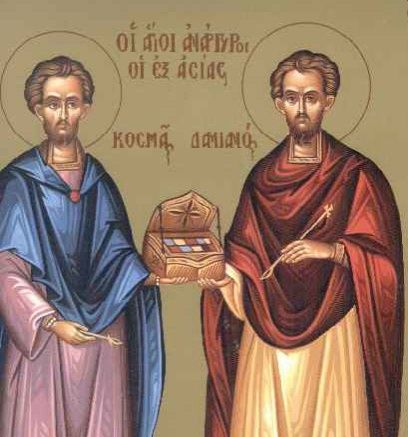
Saints Cosmas and Damian, the Unmercenaries: healing without payment

The Church honours Saints Cosmas and Damian, the Unmercenaries and wonderworkers, who came from Asia. Their parents were a model of Christian married life. When their mother Theodote was widowed, she devoted herself to raising her two sons in the Christian faith. The brothers showed great intelligence and diligence, studied many sciences, and took up medicine in particular. They practised medicine as an act of charity toward their neighbour:…

The Church honours Saints Cosmas and Damian, the Unmercenaries and wonderworkers, who came from Asia. Their parents were a model of Christian married life. When their mother Theodote was widowed, she devoted herself to raising her two sons in the Christian faith. The brothers showed great intelligence and diligence, studied many sciences, and took up medicine in particular.

They practised medicine as an act of charity toward their neighbour: they healed the sick, especially the poor, without taking payment, and so were called Anargyroi, those without silver. Many patients they healed wanted to thank them, but the saints refused thanks and answered with the words of Scripture: blessing and glory and wisdom and thanksgiving and honour and power and strength belong to our God for ever and ever (Revelation 7:12).

All praise, the post explains, belongs to God alone. The brothers served their neighbour in humility all their lives, died peacefully, and were buried at the place called Ferema.

  • Cosmas and Damian came from Asia and were raised by their widowed mother Theodote in the Christian faith.
  • They studied many sciences and practised medicine as charity, healing the poor without payment, which earned them the name Unmercenaries.
  • They refused thanks from healed patients, answering with Revelation 7:12, that all glory belongs to God.
  • They served their neighbour humbly all their lives, died peacefully, and were buried at Ferema.
CHRISTIANITY UNITED Instagram

Elder Dositheos warns parents: examine what your children watch before it is too late

Elder Dositheos, abbot of the Holy Monastery of Agia Skepi (Holy Protection) near Serres in Greece, addresses parents about the influences shaping their children's minds and hearts. He says parents are losing their children and may react too late. He urges them to look carefully at the programs their children watch, to examine their messages one by one, and to stop accepting things simply because modern society treats them as normal. He states…

Elder Dositheos, abbot of the Holy Monastery of Agia Skepi (Holy Protection) near Serres in Greece, addresses parents about the influences shaping their children's minds and hearts. He says parents are losing their children and may react too late. He urges them to look carefully at the programs their children watch, to examine their messages one by one, and to stop accepting things simply because modern society treats them as normal.

He states that all current programs are of the devil and challenges viewers to find in them any connection to God, faith, homeland, or family. He speaks from experience gained in the forest, not from theory. His advice is blunt: read the programs and throw them in the dirt, because once children are harmed it will be too late to act.

The accompanying text places this warning in the wider context of Orthodox parenting. Children today are surrounded by social media, entertainment, television, and the internet, which shape their sense of right and wrong before they can recognize what is harmful. Parents may provide food, education, and comfort while neglecting spiritual upbringing.

The task of Orthodox parents is to help children become faithful followers of Jesus Christ: teaching them to pray, bringing them to the Divine Liturgy, speaking openly about sin and repentance, and showing them the difference between what is popular and what is good. Children learn from what they see, so parents must themselves pray, forgive, and repent.

Protecting children does not mean raising them in fear of the world but preparing them to face it with wisdom, courage, and a heart rooted in Christ. The text closes with Proverbs 22:6: 'Train up a child in the way he should go: and when he is old, he will not depart from it.'

Key moments

  1. The speaker calls for loading God's things, not the devil's.
  2. All current programs are clearly of the devil.
  3. Challenge to examine programs one by one for any relation to God, faith, homeland, or family.
  4. Parents must react and take matters into their own hands.
  5. Parents are losing their children.
  6. This is not theory; people see and live it.
  7. The speaker knows these things from experience in the forest.
  8. Read the programs and throw them in the dirt; when children become abnormal it will be too late.
Read more
Discover Orthodox Christianity Facebook

Post invokes St. David of Evia; video hymn honors Prophet David

The post text requests the intercessions of St. David of Evia, identifying him as the child who met St. John the Baptist. An attached video presents a hymn that glorifies the Prophet David as the all-glorious, divinely inspired forefather of Christ and source of sacred virtue. The hymn calls upon the Prophet David, described as most true and holiest of all and equal to the saints, to entreat Christ God the Son that the Father may grant great mercy to the faithful.

Key moments

  1. David is praised magnificently in the midst of glory as the all-glorious, godly forefather of Christ and origin of sacred virtue.
  2. He is called most true and the holiest of all, equal to the saints.
  3. The hymn asks David to entreat Christ God the Son, through whom the Father acts, to grant great mercy to us.