WeOrthodox
EN UA

Orthodox posts, videos and discussions

We follow Orthodox channels, communities and blogs across the web, summarise every post and video, and highlight the conversations with real substance.

Father Alexey Uminsky on faith, emigration, and reconciliation after war

Father Alexey Uminsky on faith, emigration, and reconciliation after war 20:13

Father Alexey Uminsky speaks with Sergey Nikolaevich for ZIMA Magazine in London about preserving faith during war and catastrophe. He says there are no techniques for faith; the Book of Job shows God answers with presence, not explanations. True faith requires a personal encounter with God, not just ritual, and crisis can become the moment that encounter begins. He describes his unchosen move to France, where Father Vladimir Yegel gave him a…

Father Alexey Uminsky speaks with Sergey Nikolaevich for ZIMA Magazine in London about preserving faith during war and catastrophe. He says there are no techniques for faith; the Book of Job shows God answers with presence, not explanations. True faith requires a personal encounter with God, not just ritual, and crisis can become the moment that encounter begins.

He describes his unchosen move to France, where Father Vladimir Yegel gave him a parish at the Church of the Sign of the Mother of God and housing, and a multinational congregation that includes Russian-French families, other Orthodox nationalities, French converts, and recent relocants. The initial shock has passed; he maintains contact with parishioners through a YouTube channel.

The endless war is his only real worry; he and his parish pray constantly for peace, including a special petition by Father Vladimir for the end of bloodshed in Ukraine, the Middle East, and everywhere. His father died last year and he could not attend the funeral; parishioners surrounded his father with care and arranged the funeral while he watched online.

He notes that one can be freed from guilt but not from pain. Migration places terrible stress on families, and children suffer acutely. Reconciliation between Russians and Ukrainians may or may not happen; it requires repentance, as the unreconciled Armenian Genocide shows.

The church's only role in war is to work for peace, which he sees Pope Francis modeling by rejecting all war justifications and intervening for ceasefires.

Key moments

  1. 1:04 There are no techniques for faith and no manuals; the Book of Job screams the question of suffering to heaven and gives no answer, only God's presence.
  2. 2:05 Preserving faith requires a personal encounter with God, not just ritual or moral rules, because crisis reveals when faith hasn't actually happened yet.
  3. 5:13 He did not choose France; Father Vladimir Yegel offered him the parish at the Church of the Sign, gave him housing at the church, and organized his life.
  4. 8:21 The parish includes Russian-French families, other Orthodox nationalities, French converts, and recent "relocants," with services in a mix of languages.
  5. 12:34 The endless war is his only real worry; the parish prays constantly for peace, and Father Vladimir composed a special petition for the end of bloodshed in Ukraine, the Middle East, and everywhere.
  6. 13:38 His father died last year and he could not come to bury him; parishioners surrounded his father with care to the end and arranged the funeral, while he watched via the internet.
  7. 14:40 A person can free themselves from guilt by understanding it was impossible, but cannot free themselves from the pain.
  8. 17:14 Reconciliation between nations is possible only with repentance; without it, hatred remains entrenched, as with the Armenian Genocide, and the church's sole role in war is to work for peace, which Pope Francis exemplifies.
Read more

Saint Nestor defeats gladiator Lyaeus through faith

In 306, during the persecution under Emperor Maximian, a young Christian named Nestor lived in Thessaloniki. He was a disciple of Saint Demetrius the Myrrh-Streamer, from whom he learned the faith. The emperor staged public spectacles featuring a giant gladiator named Lyaeus, who challenged men to fight and threw the defeated onto spears beneath the arena. Many Christians were among the victims. Nestor, sorrowed by the cruelty, decided to…

In 306, during the persecution under Emperor Maximian, a young Christian named Nestor lived in Thessaloniki. He was a disciple of Saint Demetrius the Myrrh-Streamer, from whom he learned the faith. The emperor staged public spectacles featuring a giant gladiator named Lyaeus, who challenged men to fight and threw the defeated onto spears beneath the arena.

Many Christians were among the victims. Nestor, sorrowed by the cruelty, decided to challenge Lyaeus. He first visited the imprisoned Saint Demetrius and asked for a blessing. Demetrius made the sign of the Cross over him and foretold that Nestor would defeat Lyaeus but would suffer for Christ.

Strengthened, Nestor entered the arena, made the sign of the Cross, and cried out, "O God of Demetrius, help me!" Through God's help he overcame Lyaeus and threw him onto the spears. The crowd exclaimed, "Great is the God of Demetrius!" Enraged, Maximian ordered Nestor executed by the sword and Saint Demetrius pierced with spears.

Nestor received the crown of martyrdom in 306. The account emphasizes that true courage comes not from physical strength but from unwavering faith in Jesus Christ.

  • Nestor was a disciple of Saint Demetrius in Thessaloniki during the persecution of 306.
  • The gladiator Lyaeus killed Christians in public spectacles under Emperor Maximian.
  • Nestor received a blessing and prophecy from the imprisoned Saint Demetrius.
  • Nestor defeated Lyaeus in the arena after praying to the God of Demetrius.
  • Maximian ordered Nestor beheaded and Demetrius speared; both received martyrdom.
Read more

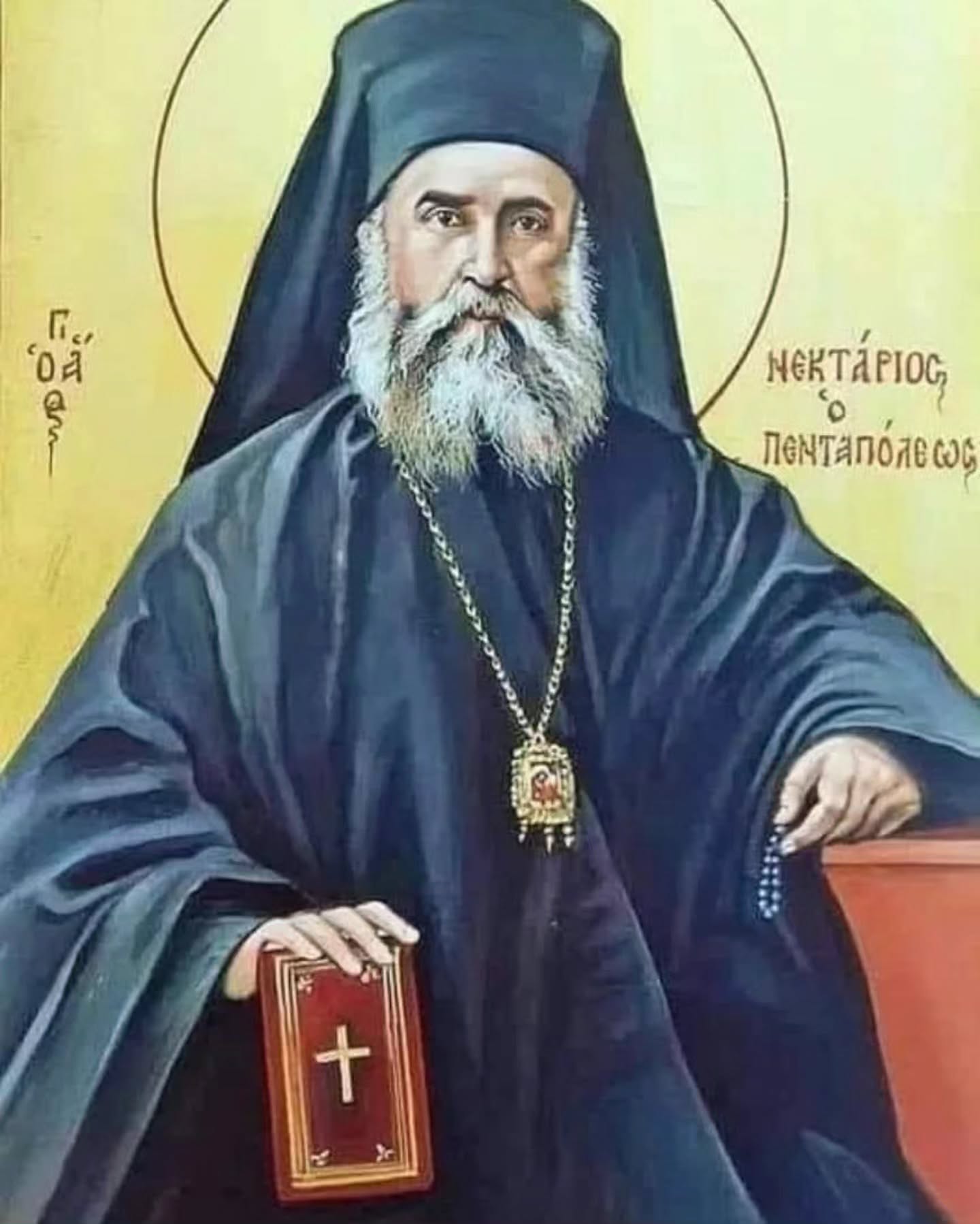
St. Nektarios: The Church lifts burdens and grants confidence in God

The post shares a quotation attributed to St. Nektarios the Wonderworker. It states that the Church always has her arms open to those whose consciences are burdened. The saint urges such people to hasten to the Church, promising that she will lift the weight of their burdens, grant them confidence in God, and fill their hearts with happiness and bliss. The text is presented as a standalone spiritual encouragement without additional commentary or discussion.

  • St. Nektarios describes the Church as always open to the burdened
  • He calls those with burdened consciences to hasten to the Church
  • The Church lifts the weight of burdens
  • The Church grants confidence in God
  • The Church fills hearts with happiness and bliss
Read more
Disgruntled Docs with ☦︎ICXC•NIKA☦︎ Instagram

Personal testimony of return to Christ and spiritual disciplines

The author shares a brief personal testimony of gratitude for God's mercy in bringing them back to the faith after many years away. They acknowledge not deserving this mercy and express lifelong indebtedness. The author mentions including personal spiritual disciplines that have helped them grow, though these are not detailed in the text. They emphasize they are not a teacher or clergy, but an unworthy servant, and urge readers to seek guidance…

The author shares a brief personal testimony of gratitude for God's mercy in bringing them back to the faith after many years away. They acknowledge not deserving this mercy and express lifelong indebtedness. The author mentions including personal spiritual disciplines that have helped them grow, though these are not detailed in the text.

They emphasize they are not a teacher or clergy, but an unworthy servant, and urge readers to seek guidance from their spiritual father. The post concludes with the doxology "Glory to God for all things."

  • Author testifies to God's mercy in returning to Christ after many years away
  • Expresses lifelong gratitude and sense of indebtedness to God
  • Mentions personal spiritual disciplines that aided growth (not detailed in text)
  • Clarifies they are not clergy or a teacher, but an unworthy servant
  • Advises readers to seek guidance from their spiritual father
Read more

Apostolic Succession Requires Unity of Faith, Not Only a Historical Chain

The video responds to a Protestant creator known as Redeemed Zoomer, arguing that a historical line of ordination does not by itself establish apostolic succession. It notes that mainstream Protestant ministers trace their orders through Reformation leaders such as Luther, Knox, and Zwingli, who were originally ordained as Catholic priests. However, the video contends that apostolic succession entails more than an unbroken chain of bishops; it…

The video responds to a Protestant creator known as Redeemed Zoomer, arguing that a historical line of ordination does not by itself establish apostolic succession. It notes that mainstream Protestant ministers trace their orders through Reformation leaders such as Luther, Knox, and Zwingli, who were originally ordained as Catholic priests.

However, the video contends that apostolic succession entails more than an unbroken chain of bishops; it requires the preservation of the apostolic faith within a unified church, as confessed in the Nicene Creed's description of the church as one, holy, catholic, and apostolic. Because Protestantism rejects that unity and the doctrine that undergirds it, the video concludes that Protestants cannot claim apostolic succession while separating it from apostolic unity and doctrine.

The argument also distinguishes mainstream Protestant bodies from non-denominational groups, which lack even a historical chain.

Key moments

  1. Apostolic succession requires an unbroken chain of bishops going back to the apostles.
  2. Mainstream Protestant ministers are ordained by other ministers tracing back to the apostles via the Catholic Church, because Reformation leaders like Knox, Luther, and Zwingli were originally ordained as Catholic priests.
  3. This does not apply to non-denominational groups.
  4. A nation alone does not establish apostolic succession.
  5. Claiming Protestants have apostolic succession while they remain divided in doctrine and communion undermines the entire idea.
  6. Apostolic succession is not just a historical chain of bishops; it requires preserving the apostolic faith within a church.
  7. The Nicene Creed identifies the church as one, holy, Catholic, and apostolic.
  8. Protestantism rejects all of that, so you cannot claim apostolic succession while separating it from apostolic unity and doctrine.
19 opinions in the discussion Numbers 3:10, Unauthorized persons are forbidden from assuming the priestly office. Numbers 18:7, The priesthood is given as a divinely appointed service. Ezra claims that you must trace… Read the discussion

St. Gregory the Great Condemns Title 'Universal Bishop' as Antichrist's Precursor

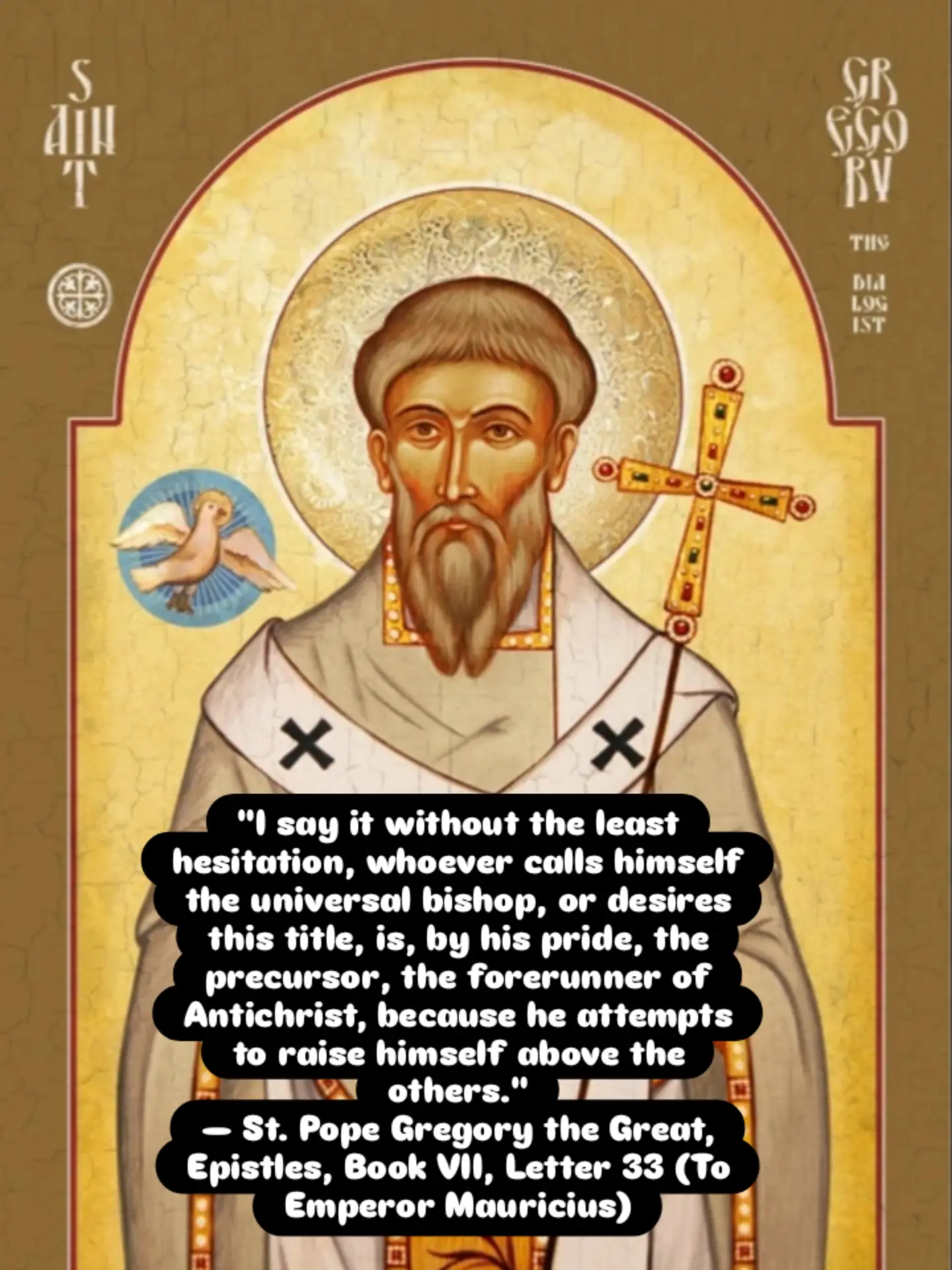
The post presents a quotation from St. Gregory the Great, Pope of Rome, taken from his Epistles, Book VII, Letter 33 addressed to Emperor Mauritius. In the quotation Gregory states without hesitation that whoever calls himself the universal bishop or desires that title acts from pride and becomes the forerunner of Antichrist because he attempts to raise himself above others. The original title of the post frames the quotation as a condemnation…

The post presents a quotation from St. Gregory the Great, Pope of Rome, taken from his Epistles, Book VII, Letter 33 addressed to Emperor Mauritius. In the quotation Gregory states without hesitation that whoever calls himself the universal bishop or desires that title acts from pride and becomes the forerunner of Antichrist because he attempts to raise himself above others.

The original title of the post frames the quotation as a condemnation of the teaching of universal jurisdiction. Gregory is venerated as a saint and Church Father in the Orthodox Church. The quotation is often cited in Orthodox polemics against claims of universal papal jurisdiction.

  • St. Gregory the Great rejects the title "universal bishop" as prideful.
  • He identifies such a claim as a precursor to Antichrist.
  • The quote is from Epistles Book VII, Letter 33 to Emperor Mauritius.
  • The post is framed within Orthodox patristics to oppose universal jurisdiction.
  • Gregory is recognized as a saint and Church Father in Orthodoxy.
Read more
Discover Orthodox Christianity Facebook

Construction Worker Survives Fifth-Floor Fall Through St. Nektarios' Intercession

Gerontissa Timothei narrates the account of a construction worker who fell from the fifth floor and struck his head. The worker survived, which is attributed to the grace of God and the intercessions of St. Nektarios.

  • Construction worker falls from fifth floor
  • Worker hits his head in the fall
  • Survival attributed to God's grace
  • St. Nektarios' intercessions credited
  • Account narrated by Gerontissa Timothei
Read more
radioimlemesou Instagram

Metropolitan Athanasios on not dwelling on confessed sins

Metropolitan Athanasios of Limassol addresses how Christians should relate to memories of past sins after repentance. He notes that before knowing Christ, every person carried various sins, various captivities, various bad behaviors, and bad ways of life. Upon entering the Church, these harmful habits are severed, or at minimum the believer struggles to sever them. The metropolitan observes that when someone now living within the Gospel and the…

Metropolitan Athanasios of Limassol addresses how Christians should relate to memories of past sins after repentance. He notes that before knowing Christ, every person carried various sins, various captivities, various bad behaviors, and bad ways of life. Upon entering the Church, these harmful habits are severed, or at minimum the believer struggles to sever them.

The metropolitan observes that when someone now living within the Gospel and the grace of God recalls specific things done in the past, a great shame arises internally. He then states decisively: those sins are done, they are finished. The person repented, confessed, and set life in order. It is sufficient to know that one has sinned before God.

The metropolitan warns against recalling sins "κατά είδος", in detail, specifically, or by kind, because this practice alone harms and pollutes the mind. The teaching draws a clear line: acknowledgment of having sinned is necessary and healthy; detailed rehearsal of confessed sins is spiritually damaging. The metropolitan uses a sequence of verbs, metanoēsamen (we repented), exomologēthēkamen (we confessed), taktōpisthēkamen (we put in order/regulated), to mark the completed action of reconciliation.

He presents the memory of shame as a present experience that must be answered with the objective reality of the sacraments already received. The directive is pastoral: the believer who feels shame over a past already brought to confession should not feed that shame by rehearsing particular sins, since doing so damages the nous, the spiritual faculty of perception.

  • Before Christ, each person had various sins, captivities, and bad behaviors
  • Entering the Church means cutting off or struggling against these habits
  • Remembering past sins while in grace causes great internal shame
  • Sins are finished after repentance, confession, and putting life in order
  • Recalling sins in detail harms and pollutes the mind
Read more
Orthodox Life Instagram

Saint Nektarios' Hymn 'Agni Parthene': Vision, Theology, and Prayer

Saint Nektarios of Aegina composed the hymn 'Agni Parthene' (O Virgin Pure) in the late 19th century. According to Church tradition, he wrote the poem after a dream in which the Virgin Mary appeared and asked him to record a specific melody that the angelic choirs were preparing to sing. He wrote the verses on his prayer table, and the hymn was published in his 1905 Theotokarion for personal prayer and spiritual edification. It has become one of…

Saint Nektarios of Aegina composed the hymn 'Agni Parthene' (O Virgin Pure) in the late 19th century. According to Church tradition, he wrote the poem after a dream in which the Virgin Mary appeared and asked him to record a specific melody that the angelic choirs were preparing to sing. He wrote the verses on his prayer table, and the hymn was published in his 1905 Theotokarion for personal prayer and spiritual edification.

It has become one of the most recognized and beloved paraliturgical melodies in the Eastern Orthodox Church. The primary theological theme is the glorification of Mary's role in human salvation. Through poetic titles, Saint Nektarios emphasizes her absolute purity, her unmatched maternal love, and her unique bridging of heaven and earth.

He repeats the rhythmic refrain 'Rejoice, O Bride Unwedded,' which highlights the mystery of the Incarnation and her perpetual virginity. Structurally, the original text is comprehensive and reads like a classical Church canon, complete with rhythmic meters across dozens of verses. It utilizes comparisons to celestial realities, declaring Mary to be higher than the heavens, more radiant than sunbeams, and surpassing the glory of the highest angelic ranks, including the Cherubim and Seraphim.

The final stanzas shift from theological praise to a personal plea for spiritual protection. The text acts as a living prayer in which the believer begs the Panagia for mercy, requesting deliverance from temptation, protection against spiritual enemies, and help to inherit eternal life.

  • Saint Nektarios composed 'Agni Parthene' after a vision of the Virgin Mary requesting he record an angelic melody.
  • The hymn was published in his 1905 Theotokarion and became a widely beloved paraliturgical melody.
  • Its theology centers on Mary's purity, maternal love, and role bridging heaven and earth, with the refrain 'Rejoice, O Bride Unwedded.'
  • Structured like a canon with dozens of metered verses, it compares the Theotokos to celestial beings and declares her higher than the heavens.
  • The final stanzas become a personal prayer for mercy, deliverance from temptation, protection from spiritual enemies, and eternal life.
Read more
Holy Resurrection YouTube

Orthodox teaching on cremation, abortion, prayer for the dead, and salvation through love

Orthodox teaching on cremation, abortion, prayer for the dead, and salvation through love 6:12

A priest delivers a talk covering several Orthodox teachings. He states that cremation is not a Christian practice because the body sanctified by the Holy Spirit must return to the earth, not be burned. He condemns abortion as a great sin in which a woman destroys God's work and is judged as a murderer unless she repents deeply. He identifies the unrepented sin as the only unforgivable sin and laments that Serbian villages have disappeared…

A priest delivers a talk covering several Orthodox teachings. He states that cremation is not a Christian practice because the body sanctified by the Holy Spirit must return to the earth, not be burned. He condemns abortion as a great sin in which a woman destroys God's work and is judged as a murderer unless she repents deeply.

He identifies the unrepented sin as the only unforgivable sin and laments that Serbian villages have disappeared because people do not repent and refuse to have children, while Roma families remain content with many children despite poverty. He criticizes civil law for dividing land into tiny parcels. When a mother dies, Christians should pray for her soul rather than mourn like pagans, because excessive grief disturbs the peace of the departed and causes suffering in eternity.

He tells of a woman who used sorcery to summon her deceased daughter from paradise, causing the daughter to lose her heavenly place. The priest recounts Saint Nikolai Velimirović's teaching that salvation is possible for the unrepentant if someone prays for them for forty days or more, especially through the Divine Liturgy where the priest asks God to wash away sins by Christ's blood.

He shares a dream from his youth in which a heavenly army advances singing that evil is conquered by love, showing that a person of prayer draws grace upon the whole household.

Key moments

  1. 0:12 Cremation is not a Christian practice because the body sanctified by the grace of the Holy Spirit must not be burned; God did not create the body to be destroyed by fire, and from Adam it has been known that dust must return to dust and the body must be laid in the earth.
  2. 0:44 Abortion is a great sin: the mother destroys the life God conceived, acts as a murderer, and must repent deeply or face judgment at the toll houses; no animal kills its offspring, only rational man does.
  3. 1:15 The only unforgivable sin is the unrepented sin; the speaker laments that Serbian villages have emptied because people do not repent and refuse children, while the Roma have many children and remain cheerful, and he criticizes civil law for dividing land into tiny parcels.
  4. 1:48 When a mother dies, Christians should pray for her and thank God rather than lament like pagans, because mourning causes both the mother and children to suffer in eternity; a mother shapes character and deserves reverence.
  5. 2:18 A woman who grieved excessively for her pious daughter used sorcery to summon her from paradise; the daughter appeared and said she could no longer return to heavenly bliss because her mother called her instead of praying to God.
  6. 3:19 Excessive mourning disturbs the peace of the departed; Christians must pray for the gospel dwellings, do good deeds in memory, and have the Divine Liturgy offered daily, because only the Lord can release souls from the bonds of hell.
  7. 4:22 Saint Nikolai Velimirović taught that there is salvation for those who did not repent in life if someone prays for that soul for forty days or more; the Divine Liturgy is the sacrifice of Golgotha where the priest asks the Lord to wash away sins by the precious blood.
  8. 4:53 As a young monk the speaker dreamed of a heavenly army marching from east to west singing that they wage battle for the King of Glory to conquer evil with love; this shows that a person of prayer in a household draws down God's grace so that even cold hearts feel it, and therefore we must pray unceasingly.
Orthodox Life Instagram

The Life of Saint Nektarios of Aegina Depicted in a Single Icon

The post presents an icon titled 'The Life of Saint Nektarios in Icons.' Saint Nektarios of Aegina stands at the center, surrounded by smaller border scenes that follow his life in order, from his birth to his repose. The post lists each scene: his birth; being taught sacred letters by his grandmother; going to Hagia Sophia in Constantinople to study at the age of 14; being spiritually advised by Saint Pachomios of Chios and becoming a monk at…

The post presents an icon titled 'The Life of Saint Nektarios in Icons.' Saint Nektarios of Aegina stands at the center, surrounded by smaller border scenes that follow his life in order, from his birth to his repose. The post lists each scene: his birth; being taught sacred letters by his grandmother; going to Hagia Sophia in Constantinople to study at the age of 14; being spiritually advised by Saint Pachomios of Chios and becoming a monk at Nea Moni in Chios; his ordination as Metropolitan of Pentapolis; his exile from Alexandria after a false accusation; his work as a preacher in Fthiotida after he could not find a bishop's position because his name had been soiled; his prayer at the Rizareio Ecclesiastical School; his healing of a demon-possessed man upon his arrival in Aegina; his teaching of the nuns at the monastery he established in Aegina; his vision of Saints Theodosia, Paraskevi and Kyriaki; his being insulted by a prosecutor; and his dormition.

The accompanying image text gives the Greek inscriptions of the scenes, including the healing of the demon-possessed, the driving out of the unclean spirit, the preaching of God in Egypt, the instruction of the nuns, and the dormition. The post credits the source johnsanidopoulos.com.

  • The icon shows Saint Nektarios at the center with border scenes covering his whole life.
  • Early scenes include his birth, his grandmother teaching him sacred letters, and study at Hagia Sophia in Constantinople at age 14.
  • He became a monk at Nea Moni in Chios under the guidance of Saint Pachomios of Chios, and was ordained Metropolitan of Pentapolis.
  • Later scenes show his exile from Alexandria after a false accusation, preaching in Fthiotida, and prayer at the Rizareio Ecclesiastical School.
  • Final scenes include his healing of a demon-possessed man in Aegina, teaching the nuns of his monastery, his vision of Saints Theodosia, Paraskevi and Kyriaki, and his dormition.
Read more

Why Casual Sex Harms the Soul: Orthodox Teaching

The post explains Orthodox Christian teaching on the spiritual dangers of casual sexual intimacy. It asserts that sex is not merely a physical act but carries emotional, psychological, and spiritual consequences that are often underestimated. Casual intimacy can lead to unhealthy attachments, emotional wounds, spiritual confusion, and destructive patterns that affect peace, focus, and relationships. The post cites 1 Corinthians 6:16, where Saint…

The post explains Orthodox Christian teaching on the spiritual dangers of casual sexual intimacy. It asserts that sex is not merely a physical act but carries emotional, psychological, and spiritual consequences that are often underestimated. Casual intimacy can lead to unhealthy attachments, emotional wounds, spiritual confusion, and destructive patterns that affect peace, focus, and relationships.

The post cites 1 Corinthians 6:16, where Saint Paul states that sexual union makes two people "one flesh," forming a bond that influences mind, emotions, and spiritual life. It also cites 1 Corinthians 6:19, which describes the body as a temple of the Holy Spirit. The teaching warns that during casual sex a person may take on the other's traumas, subconscious fears, habits, emotional wounds, and even a poverty mindset.

When intentions are driven by lust, the consequences are destructive rather than good. In contrast, within a blessed marriage between husband and wife who love each other, the same bond becomes beautiful and holy. The post emphasizes that not every connection is good for the soul and urges believers to guard their hearts, protect their bodies, and honor what God created as sacred.

True intimacy is built on love, faithfulness, sacrifice, and commitment, not on lust. Finally, it affirms that repentance is always possible and that God's mercy is greater than any sin, pointing to confession as a means of restoration.

Key moments

  1. Anytime you have casual sex with someone, you're potentially taking on their traumas, their subconscious fears, their habits, their emotional wounds, and even their poverty mindset.
  2. When your intentions are driven by lust and impurity, don't be surprised if the consequences are destructive rather than good.
  3. St. Paul tells us in 1 Corinthians 6:16 that when two people come together sexually, they become one flesh.
  4. You're not just connecting with somebody's body, you're forming a bond that can affect your mind, emotions, and spiritual life.
  5. This can then open you up to unhealthy attachments, spiritual confusion, and destructive patterns.
  6. But when intimacy happens within a blessed marriage between husband and wife who generally love each other, it becomes something beautiful and holy.
  7. Remember what St. Paul tells us in 1 Corinthians 6:19: your body is a temple of the Holy Spirit.
  8. If you've fallen into sexual sin, remember repentance, confession, and God's mercy can restore you.
8 opinions in the discussion Good thing I'm abstinent and waiting until marriage Read the discussion

Catholic considering conversion to Orthodoxy after parish struggles

I have long had sympathy for Orthodox theology and approaches to the filioque, the essence-energies distinction versus divine simplicity, and the general little-o orthodoxy and liturgy that I prefer to Catholic liturgies. I have attended Eastern Catholic Byzantine rite liturgies. However, I have remained Catholic because I think there is good reason to believe that papal primacy existed in the first millennium, and I also appreciate the Catholic…

I have long had sympathy for Orthodox theology and approaches to the filioque, the essence-energies distinction versus divine simplicity, and the general little-o orthodoxy and liturgy that I prefer to Catholic liturgies. I have attended Eastern Catholic Byzantine rite liturgies.

However, I have remained Catholic because I think there is good reason to believe that papal primacy existed in the first millennium, and I also appreciate the Catholic Church's arguably warmer and more accepting attitude to some degree. But I also recognize a lot of apparent contradictions since Vatican I and II.

I moved to a new area and am looking for a parish for my family. Catholic parishes can really run the gamut. I prefer a traditional Novus Ordo, but that is very hard to find here. We found one we have been attending recently, and only today I found out that they are a charismatic Catholic parish that practices speaking in tongues on occasion.

This was something I used to make fun of Protestants for, only to research and find out that speaking in tongues is, in fact, accepted within the Catholic Church.

Sorry for the rant. I have been having a lot of difficulties sorting out the wheat from the chaff in terms of Catholic parishes, and it seems there is so much chaff. I really do love divine liturgies, but converting is not easy, though I think my wife understands and would respect that I need to be able to take the faith seriously for the good of our family.

With all my intellectual and aesthetic preferences for orthodoxy, I am starting to more seriously consider converting. I just wanted to share where I am at and would love to hear from anyone with thoughts or advice.

Thanks much and God bless.

  • Sympathy for Orthodox theology on filioque, essence-energies, and liturgy
  • Remained Catholic due to belief in first-millennium papal primacy and perceived warmer attitude
  • Struggling to find a suitable Catholic parish; discovered current parish practices speaking in tongues
  • Wife would respect conversion decision for family's spiritual good
  • Seriously considering conversion to Orthodoxy and seeking advice
9 opinions in the discussion Nobody disputes Rome's primacy, but in the "first among equals" sense, not what the papacy has become. Peter was in Antioch too, so why not that patriarchate? Anyway, not trying to start… Read the discussion
Orthodox Life Instagram

Saint Nektarios the Wonderworker: From False Exile to the Holy Trinity Convent of Aegina

The post commemorates Saint Nektarios the Wonderworker, Bishop of Pentapolis, whose feast falls on November 9. Born Anastasios Kephalas in Thrace, he moved to Constantinople as a young man to work and study, showing piety and a desire to serve the Church from an early age. He was ordained a priest and later consecrated Metropolitan of Pentapolis in Egypt by Patriarch Sophronios, where his humility, preaching and popularity drew large crowds. His…

The post commemorates Saint Nektarios the Wonderworker, Bishop of Pentapolis, whose feast falls on November 9. Born Anastasios Kephalas in Thrace, he moved to Constantinople as a young man to work and study, showing piety and a desire to serve the Church from an early age. He was ordained a priest and later consecrated Metropolitan of Pentapolis in Egypt by Patriarch Sophronios, where his humility, preaching and popularity drew large crowds.

His success provoked jealousy among fellow clergy, and he was falsely accused of plotting to seize the Patriarchal throne and of immoral conduct. Without a chance to defend himself, he was exiled from Egypt and stripped of his duties. He returned to Greece in near-poverty, enduring years of public humiliation and suspicion while working as a preacher and teacher.

Despite the slander, he founded the Holy Trinity Convent on Aegina and spent his final years there as a spiritual father, living in asceticism, manual labor and prayer. His gentle endurance of false accusations led people to regard him as a living saint, and many sought his counsel and blessing. He reposed in 1920 from cancer and was canonized by the Ecumenical Patriarchate in 1961.

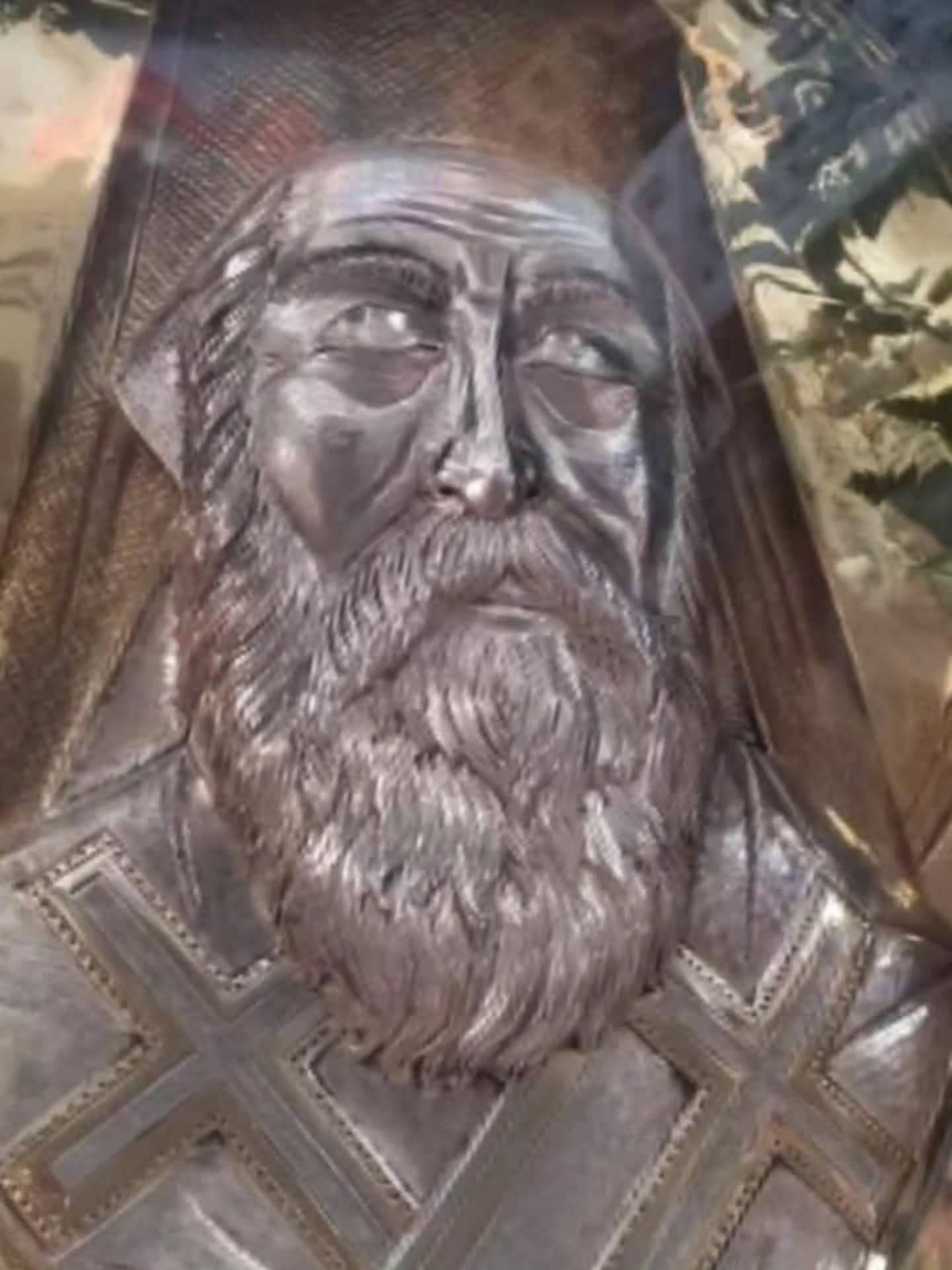
Miracles of healing were attributed to his intercession soon after his death, giving him the title Wonderworker. Today he is venerated worldwide as a patron of those suffering from cancer, illness and unjust persecution. The accompanying images show photographs of the saint, icons and frescoes of him, his reliquary, and handwritten prayers associated with him.

  • Saint Nektarios, born Anastasios Kephalas in Thrace, served as Metropolitan of Pentapolis in Egypt under Patriarch Sophronios.
  • False accusations of ambition and immoral conduct led to his exile and the loss of his duties, without a chance to defend himself.
  • He returned to Greece in poverty, endured humiliation as a preacher and teacher, and founded the Holy Trinity Convent on Aegina.
  • He reposed in 1920 from cancer and was canonized by the Ecumenical Patriarchate in 1961.
  • Miracles of healing followed his death, and he is venerated as a patron for those with cancer, illness and unjust persecution.
Read more

Sitting beside the destitute: when God becomes the only hope

The speaker asks to sit beside a person who is hungry and destitute, acknowledging the hardness of their situation. He says that in the midst of hopelessness, when the Lord becomes your only hope, you can feel His presence. The speaker calls the person brother and says he has been blessed to participate in their suffering.

He notes that others do not seem to care, but affirms that God loves us and offers a pair of something, saying he has another pair at home.

Key moments

  1. Can I sit next to you? It's hard to be hungry and destitute.
  2. There is nothing one can do but there's something in the midst of this hopelessness when the Lord becomes your only hope. It's then that one can feel his presence.
  3. I have been blessed lately to participate in your suffering, my brother.
  4. They are different than they are. They don't seem to care about me. They don't seem to care about me either.
  5. But the good news is God loves us. Don't ever forget that.
  6. Please take this, I have another pair at home.
Read more
Fr.TEDTalks with Ally ☦︎ Instagram

Synaxis of Archangel Michael and the Bodiless Powers commemorated November 8

The Holy Orthodox Church commemorates the Synaxis of the Archangel Michael and all the Bodiless Powers of Heaven on November 8. The holy angels stand before the throne of God in ceaseless worship, serving His divine will and guiding and protecting the faithful. The post lists seven archangels by name: Michael, Gabriel, Raphael, Uriel, Salaphiel, Jegudiel, and Barachiel. It asks for their intercession before the Lord, for strength in spiritual…

The Holy Orthodox Church commemorates the Synaxis of the Archangel Michael and all the Bodiless Powers of Heaven on November 8. The holy angels stand before the throne of God in ceaseless worship, serving His divine will and guiding and protecting the faithful. The post lists seven archangels by name: Michael, Gabriel, Raphael, Uriel, Salaphiel, Jegudiel, and Barachiel.

It asks for their intercession before the Lord, for strength in spiritual struggles, and for guidance toward Christ. The commemoration concludes with a prayer to the Holy Archangels and all the Heavenly Bodiless Powers.

  • The feast of the Synaxis of the Archangel Michael and all Bodiless Powers is observed on November 8.
  • Angels stand before God's throne in ceaseless worship and serve His will.
  • They guide and protect the faithful.
  • Seven archangels are named: Michael, Gabriel, Raphael, Uriel, Salaphiel, Jegudiel, Barachiel.
  • The post requests their intercession, strength in spiritual struggles, and guidance to Christ.
Read more

Saint Nectarios of Aegina on trusting God's providence in confusion

The post presents a quotation attributed to Saint Nectarios of Aegina, also titled Saint Nectarios of Pentapolis in the accompanying Greek text. The quotation addresses a person who finds life incomprehensible and confusing. It describes God as a loving Father who leads by a path the person would not have chosen. It urges trust in God even in silence and unknowing. It states that God's providence is perfect and that today's tears will become dew…

The post presents a quotation attributed to Saint Nectarios of Aegina, also titled Saint Nectarios of Pentapolis in the accompanying Greek text. The quotation addresses a person who finds life incomprehensible and confusing. It describes God as a loving Father who leads by a path the person would not have chosen.

It urges trust in God even in silence and unknowing. It states that God's providence is perfect and that today's tears will become dew for tomorrow's joy. The post contains no additional commentary, discussion, or explanation beyond the quotation and the saint's name in Serbian and Greek.

  • Quotation from Saint Nectarios of Aegina (Saint Nectarios of Pentapolis)
  • Encouragement not to worry when life seems incomprehensible
  • God portrayed as a loving Father leading on an unchosen path
  • Call to trust God even in silence and unknowing
  • Assurance that God's providence is perfect and tears become future joy
Read more
Ancient Faith YouTube

Fr. Evan Armatas Answers Questions on Occult, Eucharist, Sin, and Death

Fr. Evan Armatas Answers Questions on Occult, Eucharist, Sin, and Death 1:05:39

Father Evan Armatas and co-host Mike answer listener questions in a pre-recorded mailbag episode. They first address how to respond to a friend entering occult practices. Father Evan emphasizes prayer, inviting her to experience Christian community, and discussing the differing outcomes of demonic versus angelic possession so she understands the choice. He notes that Christian life is not about dispossession but about being possessed by the Holy…

Father Evan Armatas and co-host Mike answer listener questions in a pre-recorded mailbag episode. They first address how to respond to a friend entering occult practices. Father Evan emphasizes prayer, inviting her to experience Christian community, and discussing the differing outcomes of demonic versus angelic possession so she understands the choice.

He notes that Christian life is not about dispossession but about being possessed by the Holy Spirit; baptism begins with prayers of exorcism and then the person is clothed in Christ. He contrasts pagan societies ruled by demons, which practiced ritual child rape, absolute patriarchal authority, slavery, and had no charities, with Christianity which refashioned what it means to be human and transformed civilization.

On the Eucharist, he affirms it is essential to salvation but notes God is not bound by it, citing Abraham and the thief on the cross. He explains the common chalice has never been a source of contagion; priests consume the remainder after every liturgy and do not fall ill, a fact observed during the COVID pandemic when parishes continued sharing the chalice without clergy outbreaks.

He adds that individual cups and wafers are an innovation without basis in Scripture or church history, and those communities generally do not believe the elements become the actual body and blood of Christ. Regarding whether sexual immorality is the worst sin, Father Evan says certain sins have greater impact but warns against minimizing lesser sins.

He describes confession as requiring honesty rather than listing major sins or excusing them, and identifies two ditch banks of bad confession: minimizing sin and presumption, as well as blaming others. On death, he confirms the soul separates from the body and for the faithful is present with the Lord, while the unrighteous also stand in God's presence but experience it as pain.

He stresses salvation is faithfulness shown in works of love, not mere intellectual assent, since demons also believe and tremble. Finally, he advises a catechumen facing roadblocks to trust God's timing, noting the church extends pastoral care even to those not yet formally received. He gives the example of a bishop who ordered a funeral for a woman who died before baptism because her attempt to enter the church was equal to the accomplishment, extending sacramental care to her and her family.

Key moments

  1. 6:19 Christian life is not about dispossession but about being possessed by the Holy Spirit; baptism begins with prayers of exorcism and then the person is clothed in Christ.
  2. 11:01 Practical steps for the friend involved in the occult: pray for her, invite her into Christian community to see a different way of life, and discuss the outcomes of demonic versus angelic possession so she knows what choice she is making.
  3. 15:09 Pagan societies ruled by demons practiced ritual child rape, absolute patriarchal authority, slavery, and had no charities; Christianity refashioned what it means to be human and transformed civilization.
  4. 22:25 The common chalice has never been a source of contagion; priests consume the remainder after every liturgy and do not fall ill, a fact confirmed during the COVID pandemic when parishes continued sharing the chalice without clergy outbreaks.
  5. 26:04 Individual cups and wafers are a complete innovation with no basis in scripture or church history; those communities generally do not believe the elements become the actual body and blood of Christ.
  6. 42:14 Two ditch banks of bad confession: minimizing sin ("I haven't murdered anyone") and presumption ("I've done it all, just read the prayer"); a third bad confession blames others for one's own sins.
  7. 53:07 Both the righteous and the unrighteous are present to God after death; for the righteous his presence is joy, for the unrighteous it is pain; salvation is faithfulness shown in works of love, not mere intellectual belief, since demons also believe and tremble.
  8. 1:01:59 The church does not view catechumens as outcasts; a bishop ordered a funeral for a woman who died before baptism because her attempt to enter the church was equal to the accomplishment, extending sacramental care to her and her family.

Feast of St. Nektarios celebrated at Aegina with relic procession and all-night vigil

On November 8, 2026, the feast of St. Nektarios of Aegina was celebrated on the island of Aegina. A festive Vespers was served at the Monastery of the Holy Trinity and at the grand church dedicated to the saint. A large number of faithful and pilgrims from various parts of Greece and abroad gathered for the celebration. After the Vespers at the monastery, the honorable head of St. Nektarios was transferred in a solemn litany to the church, where…

On November 8, 2026, the feast of St. Nektarios of Aegina was celebrated on the island of Aegina. A festive Vespers was served at the Monastery of the Holy Trinity and at the grand church dedicated to the saint. A large number of faithful and pilgrims from various parts of Greece and abroad gathered for the celebration.

After the Vespers at the monastery, the honorable head of St. Nektarios was transferred in a solemn litany to the church, where a hierarchical festive Vespers was served. An all-night vigil followed during the night. The post describes St. Nektarios as a great wonderworker and healer who remains one of the most beloved saints of the Orthodox world.

People from all over the world turn to his prayerful intercession seeking consolation, strengthening, and God's help. The post concludes with the invocation: "Holy Father Nektarios, pray to God for us!" Sources cited are Aegina Portal, Saronic Magazine, and Orthodoxia News Agency.

  • Feast of St. Nektarios celebrated November 8, 2026 on Aegina
  • Services at Monastery of the Holy Trinity and the saint's grand church
  • Honorable head of St. Nektarios processed in solemn litany to the church
  • Hierarchical festive Vespers and all-night vigil served
  • St. Nektarios described as great wonderworker and healer, beloved worldwide
Read more

Luke 6: Mercy, prayer, love for enemies, and a firm foundation

The post explains the sixth chapter of Luke, showing what life of a true follower of Christ looks like. Christ demonstrates that mercy must not yield to external formalism by healing a man on the Sabbath, revealing that doing good is inseparable from God's will. Before choosing the twelve apostles, He withdraws to a mountain and spends the night in prayer, showing the importance of prayer in every significant work. In the Beatitudes He reveals…

The post explains the sixth chapter of Luke, showing what life of a true follower of Christ looks like. Christ demonstrates that mercy must not yield to external formalism by healing a man on the Sabbath, revealing that doing good is inseparable from God's will. Before choosing the twelve apostles, He withdraws to a mountain and spends the night in prayer, showing the importance of prayer in every significant work.

In the Beatitudes He reveals the true values of the Kingdom of God: poverty, hunger, weeping, and suffering for Christ's sake are not the final word on human life. Opposite them stand woes to those satisfied with earthly wealth, fullness, and human glory. Patristic interpretation stresses that Christ's words about the rich apply not to every wealthy person but to those who seek nothing beyond wealth.

The deepest call of the chapter is the command to love enemies: do good to those who hate you, bless those who curse you, pray for those who abuse you. The Fathers say this command is given for our spiritual growth. "Be merciful, even as your Father is merciful." Christ calls us not to judge, to forgive, and to give.

He warns us to examine our own heart first, because a person's inner state is revealed through words and deeds, as a tree is known by its fruit. The chapter ends with the essential lesson: it is not enough to hear Christ's words and call Him Lord; one must do what He commands. Such a person resembles one who built a house on a firm foundation, on rock.

Key moments

  1. Light a candle if it has gone out, and let your soul shine with light.
  2. Pray for health and salvation in the name of Jesus Christ.
  3. Stand before the icon, keep your soul pure, and do not pray to anyone but Jesus Christ.
  4. Light a candle every day until death.