WeOrthodox
EN UA

radioimlemesou

Instagram ↗ 43 discussions

Επίσημος Λογαριασμός Ραδιοφωνικού Σταθμού Ι.Μ. Λεμεσού

radioimlemesou Instagram

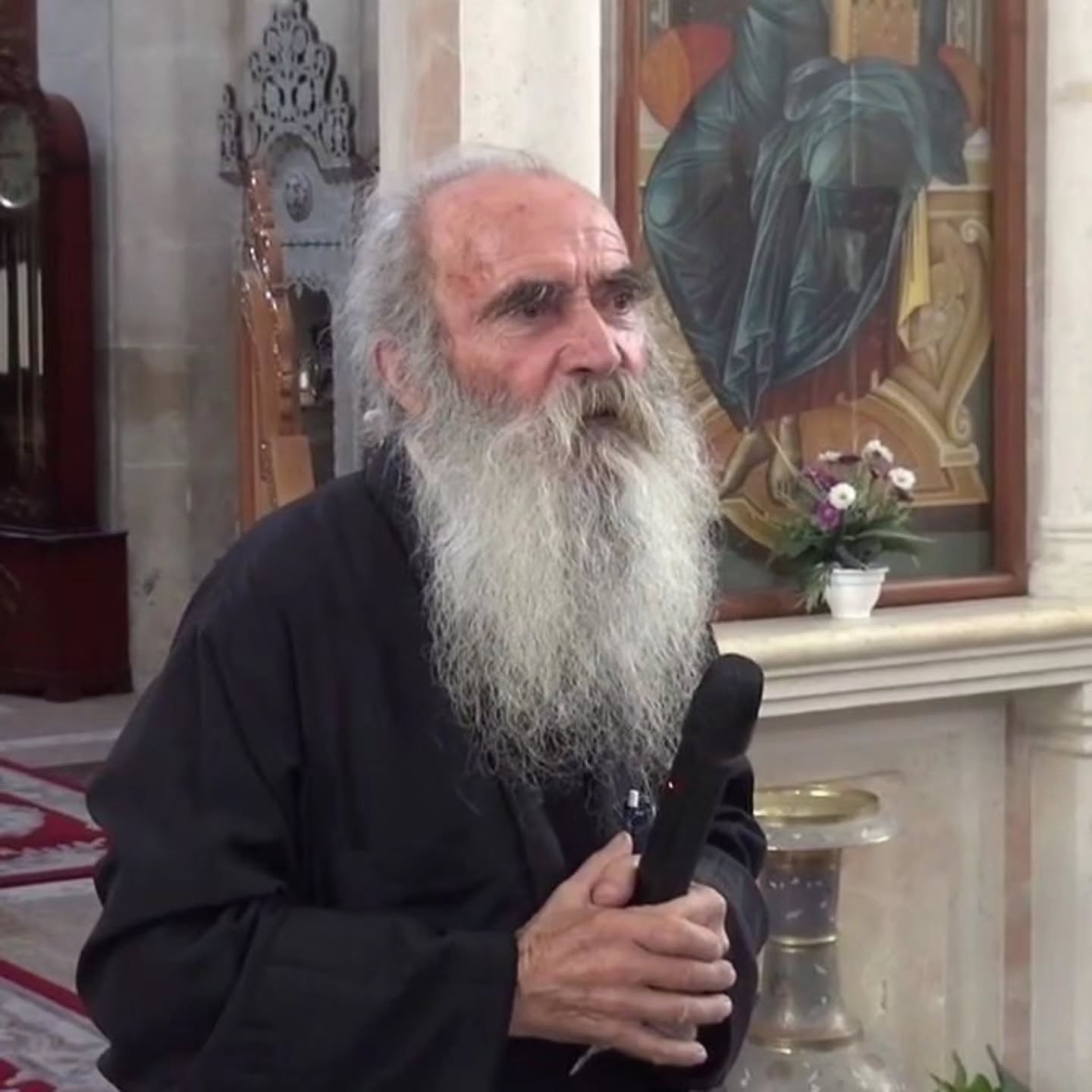
Metropolitan Athanasios: Seeing God begins in this life through heart purification

Metropolitan Athanasios of Limassol teaches that those who have purified their hearts from passions and sin will see God. This vision does not wait until after death; it begins in the present life with intensity and power that extinguishes the power of sin and passions and draws the whole person into the love of God. After death the vision becomes stronger, more perfect, and clearer. The metropolitan explains that this experience comes about…

Metropolitan Athanasios of Limassol teaches that those who have purified their hearts from passions and sin will see God. This vision does not wait until after death; it begins in the present life with intensity and power that extinguishes the power of sin and passions and draws the whole person into the love of God. After death the vision becomes stronger, more perfect, and clearer.

The metropolitan explains that this experience comes about when a person enters the therapeutic regimen of the Church. That path consists of spiritual struggle, repentance for mistakes and sins, prayer, and living within the holy mysteries of the Church. The post presents the metropolitan's words as a direct statement of Orthodox spiritual anthropology: the heart's purification opens the capacity to know God now, and the Church's sacramental and ascetic life is the means given for that purification.

Key moments

  1. Those with pure hearts from passions and sin will see God.
  2. The vision of God begins in this life, not only after death.
  3. After death the vision becomes more powerful, perfect, and clear.
  4. The experience of God in this life is intense and has power that extinguishes the power of sin and passions.
  5. This experience exercises the whole person in the love of God.
  6. This occurs when a person enters the therapeutic regimen of the Church.
  7. The path includes spiritual struggle, repentance for mistakes and sins, prayer, and living in the holy mysteries of the Church.
Read more
radioimlemesou Instagram

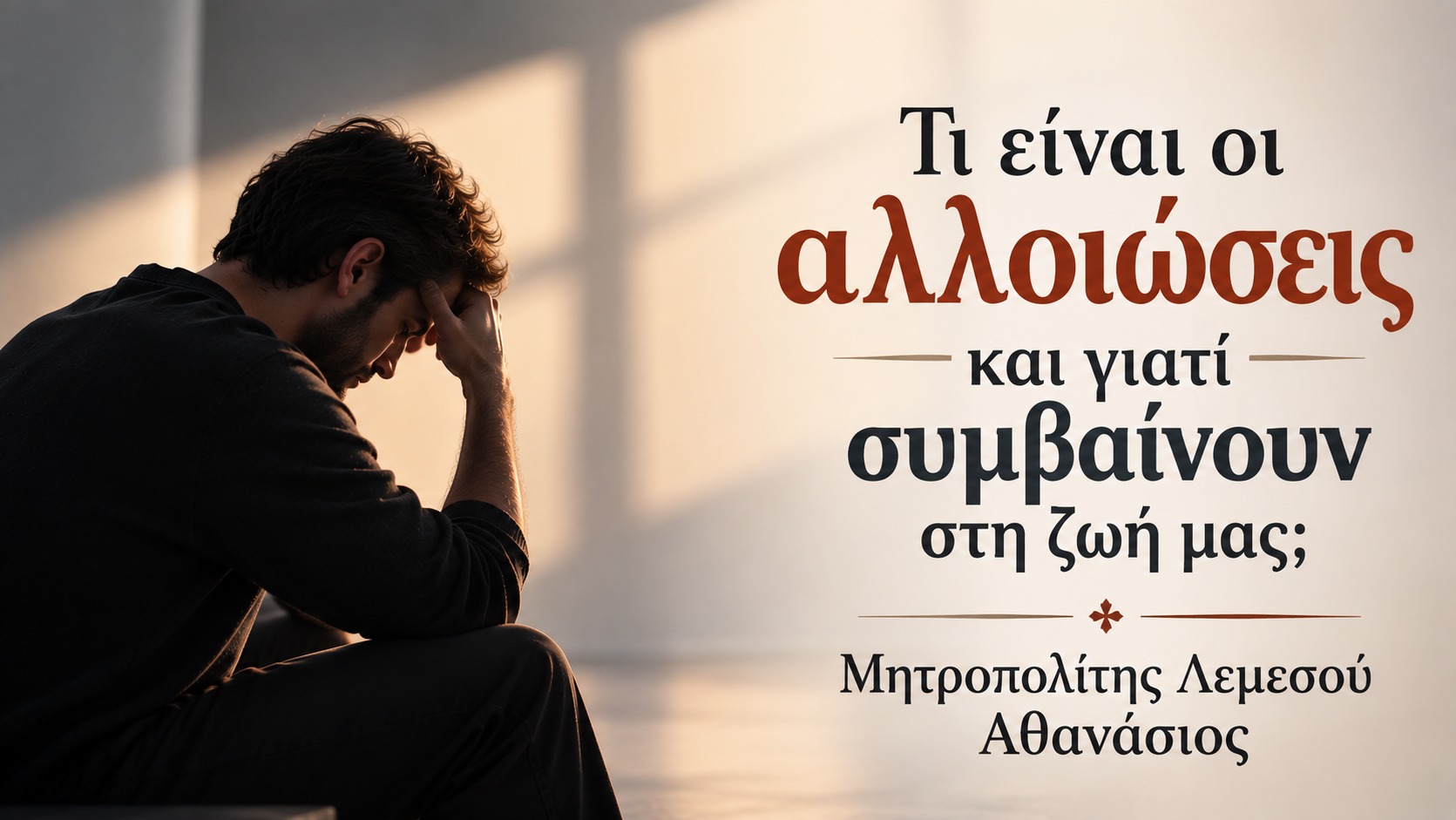
Metropolitan Athanasios of Limassol explains spiritual alterations and their causes

Metropolitan Athanasios of Limassol, in an excerpt from one of his talks, explains what alloioseis are. He describes them as changes that take place in a person's psychic or spiritual world. The metropolitan analyzes the reasons these alterations happen and illustrates his explanation with real-life incidents. The post directs viewers to the full excerpt on the channel's YouTube page.

  • Metropolitan Athanasios of Limassol defines alloioseis as changes in the psychic or spiritual world of a person.
  • He analyzes the reasons why these alterations occur.
  • He provides real-life incidents as examples.
  • The excerpt is from a talk and is posted on YouTube.
radioimlemesou Instagram

Metropolitan Athanasios of Limassol: Repentance Covers Our Inability to Keep the Commandments

Metropolitan Athanasios of Limassol says that Christ calls anyone who wishes to follow Him to deny themselves, take up their cross, and follow Him. He states that everyone can do this in theory, but in practice no one can keep God's commandments perfectly. The Metropolitan explains that external observance of rules, laws, and commandments is not what brings a person before God or makes them a child of God.

Rather, when a person repents, their weakness, sin, failure, and the good they should have done but could not are covered.

Key moments

  1. Christ says whoever wants to follow him must deny themselves, take up their cross, and follow him.
  2. Everyone can follow Christ in theory, but in practice no one can keep God's commandments perfectly.
  3. External observance of rules, laws, and commandments is not what brings us before God or makes us succeed as children of God.
  4. When a person repents, their weakness, sin, missing the mark, and the good they should have done but could not are covered.
Read more
radioimlemesou Instagram

Metropolitan Athanasios on the raising at Nain

Metropolitan Athanasios of Limassol recounts Christ's raising of the widow of Nain's son. Jesus approached the bier, touched it, and said, "Young man, I say to you, arise." The young man sat up and began to speak. The metropolitan states this is a historical fact from Christ's life. He explains the miracle was not performed primarily to demonstrate power over physical death. Rather, it reveals that Christ raises the living and the dead from sin.…

Metropolitan Athanasios of Limassol recounts Christ's raising of the widow of Nain's son. Jesus approached the bier, touched it, and said, "Young man, I say to you, arise." The young man sat up and began to speak. The metropolitan states this is a historical fact from Christ's life.

He explains the miracle was not performed primarily to demonstrate power over physical death. Rather, it reveals that Christ raises the living and the dead from sin. Death is sin, and the soul's death is eternal separation from God.

When a person's soul is raised, they become truly alive before God. This miracle of the soul's resurrection has eternal dimensions.

Key moments

  1. Christ approaches and touches the bier of the widow of Nain's son.
  2. He commands the young man, "Young man, I say to you, arise."
  3. The young man sits up and begins to speak.
  4. The event is a historical fact from Christ's life.
  5. The miracle was not primarily to show power over physical death.
  6. It shows Christ raises the living and dead from sin.
  7. Death is sin; the soul's death is eternal separation from God.
  8. If a person's soul is raised, they become truly alive before God; this miracle has eternal dimensions.
Read more
radioimlemesou Instagram

How should we love our spouse? Bishop Athanasios on the difference between man and woman

Metropolitan Athanasios of Limassol speaks about how a husband and wife should love each other. He begins from the difference between the sexes: a man is one thing and a woman is another, and each expresses himself or herself in a different way. He says he has seen cases of people who feel they do not receive from their spouse the love and the behavior they expected and need. A woman, he explains, needs her man to be a man to her, to show his…

Metropolitan Athanasios of Limassol speaks about how a husband and wife should love each other. He begins from the difference between the sexes: a man is one thing and a woman is another, and each expresses himself or herself in a different way. He says he has seen cases of people who feel they do not receive from their spouse the love and the behavior they expected and need.

A woman, he explains, needs her man to be a man to her, to show his love, his interest, his word and his presence as a man, not as a woman. In the same way, a man expects from his wife not a masculine, manly love and presence, but a feminine presence beside him. He gives the reason: she is his other half, his helpmate, and this is what he needs as a man within his marriage.

The talk stays on this single theme, the distinct way each spouse is called to express love according to his or her nature, rather than offering a list of practical rules. The post carries hashtags identifying the speaker as Metropolitan of Limassol Athanasios and linking the clip to Orthodox and Greek Orthodox faith topics. There is no discussion thread attached to the post; the content is the bishop's own words, quoted in Greek, on the mutual expectations of husbands and wives in marriage.

Key moments

  1. A man and a woman are different and each expresses himself or herself in a different way.
  2. Some people feel they do not receive from their spouse the love and behavior they expected and need.
  3. A woman needs her husband to show his love, interest, word and presence as a man, not as a woman.
  4. A man expects a feminine presence from his wife, not a masculine one, because she is his helpmate and this is what he needs in his marriage.
Read more
radioimlemesou Instagram

Metropolitan Athanasios of Limassol shares memories of Fr. Eustathios Papageorgiou

The post functions as a brief announcement for a video excerpt. It identifies the speaker as Metropolitan Athanasios of Limassol, referred to with the honorific Panierotatos. The program title is given in Greek: "Καρδιακός Λόγος, Αγιασμένων Μορφών Νοσταλγία", which translates as "Heartfelt Word - Nostalgia of Holy Forms". The Metropolitan speaks about Father Eustathios Papageorgiou, identified as makaristou, meaning the late or of blessed…

The post functions as a brief announcement for a video excerpt. It identifies the speaker as Metropolitan Athanasios of Limassol, referred to with the honorific Panierotatos. The program title is given in Greek: "Καρδιακός Λόγος, Αγιασμένων Μορφών Νοσταλγία", which translates as "Heartfelt Word - Nostalgia of Holy Forms".

The Metropolitan speaks about Father Eustathios Papageorgiou, identified as makaristou, meaning the late or of blessed memory. The Metropolitan shares personal experiences and wonderful incidents from Father Eustathios's life. Through these memories, he outlines the personality and spiritual journey of Father Eustathios.

Two main phases are mentioned: the years of his ministry as Archbishop's Representative of Ammochostos, and his repose as a monk at the New Skete of Mount Athos. The post concludes by directing the audience to the channel's YouTube page to view the excerpt. The text does not quote any specific story, nor does it give dates, locations beyond Ammochostos and Mount Athos, or other names.

It serves as an announcement for the video content. The language of the original post is Greek.

  • Metropolitan Athanasios of Limassol appears in an excerpt from "Heartfelt Word - Nostalgia of Holy Forms"
  • He recounts personal experiences and remarkable incidents from the life of the late Fr. Eustathios Papageorgiou
  • The memories cover Fr. Eustathios's service as Archbishop's Representative of Ammochostos
  • They also cover his later life and repose as a monk at the New Skete of Mount Athos
  • The post directs viewers to the channel's YouTube page to watch the excerpt
radioimlemesou Instagram

Metropolitan Athanasios on the need for both mother and father and maternal tenderness in spiritual fatherhood

Metropolitan Athanasios of Limassol speaks on the necessity of both maternal and paternal roles in human life. He asserts that a person requires both a mother and a father, and that each parent should embody qualities of the other: the mother needs fatherhood and motherhood, while the father must have maternal affection toward his children. The metropolitan references Saint Sophronios, whom he identifies as their elder, who taught that a…

Metropolitan Athanasios of Limassol speaks on the necessity of both maternal and paternal roles in human life. He asserts that a person requires both a mother and a father, and that each parent should embody qualities of the other: the mother needs fatherhood and motherhood, while the father must have maternal affection toward his children.

The metropolitan references Saint Sophronios, whom he identifies as their elder, who taught that a hegumen, or spiritual father, must possess the tenderness of a mother toward his monks. He then provides a vivid illustration of this maternal care, quoting the kind of attentive words a mother speaks: "Dress yourself, do not get cold.

Come home early. Pay attention to this, pay attention to that." Metropolitan Athanasios explains that this tenderness surpasses the physical father's relationship and carries a subtlety that may cause slight discomfort yet brings joy. He concludes by describing this maternal subtlety as beautiful and good.

Key moments

  1. A person needs both mother and father; the mother needs fatherhood and motherhood, the father needs maternal affection for the children.
  2. Saint Sophronios, their elder, said a spiritual father must have the tenderness of a mother toward his monks.
  3. The speaker illustrates maternal care with examples: "dress up," "don't get cold," "come home early," "pay attention to this, pay attention to that."
  4. This tenderness surpasses the physical father's relationship and has a subtlety that makes one think.
  5. The speaker calls this maternal subtlety beautiful and good.
Read more
radioimlemesou Instagram

Metropolitan Athanasios of Limassol on finding God in the heart

Metropolitan Athanasios of Limassol states that every person, whether married, unmarried, or in any other life condition, must ultimately find God within the heart and existence. He says we must learn to acquire a stable faith in Christ and let our life depend on Him. Anxiety about what will become of us, how we will go on, how we will manage, and how life will turn out must not consume us.

We must learn to leave everything in Christ's hands, commending ourselves and all else to Christ God, using the phrase "Χριστώ τω Θεώ παραθώμεθα".

Key moments

  1. Whatever a person's state, married, unmarried, or other conditions, the final requirement is to find God in the heart and in one's existence.
  2. We must learn to acquire a stable faith in Christ.
  3. Our life must depend on Christ.
  4. We must not let worry about what will become of us, how we will go on, how we will manage, or how life will be consume us.
  5. We must learn to leave everything in Christ's hands.
  6. Commend ourselves and all else to Christ God.
Read more
radioimlemesou Instagram

Metropolitan Athanasios: We bear responsibility for how we receive God's word

The post shares a statement by Metropolitan Athanasios of Limassol on personal responsibility in spiritual life. The metropolitan says the cause of success or failure lies with the individual, not with God. God acts as the same sower offering the same seed, the word, to everyone equally. The difference appears in how the ground, meaning each person, receives it. Each person now carries responsibility for preparing ears to hear, cleansing them to…

The post shares a statement by Metropolitan Athanasios of Limassol on personal responsibility in spiritual life. The metropolitan says the cause of success or failure lies with the individual, not with God. God acts as the same sower offering the same seed, the word, to everyone equally.

The difference appears in how the ground, meaning each person, receives it. Each person now carries responsibility for preparing ears to hear, cleansing them to receive God's word, and remaining in patient expectation while Christ cultivates the soul. The metropolitan draws on the parable of the sower: the sower is the same, the seed is the same, but the soil differs.

He emphasizes that the struggle requires first having "ears that hear", a phrase from the Gospels, and that this hearing demands active cleansing of the ears to receive the word. The process continues in patience, awaiting Christ to cultivate the soul. The post includes hashtags referencing Jesus, faith, Christian, orthodoxy, Greek Orthodox, and the metropolitan's name.

Key moments

  1. Success or failure comes from ourselves, not from God.
  2. God gives the same seed, the word, to all people equally.
  3. The same sower and the same seed are present in every case.
  4. The ground, meaning the person, behaves differently in each case.
  5. We now carry the responsibility for how we receive the word.
  6. The struggle requires first having ears that can hear.
  7. We must cleanse our ears to hear the word of God.
  8. We must remain in patience, awaiting Christ to cultivate our soul.
Read more
radioimlemesou Instagram

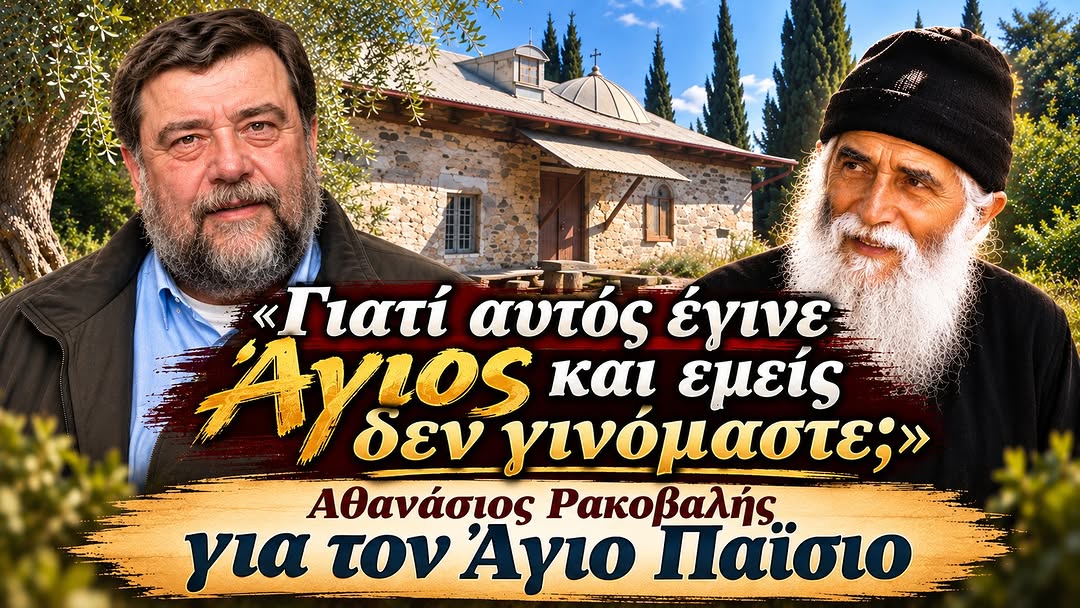
Athanasios Rakovalis on Saint Paisios and personal transformation

On Thursday, October 1, 2026, Athanasios Rakovalis gave a talk at the Events Hall of the Holy Metropolis of Limassol about Saint Paisios the Athonite, whom he knew personally for many years. Rakovalis began by describing his own path and his earlier distance from the Church. Despite his unbelief at the time, he visited Mount Athos, where he met Metropolitan Athanasios of Limassol, who guided him to meet Saint Paisios. From their first meeting,…

On Thursday, October 1, 2026, Athanasios Rakovalis gave a talk at the Events Hall of the Holy Metropolis of Limassol about Saint Paisios the Athonite, whom he knew personally for many years. Rakovalis began by describing his own path and his earlier distance from the Church. Despite his unbelief at the time, he visited Mount Athos, where he met Metropolitan Athanasios of Limassol, who guided him to meet Saint Paisios.

From their first meeting, Rakovalis felt the saint's intense love for him. The acquaintance sparked a deep inner change and led him to re‑examine his worldview and his stance toward faith and the Church. Through frequent visits and fellowship with Saint Paisios, he began to seek answers to fundamental questions: "What is a saint?", "Why did he become a saint and we do not?", "Why did so many people approach Saint Paisios?"

As Rakovalis characteristically states, the saint "is a human like us," yet simultaneously "is a small Christ," a person who reveals Christ to others through his whole life. Rakovalis describes how, through the person and life of Saint Paisios, he saw the Gospel in practice and came to know Christ more deeply. Deeply moved, he recounts personal experiences and miraculous incidents, speaking of the saint's self‑sacrifice and love for every person, his prophetic gift, and the particular humor that marked his communication with people.

He also recalls what Saint Paisios told him about "great events" and Constantinople, passing on those narratives as he heard them from the saint. Finally, he shares with the audience spiritual counsels and words he had received personally from Saint Paisios. The talk is available on the channel's YouTube page.

  • Rakovalis recounts his journey from unbelief to faith through a personal relationship with Saint Paisios.
  • Metropolitan Athanasios of Limassol facilitated their first meeting on Mount Athos.
  • Rakovalis describes Saint Paisios as "a human like us" and "a small Christ" who reveals Christ through his life.
  • He shares personal experiences of the saint's love, prophetic gift, humor, and prophecies about Constantinople.
  • The talk includes spiritual advice Rakovalis received directly from Saint Paisios.
Read more
radioimlemesou Instagram

Deny Yourself: Metropolitan Athanasios on Christ's Condition for Following Him

Metropolitan Athanasios of Limassol explains the words of Christ: "Whoever wills to come after me, let him deny himself." He says that to follow Christ a person must first deny himself, that is, deny the old man with his passions, sins, and bad inclinations, all the things we like but which are not according to God. The Metropolitan admits this is not easy, because these things are kneaded into a person's inner world. Yet he insists that without…

Metropolitan Athanasios of Limassol explains the words of Christ: "Whoever wills to come after me, let him deny himself." He says that to follow Christ a person must first deny himself, that is, deny the old man with his passions, sins, and bad inclinations, all the things we like but which are not according to God. The Metropolitan admits this is not easy, because these things are kneaded into a person's inner world.

Yet he insists that without self-denial there is no progress, and progress corresponds to the measure of denial. Whoever denies ten percent advances ten percent; whoever denies seventy percent advances seventy percent. He calls this a law and stresses that Christ said it clearly: whoever wills to come after me, let him deny himself.

Key moments

  1. Όποιος θέλει να ανθεί πρέπει πρώτα να απαρνηθεί τον εαυτό του, τον παλαιό άνθρωπο με τα πάθη και τις επιθυμίες.
  2. Πρέπει να απαρνηθούμε τα πάθη, τις αμαρτίες και τις κακές ροπές, όσα μας αρέσουν αλλά δεν είναι κατά Θεόν.
  3. Η απαρνητή δεν είναι εύκολη, γιατί αυτά τα πράγματα είναι ζυμωμένα μέσα στον ψυχικό κόσμο.
  4. Χωρίς απαρνητή δεν προχωράς, και προχωράς κατά το μέτρο που απαρνηθείς: 10% απαρνητή σημαίνει 10% πρόοδο, 70% σημαίνει 70%.
  5. Ο Χριστός το είπε ξεκάθαρα: όστις θέλει οπίσω μου ελθείν, να απαρνηθεί τον εαυτόν.
Read more
radioimlemesou Instagram

Metropolitan Athanasios of Limassol shares vision of almsgiving as path to Paradise

Metropolitan Athanasios of Limassol recounts a vision described in an excerpt from one of his homilies. A man saw an obstacle blocking his path to Paradise. The obstacle was identified as the lack of almsgiving. The metropolitan uses this account to illustrate the necessity of charitable giving. The post directs viewers to the channel's YouTube page to watch the full video.

  • Metropolitan Athanasios of Limassol recounts a vision from a homily excerpt
  • A man sees an obstacle on his path to Paradise
  • The obstacle is identified as lack of almsgiving
  • The story illustrates the importance of almsgiving
  • The full video is available on the channel's YouTube page
radioimlemesou Instagram

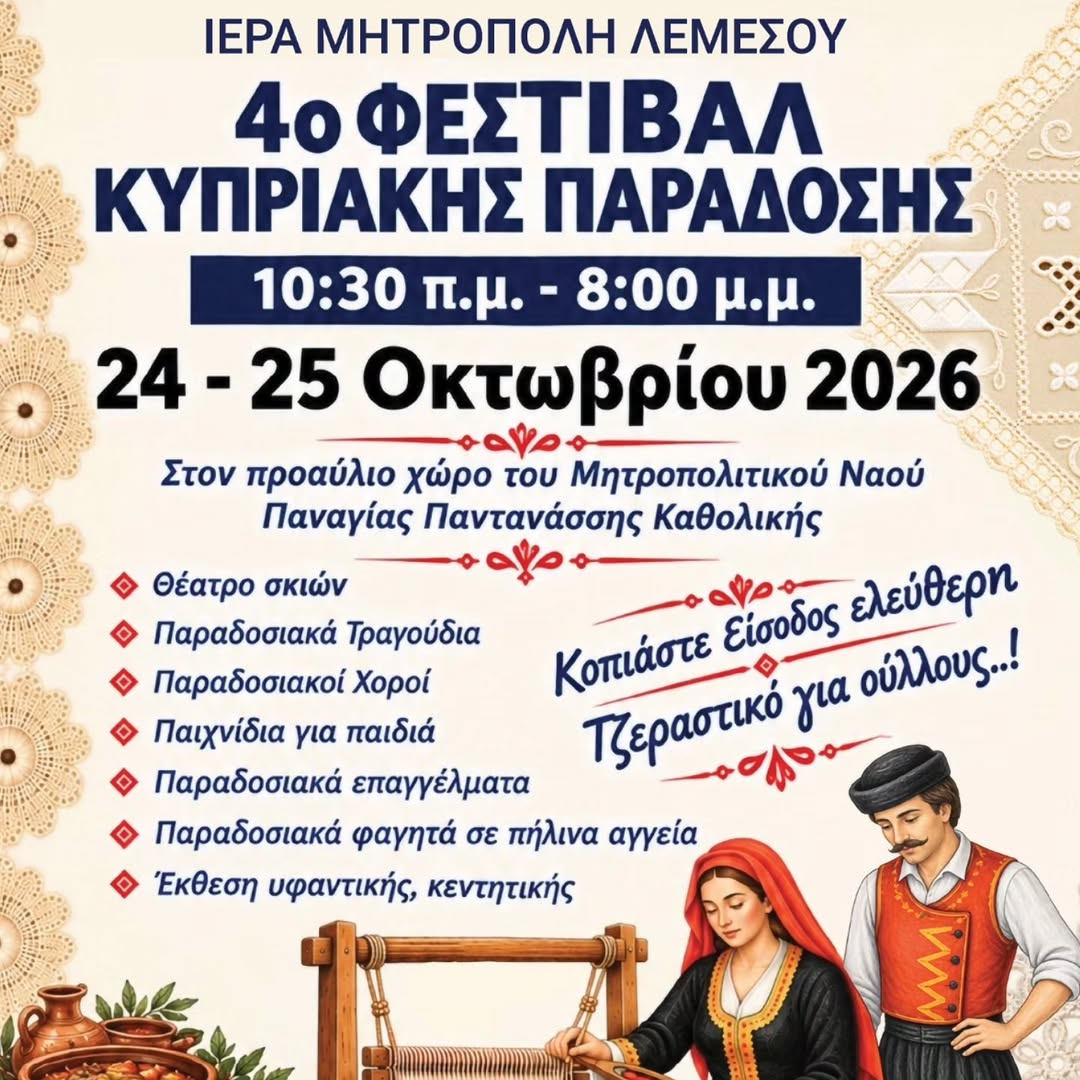
Limassol Metropolis announces 4th Cypriot Tradition Festival on Oct 24-25

The Holy Metropolis of Limassol has announced the fourth Festival of Cypriot Tradition, scheduled for October 24 and 25. The event will run from 10:30 in the morning until 8:00 in the evening on both days. It will be held in the forecourt of the Metropolitan Church of Panagia Pantanassa Katholiki. The program features shadow theater performances, traditional songs, traditional dances, games for children, demonstrations of traditional crafts,…

The Holy Metropolis of Limassol has announced the fourth Festival of Cypriot Tradition, scheduled for October 24 and 25. The event will run from 10:30 in the morning until 8:00 in the evening on both days. It will be held in the forecourt of the Metropolitan Church of Panagia Pantanassa Katholiki. The program features shadow theater performances, traditional songs, traditional dances, games for children, demonstrations of traditional crafts, traditional foods served in clay vessels, and exhibitions of weaving and embroidery. The Metropolis states that admission to the festival is free.

  • 4th Festival of Cypriot Tradition announced by Holy Metropolis of Limassol
  • Dates: October 24-25, 10:30 AM to 8:00 PM
  • Location: forecourt of Metropolitan Church of Panagia Pantanassa Katholiki
  • Program includes shadow theater, traditional songs and dances, children's games, traditional crafts, traditional foods in clay vessels, weaving and embroidery exhibitions
  • Free admission
radioimlemesou Instagram

Metropolitan Athanasios of Limassol: You cannot be well if your spouse is not well

Metropolitan Athanasios of Limassol speaks about marriage and about rejoicing in the joy of our brother. He says we should rejoice when our brother is well, peaceful and quiet. He quotes the prayer of St Basil the Great in the Divine Liturgy: 'Grant them, O Lord, a peaceful kingdom, so that we too, in their tranquillity, may lead a calm and peaceful life.' He applies this to marriage: if our wife or husband is well, peaceful and joyful, then we…

Metropolitan Athanasios of Limassol speaks about marriage and about rejoicing in the joy of our brother. He says we should rejoice when our brother is well, peaceful and quiet. He quotes the prayer of St Basil the Great in the Divine Liturgy: 'Grant them, O Lord, a peaceful kingdom, so that we too, in their tranquillity, may lead a calm and peaceful life.' He applies this to marriage: if our wife or husband is well, peaceful and joyful, then we are well too.

If our spouse is troubled, bitter, upset, wounded or in turmoil, then we are the same. He says we cannot be well when our brother or our spouse is not well, because people are communicating vessels, both in the physical relationship and in the spiritual one. The talk stays on this single theme: the state of the person next to us becomes our own state, and the peace of the other is the condition for our own peace, as the liturgical prayer of St Basil asks.

Key moments

  1. Να χαίρεται κανείς τη χαρά του αδελφού του όταν είναι ειρηνικός και ήσυχος.
  2. Ο ομιλητής παραθέτει τον Μέγα Βασίλειο στη Θεία Λειτουργία: «χάρισα αυτή την ειρηνικότητα το Βασίλειο, να και εμείς εν τη γαλήνη αυτού ηρεμούμεν».
  3. Αν η σύζυγος ή ο σύζυγος είναι καλοί και χαρούμενοι, είμαστε και εμείς καλά.
  4. Αν ο σύντροφος είναι στεναχωρημένος, πικραμένος, ανάστατος, πληγωμένος ή σε ταραχή, και εμείς είμαστε το ίδιο.
  5. Οι άνθρωποι είναι συγκοινωνούντα δοχεία, στη φυσική και στην πνευματική σχέση.
Read more
radioimlemesou Instagram

When You Are Wronged: Metropolitan Athanasios on Loving Those Who Hurt Us

A short reflection by Metropolitan Athanasios of Limassol on how a Christian should respond when treated unjustly. Speaking plainly, he notes that Scripture and the Gospel give clear guidance: we are called to show love even to the person who slanders us, accuses us, mistreats us, or wrongs us in any way. The Christian response is not revenge, nor words of malice directed back at the offender, but patient love. The metropolitan acknowledges that…

A short reflection by Metropolitan Athanasios of Limassol on how a Christian should respond when treated unjustly. Speaking plainly, he notes that Scripture and the Gospel give clear guidance: we are called to show love even to the person who slanders us, accuses us, mistreats us, or wrongs us in any way. The Christian response is not revenge, nor words of malice directed back at the offender, but patient love.

The metropolitan acknowledges that this is difficult, and his counsel is practical: begin with these simple things—refusing retaliation and evil speech—and continue onward step by step. What makes this possible, he says, is keeping always before our eyes the love of Christ toward us; His love for us sinners is both the model and the strength for loving our enemies.

The message echoes the Gospel command to love those who hate us and to do good to those who persecute us, presenting forgiveness not as an optional ideal but as the ordinary path of the Christian life. The post, shared in Greek with hashtags pointing to Orthodox faith and the Diocese of Limassol, drew no recorded discussion in the comments, leaving the bishop's words to stand on their own as a brief exhortation for anyone nursing a grievance or weighing how to answer an injustice.

Key moments

  1. The Gospel tells us clearly how to act.
  2. We must show love to those who hate, accuse, mistreat, or wrong us.
  3. We should not take revenge or respond with words of malice.
  4. Begin with these simple things and continue to the next, always keeping Christ's love for us before our eyes.
Read more
radioimlemesou Instagram

Metropolitan Athanasios on Balanced Self-Knowledge

Metropolitan Athanasios of Limassol offers a concise yet profound teaching on the Orthodox understanding of self-knowledge (αὐτογνωσία). He emphasizes that while knowing oneself is essential, it must be pursued along a middle path — neither sinking into despair over one's sins nor hardening into prideful self-justification. True self-knowledge, he explains, involves honestly recognizing one's character, passions, and weaknesses. This awareness…

Metropolitan Athanasios of Limassol offers a concise yet profound teaching on the Orthodox understanding of self-knowledge (αὐτογνωσία). He emphasizes that while knowing oneself is essential, it must be pursued along a middle path — neither sinking into despair over one's sins nor hardening into prideful self-justification. True self-knowledge, he explains, involves honestly recognizing one's character, passions, and weaknesses.

This awareness is not an end in itself but the starting point for spiritual struggle. The Metropolitan stresses that correction of these passions must be undertaken "beautifully, humbly, simply" — adjectives that reflect the Orthodox ascetic tradition's emphasis on gentleness and lack of self-reliance. Crucially, the entire endeavor depends on invoking the grace and mercy of Christ; human effort alone cannot heal the soul.

The teaching encapsulates the patristic balance between rigorous honesty about the human condition and unwavering trust in divine compassion, avoiding the twin distortions of discouragement and spiritual pride.

Key moments

  1. Self-knowledge (αυτογνωσία) is a very important matter.
  2. It must be pursued in a balanced middle way, not in despair nor in hardness and pride.
  3. True self-knowledge involves knowing our own self and character.
  4. We must understand our passions and weaknesses.
  5. We are to struggle against these passions and weaknesses.
  6. Correction should be done beautifully, humbly, and simply.
  7. We must call upon the grace and mercy of Christ in this struggle.
Read more
radioimlemesou Instagram

Talk by Elder Justin Mamalou on Jacob's Well Shrine Available Online

The post announces that a talk given by the blessed Elder Justin Mamalou, the Renovator of the Holy Shrine of Jacob's Well, is available for viewing on the Metropolis's YouTube channel. The talk took place at the Metropolis in November 2023. Elder Justin Mamalou is recognized for his role in the restoration and spiritual renewal of the Holy Shrine of Jacob's Well, a significant biblical site associated with the Samaritan woman's encounter with…

The post announces that a talk given by the blessed Elder Justin Mamalou, the Renovator of the Holy Shrine of Jacob's Well, is available for viewing on the Metropolis's YouTube channel. The talk took place at the Metropolis in November 2023. Elder Justin Mamalou is recognized for his role in the restoration and spiritual renewal of the Holy Shrine of Jacob's Well, a significant biblical site associated with the Samaritan woman's encounter with Christ (John 4:5-42).

The shrine, located near Nablus in the West Bank, has been a place of pilgrimage and veneration. The Elder's talk likely addresses the history, spiritual significance, and contemporary life of this holy site, as well as his personal ministry there. The Metropolis shares this recording to make the Elder's teaching accessible to a wider audience.

  • Talk by Elder Justin Mamalou, Renovator of Jacob's Well Shrine
  • Delivered at the Metropolis in November 2023
  • Available on the Metropolis YouTube channel
  • Elder Justin known for restoring the Holy Shrine of Jacob's Well
  • Shrine is biblical site of Christ's meeting with the Samaritan woman
Read more
radioimlemesou Instagram

Why God Doesn't Need Our Praise — But We Do

Metropolitan Athanasios of Limassol answers the question of how we receive the grace of God, centering his teaching on the practice of blessing, thanking, and glorifying God's name. He is careful to make clear that God has no need whatsoever of our doxology; the praise we offer is not for Him but for us. It is the human person who stands in need of blessing the name of God, and in doing so we receive grace, strength, and what he calls the energy…

Metropolitan Athanasios of Limassol answers the question of how we receive the grace of God, centering his teaching on the practice of blessing, thanking, and glorifying God's name. He is careful to make clear that God has no need whatsoever of our doxology; the praise we offer is not for Him but for us. It is the human person who stands in need of blessing the name of God, and in doing so we receive grace, strength, and what he calls the energy of grace.

The act of blessing and thanksgiving is not an empty ritual but a means by which the heart is transformed: through it, our heart acquires the right stance toward God and becomes eucharistic — a heart that gives thanks. The teaching underscores that knowing how to pray is itself an important skill for the spiritual life, and that gratitude is the proper disposition of the soul before God.

The post presents a concise Orthodox teaching on the relationship between doxology and grace: praise does not change God, but it changes the one who praises, orienting the whole person toward humility, thanksgiving, and receptivity to divine grace.

Key moments

  1. It is important for a person to know how to pray, to bless the name of God, and to glorify God.
  2. God has no need of our doxology; it is we who need to bless His name.
  3. By blessing the name of God, a person receives grace, strength, and the energy of grace.
  4. Blessing, thanking, and glorifying God gives our heart the right stance toward Him, making it eucharistic — a thankful heart.
Read more
radioimlemesou Instagram

We Are Made for Joy: Metropolitan Athanasios on Harmony of the Soul

A short teaching by Metropolitan Athanasios of Limassol on the nature of human joy. He explains that man is created to live in grace, beauty, and like-mindedness, and that the soul naturally rejoices in peace, harmony, and love. When instead there is discord, quarreling, envy, and strife, the soul grieves, because such things are contrary to our nature. The metropolitan applies this concretely to everyday life: we are made to be glad when there…

A short teaching by Metropolitan Athanasios of Limassol on the nature of human joy. He explains that man is created to live in grace, beauty, and like-mindedness, and that the soul naturally rejoices in peace, harmony, and love. When instead there is discord, quarreling, envy, and strife, the soul grieves, because such things are contrary to our nature.

The metropolitan applies this concretely to everyday life: we are made to be glad when there is peace in our home, in our relationships, and in our marriage. The post presents this as a brief excerpt of his words, shared with tags pointing to Orthodox Christian faith. There were no notable comments in the thread, so the discussion consists of the teaching itself.

The message is simple and pastoral: joy is not an accident but part of how we are designed; living in unity with others allows the soul to flourish, while division and envy wound it. For readers, it offers a small examination of conscience—where in my life is there peace, and where is there discord that saddens my soul?

Key moments

  1. Humans are formed to delight in grace, beauty, and unity.
  2. The soul naturally rejoices in peace, joy, harmony, and love.
  3. Discord, disharmony, quarrels, envy, and pain cause the soul grief.
  4. We are made to be glad when peace exists in the home, relationships, and marriage.
radioimlemesou Instagram

Fishers of Men: How a Shepherd Draws Souls to Christ

Metropolitan Athanasios of Limassol reflects on what makes a good pastor in the Church, using the image of fishing drawn from Christ's calling of the disciples to be 'fishers of men.' Just as every fish requires its own bait, its own nets, and its own time of day to be caught—some fish in the morning, others at noon or midnight—so too the shepherds of the Church, the priests and bishops, must learn how to 'fish' for people. Each soul is…

Metropolitan Athanasios of Limassol reflects on what makes a good pastor in the Church, using the image of fishing drawn from Christ's calling of the disciples to be 'fishers of men.' Just as every fish requires its own bait, its own nets, and its own time of day to be caught—some fish in the morning, others at noon or midnight—so too the shepherds of the Church, the priests and bishops, must learn how to 'fish' for people.

Each soul is different, and each requires a different approach. The Metropolitan stresses that this work must never be done through coercion, intimidation, or oppression. Instead, pastors must act in the gentlest way, with a pastoral and pedagogical manner that draws people freely into the spiritual nets.

When this happens, it is ultimately Christ who catches the person, and the catch becomes one 'unto eternal life and the eternal Kingdom of God.' The teaching emphasizes patience, adaptability, and gentleness as the marks of true Orthodox pastoral care, contrasting the Church's way with force or fear.

Key moments

  1. Every fisherman has his own bait, method, nets, and preferred time to fish—morning, noon, afternoon, or midnight.
  2. Likewise, the shepherds of the Church—priests and bishops—must be 'fishers of men,' knowing how to draw people to Christ.
  3. This must not happen through force, intimidation, or oppression, but in a most gentle, pastoral, and pedagogical way.
  4. Thus people enter the spiritual nets, Christ becomes their fisher, and the catch becomes a fishing 'unto eternal life and the eternal Kingdom of God.'