WeOrthodox
EN UA

Појединац, Породица и Друштво

Instagram ↗ 209 discussions

Ова страница је посвећена ПРАВОСЛАВЉУ и ДОБРОТОЉУБЉУ🫒

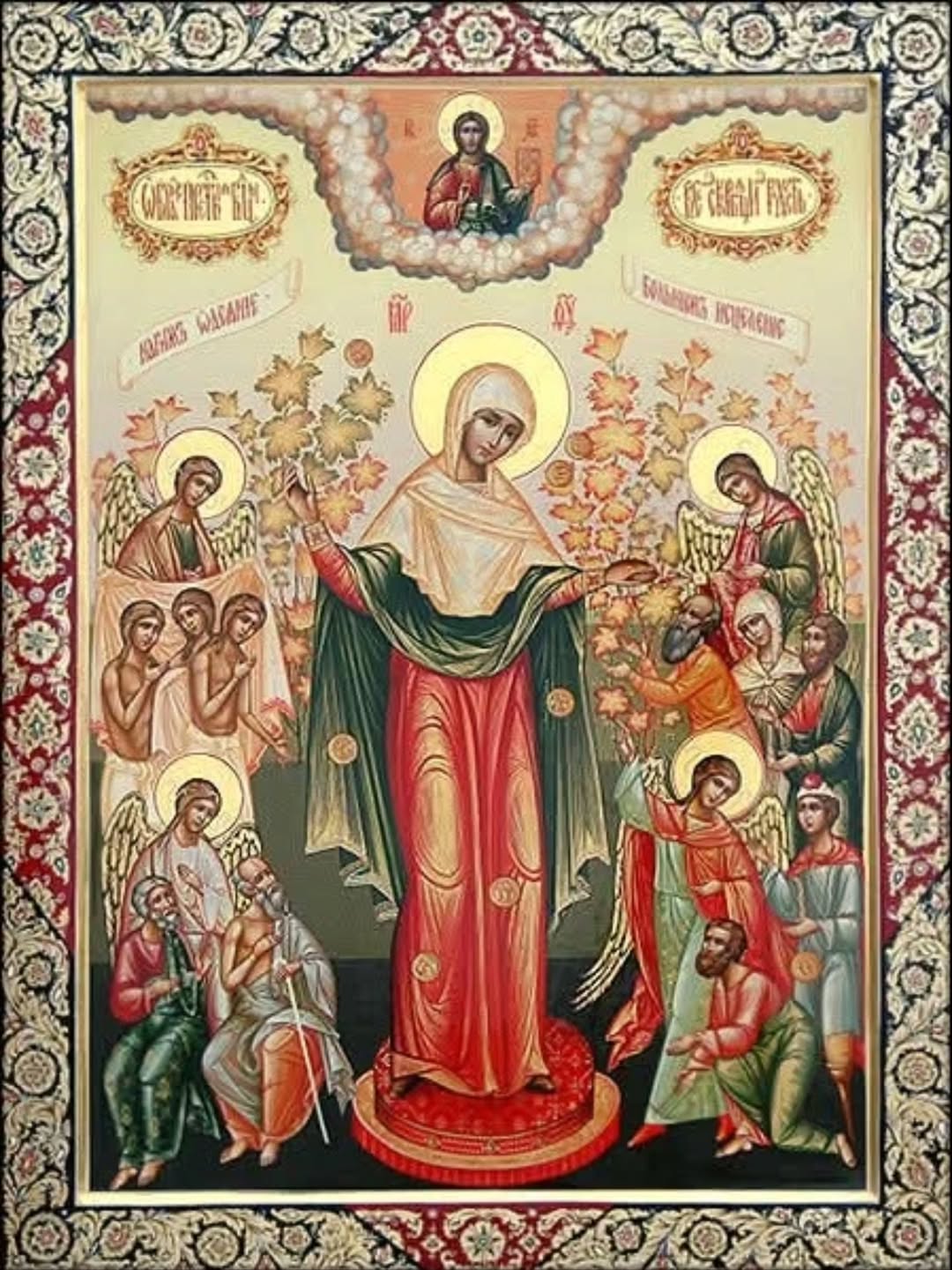
Prayer to the Most Holy Theotokos before the Icon 'Joy of All Who Sorrow'
A prayer in Serbian addressed to the Most Holy Mother of God in honour of her icon 'Joy of All Who Sorrow' ( Svih žalosnih Radost ). The prayer calls her more honourable than the Cherubim and beyond compare more glorious than the Seraphim, the God-chosen Bride, and asks her to give consolation, since the faithful have no other refuge or help. It names her the only advocate of our joy, and as Mother of God and Mother of mercy standing before the…

A prayer in Serbian addressed to the Most Holy Mother of God in honour of her icon 'Joy of All Who Sorrow' ( Svih žalosnih Radost ). The prayer calls her more honourable than the Cherubim and beyond compare more glorious than the Seraphim, the God-chosen Bride, and asks her to give consolation, since the faithful have no other refuge or help.

It names her the only advocate of our joy, and as Mother of God and Mother of mercy standing before the throne of the Most Holy Trinity, able to help, because none of those who come to her ever goes away shamed. Those praying turn to her icon on a day of sorrow and ask with tears that she drive away all the griefs and sorrows of this temporary life, that she not deprive them of her all-powerful intercession, and that she grant eternal, boundless joy in the Kingdom of her Son and our God. The prayer closes with Amen.

  • The prayer is addressed to the Theotokos in honour of the icon 'Joy of All Who Sorrow'.
  • It calls her more honourable than the Cherubim and more glorious than the Seraphim, the God-chosen Bride.
  • It asks her for consolation, since the faithful have no other refuge or help.
  • It states she stands before the throne of the Most Holy Trinity as Mother of God and Mother of mercy, and that none who come to her goes away shamed.
  • Those praying, on a day of sorrow, ask her to drive away the sorrows of this temporary life and to grant eternal joy in the Kingdom of her Son.
Read more

The Little Prince and His Rose Under the Same Moon

A short poetic post reflects on the Little Prince and his rose, standing together on his small planet under the same moon. The opening line says that all miracles in time become ordinary, but that the rose, or the one who is loved, remains the same. The author writes that time passes, yet what we love and keep in our heart never fades. The post is framed as a poetic moment of silence, nostalgia, and a light that does not go out, marked with…

A short poetic post reflects on the Little Prince and his rose, standing together on his small planet under the same moon. The opening line says that all miracles in time become ordinary, but that the rose, or the one who is loved, remains the same. The author writes that time passes, yet what we love and keep in our heart never fades.

The post is framed as a poetic moment of silence, nostalgia, and a light that does not go out, marked with hashtags about the Little Prince, art, and a poetic moment. The accompanying video adds a spoken address to someone the speaker wants to take somewhere to show care, though the place is described as cold and in the middle of nowhere.

The speaker mentions having bought diamonds and a pretty string, but says these gifts will not fly. The overall tone of the post is gentle and lyrical, drawing on the well-known image of the prince caring for his single rose, and it invites the reader to pause for a quiet moment rather than argue or discuss. The discussion, if any, would center on the sentiment that love and care outlast time and that ordinary things become extraordinary through the attention we give them, the same theme Saint-Exupery's story is known for.

Key moments

  1. The speaker says they want to take the listener somewhere to show they care, but the place is cold and up them nowhere.
  2. The speaker bought diamonds and a pretty string, but says they won't fly.
Read more

Saints seem to come alive at the walls of the Annunciation Monastery

The author describes a visit to the Annunciation Monastery, where frescoes or images of the saints give the impression that the saints themselves have come alive at the monastery walls. The writer focuses on two figures in particular. The first is St. Seraphim of Sarov: the author draws attention to his deep, piercing gaze and writes that it seems to see the very essence of a person's soul, offering consolation and answers to questions that were…

The author describes a visit to the Annunciation Monastery, where frescoes or images of the saints give the impression that the saints themselves have come alive at the monastery walls. The writer focuses on two figures in particular. The first is St. Seraphim of Sarov: the author draws attention to his deep, piercing gaze and writes that it seems to see the very essence of a person's soul, offering consolation and answers to questions that were never spoken aloud.

The second is St. Nicholas the Wonderworker: in his face the author reads a wise far-sightedness, as if he were looking through the centuries and protecting everyone who comes to him with faith. The post closes with the thought that a fairy tale comes to life right there, at the monastery walls, and the author tags the monastery as a place of spiritual strength.

The text is short and devotional in tone: it is a personal impression of standing before the images of these two saints rather than an account of the monastery's history or the lives of the saints. There is no discussion in the thread, since the post consists only of this reflection and its hashtags. The writer invites the reader to look closely at the gaze of Fr. Seraphim of Sarov and at the face of Nicholas the Wonderworker, and describes what happens in the heart during that looking: consolation, answers, and a sense of being guarded across the ages.

  • The author describes the Annunciation Monastery as a place where a fairy tale comes to life at the walls.
  • The gaze of St. Seraphim of Sarov seems to see the essence of the soul and console.
  • St. Nicholas the Wonderworker appears to look through the centuries and guard those who come to him with faith.
  • The post is a personal devotional impression, not a historical account.
  • The author tags the monastery as a place of spiritual strength.

Memorial for Metropolitan Chrysostom of Rodostolon at Protaton

A memorial service for Metropolitan Chrysostom of Rodostolon was held on October 16, 2026, at the Protaton, the cathedral church of the Dormition in Karyes. Metropolitan Chrysostom of Symi presided at the invitation of the Holy Epistasia of Mount Athos. Concelebrants included the Protos of Mount Athos, Elder Georgios of Vatopedi, and abbots Prodromos of Great Lavra, Nathanael of Iviron, and Methodios of Hilandar, along with numerous hieromonks…

A memorial service for Metropolitan Chrysostom of Rodostolon was held on October 16, 2026, at the Protaton, the cathedral church of the Dormition in Karyes. Metropolitan Chrysostom of Symi presided at the invitation of the Holy Epistasia of Mount Athos. Concelebrants included the Protos of Mount Athos, Elder Georgios of Vatopedi, and abbots Prodromos of Great Lavra, Nathanael of Iviron, and Methodios of Hilandar, along with numerous hieromonks and representatives of all Athonite monasteries and several sketes.

The civil governor of Mount Athos, Alkiviadis Stefanis, a graduate of the Athoniada, also attended. Metropolitan Chrysostom spent 75 years on Mount Athos as a monk of Great Lavra. He was ordained bishop in 1978 by decision of the Ecumenical Patriarchate so that the Holy Mountain would have a hierarch to ordain hieromonks in Athonite brotherhoods.

He ordained many Hilandar monks, including the late Archimandrite Paisios, first abbot after the renewal of the cenobitic life at Hilandar, and Elder Stefan, currently the senior Hilandar monk by years of monastic life. Abbot Methodios was ordained deacon and elevated to archimandrite by him. Metropolitan Chrysostom served as professor and director of the Athoniada monastic academy and left numerous theological works; he was also noted for his gift of chanting.

From his pension as a professor he restored several old churches and assisted in building new ones. He wore episcopal insignia only during services and otherwise dressed very simply, in typical Athonite style. Athonites testify that those who did not know him could not guess he was a hierarch.

In his modest cell were found only a multitude of books; all other items such as fine vestments, miters, and enkolpia he gave to other hierarchs. He reposed in his monastic cell after the Divine Liturgy on October 1, 2025, at age 92, and was buried the next day at the Great Lavra cemetery. Photo: romfea.gr

  • Memorial service held October 16, 2026 at Protaton in Karyes for Metropolitan Chrysostom of Rodostolon.
  • Metropolitan Chrysostom of Symi presided; concelebrants included Protos Elder Georgios, abbots of Great Lavra, Iviron, Hilandar, and many hieromonks.
  • Metropolitan Chrysostom lived 75 years on Mount Athos as a monk of Great Lavra; ordained bishop in 1978 by Ecumenical Patriarchate to ordain Athonite hieromonks.
  • He ordained many Hilandar monks including Archimandrite Paisios and Elder Stefan; Abbot Methodios ordained deacon and archimandrite by him.
  • Known for theological works, chanting, simple dress, giving away episcopal items, and using pension to restore churches; reposed October 1, 2025 at age 92, buried at Great Lavra.
Read more

Elder Joseph the Hesychast on self-knowledge as the foundation of humility

The text attributed to Elder Joseph the Hesychast of Vatopedi Monastery opens with the command to know oneself before all else. This means recognizing who one truly is, not who one imagines oneself to be. Such knowledge brings wisdom, humility, and grace from the Lord. Without self-knowledge, merely counting one's labors keeps a person far from the path. The elder cites the Prophet who says not "Behold, Lord, my labor" but "Behold my humility…

The text attributed to Elder Joseph the Hesychast of Vatopedi Monastery opens with the command to know oneself before all else. This means recognizing who one truly is, not who one imagines oneself to be. Such knowledge brings wisdom, humility, and grace from the Lord.

Without self-knowledge, merely counting one's labors keeps a person far from the path. The elder cites the Prophet who says not "Behold, Lord, my labor" but "Behold my humility and my labor." Labor belongs to the body, humility to the soul, and both together serve the whole person.

The one who has conquered the devil is the one who has learned his own sickness, passions, and faults. Fear of self-knowledge keeps a person from true knowledge; such a person looks only for the faults of others to condemn them, seeing gifts in himself but not in others. A fault of the present age is the failure to recognize the gifts of others.

One person lacks what another has; recognizing this brings humility. In this way we honor and glorify God, who has adorned people in many ways and made his creations different. God created all things in wisdom. The elder urges his spiritual child to establish a firm foundation of humility, learn obedience, and acquire prayer.

Above all, every good thing has its beginning in God: every good thought, word, and deed is a gift from God. Every perfect gift comes from above. All is from God; we have nothing of our own.

  • Self-knowledge is the prerequisite for wisdom, humility, and grace
  • The Prophet emphasizes humility alongside labor, not labor alone
  • Conquering the devil requires knowing one's own passions and faults
  • Judging others while ignoring one's own faults shows lack of self-knowledge
  • All good thoughts, words, and deeds are gifts from God; we possess nothing of our own

Trisagion in Church Slavonic with a Saying of St. Basil of Ostrog

The post consists of two parts. The first part gives a single sentence attributed to St. Basil of Ostrog, the Wonderworker. The sentence appears in Serbian using Cyrillic script: "И многи ми пакост чинише, али ми Бог би помоћник у сваком добром делу." This translates as "And many evils did he do to me, but God was my helper in every good deed." The second part is a video that presents the Trisagion prayer in Church Slavonic. The video shows the…

The post consists of two parts. The first part gives a single sentence attributed to St. Basil of Ostrog, the Wonderworker. The sentence appears in Serbian using Cyrillic script: "И многи ми пакост чинише, али ми Бог би помоћник у сваком добром делу." This translates as "And many evils did he do to me, but God was my helper in every good deed."

The second part is a video that presents the Trisagion prayer in Church Slavonic. The video shows the prayer chanted in the traditional liturgical order. First, the Trisagion itself is sung three times: "Holy God, Holy Mighty, Holy Immortal, have mercy on us."

After the threefold repetition, the doxology follows, glorifying the Father, the Son, and the Holy Spirit, now and ever and unto ages of ages. Then the Trisagion is sung once more. The video does not include additional commentary, explanation, or discussion. It simply renders the hymn as it is used in worship. The source text does not indicate who produced the video, where it was recorded, or when the quotation from St. Basil was spoken or written.

The post brings the saint's words and the liturgical chant together without further context.

Key moments

  1. 0:00 The Trisagion prayer is chanted: Holy God, Holy Mighty, Holy Immortal, have mercy on us (repeated three times), followed by the doxology to the Trinity, then the Trisagion repeated again.
Read more

Testamentary letter of Saint Basil of Ostrog warns against taking monastery property

The Metropolitanate of Montenegro and the Littoral published a testamentary letter attributed to Saint Basil of Ostrog, kept in the monastery treasury. The letter pronounces a curse on anyone who attempts to take anything from the monastery: their house, livestock, children, and all possessions would be struck and scattered by God, their trace and hearth perishing forever. The Metropolitanate provided a contemporary Serbian translation alongside…

The Metropolitanate of Montenegro and the Littoral published a testamentary letter attributed to Saint Basil of Ostrog, kept in the monastery treasury. The letter pronounces a curse on anyone who attempts to take anything from the monastery: their house, livestock, children, and all possessions would be struck and scattered by God, their trace and hearth perishing forever.

The Metropolitanate provided a contemporary Serbian translation alongside the original text. This publication accompanied a 2019 petition against the removal of holy sites. A hymn to Saint Basil describes him as the pride of monks and teacher of desert-dwellers, his image appearing like a morning star to the faithful, with his relics radiating the Spirit from a cold cave amid gray rocks.

Key moments

  1. Saint Basil is called the pride of monks and good teacher of holy desert-dwellers.
  2. His likeness appears to the faithful like a morning star, as a wise faster of holy Orthodoxy.
  3. His relics radiate the Spirit from a cold cave amid gray rocks.
Read more

Saint Zlata of Meglen: Three Months of Torture Could Not Shake Her Faith in Christ

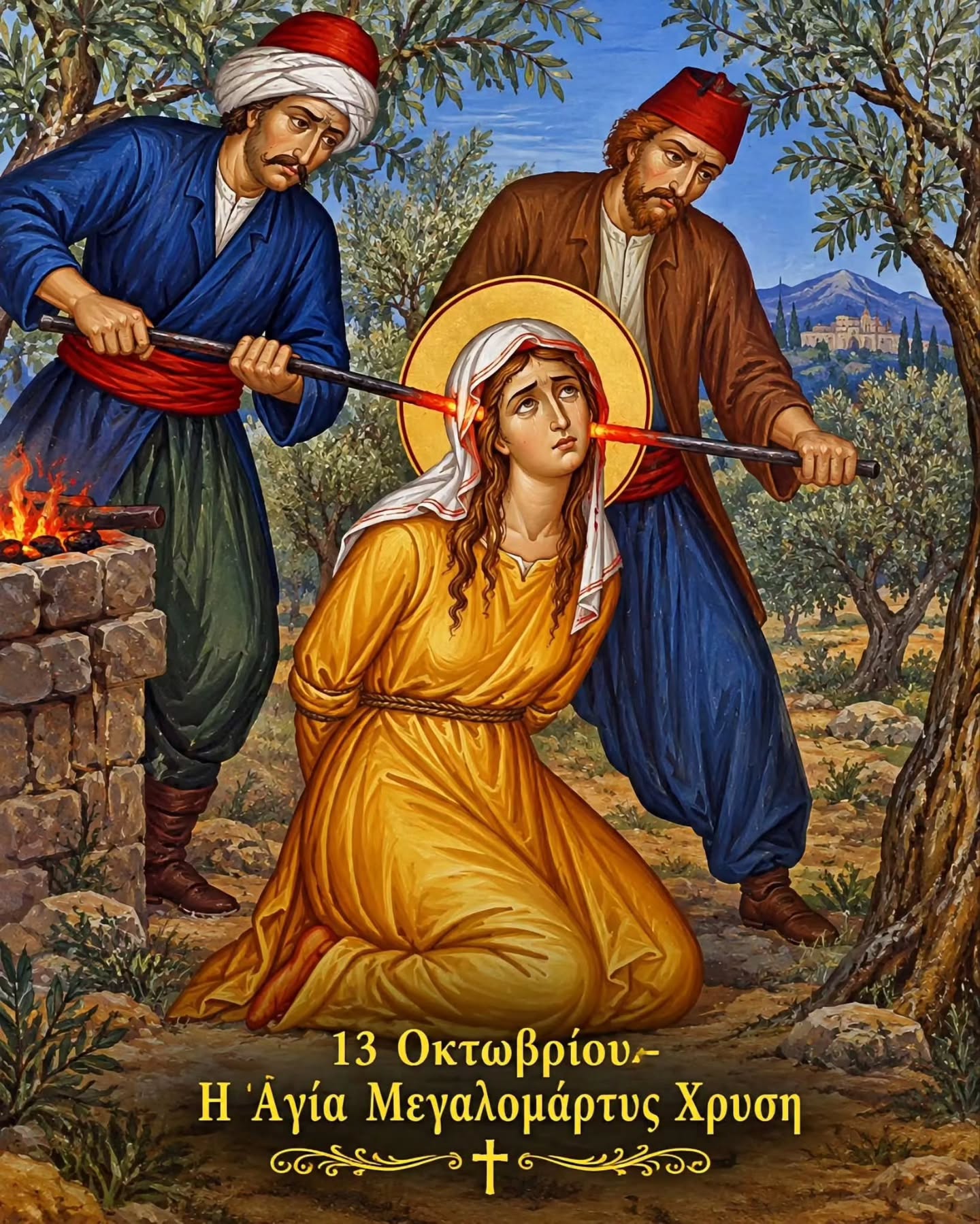
The post marks the feast of the Holy Great Martyr Zlata of Meglen, commemorated on October 13 according to the old calendar. Zlata was born in the village of Slatina in the Meglen region, into a poor but devout family. The author writes that she was known for her meekness, purity of heart, and firm faith in the Lord Jesus Christ. According to her life, her beauty made her a target of violent men who tried to force her to renounce the Christian…

The post marks the feast of the Holy Great Martyr Zlata of Meglen, commemorated on October 13 according to the old calendar. Zlata was born in the village of Slatina in the Meglen region, into a poor but devout family. The author writes that she was known for her meekness, purity of heart, and firm faith in the Lord Jesus Christ.

According to her life, her beauty made her a target of violent men who tried to force her to renounce the Christian faith and accept Islam. Neither promises nor threats moved her. She remained faithful to Christ, confessing Him as her Lord and Bridegroom. Her tormentors imprisoned her and subjected her to daily tortures for three months, trying to break her faith.

The post also notes that pressure from her closest relatives, who feared for her life, did not lead her to deny Christ. Saint Zlata remained unshaken in faith and love for the Lord to the end. She suffered a martyr's death in October 1795, receiving what the author calls a double crown: that of virginity and that of martyrdom.

The post closes with the author's reflection that faith is not only a word we speak but faithfulness to Christ even when we face pressure, injustice, and suffering, followed by a prayer asking Saint Zlata to intercede with God. The post is a short hagiographic notice with a devotional conclusion, presenting the main facts of the saint's life as given in her vita: her origins, her character, the attempt to force her conversion to Islam, her imprisonment and three months of torture, the pressure from her family, and her martyrdom in 1795.

  • Saint Zlata of Meglen was born in the village of Slatina in the Meglen region, into a poor, devout family.
  • Violent men tried to force her to renounce Christianity and accept Islam because of her beauty; promises and threats both failed.
  • She was imprisoned and tortured daily for three months, and pressure from relatives who feared for her life also did not move her.
  • She suffered a martyr's death in October 1795, receiving a double crown of virginity and martyrdom.
  • The author concludes that faith means faithfulness to Christ under pressure, injustice, and suffering, and asks the saint's prayers.
Read more

New catechism classes open for high schoolers, students and adults

A parish announces the start of religious education classes (vjeronauka) for young people and adults. The teaching will be organized in three groups: high school students, students and young people up to age 25, and adults. The parish invites all interested people to sign up by sending a message on Viber to the number 069 338 186. The announcement closes with a welcome: everyone is invited to come and learn about the faith together, get to know…

A parish announces the start of religious education classes (vjeronauka) for young people and adults. The teaching will be organized in three groups: high school students, students and young people up to age 25, and adults. The parish invites all interested people to sign up by sending a message on Viber to the number 069 338 186. The announcement closes with a welcome: everyone is invited to come and learn about the faith together, get to know the wealth of Orthodox tradition, and deepen their relationship with God.

The posting is addressed to friends of the community and expresses joy that the classes are beginning. There are no further details in the announcement about meeting times, location, teachers or start date; the practical information given is only the group division and the Viber number for registration. The announcement is written in Serbian and uses the word 'vjeronauka', the traditional term for catechetical or religious instruction, and it addresses both teenagers and adults rather than only children, which means the classes are open to anyone in the community who wants to learn more about the Orthodox faith.

  • Religious education classes are starting for young people and adults
  • Three groups: high school students, students and young people up to 25, and adults
  • Registration is by message on Viber: 069 338 186
  • The stated goal is to learn about the faith, Orthodox tradition, and deepen one's relationship with God
  • No dates, times or location are given in the announcement

Love That Expects Nothing Back

The speaker takes up the question of what love actually is, arguing that love is perhaps the most misused word in human history. When people speak of love, they usually mean love of self-interest: affection or care that returns some benefit to the one who gives it. Against this, the speaker holds up helping someone who has nothing to give back except prayer and gratitude. Such help, given to a person who cannot repay us, is proof and…

The speaker takes up the question of what love actually is, arguing that love is perhaps the most misused word in human history. When people speak of love, they usually mean love of self-interest: affection or care that returns some benefit to the one who gives it. Against this, the speaker holds up helping someone who has nothing to give back except prayer and gratitude.

Such help, given to a person who cannot repay us, is proof and confirmation of true, free love in Christ. The love that costs us something and brings no return is the love that resembles Christ's own. The speaker then draws a connection between how we treat the poor and how we will see God.

If we do not recognise the living God in the eyes of our neighbour, especially the neighbour from whom we expect nothing, we will hardly recognise Him in power and glory. The person who cannot repay us becomes the place where our love is tested and where God is either seen or missed. The teaching moves from a diagnosis of the word love to a concrete practice: giving to those who can offer only prayer and thanks in return, and receiving that prayer as enough.

Key moments

  1. Helping someone who cannot repay us, except by praying for us and giving thanks, is proof and confirmation of true, free Christ-like love.
  2. Love is perhaps the most misused word in human history; what we usually mean by love is actually love of self-interest.
  3. If we do not recognise the living God in the eyes of our neighbour, especially one from whom we expect nothing, we will hardly recognise Him in power and glory.
Read more

Icon of Saint Gerasimos the Hymnographer delivered to Metropolitan Athanasios of Limassol

The author of the post describes handing over an icon they painted of Saint Gerasimos the Hymnographer to Metropolitan Athanasios of Limassol. The writer speaks of the moment with joy and emotion, calling it a distinct occasion and a great blessing. They note that the Metropolitan has spoken about the Saint in beautiful words, which made the gift meaningful to them. The post closes with a request for the Metropolitan's blessing, addressed to him…

The author of the post describes handing over an icon they painted of Saint Gerasimos the Hymnographer to Metropolitan Athanasios of Limassol. The writer speaks of the moment with joy and emotion, calling it a distinct occasion and a great blessing. They note that the Metropolitan has spoken about the Saint in beautiful words, which made the gift meaningful to them.

The post closes with a request for the Metropolitan's blessing, addressed to him as Geronda, meaning Elder. The post is tagged with references to Saint Gerasimos, the Metropolitan of Limassol Athanasios, iconography, and Byzantine icon painting. There is no further discussion in the thread; the post is a short personal announcement of the gift rather than a longer account of the meeting or of the icon's creation.

The image itself is identified as Byzantine iconography by the hashtags, and the Saint is identified as Gerasimos the Hymnographer.

  • The author painted an icon of Saint Gerasimos the Hymnographer and gave it to Metropolitan Athanasios of Limassol.
  • The author says the Metropolitan has spoken about the Saint in beautiful words.
  • The writer describes the moment as a distinct occasion and a great blessing.
  • The post ends with a request for the Metropolitan's blessing, addressed to him as Geronda.
  • The post is tagged with references to iconography and Byzantine icon painting.
Read more

Father Jovan Vukovic: Let Us Keep Our Eyes on the Lord

Father Jovan Vukovic speaks about watching over ourselves at every moment, both when a miracle happens to us and when it happens around us. He says we are always on trial. If we do not rejoice and do not carry the Spirit of God within us, we become like the Gerasene swineherds, who were disappointed because some personal gain had perished. The person who is with the Lord turns everything to spiritual benefit, rejoices with his brother, and gives…

Father Jovan Vukovic speaks about watching over ourselves at every moment, both when a miracle happens to us and when it happens around us. He says we are always on trial. If we do not rejoice and do not carry the Spirit of God within us, we become like the Gerasene swineherds, who were disappointed because some personal gain had perished.

The person who is with the Lord turns everything to spiritual benefit, rejoices with his brother, and gives him comfort even in sorrow. This, he says, is what the people of God do. Gathered in the temple, the faithful are reminded of this by the word of God. He also notes that the apostles' fast is nearing its end, and that during this time we must continually watch over ourselves and decide whether our free will will be with the Lord or against Him.

Key moments

  1. We are always on trial and must watch over ourselves, including in how we receive miracles.
  2. Without joy and the Holy Spirit within us, we become like the Gerasene swineherds, upset over lost personal gain.
  3. The one who is with the Lord turns everything to spiritual benefit and comforts his brother even in sorrow.
  4. Gathered in the temple, the faithful are reminded by the word of God.
  5. The apostles' fast is nearing its end, and we must continually watch over how we direct our free will, with the Lord or against Him.

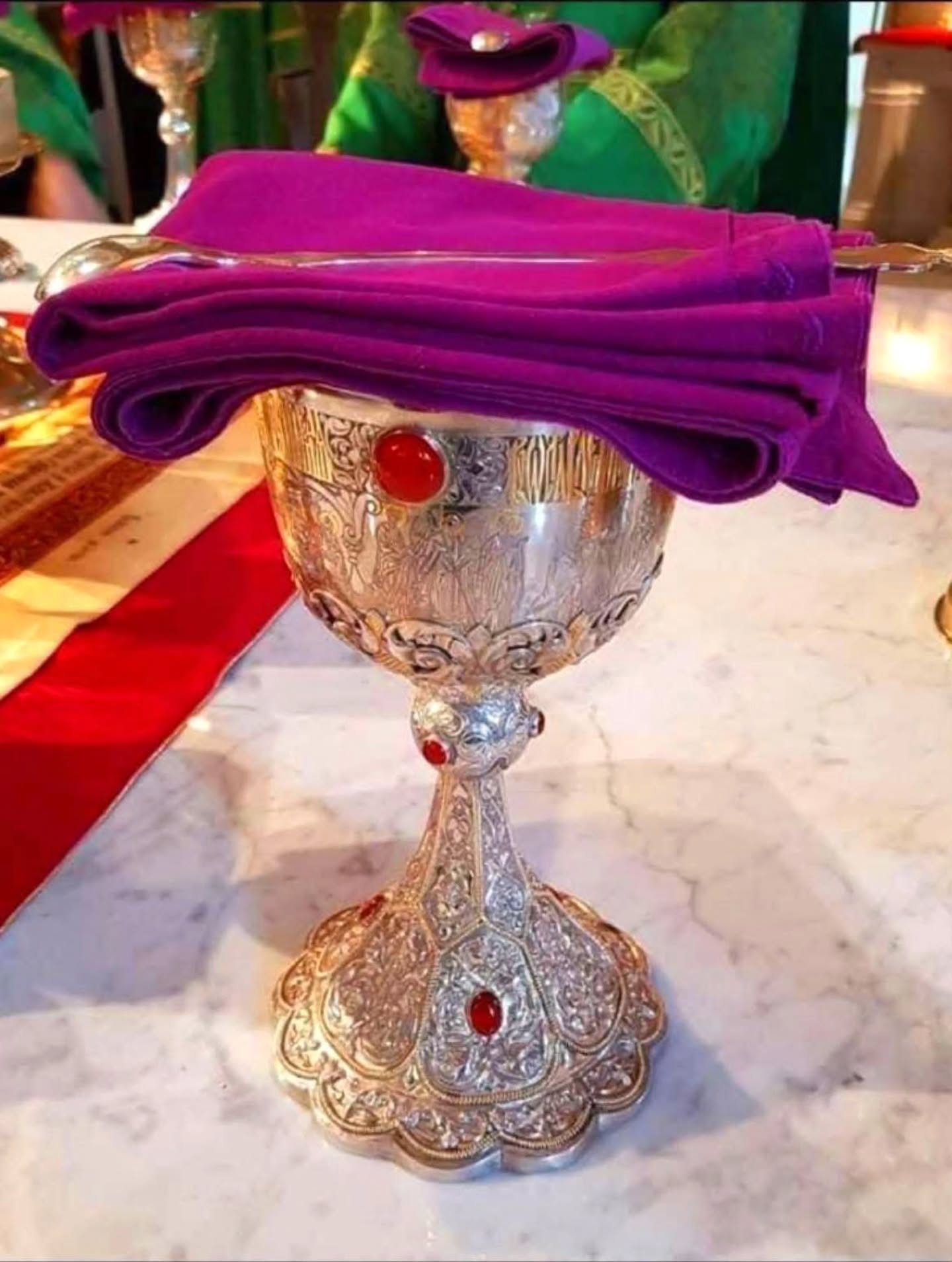
Communion is medicine 'for the forgiveness of sins and life everlasting', not for earthly success

Archimandrite P. Papadopoulos reflects on what the priest says when giving Holy Communion. The words are 'for the forgiveness of sins and life everlasting'. The priest does not say 'for forgiveness of sins and earthly prosperity, social affirmation, bodily health, that your work may go well, for a good career', and so on. To receive Communion, he writes, means being ready to say: 'Come, my God, come, my Christ, and lead me out of this vanity,…

Archimandrite P. Papadopoulos reflects on what the priest says when giving Holy Communion. The words are 'for the forgiveness of sins and life everlasting'. The priest does not say 'for forgiveness of sins and earthly prosperity, social affirmation, bodily health, that your work may go well, for a good career', and so on.

To receive Communion, he writes, means being ready to say: 'Come, my God, come, my Christ, and lead me out of this vanity, out of this mortality, and make me eternal with You, as You will, when You will.' He then warns readers to be careful when they say they received Communion and felt joy. If that joy has no source in being ready for death, it is a false joy.

He describes accepting Christ within as trembling, being enlightened, and rejoicing at already being freed from the material things that held him back. Freed from persons and circumstances, he experiences Christ alone, and this experience connects him with everything while binding him to nothing. He closes by correcting a possible misunderstanding: Holy Communion does not mean wanting to die. It means being ready to live eternally.

  • The priest's words at Communion are 'for the forgiveness of sins and life everlasting', not for health, career, or social success.
  • To commune means being ready to pray: 'Come, my God, come, my Christ, and lead me out of this vanity, out of this mortality, and make me eternal with You, as You will, when You will.'
  • Joy after Communion is false if it is not rooted in readiness for death.
  • The author describes being freed from material things, from persons and circumstances, experiencing Christ alone, connected to everything but bound to nothing.
  • Holy Communion does not mean wanting to die; it means being ready to live eternally.
Read more

"Thank you, thank you!": Mother Gavrilia on gratitude that leaves no room for asking

A short saying of Mother Gavrilia, written in Serbian, on what happens when a person is truly thankful to God for the gifts poured out on them. She says that at such a moment a person has no time to ask God for anything else, and can hardly wait to say: "Thank you, thank you!" Gratitude then spreads over everything one sees: meeting a person calls for thanks, seeing a flower calls for thanks, a glass of milk calls for thanks. For everything,…

A short saying of Mother Gavrilia, written in Serbian, on what happens when a person is truly thankful to God for the gifts poured out on them. She says that at such a moment a person has no time to ask God for anything else, and can hardly wait to say: "Thank you, thank you!" Gratitude then spreads over everything one sees: meeting a person calls for thanks, seeing a flower calls for thanks, a glass of milk calls for thanks.

For everything, thank you. She adds that such joy enters a person's life so fully that even those closest to them cannot understand it, and she recalls a question she once heard: "What is this now?!" She then tells of her time in England, when someone asked her: "What happened? Why are you so cheerful?" Her answer: "Because I am alive and because I see you!"

The card closes with her own farewell to the reader: "I wish you a pleasant day!" The text is signed by Mother Gavrilia. There is no further discussion in the post; it consists entirely of this saying, which moves from thanksgiving for gifts, through thanks for ordinary things and people, to the joy that puzzles others, and ends with the memory of her reply in England and her greeting.

  • True gratitude to God leaves no time to ask Him for anything else.
  • Mother Gavrilia gives thanks for everything she sees: a person, a flower, a glass of milk.
  • Such joy can puzzle even those closest to us: "What is this now?!"
  • In England someone asked why she was so cheerful; she answered: "Because I am alive and because I see you!"
  • She ends with a greeting: "I wish you a pleasant day!"
Read more

Father Nikola Todorović: We Are Called to Forgive

Father Nikola Todorović speaks about forgiveness in a short sermon on mission and church life. He begins with an observation about modern life: today we find time for everything except God, the liturgy, forgiveness and the thought of death. He recalls the teaching of the holy fathers, who say that if you want to save your soul, you should think often on death, because after death there is no repentance. To make this concrete, he asks the…

Father Nikola Todorović speaks about forgiveness in a short sermon on mission and church life. He begins with an observation about modern life: today we find time for everything except God, the liturgy, forgiveness and the thought of death. He recalls the teaching of the holy fathers, who say that if you want to save your soul, you should think often on death, because after death there is no repentance.

To make this concrete, he asks the listener to imagine a neighbour they are judging who dies the next day, leaving one word or one thought unforgiven between them. His counsel is to forgive now rather than wait until someone dies. He urges listeners to seek forgiveness for the sake of God from brothers, sisters, parents and neighbours.

He then notes a church commandment: a person who has not forgiven their neighbours may not receive communion. Finally, he acknowledges that forgiveness is one of the hardest labours in the Christian life, and this is why it entered the Lord's Prayer, where we ask God to forgive us as we forgive our neighbours. The sermon moves from the lack of time we make for spiritual matters, through the remembrance of death, to the practical demand to reconcile before it is too late, ending with the connection between our forgiveness of others and God's forgiveness of us in the prayer Christ taught.

Key moments

  1. Today we have time for everything except God, the liturgy, forgiveness and the thought of death.
  2. The holy fathers say: if you want to save your soul, think more often on death, because after death there is no repentance.
  3. Imagine your neighbour whom you judge dies tomorrow, and you remain holding one word or one thought unforgiven; forgive now instead of waiting for someone to die.
  4. Seek forgiveness from brothers, sisters, parents and neighbours for the sake of God.
  5. A church commandment forbids communion to those who have not forgiven their neighbours.
  6. Forgiving is one of the hardest labours in the Christian life, and that is why it entered the Our Father: forgive us as we forgive our neighbours.

The Well of Saint Sava at Hilandar: Water, Prophecy, and the End of Time

The well of Saint Sava holds a special place among the holy objects of Hilandar Monastery on Mount Athos. It lies beneath the window of the cell in which Saint Simeon the Myrrh-streaming reposed in 1200. According to tradition, Saint Sava found the spring at this spot during the building of the monastery at the end of the 12th century. The water from the well is still considered miraculous today. An old monastic tradition connects the well to…

The well of Saint Sava holds a special place among the holy objects of Hilandar Monastery on Mount Athos. It lies beneath the window of the cell in which Saint Simeon the Myrrh-streaming reposed in 1200. According to tradition, Saint Sava found the spring at this spot during the building of the monastery at the end of the 12th century.

The water from the well is still considered miraculous today. An old monastic tradition connects the well to the end of time: when the water in it dries up and the miraculous vine of Saint Simeon stops bearing fruit, that moment will mark the end of the age. In more than eight centuries of Hilandar's existence, this has never happened, according to the monastic tradition.

The account presents these details as they are preserved in the monastery's own tradition, linking the physical life of the holy site, the repose of Saint Simeon, the founding work of Saint Sava, and the sign by which, according to the fathers of Hilandar, the last days will be recognized.

Key moments

  1. The well of Saint Sava is among the greatest holy objects of Hilandar Monastery.
  2. It lies beneath the window of the cell where Saint Simeon the Myrrh-streaming reposed in 1200.
  3. Tradition says Saint Sava found the spring there during the building of the monastery at the end of the 12th century, and the water is still considered miraculous.
  4. An old tradition says the drying up of the well and the vine of Saint Simeon ceasing to bear fruit will mark the end of time.
  5. In more than eight centuries of Hilandar's existence, this has never happened, according to monastic tradition.
Read more

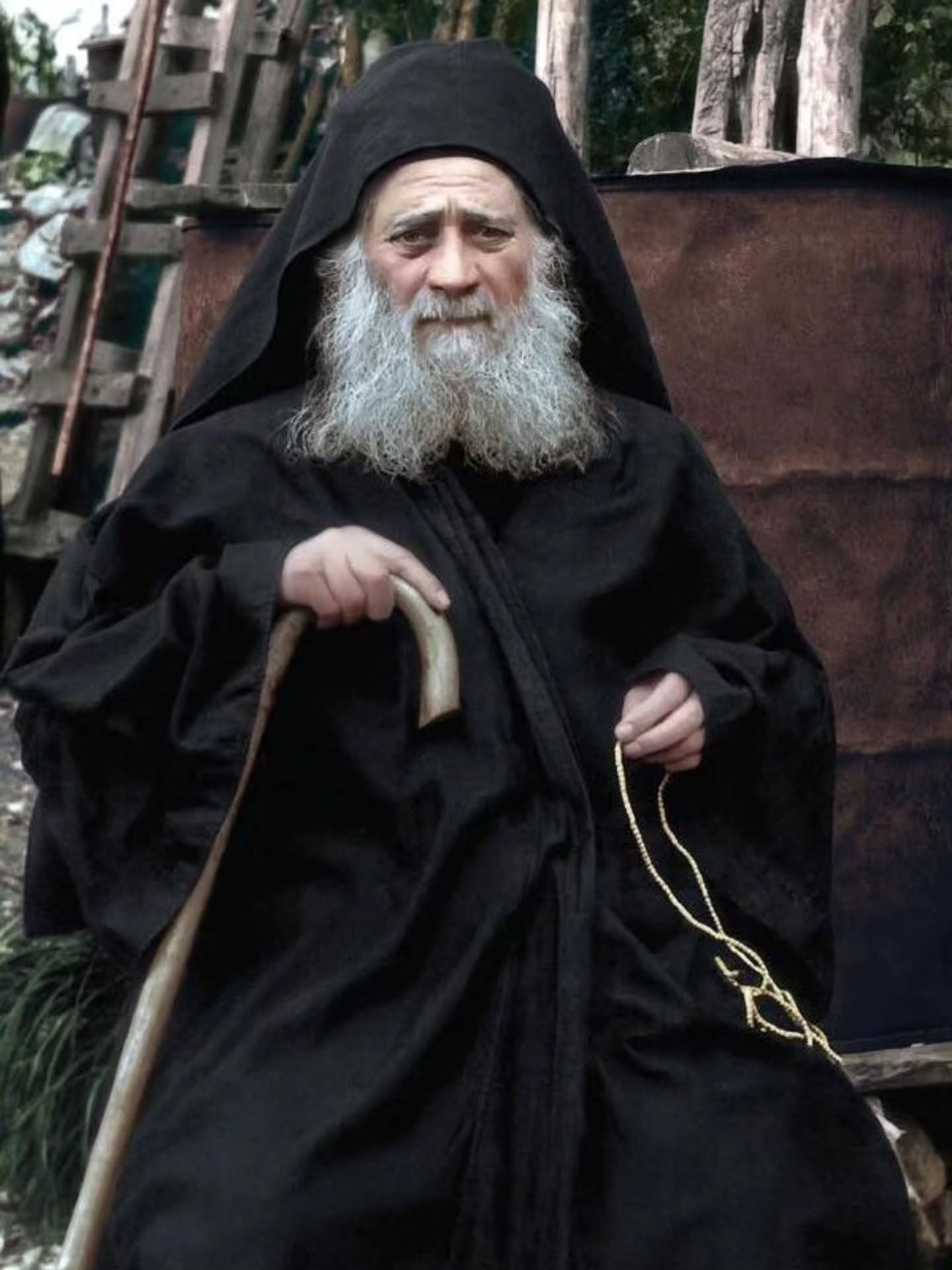
Rare 1992 Footage Shows Saint Paisios of Mount Athos at Koutloumousiou Monastery

The post shares an edited historical video recording from 1992, made at the Holy Monastery of Koutloumousiou on Mount Athos. On the recording, Saint Paisios of Mount Athos appears among the fathers of the Holy Mountain. The author describes him as bearing witness through his quiet presence to the monastic life, to humility, and to love for Christ. The post closes with a short prayer asking Saint Paisios to intercede before God, followed by…

The post shares an edited historical video recording from 1992, made at the Holy Monastery of Koutloumousiou on Mount Athos. On the recording, Saint Paisios of Mount Athos appears among the fathers of the Holy Mountain. The author describes him as bearing witness through his quiet presence to the monastic life, to humility, and to love for Christ.

The post closes with a short prayer asking Saint Paisios to intercede before God, followed by hashtags naming the saint, the Holy Mountain, the monastery, and Orthodox Christianity and Orthodox Christians. The post itself contains no further narration or commentary beyond this description of the footage and the prayer, so the card rests on what the author states: the year of the recording, the place where it was made, the saint who appears in it, and the themes the author sees in his presence there.

  • The video was recorded in 1992 at the Holy Monastery of Koutloumousiou on Mount Athos.
  • It shows Saint Paisios of Mount Athos among the fathers of the Holy Mountain.
  • The author sees his quiet presence as a witness to monastic life, humility, and love for Christ.
  • The post ends with a prayer asking Saint Paisios to intercede before God.
Read more

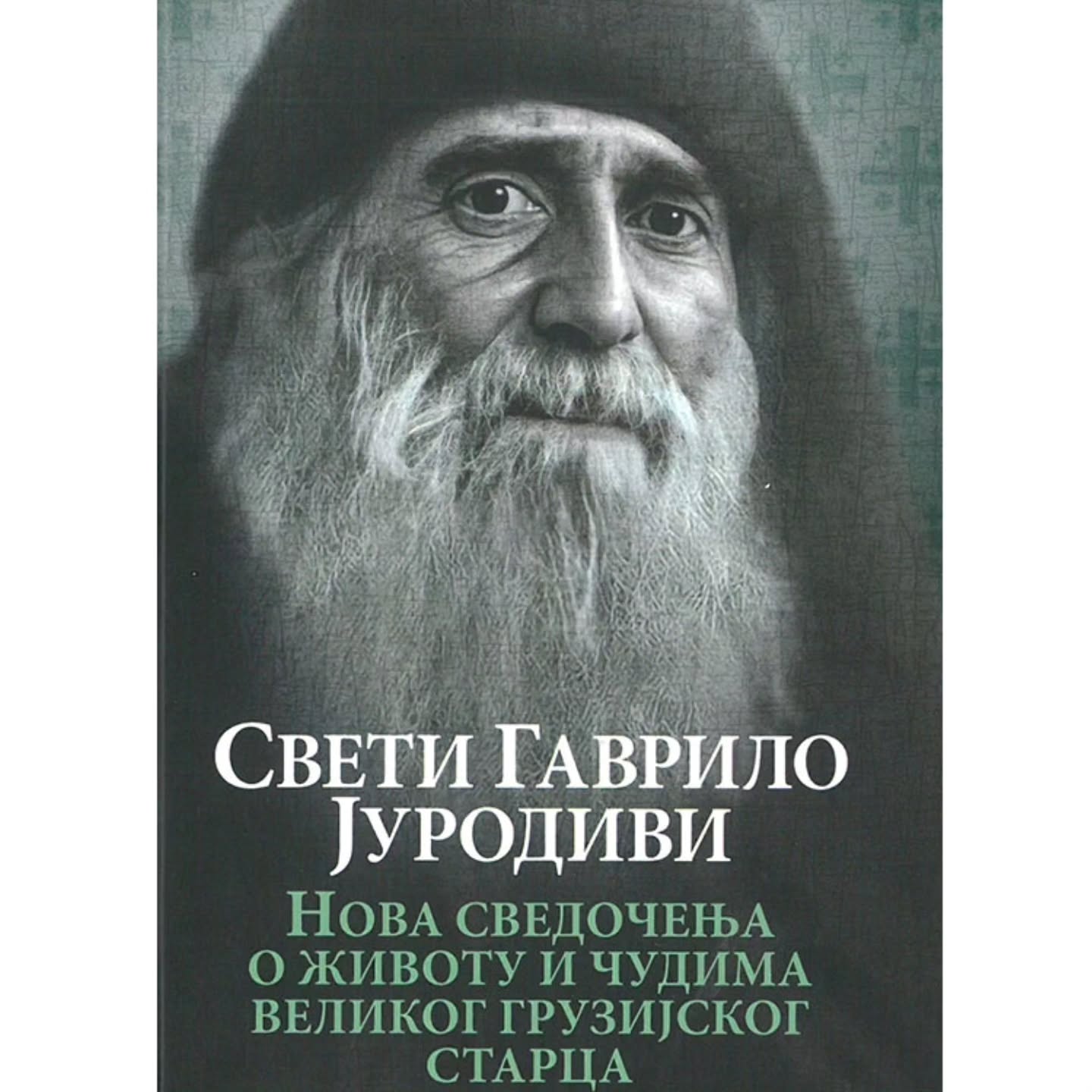
St. Gabriel of Georgia on why God takes children young

The post recounts a story told by St. Gabriel of Georgia to a woman who had lost her child and asked why the young die. St. Gabriel relates that in a certain village a believing woman, who had lost her only son, grieved before God. She said she had endured much for love of Him: insults, poverty, hardships. No one else in the village believed except her, yet God took her child. That night the woman fell asleep and dreamed: angels took her before…

The post recounts a story told by St. Gabriel of Georgia to a woman who had lost her child and asked why the young die. St. Gabriel relates that in a certain village a believing woman, who had lost her only son, grieved before God. She said she had endured much for love of Him: insults, poverty, hardships.

No one else in the village believed except her, yet God took her child. That night the woman fell asleep and dreamed: angels took her before the Lord and conveyed her complaints. Then she heard the Lord's voice: "Ask the woman what she wants."

"Return my child to me," she answered. "Do you want to see your child?" the Lord asked. "Well, I am a mother, of course I do," she answered weeping. "Show her her child!" the Lord commanded. They brought the child and she rejoiced.

"What do you now seek from Me?" the Lord asked. "Why did you take him?" she complained. Then the Lord commanded the angels: "Show her what her son would have done if I had not taken him." And suddenly, as in a film, the woman saw terrible sins her son would have committed, and then the terrible fire of hell.

"Return him again to paradise!" the mother began to weep and beg the Lord. The Lord commanded and the boy was again returned to paradise. And then He said to her: "Because of your goodness and love I took your son to Myself.

Do not think that I do not know whom and when to take." St. Gabriel presents this narrative as an answer to the question of why some leave life young.

  • St. Gabriel of Georgia tells a grieving mother a story about a woman who lost her only son
  • The woman in the story complains to God about her suffering and loss
  • In a dream, God shows her the sins her son would have committed and his destiny in hell
  • The woman begs God to return her son to paradise, and He does
  • God explains He took the son because of the mother's goodness and love, and He knows whom and when to take

Pilgrimage to Father Boris Khramtsov's grave brings warmth and memory

The author recounts a pilgrimage to the grave of Father Boris Khramtsov. The visit leaves a sense of warmth and peace. Father Boris's earthly life has ended, but his love, care, and light continue in the chapel. Matushka, his wife, greets the pilgrims with extraordinary warmth, as if they have arrived at a parental home. Right at the graveside and at a common table, a true feast of the soul awaits: tea brewed in a real samovar, homemade pies,…

The author recounts a pilgrimage to the grave of Father Boris Khramtsov. The visit leaves a sense of warmth and peace. Father Boris's earthly life has ended, but his love, care, and light continue in the chapel. Matushka, his wife, greets the pilgrims with extraordinary warmth, as if they have arrived at a parental home.

Right at the graveside and at a common table, a true feast of the soul awaits: tea brewed in a real samovar, homemade pies, and various treats. The weather seems to rejoice with them; the sun plays with its rays, warming everyone. The author and the other pilgrims sit together at the table in a heartfelt, family-like atmosphere.

In conclusion, Matushka gives each person a photograph of Father Boris and a small brochure about him as a keepsake. Now at home there will be a piece of that warmth. The author asks for eternal memory for the dear father and feels that he remains prayerfully close.

Key moments

  1. Light spreads over the ground
  2. Snow melts quietly in the twilight
  3. Bells ring from the heights
  4. A bright day comes to everyone
  5. The air smells of bread and spring
  6. The sound of gulls is heard by the clean wall
  7. Joy of these bright days rings in people's hearts

Feast of the Protection: 180,000 venerate relics in Iași, humanitarian work noted

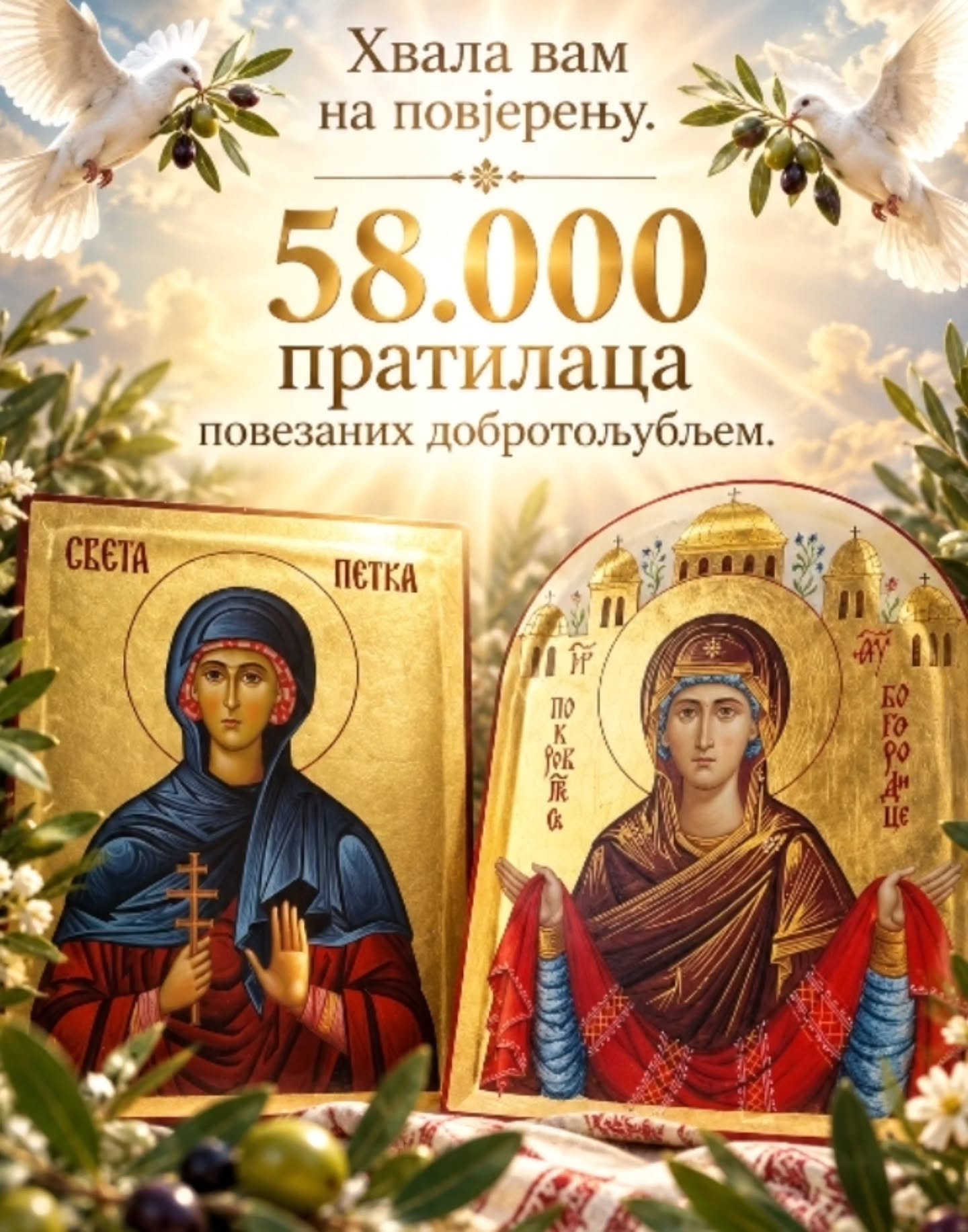
The post opens with a greeting for the Feast of the Protection of the Most Holy Theotokos on October 14, asking that the Theotokos cover the faithful with her honorable omophorion, keep them in peace and love, and intercede before her Son and God. It reports that a pilgrimage in Iași, Romania, where the relics of St. Paraskeva and St. Paisios of Mount Athos rest, drew about 180,000 faithful from October 8 to the feast day. Over 28,000 attended…

The post opens with a greeting for the Feast of the Protection of the Most Holy Theotokos on October 14, asking that the Theotokos cover the faithful with her honorable omophorion, keep them in peace and love, and intercede before her Son and God. It reports that a pilgrimage in Iași, Romania, where the relics of St. Paraskeva and St. Paisios of Mount Athos rest, drew about 180,000 faithful from October 8 to the feast day.

Over 28,000 attended the festal Liturgy. The author, Jelena Vukićević, founder of the page "pojedinac_porodica_i_drustvo," thanks the 58,000 followers for living love, peace, and fellowship together and for manifesting benevolence through works of mercy. She notes their participation in 72 one-time humanitarian actions across Serbia, Montenegro, and Bosnia and Herzegovina over three years, and that many also actively help people in Kosovo and Metohija.

She specially thanks those who, through the "Measure of My Soul" personal development model based on work in the spirit of Orthodox dogmatics, have witnessed how much it is possible to change oneself, grow spiritually, and become a better person. The message closes with three Scripture verses: "Blessed are the merciful, for they shall obtain mercy" (Mt. 5:7), "Inasmuch as you did it to one of the least of these My brethren, you did it to Me" (Mt. 25:40), and "Little children, love one another" (1 Jn. 4:7), urging that these words remind the faithful to become better people day by day and confirm love by deeds wherever possible.

The post is signed by Vukićević, Isaiah, Christina, and Nikola, with iconography credited to Rada Nestorović and Branka Raković.

  • Feast of the Protection celebrated October 14 with major pilgrimage to Iași, Romania
  • About 180,000 faithful venerated relics of St. Paraskeva and St. Paisios from October 8
  • Over 28,000 attended the festal Liturgy
  • Page community of 58,000 enabled 72 humanitarian actions in three countries over three years
  • Personal development model "Measure of My Soul" based on Orthodox dogmatics cited