WeOrthodox
EN UA

Појединац, Породица и Друштво

Instagram ↗ 209 discussions

Ова страница је посвећена ПРАВОСЛАВЉУ и ДОБРОТОЉУБЉУ🫒

Evening prayer for loved ones and enemies

The author shares a personal evening prayer addressed to God. The prayer begins by noting that the same people are prayed for each evening, though new names may be added, and acknowledges that God already knows every name before it is spoken. The author finds peace in entrusting these people to God's care, including both those who are loved and those toward whom ill will is held. The prayer then asks to be taught to love more beautifully and…

The author shares a personal evening prayer addressed to God. The prayer begins by noting that the same people are prayed for each evening, though new names may be added, and acknowledges that God already knows every name before it is spoken. The author finds peace in entrusting these people to God's care, including both those who are loved and those toward whom ill will is held.

The prayer then asks to be taught to love more beautifully and unconditionally. Thanksgiving is offered for everything God gives and everything God takes away. The author expresses hope that their life shows at least some measure of faith, and asks for help to follow the example of Christ's love in daily life.

  • Evening prayer entrusting the same people to God each night
  • Asks God to keep both loved ones and those held in ill will
  • Requests teaching to love more beautifully and unconditionally
  • Thanks God for both what is given and what is taken away
  • Seeks help to follow Christ's example of love in life

Read more

Elder Thaddeus: thoughts determine life; Christ removes anxiety

The video presents a spiritual teaching on worry, despair, and the remedy found in Christ. Excessive worry is described as leading a person to despair and into contact with hell itself. Holding anxiety in the heart is compared to an atomic bomb that destroys the person when it explodes. The phone and its content may have some legitimate use, but overuse draws a person into countless additional worries. When Christ dwells in the heart, there is…

The video presents a spiritual teaching on worry, despair, and the remedy found in Christ. Excessive worry is described as leading a person to despair and into contact with hell itself. Holding anxiety in the heart is compared to an atomic bomb that destroys the person when it explodes.

The phone and its content may have some legitimate use, but overuse draws a person into countless additional worries. When Christ dwells in the heart, there is no worry, despair, depression, or anxiety, only joy. The teaching references Elder Thaddeus of Vitovnica, who said that the quality of one's thoughts determines the quality of one's life.

A sincere turn toward the Lord brings many solutions because God is truth itself and never lies. God helps the one who takes the first step, granting ten more steps in return.

Key moments

  1. Excessive worry leads a person to despair and into contact with hell.
  2. Holding worry in the heart is like an atomic bomb that destroys you when it explodes.
  3. The phone and its content may serve some good, but overuse draws a person into a million more worries.
  4. If Christ is in the heart, there is no worry, despair, depression, or anxiety, only joy.
  5. Elder Thaddeus said: "What kind of thoughts you have, such is your life."
  6. Sincere turning to the Lord brings many solutions, because God is truth itself and does not lie.
  7. God helps the one who takes the first step, giving ten more steps in return.
Read more

St. Nikon of Optina on acquiring love through forgiveness

The post presents a saying of St. Nikon of Optina on Christian love. He teaches that one must love every person by seeing the image of God in them. To acquire love, a person must reject every evil and troubled thought, and even more so evil deeds and words, and must forgive all offenses, whether justified or not. The accompanying image shows a brief dialogue: Lana tells Kristina that people cannot see her with their eyes but she is a good…

The post presents a saying of St. Nikon of Optina on Christian love. He teaches that one must love every person by seeing the image of God in them. To acquire love, a person must reject every evil and troubled thought, and even more so evil deeds and words, and must forgive all offenses, whether justified or not.

The accompanying image shows a brief dialogue: Lana tells Kristina that people cannot see her with their eyes but she is a good person, and that she trips her up wherever she can. Kristina replies by asking forgiveness and saying she knows only love and peace, and that whatever is not love and peace is not from the Lord.

  • St. Nikon of Optina: love every person by seeing God's image in them
  • Acquiring love requires rejecting evil thoughts, deeds, and words
  • One must forgive all offenses, justified or not
  • Dialogue illustrates responding to provocation with love and peace
  • Kristina states that whatever is not love and peace is not from the Lord

Choosing prayer over retaliation when slandered

A dialogue between two women illustrates a Christian response to false accusation. Lana asks Kristina how she remains calm when many people criticize, judge, and slander her, saying things that are not true. Kristina replies that all people bear the image of God. She suggests her critics may not see her as she is, but speak from their own wounds, fears, or misunderstanding. She states she is not called to judge their hearts. Instead, she has…

A dialogue between two women illustrates a Christian response to false accusation. Lana asks Kristina how she remains calm when many people criticize, judge, and slander her, saying things that are not true. Kristina replies that all people bear the image of God. She suggests her critics may not see her as she is, but speak from their own wounds, fears, or misunderstanding.

She states she is not called to judge their hearts. Instead, she has chosen to pray for them and to look at them with Christ's eyes. She does not return condemnation for condemnation or hatred for hatred. Their words do not have to determine the peace in her soul. She can disagree with their actions, set boundaries, and protect her dignity while still regarding them as people whom God loves.

Her peace depends not on what others say about her, but on the One to whom she has entrusted her heart. The text concludes that not all silence is weakness, not all quiet is fear; sometimes it is a conscious decision to preserve love where others choose condemnation.

  • Critics may speak from their own wounds rather than truth
  • The Christian is not called to judge others' hearts
  • Prayer and seeing others with Christ's eyes replace retaliation
  • Boundaries and dignity can be kept without ceasing to love
  • Peace comes from entrusting the heart to God, not from others' opinions

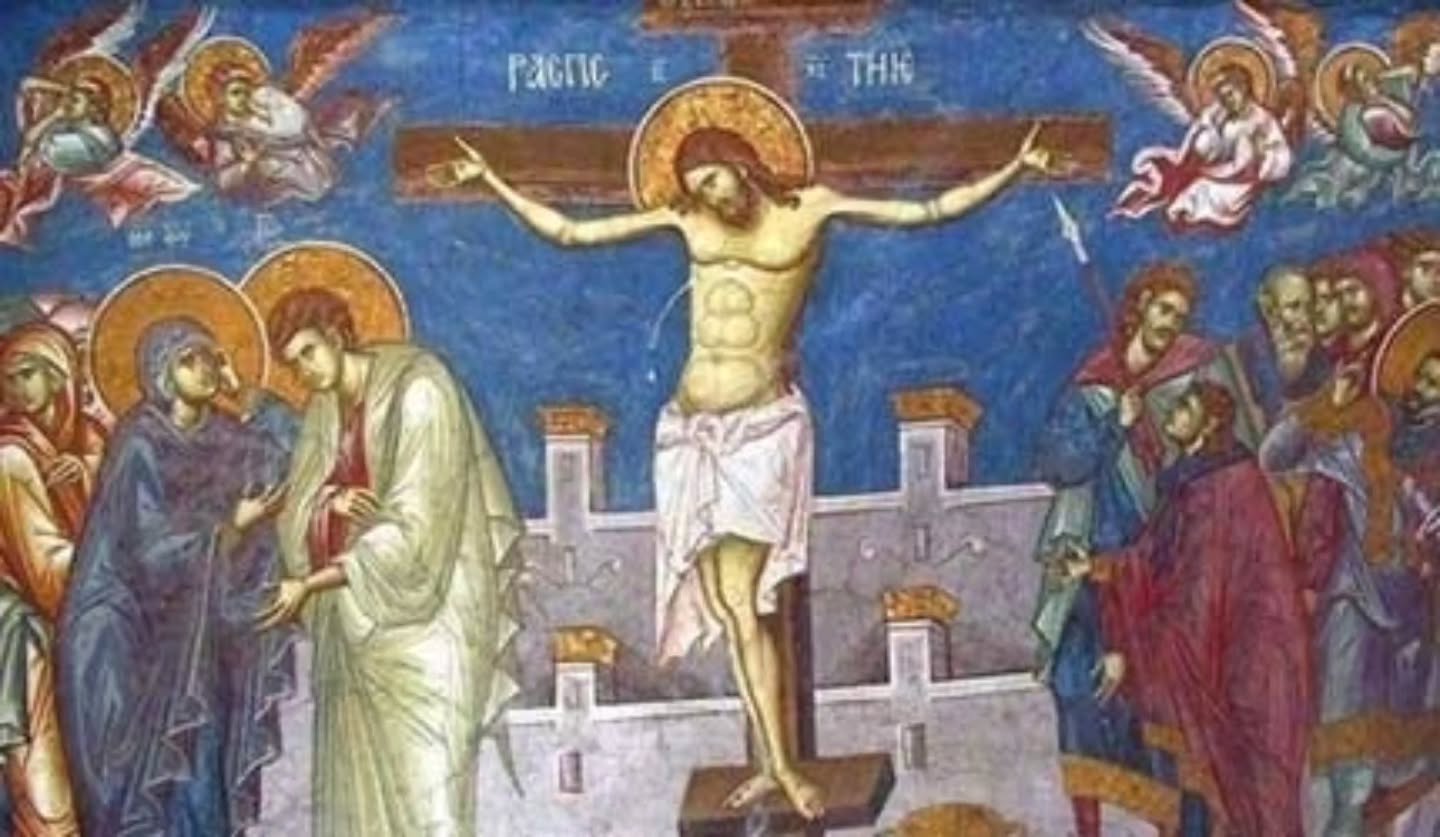
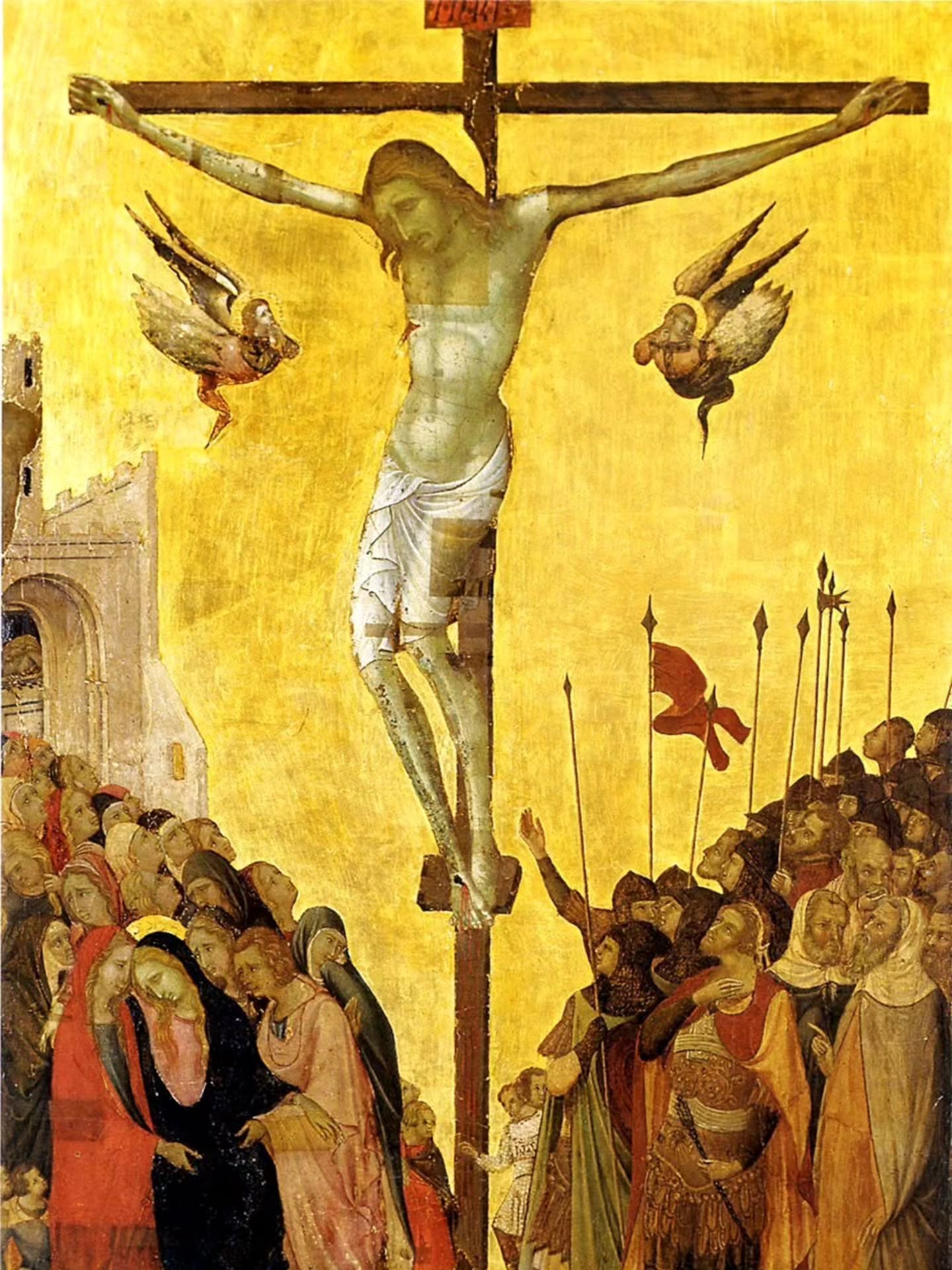
Eight Patristic Reasons for Christ's Crucifixion on the Cross

The author presents a summary of an article from "Prijatelj Božiji" that outlines eight reasons the Holy Fathers give for why Christ was crucified specifically on the Cross. First, crucifixion was regarded in antiquity as a particularly shameful death, demonstrating that Christ's salvation extends to all people regardless of nation or social standing. Second, His body suffered on the Cross so that the Risen Lord would be recognized as the same…

The author presents a summary of an article from "Prijatelj Božiji" that outlines eight reasons the Holy Fathers give for why Christ was crucified specifically on the Cross. First, crucifixion was regarded in antiquity as a particularly shameful death, demonstrating that Christ's salvation extends to all people regardless of nation or social standing.

Second, His body suffered on the Cross so that the Risen Lord would be recognized as the same One who accepted death for humanity. Third, Christ stretched out His arms on the Cross as if to embrace the whole world, calling all people into communion with God. Fourth, the four ends of the Cross signify the universality of God's saving work, encompassing all corners of the earth and all creation.

Fifth, on the Cross Christ defeated the powers of evil, showing that His suffering was not defeat but the beginning of final victory over death. Sixth, just as the disobedience of the first man brought the fall, Christ's obedience unto death on the Cross became the path of renewal for the human race. Seventh, Christ voluntarily took upon Himself the curse and consequences of sin, though He Himself was sinless, to open the way of salvation.

Eighth, by the Cross and His descent into Hades, Christ defeated the devil, conquered the power of death, and opened the path to the Heavenly Kingdom. The Cross is therefore not a sign of final defeat but of God's love, redemption, and victory, revealing the depth of God's providence for humanity and the salvation of the whole world.

  • Crucifixion's shame shows salvation is for all people, not one nation or class
  • Christ's suffering body proves the Risen Lord is the One who died for us
  • Outstretched arms on the Cross embrace the world, calling all to communion with God
  • The Cross's four ends signify the universality of God's saving work
  • Christ's obedience unto death reverses Adam's disobedience and defeats the devil and death
Read more

St. Silouan the Athonite on love and its fruits

The post presents a saying of St. Silouan the Athonite that links the degree of love to four spiritual realities. He states that greater love brings greater suffering of the soul, fuller love brings fuller knowledge, more fiery love brings more flaming prayer, and more perfect love brings a holier life. The text is given in Serbian without additional commentary or discussion.

  • St. Silouan connects the measure of love to the measure of soul suffering
  • Fuller love corresponds to fuller knowledge
  • Fiery love corresponds to flaming prayer
  • Perfect love corresponds to a holier life
Read more

Humility as the Shortest Path to Paradise

Father Predrag Shchepanovic presents the teaching of the Holy Fathers on humility. They describe humility as a virtue through which a humble person receives God's forgiveness for both voluntary and involuntary sins. This makes humility the shortest path to paradise. In contrast, pride blinds a person to everyone around him. When a person humbles himself, the natural sounds of birds, wind, and river become a symphony of God. But when pride takes…

Father Predrag Shchepanovic presents the teaching of the Holy Fathers on humility. They describe humility as a virtue through which a humble person receives God's forgiveness for both voluntary and involuntary sins. This makes humility the shortest path to paradise. In contrast, pride blinds a person to everyone around him.

When a person humbles himself, the natural sounds of birds, wind, and river become a symphony of God. But when pride takes over and a person thinks only of himself, he loses the need to share love with others and closes himself off. This self-enclosure leads to modern problems such as anxiety, depression, divorces, broken marriages, and quarrels, because people attempt to solve their problems alone rather than through humility and connection with God and others.

Key moments

  1. The Holy Fathers teach that humility is a virtue through which a humble person receives forgiveness from God for both voluntary and involuntary sins.
  2. Humility is the shortest path to paradise because pride blinds a person to everyone around him.
  3. When a person humbles himself, the sounds of birds, wind, and river become a symphony of God.
  4. Pride makes a person self-centered and removes the need to share love with others.
  5. Closing oneself off in pride leads to modern problems such as anxiety, depression, divorces, broken marriages, and quarrels, as people attempt to solve problems alone.
Read more

Mother Jefimija Teaches Forgiveness as Condition for Communion with God

Mother Jefimija speaks on forgiveness as the greatest virtue for harmony with God, alongside love. She recounts a teaching from a great spiritual father that as long as a person has not forgiven even one individual and remains in bad relations with them, they have no communion with God. God does not accept this lack of forgiveness. The first step is learning to forgive, acknowledging human weakness in spirit and body. People are prone to…

Mother Jefimija speaks on forgiveness as the greatest virtue for harmony with God, alongside love. She recounts a teaching from a great spiritual father that as long as a person has not forgiven even one individual and remains in bad relations with them, they have no communion with God. God does not accept this lack of forgiveness. The first step is learning to forgive, acknowledging human weakness in spirit and body.

People are prone to immediate retaliation when offended, questioning motives and striking back. One must draw humility from within to set aside that reaction, dismiss the offense with the thought "what does it matter," and instead pray for the offender that God will change them. What others say or whether they love us is not the measure; what matters is that God does not leave us.

To return to God's path and maintain connection with the Lord, we must live as He lived, spreading love and saying, "Father, forgive them, for they know not what they do." The teaching presents forgiveness as a non-negotiable condition for communion with God. The spiritual father's formulation is absolute: a single unforgiven person breaks that communion.

Human weakness is named as the reason forgiveness must be learned, we are weak in spirit and body. The natural reaction to offense is immediate offense in return, questioning the other's motives. Overcoming this requires humility drawn from deep within, not a superficial effort.

The practical replacement for retaliation is prayer for the offender's transformation. The criterion for spiritual health shifts from human relationships to divine presence. Christ's prayer on the cross becomes the pattern for the believer's life.

Key moments

  1. The greatest virtue to cultivate for harmony with God is forgiveness, and the virtue of love.
  2. A great spiritual father said that as long as there exists one person with whom you are not in good relations and whom you have not forgiven, you have no communion with God.
  3. God does not like this lack of forgiveness.
  4. The first thing to do is to learn to forgive, because we are weak people, weak in spirit and body.
  5. We are prone to immediately go on the offensive when someone says something, to retaliate and question their motives.
  6. One must dig up humility from the depths to push that reaction aside and say "what does it matter," then pray to God for that person so they will change.
  7. What others say or whether they love us is not important; what is important is that God does not leave us.
  8. To learn and return to God's path and have that connection with the Lord, we must live as He lived, spreading His love and saying "forgive them Father, they know not what they do."
Read more

St. John Chrysostom on almsgiving and surplus

The post shares a quote from St. John Chrysostom's homily on fasting and almsgiving. He teaches that Christians are not called to voluntary poverty but to give their surplus to the poor, so that their abundance becomes a foundation for salvation.

  • St. John Chrysostom distinguishes between becoming poor and giving from surplus
  • Almsgiving transforms personal abundance into a means of salvation
  • The teaching comes from his homily on fasting and almsgiving

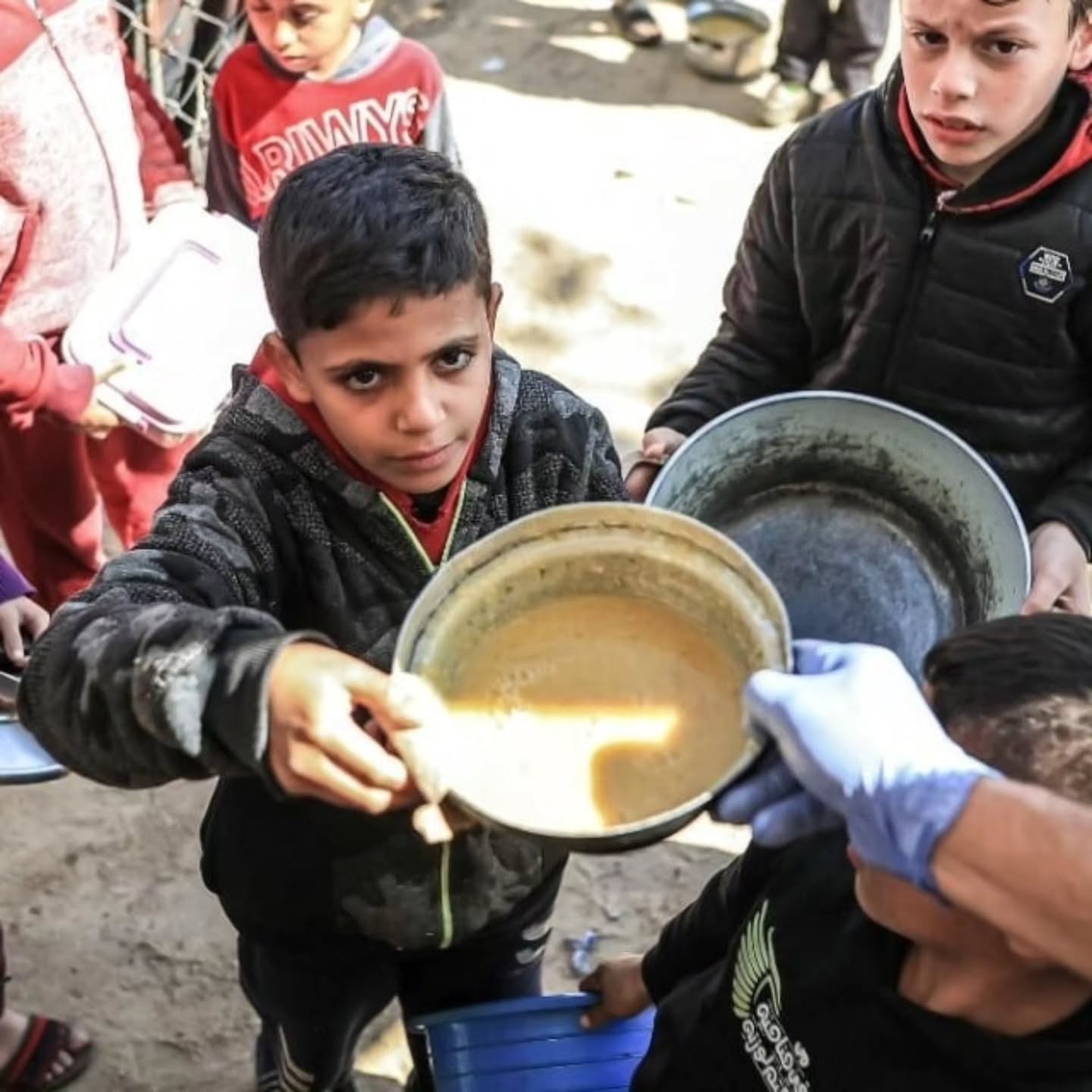
Christ in the Hungry and the Stranger

The post presents Matthew 25:35 in Serbian Cyrillic: "For I was hungry and you gave me food, I was thirsty and you gave me drink, I was a stranger and you welcomed me." The verse is Christ's description of the final judgment, where he identifies himself with those in need. The accompanying image description contrasts two scenes: a healthy child smiling in bed, and a severely malnourished child lying in bed.

This visual pairing illustrates the Gospel's call to recognize and serve Christ in the suffering and marginalized.

  • Matthew 25:35 quoted in Serbian Cyrillic
  • Christ identifies himself with the hungry, thirsty, and stranger
  • Two contrasting images described: healthy child and severely malnourished child
  • Visual illustration of the Gospel call to serve the needy
  • No additional commentary or discussion provided
Read more

Love means sharing what we need, not just our surplus

A quote states that love is not giving what is superfluous but being willing to share even what one needs oneself. An image shows a man offering a sandal to a person in need, illustrating the principle of sacrificial giving.

  • Love defined as willingness to share necessities, not just surplus
  • Image illustrates the principle with a man offering a sandal

Elder Paisios on the world's deceit and the need for spiritual readiness

The post presents a quote from Elder Paisios of Mount Athos, a recognized saint in the Orthodox Church. He warns that malice has crossed all boundaries and that people now seek to deceive one another, viewing deception as success. He laments that the world has become false because sin has become fashionable and injustice is regarded as wisdom. The worldly spirit, he says, sharpens the mind for evil, so that whoever commits injustice against his…

The post presents a quote from Elder Paisios of Mount Athos, a recognized saint in the Orthodox Church. He warns that malice has crossed all boundaries and that people now seek to deceive one another, viewing deception as success. He laments that the world has become false because sin has become fashionable and injustice is regarded as wisdom.

The worldly spirit, he says, sharpens the mind for evil, so that whoever commits injustice against his neighbor considers it an achievement. In response, Elder Paisios calls for character, courage, and bravery. He urges his listeners to take care that they are not caught unprepared when difficulties arise.

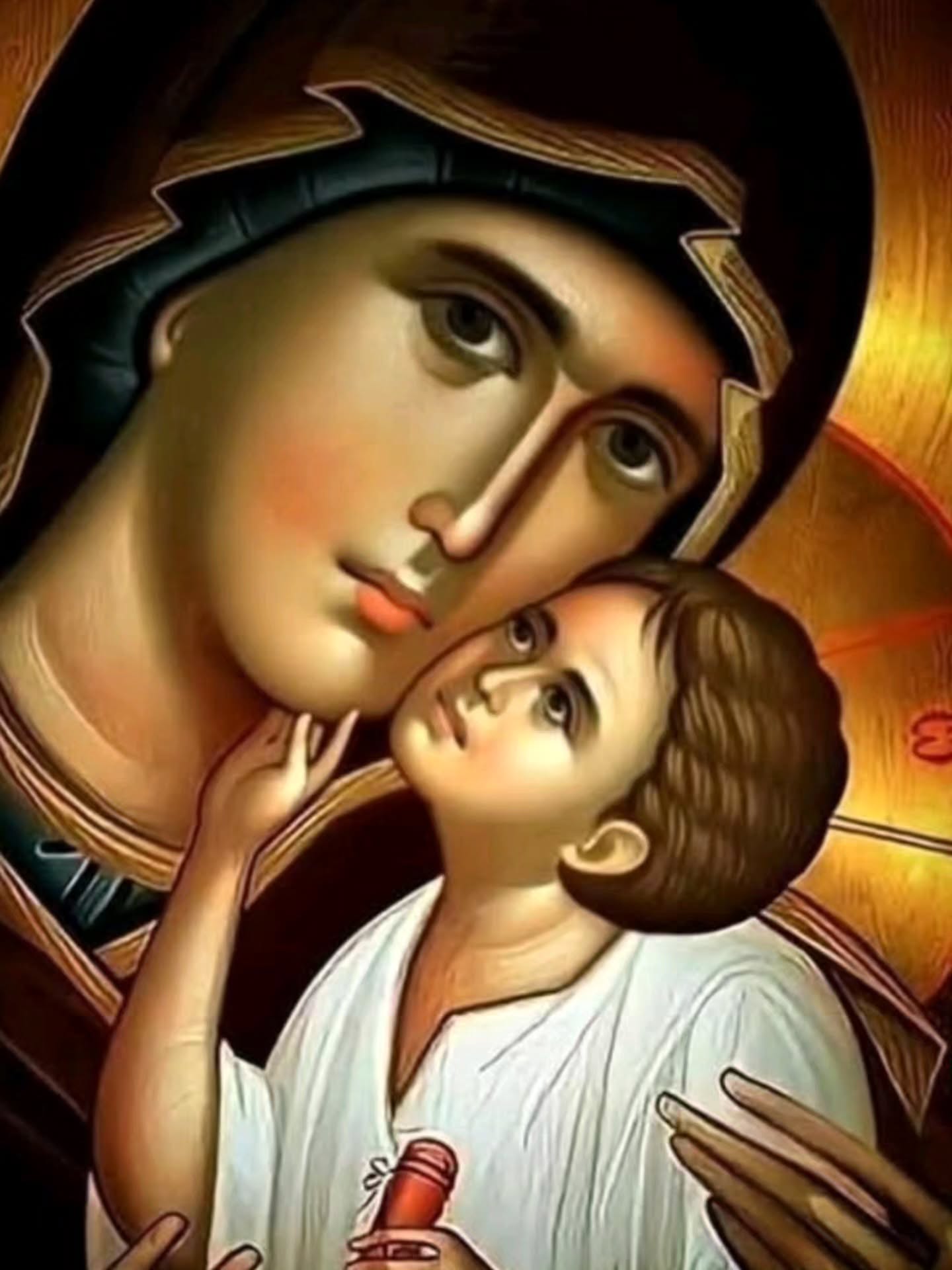
They should begin preparing now so they can withstand hardships. Living in complicated times, he insists that we must be not only ready but three times ready, at the very least. The quote is accompanied by an icon of the Virgin Mary embracing the Child Jesus.

  • Malice and deceit have become widespread and are praised as success.
  • Sin is treated as fashion and injustice as wisdom.
  • The worldly spirit sharpens the mind for evil.
  • Character, courage, and bravery are necessary responses.
  • Believers must prepare now to withstand future difficulties, being three times ready.
Read more

St. Gerasimos of Kefalonia: Monastery History, Relics, and Living Veneration

The Monastery of St. Gerasimos of Kefalonia lies in the Omala valley at the foot of Mount Ainos on the Greek island of Kefalonia. Its history is tied to St. Gerasimos, who arrived on the island in the mid-16th century. An older monastery dedicated to St. Mary of Jerusalem already stood on the site. In 1561, the priest Georgios Valsamos granted the monastery and surrounding lands to Gerasimos. The saint restored the church and founded a women's…

The Monastery of St. Gerasimos of Kefalonia lies in the Omala valley at the foot of Mount Ainos on the Greek island of Kefalonia. Its history is tied to St. Gerasimos, who arrived on the island in the mid-16th century. An older monastery dedicated to St. Mary of Jerusalem already stood on the site.

In 1561, the priest Georgios Valsamos granted the monastery and surrounding lands to Gerasimos. The saint restored the church and founded a women's monastery named New Jerusalem. The main church, dedicated to the Dormition of the Theotokos, houses the saint's relics in an adorned silver casket.

The old church preserves his hermitage, accessed through an opening in the floor. Monastic tradition holds that the plane trees growing in the courtyard were planted by the saint himself. His life was marked by prayer, fasting, asceticism, and care for those who sought spiritual comfort.

St. Gerasimos reposed on August 15, 1579. According to church tradition, his relics were found incorrupt and fragrant. October 20 commemorates the uncovering of his relics; on that day the relics are carried in a solemn procession, and faithful from various places come to venerate them and pray to the saint. The monastery remains a women's community where nuns continue the prayerful and liturgical life, caring for the shrine and pilgrims.

The text concludes with a prayer to St. Gerasimos for peace, health, strength in temptations, and a heart filled with faith, humility, and love. The accompanying video presents a Greek liturgical hymn that repeats the call to praise the Lord, the Lord of Hosts, and His mercy with the refrain 'alleluia' across three stanzas alternating between addressing the Lord and God. The post cites Religious Greece and Monastiria.gr as sources.

Key moments

  1. The hymn opens with the call to praise the Lord, the Lord of Hosts, His mercy, alleluia.
  2. The second stanza shifts to praise God, God, the Lord of Hosts, His mercy, alleluia.
  3. The third stanza returns to praise the Lord, the Lord of Hosts, His mercy, alleluia, completing the threefold repetition.
Read more

Feast of St. Gerasimos of Kefalonia Marks Translation of Relics

The author describes the celebration of St. Gerasimos of Kefalonia on the Greek island of Kefalonia on October 20. The feast commemorates the discovery of the saint's holy relics. St. Gerasimos lived in the 16th century and founded a monastery in the Omala valley, naming it New Jerusalem. According to church tradition, after his repose in 1579 his relics were found incorrupt and fragrant. On the feast day, after a solemn service, the relics are…

The author describes the celebration of St. Gerasimos of Kefalonia on the Greek island of Kefalonia on October 20. The feast commemorates the discovery of the saint's holy relics. St. Gerasimos lived in the 16th century and founded a monastery in the Omala valley, naming it New Jerusalem. According to church tradition, after his repose in 1579 his relics were found incorrupt and fragrant.

On the feast day, after a solemn service, the relics are carried in a litany. A large number of faithful gather to venerate the saint, and many prostrate themselves on the ground so that the litany with the relics passes over them. They do this with faith and prayer, seeking the saint's intercession, comfort in suffering, and help in illness.

The tradition honors St. Gerasimos as a wonderworker who received the grace of healing the sick and helping those afflicted by unclean spirits. The text concludes with a call to approach God with faith, humility, and hope, and to ask the saints to intercede, ending with the prayer: "Holy Father Gerasimos, pray to God for us."

  • Feast day on October 20 celebrates the translation of St. Gerasimos's relics on Kefalonia
  • St. Gerasimos (16th century) founded the New Jerusalem monastery in Omala valley
  • Relics found incorrupt and fragrant after his repose in 1579
  • Faithful prostrate during litany with relics seeking healing and intercession
  • Saint honored as wonderworker for healing and deliverance from unclean spirits
Read more

Christ Comes from the Depths to Judge and Separate the Flock

The video presents a depiction of Christ's return for judgment. He comes from the depths to judge the world and separate the flock. At His steps the earth and heaven tremble. Gold and silver will perish. A plea rises for the Son of God to shine.

Key moments

  1. Christ comes from the depths to judge the world and separate the flock.
  2. The earth and heaven tremble at His steps, and gold and silver will perish.
  3. A plea is made for the Son of God to shine.
Read more

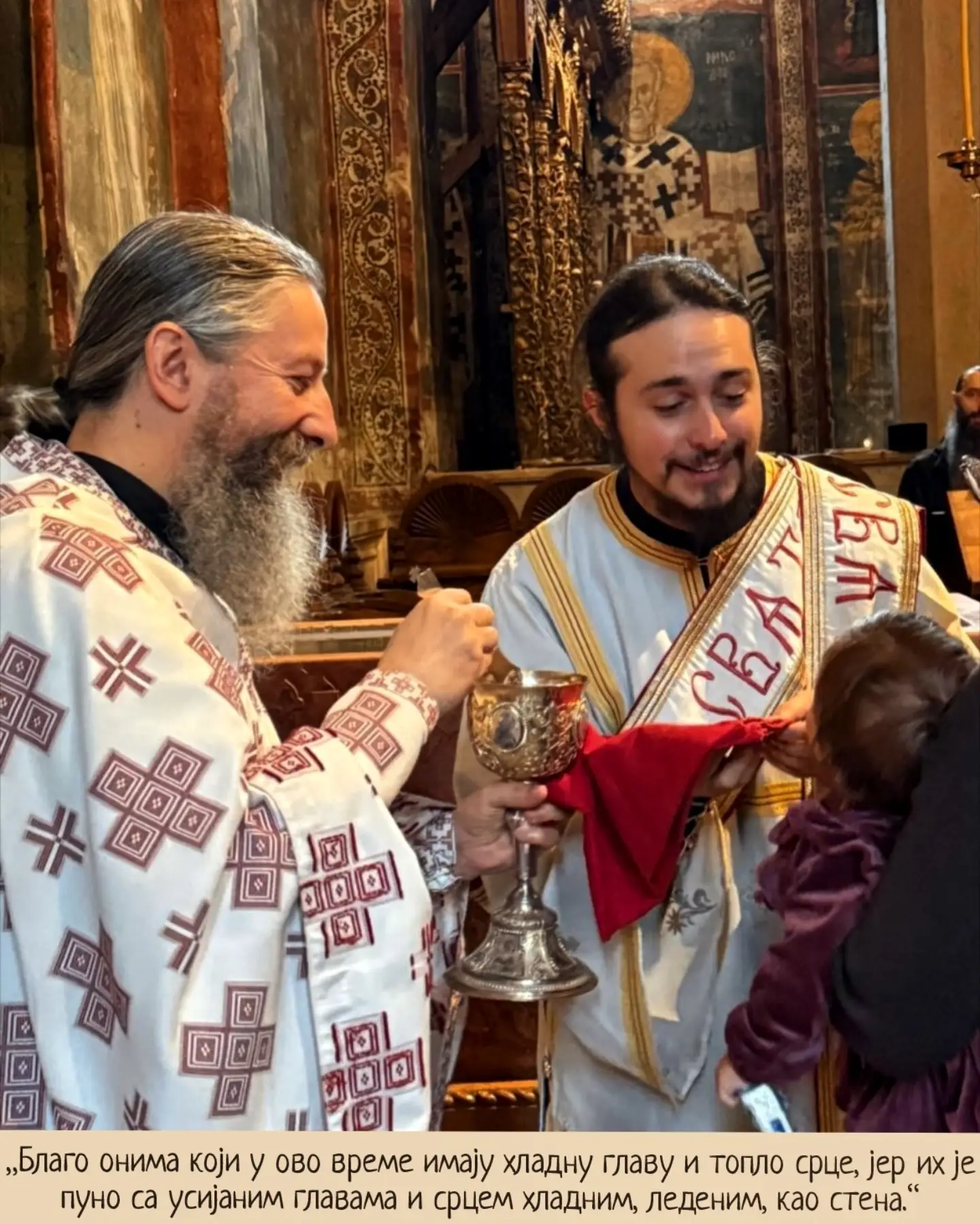
Saint Nikolai's Prayer for a Cool Head and Warm Heart

The post presents a prayer attributed to Saint Bishop Nikolai of Žiča. The prayer opens by calling blessed those who in this time possess a cool head and a warm heart, noting that many have heated heads and hearts cold as ice, like a wall. It addresses God as the all-merciful Lord and asks that the heart be anointed with the oil of divine mercy so that compassion does not dry up within it and the coldness of the world does not take up residence…

The post presents a prayer attributed to Saint Bishop Nikolai of Žiča. The prayer opens by calling blessed those who in this time possess a cool head and a warm heart, noting that many have heated heads and hearts cold as ice, like a wall. It addresses God as the all-merciful Lord and asks that the heart be anointed with the oil of divine mercy so that compassion does not dry up within it and the coldness of the world does not take up residence there.

The prayer continues with a request to cleanse the mind of proud thoughts and to preserve it in sobriety and peace, so that the one praying may see in every person a brother and God's living creation. It asks the Lord not to allow the whirlwind of the times to carry the petitioner away, but to establish them on the rock of God's commandments, that they may bear witness to divine love where hatred reigns and to divine peace where turmoil reigns.

The text is accompanied by hashtags linking it to Visoki Dečani monastery, Orthodoxy, the Serbian Orthodox Church, Kosovo and Metohija, and Serbia.

  • Saint Bishop Nikolai's prayer asks for a cool head and warm heart
  • Seeks anointing with oil of mercy to prevent compassion from drying up
  • Requests cleansing of mind from proud thoughts and preservation in sobriety
  • Asks to see every person as a brother and God's living creation
  • Prays to stand firm on God's commandments amid the whirlwind of the times
Read more

Elder Porphyrios on Confession: Knowing God Before Listing Sins

The speaker describes how Saint Elder Porphyrios approached confession differently from common practice. Instead of allowing people to list their sins, the elder would stop them and ask about their relationship with God. His questions were direct: Do you know God? Do you recognize Him? Do you love God? The speaker identifies the failure to know God as the greatest problem and the source of all other problems. Without knowing God, a person cannot…

The speaker describes how Saint Elder Porphyrios approached confession differently from common practice. Instead of allowing people to list their sins, the elder would stop them and ask about their relationship with God. His questions were direct: Do you know God? Do you recognize Him?

Do you love God? The speaker identifies the failure to know God as the greatest problem and the source of all other problems. Without knowing God, a person cannot have trust in Him or genuine love for Him. The elder taught that one must love God essentially and deeply, more than oneself.

The speaker summarizes the essence of the Gospel as the two commandments: to love God with this depth and to love one's neighbor. These two commandments constitute the whole Gospel. The discussion centers on the priority of relationship over legalistic accounting of sins, and on knowledge of God as the foundation for trust, love, and the fulfillment of the commandments.

Key moments

  1. Saint Elder Porphyrios would stop people at confession and ask about their relationship with God instead of focusing on sins.
  2. He would ask: Do you know God? Do you recognize Him? Do you love God?
  3. The speaker identifies not knowing God as the greatest problem and the source of all other problems.
  4. Without knowing God, a person cannot have trust in Him or love Him.
  5. One must love God essentially and deeply, more than oneself.
  6. The two commandments, love God and love neighbor, constitute the whole Gospel and its essence.
Read more

Refusing Wednesday and Friday fasts reveals unwillingness, not inability

The speaker states that a person who refuses to observe Wednesday and Friday fasts acts from unwillingness, not inability. This refusal constitutes a failure to honor God in a minimal way. Because of this, the speaker argues such a person cannot be trusted.

The reasoning is that if someone will not keep commitments to God, they will not keep their word or promises to other people either. The discussion connects fasting discipline directly to personal reliability and trustworthiness.

Key moments

  1. A person who does not honor Wednesday and Friday does so out of unwillingness, not inability.
  2. One cannot have confidence in such a person.
  3. If someone cannot minimally honor God, they will not keep their word or promises when called to something else.
  4. Failure to keep commitments to God means they will not keep commitments to people either.
Read more

Relics of St. Thomas kept at Patmos monastery

The post states that according to published church sources, the head of St. Thomas the Apostle is preserved at the Monastery of St. John the Theologian on the island of Patmos. A prayer to St. Thomas follows. The prayer addresses him as the chosen disciple who received authority to heal the sick, cleanse lepers, raise the dead, and cast out demons. It recounts how Thomas clung to Christ out of love, willing to die with him, but was absent when…

The post states that according to published church sources, the head of St. Thomas the Apostle is preserved at the Monastery of St. John the Theologian on the island of Patmos. A prayer to St. Thomas follows. The prayer addresses him as the chosen disciple who received authority to heal the sick, cleanse lepers, raise the dead, and cast out demons.

It recounts how Thomas clung to Christ out of love, willing to die with him, but was absent when the risen Savior first appeared to the other disciples. Thomas did not believe until he placed his finger in the nail wounds and his hand in Christ's side. The Lord fulfilled the desire of Thomas's heart and confirmed him in faith.

The prayer asks Thomas to open the eyes of faith so believers may perceive with spiritual vision what physical eyes cannot see, to grant hope in God's condescension so that sinful despair does not prevail, to reveal the blessedness of love which is strong as death, and to help the faithful serve Christ on earth so that with Thomas and all the saints they may glorify the all-holy and magnificent name of the Father, Son, and Holy Spirit.

  • Head of St. Thomas preserved at Monastery of St. John the Theologian on Patmos
  • Prayer addresses Thomas as chosen disciple with authority to heal and cast out demons
  • Recounts Thomas's doubt and belief after touching Christ's wounds
  • Asks for spiritual sight, hope against despair, and blessedness of love
  • Seeks grace to glorify the Trinity with all saints
Read more

A priest recounts the church wedding of a woman who had never hoped to marry

A priest tells the story of a woman who was somewhat older and had never married. She had never even had a boyfriend. Around the age of 35, or perhaps closer to 40, she met a fine man. Both she and the man were devout, and they came to be married in church. The priest then describes the usual wedding questions that are asked during the service. He addresses the bride, calling her for example Dragana, and asks whether she has a good and unforced…

A priest tells the story of a woman who was somewhat older and had never married. She had never even had a boyfriend. Around the age of 35, or perhaps closer to 40, she met a fine man. Both she and the man were devout, and they came to be married in church.

The priest then describes the usual wedding questions that are asked during the service. He addresses the bride, calling her for example Dragana, and asks whether she has a good and unforced will to take this man as her husband. She answers: yes, honorable father. He then asks whether she has promised herself to anyone else.

She answers that she has not, and adds that she had not even hoped for this. The account centers on the exchange at the wedding itself: the priest's questions and the bride's answers. The detail that she had not even hoped for marriage is the point where the story ends.

The post presents the story as told by the priest, with no further events or commentary beyond the wedding questions and the woman's replies.

Key moments

  1. A girl, somewhat older, had never married and had never had a boyfriend.
  2. Around her 35th year, maybe closer to 40, she met a fine man; she was devout and so was he, and they came to marry in church.
  3. The priest asks her, calling her for example Dragana, whether she has a good and unforced will to take this man as her husband, and she answers: yes, honorable father.
  4. He asks whether she has promised herself to anyone else, and she answers that she has not, that she had not even hoped for this.
Read more