WeOrthodox
EN UA

Појединац, Породица и Друштво

Instagram ↗ 209 discussions

Ова страница је посвећена ПРАВОСЛАВЉУ и ДОБРОТОЉУБЉУ🫒

Father Dragan greets from Svetitskhoveli Monastery in Georgia
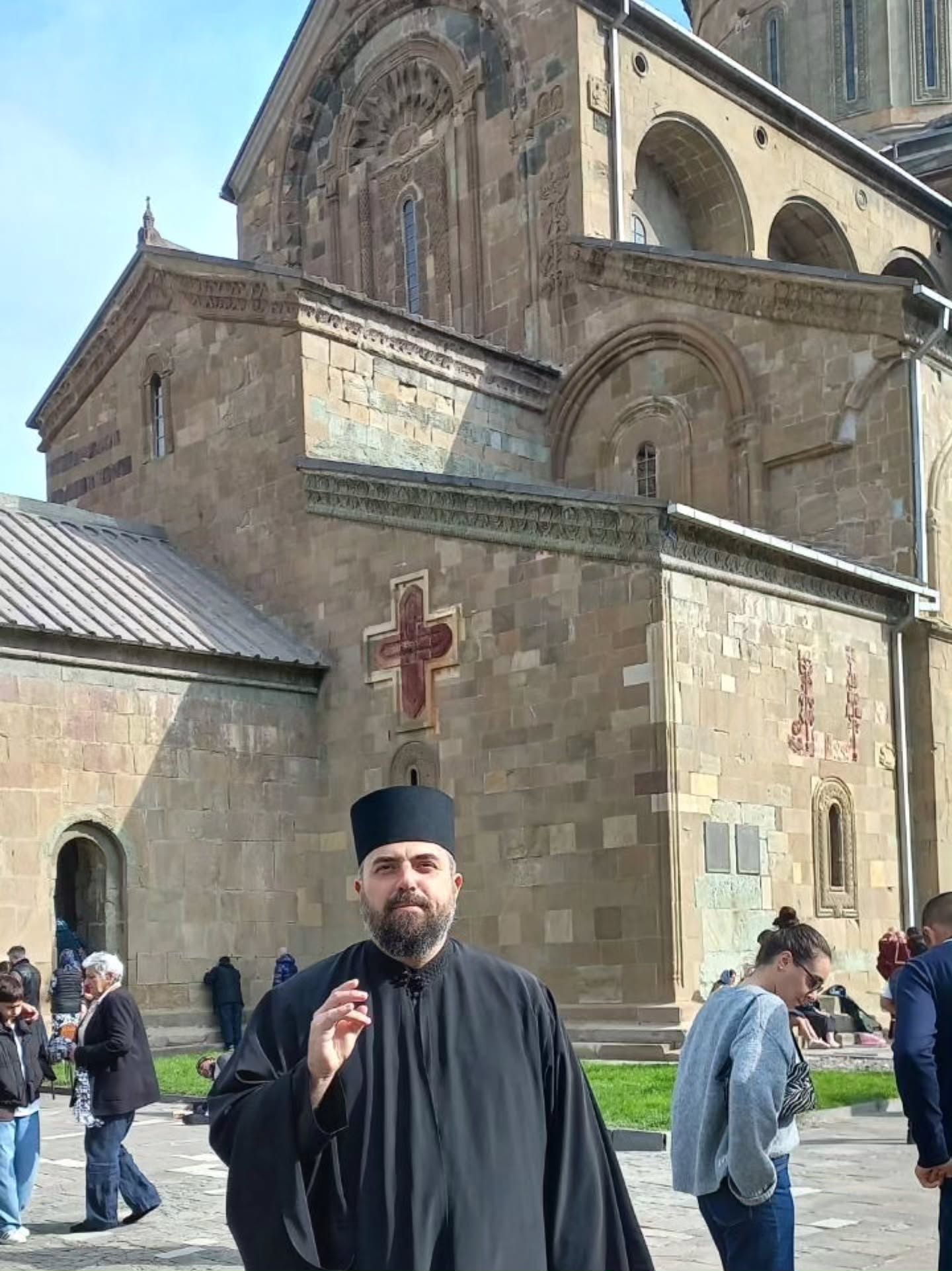
Father Dragan publishes a short message to mark the feast of Svetitskhoveli. He begins with a festal greeting, wishing a happy and blessed celebration. The greeting is sent from the Svetitskhoveli Monastery, located in the city of Mtskheta in Georgia. Father Dragan refers to Georgia as holy Georgia. He identifies the monastery as a shrine, and he states that, according to church tradition, this shrine holds three specific sacred objects. The…

Father Dragan publishes a short message to mark the feast of Svetitskhoveli. He begins with a festal greeting, wishing a happy and blessed celebration. The greeting is sent from the Svetitskhoveli Monastery, located in the city of Mtskheta in Georgia.

Father Dragan refers to Georgia as holy Georgia. He identifies the monastery as a shrine, and he states that, according to church tradition, this shrine holds three specific sacred objects. The first is the tunic of the Lord. The second is the mantle of the Holy Prophet Elijah. The third is a portion of the relics of the Holy Apostle Andrew the First-Called.

The post does not provide additional historical detail, theological explanation, or personal reflection beyond this list. It does not quote any scripture or hymn. The author signs the message with his name, Father Dragan. The text is written in Serbian using the Cyrillic alphabet. There is no indication of a conversation or thread; the post stands alone as a greeting.

The message shares a greeting for the feast and lists the relics associated with the monastery. It names the feast, the place, the tradition, the relics, and the sender. No other persons, dates, or events are mentioned.

  • Father Dragan greets the faithful on the feast of Svetitskhoveli
  • The greeting comes from Svetitskhoveli Monastery in Mtskheta, Georgia
  • According to church tradition the monastery keeps the Lord's tunic
  • Also kept are the mantle of the Prophet Elijah and a portion of the relics of the Apostle Andrew the First-Called
  • The post is a brief prayerful announcement signed by Father Dragan
Read more

Feast of Svetitskhoveli marked from Mtskheta monastery

Father Dragan sends a prayerful greeting for the feast of Svetitskhoveli from the Svetitskhoveli Monastery in Mtskheta, Georgia. The monastery is identified as the shrine where, according to church tradition, the Lord's Tunic, the mantle of the Prophet Elijah, and a portion of the relics of the Apostle Andrew the First-Called are preserved. The message marks the celebration of the feast associated with this cathedral and its relics.

  • Feast of Svetitskhoveli celebrated
  • Greeting sent from Svetitskhoveli Monastery in Mtskheta, Georgia
  • Monastery holds the Lord's Tunic per tradition
  • Also preserves mantle of Prophet Elijah
  • Contains relics of Apostle Andrew the First-Called
Read more

St. Justin Popović on the Theotokos as protectress and refuge

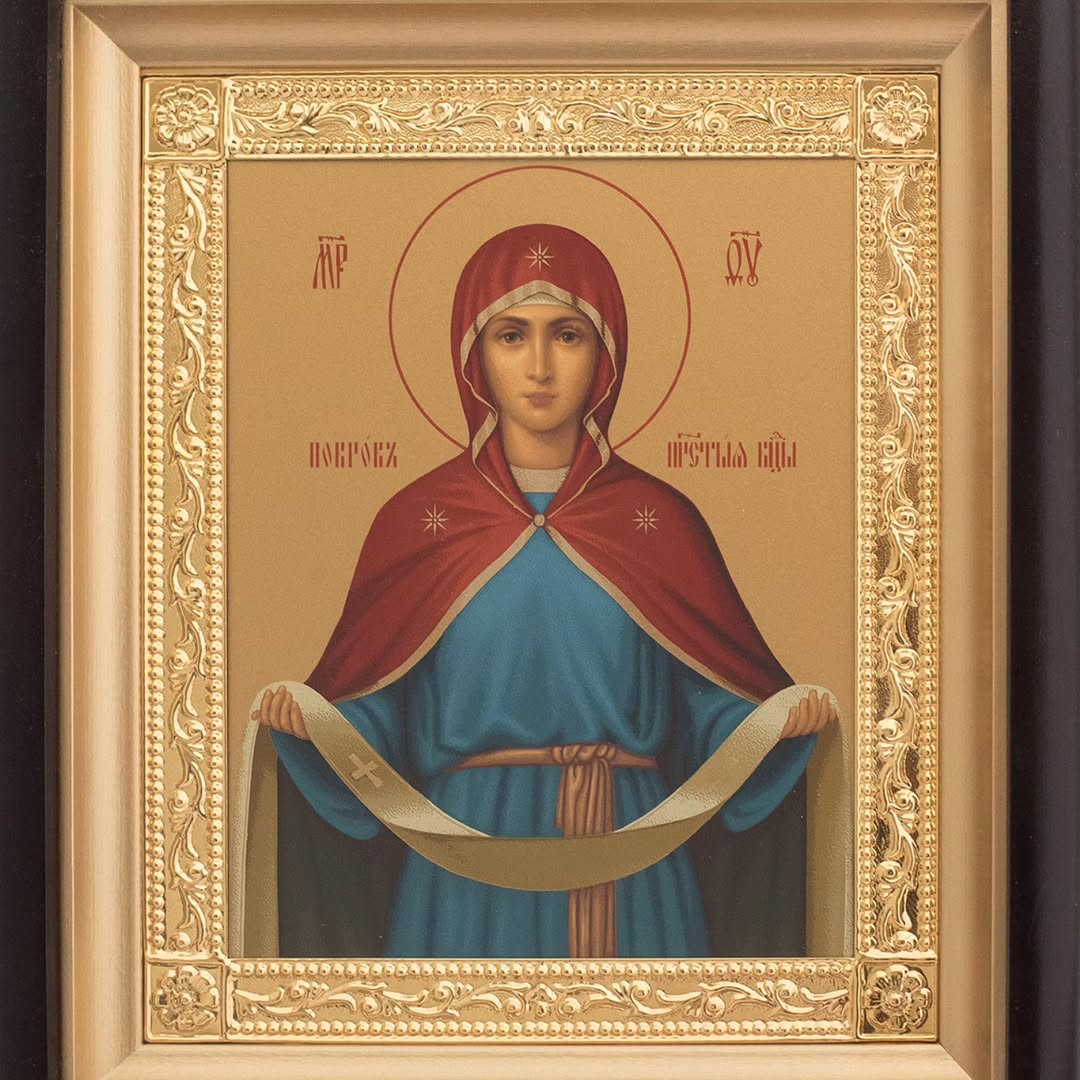
St. Justin Popović writes that the faithful put their trust in the Theotokos and flee to her for safety. He states that under her covering not a hair of the head will perish. The text presents a direct address to her as Protectress and Most Holy Virgin, asking her to cover the faithful with her veil. The prayer requests that she hide them in the evil day, citing Psalm 26:5 according to Septuagint numbering. The quote reflects a theology of…

St. Justin Popović writes that the faithful put their trust in the Theotokos and flee to her for safety. He states that under her covering not a hair of the head will perish. The text presents a direct address to her as Protectress and Most Holy Virgin, asking her to cover the faithful with her veil.

The prayer requests that she hide them in the evil day, citing Psalm 26:5 according to Septuagint numbering. The quote reflects a theology of Marian intercession where the Virgin's protection is described as complete and effective against all harm. The language emphasizes both trust and active seeking of her shelter, with the Psalm reference grounding the petition in scriptural language about divine hiding in times of trouble.

The passage functions as both a statement of confidence in her intercessory role and a liturgical form of petition for her covering presence during periods of danger or spiritual darkness.

  • St. Justin Popović expresses trust in the Theotokos as protectress
  • The faithful flee to her for safety and covering
  • Under her protection no harm comes to the faithful
  • A prayer addresses her as Protectress and Most Holy Virgin
  • The petition cites Psalm 26:5 (Septuagint) for hiding in the evil day
Read more

Beloved Akathist Shared for Feast of the Protection of the Theotokos

The author shares one of the most beloved akathists for the eve of the Feast of the Protection of the Most Holy Theotokos, asking whether listeners have heard it before. The akathist addresses the Theotokos as Queen of heaven and earth, exalted above all creation. It recalls a specific event: her coming to a Vlach church in prayer and offering worthy worship with thanksgiving. The faithful, describing themselves as living in the darkness of…

The author shares one of the most beloved akathists for the eve of the Feast of the Protection of the Most Holy Theotokos, asking whether listeners have heard it before. The akathist addresses the Theotokos as Queen of heaven and earth, exalted above all creation. It recalls a specific event: her coming to a Vlach church in prayer and offering worthy worship with thanksgiving.

The faithful, describing themselves as living in the darkness of modern softening, flee to her bright omophorion for protection. They petition her, who possesses invincible power, to deliver them from all distress so they may cry out to her as their joy and shelter from all evil. The post marks the blessed eve of the feast known as Pokrov, using the hashtags for Orthodoxy, joy, and the feast itself.

The akathist functions as a prayer of intercession, positioning the Theotokos as both exalted ruler and accessible protector. Its language contrasts the faithful's perceived spiritual condition, darkness and softening, with the Theotokos's bright omophorion and invincible power. The request for deliverance from all distress aims toward a specific outcome: the ability to cry out to her as joy and shelter from all evil.

The author's question at the end invites engagement from the audience about their familiarity with this particular composition.

Key moments

  1. Addresses the Theotokos as Queen of heaven and earth, exalted above all creation.
  2. Recalls her coming to a Vlach church in prayer, bringing worthy worship with thanksgiving.
  3. Describes the faithful as being in the darkness of modern softening.
  4. Says they flee to her bright omophorion for protection.
  5. Asks her, having invincible power, to deliver them from all distress.
  6. Seeks to cry out to her as their joy and shelter from all evil.
Read more

Bishop Pajsije: The Christian Gives Thanks to God in All Things

Bishop Pajsije speaks about the freedom of a person who rejects what is unimportant and valueless and takes on Christ's yoke by free will. He says nothing is more beautiful or magnificent than this choice, because such worthless things impose themselves on everything around us, and it takes a free decision to turn from them. The one who makes this choice accepts with joy everything met on that path. The bishop is careful to note that no one by…

Bishop Pajsije speaks about the freedom of a person who rejects what is unimportant and valueless and takes on Christ's yoke by free will. He says nothing is more beautiful or magnificent than this choice, because such worthless things impose themselves on everything around us, and it takes a free decision to turn from them. The one who makes this choice accepts with joy everything met on that path.

The bishop is careful to note that no one by nature loves torture, suffering, or hardships; pain is not loved for its own sake. The difference lies in the cause: when sufferings come because of Christ and His name, the true servant of God accepts pain, torture, hardships, and everything that befalls him with joy. The title of the talk states the theme directly: the Christian gives thanks to God in all things.

The talk was posted with tags pointing to church life and mission, and it belongs to a series of short catechetical addresses in which the bishop applies the Gospel to daily endurance of trials. The structure of the thought moves from freedom to acceptance: first the free rejection of what is worthless, then the free acceptance of Christ's yoke, then joy in whatever that path brings, even when it brings suffering.

The bishop does not call believers to seek out suffering; he describes the stance of one who, when suffering arrives for the sake of Christ, receives it with thanksgiving rather than despair. The address is short and spoken, and its force lies in the plain contrast it draws between what imposes itself on us and what we choose freely.

Key moments

  1. Nothing is more beautiful or magnificent than a person freely rejecting the unimportant and valueless.
  2. These unimportant things impose themselves on everything.
  3. The person rejects them by free will and takes on Christ's yoke by free will.
  4. Then everything encountered on that path is accepted with joy.
  5. No one loves torture, suffering, or hardships.
  6. When they come because of Christ and His name, the true servant of God accepts them with joy.
  7. This includes pain, torture, hardships, and everything that befalls him.
Read more

Relics of St. Paraskeva and St. Paisius translated in Iași for patronal feast

0:35

On October 8, 2026, in Iași, the honorable relics of the Venerable Paraskeva and the Venerable Paisius of Sihastria were solemnly translated in a litia around the Metropolitan Cathedral and placed under a specially prepared baldachin for the veneration of the faithful people. By this liturgical act began the celebration of the temple feast of Saint Paraskeva, the protectress of Moldavia. In the days of the feast the arrival of thousands of…

On October 8, 2026, in Iași, the honorable relics of the Venerable Paraskeva and the Venerable Paisius of Sihastria were solemnly translated in a litia around the Metropolitan Cathedral and placed under a specially prepared baldachin for the veneration of the faithful people. By this liturgical act began the celebration of the temple feast of Saint Paraskeva, the protectress of Moldavia.

In the days of the feast the arrival of thousands of pilgrims from Romania and other countries is expected, who come to venerate the holy relics and receive the blessing of the saints. The information was published by the Metropolis of Moldavia and Bukovina, Archdiocese of Iași, on its official portal on October 8, 2026.

Key moments

  1. The speaker calls on the Mother of God: "Mântui-ne maică" (Save us, Mother).
  2. The text references the Cross and Christ: "în cruce ai umblat lui Hristos" (you walked in the Cross of Christ).
  3. It states that through working one learns not to look away from the Cross: "lucrând ai învățat să nu se uite la cruce că este".
Read more

Pilgrimage to St. Parascheva in Iasi: relics, processions and Liturgy, October 8-15, 2026

0:57

The Archdiocese of Iasi announced a pilgrimage gathering in Iasi, Romania, from October 8 to 15, 2026, for the feast of St. Parascheva, known as St. Petka, the protectress of Moldavia. The gathering opened on Thursday, October 8, at 6 o'clock with the reading of the Akathist to St. Parascheva. After the Akathist, the relics of St. Petka and of St. Paisius of Sihastria were carried in procession around the Metropolitan Cathedral and placed in a…

The Archdiocese of Iasi announced a pilgrimage gathering in Iasi, Romania, from October 8 to 15, 2026, for the feast of St. Parascheva, known as St. Petka, the protectress of Moldavia. The gathering opened on Thursday, October 8, at 6 o'clock with the reading of the Akathist to St. Parascheva. After the Akathist, the relics of St. Petka and of St. Paisius of Sihastria were carried in procession around the Metropolitan Cathedral and placed in a specially prepared reliquary, where the faithful could venerate them.

On Sunday, October 11, at 19:00, the traditional procession 'Path of the Saints' took place, in which the relics marked the prayerful gathering of the faithful through the streets of Iasi. After the procession, around 20:30, the relics were again placed for veneration. On Monday, October 12, the pilgrimage program continued with services in the Metropolitan Cathedral.

On the feast itself, Wednesday, October 14, the Divine Liturgy will begin at 9 o'clock on the plateau in front of the altar of the Metropolitan Cathedral. The liturgical responses will be sung by the Academic Choir 'Byzantion'. The announcement describes the gathering as an occasion for common prayer and veneration of the saint whose relics the faithful have honored for centuries.

The source is the official press release of the Archdiocese of Iasi, 'Sărbătoarea Sfintei Cuvioase Parascheva (Iași, octombrie 2026)', together with the schedule of services from October 8 to 15, 2026. A hymn to the saint accompanies the announcement, calling her the much-helpful one, the flower and protectress of Moldova, with the refrain 'O Holy Mother Parascheva, bless Romania.'

Key moments

  1. The hymn addresses God in His saints who intercede, pray and weep for us.
  2. Saint Parascheva is called 'much helpful, flower and protectress of Moldova'.
  3. The refrain repeats: 'O Holy Mother Parascheva, bless Romania.'

Elder Porphyrios on how bad thoughts mystically harm others

The post shares a teaching from Elder Porphyrios of Kafsokalyvia. He explains that when we think badly of someone, a force proceeds from us and passes to the other person like sound waves, and the other truly suffers evil. This happens as a kind of lesson when a person has bad thoughts for others. It proceeds from our anger. We mystically transmit our evil. God does not cause evil; human malice does. God does not punish; rather our disposition…

The post shares a teaching from Elder Porphyrios of Kafsokalyvia. He explains that when we think badly of someone, a force proceeds from us and passes to the other person like sound waves, and the other truly suffers evil. This happens as a kind of lesson when a person has bad thoughts for others.

It proceeds from our anger. We mystically transmit our evil. God does not cause evil; human malice does. God does not punish; rather our disposition mystically passes to the soul of another and does evil. Christ never wills evil but told us to bless our enemies.

  • Bad thoughts transfer like sound waves and cause real harm to others
  • This transmission stems from human anger, not divine action
  • God neither causes evil nor punishes; human malice mystically affects another's soul
  • Christ commands blessing enemies, never willing evil
  • The teaching comes from Elder Porphyrios of Kafsokalyvia

Elder Ephraim of Arizona on two graces in spiritual struggle

Elder Ephraim of Arizona describes two kinds of grace that come when a person struggles for God. The first is the consolation of the Holy Spirit, which fills the soul with joy, peace, and sweetness, but this grace comes and goes. The second is the experience of temptation, which is impressed indelibly on the soul and does not leave the heart because it is united with the heart that has experientially lived through temptation. During temptation,…

Elder Ephraim of Arizona describes two kinds of grace that come when a person struggles for God. The first is the consolation of the Holy Spirit, which fills the soul with joy, peace, and sweetness, but this grace comes and goes. The second is the experience of temptation, which is impressed indelibly on the soul and does not leave the heart because it is united with the heart that has experientially lived through temptation.

During temptation, the second grace, experience, is more useful because it enlightens the soul with knowledge of how to pass through temptations. Since experience comes from temptation itself, it knows how to deliver the soul from perdition whenever temptation appears. Temptations that are endured with patience reward a person with the wisdom of temptation, and in this way one becomes a true philosopher.

If a person does not humble themselves, the lessons that come through temptation will not cease. Egoism creates temptation, but for that very reason temptation restrains egoism. The elder urges his children to humble themselves if they want to humble the demons that torment them.

He tells them to throw themselves before everyone's feet and say, "I am the worst person in the world and everything is my fault!"

  • Two graces come in spiritual struggle: Holy Spirit's consolation and experience of temptation
  • Consolation brings joy and peace but comes and goes; experience of temptation remains indelibly in the heart
  • Experience of temptation is more useful during trials because it teaches how to pass through them
  • Patience in temptation brings wisdom and makes one a true philosopher
  • Humility stops demonic torment; the elder advises confessing to be the worst and at fault for everything
Read more

Father Lazar of Goranjak on monasticism as divine calling, not escape

Father Lazar of Goranjak Monastery speaks about monasticism as a divine calling and the distinction between worldly life and life in Christ. He recounts falling in love with Christ as a young man without planning it, his heart burning as he felt infinite divine love descend as grace in daily interaction with the Lord. He states that monastic life is not an escape from oneself, failed relationships, existential crisis, or lack of imagination. A…

Father Lazar of Goranjak Monastery speaks about monasticism as a divine calling and the distinction between worldly life and life in Christ. He recounts falling in love with Christ as a young man without planning it, his heart burning as he felt infinite divine love descend as grace in daily interaction with the Lord. He states that monastic life is not an escape from oneself, failed relationships, existential crisis, or lack of imagination.

A person enters a monastery only when there is something to sacrifice. If someone arrives with problems expecting the monastery to solve them, the monastery will swallow and spit them out even more stripped bare. At his tonsure, his mother told him she had been wrong about him because he never finished anything he started, water polo, battalion service, and other pursuits.

He answered that earthly measures have a beginning and an end, while the path to Christ is infinite and eternal.

Key moments

  1. The speaker fell in love with Christ unexpectedly as a young man, feeling his heart burn without planning it.
  2. In everyday interaction with the Lord he experienced infinite divine love descending as grace into his heart.
  3. Monasticism is not for escaping oneself, unhappy loves, existential crisis, or lack of imagination.
  4. One goes to a monastery only when there is something to sacrifice.
  5. If a person enters a monastery with problems thinking they will be solved there, the monastery will swallow and spit them out even more stripped bare.
  6. At his tonsure, his mother said she had been wrong about him because he never finished anything he started, water polo, battalion, and other pursuits.
  7. He replied that earthly measures have a beginning and an end, but the path to Christ is infinite and eternal.
Read more

Patriarch Pavle on why slander does not disturb the one who serves God

The quote from Patriarch Pavle contrasts two orientations of the heart. A person gripped by vanity serves only himself and therefore watches anxiously for how others regard him. Criticism wounds him because his self‑worth depends on human opinion. The patriarch describes this condition as a form of suffering: the vain person suffers from vanity and finds that much matters to him what others are toward him. By contrast, the one who serves God…

The quote from Patriarch Pavle contrasts two orientations of the heart. A person gripped by vanity serves only himself and therefore watches anxiously for how others regard him. Criticism wounds him because his self‑worth depends on human opinion.

The patriarch describes this condition as a form of suffering: the vain person suffers from vanity and finds that much matters to him what others are toward him. By contrast, the one who serves God directs all concern toward God alone. That person does not occupy himself with what others say, because his reference point is no longer the crowd but the One he serves.

The patriarch presents the difference as a diagnostic: sensitivity to slander reveals whom we actually serve. If slander disturbs us, the implication is that we are still serving ourselves. If it does not disturb us, we have reoriented our service to God.

The text does not elaborate further or cite Scripture; it states the principle and leaves the application to the reader. The Serbian original uses the verb оговарају (slander, revile) and служи (serve) to draw a sharp line between self‑service and God‑service. The patriarch does not command indifference to reputation; he describes the natural outcome of a changed master.

The logic moves from the internal state (vanity versus devotion) to the external symptom (concern for opinion versus freedom from it). No further commentary or historical context is provided in the source.

  • Vanity makes a person serve himself and fear human judgment.
  • Serving God shifts concern entirely to God.
  • The one who serves God is not occupied with what others say.
  • Sensitivity to slander reveals the true object of service.
  • Patriarch Pavle presents the contrast as a spiritual diagnostic.
Read more

Opening Prayers Recited: Trisagion, Doxology, and the Lord's Prayer

The video presents a complete recitation of the opening prayers used in an Orthodox Christian service. It begins with the Trisagion, "Holy God, Holy Mighty, Holy Immortal, have mercy on us", chanted three times in succession. The doxology follows immediately: "Glory to the Father and the Son and the Holy Spirit, now and ever and unto ages of ages. Amen." A prayer to the Most Holy Trinity then asks for mercy, cleansing of sins, forgiveness of…

The video presents a complete recitation of the opening prayers used in an Orthodox Christian service. It begins with the Trisagion, "Holy God, Holy Mighty, Holy Immortal, have mercy on us", chanted three times in succession. The doxology follows immediately: "Glory to the Father and the Son and the Holy Spirit, now and ever and unto ages of ages.

Amen." A prayer to the Most Holy Trinity then asks for mercy, cleansing of sins, forgiveness of transgressions, visitation, and healing of infirmities for the sake of God's name. After this prayer, "Lord, have mercy" is repeated three times. The doxology is then recited a second time, repeating the same words: "Glory to the Father and the Son and the Holy Spirit, now and ever and unto ages of ages.

Amen." The sequence concludes with the Lord's Prayer in its traditional form. The recitation includes each petition: the address to the Father in heaven, the hallowing of His name, the coming of His kingdom, the doing of His will on earth as in heaven, the request for daily bread, the forgiveness of debts as we forgive our debtors, the plea not to be led into temptation, and the deliverance from the evil one.

The recording provides the full text of each prayer as it would be spoken at the start of a service, preserving the order and wording used in Orthodox worship.

Key moments

  1. The Trisagion is chanted three times: "Holy God, Holy Mighty, Holy Immortal, have mercy on us."
  2. The doxology follows: "Glory to the Father and the Son and the Holy Spirit, now and ever and unto ages of ages. Amen."
  3. A prayer to the Most Holy Trinity asks for mercy, cleansing of sins, forgiveness of transgressions, visitation, and healing of infirmities for the sake of God's name.
  4. "Lord, have mercy" is repeated three times.
  5. The doxology is repeated a second time.
  6. The Lord's Prayer is recited in its traditional form, including petitions for daily bread, forgiveness of debts, deliverance from temptation, and from the evil one.
Read more

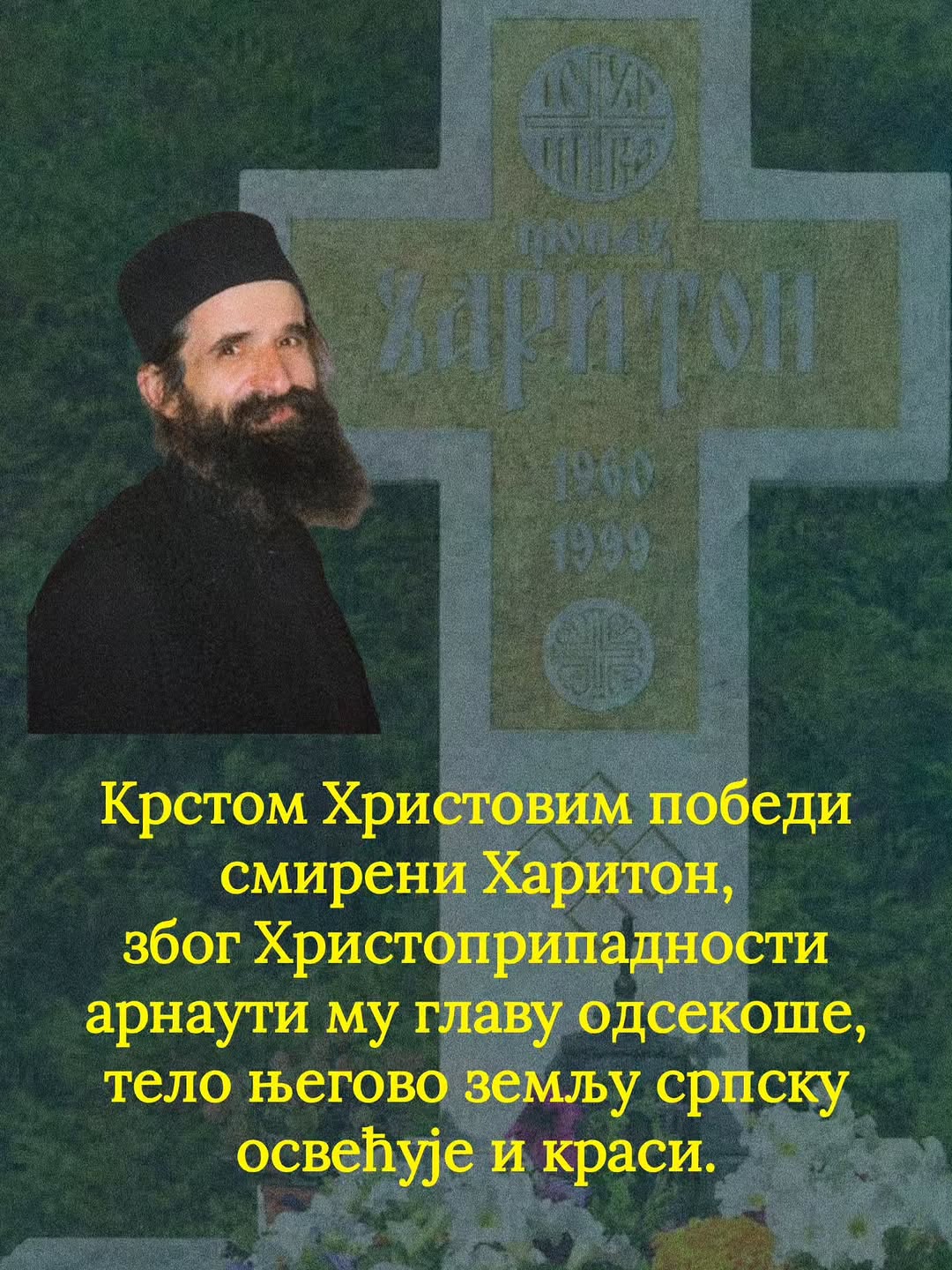
Monk Chariton (1960-1999): Kidnapped and Martyred in Kosovo

The post presents the biography of Monk Chariton, who was born as Radoslav Lukic in 1960. He was tonsured a monk under the name Chariton and served in the monasteries of Crna Reka and the Holy Archangels near Prizren. His devotion to the monastic life and his help to others were recognized throughout the community. During the turbulent period in Kosovo in 1999, he was kidnapped and suffered a martyr's death, leaving behind an example of…

The post presents the biography of Monk Chariton, who was born as Radoslav Lukic in 1960. He was tonsured a monk under the name Chariton and served in the monasteries of Crna Reka and the Holy Archangels near Prizren. His devotion to the monastic life and his help to others were recognized throughout the community.

During the turbulent period in Kosovo in 1999, he was kidnapped and suffered a martyr's death, leaving behind an example of unwavering faith and sacrifice. The post also includes a poetic text that begins with the lines: "Through the ages the same fate is unchangeable; whoever is born here must be tested. Over the covenant, by a firm word, indelible. Before ancestors, descendants, and all the beloved."

A refrain follows: "From the earth rises the scent of frankincense; heaven opens above Kosovo. To which kingdom do you now approach? To it you belong. Do you attach yourself to the passing or to the eternal?" The verses continue: "There is no one who has spent a long earthly life, adorned himself with shame, sold his soul.

But the one who has remained faithful to Christ with Christ has found eternal glory, joy, peace, and life." The poem reflects on the enduring destiny of those born in Kosovo and the choice between temporal and eternal allegiance. The post is written in Serbian using Cyrillic script and does not record any subsequent discussion.

  • Born Radoslav Lukic in 1960, tonsured as Monk Chariton.
  • Served in Crna Reka and Holy Archangels monasteries near Prizren.
  • Recognized for dedication to monastic life and helping others.
  • Kidnapped and martyred in 1999 during Kosovo conflict.
  • Post includes a poetic hymn about Kosovo, frankincense, heaven, and faithfulness to Christ bringing eternal glory, joy, peace, and life.
Read more

A Monk on Mount Athos Compares Church Life to a Child in the Womb

The post recounts a dialogue between a visitor and a monk on Mount Athos. When asked what monks do in church, the monk answers "Nothing." Pressed for an explanation, he likens the Christian life in the Church to a child in its mother's womb. The child does not act; it simply remains there, feeds, and grows until birth. In the same way, Christians abide in the Church, pray, and are nourished through the Holy Mysteries. By the grace of God they…

The post recounts a dialogue between a visitor and a monk on Mount Athos. When asked what monks do in church, the monk answers "Nothing." Pressed for an explanation, he likens the Christian life in the Church to a child in its mother's womb.

The child does not act; it simply remains there, feeds, and grows until birth. In the same way, Christians abide in the Church, pray, and are nourished through the Holy Mysteries. By the grace of God they grow and develop until the time comes to be born into eternal life.

The exchange presents the Orthodox understanding of spiritual life as primarily receptive and contemplative rather than activist. The metaphor emphasizes that transformation occurs through presence, prayer, and sacramental grace, not through human effort alone. Discussion around such a saying typically touches on the nature of theosis, the role of the sacraments, the distinction between spiritual passivity and quiet growth, and the eschatological orientation of monastic and parish life.

  • A monk on Mount Athos answers "Nothing" when asked what monks do in church.
  • He compares church life to a child in the womb that only feeds and grows.
  • Christians abide in church, pray, and are nourished through the Holy Mysteries.
  • Growth occurs by God's grace until birth into eternal life.
  • The metaphor illustrates the receptive, contemplative character of Orthodox spiritual life.
Read more

Father Rafailo: Stop pretending joy that isn't real

Father Rafailo tells listeners not to pretend. He says they often simulate joy, which is only psychological. True desire comes from the body, from the stomach. The fast is over and the feast has arrived, yet instead of resurrection joy they feel disgust, and that fact must be acknowledged.

Key moments

  1. Don't act.
  2. We do that very often.
  3. So we simulate, we are joyful, that is psychological joy.
  4. And if you want, you want bodily, it comes from the stomach.
  5. The fast has passed.
  6. Here is the feast, but it's like Christ is risen, but actually disgust comes to us.
  7. But you see, that must be acknowledged.
Read more

St. Seraphim on Complaint, Silence, and God's Presence

The post shares a saying attributed to St. Seraphim: do not complain against people, God, or fate, because everything is permitted for your good. The author explains that these words were not spoken to reconcile us with suffering but to open our eyes. When complaining stops, meaning begins to appear. The author then gives practical guidance for moments when irritation rises in the heart: do not speak, do not answer, do not judge. Instead, be…

The post shares a saying attributed to St. Seraphim: do not complain against people, God, or fate, because everything is permitted for your good. The author explains that these words were not spoken to reconcile us with suffering but to open our eyes. When complaining stops, meaning begins to appear. The author then gives practical guidance for moments when irritation rises in the heart: do not speak, do not answer, do not judge.

Instead, be silent. Silence is described as the medicine that heals complaining, and in silence God's presence is born.

  • St. Seraphim advises not to complain against people, God, or fate
  • Everything is permitted for one's good
  • The purpose is to open eyes, not to accept suffering passively
  • When irritation rises, the remedy is silence: do not speak, answer, or judge
  • Silence heals complaining and becomes the place where God's presence is born
Read more

God owes nothing for fasting and church attendance, speaker warns

The speaker warns against a transactional mindset in which a person believes God owes them because they fast on Wednesdays and Fridays, attend church, and keep the fasts as the Church requires. This attitude is identified as pride and wrong thinking. The speaker explains that God does not operate by transactions; He gives to both the good and the evil. What God seeks is humility and contrition. The discussion turns on the distinction between…

The speaker warns against a transactional mindset in which a person believes God owes them because they fast on Wednesdays and Fridays, attend church, and keep the fasts as the Church requires. This attitude is identified as pride and wrong thinking. The speaker explains that God does not operate by transactions; He gives to both the good and the evil.

What God seeks is humility and contrition. The discussion turns on the distinction between outward observance and inward disposition. A person may think that keeping the prescribed fasts and attending services creates an obligation on God's part. The speaker rejects this calculation. God's giving is not conditioned on human performance.

The good and the evil alike receive from Him. The required response is not a tally of practices but a humble and contrite heart.

Key moments

  1. A person may think that fasting on Wednesdays and Fridays, going to church, and keeping fasts obligates God.
  2. This mindset treats the relationship with God as a transaction.
  3. Such an attitude is pride and incorrect thinking.
  4. God does not act on a transactional basis.
  5. God gives to both the good and the evil.
  6. What God requires is humility and contrition.
Read more

Love requires freedom; the heart as chandelier needing cleaning

The speaker explains that love and freedom cannot exist apart from each other. Love without freedom becomes violence, and freedom without love becomes anarchy. God gave human beings free will because He is power but never forces Himself on anyone; He stands at the door of the heart and knocks. The heart is compared to a beautiful chandelier created to shine and give warmth. From birth, layers of dust accumulate on the heart over decades, twenty,…

The speaker explains that love and freedom cannot exist apart from each other. Love without freedom becomes violence, and freedom without love becomes anarchy. God gave human beings free will because He is power but never forces Himself on anyone; He stands at the door of the heart and knocks.

The heart is compared to a beautiful chandelier created to shine and give warmth. From birth, layers of dust accumulate on the heart over decades, twenty, thirty, forty, fifty years. This dust prevents the heart from shining and warming as God intended.

The work of the Christian life is to clean the heart through repentance, liturgical life, and life in and with Christ so that it can function as created.

Key moments

  1. Love and freedom are inseparable; love without freedom becomes violence, freedom without love becomes anarchy.
  2. God gave free will because He is power but never violent; He knocks at the door of the heart and waits to be invited in.
  3. The heart is like a beautiful chandelier created to shine and give warmth.
  4. From birth, layers of dust accumulate on the heart over 20, 30, 40, 50 years.
  5. The dust prevents the heart from shining and warming as it should.
  6. The task is to clean the heart through repentance, liturgical life, and life in Christ and with Christ.
  7. Cleaning the heart allows it to shine and warm as God originally intended.

Holy father teaches repeated glorification as spiritual therapy

A holy father teaches that one should repeatedly say "Glory to You, God" aloud so that the air fills with the power of glorification. He explains that this phrase carries energy and acts as a very powerful therapy against dark spirits that bring moods now called anxiety and depression. The father refers to this practice as glorification, or slavoslovlje, and describes it as a strong therapy. While modern medicine uses new catalogs, formulations,…

A holy father teaches that one should repeatedly say "Glory to You, God" aloud so that the air fills with the power of glorification. He explains that this phrase carries energy and acts as a very powerful therapy against dark spirits that bring moods now called anxiety and depression. The father refers to this practice as glorification, or slavoslovlje, and describes it as a strong therapy.

While modern medicine uses new catalogs, formulations, and diagnostic codes to address these conditions, the Church has its own terms and approaches. The father emphasizes that what matters is getting better and breathing freely. He also points to the Jesus Prayer, "Lord Jesus Christ, Son of God, have mercy on me," and the phrase "Glory to You, God for all" as ways that invoke God's grace.

The teaching presents glorification as a spiritual remedy that works through the power of spoken praise to counteract the influence of dark spirits on the human psyche.

Key moments

  1. A holy father says to repeat "Slava ti Bože" (Glory to You, God) aloud so the ether fills with the power of glorification.
  2. The phrase carries energy and is described as a very powerful therapy.
  3. Dark spirits bring moods now called anxiety and depression.
  4. Modern medicine uses new catalogs, formulations, and diagnostic codes.
  5. The Church has its own terms; what matters is getting better and breathing freely.
  6. Glorification (slavoslovlje) is a strong therapy.
  7. The Jesus Prayer, "Lord Jesus Christ, Son of God, have mercy on me", or "Glory to You, God for all" invokes God's grace.
Read more

St. Justin Popović on Serbs perishing from sorcery and unbelief (1964)

In a talk given at Ćelije Monastery on the Feast of the Presentation of the Theotokos in 1964, St. Justin Popović said that Serbian land had been struck by horror upon horror. He stated that Serbian souls perish in unbelief, in lack of faith, in little faith, and from sorcery. He said Serbs have forgotten the Church, which possesses remedies for every sin. He described Serbian women running from sorceress to sorceress, and unhappy men seeking a…

In a talk given at Ćelije Monastery on the Feast of the Presentation of the Theotokos in 1964, St. Justin Popović said that Serbian land had been struck by horror upon horror. He stated that Serbian souls perish in unbelief, in lack of faith, in little faith, and from sorcery. He said Serbs have forgotten the Church, which possesses remedies for every sin.

He described Serbian women running from sorceress to sorceress, and unhappy men seeking a cure for their souls from demons, from the devil. He asked who their educator is, who leads and guides them, and reminded them that they do not know to cross themselves when passing a church. He warned of the hell and eternal torment they prepare for themselves.

At the end of the talk, St. Justin offered a prayer to the Most Holy Theotokos, asking her to lead and guide them, to awaken as their chief educator together with all the saints, with St. Sava and the other Serbian God-pleasers. He prayed that death would not devour them, that the slaughter of Serbian souls would cease, that Serbs would one day rise from all deaths, and that they would serve the One True God in all ages, the Lord Jesus Christ, whom she alone leads, together with all the saints. Amen.

  • St. Justin Popović spoke at Ćelije Monastery in 1964 on the Feast of the Presentation.
  • He warned that Serbs perish from sorcery, unbelief, and forgetting the Church.
  • He described people turning to sorcerers and demons instead of the Church for healing.
  • He asked who guides them and reminded them to cross themselves near churches.
  • He concluded with a prayer to the Theotokos for guidance, an end to spiritual slaughter, and the resurrection of Serbian souls to serve Christ.
Read more