WeOrthodox
EN UA

☦️An Orthodox Blog☦️

Instagram ↗ 116 discussions

"La Ortodoxia es lo que Jesús enseñó, los Apóstoles predicaron y los Padres guardaron"

Theosis: the goal of Christian life beyond morality

The speaker explains that the goal of Christian life in the Orthodox Church is theosis, a real ontological transformation guarded since the apostolic era. The purpose is not simply to be a good person or avoid hell, but to enter into intimate, living, eternal union with God. God became man to raise humanity to this union, not only to forgive sins. Second Peter 1:4 states that believers are called to become partakers of the divine nature. St.…

The speaker explains that the goal of Christian life in the Orthodox Church is theosis, a real ontological transformation guarded since the apostolic era. The purpose is not simply to be a good person or avoid hell, but to enter into intimate, living, eternal union with God. God became man to raise humanity to this union, not only to forgive sins.

Second Peter 1:4 states that believers are called to become partakers of the divine nature. St. Athanasius the Great says God became man so that man might become God. St. Irenaeus of Lyons wrote that Christ became what we are to make us what He is.

St. Gregory the Theologian also affirms this teaching. Theosis does not mean humans become God by essence; only the Holy Trinity is God by nature. Rather, through uncreated grace, the sacraments, and spiritual ascent, believers are divinized by participation in God's uncreated energies. Humanity was created to receive the uncreated light, not for a moral code or lukewarm religion.
Key moments

  1. The speaker says we must stop thinking the goal of Christian life is simply being a good person or avoiding hell.
  2. The Orthodox Church guards the truth of theosis or deification, which changes everything about existence and eternal destiny.
  3. From the apostolic era, Christians understood salvation as a real ontological transformation, not merely judicial forgiveness or legalistic absolution.
  4. God became man not only to forgive sins but to raise us to an intimate, living, eternal union with Him.
  5. Second Peter 1:4 states we are called to be partakers of the divine nature.
  6. St. Athanasius the Great says God became man so that man might become God.
  7. St. Irenaeus of Lyons wrote that Christ became what we are to make us what He is.
  8. This does not mean humans become God by essence; only the Holy Trinity is God by nature.
Read more
☦️An Orthodox Blog☦️ with Orthodoxy ☦︎ Instagram

St. John of Kronstadt: Pray for Others' Salvation as Your Own

0:30

The post consists of a single passage attributed to St. John of Kronstadt. The saint describes a condition: if you suffer for the sufferings of others and for the distress of their souls, to the point that this leads you to pray for them with a sorrowful and contrite heart. He then gives a directive: pray to God to have mercy on them and forgive their sins, just as you pray for yourself that He may forgive your own transgressions. He specifies:…

The post consists of a single passage attributed to St. John of Kronstadt. The saint describes a condition: if you suffer for the sufferings of others and for the distress of their souls, to the point that this leads you to pray for them with a sorrowful and contrite heart. He then gives a directive: pray to God to have mercy on them and forgive their sins, just as you pray for yourself that He may forgive your own transgressions.

He specifies: ask God with tears to forgive them. Pray for the salvation of others in the same way that you pray for the salvation of your own soul. The saint then states a consequence: if you succeed in this, and praying in this manner becomes a habit for you, you will receive an abundance of spiritual gifts, the gifts of the Holy Spirit.

He explains the reason: the Holy Spirit loves the soul that cares for the salvation of others, because He Himself, the Holy Spirit, desires to save us all, if we do not resist Him and harden our hearts. He provides a scriptural foundation: "For the Spirit Himself intercedes for us with groanings which cannot be uttered" (Romans 8:26).

The text ends with the attribution "St. There is no further commentary, discussion, or context provided in the source.

  • St. John of Kronstadt teaches that suffering for others should lead to tearful intercessory prayer for their forgiveness and salvation.
  • Believers are to pray for others' salvation with the same intensity as for their own.
  • Habitual prayer of this kind brings an abundance of the gifts of the Holy Spirit.
  • The Holy Spirit loves souls that care for others' salvation because He desires to save all who do not resist.
  • The teaching is supported by Romans 8:26 on the Spirit's unutterable intercession.
☦️An Orthodox Blog☦️ with Orthodoxy ☦︎ Instagram

St. Paisios on uprooting passions and cleansing the heart

0:10

The post shares a saying attributed to St. Paisios the Athonite urging believers to uproot passions and psychological shortcomings that fill the heart. He describes these as beasts of the world gathered within, and calls for daily effort to cleanse the heart of them.

  • St. Paisios urges uprooting passions and psychological shortcomings
  • He compares these to beasts of the world gathered in the heart
  • Daily cleansing of the heart is necessary
☦️An Orthodox Blog☦️ with Orthodoxy ☦︎ Instagram

St. Maximus the Confessor on silence and betrayal of the faith

The post shares a saying attributed to St. Maximus the Confessor: "Silence in the face of the distortion of the faith is betrayal. Whoever betrays the faith, though he may be alive, is dead." The text presents the statement without additional commentary or context.

  • St. Maximus the Confessor identifies silence before distortion of the faith as betrayal
  • He states that one who betrays the faith is dead even while alive
  • The saying is shared without further explanation or source reference
☦️An Orthodox Blog☦️ with Orthodoxy ☦︎ Instagram

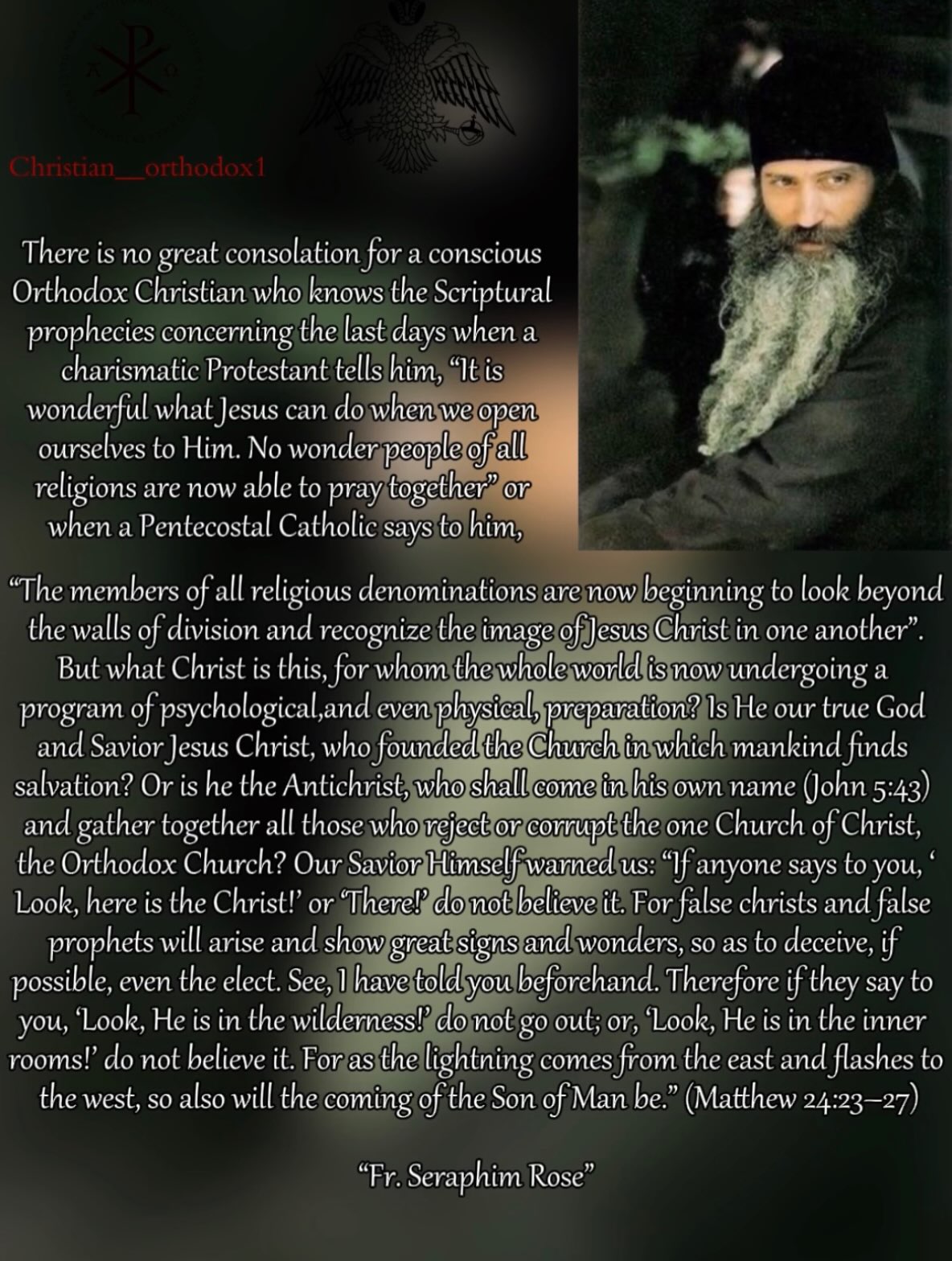
Fr. Seraphim Rose on False Unity and the Antichrist's Preparation

The post presents two related Orthodox perspectives on the last days. The first, attributed to Fr. Seraphim Rose, warns that ecumenical expressions of unity across religions, such as a charismatic Protestant saying "It is wonderful what Jesus can do when we open ourselves to Him. No wonder people of all religions are now able to pray together," or a Pentecostal Catholic saying "The members of all religious denominations are now beginning to look…

The post presents two related Orthodox perspectives on the last days. The first, attributed to Fr. Seraphim Rose, warns that ecumenical expressions of unity across religions, such as a charismatic Protestant saying "It is wonderful what Jesus can do when we open ourselves to Him. No wonder people of all religions are now able to pray together," or a Pentecostal Catholic saying "The members of all religious denominations are now beginning to look beyond the walls of division and recognize the image of Jesus Christ in one another", may signal a psychological and even physical preparation for the Antichrist.

Rose cites Christ's warning in Matthew 24:23-27 against false christs and false prophets who perform signs to deceive even the elect, and John 5:43 on the one who comes in his own name. He contrasts the true Christ, who founded the Orthodox Church as the ark of salvation, with a counterfeit christ who gathers those who reject or corrupt the one Church.

The second passage, attributed to Fr. Stephen Runc, addresses the Orthodox Christian's stance toward secular authorities. While acknowledging that rulers deserve respect and prayer per Romans 13:1-7, it insists they are not the true Christian Commonwealth. The "gods" of this world serve God's providential and eschatological purposes, but the Antichrist's powers will be destroyed by the breath of Christ's mouth (2 Thess. 2:8).

The Orthodox political vision is expressed in the Divine Liturgy's prayer: "For the Christian power and the Orthodox authorities, in peace, and in all piety, guard us, O Lord, and preserve us, O Lord, and grant us peace, so that we may pass the remaining time of our life in peace and repentance." The prayer for a "Sovereign" or "President" of the world is not the King of Kings who will appear "in the clouds of heaven with power and great glory" (Matt. 24:30).

  • Fr. Seraphim Rose warns that interreligious unity movements may prepare the way for the Antichrist.
  • He cites Matthew 24:23-27 on false christs deceiving with signs and wonders.
  • The true Christ founded the Orthodox Church as the sole ark of salvation.
  • Fr. Stephen Runc teaches that secular authorities, while owed prayer, are not the Kingdom of God.
  • The Divine Liturgy's prayer for Orthodox rulers reflects the Christian's true political hope.
☦️An Orthodox Blog☦️ with Orthodoxy ☦︎ Instagram

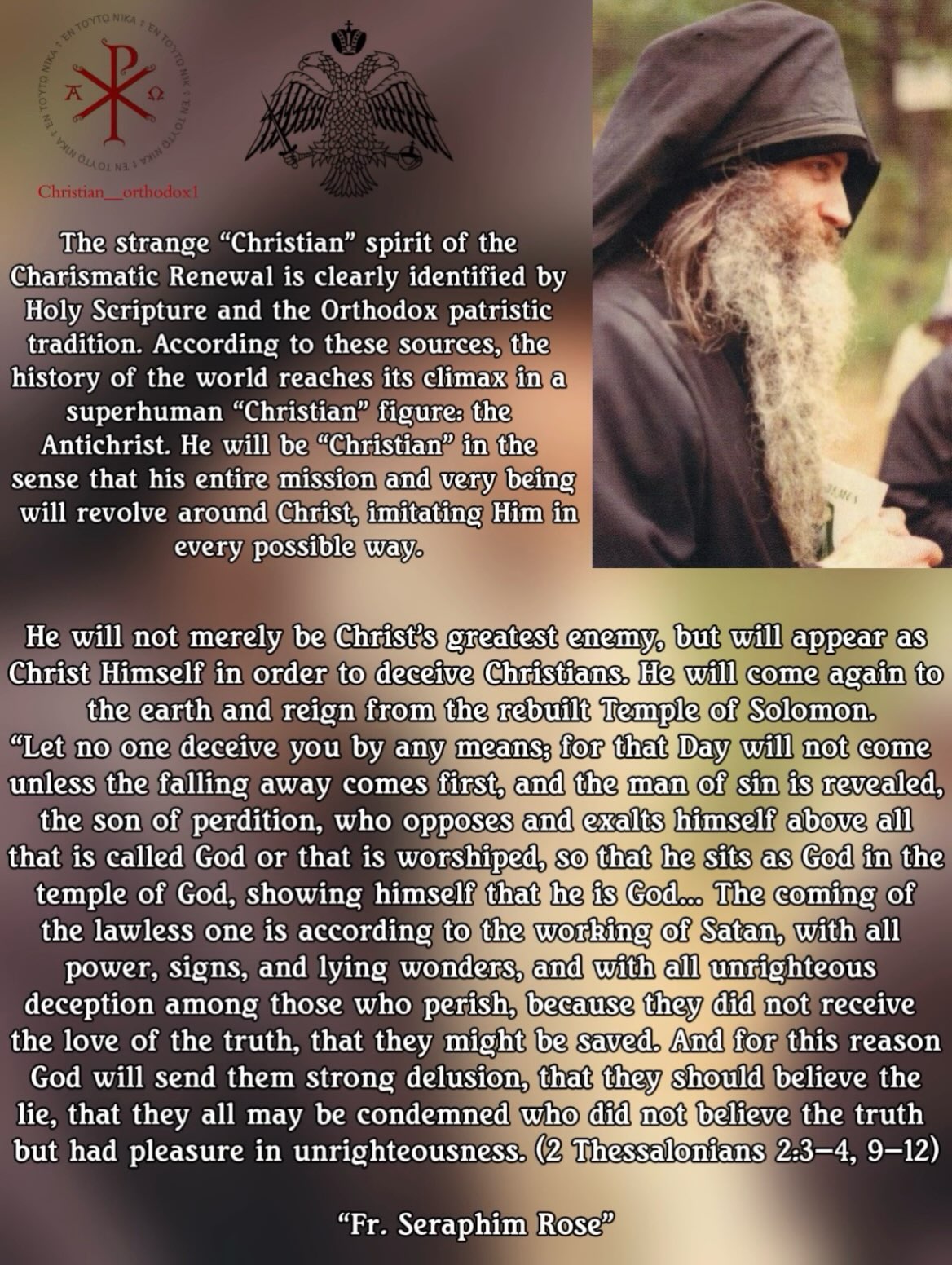
The Antichrist as a counterfeit Christ in Scripture and patristic tradition

The post identifies a "strange 'Christian' spirit" in the Charismatic Renewal through the lens of Scripture and Orthodox patristic tradition. It presents the Antichrist as the climax of world history, a superhuman figure whose mission and very being revolve around Christ, imitating Him in every possible way to deceive Christians. The Antichrist will not merely be Christ's greatest enemy but will appear as Christ Himself. He will come again to…

The post identifies a "strange 'Christian' spirit" in the Charismatic Renewal through the lens of Scripture and Orthodox patristic tradition. It presents the Antichrist as the climax of world history, a superhuman figure whose mission and very being revolve around Christ, imitating Him in every possible way to deceive Christians.

The Antichrist will not merely be Christ's greatest enemy but will appear as Christ Himself. He will come again to the earth and reign from the rebuilt Temple of Solomon. The post quotes 2 Thessalonians 2:3-4, 9-12 at length: the "man of sin" is revealed, the "son of perdition" who opposes and exalts himself above all that is called God or worshiped, sitting as God in the temple of God and showing himself that he is God.

The coming of the lawless one is according to the working of Satan, with all power, signs, and lying wonders, and with all unrighteous deception among those who perish, because they did not receive the love of the truth that they might be saved. For this reason God will send them strong delusion, that they should believe the lie, that they all may be condemned who did not believe the truth but had pleasure in unrighteousness.

The text ends with an attribution to Fr. Seraphim Rose, though the exact work or context is not specified in the post.

  • The Charismatic Renewal is characterized by a "strange 'Christian' spirit" identified in Scripture and patristic tradition
  • The Antichrist will imitate Christ in every way to deceive Christians
  • He will reign from a rebuilt Temple of Solomon, presenting himself as God
  • 2 Thessalonians 2 describes his coming with lying wonders and strong delusion for those who reject truth
  • The passage is attributed to Fr. Seraphim Rose

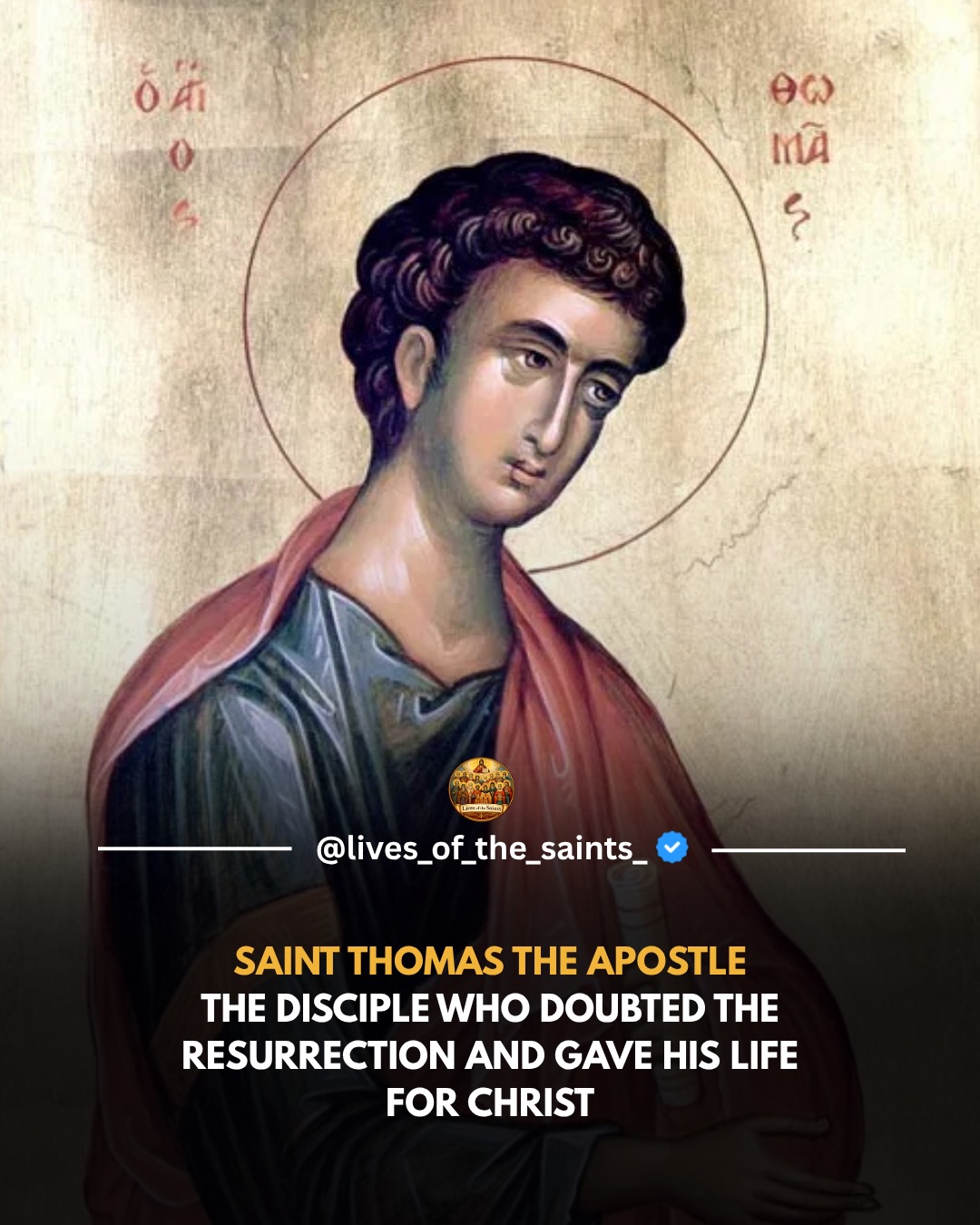
Apostle Thomas: Doubt, Mission to India, Martyrdom

The post recounts the life of Saint Thomas, one of the Twelve Apostles of Jesus Christ. It opens with the episode of his doubt concerning the Resurrection. When the risen Christ appeared to the Apostles, He invited Thomas to touch His wounds and said, "Do not be unbelieving, but believing." Thomas responded, "My Lord and my God," a confession recorded in John 20:28. After the descent of the Holy Spirit, the Apostles cast lots to assign…

The post recounts the life of Saint Thomas, one of the Twelve Apostles of Jesus Christ. It opens with the episode of his doubt concerning the Resurrection. When the risen Christ appeared to the Apostles, He invited Thomas to touch His wounds and said, "Do not be unbelieving, but believing."

Thomas responded, "My Lord and my God," a confession recorded in John 20:28. After the descent of the Holy Spirit, the Apostles cast lots to assign missionary territories. Thomas received India. He was initially troubled by the great distance, but the Lord appeared to him and strengthened his heart. In India Thomas preached Christ to both the wealthy and the poor, converted many people, established churches, and ordained priests and bishops.

Among the converts were members of noble families who later suffered for their faith. His preaching also provoked persecution. An Indian ruler named Muzdius condemned Thomas to death. Five soldiers pierced the Apostle with five spears, and he surrendered his soul to Christ.

According to Holy Tradition, Thomas was also miraculously brought to the burial of the Most Holy Theotokos, but he arrived too late. When the Apostles opened her tomb at his request, they discovered that her body was no longer there. The post draws a parallel: just as Thomas's doubt helped confirm the Resurrection of Christ, his late arrival revealed the miraculous glorification of the Mother of God.

The author concludes that Saint Thomas reminds believers that doubt need not be the end of faith; when one sincerely seeks Christ, uncertainty can become conviction, and conviction can become a life of complete devotion to Him.

  • Thomas doubted the Resurrection until Christ invited him to touch His wounds, prompting the confession "My Lord and my God."
  • After Pentecost he was assigned to India, where he preached widely, founded churches, and ordained clergy.
  • Noble converts suffered persecution; the ruler Muzdius ordered Thomas's execution by five spears.
  • Tradition holds that Thomas was miraculously transported to the Theotokos's burial but arrived late; her empty tomb confirmed her glorification.
  • The post presents Thomas as an example that sincere doubt can lead to firm faith and total devotion.
Read more

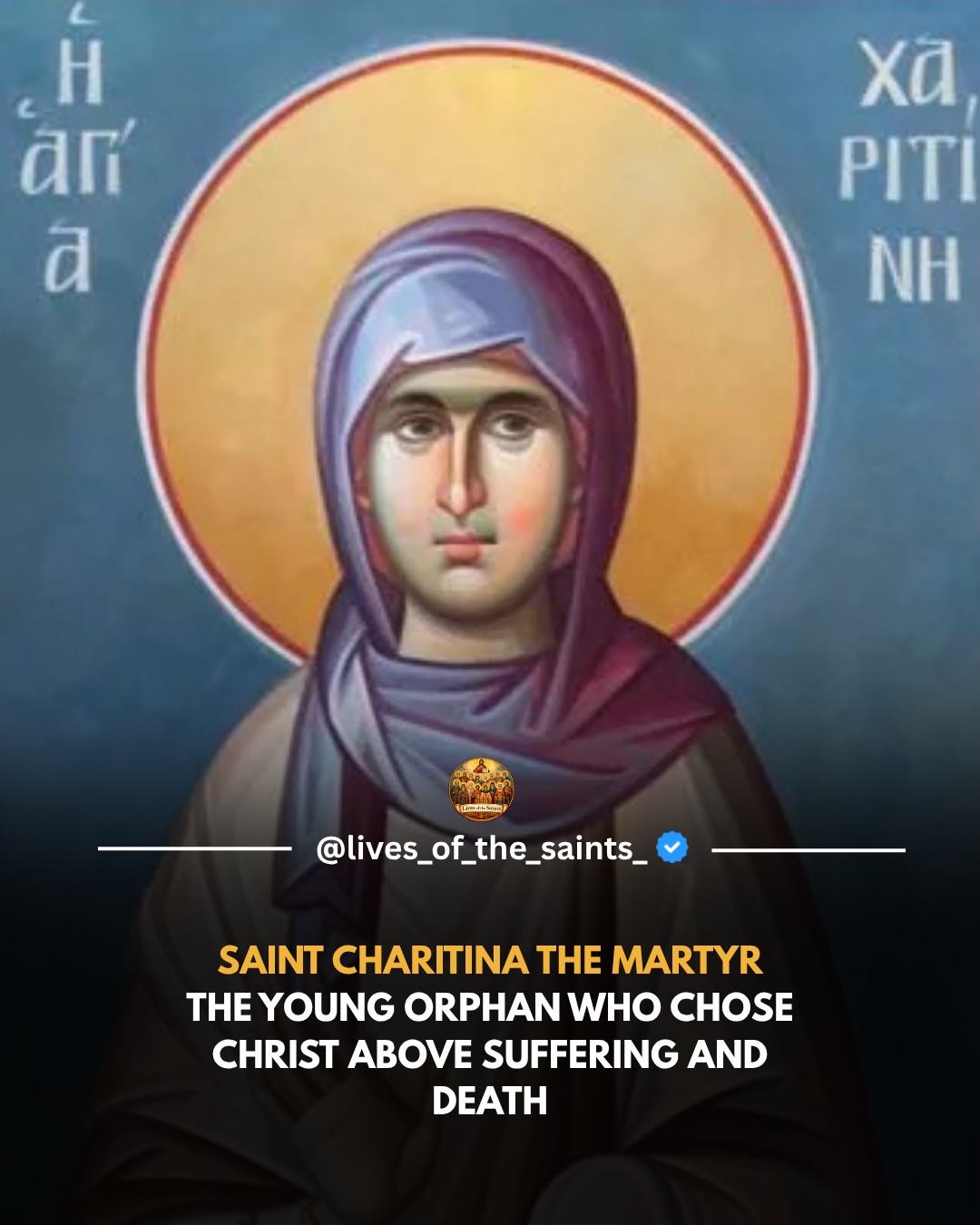
Saint Charitina the Martyr: Faithful unto death

The post recounts the life and martyrdom of Saint Charitina. She was an orphan raised by a noble Christian named Claudius, who loved her as a daughter. From childhood she devoted herself to learning the law of God, praying day and night, and living in purity as a bride of Christ. Her faith led her to bring others to Christ and encourage holy living. During the persecution under Emperor Diocletian, the governor Domitian ordered her arrest. Before…

The post recounts the life and martyrdom of Saint Charitina. She was an orphan raised by a noble Christian named Claudius, who loved her as a daughter. From childhood she devoted herself to learning the law of God, praying day and night, and living in purity as a bride of Christ.

Her faith led her to bring others to Christ and encourage holy living. During the persecution under Emperor Diocletian, the governor Domitian ordered her arrest. Before the judge she confessed she was a Christian and denied deceiving anyone, saying she led the lost to the path of truth.

The judge ordered her hair cut off and burning coals poured on her head, but she remained unharmed by God's power. She was thrown into the sea and delivered by the Lord. Bound to a wheel of torture, an angel stopped the wheel and protected her. Finally, the persecutor ordered she be dishonored. Rather than suffer violation, Charitina knelt and prayed that God would receive her soul.

While praying, the Lord called her into His eternal kingdom. The post concludes that holiness does not depend on age, wealth, or worldly power but on a heart faithful to Christ through every trial, and asks for her intercession.

  • Orphan raised by Claudius, devoted to prayer and purity from childhood
  • Led others to Christ during Diocletian's persecution
  • Arrested by governor Domitian, confessed faith courageously
  • Endured tortures, burning coals, sea, wheel, unharmed by divine power
  • Prayed to avoid dishonor, died while praying, held up as model of faithfulness
Read more
☦️An Orthodox Blog☦️ with Orthodoxy ☦︎ Instagram

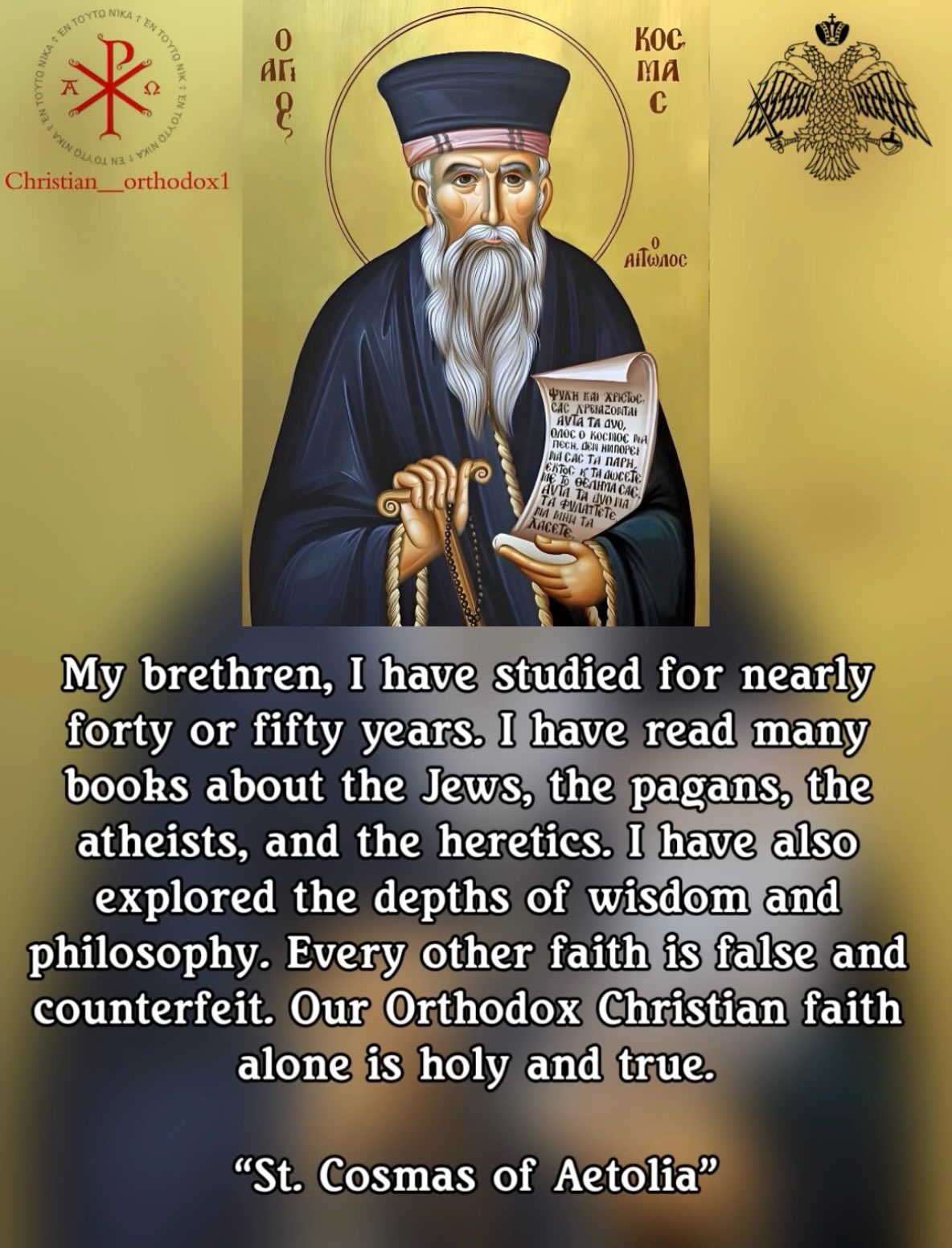
St. Cosmas of Aetolia: Orthodox faith alone true after decades of study

The post shares a quotation attributed to St. Cosmas of Aetolia. The quote opens with an address to "my brethren" and asserts that the speaker has studied for nearly forty or fifty years. It lists the subjects of that study: many books about the Jews, the pagans, the atheists, and the heretics, as well as an exploration of the depths of wisdom and philosophy. On the basis of this study, the speaker declares that every other faith is false and…

The post shares a quotation attributed to St. Cosmas of Aetolia. The quote opens with an address to "my brethren" and asserts that the speaker has studied for nearly forty or fifty years. It lists the subjects of that study: many books about the Jews, the pagans, the atheists, and the heretics, as well as an exploration of the depths of wisdom and philosophy.

On the basis of this study, the speaker declares that every other faith is false and counterfeit, and that the Orthodox Christian faith alone is holy and true. The quotation is followed by a series of hashtags that tag the post with the topics christian, orthodox, church, saints, and churchfathers. The source text contains no additional commentary, no replies, and no discussion thread.

The post functions as a standalone declaration of Orthodox exclusivity grounded in the personal intellectual journey of a recognized saint.

  • St. Cosmas of Aetolia claims nearly forty or fifty years of study
  • He read books about Jews, pagans, atheists, and heretics
  • He explored the depths of wisdom and philosophy
  • He concludes every other faith is false and counterfeit
  • He asserts the Orthodox Christian faith alone is holy and true
Read more
☦️An Orthodox Blog☦️ with Orthodoxy ☦︎ Instagram

Prophet Joel commemorated October 19; Great Doxology text presented

The post notes the commemoration of the Prophet Joel on 19 October. The accompanying video presents the text of the Great Doxology. The Doxology opens with the angelic hymn from Luke's nativity account: glory to God in the highest and on earth peace, goodwill among men. The prayer continues with praise, blessing, worship, glorification, and thanksgiving addressed to the Trinity, God the Father almighty, the only-begotten Son Jesus Christ, and…

The post notes the commemoration of the Prophet Joel on 19 October. The accompanying video presents the text of the Great Doxology. The Doxology opens with the angelic hymn from Luke's nativity account: glory to God in the highest and on earth peace, goodwill among men.

The prayer continues with praise, blessing, worship, glorification, and thanksgiving addressed to the Trinity, God the Father almighty, the only-begotten Son Jesus Christ, and the Holy Spirit. It then turns to Christ as Lamb of God and Son of the Father who takes away the sin of the world, asking for mercy, the reception of prayer, and acknowledging his session at the right hand of the Father.

Key moments

  1. Opens with the angelic doxology: glory to God in the highest, on earth peace, goodwill among men.
  2. Offers praise, blessing, worship, glorification, and thanksgiving for God's great glory.
  3. Addresses the Trinity: Lord Heavenly King God the Father almighty, Lord only-begotten Son Jesus Christ, and Holy Spirit.
  4. Invokes Christ as Lord God, Lamb of God, Son of the Father who takes away the sin of the world.
  5. Asks for mercy, the reception of prayer, and confesses Christ seated at the right hand of the Father.
☦️An Orthodox Blog☦️ with Orthodoxy ☦︎ Instagram

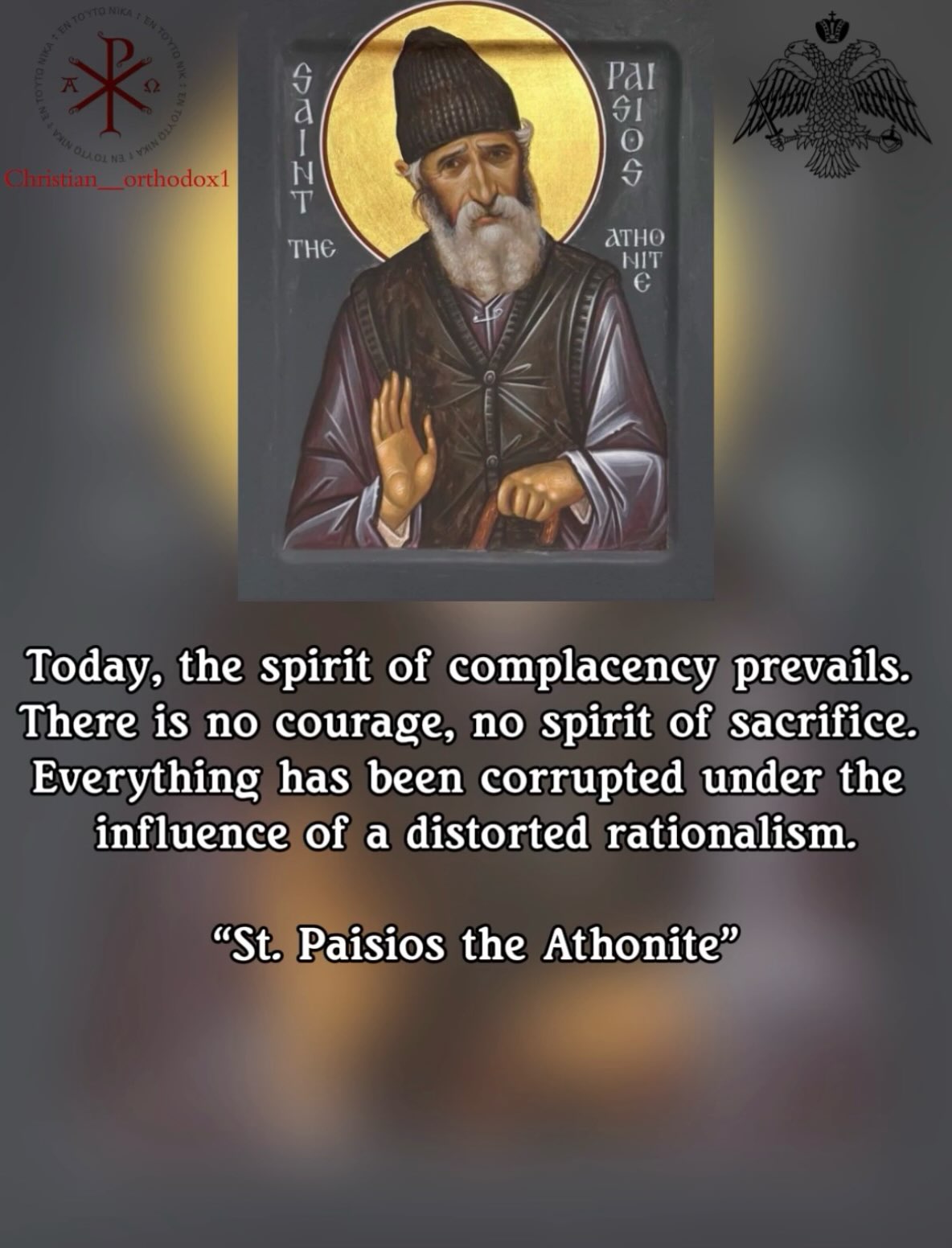
St. Paisios on complacency and corrupted rationalism

The post shares a brief statement attributed to St. Paisios the Athonite. The text reads: "Today, the spirit of complacency prevails. There is no courage, no spirit of sacrifice. Everything has been corrupted under the influence of a distorted rationalism." The passage identifies three related conditions: a prevailing complacency, an absence of courage and sacrificial spirit, and a corruption attributed to a distorted rationalism. No further…

The post shares a brief statement attributed to St. Paisios the Athonite. The text reads: "Today, the spirit of complacency prevails. There is no courage, no spirit of sacrifice. Everything has been corrupted under the influence of a distorted rationalism."

The passage identifies three related conditions: a prevailing complacency, an absence of courage and sacrificial spirit, and a corruption attributed to a distorted rationalism. No further commentary, context, or discussion is included in the source. The hashtags indicate the post is categorized under Christian, Orthodox, church, saints, and church fathers topics.

  • St. Paisios identifies a prevailing spirit of complacency
  • He notes the absence of courage and sacrificial spirit
  • He attributes corruption to distorted rationalism
☦️An Orthodox Blog☦️ with Orthodoxy ☦︎ Instagram

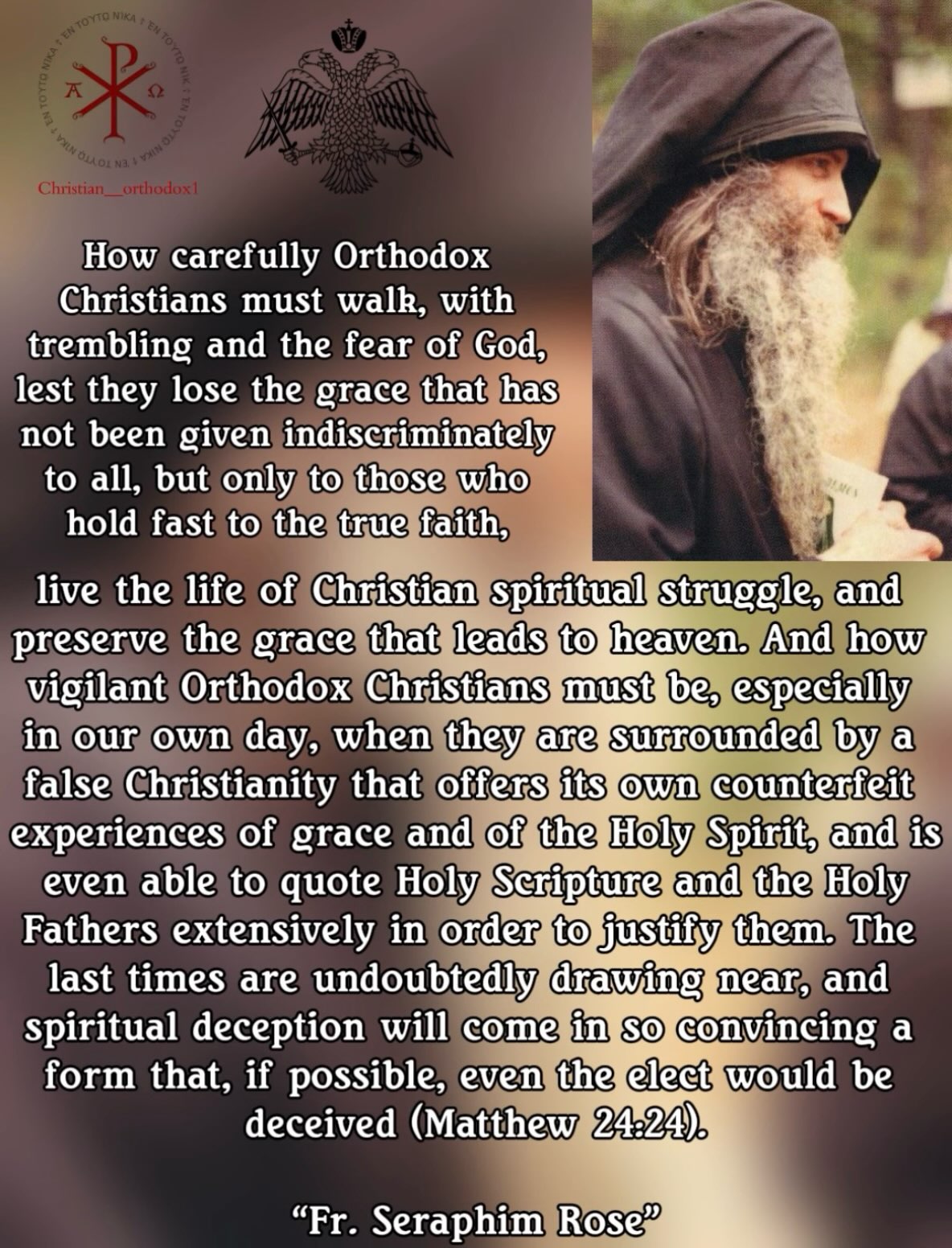
Fr. Seraphim Rose warns of counterfeit grace in the last times

Fr. Seraphim Rose writes that Orthodox Christians must walk carefully with trembling and fear of God, because grace is not given indiscriminately but only to those who hold the true faith, live the life of spiritual struggle, and preserve the grace that leads to heaven. He says Christians must be especially vigilant today, surrounded by a false Christianity that offers counterfeit experiences of grace and the Holy Spirit, and that can quote Holy…

Fr. Seraphim Rose writes that Orthodox Christians must walk carefully with trembling and fear of God, because grace is not given indiscriminately but only to those who hold the true faith, live the life of spiritual struggle, and preserve the grace that leads to heaven. He says Christians must be especially vigilant today, surrounded by a false Christianity that offers counterfeit experiences of grace and the Holy Spirit, and that can quote Holy Scripture and the Holy Fathers extensively to justify them.

He states that the last times are undoubtedly drawing near, and spiritual deception will come in so convincing a form that, if possible, even the elect would be deceived, citing Matthew 24:24.

  • Grace is given only to those who hold the true faith, struggle spiritually, and preserve grace.
  • False Christianity offers counterfeit experiences of grace and the Holy Spirit.
  • Deceivers quote Scripture and the Fathers to justify their claims.
  • The last times are near, and deception will be so convincing it could deceive the elect.
  • Christians must walk with trembling and fear of God, remaining vigilant.
Read more

Saint Mary's Nativity welcomes seekers home to Christ

Saint Mary's Nativity Antiochian Orthodox Church in Mays Hill, Sydney, posted a message addressing two groups: those who have entered the Church through Baptism and Chrismation, and those still searching. The post quotes St. Augustine: "You have made us for Yourself, O Lord, and our heart is restless until it rests in You." It describes the heart as made for God and invites people to come and see. An accompanying video features a speaker…

Saint Mary's Nativity Antiochian Orthodox Church in Mays Hill, Sydney, posted a message addressing two groups: those who have entered the Church through Baptism and Chrismation, and those still searching. The post quotes St. Augustine: "You have made us for Yourself, O Lord, and our heart is restless until it rests in You." It describes the heart as made for God and invites people to come and see.

An accompanying video features a speaker describing personal experience of God's love. The speaker says that when God loves them, they feel weightless. When God calls them chosen, they feel purpose. God has changed them into a new creation. The speaker declares that God will always be their favorite form of love.

Key moments

  1. The speaker asks why they love God
  2. When God loves them, they feel like they are floating
  3. When God calls them chosen, they feel like somebody with purpose
  4. God changed them into a new creation
  5. God will always be their favorite form of love
Read more
☦️An Orthodox Blog☦️ with Orthodoxy ☦︎ Instagram

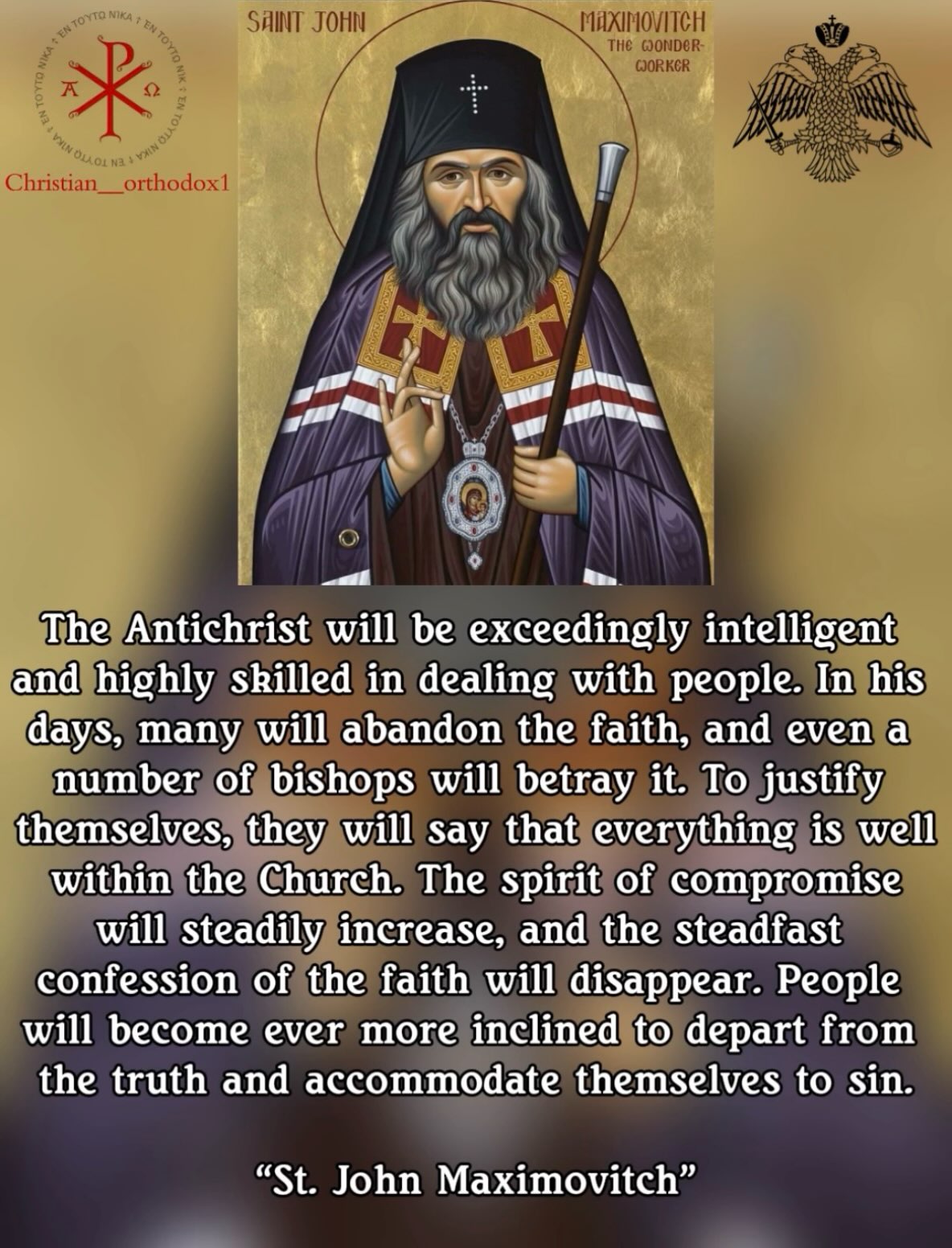
St. John Maximovitch on the Antichrist's deception and the falling away

The post presents a quotation attributed to St. John Maximovitch describing the Antichrist as exceedingly intelligent and highly skilled in dealing with people. According to the saint, in the Antichrist's days many will abandon the faith, and even a number of bishops will betray it. To justify themselves, these bishops will say that everything is well within the Church. The spirit of compromise will steadily increase, and the steadfast…

The post presents a quotation attributed to St. John Maximovitch describing the Antichrist as exceedingly intelligent and highly skilled in dealing with people. According to the saint, in the Antichrist's days many will abandon the faith, and even a number of bishops will betray it. To justify themselves, these bishops will say that everything is well within the Church.

The spirit of compromise will steadily increase, and the steadfast confession of the faith will disappear. People will become ever more inclined to depart from the truth and accommodate themselves to sin. The text appears as a standalone quotation with hashtags identifying it as Orthodox Christian content related to saints and church fathers.

  • The Antichrist will be exceedingly intelligent and skilled in dealing with people
  • Many will abandon the faith, including a number of bishops who will betray it
  • Betraying bishops will justify themselves by saying everything is well in the Church
  • The spirit of compromise will increase while steadfast confession disappears
  • People will increasingly depart from truth and accommodate themselves to sin
Read more
☦️An Orthodox Blog☦️ with Orthodoxy ☦︎ Instagram

Great Doxology chanted for the feast of Apostle Luke

The video presents a chant of the Great Doxology recorded on 18 October, the commemoration of the Apostle and Evangelist Luke. The speaker begins in English with the opening line "Glory be to you who has shown the light" and continues with the Trinitarian praises: "Glory in the highest to God, and on earth peace, goodwill among men." The English section continues with the invocation "O Lord God, Lamb of God, Son of the Father, who takes away the…

The video presents a chant of the Great Doxology recorded on 18 October, the commemoration of the Apostle and Evangelist Luke. The speaker begins in English with the opening line "Glory be to you who has shown the light" and continues with the Trinitarian praises: "Glory in the highest to God, and on earth peace, goodwill among men."

The English section continues with the invocation "O Lord God, Lamb of God, Son of the Father, who takes away the sin of the world, have mercy on us." At 0:34 the chant shifts to Greek, citing the biblical canticle from Daniel. The Greek verses begin with the refrain "Κύριον υμείτε και υπερυψούτε εις πάντα τους αιώνας. Ευλογείτε ήλιος και σελήνη, άστρα του ουρανού των Κυρίου."

The refrain repeats as the canticle calls on light and darkness, nights and days, all men and Israel to bless the Lord: "Τον Κύριον υμείτε και υπερυψούτε εις πάντα τους αιώνας. Ευλογείτε φως και σκότος, νύκτες και ημέρε τον Κυρίου. Τον Κύριον υμείτε και υπερυψούτε εις πάντα τους αιώνας. Ευλογείτε οι τον άνθρωπον, ευλογείτω Ισραήλ τον Κυρίου. Τον Κύριον υμείτε και υπερυψούτε εις πάντα τους αιώνας."

The final section at 1:39 concludes with a Trinitarian doxology in Greek: "Ευλογούμεν Πατέρα, Υιόν και Άγιον Πνεύμα τον Κύριον. Τον Κύριον υμνούμεν και υπερυψούμενοι εις πάντα τους αιώνας." The recording captures the transition between languages and the structure of the Great Doxology as used in Orthodox worship on the feast of the Evangelist.

Key moments

  1. 0:00 Opening English doxology: "Glory be to you who has shown the light. Glory in the highest to God, and on earth peace, goodwill among men."
  2. 0:34 Continuation in English: "O Lord God, Lamb of God, Son of the Father, who takes away the sin of the world, have mercy on us." Then Greek: "Κύριον υμείτε και υπερυψούτε εις πάντα τους αιώνας. Ευλογείτε ήλιος και σελήνη, άστρα του ουρανού των Κυρίου."
  3. 1:09 Greek verses calling on light and darkness, nights and days, all men and Israel to bless the Lord: "Τον Κύριον υμείτε και υπερυψούτε εις πάντα τους αιώνας. Ευλογείτε φως και σκότος, νύκτες και ημέρε τον Κυρίου. Τον Κύριον υμείτε και υπερυψούτε εις πάντα τους αιώνας. Ευλογείτε οι τον άνθρωπον, ευλογείτω Ισραήλ τον Κυρίου. Τον Κύριον υμείτε και υπερυψούτε εις πάντα τους αιώνας."
  4. 1:39 Final Trinitarian doxology in Greek: "Ευλογούμεν Πατέρα, Υιόν και Άγιον Πνεύμα τον Κύριον. Τον Κύριον υμνούμεν και υπερυψούμενοι εις πάντα τους αιώνας."
☦️An Orthodox Blog☦️ with Orthodoxy ☦︎ Instagram

17 October: Commemoration of the Prophet Hosea, with the hymn 'O Gladsome Light'

The post marks 17 October, the day the Church commemorates the Prophet Hosea. Attached to the commemoration is the text of the evening hymn 'Phos Hilaron' ('O Gladsome Light') in Greek. The hymn addresses Christ as the light of the holy glory of the immortal, heavenly, holy, blessed Father. It speaks of coming at the setting of the sun and seeing the light of evening, at which the faithful hymn the Father, the Son, and the Holy Spirit: God. It…

The post marks 17 October, the day the Church commemorates the Prophet Hosea. Attached to the commemoration is the text of the evening hymn 'Phos Hilaron' ('O Gladsome Light') in Greek. The hymn addresses Christ as the light of the holy glory of the immortal, heavenly, holy, blessed Father.

It speaks of coming at the setting of the sun and seeing the light of evening, at which the faithful hymn the Father, the Son, and the Holy Spirit: God. It states that God is worthy to be hymned at all times with fitting voices. The hymn calls Christ the Son of God and the giver of life, and says that therefore the world glorifies Him.

It closes with 'Alleluia' and 'Glory to You'. The post carries tags for Christian and Orthodox themes, saints, and the Church Fathers.

Key moments

  1. Christ is addressed as the light of the holy glory of the immortal, heavenly, holy, blessed Father.
  2. Having come at the setting of the sun and seen the light of evening, the faithful hymn the Father, the Son, and the Holy Spirit: God.
  3. God is worthy to be hymned at all times with fitting voices.
  4. The hymn calls Christ the Son of God and the giver of life, therefore the world glorifies Him, and closes with 'Alleluia' and 'Glory to You'.

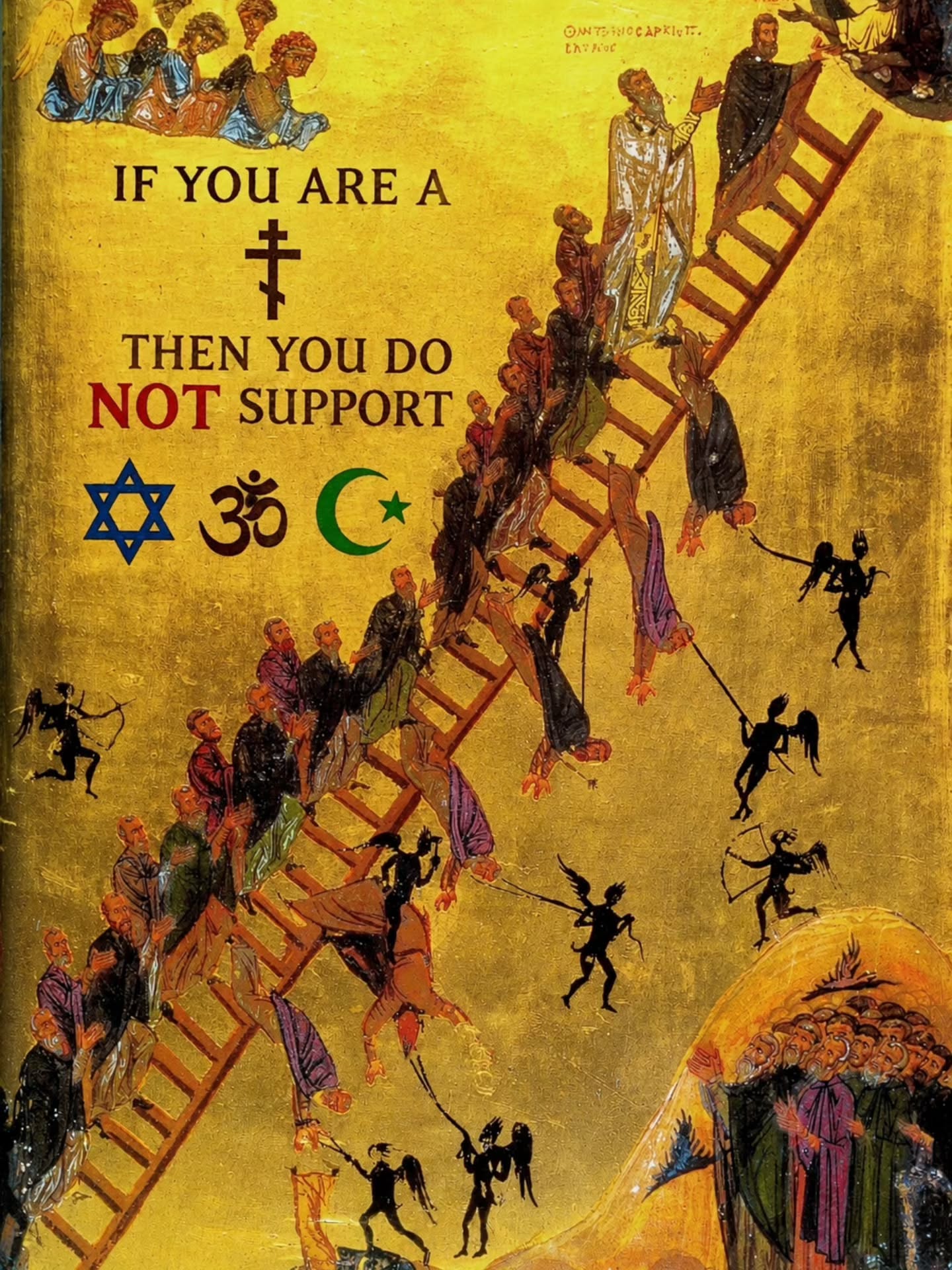
Christ is not one option among many: one Lord, one faith, one truth

Christianity does not present Christ as one option among many, one teacher among many, or one truth among many. Jesus Christ is the Way, the Truth, and the Life. There is one Lord, one faith, one baptism (Ephesians 4:5). Truth does not change with culture, feelings, or the spirit of the age. Scripture warns that behind idolatry and false worship there can be spiritual deception: "The things which the Gentiles sacrifice they sacrifice to demons…

Christianity does not present Christ as one option among many, one teacher among many, or one truth among many. Jesus Christ is the Way, the Truth, and the Life.

There is one Lord, one faith, one baptism (Ephesians 4:5). Truth does not change with culture, feelings, or the spirit of the age.

Scripture warns that behind idolatry and false worship there can be spiritual deception: "The things which the Gentiles sacrifice they sacrifice to demons and not to God" (1 Corinthians 10:20). That is why Christians are called to discernment: not every spiritual experience, teaching, or religion comes from God.

The apostles did not die proclaiming that every path leads to God. They proclaimed the crucified and risen Christ: "Nor is there salvation in any other, for there is no other name under heaven given among men by which we must be saved" (Acts 4:12).

Christ died. Christ conquered death. Christ is risen and alive forevermore. One Christ. One Gospel. One Faith. One Truth.

If you enjoy the content, feel free to follow and join the community. May Christ guide and strengthen you always.

  • Christ is the Way, the Truth, and the Life, not one option among many
  • One Lord, one faith, one baptism (Ephesians 4:5); truth does not change with culture or feelings
  • Behind idolatry there can be spiritual deception (1 Corinthians 10:20), so Christians need discernment
  • The apostles proclaimed salvation in Christ alone (Acts 4:12), not that every path leads to God
15 opinions in the discussion What's the problem with Judaism? It's the old testament anyway. Read the discussion

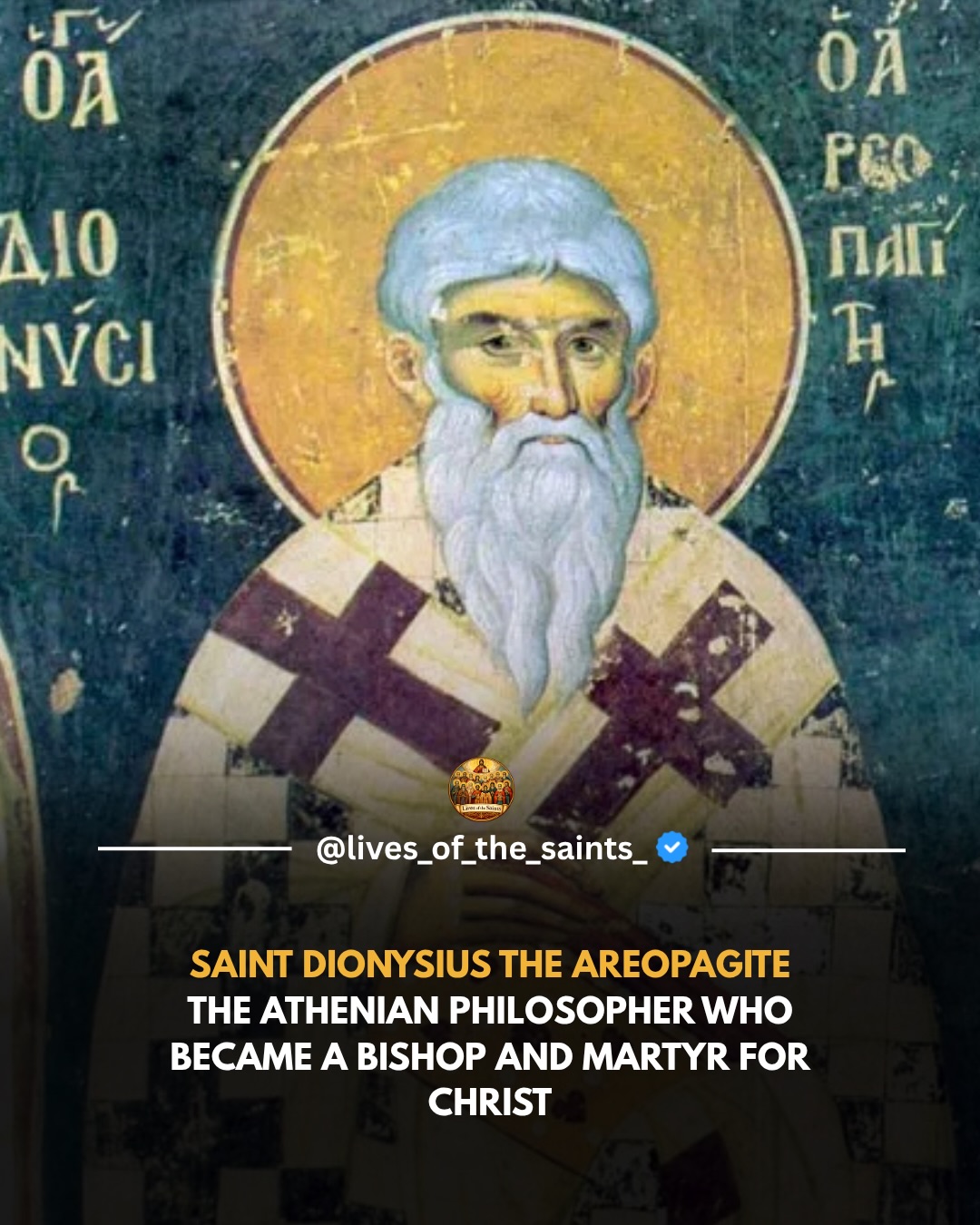
From the Areopagus to Martyrdom: The Life of Saint Dionysius of Athens

A hagiographic account of Saint Dionysius the Areopagite traces his path from pagan philosopher to bishop and martyr. Born into a respected pagan family in Athens and educated in philosophy, Dionysius studied in Egypt, where he witnessed the darkness that covered the earth at the Crucifixion of Christ. He cried out: "Either God, the Creator of the world, is suffering, or this world is coming to an end." Back in Athens he married Damaris and…

A hagiographic account of Saint Dionysius the Areopagite traces his path from pagan philosopher to bishop and martyr. Born into a respected pagan family in Athens and educated in philosophy, Dionysius studied in Egypt, where he witnessed the darkness that covered the earth at the Crucifixion of Christ. He cried out: "Either God, the Creator of the world, is suffering, or this world is coming to an end."

Back in Athens he married Damaris and joined the Areopagus, the city's highest court. When the Apostle Paul preached in Athens, Dionysius believed, was baptized with his household, and was later consecrated Bishop of Athens by Paul. He gave up worldly honor to serve Christ. Church tradition says he traveled to Jerusalem to meet the Most Holy Theotokos and was present at her Dormition.

After Paul's martyrdom, Dionysius wanted to give his own life for Christ. With Saint Rusticus the Presbyter and Saint Eleutherius the Deacon he went to Gaul, where they preached and converted many pagans. In Paris he founded a small church. At age ninety, the three were arrested, tortured, and beheaded for Christ; the account of his life places their martyrdom in the year 96. The post ends with the reflection that even the greatest human wisdom finds its fulfillment in knowing Jesus Christ, followed by a prayer asking the holy hieromartyrs to intercede with God.

The account draws on traditional lives of the saints and presents the events without sources, so readers should understand the details, such as his presence at the Dormition and the date 96, as Church tradition rather than documented history.

  • Dionysius saw the darkness at the Crucifixion while studying in Egypt and exclaimed that either God the Creator was suffering or the world was ending.
  • He married Damaris, served on the Areopagus in Athens, and believed at the Apostle Paul's preaching; Paul consecrated him Bishop of Athens.
  • Church tradition says he was present at the Dormition of the Theotokos in Jerusalem.
  • With Rusticus and Eleutherius he preached in Gaul and founded a church in Paris.
  • At ninety years of age the three were tortured and beheaded; the account dates their martyrdom to the year 96.
Read more
☦️An Orthodox Blog☦️ with Orthodoxy ☦︎ Instagram

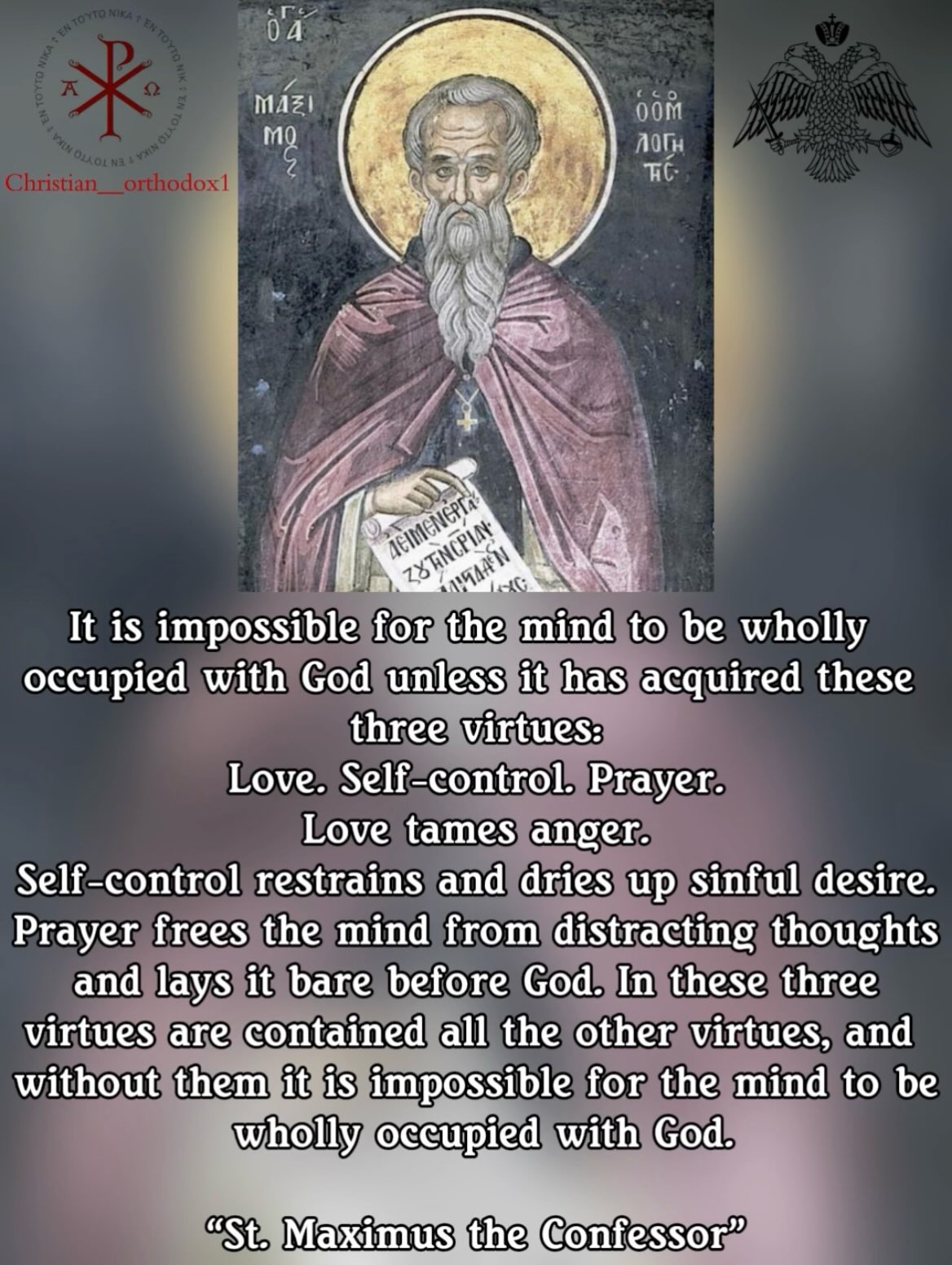
St. Maximus the Confessor: three virtues that let the mind hold fast to God

The post quotes St. Maximus the Confessor on what the mind needs before it can be wholly occupied with God. He names three virtues: love, self-control, and prayer. Each has a distinct work. Love tames anger. Self-control restrains and dries up sinful desire. Prayer frees the mind from distracting thoughts and lays it bare before God. The quoted text states that in these three virtues all the other virtues are contained, and that without them the…

The post quotes St. Maximus the Confessor on what the mind needs before it can be wholly occupied with God. He names three virtues: love, self-control, and prayer. Each has a distinct work. Love tames anger. Self-control restrains and dries up sinful desire.

Prayer frees the mind from distracting thoughts and lays it bare before God. The quoted text states that in these three virtues all the other virtues are contained, and that without them the mind cannot be wholly occupied with God. The post presents the quotation as a single block of text attributed to St. Maximus the Confessor, followed by hashtags marking it as Orthodox Christian content on faith, the church, and the church fathers.

There is no discussion thread attached to the post; the quotation itself is the whole of the content. The teaching follows the ascetic pattern common in the fathers: the passions are first restrained (anger by love, desire by self-control), and then the mind, freed from distracting thoughts, is brought before God in prayer. The claim that all other virtues are contained in these three frames love, self-control, and prayer as a summary of the whole ascetic life rather than as three duties among many.

  • St. Maximus the Confessor names three virtues required for the mind to be wholly occupied with God: love, self-control, and prayer.
  • Love tames anger.
  • Self-control restrains and dries up sinful desire.
  • Prayer frees the mind from distracting thoughts and lays it bare before God.
  • All other virtues are contained in these three, and without them the mind cannot be wholly occupied with God.
☦️An Orthodox Blog☦️ with Orthodoxy ☦︎ Instagram

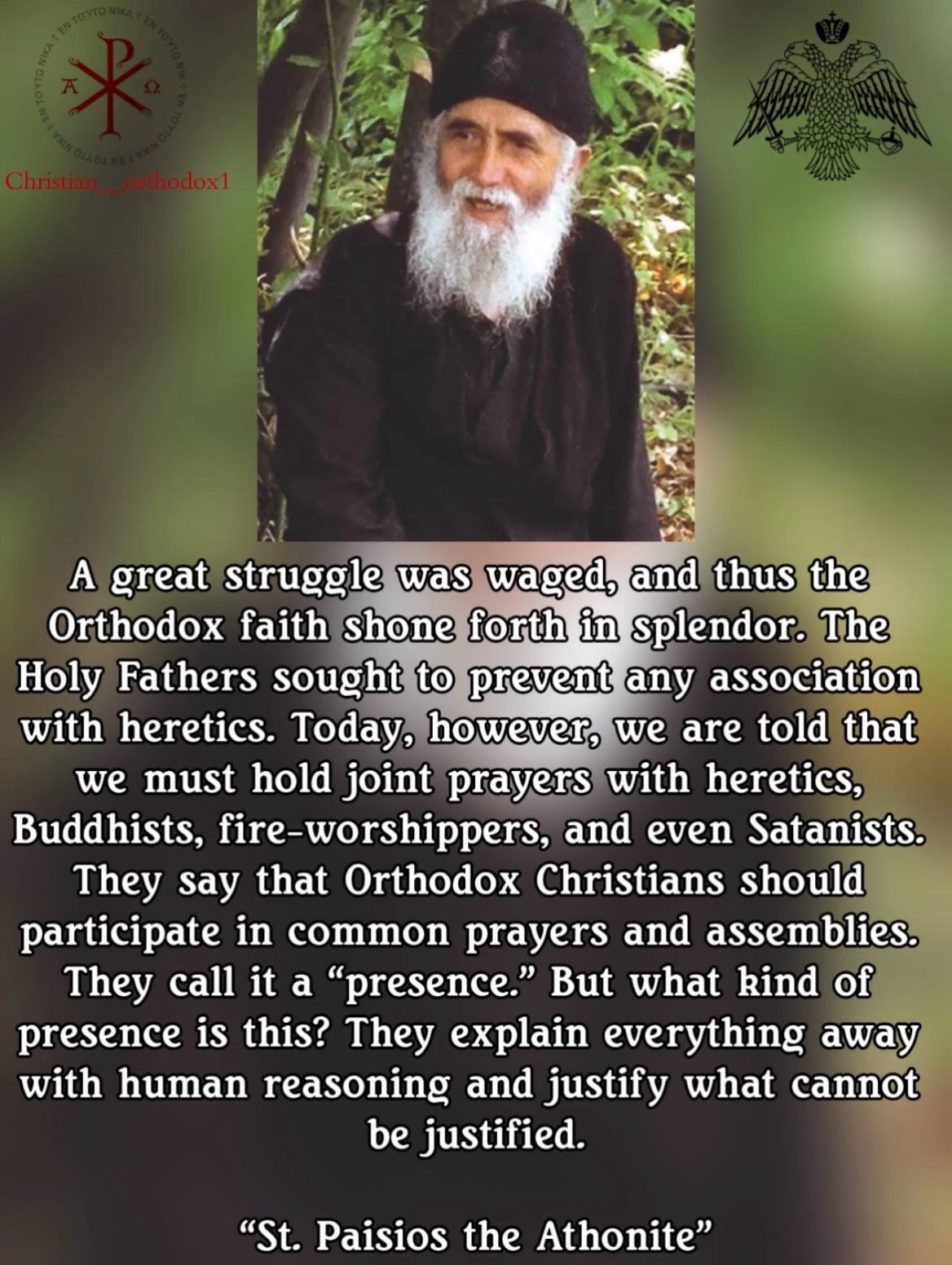
St. Paisios the Athonite on joint prayer with heretics

The post quotes St. Paisios the Athonite on the subject of common prayer between Orthodox Christians and non-Orthodox. It contrasts two situations. In the past, the Holy Fathers waged a great struggle so that the Orthodox faith would shine in splendor, and they sought to prevent any association with heretics. Today, the author says, Orthodox Christians are told they must take part in joint prayers with heretics, Buddhists, fire-worshippers, and…

The post quotes St. Paisios the Athonite on the subject of common prayer between Orthodox Christians and non-Orthodox. It contrasts two situations. In the past, the Holy Fathers waged a great struggle so that the Orthodox faith would shine in splendor, and they sought to prevent any association with heretics. Today, the author says, Orthodox Christians are told they must take part in joint prayers with heretics, Buddhists, fire-worshippers, and even Satanists, and are urged to join common prayers and assemblies.

Those who promote this call it a presence. The author questions what kind of presence this is, and says that people explain everything away with human reasoning and justify what cannot be justified. The quote is attributed to St. Paisios the Athonite, and the post carries tags for Christianity, Orthodoxy, the Church, faith, and the Church Fathers.

The post is short and presents one side of the ecumenism debate: it does not describe any specific event, council, or named person beyond the saint quoted, and it does not develop an argument beyond the contrast between the Fathers' stance and current practice. Readers opening the thread will find a short quotation raising the question of whether Orthodox participation in interfaith prayer is defensible, framed by the author as an abandonment of the Fathers' struggle to keep the faith separate from heresy.

  • The post quotes St. Paisios the Athonite on joint prayer with non-Orthodox.
  • It says the Holy Fathers struggled to prevent any association with heretics.
  • It states that today Orthodox Christians are urged to join common prayers with heretics, Buddhists, fire-worshippers, and even Satanists.
  • The author questions the word presence used for such participation.
  • The author says people justify with human reasoning what cannot be justified.
Read more