WeOrthodox
EN UA

☦️An Orthodox Blog☦️

Instagram ↗ 116 discussions

"La Ortodoxia es lo que Jesús enseñó, los Apóstoles predicaron y los Padres guardaron"

☦️An Orthodox Blog☦️ with Orthodoxy ☦︎ Instagram

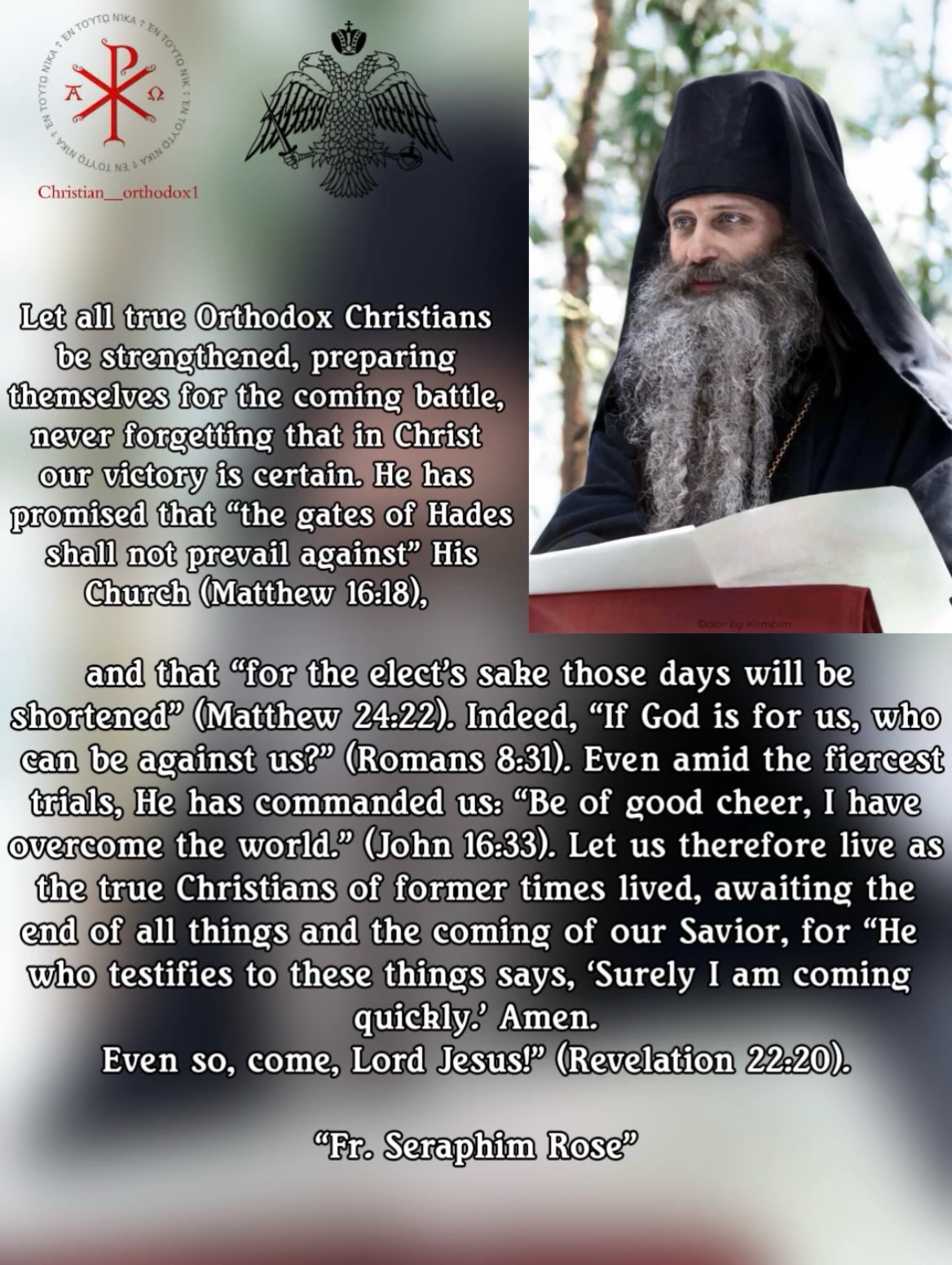
Fr. Seraphim Rose: In Christ Our Victory Is Certain
The post shares a short exhortation attributed to Fr. Seraphim Rose, addressed to Orthodox Christians as they prepare for what the author calls the coming battle. The central claim is that victory is certain because it rests in Christ, and the whole message is built from Scripture quotations strung together to support that claim. The author first cites Christ's promise that the gates of Hades shall not prevail against His Church, from Matthew…

The post shares a short exhortation attributed to Fr. Seraphim Rose, addressed to Orthodox Christians as they prepare for what the author calls the coming battle. The central claim is that victory is certain because it rests in Christ, and the whole message is built from Scripture quotations strung together to support that claim.

The author first cites Christ's promise that the gates of Hades shall not prevail against His Church, from Matthew 16:18, and the promise that for the elect's sake those days will be shortened, from Matthew 24:22. To answer fear in the face of trials, the text quotes Romans 8:31, If God is for us, who can be against us, and Christ's word from John 16:33, Be of good cheer, I have overcome the world, describing this as a command given even amid the fiercest trials.

From these quotations the author draws a practical conclusion: Christians should live as the true Christians of former times lived, awaiting the end of all things and the coming of the Savior. The post closes with the words of Revelation 22:20, Surely I am coming quickly, followed by the response, Amen. Even so, come, Lord Jesus. There is no discussion attached to the post in the source material; it stands as a single devotional text made up almost entirely of direct Scripture citations, with the author's own sentences only introducing and connecting them.

The named author of the quotation is Fr. Seraphim Rose, and the post carries tags for Christian, Orthodox, church, faith, and church fathers. The tone throughout is one of encouragement meant to strengthen readers, holding together the assurance of the Church's preservation, the shortening of the days for the elect's sake, and readiness for the Lord's return as one message rather than separate points.

  • Fr. Seraphim Rose is quoted encouraging Orthodox Christians to prepare for the coming battle, certain of victory in Christ.
  • The text cites Matthew 16:18, the gates of Hades shall not prevail against the Church.
  • It cites Matthew 24:22 on the days being shortened for the elect's sake, and Romans 8:31, If God is for us, who can be against us.
  • Christ's words from John 16:33, Be of good cheer, I have overcome the world, are presented as a command amid trials.
  • The exhortation ends with Revelation 22:20: Surely I am coming quickly. Amen. Even so, come, Lord Jesus.
Read more
☦️An Orthodox Blog☦️ with Come & See Instagram

A call to support the Fiji Orthodox Mission and Saint Tabitha's Home

The author shares a fundraiser appeal for the Fiji Orthodox Mission, describing plans to return to Fiji next year, God willing, to serve alongside the mission, spend time with the children at Saint Tabitha's Home, and support families experiencing hardship. The appeal quotes Matthew 25:35, 'For I was hungry and you gave Me food; I was thirsty and you gave Me drink,' and frames charity as putting faith into action through practical acts of love:…

The author shares a fundraiser appeal for the Fiji Orthodox Mission, describing plans to return to Fiji next year, God willing, to serve alongside the mission, spend time with the children at Saint Tabitha's Home, and support families experiencing hardship. The appeal quotes Matthew 25:35, 'For I was hungry and you gave Me food; I was thirsty and you gave Me drink,' and frames charity as putting faith into action through practical acts of love: providing food, school supplies and essential items for children and families who need support.

The author also hopes to explore, together with the mission, sustainable ways for families to provide for themselves. Readers are invited to donate through a GoFundMe link or directly to the Fiji Orthodox Mission through the mission's website. Those unable to give are asked to share the post or keep the mission in their prayers.

The author states there is no pressure and that every act of kindness matters, and closes with 'Glory to God for all things.' The work is connected to Holy Trinity Orthodox Church and Saint Tabitha's Home in Saweni, Fiji. The discussion around the post centers on how Christians can respond to the call to love their neighbour, care for the vulnerable and treat every person with dignity, and on concrete ways to help: financial support, sharing the appeal, and prayer.

Key moments

  1. Repeated invocation: 'True Light, true Light, true Light.'
  2. Prayer to Christ the God for mercy.
  3. Christ is called the light of life and the light of souls.
  4. Petition that He remain with them unto the ages.
  5. Closing appeal to the Lord.
Read more
☦️An Orthodox Blog☦️ with Orthodoxy ☦︎ Instagram

16 October: Martyr Longinus the Centurion Who Stood at the Cross

The post marks 16 October and the commemoration of the Martyr Longinus the Centurion, described as the soldier who stood at the Cross of the Lord. The accompanying liturgical recording is in Greek and consists of short, partly fragmentary phrases. It opens with a verse confessing that God acts in heaven and on earth according to His will. Verses of love for the Lord follow, in which the speaker addresses God directly. The recording then…

The post marks 16 October and the commemoration of the Martyr Longinus the Centurion, described as the soldier who stood at the Cross of the Lord. The accompanying liturgical recording is in Greek and consists of short, partly fragmentary phrases. It opens with a verse confessing that God acts in heaven and on earth according to His will.

Verses of love for the Lord follow, in which the speaker addresses God directly. The recording then continues with a confession of God as strength, hope, and protector, spoken in the first person. It ends with the usual liturgical opening, the invocation of the Father, the Son, and the Holy Spirit.

Because the Greek text is fragmentary and partly unclear, the description of the recording limits itself to these identifiable elements and reports them as they were spoken. The post itself carries tags linking it to Christian and Orthodox themes, the church, faith, and the Church Fathers.

Key moments

  1. 0:07 A verse is recited: 'Our God is in heaven and on earth; all things whatsoever He wills, He does.'
  2. 0:07 Words follow about God in heaven, and the prayer 'I love You, Lord.'
  3. 0:37 The speaker confesses God as 'my strength, my God, my hope and my protector.'
  4. 0:37 The passage closes with 'In the name of the Father and of the Son and of the Holy Spirit. Amen.'
☦️An Orthodox Blog☦️ with Orthodoxy ☦︎ Instagram

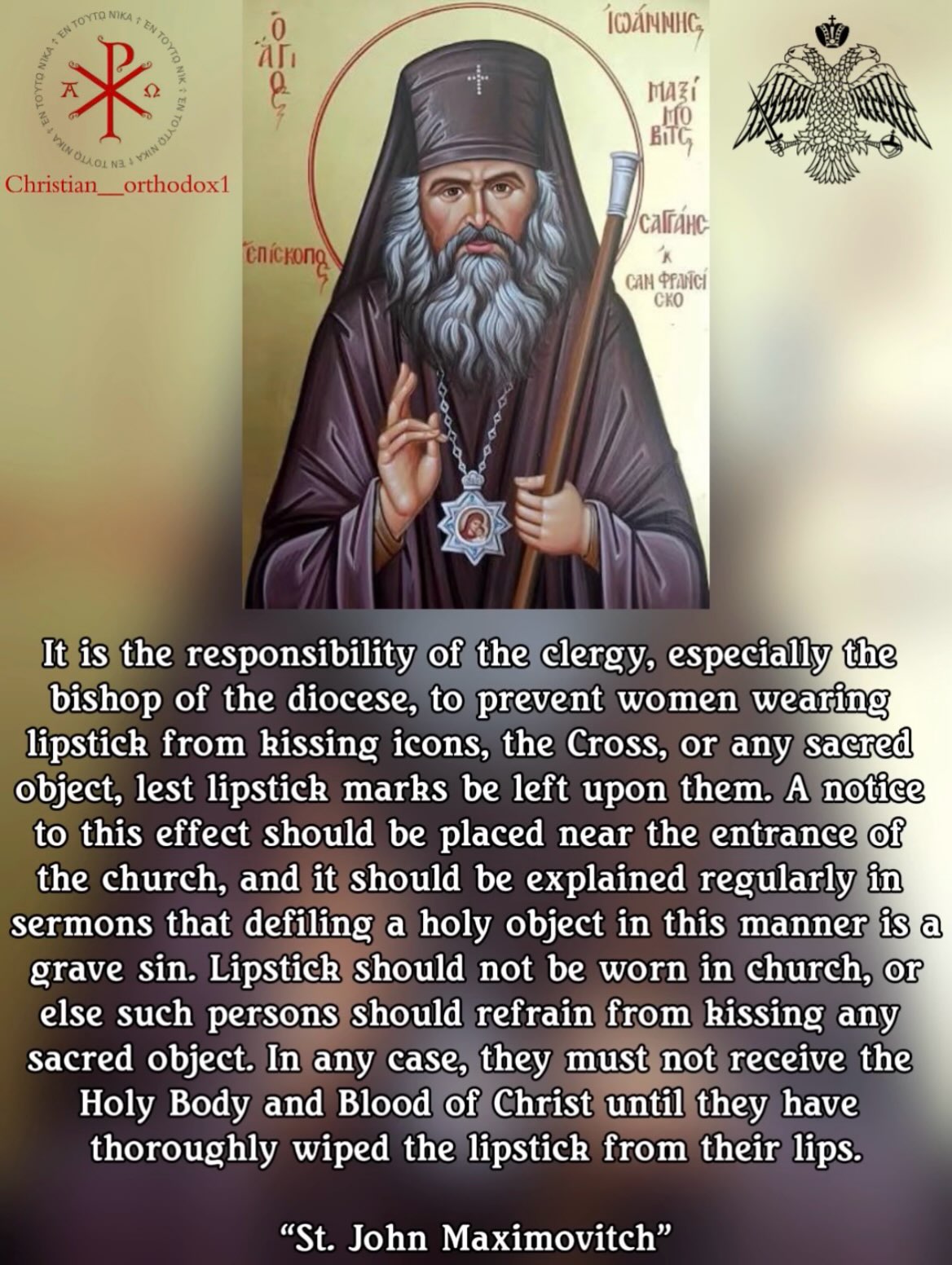
St. John Maximovitch on lipstick and kissing the icons

The post quotes St. John Maximovitch on the practice of women wearing lipstick kissing icons, the Cross, and other sacred objects. According to the quotation, it is the responsibility of the clergy, and especially the bishop of the diocese, to prevent this, because lipstick marks are left upon the holy objects. St. John directs that a notice about this be placed near the entrance of the church and that the matter be explained regularly in…

The post quotes St. John Maximovitch on the practice of women wearing lipstick kissing icons, the Cross, and other sacred objects. According to the quotation, it is the responsibility of the clergy, and especially the bishop of the diocese, to prevent this, because lipstick marks are left upon the holy objects. St. John directs that a notice about this be placed near the entrance of the church and that the matter be explained regularly in sermons, since defiling a holy object in this manner is called a grave sin.

He gives two options for women: either they should not wear lipstick in church, or they should refrain from kissing any sacred object. He adds a further restriction concerning Communion: in any case, such persons must not receive the Holy Body and Blood of Christ until they have thoroughly wiped the lipstick from their lips. The post consists of this quotation alone, attributed to St. John Maximovitch, followed by hashtags on Christian and Orthodox themes.

There is no discussion in the thread; the text stands as a short instruction attributed to the saint on reverence toward sacred objects and preparation for receiving Communion.

  • St. John Maximovitch says clergy, especially the diocesan bishop, must prevent women wearing lipstick from kissing icons, the Cross, or any sacred object.
  • A notice to this effect should be placed near the church entrance.
  • The matter should be explained regularly in sermons, since defiling a holy object this way is called a grave sin.
  • Women should either not wear lipstick in church or refrain from kissing sacred objects.
  • They must not receive the Holy Body and Blood of Christ until they have thoroughly wiped the lipstick from their lips.
☦️An Orthodox Blog☦️ with Orthodoxy ☦︎ Instagram

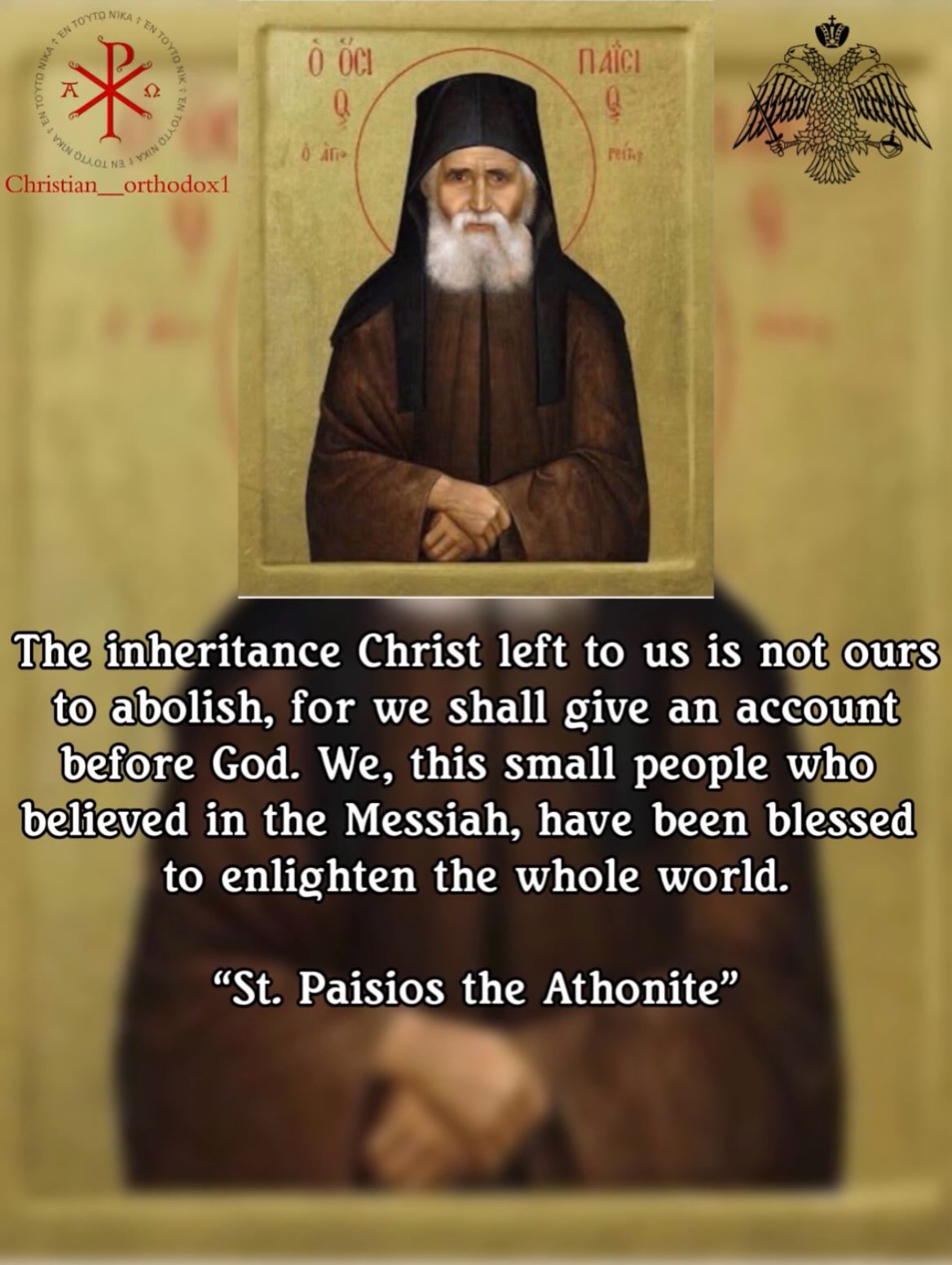
St. Paisios: The Inheritance Christ Left Us Is Not Ours to Abolish

The post quotes St. Paisios the Athonite on the inheritance Christ left to believers. The quote warns that this inheritance is not ours to abolish, because we shall give an account before God. It then speaks of the small people who believed in the Messiah and were blessed to enlighten the whole world. The post is a short devotional quotation shared with tags for Orthodox Christianity, the church, faith, and the Church Fathers. There is no…

The post quotes St. Paisios the Athonite on the inheritance Christ left to believers. The quote warns that this inheritance is not ours to abolish, because we shall give an account before God. It then speaks of the small people who believed in the Messiah and were blessed to enlighten the whole world.

The post is a short devotional quotation shared with tags for Orthodox Christianity, the church, faith, and the Church Fathers. There is no further discussion in the source text; the card presents the quotation itself and its attribution to St. Paisios the Athonite.

  • St. Paisios the Athonite is quoted on the inheritance Christ left to believers.
  • The quote says this inheritance is not ours to abolish, for we shall give an account before God.
  • It describes the believers in the Messiah as a small people blessed to enlighten the whole world.
  • The post carries tags for Orthodox Christianity, the church, faith, and the Church Fathers.

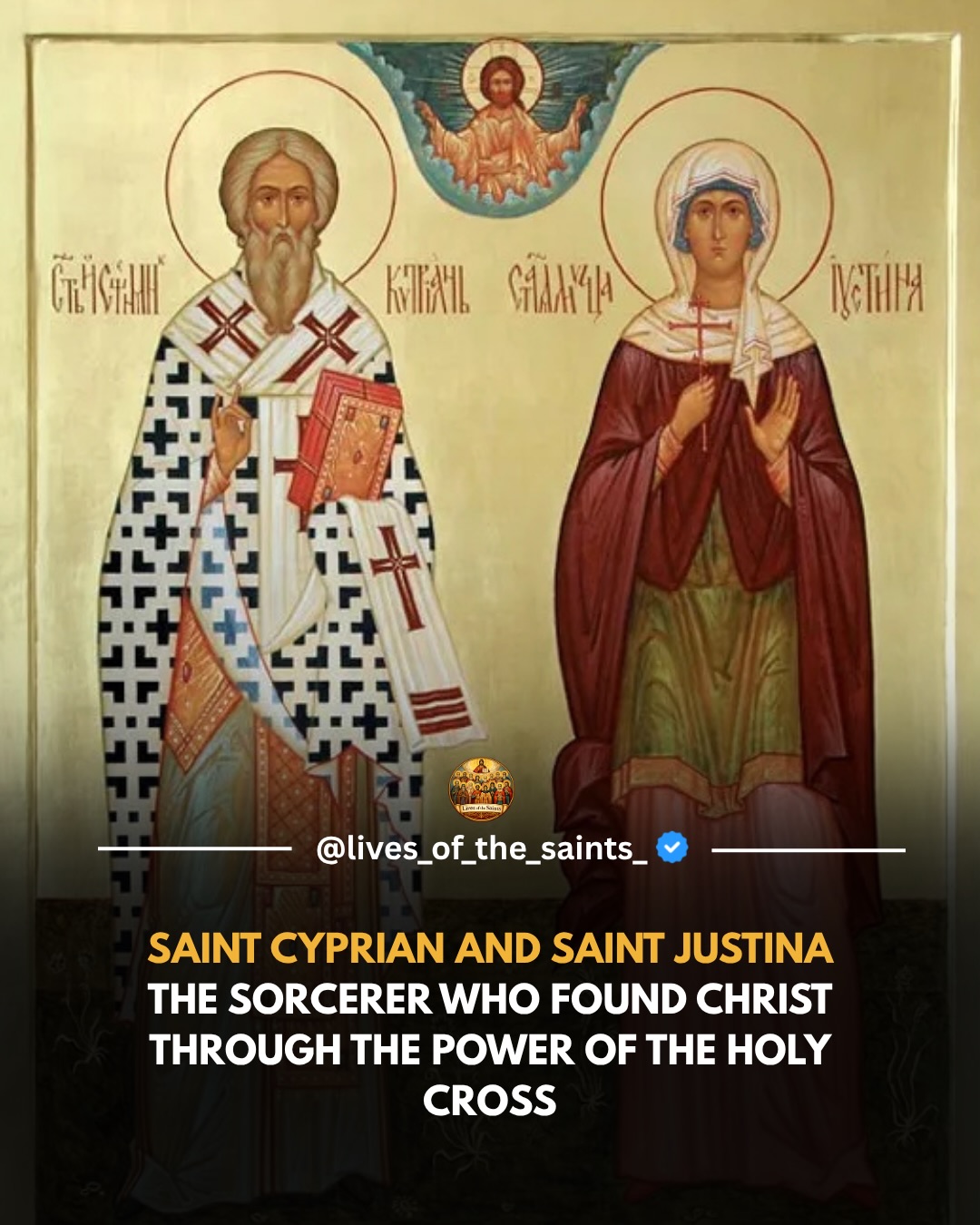
From sorcerer to bishop: Saint Cyprian's conversion through Saint Justina's faith

The post recounts the lives of Saints Cyprian and Justina. Cyprian, a sorcerer from Carthage, traveled to Antioch where Justina lived with her parents. Justina had been raised in a pagan household but discovered the Christian faith, embraced Christ, and brought her parents to believe in Him. All three were baptized and began a new life in the Lord. Cyprian practiced magic and called upon evil spirits. A pagan young man named Aglaidas became…

The post recounts the lives of Saints Cyprian and Justina. Cyprian, a sorcerer from Carthage, traveled to Antioch where Justina lived with her parents. Justina had been raised in a pagan household but discovered the Christian faith, embraced Christ, and brought her parents to believe in Him. All three were baptized and began a new life in the Lord. Cyprian practiced magic and called upon evil spirits.

A pagan young man named Aglaidas became obsessed with Justina's beauty. When she refused his advances, he turned to Cyprian for help. Cyprian sent evil spirits against Justina, hoping to tempt her and turn her away from her purity and faith.

Every time the demons approached, Justina drove them away through prayer and the sign of the Holy Cross. Nothing could overcome her faith in Christ. Seeing that even the powers of darkness were powerless before the Cross, Cyprian began to understand the truth. He abandoned his former life, received Holy Baptism, and eventually became a priest and bishop of the Church.

The man who once served evil spirits became a servant of the living God. Later, both Cyprian and Justina were arrested for their Christian faith, tortured, and finally beheaded in Nicomedia toward the end of the third century. The account concludes that their lives remind us that no darkness is greater than the light of Christ, no sin is beyond sincere repentance, and no evil power can overcome the grace of God.

  • Cyprian, a Carthaginian sorcerer, attempted to use demons against Justina in Antioch
  • Justina, a convert from paganism, repelled the demons through prayer and the Cross
  • Cyprian converted, was baptized, and became a priest and bishop
  • Both saints were martyred by beheading in Nicomedia in the late third century
  • The narrative illustrates the power of the Cross over evil spirits
Read more

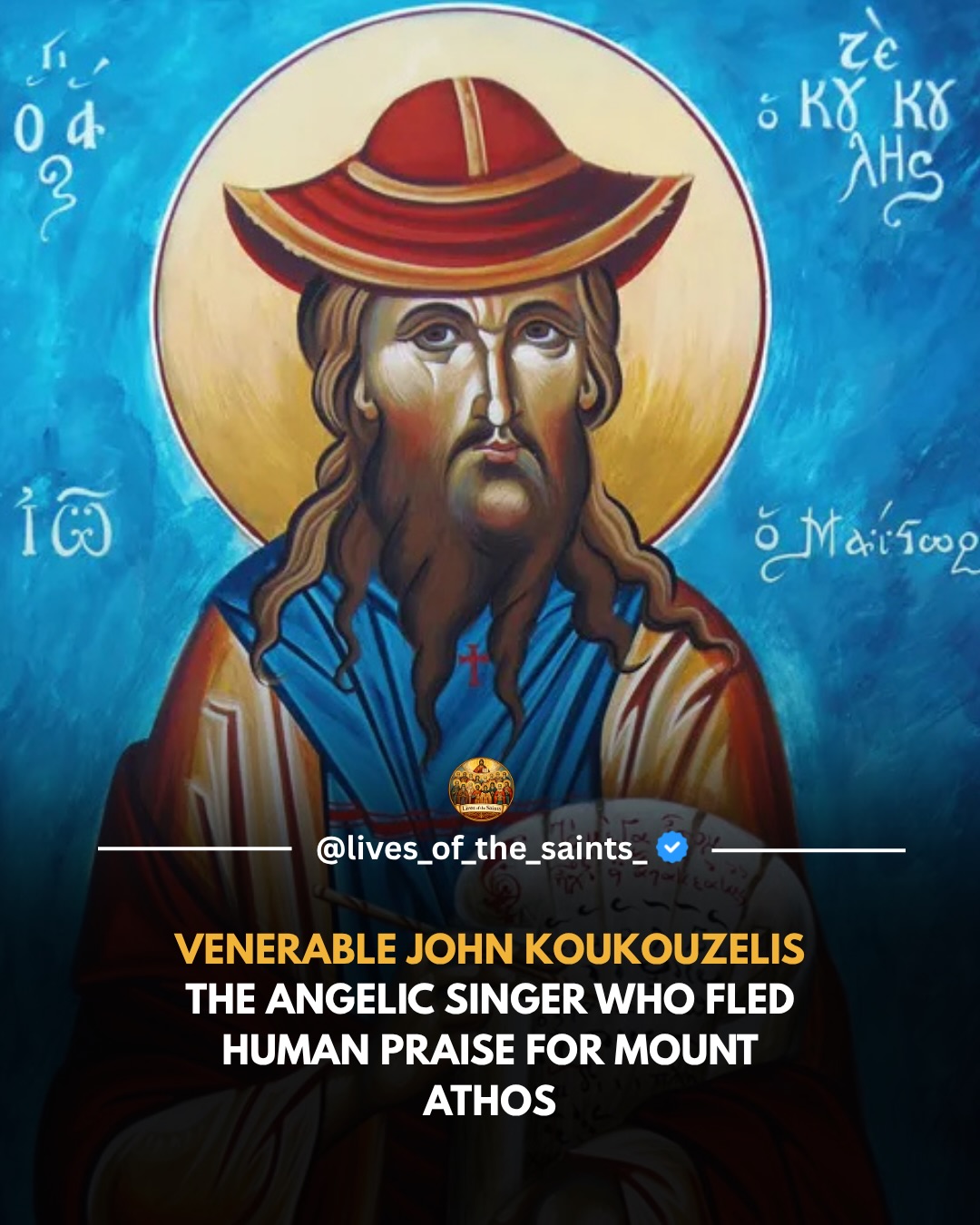
Saint John Koukouzelis: From Court Singer to Humble Shepherd on Mount Athos

Saint John Koukouzelis was a Slav from the region of Debar. As a young boy he was taken to the music school in Constantinople where his beautiful voice and gift for singing made him beloved at the imperial court. Despite this recognition he feared the danger of human praise. Instead of seeking honor, comfort, and recognition he fled to the Holy Mountain, Mount Athos. There he entered the Great Lavra, not as a famous singer, but humbly as a…

Saint John Koukouzelis was a Slav from the region of Debar. As a young boy he was taken to the music school in Constantinople where his beautiful voice and gift for singing made him beloved at the imperial court. Despite this recognition he feared the danger of human praise. Instead of seeking honor, comfort, and recognition he fled to the Holy Mountain, Mount Athos.

There he entered the Great Lavra, not as a famous singer, but humbly as a shepherd. Hidden from the world he lived as both monk and shepherd, giving himself to prayer, obedience, and spiritual struggle. Because of his humility and love for God the Most Holy Theotokos appeared to him twice.

Saint John reposed in the 12th century, leaving behind the memory of a soul that chose silence over fame and Christ over worldly glory. The post reminds readers that the gifts God gives are not for pride but for worship, humility, and the salvation of the soul.

  • Saint John Koukouzelis was a Slav from the Debar region.
  • He was taken to Constantinople's music school as a boy and became a favored singer at the imperial court.
  • Fearing human praise, he fled to Mount Athos and entered the Great Lavra as a humble shepherd.
  • The Theotokos appeared to him twice due to his humility and love for God.
  • He reposed in the 12th century, exemplifying the use of God-given gifts for worship and salvation.
Read more

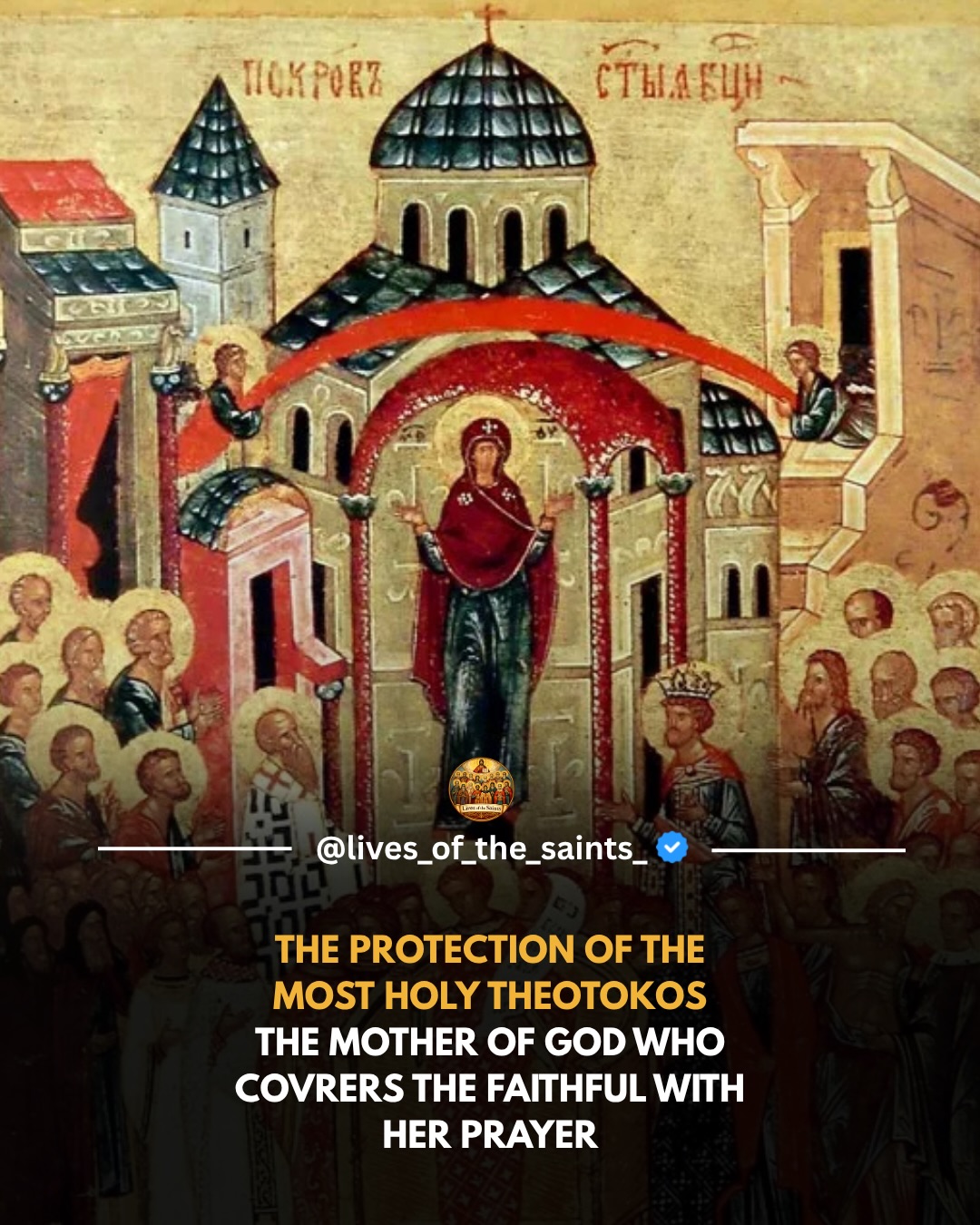
The Protection of the Theotokos: Vision at Blachernae in 911

The post describes the feast of the Protection of the Most Holy Theotokos, celebrated on October 1. It begins by stating that the Church has always glorified the Theotokos as the protector and defender of the Christian people, interceding for sinners and asking God's mercy upon the world. Her help has been shown countless times to individuals and nations, in peace and war, in monasteries and deserts, and in crowded cities. The feast commemorates…

The post describes the feast of the Protection of the Most Holy Theotokos, celebrated on October 1. It begins by stating that the Church has always glorified the Theotokos as the protector and defender of the Christian people, interceding for sinners and asking God's mercy upon the world. Her help has been shown countless times to individuals and nations, in peace and war, in monasteries and deserts, and in crowded cities.

The feast commemorates a specific event from the year 911 during the reign of Emperor Leo the Wise. An all-night vigil was held in the Church of the Theotokos at Blachernae in Constantinople. The church was filled with people. At the back stood Saint Andrew the Fool-for-Christ with his disciple Epiphanius.

During the night, the Most Holy Theotokos appeared above the people, holding her omophorion spread out in her hands as though covering the faithful. She was clothed in heavenly beauty, shining with indescribable light, surrounded by apostles, saints, martyrs, and virgins. Seeing this vision, Saint Andrew pointed to her and asked Epiphanius: "Do you see, brother, the Queen and Lady of all, praying for the whole world?"

Epiphanius answered: "I see, and I am amazed." The feast reminds the faithful that the Theotokos has not abandoned them. She covers, protects, comforts, and prays for all who call upon her in trouble, sorrow, and need. The post ends with the invocation: Most Holy Theotokos, save us.

  • The feast honors the Theotokos as protector and intercessor for the Christian people.
  • It commemorates her appearance at the Blachernae church in Constantinople in 911.
  • Saint Andrew the Fool-for-Christ and Epiphanius witnessed her holding her omophorion over the faithful.
  • She appeared surrounded by apostles, saints, martyrs, and virgins in heavenly light.
  • The feast affirms her ongoing protection and prayer for all who call upon her.
Read more

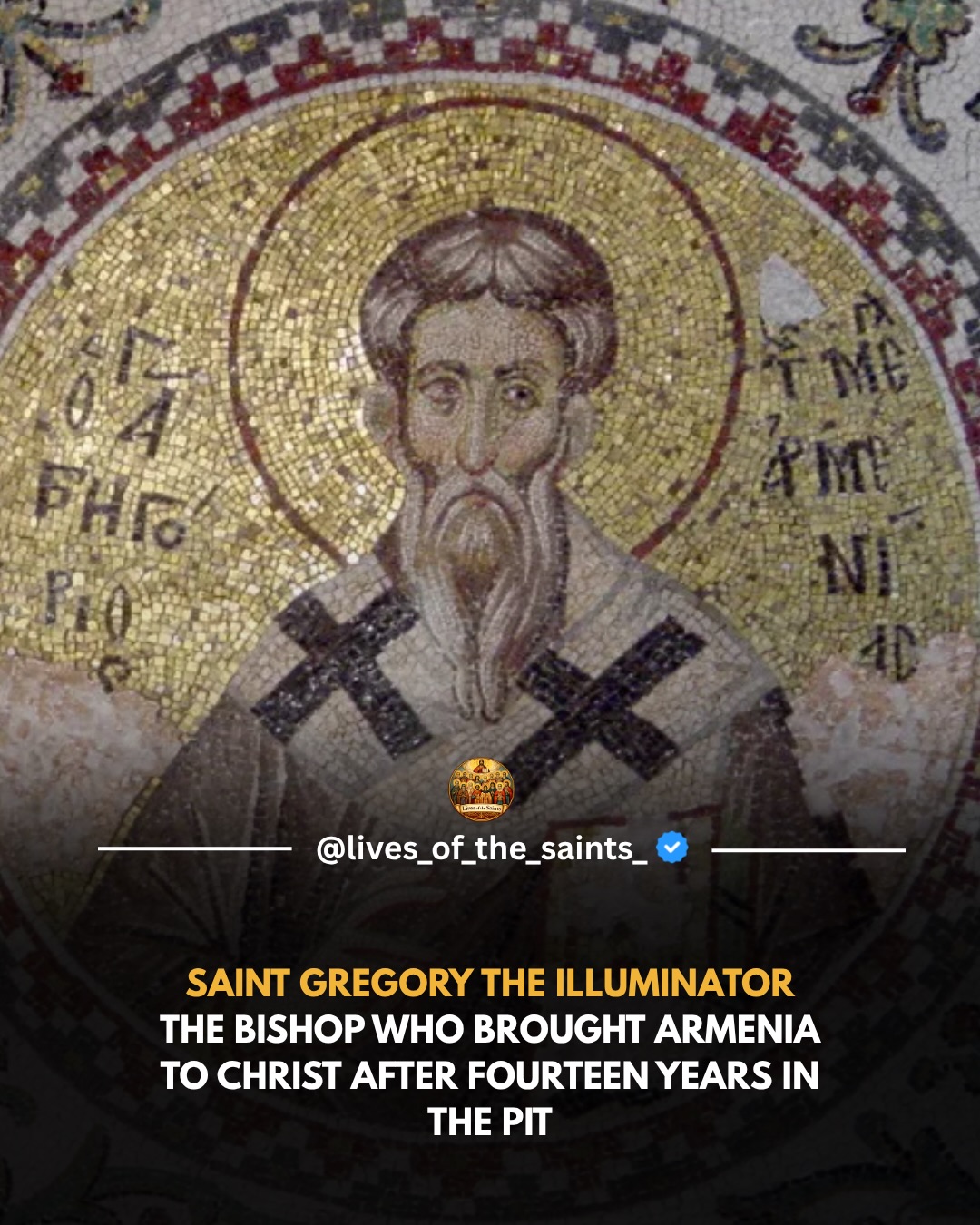
Saint Gregory the Illuminator: from pit to bishop of Armenia

The post recounts the life of Saint Gregory the Illuminator. Born into a noble family tied to Persian and Armenian royalty, Gregory fled to Caesarea in Cappadocia during a family conflict. There he encountered Christianity, was baptized, and married. After his wife died, he returned to Armenia and served King Tiridates faithfully. When the king learned Gregory was a Christian, he ordered him to deny Christ and worship idols. Gregory refused.…

The post recounts the life of Saint Gregory the Illuminator. Born into a noble family tied to Persian and Armenian royalty, Gregory fled to Caesarea in Cappadocia during a family conflict. There he encountered Christianity, was baptized, and married.

After his wife died, he returned to Armenia and served King Tiridates faithfully. When the king learned Gregory was a Christian, he ordered him to deny Christ and worship idols. Gregory refused. After many tortures, the king threw him into a deep pit filled with poisonous creatures, where Gregory survived for fourteen years.

Later, Tiridates persecuted Christians and killed the abbess Gaiania with thirty-seven sisters. The king then fell into madness and lived like a wild beast. A vision given to the king's sister revealed that Tiridates would not be healed until Gregory was released.

Once freed, Gregory healed the king and baptized him. By the king's will and God's grace, Gregory became Bishop of Armenia and spread Christianity throughout the land. He reposed in old age in the year 335 after a life marked by suffering, patience, miracles, and apostolic work. The post concludes with a reflection that God can turn a prison into preparation, suffering into mission, and a persecutor into a servant of Christ.

  • Gregory was born into nobility connected to Persian and Armenian royal houses
  • He converted to Christianity in Caesarea, married, and later served King Tiridates
  • The king imprisoned Gregory in a pit with poisonous creatures for fourteen years after he refused to worship idols
  • Tiridates killed abbess Gaiania and thirty-seven sisters, then fell into madness
  • A vision led to Gregory's release; he healed and baptized the king, then became Bishop of Armenia in 335
Read more
☦️An Orthodox Blog☦️ with Orthodoxy ☦︎ Instagram

Commemoration of Martyr Lucian of Antioch with Greek chants

The post marks the commemoration of the Martyr Lucian the Presbyter of Antioch on 15 October. The accompanying video presents two liturgical texts chanted in Greek. The first is Psalm 17:1-2 according to the Septuagint: "I will love Thee, O Lord, my strength; the Lord is my firmament, my refuge, and my deliverer. My God is my helper and I will hope in Him." The second is the Trisagion hymn: "Holy God, Holy Mighty, Holy Immortal, have mercy on…

The post marks the commemoration of the Martyr Lucian the Presbyter of Antioch on 15 October. The accompanying video presents two liturgical texts chanted in Greek. The first is Psalm 17:1-2 according to the Septuagint: "I will love Thee, O Lord, my strength; the Lord is my firmament, my refuge, and my deliverer.

My God is my helper and I will hope in Him." The second is the Trisagion hymn: "Holy God, Holy Mighty, Holy Immortal, have mercy on us," followed by the doxology "Glory to the Father and the Son and the Holy Spirit." The post includes hashtags identifying the content as Christian, Orthodox, church-related, and connected to the church fathers.

Key moments

  1. 0:00 Psalm 17:1-2 (LXX) chanted in Greek: "I will love Thee, O Lord, my strength; the Lord is my firmament, my refuge, and my deliverer. My God is my helper and I will hope in Him."
  2. 0:30 The Trisagion hymn chanted in Greek: "Holy God, Holy Mighty, Holy Immortal, have mercy on us. Glory to the Father and the Son and the Holy Spirit."
☦️An Orthodox Blog☦️ with Orthodoxy ☦︎ Instagram

Great Doxology chanted in English and Greek

The video presents the Great Doxology, a hymn of praise used in Orthodox Christian worship. The text is chanted first in English, then in the original Greek. The hymn addresses the Trinity: God the Father Almighty, Jesus Christ the only-begotten Son and Lamb of God, and the Holy Spirit. It asks for mercy, receives prayer, and affirms that Christ alone is holy, Lord, and most high. The English text opens with "Glory be to You who has shown the…

The video presents the Great Doxology, a hymn of praise used in Orthodox Christian worship. The text is chanted first in English, then in the original Greek. The hymn addresses the Trinity: God the Father Almighty, Jesus Christ the only-begotten Son and Lamb of God, and the Holy Spirit.

It asks for mercy, receives prayer, and affirms that Christ alone is holy, Lord, and most high. The English text opens with "Glory be to You who has shown the light, Glory in the highest to God, and on earth peace good will among men." It continues with praise: "We praise You, we bless You, we worship You, we glorify You, we give thanks for Your great glory."

The hymn addresses God the Father Almighty, the Heavenly King. It addresses the only-begotten Son, Jesus Christ, and the Holy Spirit, calling Christ the Lamb of God who takes away the sin of the world. The petition asks: "have mercy on us, receive our prayer, You who sit at the right hand of the Father."

The confession states: "You alone are holy, You alone are Lord, You alone are most high, Jesus Christ, with the Holy Spirit, in the glory of God the Father. Amen." The Greek text begins "Δοξολογία ἐν ὑψίστοις Θεῷ καὶ ἐπὶ γῆς εἰρήνη ἐν ἀνθρώποις εὐδοκία" and concludes with the same Trinitarian confession in Greek: "Ὅτι σὺ εἶ μόνος Ἅγιος. Σὺ εἶ μόνος Κύριος. Σὺ εἶ μόνος ὕψιστος, Ἰησοῦ Χριστέ, μετὰ τοῦ Ἁγίου Πνεύματος, εἰς δόξαν Θεοῦ Πατρός. Ἀμήν."

Key moments

  1. 0:00 The English text begins: Glory be to You who has shown the light, Glory in the highest to God, and on earth peace good will among men.
  2. 0:00 The hymn continues with praise: We praise You, we bless You, we worship You, we glorify You, we give thanks for Your great glory.
  3. 0:00 It addresses God the Father Almighty, the Heavenly King.
  4. 0:32 It addresses the only-begotten Son, Jesus Christ, and the Holy Spirit, calling Christ the Lamb of God who takes away the sin of the world.
  5. 0:32 The petition: have mercy on us, receive our prayer, You who sit at the right hand of the Father.
  6. 0:32 The confession: You alone are holy, You alone are Lord, You alone are most high, Jesus Christ, with the Holy Spirit, in the glory of God the Father. Amen.
  7. 1:12 The Greek text begins: Δοξολογία ἐν ὑψίστοις Θεῷ καὶ ἐπὶ γῆς εἰρήνη ἐν ἀνθρώποις εὐδοκία.
  8. 2:16 The Greek concludes with the same Trinitarian confession: Ὅτι σὺ εἶ μόνος Ἅγιος. Σὺ εἶ μόνος Κύριος. Σὺ εἶ μόνος ὕψιστος, Ἰησοῦ Χριστέ, μετὰ τοῦ Ἁγίου Πνεύματος, εἰς δόξαν Θεοῦ Πατρός. Ἀμήν.

Commemoration of Saint Cosmas the Hymnographer, October 14

The post marks the commemoration of Saint Cosmas the Hymnographer, Bishop of Maiuma, on October 14. The accompanying video presents the text of the Great Doxology. It opens with the angelic hymn: glory to God in the highest, and on earth peace, good will among men. The prayer continues with praise, blessing, worship, glorification, and thanksgiving for God's great glory. It addresses the Lord heavenly King, God the Father almighty. It addresses…

The post marks the commemoration of Saint Cosmas the Hymnographer, Bishop of Maiuma, on October 14. The accompanying video presents the text of the Great Doxology. It opens with the angelic hymn: glory to God in the highest, and on earth peace, good will among men. The prayer continues with praise, blessing, worship, glorification, and thanksgiving for God's great glory.

It addresses the Lord heavenly King, God the Father almighty. It addresses the only-begotten Son, Jesus Christ, and the Holy Spirit. It addresses the Lord God, Lamb of God, Son of the Father, who takes away the sin of the world.

The video summary and points follow the sequence of the Doxology, listing each address and acclamation in order.

Key moments

  1. Glory to God in the highest, and on earth peace, good will among men.
  2. We praise you, we bless you, we worship you, we glorify you, we give thanks to you for your great glory.
  3. Address to the Lord heavenly King, God the Father almighty.
  4. Address to the only-begotten Son, Jesus Christ, and the Holy Spirit.
  5. Address to the Lord God, Lamb of God, Son of the Father, who takes away the sin of the world.

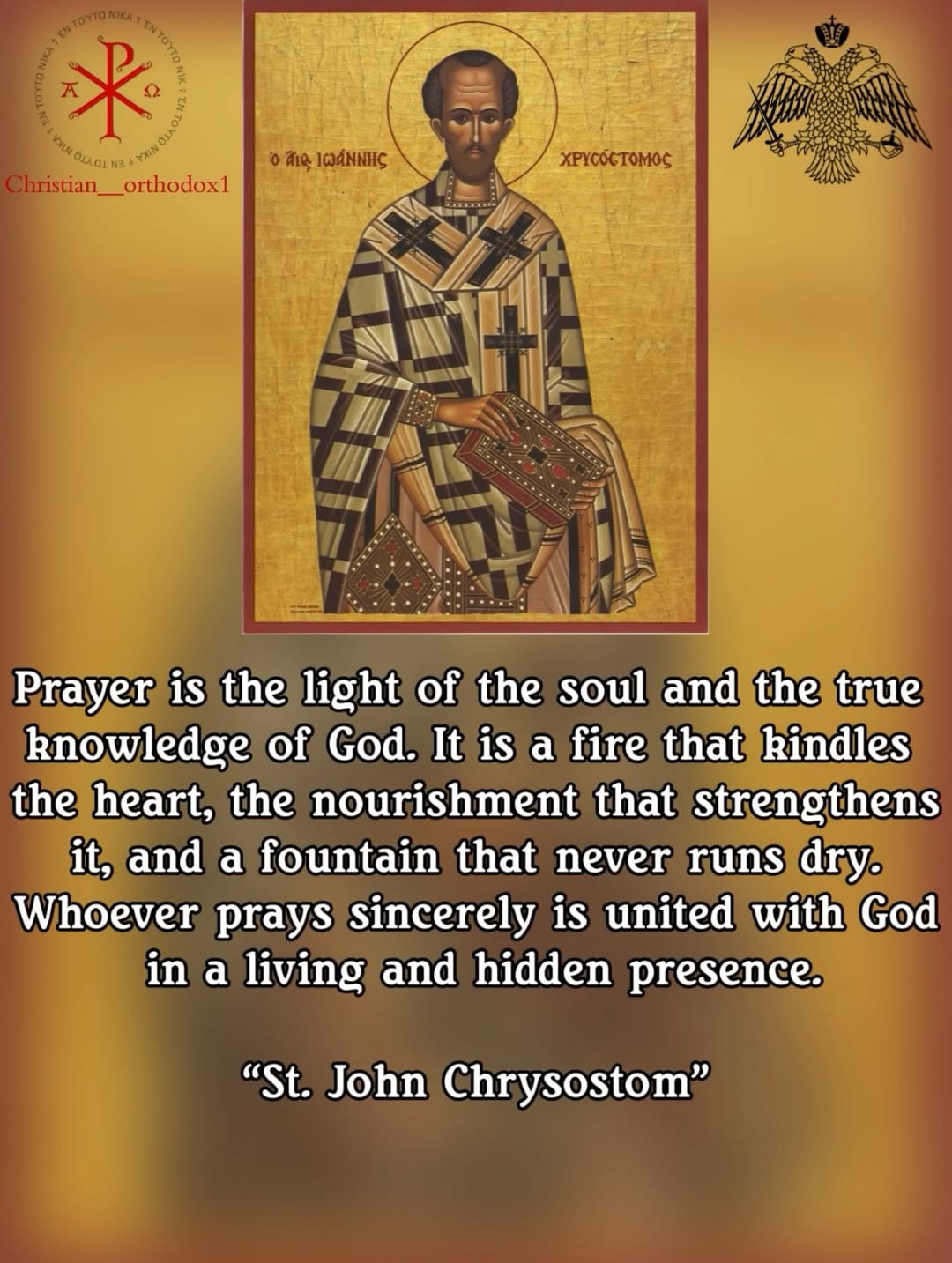
St. John Chrysostom on prayer as light, fire, and fountain

The post shares a passage attributed to St. John Chrysostom describing prayer. The text calls prayer the light of the soul and the true knowledge of God. It compares prayer to a fire that kindles the heart, nourishment that strengthens it, and a fountain that never runs dry.

The passage concludes that whoever prays sincerely is united with God in a living and hidden presence. The post includes hashtags identifying it as Orthodox Christian content from the church fathers.

  • Prayer is called the light of the soul and true knowledge of God
  • Prayer is compared to fire, nourishment, and an unfailing fountain
  • Sincere prayer unites a person with God in a living, hidden presence
  • The passage is attributed to St. John Chrysostom
  • The post is tagged as Orthodox Christian teaching from the church fathers

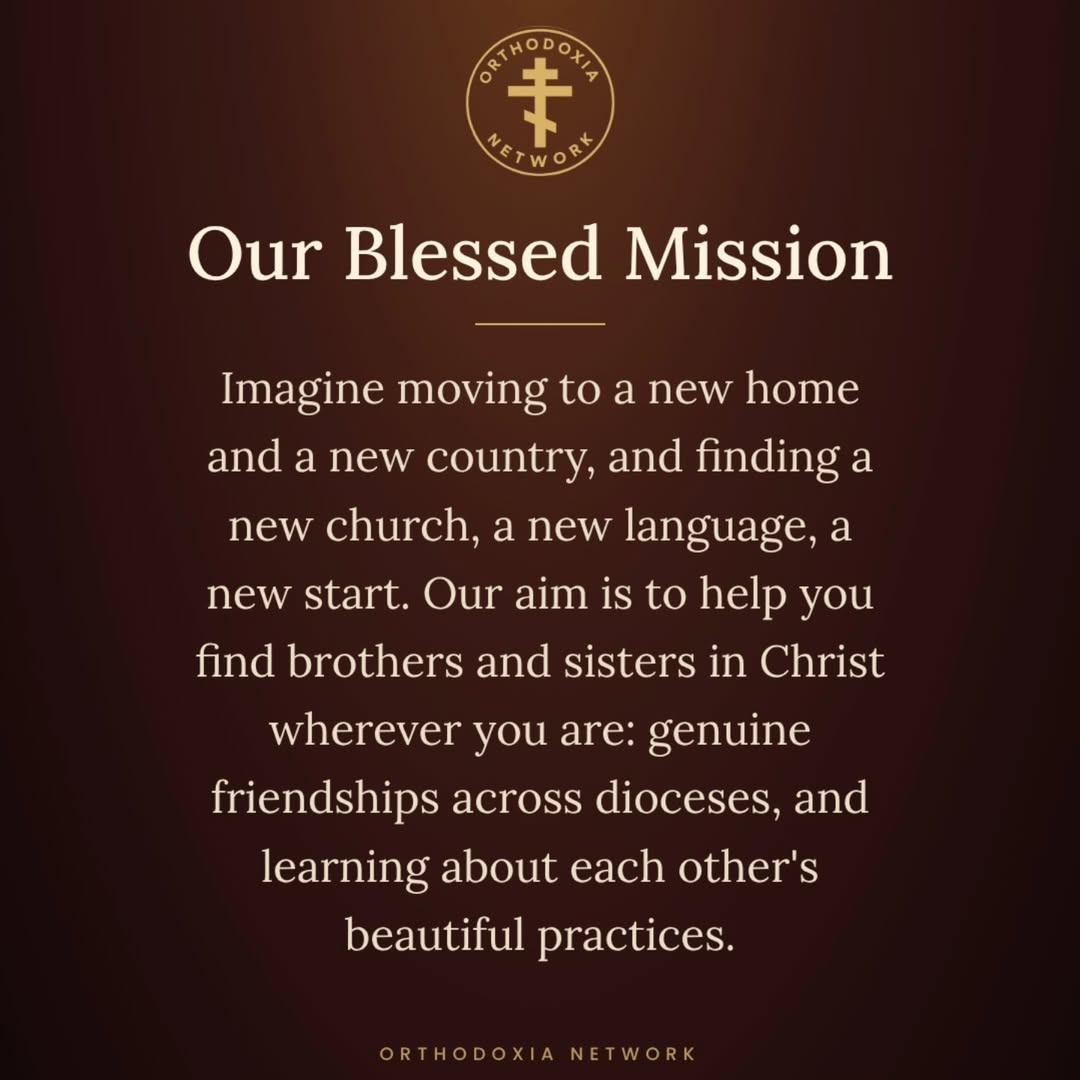
Orthodoxia Network connects Orthodox Christians who relocate

The post introduces Orthodoxia Network, a new initiative created for Orthodox Christians who move to a new country and encounter a new language and a new church environment. Even the Church can feel strange in a new place, and the faith that was always home can feel distant. The network exists so that wherever people are, they can find brothers and sisters in Christ who welcome them, pray with them, and walk alongside them. The mission is to…

The post introduces Orthodoxia Network, a new initiative created for Orthodox Christians who move to a new country and encounter a new language and a new church environment. Even the Church can feel strange in a new place, and the faith that was always home can feel distant. The network exists so that wherever people are, they can find brothers and sisters in Christ who welcome them, pray with them, and walk alongside them.

The mission is to build authentic friendships across dioceses so that Orthodox Christians from many traditions can learn from each other's beautiful customs and remain united as one Church. This work is done with the blessing of the parishes with which they collaborate. The network consists of representatives from dioceses of many Orthodox traditions, with a base in England and in the European Union, and they are growing.

Their patron saint is Saint Justin Popović, a Serbian monk and theologian who remained faithful to Christ under the pressure of the communist regime. The post concludes with an invitation to join the family at the Orthodoxia Network handle.

  • Network helps Orthodox Christians who relocate find community and familiarity
  • Mission builds friendships across dioceses and traditions with parish blessings
  • Representatives from many Orthodox traditions based in England and EU
  • Patron saint is St. Justin Popović, Serbian monk faithful under communism
  • Invitation to join at orthodoxia.network

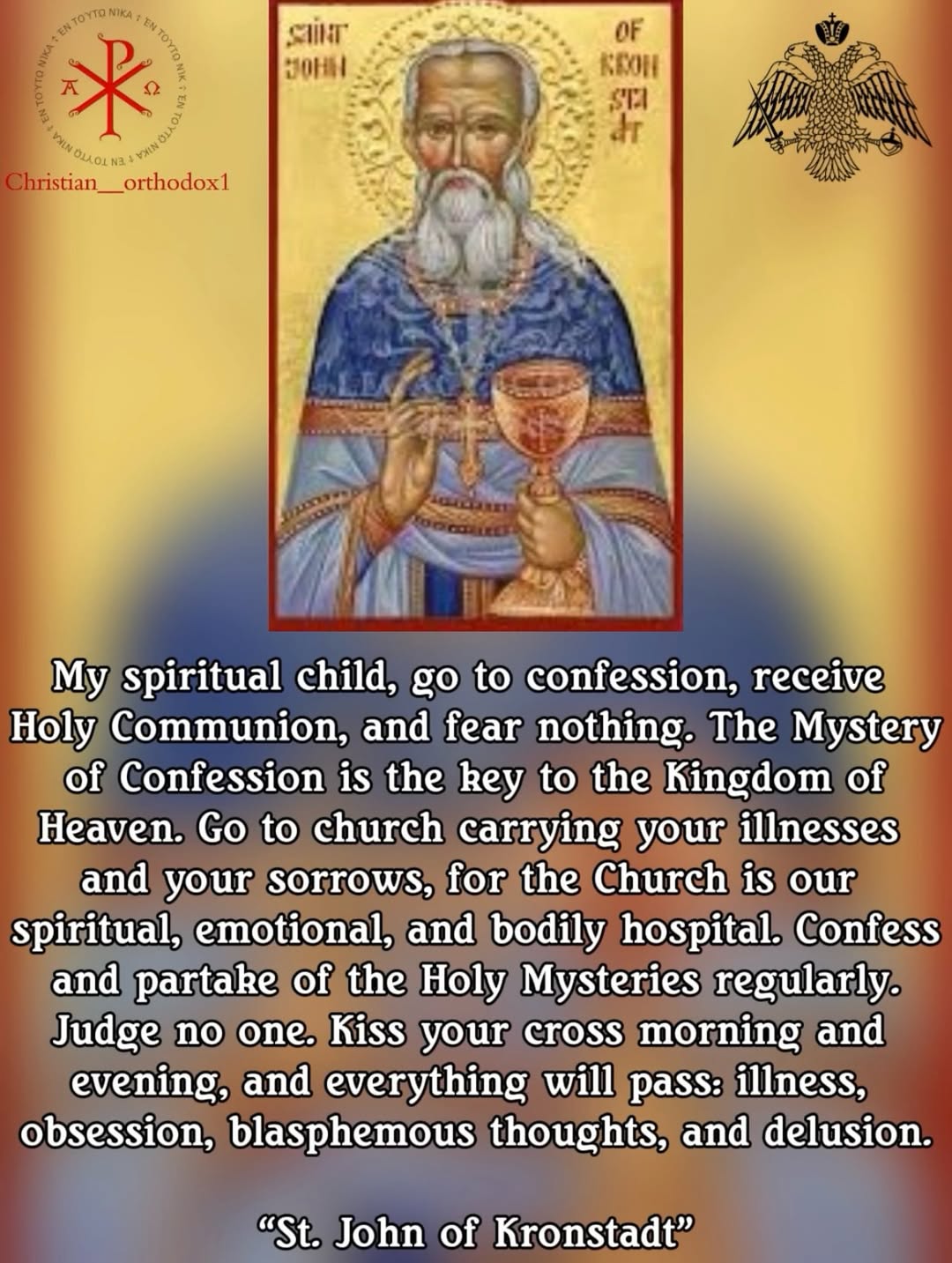
St. John of Kronstadt on confession and the cross

The post shares a passage attributed to St. John of Kronstadt addressed to a spiritual child. The saint issues a series of imperatives beginning with the sacramental life: go to confession, receive Holy Communion, and fear nothing. He identifies the Mystery of Confession as the key to the Kingdom of Heaven. He directs the listener to approach the church while carrying illnesses and sorrows, and he defines the Church as a hospital serving…

The post shares a passage attributed to St. John of Kronstadt addressed to a spiritual child. The saint issues a series of imperatives beginning with the sacramental life: go to confession, receive Holy Communion, and fear nothing. He identifies the Mystery of Confession as the key to the Kingdom of Heaven.

He directs the listener to approach the church while carrying illnesses and sorrows, and he defines the Church as a hospital serving spiritual, emotional, and bodily needs. He calls for regular confession and regular partaking of the Holy Mysteries. He adds a moral command to judge no one. He prescribes a physical devotional act: kiss your cross morning and evening.

He ends with a promise that everything will pass, enumerating four specific afflictions: illness, obsession, blasphemous thoughts, and delusion. The passage moves from sacramental theology to ecclesiology to moral instruction to bodily practice to a list of spiritual pathologies. The attribution to St. John of Kronstadt connects the text to a priest known for frequent communion and pastoral care in late imperial Russia.

The hashtags categorize the post under Christian, Orthodox, church, faith, and church fathers topics. No further discussion or commentary appears in the source text.

  • Confession and Holy Communion are urged as regular practice
  • Confession is called the key to the Kingdom of Heaven
  • The Church is described as a hospital for spiritual, emotional, and bodily ailments
  • The reader is told to judge no one and kiss the cross morning and evening
  • Illness, obsession, blasphemous thoughts, and delusion are listed as things that will pass
☦️An Orthodox Blog☦️ with Orthodoxy ☦︎ Instagram

Martyrs Carpus, Papylus, Agathadorus, and Agathonica commemorated October 13

0:30

The post marks the 13 October commemoration of four martyrs, Carpus, Papylus, Agathadorus, and Agathonica, who suffered at Pergamum. The accompanying video presents the Great Doxology, opening with "Glory be to you who have shown the light" and continuing with the angelic hymn: "Glory in the highest to God, and on earth peace, goodwill among men." The speaker then offers a sequence of liturgical acts directed toward God: praise, blessing,…

The post marks the 13 October commemoration of four martyrs, Carpus, Papylus, Agathadorus, and Agathonica, who suffered at Pergamum. The accompanying video presents the Great Doxology, opening with "Glory be to you who have shown the light" and continuing with the angelic hymn: "Glory in the highest to God, and on earth peace, goodwill among men."

The speaker then offers a sequence of liturgical acts directed toward God: praise, blessing, worship, glorification, and thanksgiving for God's great glory. The text follows the traditional order of the Great Doxology as used in Orthodox morning services. No additional commentary or historical details about the martyrs are provided in the source material.

Key moments

  1. Glory be to you who have shown the light.
  2. Glory in the highest to God.
  3. On earth peace, goodwill among men.
  4. We praise you.
  5. We bless you.
  6. We worship you.
  7. We glorify you.
  8. We give thanks to you for your great glory.
☦️An Orthodox Blog☦️ with Orthodoxy ☦︎ Instagram

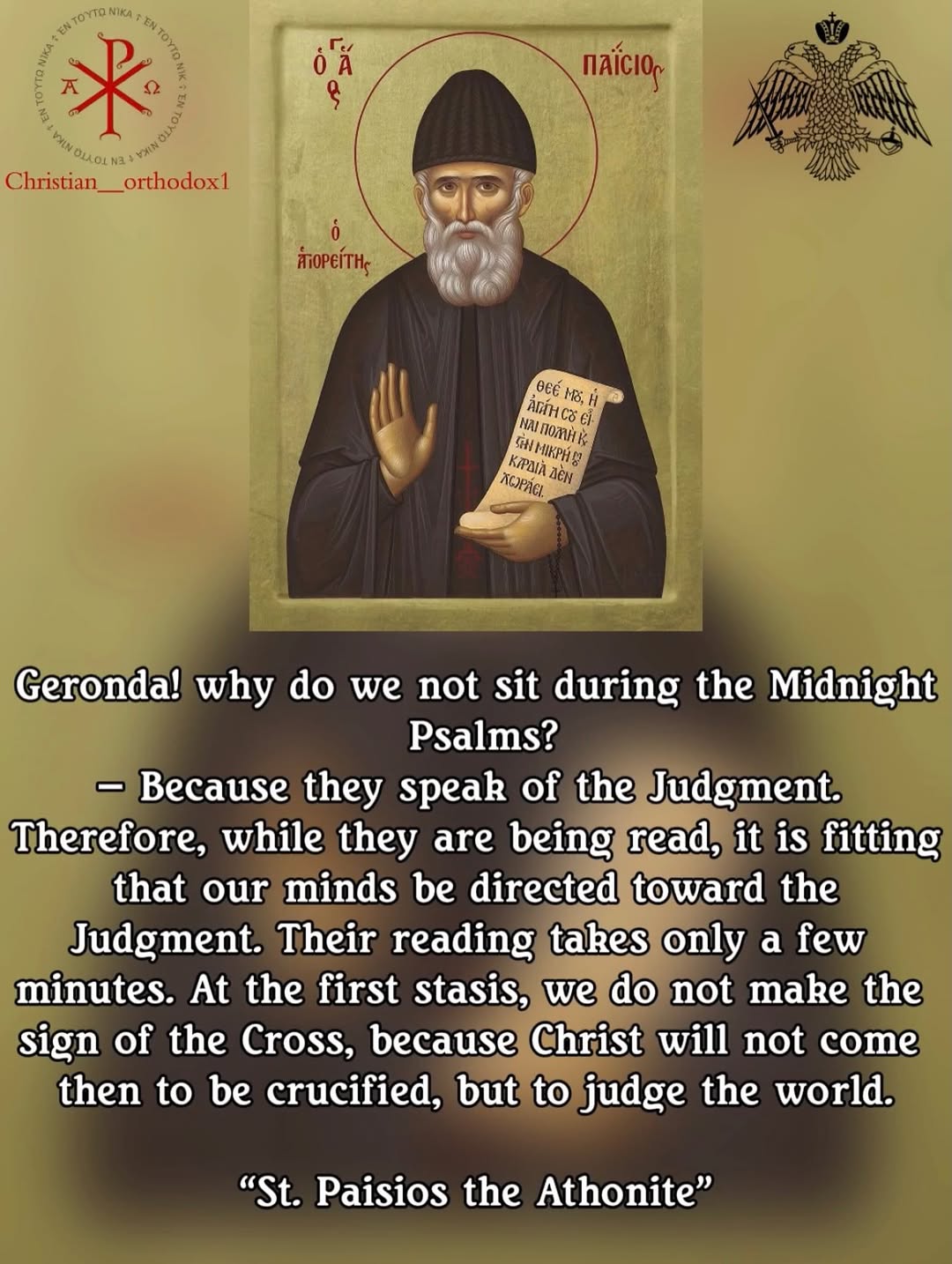
St. Paisios on standing for the Midnight Psalms and the sign of the Cross

The post relays a question addressed to St. Paisios the Athonite: why the faithful do not sit during the Midnight Psalms. The elder answers that these psalms speak of the Judgment, so the mind should be directed toward the Judgment while they are read. He notes the reading takes only a few minutes. He adds that at the first stasis the sign of the Cross is not made, because Christ will come not to be crucified again but to judge the world.

  • St. Paisios explains that standing during the Midnight Psalms directs the mind toward the Judgment.
  • The reading of these psalms lasts only a few minutes.
  • At the first stasis the sign of the Cross is omitted.
  • The reason given: Christ will come next not to be crucified but to judge the world.
Read more
☦️An Orthodox Blog☦️ with Orthodoxy ☦︎ Instagram

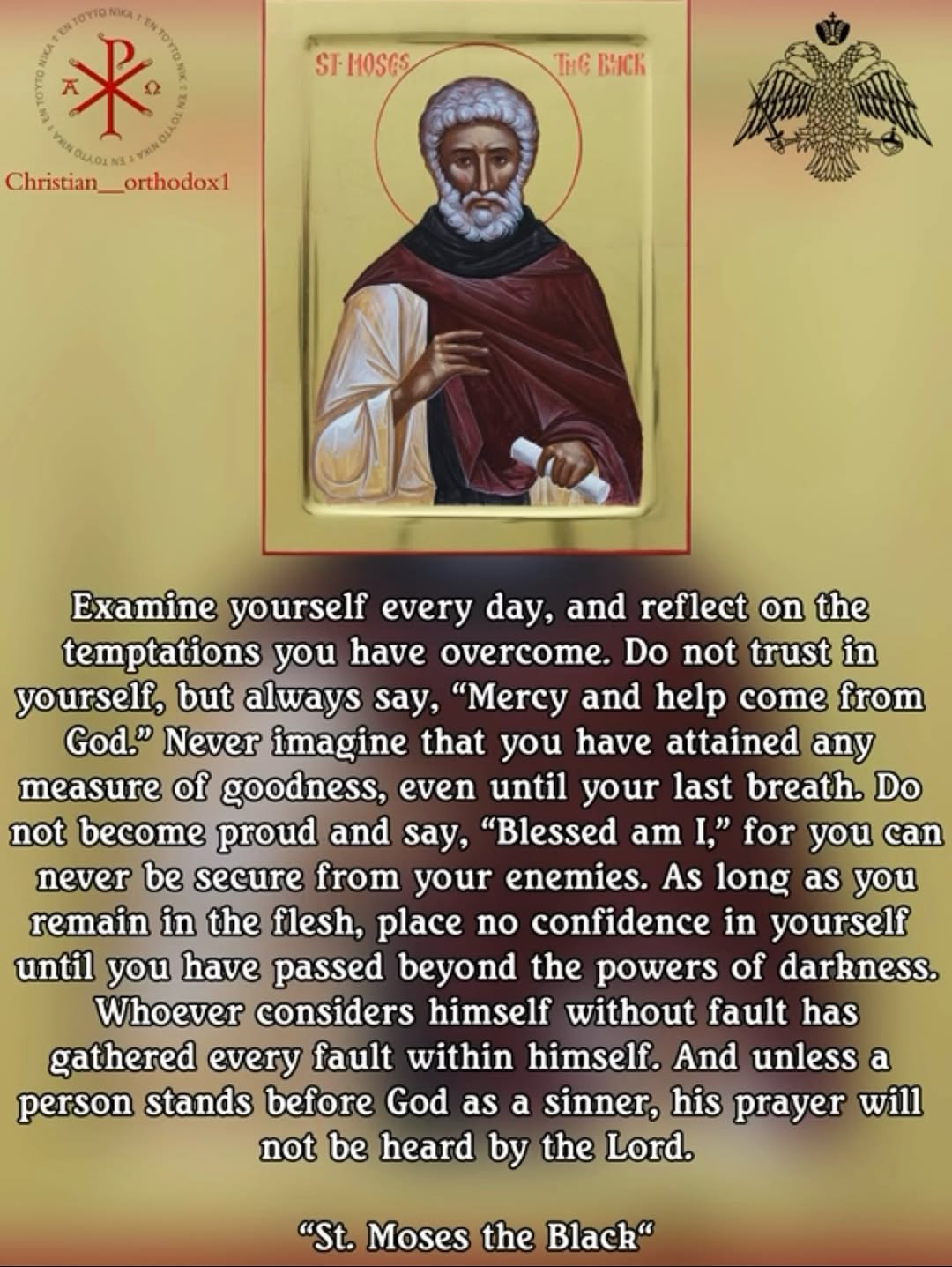
St. Moses the Black on Daily Self-Examination and Humility

The post presents a passage attributed to St. Moses the Black that opens with a call to examine oneself every day and to reflect on the temptations one has overcome. The text immediately counters any impulse toward self-reliance by instructing the reader to say that mercy and help come from God. It then warns against ever imagining that one has attained any measure of goodness, even until the last breath, and against becoming proud or saying…

The post presents a passage attributed to St. Moses the Black that opens with a call to examine oneself every day and to reflect on the temptations one has overcome. The text immediately counters any impulse toward self-reliance by instructing the reader to say that mercy and help come from God. It then warns against ever imagining that one has attained any measure of goodness, even until the last breath, and against becoming proud or saying "Blessed am I." The reason given is that one can never be secure from enemies while remaining in the flesh.

The passage directs that no confidence be placed in oneself until one has passed beyond the powers of darkness. It then states a paradox: whoever considers himself without fault has gathered every fault within himself. The final sentence sets a condition for prayer: unless a person stands before God as a sinner, his prayer will not be heard by the Lord.

The post includes hashtags identifying the content as Christian, Orthodox, church, faith, and church fathers. The source provides no additional commentary, discussion, or context beyond the quotation and the tags.

  • Daily self-examination and reflection on overcome temptations
  • Trust in God's mercy rather than in oneself
  • Never consider oneself good or secure while in the flesh
  • Self-perceived faultlessness indicates gathered faults
  • Prayer requires standing before God as a sinner
☦️An Orthodox Blog☦️ with Orthodoxy ☦︎ Instagram

Commemoration of Apostle Philip of the Seventy, One of the Seven Deacons

1:30

The post marks the commemoration on 11 October of the Apostle Philip of the Seventy, who is also numbered among the Seven Deacons appointed in Acts 6. A video accompanies the notice and presents the Phos Hilaron, the ancient evening hymn that addresses Christ as the gladsome light of the holy glory of the immortal, heavenly, holy, and blessed Father. The hymn text is described: having come to the setting of the sun and seen the evening light,…

The post marks the commemoration on 11 October of the Apostle Philip of the Seventy, who is also numbered among the Seven Deacons appointed in Acts 6. A video accompanies the notice and presents the Phos Hilaron, the ancient evening hymn that addresses Christ as the gladsome light of the holy glory of the immortal, heavenly, holy, and blessed Father.

The hymn text is described: having come to the setting of the sun and seen the evening light, the singers hymn the Father, Son, and Holy Spirit. The Son of God, the giver of life, is declared worthy to be praised with fitting voices at all times, and therefore the world glorifies him. The post connects the feast of a deacon who served the early church in Jerusalem with the daily vesperal praise that has been sung in the church since the earliest centuries.

Key moments

  1. Christ is addressed as the gladsome light of the holy glory of the immortal, heavenly, holy, blessed Father.
  2. Having come to the sunset and seen the evening light, the singers hymn the Father, Son, and Holy Spirit.
  3. The Son of God, the giver of life, is worthy to be praised with fitting voices at all times.
  4. Therefore the world glorifies him.

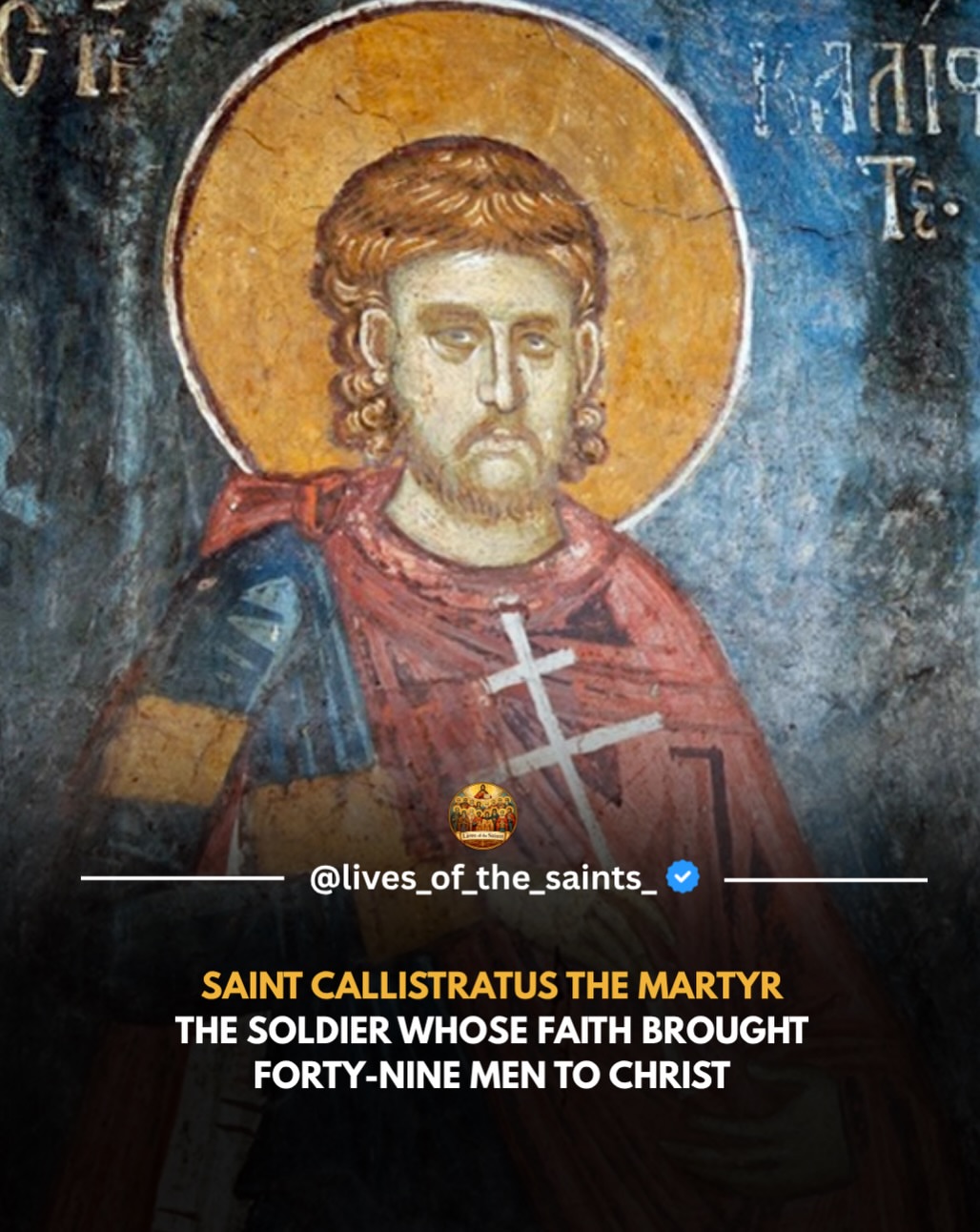
Saint Callistratus and the forty-nine soldiers who believed through his martyrdom

Saint Callistratus was born in Carthage and was a Christian from birth. His father and grandfather were Christians, and the faith had been passed down through his family. One of his ancestors, Neochorus, had served as a soldier in Jerusalem during the Passion of the Lord. He saw the miracles of Christ, believed in Him, was taught the faith, and was baptized by the Apostles. Generations later, Saint Callistratus was raised in that same holy…

Saint Callistratus was born in Carthage and was a Christian from birth. His father and grandfather were Christians, and the faith had been passed down through his family. One of his ancestors, Neochorus, had served as a soldier in Jerusalem during the Passion of the Lord.

He saw the miracles of Christ, believed in Him, was taught the faith, and was baptized by the Apostles. Generations later, Saint Callistratus was raised in that same holy faith. While serving in the army, he was the only Christian in his regiment.

Some of his fellow soldiers saw him rising at night to pray to God, and they reported him to the commander Persentinus, a fierce persecutor of Christians. When ordered to sacrifice to idols, Callistratus refused. He was beaten severely and thrown into the sea, but by the power of God he was saved and came out unharmed. Seeing his endurance and the miracle God worked through him, forty-nine soldiers believed in the Lord Jesus Christ.

They were beaten and thrown into prison with him. There, Saint Callistratus taught them the Christian faith and strengthened them to suffer courageously for Christ. At night, the persecutor sent soldiers into the prison, and Saint Callistratus and his forty-nine companions were killed. They suffered for the truth in the year 304.

  • Callistratus came from a Christian lineage tracing to Neochorus, who witnessed Christ's Passion and was baptized by the Apostles
  • As the only Christian in his regiment, he was reported for praying at night
  • He refused to sacrifice to idols, was beaten and thrown into the sea, but emerged unharmed
  • Forty-nine soldiers believed after seeing the miracle and were imprisoned with him
  • Callistratus and the forty-nine were killed in prison in 304
Read more