WeOrthodox
EN UA

Prayer Orthodoxy ®

Instagram ↗ 196 discussions

Prayer Orthodoxy® Orthodox Christianity Through Scripture, Tradition, and the Saints Deepen Your Understanding of the Faith

Why God Makes Some Wait: Lessons from Joseph and Moses

The speaker contrasts those who experience early success with those who endure long wilderness seasons, noting that early success carries spiritual dangers such as pride, arrogance, temptation, and forgetting the God who blessed them. Biblical figures such as Joseph and Moses illustrate how God develops character in private before public purpose. Joseph was betrayed by his brothers, sold into slavery, and imprisoned before becoming ruler of…

The speaker contrasts those who experience early success with those who endure long wilderness seasons, noting that early success carries spiritual dangers such as pride, arrogance, temptation, and forgetting the God who blessed them. Biblical figures such as Joseph and Moses illustrate how God develops character in private before public purpose.

Joseph was betrayed by his brothers, sold into slavery, and imprisoned before becoming ruler of Egypt. Moses spent 40 years in the wilderness before God called him to lead His people. The speaker warns that suffering does not automatically mean one is chosen for greatness, nor does success guarantee God's approval; the real measure is whether one is becoming more like Christ in humility, patience, discipline, and faith.

God's primary work is building the soul, not finances, career, or reputation. The listener is urged to stop comparing timelines and remain faithful in work and prayer.

Key moments

  1. Early success comes with spiritual dangers: pride, arrogance, temptation, and forgetting the God who blessed you.
  2. Joseph was betrayed by his brothers, sold into slavery, and imprisoned before becoming ruler of Egypt.
  3. Moses spent 40 years in the wilderness before God called him to act out his purpose.
  4. God develops your character in private before allowing you to act out your purpose in public.
  5. Success without humility can destroy a man; influence without wisdom can corrupt him; authority without self-control can become dangerous.
  6. Your suffering does not automatically mean you are chosen for greatness, and your success does not automatically mean you have God's approval.
  7. The real question is whether you are becoming more like Christ in humility, patience, discipline, and faith.
  8. The greatest thing God is building is your soul, not your finances, career, or reputation.
4 opinions in the discussion He doesn't care Read the discussion
Prayer Orthodoxy ® Instagram

Psalm 50: The Penitential Prayer at the Heart of Orthodox Worship

The post shares the text of Psalm 50, known in the Orthodox Church as the great penitential psalm attributed to the prophet and king David. The psalm is presented in English and Greek, accompanied by an image that displays eight panels with verses from the Septuagint numbering. The first panel names the location: St. Nicholas Greek Orthodox Chapel in Protaras, Cyprus. The following panels contain the opening verses: "Have mercy on me, O God,…

The post shares the text of Psalm 50, known in the Orthodox Church as the great penitential psalm attributed to the prophet and king David. The psalm is presented in English and Greek, accompanied by an image that displays eight panels with verses from the Septuagint numbering. The first panel names the location: St. Nicholas Greek Orthodox Chapel in Protaras, Cyprus.

The following panels contain the opening verses: "Have mercy on me, O God, according to Thy great mercy" (Psalm 50:1), "Wash me thoroughly from mine iniquity" (50:2-3), "Thou shalt sprinkle me with hyssop, and I shall be made clean" (50:7), "A heart that is clean create in me, O God" (50:10), "Cast me not away from Thy presence" (50:11), "Restore unto me the joy of Thy salvation" (50:12), and "A sacrifice unto God is a broken spirit; a heart that is broken and humbled God will not despise" (50:17). The post ends with a question asking which verse speaks most deeply to the reader.

  • Psalm 50 attributed to King David as a prayer of repentance
  • Text given in English and Greek with an image of selected verses
  • Location noted as St. Nicholas Greek Orthodox Chapel in Protaras, Cyprus
  • Verses displayed include pleas for mercy, cleansing, and a renewed spirit
  • Post invites readers to reflect on which verse touches them most
Read more
Prayer Orthodoxy ® Instagram

Do Orthodox Christians Worship Icons? The Distinction the Seventh Ecumenical Council Made

The post answers the accusation that Orthodox Christians worship icons and sets out the case for icon veneration from Scripture, theology, and church history. It explains that worship (latreia), meaning adoration and the offering of one's whole life, belongs to God alone, while veneration (proskynesis) is the honor shown to an icon, which passes to the person depicted: Christ, the Theotokos, or a saint. Orthodox Christians do not believe wood…

The post answers the accusation that Orthodox Christians worship icons and sets out the case for icon veneration from Scripture, theology, and church history. It explains that worship (latreia), meaning adoration and the offering of one's whole life, belongs to God alone, while veneration (proskynesis) is the honor shown to an icon, which passes to the person depicted: Christ, the Theotokos, or a saint.

Orthodox Christians do not believe wood and paint are gods. On the biblical side, the post notes that Exodus 20:4-5 forbids idols made to be worshiped as gods, while Exodus 25:18-20 commands cherubim on the Ark of the Covenant, so Scripture condemns idolatry rather than holy images. Icons are grounded in the Incarnation: because the Word became flesh, as John 1:14 says, Christ can be depicted, while the invisible Father is not portrayed in human form.

Kissing icons is described as a gesture of love and reverence, and icons are called windows into the Gospel that call us to prayer, repentance, and holiness. The historical argument runs through Nicaea II in 787, where the Seventh Ecumenical Council affirmed the veneration of icons, to their restoration in 843, still celebrated on the Sunday of Orthodoxy.

The post adds that the united Church of East and West venerated images for over a thousand years, and that only after the Protestant Reformation of 1517 did some reformers reject the practice, which the Orthodox view as a later innovation. The post closes that icons proclaim the Incarnation, teach the faith, and direct honor to Christ and the saints.

  • Worship (latreia) belongs to God alone; veneration (proskynesis) is honor shown to an icon that passes to the person depicted.
  • Exodus 20:4-5 forbids idols, while Exodus 25:18-20 commands cherubim on the Ark, so Scripture condemns idolatry, not holy images.
  • Icons rest on the Incarnation (John 1:14): Christ took visible human nature and can be depicted, unlike the invisible Father.
  • The Seventh Ecumenical Council at Nicaea II in 787 affirmed icon veneration; icons were restored in 843, celebrated on the Sunday of Orthodoxy.
  • After the Reformation of 1517 some reformers rejected images; from the Orthodox view this was a later innovation, not the ancient Church's practice.
Read more
Prayer Orthodoxy ® with Prayer Orthodoxy® Instagram

Your Eye Is the Lamp of Your Body: Guarding What Enters the Soul

The post reflects on Luke 11:34, where Christ says, "Your eye is the lamp of your body," and continues: "When your eye is sound, your whole body is full of light; but when it is not sound, your body is full of darkness. Therefore be careful lest the light in you be darkness. If then your whole body is full of light, having no part dark, it will be wholly bright, as when a lamp with its rays gives you light." The author draws out the verse's…

The post reflects on Luke 11:34, where Christ says, "Your eye is the lamp of your body," and continues: "When your eye is sound, your whole body is full of light; but when it is not sound, your body is full of darkness. Therefore be careful lest the light in you be darkness. If then your whole body is full of light, having no part dark, it will be wholly bright, as when a lamp with its rays gives you light."

The author draws out the verse's meaning for daily life: what we choose to see, what we allow into our hearts, and where we direct our attention all shape our spiritual lives. Christ calls us to guard our hearts, turn away from darkness, and seek the light of His truth. The post closes with a question for the reader: "What are you allowing to enter your soul?"

The same reflection is given in English and in Greek, quoting the verse from Luke 11:34 in both languages. The image text sets out the fuller passage from Luke, including the warning that the light in a person may itself be darkness, and the promise that a body full of light, with no part dark, will be wholly bright. There is no further discussion in the post; it stands as a short meditation on the Gospel verse and an invitation to examine what one permits into the soul through the eyes and the attention.

  • Christ's words in Luke 11:34: "Your eye is the lamp of your body."
  • When the eye is sound, the whole body is full of light; when it is not, the body is full of darkness.
  • The verse warns: "Be careful lest the light in you be darkness."
  • What we choose to see and where we direct our attention shape our spiritual lives.
  • The post asks readers: what are you allowing to enter your soul?
Read more

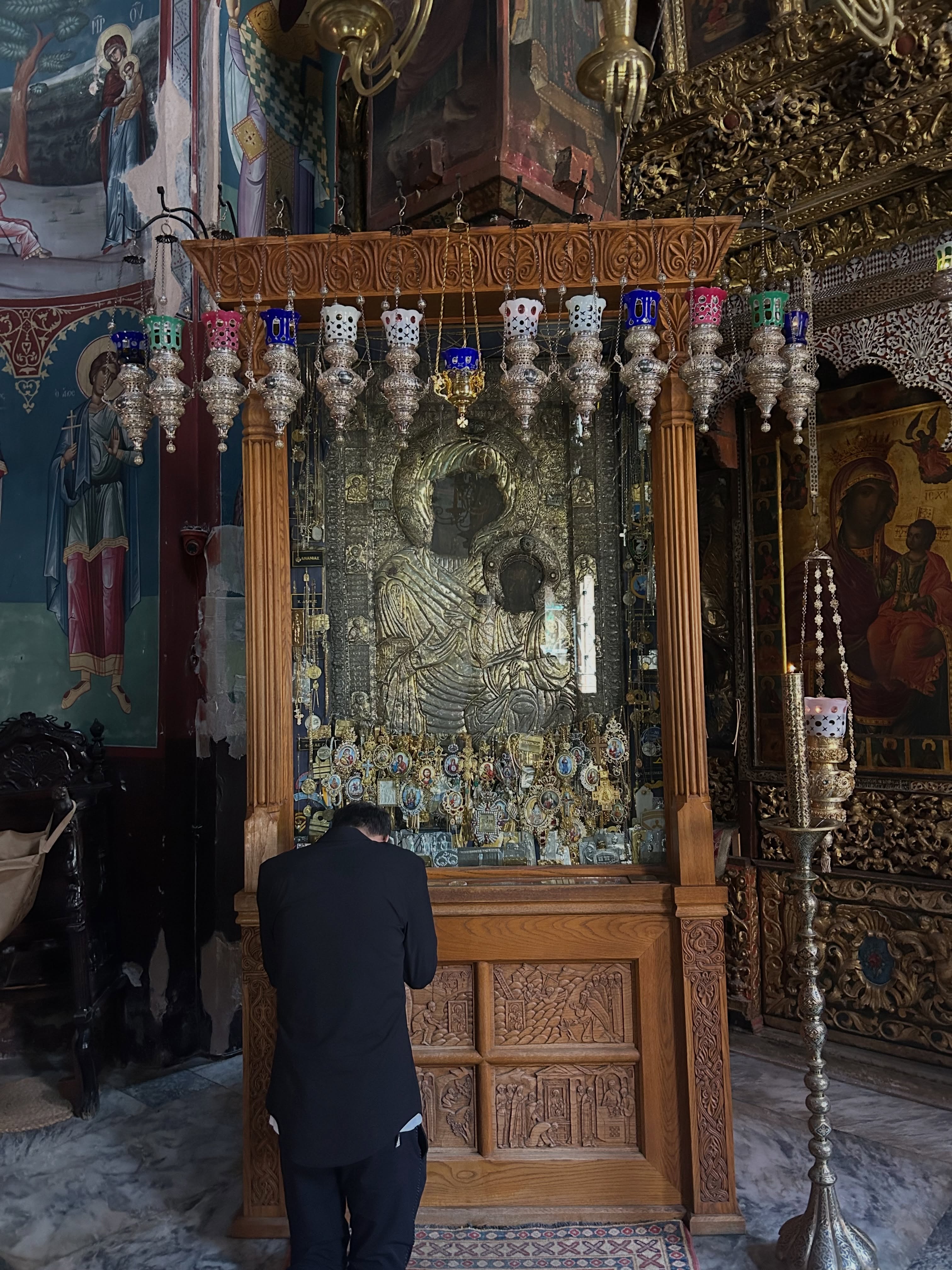
The Portaitissa icon of the Mother of God at Iviron Monastery

The post presents the icon of the Mother of God known as the Portaitissa, kept at the Holy Monastery of Iviron on Mount Athos. The text names the icon in Romanian and Greek, identifying it as the image of the Panagia Portaitissa from Iviron Monastery. The accompanying image shows the icon with the Mother of God holding Christ, with the usual Greek abbreviations marking the names of Jesus Christ and the Mother of God, and the title Hagios (Holy)…

The post presents the icon of the Mother of God known as the Portaitissa, kept at the Holy Monastery of Iviron on Mount Athos. The text names the icon in Romanian and Greek, identifying it as the image of the Panagia Portaitissa from Iviron Monastery. The accompanying image shows the icon with the Mother of God holding Christ, with the usual Greek abbreviations marking the names of Jesus Christ and the Mother of God, and the title Hagios (Holy) inscribed on the halos.

No further story, teaching or discussion accompanies the post; it stands as a presentation of this well-known wonderworking icon of the Athonite monastery, which is one of the most venerated images of the Mother of God in the Orthodox world.

  • The icon shown is the Portaitissa of the Mother of God at Iviron Monastery on Mount Athos.
  • The post names the icon in both Romanian and Greek.
  • The image shows the Mother of God with Christ Child and standard Greek inscriptions identifying them.
  • Iviron Monastery is the home of this venerated icon.
Read more
Prayer Orthodoxy ® with Prayer Orthodoxy® Instagram

St. John Chrysostom: Life, Preaching, and Enduring Liturgy

The post presents a concise biography of St. John Chrysostom, noting his birth in Antioch around 347 AD and his rise as one of the Church's greatest theologians and preachers. It lists his service as Archbishop of Constantinople, his defense of the poor, his condemnation of corruption, and his death in exile in 407 AD. It also notes that the Divine Liturgy bearing his name is celebrated throughout the Orthodox world. The same biographical points…

The post presents a concise biography of St. John Chrysostom, noting his birth in Antioch around 347 AD and his rise as one of the Church's greatest theologians and preachers. It lists his service as Archbishop of Constantinople, his defense of the poor, his condemnation of corruption, and his death in exile in 407 AD. It also notes that the Divine Liturgy bearing his name is celebrated throughout the Orthodox world.

The same biographical points are then repeated in Greek, providing a parallel text for Greek-speaking readers. Following the biography, the post offers three attributed sayings. The first urges believers to stretch forth their hands to the poor rather than to heaven, linking worship directly to almsgiving.

The second declares that nothing welds human life together like the love of husband and wife, affirming the spiritual weight of marriage. The third states that nothing attracts God to us so much as mercy, placing compassion at the center of the spiritual life. The selection of quotes reflects Chrysostom's consistent emphasis on practical charity, the sanctity of the family, and the primacy of mercy in Christian practice.

  • Born in Antioch around 347 AD; recognized as a leading theologian and preacher.
  • Served as Archbishop of Constantinople, defended the poor, and denounced corruption.
  • Died in exile in 407 AD; the Divine Liturgy bearing his name is celebrated worldwide.
  • The post provides a Greek translation of the biography.
  • Three attributed sayings address charity toward the poor, the bond of marriage, and the power of mercy.
Read more

Jesus Calls Sinners to Repentance in Luke 5:27-32

The speaker introduces the passage by stating that Jesus came to save sinners, not those who think they are perfect, and then reads Luke 5:27-32. The passage describes Jesus seeing Levi at the tax office and saying "Follow me"; Levi leaves all, rises, and follows him; Levi gives a great feast with many tax collectors; Pharisees complain to the disciples; Jesus replies that the well have no need of a physician but the sick do, and he came to call…

The speaker introduces the passage by stating that Jesus came to save sinners, not those who think they are perfect, and then reads Luke 5:27-32. The passage describes Jesus seeing Levi at the tax office and saying "Follow me"; Levi leaves all, rises, and follows him; Levi gives a great feast with many tax collectors; Pharisees complain to the disciples; Jesus replies that the well have no need of a physician but the sick do, and he came to call sinners to repentance.

The speaker draws three lessons. First, Christ calls people regardless of their past sins; Matthew was a despised tax collector, yet Christ saw beyond his sins and called him, showing that one's past does not disqualify a person from God's mercy. Second, following Christ requires decisive action; Matthew left everything, got up, and followed, demonstrating that true repentance requires action, not just words, and involves turning away from sin and turning to Christ.

Third, Christ is the Great Physician and the Church is a spiritual hospital where he heals through grace, calling sinners to repentance, healing, and transformation rather than leaving them comfortable in their sins. The conclusion emphasizes that no one is too far gone for God's mercy, the door to repentance remains open no matter how far one has fallen, and each person must decide whether to leave behind what separates them from Christ and follow him.

Key moments

  1. 0:00 The speaker introduces the passage: Jesus came to save sinners, not those who think they are perfect, and reads from Luke 5 about Levi the tax collector.
  2. 0:34 The speaker reads Luke 5:27-32: Jesus sees Levi at the tax office and says "Follow me"; Levi leaves all, rises, and follows him; Levi gives a great feast with many tax collectors; Pharisees complain to the disciples; Jesus replies that the well have no need of a physician but the sick do, and he came to call sinners to repentance.
  3. 1:04 First lesson: Christ calls us regardless of our past; Matthew was a despised tax collector, yet Christ saw beyond his sins and called him.
  4. 1:04 Second lesson: Following Christ requires action; Matthew left everything, got up, and followed; repentance is not just feeling sorry but turning away from sin and turning to Christ.
  5. 1:34 Third lesson: Christ is the great physician; the church is a spiritual hospital where Christ heals through grace; Christ calls us to repentance, healing, and transformation, not to remain in sin.
  6. 2:06 Conclusion: No one is too far gone for God's mercy; we must be willing to leave behind whatever separates us from Christ; Christ is calling, the question is whether we will get up and follow.
Read more
Prayer Orthodoxy ® with Jamey Bennett Instagram

Repentance Is the Normal Path, Not a Backup Plan

The author states that Christ did not come primarily for people who had already nailed the ideal from age twelve; he came for sinners, the sick, the latecomers, and those who wasted years and are only now turning around. Repentance is not plan B; it is the normal path of holiness for most. What matters now is not whether one's life story matches the beautiful outline in books, but whether one is repenting today, staying inside the church, and…

The author states that Christ did not come primarily for people who had already nailed the ideal from age twelve; he came for sinners, the sick, the latecomers, and those who wasted years and are only now turning around. Repentance is not plan B; it is the normal path of holiness for most. What matters now is not whether one's life story matches the beautiful outline in books, but whether one is repenting today, staying inside the church, and letting Christ and his body work on the actual untidy life one has.

The author notes that one's path may not photograph well for an Instagram feed of Orthodox family life; it may be a slow, quiet repentance rather than a dramatic conversion arc. That is not second-class orthodoxy; it is the normal Christian life for more people than one may realize. The post was shared on Instagram with a link to a full piece on SimplyOrthodox.info, highlighting the contrast between polished social media portrayals and the reality of gradual repentance.

Key moments

  1. Christ did not come primarily for the people who had already nailed the ideal from age 12; he came for sinners, the sick, the latecomers, the ones who wasted years and are only now turning around.
  2. Repentance isn't plan B; it is the normal path of holiness for most of us.
  3. What matters now is not whether your life story matches the beautiful outline in the books, but whether you are repenting today, staying inside the church, and letting Christ and his body work on the actual untidy life you have.
  4. Your path may not photograph well for an Instagram feed of Orthodox family life; it may be a slow, quiet repentance rather than a dramatic conversion arc.
  5. That is not second-class orthodoxy; that is the normal Christian life for more of us than you may realize.
Read more
Disgruntled Docs with Prayer Orthodoxy ® Instagram

What Separates Eastern Orthodoxy, Catholicism, Protestantism, and Oriental Orthodoxy?

The post presents the first episode of "Understanding Orthodoxy," an educational series from Prayer Orthodoxy. It outlines the historical and theological differences among Eastern Orthodoxy, Roman Catholicism, Protestantism, and Oriental Orthodoxy. All four traditions trace their origins to Jesus Christ and the apostles, confess the Trinity, and accept the authority of Scripture, but their biblical canons differ: Protestants generally use 66…

The post presents the first episode of "Understanding Orthodoxy," an educational series from Prayer Orthodoxy. It outlines the historical and theological differences among Eastern Orthodoxy, Roman Catholicism, Protestantism, and Oriental Orthodoxy. All four traditions trace their origins to Jesus Christ and the apostles, confess the Trinity, and accept the authority of Scripture, but their biblical canons differ: Protestants generally use 66 books, Roman Catholics 73 including the Deuterocanon, Eastern Orthodox a broader Old Testament based on the Septuagint, and Oriental Orthodox canons vary, with the Ethiopian Orthodox Tewahedo Church recognizing 81 books.

Eastern Orthodoxy understands itself as preserving the fullness of apostolic faith and Tradition through conciliar governance, with the Ecumenical Patriarch as first among equals, and centers worship on the Divine Liturgy and theosis. Roman Catholicism shares the first millennium heritage but teaches papal universal jurisdiction and infallibility, the Filioque clause, purgatory, and the Immaculate Conception, which Orthodoxy views as lacking early consensus.

Protestantism began with the 16th-century Reformation, emphasizing sola Scriptura and justification by faith, though traditions vary widely in sacramental theology and governance. Oriental Orthodoxy comprises six ancient church families that rejected the Council of Chalcedon in 451, following St. Cyril's miaphysite formula of one incarnate nature; modern dialogues have found substantial Christological agreement, but full communion has not been restored.

The episode concludes that Eastern Orthodoxy sees itself as the continuous historical and spiritual expression of the One, Holy, Catholic, and Apostolic Church.

  • All four traditions share apostolic roots and Trinitarian faith but differ in biblical canon, authority, and governance.
  • Eastern Orthodoxy emphasizes conciliar governance, theosis, and preservation of apostolic Tradition without universal papal jurisdiction.
  • Roman Catholicism teaches papal supremacy, infallibility, and doctrines like Filioque, purgatory, and the Immaculate Conception.
  • Protestantism originates from the 16th-century Reformation, emphasizing sola Scriptura and justification by faith, with diverse sacramental views.
  • Oriental Orthodoxy rejects Chalcedon, follows miaphysite Christology, and modern dialogues show substantial agreement but communion remains unresolved.
Read more

Why Orthodox Christians Venerate the Theotokos

The post explains why the Panagia, the Most Holy Theotokos, holds a central place in Orthodox Christian devotion. Through her humility, obedience, and unwavering faith, she became the Mother of Jesus Christ, the Lord and Savior. Orthodox Christians honor her as the Mother of God, seek her prayers and intercessions, and turn to her as a loving mother who continually directs them toward her Son. The Greek text repeats these themes: the Theotokos…

The post explains why the Panagia, the Most Holy Theotokos, holds a central place in Orthodox Christian devotion. Through her humility, obedience, and unwavering faith, she became the Mother of Jesus Christ, the Lord and Savior. Orthodox Christians honor her as the Mother of God, seek her prayers and intercessions, and turn to her as a loving mother who continually directs them toward her Son.

The Greek text repeats these themes: the Theotokos occupies a unique place in every Orthodox heart, and through her virtues she was deemed worthy to become the Mother of the Lord. The faithful venerate her as Theotokos, ask for her intercessions, and take refuge in her maternal protection, knowing she always leads them to her Son.

The post concludes with the traditional invocation "Hyperagia Theotoke, soson imas" (Most Holy Theotokos, save us). An image accompanying the post shows icon inscriptions referring to the Mother of God the Faithful and similar liturgical titles. The post is attributed to Prayer Orthodoxy.

  • The Theotokos is central to Orthodox devotion due to her humility, obedience, and faith
  • She is honored as Mother of God who became worthy through her virtues
  • Orthodox Christians seek her prayers and intercessions
  • She is viewed as a loving mother who always points to Christ
  • The post includes the traditional prayer "Most Holy Theotokos, save us"
Read more

Apolytikion of Saint Gabriel of Georgia in Dutch

The post presents the Apolytikion of Saint Gabriel of Georgia in the Dutch language. The hymn addresses Gabriel as a God-inspired monk and priest who was proven in his divine way of life. It venerates him as a beacon of spiritual insight and a healer of the sick, from whom abundant power flows. The faithful call upon him as father and grant of God's ways, asking for his blessing upon all who honor him. This Apolytikion is a liturgical hymn sung…

The post presents the Apolytikion of Saint Gabriel of Georgia in the Dutch language. The hymn addresses Gabriel as a God-inspired monk and priest who was proven in his divine way of life. It venerates him as a beacon of spiritual insight and a healer of the sick, from whom abundant power flows.

The faithful call upon him as father and grant of God's ways, asking for his blessing upon all who honor him. This Apolytikion is a liturgical hymn sung in honor of the saint, expressing the Church's veneration and seeking his intercession. The Dutch translation makes this traditional Orthodox hymn accessible to Dutch-speaking faithful.

Key moments

  1. The hymn addresses Gabriel as a God-inspired monk and priest proven in his divine life.
  2. Gabriel is venerated as a beacon of spiritual insight and a healer of the sick.
  3. The faithful ask Gabriel, as father and grant of God's ways, to bestow his blessing on those who honor him.

Three habits to fight vainglory and root identity in Christ

The post warns that caring for one's appearance can become vainglory when it turns into a source of identity and worth depends on the admiration of others. The Orthodox Church teaches that there is nothing wrong with training the body or dressing well, but the danger begins when a person becomes a prisoner of their own reflection. Three habits are offered to combat this. First, stop obsessing over appearance; the author asks how often one checks…

The post warns that caring for one's appearance can become vainglory when it turns into a source of identity and worth depends on the admiration of others. The Orthodox Church teaches that there is nothing wrong with training the body or dressing well, but the danger begins when a person becomes a prisoner of their own reflection.

Three habits are offered to combat this. First, stop obsessing over appearance; the author asks how often one checks the mirror or worries about how others see them, citing Proverbs 16:18 that pride goes before destruction. Second, learn to achieve things without seeking recognition; not every gym session needs filming and not every achievement needs posting, following Christ's words in Matthew 6 against performing good deeds to be seen by men.

Third, stop building identity around other people's approval; if a compliment makes the day but criticism destroys confidence, one has handed others control over happiness. The speaker states that Orthodox Christian identity must be rooted in Jesus Christ, not in appearance or reputation. The closing reminder notes that looking after the body God gave is good, but one should not spend life perfecting the outside while neglecting the soul, because appearance fades while the soul remains.

Key moments

  1. The speaker warns that years spent building the body and improving appearance can slowly make a person a slave to their own reflection.
  2. The first habit is to stop obsessing over appearance, asking how often one checks the mirror or worries about how others see them, citing Proverbs 16:18 that pride goes before destruction.
  3. The second habit is to learn to do things without showing the world, noting that not every gym session needs filming and not every achievement needs posting, citing Christ's words in Matthew 6 against performing good deeds to be seen.
  4. The third habit is to stop building identity around other people's approval, pointing out that if a compliment makes one's day but criticism destroys confidence, one has handed others control over happiness.
  5. The speaker states that Orthodox Christian identity must be rooted in Jesus Christ, not in appearance or reputation.
  6. The closing reminder: there is nothing wrong with looking after the body God gave, but one should not spend life perfecting the outside while neglecting the soul, because appearance fades and the soul remains.
Read more

A father's growing understanding of prayer's necessity

The author reflects on how age has deepened his understanding of why fathers devote significant time to prayer. He identifies the weight of responsibility that comes with fatherhood: a family to protect, children to guide, a wife to love, and his own soul to keep accountable before God. The reflection ends with the traditional doxology in Greek: "Glory to God for all things."

Key moments

  1. The project represents the collective effort of many different teams working toward the same goal.
  2. Constant collaboration and communication enabled the team to overcome challenges and turn a simple concept into reality.
  3. The team is proud of what they have achieved together.
  4. They look forward to sharing more about their process and invite questions about methodology or future plans.
Read more

Three Ways to Overcome Pride in Orthodox Teaching

The post outlines three practical ways to combat pride drawn from Orthodox Christian teaching. It identifies pride as a dangerous sin that hides behind thoughts, actions, and even good deeds, and states that humility is essential for spiritual growth. The first way is to accept correction, stopping the ego from defending every mistake; growth begins when faults are acknowledged. The second is to do good without recognition, following Christ's…

The post outlines three practical ways to combat pride drawn from Orthodox Christian teaching. It identifies pride as a dangerous sin that hides behind thoughts, actions, and even good deeds, and states that humility is essential for spiritual growth. The first way is to accept correction, stopping the ego from defending every mistake; growth begins when faults are acknowledged.

The second is to do good without recognition, following Christ's teaching in Matthew 6 that God sees what is done in secret. The third is to pray for those you envy, rejoicing in their blessings as Romans 12:15 instructs. The post references Saint John Climacus's warning about vainglory, the desire for praise and admiration.
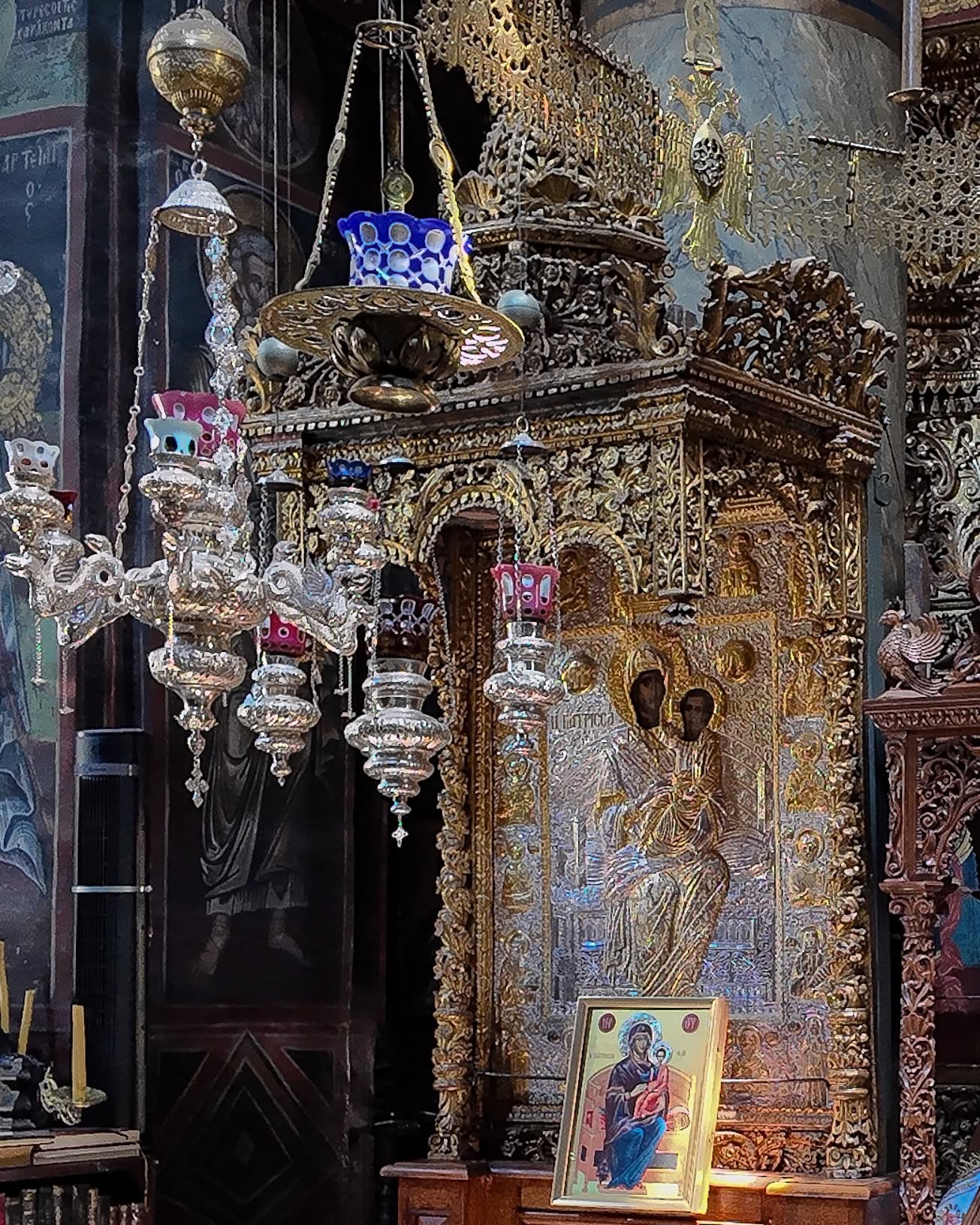
It clarifies that humility is not thinking oneself worthless but recognizing weaknesses, dependence on God, and placing others before ego. The more pride controls the heart, the harder it becomes to hear God's voice. The post concludes with a prayer for humility and repentance.

Additional details from the accompanying video include Proverbs 12:1 on loving discipline, the role of confession in acknowledging sins without excuses, the practice of secret good deeds with God as the only audience, and the observation that drawing closer to Christ reduces the need to prove oneself to the world.

Key moments

  1. When someone points out your mistakes, you must ask whether you listen or your ego immediately becomes defensive.
  2. Proverbs 12:1 says whoever loves discipline loves knowledge, but whoever hates correction is foolish.
  3. Confession teaches us to acknowledge our sins without making excuses, because you cannot repent of something you are constantly trying to justify.
  4. Christ in Matthew 6 tells us to give, pray, and fast without seeking the praise of others.
  5. Saint John Klimakos warns about vainglory and the desire to be admired for our good deeds.
  6. The speaker advises practicing a good deed without anyone knowing, helping secretly, giving secretly, and praying for someone who will never know, letting God be your audience.
  7. Romans 12:15 tells us to rejoice with those who rejoice, so instead of comparing yourself, you should pray for the person you envy and thank God for the blessings they have received.
  8. The closer we draw to Christ, the less we should need to prove ourselves to the world.
Read more
Prayer Orthodoxy ® Instagram

The Theotokos of the Awesome Protection: Wonderworking Icon at Koutloumousiou Monastery

The post presents the wonderworking icon of the Theotokos of the Awesome Protection, housed at Koutloumousiou Monastery on Mount Athos. The icon shows the Mother of God holding the Christ child close as he gazes toward the instruments of his future passion. Her sorrowful expression, the stars upon her veil, the golden background, and Christ's loosened sandal all reveal the mystery of the incarnation and the suffering he would willingly endure…

The post presents the wonderworking icon of the Theotokos of the Awesome Protection, housed at Koutloumousiou Monastery on Mount Athos. The icon shows the Mother of God holding the Christ child close as he gazes toward the instruments of his future passion. Her sorrowful expression, the stars upon her veil, the golden background, and Christ's loosened sandal all reveal the mystery of the incarnation and the suffering he would willingly endure for the salvation of the world.

This icon is especially associated with the holy monastery of Koutloumousiou. According to Athonite tradition, when pirates threatened the monastery, the monks turned in prayer to the Panagia. Through her intercessions the monastery was miraculously protected and hidden from the attackers.

For this reason the icon is known as the Awesome Protection. Through this holy icon the church reminds the faithful that the most holy Theotokos never ceases to intercede for them and that she leads them to her son.

Key moments

  1. The icon shows the Mother of God holding the Christ child close as he looks toward the instruments of his coming passion.
  2. Her sorrowful expression, the stars upon her veil, the golden background, and Christ's loosened sandal all reveal the mystery of the incarnation and the suffering he would willingly endure for the salvation of the world.
  3. This wonderworking icon is especially associated with the holy monastery of Kutlumousio on Mount Athos.
  4. According to Athonite tradition, when pirates threatened the monastery, the monks turned in prayer to the Panagia.
  5. Through her intercessions, the monastery was miraculously protected.
  6. For this reason, the icon is known as the awesome protection.
  7. Through this holy icon, the church reminds us that the most holy Theotokos never ceases to intercede for the faithful.
  8. She also leads the faithful to her son.
Read more

A convert's return home through baptism

The author shares a personal testimony of conversion and baptism in the Orthodox Church. The post opens with a rhetorical question drawing on the parable of the Prodigal Son: whether the Father waits no matter how far one has wandered. The author quotes Luke 15:24, where the father declares his lost son dead and alive again, lost and found. A second quotation from Romans 6:4 connects baptism to burial with Christ and rising to newness of life.…

The author shares a personal testimony of conversion and baptism in the Orthodox Church. The post opens with a rhetorical question drawing on the parable of the Prodigal Son: whether the Father waits no matter how far one has wandered. The author quotes Luke 15:24, where the father declares his lost son dead and alive again, lost and found.

A second quotation from Romans 6:4 connects baptism to burial with Christ and rising to newness of life. The author then states personally: after all this searching, I am finally home, and gives glory to God.

  • Personal testimony of conversion and baptism
  • References the Prodigal Son parable (Luke 15:24)
  • Connects baptism to death and resurrection (Romans 6:4)
  • Expresses finding spiritual home after searching
  • Gives glory to God for the journey

Orthodox Father Explains Family's Decision Against Halloween

The author, an Orthodox Christian father, writes that his position is not one of condemnation or judgment towards anyone but a personal conviction concerning how he chooses to lead his household and raise his children in Christ. He states that as an Orthodox Christian father his responsibility is to guide his family towards the Light of Christ, not towards the darkness of this world. He explains that he does not want his children growing up with…

The author, an Orthodox Christian father, writes that his position is not one of condemnation or judgment towards anyone but a personal conviction concerning how he chooses to lead his household and raise his children in Christ. He states that as an Orthodox Christian father his responsibility is to guide his family towards the Light of Christ, not towards the darkness of this world.

He explains that he does not want his children growing up with the impression that demons, evil spirits and spiritual warfare are merely fictional characters or make-believe; these are spiritual realities, not costumes or entertainment. He describes his duty as a father as raising his children in accordance with the commandments of Christ and the teachings of His Church, teaching them to discern between light and darkness.

He adds that he is not there to judge another family's decisions; he is accountable for his own household and the spiritual direction in which he leads it. For him it has always been Christ first, and in his home Christ is King. He concludes with "Glory to God for all things. Always steadfast in the Lord."

The accompanying video summary records that when asked why they do not participate in Halloween, the speaker answers that they serve the King of Glory rather than the evil one, that they stand in the light and not in darkness, and concludes with "Slava Bogu, slava to Teo. Glory to God."

Key moments

  1. The speaker explains they do not partake in Halloween because they serve the King of Glory, not the evil one, and they stand in the light, not the darkness.
6 opinions in the discussion My position is not one of condemnation or judgment towards anyone. It is a personal conviction about how I choose to lead my household and, above all, raise my children in Christ. As an… Read the discussion

St. Tikhon of Zadonsk on Christians as pilgrims seeking the heavenly homeland

The post shares a quotation from St. Tikhon of Zadonsk stating that true Christians live in this world as travelers, pilgrims, and sojourners who look toward their heavenly homeland. The author adds a personal reflection, describing himself as a pilgrim passing through this world seeking the Kingdom that has no end, and invites others to join him. The text presents the Christian life as a pilgrimage toward the eternal Kingdom.

  • St. Tikhon of Zadonsk describes Christians as travelers and pilgrims in this world
  • Christians look toward their heavenly homeland
  • The author identifies as a pilgrim seeking the eternal Kingdom
  • The post invites others to join this pilgrim journey
Read more
Prayer Orthodoxy ® with Prayer Orthodoxy® Instagram

Christ's power over demons shows the Kingdom has come; no neutrality possible

The post presents Luke 11:20 and 11:23 in English and Greek. It states that Christ casts out demons by the finger of God, signaling the arrival of God's Kingdom. It emphasizes that there is no neutrality in spiritual life: those not with Christ are against Him, and those who do not gather with Him scatter. The reflection urges followers to stand with Christ, gather in His name, and remain steadfast in faith.

  • Christ casts out demons by the finger of God (Luke 11:20).
  • The Kingdom of God has come upon the listeners.
  • There is no spiritual neutrality: whoever is not with Christ is against Him (Luke 11:23).
  • Whoever does not gather with Christ scatters.
  • Following Christ means standing with Him, gathering in His name, and remaining steadfast in faith.
Read more

Saint Stephen the Great: Defender of Moldavia and the Orthodox Faith

The post presents the life and legacy of Saint Stephen the Great, ruler of Moldavia in the fifteenth century. When Ottoman armies advanced on Christian territories, Stephen refused to abandon his faith or his people. In 1475 at Vaslui, his forces inflicted a severe defeat on an invading Ottoman army, though the text notes that not every battle ended in victory. The author argues that Stephen's true legacy cannot be measured by military successes…

The post presents the life and legacy of Saint Stephen the Great, ruler of Moldavia in the fifteenth century. When Ottoman armies advanced on Christian territories, Stephen refused to abandon his faith or his people. In 1475 at Vaslui, his forces inflicted a severe defeat on an invading Ottoman army, though the text notes that not every battle ended in victory.

The author argues that Stephen's true legacy cannot be measured by military successes alone. It is also written in the monasteries he founded and endowed, the churches he raised to God's glory, and the prayers offered by generations of the faithful. The Ottoman Empire has passed away, kingdoms have risen and fallen, but the Church continues to celebrate the Holy Mysteries and proclaim Christ.

Stephen's example is held up as a reminder that true strength lies not in pride, hatred, or the glory of men, but in steadfastness, sacrifice, and faithfulness to Christ. The post concludes with a prayer to the saint and a doxology.

Key moments

  1. 0:00 Stephen the Great stood as a ruler who refused to abandon his faith, his people, or his God when Ottoman armies advanced on Christian lands.
  2. 0:30 In 1475 at Vaslui, his forces dealt a devastating blow to an invading Ottoman army while Moldavia stood its ground.
  3. 1:07 His legacy cannot be measured by battles won but by the holy monasteries he founded, churches raised to God's glory, and prayers offered by generations.
  4. 1:43 The Ottoman Empires came and went, kingdoms rose and fell, but the Church continued to pray, celebrate the holy mysteries, and proclaim Christ.
  5. 2:20 True strength is found not in pride, hatred, or the glory of men, but in faithfulness, sacrifice, and fidelity to Christ.
Read more