WeOrthodox
EN UA

Prayer Orthodoxy ®

Instagram ↗ 196 discussions

Prayer Orthodoxy® Orthodox Christianity Through Scripture, Tradition, and the Saints Deepen Your Understanding of the Faith

The self-acting Jesus Prayer in The Way of the Pilgrim
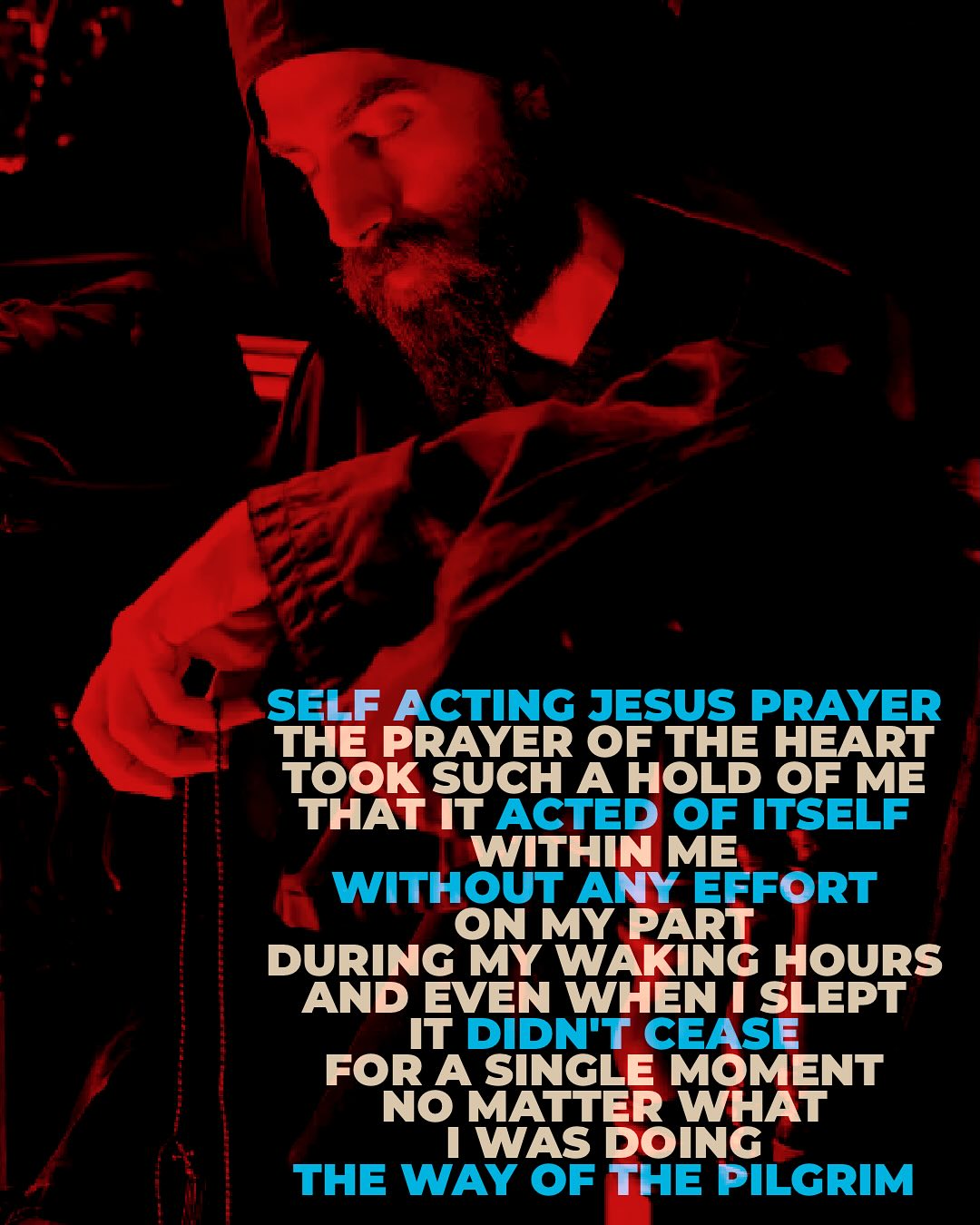
The post quotes a passage from The Way of the Pilgrim in which the narrator describes the prayer of the heart taking hold and acting of itself within without any effort on his part. The prayer continued during waking hours and even during sleep, not ceasing for a single moment no matter what he was doing. The accompanying text identifies this phenomenon as the self-active or self-propelling Jesus Prayer within Eastern Christian mysticism,…

The post quotes a passage from The Way of the Pilgrim in which the narrator describes the prayer of the heart taking hold and acting of itself within without any effort on his part. The prayer continued during waking hours and even during sleep, not ceasing for a single moment no matter what he was doing. The accompanying text identifies this phenomenon as the self-active or self-propelling Jesus Prayer within Eastern Christian mysticism, specifically hesychasm.

It explains that this represents an advanced spiritual stage where the prayer transitions from a conscious mental effort into an unceasing, automatic rhythm of the soul. Rather than the practitioner actively pushing to recite the words, the prayer "prays itself" within the heart. This continuous repetition persists even during sleep, work, or conversation.

The post presents both the first-person account from the classic spiritual text and the theological framework that categorizes this experience as a distinct stage of prayer development in the hesychast tradition.

  • The Way of the Pilgrim describes the Jesus Prayer becoming self-acting within the heart
  • The prayer continues without effort during waking hours and sleep
  • In hesychasm this marks an advanced spiritual stage
  • The prayer shifts from conscious recitation to automatic rhythm
  • The prayer "prays itself" continuously through all activities
Read more

God raises new Church Fathers for unseen warfare in the final age

The speaker declares that we live in the final chapters of the age and the most decisive era of spiritual warfare. God is awakening ascetic warriors and raising new Church Fathers like Chrysostom, Basil, Athanasius, and Gregory as commanders of the true Church. These soldiers carry the Jesus Prayer and the uncreated grace of the Holy Spirit. God baptized, chrismated, and feeds them His body and blood for divine purpose, having hunted them down,…

The speaker declares that we live in the final chapters of the age and the most decisive era of spiritual warfare. God is awakening ascetic warriors and raising new Church Fathers like Chrysostom, Basil, Athanasius, and Gregory as commanders of the true Church. These soldiers carry the Jesus Prayer and the uncreated grace of the Holy Spirit.

God baptized, chrismated, and feeds them His body and blood for divine purpose, having hunted them down, engineered their tribulations, protected them from demonic arrows, and transformed their passions into tools of repentance. The speaker calls Orthodox Christians to stop flirting with demons and passions, citing Saint Paul's words about putting away childish things.

They must take up the prayer rope, guard the mind, deal aggressively with ancestral and personal sins, and recognize that an Orthodox Christian who does not fight the passions is no soldier at all. Time is running out; the illusions of the secular world will be destroyed and the separation of wheat from chaff is near. The faithful must pick up their cross, draw the sword of the Spirit, stand watch over the heart, and stop treating favorite sins like pets under a false grace that requires no sacrifice.

Just as the walls of Jericho fell, the strongholds of modern darkness and demonic hierarchy shall fall, and Satan is terrified. The speaker says a divine fire is brewing in the spirits of men, and the flame of the Holy Spirit will invade and expose every hidden darkness. The call is to mount spiritual defenses, wage unseen warfare with ceaseless prayer, and use the divine fire of the Holy Spirit to conquer the flesh and inherit the kingdom of God.

Key moments

  1. 0:00 We are living in the final chapters of the age and the most crucial era of spiritual warfare; God is awakening ascetic warriors and raising new Chrysostoms, Basils, Athanasiuses, and Gregories as commanders of the true Church.
  2. 0:34 Soldiers of the cross carry the double-edged sword of the Jesus Prayer and the uncreated grace of the Holy Spirit; God will use them to gather His faithful flock for a cosmic battle the demons fear.
  3. 1:07 God baptized, chrismated, and feeds His body and blood to each person for divine purpose; He hunted them down, engineered their tribulations, protected them from demonic arrows, and transformed passions into tools of repentance.
  4. 1:37 You are a son of the kingdom and heir to the divine nature through theosis; stop playing with passions and flirting with demons of modern culture, and crush them underfoot as Saint Paul urged putting away childish things.
  5. 2:10 Put away lukewarm spirit, take up the prayer rope, guard the mind, and advance toward Christ; deal aggressively with ancestral and personal sins, for an Orthodox Christian who does not fight the passions is no soldier.
  6. 2:42 Time is running out; the illusions of the secular world will be destroyed and the separation of wheat from chaff is near; stop treating favorite sins like pets under a false grace that requires no sacrifice.
  7. 2:42 Just as the walls of Jericho crumbled, the strongholds of modern darkness and demonic hierarchy shall fall, and Satan himself is terrified; mount spiritual defenses and wage unseen warfare for Christ.
  8. 3:14 Pick up the sword of ceaseless prayer, show the dark age the power of the true faith; a divine fire is brewing, the flame of the Holy Spirit will invade and expose every hidden darkness, use that fire, guard your heart, conquer the flesh, and inherit the kingdom of God.
Read more

Orthros: A Service in Its Own Right, Not Just a Warm-Up

The author writes about the spiritual meaning of Orthros, the morning service of the Orthodox Church. The central claim is that Orthros is not simply a preparation for the next service. The author calls it an act of worship in its own right, with its own purpose and its own content. The post then sets out four aspects of the service that show what this means in practice. The first is repentance. At Orthros the faithful acknowledge their sins and…

The author writes about the spiritual meaning of Orthros, the morning service of the Orthodox Church. The central claim is that Orthros is not simply a preparation for the next service. The author calls it an act of worship in its own right, with its own purpose and its own content. The post then sets out four aspects of the service that show what this means in practice.

The first is repentance. At Orthros the faithful acknowledge their sins and ask God for mercy. The author presents this as a defining note of the service: it begins with the heart turned toward confession and the plea for forgiveness.

The second is the resurrection. The author points especially to Sundays, when the hymns of Orthros proclaim Christ's victory over death. The service carries this paschal theme in its hymnography, and Sunday mornings make it explicit.

The third is veneration. The faithful honour Christ through the Gospel and the holy things of the Church. This ties the service to the sacred objects and texts set apart for worship.

The fourth is preparation. At Orthros the faithful turn their attention away from worldly distractions and toward prayer and the Divine Liturgy. The author keeps this dimension, but places it after and alongside the others, so that preparation appears as one part of the service rather than its whole purpose.

The post closes with a short line of emoji reflecting the themes above: prayer, the cross and Orthodox faith, prayer beads, love, peace, the defeat of death, and flags of Greece and Australia, which indicate the author's background or community. The post is brief and devotional. It reads as a compact catechesis for churchgoers who may think of Orthros as a prelude, listing four ways the morning service stands on its own: repentance, resurrection, veneration and preparation for the Liturgy.

  • The author states that Orthros is an act of worship in its own right, not simply a preparation for the next service.
  • Repentance: at Orthros we acknowledge our sins and ask God for mercy.
  • On Sundays the hymns proclaim Christ's victory over death.
  • The faithful honour Christ through the Gospel and the holy things of the Church.
  • The service turns attention away from worldly distractions toward prayer and the Divine Liturgy.
Read more
Prayer Orthodoxy ® with Prayer Orthodoxy® Instagram

Remember God and Stay Watchful for the Lord's Return

The post consists of a brief devotional exhortation presented in English and Greek. The English portion reads: "REMEMBER GOD Stay watchful. This life is temporary. Our true home is with Christ." It then cites Matthew 24:42: "Watch therefore, for you do not know what hour your Lord is coming." The Greek portion translates the same sentiments: "ΝΑ ΘΥΜΑΣΑΙ ΤΟΝ ΘΕΟ Μείνε άγρυπνος. Αυτή η ζωή είναι προσωρινή. Η αληθινή μας πατρίδα είναι κοντά στον…

The post consists of a brief devotional exhortation presented in English and Greek. The English portion reads: "REMEMBER GOD Stay watchful. This life is temporary. Our true home is with Christ." It then cites Matthew 24:42: "Watch therefore, for you do not know what hour your Lord is coming."

The Greek portion translates the same sentiments: "ΝΑ ΘΥΜΑΣΑΙ ΤΟΝ ΘΕΟ Μείνε άγρυπνος. Αυτή η ζωή είναι προσωρινή. Η αληθινή μας πατρίδα είναι κοντά στον Χριστό." The post is marked as an original production of Prayer Orthodoxy®. Hashtags accompany the text: #Orthodox, #Christ, #Prayer, #Faith, #Eternity.

The message centers on the themes of vigilance, the transient nature of earthly life, and the eternal destiny with Christ. No further discussion or commentary is included in the source material. The post functions as a standalone reminder for spiritual alertness and hope in the Christian eschatological promise.

  • The post urges remembrance of God and spiritual watchfulness.
  • It declares earthly life temporary and true home with Christ.
  • It quotes Matthew 24:42 on the unknown hour of the Lord's coming.
  • The same message appears in Greek translation.
  • It is credited to Prayer Orthodoxy® with related hashtags.
Read more
CHRISTIANITY UNITED with Prayer Orthodoxy ® Instagram

He Was There All Along: A Return Through Mercy

The speaker recounts a period of many years during which they turned away from God to follow their own will, ignoring God's voice. Throughout that time, God's mercy continued to follow the speaker through every choice, waiting patiently. Eventually the speaker reached a place of brokenness and cried out for a single miracle. God answered that cry. The speaker fell into tears, weeping from a sense of unworthiness over the years of wandering.…

The speaker recounts a period of many years during which they turned away from God to follow their own will, ignoring God's voice. Throughout that time, God's mercy continued to follow the speaker through every choice, waiting patiently. Eventually the speaker reached a place of brokenness and cried out for a single miracle.

God answered that cry. The speaker fell into tears, weeping from a sense of unworthiness over the years of wandering. Although the speaker had walked away, God had remained present and strong the entire time. God filled the speaker's heart, restored the speaker's soul, and returned the speaker's son, who came back from fear's dark hold.

The cross revealed God's love to the speaker. The speaker now declares that every breath belongs to God, who never moved even in the speaker's sorrow and cry. The testimony concludes with a quotation from Saint Paisios the Athonite: "As long as a person does not despair, God will help him."

Key moments

  1. The speaker turned away from God for many years, chasing their own will and ignoring God's voice.
  2. God's mercy followed the speaker through every choice, waiting patiently.
  3. The speaker cried out in brokenness, asking for one miracle.
  4. God answered, and the speaker fell in tears, crying in unworthiness over the years of wandering.
  5. Though the speaker walked away, God stayed strong and was there all along.
  6. God filled the speaker's heart, restored their soul, and gave back the one they had lost.
  7. The speaker's son returned from fear's dark hold.
  8. God showed love through the cross, and now every breath belongs to God, who never moved even in the speaker's sorrow and cry.
Read more

Discerning the priesthood begins with presence, not action

The speaker advises those discerning a call to the priesthood to first seek spiritual guidance and accountability. He cites a Russian saying that the only thing a person can do alone is perish, emphasizing the need for spiritual fathers, accountability partners, priests, wives, and people in one's life to talk through a call to ministry. In Orthodoxy, he explains, the initial call is not to act but to be present with God and be formed by Him.…

The speaker advises those discerning a call to the priesthood to first seek spiritual guidance and accountability. He cites a Russian saying that the only thing a person can do alone is perish, emphasizing the need for spiritual fathers, accountability partners, priests, wives, and people in one's life to talk through a call to ministry.

In Orthodoxy, he explains, the initial call is not to act but to be present with God and be formed by Him. The first step is to sit at the feet of God and be informed by that presence. The process requires honest conversation with one's priest about the discernment, gentleness toward oneself, and patience over years to see if the call bears fruit. He urges allowing years for the call to come to fruition, if it is God's call.

Key moments

  1. We all need spiritual fathers and accountability partners, priests, wives, people in our lives, to talk through a call to ministry.
  2. A Russian saying states that the only thing a person can do alone is perish.
  3. The first step is to sit at the feet of God and be formed and informed by Him.
  4. In Orthodoxy, you are called first to be, to be present with God, not to act immediately.
  5. In time, you see what happens with that presence.
  6. Have an honest conversation with your priest about the discernment.
  7. Be gentle with yourself and patient.
  8. Allow years for the call to come to fruition, if it is God's call.
Prayer Orthodoxy ® Instagram

He Still Gives Repentance: A Prayer of Contrition

The post opens with the first verse of Psalm 50(51): "Have mercy upon me, O God, according to Your lovingkindness; according to the multitude of Your tender mercies, blot out my transgressions." It follows with the Jesus Prayer: "Lord Jesus Christ, Son of God, have mercy on us and save us." The accompanying talk contrasts what Christ gives with how people respond. Jesus gave his cross, and people refused to carry their own. He gave light, and…

The post opens with the first verse of Psalm 50(51): "Have mercy upon me, O God, according to Your lovingkindness; according to the multitude of Your tender mercies, blot out my transgressions." It follows with the Jesus Prayer: "Lord Jesus Christ, Son of God, have mercy on us and save us." The accompanying talk contrasts what Christ gives with how people respond.

Jesus gave his cross, and people refused to carry their own. He gave light, and they chose darkness. He gave forgiveness, and they withheld it from others. He gave the path to his kingdom, and they crucified him. Even after this, he continues to give repentance, forgiveness, and eternal life, while people continue to sin.

The talk closes with a prayer asking the Lord to forgive sins and blot out all transgressions, to deliver from the evil one, to cleanse hearts, to renew a right spirit, and to grant walking in God's light all the days of life. The themes are sin, repentance, and the mercy of God, marked with the hashtags jesus, orthodox, church, sin, and repentance.

Key moments

  1. Jesus gave us his cross, and we refused to carry ours.
  2. Jesus gave us light, and we chose darkness.
  3. Jesus gave us his forgiveness, and we withheld it from others.
  4. Jesus gave us the path to his kingdom, and we crucified him.
  5. Yet he still gives us repentance, forgiveness, and eternal life.
  6. And still we continue to sin.
  7. The speaker asks the Lord to forgive sins and blot out all transgressions.
  8. The speaker asks for deliverance from the evil one, cleansing of hearts, renewal of a right spirit, and to walk in God's light all days.
Read more
Prayer Orthodoxy ® with stavfirst Instagram

Byzantine Chant 'We Praise You' in First Mode by Taliadoros

The post presents a recording of the Greek Orthodox Byzantine chant "We Praise You" (Σὲ ὑμνοῦμεν) performed in the First Mode (Ἦχος Α΄). The composition is attributed to H. Taliadoros (Χ. Ταλιαδώρος) and chanted by Stavros (Σταύρος). The recording is dated October 2026. The text provides the title in both English and Greek, the mode, the composer, the chanter, and the date. No further description or discussion accompanies the post.

  • Chant title: "We Praise You" (Σὲ ὑμνοῦμεν)
  • Mode: First Mode (Ἦχος Α΄)
  • Composer: H. Taliadoros (Χ. Ταλιαδώρος)
  • Chanter: Stavros (Σταύρος)
  • Date: October 2026

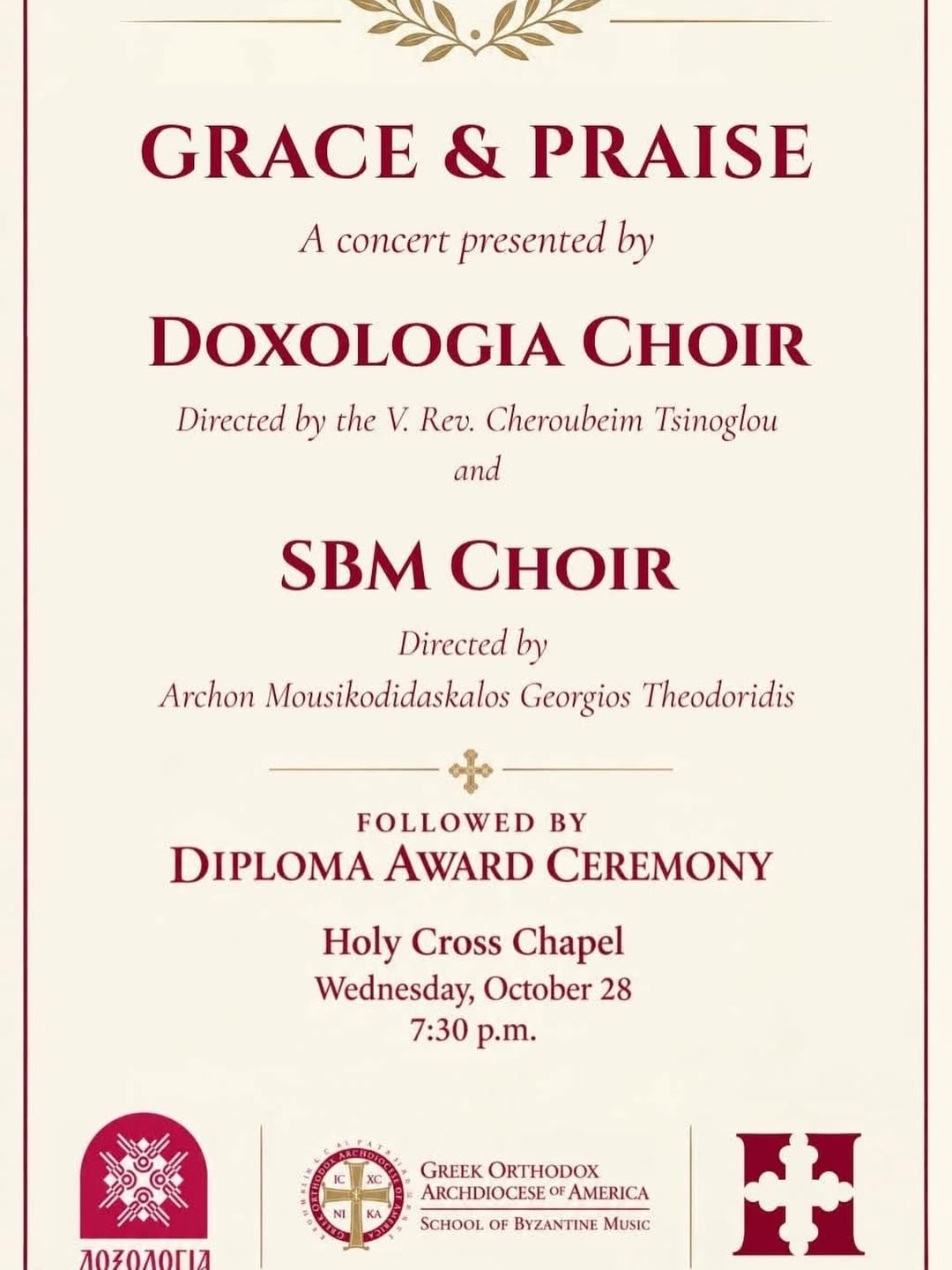
Byzantine music concert and diploma ceremony set for October 28

The announcement invites attendees to a Byzantine music concert on October 28 featuring two choirs. The Doxologia Choir, directed by Fr. Cherouveim Tsinoglou, will perform alongside the School of Byzantine Music Choir, directed by Archon Mousikodidaskalos Georgios Theodoridis. The evening also includes a diploma award ceremony honoring American students who completed their examinations in Greece this past summer. These students earned diplomas…

The announcement invites attendees to a Byzantine music concert on October 28 featuring two choirs. The Doxologia Choir, directed by Fr. Cherouveim Tsinoglou, will perform alongside the School of Byzantine Music Choir, directed by Archon Mousikodidaskalos Georgios Theodoridis. The evening also includes a diploma award ceremony honoring American students who completed their examinations in Greece this past summer.

These students earned diplomas and certificates from the School of Byzantine Music of the Metropolis of Thessaloniki. The event marks a collaboration between Greece and America in sacred musical tradition.

  • Concert on October 28 featuring Doxologia Choir and School of Byzantine Music Choir
  • Fr. Cherouveim Tsinoglou directs Doxologia Choir
  • Archon Mousikodidaskalos Georgios Theodoridis directs School of Byzantine Music Choir
  • Diploma ceremony for American students who examined in Greece this summer
  • Diplomas from School of Byzantine Music of the Metropolis of Thessaloniki
Read more
Prayer Orthodoxy ® Instagram

Kyrie Eleison: A Simple Prayer of Endless Meaning

The post presents the Jesus Prayer "Kyrie Eleison" (Lord, have mercy) as it is repeated throughout the Divine Liturgy. The author describes the prayer as simple in wording but endless in meaning. The text invites the reader to enter the beauty of Holy Trinity Greek Orthodox Church in Clearwater, Florida, where every icon, candle, and hymn turns the heart toward Christ. The same reflection appears in Greek: "Κύριε Ελέησον Κύριε, ελέησον. Μία…

The post presents the Jesus Prayer "Kyrie Eleison" (Lord, have mercy) as it is repeated throughout the Divine Liturgy. The author describes the prayer as simple in wording but endless in meaning. The text invites the reader to enter the beauty of Holy Trinity Greek Orthodox Church in Clearwater, Florida, where every icon, candle, and hymn turns the heart toward Christ.

The same reflection appears in Greek: "Κύριε Ελέησον Κύριε, ελέησον. Μία προσευχή που ακούγεται ξανά και ξανά στη Θεία Λειτουργία, απλή στα λόγια και βαθιά στο νόημά της. Καθώς αντικρίζουμε την ομορφιά του Ιερού Ναού Αγίας Τριάδος στο Clearwater της Florida, κάθε εικόνα, κερί και ύμνος ας στρέφει την καρδιά μας προς τον Χριστό."

The post is identified as an original production of Prayer Orthodoxy and carries hashtags for Orthodox, Kyrie Eleison, Prayer, Christ, and Liturgy.

  • The Jesus Prayer "Kyrie Eleison" recurs throughout the Divine Liturgy
  • The prayer is described as simple in words but endless in meaning
  • Holy Trinity Greek Orthodox Church in Clearwater, Florida is named as the setting
  • Icons, candles, and hymns in the church direct the heart toward Christ
  • The reflection appears in both English and Greek
Read more

Four patristic and contemporary references cited

The post lists four sources without additional commentary or discussion. The first is a contemporary work, The Orthodox Faith and Baptist Evangelicals by Fr. Gregorios Estephan, cited at page 82. The second is the First Letter of Saint Athanasius to Serapion, paragraph 28. The third is Saint Basil the Great's On the Holy Spirit, Chapter 27, paragraph 66. The fourth is Saint Irenaeus's Against Heresies, Book III, Chapter 2, paragraph 2. No thread or conversation follows these citations.

  • The Orthodox Faith and Baptist Evangelicals, Fr. Gregorios Estephan, page 82
  • First Letter of Saint Athanasius to Serapion, paragraph 28
  • Saint Basil the Great, On the Holy Spirit, Chapter 27, paragraph 66
  • Saint Irenaeus, Against Heresies, Book III, Chapter 2, paragraph 2
Read more
Prayer Orthodoxy ® with orthodoxwomenministry Instagram

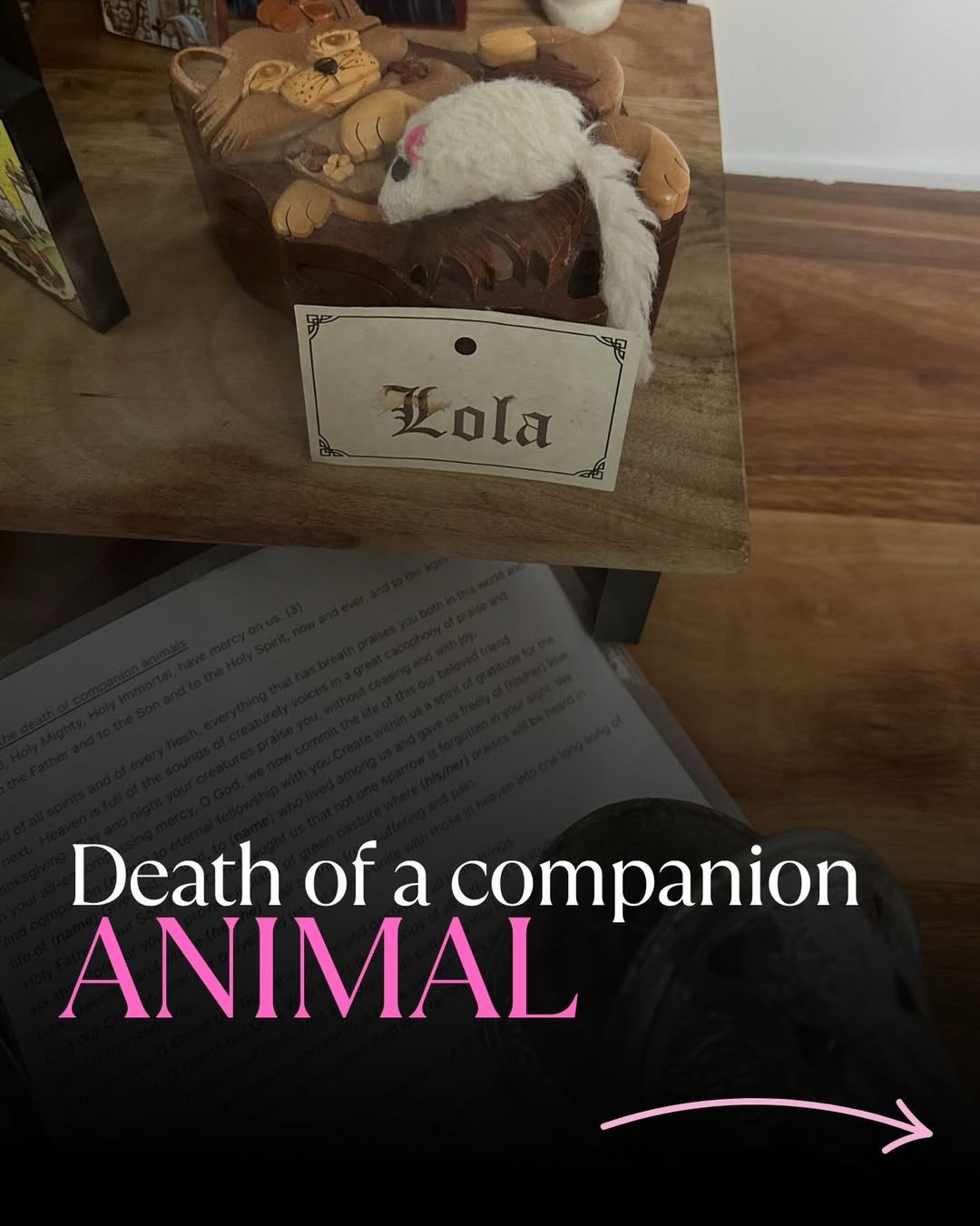
Do pets go to heaven? Grieving and praying for animal companions

The author asks whether cats and dogs go to heaven and how to grieve and pray for an animal companion. The post begins with a disclaimer that the images are focused on cats for personal reasons. The author notes that today marks the three-year anniversary of the loss of her cat, Lola. She describes Lola as her study buddy during her last semester of theological college. The author invites readers to open up and share their own experiences,…

The author asks whether cats and dogs go to heaven and how to grieve and pray for an animal companion. The post begins with a disclaimer that the images are focused on cats for personal reasons. The author notes that today marks the three-year anniversary of the loss of her cat, Lola.

She describes Lola as her study buddy during her last semester of theological college. The author invites readers to open up and share their own experiences, sending hugs to anyone currently going through the loss of a pet. The post raises two direct questions: first, about the eternal destiny of cats and dogs; second, about the proper way to grieve and to pray for a deceased animal companion.

The author does not offer answers but presents the questions from her personal experience as a recent theological graduate. The tone is personal and pastoral, acknowledging the pain of loss while seeking the wisdom of the community. The post is framed as an invitation to conversation rather than a statement of doctrine.

  • The author asks if cats and dogs go to heaven.
  • The author asks how to grieve and pray for a deceased animal companion.
  • The post marks the third anniversary of the death of the author's cat, Lola.
  • Lola was the author's study companion during the final semester of theological college.
  • The author invites others to share their experiences and offers support to those grieving.
Read more

Congratulations to Fedor Duric with prayer from St. Nikolai Velimirović

The post offers congratulations to Fedor Duric, described as a brother in Christ, on his triumph. The author gives all glory to God and includes a prayer attributed to St. Nikolai Velimirović addressing Christ as the Conqueror of the world and victorious Commander, asking Him to remain close. The text is accompanied by a series of emojis including prayer hands, an Orthodox cross, prayer beads, a heart, a skull, crossed swords, a dove, and a boxing glove.

Key moments

  1. Go get my money take my turn jump up and lock up tough and my body get the song off of me tough of my money tough
  2. get my money take my turn jump up and lock up tough and my body get the song off of me tough of my money tough
  3. get the song off of me tough of my money get my money take my turn jump up and lock up tough and my body get the song off of me tough of my money tough
Read more
Prayer Orthodoxy ® Instagram

Readers asked to share favorite Orthodox monasteries and bucket-list destinations

The post from Prayer Orthodoxy asks readers whether they have visited an Orthodox monastery and invites them to name their favorite in the comments. For those who have not yet visited, it asks which monastery tops their bucket list. The text describes a monastery visit as a meaningful experience of prayer, worship, silence, and spiritual renewal. No further discussion or responses are included in the source.

  • Post asks readers to share favorite Orthodox monastery visited
  • Invites those who have not visited to name a monastery on their bucket list
  • Describes monastery visits as experiences of prayer, worship, silence, and renewal
  • Published by Prayer Orthodoxy as an original production
Prayer Orthodoxy ® Instagram

Prayer to the Theotokos: hold us, strengthen us, stay with us

The post presents a prayer addressed to the Virgin Mary, the Theotokos, in both English and Greek. The speaker approaches her without elaborate words, bringing wounds, fears, and unspoken burdens. They ask to be held in her embrace as a mother holds a child without questioning. The prayer requests that she become light for dark nights, calm for troubled thoughts, and strength for each step. It also asks protection for loved ones and for those…

The post presents a prayer addressed to the Virgin Mary, the Theotokos, in both English and Greek. The speaker approaches her without elaborate words, bringing wounds, fears, and unspoken burdens. They ask to be held in her embrace as a mother holds a child without questioning.

The prayer requests that she become light for dark nights, calm for troubled thoughts, and strength for each step. It also asks protection for loved ones and for those who have no one to shelter them, ending with a plea for her to remain with them. The Greek text mirrors the English: "Παναγιά μου, μείνε μαζί μας" (My Panagia, stay with us).

The prayer asks for her prayers, protection, and motherly intercession before her Son, Jesus Christ. It specifically names those who feel alone, the weary, and the suffering, asking the Theotokos to hold them close, strengthen them, comfort them, and lead all to Christ. The post is an original production of Prayer Orthodoxy.

Key moments

  1. The speaker approaches the Virgin Mary as they are, with wounds, fears, and unspoken burdens.
  2. They ask to be held in her embrace like a mother holds a child without questions.
  3. They request she become light for their nights, peace for their thoughts, and strength for their steps.
  4. They ask her to protect those they love and those who have no one to protect them.
  5. They conclude by asking her to stay with them.
Read more

Orthodox Confession as Hospital, Not Courtroom

The speaker contrasts Orthodox confession with a Western juridical model. He says the Orthodox Church does not treat confession as a courtroom drama but as a hospital for healing the human person. The penitent acknowledges violations of God's laws but comes seeking restoration of heart and soul, crying out for salvation. The speaker states they do not use a moral inventory but acknowledge how they have violated the laws of God. Confession is not…

The speaker contrasts Orthodox confession with a Western juridical model. He says the Orthodox Church does not treat confession as a courtroom drama but as a hospital for healing the human person. The penitent acknowledges violations of God's laws but comes seeking restoration of heart and soul, crying out for salvation.

The speaker states they do not use a moral inventory but acknowledge how they have violated the laws of God. Confession is not about being in handcuffs; it is about longing for Christ. The penitent admits pushing Christ away and wounding the soul and darkening the heart.

In confession the person says: here are the things I have done, I do not want them anymore, I want to see clearly, I want my heart to work and my soul to be alive again. The cry of confession is: I do not want to die, I want to live; save me, save me.

Key moments

  1. The speaker says Orthodox confession is not judicial or a courtroom drama.
  2. The Western Protestant view of the cross is described as juridical and courtroom‑like.
  3. The Orthodox Church views confession as a hospital drama for healing the human person.
  4. The speaker states they do not use a moral inventory but acknowledge how they have violated the laws of God.
  5. Confession is not about being in handcuffs; it is about longing for Christ.
  6. The penitent admits pushing Christ away and wounding the soul and darkening the heart.
  7. In confession the person says: here are the things I have done, I do not want them anymore, I want to see clearly, I want my heart to work and my soul to be alive again.
  8. The cry of confession is: I do not want to die, I want to live; save me, save me.
Read more
Prayer Orthodoxy ® with Psifida Instagram

Final part of Saint Nektarios Catacombs visit

The post marks the seventh and final part of a series on the Saint Nektarios Catacombs. The author notes they have reached the exit. Hashtags reference Psifida, Saint Nektarios, travel in Greece, and viral content.

Key moments

  1. The prayer addresses the Lord, asking to be granted the ability to hymn His glory.
  2. It acknowledges that the Lord has deemed the faithful worthy to partake of His holy mystery.
  3. It requests that the Lord strengthen the faithful in His sanctification.
  4. The purpose is to meditate on God's righteousness all day long.
  5. The prayer concludes with a triple Alleluia.
Read more
Prayer Orthodoxy ® Instagram

Holy Trinity Clearwater rebuilds after 2015 fire, opens Christmas Eve 2019

1:14

Holy Trinity Greek Orthodox Church in Clearwater, Florida, carries a story of resilience and renewal after a devastating fire in 2015 severely damaged the sanctuary. The parish worshipped in its gymnasium while a new Byzantine-style church was built. The rebuilt church opened on Christmas Eve 2019, exactly fifty years after the original church's first Divine Liturgy in 1969. After the opening, the interior was adorned with extensive sacred…

Holy Trinity Greek Orthodox Church in Clearwater, Florida, carries a story of resilience and renewal after a devastating fire in 2015 severely damaged the sanctuary. The parish worshipped in its gymnasium while a new Byzantine-style church was built. The rebuilt church opened on Christmas Eve 2019, exactly fifty years after the original church's first Divine Liturgy in 1969.

After the opening, the interior was adorned with extensive sacred iconography by artists from Greece. Iconographer Achilles Tourlas was among those artists, and his work helped transform the new sanctuary into a richly traditional Orthodox space. The post presents this narrative in both English and Greek. The English text describes the fire, the temporary worship location, the construction of the Byzantine-style church, the opening date, the fiftieth anniversary connection, and the iconography project.

The Greek text mirrors this information. The post is identified as an original production of Prayer Orthodoxy and includes hashtags for Orthodox, Church, Iconography, Faith, and Florida. No further discussion or commentary is included in the source text.

  • 2015 fire severely damaged the original sanctuary
  • Parish worshipped in gymnasium during reconstruction
  • New Byzantine-style church opened Christmas Eve 2019, 50 years after first 1969 liturgy
  • Interior iconography completed by artists from Greece including Achilles Tourlas
  • Post presented in English and Greek by Prayer Orthodoxy
Read more
Prayer Orthodoxy ® Instagram

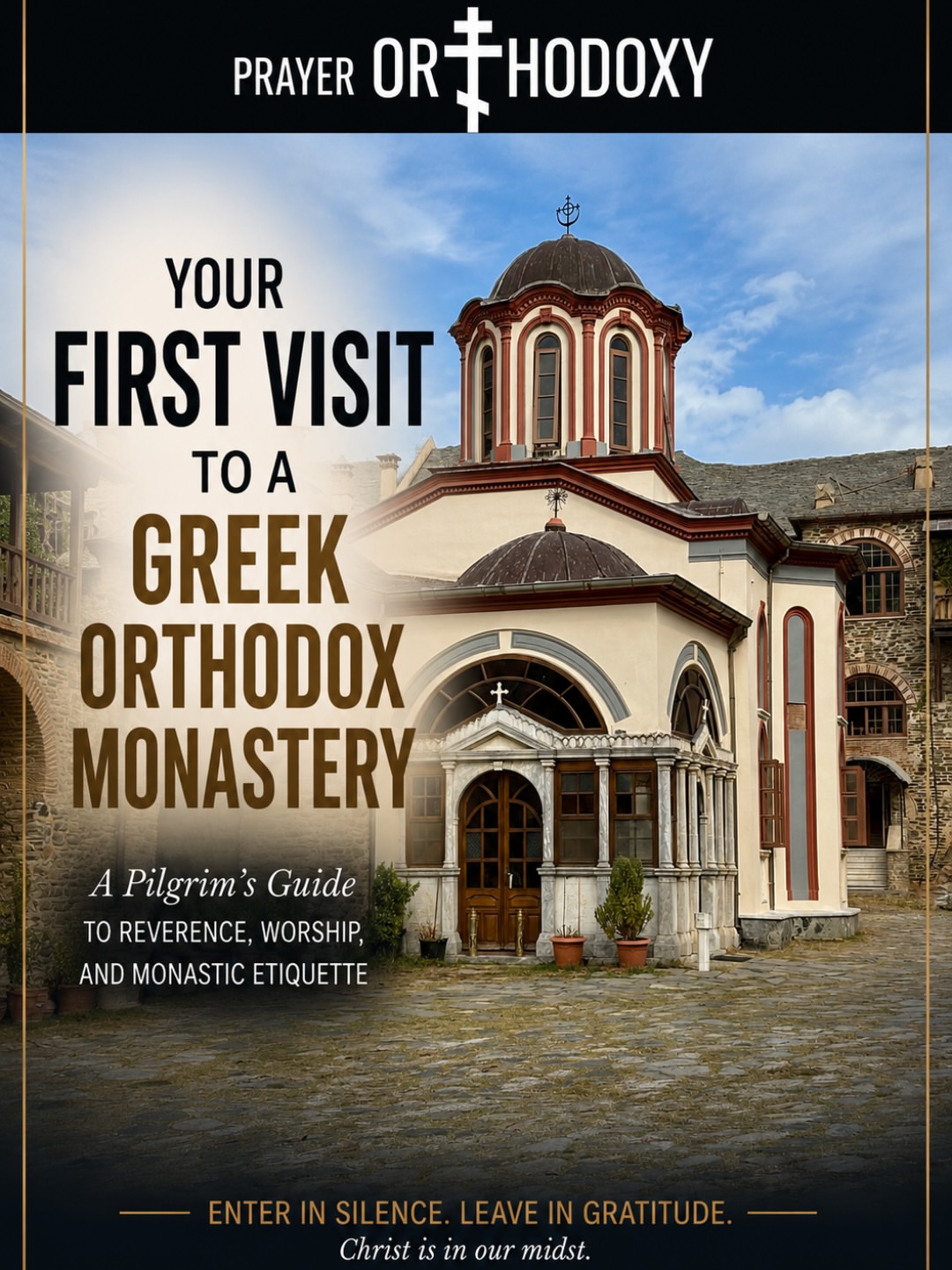
Guidance for a First Visit to an Orthodox Monastery

The text opens by defining an Orthodox monastery as a place of prayer, repentance, worship, and silence. It then gives a series of instructions for a first visit. Visitors should enter with reverence. They should dress modestly. They should follow the customs of the monastery and the guidance of the monastics. During services, they should observe quietly. They should allow the rhythm of monastic life to lead them. The text then explains the…

The text opens by defining an Orthodox monastery as a place of prayer, repentance, worship, and silence. It then gives a series of instructions for a first visit. Visitors should enter with reverence. They should dress modestly. They should follow the customs of the monastery and the guidance of the monastics.

During services, they should observe quietly. They should allow the rhythm of monastic life to lead them. The text then explains the purpose of a pilgrimage. It gives the opportunity to leave worldly distractions behind. It allows one to turn the heart toward God. The entire text is repeated in Greek. The post is identified as an original production of Prayer Orthodoxy.

  • A monastery is a place of prayer, repentance, worship, and silence
  • Enter with reverence and dress modestly
  • Follow the monastery's customs and the monastics' guidance
  • Observe services quietly and follow the monastic rhythm
  • Pilgrimage offers a chance to leave distractions and turn toward God
Read more
Prayer Orthodoxy ® with The National Herald Instagram

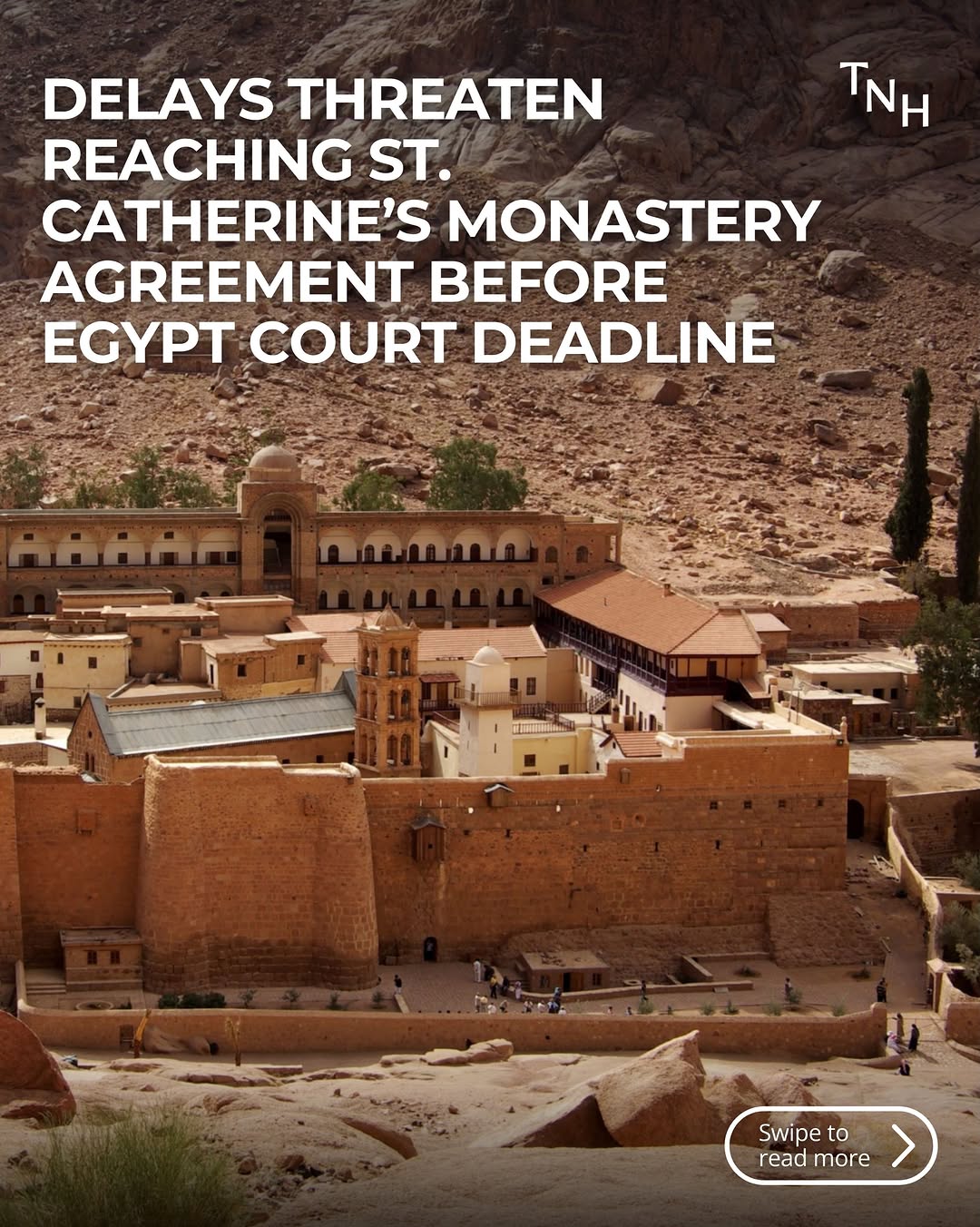
Egypt court deadline looms for Saint Catherine's Monastery status

An October 22 deadline approaches for reaching an agreement on the status and properties of Saint Catherine's Monastery in the Sinai peninsula. The situation is a major issue for Greece during the current pre-election period. According to Kathimerini, the critical moment comes before October 24, when a stay on an Egyptian Supreme Court decision expires. Athens considers another extension unlikely after four previous delays. Negotiators face…

An October 22 deadline approaches for reaching an agreement on the status and properties of Saint Catherine's Monastery in the Sinai peninsula. The situation is a major issue for Greece during the current pre-election period. According to Kathimerini, the critical moment comes before October 24, when a stay on an Egyptian Supreme Court decision expires.

Athens considers another extension unlikely after four previous delays. Negotiators face stalling from factions in Egypt and a divided monastic brotherhood. One dissenting monk stated there is no chance the decision will be announced on October 24 and accused those involved of trying to mislead.

Giorgos Kalantzis, a Greek official, has traveled to Jerusalem seeking the intervention of the Patriarchate of Jerusalem, which holds jurisdiction over the monastery. The report draws on material from Kathimerini and was published by The National Herald.

  • October 22 deadline for agreement on monastery status and properties
  • Egyptian Supreme Court stay expires October 24 after four previous delays
  • Greek officials see further extension as unlikely
  • Divided monastic brotherhood and Egyptian factions stall negotiations
  • Greek official Giorgos Kalantzis seeks Patriarchate of Jerusalem intervention