WeOrthodox
EN UA

Појединац, Породица и Друштво

Instagram ↗ 209 discussions

Ова страница је посвећена ПРАВОСЛАВЉУ и ДОБРОТОЉУБЉУ🫒

Priest advises silence and prayer in conflict

Protoiereus Vladimir Yeremin writes that in any conflict situation one should not rush to respond. It is better to remain silent when there is no good feeling within. The enemy seeks to sow discord among people, so it is important to turn to God in that moment. People often react negatively to remarks with phrases such as "Don't teach me," "I'll do it later," or "I know that without you." These reactions are what the enemy wants in order to…

Protoiereus Vladimir Yeremin writes that in any conflict situation one should not rush to respond. It is better to remain silent when there is no good feeling within. The enemy seeks to sow discord among people, so it is important to turn to God in that moment.

People often react negatively to remarks with phrases such as "Don't teach me," "I'll do it later," or "I know that without you." These reactions are what the enemy wants in order to provoke a quarrel. If one prays inwardly, a quarrel will not arise. The priest states that one must be silent, pray, and all evil impulses will pass. The main thing is to avoid unnecessary words. The Lord will arrange everything.

  • Do not rush to respond in conflict; silence is better when inner peace is absent
  • The enemy aims to sow discord through provoked reactions
  • Negative retorts like "Don't teach me" play into the enemy's aim
  • Inward prayer prevents quarrels and lets evil impulses pass
  • Avoid unnecessary words; the Lord will arrange the outcome
Read more

Saint Demetrius: Martyr and Protector of Thessaloniki

Saint Demetrius was born in Thessaloniki to noble and pious parents as their only child and was raised with great care. After his father died, the emperor appointed Demetrius proconsul in his father's place, giving explicit orders to persecute Christians. Demetrius disobeyed the imperial command and instead publicly confessed and preached Christ in Thessaloniki. The emperor summoned Demetrius and questioned him about his faith. Demetrius…

Saint Demetrius was born in Thessaloniki to noble and pious parents as their only child and was raised with great care. After his father died, the emperor appointed Demetrius proconsul in his father's place, giving explicit orders to persecute Christians. Demetrius disobeyed the imperial command and instead publicly confessed and preached Christ in Thessaloniki.

The emperor summoned Demetrius and questioned him about his faith. Demetrius confessed that he was a Christian and denounced the emperor's idolatry. The enraged emperor threw Demetrius into prison. After several days, the emperor sent soldiers to the prison.

They found Demetrius praying and pierced him with spears. Christians secretly took his body and buried it honorably. Fragrant myrrh flowed from his body and healed many sick people. As protector of Thessaloniki, Saint Demetrius appeared many times and saved the city from great danger on many occasions.

Key moments

  1. Saint Demetrius was born in Thessaloniki to noble and pious parents as their only child and was raised with great care.
  2. After his father's death, the emperor appointed him proconsul in his father's place, explicitly ordering him to persecute Christians.
  3. Demetrius disobeyed the emperor and instead publicly confessed and preached Christ in Thessaloniki.
  4. The emperor summoned Demetrius and questioned him about his faith; Demetrius confessed he was a Christian and denounced the emperor's idolatry.
  5. The enraged emperor threw Demetrius into prison.
  6. After several days, the emperor sent soldiers to the prison who found Demetrius praying and pierced him with spears.
  7. Christians secretly took and honorably buried his body, from which fragrant myrrh flowed and healed many sick people.
  8. As protector of Thessaloniki, Saint Demetrius appeared many times and saved the city from great danger on many occasions.
Read more

Holy Apostle James, Brother of the Lord: His Life and Martyrdom

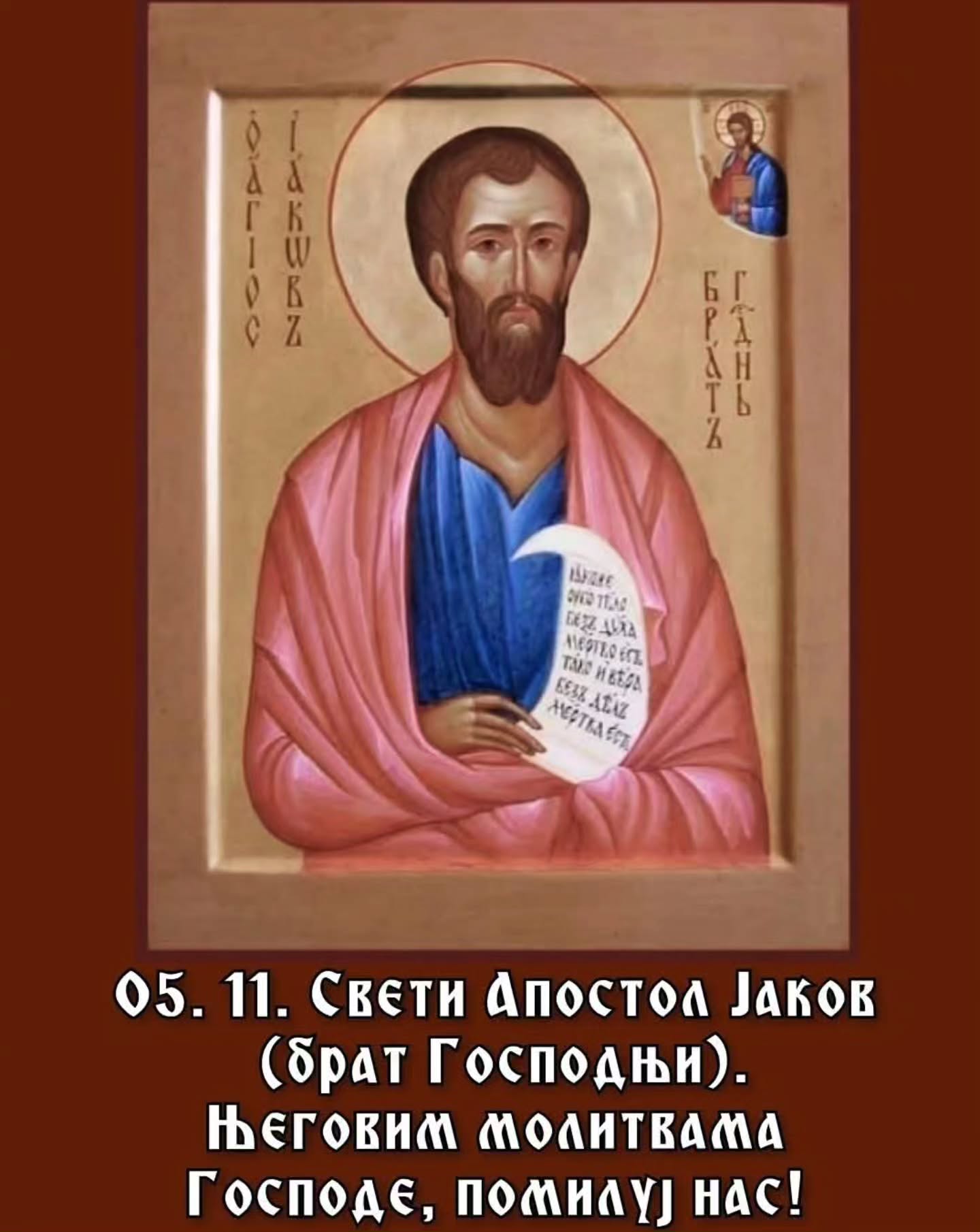
The post gives the life of St James, called the Brother of the Lord because he was the son of righteous Joseph, the betrothed of the Most Holy Theotokos. When Joseph was dying he divided his property among his sons and wanted to leave a share to Jesus; his other sons objected, not considering Jesus their brother, but James loved Jesus and declared he would take Him on his share. James was devoted to Jesus from the beginning, and tradition says…

The post gives the life of St James, called the Brother of the Lord because he was the son of righteous Joseph, the betrothed of the Most Holy Theotokos. When Joseph was dying he divided his property among his sons and wanted to leave a share to Jesus; his other sons objected, not considering Jesus their brother, but James loved Jesus and declared he would take Him on his share.

James was devoted to Jesus from the beginning, and tradition says he went to Egypt with the Most Holy Virgin and Joseph when Herod sought to kill the newborn King. After hearing Christ's teaching he lived by it: he ate neither fat nor oil all his life, only bread and water, remained a virgin, and kept vigil and prayed at night. The Lord numbered him among the seventy apostles, and after His Resurrection appeared to him especially, as St Paul testifies (1 Cor. 15).

James was bishop in Jerusalem for thirty years and zealously governed the Church of God. At the Lord's appearing he composed the first liturgy, later shortened by St Basil and St John Chrysostom because it was too long. He converted many Jews and Greeks, and even unbelieving Jews admired his righteousness, calling him James the Just.

When Ananias became high priest, he and other Jewish leaders resolved to kill James as a preacher of Christ. At Pascha, with many people gathered in Jerusalem, the elders told him to climb to the temple roof and speak against Christ. He climbed and instead preached Christ as the Son of God and true Messiah, His Resurrection and eternal glory in heaven.

Furious priests and elders threw him from the roof; he fell and was badly injured but still alive. A man then struck his head with such force that his brains came out, and he died a martyr's death at the age of sixty-three.

  • James was called the Brother of the Lord because he was the son of righteous Joseph, who wanted to leave Jesus a share of his inheritance; James declared he would take Jesus on his own share.
  • By tradition he went to Egypt with the Most Holy Virgin and Joseph during the flight from Herod.
  • He ate only bread and water, remained a virgin, kept night vigils, was among the seventy apostles, and the risen Christ appeared to him especially (1 Cor. 15).
  • As bishop of Jerusalem for thirty years he composed the first liturgy, which St Basil and St John Chrysostom later shortened.
  • On Pascha he preached Christ from the temple roof instead of denying Him, was thrown down and struck on the head, dying a martyr at age sixty-three.
Read more

Vine from Saint Simeon's Grave Bears Fruit After 800 Years

A vine has grown from the grave of Saint Simeon the Myrrh-streaming at Hilandar Monastery on Mount Athos for more than eight hundred years. The saint promised the monks that a vine would spring from his empty grave as a comfort to the brotherhood. That vine continues to bear fruit today, eight centuries later. The grave is the original burial site of the saint before his relics were translated to another location. The promise was made to the…

A vine has grown from the grave of Saint Simeon the Myrrh-streaming at Hilandar Monastery on Mount Athos for more than eight hundred years. The saint promised the monks that a vine would spring from his empty grave as a comfort to the brotherhood. That vine continues to bear fruit today, eight centuries later.

The grave is the original burial site of the saint before his relics were translated to another location. The promise was made to the monastic community as an assurance of his ongoing spiritual presence. The vine has persisted through centuries of political upheaval, natural disasters, and the ordinary passage of time on the Holy Mountain.

Each generation of monks at Hilandar has cared for the plant, pruning it and harvesting its fruit. The grapes are collected annually and used by the brotherhood. The story of the vine is told to pilgrims who come to venerate the saint.

It is recorded in the monastery's chronicles and in the lives of Saint Simeon written by his contemporaries. The saint, who was the Serbian ruler Stefan Nemanja before becoming a monk, founded Hilandar with his son Saint Sava in the late twelfth century. His relics are known to stream myrrh, a phenomenon that continues alongside the growth of the vine.

The vine from the empty grave and the myrrh from the relics are both seen as signs of the saint's intercession. The video presenting this account concludes with the observation that what is planted by faith outlives centuries.

Key moments

  1. A vine grew from the grave of Saint Simeon the Myrrh-streaming at Hilandar Monastery on Mount Athos.
  2. The saint promised the monks that a vine would grow from his empty grave as comfort to the brotherhood.
  3. The vine still bears fruit after more than 800 years.
  4. What is planted by faith outlives centuries.
Read more

The Three Youths in the Fiery Furnace

King Nebuchadnezzar erects a golden image and commands all people to worship it, threatening anyone who refuses with a blazing furnace. Shadrach, Meshach, and Abednego refuse to bow to the idol because they remain faithful to God. The king, enraged, orders the furnace heated seven times hotter than usual and has the three bound men thrown into the fire. The intense heat kills the soldiers who cast them in, but the three men walk freely in the…

King Nebuchadnezzar erects a golden image and commands all people to worship it, threatening anyone who refuses with a blazing furnace. Shadrach, Meshach, and Abednego refuse to bow to the idol because they remain faithful to God. The king, enraged, orders the furnace heated seven times hotter than usual and has the three bound men thrown into the fire.

The intense heat kills the soldiers who cast them in, but the three men walk freely in the furnace unharmed. Nebuchadnezzar then sees a fourth figure in the fire, resembling a son of God, and he praises the God who delivers his faithful servants.

Key moments

  1. King Nebuchadnezzar sets up a golden image and orders all to worship it, with the penalty of being thrown into a blazing furnace for refusal.
  2. The three young men, Shadrach, Meshach, and Abednego, refuse to worship the idol because they remain faithful to God.
  3. The enraged king commands the furnace to be heated seven times hotter than usual and has the bound men thrown into the fire.
  4. The intense heat kills the soldiers who throw them in, but the three men walk freely in the fire unharmed.
  5. The king sees a fourth figure in the fire, resembling a son of God, and then praises the God who rescues his faithful servants.

The Virgin of Ljeviš: King Milutin's cathedral, its frescoes, and survival

The Church of the Virgin of Ljeviš in Prizren was built by King Milutin between 1307 and 1309 on the foundations of a three-aisled basilica from the tenth and eleventh centuries. That earlier basilica was likely dedicated to the Virgin Eleusa and stood on an even older cult site. The basilica was partially renovated in the thirteenth century during the reign of King Stefan the First-Crowned, when the Prizren bishopric joined the autocephalous…

The Church of the Virgin of Ljeviš in Prizren was built by King Milutin between 1307 and 1309 on the foundations of a three-aisled basilica from the tenth and eleventh centuries. That earlier basilica was likely dedicated to the Virgin Eleusa and stood on an even older cult site. The basilica was partially renovated in the thirteenth century during the reign of King Stefan the First-Crowned, when the Prizren bishopric joined the autocephalous Serbian Church.

Inscriptions on the east facade, made in brick, record King Milutin's reconstruction carried out with the support of Prizren bishops Damjan and Sava, the latter later becoming Archbishop Sava III. The inscriptions also name the builder Nikola and the painter Astrapa as the Byzantine masters responsible for raising and decorating the episcopal seat in the fourteenth century.

The preserved frescoes in the church date from different periods. A fresco of the Virgin Eleusa with Christ the Nourisher was painted in the third decade of the thirteenth century. Two other frescoes from that time, the Wedding at Cana and the Healing of the Blind, are now kept in the Fresco Gallery of the National Museum of Serbia in Belgrade.

The remaining frescoes, created between 1307 and 1313, are the work of the renowned Thessalonian painter Michael Astrapas and his assistants.

Like many other Serbian Orthodox shrines, the Virgin of Ljeviš was desecrated during the pogrom of March 2004, carried out by Albanian extremists against the Serbian population and holy sites. Its frescoes were heavily damaged by fire but were fortunately preserved and restored in the second decade of the twenty-first century. The restoration was conducted by the Republic Institute for the Protection of Cultural Monuments.

The post also notes related frescoes from King Milutin's era in the monastery of St. John the Theologian in Poganovo.

  • King Milutin built the church 1307-1309 over a 10th-11th century basilica dedicated to the Virgin Eleusa.
  • Inscriptions name bishops Damjan and Sava, builder Nikola, and painter Astrapa.
  • Frescoes include 13th-century works (Virgin Eleusa, Wedding at Cana, Healing of the Blind) and 1307-1313 paintings by Michael Astrapas.
  • The church was severely damaged in the March 2004 pogrom by Albanian extremists and later restored by the Republic Institute for Protection of Cultural Monuments.
  • Some 13th-century frescoes are now housed in the National Museum of Serbia in Belgrade.
Read more

St. Gabriel Urgebadze's sister visits Samtavro and recalls 1986 vision

Julietta (Eugenia in baptism), sister of St. Gabriel Urgebadze, visited Samtavro Monastery on November 2, 2026 to venerate her brother's relics in the Transfiguration Church and the grave of their mother Barbara (Anna in monasticism). She recalled a 1986 visit to Meni Monastery in Senaki where, during morning services, she saw her brother's face and beard shining with light, years before his glorification. She remembered asking herself: "Why is…

Julietta (Eugenia in baptism), sister of St. Gabriel Urgebadze, visited Samtavro Monastery on November 2, 2026 to venerate her brother's relics in the Transfiguration Church and the grave of their mother Barbara (Anna in monasticism). She recalled a 1986 visit to Meni Monastery in Senaki where, during morning services, she saw her brother's face and beard shining with light, years before his glorification.

She remembered asking herself: "Why is he shining? Is my brother a saint?" The post presents this as a living example of faith, love, and humility.

Key moments

  1. The speaker acknowledges that one may feel overwhelmed, stressed, and anxious, and says it can be tough to navigate those feelings.
  2. The speaker recommends deep breathing, going for a walk, or listening to relaxing sounds as small actions that can make a real difference.
  3. The speaker advises being kind to yourself, remembering you are doing the best you can, and says everything will be all right.
Read more

Extinguishing the slava candle: custom, superstition, and prayer

The speaker responds to a viral video that his son sent him, which claimed to teach the correct way to extinguish the slava candle during a family feast day. The video stated that the candle must burn until the last guest departs, then be put out with blessed wine while the smoke is read to predict whether the coming year will be good or bad. The speaker rejects the practice of reading smoke as superstition without any foundation in the Church,…

The speaker responds to a viral video that his son sent him, which claimed to teach the correct way to extinguish the slava candle during a family feast day. The video stated that the candle must burn until the last guest departs, then be put out with blessed wine while the smoke is read to predict whether the coming year will be good or bad.

The speaker rejects the practice of reading smoke as superstition without any foundation in the Church, likening it to reading a Christmas log. He observes that customs differ by region: some people extinguish the candle with bread, others with wine. The speaker recommends dipping the wick in melted wax to extinguish the flame so that the candle can be relit later for prayer before the slava icon on subsequent days.

He notes that once the candle is extinguished with wine, water, or similar liquids, it cannot easily be relit. The speaker invites viewers to share how the slava candle is extinguished in their own area.

Key moments

  1. The speaker's son sent him a video asking whether its instructions on extinguishing the slava candle were correct.
  2. The video stated the slava candle must burn until the last guest leaves.
  3. The video instructed extinguishing the candle with blessed wine and then reading the smoke to determine if the year would be good or bad.
  4. The speaker says reading smoke has no basis in the Church and is plain superstition, like reading a Christmas log.
  5. Customs differ across villages and cities; some extinguish the candle with bread, others with wine.
  6. The speaker recommends dipping the candle in wax to extinguish it so it can be relit for prayer before the slava icon on subsequent days.
  7. Once extinguished with wine, water, or similar liquids, the candle cannot easily be relit.
  8. The speaker asks viewers how the slava candle is extinguished in their region.
16 opinions in the discussion God help you, father. We cross ourselves, blow, and put the candle out, the way it's supposed to be done. Read the discussion

A chance meeting with a children's poet who carried Christ in his eyes

The author recounts a chance encounter at a post office where an elderly man yielded his place with the words "Ladies have priority." His face radiated such warmth that the meeting lost any sense of randomness. She introduced herself as Jelena; he gave his name as Slobodan. Moved by his presence, she asked to record him to show friends a man who, in her words, carried Christ in his eyes. Slobodan spoke of his love for children, saying nothing…

The author recounts a chance encounter at a post office where an elderly man yielded his place with the words "Ladies have priority." His face radiated such warmth that the meeting lost any sense of randomness. She introduced herself as Jelena; he gave his name as Slobodan.

Moved by his presence, she asked to record him to show friends a man who, in her words, carried Christ in his eyes. Slobodan spoke of his love for children, saying nothing was more beautiful than a child's smile and that his whole life he wrote for the youngest. He mentioned living in Zabelje. The author listened with wonder, reminded of a Holy Mountain ascetic, a person whose presence does not seek attention yet leaves an indelible trace.

She sent the recording to close friends, who saved it. Recently they sent it back to her with the news that Slobodan Bećo Došljak, a children's poet who gave his books to children, had reposed. The ordinary day became a memory whose value she now feels more deeply. She thanks God for the meeting, prays that his verses continue to live in children's hearts and that his memory remains in the souls of those who met him, and ends with the prayer for eternal memory and the Kingdom of Heaven.

  • The author meets an elderly man at a post office who greets her with unusual warmth.
  • He introduces himself as Slobodan and speaks of his lifelong work writing poetry for children.
  • The author senses a spiritual depth in him, comparing his presence to a Holy Mountain ascetic.
  • She later learns he was Slobodan Bećo Došljak, a known children's poet who gave his books to children.
  • She offers a prayer for his eternal memory and the Kingdom of Heaven.

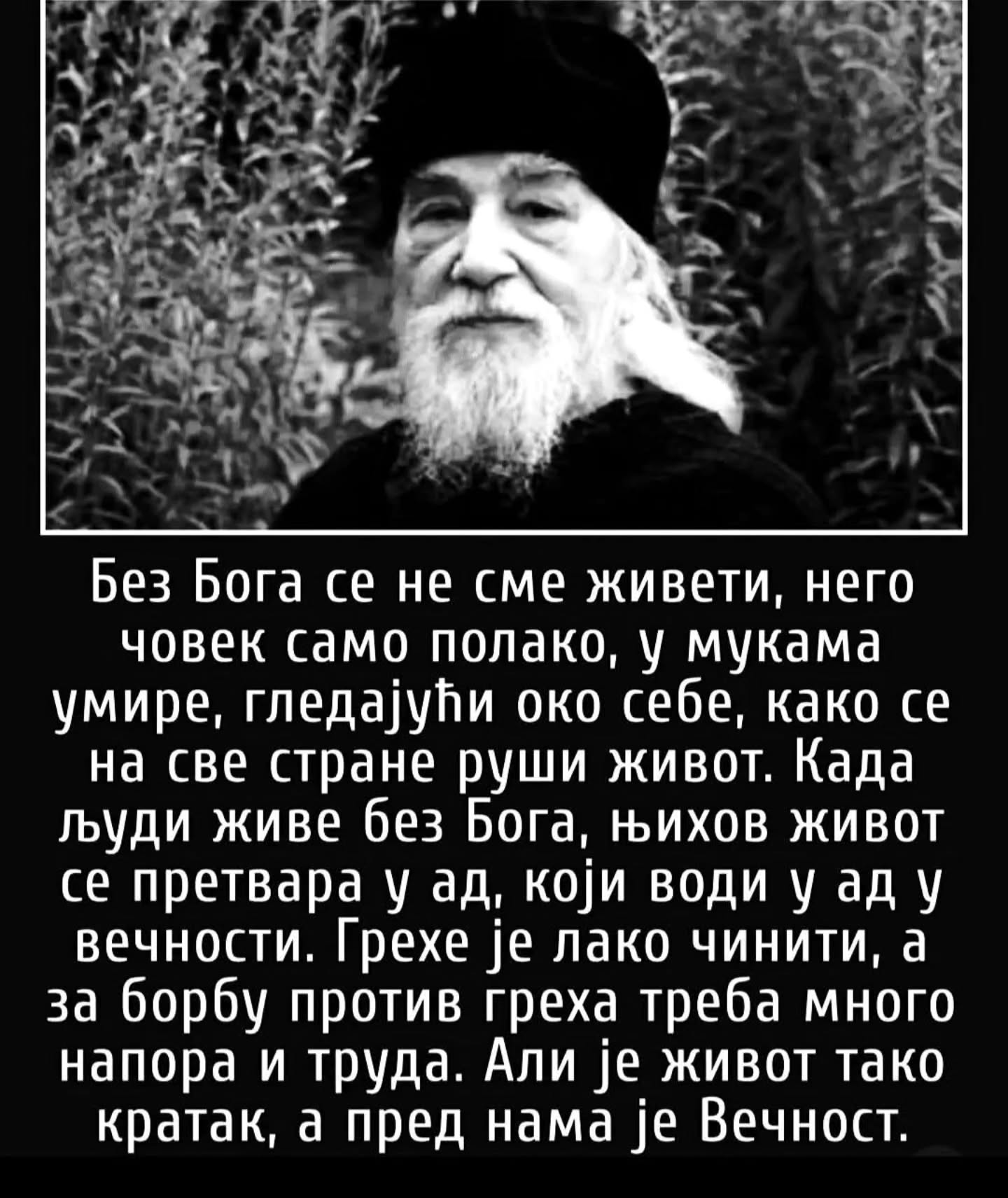
Life without God leads to hell now and in eternity

The text states that a person cannot live without God but only dies slowly in torment while watching life collapse on all sides. When people live without God, their life becomes hell on earth and leads to eternal hell. Sin is described as easy to commit, while the struggle against sin requires great effort and labor. The author contrasts the brevity of human life with the eternity that lies ahead.

  • Without God human life becomes a slow death in torment
  • Life without God turns into hell on earth and leads to eternal hell
  • Sin is easy to commit but struggling against it requires great effort
  • Human life is short while eternity lies ahead
Read more

Miracles of St. Prohor of Pčinja testified by abbot Archimandrite Methodije

The post recounts several miracles attributed to St. Prohor of Pčinja as testified by Archimandrite Methodije Marković, abbot of the monastery where the saint's relics rest. For centuries the faithful have gathered at the shrine seeking comfort, help, and the saint's intercession. The monastery preserves an archive of written testimonies from monastics and believers about healings, answered prayers, and miraculous events. One family traveling to…

The post recounts several miracles attributed to St. Prohor of Pčinja as testified by Archimandrite Methodije Marković, abbot of the monastery where the saint's relics rest. For centuries the faithful have gathered at the shrine seeking comfort, help, and the saint's intercession. The monastery preserves an archive of written testimonies from monastics and believers about healings, answered prayers, and miraculous events.

One family traveling to Greece stopped at the monastery with their five-year-old daughter who had never spoken. After venerating the relics, praying, and anointing her with holy myrrh, the girl said "mama" a few kilometers from the monastery. The family returned to the shrine, and in Greece the girl began to speak fully; her parents now visit on the feast of St. Prohor.

Another testimony concerns a girl who had been in a coma since the late 1980s or early 1990s. Her father dreamed of St. Prohor calling him to bring the child to the shrine. While en route to the monastery, the girl opened her eyes and awoke. A third testimony, recorded on June 29, 2016, describes a girl with impaired vision from early childhood who regained sight after prayer at the monastery.

The post also describes abundant myrrh flowing from a crack in the wall containing the relics. According to the testimony, the myrrh began flowing on the eve of the festal vigil, continued through the night and on the feast day itself, so that priests collected it from the church floor. Over a thousand faithful gathered for the liturgical celebration witnessed this event.

The abbot emphasizes that the shrine is a place of prayer, repentance, and hope, and that saints work not by their own power but by God's grace acting through them.

  • Healing of a mute girl after veneration and anointing with myrrh at the monastery
  • Awakening of a comatose girl after St. Prohor appeared to her father in a dream
  • Restoration of sight to a visually impaired girl after prayer, documented June 29, 2016
  • Abundant myrrh streaming from the relic wall before and during the feast day, witnessed by over a thousand faithful
  • Abbot Archimandrite Methodije Marković testifies these events from the monastery's archive of written testimonies
Read more

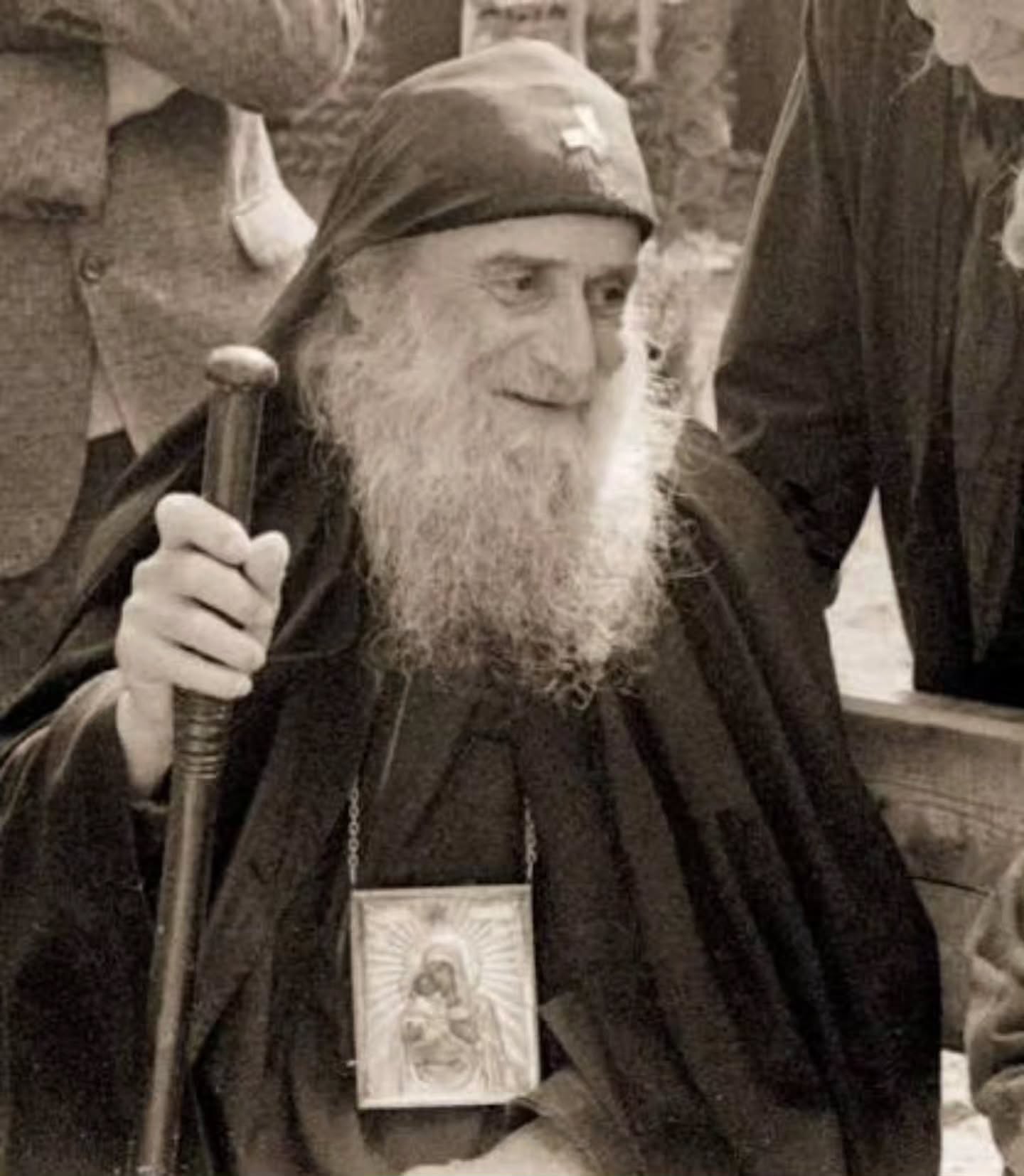
St. Gabriel of Samtavro, Georgian confessor and fool-for-Christ

The post announces the commemoration of St. Gabriel (Urgebadze), a Georgian confessor of the faith and fool-for-Christ. He reposed on 2 November 1995. The Holy Synod of the Georgian Orthodox Church canonized him on 20 December 2012 and set his feast day for 2 November. His relics rest in the Temple of the Transfiguration at the Samtavro women's monastery in Mtskheta.

The accompanying photograph shows an elderly bearded man in a dark robe and cap, holding a walking stick and wearing an icon around his neck.

  • St. Gabriel Samtavreli reposed on 2 November 1995.
  • Canonized by the Georgian Orthodox Church on 20 December 2012.
  • Feast day established as 2 November.
  • Relics located at Samtavro monastery in Mtskheta.
  • Photograph depicts him as an elderly ascetic with walking stick and icon.
Read more

Hieromonk Roman: True Treasure in the Parable of the Rich Man and Lazarus

Hieromonk Roman preaches on the feast of St. Prohor of Pčinja, interpreting the parable of the rich man and Lazarus. He explains that earthly wealth, luxury, and self-indulgence are perishable and reveal service to false gods such as money, the belly, ego, and technology. Voluntary poverty endured for God, like that of Lazarus, writes one's name in the book of eternal life. The rich man's torment in hell comes from realizing too late what he…

Hieromonk Roman preaches on the feast of St. Prohor of Pčinja, interpreting the parable of the rich man and Lazarus. He explains that earthly wealth, luxury, and self-indulgence are perishable and reveal service to false gods such as money, the belly, ego, and technology. Voluntary poverty endured for God, like that of Lazarus, writes one's name in the book of eternal life.

The rich man's torment in hell comes from realizing too late what he could have gained had he served the living God through the situations given him. The speaker illustrates with the story of Apostle Thomas, who gave the Indian tsar's building funds to the poor and thereby built the tsar a heavenly palace. The tsar's dead brother was shown this palace and returned to life to testify, causing the tsar to free Thomas.

Almsgiving done for human recognition, expecting honor, control, or visibility, is not love but condemnation, because love seeks not its own. True alms sees Christ in the poor, gives from the heart without surplus or show, and stores up treasure in heaven. The parable reveals that the earthly kingdom is small and all its goods are worthless, perishable, and passing, while only what we gather in our soul through life in Christ in the Church is valuable and imperishable.

The rich man possessed every earthly desire, scarlet, silk, servants, abundant food, yet lacked God's grace and did not have God in him, mistaking the lower for the invaluable eternity. Lazarus's name is written in the book of eternal life because he endured all evils for God's sake, just as St. Basil demonstrated through voluntary poverty and wandering, suffering heat for God.

The rich man who gave Lazarus not even crumbs enters hell, eternal oblivion and non-beholding of God's face, where he fully realizes what heavenly treasure he could have acquired. We choose our eternal destiny now by whom we serve: serving the living God by accepting His given situations with patience, gratitude, and no grumbling, even in poverty, earns a heavenly palace where the soul reigns with Christ.

Serving earthly treasure, food, clothing, luxury, internet, phone, self-will, egoism means serving the god of money, mammon, belly, glory, and 'only I and my I.'

Key moments

  1. 0:43 The parable reveals that the earthly kingdom is small and all its goods are worthless, perishable, and passing, while only what we gather in our soul through life in Christ in the Church is valuable and imperishable.
  2. 1:24 The rich man possessed every earthly desire, scarlet, silk, servants, abundant food, yet lacked God's grace and did not have God in him, mistaking the lower for the invaluable eternity.
  3. 2:10 Lazarus's name is written in the book of eternal life because he endured all evils for God's sake, just as Holy Basil demonstrated through voluntary poverty and wandering, suffering heat for God.
  4. 2:41 The rich man who gave Lazarus not even crumbs enters hell, eternal oblivion and non-beholding of God's face, where he fully realizes what heavenly treasure he could have acquired.
  5. 3:54 We choose our eternal destiny now by whom we serve: serving the living God by accepting His given situations with patience, gratitude, and no grumbling, even in poverty, earns a heavenly palace where the soul reigns with Christ.
  6. 4:56 Serving earthly treasure, food, clothing, luxury, internet, phone, self-will, egoism, means serving the god of money, mammon, belly, glory, and "only I and my I."
  7. 6:54 Apostle Thomas gave the Indian tsar's building funds to the poor; the tsar's dead brother was shown the heavenly palace built from that treasure, returned to life, and testified, causing the tsar to free Thomas.
  8. 10:02 Alms given for human recognition, expecting honor, control, or visibility, is not love (which seeks not its own) but brings condemnation; true alms sees God in poor Lazarus, whose name endures while the rich man's is forgotten.

Metropolitan Amfilohije on Love and Conciliarity Through The Little Prince

The post shares quotes from Metropolitan Amfilohije of Montenegro and the Littoral's lecture "Personality and Conciliarity of the Church Through the Fairy Tale The Little Prince." The metropolitan draws on Antoine de Saint-Exupéry's work to illustrate Orthodox teaching on love and community. He cites the fox's words to the Little Prince: "One sees clearly only with the heart. What is essential is invisible to the eye," and "You become…

The post shares quotes from Metropolitan Amfilohije of Montenegro and the Littoral's lecture "Personality and Conciliarity of the Church Through the Fairy Tale The Little Prince." The metropolitan draws on Antoine de Saint-Exupéry's work to illustrate Orthodox teaching on love and community. He cites the fox's words to the Little Prince: "One sees clearly only with the heart.

What is essential is invisible to the eye," and "You become responsible forever for what you have tamed." Metropolitan Amfilohije connects these insights to the Church's conciliar nature, stating: "Love, it gathers and conciliarizes" (Љубав, она сабира и саборнизира). The post presents the metropolitan's interpretation of the fairy tale as a vehicle for explaining how personal relationship with Christ forms the basis of true ecclesial unity, where love is not sentiment but the force that binds persons into the sobornost of the Body of Christ.

Key moments

  1. You only need the light when it's burning low.
  2. You only miss the sun when it starts to snow.
  3. You only know you love her when you let her go.

Father Nikola Todorović: Christ seeks substance, not formal observance

Father Nikola Todorović addresses the gap between outward profession and inner reality. He asks how someone can claim to love another while not loving God, and warns that friends who gossip about each other in different company reveal a deeper spiritual disorder. He turns to the Gospel account of the rich young man who kept all the commandments yet lacked a pure heart ready to receive God. Christ saw that the man's heart was attached to wealth…

Father Nikola Todorović addresses the gap between outward profession and inner reality. He asks how someone can claim to love another while not loving God, and warns that friends who gossip about each other in different company reveal a deeper spiritual disorder. He turns to the Gospel account of the rich young man who kept all the commandments yet lacked a pure heart ready to receive God.

Christ saw that the man's heart was attached to wealth and the passing things of this world. Christ did not simply tell him to sell everything, give to the poor, and remain where he was; He said to sell all and come, follow Me. Without that call to take up the cross and follow Christ, people remain at the level of the Old Testament, satisfied with formal observance of the law, do not kill, do not steal, do not bear false witness, do not commit adultery, love your neighbour.

Father Nikola explains that Christ came because the world is perishing in evil, and He will come again because we have not truly fulfilled the law but only observe it formally.

Key moments

  1. How can you love me if you do not love your God?
  2. When friends speak to each other, be sure they gossip, and in the next company they continue the same.
  3. Christ said to the young man: Excellent, you have kept all this, but in what form? His heart was not pure, not ready to receive God.
  4. Christ knew his heart was attached to wealth and transience, to all the gods of this world.
  5. Christ says: go sell all and come with me, not sell all, give to the poor, and stay where you are, but come with me.
  6. If Christ does not call us to take up our cross and follow Him, we are left with only: do not kill, do not steal, do not bear false witness, do not commit adultery, love your neighbor.
  7. Without that call we remain at the level of the Old Testament, satisfied and satisfying ourselves with what we do.
  8. Christ came because this world perishes in evil, and He will come again because we have not fulfilled the law or only fulfill it formally.

Saint Justin Popović learns humility from a pilgrim's offering

The text recounts an episode from the life of Saint Justin Popović (Ава Јустин Ћелијски) when he traveled by carriage to Prohor Pčinjski monastery. As a boy, his mother had been healed before his eyes by Saint Prohor. On this journey, he encountered a pious woman walking on foot several kilometers from the monastery. He offered her a ride, but she declined, explaining that her walk was her sacrifice and gift to the saint. Hearing this, Saint…

The text recounts an episode from the life of Saint Justin Popović (Ава Јустин Ћелијски) when he traveled by carriage to Prohor Pčinjski monastery. As a boy, his mother had been healed before his eyes by Saint Prohor. On this journey, he encountered a pious woman walking on foot several kilometers from the monastery.

He offered her a ride, but she declined, explaining that her walk was her sacrifice and gift to the saint. Hearing this, Saint Justin, a renowned theologian, Doctor of Theology, author of the Dogmatics of the Orthodox Church and the Lives of Saints for every day of the year, said, "So, Doctor Justin, a woman teaches you how to serve God."

He descended from the carriage and walked the remaining distance with her, instructing the driver to wait at the monastery. The story highlights his humility despite his scholarly stature, noting that he wept while reading the Lives of Saints, his handkerchiefs soaked with tears. The post concludes with a prayer request to Saint Justin.

  • Saint Justin Popović traveled by carriage to Prohor Pčinjski monastery
  • A walking pilgrim refused a ride, offering her journey as a gift to the saint
  • Saint Justin, a Doctor of Theology and major theological writer, accepted her rebuke
  • He walked the remaining distance with her in humility
  • The account emphasizes his personal piety and tears while reading hagiography
Read more

St. Paisios: The Theotokos answers every heartfelt prayer

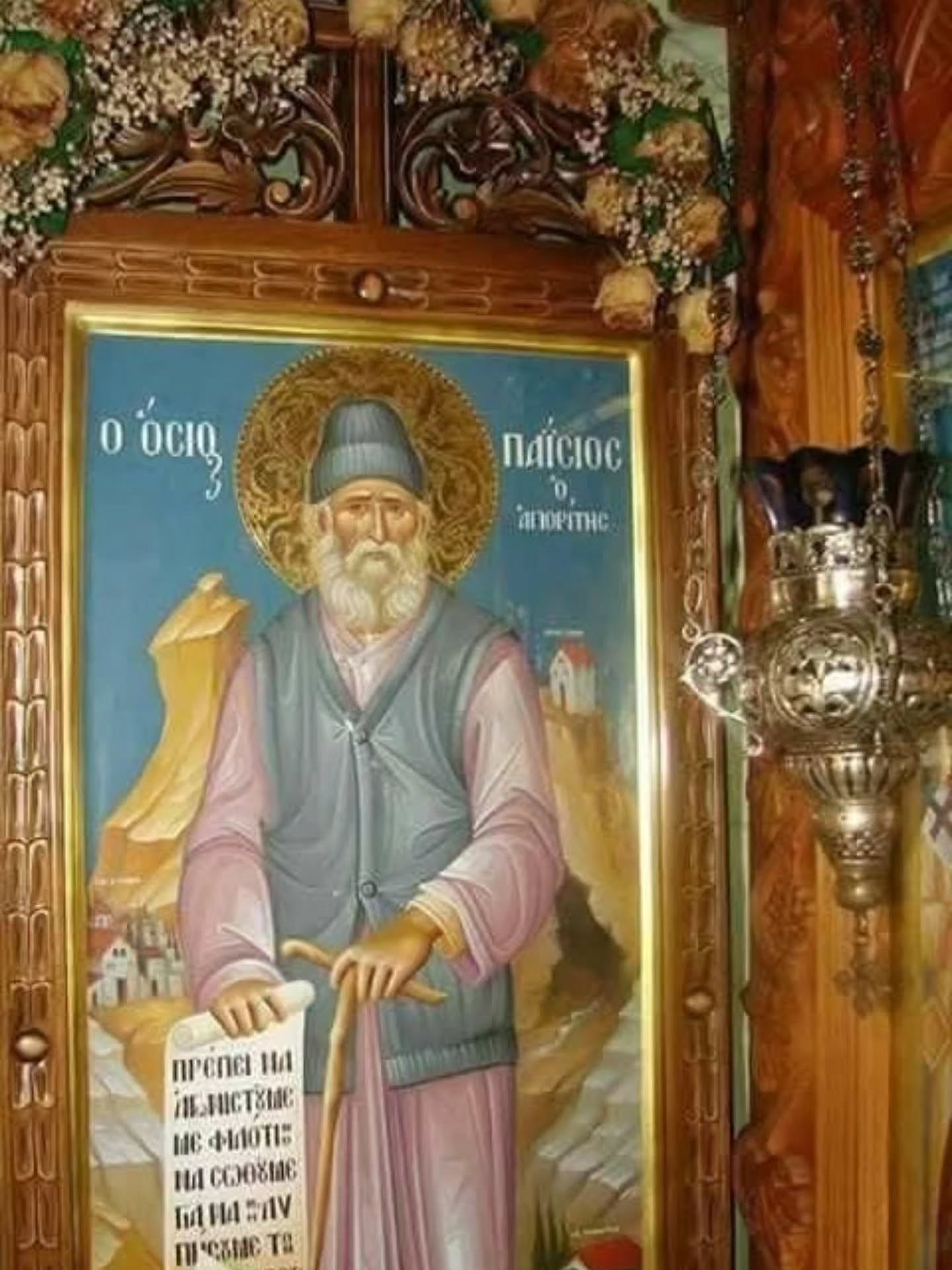
The post presents a saying attributed to St. Paisios of Mount Athos concerning prayer to the Mother of God. He teaches that if people understood the power of such prayer, they would pray to her continuously. He describes her as a tender Mother who responds at once when invoked with faith and sorrow.

Even a single heartfelt "Theotokos Virgin" can work miracles. The saint asserts that she never leaves anyone without help, and that even an unworthy person who calls upon her with hope will find her running to meet them.

  • St. Paisios stresses the immense power of prayer to the Theotokos
  • She answers immediately those who call with faith and pain
  • A brief invocation from the heart can produce miracles
  • She never refuses help to anyone who turns to her
  • She comes to the aid even of the unworthy who call with hope
Read more

St. John Chrysostom: Prayer Is Life Like Water to a Fish

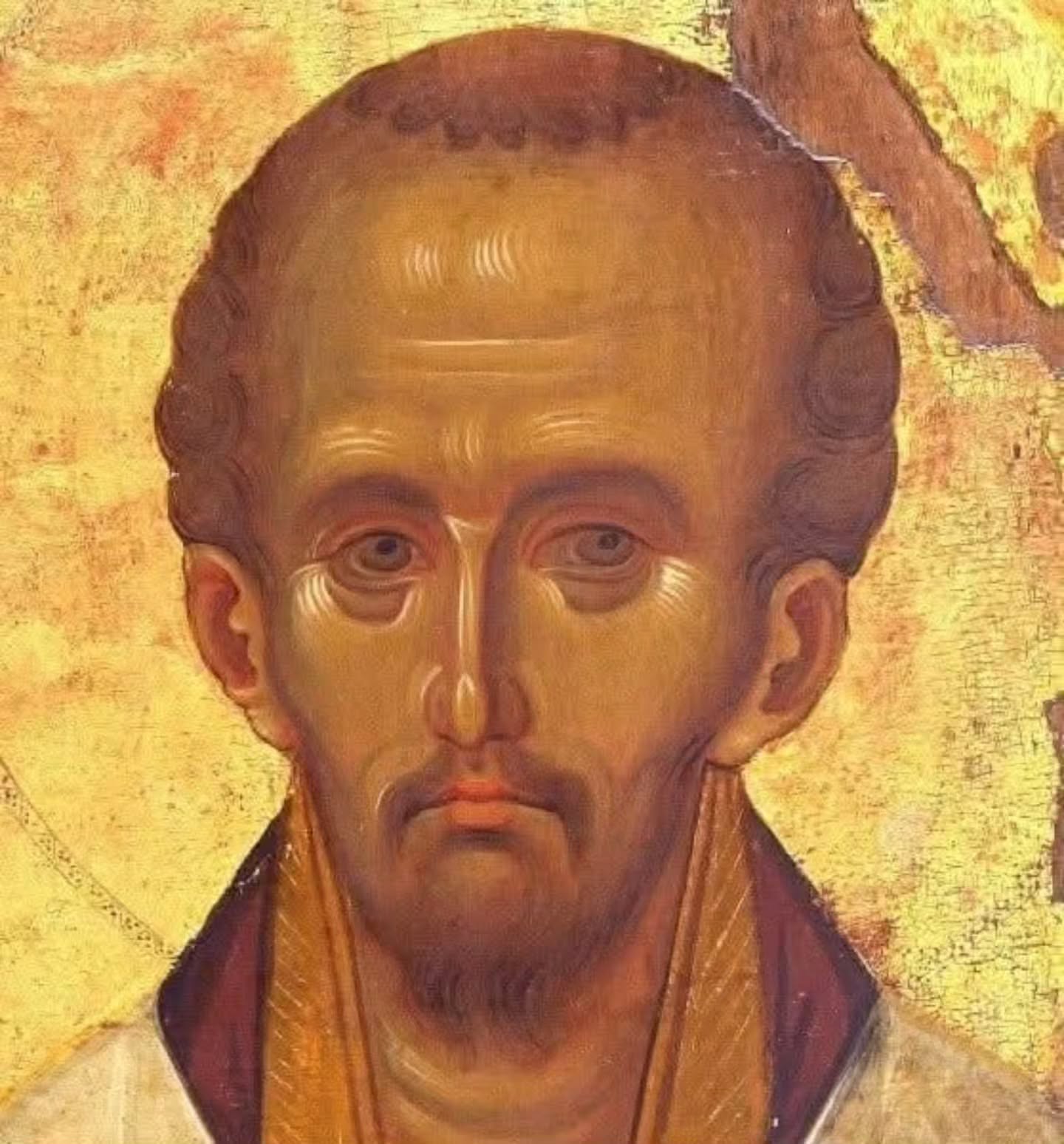
The post presents a saying attributed to St. John Chrysostom. He compares prayer to water for a fish: just as water is life for a fish, prayer is life for a person. If someone deprives themselves of prayer, they act like someone who pulls a fish out of water. The text is in Serbian Cyrillic. An accompanying image shows an icon of the saint with a golden background. There is no further discussion or commentary in the source.

  • St. John Chrysostom likens prayer to water for a fish.
  • Without prayer a person dies spiritually as a fish dies without water.
  • The post includes an icon of the saint.
Read more

Feast of Saint Peter of Cetinje with his exhortation to guard the Orthodox faith

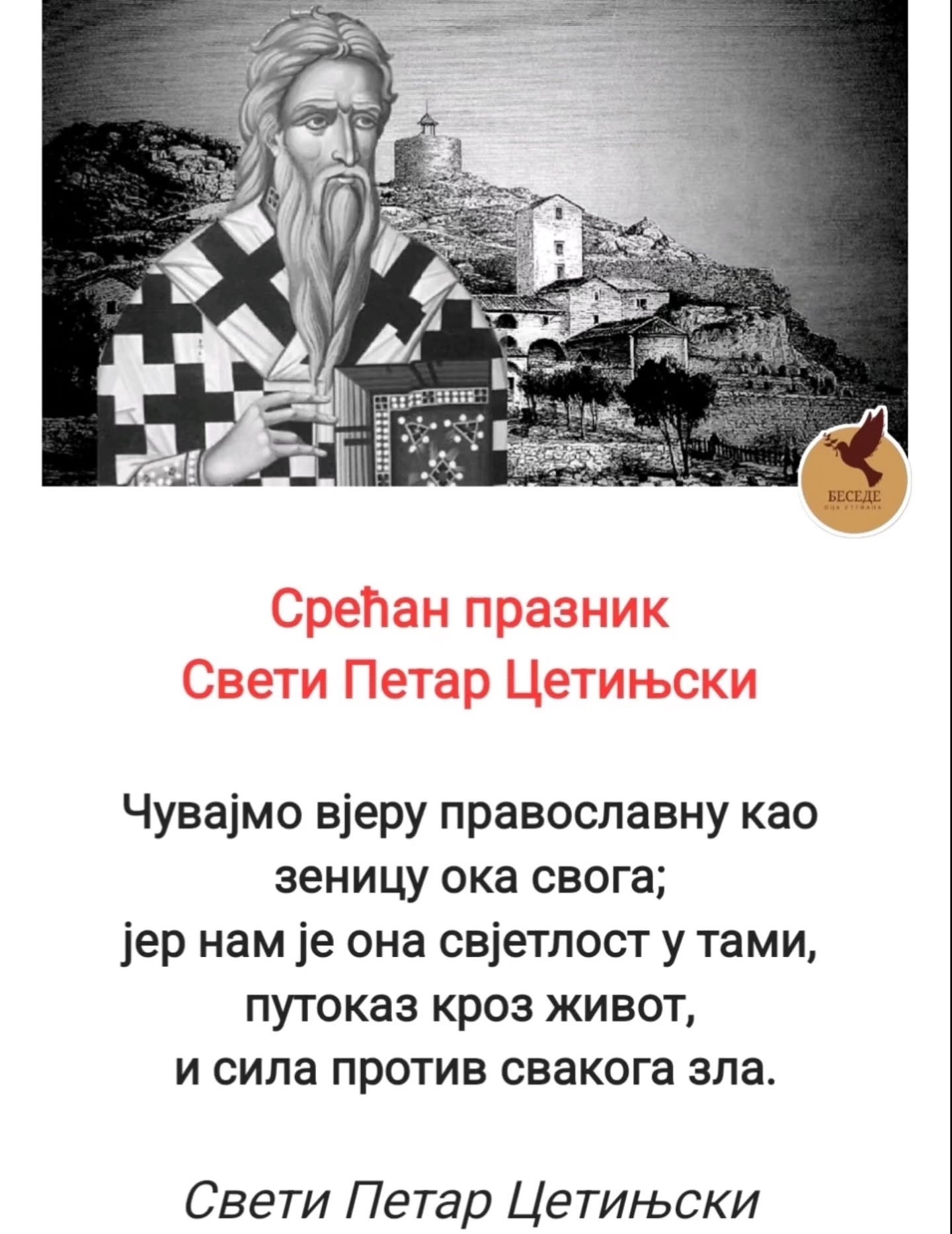
The post marks the feast day of Saint Peter of Cetinje with a drawing of the saint and a short exhortation attributed to him. The text urges believers to keep the Orthodox faith as the apple of their eye, describing it as light in darkness, a guide through life, and a strength against every evil. Saint Peter of Cetinje, also known as Peter I Petrović-Njegoš, was a metropolitan and ruler of Montenegro in the late eighteenth and early nineteenth centuries, glorified for his pastoral care and defense of Orthodoxy.

  • Feast day greeting for Saint Peter of Cetinje
  • Quote urging preservation of the Orthodox faith as the apple of the eye
  • Faith described as light in darkness, a life guide, and strength against evil
  • Accompanied by a drawing of the saint
  • No additional teaching, story, or discussion included
Read more

Elder Paisios: Children Must Honor Parents

Elder Paisios of the Holy Mountain teaches that children must be very careful to honor their parents. He states that when children are rude to their parents and do not show them respect, two consequences follow: first, grace leaves the children, and second, they become receptive to demonic influences and energies. The elder presents this as a direct spiritual cause and effect, linking the commandment to honor parents to the presence or absence of divine grace and vulnerability to spiritual harm.

  • Elder Paisios warns that disrespect toward parents causes grace to depart from children.
  • Such children become open to demonic influences and energies.
  • The teaching connects the commandment to honor parents with spiritual protection.
  • The quote is attributed to Elder Paisios of the Holy Mountain.
Read more