WeOrthodox
EN UA

Lives of the Saints 🙏

Instagram ↗ 49 discussions

Lives of the Saints 🔸 Daily Daily remembrance of the saints Their lives, witness, and holy example ☦️ All to the glory of God

Apostle Thomas: Doubt, Mission to India, Martyrdom
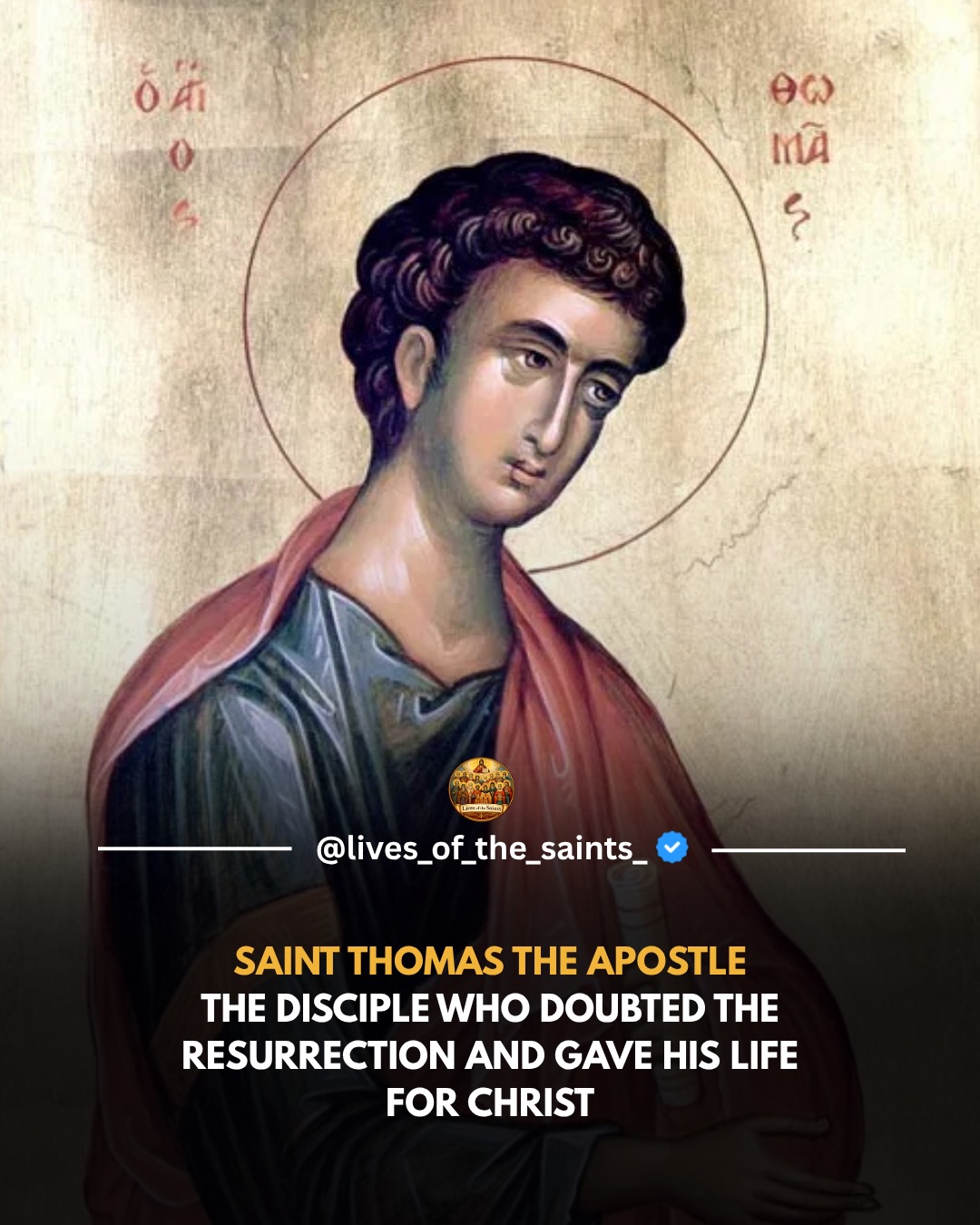
The post recounts the life of Saint Thomas, one of the Twelve Apostles of Jesus Christ. It opens with the episode of his doubt concerning the Resurrection. When the risen Christ appeared to the Apostles, He invited Thomas to touch His wounds and said, "Do not be unbelieving, but believing." Thomas responded, "My Lord and my God," a confession recorded in John 20:28. After the descent of the Holy Spirit, the Apostles cast lots to assign…

The post recounts the life of Saint Thomas, one of the Twelve Apostles of Jesus Christ. It opens with the episode of his doubt concerning the Resurrection. When the risen Christ appeared to the Apostles, He invited Thomas to touch His wounds and said, "Do not be unbelieving, but believing."

Thomas responded, "My Lord and my God," a confession recorded in John 20:28. After the descent of the Holy Spirit, the Apostles cast lots to assign missionary territories. Thomas received India. He was initially troubled by the great distance, but the Lord appeared to him and strengthened his heart. In India Thomas preached Christ to both the wealthy and the poor, converted many people, established churches, and ordained priests and bishops.

Among the converts were members of noble families who later suffered for their faith. His preaching also provoked persecution. An Indian ruler named Muzdius condemned Thomas to death. Five soldiers pierced the Apostle with five spears, and he surrendered his soul to Christ.

According to Holy Tradition, Thomas was also miraculously brought to the burial of the Most Holy Theotokos, but he arrived too late. When the Apostles opened her tomb at his request, they discovered that her body was no longer there. The post draws a parallel: just as Thomas's doubt helped confirm the Resurrection of Christ, his late arrival revealed the miraculous glorification of the Mother of God.

The author concludes that Saint Thomas reminds believers that doubt need not be the end of faith; when one sincerely seeks Christ, uncertainty can become conviction, and conviction can become a life of complete devotion to Him.

  • Thomas doubted the Resurrection until Christ invited him to touch His wounds, prompting the confession "My Lord and my God."
  • After Pentecost he was assigned to India, where he preached widely, founded churches, and ordained clergy.
  • Noble converts suffered persecution; the ruler Muzdius ordered Thomas's execution by five spears.
  • Tradition holds that Thomas was miraculously transported to the Theotokos's burial but arrived late; her empty tomb confirmed her glorification.
  • The post presents Thomas as an example that sincere doubt can lead to firm faith and total devotion.
Read more

Saint Charitina the Martyr: Faithful unto death

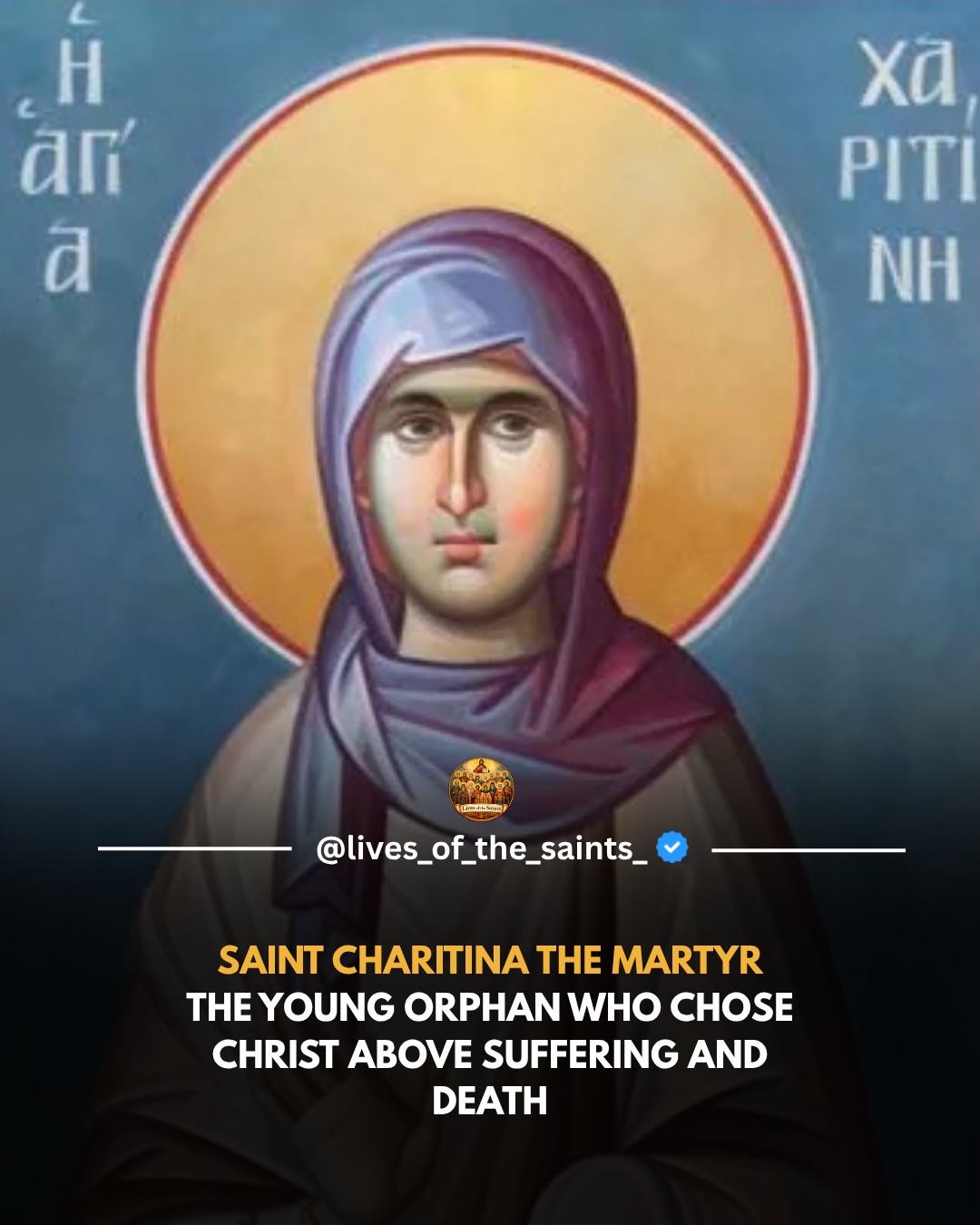
The post recounts the life and martyrdom of Saint Charitina. She was an orphan raised by a noble Christian named Claudius, who loved her as a daughter. From childhood she devoted herself to learning the law of God, praying day and night, and living in purity as a bride of Christ. Her faith led her to bring others to Christ and encourage holy living. During the persecution under Emperor Diocletian, the governor Domitian ordered her arrest. Before…

The post recounts the life and martyrdom of Saint Charitina. She was an orphan raised by a noble Christian named Claudius, who loved her as a daughter. From childhood she devoted herself to learning the law of God, praying day and night, and living in purity as a bride of Christ.

Her faith led her to bring others to Christ and encourage holy living. During the persecution under Emperor Diocletian, the governor Domitian ordered her arrest. Before the judge she confessed she was a Christian and denied deceiving anyone, saying she led the lost to the path of truth.

The judge ordered her hair cut off and burning coals poured on her head, but she remained unharmed by God's power. She was thrown into the sea and delivered by the Lord. Bound to a wheel of torture, an angel stopped the wheel and protected her. Finally, the persecutor ordered she be dishonored. Rather than suffer violation, Charitina knelt and prayed that God would receive her soul.

While praying, the Lord called her into His eternal kingdom. The post concludes that holiness does not depend on age, wealth, or worldly power but on a heart faithful to Christ through every trial, and asks for her intercession.

  • Orphan raised by Claudius, devoted to prayer and purity from childhood
  • Led others to Christ during Diocletian's persecution
  • Arrested by governor Domitian, confessed faith courageously
  • Endured tortures, burning coals, sea, wheel, unharmed by divine power
  • Prayed to avoid dishonor, died while praying, held up as model of faithfulness
Read more
Lives of the Saints 🙏 Instagram

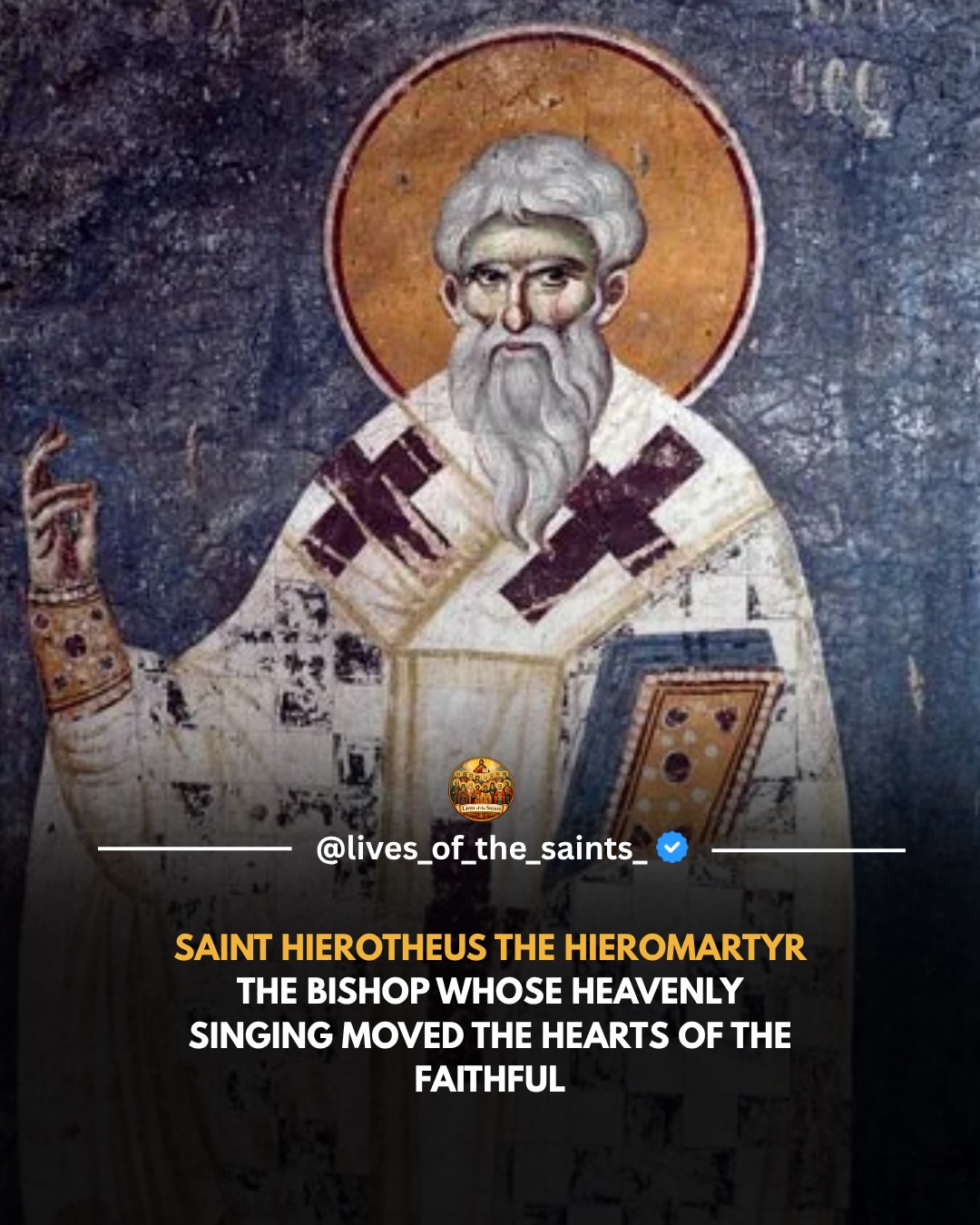
Saint Hierotheus: Bishop of Athens, Martyr, and Singer at the Theotokos' Dormition

Saint Hierotheus was a close companion of Saint Dionysius the Areopagite and one of the early holy bishops of Athens. Shortly after Saint Dionysius embraced Christianity, Hierotheus also came to believe in the Lord Jesus Christ through the preaching of the Apostle Paul. Recognizing his faith and spiritual gifts, Saint Paul consecrated him Bishop of Athens. Saint Hierotheus devoted himself to preaching the Gospel, guiding the faithful, and…

Saint Hierotheus was a close companion of Saint Dionysius the Areopagite and one of the early holy bishops of Athens. Shortly after Saint Dionysius embraced Christianity, Hierotheus also came to believe in the Lord Jesus Christ through the preaching of the Apostle Paul. Recognizing his faith and spiritual gifts, Saint Paul consecrated him Bishop of Athens.

Saint Hierotheus devoted himself to preaching the Gospel, guiding the faithful, and bringing many pagans to the truth of Christ. According to Holy Tradition, he was present in Jerusalem at the Dormition of the Most Holy Theotokos and took part in her burial. During this sacred gathering, Saint Hierotheus sang with such divine inspiration that his hymns moved the hearts of all who heard him.

His singing was not simply beautiful music; it was prayer flowing from a soul filled with the grace of the Holy Spirit. Throughout his life, he labored tirelessly for the Church, bringing many souls to Christ and faithfully shepherding those entrusted to him. Finally, Saint Hierotheus gave his life as a martyr for the Lord.

He received a double crown in the Kingdom of Heaven: the crown of a holy bishop and the crown of a martyr. The post states that his life reminds us that true worship comes not only from the voice, but from a heart completely surrendered to God. It concludes with the prayer: Holy Hieromartyr Hierotheus, pray to God for us.

  • Saint Hierotheus was a companion of Saint Dionysius the Areopagite and early bishop of Athens.
  • He converted through Apostle Paul's preaching and was consecrated bishop by Paul.
  • Holy Tradition places him at the Dormition of the Theotokos, where he sang divinely inspired hymns.
  • He labored as a bishop, converting pagans and shepherding the faithful.
  • He was martyred, receiving the double crown of bishop and martyr.
Read more

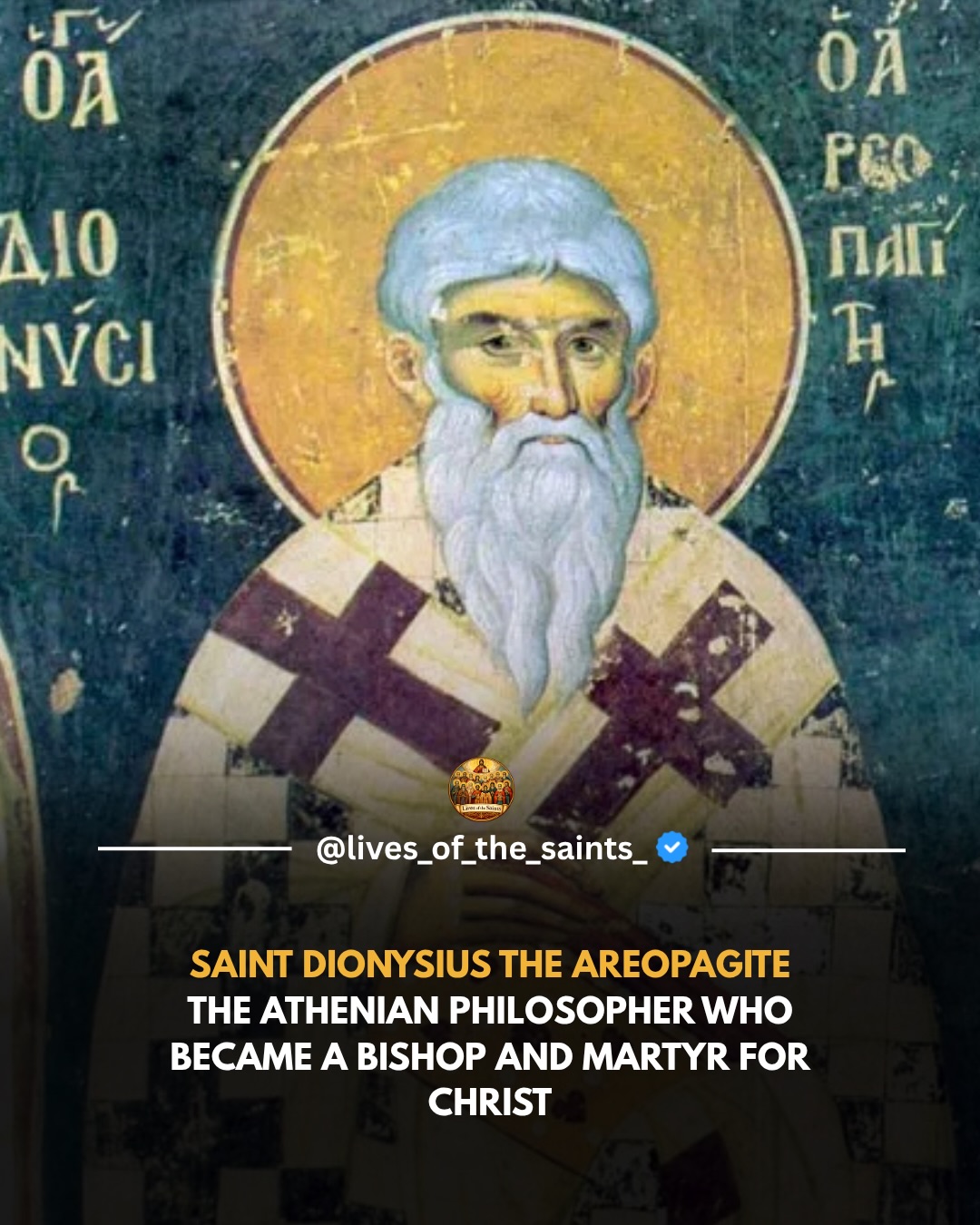
From the Areopagus to Martyrdom: The Life of Saint Dionysius of Athens

A hagiographic account of Saint Dionysius the Areopagite traces his path from pagan philosopher to bishop and martyr. Born into a respected pagan family in Athens and educated in philosophy, Dionysius studied in Egypt, where he witnessed the darkness that covered the earth at the Crucifixion of Christ. He cried out: "Either God, the Creator of the world, is suffering, or this world is coming to an end." Back in Athens he married Damaris and…

A hagiographic account of Saint Dionysius the Areopagite traces his path from pagan philosopher to bishop and martyr. Born into a respected pagan family in Athens and educated in philosophy, Dionysius studied in Egypt, where he witnessed the darkness that covered the earth at the Crucifixion of Christ. He cried out: "Either God, the Creator of the world, is suffering, or this world is coming to an end."

Back in Athens he married Damaris and joined the Areopagus, the city's highest court. When the Apostle Paul preached in Athens, Dionysius believed, was baptized with his household, and was later consecrated Bishop of Athens by Paul. He gave up worldly honor to serve Christ. Church tradition says he traveled to Jerusalem to meet the Most Holy Theotokos and was present at her Dormition.

After Paul's martyrdom, Dionysius wanted to give his own life for Christ. With Saint Rusticus the Presbyter and Saint Eleutherius the Deacon he went to Gaul, where they preached and converted many pagans. In Paris he founded a small church. At age ninety, the three were arrested, tortured, and beheaded for Christ; the account of his life places their martyrdom in the year 96. The post ends with the reflection that even the greatest human wisdom finds its fulfillment in knowing Jesus Christ, followed by a prayer asking the holy hieromartyrs to intercede with God.

The account draws on traditional lives of the saints and presents the events without sources, so readers should understand the details, such as his presence at the Dormition and the date 96, as Church tradition rather than documented history.

  • Dionysius saw the darkness at the Crucifixion while studying in Egypt and exclaimed that either God the Creator was suffering or the world was ending.
  • He married Damaris, served on the Areopagus in Athens, and believed at the Apostle Paul's preaching; Paul consecrated him Bishop of Athens.
  • Church tradition says he was present at the Dormition of the Theotokos in Jerusalem.
  • With Rusticus and Eleutherius he preached in Gaul and founded a church in Paris.
  • At ninety years of age the three were tortured and beheaded; the account dates their martyrdom to the year 96.
Read more

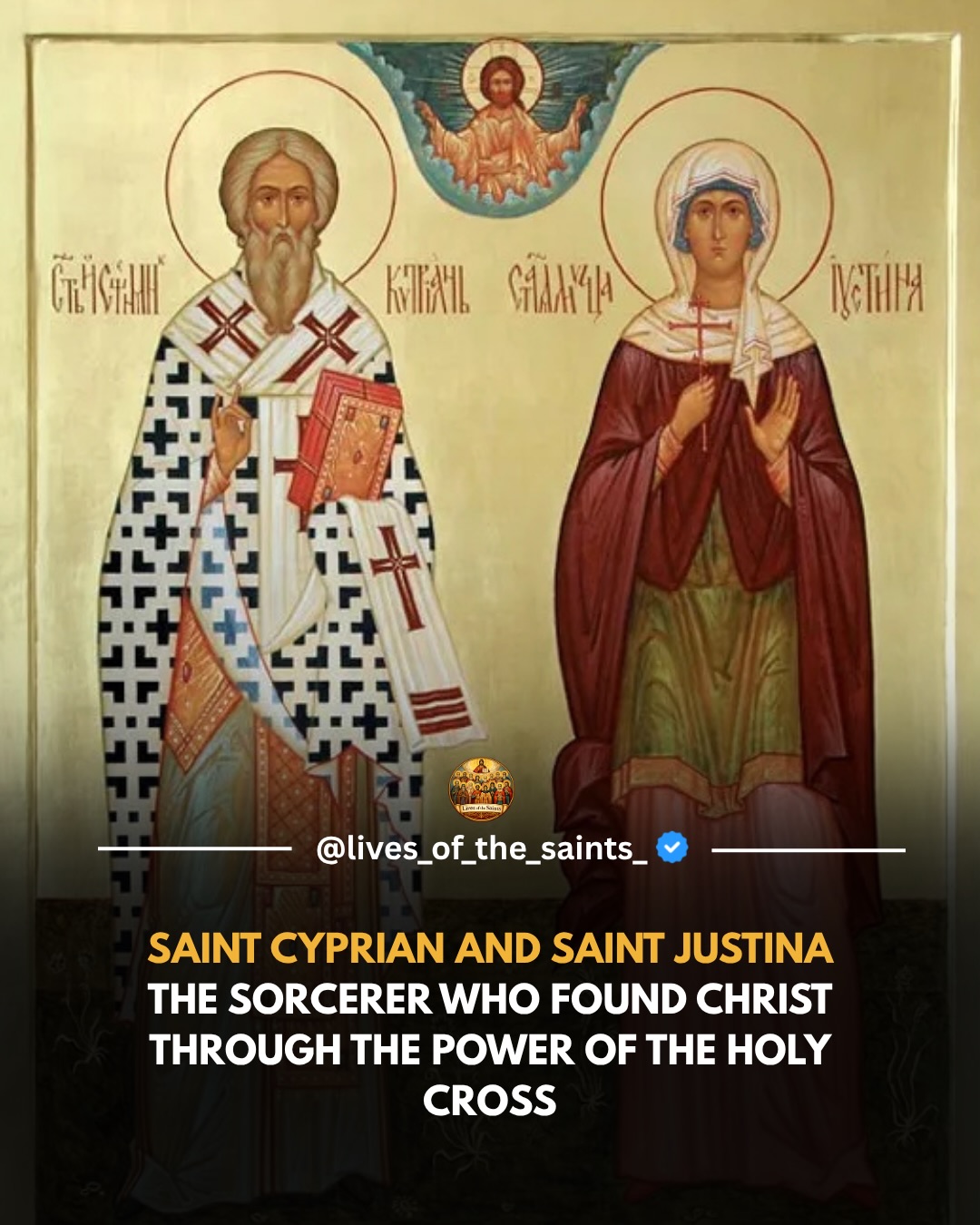
From sorcerer to bishop: Saint Cyprian's conversion through Saint Justina's faith

The post recounts the lives of Saints Cyprian and Justina. Cyprian, a sorcerer from Carthage, traveled to Antioch where Justina lived with her parents. Justina had been raised in a pagan household but discovered the Christian faith, embraced Christ, and brought her parents to believe in Him. All three were baptized and began a new life in the Lord. Cyprian practiced magic and called upon evil spirits. A pagan young man named Aglaidas became…

The post recounts the lives of Saints Cyprian and Justina. Cyprian, a sorcerer from Carthage, traveled to Antioch where Justina lived with her parents. Justina had been raised in a pagan household but discovered the Christian faith, embraced Christ, and brought her parents to believe in Him. All three were baptized and began a new life in the Lord. Cyprian practiced magic and called upon evil spirits.

A pagan young man named Aglaidas became obsessed with Justina's beauty. When she refused his advances, he turned to Cyprian for help. Cyprian sent evil spirits against Justina, hoping to tempt her and turn her away from her purity and faith.

Every time the demons approached, Justina drove them away through prayer and the sign of the Holy Cross. Nothing could overcome her faith in Christ. Seeing that even the powers of darkness were powerless before the Cross, Cyprian began to understand the truth. He abandoned his former life, received Holy Baptism, and eventually became a priest and bishop of the Church.

The man who once served evil spirits became a servant of the living God. Later, both Cyprian and Justina were arrested for their Christian faith, tortured, and finally beheaded in Nicomedia toward the end of the third century. The account concludes that their lives remind us that no darkness is greater than the light of Christ, no sin is beyond sincere repentance, and no evil power can overcome the grace of God.

  • Cyprian, a Carthaginian sorcerer, attempted to use demons against Justina in Antioch
  • Justina, a convert from paganism, repelled the demons through prayer and the Cross
  • Cyprian converted, was baptized, and became a priest and bishop
  • Both saints were martyred by beheading in Nicomedia in the late third century
  • The narrative illustrates the power of the Cross over evil spirits
Read more

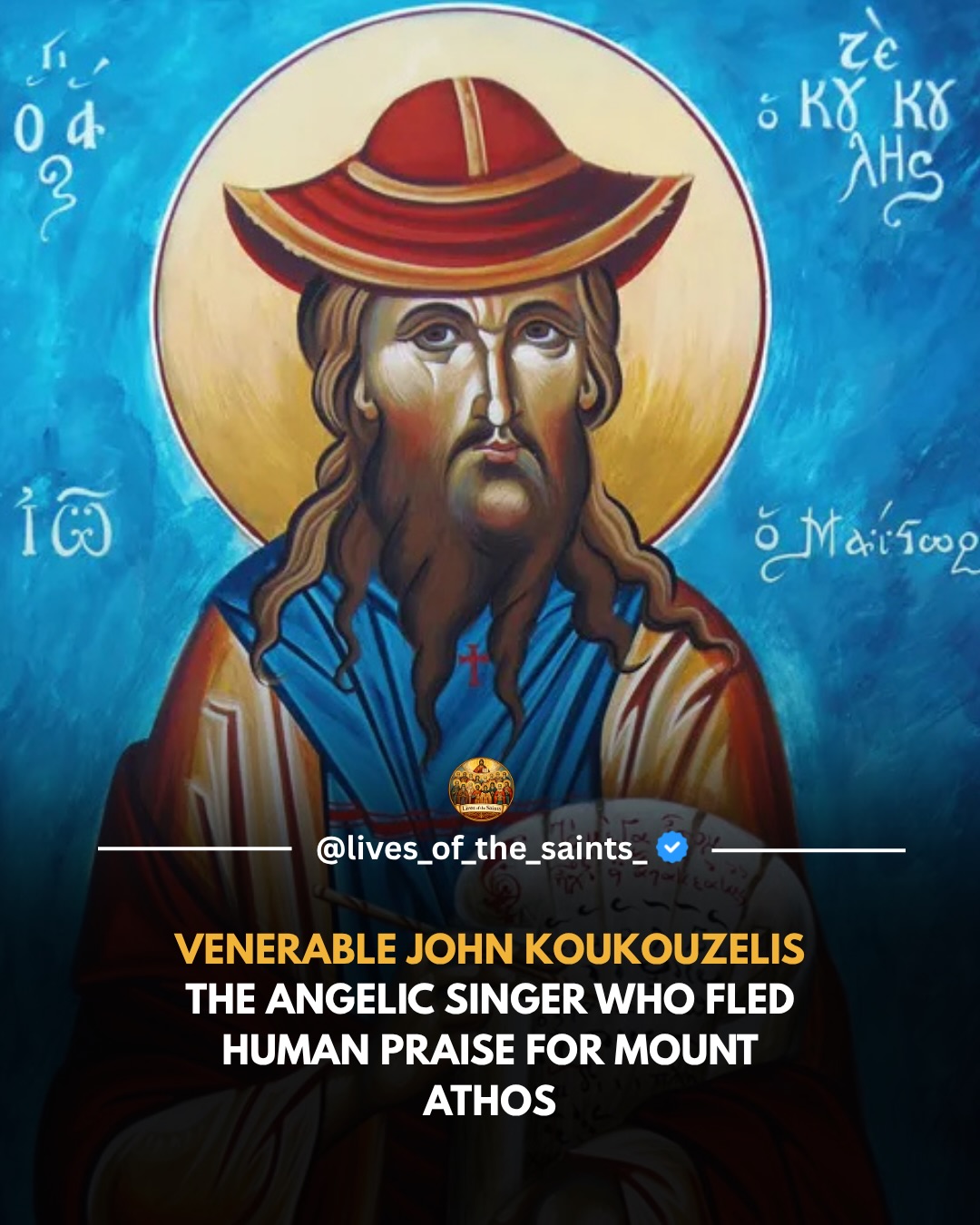
Saint John Koukouzelis: From Court Singer to Humble Shepherd on Mount Athos

Saint John Koukouzelis was a Slav from the region of Debar. As a young boy he was taken to the music school in Constantinople where his beautiful voice and gift for singing made him beloved at the imperial court. Despite this recognition he feared the danger of human praise. Instead of seeking honor, comfort, and recognition he fled to the Holy Mountain, Mount Athos. There he entered the Great Lavra, not as a famous singer, but humbly as a…

Saint John Koukouzelis was a Slav from the region of Debar. As a young boy he was taken to the music school in Constantinople where his beautiful voice and gift for singing made him beloved at the imperial court. Despite this recognition he feared the danger of human praise. Instead of seeking honor, comfort, and recognition he fled to the Holy Mountain, Mount Athos.

There he entered the Great Lavra, not as a famous singer, but humbly as a shepherd. Hidden from the world he lived as both monk and shepherd, giving himself to prayer, obedience, and spiritual struggle. Because of his humility and love for God the Most Holy Theotokos appeared to him twice.

Saint John reposed in the 12th century, leaving behind the memory of a soul that chose silence over fame and Christ over worldly glory. The post reminds readers that the gifts God gives are not for pride but for worship, humility, and the salvation of the soul.

  • Saint John Koukouzelis was a Slav from the Debar region.
  • He was taken to Constantinople's music school as a boy and became a favored singer at the imperial court.
  • Fearing human praise, he fled to Mount Athos and entered the Great Lavra as a humble shepherd.
  • The Theotokos appeared to him twice due to his humility and love for God.
  • He reposed in the 12th century, exemplifying the use of God-given gifts for worship and salvation.
Read more

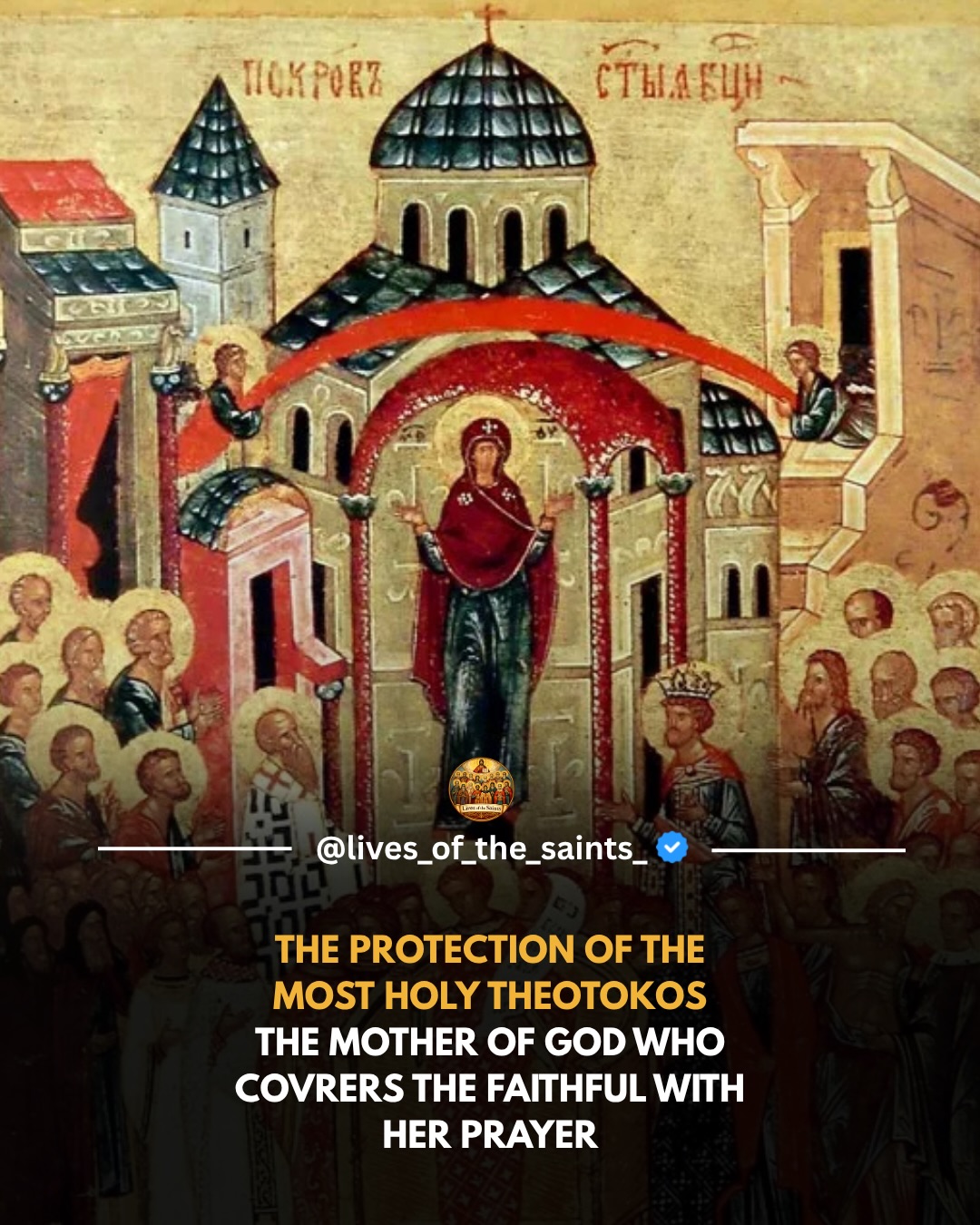
The Protection of the Theotokos: Vision at Blachernae in 911

The post describes the feast of the Protection of the Most Holy Theotokos, celebrated on October 1. It begins by stating that the Church has always glorified the Theotokos as the protector and defender of the Christian people, interceding for sinners and asking God's mercy upon the world. Her help has been shown countless times to individuals and nations, in peace and war, in monasteries and deserts, and in crowded cities. The feast commemorates…

The post describes the feast of the Protection of the Most Holy Theotokos, celebrated on October 1. It begins by stating that the Church has always glorified the Theotokos as the protector and defender of the Christian people, interceding for sinners and asking God's mercy upon the world. Her help has been shown countless times to individuals and nations, in peace and war, in monasteries and deserts, and in crowded cities.

The feast commemorates a specific event from the year 911 during the reign of Emperor Leo the Wise. An all-night vigil was held in the Church of the Theotokos at Blachernae in Constantinople. The church was filled with people. At the back stood Saint Andrew the Fool-for-Christ with his disciple Epiphanius.

During the night, the Most Holy Theotokos appeared above the people, holding her omophorion spread out in her hands as though covering the faithful. She was clothed in heavenly beauty, shining with indescribable light, surrounded by apostles, saints, martyrs, and virgins. Seeing this vision, Saint Andrew pointed to her and asked Epiphanius: "Do you see, brother, the Queen and Lady of all, praying for the whole world?"

Epiphanius answered: "I see, and I am amazed." The feast reminds the faithful that the Theotokos has not abandoned them. She covers, protects, comforts, and prays for all who call upon her in trouble, sorrow, and need. The post ends with the invocation: Most Holy Theotokos, save us.

  • The feast honors the Theotokos as protector and intercessor for the Christian people.
  • It commemorates her appearance at the Blachernae church in Constantinople in 911.
  • Saint Andrew the Fool-for-Christ and Epiphanius witnessed her holding her omophorion over the faithful.
  • She appeared surrounded by apostles, saints, martyrs, and virgins in heavenly light.
  • The feast affirms her ongoing protection and prayer for all who call upon her.
Read more

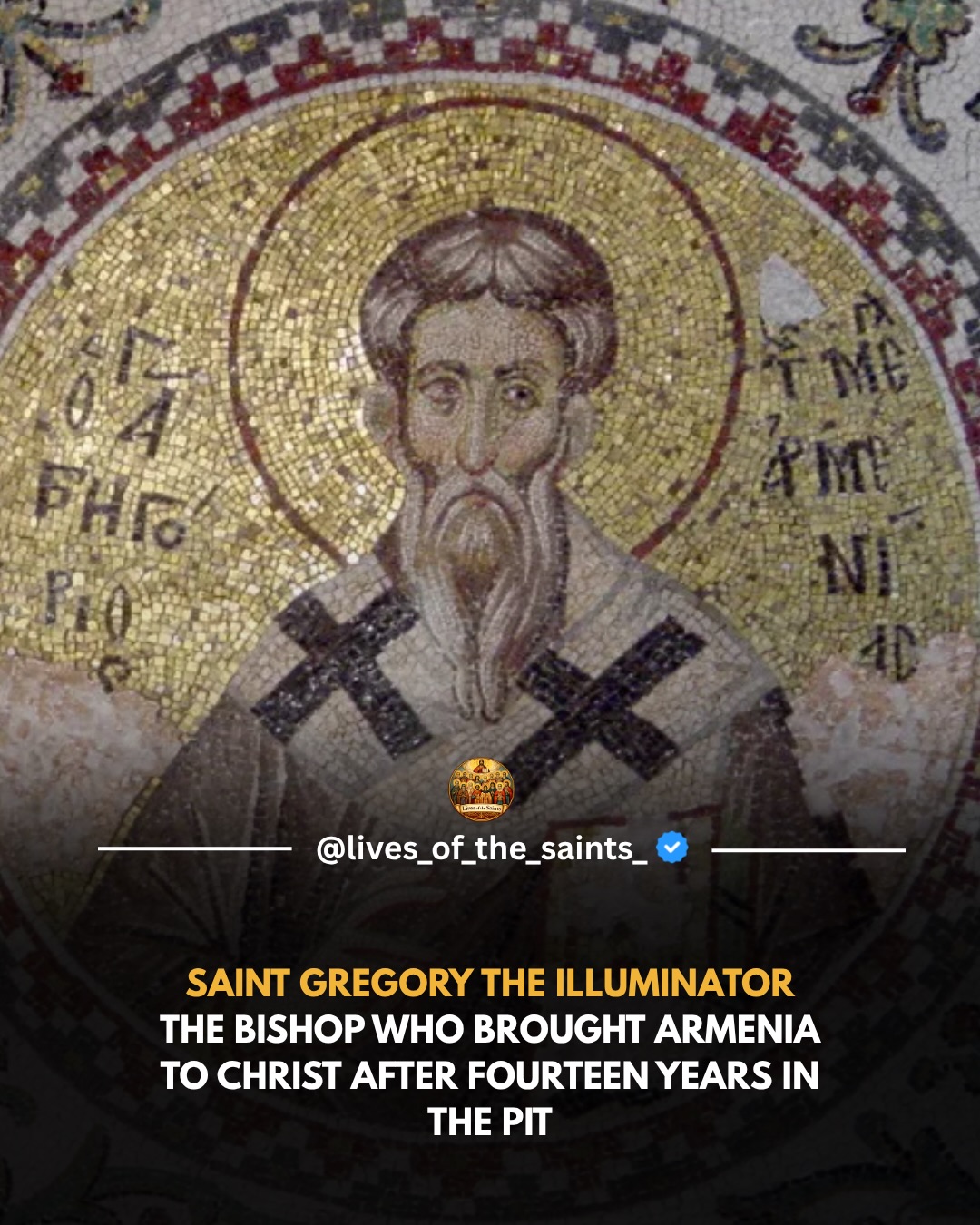
Saint Gregory the Illuminator: from pit to bishop of Armenia

The post recounts the life of Saint Gregory the Illuminator. Born into a noble family tied to Persian and Armenian royalty, Gregory fled to Caesarea in Cappadocia during a family conflict. There he encountered Christianity, was baptized, and married. After his wife died, he returned to Armenia and served King Tiridates faithfully. When the king learned Gregory was a Christian, he ordered him to deny Christ and worship idols. Gregory refused.…

The post recounts the life of Saint Gregory the Illuminator. Born into a noble family tied to Persian and Armenian royalty, Gregory fled to Caesarea in Cappadocia during a family conflict. There he encountered Christianity, was baptized, and married.

After his wife died, he returned to Armenia and served King Tiridates faithfully. When the king learned Gregory was a Christian, he ordered him to deny Christ and worship idols. Gregory refused. After many tortures, the king threw him into a deep pit filled with poisonous creatures, where Gregory survived for fourteen years.

Later, Tiridates persecuted Christians and killed the abbess Gaiania with thirty-seven sisters. The king then fell into madness and lived like a wild beast. A vision given to the king's sister revealed that Tiridates would not be healed until Gregory was released.

Once freed, Gregory healed the king and baptized him. By the king's will and God's grace, Gregory became Bishop of Armenia and spread Christianity throughout the land. He reposed in old age in the year 335 after a life marked by suffering, patience, miracles, and apostolic work. The post concludes with a reflection that God can turn a prison into preparation, suffering into mission, and a persecutor into a servant of Christ.

  • Gregory was born into nobility connected to Persian and Armenian royal houses
  • He converted to Christianity in Caesarea, married, and later served King Tiridates
  • The king imprisoned Gregory in a pit with poisonous creatures for fourteen years after he refused to worship idols
  • Tiridates killed abbess Gaiania and thirty-seven sisters, then fell into madness
  • A vision led to Gregory's release; he healed and baptized the king, then became Bishop of Armenia in 335
Read more
Lives of the Saints 🙏 Instagram

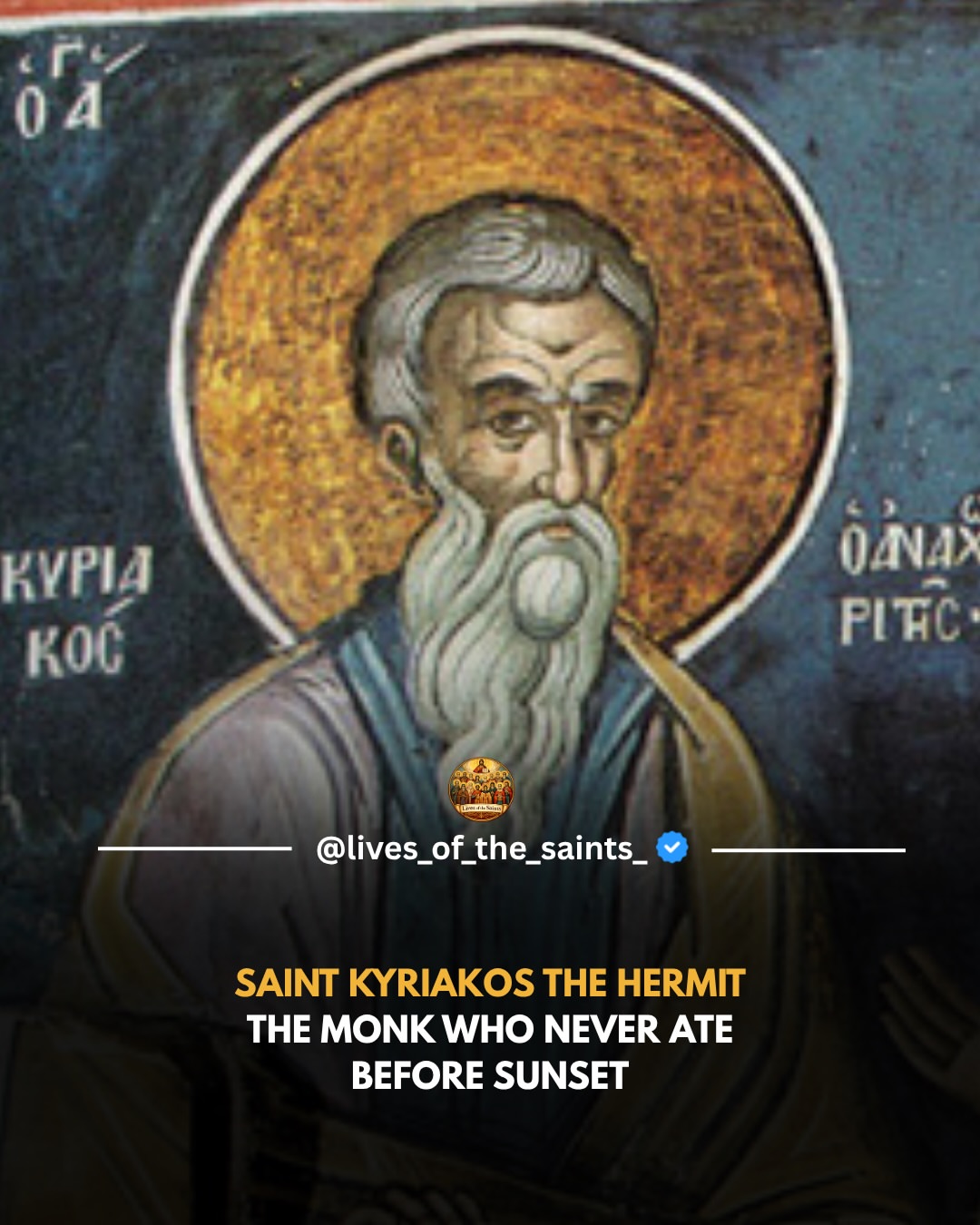
Saint Kyriakos the Hermit: 109 years of desert asceticism

The post recounts the life of Saint Kyriakos, born in Corinth to John and Eudokia, whose father served as a priest. As a youth he was appointed a reader in the Church, and as he read the Holy Scriptures his heart burned with the desire to dedicate his life completely to God. At eighteen he traveled to Jerusalem, where he embraced the monastic life. He was guided by great saints of the desert, including Saint Euthymius and Saint Gerasimus,…

The post recounts the life of Saint Kyriakos, born in Corinth to John and Eudokia, whose father served as a priest. As a youth he was appointed a reader in the Church, and as he read the Holy Scriptures his heart burned with the desire to dedicate his life completely to God. At eighteen he traveled to Jerusalem, where he embraced the monastic life.

He was guided by great saints of the desert, including Saint Euthymius and Saint Gerasimus, spending decades in prayer, silence, fasting, and obedience. Throughout his life he continually moved from one place to another, fleeing human praise and seeking only God. Saint Kyriakos lived to the remarkable age of 109. Despite his advanced years and strict ascetic life, he remained physically strong.

At times he survived for years eating only wild herbs found in the desert. He was a fearless defender of the Orthodox Faith, boldly exposing heresies and remaining faithful to the truth of Christ. He once said of himself: "The sun never saw me eating, nor angry with anyone."

His monks followed a strict rule, eating only once each day after sunset. God glorified His faithful servant with the gift of miracles, healing the sick, comforting the sorrowful, and strengthening countless souls through his holy example. The post concludes that holiness is built through humility, prayer, self-control, and perseverance, and that those who seek only God are never forgotten by Him.

  • Born in Corinth to priest John and Eudokia; appointed reader in youth
  • Entered monastic life in Jerusalem at eighteen under Saints Euthymius and Gerasimus
  • Lived to 109, maintaining physical strength on a diet of wild herbs
  • Defended Orthodoxy against heresies; monks ate once daily after sunset
  • Remembered for miracles of healing and the saying about the sun never seeing him eat or angry
Read more
Lives of the Saints 🙏 Instagram

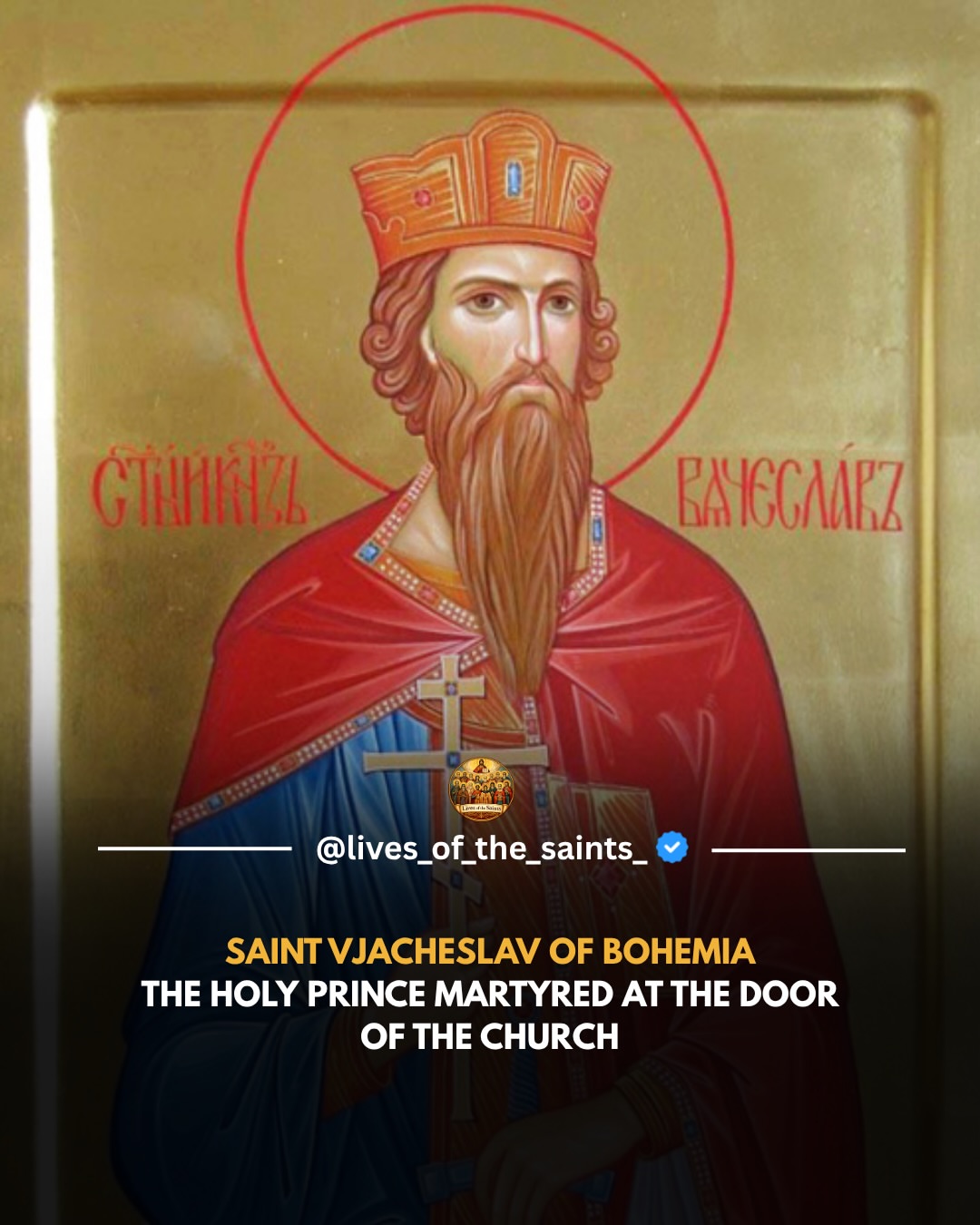
Saint Vjacheslav of Bohemia: Prince, Martyr, and Builder of Churches

The post recounts the life of Saint Vjacheslav, also known as Wenceslaus or Václav, the holy prince of the Czech lands. His grandmother Saint Ludmila raised him in the Christian faith. The priest Paul, a disciple of Saint Methodius, educated him in Slavic, Latin, and Greek. He became prince at eighteen after his father died. He ruled with wisdom and justice, caring deeply for the Christian enlightenment of his people. He honored the clergy,…

The post recounts the life of Saint Vjacheslav, also known as Wenceslaus or Václav, the holy prince of the Czech lands. His grandmother Saint Ludmila raised him in the Christian faith. The priest Paul, a disciple of Saint Methodius, educated him in Slavic, Latin, and Greek.

He became prince at eighteen after his father died. He ruled with wisdom and justice, caring deeply for the Christian enlightenment of his people. He honored the clergy, adorned churches, helped the poor, and redeemed children who had been sold into slavery, giving them a Christian upbringing. He also brought the relics of Saint Vitus to Prague and built a great church in his honor.

But envy and political hatred rose against him. Some nobles turned his younger brother Boleslav against him and plotted to take his throne. Boleslav invited him to the consecration of a church. Though warned by his servants, Saint Vjacheslav refused to believe evil of his brother. He went to the church for morning prayer, and there, at the very door of the temple, he was killed by his brother and his companions in the year 935. His blood could not be easily washed from the church doors, and the people soon began to honor him as a martyr.

The post states that Saint Vjacheslav reminds us that true power is not found in violence, pride, or ambition, but in justice, mercy, faith, and love for Christ.

  • Grandson of Saint Ludmila, educated by priest Paul in Slavic, Latin, and Greek
  • Became prince at eighteen, ruled with justice and promoted Christian enlightenment
  • Redeemed enslaved children, brought Saint Vitus relics to Prague, built church in his honor
  • Brother Boleslav conspired with nobles and killed him at church door in 935
  • Blood remained on church doors; people honored him as martyr
Read more
Lives of the Saints 🙏 Instagram

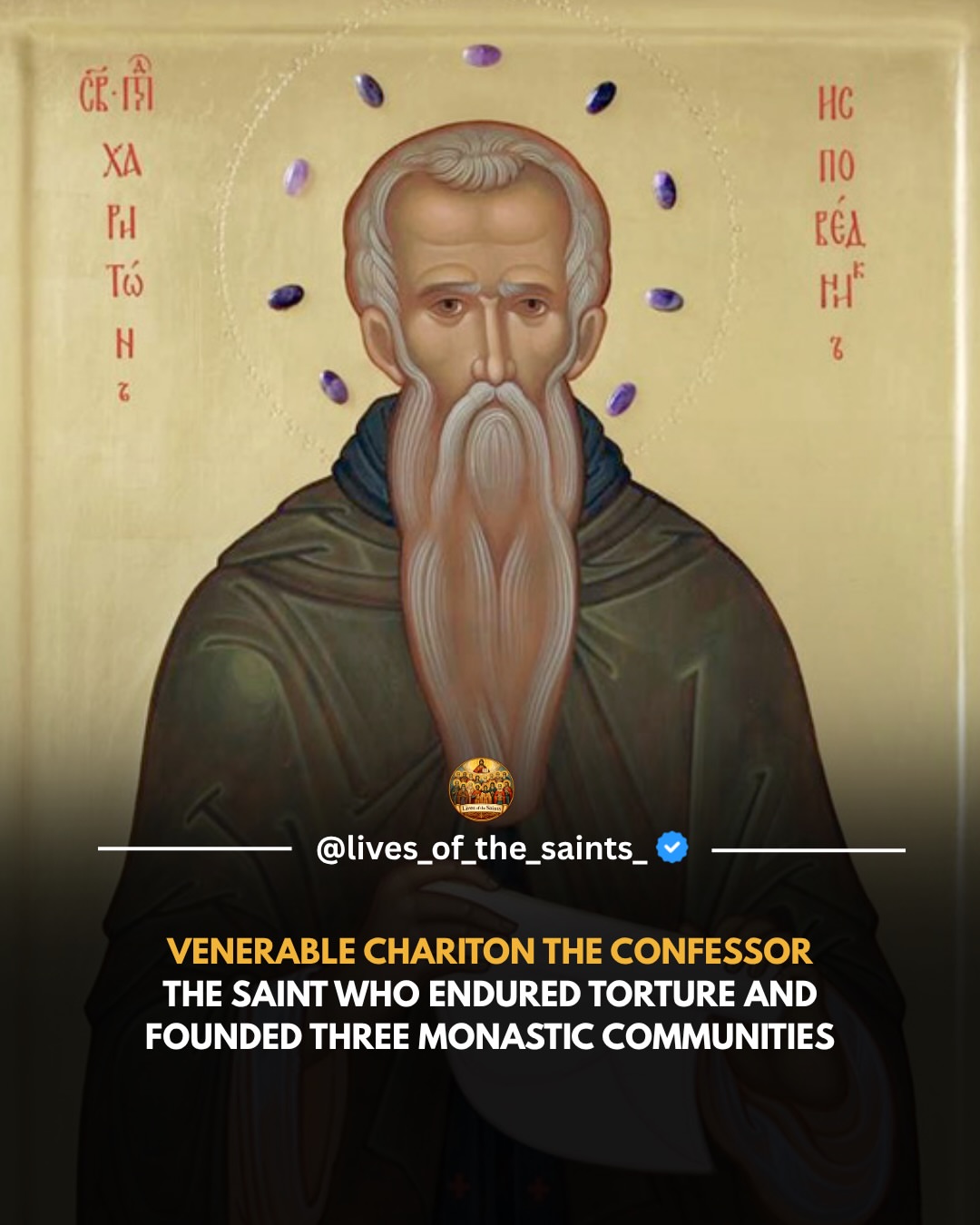
Saint Chariton the Confessor: torture, wilderness, and three monasteries

The post recounts the life of Saint Chariton, a respected and devout Christian from the city of Iconium. Inspired by the courage of Saint Thekla, he openly confessed the name of Christ. During the persecution under Emperor Aurelian, Chariton was brought before the governor and ordered to worship the idols. He boldly confessed his faith in the one living God, the Creator of all, and in the Lord Jesus Christ, the Savior of mankind. For this…

The post recounts the life of Saint Chariton, a respected and devout Christian from the city of Iconium. Inspired by the courage of Saint Thekla, he openly confessed the name of Christ. During the persecution under Emperor Aurelian, Chariton was brought before the governor and ordered to worship the idols.

He boldly confessed his faith in the one living God, the Creator of all, and in the Lord Jesus Christ, the Savior of mankind. For this confession he was beaten and tortured so severely that his whole body became like one wound. After the death of Aurelian, Saint Chariton was released from prison and set out for Jerusalem.

On the way he was captured by robbers, but by the providence of God he was delivered. Instead of returning to Iconium, he withdrew into the wilderness of Pharan, where he founded a monastery and gathered many monks. After giving them a rule of life, he left in order to avoid human praise and went deeper into the desert near Jericho, where another monastery was later founded.

Finally he founded a third monastery, known as the Souka or the Old Lavra. Saint Chariton reposed in deep old age on September 28, 350, and entered the glory of his Lord. The post notes that his suffering for Christ became the beginning of a life filled with prayer, humility, and spiritual fruit for generations.

  • Confessed Christ under Aurelian and was tortured until his body was one wound
  • Released after Aurelian's death, captured by robbers, delivered by providence
  • Founded first monastery in the wilderness of Pharan and gave monks a rule
  • Left to avoid praise, founded second monastery near Jericho
  • Founded third monastery, the Souka or Old Lavra, and reposed in 350

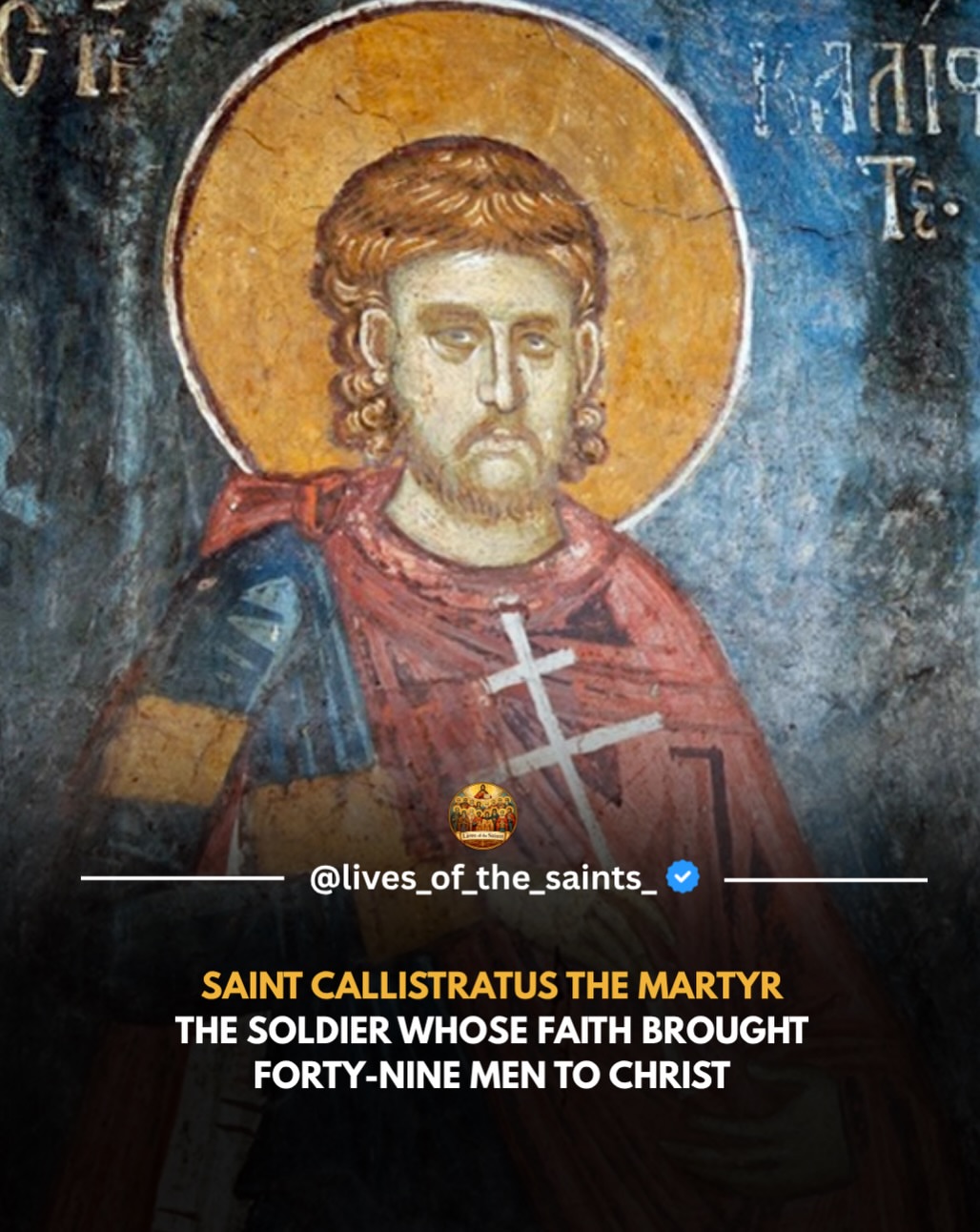
Saint Callistratus and the forty-nine soldiers who believed through his martyrdom

Saint Callistratus was born in Carthage and was a Christian from birth. His father and grandfather were Christians, and the faith had been passed down through his family. One of his ancestors, Neochorus, had served as a soldier in Jerusalem during the Passion of the Lord. He saw the miracles of Christ, believed in Him, was taught the faith, and was baptized by the Apostles. Generations later, Saint Callistratus was raised in that same holy…

Saint Callistratus was born in Carthage and was a Christian from birth. His father and grandfather were Christians, and the faith had been passed down through his family. One of his ancestors, Neochorus, had served as a soldier in Jerusalem during the Passion of the Lord.

He saw the miracles of Christ, believed in Him, was taught the faith, and was baptized by the Apostles. Generations later, Saint Callistratus was raised in that same holy faith. While serving in the army, he was the only Christian in his regiment.

Some of his fellow soldiers saw him rising at night to pray to God, and they reported him to the commander Persentinus, a fierce persecutor of Christians. When ordered to sacrifice to idols, Callistratus refused. He was beaten severely and thrown into the sea, but by the power of God he was saved and came out unharmed. Seeing his endurance and the miracle God worked through him, forty-nine soldiers believed in the Lord Jesus Christ.

They were beaten and thrown into prison with him. There, Saint Callistratus taught them the Christian faith and strengthened them to suffer courageously for Christ. At night, the persecutor sent soldiers into the prison, and Saint Callistratus and his forty-nine companions were killed. They suffered for the truth in the year 304.

  • Callistratus came from a Christian lineage tracing to Neochorus, who witnessed Christ's Passion and was baptized by the Apostles
  • As the only Christian in his regiment, he was reported for praying at night
  • He refused to sacrifice to idols, was beaten and thrown into the sea, but emerged unharmed
  • Forty-nine soldiers believed after seeing the miracle and were imprisoned with him
  • Callistratus and the forty-nine were killed in prison in 304
Read more
Lives of the Saints 🙏 Instagram

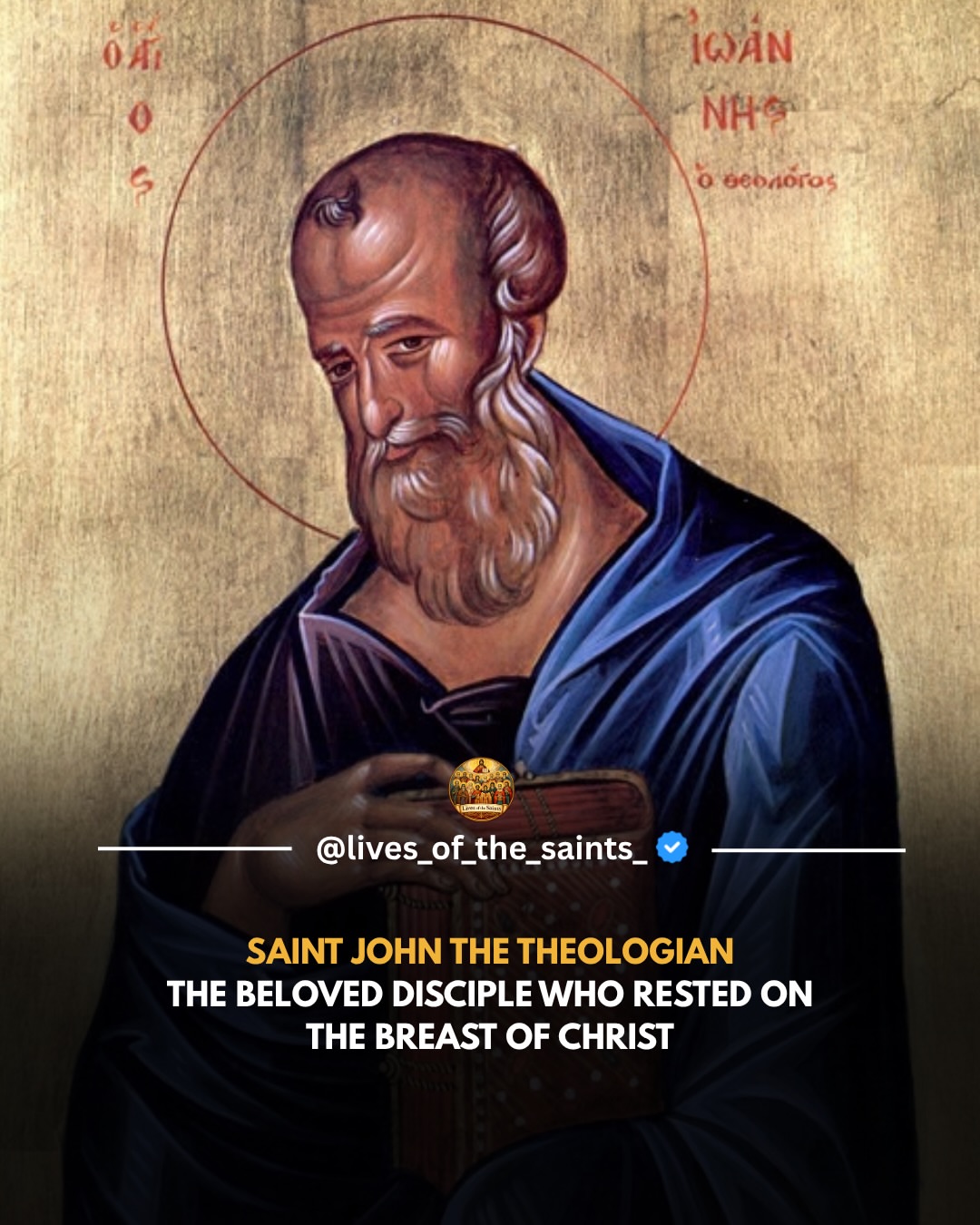
Saint John the Theologian: Apostle, Evangelist, and Witness of Christ's Love

The post recounts the life of Saint John the Theologian, son of Zebedee and Salome. When Jesus called him, John immediately left his father and the fishing nets to follow Him together with his brother James. From that moment he remained close to the Lord until the end. Together with Peter and James, he witnessed the raising of Jairus' daughter and the Transfiguration of Christ on Mount Tabor. At the Mystical Supper, he rested his head upon the…

The post recounts the life of Saint John the Theologian, son of Zebedee and Salome. When Jesus called him, John immediately left his father and the fishing nets to follow Him together with his brother James. From that moment he remained close to the Lord until the end.

Together with Peter and James, he witnessed the raising of Jairus' daughter and the Transfiguration of Christ on Mount Tabor. At the Mystical Supper, he rested his head upon the breast of Jesus. When the other disciples scattered, Saint John remained beneath the Cross with the Most Holy Theotokos.

From the Cross, the Lord entrusted His Mother to John, and from that day he cared for her with love and reverence until her Dormition. After the Dormition of the Theotokos, Saint John went with his disciple Prochorus to preach the Gospel in Asia Minor, especially in Ephesus. Through his preaching and miracles, many were brought to Christ, and paganism was shaken.

He was later taken to Rome and suffered before Emperor Domitian. Neither poison nor boiling oil could harm him, so the emperor exiled him to the island of Patmos. There, Saint John strengthened the Church and wrote the Gospel and the Revelation.

After his exile, he returned to Ephesus and continued guiding the faithful. He lived more than one hundred years and peacefully departed to the Lord. The post states that Saint John reminds us that true theology is born from love, purity, faithfulness, and closeness to Christ.

  • John left his father Zebedee and nets to follow Christ with his brother James
  • He witnessed the raising of Jairus' daughter and the Transfiguration with Peter and James
  • He stood at the Cross with the Theotokos and received Christ's charge to care for her
  • He preached in Ephesus with Prochorus, endured torture under Domitian, and was exiled to Patmos
  • On Patmos he wrote the Gospel and Revelation, later returning to Ephesus where he lived over a hundred years
Read more
Lives of the Saints 🙏 Instagram

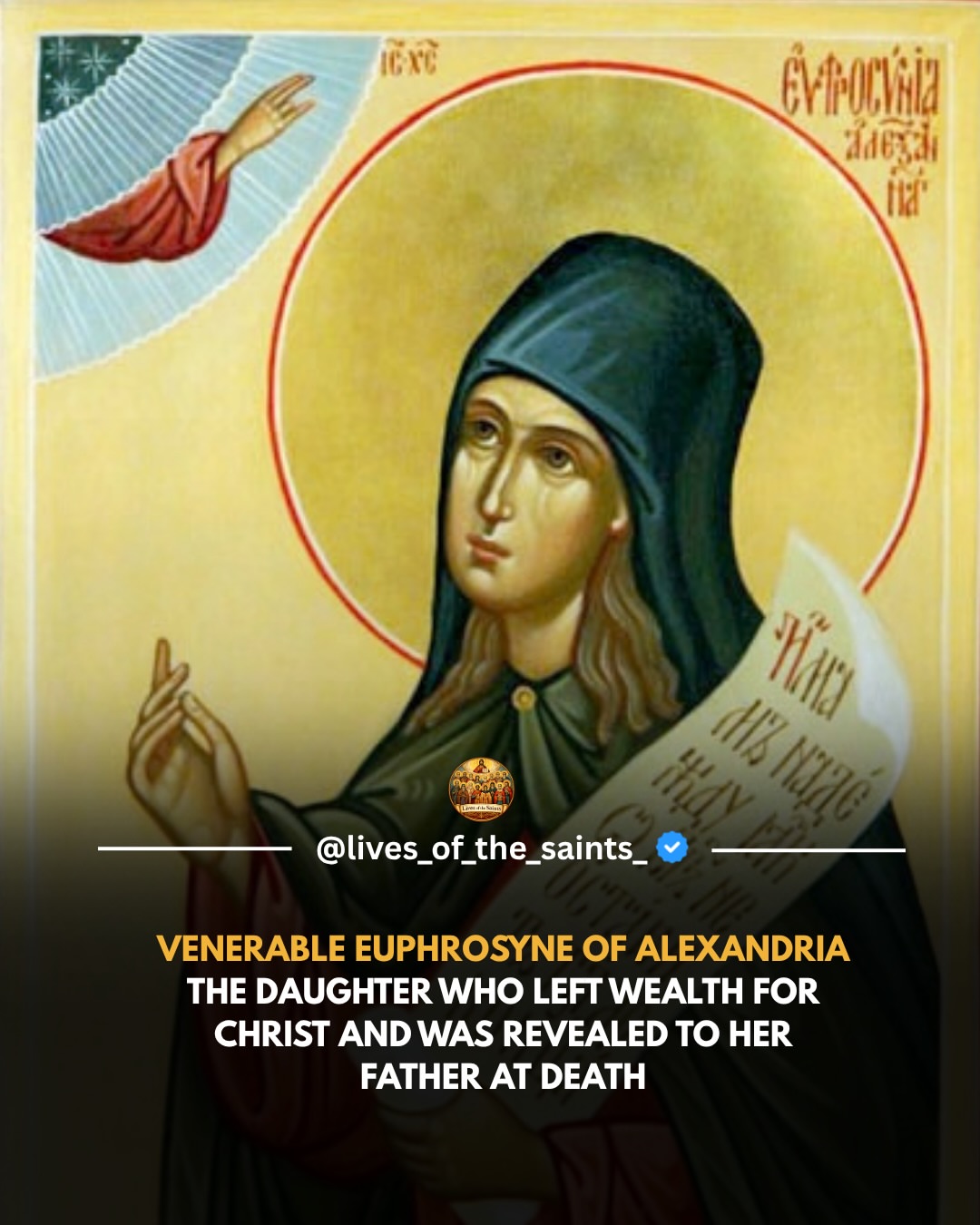
Saint Euphrosyne of Alexandria: Hidden Monastic Life and Revelation to Her Father

The post recounts the life of Saint Euphrosyne of Alexandria. She was the daughter of Paphnutius, a wealthy Alexandrian who had been childless until prayer brought her birth. Raised in the Christian faith, she refused marriage and, to avoid her father's search, dressed as a man and entered a men's monastery under the name Smaragdus. The elder Agapitus guided her in fasting, prayer, humility, and spiritual struggle. Over thirty-eight years her…

The post recounts the life of Saint Euphrosyne of Alexandria. She was the daughter of Paphnutius, a wealthy Alexandrian who had been childless until prayer brought her birth. Raised in the Christian faith, she refused marriage and, to avoid her father's search, dressed as a man and entered a men's monastery under the name Smaragdus.

The elder Agapitus guided her in fasting, prayer, humility, and spiritual struggle. Over thirty-eight years her asceticism surpassed many monks. Paphnutius, still grieving his lost daughter, visited the monastery.

The abbot directed him to Smaragdus for consolation. Euphrosyne recognized her father but remained unknown to him. She comforted him and said he would see his daughter in this life. Three days later he returned to find Smaragdus dying. Euphrosyne then revealed her identity: "I am Euphrosyne, your daughter.

You are my father." She died peacefully. Paphnutius mourned, buried her, entered the same monastery, and lived in her cell until his own death. The post concludes by stating that Saint Euphrosyne shows the love of Christ exceeds wealth, marriage, comfort, and worldly praise.

  • Euphrosyne, daughter of Paphnutius, refuses marriage and enters a men's monastery disguised as the monk Smaragdus.
  • She lives in asceticism for thirty-eight years under Elder Agapitus, surpassing many monks.
  • Her grieving father visits the monastery and is sent to Smaragdus for comfort, not recognizing his daughter.
  • Euphrosyne reveals her identity on her deathbed after three days, then dies.
  • Paphnutius buries her, joins the monastery, and remains in her cell until his death.
Read more
Lives of the Saints 🙏 Instagram

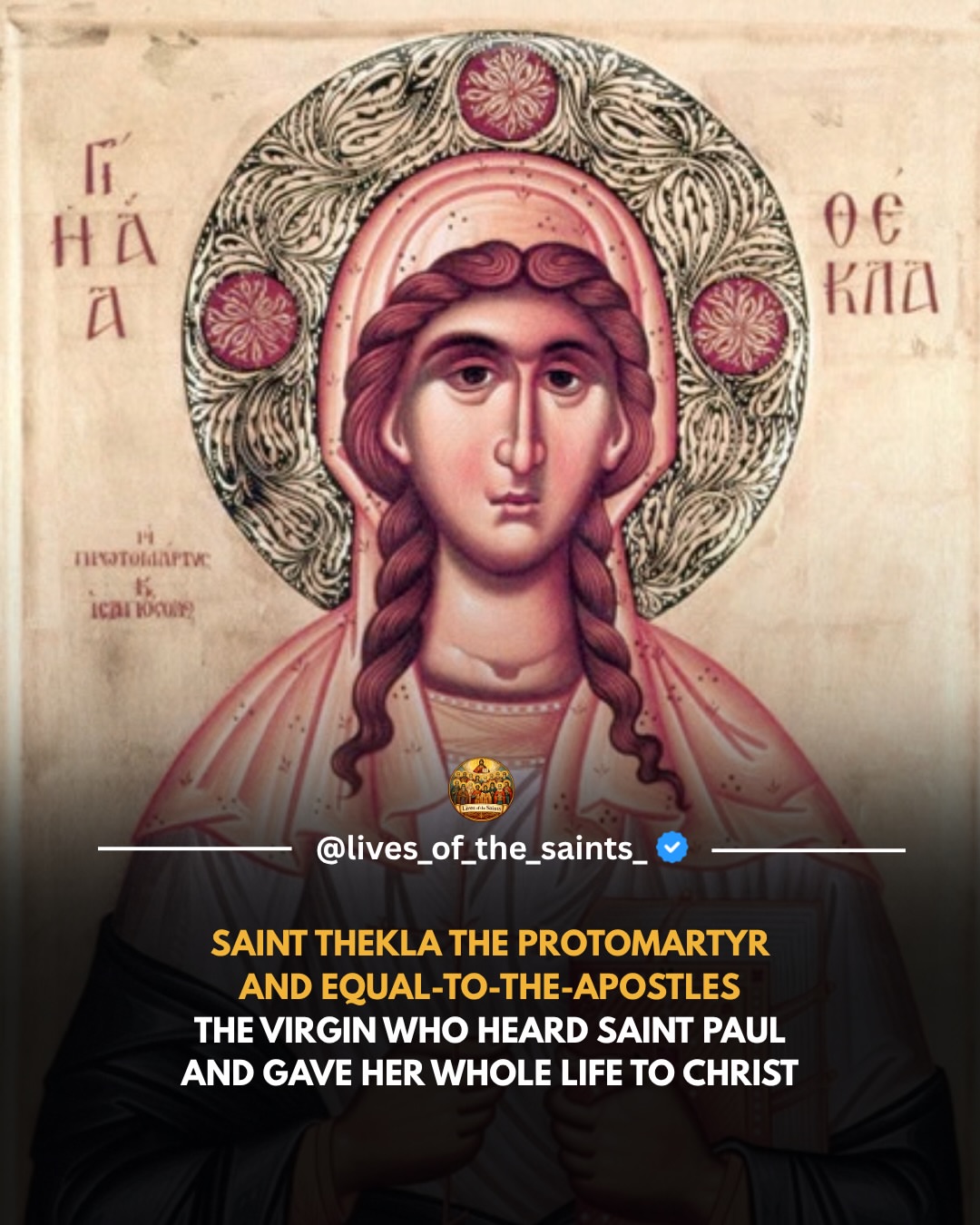
Saint Thekla: Fire, Beasts, and a Rock That Opened

The post recounts the life of Saint Thekla, born in Iconium to noble pagan parents. At eighteen, engaged to marry, she heard the Apostle Paul preach for three days and three nights alongside Barnabas. Her heart turned to Christ and she vowed virginity as a bride of the Lord. Her mother first tried to persuade her, then mistreated her, and finally handed her over to the judge demanding she be burned. The judge cast Thekla into the fire, but God…

The post recounts the life of Saint Thekla, born in Iconium to noble pagan parents. At eighteen, engaged to marry, she heard the Apostle Paul preach for three days and three nights alongside Barnabas. Her heart turned to Christ and she vowed virginity as a bride of the Lord.

Her mother first tried to persuade her, then mistreated her, and finally handed her over to the judge demanding she be burned. The judge cast Thekla into the fire, but God preserved her unharmed. After this, Thekla followed the Apostle Paul to Antioch. There a powerful man tried to take her by force, but she escaped.

He accused her before the ruler because she was a Christian and rejected his sinful desire. She was thrown before wild beasts, but the beasts did not touch her. Amazed, the ruler asked: "Who are you, and what power is in you, that nothing can harm you?"

She answered: "I am the servant of the living God." Released from death, Saint Thekla preached the Gospel and brought many souls to the true Faith. Later, with Saint Paul's blessing, she withdrew near Seleucia, where she lived in ascetic struggle, healed the sick, and continued leading many to Christ. When evil men tried to dishonor her, she prayed before a rock, and by the power of God the rock opened and hid her.

The post states that Saint Thekla reminds us that the soul filled with Christ cannot be conquered by fire, beasts, violence, or fear.

  • Born in Iconium, heard Paul preach for three days at age eighteen
  • Vowed virginity, survived burning unharmed by God's power
  • Followed Paul to Antioch, escaped assault, beasts did not touch her
  • Answered ruler: "I am the servant of the living God"
  • Lived near Seleucia in asceticism, healed sick, rock opened to hide her
Read more
Lives of the Saints 🙏 Instagram

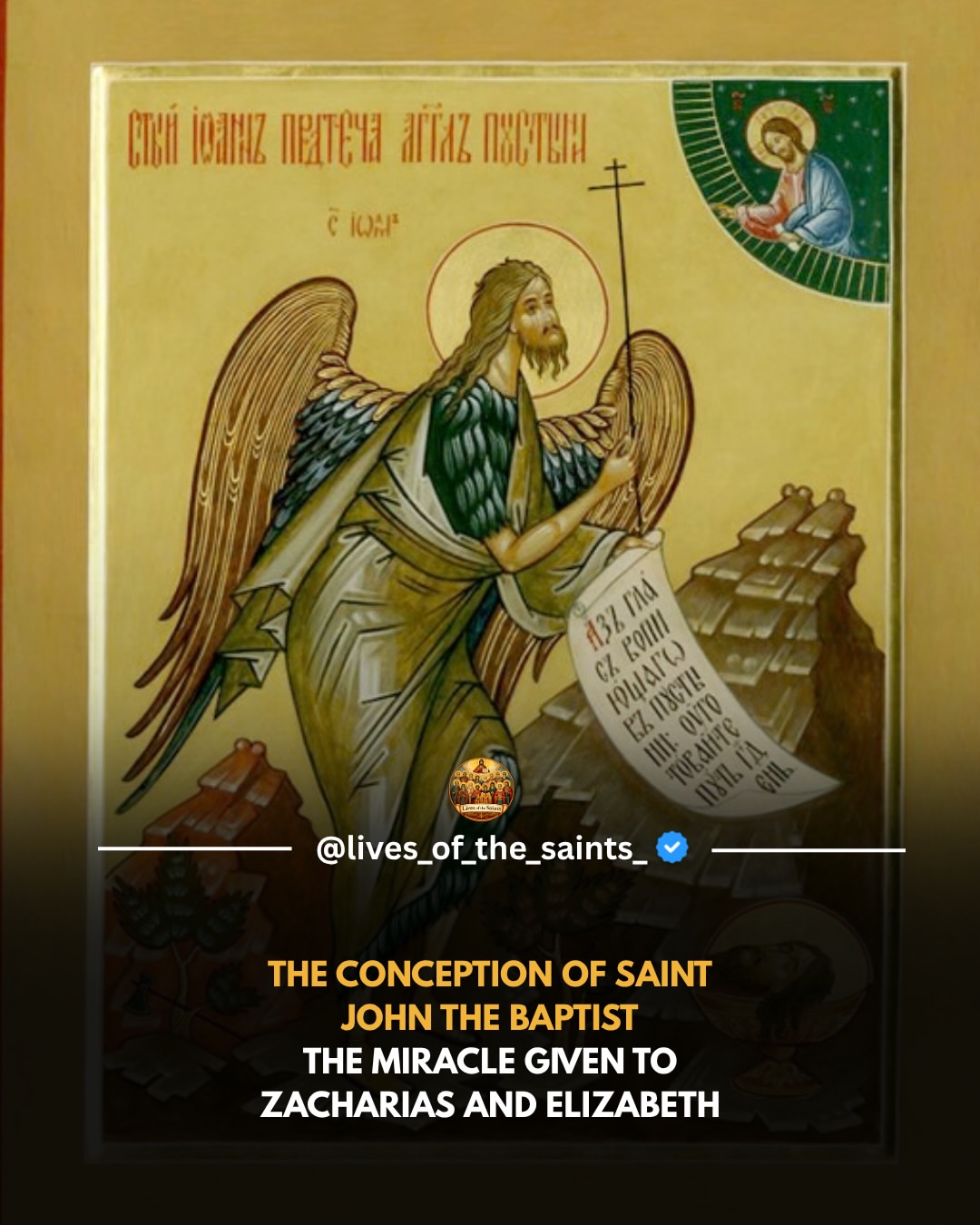
The Conception of Saint John the Baptist: God's Mercy Beyond Nature

The post marks the feast of the Conception of Saint John the Baptist, presenting it as a threefold revelation of God's mercy, miracle, and wisdom. Mercy appears in God's answer to the righteous parents Zacharias and Elizabeth, who spent their lives longing and praying for a child despite advanced age. The miracle lies in John's conception within Elizabeth's aged and barren womb. Wisdom emerges in God's plan for salvation, assigning John the role…

The post marks the feast of the Conception of Saint John the Baptist, presenting it as a threefold revelation of God's mercy, miracle, and wisdom. Mercy appears in God's answer to the righteous parents Zacharias and Elizabeth, who spent their lives longing and praying for a child despite advanced age. The miracle lies in John's conception within Elizabeth's aged and barren womb.

Wisdom emerges in God's plan for salvation, assigning John the role of Prophet, Forerunner, and Baptist of the Lord Jesus Christ. The author compares this event to two earlier biblical announcements: the birth of Isaac from barren Sarah and the birth of Samson from the barren wife of Manoah. In each case, an angel declared the coming child, and nature yielded to divine purpose.

The text argues that the question is not how such conception could happen according to human understanding, but who made it happen, the same Almighty God who created the world from nothing and formed Adam without parents. This feast reminds believers that God is never limited by nature, time, age, weakness, or impossibility. Where human hope ends, the mercy and power of God begin. The post closes with the invocation: Holy Prophet, Forerunner, and Baptist John, pray to God for us.

  • The Church celebrates the Conception of Saint John the Baptist as mercy, miracle, and wisdom of God.
  • Elderly Zacharias and Elizabeth, righteous and childless, conceived John after lifelong prayer.
  • The birth parallels Isaac from Sarah and Samson from Manoah's wife, barren women who bore children by divine intervention.
  • John was destined as Prophet, Forerunner, and Baptist of Jesus Christ.
  • The feast affirms God is not limited by nature, age, or impossibility; where human hope ends, God's power begins.
Lives of the Saints 🙏 Instagram

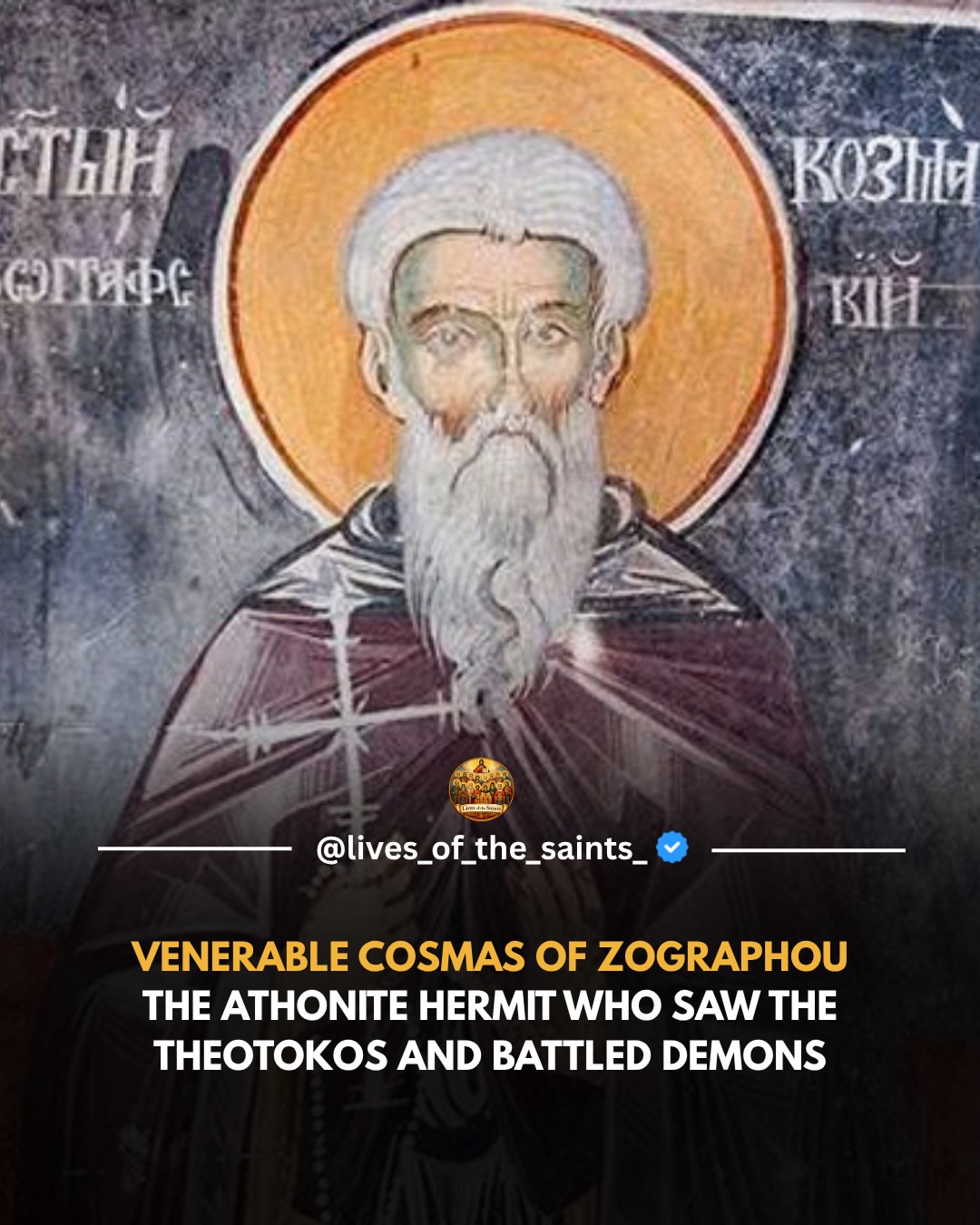
Venerable Cosmas of Zographou: Bulgarian noble who became Athonite wonderworker

The post recounts the life of Venerable Cosmas of Zographou, a Bulgarian nobleman who fled to Mount Athos when his parents arranged a marriage. He settled in a cave near the Monastery of Zographou, living as a hermit devoted to prayer, fasting, silence, and spiritual warfare. The Most Holy Theotokos appeared to him repeatedly, strengthening and guiding him. He became known as the greatest ascetic and wonderworker of Zographou. His cell, where he…

The post recounts the life of Venerable Cosmas of Zographou, a Bulgarian nobleman who fled to Mount Athos when his parents arranged a marriage. He settled in a cave near the Monastery of Zographou, living as a hermit devoted to prayer, fasting, silence, and spiritual warfare. The Most Holy Theotokos appeared to him repeatedly, strengthening and guiding him.

He became known as the greatest ascetic and wonderworker of Zographou. His cell, where he fought against demons, still stands northwest of the monastery. Cosmas possessed spiritual insight, perceiving events distant in time and place.

He reposed in old age on September 22, 1323. The post concludes that he exemplifies how a soul leaving the world for Christ loses nothing but gains the grace, light, and joy of the Kingdom.

  • Born into a noble Bulgarian family, fled to Mount Athos to avoid marriage
  • Lived as a hermit in a cave near Zographou Monastery, practicing prayer, fasting, and silence
  • The Theotokos appeared to him many times, offering guidance and strength
  • Recognized as the greatest ascetic and wonderworker of Zographou; his cell remains northwest of the monastery
  • Reposed on September 22, 1323, after a life of spiritual labor and insight
Read more
Lives of the Saints 🙏 Instagram

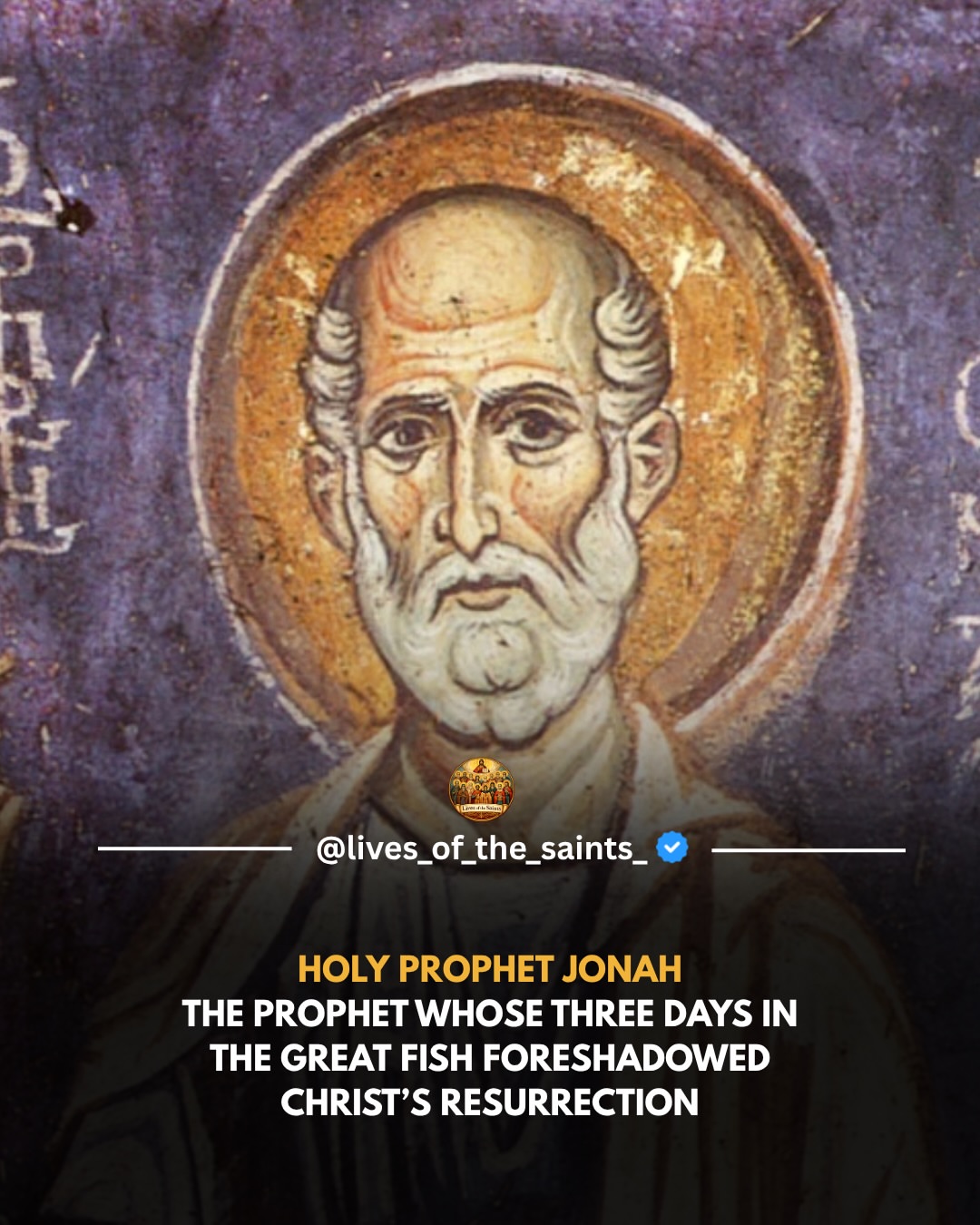
Prophet Jonah: Foreshadowing Christ's Resurrection and Mercy

The post presents the Holy Prophet Jonah, who lived more than 800 years before Christ. According to his life, he was the son of the widow of Zarephath, whom the Prophet Elijah raised from the dead. Jonah is known from the Old Testament book that bears his name. The post explains that his three days in the belly of the great fish became a holy foreshadowing of Christ's three days in the tomb. It notes that just as Jonah was brought out alive,…

The post presents the Holy Prophet Jonah, who lived more than 800 years before Christ. According to his life, he was the son of the widow of Zarephath, whom the Prophet Elijah raised from the dead. Jonah is known from the Old Testament book that bears his name.

The post explains that his three days in the belly of the great fish became a holy foreshadowing of Christ's three days in the tomb. It notes that just as Jonah was brought out alive, this mystery pointed toward the glorious Resurrection of the Lord from the dead. The post also describes the story as a reminder of repentance.

It recounts that when the people of Nineveh heard the warning of God, they humbled themselves, turned from sin, and received mercy. The post concludes with the lesson that no one can flee from God, but no one who repents is beyond His mercy. The post ends with a call to follow for more content and includes tags for Prophet Jonah, Orthodox Saints, Old Testament, Orthodox Faith, and Repentance.

  • Jonah lived more than 800 years before Christ and was the son of the widow of Zarephath raised by Elijah.
  • His three days in the fish foreshadow Christ's three days in the tomb and the Resurrection.
  • The Ninevites' repentance brought God's mercy.
  • No one can flee from God, but repentance brings mercy.
  • The post is tagged with Prophet Jonah, Orthodox Saints, Old Testament, Orthodox Faith, and Repentance.
Read more
Lives of the Saints 🙏 Instagram

Synaxis of All Macedonian Saints Celebrated First Sunday of October

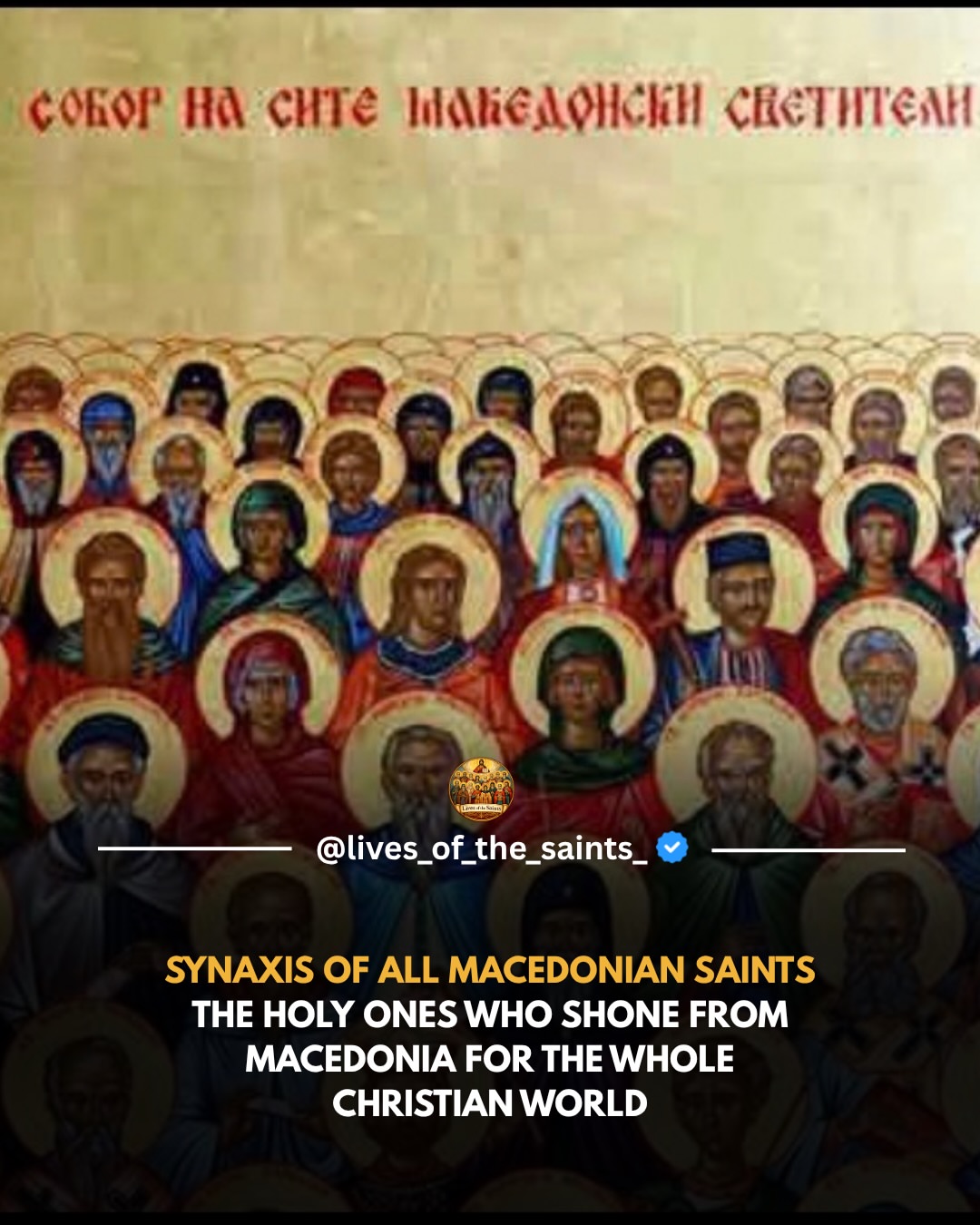
The Holy Macedonian Orthodox Church celebrates the Synaxis of All Macedonian Saints on the first Sunday of October. The post describes these saints as holy men and women who lived lives pleasing to God and became witnesses of Christ through faith, prayer, sacrifice, humility, and love. Their lives are presented as a blessing not only for the Macedonian people but for the whole Christian world. By their holy works they rose toward the divine life…

The Holy Macedonian Orthodox Church celebrates the Synaxis of All Macedonian Saints on the first Sunday of October. The post describes these saints as holy men and women who lived lives pleasing to God and became witnesses of Christ through faith, prayer, sacrifice, humility, and love. Their lives are presented as a blessing not only for the Macedonian people but for the whole Christian world.

By their holy works they rose toward the divine life and were crowned by God with eternal crowns of glory. The post lists the various roles they fulfilled: some served as bishops, monks, teachers, martyrs, confessors, and spiritual fathers, while others shone quietly through prayer, repentance, fasting, mercy, and obedience. Together they demonstrate that holiness is possible in every generation and every place where Christ is loved above all.

The Synaxis serves as a reminder to honor the spiritual inheritance, to remember those who walked before, and to follow their path toward the Kingdom of God. The post concludes with an invocation asking all Macedonian saints to pray to God for us.

  • The Synaxis of All Macedonian Saints is observed on the first Sunday of October by the Holy Macedonian Orthodox Church.
  • The saints are honored as witnesses of Christ through faith, prayer, sacrifice, humility, and love.
  • They include bishops, monks, teachers, martyrs, confessors, spiritual fathers, and those who lived quietly in prayer, repentance, fasting, mercy, and obedience.
  • Their collective example shows that holiness is attainable in every generation where Christ is loved above all.
  • The celebration calls the faithful to honor their spiritual inheritance, remember the saints, and follow their path to the Kingdom of God.
Lives of the Saints 🙏 Instagram

Saint Eustathius Plakidas: Roman Commander Who Became a Martyr

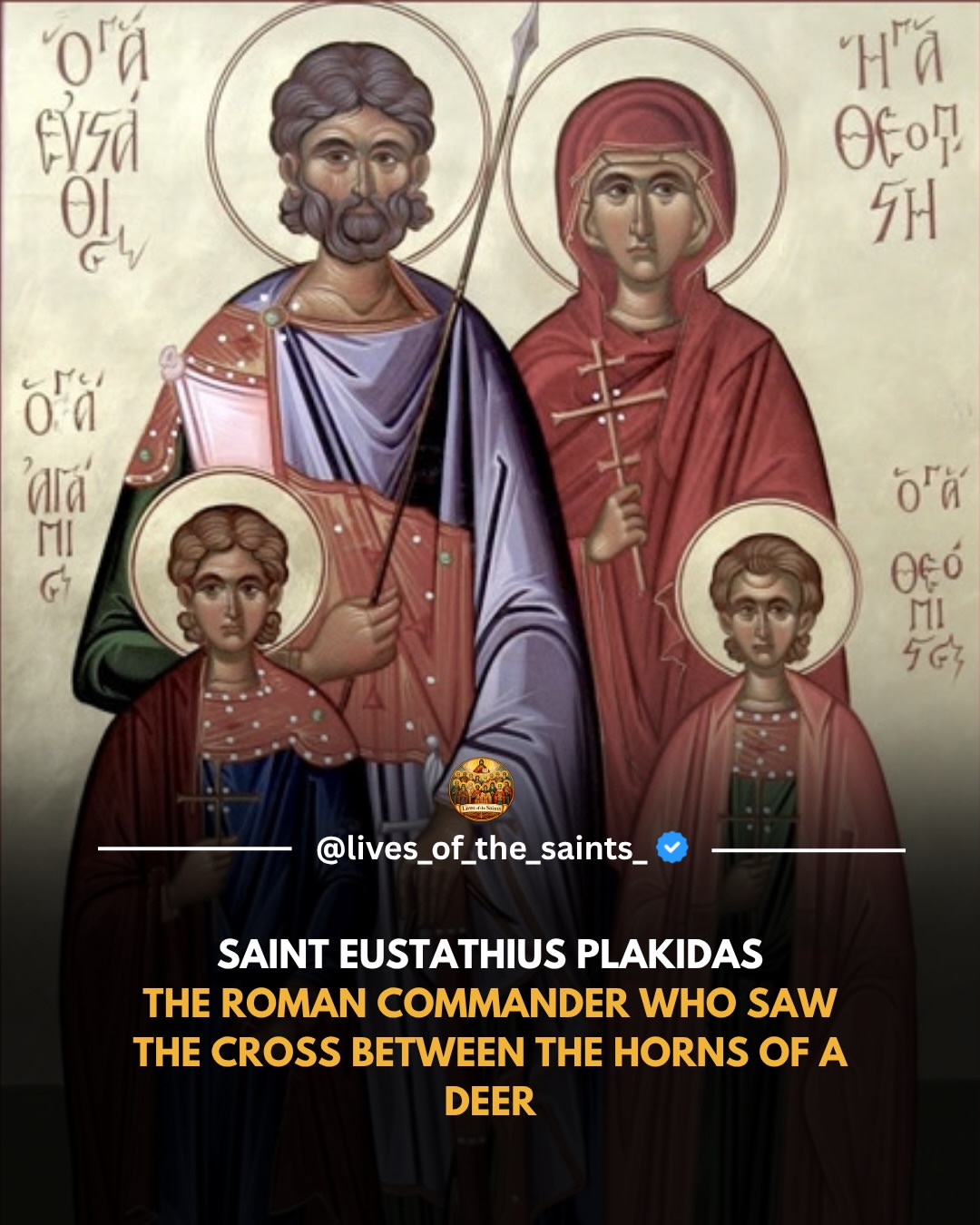
The post recounts the life of Saint Eustathius, born Plakidas, a Roman commander during the reigns of Emperors Titus and Trajan. Although pagan, he was just and merciful, compared to Cornelius the Centurion. While hunting, he saw a radiant Cross between the horns of a deer and heard the voice of the Lord calling him to seek a Christian priest for baptism. Plakidas, his wife, and their two sons were baptized, taking the names Eustathius,…

The post recounts the life of Saint Eustathius, born Plakidas, a Roman commander during the reigns of Emperors Titus and Trajan. Although pagan, he was just and merciful, compared to Cornelius the Centurion. While hunting, he saw a radiant Cross between the horns of a deer and heard the voice of the Lord calling him to seek a Christian priest for baptism.

Plakidas, his wife, and their two sons were baptized, taking the names Eustathius, Theopiste, Agapius, and Theopistus. Eustathius returned to the vision site to give thanks, and the Lord revealed he would suffer greatly for His name but also strengthened him. Soon he lost his wife and sons and lived for fifteen years as a hired worker in an Egyptian village.

By divine providence he was discovered, returned to the Roman army, and led it to victory. On the journey back to Rome he was reunited with his wife and both sons. Emperor Hadrian demanded he sacrifice to idols; Eustathius confessed he was a Christian.

He, his wife, and their sons were tortured, but wild beasts would not harm them. Finally they were placed inside a heated metal bull and gave up their souls. When their bodies were removed, they were dead but unharmed.

The post ends by stating that Saint Eustathius shows God does not abandon those who belong to Him through loss, exile, and suffering, and that he rendered to Caesar what was Caesar's and to God what was God's. The text includes hashtags for Saint Eustathius, Orthodox saints, great martyr, Orthodox faith, and Christian martyrs.

  • Plakidas was a Roman commander under Titus and Trajan who converted after seeing a Cross between a deer's horns
  • He, his wife, and two sons were baptized and received new names: Eustathius, Theopiste, Agapius, Theopistus
  • He lost his family and spent fifteen years as a laborer in Egypt before being restored to command
  • Reunited with his family, he refused Hadrian's order to sacrifice to idols and confessed Christ
  • The family was tortured, unharmed by beasts, and martyred in a heated bronze bull; bodies found intact