WeOrthodox
EN UA

Eastern Orthodoxy Daily He/Who/Is

Instagram ↗ 112 discussions

Scripture, Saints & Satire Left Rome for Home 📍Illinois USA📍 ╬☦️ Dyophysite Eastern Orthodox ☦️╬

Holy Fathers warn: worldly music shapes the heart

The post examines the spiritual impact of modern music and entertainment. It begins by describing the pervasiveness of music in daily life and notes that the industry often glorifies lust, fornication, adultery, drugs, drunkenness, violence, greed, pride, luxury, rebellion, and the pursuit of money, power, and fame. The author argues that what society calls entertainment can gradually influence thoughts, desires, habits, and spiritual life,…

The post examines the spiritual impact of modern music and entertainment. It begins by describing the pervasiveness of music in daily life and notes that the industry often glorifies lust, fornication, adultery, drugs, drunkenness, violence, greed, pride, luxury, rebellion, and the pursuit of money, power, and fame. The author argues that what society calls entertainment can gradually influence thoughts, desires, habits, and spiritual life, because what we repeatedly listen to and contemplate shapes the heart.

The post then cites several Holy Fathers. Saint John Chrysostom is quoted multiple times: he warns against corrupting the ears with shameful entertainment, condemns drunkenness and sensual dancing, and states that where there are filthy songs the devil is present, and where dancing is, there is the evil one. Saint Basil the Great teaches that psalmody calms the passions and directs the soul toward God, and that the ear should not be corrupted by shameful melodies.

Saint Ephraim the Syrian says songs of vanity drive away the remembrance of God. Saint Paisios of Mount Athos warns that when worldly music enters the soul, prayer leaves, and that the spirit of the world brings anxiety and darkness. Saint Ignatius Brianchaninov observes that the soul becomes like what it continually contemplates.

Scripture passages are also presented: Romans 12:2 on not conforming to the world but being transformed by the renewing of the mind; James 4:4 on friendship with the world as enmity against God; Colossians 3:2 on setting the mind on things above; and 1 John 2:15-17 on not loving the world or the things in the world.

The post concludes that Orthodox Christians are called to guard their senses, practice watchfulness (nepsis), and discern what brings them closer to Christ versus what strengthens the passions. It clarifies that not every melody, dance, or celebration is sinful, but that the spirit and moral influence of what we welcome must be examined.

Accompanying images list contemporary artists and repeat several of the patristic quotations.

  • Modern music industry promotes sinful passions that can shape the heart.
  • Saint John Chrysostom warns that filthy songs invite the devil and that dancing and drunkenness turn celebrations into occasions of sin.
  • Saint Basil the Great teaches that psalmody calms the passions while shameful melodies corrupt the ear.
  • Saint Paisios of Mount Athos says worldly music drives away prayer and the worldly spirit brings anxiety.
  • Scripture calls Christians not to conform to the world but to set their minds on things above.
7 opinions in the discussion Metal was key in bringing me back to Christ Read the discussion

St. Maximus on Rome's Authority: From Synods and Canons, Not Papal Supremacy

The thread examines St. Maximus the Confessor's view of Roman authority during the seventh-century Monothelite controversy. It argues that while Maximus affirmed Rome's extraordinary authority, he explicitly attributed that authority to the incarnate Son of God, the holy synods, and the sacred canons, not to an inherent papal supremacy. In his Letter to Peter (643-644), Maximus wrote that Rome held "the dominion, authority and power of binding…

The thread examines St. Maximus the Confessor's view of Roman authority during the seventh-century Monothelite controversy. It argues that while Maximus affirmed Rome's extraordinary authority, he explicitly attributed that authority to the incarnate Son of God, the holy synods, and the sacred canons, not to an inherent papal supremacy.

In his Letter to Peter (643-644), Maximus wrote that Rome held "the dominion, authority and power of binding and loosing" over churches throughout the world, but he stated this authority was received "from the incarnate Son of God himself, and also by all holy synods, according to the holy canons and definitions." The author notes that the Greek original of this letter has not survived; the frequently cited fragments come from a ninth-century Latin translation by Anastasius Bibliothecarius, a Roman ecclesiastic, later published in Migne's Patrologia Graeca.

The historical context is emphasized: with Eastern patriarchates compromised by Monothelitism, Rome stood as the principal defender of Dyothelite orthodoxy. However, in 657-658 Pope Vitalian restored communion with Constantinople despite the unresolved controversy. Maximus refused to enter that communion, was threatened with death, and in 662 had his tongue and right hand mutilated, dying in exile.

Less than twenty years later, the Sixth Ecumenical Council anathematized Pope Honorius I for his role in the Monothelite controversy. The thread presents six propositions: Maximus did not follow Rome into communion; he resisted papal decisions conflicting with orthodoxy; he attributed Roman authority to reception by holy synods; he recognized sacred canons as integral to that authority; he identified the Catholic Church by orthodox confession rather than communion with Rome; and he prioritized doctrinal orthodoxy over communion with any patriarchal see.

The author concludes that cherry-picking Maximus's quotes to support papal supremacy works only if one stops reading his works.

  • St. Maximus affirmed Rome's high authority but grounded it in Christ, the holy synods, and the sacred canons.
  • The Greek original of his Letter to Peter is lost; surviving fragments come from a 9th-century Latin translation by Anastasius Bibliothecarius.
  • Maximus refused to follow Pope Vitalian into communion with Constantinople when the Monothelite issue remained unresolved, leading to his mutilation and exile.
  • The Sixth Ecumenical Council later anathematized Pope Honorius I for Monothelitism, showing the Church held a Roman pontiff accountable.
  • Maximus identified the Church by orthodox confession, not communion with Rome, prioritizing doctrine over patriarchal authority.
Read more

Weekly Communion Was the Apostolic Practice, Not an Occasional Event

The speaker addresses the argument that communion should not be celebrated every week to prevent it from becoming a mindless routine. He rejects this reasoning by comparing it to the absurdity of ceasing prayer or church attendance for the same reason, noting that such logic undermines the necessity of constantly pursuing union with Christ. The speaker cites Acts 20:7, which records that Christians gathered on the first day of the week to break…

The speaker addresses the argument that communion should not be celebrated every week to prevent it from becoming a mindless routine. He rejects this reasoning by comparing it to the absurdity of ceasing prayer or church attendance for the same reason, noting that such logic undermines the necessity of constantly pursuing union with Christ.

The speaker cites Acts 20:7, which records that Christians gathered on the first day of the week to break bread, and references St. Justin Martyr's testimony in his First Apology confirming that the early church celebrated the Eucharist every Sunday. He concludes that the apostles treated communion as a regular, weekly practice rather than an occasional event, and that the contemporary church should follow this pattern.

The discussion centers on the frequency of the Eucharist, the scriptural and patristic evidence for weekly celebration, and the theological implication that regular communion sustains the believer's ongoing union with Christ.

Key moments

  1. The argument that communion is not held every Sunday to prevent rote practice does not logically follow.
  2. One would not stop praying or attending church simply because those actions might become routine.
  3. This reasoning undermines the necessity of constantly going after Christ and being united with him.
  4. Acts records that Christians gathered on the first day of the week to break bread.
  5. St. Justin Martyr confirms that Christians celebrated the Eucharist every Sunday.
  6. The apostles did not treat communion as an occasional event, so neither should we.
Read more

Church Hopping Avoids the Accountability of Excommunication

The speaker argues that church hopping contradicts biblical Christianity because it evades the accountability that comes with excommunication. He cites 1 Corinthians 5, where Paul instructs the church to excommunicate an unrepentant sinner by delivering him to Satan for the destruction of the flesh. The speaker contends that if not attending church does not feel like being given over to the devil, one lacks a biblical relationship with the local…

The speaker argues that church hopping contradicts biblical Christianity because it evades the accountability that comes with excommunication. He cites 1 Corinthians 5, where Paul instructs the church to excommunicate an unrepentant sinner by delivering him to Satan for the destruction of the flesh. The speaker contends that if not attending church does not feel like being given over to the devil, one lacks a biblical relationship with the local church.

Living without submitting to a church body that can excommunicate is itself an excommunicated life. He agrees that the New Testament teaches excommunication but argues it presupposes a visible church with identifiable boundaries and episcopal authority. He quotes St. Ignatius of Antioch linking the bishop, the Eucharist, and the Catholic Church, concluding that biblical excommunication requires the historic orthodox structure of communion.

Key moments

  1. Church hopping is wrong because biblical Christianity requires belonging to a church where one can be excommunicated.
  2. Paul in 1 Corinthians 5 commands excommunication of a man sleeping with his stepmother, delivering him to Satan so he may repent.
  3. If not going to church is not equivalent to being given over to the devil, you are not a biblical Christian and live an excommunicated life.
  4. The New Testament teaches excommunication in 1 Corinthians 5, putting away the evil person and delivering him to Satan for the destruction of the flesh.
  5. Excommunication only makes sense if the church is a visible body with identifiable boundaries and actual authority, not merely an independent congregation deciding attendance.
  6. In the first millennium, communion was bound to the bishop, the Eucharist, and visible unity; St. Ignatius says nothing should be done in the church without the bishop.
  7. St. Ignatius defines a proper Eucharist as administered by the bishop or his delegate and says where the bishop is, there is the Catholic Church.
8 opinions in the discussion I grew up as a Jehovah's witness and got disfellowshipped at 19. While I somewhat agree with what's being said, I really hope the way the Orthodox Church excommunicates is very different.… Read the discussion
Eastern Orthodoxy Daily He/Who/Is with Ethan Instagram

Refuting Selective Skepticism: Historical Proof for the Orthodox Gospel

The post presents a comprehensive apologetic argument defending the historical reliability of the Orthodox Christian faith against selective skepticism and Islamic polemics. It begins by noting that ancient authors like Josephus wrote in the third person, a convention shared by the Gospel writers, and that over 5,800 Greek manuscripts confirm the Gospel text with only trivial variants. The Documentary Hypothesis (JEDP) is shown to have fractured…

The post presents a comprehensive apologetic argument defending the historical reliability of the Orthodox Christian faith against selective skepticism and Islamic polemics. It begins by noting that ancient authors like Josephus wrote in the third person, a convention shared by the Gospel writers, and that over 5,800 Greek manuscripts confirm the Gospel text with only trivial variants.

The Documentary Hypothesis (JEDP) is shown to have fractured into fragmentary models, and secular source criticism, if applied consistently, would undermine the claim of a pristine Mosaic Torah. The hypothetical Q source lacks any manuscript evidence, assumes the crucifixion, and is contradicted by Wisdom 2-4, the Dead Sea Scrolls, and St. Ignatius of Antioch.

The pre-Pauline creed in 1 Corinthians 15:3-7, dated within years of the crucifixion, refutes the claim that St. Paul invented a dying Messiah. Messianic prophecies in Daniel 2 and 7 are shown to point to a Davidic Messiah receiving divine worship, not to a later Islamic reading. Early high Christology is demonstrated through Genesis 18:3, Mark 2:5-7, and Acts 5:3-4, where Christ and the Holy Spirit exercise divine prerogatives.

Pre-Nicene patristic witnesses, Didache, Ignatius, Irenaeus, Tertullian, confess Trinitarian worship over a century before Nicaea. Codex Sinaiticus and Vaticanus, dating from the fourth century, confirm that seventh-century Christians possessed the same Gospel proclaimed today, creating a dilemma for Surah 5:47. A chronological comparison shows the Gospel sources (35-65 years after the events) are far earlier than the earliest Islamic sources (600-840 years later).

The argument concludes with a fourfold dilemma: hyper-skepticism destroys Islamic historiography first; impeaching Scripture voids it as prophecy; claiming Paul erased the Gospel implies divine failure; and appealing to critical scholars while rejecting their consensus on the crucifixion is inconsistent. The post asserts that applying one honest historical standard leaves the apostolic Gospel of Christ crucified and risen unshaken.

  • Ancient historiography and manuscript evidence confirm Gospel reliability; 5,800+ Greek manuscripts, unanimous titles, third-person convention.
  • The Documentary Hypothesis and hypothetical Q source lack manuscript support and are contradicted by early witnesses like Wisdom, Dead Sea Scrolls, and Ignatius.
  • Pre-Pauline creed (1 Cor 15:3-7) and Qumran texts attest to a crucified Messiah and resurrection within years of the events.
  • Pre-Nicene patristics and early codices (Sinaiticus, Vaticanus) demonstrate Trinitarian worship and identical Christology centuries before Islam.
  • Consistent historical standards expose a fourfold dilemma: hyper-skepticism collapses Islamic sources first, corrupting Scripture voids prophecy, anti-Pauline theory implies divine failure, and scholarly consensus affirms the crucifixion.

Three occult practices Christians should avoid, with Scripture and Orthodox teaching

The speaker identifies three practices normalized today that Scripture warns against: tarot cards and divination, using crystals for spiritual power, and trusting astrology. Deuteronomy 18:10-12 forbids divination, and the Orthodox Church rejects it because guidance comes from God, not occult methods. Romans 1:25 warns against serving created things rather than the Creator; crystals are part of creation but cannot provide spiritual protection,…

The speaker identifies three practices normalized today that Scripture warns against: tarot cards and divination, using crystals for spiritual power, and trusting astrology. Deuteronomy 18:10-12 forbids divination, and the Orthodox Church rejects it because guidance comes from God, not occult methods. Romans 1:25 warns against serving created things rather than the Creator; crystals are part of creation but cannot provide spiritual protection, that comes from Christ.

Isaiah 47:13-14 and 2 Corinthians 5:17 show that star signs do not determine destiny; being in Christ makes a new creation. The world calls these harmless entertainment, but Orthodox Christians are called to discern and seek the Creator, not creation. The post details that tarot cards involve trusting a deck of cards for the future instead of God, and the Orthodox Church has always rejected divination.

Regarding crystals, admiring stones is fine as God's creation, but believing they absorb negative energy, protect from evil spirits, or bring spiritual healing crosses into worshiping created things; protection comes from Jesus Christ, not crystal energy. On astrology, allowing a star sign to determine personality, relationships, or future places trust in something other than God; Isaiah 47:13-14 warns against looking to stars to predict what is coming.

Second Corinthians 5:17 states that if anyone is in Christ, he is a new creation; the day you were born does not determine your spiritual destiny, your zodiac sign does not define you, your relationship with Jesus Christ does. The world calls these things harmless entertainment, spiritual awakening, or positive energy, but Orthodox Christians are called to discern; we do not need tarot cards to guide us, crystals to protect us, or stars to determine our future; stop looking to creation for what only the Creator provides.

Key moments

  1. 0:00 Three normalized practices the Bible warns against: tarot cards and divination, crystals for spiritual power, and astrology; some Christians participate without understanding the spiritual consequences.
  2. 0:00 Tarot cards and divination: trusting a deck of cards for the future instead of God; Deuteronomy 18:10-12 explicitly warns against divination, interpreting omens, sorcery, and consulting spirits; the Orthodox Church has always rejected divination because we seek guidance from God, not occult practices.
  3. 0:40 Crystals for spiritual power and protection: admiring stones is fine as God's creation, but believing they absorb negative energy, protect from evil spirits, or bring spiritual healing crosses into worshiping created things; Romans 1:25 warns against serving creation rather than the Creator; protection comes from Jesus Christ, not crystal energy.
  4. 0:40 Astrology and trusting the stars: allowing a star sign to determine personality, relationships, or future places trust in something other than God; Isaiah 47:13-14 warns against looking to stars to predict what is coming.
  5. 1:40 Second Corinthians 5:17: if anyone is in Christ, he is a new creation; the day you were born does not determine your spiritual destiny, your zodiac sign does not define you, your relationship with Jesus Christ does.
  6. 1:40 The world calls these things harmless entertainment, spiritual awakening, or positive energy, but Orthodox Christians are called to discern; we do not need tarot cards to guide us, crystals to protect us, or stars to determine our future; stop looking to creation for what only the Creator provides.
Read more

Vigil for King Stefan of Dečani at Visoki Dečani Monastery

The post announces the solemn vigil on November 23, 2026, at Visoki Dečani Monastery in Kosovo on the eve of the feast of King Stefan of Dečani. Located near the town of Dečani, the monastery is one of the most important holy sites of the Serbian Orthodox Church. It was founded in 1327 by King Stefan Uroš III of Dečani and completed in 1335 under his son, Emperor Stefan Dušan. The monastery is dedicated to Christ Pantocrator and houses the…

The post announces the solemn vigil on November 23, 2026, at Visoki Dečani Monastery in Kosovo on the eve of the feast of King Stefan of Dečani. Located near the town of Dečani, the monastery is one of the most important holy sites of the Serbian Orthodox Church. It was founded in 1327 by King Stefan Uroš III of Dečani and completed in 1335 under his son, Emperor Stefan Dušan.

The monastery is dedicated to Christ Pantocrator and houses the relics of King Stefan, who is venerated as a martyr. His feast day is celebrated on November 24 according to the civil calendar. The monastery has been listed as a UNESCO World Heritage Site since 2004 and is renowned for its architecture, which combines Romanesque, Gothic, and Byzantine traditions, as well as for its numerous medieval frescoes.

The monastic community continues to preserve the life of prayer, liturgical services, and the Orthodox monastic tradition.

  • Vigil for the feast of King Stefan of Dečani on November 23, 2026
  • Monastery founded 1327 by King Stefan Uroš III, completed 1335 under Emperor Stefan Dušan
  • Dedicated to Christ Pantocrator; houses relics of King Stefan, venerated as martyr
  • UNESCO World Heritage Site since 2004; architecture blends Romanesque, Gothic, Byzantine
  • Monks maintain prayer, liturgical services, and monastic tradition
Read more

Georgia keeps St. George's wheel torture feast on 23 November

The post explains that 23 November (Old Calendar) is the feast of St. George called Giorgoba in Georgia. It commemorates his torture on the wheel for refusing to renounce Christ, a feast few other Orthodox churches keep. Georgia celebrates St. George twice each year, also on 6 May. The first image is the Nakipari Icon painted in 1130, which presents St. George as the soldier of Christ who chose torture over apostasy rather than only the…

The post explains that 23 November (Old Calendar) is the feast of St. George called Giorgoba in Georgia. It commemorates his torture on the wheel for refusing to renounce Christ, a feast few other Orthodox churches keep. Georgia celebrates St. George twice each year, also on 6 May.

The first image is the Nakipari Icon painted in 1130, which presents St. George as the soldier of Christ who chose torture over apostasy rather than only the dragon-slayer. In Georgian tradition the dragon represents pagan darkness, idolatry, demonic power, and every ruler or ideology that demands Christians deny Christ; some interpretations say St. George was overcoming a persecuting ruler such as Diocletian rather than a literal dragon.

The post notes that the oldest surviving written version of the dragon-slaying story is found in an 11th-century Georgian text. The image text adds detail: after St. George refused to renounce Christ in 303 AD, Emperor Diocletian bound him to a wheel rotated over boards with iron spikes and blades. An angel restored him, and he walked back to confront the emperor.

Diocletian then subjected him to a pit of burning quicklime, red-hot nailed iron shoes, ox-hide flogging, and deadly poisons. George died and was raised to life by Christ before his final beheading, inspiring Roman soldiers, the sorcerer Athanasius, and Empress Alexandra to convert.

  • 23 November (Old Calendar) is the Georgian feast of St. George called Giorgoba, commemorating his torture on the wheel
  • Georgia celebrates St. George twice yearly, also on 6 May, while few other Orthodox churches keep the November feast
  • The Nakipari Icon of 1130 shows St. George as soldier of Christ who chose martyrdom over compromise
  • Georgian tradition reads the dragon as pagan darkness, idolatry, and persecuting rulers such as Diocletian
  • The oldest surviving written version of the dragon-slaying story is in an 11th-century Georgian text
Read more
Eastern Orthodoxy Daily He/Who/Is with Timothy Instagram

Former Protestant argues the true church must be identifiable in every century

A former Protestant speaker argues that a church unable to trace itself historically to Christ places its members in an insecure position. He notes that Jesus promised to build his church and that the gates of hell would not prevail against it, so the true church must be identifiable in every century from the first to the twentieth. The speaker says he concluded that if his church could not be found in the first, fourth, eighth, twelfth,…

A former Protestant speaker argues that a church unable to trace itself historically to Christ places its members in an insecure position. He notes that Jesus promised to build his church and that the gates of hell would not prevail against it, so the true church must be identifiable in every century from the first to the twentieth.

The speaker says he concluded that if his church could not be found in the first, fourth, eighth, twelfth, sixteenth, and twentieth centuries, it was not the church Christ built. He advises those questioning to examine their belief, worship, and life and ask whether they can find continuity back to Christ. The speaker describes a Protestant tendency to read modern theology back into Scripture and then claim the early church held those same beliefs, calling this circular reasoning.

He explains the pattern: start with a theology, interpret the Bible through it, then use that interpretation to prove the theology goes back to the apostles. The earliest Christians, he says, present a sacramental, episcopal church teaching baptism, the Eucharist, and apostolic succession in ways that do not fit modern Protestant categories.

He quotes Saint Irenaeus that it is within the power of all in every church to contemplate the tradition of the apostles manifested throughout the world.

Key moments

  1. The speaker says a Protestant who realizes their church cannot be traced historically to Christ is in an extremely insecure position.
  2. The speaker says Jesus built his church, not Martin Luther, Thomas Cartwright, or any figure 1500 years later.
  3. The speaker says he concluded that if his church could not be identified in the first, fourth, eighth, twelfth, sixteenth, and twentieth centuries, it was not the church because Jesus promised the gates of hell would not prevail.
  4. The speaker advises those questioning to examine their belief, worship, and life and ask whether they can find continuity back to Christ.
  5. The speaker explains that Protestants often read modern theology back into Scripture and assume the early church held the same beliefs, which is circular reasoning.
  6. The speaker describes the circular reasoning: start with your theology, interpret the Bible through it, then use that interpretation to prove your theology goes back to the apostles.
  7. The speaker says the earliest Christians present a sacramental episcopal church teaching baptism, the Eucharist, and apostolic succession in ways that do not fit modern Protestant categories.
  8. The speaker quotes Saint Irenaeus that it is within the power of all in every church to contemplate the tradition of the apostles manifested throughout the world.
Read more

Three biblical principles for true spiritual strength

The post presents three biblical principles for genuine strength from an Orthodox Christian perspective. It contrasts worldly teaching that men should suppress emotions and rely entirely on themselves with Christ's teaching that strength comes through dependence on God. The first principle draws from Ecclesiastes 7:8: patience is better than pride, and virtue develops through humility, prayer, and perseverance rather than demanding immediate…

The post presents three biblical principles for genuine strength from an Orthodox Christian perspective. It contrasts worldly teaching that men should suppress emotions and rely entirely on themselves with Christ's teaching that strength comes through dependence on God. The first principle draws from Ecclesiastes 7:8: patience is better than pride, and virtue develops through humility, prayer, and perseverance rather than demanding immediate results.

The second principle comes from Proverbs 12:1: accepting correction with humility allows growth, while pride makes a person defensive and resistant to change. The third principle cites 2 Corinthians 12:9, where Christ tells Paul that His grace is sufficient and His strength is made perfect in weakness. The post emphasizes that building body, finances, and discipline cannot replace a genuine relationship with Christ.

The strongest man is not the one who never struggles but the one who continues turning to Christ through every struggle. The discussion centers on how Orthodox Christianity understands spiritual strength as beginning with recognition of dependence on God's grace rather than self-reliance.

Key moments

  1. 0:00 True strength isn't about suppressing your emotions or pretending nothing bothers you.
  2. 0:00 Ecclesiastes 7:8 states that the patient in spirit is better than the proud in spirit, yet we live in a generation that wants everything immediately.
  3. 0:32 When things don't happen on our timeline, we become frustrated, anxious, and sometimes question God.
  4. 0:32 The Orthodox Church teaches that virtue is developed through humility, prayer, and perseverance, not by controlling God's timing.
  5. 1:02 Proverbs 12:1 says whoever loves instruction loves knowledge, but he who hates correction is stupid.
  6. 1:02 Not everyone who corrects you is an enemy; sometimes the truth hurts because it exposes something in us that needs to change.
  7. 1:35 Christ tells Paul in 2 Corinthians 12:9 that His grace is sufficient and His strength is made perfect in weakness.
  8. 1:35 The world demands complete self-reliance, but Orthodox Christianity teaches true spiritual strength begins when we recognize we cannot overcome everything on our own without God.
Read more

St. John Kronstadt on Fasting as Essential for Salvation

St. John Kronstadt teaches that fasting is necessary for salvation. He begins by urging the fulfillment of the commandment to fast on Wednesdays and Fridays, or the tenth commandment concerning evil thoughts and desires, citing the principle that one who is faithful in the least is faithful also in much. He confronts the claim that eating meat during Lent is unimportant because Lent does not consist in food. He argues that attachment to rich…

St. John Kronstadt teaches that fasting is necessary for salvation. He begins by urging the fulfillment of the commandment to fast on Wednesdays and Fridays, or the tenth commandment concerning evil thoughts and desires, citing the principle that one who is faithful in the least is faithful also in much. He confronts the claim that eating meat during Lent is unimportant because Lent does not consist in food.

He argues that attachment to rich food, costly clothing, theatres, masquerades, expensive plate, china, furniture, carriages, spirited horses, and the accumulation of wealth turns the heart away from God, just as the rich man in the Gospel was turned away. He asks whether a man can serve both God and mammon, be a friend of God and a friend of the world, work for Christ and for the Devil, and answers that it is impossible.

He points to Adam and Eve, who lost Paradise through food alone, and warns that carelessness about salvation comes from attachment to earthly delights. He says that to call eating meat during Lent unimportant is pride, sophism, disobedience, and estrangement from God. Those who reject fasting forget that the first sin came from intemperance, and that Christ Himself fasted forty days and nights when tempted in the desert.

He notes that intemperance caused the destruction of Sodom and Gomorrah and of Noah's contemporaries, and that it is the cause of every sin. Rejecting fasting removes the arms against the flesh and the devil, making one not a soldier of Christ but a willing prisoner to passions. Such persons are blind to the connection between cause and consequence.

  • Fasting on Wednesdays and Fridays is a foundational commandment that leads to keeping all others.
  • Attachment to food, luxury, entertainment, and wealth separates the heart from God.
  • Adam and Eve fell through intemperance in food; Christ overcame temptation by fasting forty days.
  • Intemperance is the root of every sin, as seen in the destruction of Sodom and Gomorrah.
  • Rejecting fasting is pride and disobedience that leaves a person defenseless against the passions and the devil.
Read more

Patriarch Shio Baptizes 710 Children in Tbilisi

0:27

On November 15, 710 babies and children were baptized, chrismated, and given Holy Communion at Holy Trinity Cathedral in Tbilisi, Georgia. The service was presided over by Catholicos Patriarch Shio of the Georgian Orthodox Church, who acted as godfather for each child, continuing a tradition established by his predecessor, Patriarch Ilia II. In the ancient Church and in the Orthodox Church today, anyone entering the faith, whether a baby or a…

On November 15, 710 babies and children were baptized, chrismated, and given Holy Communion at Holy Trinity Cathedral in Tbilisi, Georgia. The service was presided over by Catholicos Patriarch Shio of the Georgian Orthodox Church, who acted as godfather for each child, continuing a tradition established by his predecessor, Patriarch Ilia II.

In the ancient Church and in the Orthodox Church today, anyone entering the faith, whether a baby or a convert, receives baptism, chrismation with holy oil, and first Holy Communion together. This means an infant as young as forty days old can receive all three sacraments and be fully received into the Church. In his sermon, Patriarch Shio described baptism as the beginning of a new life and the means by which a person becomes a member of Christ's Church.

He taught that to keep this great grace, one must live according to the Lord's commandments. The video accompanying the post summarizes the event: 710 babies and children were baptized, chrismated, and given communion by Catholicos Patriarch Shio, who served as their godfather. The video notes that in his sermon, Patriarch Shio said baptism is the beginning of a new life, makes a believer a member of Christ's church, and that to keep this great grace we must live according to the Lord's commandments.

The discussion surrounding the event has focused on the theology of infant baptism and immediate communion, the role of the Patriarch as spiritual father to the nation, and the visibility of Orthodox Christianity in Georgian public life.

Key moments

  1. 710 babies and children were baptized into the Georgian Orthodox Church, chrismated, and given communion.
  2. Catholicos Patriarch Shio performed the baptisms as their new godfather.
  3. In his sermon, Patriarch Shio said baptism is the beginning of a new life.
  4. He said baptism makes a believer a member of Christ's church.
  5. He taught that to keep this great grace, we must live as the Lord's commandments.
Read more

Trials Reveal True Faithfulness to Christ Over Worldly Compromise

The author writes that God allows every generation to face trials that reveal the condition of hearts and the sincerity of faith. Christians throughout history confront choices between faithfulness to Christ and compromise with the fallen world, whether through worldly celebrations, entertainment, false teachings, normalization of sin, persecution, or last-days trials. Many profess love for Christ but choose worldly approval when obedience…

The author writes that God allows every generation to face trials that reveal the condition of hearts and the sincerity of faith. Christians throughout history confront choices between faithfulness to Christ and compromise with the fallen world, whether through worldly celebrations, entertainment, false teachings, normalization of sin, persecution, or last-days trials.

Many profess love for Christ but choose worldly approval when obedience requires sacrifice. The author cites Jesus' words that no one can serve two masters (Matthew 6:24) and Paul's statement that divisions exist so the approved may be recognized (1 Corinthians 11:19). Trials do not inform God but reveal spiritual condition and call to repentance.

True Christianity is following Christ through repentance, obedience, humility, and love even when the world opposes His commandments. The image text applies this to the video game Grand Theft Auto VI, stating it glorifies what Christ came to free us from, and asks why Christians entertain themselves with the very sins Christ delivers from.

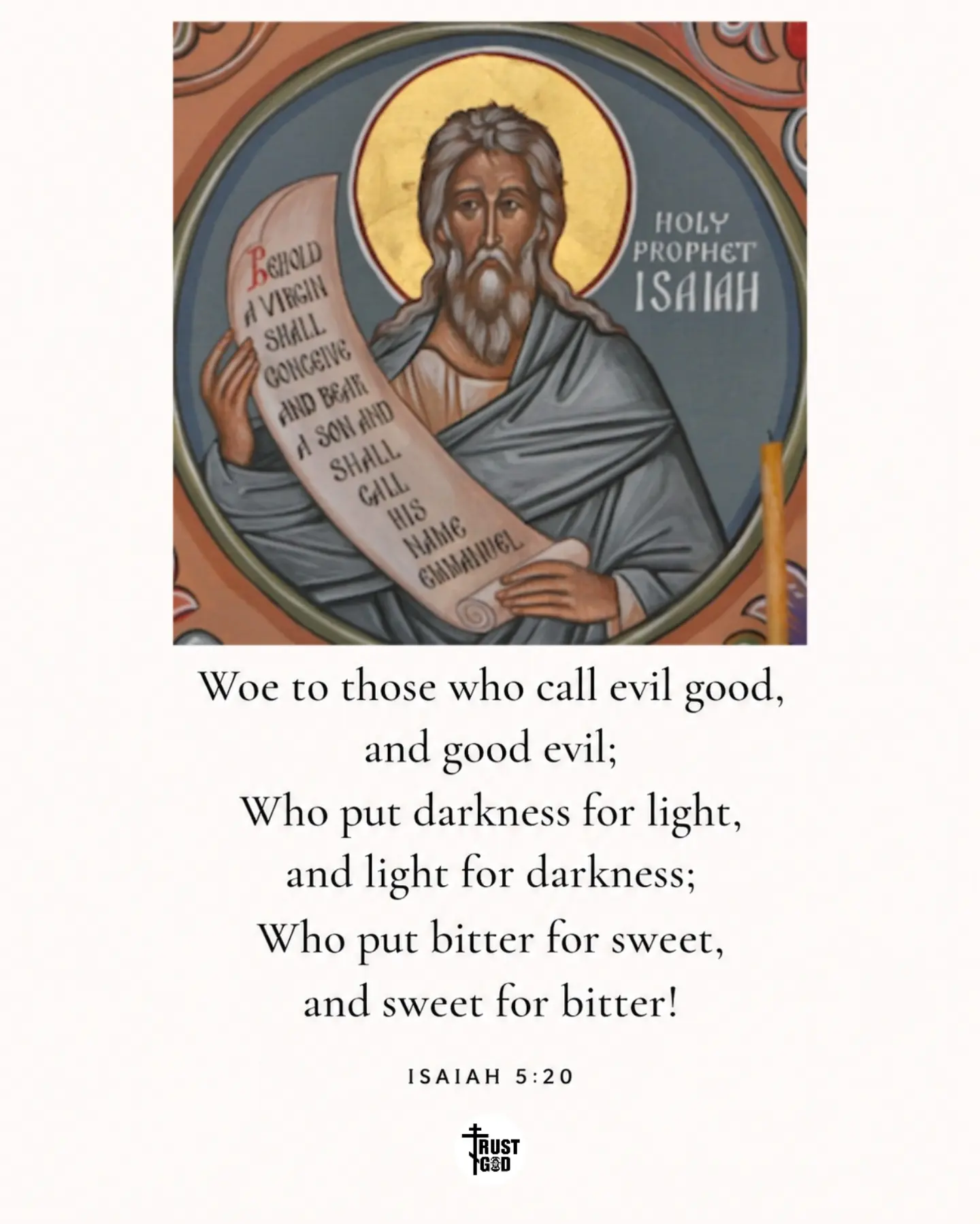
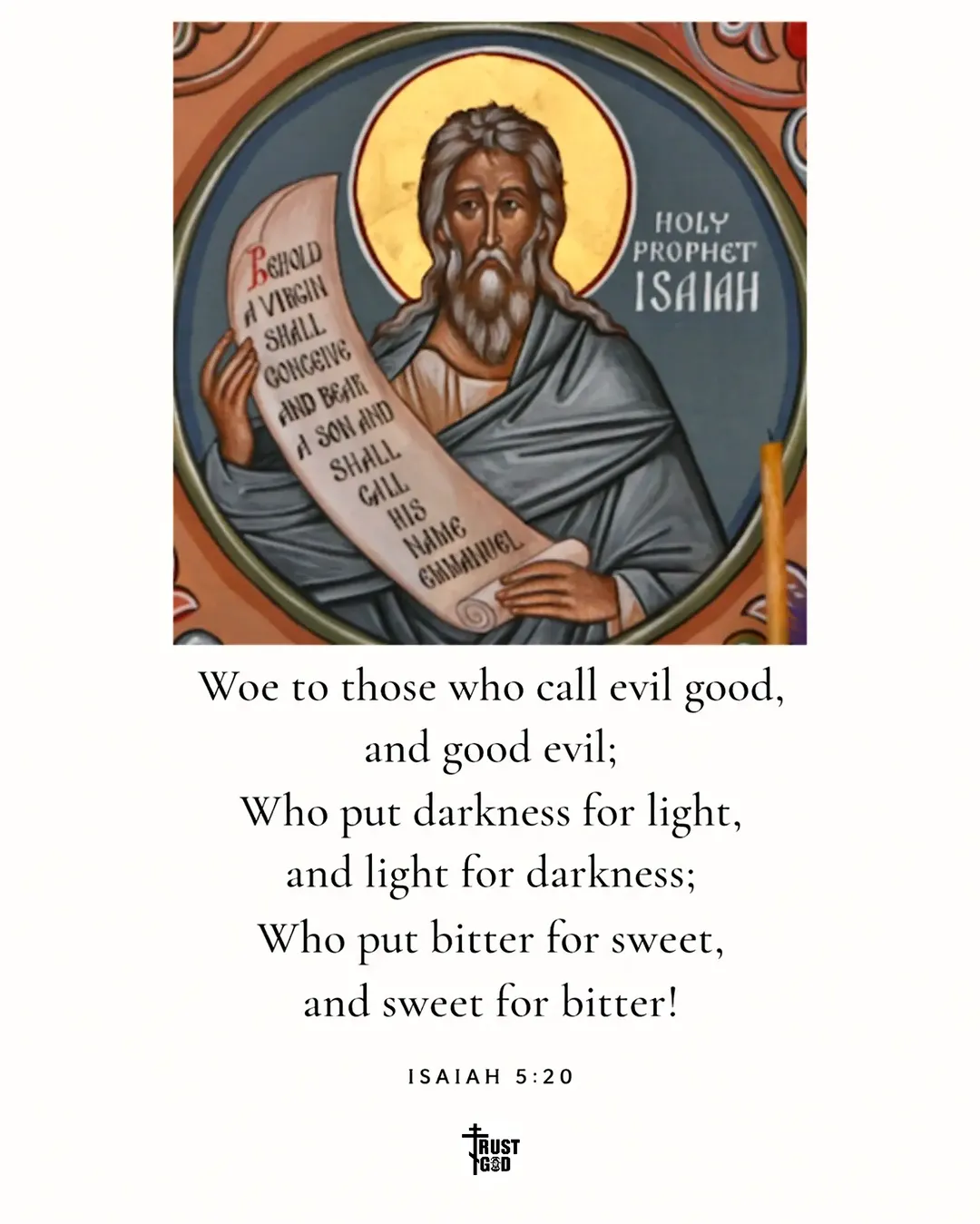
It quotes Isaiah 5:20 on calling evil good and good evil, and includes the full text of 2 Timothy 3:1-5 describing perilous last days: lovers of self, covetous, boasters, proud, blasphemers, disobedient to parents, unthankful, unholy, without natural affection, trucebreakers, false accusers, incontinent, fierce, despisers of good, traitors, heady, highminded, lovers of pleasures more than lovers of God, having a form of godliness but denying its power.

The post concludes with Revelation 2:10: be faithful until death to receive the crown of life.

  • God allows trials to reveal the true condition of hearts and faith.
  • True Christianity requires obedience and sacrifice, not merely verbal confession.
  • Worldly entertainment like GTA VI glorifies sins Christ came to deliver us from.
  • Scripture warns of divisions that distinguish the approved from the lukewarm.
  • Believers must not conform to the world but remain faithful until death.
Read more

The Primitive Church Was Visible and Sacramental, And Why That Leads to Orthodoxy

1:36

The speaker recounts a discussion in which Andrew challenges Wes on whether any modern Christian tradition can be identified with the primitive church. Wes concedes that none of the current churches fully preserve primitive Christianity, a concession the speaker says creates a larger problem. The speaker argues that the primitive church was a visible, sacramental, apostolic body governed by episcopal succession and conciliar authority, not a…

The speaker recounts a discussion in which Andrew challenges Wes on whether any modern Christian tradition can be identified with the primitive church. Wes concedes that none of the current churches fully preserve primitive Christianity, a concession the speaker says creates a larger problem. The speaker argues that the primitive church was a visible, sacramental, apostolic body governed by episcopal succession and conciliar authority, not a vague invisible unity centered on undefined core doctrines.

Orthodoxy claims to have maintained this continuity. The speaker cites St. Ignatius of Antioch: "Wherever the bishop shall appear, there let the multitude also be, even as wherever Jesus Christ is, there is the Catholic Church." This continuity with the first‑century church is the reason the speaker gives for being an Orthodox Christian.

The conversation described portrays Orthodox Christians as having held to the original faith while Catholics changed doctrine and Protestants introduced further reforms. Andrew presses Wes on the assumption that his own tradition can be found in the early church, and Wes struggles to answer. The speaker dismisses a reference to the Coptic Church as a red herring and notes that Wes never identifies which church has continuity with first‑century Christians.

Andrew observes that the speaker's position "feels kind of orthodox." The speaker concludes with the affirmation that this historical and sacramental continuity is exactly why they are Orthodox, ending with "All glory to God."

Key moments

  1. The speaker describes a conversation where Orthodox Christians are portrayed as having held true while Catholics changed doctrine, then Protestants changed it further through successive reforms.
  2. Andrew challenges Wes's implicit assumption that his own tradition can be identified within the early church, and Wes struggles to answer.
  3. Wessentially says that none of the current churches actually preserve primitive Christianity, which the speaker says creates a bigger problem.
  4. The speaker argues the primitive church was a visible sacramental apostolic church with episcopal succession and conciliar authority, not a vague invisible body united around undefined core doctrines.
  5. Orthodoxy claims to have preserved this continuity, and the speaker notes Andrew's observation that this position 'feels kind of orthodox.'
  6. The speaker dismisses the Coptic Church reference as a red herring and notes Wes never answers which church has continuity with first-century Christians.
  7. The speaker quotes St. Ignatius of Antioch: 'Wherever the bishop shall appear, there let the multitude also be, even as wherever Jesus Christ is, there is the Catholic Church.'
  8. The speaker concludes that this continuity with the primitive church is exactly why they are an Orthodox Christian, ending with 'All glory to God.'
8 opinions in the discussion What on earth does "Jesus' house in Cairo" have to do with figuring out which church is the true one? St. Peter's church sits in Rome, and that doesn't make papism true Read the discussion

Archimandrite Athanasios Mitilineos identifies Moscow as Babylon-Rome in Revelation homily

In his 68th homily on the Book of Revelation, Archimandrite Athanasios Mitilineos addresses the historical claim that Moscow became the Third Rome after the fall of Constantinople, which he refers to as New Rome. He acknowledges that Orthodox Moscow did claim this title, but he argues that it fulfilled the role in an evil sense. Drawing on the imagery of the Evangelist John, the archimandrite identifies this Third Rome with Babylon-Rome, the…

In his 68th homily on the Book of Revelation, Archimandrite Athanasios Mitilineos addresses the historical claim that Moscow became the Third Rome after the fall of Constantinople, which he refers to as New Rome. He acknowledges that Orthodox Moscow did claim this title, but he argues that it fulfilled the role in an evil sense. Drawing on the imagery of the Evangelist John, the archimandrite identifies this Third Rome with Babylon-Rome, the apocalyptic symbol of a power opposed to God.

He states that in this capacity Moscow contributed its share to the shedding of the blood of the martyrs and saints of Jesus Christ, noting that many were put to death precisely because they believed in Christ. The homily presents a critical eschatological reading of the Third Rome doctrine, contrasting the traditional triumphalist interpretation with a warning that the historical reality aligned with the biblical figure of persecution.

  • Archimandrite Athanasios Mitilineos delivers the 68th homily on Revelation.
  • He addresses the claim that Moscow became the Third Rome after the fall of New Rome.
  • He argues Moscow fulfilled this role in an evil sense, identifying it with Babylon-Rome.
  • He states this Third Rome contributed to the blood of martyrs and saints of Jesus Christ.
  • He notes many were put to death for their faith in Christ under this power.
Read more

GTA 6 and the Orthodox call to reject worldly vice for theosis

The post uses the anticipated release of Grand Theft Auto 6 to examine how entertainment shapes desires and conscience, especially in children. The author argues that the game's portrayal of money, lust, violence, drugs, and rebellion as success reflects the spirit of the fallen world, which presents passions as freedom and slavery to sin as happiness. This spirit is contrasted with Orthodox teaching: Jesus Christ became man to heal wounded…

The post uses the anticipated release of Grand Theft Auto 6 to examine how entertainment shapes desires and conscience, especially in children. The author argues that the game's portrayal of money, lust, violence, drugs, and rebellion as success reflects the spirit of the fallen world, which presents passions as freedom and slavery to sin as happiness.

This spirit is contrasted with Orthodox teaching: Jesus Christ became man to heal wounded human nature, conquer sin and death, and restore communion with God. Through repentance, prayer, fasting, the Holy Mysteries, and divine grace, believers are called to sanctification and theosis (deification), becoming partakers of divine life by grace, as Saint Athanasius taught: "For He was made man that we might be made God."

The post emphasizes spiritual watchfulness (nepsis), guarding the senses against everything that draws the heart away from Christ. It cites Romans 12:2, James 4:4, 1 John 2:15-17, Isaiah 5:20, and 2 Timothy 3:1-5. Extensive lists pair vices, pride, lust, greed, hatred, revenge, violence, love of luxury, blasphemy, despair, with corresponding virtues, humility, chastity, generosity, love, forgiveness, peace, simplicity, reverence, hope.

The message addresses lukewarm Christians who profess faith while embracing worldly passions, urging them to wake up and pursue transformation in Christ rather than conformity to the world. The destination is not Vice City but the Kingdom of God.

  • GTA 6 exemplifies a culture that glorifies money, lust, violence, and rebellion as success.
  • The fallen world presents passions as freedom; Christ came to heal human nature and restore communion with God.
  • Orthodox spiritual life requires nepsis, guarding senses, thoughts, and heart against the passions.
  • Extensive vice-virtue lists contrast pride with humility, lust with chastity, greed with generosity, hatred with love, violence with peace, and love of the world with love of God.
  • The call is to lukewarm Christians: repent, pursue theosis, and prepare for the eternal Kingdom, not for a virtual Vice City.
Read more

Persecution of Christians in the Holy Land and the theology of Christian Zionism

The post presents a series of arguments against Christian support for the modern state of Israel. It opens with statistics from 2025 documenting 155 anti-Christian incidents in Israel and East Jerusalem, including 61 physical attacks, 52 attacks on church properties, 28 harassment incidents, and 14 defacements of Christian signage. It cites two specific attacks on churches in Gaza: the October 2023 airstrike on the Greek Orthodox Church of St.…

The post presents a series of arguments against Christian support for the modern state of Israel. It opens with statistics from 2025 documenting 155 anti-Christian incidents in Israel and East Jerusalem, including 61 physical attacks, 52 attacks on church properties, 28 harassment incidents, and 14 defacements of Christian signage.

It cites two specific attacks on churches in Gaza: the October 2023 airstrike on the Greek Orthodox Church of St. Porphyrios compound that killed civilians sheltering there, and the July 2025 Israeli tank fire on Holy Family Catholic Church that killed three people. The post then references declassified Israeli military documents regarding a 1948 biological warfare campaign, code-named Cast Thy Bread, that contaminated Palestinian water supplies in villages including the predominantly Christian village of Eilabun in the Galilee, citing Israeli historians.

The theological section argues that Christianity predates Rabbinic Judaism, noting that the Church inherited the Septuagint from Jewish scholars, while the Masoretic text was standardized around the tenth century. It traces modern Christian Zionism to John Nelson Darby's dispensationalism in the 1830s, the 1909 Scofield Reference Bible, the founding of AIPAC in the 1950s, and the 2006 formation of Christians United for Israel.

The post contrasts Genesis 12:3 with Paul's teaching that those in Christ are Abraham's offspring, asserting that the Apostolic Church has understood itself as the fulfillment of Israel for two thousand years.

  • 155 anti-Christian incidents documented in Israel and East Jerusalem in 2025, including attacks on clergy and church properties
  • Greek Orthodox Church of St. Porphyrios in Gaza struck by airstrike in October 2023; Holy Family Catholic Church hit by tank fire in July 2025
  • Declassified documents allege 1948 Israeli biological warfare campaign contaminated water in Christian village of Eilabun and other locales
  • Argument that Christianity is older than Rabbinic Judaism and the Church received the Septuagint before the Masoretic text was standardized
  • Christian Zionism traced to 19th-century dispensationalism, Scofield Bible, and modern political lobbying groups
8 opinions in the discussion Even if it were only Muslims getting bombed we should still care btw. We are all God's creations! Even when we don't agree with their religion. Read the discussion

One Orthodox Church or many? A response to the claim of 14 separate churches

The video presents a claim that there is no single Eastern Orthodox Church but rather 14 separate churches corresponding to 14 patriarchs, which disagree on governance, doctrine, and sacraments. The claim cites Russian theologian Vladimir Solovyov, who said that on the day the Russian and Greek churches formally break, the world will see the ecumenical Eastern Church is a fiction and only isolated national churches exist. The speaker echoes this…

The video presents a claim that there is no single Eastern Orthodox Church but rather 14 separate churches corresponding to 14 patriarchs, which disagree on governance, doctrine, and sacraments. The claim cites Russian theologian Vladimir Solovyov, who said that on the day the Russian and Greek churches formally break, the world will see the ecumenical Eastern Church is a fiction and only isolated national churches exist. The speaker echoes this view, calling it the on-the-ground reality.

The speaker then responds that the claim is intellectually dishonest and false. Not every autocephalous church is headed by a patriarch, and autocephaly means self-government within a wider communion, not independent denominations. The churches together constitute the Orthodox Catholic Church.

Breaks in communion between major sees are not unprecedented; Rome and Constantinople were out of communion for 35 years during the Great Schism. The Orthodox claim is that the one Church exists as a communion of local apostolic churches sharing the same faith, sacraments, and episcopacy, and a rupture does not entail that there is no communion.

Saint Cyprian of Carthage is cited: the episcopate is one, each part held by each one for the whole, and the Church is one, spread abroad into a multitude.

Key moments

  1. 0:00 The claim is made that there is no Eastern Orthodox Church, only 14 Eastern Orthodox Churches because there are 14 patriarchs, and they are not in agreement on governance, doctrine, or sacraments between the Russians and the Greeks.
  2. 0:00 A Russian theologian, Vladimir Solovyov, is quoted saying that on the day the Russian and Greek churches formally break, the world will see the ecumenical Eastern Church is a fiction and only isolated national churches exist.
  3. 0:30 The speaker echoes the theologian's view that there is no Orthodox Church, only Orthodox Churches, and says this is the on-the-ground reality.
  4. 1:02 The speaker responds that the claim there are 14 Orthodox Churches because there are 14 patriarchs is intellectually dishonest and false, because not every autocephalous church is headed by a patriarch.
  5. 1:02 Autocephaly means self-government within the wider communion of the Church, not multiple separate churches as independent denominations; the churches together constitute the Orthodox Catholic Church.
  6. 1:37 Breaks in communion between major sees are not unprecedented, as Rome and Constantinople were out of communion for 35 years during the Great Schism.
  7. 1:37 The Orthodox claim is that the one church exists as a communion of local apostolic churches sharing the same faith, sacraments, and episcopacy, and a rupture does not entail that there is no communion.
  8. 1:37 Saint Cyprian of Carthage is cited: the episcopate is one, each part held by each one for the whole, and the Church is one, spread abroad into a multitude.
21 opinions in the discussion Never bring up the western schism to Roman Catholics, the time the west had 3 popes at once, with canonized saints in their own church who backed different sides of it. Read the discussion

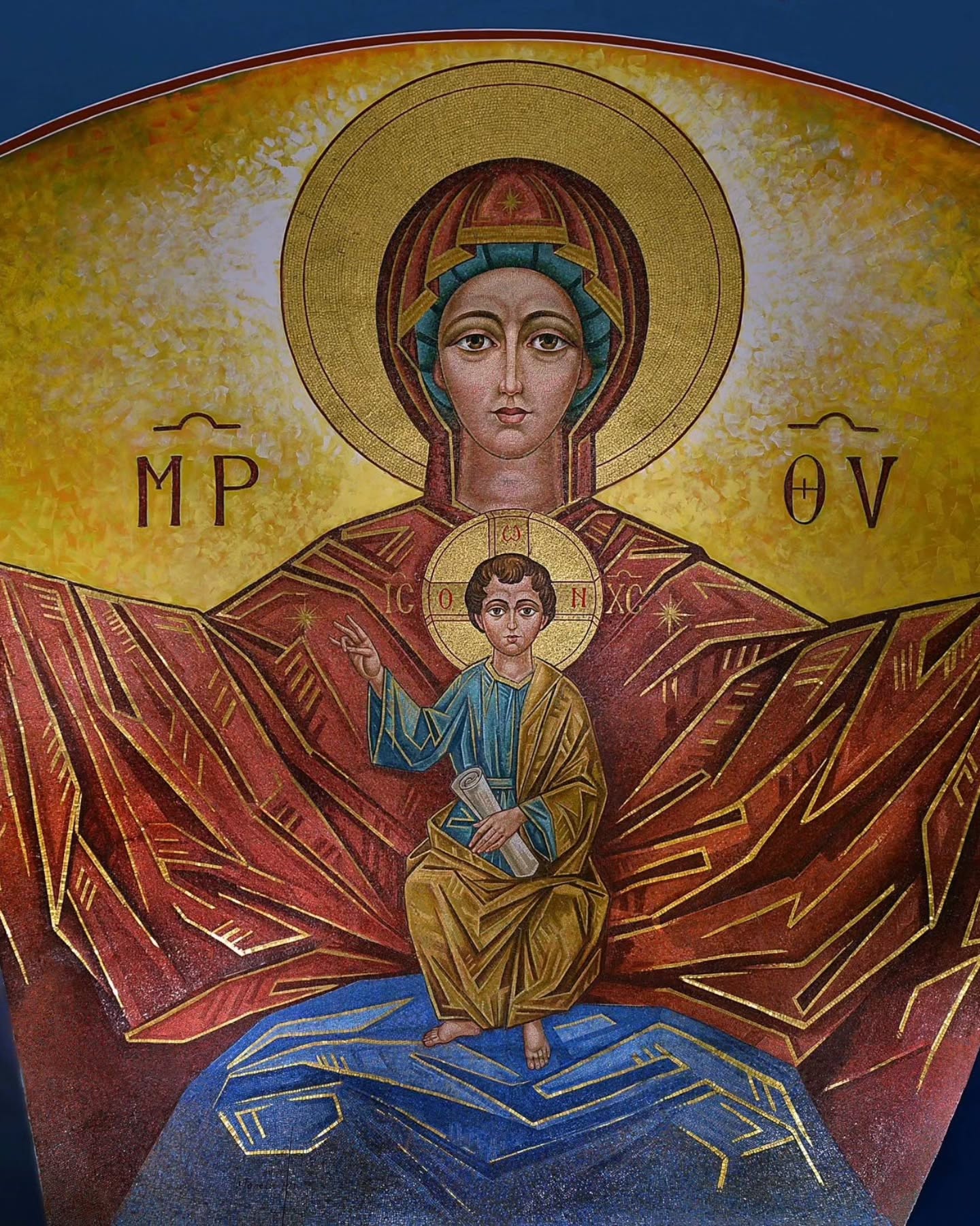
The Theotokos prayer with its scriptural foundations

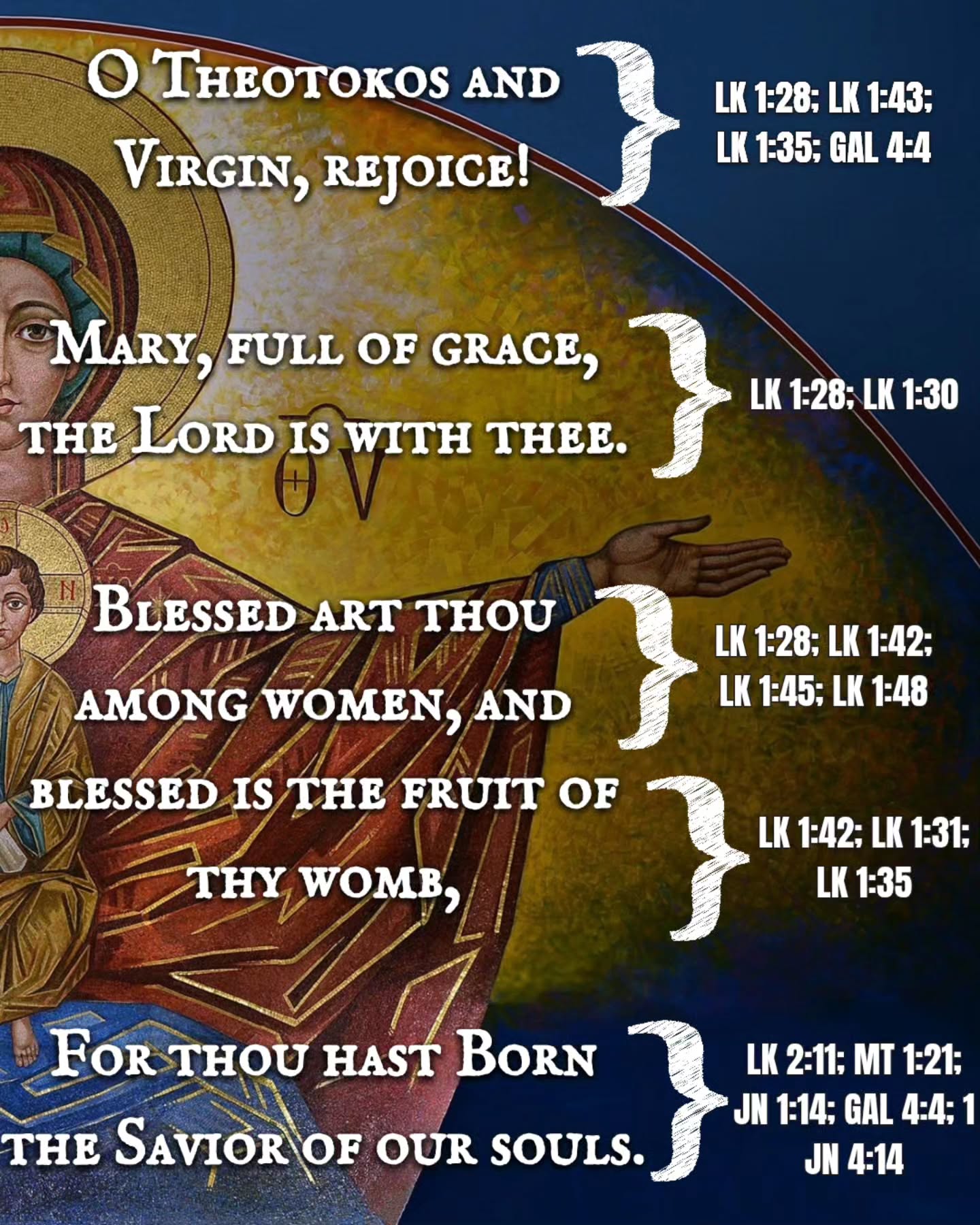
The post presents the hymn "O Theotokos and Virgin, rejoice" alongside the biblical verses that form each phrase. The prayer combines Gabriel's greeting (Luke 1:28), Elizabeth's words (Luke 1:42), the angel's explanation of the Incarnation (Luke 1:35), and Paul's statement on the Son born of a woman (Galatians 4:4). The conclusion "For thou hast borne the Savior of our souls" draws from Luke 2:11, Matthew 1:21, John 1:14, Galatians 4:4, and 1…

The post presents the hymn "O Theotokos and Virgin, rejoice" alongside the biblical verses that form each phrase. The prayer combines Gabriel's greeting (Luke 1:28), Elizabeth's words (Luke 1:42), the angel's explanation of the Incarnation (Luke 1:35), and Paul's statement on the Son born of a woman (Galatians 4:4). The conclusion "For thou hast borne the Savior of our souls" draws from Luke 2:11, Matthew 1:21, John 1:14, Galatians 4:4, and 1 John 4:14. The image also shows the standard icon inscriptions MP OV (Mother of God) and IC XC (Jesus Christ).

  • The prayer joins the Annunciation and Visitation greetings with a Christological ending
  • Each phrase is linked to its scriptural source in Luke, Matthew, John, Galatians, and 1 John
  • Icon abbreviations MP OV and IC XC appear in the image
  • The text shows the biblical basis for calling Mary "full of grace" and "Theotokos"
  • The final line summarizes the Incarnation as the reason for the Virgin's veneration
Read more