WeOrthodox
EN UA

Orthodox posts, videos and discussions

We follow Orthodox channels, communities and blogs across the web, summarise every post and video, and highlight the conversations with real substance.

Orthodox Atonement: Christ Heals Human Nature, Not Penal Substitution

The speaker begins by advising against conversion to Eastern Orthodoxy. He explains that Eastern Orthodox Christians reject penal substitution, the doctrine that Jesus bore the Father's punishment for human sins on the cross. The speaker clarifies that Orthodox theology does not deny the crucifixion but interprets it differently: human nature was corrupted by sin, and Christ assumed that corrupted nature to heal it through his death and…

The speaker begins by advising against conversion to Eastern Orthodoxy. He explains that Eastern Orthodox Christians reject penal substitution, the doctrine that Jesus bore the Father's punishment for human sins on the cross. The speaker clarifies that Orthodox theology does not deny the crucifixion but interprets it differently: human nature was corrupted by sin, and Christ assumed that corrupted nature to heal it through his death and resurrection.

He cites St. Gregory the Theologian's maxim: "What is not assumed is not healed." According to this view, Christ suffered willingly out of love to save humanity from sin and death, not because the Father required punishment. The speaker argues that penal substitution misunderstands the entire purpose of Christ's sacrifice.

He states that Orthodox Christians believe Jesus died on the cross, but not as a penal substitute; rather, Christ's assumption of fallen humanity enables its restoration. The purpose of the incarnation and crucifixion is to heal human nature from within, saving people from sin and death by divine love, not by satisfying divine wrath.

Key moments

  1. The speaker says people should not convert to Orthodoxy.
  2. Eastern Orthodox reject penal substitution, Jesus did not take punishment from the Father for our sins.
  3. Orthodox believe Jesus died on the cross but not as penal substitution.
  4. Penal substitution misunderstands the entire purpose of Christ's sacrifice.
  5. Human nature was corrupted by sin and Christ assumed it to heal it through his death and resurrection.
  6. St. Gregory the Theologian said: what is not assumed is not healed.
  7. Christ willingly suffered out of love, not because the Father needed to punish him.
  8. The purpose was to save us from sin and death.

Fr. Christodoulos Papadeas: Humility as the Foundation of Christian Life

Fr. Christodoulos Papadeas: Humility as the Foundation of Christian Life 3:16

Fr. Christodoulos Papadeas of the Greek Orthodox Metropolis of Denver teaches that humility is not optional but the foundation of prayer, repentance, love, and perseverance. He describes humility as a gift that must be cultivated through obedience, service, confession, and the patient acceptance of life's difficulties. Growing in humility gives a true sense of proportion: remembering that we are one among millions, members of the same human…

Fr. Christodoulos Papadeas of the Greek Orthodox Metropolis of Denver teaches that humility is not optional but the foundation of prayer, repentance, love, and perseverance. He describes humility as a gift that must be cultivated through obedience, service, confession, and the patient acceptance of life's difficulties. Growing in humility gives a true sense of proportion: remembering that we are one among millions, members of the same human family and the same body of Christ.

This awareness does not diminish the person but opens the heart to brotherhood, compassion, and unity. Christ is the supreme image of humility, obedient to the Father and willing to endure the Cross for the life of the world. In marriage, monasticism, or daily service, humility teaches faithfulness, self-giving, and perseverance until the end.

The reflection adds that putting oneself under a spiritual father's guidance, learning to serve others, and recognizing one's place among millions foster humility. Accepting difficulties and illnesses, offering sincere confession before a loving spiritual father, and the daily mutual submission in marriage further develop this virtue.

The priest honors couples married seventy and forty years as examples of enduring humility, while noting that some abandon the path through divorce or leaving monastic life. The goal is to remain faithful until the end.

Key moments

  1. 0:00 Humility is a gift everyone likely has but must cultivate, beginning with putting oneself under a spiritual father's guidance and learning to serve others by putting oneself second.
  2. 0:32 Realizing we are one among millions of people, brothers with every human being, allows us to be one with everyone as Christ desires.
  3. 1:04 Christ showed great humility by being obedient to the Father and accepting crucifixion, and accepting our own life difficulties and illnesses produces humility.
  4. 1:35 Sincere confession before a spiritual father who loves us and does not judge helps us grow in humility, as St. Porphyrios and St. Amphilochios taught.
  5. 2:06 A spiritual father who has gone before us in life's difficulties, with his knowledge and prayer life, helps us grow, just as husband and wife learn humility by giving into each other.
  6. 2:36 The speaker met a couple married 70 years and another married 40 years, honoring their humility in staying together, while noting others drop out through divorce or leaving monastic life, and the goal is to stay in the game until the end.

St. Nikolai Velimirovich: Human praise and punishment versus God's judgment

The post shares a passage from the Missionary Letters of St. Nikolai Velimirovich, a Serbian bishop and theologian of the twentieth century. The text contrasts human and divine responses to good and evil actions. It states that if a person does evil, people may praise them, but God will punish them. If a person does good, people may punish them, but God will reward them. The saint points to Christ as the definitive example: Christ did only good,…

The post shares a passage from the Missionary Letters of St. Nikolai Velimirovich, a Serbian bishop and theologian of the twentieth century. The text contrasts human and divine responses to good and evil actions. It states that if a person does evil, people may praise them, but God will punish them.

If a person does good, people may punish them, but God will reward them. The saint points to Christ as the definitive example: Christ did only good, yet people crucified Him. The passage concludes with a direct exhortation not to look to people for validation or fear their reaction, but to turn toward God. The quote stands alone without additional commentary or discussion in the source.

  • Evil deeds may earn human praise but incur divine punishment
  • Good deeds may incur human punishment but earn divine reward
  • Christ exemplifies this pattern: He did only good and was crucified
  • The faithful should not seek human approval or fear human judgment
  • The proper orientation is to turn toward God
Read more

Speaker contrasts Nostra Aetate with canons forbidding prayer with heretics

The speaker, an Orthodox Christian, argues that the Roman Catholic Church contradicts itself. He notes that Nostra Aetate declares Muslims adore the one God, only years after the same church claimed to expel anyone who departs from its magisterium. He adds that Catholicism now recognizes Orthodox sacraments, apostolic succession and a valid priesthood, yet forbids Orthodox faithful from receiving Eucharist, confessing to Catholic priests or…

The speaker, an Orthodox Christian, argues that the Roman Catholic Church contradicts itself. He notes that Nostra Aetate declares Muslims adore the one God, only years after the same church claimed to expel anyone who departs from its magisterium. He adds that Catholicism now recognizes Orthodox sacraments, apostolic succession and a valid priesthood, yet forbids Orthodox faithful from receiving Eucharist, confessing to Catholic priests or praying with the heterodox.

Against this he sets the canons: any clergyman or layman who enters a synagogue of Jews or heretics to pray is to be deposed and excommunicated, no one may join in prayer with heretics or schismatics, and one must not accept blessings from heretics. He cites Saint Photios the Great, who calls the Filioque a Filioque of godlessness, and Saint Gregory Palamas, who calls it polytheist and demonic, and mentions Saint Paisios, who would not pray with heretics and named the Latin Church as heretical.

The speaker rejects the claim that Muslims and Orthodox worship the same God, arguing that a different ecclesiology amounts to a Nestorian declaration. He also quotes a dialogue in which a saint tells a Muslim that since Christ is the judge of the human race, prayers must be addressed to him as God, which displeased the Muslim, and warns against reading that passage as an affirmation of Islam.

The original post itself is combative, accusing Catholics of pride and urging readers to put the truth first, with 'Ecumenism is death. Lord have mercy.'

Key moments

  1. 0:00 Nostra Aetate states that Muslims adore the one God, and the speaker calls this dogmatic, contrasting it with the same church's earlier claim that those who depart from its magisterium are rebels expelled from her children.
  2. 0:34 The Catholic Church now says the Orthodox possess true sacraments, apostolic succession, and a valid priesthood, yet an Orthodox Christian cannot receive Eucharist, confess to a Catholic priest, or pray with the heterodox.
  3. 1:07 The canons state that any clergyman or layman who enters a synagogue of Jews or heretics to pray is to be deposed and excommunicated, that no one shall join in prayer with heretics or schismatics, and that one must not accept blessings from heretics.
  4. 1:22 Heresy is demonic: Saint Photios the Great calls the Filioque of godlessness, and Saint Gregory Palamas calls it polytheist and demonic.
  5. 1:41 Modern saints such as Saint Paisios also held heresy to be demonic and would not pray with heretics, noting the Latin Church as heretical and departed from the body of Christ.
  6. 1:55 The speaker argues that calling Muslim Trinitarian theology different while claiming Nicene Trinitarianism makes no sense, since the church is the body of Christ and a different ecclesiology is a Nestorian declaration.
  7. 2:11 He quotes a dialogue in which the saint tells a Muslim that since Christ is the judge of all the human race, prayers must be addressed to him as God, inseparable from the Father as his natural Word, and the Muslim was displeased by this.
  8. 2:42 He warns that anyone who reads this passage as affirming the Muslim is lying and misrepresenting the book, and tells them to read it, since it is short.
33 opinions in the discussion Why am I not surprised you'd drop a hate-filled video on the Lord's day? God bless you brother! We love you and we pray for your repentance. Read the discussion

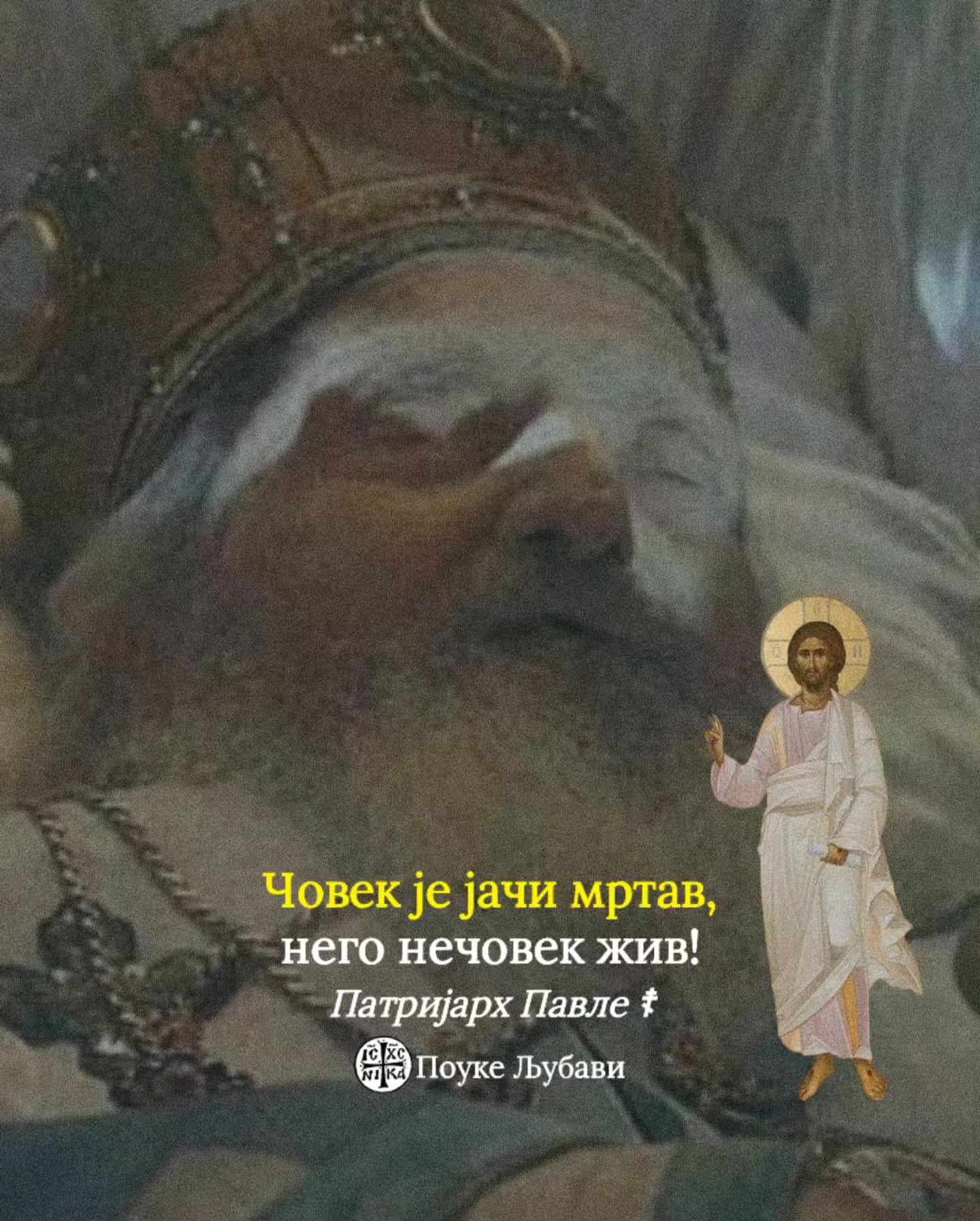
Patriarch Pavle commemorated 17 years after repose with quote on human strength

The post marks 17 years since the repose of Serbian Patriarch Pavle, referred to as a "living saint" and "grandfather Paja." It notes that his grave is located in the portico of the Monastery of the Holy Archangels Michael and Gabriel (Rakovica) in Belgrade. The post includes a quote attributed to Patriarch Pavle: "Man is stronger dead than a non-human alive!" The text also states that Christ gave not only an example by His life but also the…

The post marks 17 years since the repose of Serbian Patriarch Pavle, referred to as a "living saint" and "grandfather Paja." It notes that his grave is located in the portico of the Monastery of the Holy Archangels Michael and Gabriel (Rakovica) in Belgrade. The post includes a quote attributed to Patriarch Pavle: "Man is stronger dead than a non-human alive!"

The text also states that Christ gave not only an example by His life but also the strength to follow His path. The image accompanying the post bears the title "Teachings of Love."

  • 17th anniversary of Patriarch Pavle's repose noted.
  • Grave located at Rakovica Monastery in Belgrade.
  • Quote: "Man is stronger dead than a non-human alive!"
  • Christ gives both example and strength to follow Him.
  • Post includes image titled "Teachings of Love."
Read more

Some priests are doing a terrible job; is my resentment a sin?

I came to Orthodoxy on my own after research. I contacted a priest in my home country who offered online catechism, but the language barrier made it chaotic. Online teaching is poor anyway. He told me to attend Divine Liturgy where I live now. I asked the local priest to become a catechumen. He refused, saying I knew enough. He acted as if he had never heard of a catechumen class; I even used a translator thinking he didn't understand the word.…

I came to Orthodoxy on my own after research. I contacted a priest in my home country who offered online catechism, but the language barrier made it chaotic. Online teaching is poor anyway.

He told me to attend Divine Liturgy where I live now. I asked the local priest to become a catechumen. He refused, saying I knew enough. He acted as if he had never heard of a catechumen class; I even used a translator thinking he didn't understand the word. Later I discovered they do have catechumen classes, but only for children.

Two months later I was baptized very quickly. I didn't even know how to cross my hands to receive the Eucharist the first time. I asked the priest for a conversation because I was confused, lost, and still struggling with many vices. I asked twice, and in case it was a language issue I asked another parishioner who spoke his language.

She replied, "if he says no, I hope you don't feel bad about it," but she never came back with his answer. I didn't know priests could refuse spiritual guidance to someone they baptized, or to anyone at all.

It has been a full year and this priest has never had a one-on-one conversation with me. I am always surprised he even remembers my name when giving me the Eucharist.

I learn everything from YouTube videos, observation, and occasional talks with Orthodox friends. I have never been able to overcome my vices and have received zero spiritual guidance on them. You would think a priest would be concerned about someone confessing the same sin almost every Sunday for a year, but apparently not.

I will eventually move back, but the situation there is no better. There is only one Orthodox church in my home country, and the priest travels among three or four countries every other week because there is no other priest. I doubt we even have weekly Divine Liturgy. He also never gave me guidance beyond the initial "come to Orthodoxy" phase.

Today after confession I found myself staring at the back of my priest and felt resentment. It shocked me because until that moment I hadn't realized how much it bothered me that even simple things like taking a blessing after communion were never taught to me, and how much I feel absolutely lost, confused, and lonely. When the resentment started I panicked: Am I sinning? Am I wrong to feel resentment?

Should I abstain from the Eucharist today? Do I need to confess to that same priest next Sunday that I feel resentment toward him? Should I stop coming to church? I stopped myself there. I know Orthodoxy is the truth. I will leave only with my head in a tomb, but something is deeply wrong here, isn't it?

You can't just be so willing to take converts and not put in any work. Somebody is supposed to be telling these priests this, right?

Do priests not fear God? What are you going to tell Him about the flock you did not guide? Is this not an issue?

Please don't waste time telling me to talk to the priest about this. I have tried several times and he has never engaged. Early on I even messaged him. When I asked about his lack of engagement I was told, "It's just him for this parish, he's busy and it's a lot of people." It's about a hundred people, and you mean to tell me he's so busy he hasn't guided someone he baptized even once in a year? Three hundred sixty-five days. Okay, if you say so.

So... is this a sin and do I need to confess it to him next time?

  • Some priests are doing a terrible job with converts.
  • I was baptized without proper catechesis or instruction on basic practices.
  • My priest refuses to give me any spiritual guidance despite my repeated requests.
  • After a year of neglect I feel resentment toward him; is that a sin?
  • Do priests not fear God for failing to guide their flock?
61 opinions in the discussion Did you have a sponsor (godparent) when you were baptized? Besides the priest, I think that person should be the one stepping up to guide you along the way, at least in the non-spiritual… Read the discussion

Saint Ephraim of Katounakia wept at the word 'Father'

Elder Philimon, dikaios of the Holy Cenobitic Skete of the Prophet Elijah on Mount Athos, speaks about the relationship we should have with Christ, using Saint Ephraim of Katounakia as the example. When Saint Ephraim went to Vatopedi and was given the Creed to recite, he said 'I believe in one God, Father' and at the word 'Father' he burst into tears and could not continue, because he felt God as his father. Someone else had to read the rest for…

Elder Philimon, dikaios of the Holy Cenobitic Skete of the Prophet Elijah on Mount Athos, speaks about the relationship we should have with Christ, using Saint Ephraim of Katounakia as the example. When Saint Ephraim went to Vatopedi and was given the Creed to recite, he said 'I believe in one God, Father' and at the word 'Father' he burst into tears and could not continue, because he felt God as his father.

Someone else had to read the rest for him. The elder contrasts this with our own prayer, in which the mind wanders to mundane thoughts, and says that our relationship with God should be like that of the saint: to say 'Father' and to weep, that is, to feel Him.

Key moments

  1. 0:00 Saint Ephraim went to Vatopedi and was given the Creed to recite.
  2. 0:00 When he said 'I believe in one God, Father', he burst into tears at the word 'Father' and could not continue, because he felt God as a father, and someone else read the rest.
  3. 0:30 When we recite the Creed our mind wanders to everyday concerns, so we are not really praying.
  4. 0:30 Our relationship with God should be such that we say 'Father' and weep, that is, we feel Him.
Read more
Prayer Orthodoxy ® Instagram

Nativity Fast Begins November 15: Fasting as Preparation for Christ's Birth

The post announces the beginning of the Nativity Fast on November 15, a forty-day period of preparation for the feast of Christ's Nativity. It explains that fasting expresses the faithful's longing for Christ and readies the heart to receive His grace through prayer, repentance, and almsgiving. The text cites Luke 5:33-39, where the Pharisees and disciples of John question Jesus about why His disciples eat and drink while they fast often and…

The post announces the beginning of the Nativity Fast on November 15, a forty-day period of preparation for the feast of Christ's Nativity. It explains that fasting expresses the faithful's longing for Christ and readies the heart to receive His grace through prayer, repentance, and almsgiving. The text cites Luke 5:33-39, where the Pharisees and disciples of John question Jesus about why His disciples eat and drink while they fast often and make prayers.

Jesus responds that the friends of the bridegroom cannot fast while the bridegroom is with them, but they will fast when He is taken away. He then gives two parables. First, no one sews a piece from a new garment onto an old one, because the new tears the old and the patch does not match. Second, no one puts new wine into old wineskins, or the wine bursts the skins and is spilled; new wine must go into new wineskins so both are preserved.

Jesus adds that no one who has drunk old wine immediately desires new, for he says the old is better. The post applies these images to the Nativity Fast, suggesting the season renews the heart like new wineskins to receive the Savior. The message appears in both English and Greek, and is attributed to Prayer Orthodoxy.

Key moments

  1. 0:00 The Pharisees and disciples of John ask Jesus why his disciples eat and drink while they fast often and make prayers.
  2. 0:00 Jesus replies that the friends of the bridegroom cannot fast while the bridegroom is with them, but they will fast when the bridegroom is taken away.
  3. 0:30 Jesus gives the parable of the new garment: a piece from a new garment tears the old and does not match it.
  4. 0:30 Jesus gives the parable of the wineskins: new wine bursts old wineskins, spilling the wine and ruining the skins; new wine must go into new wineskins so both are preserved.
  5. 0:30 Jesus says no one who has drunk old wine immediately desires new, for he says the old is better.
Read more
Prayer Orthodoxy ® with thegreekguy Instagram

Greek Orthodox visitor describes Divine Liturgy at Saint Sava Cathedral in Belgrade

The author, a Greek Orthodox Christian, recounts attending Sunday Divine Liturgy at Saint Sava Cathedral in Belgrade. He notes the worship resembles Greek practice but with distinct differences: the nave has no chairs or pews, so the congregation stands throughout the service. The chanting combines a solo psaltis with a large choir and uses no organ accompaniment, which he considers among the best he has heard. The interior iconography inspires…

The author, a Greek Orthodox Christian, recounts attending Sunday Divine Liturgy at Saint Sava Cathedral in Belgrade. He notes the worship resembles Greek practice but with distinct differences: the nave has no chairs or pews, so the congregation stands throughout the service. The chanting combines a solo psaltis with a large choir and uses no organ accompaniment, which he considers among the best he has heard.

The interior iconography inspires humility and awe. A striking detail is that the icon of Christ beneath the central dome bears its inscription in Greek rather than Serbian. The author recommends that any Orthodox Christian visiting Belgrade attend the Sunday Liturgy at Saint Sava. The post was filmed by Chris Benis, identified as a TNH/EK journalist.

  • No seating; congregation stands for the entire Liturgy
  • Chanting blends a psaltis with a large choir, no organ
  • Iconography described as stunning, evoking humility and awe
  • Christ Pantocrator icon under the dome inscribed in Greek
  • Author recommends the Sunday Liturgy to visiting Orthodox Christians
Read more

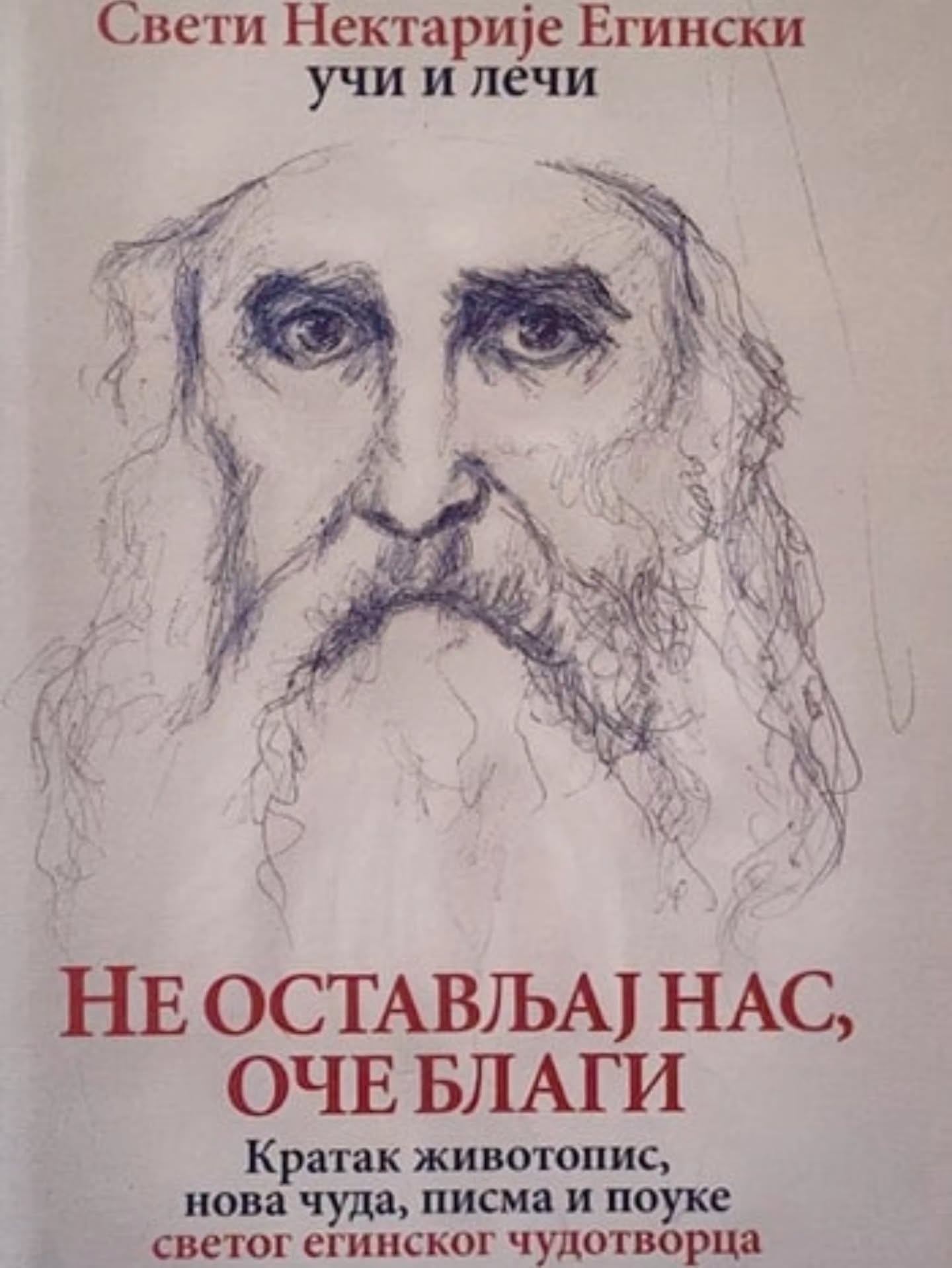
St. Nektarios of Aegina: Seek God in the heart with humility

The post shares a quote from St. Nektarios of Aegina urging believers to seek the Lord daily within their own hearts rather than externally. When God is found, the heart becomes His throne and one should stand before Him with fear and reverence like the cherubim and seraphim. The saint emphasizes humility as the path to finding God, noting that the Lord resists the proud but visits those with humble hearts. The accompanying image text references…

The post shares a quote from St. Nektarios of Aegina urging believers to seek the Lord daily within their own hearts rather than externally. When God is found, the heart becomes His throne and one should stand before Him with fear and reverence like the cherubim and seraphim. The saint emphasizes humility as the path to finding God, noting that the Lord resists the proud but visits those with humble hearts.

The accompanying image text references a publication containing a short biography, new miracles, letters, and teachings of the saint.

  • Seek God daily in your heart, not outside it.
  • When God is found, the heart becomes His throne; stand before Him with fear and reverence.
  • Humility is necessary to find the Lord; humble yourself to the ground.
  • God resists the proud but visits and loves the humble of heart.
  • The image promotes a book with a short biography, new miracles, letters, and teachings of St. Nektarios.
Read more

Saint John Chrysostom on the Christian as athlete, soldier, and farmer

Saint John Chrysostom in Homily 3, To the People of Antioch, compares the faithful man to a farmer, a pilot, a soldier, an athlete, and a traveler. The homily teaches that to become an athlete one must strip off worldly affairs and enter the contest; to become a soldier one must put on spiritual weapons and stand in battle against demons. The soul must be cultivated like a field, the body disciplined, and desires subdued so that the vessel is…

Saint John Chrysostom in Homily 3, To the People of Antioch, compares the faithful man to a farmer, a pilot, a soldier, an athlete, and a traveler. The homily teaches that to become an athlete one must strip off worldly affairs and enter the contest; to become a soldier one must put on spiritual weapons and stand in battle against demons.

The soul must be cultivated like a field, the body disciplined, and desires subdued so that the vessel is saved, for an athlete is not crowned unless he competes according to the rules. The faithful must cultivate the soul and cut out the thorns, sow the word of piety and tend it with much care. They must discipline the body and bring it into subjection, subdue the waves of unseemly desires, beat back the storm of wicked thoughts, and save the vessel.

The homily presents spiritual life as active engagement: stripping off worldly cares because it is time for wrestling, putting on spiritual weapons because a difficult war has been arrayed against demons. Each metaphor illustrates a different aspect of the Christian struggle, cultivation, navigation, warfare, athletic contest, and pilgrimage, all requiring deliberate effort and adherence to divine rules.

Key moments

  1. The faithful man is both a farmer and a pilot and a soldier and an athlete and a traveler.
  2. If you are an athlete, you must enter the contest; if you are a soldier, you must stand in the line of battle fully armed.
  3. Strip off the affairs of this life and you have become an athlete; put on the spiritual weapons and you have become a soldier.
  4. Strip yourself of worldly cares for it is the time for wrestling; put on the spiritual weapons for a difficult war has been arrayed for us against demons.
  5. Cultivate your soul and cut out the thorns; sow the world of piety and tend it with much care.
  6. Discipline your body and bring it into subjection; subdue the waves of unseemly desires, beat back the storm of wicked thoughts and save the vessel.
  7. For an athlete is not crowned unless he competes according to the rules.
Read more

Fasting as training for spiritual warfare against Satan

The author writes that Satan seeks to stop spiritual fighting not only through evil acts but by inducing weariness, distraction, comfort, and procrastination. Fasting serves as training for the real battle against temptations such as lust, anger, and pride. By practicing denial for forty days, the soul learns to say no when stronger temptations arise. The speaker in the accompanying video argues that modern Christianity has reduced fasting to a…

The author writes that Satan seeks to stop spiritual fighting not only through evil acts but by inducing weariness, distraction, comfort, and procrastination. Fasting serves as training for the real battle against temptations such as lust, anger, and pride. By practicing denial for forty days, the soul learns to say no when stronger temptations arise.

The speaker in the accompanying video argues that modern Christianity has reduced fasting to a dietary practice, while true fasting is spiritual warfare. The difficulty of fasting stems from a lifetime of indulgence, and the pain of denial is intentional. Saints fasted to become dangerous to the devil, to sin, and to their own flesh, not to be agreeable.

The post urges believers to treat the fast as war, not a diet, and to fight harder when hunger comes rather than give up. The message connects the Nativity Fast to this understanding of spiritual preparation. The video further explains that fasting was never about food but about the soul learning to kill what it loves.

The struggle arises because every desire has been indulged, so saying no hurts, and that pain is the point. The saints fasted to be dangerous to the devil, to sin, and to their own flesh, not to be nice. The author concludes by urging readers to stop treating the fast like a diet and start treating it like war: in war one does not give up because of hunger but fights harder to win.

Key moments

  1. Fasting was never about food; it is about the soul learning to kill what it loves.
  2. The struggle comes because every time you wanted something in life you got it, and now saying no hurts, and that pain is supposed to happen.
  3. The saints fasted to be dangerous to the devil, to sin, and to their own flesh, not to be nice.
  4. Stop treating the fast like a diet and start treating it like war: in war you do not give up because you are hungry, you fight harder to win.
Read more
radioimlemesou Instagram

Metropolitan Athanasios of Limassol: Love without Christ leaves the heart empty

Metropolitan Athanasios of Limassol poses the question of whether the love a person possesses is truly full. He describes a person who loves the entire world and all creation with a heart that burns with affection. Despite the universality and intensity of this love, the metropolitan declares that if Christ is absent, the love is not complete. The place that belongs to Christ is taken by the self. The consequence is that the person has an…

Metropolitan Athanasios of Limassol poses the question of whether the love a person possesses is truly full. He describes a person who loves the entire world and all creation with a heart that burns with affection. Despite the universality and intensity of this love, the metropolitan declares that if Christ is absent, the love is not complete.

The place that belongs to Christ is taken by the self. The consequence is that the person has an external love but does not possess the fullness of love and divine grace. That fullness, he states, is Christ Himself within the heart. The metropolitan then moves to the ultimate outcome: the person remains empty.

The reason is that all human things are condemned to death and do not have eternal life. Only Christ is eternal life, and He alone gives life to all things. The teaching draws a clear line between natural human love, however vast, and the divine life that enters through Christ.

The self that displaces Christ is the fallen human nature that cannot sustain eternal existence. The metropolitan's words warn against the illusion that love for creation can replace communion with the Creator. He affirms that Christ is not merely an example or a teacher but the very source of eternal life who imparts life to everything else.

This perspective reflects the Orthodox conviction that salvation is participation in the life of Christ, not the cultivation of human virtue alone. The passage is brief but carries the weight of pastoral experience and theological precision, reminding the listener that the heart's true fullness depends on the indwelling of Christ.

Key moments

  1. If you love the whole world and all creation but Christ is missing, your self will take Christ's place.
  2. You will have external love but not the fullness of love and divine grace, which is Christ in the heart.
  3. Ultimately, man remains empty because all human things are condemned to death and do not have eternal life.
  4. Only Christ is eternal life and gives life to all things.
Read more
Lives of the Saints 🙏 Instagram

Five Persian Martyrs Who Confessed Christ Before King Shapur

The post recounts the martyrdom of five saints in Persia during the reign of King Shapur in 355. Three royal servants, Akindynos, Pegasius, and Anempodistus, were accused of being Christians. When the king demanded their homeland, they answered that their life and homeland are the Most Holy Trinity. The king ordered them tortured, but they continued singing psalms and praying. Angels appeared to strengthen them, and Christ Himself appeared with…

The post recounts the martyrdom of five saints in Persia during the reign of King Shapur in 355. Three royal servants, Akindynos, Pegasius, and Anempodistus, were accused of being Christians. When the king demanded their homeland, they answered that their life and homeland are the Most Holy Trinity. The king ordered them tortured, but they continued singing psalms and praying.

Angels appeared to strengthen them, and Christ Himself appeared with a face shining like the sun. One tormentor, Aphthonius, witnessed molten lead failing to harm them and cried out, "Great is the God of the Christians!"; he was immediately executed. The king then sealed the three martyrs in leather sacks and threw them into the sea, but they were brought safely to shore.

Another official, Elpidiphorus, openly confessed Christianity and condemned the killing of innocent believers; he was executed alongside approximately seven thousand Christians. Finally, Akindynos, Pegasius, and Anempodistus were thrown into a blazing furnace with twenty-eight soldiers and the king's mother, who had also come to believe in Christ.

There they surrendered their souls to the Lord. The account concludes with a prayer to the holy martyrs of Persia.

  • Three palace servants confess the Trinity as their homeland before King Shapur
  • Angels and Christ appear during their torture; tormentor Aphthonius converts and is executed
  • The three survive being thrown into the sea in sealed sacks
  • Official Elpidiphorus and about seven thousand Christians are executed for confessing Christ
  • The three martyrs die in a furnace with twenty-eight soldiers and the king's mother
Orthodox Life Instagram

Nativity Fast Begins November 15: 40 Days of Preparation for Christ's Birth

The post announces the start of the Nativity Fast on November 15, a 40-day period leading to the Feast of the Nativity on December 25. It explains that this feast is the second Great Despotic Feast of the Orthodox calendar after Great and Holy Pascha. The Church calls the faithful to abstain from meat, fish, dairy products, olive oil, and wine, and to focus more deeply on prayer and almsgiving. This season mirrors a spiritual journey to the cave…

The post announces the start of the Nativity Fast on November 15, a 40-day period leading to the Feast of the Nativity on December 25. It explains that this feast is the second Great Despotic Feast of the Orthodox calendar after Great and Holy Pascha. The Church calls the faithful to abstain from meat, fish, dairy products, olive oil, and wine, and to focus more deeply on prayer and almsgiving.

This season mirrors a spiritual journey to the cave in Bethlehem, offering time to quiet the heart and prepare for the coming of Jesus. The fast was established to allow believers, through repentance, prayer and abstinence, to cleanse themselves in preparation for the Great Feast. As Christ came into the world to bring His glorious gifts and sacrifice, the faithful must prepare to bring Him a clean heart, soul, and body, and a desire to follow His teachings.

Rather than a commercial countdown, the fast is a period of intentional reflection and repentance. Orthodox Christians use these weeks to step away from everyday distractions and focus closely on the meaning of the Incarnation. The dietary guidelines involve abstaining from meat, dairy, and, on many days, fish, wine, and oil.

Fish, wine, and oil are typically allowed on weekends and certain weekdays during the first part of the fast, while the final days become more strict. Fasting of the body is always paired with fasting of the soul through deeper prayer, reading scripture, and acts of mercy. Families and individuals practice forgiveness, charity, and caring for others rather than treating the season like a simple grocery list.

The fast ends on December 24 (Paramony) with a day of strict observance before the fast is joyfully broken at the Nativity services. The post concludes with a call to be prepared for the birth of the Lord Jesus Christ and to remember the Incarnation that saves from death.

  • The Nativity Fast begins annually on November 15 and lasts 40 days through December 24.
  • Fasting includes abstaining from meat, dairy, fish, wine, and oil, with allowances on weekends and certain weekdays early in the period.
  • The fast is paired with increased prayer, Scripture reading, almsgiving, and acts of mercy.
  • It prepares the faithful for the Feast of the Nativity, the second Great Despotic Feast after Pascha.
  • The fast concludes on December 24 (Paramony) with strict observance before the Nativity services.
Read more

Three Lessons on Carrying the Cross from Luke 9:18-26

The speaker reads Luke 9:18-26, where Jesus asks the disciples who the crowds say he is, they answer John the Baptist, Elijah, or an old prophet, then Jesus asks who they say he is, and Peter confesses him as the Christ of God. Jesus warns them to tell no one, saying the Son of Man must suffer, be rejected by the elders, chief priests, and scribes, be killed, and be raised the third day. Jesus then says that anyone who desires to follow him must…

The speaker reads Luke 9:18-26, where Jesus asks the disciples who the crowds say he is, they answer John the Baptist, Elijah, or an old prophet, then Jesus asks who they say he is, and Peter confesses him as the Christ of God. Jesus warns them to tell no one, saying the Son of Man must suffer, be rejected by the elders, chief priests, and scribes, be killed, and be raised the third day.

Jesus then says that anyone who desires to follow him must deny himself, take up his cross daily, and follow him, for whoever desires to save his life will lose it, but whoever loses his life for Christ's sake will save it, and what profit is it to gain the whole world and be destroyed or lost. The speaker states that everyone wants the blessings of following Jesus but few are prepared to carry their cross, because Christ never promised an easy life and his teaching goes against modern ideas of happiness and self-fulfillment.

This teaching confronts the way most people live, because the world tells us to follow our passions and prioritize comfort, but Christ calls us to deny ourselves, take up our cross, and follow him. The speaker explains three lessons from this passage. First, denying yourself means fighting against sinful passions such as lust, pride, greed, and selfishness through practices like fasting, confession, repentance, and communion.

Second, taking up your cross is a daily commitment; Christ says daily, not weekly or monthly, and the cross can be suffering, illness, rejection, hardships, forgiving someone who hurt you, resisting temptation, or staying faithful when times get tough. Third, gaining the whole world means nothing if you lose your soul; you can build a successful business, accumulate wealth, develop an impressive physique, gain recognition, and achieve everything society considers successful, but if you neglect your relationship with God, you have gained nothing because everything in this world is temporary and the soul is eternal.

The speaker ends by asking whether we are following Christ or expecting Christ to follow the life we have chosen, and cites Matthew 6:33 to seek first the Kingdom of God.

Key moments

  1. 0:00 The speaker states that everyone wants the blessings of following Jesus but few are prepared to carry their cross, because Christ never promised an easy life and his teaching goes against modern ideas of happiness and self-fulfillment.
  2. 0:31 The speaker reads Luke 9:18-26, where Jesus asks the disciples who the crowds say he is, they answer John the Baptist, Elijah, or an old prophet, then Jesus asks who they say he is, and Peter confesses him as the Christ of God.
  3. 1:02 Jesus strictly warns them to tell no one, saying the Son of Man must suffer many things, be rejected by the elders, chief priests, and scribes, be killed, and be raised the third day.
  4. 1:02 Jesus then says to all that if anyone desires to come after him, let him deny himself, take up his cross daily, and follow him, for whoever desires to save his life will lose it, but whoever loses his life for Christ's sake will save it, and what profit is it to gain the whole world and be destroyed or lost.
  5. 1:34 The speaker says this teaching confronts the way most people live, because the world tells us to follow our passions and prioritize comfort, but Christ calls us to deny ourselves, take up our cross, and follow him.
  6. 2:06 The first lesson: denying yourself means fighting against sinful passions, selfish desires, lust, pride, greed, and habits that separate us from God, not hating yourself or neglecting responsibilities, and the Orthodox Church emphasizes fasting, confession, repentance, and communion for this.
  7. 2:06 The second lesson: taking up your cross is a daily commitment; Christ says "daily," not weekly or monthly, and the cross can be suffering, illness, rejection, hardships, forgiving someone who hurt you, resisting temptation, or staying faithful when times get tough.
  8. 2:40 The third lesson: gaining the whole world means nothing if you lose your soul; you can build a successful business, accumulate wealth, develop an impressive physique, gain recognition, and achieve everything society considers successful, but if you neglect your relationship with God, you have gained nothing because everything in this world is temporary and the soul is eternal.
Read more

Sexual Intimacy and Spiritual Danger: An Orthodox Perspective

The speaker addresses claims found in some occult traditions that sexual intimacy can establish spiritual bonds, transfer power, or drain another person's blessings. He distinguishes these claims from Christian teaching: the real danger, from an Orthodox Christian perspective, lies in sexual immorality, spiritual attachment, and lust pulling a person away from God. He turns to Genesis 39, where Joseph resisted Potiphar's wife and fled, leaving…

The speaker addresses claims found in some occult traditions that sexual intimacy can establish spiritual bonds, transfer power, or drain another person's blessings. He distinguishes these claims from Christian teaching: the real danger, from an Orthodox Christian perspective, lies in sexual immorality, spiritual attachment, and lust pulling a person away from God.

He turns to Genesis 39, where Joseph resisted Potiphar's wife and fled, leaving his garment behind, which some interpret as a symbol of his spiritual authority and divine favor. He cites 1 Corinthians 6:18, where Saint Paul says 'Flee sexual immorality,' and 1 Corinthians 6:16, which teaches that sexual union makes two people one flesh.

Sex, he argues, was never intended as a casual exchange of pleasure but is a sacred gift intended for marriage. He cautions against attributing every financial downfall or personal struggle to a sexual relationship or spiritual attack, while noting that the people we become intimate with can influence our peace, judgment, relationships, and spiritual direction.

Repeated surrender to lust, he says, leads to loss of spiritual vigilance, inner peace, and discernment, not because someone magically stole a person's destiny, but because sin has consequences. He concludes that believers should guard their bodies and souls and be careful about whom they allow into their lives, not out of fear of witches or warlocks, but because the body is sacred and the soul is precious.

Key moments

  1. 0:00 Some occult teachings claim that through sexual encounters a person can access another's spiritual inheritance, drain their energy, and establish spiritual covenants.
  2. 0:39 Joseph refused Potiphar's wife's seduction and fled, leaving his garment behind, which some interpret as a symbol of his spiritual authority, calling, or divine favor.
  3. 1:11 Saint Paul warns in 1 Corinthians 6:16 that sexual immorality is spiritually serious because it can enslave us to our passions, distort our relationships, and distance us from communion with God.
  4. 1:42 Repeatedly surrendering to lust causes loss of spiritual vigilance, inner peace, and discernment not because someone magically stole our destiny, but because sin has consequences.
  5. 1:42 Be careful who you allow into your life, not out of fear of witches or warlocks, but because your body is sacred and your soul is precious.
Read more

Icon of St Ephraim Weeps and Streams Myrrh at the Hospital of Kalymnos

A report from the Greek island of Kalymnos tells of a miraculous sign at the General Hospital there: the icon of Saint Ephraim the Great Martyr and Wonderworker has begun to weep and to stream myrrh. The speaker who announces this calls it a significant matter and says that everyone can come and see the phenomenon for themselves, describing it as incredible. He urges the faithful to pray to Saint Ephraim and asks the saint's intercession before…

A report from the Greek island of Kalymnos tells of a miraculous sign at the General Hospital there: the icon of Saint Ephraim the Great Martyr and Wonderworker has begun to weep and to stream myrrh. The speaker who announces this calls it a significant matter and says that everyone can come and see the phenomenon for themselves, describing it as incredible.

He urges the faithful to pray to Saint Ephraim and asks the saint's intercession before the throne of the Lord. The report treats the weeping icon as a call to repentance: the speaker says people should turn away from the world, repent of their sins, and draw closer to Christ. He also calls for a return to sacrifice and to the faith, saying that people should begin to believe more.

The post closes with the traditional invocation, Holy Great Martyr Ephraim, pray to God for us, and with the Greek words meaning through the prayers of Saint Ephraim. Saint Ephraim is honoured as a Great Martyr and Wonderworker, and his icon stands in the General Hospital of Kalymnos, where the myrrh-streaming was reported. The post presents the event as news for the whole Church rather than a local matter, pairing the report of the sign with an exhortation to prayer, repentance and a stronger life of faith.

It ends where it begins, with prayer to the saint: may Saint Ephraim intercede for us before the throne of our Lord.

Key moments

  1. 0:00 The icon of Saint Ephraim at the General Hospital in Kalymnos has wept and is streaming myrrh.
  2. 0:00 The speaker urges people to pray to Saint Ephraim, saying everyone sees the phenomenon and that it is incredible, and that the world should begin to believe more.
  3. 0:00 He says we must return to sacrifice and to our faith.
Read more

The Hardened Heart: How the Word of God Wears Away Stone

A narrated reflection on how the heart becomes hardened and how it is softened again. The heart is presented as the organ that shapes our decisions, and Orthodox Christians are called to understand how it grows hard. St. Isaac the Syrian teaches that a soft, charitable heart burns with love for all of God's creation and cannot bear witness to any suffering. Abba Pomen compares the hard heart to stone that is gradually worn down by the soft,…

A narrated reflection on how the heart becomes hardened and how it is softened again. The heart is presented as the organ that shapes our decisions, and Orthodox Christians are called to understand how it grows hard. St. Isaac the Syrian teaches that a soft, charitable heart burns with love for all of God's creation and cannot bear witness to any suffering.

Abba Pomen compares the hard heart to stone that is gradually worn down by the soft, frequently heard word of God, as water wears away stone. The narration turns to modern life: society is full of noise and spiritual traps, and work and responsibilities crowd out the time to slow down and decide rationally. Many put career or image before Christ, and without time for Christ and His example a person becomes arrogant.

Orthodox Christianity, the video says, is not just the wearing of the cross but the carrying of it. The remedy is to slow down, find inner peace, and create a space for prayer and spiritual mourning, asking Christ's grace and spirit to burn the thorns around the heart caused by years of sin, so that a blackened heart beats for Christ and reflects His image.

For those who doubt prayer or claim they have no time, the advice is to start small: a morning Jesus Prayer or Our Father and the veneration of an icon take only a few minutes, yet they remind the heart of the Alpha and Omega, through whom we are softened and restored by His tender love and mercy.

Key moments

  1. St. Isaac the Syrian says a soft charitable heart burns with love for all of God's creation and cannot bear witness to any suffering.
  2. Abba Pomen teaches that a hard heart is gradually worn down by the soft, frequently heard word of God, like water wearing away stone.
  3. Modern society is full of noise and spiritual traps, and work and responsibilities often keep us from slowing down and making decisions rationally.
  4. Many people put their career or image before Christ, and without time for Christ and His example we become arrogant.
  5. Orthodox Christianity is not just the wearing of the cross but the carrying of it.
  6. By slowing down, finding inner peace, and creating a space for prayer and spiritual mourning, we ask Christ's grace and spirit to burn the thorns around our heart caused by years of sin and wrongdoings.
  7. Our blackened hearts are brought to life again, beating for Christ and conditioning our being to think, act and reflect His image.
  8. For those who say they lack time or doubt the life-giving words of prayer, the advice is to start small: a morning Jesus prayer or Our Father and veneration of an icon take only a few minutes yet remind our hearts of the Alpha and Omega.
Read more

Prayer to the Most Holy Theotokos before the Seven Arrows Icon

The post presents a prayer to the Most Holy Theotokos said before the Sedmystrelnaya (Seven Arrows) icon. The prayer addresses her as the much-suffering Mother of God, exalted above all daughters of the earth by her purity and by the many sufferings she endured on earth. It asks her to receive the sorrowful sighs of those praying and to keep them under the shelter of her mercy, since there is no other refuge or warm intercession besides her. It…

The post presents a prayer to the Most Holy Theotokos said before the Sedmystrelnaya (Seven Arrows) icon. The prayer addresses her as the much-suffering Mother of God, exalted above all daughters of the earth by her purity and by the many sufferings she endured on earth. It asks her to receive the sorrowful sighs of those praying and to keep them under the shelter of her mercy, since there is no other refuge or warm intercession besides her.

It appeals to her boldness before the One whom she bore, asking her help and salvation through her prayers so that the faithful may reach the Heavenly Kingdom unhindered, where with all the saints they will glorify the One God in the Trinity, now and always and unto ages of ages. The accompanying text adds a personal note of love for the Theotokos, comparing her to the light that dawns on the heart, saying that in moments when the soul hurts her hands are always felt near, and calling her sweet Panagia, strength, hope and joy wherever one may be.

Key moments

  1. The speaker tells the Theotokos he loves her deeply, like the light that dawns on the heart.
  2. In the moments when his soul hurts, he always feels her hands close to him.
  3. He calls her sweet Panagia, his strength, hope and joy wherever he may be.
Read more