WeOrthodox
EN UA

Orthodox posts, videos and discussions

We follow Orthodox channels, communities and blogs across the web, summarise every post and video, and highlight the conversations with real substance.

Archimandrite Emilianos on sin's crippling effect on humanity

The post consists of a quotation from Archimandrite Emilianos on the consequences of sin for human nature. The elder writes that sin has made humanity so useless, so sick and weak, that it cannot do anything significant by its own strength. He recalls that Adam and Eve spoke with God, asked Him questions, He answered them, and God called them. By contrast, the present condition has reached a point where people cannot even remember God's name,…

The post consists of a quotation from Archimandrite Emilianos on the consequences of sin for human nature. The elder writes that sin has made humanity so useless, so sick and weak, that it cannot do anything significant by its own strength. He recalls that Adam and Eve spoke with God, asked Him questions, He answered them, and God called them.

By contrast, the present condition has reached a point where people cannot even remember God's name, let alone see Him. The quote states that we have arrived at a stage where we cannot control a single one of our thoughts, our hatred, or our malice. We are subject to this weakness, imprisoned in it, like birds in their cages.

The text offers a sober description of the fallen state, emphasizing the total inability of human will to master the passions or to approach God without divine initiative. It presents the contrast between the original communion with God and the current captivity to disordered thoughts and passions as a measure of what sin has cost.

  • Sin has made humans useless, sick, and weak, incapable of significant action by their own power
  • Adam and Eve conversed directly with God, but now people cannot even remember His name
  • Humans have lost control over their thoughts, hatred, and malice
  • Humanity is imprisoned in this weakness like birds in cages
  • The quote comes from Archimandrite Emilianos

Read more

Father Mihailo of Karulja on salvation, monasticism, and the fear of God

In a conversation on Mount Athos, Father Mihailo of Karulja answers whether laypeople can be saved without becoming monks. He rejects the idea that people in the world occupy a lower spiritual position than monastics, calling that view a great sin that creates divisions in the Church. He compares the monastic and worldly paths to streets, avenues, and alleys that all serve the same basic needs and lead to God. When God calls someone to…

In a conversation on Mount Athos, Father Mihailo of Karulja answers whether laypeople can be saved without becoming monks. He rejects the idea that people in the world occupy a lower spiritual position than monastics, calling that view a great sin that creates divisions in the Church. He compares the monastic and worldly paths to streets, avenues, and alleys that all serve the same basic needs and lead to God.

When God calls someone to monasticism, that person will become a monk; if everyone left cities for monasteries, monasticism itself would vanish. Asked if he ever regretted coming to the Holy Mountain, he answers certainly not, adding that no one survives there alone for a moment but only with God. When questioned whether he has seen God, he notes the question recalls Thomas who demanded to see before believing.

The greater miracle, he says, is that he, poor and wretched, lives as a monk in the desert. He points to the many young people arriving from America, Asia, and Europe, and to the educated who have come, as further miracles. To the question of what to do with such knowledge, he replies that the beginning of wisdom is the fear of the Lord, and that knowledge is useless if God does not dwell in the person.

  • Laypeople are not spiritually inferior to monks; all paths lead to God
  • Monastic vocation comes from God's call, not human preference
  • Life on Mount Athos is sustained only by God's presence
  • The arrival of young and educated people worldwide is a visible miracle
  • Knowledge without the fear of God and His indwelling is useless

Elder Mikhail: fasting is more than food, obedience belongs to all Christians

The text records a conversation with Father Mikhail, an elder who calls himself a sinner, rustic, and unworthy of respect. Asked how long he has lived on the mountain, he answers that the time is not important; what matters is that he has everything he needs and strives to carry out his duties consistently. Those duties, he says, are fasting, vigil, prayer, and receiving heavenly gifts as the Gospel teaches. When his questioner suggests that…

The text records a conversation with Father Mikhail, an elder who calls himself a sinner, rustic, and unworthy of respect. Asked how long he has lived on the mountain, he answers that the time is not important; what matters is that he has everything he needs and strives to carry out his duties consistently. Those duties, he says, are fasting, vigil, prayer, and receiving heavenly gifts as the Gospel teaches.

When his questioner suggests that fasting means not eating on Monday, Wednesday, and Friday, Father Mikhail counters: if one eats double on Tuesday, Thursday, and Saturday, where is the prescribed fast? One orange equals one egg; what does it matter if one avoids eggs but eats two oranges? He insists that fasting is not only abstinence from food but above all a means to uproot passions and tame the senses.

He lives alone, yet says he dwells with the Lord, for without God life becomes hell. He earns his living by making pressed crosses with a press he owns. When the visitor remarks that materials are provided, Father Mikhail replies that what is lacking is virtue, and that this is not empty words but truth.

The discussion turns to the multiplication of sin in the world. Father Mikhail asks whether the same does not happen on the Holy Mountain, and adds that if sin has greatly increased, grace has also increased. Asked to name a place where virtue has multiplied, he says all the monks there are good and holy, though he is the last among them.

The first are those who live on the "first line of the front," in monasteries, compelled to fulfill obedience. He calls obedience no small thing, for whoever has obedience also has love, humility, and patience. He then applies obedience to married life: a husband should be obedient to his wife and children, not imposing his mind brutally but doing all in the name of love. Obedience, he concludes, is not only a monk's duty but the duty of all Christians.

Key moments

  1. Transcript contains only the repeated word "качи" with no meaningful content, timestamps, or structure.
Read more
CHRISTIANITY UNITED with Blessed To Be Orthodox Instagram

Video features 11-minute 'Om Namah Shivaya' chant

0:17

The post includes the Orthodox prayer "Great is Thy mercy, O Lord" with a cross symbol alongside a video that consists entirely of the Hindu mantra "Om Namah Shivaya" repeated continuously for eleven minutes. The chant begins immediately and continues without variation or interruption for the full duration. No additional commentary, music, or visual changes accompany the repetition.

The source does not explain the relationship between the Orthodox prayer text and the Hindu chant video.

Key moments

  1. 0:00 The chant "Om Namah Shivaya" begins and continues without interruption.
Read more

Apostle John binds a demon on Patmos and silences the magician Kinops

0:12

The post recounts an episode from the life of the holy apostle John the Theologian on the island of Patmos. John stays with Myron, the father of a local ruler. A magician named Kinops has lived on the island for many years, consorting with unclean powers. The islanders regard him as a god because of the apparitions he produces. Kinops sends one of the lords of evil demons to take John's soul. The demon enters Myron's house and stands where John…

The post recounts an episode from the life of the holy apostle John the Theologian on the island of Patmos. John stays with Myron, the father of a local ruler. A magician named Kinops has lived on the island for many years, consorting with unclean powers. The islanders regard him as a god because of the apparitions he produces.

Kinops sends one of the lords of evil demons to take John's soul. The demon enters Myron's house and stands where John is. John sees the demon and says: "In the name of Christ I command you not to move from this place until you tell me why you have come to me." Bound by John's word, the demon remains and explains: "The priests of Apollo came to Kinops and cursed him to go to the city and send death to you, and he sent me to take your soul."

John asks: "Has he ever sent you to take a human soul and bring it to him?" The demon answers: "All the devil's power is in him and he has a contract with our rulers, and we obey him and he obeys us." John then commands: "I, the apostle of Jesus Christ, command you, evil spirit, not to enter human houses and not to return to Kinops."

  • John the Theologian arrives on Patmos and lodges with Myron
  • The magician Kinops, served by demons, is worshipped as a god by islanders
  • Kinops sends a demon lord to take John's soul
  • John binds the demon with a command in Christ's name and questions it
  • The demon reveals Kinops' pact with demon rulers; John forbids it from entering houses or returning to Kinops

St. John the Theologian at the Last Supper and the Cross

The post marks the feast of St. John the Theologian. At the Last Supper, the young John rested his head on the Savior's chest. In that moment, through the quiet and rhythmic beating of Christ's heart, his soul was filled with the fire of divine love, love that casts out every fear. Because of this, when all the others fled, when the night of Gethsemane brought darkness and fear, John did not retreat. He followed his Teacher all the way to…

The post marks the feast of St. John the Theologian. At the Last Supper, the young John rested his head on the Savior's chest. In that moment, through the quiet and rhythmic beating of Christ's heart, his soul was filled with the fire of divine love, love that casts out every fear. Because of this, when all the others fled, when the night of Gethsemane brought darkness and fear, John did not retreat.

He followed his Teacher all the way to Golgotha. He stood beneath the Cross, looked upon Christ's wounds, and received the greatest testament, the Most Holy Theotokos as his own mother.

  • John leaned on Christ's chest at the Last Supper and heard the divine heartbeat
  • His soul was filled with divine love that casts out fear
  • He did not flee when the other disciples abandoned Christ in Gethsemane
  • He followed Christ to Golgotha and stood at the Cross
  • From the Cross he received the Theotokos as his mother
Read more

$uicideboy$ affiliate renounces nihilistic lyrics and affirms Orthodox faith

1:23

The post is a blessing sent to Ruby, an artist associated with the duo $uicideboy$, after a clip circulated in which Ruby, Cherry, and Scream say they have renounced their earlier dark nihilistic lyrics and cult affiliations. They identify as devout followers of Christ. One of them states a bucket list goal of saving 100,000 souls before death. On stage he thanks God for the chance to be alive that night rather than dead in a ditch, and he…

The post is a blessing sent to Ruby, an artist associated with the duo $uicideboy$, after a clip circulated in which Ruby, Cherry, and Scream say they have renounced their earlier dark nihilistic lyrics and cult affiliations. They identify as devout followers of Christ. One of them states a bucket list goal of saving 100,000 souls before death.

On stage he thanks God for the chance to be alive that night rather than dead in a ditch, and he credits his survival to the grace of Jesus Christ. He tells the audience he will speak about Jesus Christ whether or not the crowd agrees with him, and he acknowledges an Orthodox flag visible in the venue. He then recites prayer-like lyrics asking to have his soul washed clean in Christ's blood, to raise a sword against the enemy, to have his sins washed away by a mighty flood, and to be pressed out of chaos into righteousness.

The author of the post greets Ruby as a brother in Christ and asks the Lord to strengthen him to endure and remain steadfast in the faith. The post closes with the phrase Christ is in our midst and the Greek words Orthodoxy or death, followed by crosses and prayer bead emojis. The clip combines a public renunciation of the artists' former image with an unapologetic confession of faith before a crowd that may not share it.

Key moments

  1. The artists Ruby, Cherry, and Scream renounce their previous dark nihilistic lyrics and cult affiliations and identify as devout followers of Christ.
  2. A bucket list goal is stated: save 100,000 souls before death.
  3. Thanks God for the opportunity to be present tonight and not dead in a ditch.
  4. Credits survival to the grace of Jesus Christ, the Lord and Savior.
  5. Declares intention to talk about Jesus Christ regardless of whether the audience agrees.
  6. Gives a shout out to an Orthodox flag.
  7. Mentions a camera lighting adjustment.
  8. Recites a prayer or lyrics about washing the soul clean in Christ's blood, raising a sword against the enemy, asking for a mighty flood to wash sins away, and being pressed out of chaos into righteousness.
7 opinions in the discussion I was a big $B fan once, but as my faith got stronger I worried I'd eventually have to quit listening to them because of the blasphemous lyrics and all that. Then the new album dropped… Read the discussion

Feast of St. John the Theologian: the Apostle of Love

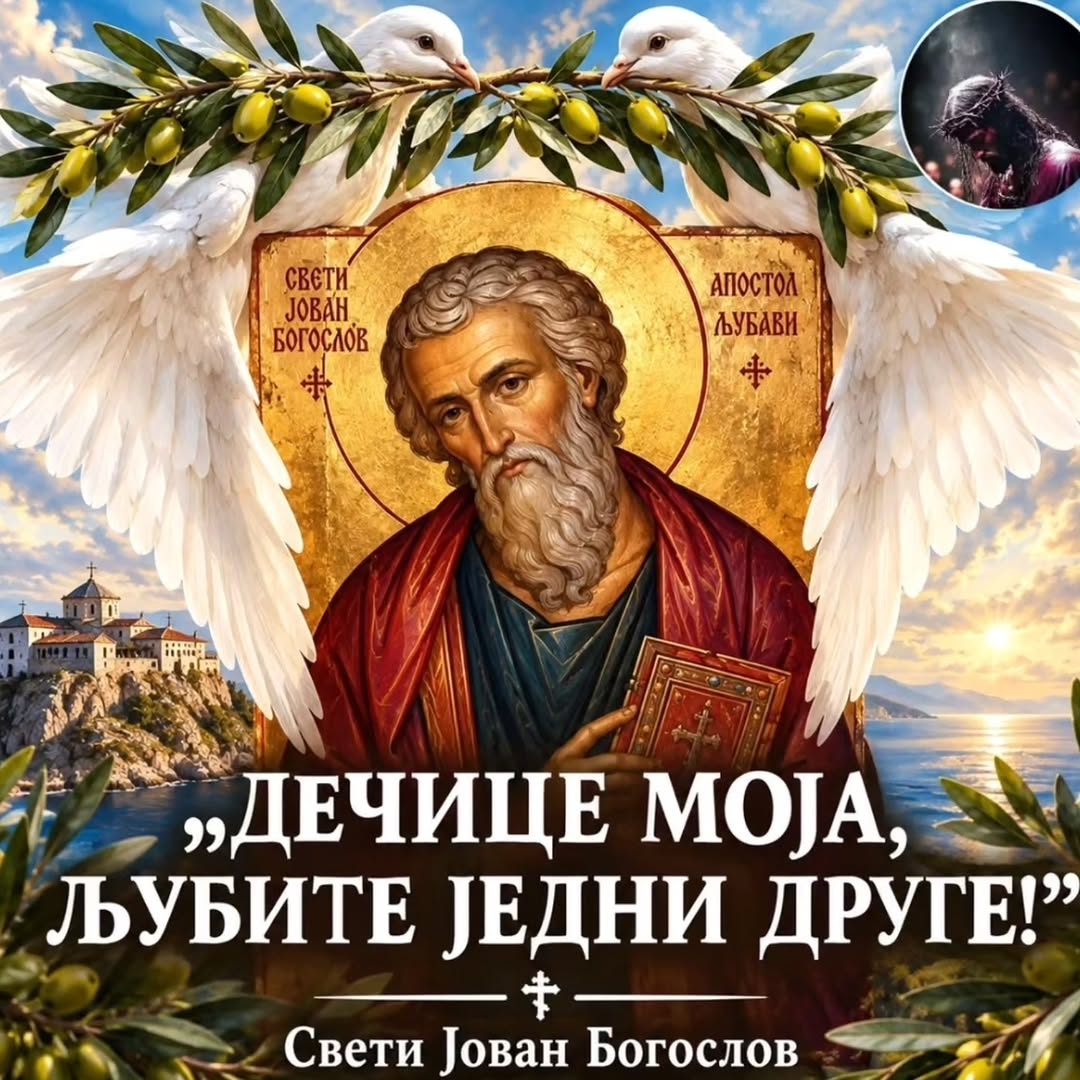
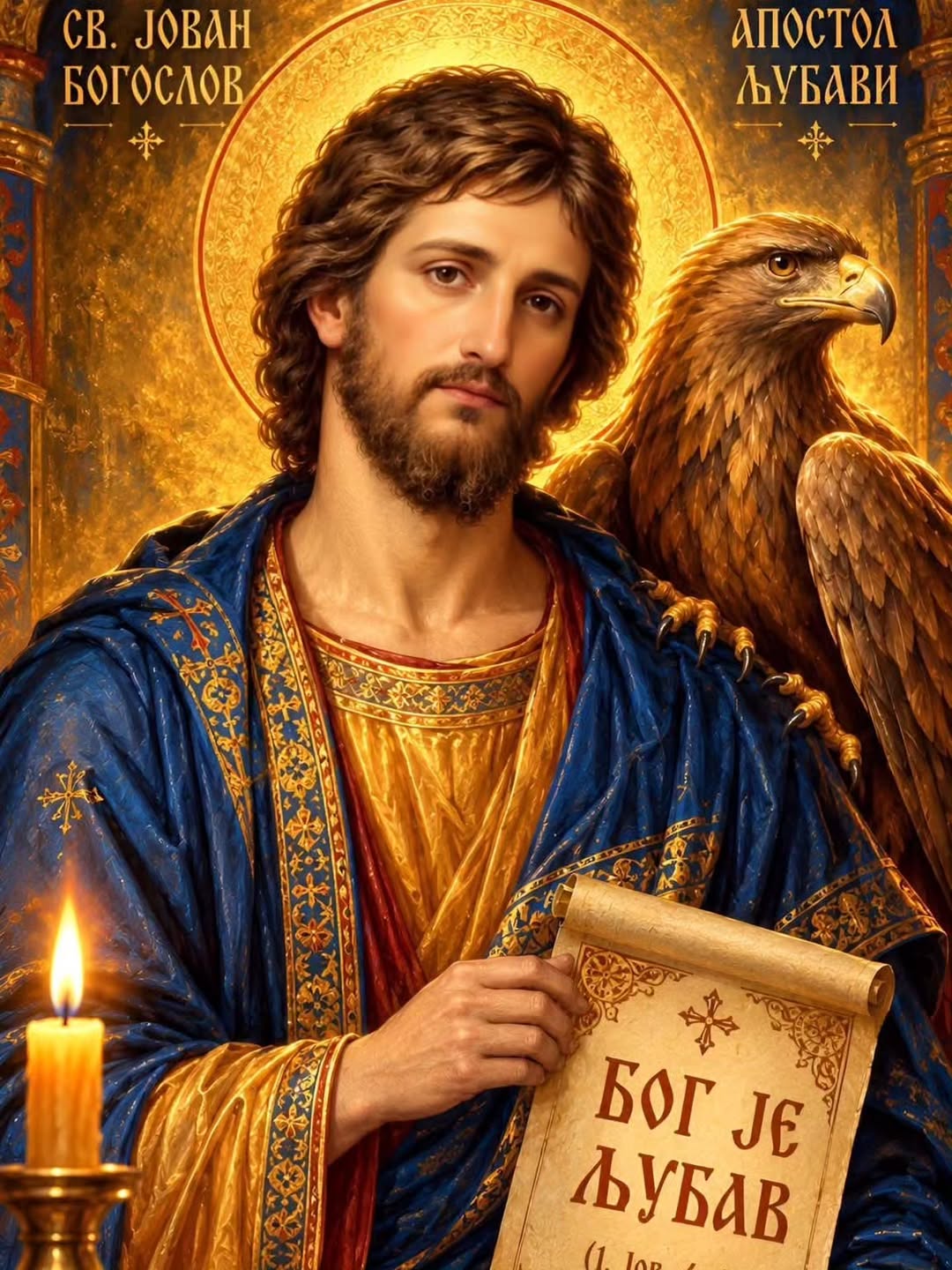
The post marks the feast of the Holy Apostle and Evangelist John the Theologian, called the Apostle of Love. It recalls that at the Last Supper the young John leaned his head on the Savior's breast, and through the quiet beating of Christ's heart his soul was filled, as the author writes, with the fire of divine love, a love that casts out fear. Because of this, when the other disciples fled in the darkness and fear of Gethsemane, John did not…

The post marks the feast of the Holy Apostle and Evangelist John the Theologian, called the Apostle of Love. It recalls that at the Last Supper the young John leaned his head on the Savior's breast, and through the quiet beating of Christ's heart his soul was filled, as the author writes, with the fire of divine love, a love that casts out fear.

Because of this, when the other disciples fled in the darkness and fear of Gethsemane, John did not turn back. He followed his Teacher to Golgotha, stood beneath the Cross, looked upon His wounds, and received the greatest legacy: the Most Holy Theotokos as his Mother. Filled from the source of life, John in his Gospel does not deal with dry chronologies.

Like a spiritual eagle, he rises at once to the highest heavenly heights and cuts into eternity with the words: 'In the beginning was the Logos (the Word), and the Logos was with God, and the Logos was God.' The author quotes his reminder of the essence of everything: 'God is Love, and whoever abides in love abides in God, and God in him' (1 John 4:16).

When John was very old and too weak to hold long sermons, his last words to his disciples were simple and contained the whole Law and the Prophets: 'Little children, love one another!' The post closes with a prayer that St. John, the Son of Thunder, might intercede for a heart able to hear Christ, for love that does not fail, and for peace that surpasses every mind, and it wishes readers a blessed feast.

  • At the Last Supper John leaned his head on Christ's breast and his soul was filled with divine love, which casts out fear.
  • Unlike the other disciples who fled, John followed Christ to Golgotha and stood beneath the Cross.
  • Beneath the Cross he received the Most Holy Theotokos as his Mother.
  • His Gospel opens with 'In the beginning was the Logos' and teaches 'God is Love' (1 John 4:16).
  • In old age his last words to his disciples were: 'Little children, love one another!'
Read more

Memorial room at Vraćevšnica honors Mother Jana Adžić and her father Sreten

A memorial room at Vraćevšnica monastery honors Mother Jana Adžić and her father Sreten Adžić. Mother Jana served as abbess of the monastery and as delegate for all children's orphanages founded by Bishop Nikolaj in Serbia and beyond. The room occupies two spaces in the ground floor of the konak of Radič Postupović, the monastery's oldest konak. Several thousand artifacts are preserved, including personal items from her work at orphanages in…

A memorial room at Vraćevšnica monastery honors Mother Jana Adžić and her father Sreten Adžić. Mother Jana served as abbess of the monastery and as delegate for all children's orphanages founded by Bishop Nikolaj in Serbia and beyond. The room occupies two spaces in the ground floor of the konak of Radič Postupović, the monastery's oldest konak.

Several thousand artifacts are preserved, including personal items from her work at orphanages in Bitola and Trstenik and later at the monastery. The collection also holds documentary material, photographs, and extensive correspondence awaiting future research. Such museums dedicated to monastic figures are described as extremely rare.

Mother Jana and her father are described as exceptional monastic personalities warranting attention.

Key moments

  1. Mother Jana Adžić was trusted by Bishop Nikolaj and served as delegate for all children's orphanages he founded in Serbia and beyond.
  2. She was the abbess of Vraćevšnica monastery.
  3. A memorial room dedicated to her and her father Sreten Adžić is located in two rooms on the ground floor of the konak of Radič Postupović, the oldest konak at the monastery.
  4. Mother Jana and her father are described as exceptional monastic personalities warranting attention.
  5. Museums dedicated to monastic figures are said to be extremely rare.
  6. Several thousand artifacts are stored, including personal items of Mother Jana and her father.
  7. Items from her leadership of orphanages in Bitola and Trstenik and from her time at Vraćevšnica are included.
  8. The collection holds documentary material, photographs, and correspondence that will be subject to future research.

God descends to meet each person in their suffering

The video presents a message about Christ as the God-man who descended from heaven to earth for every person. It states that God is not a weak man who gives up, but the God-man who comes to each one where they are, in their daily work and suffering without results. The Lord arrives when a person gives up, and then miracles happen.

The presentation emphasizes that every person is that important to God, and He meets them in their specific circumstances of labor and fruitless struggle.

Key moments

  1. 0:00 God is not a weak man who gives up; He is the God-man who descended from heaven to earth for you.
  2. 0:00 Every person is that important to God, and He comes to each one where they are, in their work and suffering without results.
  3. 0:34 The Lord comes when you give up, and then miracles happen.
Read more
Disgruntled Docs Instagram

From Tabernacle to Liturgy: The Old Testament Roots of Orthodox Worship

2:20

The post argues that many elements of Orthodox Christian worship, such as incense, the priesthood, the altar, sacred vestments, and structured prayer, have roots in the worship God prescribed in the Old Testament. It states that Christ did not erase what came before Him but fulfilled the Old Covenant and established the New, and that the early Christians continued in the apostles' teaching, prayer, and the breaking of bread. The accompanying…

The post argues that many elements of Orthodox Christian worship, such as incense, the priesthood, the altar, sacred vestments, and structured prayer, have roots in the worship God prescribed in the Old Testament. It states that Christ did not erase what came before Him but fulfilled the Old Covenant and established the New, and that the early Christians continued in the apostles' teaching, prayer, and the breaking of bread.

The accompanying video traces this line in more detail. God gave Moses detailed instructions for the Tabernacle, the priesthood, vestments, the altar, and incense, giving worship order, structure, and meaning. Jesus, the apostles, and the earliest Christians were Jewish, so Orthodox Christianity is presented as a continuation of the Old Testament into the New rather than a break from it.

In Acts chapter 3, Peter and John go to the temple at the hour of prayer, which shows Christian worship did not emerge from a religious vacuum. Written evidence follows: around 155 AD Saint Justin Martyr describes Christians gathering on Sunday to read Scripture, hear instruction, pray, and celebrate the Eucharist, and Saint Ignatius of Antioch, writing earlier, speaks of bishops, priests, deacons, and the Eucharist.

The post also points to the Book of Revelation, where Saint John describes heavenly worship filled with an altar, incense, worship, and the Lamb of God. Orthodox teaching holds that the Divine Liturgy is participation in that heavenly worship, joining the faithful with the angels and saints. The Passover finds its fulfillment in Christ, the true Passover lamb and eternal high priest, and the Liturgy centers on his sacrifice, resurrection, and communion with him.

The post closes with a caution: Orthodox worship is not an unchanged copy of ancient Israelite worship but a Christian tradition that developed over centuries, rooted in Scripture and understood through the fulfillment of the Old Covenant in Christ.

Key moments

  1. 0:00 God instructed Moses with detailed directions for the Tabernacle, priesthood, vestments, altar, and incense, giving worship order, structure, and meaning.
  2. 0:43 Jesus, the apostles, and the earliest Christians were Jewish, and Orthodox Christianity is a continuation of the Old Testament into the New.
  3. 1:13 In Acts chapter 3, Peter and John go to the temple at the hour of prayer, showing Christian worship did not emerge from a religious vacuum.
  4. 1:44 Around 155 AD, Saint Justin Martyr describes Christians gathering on Sunday to read Scripture, hear instructions, pray, and celebrate the Eucharist.
  5. 1:44 Saint Ignatius of Antioch, writing even earlier, speaks of bishops, priests, deacons, and the Eucharist.
  6. 2:19 In Revelation, Saint John describes heavenly worship with angels, an altar, incense, elders, and hymns, and Orthodox teaching holds that the Divine Liturgy joins that heavenly worship with the angels and saints.
Read more
Orthodox Life Instagram

The Righteous Forefather Abraham: Faith, Hospitality, and Intercession

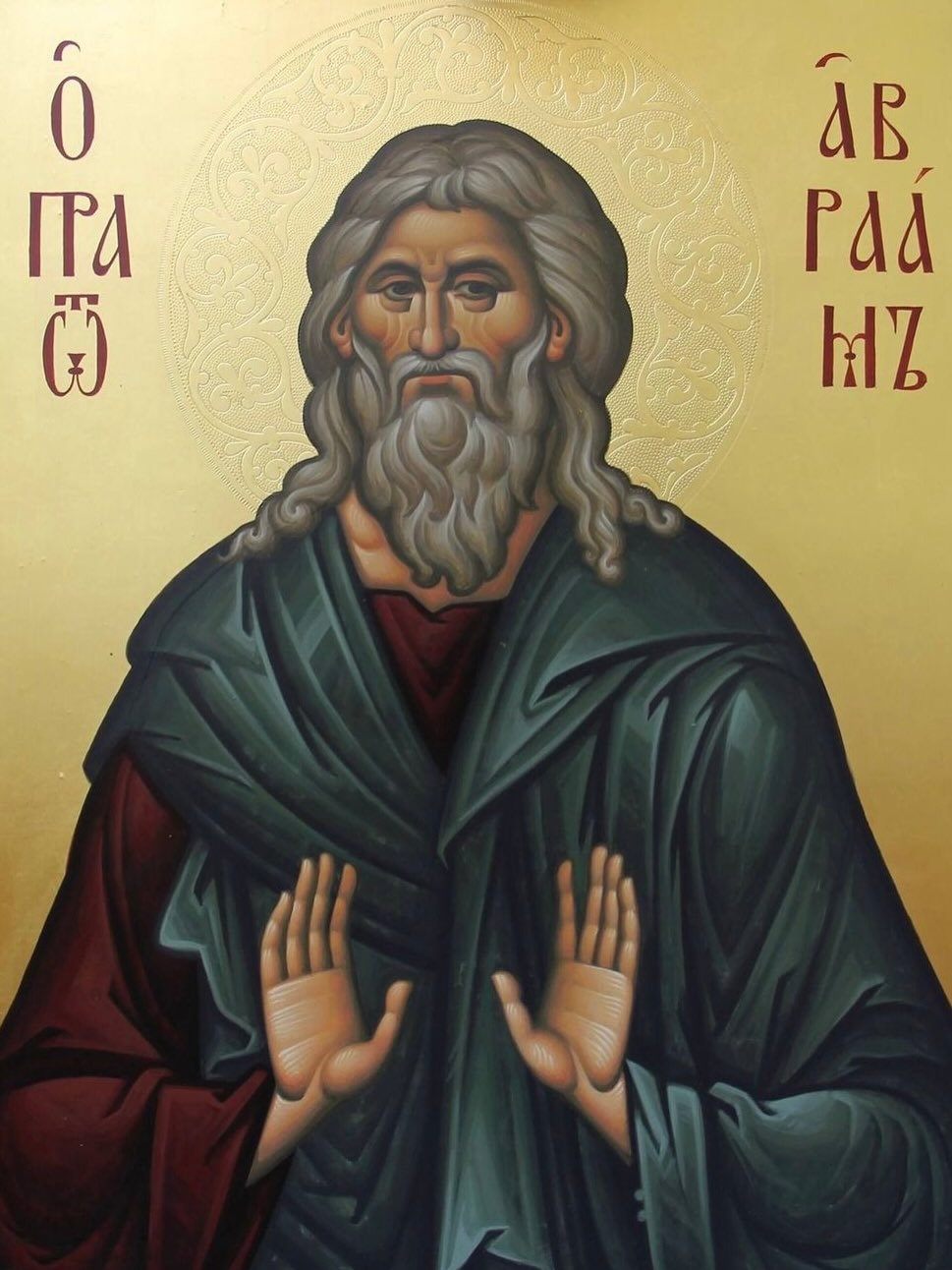
The post commemorates the Righteous Forefather Abraham on October 9. It states that Abraham lived around 2000 B.C. and is known as the Father of a multitude. The author writes that Abraham demonstrated a rare standard of virtue, obedience, and profound humility. In obedience to God's command, he left his ancestral home to journey to Canaan, the Promised Land, where God established a divine covenant promising that all nations of the earth would…

The post commemorates the Righteous Forefather Abraham on October 9. It states that Abraham lived around 2000 B.C. and is known as the Father of a multitude. The author writes that Abraham demonstrated a rare standard of virtue, obedience, and profound humility. In obedience to God's command, he left his ancestral home to journey to Canaan, the Promised Land, where God established a divine covenant promising that all nations of the earth would be blessed through his lineage.

The post connects Abraham's life to the revelation of the Triune God. His extraordinary hospitality at the Oak of Mamre, where he welcomed three mysterious travelers, is understood by the Church as a prefiguration of the Holy Trinity. This event is immortalized in Orthodox iconography, most famously in Andrei Rublev's Hospitality of Abraham (The Trinity), where the three angels symbolize the Father, Son, and Holy Spirit dining in unity.

The text recounts the severe test of Abraham's faith when God commanded him to offer his beloved son Isaac as a sacrifice. Without hesitation, Abraham prepared to fulfill the command, trusting that God could raise his son from the dead. At the final moment, an angel stayed his hand. The Orthodox Church views Isaac's willing submission and Abraham's sacrifice as a direct prophetic type of God the Father offering His Only-Begotten Son, Jesus Christ, on Golgotha for the redemption of the world.

Beyond his obedience, the Righteous Patriarch is celebrated as a powerful archetype of intercessory prayer and mercy. When God revealed His plan to destroy the wicked cities of Sodom and Gomorrah, Abraham courageously stood before the Lord to plead for the innocent. He humbly bargained with God to spare the entire region for the sake of just a few righteous souls, successfully saving his nephew, the Righteous Lot, and illustrating the immense spiritual power of a righteous man's intercession. The post notes that Abraham reposed at the age of 175.

  • Commemoration of Abraham on October 9
  • Abraham's obedience, covenant, and journey to Canaan around 2000 B.C.
  • Hospitality at the Oak of Mamre as a prefiguration of the Trinity, depicted in Rublev's icon
  • The sacrifice of Isaac as a prophetic type of Christ's crucifixion
  • Abraham's intercession for Sodom and Gomorrah, saving Lot, and his repose at age 175
Holy Resurrection YouTube

Elder Ephraim of Arizona on Suffering as Divine Medicine and Path to Mercy

Elder Ephraim of Arizona on Suffering as Divine Medicine and Path to Mercy 7:39

The post presents selections from Elder Ephraim of Arizona's "Fatherly Counsels," specifically chapters 19 through 23 on suffering, pain, and labor, published by the Holy Monastery of Philotheou on Mount Athos in 1989. Elder Ephraim teaches that sorrow for sins is beneficial unless it turns into despair; one should turn to hope, trusting that no sin exceeds God's mercy when repentance draws near. Patience in trials opens the doors of paradise,…

The post presents selections from Elder Ephraim of Arizona's "Fatherly Counsels," specifically chapters 19 through 23 on suffering, pain, and labor, published by the Holy Monastery of Philotheou on Mount Athos in 1989. Elder Ephraim teaches that sorrow for sins is beneficial unless it turns into despair; one should turn to hope, trusting that no sin exceeds God's mercy when repentance draws near.

Patience in trials opens the doors of paradise, and Christ is present in suffering just as Elder Joseph experienced throughout his painful trials. Suffering functions as God's instrument, used differently for each person to purify and sanctify; every affliction is a divine visitation for salvation, like bitter medicine. Without suffering, the fate of Lucifer awaits: he forgot God's greatness and his own weakness, exalted himself, and was cast down from morning star to Satan by choice, not nature.

The devil sows grumbling, discontent, envy, and stubbornness in families and communities; Judas was such a seed among the disciples, and such persons exist even in monastic brotherhoods, becoming tools of demons through weakness. We live in exile from our true homeland in a reformatory undergoing the Lord's discipline; those who accept it recover sonship and inheritance, while those without discipline prove illegitimate and are cast out.

Light affliction secures an eternal weight of glory far surpassing it, so one should rejoice and thank God rather than grumble. Inner pain and sorrow are useful to prevent sin, especially worldly attachment, but discernment is needed lest they exceed proper bounds and become harmful; excessive grief leads to despair that views God as an unmerciful avenger, but God disciplines as a father for repentance, and right understanding brings divine consolation.

Key moments

  1. 0:12 Sorrow for sins is good and useful unless it leads to despair; turn to hope and trust that no sin can overcome God's mercy when repentance draws near.
  2. 0:43 Endure trials with patience; patience opens the doors of paradise, and Christ is present in suffering just as Elder Joseph deeply felt His presence throughout all painful trials.
  3. 1:14 Suffering is God's instrument used differently for each person according to their needs; it purifies and sanctifies those who accept it wisely, and every affliction is a divine visitation for salvation like bitter medicine.
  4. 2:15 Without suffering, the fate of Lucifer awaits: he forgot God's greatness and his own weakness, exalted himself, and was cast down from morning star to Satan, not by nature but by choice.
  5. 2:46 The devil sows grumbling, discontent, envy, and stubbornness in families and communities; Judas was such a seed among the disciples, and such persons exist even in monastic brotherhoods, becoming tools of demons through weakness.
  6. 3:48 We are exiled from our true homeland in a reformatory undergoing the Lord's discipline; those who accept it recover sonship and inheritance, while those without discipline prove illegitimate and are cast out.
  7. 4:18 Endure all things; this light affliction secures an eternal weight of glory far surpassing it, so rejoice and thank God rather than grumble, and do not show impatience to the enemy lest he attack more fiercely.
  8. 4:49 Inner pain and sorrow are useful to prevent sin, especially worldly attachment, but discernment is needed lest they exceed proper bounds and become harmful; excessive grief leads to despair viewing God as an unmerciful avenger, but God disciplines as a father for repentance, and right understanding brings divine consolation.
Read more
Orthodox Sound YouTube

Elder Joseph the Hesychast on the purpose of trials and patience

Elder Joseph the Hesychast on the purpose of trials and patience 16:54

Elder Joseph the Hesychast writes to his spiritual sister about the heavenly homeland where passions and envy cease, and the soul awakens to see Christ, the Theotokos, angels, and departed loved ones. He urges her to review her life, recall God's benefactions, and practice patience in temptations, explaining that God hears prayers instantly but answers according to wisdom, not human timing, often delaying to heal hidden passions. The elder…

Elder Joseph the Hesychast writes to his spiritual sister about the heavenly homeland where passions and envy cease, and the soul awakens to see Christ, the Theotokos, angels, and departed loved ones. He urges her to review her life, recall God's benefactions, and practice patience in temptations, explaining that God hears prayers instantly but answers according to wisdom, not human timing, often delaying to heal hidden passions.

The elder testifies from his own experience that severe temptations bring subsequent consolation like paradise, and that enduring involuntary trials purifies the soul like soap and a mallet, making it fit for the Bridegroom. He advises constant prayer and fasting to burn the devil, general confession for the whole family, and acceptance of God's will whether for healing or continued illness, since afflictions are a grace showing God's love.

The elder describes a recent visible spiritual battle with Satan on the eve of St. Catherine's feast, praying all night for his sister, and warns that the enemy never rests but temptations come according to one's stature for victory and perfection. He counsels prudence, redeeming the time, and ceaseless prayer to settle nerves, concluding that sorrow in this life indicates a life pleasing to God, for the Lord chastens those he loves.

The letter draws on Psalms 102, 67, 32, Luke 16:26, Matthew 11:28 and 10:29-30, Ephesians 5:16-17, Job 1:6-12, Romans 5:3-4, James 1:2-4, Philippians 4:6-7, 1 Thessalonians 5:17-18, Hebrews 12:7, and a saying of St. Macarius of Optina.

Key moments

  1. 0:01 Opening comfort: heavenly homeland without passions, envy, or crafty people; the great gulf fixed between this life and the next.
  2. 1:05 The nearness of death: noetic eyes open, seeing parents, angels, the Theotokos; all interaction in purity and holiness.
  3. 2:37 Call to patience: God helps but not on our timeline; saints rush to aid before we cry out; prayer must be joined with work and waiting.
  4. 3:40 God delays answers to heal hidden passions; fulfillment comes when the request is forgotten, granting both the request and healing.
  5. 5:15 Writer's personal witness: temptations like a flaming furnace followed by paradise-like consolation; Christ allows trials for purification.
  6. 7:19 Writer's declining health: keeps letters for future afflictions; God works miracles for upright souls; the Theotokos prays and does not abandon.
  7. 9:56 Visible struggle with Satan on eve of St. Catherine's feast; prayed all night; the prayer of surrender: make me well to bless you, but your will be done.
  8. 15:42 No place without temptation; struggle lasts throughout life; win where you are fought; constant prayer settles nerves; afflictions are grace proving God's love.
Eastern Orthodoxy Daily He/Who/Is Instagram

Unity Without Truth Is Not True Unity

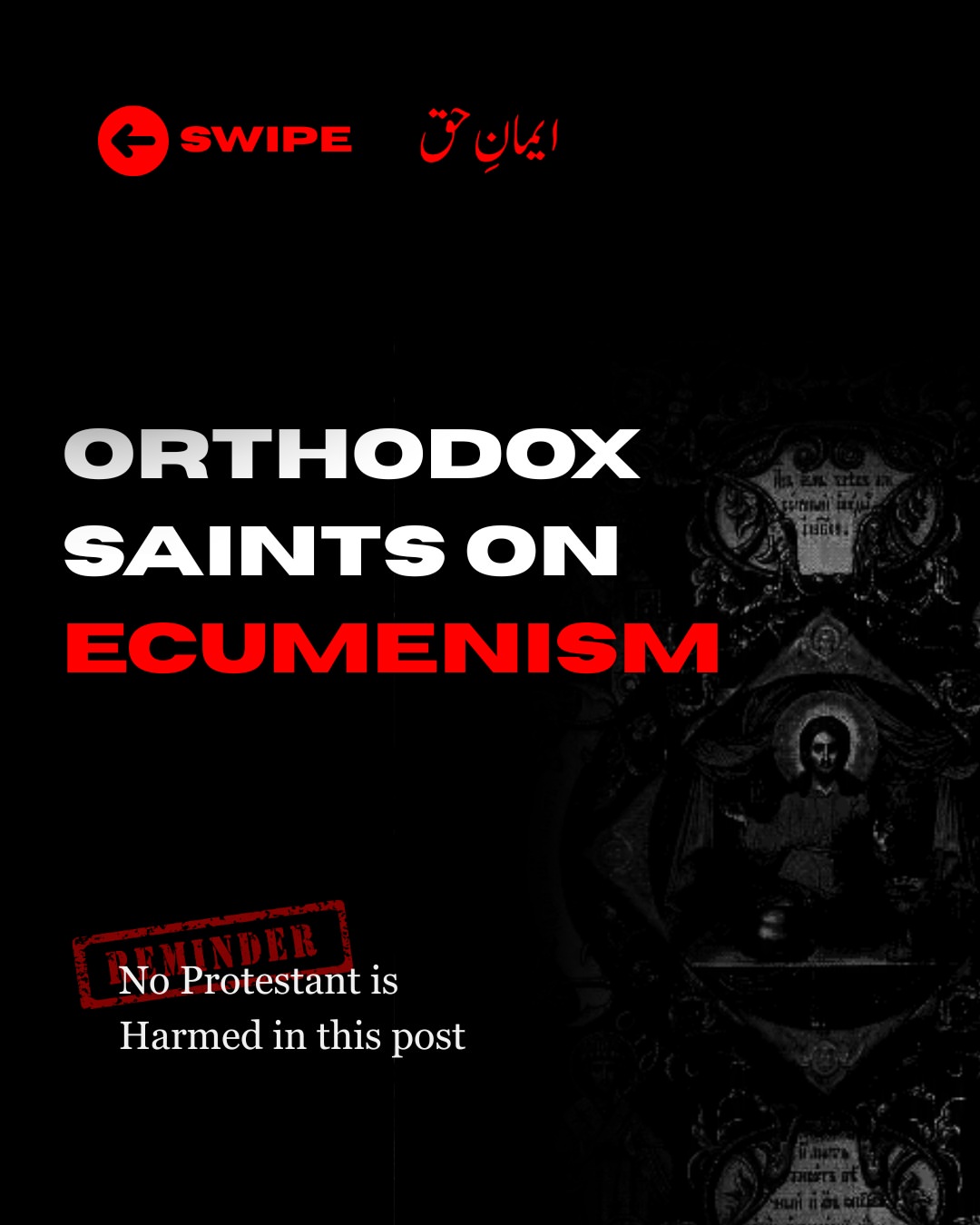
The author argues that Christian unity cannot rest on doctrinal compromise or on the claim that all faiths and teachings are equally true. The Orthodox Church, in this view, is called to preserve the Apostolic Faith, uphold the truth of the Gospel, and remain faithful to what has been handed down through Holy Tradition. The post warns against treating love and unity as reasons to abandon the truth, and closes with the statement that unity…

The author argues that Christian unity cannot rest on doctrinal compromise or on the claim that all faiths and teachings are equally true. The Orthodox Church, in this view, is called to preserve the Apostolic Faith, uphold the truth of the Gospel, and remain faithful to what has been handed down through Holy Tradition. The post warns against treating love and unity as reasons to abandon the truth, and closes with the statement that unity without truth is not true unity.

The text is a short confessional statement rather than a discussion thread: it sets out a position on ecumenism and doctrinal relativism without citing specific events, documents, or dialogues. Its core claims are that truth and unity are inseparable, that compromise on doctrine is a false path to unity, and that fidelity to Holy Tradition takes precedence over agreement at any cost.

  • Christian unity cannot be built on doctrinal compromise or on the belief that all faiths are equally true.
  • The Orthodox Church is called to preserve the Apostolic Faith and the truth of the Gospel.
  • Fidelity to the teachings handed down through Holy Tradition is presented as a duty.
  • Love and unity must not become excuses for abandoning the truth.
  • The author concludes that unity without truth is not true unity.
Read more
Prayer Orthodoxy ® Instagram

Ancestral Sin, Not Inherited Guilt: An Orthodox Distinction

A speaker in an interview explains the Orthodox understanding of ancestral sin by contrasting it with the Western idea of inherited guilt. To make the difference clear, he uses a stark analogy drawn from criminal justice. In the Western view, he says, if a father commits a heinous crime, justice would be carried out on his innocent child: the police demonstrate justice by shooting his 14-month-old daughter. He calls this madness. In the Eastern…

A speaker in an interview explains the Orthodox understanding of ancestral sin by contrasting it with the Western idea of inherited guilt. To make the difference clear, he uses a stark analogy drawn from criminal justice. In the Western view, he says, if a father commits a heinous crime, justice would be carried out on his innocent child: the police demonstrate justice by shooting his 14-month-old daughter.

He calls this madness. In the Eastern view, the father who committed the crime is shot dead himself, and his daughter lives on in a world with a dead dad. The daughter is guilty of nothing; she simply bears the consequences of her father's actions in a broken world. The speaker applies this analogy to the doctrine of original sin: Orthodoxy speaks of ancestral sin rather than inherited guilt.

On this reading, human beings are not born guilty of Adam's personal transgression, but they do live with the consequences of his fall, as children live with the aftermath of a parent's actions. The post itself is a short promotional clip announcing that the full interview is now available, with a link provided in the account's bio.

The account presenting the interview is the Hearts of Orthodoxy. The clip focuses on this single doctrinal contrast and does not develop other topics. The strength of the analogy and the fairness of its portrayal of Western theology are the points a viewer would weigh when watching; the speaker presents the two views as opposed answers to the question of what, exactly, passes from Adam to his descendants: guilt, or consequences.

Key moments

  1. Orthodoxy speaks of ancestral sin rather than inherited guilt.
  2. The speaker illustrates the Western idea with an analogy: a father commits a heinous crime, and the police demonstrate justice by shooting his 14-month-old daughter, which he calls madness.
  3. In the Eastern idea, the father who committed the crime is shot dead himself, and his daughter lives on in a world with a dead dad.
  4. The daughter is guilty of nothing; she only bears the consequences of her father's actions.
Read more
CHRISTIANITY UNITED Instagram

Father Lazarus on falling, repentance, and not abandoning God

The post shares a message from Father Lazarus El Anthony, an Australian-born Coptic Orthodox monk who left his former life to live in the Egyptian desert following the ancient monastic tradition of prayer, solitude, and repentance. He teaches that falling into sin is inevitable for everyone except God, but falling and giving up on God are two different things. The devil does not only want people to fall; he wants them to believe that after…

The post shares a message from Father Lazarus El Anthony, an Australian-born Coptic Orthodox monk who left his former life to live in the Egyptian desert following the ancient monastic tradition of prayer, solitude, and repentance. He teaches that falling into sin is inevitable for everyone except God, but falling and giving up on God are two different things.

The devil does not only want people to fall; he wants them to believe that after falling there is no point in getting back up, that they have disappointed God too many times, or that they are beyond forgiveness. God knows human weaknesses better than people know them themselves. He sees struggles, failures, and shame, yet continues to call to repentance.

Father Lazarus reminds readers of what the Desert Fathers understood: holiness is not about pretending we never fall. It is about humbling ourselves, repenting sincerely, and continually returning to Christ. The post urges never to become comfortable with sin but never to let sins convince one to abandon God.

If you fall today, get back up, confess your sins, ask for His mercy, and continue. As long as you are alive, do not give up on repentance. Christ has not stopped calling you home. The accompanying video summary adds that the speaker teaches getting up and facing forward is what matters.

By the end of life, judgment becomes a greater blessing because one has fallen forward rather than given up. Jesus taught that all evil comes from within, not from external circumstances. External temptations may cause falls but cannot destroy a person; only refusing God can do that.

The advice is to fight inner battles and trust that each time one falls, gets up, and turns again to the Lord, forgiveness is given.

Key moments

  1. Blaming yourself for falling is appropriate because you will fall and always fall; the battle never makes you the victor unless you are God.
  2. Most people simply fall down, but getting up and facing forward means you are doing all you can.
  3. By the end of life, judgment becomes a greater blessing because you have fallen forward.
  4. Jesus said all evil comes from within, not from the earth; external fights do not make you evil.
  5. Temptations around you might make you fall but they will not destroy you.
  6. You can only destroy yourself by accepting or refusing God; if you do not refuse God, you will not be destroyed.
  7. You might fall and will fall, but you will not be destroyed.
  8. The advice is to fight inner battles and believe that even when you fall, getting up and facing the Lord again brings forgiveness.
Read more
George Instagram

Guided 40-day Nativity fast program proposed for November 15

The speaker explains they paused their business in January to reconnect with God and family, including a newborn son. Their previous account had 90,000 followers and offered paid programs. Since starting a new account, they have grown to over 33,000 followers in less than a month and received hundreds of messages requesting help with fasting and prayer. They propose a 40-day guided program for the Nativity fast beginning November 15. Daily…

The speaker explains they paused their business in January to reconnect with God and family, including a newborn son. Their previous account had 90,000 followers and offered paid programs. Since starting a new account, they have grown to over 33,000 followers in less than a month and received hundreds of messages requesting help with fasting and prayer.

They propose a 40-day guided program for the Nativity fast beginning November 15. Daily content consists of a teaching approved by their spiritual father, a prayer, and one small step. Weekly live calls are planned until Christmas Eve. The program uses a donation-based model: it is free for those unable to give, and participants give what feels right; the speaker notes a symbolic contribution keeps them accountable. They ask viewers to comment "fast" with honest feedback and to share the video.

Key moments

  1. 0:00 Paused work in January to reconnect with self, God, and family including newborn son
  2. 0:34 Previous account had 90k followers with paid programs; new account reached 33,000+ in under a month
  3. 1:05 Hundreds of messages requesting help with fasting and prayer
  4. 1:43 Proposes 40-day guided path through Nativity fast starting November 15
  5. 2:15 Daily content: teaching approved by spiritual father, prayer, one small step; weekly live calls until Christmas Eve
  6. 2:51 Donation-based model: free if unable to give, give what feels right; symbolic to maintain accountability
  7. 2:51 Asks viewers to comment "fast" with honest feedback and share the video
Read more
George Instagram

Abba Moses and the Leaking Jug: Why the Monks Forgave a Brother

1:25

A story from the Desert Fathers tells how the monks of an Egyptian monastery gathered to judge a brother who had made a mistake. They invited Abba Moses, a respected monk who had been a robber before he met Christ, to join them. He came carrying an old jug with a hole in it, filled with water, and the water leaked out behind him along the whole way. When the monks asked what this meant, he answered that his own sins were running out behind him…

A story from the Desert Fathers tells how the monks of an Egyptian monastery gathered to judge a brother who had made a mistake. They invited Abba Moses, a respected monk who had been a robber before he met Christ, to join them. He came carrying an old jug with a hole in it, filled with water, and the water leaked out behind him along the whole way.

When the monks asked what this meant, he answered that his own sins were running out behind him where he could not see them, yet he had come to judge someone else's mistakes. No one said a word, and the monks forgave the brother. The speaker reflects that it is easy to notice the mistakes of others at work, in the family, or in church, while our own jug leaks unnoticed.

He advises looking behind yourself first before judging someone and asks who is hardest for the listener not to judge.

Key moments

  1. The monks of an Egyptian monastery gathered to judge a brother who had made a mistake and invited Abba Moses, a respected monk who had been a robber before meeting Christ.
  2. Abba Moses carried an old jug with a hole in it, filled with water, and the water leaked out behind him on the way.
  3. When asked what this meant, he said: 'My sins are running out behind me and I don't even see them. And today, I came here to judge someone else's mistakes.'
  4. Nobody said a word and the monks forgave the brother.
  5. The speaker notes it is easy to see everyone else's mistakes, at work, in the family, or in church, while our own jug is leaking and we do not notice.
  6. The speaker advises looking behind you first before judging someone and asks who is hardest for you not to judge.
Read more
Mount Athos Legacy Facebook

Unbelief Comes from Pride: St. Silouan the Athonite on Knowing God

The post quotes St. Silouan the Athonite on the origin of unbelief and the way God is known. According to the quote, unbelief comes from pride. The proud person claims he will know everything through his mind and through science, but the knowledge of God remains unreachable for him, because God is known only through the revelation of the Holy Spirit. The Lord reveals Himself to humble souls. To them He shows His works, which are incomprehensible…

The post quotes St. Silouan the Athonite on the origin of unbelief and the way God is known. According to the quote, unbelief comes from pride. The proud person claims he will know everything through his mind and through science, but the knowledge of God remains unreachable for him, because God is known only through the revelation of the Holy Spirit.

The Lord reveals Himself to humble souls. To them He shows His works, which are incomprehensible to our mind. With our natural mind we can know only earthly things, and even these partially, while God and all heavenly things are known through the Holy Spirit. The post presents this teaching as a single short passage attributed to the saint, without further commentary or discussion.

It sets pride against humility, and natural human knowledge against knowledge given by the Holy Spirit, and names humility as the condition in which God reveals Himself.

  • St. Silouan the Athonite teaches that unbelief comes from pride.
  • The proud person claims he will know everything by his mind and by science, but the knowledge of God stays unreachable for him.
  • God is known only through the revelation of the Holy Spirit.
  • The Lord reveals Himself to humble souls and shows them His works, which the mind cannot grasp.
  • The natural mind knows only earthly things, and partially, while God and all heavenly things are known through the Holy Spirit.