WeOrthodox
EN UA

Orthodox posts, videos and discussions

We follow Orthodox channels, communities and blogs across the web, summarise every post and video, and highlight the conversations with real substance.

Prayer Orthodoxy ® Instagram

St. Paisios of Mount Athos: Life and Three Sayings on Humility and Peace

The post presents a concise biography of St. Paisios of Mount Athos (1924-1994) followed by three attributed sayings. It notes his birth in Farasa, Cappadocia, his baptism by St. Arsenios the Cappadocian, his monastic life on Mount Athos, his reputation for humility, prayer, discernment, and love, his repose on July 12, 1994, and his canonization in 2015. The three sayings are: "The more a person forgets himself, the more God remembers him";…

The post presents a concise biography of St. Paisios of Mount Athos (1924-1994) followed by three attributed sayings. It notes his birth in Farasa, Cappadocia, his baptism by St. Arsenios the Cappadocian, his monastic life on Mount Athos, his reputation for humility, prayer, discernment, and love, his repose on July 12, 1994, and his canonization in 2015.

The three sayings are: "The more a person forgets himself, the more God remembers him"; "Peace comes when man entrusts himself to God"; and "God is very close to us, but we do not see Him because we lack humility."

  • Born 1924 in Farasa, Cappadocia; baptized by St. Arsenios the Cappadocian
  • Lived as a monk and spiritual elder on Mount Athos
  • Reposed July 12, 1994; canonized 2015
  • First saying: self-forgetfulness draws God's remembrance
  • Second saying: peace comes through entrusting oneself to God
Read more
Saint Wisdom Instagram

Saint Paisios on How Distractions Prevent Self-Examination

Saint Paisios of Mount Athos warns that contemporary life fills people with constant activity directed outward, leaving no attention for the inner state of the soul. He observes that individuals spend their time watching and judging others while rarely turning that scrutiny toward themselves. The elder identifies this pattern as a strategy of the devil, who occupies each person with distractions tailored to keep them from stillness. Without…

Saint Paisios of Mount Athos warns that contemporary life fills people with constant activity directed outward, leaving no attention for the inner state of the soul. He observes that individuals spend their time watching and judging others while rarely turning that scrutiny toward themselves. The elder identifies this pattern as a strategy of the devil, who occupies each person with distractions tailored to keep them from stillness.

Without stillness, a person cannot see what must change within. The teaching points to the necessity of self-examination and the danger of a life lived entirely on the surface. In the Orthodox spiritual tradition, such stillness is the condition for repentance and the beginning of healing.

The elder's words call for a deliberate withdrawal from the noise that prevents awareness of one's own passions and sins. The post presents this counsel without additional commentary or discussion. These four points form the core of the message, emphasizing the link between distraction, spiritual blindness, and the demonic tactic of busyness.

The content is a direct transmission of the saint's teaching on the spiritual necessity of inner quiet and self-knowledge.

Key moments

  1. People today are occupied with everything except themselves.
  2. They watch other people and judge, yet rarely examine their own soul.
  3. The devil keeps each person busy with something.
  4. As long as we are constantly distracted, we never become still enough to see what needs to change within us.
Read more
Athonite Audio YouTube

Hidden Virtue and the Danger of Vainglory in the Evergetinos

Hidden Virtue and the Danger of Vainglory in the Evergetinos 29:36

The third volume of the Evergetinos, Hypothesis 26, gathers sayings of the Desert Fathers and saints on the necessity of pursuing virtue in secret. St. Syncletica compares virtue to treasure that is plundered when revealed, urging nuns to conceal spiritual gains and prefer obedience over visible asceticism to avoid arrogance. She contrasts worldly people who hide profits to avoid envy with monastics who display small virtues and cease striving…

The third volume of the Evergetinos, Hypothesis 26, gathers sayings of the Desert Fathers and saints on the necessity of pursuing virtue in secret. St. Syncletica compares virtue to treasure that is plundered when revealed, urging nuns to conceal spiritual gains and prefer obedience over visible asceticism to avoid arrogance. She contrasts worldly people who hide profits to avoid envy with monastics who display small virtues and cease striving for greater heights.

Abba John the Short, caught singing with compunction, prostrates and asks forgiveness for not knowing monastic rudiments, modeling humility. A former praetorian prefect feigns being a grandee's slave to avoid an imperial deputation, concealing his past glory. Abba Isaiah likens unconcealed ascetic work to a house without doors or windows where any reptile enters, saying human honor corrodes the heart like rust on iron.

Abba Joseph teaches Eulogius to perform ascetic works in secret, explaining they chant only when alone and serve wine only for love of guests, not for display. St. Isaac likens the monk who imbibes vainglory to a dog licking a rasp and drinking its own blood, unaware of the harm from transient sweetness. Abba Cassian recounts a brother driven by vainglory to ordain himself a deacon and dismiss catechumens in his cell, showing the passion's delusion.

St. Maximus notes vainglory attacks after grosser passions are defeated, aligning with the demon of fornication to slay virtue. The sayings conclude that hidden spiritual work destroys vainglory, and a sign of deliverance is harboring no resentment against those who speak ill of you.

Key moments

  1. 0:00 St. Syncletica teaches that virtue must be concealed like treasure, for ostentation dissipates spiritual gains just as revealed treasure is plundered.
  2. 0:30 Syncletica contrasts worldly people who hide profits to avoid envy with monastics who flaunt small virtues and cease laboring for greater heights.
  3. 3:06 Abba John the Short, caught singing with compunction, prostrates and asks forgiveness for not knowing monastic rudiments, modeling humility.
  4. 3:37 A brother who was formerly praetorian prefect feigns being a grandee's slave to avoid an imperial deputation, concealing his past glory.
  5. 8:13 Abba Isaiah compares unconcealed ascetic work to a house without doors or windows where any reptile enters, and says human honor corrodes the heart like rust on iron.
  6. 10:18 St. Isaac likens the monk who imbibes vainglory to a dog licking a rasp and drinking its own blood, unaware of the harm from transient sweetness.
  7. 13:22 Abba Cassian recounts a brother driven by vainglory to ordain himself a deacon and dismiss catechumens in his cell, showing the passion's delusion.
  8. 22:06 Abba Joseph teaches Eulogius to perform ascetic works in secret, explaining they chant only when alone and serve wine only for love of guests, not for display.
Prayer Orthodoxy ® with Live Orthodox Instagram

Saint Gregory Palamas on God Beyond Knowledge and Unknowing

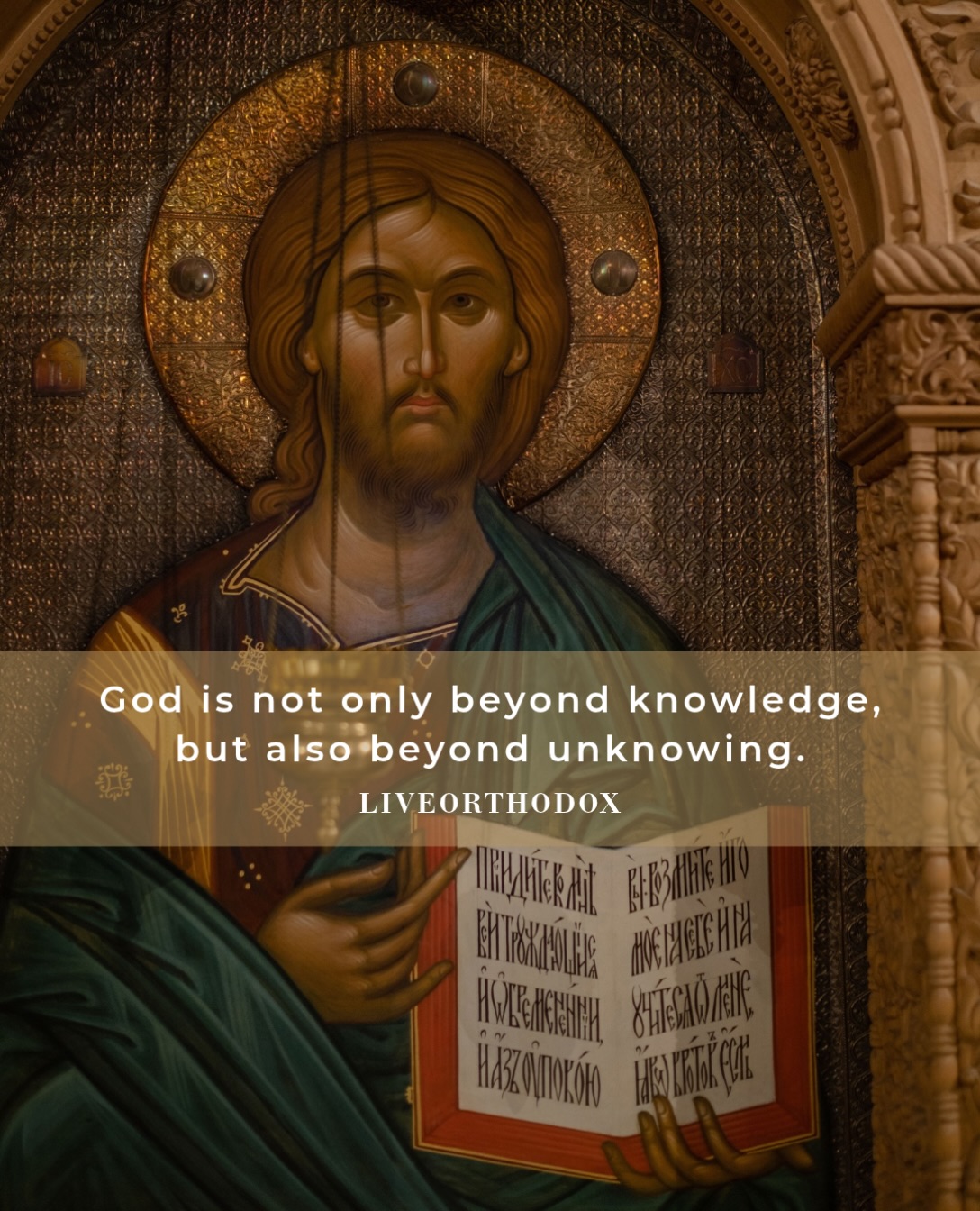
The post presents a quotation from Saint Gregory Palamas stating that God cannot be grasped by human thought, nor can God be framed or contained even by the deliberate absence of thought or denial of concepts. An accompanying image text adds a numbered point: God is not only beyond knowledge, but also beyond unknowing. The quote expresses a central theme of Orthodox apophatic theology: the divine reality surpasses every human conceptual…

The post presents a quotation from Saint Gregory Palamas stating that God cannot be grasped by human thought, nor can God be framed or contained even by the deliberate absence of thought or denial of concepts. An accompanying image text adds a numbered point: God is not only beyond knowledge, but also beyond unknowing. The quote expresses a central theme of Orthodox apophatic theology: the divine reality surpasses every human conceptual framework, including the frameworks that attempt to reach God by negating all concepts.

The words indicate that human cognition, whether affirmative or negative, cannot encompass God. Even the intentional suspension of thought, a practice sometimes associated with contemplative prayer, does not by itself constitute a containment of the divine. The image text sharpens the point by placing knowledge and unknowing together as categories that God transcends.

The post attributes the statement to Saint Gregory Palamas, a major figure in Byzantine theology who articulated the distinction between God's essence and energies. The quotation reflects his teaching that God's essence remains utterly inaccessible while His energies are communicated to creation. No further explanation, commentary, or discussion is provided in the post.

The content is limited to the quotation and the single numbered point. The combination of the quote and the numbered point reinforces the same idea from two angles.

  • God cannot be grasped by human thought.
  • God cannot be contained by deliberate absence of thought or denial of concepts.
  • God is beyond knowledge.
  • God is beyond unknowing.
  • The statement is attributed to Saint Gregory Palamas.

Orthodox Response to James White: Kissing Icons Shows Love to Christ, Not Wood

The speaker responds to James White's criticism of the Orthodox practice of kissing icons. According to the speaker, White made a significant error by comparing the veneration of icons to the handling of a photograph of a deceased loved one. White reportedly said that it would be inappropriate for parents but appropriate for children to lovingly frame, decorate, and kiss such a photograph at a funeral, placing this behavior within the bounds of…

The speaker responds to James White's criticism of the Orthodox practice of kissing icons. According to the speaker, White made a significant error by comparing the veneration of icons to the handling of a photograph of a deceased loved one. White reportedly said that it would be inappropriate for parents but appropriate for children to lovingly frame, decorate, and kiss such a photograph at a funeral, placing this behavior within the bounds of Christian freedom.

The speaker then challenges the audience to consider whether anyone can show the same kind of visual affection to an image of Christ or the saints. He answers his own question negatively, explaining that the audience lacks personal knowledge of the persons depicted in those images. However, the speaker asserts that believers can indeed know Jesus at a personal level and enter into a relationship with him.

It is this personal relationship, he concludes, that explains why Orthodox Christians kiss icons: the act expresses love toward the person represented, not toward the material wood and paint. The discussion thus turns on the distinction between a photograph of a family member, which only those who knew the person can meaningfully venerate, and an icon of Christ, which all believers can venerate because all can know Christ personally.

The speaker's argument defends the theological basis of icon veneration against the charge of idolatry by grounding it in a living relationship with the prototype.

Key moments

  1. The speaker claims James White makes a massive blunder.
  2. It is inappropriate for parents but appropriate for a lot of children to lovingly frame, decorate, and kiss the picture of a dead loved one at a funeral.
  3. That practice is within the realm of Christian freedom.
  4. The speaker asks whether anyone in the audience can show identical visual affection to an image of Christ or the saints.
  5. The speaker answers no, because they did not have personal knowledge of the person in the image.
  6. We can know Jesus at a personal level and have a relationship with him.
  7. That is why when we kiss an icon, we show love to him, not the actual wood and paint.
Read more
Athonite Audio YouTube

To please God, treat human honor and dishonor as nothing

To please God, treat human honor and dishonor as nothing 6:53

The video presents Hypothesis 25 from the Evergetinos, a collection of sayings from the Desert Fathers. The hypothesis states that one who seeks to please God must regard as nothing the honors or dishonors that come from men. Abba Macarius illustrates this by sending a brother to a cemetery to insult the dead and then to praise them. The dead do not react to either. Macarius tells the brother to become like the dead, disregarding both insult and…

The video presents Hypothesis 25 from the Evergetinos, a collection of sayings from the Desert Fathers. The hypothesis states that one who seeks to please God must regard as nothing the honors or dishonors that come from men. Abba Macarius illustrates this by sending a brother to a cemetery to insult the dead and then to praise them.

The dead do not react to either. Macarius tells the brother to become like the dead, disregarding both insult and praise, as the only way to be saved. Amma Sarah adds that she would rather pray for a pure heart toward all than for the approval of all men, because seeking universal approval would require constant repentance. Further sayings warn against desiring that men not despise you, and against reputation exceeding deeds.

Abba Anthony foretells a time when the world will call the sane mad, and the one striving for piety should pay no attention. St. Ephrem cites Isaiah 51:7-8 and 50:5-7 to urge steadfastness when reproached for good deeds, not to be ashamed or abandon the straight path. He also cites Psalm 26:3, Psalm 68:8, and Matthew 5:11 to encourage not being fainthearted when insulted for doing good.

St. Ephrem warns against familiarity and laughter that destroy a monk's soul. St. Mark states that mockery of the repentant proves they are well pleasing to God. Abba John the Short teaches that honoring God brings honor from all, while despising God brings universal contempt. Abba Mateos praises Abba Tithoes as an exact balance who speaks only of what has worth.

Key moments

  1. 0:00 Hypothesis 25 states that he who seeks to please God must reckon as nothing the dishonors or honors that come from men.
  2. 0:33 Abba Macarius tells a brother to go to the graves and insult the dead, then later to return and praise them, to show that the dead do not respond to either insult or praise.
  3. 1:04 Abba Macarius teaches the brother to become as one dead, regarding neither the dishonor nor the honor of men, as the only way to be saved.
  4. 1:35 Amma Sarah says she would rather pray for a pure heart toward all than for the approval of all men, because seeking universal approval would require constant repentance.
  5. 2:05 Abba Anthony says a time will come when men will be mad and will attack the one who is not mad, but the one striving for piety should pay no attention to them.
  6. 2:36 St. Ephrem teaches that if reproached for a good deed, one should not be ashamed or do wrong to gain praise, citing Isaiah 51:7-8 and 50:5-7.
  7. 3:40 St. Ephrem urges not to be fainthearted when insulted for doing good, citing Psalm 26:3, Psalm 68:8, and Matthew 5:11.
  8. 6:16 St. Mark says he who truly repents is mocked by the iniquitous, and this mockery is proof that he is well pleasing to God.

Saint John the Little's obedience: kenosis, not blind obedience

The speaker recounts the desert tradition of Abba Amoi giving Saint John the Little a dry stick to water daily, a round trip of twelve miles from his cell. After three years the stick becomes a fruitful tree. The speaker argues that the story is often misread as blind obedience but actually illustrates kenosis, self-emptying, that mirrors Christ emptying himself and dying on a tree for our salvation. Saint John knew the stick was dead and would…

The speaker recounts the desert tradition of Abba Amoi giving Saint John the Little a dry stick to water daily, a round trip of twelve miles from his cell. After three years the stick becomes a fruitful tree. The speaker argues that the story is often misread as blind obedience but actually illustrates kenosis, self-emptying, that mirrors Christ emptying himself and dying on a tree for our salvation.

Saint John knew the stick was dead and would not grow, yet he continued the labor out of love. The speaker then asks whether we similarly serve spouses, parents, or spiritual guides by doing unwanted tasks with diligence, thereby emulating the saints who emulate Christ and receiving the fruit of obedience and self-emptying.

Key moments

  1. An elder goes to Abba John, takes a dry dead stick, plants it about six hours away from Abba John's cell, and tells him to water it every day.
  2. Abba John wakes early, walks to the wall with a bucket, gets water, walks to the stick twelve miles (twenty kilometers) away, and waters it daily.
  3. After three years the stick grows into a beautiful fruitful tree.
  4. Many people cite this as blind obedience, but the speaker says they misunderstand; it is an example of self-emptying.
  5. It mirrors Christ emptying himself, being obedient unto death on a tree, giving fruit which is our salvation.
  6. Saint John knew the stick was dead and would not grow, yet he still put time and effort into watering it daily.
  7. The speaker asks how many of us do this with spouses, parents, or spiritual guides.
  8. We do things we do not want or agree with out of love for others, giving time, attention, and diligence, and only then emulate the saints who emulate Christ and receive the fruit of obedience and self-emptying.
Eastern Orthodoxy Daily He/Who/Is with Ethan Instagram

The Incarnation: Biblical Proof and Patristic Refutation of Objections

The post presents a comprehensive defense of the Incarnation, arguing that the eternal Word became flesh without ceasing to be God. It begins by establishing the hypostatic union, one Person in two natures, unconfused and indivisible, as the apostolic core of Christian revelation. Scriptural proofs are drawn from the Johannine prologue (John 1:1-14), where Greek grammar shows the Word possesses full deity; the Philippians 2 hymn, distinguishing…

The post presents a comprehensive defense of the Incarnation, arguing that the eternal Word became flesh without ceasing to be God. It begins by establishing the hypostatic union, one Person in two natures, unconfused and indivisible, as the apostolic core of Christian revelation. Scriptural proofs are drawn from the Johannine prologue (John 1:1-14), where Greek grammar shows the Word possesses full deity; the Philippians 2 hymn, distinguishing Christ's eternal form of God from His voluntary kenosis by adding human nature; Colossians 2:9, using theotes for divine essence; 1 Timothy 3:16 ("God was manifested in the flesh"); Titus 2:13 and Romans 9:5, applying the Granville Sharp rule to identify Jesus as "our great God and Savior"; and Old Testament prophecies (Isaiah 9:6, 7:14, Micah 5:2, Zechariah 12:10) with patristic interpretation.

Patristic witnesses include St. Clement of Alexandria, St. Athanasius, St. Gregory the Theologian, St. John Chrysostom, St. Irenaeus, St. Cyril of Jerusalem, St. Ignatius, St. Augustine, St. Ambrose, and St. Gregory of Nyssa. The second part refutes seven common objections using the patristic rule of two-nature exegesis: distinguishing theologia (divine nature) from oikonomia (human nature).

Objections addressed: John 14:28 ("the Father is greater"), explained as relational origin not nature; Mark 13:32 ("neither the Son knows"), where oida means "to declare"; Colossians 1:15 and Revelation 3:14 ("firstborn," "beginning of creation"), meaning preeminent heir and active source; Proverbs 8:22 (Wisdom "possessed" not created); John 17:3 and 1 Corinthians 8:6 ("only true God"), contrasting idols not the Son; Mark 10:18 and John 20:17 ("why call me good," "my God"), testing the ruler and distinguishing natures; and Numbers 23:19, 1 Corinthians 15:28, 1 Timothy 2:5 (immutability, mediation, subjection), fulfilled in the divine economy.

The post concludes with a historical timeline from St. Ignatius (107 AD) through the Councils of Ephesus and Chalcedon, affirming the unbroken consensus that Jesus Christ is true God and true man, echoing Thomas's confession, "My Lord and my God."

  • The hypostatic union, one Person in two natures, is the foundation of Christian faith.
  • Scriptural proofs from John 1, Philippians 2, Colossians 2, 1 Timothy 3, Titus 2, Romans 9, and Old Testament prophecies.
  • Patristic witnesses from Ignatius to Chalcedon affirm the Incarnation.
  • Seven objections refuted using the two-nature exegetical rule (theologia vs. oikonomia).
  • Historical continuity from 107 AD to the ecumenical councils confirms the unbroken consensus.

God Desires All to Be Saved; Free Will Not Overruled by Foreknowledge

The speaker rejects the claim that God creates some people for hell before they are born. He cites First Timothy, which says God desires all people to be saved and to come to the knowledge of the truth. He also references St John, who writes that God created humanity to partake of eternal blessings, not to be cast into hell.

Christ says he came so that the world might be saved through him. The speaker adds that God's foreknowledge does not determine human choices; God knows what will be chosen but humans still have free will.

Key moments

  1. The Bible is said to teach that God creates some people specifically for hell before birth, not as punishment for sin.
  2. God has already decided each person's fate, not based on their choices or actions.
  3. The idea that God creates people only to burn in hell contradicts all of Scripture.
  4. First Timothy states that God desires all people to be saved and to come to the knowledge of the truth.
  5. St John writes that God created humanity to partake of eternal blessings, not to be cast into hell.
  6. Christ says he came in order that the world might be saved through him.
  7. God's foreknowledge does not determine human choices; He knows what will be chosen but humans still have free will.
George Instagram

Gossip as a Daily Sin and the Test of the Absent

The speaker identifies gossip as a sin committed daily that many dismiss as ordinary conversation. Jesus warns that every idle word will be accounted for on the day of judgment. Saint James forbids speaking evil of one another because gossip judges someone who is not present to defend themselves. Gossip strips a person of their name and dignity, yet that person is someone Christ died for. Proverbs teaches that where there is no wood the fire…

The speaker identifies gossip as a sin committed daily that many dismiss as ordinary conversation. Jesus warns that every idle word will be accounted for on the day of judgment. Saint James forbids speaking evil of one another because gossip judges someone who is not present to defend themselves.

Gossip strips a person of their name and dignity, yet that person is someone Christ died for. Proverbs teaches that where there is no wood the fire goes out, and where there is no gossip the fighting stops. The speaker proposes a practical test: before speaking about an absent person, ask whether you would say it to their face; if the answer is no, stop and pray for that person instead of talking about them.

The discussion turns on the gravity of idle words, the injustice of judging the absent, the dignity of every person as one for whom Christ died, and the practical step of replacing gossip with prayer.

Key moments

  1. Gossip is a sin committed daily that people do not recognize as sin, treating it as just talking.
  2. Jesus says every idle word will be accounted for on the day of judgment.
  3. Saint James writes not to speak evil of one another because gossip judges someone who is not present to explain themselves.
  4. Gossip takes a person's name and dignity and passes it around, yet that person is someone Christ died for.
  5. Proverbs states that where there is no wood the fire goes out, and where there is no gossip the fighting stops.
  6. Before speaking about someone who is not there, ask whether you would say it if they were standing right there.
  7. If the answer is no, stop and pray for that person instead of talking about them.
Read more
r/OrthodoxChristianity Reddit discussion

Meaning of a hand gesture in an Orthodox icon

The post asks what a particular hand gesture in an Eastern Orthodox icon signifies. The image shows the standard Christogram inscriptions: IC XC (the Greek abbreviation for Jesus Christ) with additional letters ω and N visible. The question seeks an explanation of the symbolic meaning conveyed by the positioning of the fingers in the icon's depiction of Christ or a saint.

  • Question about symbolism of a specific hand gesture in an Orthodox icon
  • Image displays the Christogram IC XC with letters ω and N
  • Request for interpretation within Eastern Orthodox iconographic tradition
7 opinions in the discussion That's the way a priest gives a blessing with his hand. You put your thumb against your ring finger, cross the first two fingers, and keep the pinky sticking out. It sort of forms the… Read the discussion
Orthodox Health Instagram

Addiction takes everything; God's grace gives more

The post presents a warning about addiction from an Orthodox perspective. It notes that addiction provides many rationalizations: a person still has a house, still has a job, is not as bad as someone else. The author argues that these comparisons miss the point. The real question is whether something in your life is doing what addiction does, mastering you. The things that master us can take from us things we never realized we could lose. The…

The post presents a warning about addiction from an Orthodox perspective. It notes that addiction provides many rationalizations: a person still has a house, still has a job, is not as bad as someone else. The author argues that these comparisons miss the point. The real question is whether something in your life is doing what addiction does, mastering you.

The things that master us can take from us things we never realized we could lose. The warning is not without hope. The post states that if you meet the challenge, the grace of God can give you more than you could possibly pray for. That is described as the fork in the road. The post directs readers to episode 83 of the Orthodox Health Podcast, titled "Why You Can't Find Real Peace," featuring Fr. Michael Marcantoni.

  • Addiction rationalizes with comparisons like still having a house or job
  • The real issue is whether something masters you
  • What masters us takes losses we never anticipated
  • Meeting the challenge brings God's grace beyond what we can pray for
  • The post references Orthodox Health Podcast episode 83 with Fr. Michael Marcantoni
George Instagram discussion

Faith Requires Daily Nurture, Not a Sudden Sign

1:28

George recounts how people who knew him before ask about his change from not attending church to speaking like a monk. He admits he was far from God for more than twenty years. He explains that faith does not arrive by waking up one day with magical belief; it is constant work that grows the more it is practiced. He compares faith to a relationship: on a first date love is not yet felt, but nurturing it with time, effort, and one's whole self…

George recounts how people who knew him before ask about his change from not attending church to speaking like a monk. He admits he was far from God for more than twenty years. He explains that faith does not arrive by waking up one day with magical belief; it is constant work that grows the more it is practiced. He compares faith to a relationship: on a first date love is not yet felt, but nurturing it with time, effort, and one's whole self makes it grow.

With God, one may not feel warm love or believe completely at first, but without nurturing through prayer, attending church, and confession, faith will never grow. Waiting for God to send a sign is not enough. God is always waiting, like the father in the parable of the prodigal son. The first step must be taken by the person, and the walking must continue.

Key moments

  1. People who knew George before ask how he changed from not going to church to talking like a monk.
  2. George admits he was far from God for more than 20 years.
  3. Faith does not work by waking up one day and magically believing; it is constant work that grows the more you do it.
  4. Faith is like a relationship: on a first date you do not feel love yet, but nurturing it with time, effort, and your whole self makes it grow.
  5. With God, you may not feel warm love or believe 100%, but without nurturing through prayer, going to church, and confession, it will never grow.
  6. Waiting for God to send a sign is not enough.
  7. God is always there waiting for you, like the father in the story of the prodigal son.
  8. You need to take the first step and keep walking.
7 opinions in the discussion My journey started two and a half years ago. Since then I've worked on nurturing my faith and my relationship with Orthodoxy and God. I've learned to love God more than my family. Because… Read the discussion
Disgruntled Docs with TimothyNegrete Instagram

The Bible's coherence and the Church's role in preserving Christ's teachings

The speaker addresses the objection that the Bible is merely a human book and therefore not credible. He notes that the Bible has forty authors writing across three continents in three languages, yet presents one coherent message. He argues that without the Church, one cannot know which scriptures are truly inspired by God. Christianity existed before the Bible; the Bible was formed within the Church. The better question is how Jesus's teachings…

The speaker addresses the objection that the Bible is merely a human book and therefore not credible. He notes that the Bible has forty authors writing across three continents in three languages, yet presents one coherent message. He argues that without the Church, one cannot know which scriptures are truly inspired by God.

Christianity existed before the Bible; the Bible was formed within the Church. The better question is how Jesus's teachings have been preserved unchanged. The answer lies in the continuous writings from the time of the apostles through their successors to the present day, showing the same faith passed down.

Key moments

  1. The objection is that the Bible was written by men, so they can put whatever they want in it, making it not a credible source.
  2. The Bible has forty separate authors across three different continents, written in three different languages, yet it is still one coherent message.
  3. Without the church, you cannot know which scriptures are truly inspired by God.
  4. Christianity was not built on the Bible; the Bible was formed within Christianity.
  5. The better question is how we know Jesus's teachings have been preserved unchanged and in one faith.
  6. We know this by looking at writings from the time of Jesus till today, seeing the same faith shared by the apostles, passed down through their successors and preserved until today.
Read more
Kyle YouTube discussion

Fr. Seraphim Rose: From Nietzsche to Orthodoxy and Canonization

Fr. Seraphim Rose: From Nietzsche to Orthodoxy and Canonization 38:56

The video traces the life of Eugene Rose, an American intellectual who moved through atheism, Nietzsche, and Alan Watts before encountering René Guénon. Guénon taught him to seek truth above all and showed him the modern world, not himself, was abnormal. This led Rose to Chinese tradition and a genuine teacher, Ji Mingshen, contrasting with Watts' superficiality. A friend introduced him to Orthodox texts, and at his first Divine Liturgy in San…

The video traces the life of Eugene Rose, an American intellectual who moved through atheism, Nietzsche, and Alan Watts before encountering René Guénon. Guénon taught him to seek truth above all and showed him the modern world, not himself, was abnormal. This led Rose to Chinese tradition and a genuine teacher, Ji Mingshen, contrasting with Watts' superficiality.

A friend introduced him to Orthodox texts, and at his first Divine Liturgy in San Francisco he recognized it as home, realizing truth is a person, Christ, known through heart communion. He was received into the Orthodox Church in 1962 and with St. John Maximovitch founded a monastery in remote Platina, California, embracing extreme simplicity as spiritual medicine.

Fr. Seraphim taught that Orthodoxy must become a way of life transforming the whole person through prayer, fasting, repentance, and the sacraments, not merely intellectual knowledge. He emphasized acquiring an Orthodox mind through the Church's experience, balancing vigilance against modern deceptions with joy in Christ, and warned against seeking extraordinary spiritual experiences instead of the ordinary path of repentance and humility.

He viewed suffering as essential to the Christian life, a means to transcend this world and draw closer to Christ, and stressed remembrance of death as urgency for repentance now. He analyzed nihilism as the collapse of constructed meanings after God's removal from reality. After his death in 1982 at age 48, his grave became a pilgrimage site, his writings spread worldwide, especially in post-communist Russia, and a canonization process has advanced with a commission established in 2023 and bishops blessing preparations for glorification.

Priest Paul Baba testifies to his seriousness about salvation, obedience, turning work into prayer, and the call to repent where one is.

Key moments

  1. 1:02 Eugene Rose wrote that the only earnest reason to study religion is to come in contact with a reality deeper than everyday reality that changes, rots, and offers no lasting happiness.
  2. 2:04 In a drunken rage he cursed God, poured wine over a friend saying "I'm John the Baptist," dared God to damn him, then cried because he wanted to empirically know God exists even through damnation.
  3. 4:07 He concluded Alan Watts was a charlatan whose philosophy justified naturalistic hedonism by picking and choosing religious doctrines as toys, and Watts destroyed souls including his own.
  4. 5:40 René Guénon taught him to seek and love truth above all, showed the problem is the modernist spirit not the West, and led him to study Chinese tradition and become less antagonistic toward Christianity.
  5. 10:51 At his first Orthodox service in San Francisco he felt "this was home" and realized truth is not an abstract idea but a person, Christ, known through heart communion.
  6. 15:33 He deliberately chose a remote, primitive location for the monastery in Platina without electricity or running water, saying "This place is horrible" about a comfortable cabin, because he wanted genuine spiritual struggle.
  7. 21:46 He taught suffering drives one to seek happiness beyond this world, while pleasure makes one content with worldly things; God is kind to give suffering because in pain Christ speaks to us.
  8. 27:28 He analyzed nihilism as the collapse of constructed meanings after God disappears from the center of reality, and said Christianity answers that reality has meaning, truth exists, and man's purpose is communion with God.
10 opinions in the discussion I always imagined that America gaining a major modern Saint would signal the start of the country becoming holy. Separately, I know he is already considered required reading in theological… Read the discussion

Why Constantine didn't create Nicene Christianity

The post refutes the claim that Emperor Constantine created Nicene Christianity or dictated the Council of Nicaea's outcome in 325. It cites primary sources: Eusebius of Caesarea's Life of Constantine, Socrates Scholasticus's Ecclesiastical History, and Athanasius's On the Decrees of Nicaea and Defense Against the Arians. Arius, a presbyter of Alexandria, taught the Son had a beginning, sparking controversy before the council. Constantine…

The post refutes the claim that Emperor Constantine created Nicene Christianity or dictated the Council of Nicaea's outcome in 325. It cites primary sources: Eusebius of Caesarea's Life of Constantine, Socrates Scholasticus's Ecclesiastical History, and Athanasius's On the Decrees of Nicaea and Defense Against the Arians. Arius, a presbyter of Alexandria, taught the Son had a beginning, sparking controversy before the council.

Constantine convened the council because theological divisions threatened church and imperial unity. His correspondence in Eusebius (Life of Constantine II.64-72) shows he initially viewed the dispute as unnecessary and sought reconciliation, not a theological definition. The bishops debated and formulated the creed; an icon of the council depicts the infant Christ in the altar, the Gospel as head, bishops conversing, Constantine sitting silently, and Arius beneath them.

After Nicaea, Constantine reversed course, allowed Arius to return from exile, and ordered his restoration to communion. He also exiled Athanasius in 335 on political and ecclesiastical charges, not for rejecting the creed. Arian influence grew under later emperors, which would be inexplicable if Constantine had invented Nicene orthodoxy.

Pre-Nicaea writers such as Ignatius of Antioch, Irenaeus of Lyons, and Origen already affirmed Christ's divinity, though with different terminology. The post acknowledges Constantine's political influence, he convened, supported, and enforced the council's decisions, but insists political sponsorship is not theological creation. The argument turns on the distinction between Constantine's role as convener and the episcopate's role as doctrinal formulators, and on the historical trajectory after 325. Nicaea defended the apostolic understanding of Christ's divinity against Arian theology.

  • Constantine convened Nicaea to address existing divisions, not to invent doctrine.
  • The bishops formulated the Nicene Creed; Constantine did not dictate its theology.
  • Post-Nicaea events, Constantine's reconciliation with Arius and exile of Athanasius, contradict the claim he authored the creed.
  • Pre-Nicaea fathers (Ignatius, Irenaeus, Origen) already taught Christ's divinity.
  • Political sponsorship of the council differs from theological creation; Nicaea defended apostolic faith against Arianism.
Read more

The Cross, Baptism, and Chrismation: Our Victory and Calling in Christ

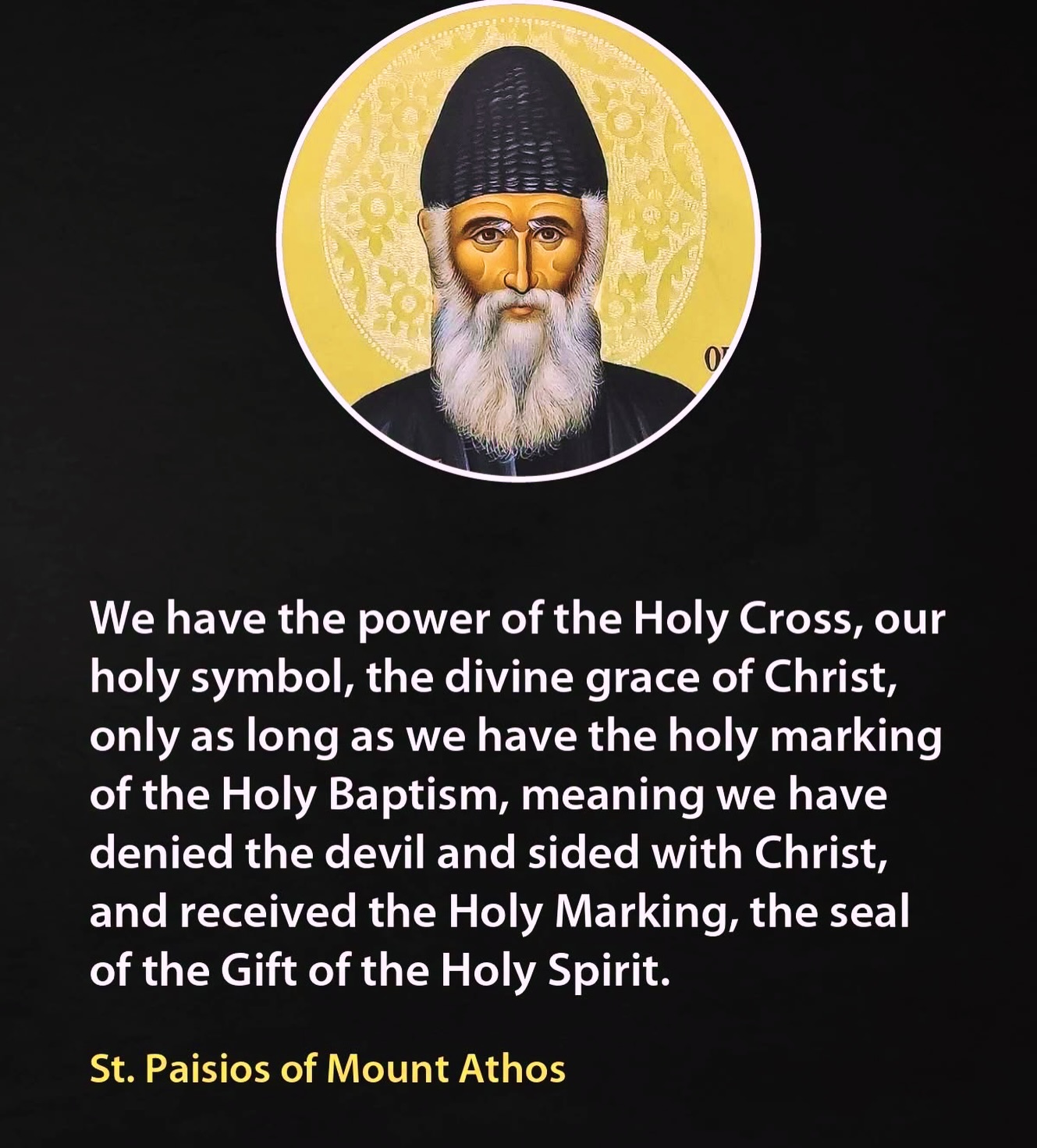
The post presents the Holy Cross not as a mere symbol but as the banner of victory in Christ, with Holy Baptism as entrance into His death and Resurrection. It cites Romans 6:4 on being buried with Christ through baptism into death and raised to walk in newness of life, and Acts 2:38 on receiving the gift of the Holy Spirit through Chrismation, sealed as belonging to Christ. The author urges believers not to treat the Cross as an ornament or…

The post presents the Holy Cross not as a mere symbol but as the banner of victory in Christ, with Holy Baptism as entrance into His death and Resurrection. It cites Romans 6:4 on being buried with Christ through baptism into death and raised to walk in newness of life, and Acts 2:38 on receiving the gift of the Holy Spirit through Chrismation, sealed as belonging to Christ.

The author urges believers not to treat the Cross as an ornament or Baptism as a mere ritual, but as a sacred calling to live in repentance, holiness, and unwavering fidelity to the Holy Orthodox Church. Galatians 6:14 is quoted where the Apostle Paul writes that he boasts only in the cross of our Lord Jesus Christ. Saint Paisios of Mount Athos is cited on the reminder that our strength is not in outward appearances, but in the grace of Christ, received in faith and lived through obedience.

The post concludes with the affirmation that Christians have renounced the devil, belong to Christ, and must take up their cross daily, for they are sealed with the gift of the Holy Spirit and called to remain faithful unto the end.

  • The Holy Cross is the banner of victory in Christ, not merely a symbol
  • Holy Baptism unites us to Christ's death and Resurrection (Romans 6:4)
  • Holy Chrismation seals us with the gift of the Holy Spirit (Acts 2:38)
  • Saint Paisios teaches that strength comes from Christ's grace through faith and obedience
  • Christians must live out their baptismal calling in daily repentance and fidelity
George Instagram discussion

Preparation for Holy Communion begins days before the liturgy

1:12

The speaker explains that preparation for Holy Communion starts days before the Divine Liturgy, not only on Sunday morning. Most people mistakenly think skipping breakfast is sufficient, but the Church requires a broader discipline. Five steps frame this preparation. First, fasting from food and drink on the morning of communion and following the priest's guidance in the days prior, since different traditions observe this differently. Second,…

The speaker explains that preparation for Holy Communion starts days before the Divine Liturgy, not only on Sunday morning. Most people mistakenly think skipping breakfast is sufficient, but the Church requires a broader discipline. Five steps frame this preparation. First, fasting from food and drink on the morning of communion and following the priest's guidance in the days prior, since different traditions observe this differently.

Second, regular confession, especially when something heavy burdens the heart, with the priest or spiritual father determining the frequency. Third, reading the pre-communion prayers from an Orthodox prayer book the night before or in the morning to prepare the heart. Fourth, reconciling with anyone against whom one holds anger, following Christ's command to leave the gift at the altar and be reconciled first.

Fifth, arriving on time for the entire liturgy, because the whole service prepares the faithful to receive Christ himself, not a symbol.

Key moments

  1. Most people prepare for communion the wrong way by only skipping breakfast on Sunday morning, but preparation starts days before.
  2. On the morning of communion we do not eat or drink anything from when we wake up, and in the days before we fast as our priests guide us, since different traditions do this differently.
  3. Go to confession regularly and especially if something heavy is on your heart, with the priest or spiritual father determining the frequency.
  4. Read the prayers before Holy Communion found in every Orthodox prayer book the night before or in the morning to prepare the heart.
  5. If there is someone you are angry with, call them and forgive them, because Jesus said to leave your gift at the altar and first be reconciled with your brother.
  6. Come to the liturgy on time, not at the last minute, because the whole liturgy is the preparation for receiving Christ himself, not a symbol.
8 opinions in the discussion What we were taught is a minimum of 1 week of fasting every day, no meat or dairy (children 3 days). On the day of Communion, from midnight on, a total fast - no food, no water until… Read the discussion

St. Gerasimos of Kefalonia: Monastery History, Relics, and Living Veneration

The Monastery of St. Gerasimos of Kefalonia lies in the Omala valley at the foot of Mount Ainos on the Greek island of Kefalonia. Its history is tied to St. Gerasimos, who arrived on the island in the mid-16th century. An older monastery dedicated to St. Mary of Jerusalem already stood on the site. In 1561, the priest Georgios Valsamos granted the monastery and surrounding lands to Gerasimos. The saint restored the church and founded a women's…

The Monastery of St. Gerasimos of Kefalonia lies in the Omala valley at the foot of Mount Ainos on the Greek island of Kefalonia. Its history is tied to St. Gerasimos, who arrived on the island in the mid-16th century. An older monastery dedicated to St. Mary of Jerusalem already stood on the site.

In 1561, the priest Georgios Valsamos granted the monastery and surrounding lands to Gerasimos. The saint restored the church and founded a women's monastery named New Jerusalem. The main church, dedicated to the Dormition of the Theotokos, houses the saint's relics in an adorned silver casket.

The old church preserves his hermitage, accessed through an opening in the floor. Monastic tradition holds that the plane trees growing in the courtyard were planted by the saint himself. His life was marked by prayer, fasting, asceticism, and care for those who sought spiritual comfort.

St. Gerasimos reposed on August 15, 1579. According to church tradition, his relics were found incorrupt and fragrant. October 20 commemorates the uncovering of his relics; on that day the relics are carried in a solemn procession, and faithful from various places come to venerate them and pray to the saint. The monastery remains a women's community where nuns continue the prayerful and liturgical life, caring for the shrine and pilgrims.

The text concludes with a prayer to St. Gerasimos for peace, health, strength in temptations, and a heart filled with faith, humility, and love. The accompanying video presents a Greek liturgical hymn that repeats the call to praise the Lord, the Lord of Hosts, and His mercy with the refrain 'alleluia' across three stanzas alternating between addressing the Lord and God. The post cites Religious Greece and Monastiria.gr as sources.

Key moments

  1. The hymn opens with the call to praise the Lord, the Lord of Hosts, His mercy, alleluia.
  2. The second stanza shifts to praise God, God, the Lord of Hosts, His mercy, alleluia.
  3. The third stanza returns to praise the Lord, the Lord of Hosts, His mercy, alleluia, completing the threefold repetition.
Read more

Feast of St. Gerasimos of Kefalonia Marks Translation of Relics

The author describes the celebration of St. Gerasimos of Kefalonia on the Greek island of Kefalonia on October 20. The feast commemorates the discovery of the saint's holy relics. St. Gerasimos lived in the 16th century and founded a monastery in the Omala valley, naming it New Jerusalem. According to church tradition, after his repose in 1579 his relics were found incorrupt and fragrant. On the feast day, after a solemn service, the relics are…

The author describes the celebration of St. Gerasimos of Kefalonia on the Greek island of Kefalonia on October 20. The feast commemorates the discovery of the saint's holy relics. St. Gerasimos lived in the 16th century and founded a monastery in the Omala valley, naming it New Jerusalem. According to church tradition, after his repose in 1579 his relics were found incorrupt and fragrant.

On the feast day, after a solemn service, the relics are carried in a litany. A large number of faithful gather to venerate the saint, and many prostrate themselves on the ground so that the litany with the relics passes over them. They do this with faith and prayer, seeking the saint's intercession, comfort in suffering, and help in illness.

The tradition honors St. Gerasimos as a wonderworker who received the grace of healing the sick and helping those afflicted by unclean spirits. The text concludes with a call to approach God with faith, humility, and hope, and to ask the saints to intercede, ending with the prayer: "Holy Father Gerasimos, pray to God for us."

  • Feast day on October 20 celebrates the translation of St. Gerasimos's relics on Kefalonia
  • St. Gerasimos (16th century) founded the New Jerusalem monastery in Omala valley
  • Relics found incorrupt and fragrant after his repose in 1579
  • Faithful prostrate during litany with relics seeking healing and intercession
  • Saint honored as wonderworker for healing and deliverance from unclean spirits
Read more