WeOrthodox
EN UA

Orthodox posts, videos and discussions

We follow Orthodox channels, communities and blogs across the web, summarise every post and video, and highlight the conversations with real substance.

Orthodox Life Instagram

Saint Averkios, Equal-to-the-Apostles: Bishop, Wonderworker, Missionary

The post commemorates Saint Averkios, Equal-to-the-Apostles and Wonderworker, Bishop of Hierapolis in Phrygia Salutaris during the reign of Emperor Marcus Aurelius in the second century. It recounts that he grieved for the idol-worshippers and prayed for their conversion. During a festival for Apollo, prompted by a divine vision, he entered the pagan temple by night and overthrew the statues with his staff. When townspeople sought to kill him,…

The post commemorates Saint Averkios, Equal-to-the-Apostles and Wonderworker, Bishop of Hierapolis in Phrygia Salutaris during the reign of Emperor Marcus Aurelius in the second century. It recounts that he grieved for the idol-worshippers and prayed for their conversion. During a festival for Apollo, prompted by a divine vision, he entered the pagan temple by night and overthrew the statues with his staff.

When townspeople sought to kill him, he walked into the marketplace and cast demons out of three afflicted youths before the crowd. The miracle led the people of Hierapolis to ask for teaching, and he baptized hundreds. He also healed the blind mother of the provincial proconsul Publius.

His reputation reached Rome, where he traveled and cured the emperor's daughter of a severe affliction. Beyond Hierapolis, he made missionary journeys across Syria, Cilicia, and Mesopotamia, converting multitudes, defending the Church against false teachers, and strengthening believers. For his apostolic zeal, widespread travels, and numerous miracles, tradition honors him with the title Equal-to-the-Apostles.

Before his peaceful repose around 167 or 186 AD, he composed his own Christian epitaph, which was carved onto his tombstone. The post includes image descriptions showing a fresco detail of a praying bishop and Greek and Church Slavonic inscriptions naming the saint.

  • Bishop of Hierapolis in second century under Marcus Aurelius
  • Destroyed idols in Apollo's temple after a divine vision
  • Cast out demons publicly, leading to mass baptism in Hierapolis
  • Healed proconsul's mother and emperor's daughter in Rome
  • Missionary journeys in Syria, Cilicia, Mesopotamia; composed epitaph
Read more
Prayer Orthodoxy ® Instagram

Saints Who Embraced Monastic Life for Christ

The post presents the witness of saints who entered monastic life, leaving behind possessions, comforts, and ambitions to dedicate themselves to Christ. Through prayer, fasting, obedience, humility, and repentance, these holy men pursued union with God. Their monasteries became places of spiritual healing, and their lives continue to inspire Orthodox Christians across generations. The text identifies their greatest legacy as their holiness,…

The post presents the witness of saints who entered monastic life, leaving behind possessions, comforts, and ambitions to dedicate themselves to Christ. Through prayer, fasting, obedience, humility, and repentance, these holy men pursued union with God. Their monasteries became places of spiritual healing, and their lives continue to inspire Orthodox Christians across generations.

The text identifies their greatest legacy as their holiness, their love for Christ, and their prayers for the world. The same message appears in Greek, describing the saints who followed the monastic path, who struggled for union with God through the same virtues, and whose monasteries became places of spiritual therapy. The accompanying images show several monks and the Monastery of Saint Nektarios of Aegina.

  • Saints left worldly goods and ambitions for monastic life
  • They pursued union with God through prayer, fasting, obedience, humility, repentance
  • Their monasteries became centers of spiritual healing
  • Their legacy is holiness, love for Christ, and prayers for the world
  • Images include monks and the Monastery of Saint Nektarios of Aegina
Read more

The Church as Hospital and Heaven: Chrysostom and Germanus on Orthodox Worship

The post presents two patristic quotes and a brief explanation of Orthodox worship. Saint John Chrysostom describes the Church as a hospital for souls rather than a courtroom. The author notes that every icon proclaims the Gospel, every candle represents prayer, and every act of worship draws the faithful closer to Christ.

Saint Germanus of Constantinople teaches that the Church is an earthly heaven in which the heavenly God dwells and walks. The same content appears in Greek translation.

  • Saint John Chrysostom: the Church is a hospital for souls, not a courtroom
  • Icons proclaim the Gospel, candles symbolize prayer, worship draws us to Christ
  • Saint Germanus of Constantinople: the Church is an earthly heaven where God dwells and walks
  • The text is given in English and Greek
Read more
M mysteries_of_christendom Instagram

St. Anthony the Great's First Spiritual Battle in the Desert Tomb

The video recounts the early monastic struggle of St. Anthony the Great around 285 in Egypt. As a young man, Anthony left his village and entered an empty desert tomb to confront demons. The next day his friend found him lying motionless on the floor, beaten so severely he appeared dead. The friend carried him to the village church where mourners gathered through the night in quiet vigil. In the middle of the night Anthony's eyes opened suddenly…

The video recounts the early monastic struggle of St. Anthony the Great around 285 in Egypt. As a young man, Anthony left his village and entered an empty desert tomb to confront demons. The next day his friend found him lying motionless on the floor, beaten so severely he appeared dead.

The friend carried him to the village church where mourners gathered through the night in quiet vigil. In the middle of the night Anthony's eyes opened suddenly and he was fully awake among the sleeping mourners. His first words were not about his wounds but a request to be carried back immediately to the tomb that had nearly killed him.

That night the walls of the tomb seemed to split wide open, and by morning Anthony had received an answer to the question that had driven him there: where God was during his suffering. The host Leila introduces herself and the program Mysteries of Christendom, which will explore this and other events from Christian history.

Key moments

  1. Around 285, a young man in Egypt walked past his village into the desert and climbed into an old empty tomb to fight demons.
  2. The next day his friend found him lying completely still on the floor, beaten so badly he looked dead.
  3. The friend carried him to the village church where people gathered around him in the quiet way you gather around someone already lost.
  4. In the middle of the night, Anthony's eyes sprang wide open and he was suddenly awake among the sleeping mourners.
  5. His first words were not about his wounds but a request to be carried back immediately to the tomb that had nearly killed him.
  6. That night the walls of the tomb seemed to split wide open and by morning he had an answer to the question: God, where were you?
  7. The host Leila introduces herself and the show Mysteries of Christendom.
Prayer Orthodoxy ® with Live Orthodox Instagram

St. John the Baptist's call to repentance as the kingdom draws near

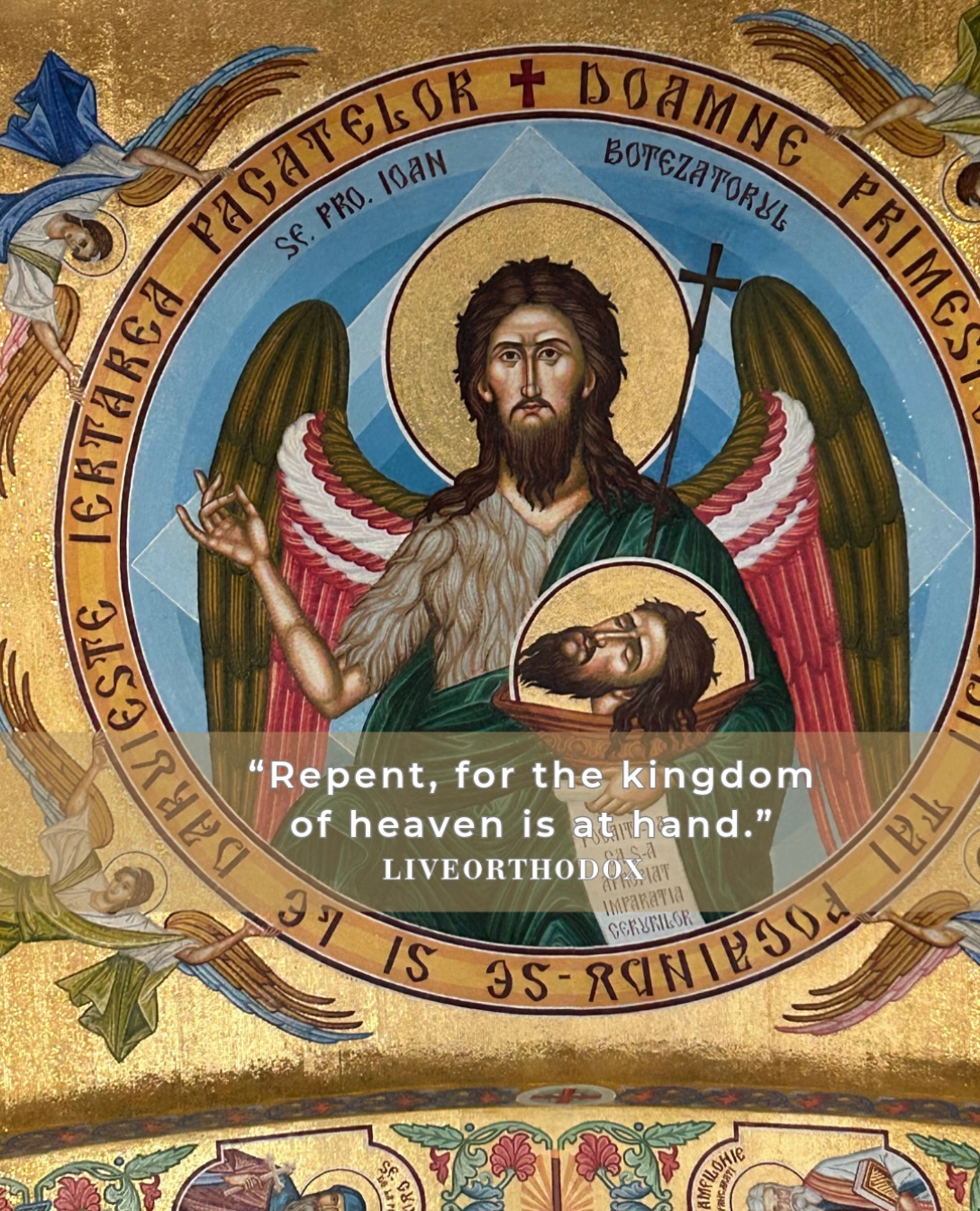
The post presents St. John the Baptist's message that people must change their minds and turn from sin because God's rule has drawn near in Jesus Christ. It cites Matthew 3:2, "Repent, for the kingdom of heaven is at hand," and describes repentance as a complete shift in heart, values, and direction. The post includes Romanian text referencing a prayer to St. John the Forerunner for forgiveness of sins: "Păcătelor Doamne Botezătorul primește Sf.…

The post presents St. John the Baptist's message that people must change their minds and turn from sin because God's rule has drawn near in Jesus Christ. It cites Matthew 3:2, "Repent, for the kingdom of heaven is at hand," and describes repentance as a complete shift in heart, values, and direction. The post includes Romanian text referencing a prayer to St. John the Forerunner for forgiveness of sins: "Păcătelor Doamne Botezătorul primește Sf.

Pr. Ioan iertarea" (For sins, Lord Baptizer receives St. Prophet John's forgiveness). The content connects the Baptist's preaching directly to Christ's arrival and the urgency of metanoia.

  • St. John the Baptist calls for repentance because the kingdom of heaven is at hand
  • Repentance requires a complete change of heart, values, and direction
  • The post quotes Matthew 3:2 directly
  • Romanian text references a prayer to St. John the Forerunner for forgiveness of sins
  • The message links the Baptist's preaching to Christ's presence
Read more
Saint Wisdom Instagram

Saint Macarius the Great on the power of words

Saint Macarius the Great teaches that words carry power to either poison what is good or bring peace to what is broken. A cruel word deepens wounds, while a gentle word begins healing. The saint presents this as a fundamental reality of human speech: one cruel word can poison something that was good, and one gentle word can bring peace into something that was broken. Words have the power either to deepen another person's wounds or to begin…

Saint Macarius the Great teaches that words carry power to either poison what is good or bring peace to what is broken. A cruel word deepens wounds, while a gentle word begins healing. The saint presents this as a fundamental reality of human speech: one cruel word can poison something that was good, and one gentle word can bring peace into something that was broken.

Words have the power either to deepen another person's wounds or to begin healing them. This teaching comes from the fourth-century Egyptian desert, where Macarius lived as a monk and spiritual father. In that tradition, the discipline of speech was a central ascetic practice.

The fathers understood that a word spoken in anger or judgment carries weight that can corrupt a good situation, while a word spoken with gentleness can restore a broken one. The contrast is stark and practical: poison versus peace, deepening wounds versus beginning healing. The video offers this teaching without elaboration, allowing the two possibilities to stand side by side.

The power described is immediate and personal, addressing the speaker and the listener alike. Macarius does not qualify the statement; he states the effect of words as a fact of spiritual life. The teaching aligns with the broader scriptural and patristic witness on the tongue, but the video presents only the saint's own formulation.

The result is a concise reminder that every word chooses between two directions, and that the choice shapes the condition of both the speaker and the one who hears.

Key moments

  1. One cruel word can poison something that was good.
  2. One gentle word can bring peace into something that was broken.
  3. Words have the power either to deepen another person's wounds or to begin healing them.
Read more
St Anthony’s Youth SA ☦︎ with Dylan☦️ Instagram

Saint John Chrysostom on spiritual struggle and virtue

The post shares a quotation from Saint John Chrysostom addressing the necessity of spiritual conflict. The saint teaches that virtue cannot exist without struggle, and that faith and love remain unproven until they are tested by adversity. He urges believers not to fear or flee from conflict, because it is through temptation and difficulty that the reality of faith and love is revealed.

The passage presents struggle as the proving ground of Christian character rather than something to be avoided.

  • Virtue requires struggle; without conflict there is no virtue
  • Faith and love are only proven genuine when tempted
  • Adversity reveals whether faith and love are truly present
  • Christians should not fear or flee from spiritual conflict
  • Struggle serves as the test that confirms spiritual reality
Read more
Orthodox Christian TV YouTube

Hank Hanegraaff: Orthodox Faith Transforms Culture, Not Conforms

Hank Hanegraaff: Orthodox Faith Transforms Culture, Not Conforms 22:27

Hank Hanegraaff argues that the tension between sacred and secular is constant, not unique to modernity. He explains that Orthodox Christianity teaches substance dualism: humans are body-soul unities with consciousness that machines cannot replicate. The image of God gives intrinsic worth; the likeness is a progressive transformation through the church's sacramental life. The church is the epicenter of the universe where the Eucharist provides…

Hank Hanegraaff argues that the tension between sacred and secular is constant, not unique to modernity. He explains that Orthodox Christianity teaches substance dualism: humans are body-soul unities with consciousness that machines cannot replicate. The image of God gives intrinsic worth; the likeness is a progressive transformation through the church's sacramental life.

The church is the epicenter of the universe where the Eucharist provides spiritual power to transform the world. Hanegraaff warns that moral relativism is self-stultifying and contrasts it with the Ten Commandments. He stresses passing on the faith through family prayer and Bible reading, and insists the church must not conform to culture but transform culture by the unchanging faith delivered to the saints.

He notes that the pagan transformation of the cosmos gained dominance starting with Darwin, making materialism the prevailing worldview. The mind and brain are not identical; the mind causes the brain's physical synapses to fire. Machines will never possess consciousness because humans have a metaphysical aspect enabling rational decisions.

The cult of progress, expressed in transhumanism and transgenderism, asserts we can become gods of our own biology, but Scripture fixes the human lifespan at seventy to eighty years. Civilization hangs by a gossamer strand of memory; if one generation fails to transmit the faith, the entire edifice of knowledge collapses. The death knell of Orthodoxy is conforming to the culture rather than conforming the culture to Christ; those who enter the church to change it are enemies of the gospel.

When the Roman Empire became Christian in the fourth century, many joined for social advantage, diluting the church's power and giving rise to the monastic movement as a continuation of martyrdom.

Key moments

  1. The pagan transformation of the cosmos gained dominance starting with Darwin, making materialism the prevailing worldview.
  2. The mind and brain are not identical; the mind causes the brain's physical synapses to fire, as illustrated by the mental strength of a golfer like Tiger Woods.
  3. Machines will never possess consciousness because humans have a metaphysical aspect that enables rational decisions, contrary to the materialist claim that everything is physical.
  4. The church is the epicenter of the universe, and the Eucharist is the chief grace that supplies spiritual power to transform the world.
  5. The cult of progress, expressed in transhumanism and transgenderism, asserts that we can become gods of our own biology, but Scripture fixes the human lifespan at seventy to eighty years.
  6. Civilization hangs by a gossamer strand of memory; if one generation fails to transmit the faith, the entire edifice of knowledge collapses.
  7. The death knell of Orthodoxy is conforming to the culture rather than conforming the culture to Christ; those who enter the church to change it are enemies of the gospel.
  8. When the Roman Empire became Christian in the fourth century, many joined for social advantage, diluting the church's power and giving rise to the monastic movement as a continuation of martyrdom.
Disgruntled Docs with Orthodox Logos ☦️ Instagram

Saint Paisios' Prophecy on Europe's Future Amid Unrest

The post describes recent widespread demonstrations, violence, and vandalism in France, Italy, and other countries, linking them to cost-of-living crises, housing shortages, and declining disposable income. It states that far-left activists and migrants have taken to the streets in waves of looting and unprecedented destruction of public and private property, and that France has descended into chaos. The author argues that Europe, once…

The post describes recent widespread demonstrations, violence, and vandalism in France, Italy, and other countries, linking them to cost-of-living crises, housing shortages, and declining disposable income. It states that far-left activists and migrants have taken to the streets in waves of looting and unprecedented destruction of public and private property, and that France has descended into chaos.

The author argues that Europe, once predominantly Christian, is moving toward political, economic, spiritual, and social decline because of what is called the suicidal policy of the European Union. The EU is accused of either being unable or unwilling to understand that mass illegal migration of Muslim populations will gradually lead to the Islamisation of the continent.

The post then turns to a prophecy attributed to Saint Paisios, saying that God revealed to him that the nations of Europe will eventually wake up and take the measures necessary to protect their societies, their identity, and their spiritual heritage. A quotation from the book "Elder Paisios" by N. Zournatzoglou, Volume II, first edition, page 359, is provided: "Later, they will understand what is happening and then they will be the first to take measures against them.

You will see what they will do." The image text adds a headline: "Saint Paisios: Forget about those who gather Muslims and build mosques," and notes that the prophetic words spoken to pilgrims more than thirty years ago are more relevant than ever. The post presents the prophecy as a direct response to the current situation.

  • Recent unrest in Europe includes massive demonstrations, looting, and property destruction in France and Italy.
  • The author attributes Europe's decline to EU migration policies that enable Islamisation.
  • Saint Paisios is cited as prophesying that European nations will eventually wake up and take protective measures.
  • The prophecy is sourced from "Elder Paisios" by N. Zournatzoglou, Volume II, page 359.
  • The post frames the prophecy as directly relevant to current events.
Athonite Audio YouTube

Evergetinos Hypothesis 27: Monks Should Avoid Worldly Friendships

Evergetinos Hypothesis 27: Monks Should Avoid Worldly Friendships 10:40

Hypothesis 27 of the Evergetinos teaches that monks should not pursue friendships with people who are prominent in the world. The text illustrates this through several stories. Archbishop Theophilos and the governor traveled to Sketis to see Abba Arsenius. When they asked for an edifying word, Arsenius replied: "If I tell you something, will you agree to put it into practice? That by which I ask you to abide is that you never wish to go where…

Hypothesis 27 of the Evergetinos teaches that monks should not pursue friendships with people who are prominent in the world. The text illustrates this through several stories. Archbishop Theophilos and the governor traveled to Sketis to see Abba Arsenius. When they asked for an edifying word, Arsenius replied: "If I tell you something, will you agree to put it into practice?

That by which I ask you to abide is that you never wish to go where you hear that Arsenius is." Later, when the archbishop invited Arsenius to Alexandria, the elder refused, saying that if he opened his door to the archbishop he would have to open it to many others and would then have to withdraw far away from those parts. Abba Ore likewise prevented Count Longinos, a man of many charities, from visiting him, telling the monk who brought the request: "It is impossible for him to cross this ravine, and so he will not see me."

An Egyptian monk in Constantinople received Emperor Theodosius the Younger at his door as if he were a palace guard, without particular attentiveness. When the emperor asked if he knew who he was, the elder answered: "God knows who you are." An elder said: "Avoid making the acquaintance of one in authority and do not visit him often, for from this familiarity you will acquire boldness and will desire thenceforth to be in a position of authority yourself."

When a magistrate came to see Abba Moses, the elder fled to the marsh; meeting the magistrate on the way, he called himself a fool and sent the magistrate away, who later learned the elder was Moses and was greatly edified. Christ visited an abbot of 200 monks in the guise of a poor elder; the abbot ignored him to entertain a rich man, and at evening the poor elder declared: "If you desire the glory of men because of your previous toil...

I will send people to visit you from the four points of the compass... but of the goods of my kingdom, you shall not taste."

Key moments

  1. 0:01 The hypothesis states that we should not pursue friendships with people who are prominent in the world.
  2. 1:03 When Archbishop Theophilos and the governor asked Abba Arsenius for an edifying word, he replied: "If I tell you something, will you agree to put it into practice? That by which I ask you to abide is that you never wish to go where you hear that Arsenius is."
  3. 1:34 When the archbishop later invited Arsenius to visit Alexandria, Arsenius refused, saying that if he opened his door to the archbishop he would have to open it to many others and would then have to withdraw far away from those parts.
  4. 2:09 Abba Ore would not allow Count Longinos, a man of many charities, to visit him, telling the monk who brought the request: "It is impossible for him to cross this ravine, and so he will not see me."
  5. 3:11 An Egyptian monk in Constantinople received Emperor Theodosius the Younger at his door as if he were a palace guard, without particular attentiveness, and when the emperor asked if he knew who he was, the elder answered: "God knows who you are."
  6. 4:45 An elder said: "Avoid making the acquaintance of one in authority and do not visit him often, for from this familiarity you will acquire boldness and will desire thenceforth to be in a position of authority yourself."
  7. 5:50 When a magistrate came to see Abba Moses, the elder fled to the marsh; meeting the magistrate on the way, he called himself a fool and sent the magistrate away, who later learned the elder was Moses and was greatly edified.
  8. 10:00 Christ visited an abbot of 200 monks in the guise of a poor elder; the abbot ignored him to entertain a rich man, and at evening the poor elder declared: "If you desire the glory of men because of your previous toil... I will send people to visit you from the four points of the compass... but of the goods of my kingdom, you shall not taste."

Humility as the Shortest Path to Paradise

Father Predrag Shchepanovic presents the teaching of the Holy Fathers on humility. They describe humility as a virtue through which a humble person receives God's forgiveness for both voluntary and involuntary sins. This makes humility the shortest path to paradise. In contrast, pride blinds a person to everyone around him. When a person humbles himself, the natural sounds of birds, wind, and river become a symphony of God. But when pride takes…

Father Predrag Shchepanovic presents the teaching of the Holy Fathers on humility. They describe humility as a virtue through which a humble person receives God's forgiveness for both voluntary and involuntary sins. This makes humility the shortest path to paradise. In contrast, pride blinds a person to everyone around him.

When a person humbles himself, the natural sounds of birds, wind, and river become a symphony of God. But when pride takes over and a person thinks only of himself, he loses the need to share love with others and closes himself off. This self-enclosure leads to modern problems such as anxiety, depression, divorces, broken marriages, and quarrels, because people attempt to solve their problems alone rather than through humility and connection with God and others.

Key moments

  1. The Holy Fathers teach that humility is a virtue through which a humble person receives forgiveness from God for both voluntary and involuntary sins.
  2. Humility is the shortest path to paradise because pride blinds a person to everyone around him.
  3. When a person humbles himself, the sounds of birds, wind, and river become a symphony of God.
  4. Pride makes a person self-centered and removes the need to share love with others.
  5. Closing oneself off in pride leads to modern problems such as anxiety, depression, divorces, broken marriages, and quarrels, as people attempt to solve problems alone.
Read more

How the New Testament emerged from the life of the early Church

The video addresses a common Western misconception that the Bible appeared as a complete book, similar to the Quran. When Paul and Christ refer to scripture, they mean the Hebrew scriptures, because the New Testament writings did not yet exist. The gospel accounts were written twenty to thirty years after the events they describe. During those decades Christians worshiped, partook of the body and blood of Christ, and were formed by the Hebrew…

The video addresses a common Western misconception that the Bible appeared as a complete book, similar to the Quran. When Paul and Christ refer to scripture, they mean the Hebrew scriptures, because the New Testament writings did not yet exist. The gospel accounts were written twenty to thirty years after the events they describe.

During those decades Christians worshiped, partook of the body and blood of Christ, and were formed by the Hebrew scriptures. The texts of the New Testament were produced by the church community; scripture emerged from the life of the church, not the church from scripture. Chapter and verse divisions were added much later.

Key moments

  1. The Western idea that the Bible fell from the sky like the Quran is ahistorical.
  2. Paul's references to scripture mean the Hebrew scriptures, not New Testament books which did not yet exist.
  3. Chapter and verse divisions were added much later.
  4. The gospel accounts were written 20 to 30 years after the events they describe.
  5. During those decades Christians worshiped, partook of the body and blood of Christ, and were formed by the Hebrew scriptures.
  6. The texts of the New Testament were written out of the community of the church, not prior to it.
Read more

Mother Jefimija Teaches Forgiveness as Condition for Communion with God

Mother Jefimija speaks on forgiveness as the greatest virtue for harmony with God, alongside love. She recounts a teaching from a great spiritual father that as long as a person has not forgiven even one individual and remains in bad relations with them, they have no communion with God. God does not accept this lack of forgiveness. The first step is learning to forgive, acknowledging human weakness in spirit and body. People are prone to…

Mother Jefimija speaks on forgiveness as the greatest virtue for harmony with God, alongside love. She recounts a teaching from a great spiritual father that as long as a person has not forgiven even one individual and remains in bad relations with them, they have no communion with God. God does not accept this lack of forgiveness. The first step is learning to forgive, acknowledging human weakness in spirit and body.

People are prone to immediate retaliation when offended, questioning motives and striking back. One must draw humility from within to set aside that reaction, dismiss the offense with the thought "what does it matter," and instead pray for the offender that God will change them. What others say or whether they love us is not the measure; what matters is that God does not leave us.

To return to God's path and maintain connection with the Lord, we must live as He lived, spreading love and saying, "Father, forgive them, for they know not what they do." The teaching presents forgiveness as a non-negotiable condition for communion with God. The spiritual father's formulation is absolute: a single unforgiven person breaks that communion.

Human weakness is named as the reason forgiveness must be learned, we are weak in spirit and body. The natural reaction to offense is immediate offense in return, questioning the other's motives. Overcoming this requires humility drawn from deep within, not a superficial effort.

The practical replacement for retaliation is prayer for the offender's transformation. The criterion for spiritual health shifts from human relationships to divine presence. Christ's prayer on the cross becomes the pattern for the believer's life.

Key moments

  1. The greatest virtue to cultivate for harmony with God is forgiveness, and the virtue of love.
  2. A great spiritual father said that as long as there exists one person with whom you are not in good relations and whom you have not forgiven, you have no communion with God.
  3. God does not like this lack of forgiveness.
  4. The first thing to do is to learn to forgive, because we are weak people, weak in spirit and body.
  5. We are prone to immediately go on the offensive when someone says something, to retaliate and question their motives.
  6. One must dig up humility from the depths to push that reaction aside and say "what does it matter," then pray to God for that person so they will change.
  7. What others say or whether they love us is not important; what is important is that God does not leave us.
  8. To learn and return to God's path and have that connection with the Lord, we must live as He lived, spreading His love and saying "forgive them Father, they know not what they do."
Read more
Disgruntled Docs with MaximosPTO Instagram

Saint Spyridon: shepherd, bishop, and defender of the Trinity at Nicaea

2:34

The post shares a video recounting the life of Saint Spyridon of Trimythous. Born in Cyprus around 270 AD, he worked as a shepherd, married, and after his wife's death entrusted his daughter to the church and entered monastic life. The video describes his miracles: he halted robbers, parted a stream to save the innocent, had choirs of angels chant during empty divine services, and healed the sick; his generosity and true faith made him widely…

The post shares a video recounting the life of Saint Spyridon of Trimythous. Born in Cyprus around 270 AD, he worked as a shepherd, married, and after his wife's death entrusted his daughter to the church and entered monastic life. The video describes his miracles: he halted robbers, parted a stream to save the innocent, had choirs of angels chant during empty divine services, and healed the sick; his generosity and true faith made him widely known.

His reputation led to his consecration as bishop during the Arian controversy, when followers of Arius denied the divinity of Christ and the Holy Spirit, considering both as creatures. On his way to the Council of Nicaea, Arians decapitated his horses while he slept at an inn; he placed the heads on the bodies, prayed, and the horses were resurrected, though the heads were mixed up and discovered only in the morning.

When Arians bribed shipmasters to block his crossing, he made the sign of the cross, spread his cloak on the water, stepped onto it, and sailed across, arriving before his adversaries. At the council, the Arian advocate Eulogius presented heretical views well, stunning many bishops, but Saint Spyridon stepped forward and proclaimed the Orthodox faith: God created all by his Word and Spirit, the Word is the Son of God who became incarnate, suffered, died, rose, and is of one essence with the Father, a mystery beyond human comprehension.

He took a brick, squeezed it, and in the name of the Father fire burst forth, in the name of the Son water flowed, and in the name of the Holy Spirit dry clay remained; he said the three elements are one brick, just as the Trinity is three persons but one Godhead. The council was astonished, Eulogius accepted his words and acknowledged his error, renounced his heresies in the church, Orthodoxy prevailed, and the Arians were excommunicated.

The caption accompanying the video notes that the saint's relics remain incorrupt after nearly 1700 years and contrasts Orthodox saints with modern pastors and heterodox groups.

Key moments

  1. 0:00 Saint Spiridon was born in Cyprus in 270 AD, was a shepherd from a humble family, married, became a widower, entrusted his daughter to the church community, and entered monastic life.
  2. 0:00 He halted robbers, parted streams to save the innocent, had choirs of angels chant in his empty divine services, and healed the sick, and his generosity and true faith made him incredibly well-known.
  3. 0:31 He became a bishop during the Arian controversy, when the followers of Arius were numerous and refused to acknowledge the divinity of Christ and the Holy Spirit, considering both as creatures.
  4. 0:31 On the road to the Council of Nicaea, the Arians decapitated his horses while he slept at an inn; he placed the heads on the bodies, prayed, and the horses were resurrected, though the heads were mixed up and discovered only in the morning.
  5. 1:03 The Arians bribed shipmasters to prevent him from crossing the water to Nicaea; he made the sign of the cross, spread his cloak, stepped onto it, and sailed across, arriving before his adversaries.
  6. 1:33 At the council, Eulogius presented heretical views well, stunning many bishops, but Saint Spiridon stepped forward and proclaimed the Orthodox faith: God created all by his Word and Spirit, the Word is the Son of God who became incarnate, suffered, died, rose, and is of one essence with the Father, a mystery beyond human comprehension.
  7. 2:04 He took a brick, squeezed it, and in the name of the Father fire burst forth, in the name of the Son water flowed, and in the name of the Holy Spirit dry clay remained; he said the three elements are one brick, just as the Trinity is three persons but one Godhead.
  8. 2:04 The council was astonished, Eulogius accepted his words and acknowledged his error, renounced his heresies in the church, Orthodoxy prevailed, and the Arians were excommunicated.
Read more
George Instagram discussion

Jesus the Only Way, His Church the Pillar of Truth

1:12

The speaker argues that the Bible does not claim Orthodoxy is the only way but makes a more radical assertion: Jesus himself is the way, the truth, and the life, and no one comes to the Father except through him, citing John 14:6. Jesus also said he would build his church, singular, not churches, and Scripture describes this church as the pillar and foundation of the truth. Because Christ established his church and entrusted it with the truth,…

The speaker argues that the Bible does not claim Orthodoxy is the only way but makes a more radical assertion: Jesus himself is the way, the truth, and the life, and no one comes to the Father except through him, citing John 14:6. Jesus also said he would build his church, singular, not churches, and Scripture describes this church as the pillar and foundation of the truth.

Because Christ established his church and entrusted it with the truth, the unavoidable question becomes what happened to that church founded two thousand years ago, whether it disappeared, changed, or remains today. The presentation frames the issue not as a denominational claim but as a historical and theological inquiry into the continuity of the church Christ founded.

Key moments

  1. The Bible does not say Orthodoxy is the only way but declares Jesus as the only way to the Father according to John 14:6.
  2. Jesus said he would build his church, singular, not multiple churches.
  3. The Bible calls the church the pillar and foundation of the truth.
  4. Christ established his church and entrusted it with the truth.
  5. The essential question is what happened to the church established by Christ and the apostles 2,000 years ago, did it disappear, change, or remain today?
15 opinions in the discussion In John 2:19 Jesus talked about destroying and rebuilding the temple, meaning his own body, but people back then took it literally. I believe the church is us, reborn in Him, one body,… Read the discussion
Orthodox Life Instagram

Saint Socrates of Ancyra: Priest and Martyr Who Defied Pagan Worship

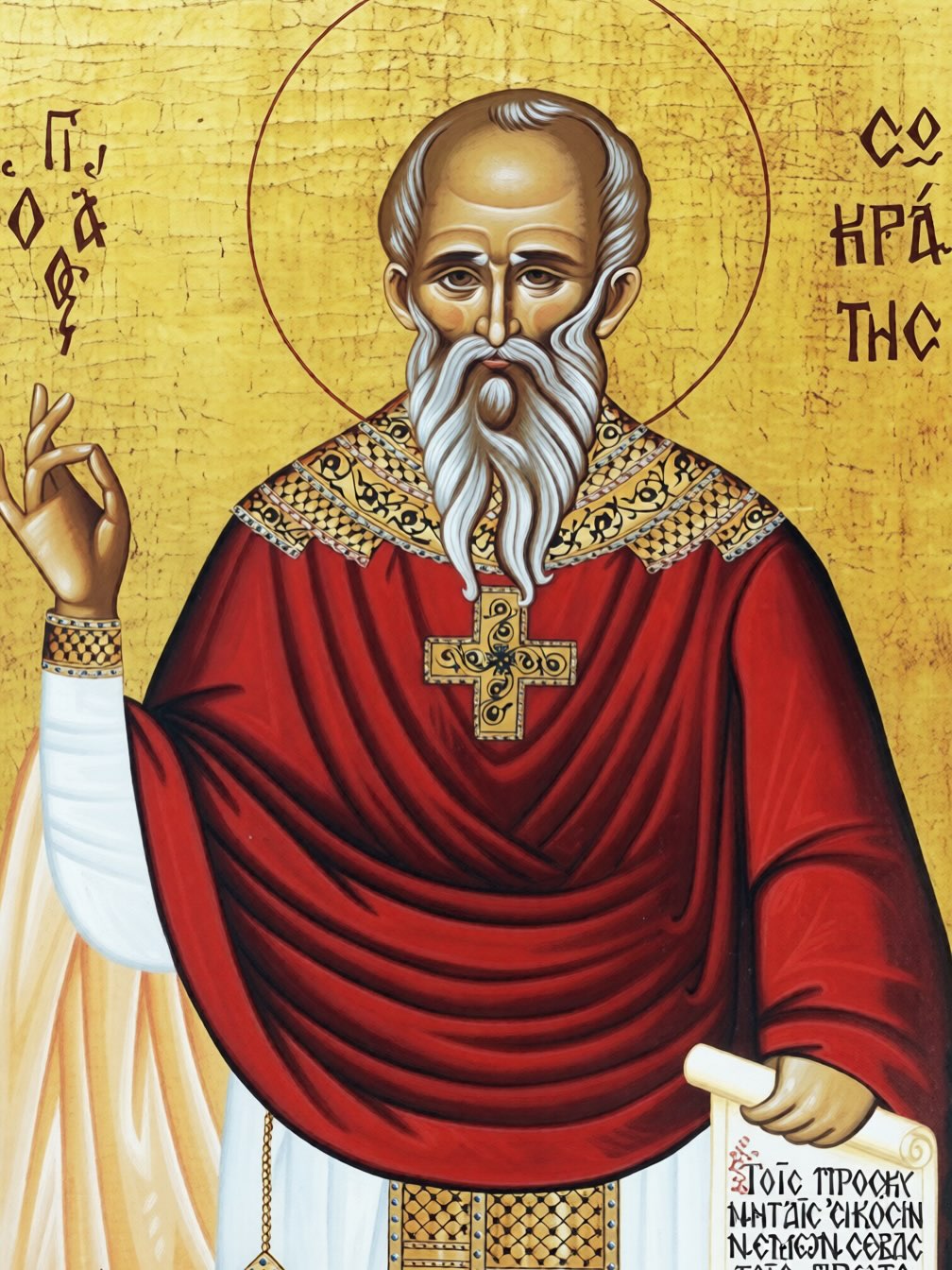
The post commemorates Saint Socrates, a priest and martyr from the ancient city of Ancyra, modern Ankara, Turkey, who lived in the 3rd century AD. It describes his ministry alongside Saint Theodote, a pious woman, during a period of severe persecution under Roman regional authorities. During a prominent pagan festival, Socrates publicly intervened and toppled the sacrificial altar, an act of defiance that led to his immediate arrest. He and…

The post commemorates Saint Socrates, a priest and martyr from the ancient city of Ancyra, modern Ankara, Turkey, who lived in the 3rd century AD. It describes his ministry alongside Saint Theodote, a pious woman, during a period of severe persecution under Roman regional authorities. During a prominent pagan festival, Socrates publicly intervened and toppled the sacrificial altar, an act of defiance that led to his immediate arrest.

He and Saint Theodote were subjected to horrific tortures but refused to renounce Christ or sacrifice to idols. Socrates was sentenced to death and martyred by beheading. The post presents his life as an example of steadfast faith and sacrifice by early Christian clergy. The accompanying image contains Greek text that appears fragmented.

  • Saint Socrates served as a priest in Ancyra during the 3rd century.
  • He ministered with Saint Theodote amid systemic persecution.
  • He toppled a pagan altar during a public festival.
  • Authorities arrested and tortured him and Saint Theodote.
  • He was beheaded after refusing to renounce Christ.
Read more

Elder Thaddeus of Vitovnica on Humility and Guarding Thoughts

Elder Thaddeus of Vitovnica (1914-2003) was a Serbian Orthodox monk and spiritual father born Tomislav Štrbulović. He devoted his life to prayer, humility, repentance, and love for Christ. Despite illness, war, and suffering, he became known for his gentle spirit and spiritual wisdom. As a spiritual father he guided many people toward inner peace and a deeper relationship with God. He taught that true Christian life is not merely outward…

Elder Thaddeus of Vitovnica (1914-2003) was a Serbian Orthodox monk and spiritual father born Tomislav Štrbulović. He devoted his life to prayer, humility, repentance, and love for Christ. Despite illness, war, and suffering, he became known for his gentle spirit and spiritual wisdom.

As a spiritual father he guided many people toward inner peace and a deeper relationship with God. He taught that true Christian life is not merely outward religious practice but the transformation of the heart through God's grace. His most widely known teaching is preserved in the book Our Thoughts Determine Our Lives.

In it he emphasizes the importance of guarding our thoughts because they influence our hearts, relationships, and spiritual lives. He taught that anger, pride, judgment, and resentment disturb inner peace, while prayer, humility, forgiveness, and love help us grow closer to God. Rather than trying to change everyone around us, we must first allow Christ to transform our own hearts.

His life reflects the words of Christ: "Blessed are the peacemakers, for they shall be called the sons of God" (Matthew 5:9). The post also includes three sayings attributed to Elder Thaddeus: "Until you have suffered much in your heart, you cannot learn humility." "It is our duty to pray sincerely for all men, that God may grant peace and joy to all." "If we ourselves do not learn humility, God will not stop humbling us."

  • Elder Thaddeus (1914-2003) was a Serbian Orthodox monk and spiritual father known for humility and prayer.
  • His book Our Thoughts Determine Our Lives teaches that thoughts shape the heart and spiritual life.
  • He identified anger, pride, judgment, and resentment as disturbances to inner peace.
  • He stressed prayer, humility, forgiveness, and love as means to grow closer to God.
  • Three quoted sayings highlight suffering as a path to humility and the duty to pray for all.
Read more
Orthodox Health Instagram

Fr. Michael Marcantoni: Yoga cannot be Christianized because it yokes practitioners to Hindu deities

1:00

The post promotes Episode 83 of the Orthodox Health Podcast, "Why You Can't Find Real Peace," featuring Fr. Michael Marcantoni. He addresses the question of whether yoga can be "Christianified" with an emphatic no. His objection is not simply that yoga originated outside Christianity but that the word itself carries a definite meaning. Yoga comes from the Sanskrit root "yug," meaning to be yoked or joined, a concept related to the word conjugal.…

The post promotes Episode 83 of the Orthodox Health Podcast, "Why You Can't Find Real Peace," featuring Fr. Michael Marcantoni. He addresses the question of whether yoga can be "Christianified" with an emphatic no. His objection is not simply that yoga originated outside Christianity but that the word itself carries a definite meaning.

Yoga comes from the Sanskrit root "yug," meaning to be yoked or joined, a concept related to the word conjugal. Fr. Marcantoni notes that Scripture uses similar language to describe becoming one flesh, so the question becomes what a person is making themselves yoked to. In the practice of yoga, this yoking is directed toward Hindu deities rather than the God of Abraham, Isaac, and Jacob or the faith of the apostles.

He observes that those who become deeply involved in yoga tend to become more yogic, not more fervently Christian. He concludes that Christianity does not need yoga to complete it and that there are plenty of ways to train the body without importing a pagan spiritual practice along with the workout. The discussion centers on the theological incompatibility of yoga with Orthodox Christianity and the availability of alternative forms of physical exercise that do not involve Hindu gods or pagan practices.

Key moments

  1. The speaker states emphatically that yoga cannot be Christianized.
  2. He observes that people who get really into yoga become more yogic, not more fervently Christian.
  3. He explains that yoga comes from the root "yug" meaning to be yoked, related to the word conjugal.
  4. He argues that in yoga you yoke yourself to Hindu gods, not the God of Abraham, Isaac, and Jacob or the faith of the apostles.
  5. He says there are many better ways to work out that do not involve Hindu gods or pagan practices.
Read more

The Divine Liturgy of St. James: Ancient Rite and Modern Recovery

The Divine Liturgy of St. James: Ancient Rite and Modern Recovery 8:47

Fr. Chrysostom Nassis, associate professor at Aristotle University of Thessaloniki, discusses the Divine Liturgy of St. James, an ancient rite linked to Jerusalem and to St. James, the brother of the Lord and first bishop of that city. The first historical mention appears in Canon 32 of the Quinisext Council, which debated whether the liturgy could be celebrated with unmixed wine. The oldest Greek manuscript, a scroll in the Vatican Library,…

Fr. Chrysostom Nassis, associate professor at Aristotle University of Thessaloniki, discusses the Divine Liturgy of St. James, an ancient rite linked to Jerusalem and to St. James, the brother of the Lord and first bishop of that city. The first historical mention appears in Canon 32 of the Quinisext Council, which debated whether the liturgy could be celebrated with unmixed wine.

The oldest Greek manuscript, a scroll in the Vatican Library, shows internal evidence of production in Damascus, placing the liturgy within the Patriarchate of Antioch. Its anaphora follows the Antiochian pattern shared by the Liturgies of St. Basil and St. John Chrysostom, and the text was translated into Syriac and Georgian; the Georgian tradition preserves both a concise ancient version and an expanded later version.

Scholars believe this is the liturgy St. Cyril of Jerusalem had in mind for his mid-fourth-century mystagogical catecheses, but historical circumstances and the Byzantinization of Jerusalem led to its gradual disuse. Today it is celebrated only once or twice a year in some cathedrals. Detailed rubrics for actions such as the melismos, the breaking of the bread before communion, are difficult to reconstruct from manuscripts alone, so celebrants often borrow practices from the more familiar Liturgies of St. Basil or St. John Chrysostom, and modern innovations such as facing the people have been introduced.

A new critical edition from the Monastery of Vatopedi provides separate books for chanter, deacon, priest, and a guide, incorporating manuscript evidence from multiple languages, while earlier editions by Foundoulis and Messine remain scholarly references.

Key moments

  1. 0:33 The first historical reference to the Liturgy of St. James appears in Canon 32 of the Quinisext Council, which discusses whether the divine liturgy can be celebrated with simple wine rather than a mixed chalice.
  2. 1:38 The liturgy is ascribed to St. James, the first bishop of Jerusalem, and belongs to the rite of the Holy See of Jerusalem where Christ lived, was crucified, and resurrected.
  3. 2:40 The oldest extant Greek manuscript is a scroll in the Vatican Library, but internal evidence indicates it was produced in Damascus, placing it in the Patriarchate of Antioch.
  4. 3:12 The structure of its anaphora follows the same Antiochian pattern as the Liturgies of St. Basil and St. John Chrysostom.
  5. 3:43 The liturgy was adopted by other Eastern churches, including the Syriac Orthodox Church, and exists in Georgian manuscripts in two forms: a concise ancient version and an expanded later version.
  6. 4:48 Scholars believe this is the liturgy St. Cyril of Jerusalem references in his mid-fourth-century mystagogical catecheses to the newly baptized.
  7. 5:53 The rubrics for the melismos (the breaking of the bread before communion) are so detailed that without having seen or lived the practice, it is unclear how to perform the specific actions, such as placing a portion of the Body in the chalice and crossing the other part.
  8. 7:59 A recent edition from the Monastery of Vatopedi publishes the liturgy in a boxed set with separate books for the chanter, deacon, priest, and a guide for celebration, based on manuscript tradition and multiple languages.
Eastern Orthodoxy Daily He/Who/Is with Ben Instagram

Baptist pastor uses AI to depict himself as demon smashing Marian statue

0:25

A Baptist pastor named Shelly, who previously gained attention for having children smash statues of the Blessed Theotokos, has released an AI-generated video. In it, he portrays himself as Rumpelstiltskin, a demonic figure from folklore, wielding a hammer to destroy a statue of the Virgin Mary. The author of the post points out an apparent contradiction: Shelly's tradition rejects graven images, yet he employs artificial intelligence to create a…

A Baptist pastor named Shelly, who previously gained attention for having children smash statues of the Blessed Theotokos, has released an AI-generated video. In it, he portrays himself as Rumpelstiltskin, a demonic figure from folklore, wielding a hammer to destroy a statue of the Virgin Mary. The author of the post points out an apparent contradiction: Shelly's tradition rejects graven images, yet he employs artificial intelligence to create a detailed visual representation of the very figure he opposes venerating.

The author argues that the choice to depict himself as a demon attacking the image suggests the hostility is directed at Mary herself, not merely at the physical object of a statue. The video raises questions about the consistency of iconoclast arguments when modern technology is used to produce the images they condemn.

Key moments

  1. Baptist pastor Shelly went viral for having kids smash statues of the Blessed Theotokos.
  2. Shelly has now AI-generated a video of himself as Rumpelstiltskin, a demon, smashing a statue of the Virgin Mary with a hammer.
  3. The author questions why Shelly would AI-generate an image of the Virgin Mary if his position opposes graven images.
  4. The author argues the depiction looks like anger directed at Mary herself, not just at statues.
Read more