WeOrthodox
EN UA

Orthodox posts, videos and discussions

We follow Orthodox channels, communities and blogs across the web, summarise every post and video, and highlight the conversations with real substance.

Saint Wisdom Instagram

Saint Theophan the Recluse on persevering in prayer when warmth fades

The post shares a paraphrased teaching from Saint Theophan the Recluse on the spiritual life. He addresses the common experience of losing the sensible warmth or consolation that once accompanied prayer. The saint warns against abandoning prayer for this reason. He explains that heartfelt prayer naturally comes and goes; its absence is not a signal to stop. Instead, the believer should continue praying through dryness. The heart learns true…

The post shares a paraphrased teaching from Saint Theophan the Recluse on the spiritual life. He addresses the common experience of losing the sensible warmth or consolation that once accompanied prayer. The saint warns against abandoning prayer for this reason. He explains that heartfelt prayer naturally comes and goes; its absence is not a signal to stop.

Instead, the believer should continue praying through dryness. The heart learns true prayer not through fleeting feelings but through sustained effort, patience, and perseverance. This teaching reflects the broader ascetic tradition that distinguishes between emotional consolation and the deeper, stable disposition formed by faithful practice. The post presents the core of this counsel without additional commentary or discussion.

Key moments

  1. Do not abandon prayer simply because the warmth you once felt has disappeared; heartfelt prayer comes and goes, but that is not a reason to stop.
  2. Continue praying even when it feels dry, because the heart learns true prayer through effort, patience, and perseverance.
Read more
Archim. Christódoulos Papadeas Instagram

Pilgrimage to Thathie Monastery on Rhodes, site of speaker's tonsure 34 years ago

The speaker travels to Rhodes, Greece, for an annual pilgrimage to what he calls the heartland of the Church, beloved Hellas, reflecting that the journey reminds him once again of the precious inheritance entrusted by God. The post includes a Greek translation of this reflection. On Wednesday, October 21, 2026, he visits the Monastery of the Archangel Michael at Thathie, his home monastery, where 34 years earlier his spiritual father,…

The speaker travels to Rhodes, Greece, for an annual pilgrimage to what he calls the heartland of the Church, beloved Hellas, reflecting that the journey reminds him once again of the precious inheritance entrusted by God. The post includes a Greek translation of this reflection. On Wednesday, October 21, 2026, he visits the Monastery of the Archangel Michael at Thathie, his home monastery, where 34 years earlier his spiritual father, Metropolitan Amfilochios Tsoukos of Galinou and Hora, tonsured him and gave him the monastic name Christodoulos, after the founder of the Monastery of Saint John the Theologian on Patmos.

The metropolitan's relics are entombed at Thathie. That morning he celebrated the Divine Liturgy at the nearby Evseni monastery, which Geronda Amfilochios founded after establishing the community at Thathie. The gerondissa and sisters of Evseni blessed him to serve, and Father George, who had been scheduled to celebrate, insisted that the speaker wear his vestments and preside at the Liturgy.

The speaker asks for the prayers of Geronda Amfilochios, Saint Christodoulos, and Saint John the Theologian for all who listen, that they may strive to give more of their lives to God because life is short.

Key moments

  1. The speaker is visiting his home monastery, Thathie of the Archangel Michael, where his spiritual father Metropolitan Amfilochios Tsoukos of Galinou and Hora is entombed.
  2. Thirty-four years ago, Geronda Amfilochios laid hands on the speaker's head and gave him the monastic name Christodoulos, after the founder of the Monastery of Saint John the Theologian on Patmos.
  3. The speaker celebrated the Divine Liturgy this morning at Evseni monastery, which Geronda Amfilochios founded after beginning the community at Thathie.
  4. The Gerondissa and sisters gave their blessing for him to serve, and Father George, who was scheduled to serve, insisted the speaker wear his vestments and celebrate the Liturgy.
  5. He asks for the prayers of Geronda Amfilochios, Saint Christodoulos, and Saint John the Theologian to bless everyone listening as they strive to give more of their lives to God because life is short.
Read more

Saint Antony teaches a hunter about spiritual moderation

The text presents Saying 16 from the Sayings of the Desert Fathers, featuring Saint Antony the Great. A hunter in the desert observes Abba Antony enjoying himself with the brethren and is shocked, apparently believing that monastic life should be unrelentingly severe. Antony responds by asking the hunter to shoot an arrow from his bow, then another, then a third. When the hunter objects that bending the bow too far will break it, Antony applies…

The text presents Saying 16 from the Sayings of the Desert Fathers, featuring Saint Antony the Great. A hunter in the desert observes Abba Antony enjoying himself with the brethren and is shocked, apparently believing that monastic life should be unrelentingly severe. Antony responds by asking the hunter to shoot an arrow from his bow, then another, then a third.

When the hunter objects that bending the bow too far will break it, Antony applies the analogy: the work of God is the same. If the brethren are stretched beyond measure, they will break. Sometimes it is necessary to come down to meet their needs. The hunter is pierced by compunction and leaves greatly edified.

The brethren return home strengthened. The story illustrates the discretion that characterizes Desert spirituality, the recognition that human weakness requires measured asceticism, not unyielding rigor. Antony's teaching corrects a misunderstanding of holiness as mere austerity and shows pastoral wisdom in balancing discipline with compassion.

  • A hunter criticizes Antony for relaxing with the brethren
  • Antony uses a bow analogy to explain the need for moderation
  • Overstretching the brethren causes them to break
  • The hunter experiences compunction and is edified
  • The brethren are strengthened by the encounter

Miracle at Hilandar: Deaf-mute boy healed after Father Kyril's promise

A father brought his deaf-mute son to Hilandar Monastery for a healing prayer from Father Kyril. Due to the large crowd they could not reach him, so Father Kyril told the father to return the following year and the boy would be healed. When the father returned, Father Kyril had already reposed. While sitting on a bench in sorrow, the father noticed his son was missing. After twenty minutes of searching, he found the boy near the sea. The child…

A father brought his deaf-mute son to Hilandar Monastery for a healing prayer from Father Kyril. Due to the large crowd they could not reach him, so Father Kyril told the father to return the following year and the boy would be healed. When the father returned, Father Kyril had already reposed. While sitting on a bench in sorrow, the father noticed his son was missing.

After twenty minutes of searching, he found the boy near the sea. The child ran to him and called out "Tata!", his first word. The boy was completely healed. Asked where he had been, the son said he was with a humble monk who had blessed him on the head.

When shown a photograph of Father Kyril, the boy joyfully exclaimed, "Yes, that is he!" The testimony concludes with a request for Father Kyril's prayers.

  • Father Kyril promised healing for the following year
  • The boy was healed after Father Kyril's repose
  • The child spoke his first word: "Tata!"
  • The boy identified Father Kyril from a photograph
  • The healing occurred through a monk's blessing near the sea
Read more

Debating the Canon: Scripture, Archaeology, and External Evidence

0:19

A challenger asks how one can know Scripture is true without appealing to Scripture itself, arguing that Scripture cannot prove itself. The respondent points to archaeology as a literal science and to manuscript evidence that would be admissible in a court of law. The challenger replies that archaeology does not establish what the canon is, and claims this demonstrates the limits of external evidence.

Key moments

  1. The challenger asks how one knows scripture is true outside of scripture, stating scripture cannot prove itself.
  2. The respondent appeals to archaeology as a literal science and manuscript evidence admissible in a court of law.
  3. The challenger counters that no archaeology establishes what the canon is, claiming this proves their point.
Read more

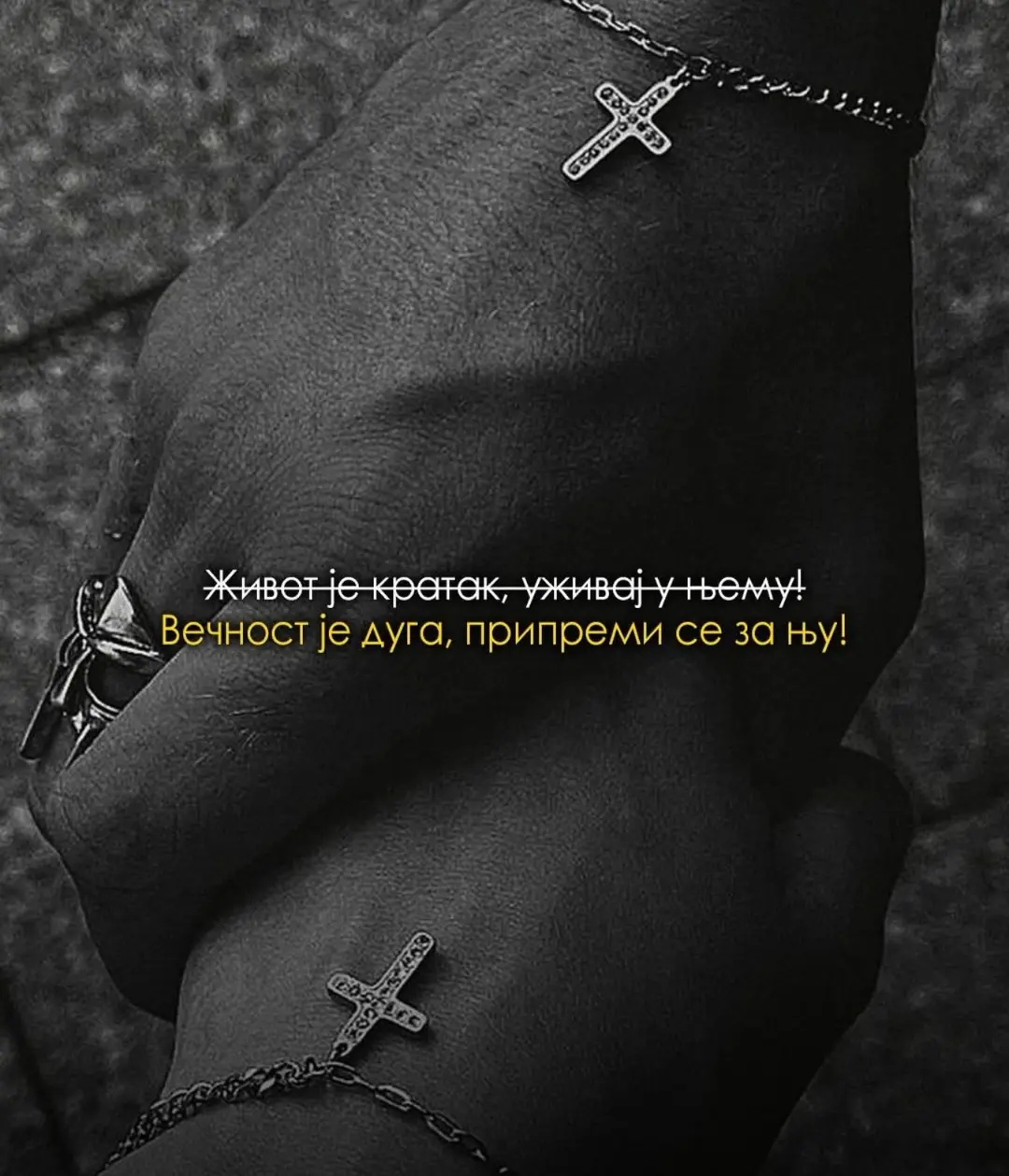
Life Is a Gift, Not the Goal, The Kingdom of Heaven Is

The post contrasts two perspectives on life. The first states that life is a gift but not the ultimate purpose; the purpose is the Kingdom of Heaven. Material possessions remain on earth while the soul proceeds to the place for which it has been prepared. The text warns against losing eternity for the sake of what passes away.

An accompanying image presents an opposing view: life is short so enjoy it, but eternity is long so prepare for it. The post sets these two outlooks against each other without further commentary.

  • Life is a gift but not the final goal; the goal is the Kingdom of Heaven.
  • Earthly acquisitions remain behind; the soul goes where it has been prepared.
  • Warning not to lose eternity because of transience.
  • An image contrasts "enjoy short life" with "prepare for long eternity."
  • The post presents two opposing attitudes toward life and eternity.
Read more
M mysteries_of_christendom Instagram discussion

Why the Orthodox Church Keeps Exorcism Private

The Orthodox Church avoids publicizing exorcism cases because the devil seeks attention, and focusing on demonic activity shifts glory away from God and can lead people into fascination with evil. With enough attention on the devil, people become fascinated with how demons work rather than how God saves a soul, leading down a dark path. The Church treats every day as spiritual warfare beginning at baptism, where the priest reads prayers of…

The Orthodox Church avoids publicizing exorcism cases because the devil seeks attention, and focusing on demonic activity shifts glory away from God and can lead people into fascination with evil. With enough attention on the devil, people become fascinated with how demons work rather than how God saves a soul, leading down a dark path.

The Church treats every day as spiritual warfare beginning at baptism, where the priest reads prayers of exorcism and the person renounces Satan. Daily warfare continues through confession, Holy Communion, prayer, fasting, holy water, and the sign of the cross. When a soul is truly under attack, the priest handles it privately with the bishop's blessing, reading the ancient exorcism prayers of Saint Basil the Great and Saint John Chrysostom.

The person is restored through confession, Holy Communion, and Holy Unction to reconnect them to Christ. The lives of saints such as Saint Nektarios, Saint Spiridon, and Saint Paisios show this pattern: they helped people under demonic attack, but the focus remains on how God's grace sets the person free, not on what the demons did.

The moral is to keep focus on the good, not the evil, because where Christ is, darkness has no power.

Key moments

  1. The devil wants attention, and sharing exorcism details while a soul fights for healing shifts focus from God's glory to the demon's actions, giving the devil what he wants.
  2. With enough attention on the devil, people become fascinated with how demons work rather than how God saves a soul, leading down a dark path.
  3. The Orthodox Church treats every day as the battle, starting at baptism where the priest reads prayers of exorcism and the person renounces Satan.
  4. Daily spiritual warfare continues through confession, Holy Communion, prayer, fasting, holy water, and every sign of the cross.
  5. When a soul is truly under attack, the priest handles it with privacy and reverence as part of healing, with the bishop's blessing reading the ancient exorcism prayers of Saint Basil the Great and Saint John Chrysostom.
  6. The person is brought back into the life of the church through confession, Holy Communion, and Holy Unction to reconnect them to Christ and save their soul.
  7. Saints like Saint Nektarios, Saint Spiridon, and Saint Paisios helped people under demonic attack, but the focus of their stories is on how God's grace set the person free, not on what the demons did.
  8. The moral is to keep focus on the good, not the evil, because where Christ is, darkness has no power.
13 opinions in the discussion From what I've heard, orthodoxy focuses on Christ because the more light you carry inside you, the less room darkness has to exist. Read the discussion

Evening prayer for loved ones and enemies

The author shares a personal evening prayer addressed to God. The prayer begins by noting that the same people are prayed for each evening, though new names may be added, and acknowledges that God already knows every name before it is spoken. The author finds peace in entrusting these people to God's care, including both those who are loved and those toward whom ill will is held. The prayer then asks to be taught to love more beautifully and…

The author shares a personal evening prayer addressed to God. The prayer begins by noting that the same people are prayed for each evening, though new names may be added, and acknowledges that God already knows every name before it is spoken. The author finds peace in entrusting these people to God's care, including both those who are loved and those toward whom ill will is held.

The prayer then asks to be taught to love more beautifully and unconditionally. Thanksgiving is offered for everything God gives and everything God takes away. The author expresses hope that their life shows at least some measure of faith, and asks for help to follow the example of Christ's love in daily life.

  • Evening prayer entrusting the same people to God each night
  • Asks God to keep both loved ones and those held in ill will
  • Requests teaching to love more beautifully and unconditionally
  • Thanks God for both what is given and what is taken away
  • Seeks help to follow Christ's example of love in life
Read more
Eastern Orthodoxy Daily He/Who/Is Instagram

Why Freemasonry Contradicts Christian Faith

The speaker argues that Freemasonry is bound up with Judaism in its sources and theology, while denying that Christianity shares this bond. He states that containing Jewish elements does not make something Judaism. He criticizes Masonic reliance on the Zohar and Talmud, citing Masonic authority Albert Mackey who directs readers to these texts for the secrets of God, which the speaker calls rabbinic theology rather than ancient wisdom. He…

The speaker argues that Freemasonry is bound up with Judaism in its sources and theology, while denying that Christianity shares this bond. He states that containing Jewish elements does not make something Judaism. He criticizes Masonic reliance on the Zohar and Talmud, citing Masonic authority Albert Mackey who directs readers to these texts for the secrets of God, which the speaker calls rabbinic theology rather than ancient wisdom.

He disagrees with Mackey and Harvard scholar William Green, who writes that Masonry's ethos is Jewish. The speaker observes that Masonry can be shaped into whatever one wants because it lacks emphasis on Christianity, except perhaps in later York Rite versions. He states that Masonry downplays the divinity of Christ and the specifics of Christianity.

Referencing Albert Pike, he says Masonry is based on syncretism, the idea that all religions are masks of one ultimate God, which contradicts Christian absolutes. He concludes that participating in Masonry as a Christian is like joining with ecumenists and is antithetical to the absolutes of Christianity.

Key moments

  1. The speaker asserts that Freemasonry is bound up with Judaism to some degree.
  2. The speaker denies that Christianity is bound up with Judaism, stating that containing Judaism does not make something Judaism.
  3. The speaker says Freemasons, through Mackey, direct people to read the Zohar and the Talmud for the secrets of God, which he calls rabbinic theology and not ancient.
  4. The speaker disagrees with Mackey and with Harvard scholar William Green, who writes that Masonry's ethos is Jewish.
  5. The speaker observes that Masonry can be made into whatever one wants because it lacks emphasis on Christianity except perhaps in later York Rite versions.
  6. The speaker states that Masonry downplays the divinity of Christ and the specifics of Christianity.
  7. The speaker references Albert Pike, saying Masonry is based on syncretism, the idea that all religions are masks of one ultimate God.
  8. The speaker concludes that participating in Masonry as a Christian is like joining with ecumenists and is antithetical to the absolutes of Christianity.
George Instagram

From Forty Countries to a Cretan Village: A Return to God

1:08

The speaker recounts a life spent pursuing success across more than forty countries, building businesses and gaining wealth and freedom, yet feeling a persistent emptiness. Two and a half years ago he returned to his village in Crete, where he had served in the altar as a boy, and attended the Divine Liturgy for the first time in twenty years. During the service he closed his eyes and suddenly smelled a strong, beautiful fragrance of flowers;…

The speaker recounts a life spent pursuing success across more than forty countries, building businesses and gaining wealth and freedom, yet feeling a persistent emptiness. Two and a half years ago he returned to his village in Crete, where he had served in the altar as a boy, and attended the Divine Liturgy for the first time in twenty years.

During the service he closed his eyes and suddenly smelled a strong, beautiful fragrance of flowers; when he opened his eyes no one was there and the scent vanished. He cannot explain the experience, but it changed him. He walked out of that church different, began attending every Sunday, started praying and reading, and step by step God returned to his life.

He no longer chases worldly success; for the first time he knows exactly what he is living for: to enter the kingdom of God. He ends by asking viewers how their own journey back to God began.

Key moments

  1. The speaker says he has chased success since he can remember.
  2. He traveled to more than 40 countries, built different businesses, made a lot of money, and had all the freedom he ever wanted.
  3. Despite that success, he felt empty inside.
  4. Two and a half years ago he went back to his village in Crete, where he served in the altar as a boy, and attended the liturgy for the first time in 20 years.
  5. During the liturgy he closed his eyes and suddenly smelled a strong, beautiful fragrance of flowers; when he opened his eyes no one was there and the smell disappeared.
  6. He walked out of that church different, started going every Sunday, began praying and reading, and step by step God came back into his life.
  7. Today he is not chasing success anymore; for the first time he knows exactly what he is living for: to enter the kingdom of God.
  8. He asks the viewer how their journey back to God began.
Read more
Mount Athos Legacy Facebook

St. Nektarios: Excessive sorrow conceals pride and hinders spiritual progress

St. Nektarios writes that excessive sorrow hides pride within it. Because of this, it is harmful and dangerous, and the devil often provokes it to cut off the path of the spiritual athlete. The road that leads to perfection is long. He urges prayer to God for strengthening. One should face falls with patience and, after rising quickly, run forward and not stand in the place where one fell, weeping and lamenting inconsolably like children. One…

St. Nektarios writes that excessive sorrow hides pride within it. Because of this, it is harmful and dangerous, and the devil often provokes it to cut off the path of the spiritual athlete. The road that leads to perfection is long. He urges prayer to God for strengthening.

One should face falls with patience and, after rising quickly, run forward and not stand in the place where one fell, weeping and lamenting inconsolably like children. One must keep vigil and pray so as not to enter into temptation. One should not despair if one falls repeatedly into old sins.

Many of these sins are by nature strong and rooted in habit. With the passage of time, however, and with careful attention, they are conquered. Nothing should cause despair.

  • Excessive sorrow conceals pride and the devil uses it to halt spiritual progress.
  • The path to perfection is long; pray for strength and meet falls with patience.
  • Rise quickly after a fall and continue running, not lingering in grief.
  • Keep vigil and pray to avoid temptation.
  • Do not despair over repeated falls into habitual sins; time and care overcome them.

My sons' godfather left Orthodoxy for Protestant churches

The godfather of my sons has left the Orthodox Church and now attends two non-denominational Protestant congregations. He gives several reasons: he believes he cannot find a wife within Orthodoxy, he prefers the teaching of assured salvation, he feels he has not received what he needed spiritually from the local Orthodox parishes, and he is burned out, partly because his spiritual father was very strict. I am speaking with him, trying to grasp…

The godfather of my sons has left the Orthodox Church and now attends two non-denominational Protestant congregations. He gives several reasons: he believes he cannot find a wife within Orthodoxy, he prefers the teaching of assured salvation, he feels he has not received what he needed spiritually from the local Orthodox parishes, and he is burned out, partly because his spiritual father was very strict.

I am speaking with him, trying to grasp his reasoning and to present the Orthodox perspective, but I find myself at a loss in many ways. The situation is harder because I now live halfway across the country and cannot meet him in person for at least six months.

Mostly I grieve for my boys. We chose this man because he seemed to be on a good path and would have been an excellent guide for them, but unless he returns to the Church that guidance is lost.

Perhaps I am writing this only to vent.

  • Godfather left Orthodoxy for two non-denominational Protestant churches
  • Reasons: cannot find a wife in Orthodoxy, prefers assured salvation, unmet spiritual needs, burnout from strict spiritual father
  • Author discussing with him but feels at a loss
  • Distance prevents in-person meetings for six months
  • Sadness for sons who lose their chosen spiritual guide
11 opinions in the discussion One of my college roommates' godfather left Orthodoxy years ago. Then he got hit by a truck crossing the street. His godchildren, who had never stopped praying for him, were the first ones… Read the discussion
radioimlemesou Instagram

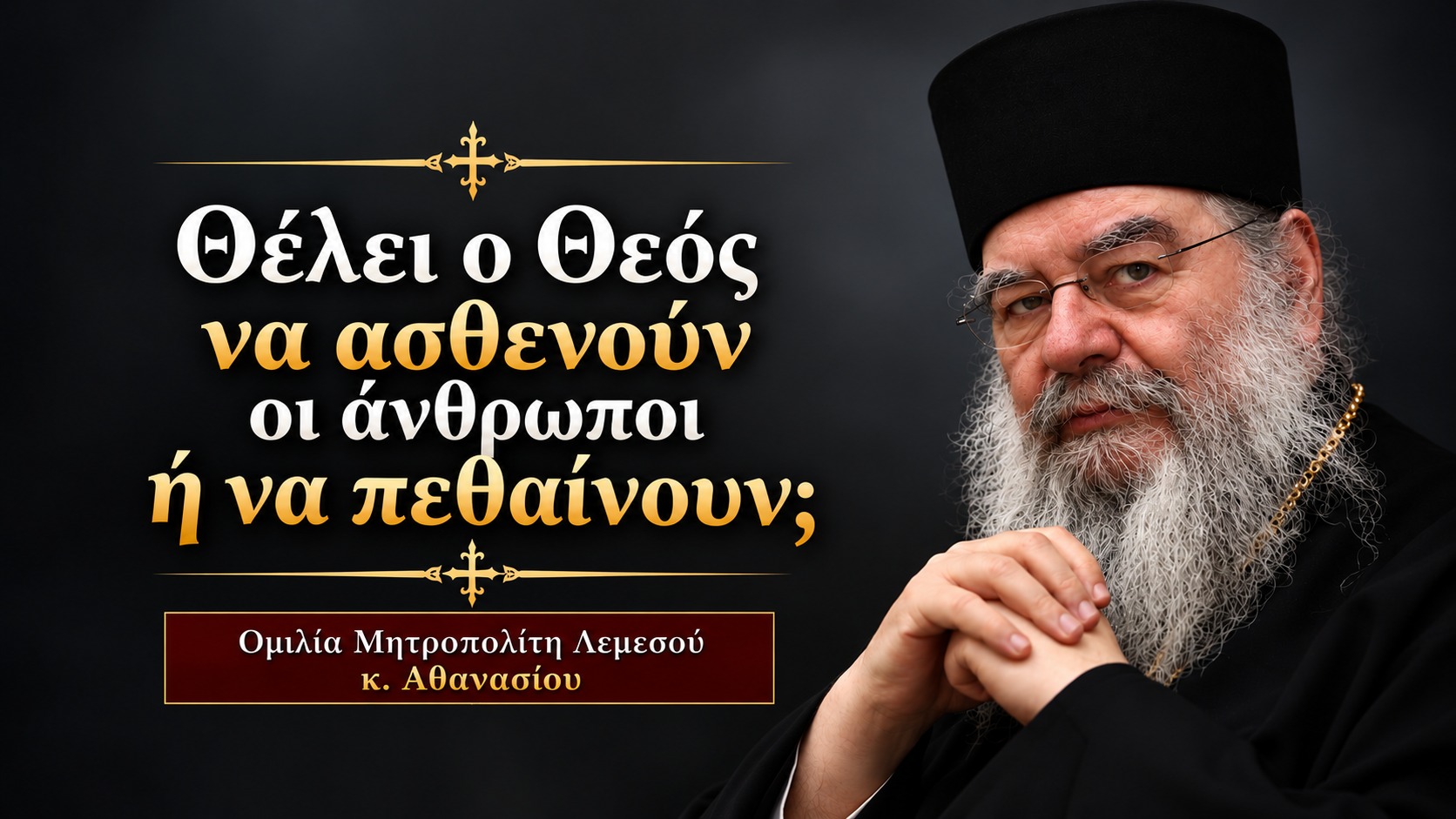
Metropolitan Athanasios: Why God Allows Illness and Death

Metropolitan Athanasios of Limassol began his new series of homilies with a talk on illness, pain, trials, and the mystery of death. He pointed out that sickness, aging, and death are inevitable realities of human life, and they pose a deep spiritual question: does God want people to become sick or to die, and why does this happen? Using the teaching of the Orthodox Church, he explained that corruption and death entered human nature as…

Metropolitan Athanasios of Limassol began his new series of homilies with a talk on illness, pain, trials, and the mystery of death. He pointed out that sickness, aging, and death are inevitable realities of human life, and they pose a deep spiritual question: does God want people to become sick or to die, and why does this happen?

Using the teaching of the Orthodox Church, he explained that corruption and death entered human nature as consequences of the fall of man, first on a spiritual level and later on a biological level, and this state will continue until the Second Coming of our Lord Jesus Christ. He then turned to afflictions, difficulties, and pain, saying that God allows these trials in order to give human beings the chance to make spiritual use of them.

As he put it characteristically, "God leaves them to exist so that through these things we may cultivate ourselves." At the same time, he stressed that trials, when they are faced with faith and patience, can contribute to the spiritual maturation and strengthening of a person.

  • Metropolitan Athanasios of Limassol addresses illness, suffering, and death in his first homily of a new series.
  • He identifies sickness, old age, and death as inevitable consequences of the Fall, continuing until Christ's Second Coming.
  • He poses the question of whether God wills human suffering and death.
  • He teaches that God permits trials to give people opportunity for spiritual cultivation.
  • He states that trials met with faith and patience lead to spiritual maturity and strength.
radioimlemesou Instagram

Metropolitan Athanasios: Seeing God begins in this life through heart purification

Metropolitan Athanasios of Limassol teaches that those who have purified their hearts from passions and sin will see God. This vision does not wait until after death; it begins in the present life with intensity and power that extinguishes the power of sin and passions and draws the whole person into the love of God. After death the vision becomes stronger, more perfect, and clearer. The metropolitan explains that this experience comes about…

Metropolitan Athanasios of Limassol teaches that those who have purified their hearts from passions and sin will see God. This vision does not wait until after death; it begins in the present life with intensity and power that extinguishes the power of sin and passions and draws the whole person into the love of God. After death the vision becomes stronger, more perfect, and clearer.

The metropolitan explains that this experience comes about when a person enters the therapeutic regimen of the Church. That path consists of spiritual struggle, repentance for mistakes and sins, prayer, and living within the holy mysteries of the Church. The post presents the metropolitan's words as a direct statement of Orthodox spiritual anthropology: the heart's purification opens the capacity to know God now, and the Church's sacramental and ascetic life is the means given for that purification.

Key moments

  1. Those with pure hearts from passions and sin will see God.
  2. The vision of God begins in this life, not only after death.
  3. After death the vision becomes more powerful, perfect, and clear.
  4. The experience of God in this life is intense and has power that extinguishes the power of sin and passions.
  5. This experience exercises the whole person in the love of God.
  6. This occurs when a person enters the therapeutic regimen of the Church.
  7. The path includes spiritual struggle, repentance for mistakes and sins, prayer, and living in the holy mysteries of the Church.
Read more
George Instagram

Envy as Rust on the Soul: St. Basil's Teaching

1:14

The video examines how envy takes root when we compare our lives to the curated successes we see on our phones, prompting the question of why others receive what we lack. St. Basil the Great, in his homily on envy, defines it as grief over a neighbor's well-being, a sadness that arises from another's happiness. He compares envy to rust consuming iron, describing how it eats away at the soul from within, harming the envious person quietly and…

The video examines how envy takes root when we compare our lives to the curated successes we see on our phones, prompting the question of why others receive what we lack. St. Basil the Great, in his homily on envy, defines it as grief over a neighbor's well-being, a sadness that arises from another's happiness. He compares envy to rust consuming iron, describing how it eats away at the soul from within, harming the envious person quietly and progressively.

The speaker explains that envy is not merely a feeling toward another person; it is a statement to God that His provision for us is insufficient and that we deserve what He has given someone else. To counteract envy, the video offers a practical response: when envy arises, bless the person you envy and thank God for one specific gift He has given you.

The reasoning is that envy cannot remain where blessing and thanksgiving are present. This approach shifts the focus from comparison to gratitude, addressing the spiritual root of the passion rather than its surface manifestations.

Key moments

  1. Envy often starts when we open our phones and see someone's new house, perfect family, holiday, or success, leading us to ask why not me.
  2. St. Basil the Great wrote a homily on envy, defining it as grief over a neighbor's well-being, where another's happiness makes us sad.
  3. Envy eats away at the soul like rust on iron, harming the envious person slowly and quietly from the inside.
  4. When we envy, we are telling God that what He gave us is not enough and that we deserve what He gave someone else.
  5. To let go of envy, bless the person you envy and thank God for one thing He gave you; envy cannot stay where there is blessing and thanksgiving.
Read more

Saint Seraphim of Sarov: Life, Teaching, and the Acquisition of the Holy Spirit

The post presents a biographical overview of Saint Seraphim of Sarov (1754-1833), one of the most beloved saints of the Eastern Orthodox Church. It describes his early devotion to Christ, monastic life, and years of ascetic struggle in the forests of Sarov. The text notes his brutal attack by robbers and his response of humility and forgiveness. Later in life, he welcomed countless visitors seeking spiritual guidance, greeting them with the…

The post presents a biographical overview of Saint Seraphim of Sarov (1754-1833), one of the most beloved saints of the Eastern Orthodox Church. It describes his early devotion to Christ, monastic life, and years of ascetic struggle in the forests of Sarov. The text notes his brutal attack by robbers and his response of humility and forgiveness.

Later in life, he welcomed countless visitors seeking spiritual guidance, greeting them with the words "My joy, Christ is risen!" The post highlights his central teaching that "the acquisition of the Holy Spirit is the true aim of the Christian life" and that Christianity is about union with God through grace rather than outward practices alone.

Following the biography, the post lists nine sayings attributed to Saint Seraphim, covering silence, peace, trust in God, endurance of affliction, illness and patience, and the importance of establishing oneself in God before helping others. An image description mentions a painting of the saint kneeling by a stream, and a line in Church Slavonic gives his title. The post originates from a page dedicated to the Church Fathers and their teachings.

  • Saint Seraphim devoted himself to Christ from youth, embracing monasticism, solitude, and unceasing prayer in the Sarov forests.
  • He responded to a brutal robbery attack with humility and forgiveness.
  • His central teaching: the acquisition of the Holy Spirit is the true aim of Christian life.
  • He greeted visitors with "My joy, Christ is risen!" and offered spiritual guidance.
  • The post includes nine attributed sayings on silence, peace, trust, affliction, illness, and establishing oneself in God.
Read more

Mortified after wardrobe malfunction during weekday liturgy with toddler

I have been attending an Orthodox church as an inquirer for a few months and am genuinely enjoying it. I have been reading and learning a lot, and I want to attend more often, get to know the community and the priest, and continue learning. I am a stay-at-home mother to a young toddler, so I decided to try a weekday liturgy for the first time, thinking it would help my child get used to the services if we go more frequently. My child behaved for…

I have been attending an Orthodox church as an inquirer for a few months and am genuinely enjoying it. I have been reading and learning a lot, and I want to attend more often, get to know the community and the priest, and continue learning. I am a stay-at-home mother to a young toddler, so I decided to try a weekday liturgy for the first time, thinking it would help my child get used to the services if we go more frequently.

My child behaved for most of the service, but right before communion she had a meltdown. I picked her up and she seemed to calm for a moment, then I looked down and saw the front of my dress had come unclasped and my bra was exposed right in front of the priest and everyone else. My child kept crying, so I quickly gathered my things and ran out.

I am completely mortified. The worst part is that I felt angry with my child, and this whole experience made me feel so far from what I was trying to do. I recently bought this dress specifically as something nice to wear to church. I am trying to do everything I can, and I feel like it all blew up in my face today. I am feeling really down about it.

  • Inquirer attending Orthodox church for a few months
  • Toddler meltdown right before communion at weekday liturgy
  • Dress came unclasped exposing bra in front of priest and congregation
  • Felt angry at child and spiritually discouraged
  • Feels like efforts to participate blew up in her face
18 opinions in the discussion Stuff like this just happens. Toddlers act like toddlers and you handled it as well as anyone could. I'd sew a stitch or put a button on the dress, and if anyone brings it up, just own that… Read the discussion
Orthodox Health with Fr.TEDTalks Instagram

From White Belt Zeal to Quiet Maturity in Orthodox Life

1:00

Fr. Michael Marcantoni uses a Brazilian Jiu-Jitsu analogy to describe how Orthodox converts often move through a phase of intense, visible enthusiasm. He compares new practitioners who post dramatic metaphors about sharks and oceans to half-stripe white belts who have just been overwhelmed on their first day. In contrast, black belts share ordinary moments such as taking a child for ice cream. The priest explains that the initial zeal,…

Fr. Michael Marcantoni uses a Brazilian Jiu-Jitsu analogy to describe how Orthodox converts often move through a phase of intense, visible enthusiasm. He compares new practitioners who post dramatic metaphors about sharks and oceans to half-stripe white belts who have just been overwhelmed on their first day. In contrast, black belts share ordinary moments such as taking a child for ice cream.

The priest explains that the initial zeal, discovering the Fathers, fasting, services, theology, and saints, is not wrong. It has a place. The goal, however, is for that zeal to become stable enough that it no longer needs to be performed. Mature Orthodoxy looks less like proving how Orthodox one is and more like quietly becoming the person the Church forms: more prayer, more repentance, more patience, more faithfulness when nobody is watching.

The podcast episode, titled "Why You Can't Find Real Peace," presents this progression as a natural maturation from unbridled excitement to a solid, grown form of faith.

Key moments

  1. Coming into the faith involves excitement about the fullness of truth, and that initial zeal is not a bad thing.
  2. New Jiu-Jitsu practitioners often adopt the art as their whole personality, posting metaphors like "the ground is the ocean and there is a shark and most people can't swim".
  3. These enthusiastic beginners are typically half-striped white belts who may have been overwhelmed on their first day.
  4. Black belts do not post such dramatic metaphors; they share ordinary life moments like recommending an ice cream spot.
  5. The early unbridled zeal in both Jiu-Jitsu and faith matures into a solid and stable grown form over time.
Read more

Paraklesis closing hymn to the Lady of Hamtoura chanted by Archimandrite Yaacoub Hanna

The post shares an archived recording of the closing hymn from the Paraklesis service dedicated to the icon of the Lady of Hamtoura. Archimandrite Yaacoub Hanna chants the hymn. The prayer addresses the Theotokos as the Mother of God and the Lady of the house of God's servant. It describes the stars of the world prostrating before her humility. The speaker places all hope in her and entrusts himself to her protection, asking to be preserved…

The post shares an archived recording of the closing hymn from the Paraklesis service dedicated to the icon of the Lady of Hamtoura. Archimandrite Yaacoub Hanna chants the hymn. The prayer addresses the Theotokos as the Mother of God and the Lady of the house of God's servant. It describes the stars of the world prostrating before her humility.

The speaker places all hope in her and entrusts himself to her protection, asking to be preserved under the cover of her care. The hymn also calls her the protection that gathers and exists in uncreated holiness, and asks for joy and success in life through her intercession. It references those who glorify the Lord who has truly glorified her. The recording is presented without additional commentary.

Key moments

  1. 0:00 The prayer opens with 'Amen, O God,' addressing the Theotokos as the speaker's righteousness and describing stars in the world prostrating to her humility.
  2. 0:32 She is called the protection that gathers, existing in uncreated holiness, and the speaker asks for joy and success in life through her.
  3. 1:03 The speaker references those who glorify the Lord who has truly glorified her, calling her the Lady of the house of God's servant.
  4. 1:39 The prayer concludes by placing all hope in the Theotokos, entrusting everything to her, and asking to be preserved under the cover of her care.
Read more
Eastern Orthodoxy Daily He/Who/Is with Timothy Instagram

The Monarchy of the Father: Source and Unity in the Trinity

The post explains the Orthodox doctrine of the Monarchy of the Father, drawing on the Cappadocian Fathers, St. Basil the Great, St. Gregory the Theologian, and St. Gregory of Nyssa. It defines Monarchia as the one principle or source within the Trinity, not a political hierarchy. The Father is the unbegotten archē, the sole eternal source of the Son and the Holy Spirit. The Son is eternally begotten, the Spirit eternally proceeds; these are not…

The post explains the Orthodox doctrine of the Monarchy of the Father, drawing on the Cappadocian Fathers, St. Basil the Great, St. Gregory the Theologian, and St. Gregory of Nyssa. It defines Monarchia as the one principle or source within the Trinity, not a political hierarchy. The Father is the unbegotten archē, the sole eternal source of the Son and the Holy Spirit.

The Son is eternally begotten, the Spirit eternally proceeds; these are not temporal events but eternal relations of origin. There was never a Father without the Son or the Spirit. The distinction between ousia (essence) and hypostasis (person) is central: one divine ousia is shared fully by three distinct hypostases. The Persons are distinguished by incommunicable hypostatic properties, the Father is unbegotten, the Son begotten, the Spirit proceeds, which are not attributes of the essence but identify each Person's mode of existence.

The text rejects any ontological subordination: the Father's causality does not imply superiority, greater divinity, or temporal priority. The Son is homoousios with the Father, true God from true God. The unity of God is maintained because the three Persons share one numerically undivided divine essence and are inseparable in their eternal relationships and operations, as St. Gregory of Nyssa argues in 'On Not Three Gods'.

The Cappadocians defended both the unity of God and the full divinity of the Son and Spirit: St. Basil distinguished the common essence from particular hypostatic properties; St. Gregory the Theologian emphasized the Father's unique position as source while rejecting inferiority of the Son or Spirit; St. Gregory of Nyssa developed the relationship between unity of nature, personal distinctions, and inseparability of divine operations.

Finally, the post emphasizes the limits of human language: terms like generation, procession, and cause are necessary but cannot be understood by analogy with created realities. St. Gregory the Theologian, in his Fifth Theological Oration, insists that the manner of the Son's generation remains incomprehensible.

  • The Father is the sole eternal source (archē) of the Son and the Holy Spirit.
  • The Son is eternally begotten and the Spirit eternally proceeds; these are not temporal events.
  • One divine ousia is shared fully by three distinct hypostases, distinguished by incommunicable properties.
  • The Monarchy of the Father does not imply superiority or subordination; the Son and Spirit are fully divine and consubstantial with the Father.
  • The Cappadocian Fathers articulated this doctrine to preserve both the unity of God and the real distinction of the Persons, while acknowledging the incomprehensibility of divine generation and procession.
Read more