
 radioimlemesou
Instagram
Metropolitan Athanasios: Why God Allows Illness and Death
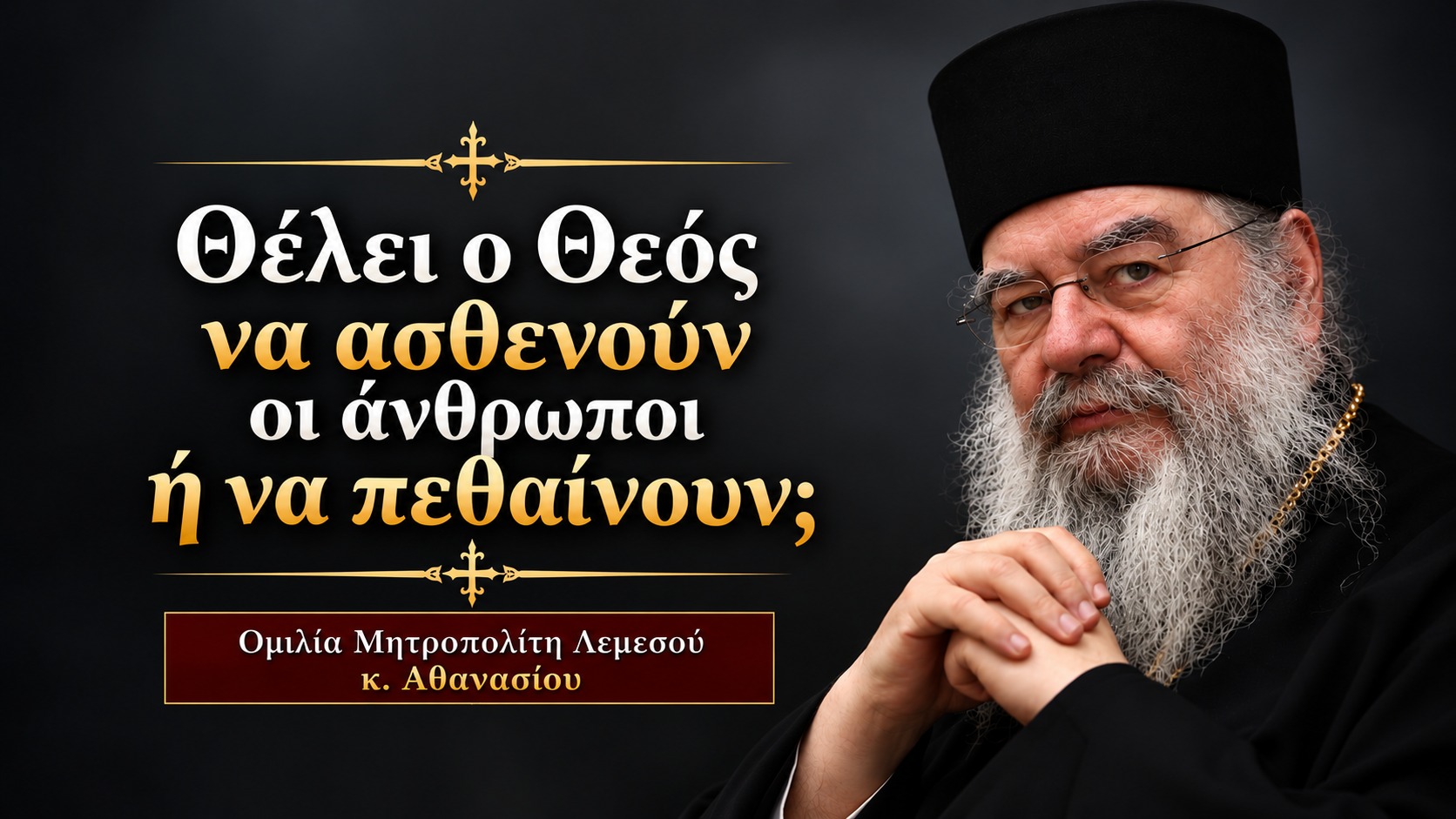
Metropolitan Athanasios of Limassol began his new series of homilies with a talk on illness, pain, trials, and the mystery of death. He pointed out that sickness, aging, and death are inevitable realities of human life, and they pose a deep spiritual question: does God want people to become sick or to die, and why does this happen?
Using the teaching of the Orthodox Church, he explained that corruption and death entered human nature as consequences of the fall of man, first on a spiritual level and later on a biological level, and this state will continue until the Second Coming of our Lord Jesus Christ. He then turned to afflictions, difficulties, and pain, saying that God allows these trials in order to give human beings the chance to make spiritual use of them.
As he put it characteristically, "God leaves them to exist so that through these things we may cultivate ourselves." At the same time, he stressed that trials, when they are faced with faith and patience, can contribute to the spiritual maturation and strengthening of a person.
Main points
- Metropolitan Athanasios of Limassol addresses illness, suffering, and death in his first homily of a new series.
- He identifies sickness, old age, and death as inevitable consequences of the Fall, continuing until Christ's Second Coming.
- He poses the question of whether God wills human suffering and death.
- He teaches that God permits trials to give people opportunity for spiritual cultivation.
- He states that trials met with faith and patience lead to spiritual maturity and strength.