WeOrthodox
EN UA

Orthodox posts, videos and discussions

We follow Orthodox channels, communities and blogs across the web, summarise every post and video, and highlight the conversations with real substance.

St. Paisios on confronting evil and fearlessness

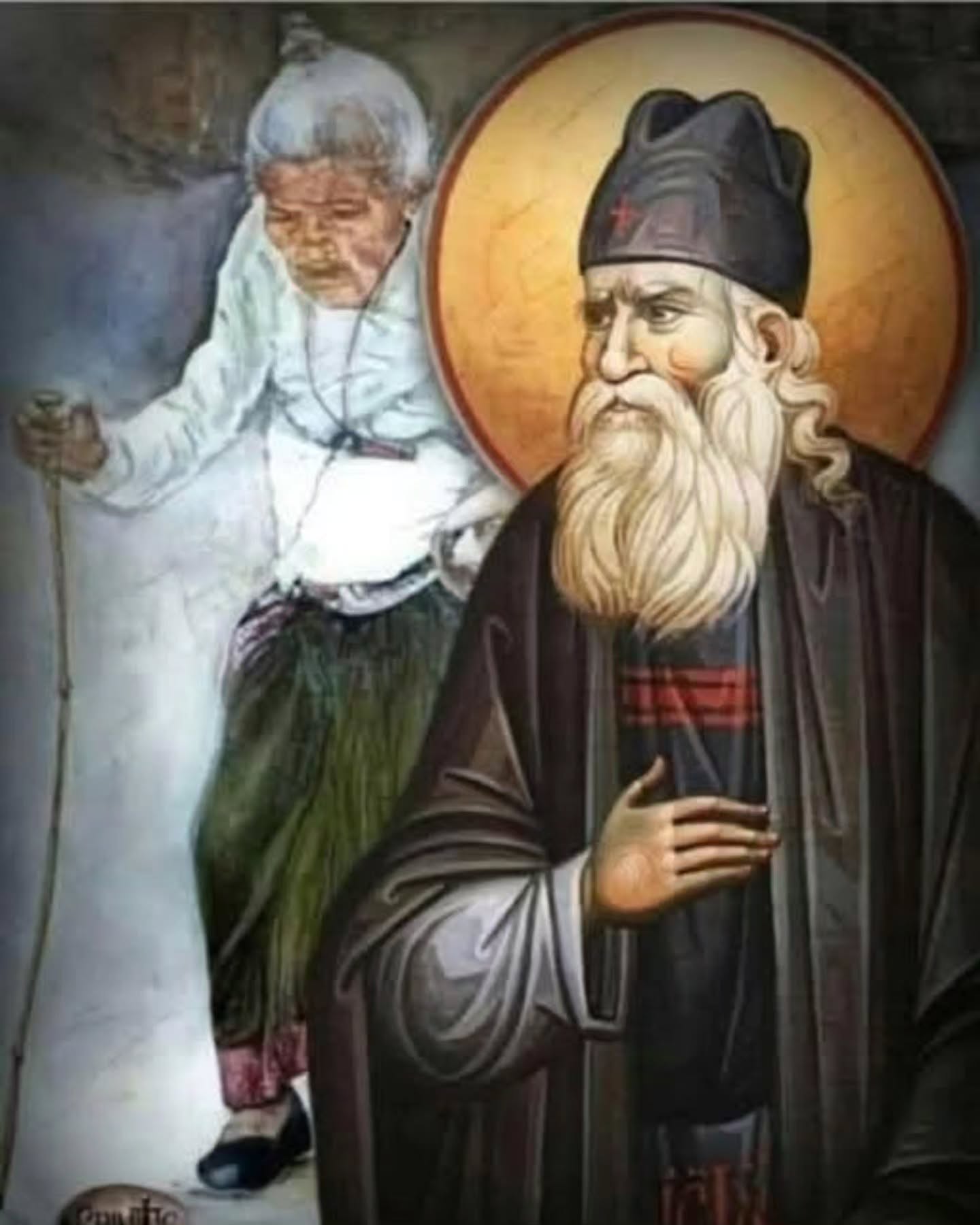
The post shares a saying attributed to St. Paisios the Athonite. The elder states that failing to confront evil and expose those who mislead the faithful allows evil to grow. He teaches that setting aside fear strengthens the faithful and makes the work of those who war against the Church far more difficult. The quote presents a direct call to spiritual courage and vigilance.

  • St. Paisios warns that evil increases when not confronted
  • Those who lead the faithful astray must be exposed
  • Casting aside fear strengthens the faithful
  • Opponents of the Church find their task harder when believers are fearless
  • The saying calls for spiritual vigilance and courage
Read more
George Instagram

Complaining as spiritual blindness: from Israel's wilderness to St. John Chrysostom's last words

The speaker identifies complaining as a scene we commit every day without noticing it. We complain about the weather, traffic, work, family, and how tired we are. The Bible treats this seriously. God brought the Israelites out of Egypt, fed them with bread from heaven, and gave them water from a rock, yet they complained again and again. Because of their grumbling, that whole generation never entered the promised land. St. Paul writes to do…

The speaker identifies complaining as a scene we commit every day without noticing it. We complain about the weather, traffic, work, family, and how tired we are. The Bible treats this seriously. God brought the Israelites out of Egypt, fed them with bread from heaven, and gave them water from a rock, yet they complained again and again.

Because of their grumbling, that whole generation never entered the promised land. St. Paul writes to do everything without complaining. Every time we complain, we tell God that what He gave us is not good enough; it is ingratitude that slowly blinds us to all the good things He gives daily. St. John Chrysostom was sent into exile and died on a rock, sick and alone, and his last words were "glory to God for all things."

The speaker urges us to stop each time we catch ourselves complaining and say instead "glory to God for all things," then watch how it changes the day.

Key moments

  1. Complaining is a scene we commit every day without noticing it.
  2. We complain about the weather, traffic, work, family, and how tired we are.
  3. God brought the Israelites out of Egypt, fed them with bread from heaven, and gave them water from a rock, yet they complained again and again.
  4. Because of their grumbling, that whole generation never entered the promised land.
  5. St. Paul writes to do everything without complaining.
  6. Every time we complain, we tell God that what He gave us is not good enough; it is ingratitude that slowly blinds us to all the good things He gives daily.
  7. St. John Chrysostom was sent into exile and died on a rock, sick and alone, and his last words were "glory to God for all things".
  8. The speaker urges us to stop each time we catch ourselves complaining and say instead "glory to God for all things," then watch how it changes the day.
Read more

A father's growing understanding of prayer's necessity

The author reflects on how age has deepened his understanding of why fathers devote significant time to prayer. He identifies the weight of responsibility that comes with fatherhood: a family to protect, children to guide, a wife to love, and his own soul to keep accountable before God. The reflection ends with the traditional doxology in Greek: "Glory to God for all things."

Key moments

  1. The project represents the collective effort of many different teams working toward the same goal.
  2. Constant collaboration and communication enabled the team to overcome challenges and turn a simple concept into reality.
  3. The team is proud of what they have achieved together.
  4. They look forward to sharing more about their process and invite questions about methodology or future plans.
Read more
radioimlemesou Instagram

Metropolitan Athanasios of Limassol: Use every circumstance for the Kingdom

Metropolitan Athanasios of Limassol teaches that each person should use their particular circumstances, wealth, poverty, youth, old age, education, or simplicity, for spiritual benefit. He states that Christ did not come to change social status, making the poor rich or the rich poor, but to enable every person to use what they have been given to enter the Kingdom of God. The metropolitan lists pairs of conditions: the rich should utilize their…

Metropolitan Athanasios of Limassol teaches that each person should use their particular circumstances, wealth, poverty, youth, old age, education, or simplicity, for spiritual benefit. He states that Christ did not come to change social status, making the poor rich or the rich poor, but to enable every person to use what they have been given to enter the Kingdom of God.

The metropolitan lists pairs of conditions: the rich should utilize their wealth, the poor the talents of poverty, the young their youth, the old their old age, the educated their knowledge, and the uneducated their simplicity. All are to be directed toward spiritual growth and entry into God's Kingdom.

Key moments

  1. If you are rich, utilize your wealth.
  2. If you are poor, utilize the talents of your poverty.
  3. If you are young, utilize your youth; if you are old, utilize your old age.
  4. If you are educated, utilize your knowledge; if you are beautiful, utilize your generosity.
  5. All these are to be utilized spiritually.
  6. Christ did not come to make the poor rich or the rich poor.
  7. Christ came so that each person uses their given circumstances to enter the kingdom of God.
Read more

Elder Aimilianos: Prayer brings steadfastness in poverty, wealth, praise, and slander

Elder Aimilianos of Simonopetra teaches that a person who resolves to pray becomes resilient to life's difficulties and trials. Such a person knows how to be comfortable in any circumstance, whether in poverty or wealth, among the good or the bad, among those who love him or those who hate and slander him. The more he prays, the more resilient he becomes, until he no longer feels the hardships he endures. The audio comes from the Holy Resurrection of Christ Serbian Orthodox Church channel.

Key moments

  1. A person who resolves to pray becomes resilient to life's difficulties and trials, knowing how to be comfortable in any circumstance.
  2. The more he prays, the more resilient he becomes, reaching a point where he no longer feels the hardships he endures.
Read more

Three Ways to Overcome Pride in Orthodox Teaching

The post outlines three practical ways to combat pride drawn from Orthodox Christian teaching. It identifies pride as a dangerous sin that hides behind thoughts, actions, and even good deeds, and states that humility is essential for spiritual growth. The first way is to accept correction, stopping the ego from defending every mistake; growth begins when faults are acknowledged. The second is to do good without recognition, following Christ's…

The post outlines three practical ways to combat pride drawn from Orthodox Christian teaching. It identifies pride as a dangerous sin that hides behind thoughts, actions, and even good deeds, and states that humility is essential for spiritual growth. The first way is to accept correction, stopping the ego from defending every mistake; growth begins when faults are acknowledged.

The second is to do good without recognition, following Christ's teaching in Matthew 6 that God sees what is done in secret. The third is to pray for those you envy, rejoicing in their blessings as Romans 12:15 instructs. The post references Saint John Climacus's warning about vainglory, the desire for praise and admiration.

It clarifies that humility is not thinking oneself worthless but recognizing weaknesses, dependence on God, and placing others before ego. The more pride controls the heart, the harder it becomes to hear God's voice. The post concludes with a prayer for humility and repentance.

Additional details from the accompanying video include Proverbs 12:1 on loving discipline, the role of confession in acknowledging sins without excuses, the practice of secret good deeds with God as the only audience, and the observation that drawing closer to Christ reduces the need to prove oneself to the world.

Key moments

  1. When someone points out your mistakes, you must ask whether you listen or your ego immediately becomes defensive.
  2. Proverbs 12:1 says whoever loves discipline loves knowledge, but whoever hates correction is foolish.
  3. Confession teaches us to acknowledge our sins without making excuses, because you cannot repent of something you are constantly trying to justify.
  4. Christ in Matthew 6 tells us to give, pray, and fast without seeking the praise of others.
  5. Saint John Klimakos warns about vainglory and the desire to be admired for our good deeds.
  6. The speaker advises practicing a good deed without anyone knowing, helping secretly, giving secretly, and praying for someone who will never know, letting God be your audience.
  7. Romans 12:15 tells us to rejoice with those who rejoice, so instead of comparing yourself, you should pray for the person you envy and thank God for the blessings they have received.
  8. The closer we draw to Christ, the less we should need to prove ourselves to the world.
Read more
Holy Resurrection YouTube

St. Nikolaj Velimirović: Property as God's Loan for Stewardship

St. Nikolaj Velimirović: Property as God's Loan for Stewardship 7:04

The post shares an excerpt from St. Nikolaj Velimirović's homily for the 22nd Sunday after Pentecost, followed by a video summary and key points. The homily begins with a call to build a temple in the heart and includes a fundraising appeal for a parish church. The owner of both flock and pasture watches amazed that his flock fights over his pasture while he cares for both. Men pay for property boundaries with their lives, yet boundaries shift,…

The post shares an excerpt from St. Nikolaj Velimirović's homily for the 22nd Sunday after Pentecost, followed by a video summary and key points. The homily begins with a call to build a temple in the heart and includes a fundraising appeal for a parish church. The owner of both flock and pasture watches amazed that his flock fights over his pasture while he cares for both.

Men pay for property boundaries with their lives, yet boundaries shift, and they sacrifice what is incomparably more precious for what is less valuable, calling this madness justice or patriotism. Although men unanimously say humans are more important than grass, their deeds show they value grass more, making property the chief stumbling block, and only those with a God-like spirit pass it by.

Historical figures like Croesus, Lucullus, Caesar, and Napoleon left traces of wealth and power, but the vital question is where those men are now. Apart from Christ, humanity has only two answers: that man belongs to evil spiritual powers hiding behind nature, or to nature itself which creates and finally destroys man like furniture.

Christ testifies as an eyewitness from the source of being that man belongs to the all-good God as a free, rational son, not as an object. This testimony resolves questions of ownership, economics, and politics: everything called property is God's loan distributed unequally so that free beings may exercise stewardship for their salvation and their brethren's. The Gospel for the day describes a rich man who understood property in an absolute sense and suffered torments that make the heart grow cold and hair stand on end.

The discussion turns on the contrast between human claims of ownership and the Christian understanding of stewardship, the futility of striving for earthly possessions, and the eternal destiny of the soul.

Key moments

  1. 0:12 Men quarrel over property endlessly; the owner of both flock and pasture watches amazed that his flock fights over his pasture while he cares for both.
  2. 0:44 Men pay for property boundaries with their lives, yet boundaries shift; they sacrifice what is incomparably more precious for what is less valuable, calling this madness justice or patriotism.
  3. 1:14 Although men unanimously say humans are more important than grass, their deeds show they value grass more, making property the chief stumbling block; only those with a God-like spirit pass it by.
  4. 2:15 The wealth of Croesus, banquets of Lucullus, empire of Caesar, and power of Napoleon leave traces, but the vital question is where those men themselves are now.
  5. 2:46 Apart from Christ, humanity has only two answers to who owns man: evil spiritual powers hiding behind nature, or nature itself which creates and finally destroys man like furniture.
  6. 3:16 Christ's answer is not a philosopher's conclusion but the testimony of an eyewitness from the source of being: man belongs to the all-good God as a free, rational son.
  7. 3:47 Because men belong to God, all nature belongs to God; what men call property is God's loan entrusted unequally to free beings so their reason and freedom may be revealed and they may steward it for salvation.
  8. 4:17 Today's Gospel tells of a rich man who understood property in an absolute sense and suffered torments that make the heart grow cold and hair stand on end.
Orthodox Life Instagram

Saints Cosmas and Damian: Unmercenary Physicians and Martyrs

Saint Cosmas and Saint Damian were twin brothers born in third-century Asia Minor who became renowned physicians. They are universally celebrated as Holy Unmercenaries because they practiced medicine entirely free of charge. Driven by Christian faith, they treated the sick, the poor, and the forgotten, refusing any payment and attributing every recovery to the healing power of Jesus Christ. Their blend of medical skill and prayer converted…

Saint Cosmas and Saint Damian were twin brothers born in third-century Asia Minor who became renowned physicians. They are universally celebrated as Holy Unmercenaries because they practiced medicine entirely free of charge. Driven by Christian faith, they treated the sick, the poor, and the forgotten, refusing any payment and attributing every recovery to the healing power of Jesus Christ.

Their blend of medical skill and prayer converted countless pagans who witnessed both physical healing and unconditional love. Tradition records their most famous miracle: they amputated the gangrenous leg of a sleeping patient and replaced it with the healthy leg of a recently deceased man, an event cited as the first successful surgery of its kind and making them patrons of surgeons and physicians.

During the persecution under Emperor Diocletian they were arrested for their faith, refused to renounce Christ or sacrifice to idols, and endured brutal torture. They were thrown into the sea and cast into fires yet survived unharmed until finally beheaded around 303 AD. Their mother Theodota is also commemorated. The post includes multiple icons of the saints, several from Mount Athos and other locations, with Greek inscriptions identifying them as the Holy Unmercenaries.

Their legacy continues to inspire medical professionals to approach healthcare with compassion and a commitment to serving those in need.

  • Twin brothers, third-century Asia Minor, physicians who treated patients without payment
  • Known as Holy Unmercenaries (Anargyroi); combined medical practice with prayer
  • Famous miracle: leg transplantation from a deceased donor to a living patient
  • Martyred under Diocletian around 303 AD after surviving torture, sea, and fire
  • Commemorated with their mother Theodota; patrons of surgeons and physicians
Read more

Father Nikola Todorović: Christ seeks substance, not formal observance

Father Nikola Todorović addresses the gap between outward profession and inner reality. He asks how someone can claim to love another while not loving God, and warns that friends who gossip about each other in different company reveal a deeper spiritual disorder. He turns to the Gospel account of the rich young man who kept all the commandments yet lacked a pure heart ready to receive God. Christ saw that the man's heart was attached to wealth…

Father Nikola Todorović addresses the gap between outward profession and inner reality. He asks how someone can claim to love another while not loving God, and warns that friends who gossip about each other in different company reveal a deeper spiritual disorder. He turns to the Gospel account of the rich young man who kept all the commandments yet lacked a pure heart ready to receive God.

Christ saw that the man's heart was attached to wealth and the passing things of this world. Christ did not simply tell him to sell everything, give to the poor, and remain where he was; He said to sell all and come, follow Me. Without that call to take up the cross and follow Christ, people remain at the level of the Old Testament, satisfied with formal observance of the law, do not kill, do not steal, do not bear false witness, do not commit adultery, love your neighbour.

Father Nikola explains that Christ came because the world is perishing in evil, and He will come again because we have not truly fulfilled the law but only observe it formally.

Key moments

  1. How can you love me if you do not love your God?
  2. When friends speak to each other, be sure they gossip, and in the next company they continue the same.
  3. Christ said to the young man: Excellent, you have kept all this, but in what form? His heart was not pure, not ready to receive God.
  4. Christ knew his heart was attached to wealth and transience, to all the gods of this world.
  5. Christ says: go sell all and come with me, not sell all, give to the poor, and stay where you are, but come with me.
  6. If Christ does not call us to take up our cross and follow Him, we are left with only: do not kill, do not steal, do not bear false witness, do not commit adultery, love your neighbor.
  7. Without that call we remain at the level of the Old Testament, satisfied and satisfying ourselves with what we do.
  8. Christ came because this world perishes in evil, and He will come again because we have not fulfilled the law or only fulfill it formally.

Saint Justin Popović learns humility from a pilgrim's offering

The text recounts an episode from the life of Saint Justin Popović (Ава Јустин Ћелијски) when he traveled by carriage to Prohor Pčinjski monastery. As a boy, his mother had been healed before his eyes by Saint Prohor. On this journey, he encountered a pious woman walking on foot several kilometers from the monastery. He offered her a ride, but she declined, explaining that her walk was her sacrifice and gift to the saint. Hearing this, Saint…

The text recounts an episode from the life of Saint Justin Popović (Ава Јустин Ћелијски) when he traveled by carriage to Prohor Pčinjski monastery. As a boy, his mother had been healed before his eyes by Saint Prohor. On this journey, he encountered a pious woman walking on foot several kilometers from the monastery.

He offered her a ride, but she declined, explaining that her walk was her sacrifice and gift to the saint. Hearing this, Saint Justin, a renowned theologian, Doctor of Theology, author of the Dogmatics of the Orthodox Church and the Lives of Saints for every day of the year, said, "So, Doctor Justin, a woman teaches you how to serve God."

He descended from the carriage and walked the remaining distance with her, instructing the driver to wait at the monastery. The story highlights his humility despite his scholarly stature, noting that he wept while reading the Lives of Saints, his handkerchiefs soaked with tears. The post concludes with a prayer request to Saint Justin.

  • Saint Justin Popović traveled by carriage to Prohor Pčinjski monastery
  • A walking pilgrim refused a ride, offering her journey as a gift to the saint
  • Saint Justin, a Doctor of Theology and major theological writer, accepted her rebuke
  • He walked the remaining distance with her in humility
  • The account emphasizes his personal piety and tears while reading hagiography
Read more

Augustine on Peter as rock: confession not person

The video presents a Catholic speaker addressing the Eastern Orthodox position that Peter is not the rock of Matthew 16:18 but his confession of faith is. The speaker acknowledges Catholics agree the confession is the rock but insist Peter himself is also the rock. To challenge this, the speaker cites Augustine's Sermon 295, where Augustine writes that Peter is called the rock derivatively from Christ, just as the name Christian comes from…

The video presents a Catholic speaker addressing the Eastern Orthodox position that Peter is not the rock of Matthew 16:18 but his confession of faith is. The speaker acknowledges Catholics agree the confession is the rock but insist Peter himself is also the rock. To challenge this, the speaker cites Augustine's Sermon 295, where Augustine writes that Peter is called the rock derivatively from Christ, just as the name Christian comes from Christ, and not in the Roman Catholic sense.

Augustine states Peter is not the rock; his confession is the rock, and Christ is the true rock. The speaker adds that Gregory the Great and Pope Honorius held the same view, arguing that the confession makes one a patriarch and without it one is nothing. The Orthodox understanding, as summarized, is that Peter is called the rock because of his confession, not because he himself is the rock. The speaker claims the Catholic position self-refutes by appealing to Augustine.

Key moments

  1. 0:00 Eastern Orthodox say Peter is not the rock but his confession of faith is the rock; Catholics agree the confession is the rock but insist Peter himself is also the rock.
  2. 0:34 Saint Augustine in sermon 295 says Peter is called the rock not in the Roman Catholic sense but derivatively from Christ, just as "Christian" comes from Christ.
  3. 1:04 Augustine states Peter is not the rock; Peter's confession is the rock, and Christ is the true rock.
  4. 1:34 Saint Gregory the Great and Pope Honorius contended this same point, saying the confession makes one a patriarch and without it one is nothing.
  5. 2:05 The Orthodox understanding is that Peter is called the rock because of his confession, not because he himself is the rock.
  6. 2:37 Augustine points this out, and the speaker claims the Catholic position self-refutes by appealing to Augustine.
10 opinions in the discussion I wanna clarify something. I said Peter is not THE Rock. St Augustine called Peter A rock, saying he took his name from Christ, who is the Rock. In the New Testament the word Petra doesn't… Read the discussion

St. Paisios: The Theotokos answers every heartfelt prayer

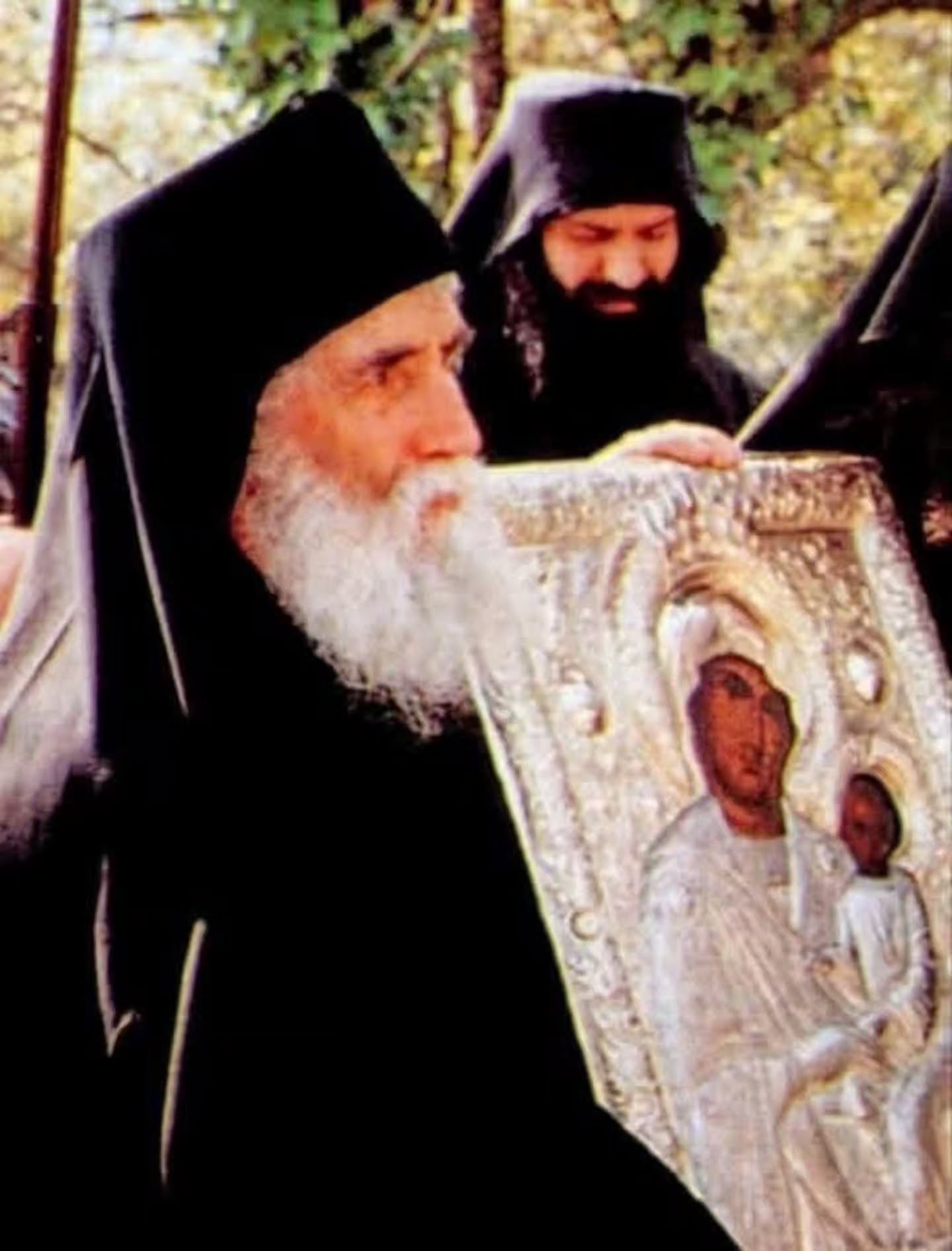
The post presents a saying attributed to St. Paisios of Mount Athos concerning prayer to the Mother of God. He teaches that if people understood the power of such prayer, they would pray to her continuously. He describes her as a tender Mother who responds at once when invoked with faith and sorrow.

Even a single heartfelt "Theotokos Virgin" can work miracles. The saint asserts that she never leaves anyone without help, and that even an unworthy person who calls upon her with hope will find her running to meet them.

  • St. Paisios stresses the immense power of prayer to the Theotokos
  • She answers immediately those who call with faith and pain
  • A brief invocation from the heart can produce miracles
  • She never refuses help to anyone who turns to her
  • She comes to the aid even of the unworthy who call with hope
Read more

Three Church Fathers on Lust, Humility, and the Prayer of St. Ephraim

The post presents three texts from Church Fathers addressing spiritual warfare against lust and the cultivation of virtue. St. Jerome describes lust as a wild beast that ravages the soul when fed but dies when starved. St. John Climacus identifies pride as the door through which lust enters and prescribes humility as the weapon against it. The post concludes with the Prayer of St. Ephraim the Syrian, a Lenten prayer asking God to remove the…

The post presents three texts from Church Fathers addressing spiritual warfare against lust and the cultivation of virtue. St. Jerome describes lust as a wild beast that ravages the soul when fed but dies when starved. St. John Climacus identifies pride as the door through which lust enters and prescribes humility as the weapon against it.

The post concludes with the Prayer of St. Ephraim the Syrian, a Lenten prayer asking God to remove the spirits of sloth, despondency, lust of power, and idle talk, and to grant the spirits of chastity, humility, patience, and love. An image of Christ wearing the crown of thorns accompanies the texts. The page is described as dedicated to the Church Fathers and their teachings.

  • St. Jerome compares lust to a wild beast that must be starved to die
  • St. John Climacus links pride to lust and names humility as the remedy
  • The Prayer of St. Ephraim asks for deliverance from four passions and the gift of four virtues
  • The prayer is traditionally used during Great Lent with prostrations
  • The post comes from a page dedicated to Church Fathers' teachings
Read more
Disgruntled Docs with Ben Instagram

Speaker questions pastor's claim that God the Father has a physical body

The speaker expresses confusion over a claim by Pastor Shelley that God the Father possesses a literal physical body, asking whether Shelley has adopted Mormon teaching. Shelley argues that God truly has a form, citing Jesus' rebuke of the Jews in John 5:37 for never having heard the Father's voice or seen his shape. He contends that repeated biblical descriptions, God seated on a throne in heaven with Christ at his right hand, depict reality,…

The speaker expresses confusion over a claim by Pastor Shelley that God the Father possesses a literal physical body, asking whether Shelley has adopted Mormon teaching. Shelley argues that God truly has a form, citing Jesus' rebuke of the Jews in John 5:37 for never having heard the Father's voice or seen his shape. He contends that repeated biblical descriptions, God seated on a throne in heaven with Christ at his right hand, depict reality, not anthropomorphism or metaphor.

Shelley insists that the Father really exists in heaven and the Son is really seated beside him. The speaker ends with incredulous disbelief, questioning the direction of such teaching. The exchange centers on whether scriptural language about God's shape, throne, and right hand should be read literally or understood figuratively, a distinction that bears on the historic Christian doctrine of divine incorporeality.

The speaker's reaction underscores the gap between classical theism, which holds God to be without parts or body, and a reading that attributes physical dimensions to the Father.

Key moments

  1. The speaker asks if Pastor Shelley is now Mormon given his claim that God the Father has a body.
  2. Shelley believes God really does have a form.
  3. Shelley references Jesus Christ rebuking the Jews for not having seen God or knowing his shape.
  4. Shelley argues that consistent descriptions of God's appearance reflect what he actually looks like.
  5. Shelley describes God the Father seated on a throne in heaven with Jesus at his right hand.
  6. Shelley insists this is real language, not anthropomorphism or metaphor.
  7. Shelley asserts God really exists in heaven and the Son is really seated next to the Father.
  8. The speaker concludes with confused disbelief: "What are we even doing at this point?"
Read more
Fr.TEDTalks Instagram discussion

Orthodox priest questions Halloween's pagan-origin narrative

The speaker addresses Halloween and notes that many Orthodox Christians repeat historical claims linking the feast to the ancient Celtic festival of Samhain, Druidic sacrifices, or Satanism. He states that these claims lack historical support and originated as evangelical Protestant talking points within the last fifty years. Orthodox influencers and priests have adopted them uncritically despite the Church's emphasis on historical continuity.…

The speaker addresses Halloween and notes that many Orthodox Christians repeat historical claims linking the feast to the ancient Celtic festival of Samhain, Druidic sacrifices, or Satanism. He states that these claims lack historical support and originated as evangelical Protestant talking points within the last fifty years. Orthodox influencers and priests have adopted them uncritically despite the Church's emphasis on historical continuity.

The most supported evidence shows that Halloween began as All Hallows' Eve in the Western Church and only later acquired negative connotations through the commercialization of slasher films in the 1970s and 1980s. While there are legitimate reasons to oppose the modern celebration, the historical arguments currently used are false and discredit the Church when they are easily disproven.

The speaker suggests that instead of ignoring the feast, Christians in the West should consider how to reclaim it as an inherently Christian observance rooted in the commemoration of the saints.

Key moments

  1. 0:00 The speaker introduces Halloween, acknowledges Orthodox may be triggered, and states personal dislike due to over-secularization and demonic saturation of the original feast.
  2. 0:00 Many Orthodox make historical claims about Halloween that are inaccurate, despite touting the Church as the historical church.
  3. 0:39 A common claim is that Halloween is an ancient pagan feast from Samhain, the Druids, and the Celts involving pagan sacrifices and Satanism.
  4. 0:39 There is no historical connection between modern Halloween and any ancient pagan festival.
  5. 0:39 These claims are evangelical Protestant talking points created in the last 50 years that Orthodox have regurgitated as fact.
  6. 1:17 The most supported evidence is that Halloween is All Hallows' Eve in the Western Church, and only later took on a negative connotation.
  7. 1:17 Commercialization of slasher films in the 1970s and 1980s turned Halloween toward the demonic.
  8. 1:50 Preaching historically inaccurate claims discredits priests when a quick search reveals the error; the approach should be to discuss reclaiming the feast in the West as inherently Christian rather than putting on blinders.
7 opinions in the discussion Go to vespers on Halloween. That's it. Nothing good comes out of Halloween the way it's celebrated. Read the discussion

St. John Chrysostom: Prayer Is Life Like Water to a Fish

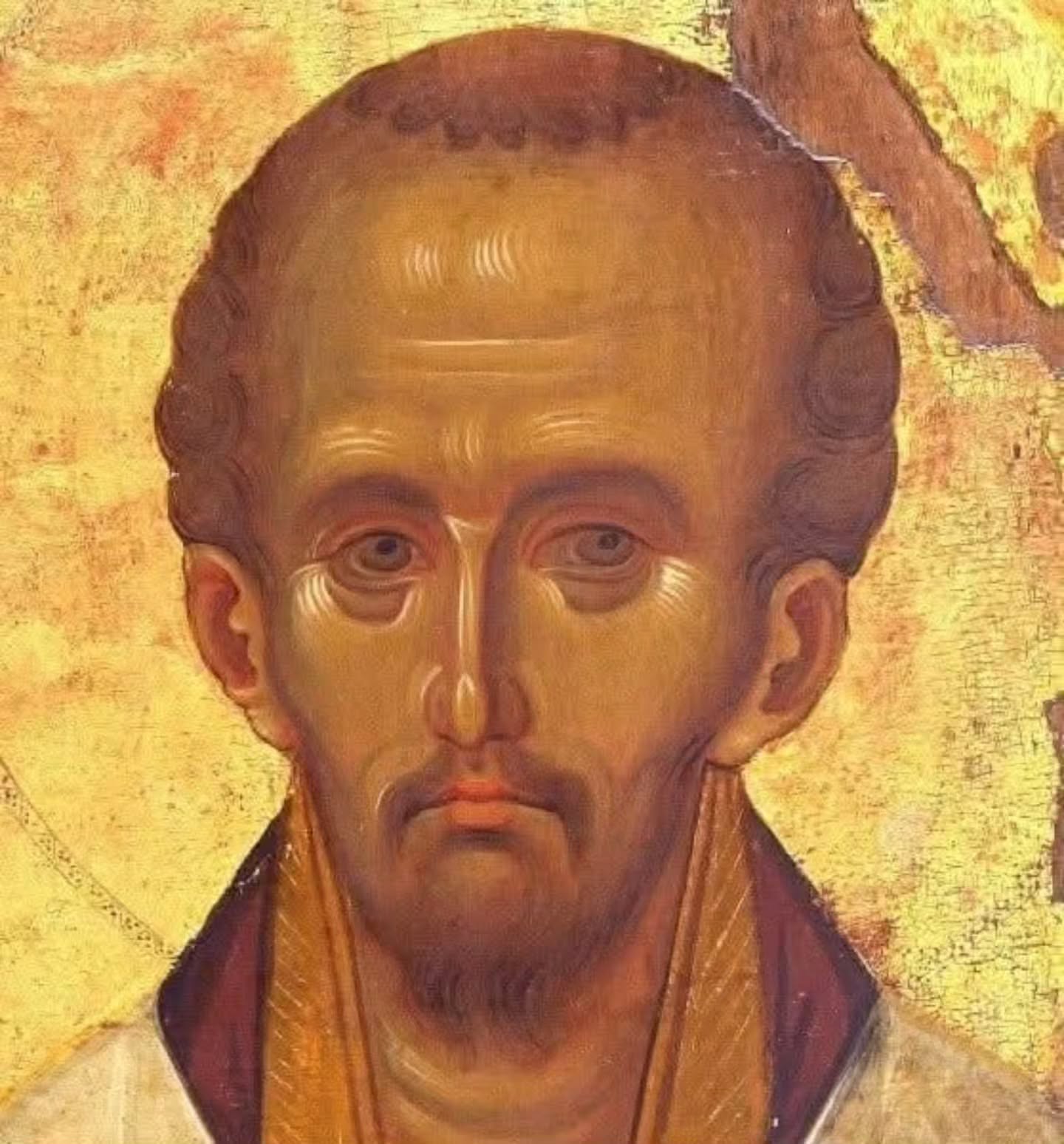
The post presents a saying attributed to St. John Chrysostom. He compares prayer to water for a fish: just as water is life for a fish, prayer is life for a person. If someone deprives themselves of prayer, they act like someone who pulls a fish out of water. The text is in Serbian Cyrillic. An accompanying image shows an icon of the saint with a golden background. There is no further discussion or commentary in the source.

  • St. John Chrysostom likens prayer to water for a fish.
  • Without prayer a person dies spiritually as a fish dies without water.
  • The post includes an icon of the saint.
Read more
George Instagram

Nepsis: Orthodox Watchfulness and the Door of the Heart

The video explains that the Orthodox Church has taught mindfulness for centuries under the name nepsis, or watchfulness. The fathers recognized that thoughts cannot be stopped, not even by saints, but there is a small moment between a thought appearing and the choice to follow it. Saint Hesychios compared watchfulness to standing guard at the door of the heart, seeing the thought before letting it in. Most people fail by either fighting the…

The video explains that the Orthodox Church has taught mindfulness for centuries under the name nepsis, or watchfulness. The fathers recognized that thoughts cannot be stopped, not even by saints, but there is a small moment between a thought appearing and the choice to follow it. Saint Hesychios compared watchfulness to standing guard at the door of the heart, seeing the thought before letting it in.

Most people fail by either fighting the thought or following it, but the moment you notice a thought you are no longer inside it; you are at the door watching it. In neuro-linguistic programming this is called stepping out of the experience, and when you step out the thought loses its grip. The practical method is to name the thought, for example, "there is the thought that I am going to fail," instead of saying "I am going to fail."

When you think "I am going to fail" you are inside the thought; when you say "there is the thought that I am going to fail" you are at the door watching it. Christ told his disciples to watch and pray; he did not say to have no thoughts.

Key moments

  1. The church was teaching mindfulness centuries ago under the term Nepsis, meaning watchfulness.
  2. No one can stop a thought from coming, not even saints, but there is a small moment between the thought appearing and following it.
  3. Saint Hesychios described watchfulness as standing guard at the door of the heart, seeing the thought before letting it in.
  4. Most people fail by either fighting the thought or following it, but the moment you notice a thought you are no longer inside it.
  5. In NLP this is called stepping out of the experience, and when you step out the thought loses its grip.
  6. The practice is to name the thought, for example, "there is the thought that I am going to fail", instead of saying "I am going to fail."
  7. When you think "I am going to fail" you are inside the thought; when you say "there is the thought that I am going to fail" you are at the door watching it.
  8. Christ told his disciples to watch and pray; he did not say to have no thoughts.
Read more

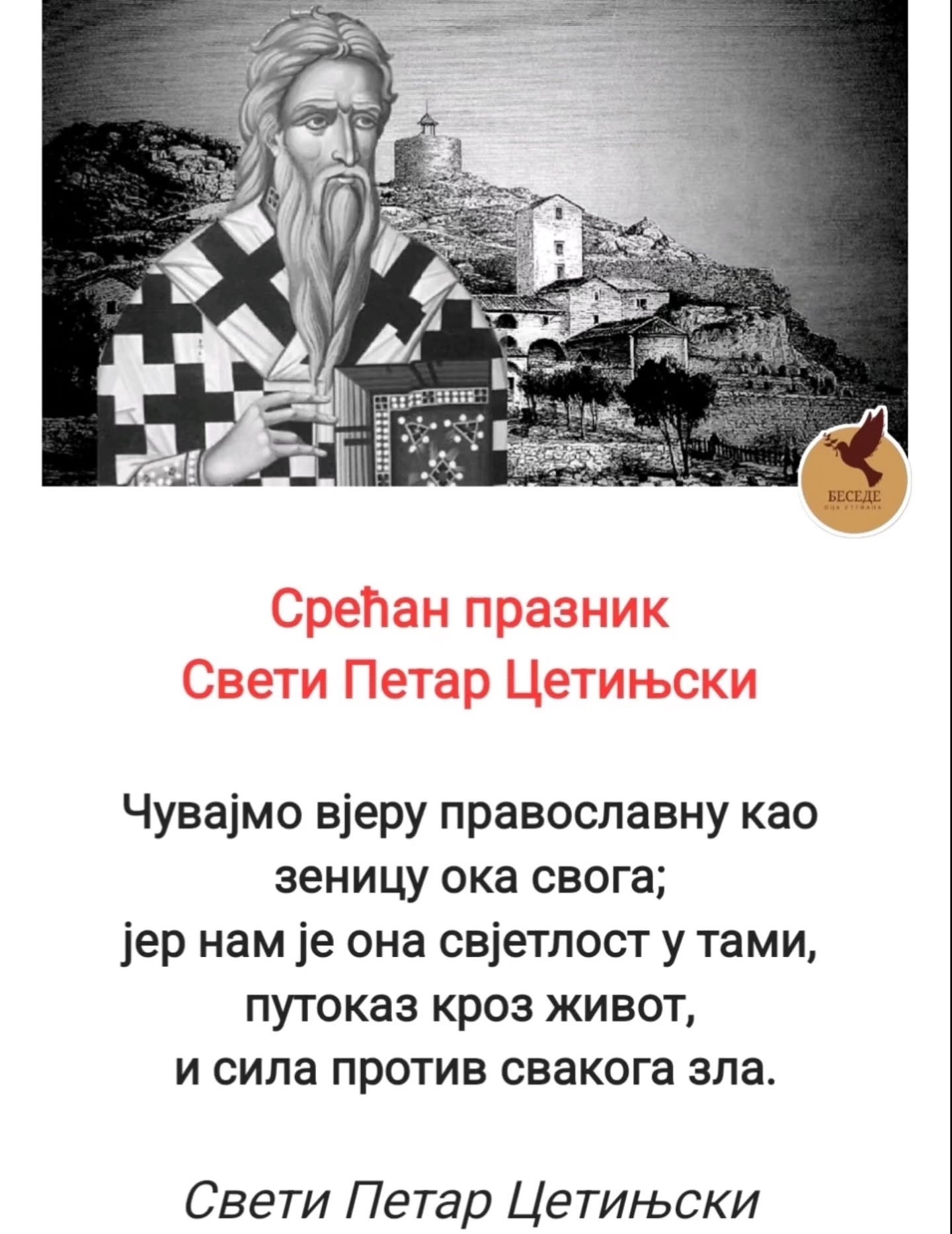
Feast of Saint Peter of Cetinje with his exhortation to guard the Orthodox faith

The post marks the feast day of Saint Peter of Cetinje with a drawing of the saint and a short exhortation attributed to him. The text urges believers to keep the Orthodox faith as the apple of their eye, describing it as light in darkness, a guide through life, and a strength against every evil. Saint Peter of Cetinje, also known as Peter I Petrović-Njegoš, was a metropolitan and ruler of Montenegro in the late eighteenth and early nineteenth centuries, glorified for his pastoral care and defense of Orthodoxy.

  • Feast day greeting for Saint Peter of Cetinje
  • Quote urging preservation of the Orthodox faith as the apple of the eye
  • Faith described as light in darkness, a life guide, and strength against evil
  • Accompanied by a drawing of the saint
  • No additional teaching, story, or discussion included
Read more
Prayer Orthodoxy ® Instagram

The Theotokos of the Awesome Protection: Wonderworking Icon at Koutloumousiou Monastery

The post presents the wonderworking icon of the Theotokos of the Awesome Protection, housed at Koutloumousiou Monastery on Mount Athos. The icon shows the Mother of God holding the Christ child close as he gazes toward the instruments of his future passion. Her sorrowful expression, the stars upon her veil, the golden background, and Christ's loosened sandal all reveal the mystery of the incarnation and the suffering he would willingly endure…

The post presents the wonderworking icon of the Theotokos of the Awesome Protection, housed at Koutloumousiou Monastery on Mount Athos. The icon shows the Mother of God holding the Christ child close as he gazes toward the instruments of his future passion. Her sorrowful expression, the stars upon her veil, the golden background, and Christ's loosened sandal all reveal the mystery of the incarnation and the suffering he would willingly endure for the salvation of the world.

This icon is especially associated with the holy monastery of Koutloumousiou. According to Athonite tradition, when pirates threatened the monastery, the monks turned in prayer to the Panagia. Through her intercessions the monastery was miraculously protected and hidden from the attackers.

For this reason the icon is known as the Awesome Protection. Through this holy icon the church reminds the faithful that the most holy Theotokos never ceases to intercede for them and that she leads them to her son.

Key moments

  1. The icon shows the Mother of God holding the Christ child close as he looks toward the instruments of his coming passion.
  2. Her sorrowful expression, the stars upon her veil, the golden background, and Christ's loosened sandal all reveal the mystery of the incarnation and the suffering he would willingly endure for the salvation of the world.
  3. This wonderworking icon is especially associated with the holy monastery of Kutlumousio on Mount Athos.
  4. According to Athonite tradition, when pirates threatened the monastery, the monks turned in prayer to the Panagia.
  5. Through her intercessions, the monastery was miraculously protected.
  6. For this reason, the icon is known as the awesome protection.
  7. Through this holy icon, the church reminds us that the most holy Theotokos never ceases to intercede for the faithful.
  8. She also leads the faithful to her son.
Read more
Giovanni Guaita YouTube

Hieromonk John (Guaita) on the Parable of the Sower: Where We Filter Out God's Presence

Hieromonk John (Guaita) on the Parable of the Sower: Where We Filter Out God's Presence 12:06

Hieromonk John (Guaita) preaches on the Parable of the Sower from Luke 8:5-15, noting that late autumn is the sowing season in the Holy Land and southern Europe, and the Lord may have spoken the parable while watching sowers at work. He reads Christ's interpretation: the seed is the word of God, and the four soils represent how people receive it. The path signifies those who hear but the devil takes the word from their hearts so they cannot…

Hieromonk John (Guaita) preaches on the Parable of the Sower from Luke 8:5-15, noting that late autumn is the sowing season in the Holy Land and southern Europe, and the Lord may have spoken the parable while watching sowers at work. He reads Christ's interpretation: the seed is the word of God, and the four soils represent how people receive it.

The path signifies those who hear but the devil takes the word from their hearts so they cannot believe. Rocky ground represents those who receive the word with joy but have no root; they believe for a time but fall away in testing. Thorns stand for those who hear but are choked by worries, riches, and pleasures, and do not mature.

Good soil describes those who hear, keep the word in a good and honest heart, and bear fruit with perseverance. The soul is not fixed as one soil type; we move through these states, sometimes distracted, sometimes choked by daily concerns, rarely as good soil. The Sower never stops sowing regardless of where the seed falls.

Receiving the word requires work: daily Scripture reading, meditation, study, and critical literature to deepen knowledge. Dangers persist even after growth begins: the devil steals the word (for example, forgetting Sunday's Gospel during the week), temptation uproots the joyful but rootless, and worries push spiritual life last.

The birds in the parable represent the devil stealing the word from our hearts. Another evangelist records the fruit as hundred, sixty, or thirty times what was sown, because we are all different and there is no need to worry about the variation. The Lord sows generously through Scripture, liturgy, prayer, and all creation if we have attention.

The priest advises opening Holy Scripture daily, first the Gospel, reading a short passage, reflecting, and spending time alone with the Lord in silence; the Word is also encountered in the Psalter, the liturgical services (All-Night Vigil, Vespers, Matins, Divine Liturgy), and through all creation if we love Him and attend.

Key moments

  1. 1:51 Late autumn is wheat-sowing season in southern Europe and the Holy Land, and the Lord may have told this parable while watching sowers at work.
  2. 2:59 The seed is the word of God; those on the path hear but the devil takes the word from their hearts so they cannot believe and be saved.
  3. 3:33 Those on rocky ground receive the word with joy but have no root; they believe for a while but fall away in time of testing.
  4. 4:06 The seed among thorns represents those who hear but are choked by life's worries, riches, and pleasures and do not mature.
  5. 5:55 The Sower continues to sow without stopping, unbothered by seed falling on path, rocks, or thorns; the word of God requires not just reception but work, reading, rereading, meditating, studying, and reading critical literature to deepen knowledge.
  6. 7:03 Birds represent the devil stealing the word from our hearts, such as when we cannot remember the Sunday Gospel throughout the week.
  7. 8:48 Another evangelist records the fruit as hundred, sixty, or thirty times what was sown, because we are all different and there is no need to worry about the variation.
  8. 9:27 An Orthodox Christian should open Holy Scripture daily, first the Gospel, read a short passage, reflect, and spend time alone with the Lord in silence; the Word is also encountered in the Psalter, liturgical services (All-Night Vigil, Vespers, Matins, Divine Liturgy), and through all creation if we love Him and have attention.
Read more