WeOrthodox
EN UA

Orthodox posts, videos and discussions

We follow Orthodox channels, communities and blogs across the web, summarise every post and video, and highlight the conversations with real substance.

Why Orthodox Christians Do Not Celebrate Halloween

The post contrasts Halloween's focus on darkness, death, fear, demons, and witchcraft with the Christian calling to move from darkness to light. It cites Ephesians 5:8 and John 8:12 to show that believers are now light in the Lord and should walk as children of light. The Orthodox Church celebrates the Sunday of All Saints on the first Sunday after Pentecost, presenting the saints as the fruit of the Holy Spirit. In the West, the feast of All…

The post contrasts Halloween's focus on darkness, death, fear, demons, and witchcraft with the Christian calling to move from darkness to light. It cites Ephesians 5:8 and John 8:12 to show that believers are now light in the Lord and should walk as children of light. The Orthodox Church celebrates the Sunday of All Saints on the first Sunday after Pentecost, presenting the saints as the fruit of the Holy Spirit.

In the West, the feast of All Saints shifted to November 1 from the 8th-9th centuries, making October 31 its eve, later called Halloween. Saint John Chrysostom repeatedly warned Christians not to adopt pagan or superstitious customs simply because society accepts them, and Saint Paul asks what fellowship light has with darkness (2 Corinthians 6:14).

The goal for an Orthodox Christian is to celebrate Christ's victory over death, the holiness of the saints, and the light of eternal life, not to glorify fear or occult imagery even as entertainment. A priest reports receiving phone calls from families asking how to handle Halloween. He states that Orthodox Christians do not participate because Halloween is a satanic holiday.

If participation is unavoidable, some may dress as saints, but never as witches, warlocks, or demons, since those beings are real and not make-believe. He adds that sacrifices are made by demonic forces on Halloween, and Christians must not take part.

Key moments

  1. The priest has received phone calls this week from people asking what to do about Halloween with their families.
  2. The correct answer is that Orthodox Christians do not participate in Halloween because it is a satanic holiday.
  3. Some people might dress up as saints of the church if they have to, but they certainly should not dress as witches, warlocks, or demons because those are on the wrong team.
  4. Witches, warlocks, and demons are not make-believe; they are real.
  5. Things are done on Halloween that people do not know about, including sacrifices made by witches, warlocks, and demonic forces.
  6. This is not something that Christians should participate in.
10 opinions in the discussion "You cannot drink the cup of the Lord and the cup of demons.", 1 Corinthians 10:21 Read the discussion
Timothy Instagram

Scripture Must Be Lived in the Church, Not Quoted Apart from It

The speaker argues that Scripture is not a devotional accessory to be quoted or posted but a reality that must be lived. He insists that Christ cannot be separated from the church He established. Citing 1 Timothy 3:15, he notes that Scripture describes the church as the pillar and ground of truth. He references Luke 10:16, where Christ says, "He who hears you, hears me," and 2 Thessalonians 2:15, where Paul commands Christians to hold fast to…

The speaker argues that Scripture is not a devotional accessory to be quoted or posted but a reality that must be lived. He insists that Christ cannot be separated from the church He established. Citing 1 Timothy 3:15, he notes that Scripture describes the church as the pillar and ground of truth.

He references Luke 10:16, where Christ says, "He who hears you, hears me," and 2 Thessalonians 2:15, where Paul commands Christians to hold fast to traditions received by word or letter. The conclusion is that the scriptures must be lived within the church according to the apostolic faith, not according to personal interpretation.

Key moments

  1. The word of God is not a devotional accessory; it must be lived, not just posted or quoted.
  2. We cannot separate Christ the head from the church His body, nor affirm Christ while rejecting the church He established.
  3. Scripture calls the church the pillar and ground of truth.
  4. Christ says, 'He who hears you, hears me.'
  5. Paul tells Christians to hold fast to the traditions they were taught, whether by word or letter.
  6. We must live the scriptures as they were given within the church according to the apostolic faith, not according to personal interpretation.
Read more
Father Moses YouTube

Father Moses on Feelings, the Cross, and Spiritual Discernment

Father Moses on Feelings, the Cross, and Spiritual Discernment 7:34

Father Moses contrasts boys who follow feelings with men who embrace duty and a purpose greater than themselves. He explains that the Christian life is fundamentally about carrying the cross, a hard, self-denying path opposed by demons and life's difficulties. Feelings are not pure; they arise from bad thinking, disordered desires, or refusal to sacrifice, enslaving those who follow them. Purification requires denying feelings because the human…

Father Moses contrasts boys who follow feelings with men who embrace duty and a purpose greater than themselves. He explains that the Christian life is fundamentally about carrying the cross, a hard, self-denying path opposed by demons and life's difficulties. Feelings are not pure; they arise from bad thinking, disordered desires, or refusal to sacrifice, enslaving those who follow them.

Purification requires denying feelings because the human person naturally rejects the cross, yet Christ bore it for us while we were enemies. The beginning of spiritual life, according to St. Ignatius Brianchaninov, is distrusting one's own thoughts, which manifest as emotions that lead to narcissistic reactions, lashing out, victimhood, anger, instead of trust in God's providence.

The test of the Holy Spirit is whether something brings peace, hope, and reliance on God rather than fear, anxiety, hurt, or self-righteousness. St. Seraphim of Sarov teaches that acquiring the spirit of peace saves those around us, and without self-denial and the cross there is no salvation for oneself or others.

Key moments

  1. 0:00 Boys seek feelings and distractions; men seek duty, calling, and purpose greater than themselves.
  2. 0:31 Christian life means carrying the cross, it is hard, self-sacrificing, self-denying, and demons war against you to make you quit.
  3. 1:02 Feelings are not pure; they flow from bad thinking, bad desires, or unwillingness to sacrifice, and most people become slaves to their unpurified feelings.
  4. 2:04 Purification requires denying feelings because the human person does not want the cross; Christ bore the cross for us while we were still his enemies.
  5. 2:35 St. Ignatius Brianchaninov teaches the beginning of spiritual life is not trusting your own thoughts, which manifest as emotions and lead you astray.
  6. 3:07 Emotions urge narcissistic reactions, lashing out, victimhood, anger, instead of seeing God's providence and secret will.
  7. 4:40 The litmus test for the Holy Spirit is whether something brings peace, hope, trust, and reliance on God, rather than fear, anxiety, hurt, or self-righteousness.
  8. 5:43 St. Seraphim of Sarov says acquire the spirit of peace and a thousand around you will be saved; without self-denial and the cross there is no salvation for oneself or others.
Read more
George Instagram

Christ's peace before the Cross: John 16:33 reflected on

The author reflects on John 16:33, where Jesus tells His disciples at the Last Supper that they will have peace in Him despite tribulation in the world, and to be of good cheer because He has overcome the world. The author notes the timing: Christ spoke these words the night before His Crucifixion, knowing He would be betrayed, His disciples would scatter, and He would be nailed to the Cross. Despite this, He told them to be of good cheer, not…

The author reflects on John 16:33, where Jesus tells His disciples at the Last Supper that they will have peace in Him despite tribulation in the world, and to be of good cheer because He has overcome the world. The author notes the timing: Christ spoke these words the night before His Crucifixion, knowing He would be betrayed, His disciples would scatter, and He would be nailed to the Cross.

Despite this, He told them to be of good cheer, not because the trouble was not real, but because He knew the outcome. Three days later the tomb was empty. The author applies this to the reader's present struggles, stating that whatever one is going through is real and hard, but it does not get the last word; Christ does. The post ends by asking who needs to hear this and suggesting sending it to them.

  • Jesus speaks of peace and tribulation at the Last Supper (John 16:33)
  • He knows His betrayal, the disciples' scattering, and the Cross are coming
  • He says "be of good cheer" because He knows the story ends with the empty tomb
  • Present struggles are real but do not have the final word
  • The author encourages sharing this message with someone who needs it
Read more
Kyle YouTube

Christ the Logos: Wisdom Incarnate Beyond Greek Philosophy

Christ the Logos: Wisdom Incarnate Beyond Greek Philosophy 9:59

The speaker presents Christ as the Logos, the wisdom, truth, and power of God incarnate, contrasting him with Greek philosophers such as Socrates, Plato, and Aristotle who sought wisdom through reason alone. Christ does not merely teach wisdom but embodies it, uniting intellect with holiness and love. His eternal words on forgiveness, cross-bearing, obedience, and love transform repentant sinners and free them from slavery to sin. Everyone has…

The speaker presents Christ as the Logos, the wisdom, truth, and power of God incarnate, contrasting him with Greek philosophers such as Socrates, Plato, and Aristotle who sought wisdom through reason alone. Christ does not merely teach wisdom but embodies it, uniting intellect with holiness and love. His eternal words on forgiveness, cross-bearing, obedience, and love transform repentant sinners and free them from slavery to sin.

Everyone has sin regardless of belief; Christ reveals the truth about sin, forgiveness, love, and true freedom, joining wisdom with morality in a way ancient philosophy did not. The Gospel must be lived daily through loving others, keeping commandments, repenting, and picking up one's cross; endurance to the end joins the believer to Christ's cross and resurrection.

Christ came for the humble and meek, not the proud; true philosophy is a love of wisdom lived out, and through union with Christ even unlearned fishermen surpass philosophers in wisdom. God assumed a human body; Christ as God incarnate reveals the meaning of life through divine experience in prayer, fasting, and repentance, not speculation.

Christ's paradoxical teachings, whoever loses his life saves it, the last will be first, love your enemies, overturn worldly logic and reveal humility, forgiveness, and sacrificial love as the path to true life. Saint Paul exemplifies Christ's power: a persecuting Pharisee became a great evangelist. The fathers called Christianity the true philosophy, and Christ baptizes cultures, completing what philosophers sought.

A closing segment defines philosophy's three branches and argues that atheistic worldviews cannot ground ethics, while Christianity provides justified true belief.

Key moments

  1. 0:00 Christ is the Logos, wisdom, truth, and power of God himself, whereas philosophers like Socrates, Plato, and Aristotle sought truth through reason.
  2. 0:31 Jesus reveals divine wisdom in his being, words, and actions; his eternal words on forgiveness, cross-bearing, obedience, and love transform repentant sinners and free them from slavery to sin.
  3. 1:02 Everyone has sin regardless of belief; Christ reveals the truth about sin, forgiveness, love, and true freedom, uniting wisdom with holiness unlike ancient philosophy which separated intellect from morality.
  4. 1:33 The Gospel must be lived daily through loving others, keeping commandments, repenting, and picking up one's cross; endurance to the end joins us to Christ's cross and resurrection.
  5. 2:03 Christ came for the humble and meek, not the proud; true philosophy is a love of wisdom lived out, and through union with Christ even unlearned fishermen surpass philosophers in wisdom.
  6. 3:05 God assumed a human body; Christ as God incarnate reveals the meaning of life through divine experience in prayer, fasting, and repentance, not speculation.
  7. 4:35 Christ's paradoxical teachings, whoever loses his life saves it, the last will be first, love your enemies, overturn worldly logic and reveal humility, forgiveness, and sacrificial love as the path to true life.
  8. 6:07 St. Paul exemplifies Christ's power: a persecuting Pharisee became a great evangelist; the fathers called Christianity the true philosophy, and Christ baptizes cultures, completing what philosophers sought.
Read more
Disgruntled Docs with MaximosPTO Instagram discussion

Normative baptism and conversion in the Orthodox Church

Normatively, this assumes you were not baptized into the Orthodox Church as an infant or long before. And why convert if you are already part of the church, the body of Christ? Normatively affirming baptisms performed outside the church undermines our ecclesiology. Making oikonomia the norm rather than a temporary measure destroys akriveia. What is the church? Were these people already baptized into the Orthodox Church? No. They are not part of…

Normatively, this assumes you were not baptized into the Orthodox Church as an infant or long before.

And why convert if you are already part of the church, the body of Christ?

Normatively affirming baptisms performed outside the church undermines our ecclesiology. Making oikonomia the norm rather than a temporary measure destroys akriveia.

What is the church? Were these people already baptized into the Orthodox Church? No. They are not part of the church. The exceptions, oikonomia, do not make the rule. Historical context for all of this is vital. Read "On the reception of the heterodox into the Orthodox Church: The Patristic consensus and criteria".

You cannot quote-mine because the exact opposite will come back and bite you. Hardly anyone outside Orthodoxy even keeps the form anymore. This is not Donatist. These people performing these acts are not part of the priesthood. Lord have mercy. Actually read the book.

22 opinions in the discussion Wasn't St Seraphim Rose received by Chrismation? Read the discussion

St. Nektarios: Pure Heart Sees God's Wisdom in Creation

The post shares a quotation from St. Nektarios the Wonderworker. He writes that when a person of pure heart observes the natural world, the sky, earth, sea, stars, birds, animals, plants, and fish, he is immediately filled with wonder. That person then echoes the words of the Prophet David: "How great are Thy works, O Lord!

In wisdom Thou made them all." The quote presents the Orthodox understanding that purity of heart allows one to perceive creation as the work of God's wisdom.

  • St. Nektarios describes the response of a pure heart to the natural world.
  • The observation includes heavens, earth, sea, and all living creatures.
  • The observer exclaims with the Prophet David, quoting his words of praise.
  • The passage links purity of heart to recognition of divine wisdom in creation.
  • The post attributes the words to St. Nektarios the Wonderworker.
Lives of the Saints 🙏 Instagram

Saint Luke: Apostle, Evangelist, Physician, and First Iconographer

Saint Luke was born in Antioch, where he studied Greek philosophy, medicine, and the art of painting. During the earthly ministry of Jesus Christ, Luke traveled to Jerusalem, heard the Savior's teachings, and witnessed His miracles. He became one of the Seventy Apostles and was sent to preach the Gospel. Together with Cleopas, he encountered the risen Christ on the road to Emmaus, as recorded in Luke 24. After Pentecost, Luke became a faithful…

Saint Luke was born in Antioch, where he studied Greek philosophy, medicine, and the art of painting. During the earthly ministry of Jesus Christ, Luke traveled to Jerusalem, heard the Savior's teachings, and witnessed His miracles. He became one of the Seventy Apostles and was sent to preach the Gospel.

Together with Cleopas, he encountered the risen Christ on the road to Emmaus, as recorded in Luke 24. After Pentecost, Luke became a faithful companion of the Apostle Paul, traveling with him and bringing many souls to Christ. Paul called him "the beloved physician" in Colossians 4:14. Around the year 60, Luke wrote his Gospel and the Acts of the Apostles, dedicating both to Theophilus.

According to Holy Tradition, Luke painted three icons of the Most Holy Theotokos and icons of the Apostles Peter and Paul, for which he is honored as the first Christian iconographer. After Paul's martyrdom, Luke continued preaching throughout Italy, Dalmatia, Macedonia, Egypt, and Greece. Even in old age, he did not abandon his apostolic mission. According to his traditional life, at the age of eighty-four, Luke was tortured for Christ and hanged from an olive tree in Thebes, Greece.

His wonderworking relics were later transferred to Constantinople. Saint Luke reminds us that every gift we possess, whether knowledge, healing, writing, or art, can become a means of glorifying God and bringing others closer to Christ.

  • Born in Antioch; studied philosophy, medicine, and painting.
  • One of the Seventy Apostles; met the risen Christ on the road to Emmaus.
  • Companion of the Apostle Paul; called "the beloved physician" (Colossians 4:14).
  • Authored the Gospel and Acts around AD 60, dedicated to Theophilus.
  • Tradition holds he painted the first icons of the Theotokos and Apostles Peter and Paul; martyred at age 84 in Thebes.
Read more
Fr.TEDTalks Instagram

Confession as a spiritual shower: cleansing despite repeated sins

The speaker answers the question of why go to confession if the same sins are confessed repeatedly and no progress is felt. He compares confession to a daily shower: people shower even though they will get dirty again because it maintains hygiene. Confession is a spiritual shower that keeps a person in a general state of cleanliness. The goal is to be found clean when leaving this life. The speaker says that even if one has not moved an inch in…

The speaker answers the question of why go to confession if the same sins are confessed repeatedly and no progress is felt. He compares confession to a daily shower: people shower even though they will get dirty again because it maintains hygiene. Confession is a spiritual shower that keeps a person in a general state of cleanliness.

The goal is to be found clean when leaving this life. The speaker says that even if one has not moved an inch in spiritual struggles, continuing the process of cleansing is still worthwhile. He prays that the Lord will find him in a general state of cleanliness at death. He urges going to church and participating in the sacraments even while falling, trusting that God will help.

Key moments

  1. The question is asked: what is the point of confession if I always confess the same stuff and do not feel like I am making a difference?
  2. Even if you have not moved an inch in your spiritual struggles, that is okay because you are still there and still going through the process of cleansing yourself.
  3. Confession is like a shower, a spiritual shower.
  4. The point of showering every day is not that you stay clean forever; if you do not shower, you will smell.
  5. We shower daily to keep good hygiene, and the more you shower, the better hygiene you have and the more generally clean you are.
  6. The speaker prays that when it is his time to leave this life, the Lord will find him in a general state of cleanliness.
  7. That is why he goes to confession.
  8. Go to church, participate in the sacraments, even if you are falling; thank God, he is always going to help us.
Read more
Disgruntled Docs with Ники́та ☦︎ Instagram

Priest calls Halloween vapid, urges Vespers over parties, allows trick-or-treating with limits

A priest describes Halloween as at best vapid and stupid, a distraction that keeps people from attending digital services for St. Jude or St. John of Kronstadt. He states that evil things can happen on Halloween, citing revelations about human sacrifice and the perversity of the wealthy and powerful, including politicians he believes are guilty of hideous evil. While he opposes Halloween, he does not forbid parishioners from trick-or-treating.…

A priest describes Halloween as at best vapid and stupid, a distraction that keeps people from attending digital services for St. Jude or St. John of Kronstadt. He states that evil things can happen on Halloween, citing revelations about human sacrifice and the perversity of the wealthy and powerful, including politicians he believes are guilty of hideous evil.

While he opposes Halloween, he does not forbid parishioners from trick-or-treating. He distinguishes between children dressing as cartoon characters such as SpongeBob, which does not make a child evil, and dressing as evil figures, which children should not do. He refuses to make Halloween the hill to die on, unlike some other priests who take a stricter stance.

Key moments

  1. 0:00 Halloween is at best vapid and stupid, a way for people to avoid digital services for St. Jude or Cronstadt.
  2. 0:37 Evil things can happen on Halloween, including human sacrifice, and the richer people are, the more perverse they become as a percentage.
  3. 1:10 Politicians have been accused of hideous evil and the speaker believes they have done these things.
  4. 1:41 Trick-or-treating does not give oneself over to evil; dressing as SpongeBob does not make a child evil.
  5. 2:12 Children should not dress up as evil things, but the speaker will not make Halloween the hill to die on, unlike some priests.
Read more

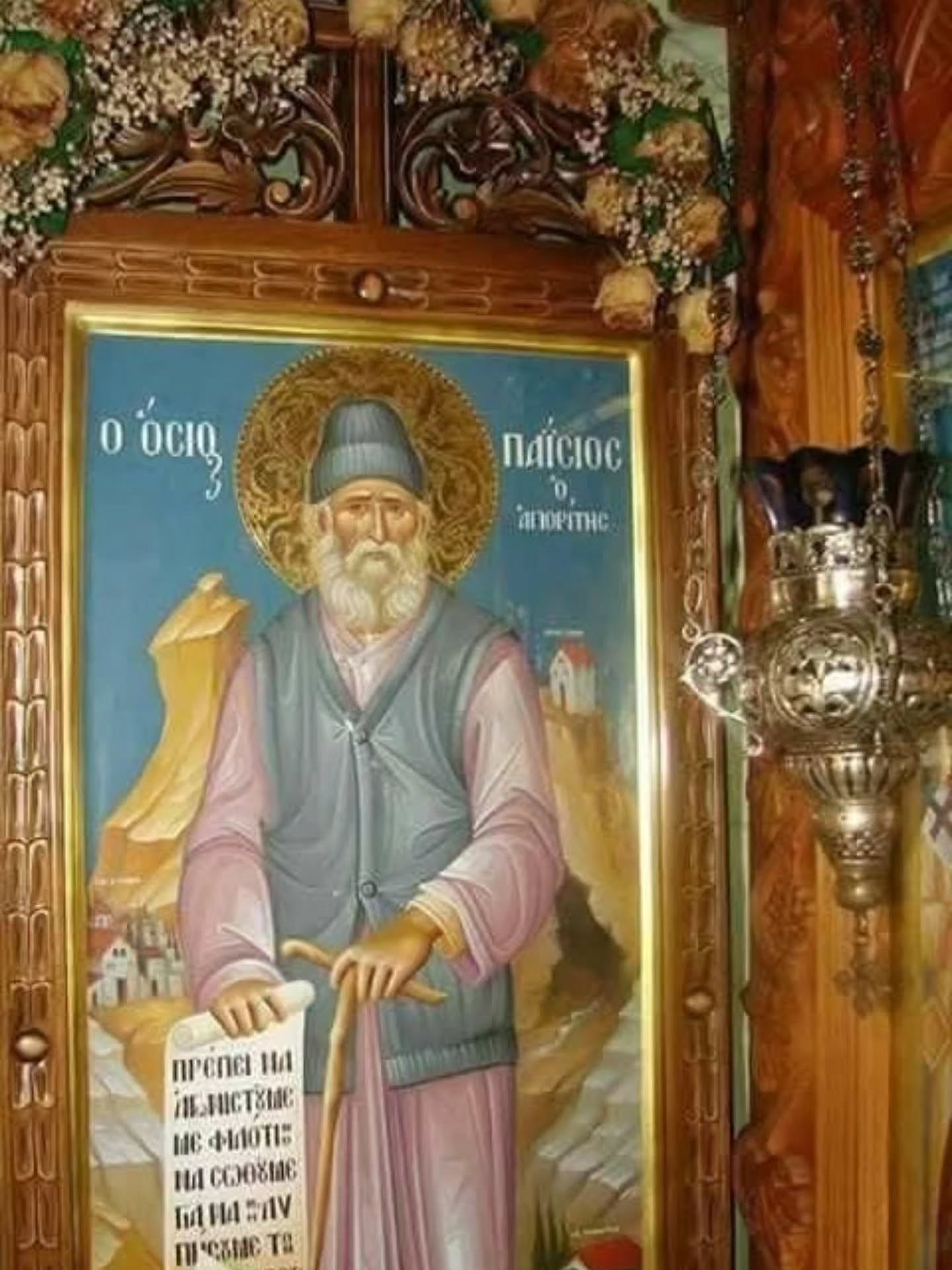
Elder Paisios: Children Must Honor Parents

Elder Paisios of the Holy Mountain teaches that children must be very careful to honor their parents. He states that when children are rude to their parents and do not show them respect, two consequences follow: first, grace leaves the children, and second, they become receptive to demonic influences and energies. The elder presents this as a direct spiritual cause and effect, linking the commandment to honor parents to the presence or absence of divine grace and vulnerability to spiritual harm.

  • Elder Paisios warns that disrespect toward parents causes grace to depart from children.
  • Such children become open to demonic influences and energies.
  • The teaching connects the commandment to honor parents with spiritual protection.
  • The quote is attributed to Elder Paisios of the Holy Mountain.
Read more

Elder Philimon: Patience Is the Brake and Medicine of Life

Elder Philimon, the righteous of the Holy Communal Pantokratoros Skete of Prophet Elijah on Mount Athos, teaches that patience functions as both the brake and the medicine of life. In a video titled "Everything needs patience" on the Holy Metropolis of Thessaloniki channel, he explains that patience is required at every hour and moment, in daily affairs and in spiritual struggle. Without patience a person cannot take even a single step forward.…

Elder Philimon, the righteous of the Holy Communal Pantokratoros Skete of Prophet Elijah on Mount Athos, teaches that patience functions as both the brake and the medicine of life. In a video titled "Everything needs patience" on the Holy Metropolis of Thessaloniki channel, he explains that patience is required at every hour and moment, in daily affairs and in spiritual struggle.

Without patience a person cannot take even a single step forward. Prayer demands patience; those who lack it abandon prayer halfway. Love likewise depends on patience. The elder gives concrete examples: a person who did good only once, twice, or three times before stopping, and a soul who endured children only a few times before exploding.

The teaching presents patience as essential for every aspect of Christian life, from the inner work of prayer to the outward demands of family and love.

Key moments

  1. Patience is the brake of our life.
  2. Patience is the medicine of our life.
  3. We need patience every hour and moment in both daily and spiritual life.
  4. Without patience, you cannot make even one step.
  5. Prayer requires patience; whoever lacks it leaves prayer in the middle.
  6. Love also needs patience.
  7. A person reported doing good only one, two, or three times before stopping.
  8. Family needs patience; a soul reported enduring children only a few times before exploding.
Read more

St. Sophrony of Essex on praying for those we resent

The post shares a saying attributed to St. Sophrony of Essex. He advises that if you wish to be freed from negative feelings toward someone, anger, aversion, envy, or hatred, you should mention that person daily in your prayers. He states that you will be surprised how much your feelings toward that person will change, and that your brother or sister will also feel that change.

St. Sophrony calls prayer the highest form of creativity. The text is presented as a standalone spiritual counsel without additional commentary or discussion.

  • St. Sophrony of Essex recommends daily prayer for a person toward whom one harbors negative feelings.
  • He lists anger, aversion, envy, and hatred as examples of such feelings.
  • He says the practice will change one's own feelings and the other person will sense the change.
  • He describes prayer as the highest form of creativity.

St. Luke the Evangelist as the first iconographer of the Theotokos

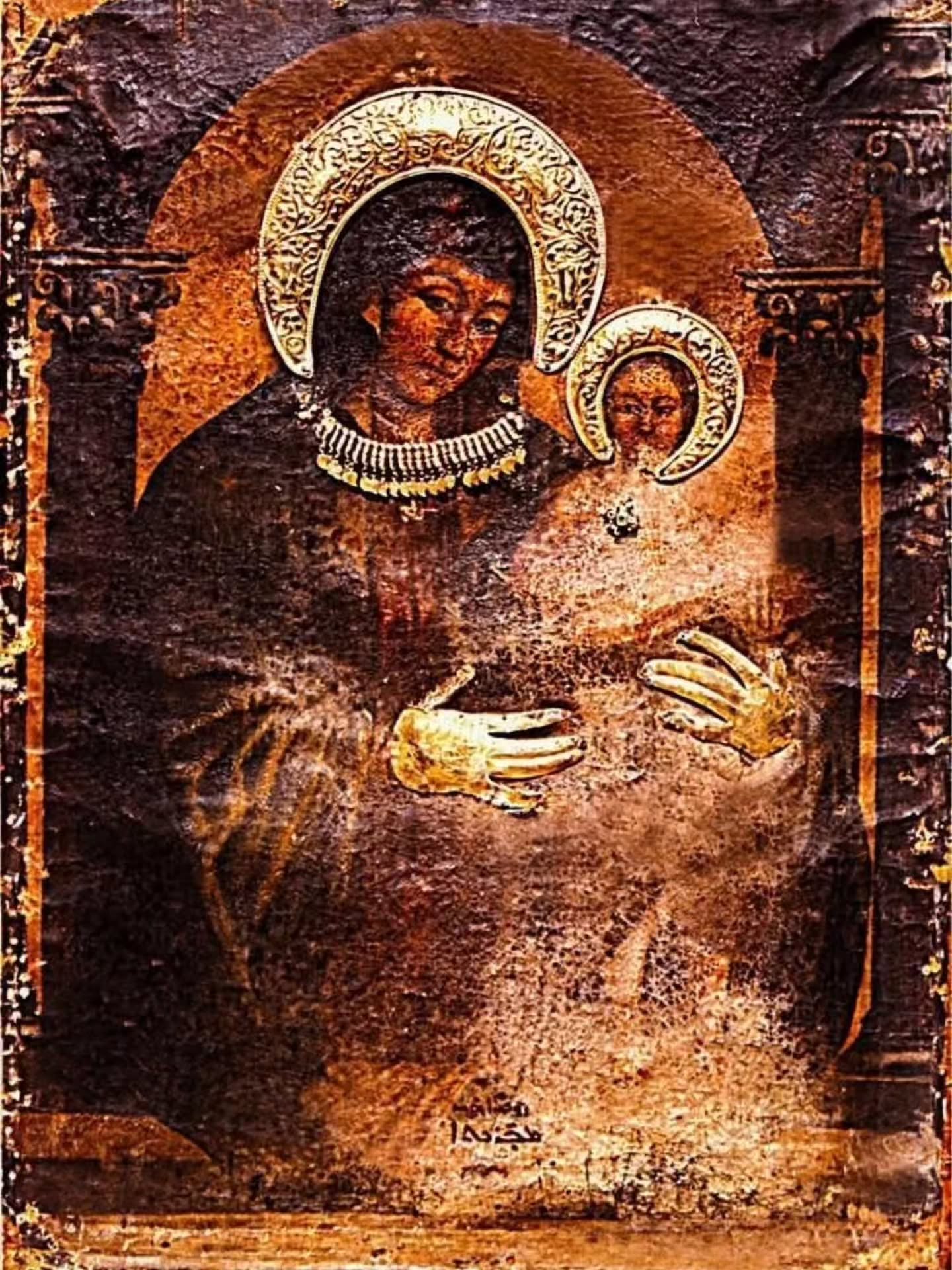
The post states that according to Orthodox tradition, the Apostle and Evangelist Luke was the first to paint the Mother of God on an icon. Tradition holds that he knew the Theotokos personally and depicted her holy likeness, making him one of the first iconographers in Christian history. Many icons of the Theotokos throughout the Christian world are attributed to St. Luke. One such icon, described as wonderworking, is kept at the Monastery of…

The post states that according to Orthodox tradition, the Apostle and Evangelist Luke was the first to paint the Mother of God on an icon. Tradition holds that he knew the Theotokos personally and depicted her holy likeness, making him one of the first iconographers in Christian history. Many icons of the Theotokos throughout the Christian world are attributed to St. Luke.

One such icon, described as wonderworking, is kept at the Monastery of St. Mark in Jerusalem, which belongs to the Syrian Orthodox Church. According to the tradition of that Church, this icon was painted by St. Luke the Evangelist.

  • Orthodox tradition identifies St. Luke as the first iconographer of the Theotokos
  • Tradition says he knew the Mother of God and painted her from life
  • Many icons of the Theotokos worldwide are attributed to St. Luke
  • A wonderworking icon at the Monastery of St. Mark in Jerusalem is ascribed to him
  • The Syrian Orthodox Church maintains this tradition regarding the Jerusalem icon
Read more

Liturgical Prayer Magnifies the Theotokos and Worships the Creator

The post presents a liturgical prayer that calls the soul to magnify the Theotokos as more honorable and glorious than the angelic hosts. The prayer addresses the most pure Mother of God and affirms worship of the Creator God. It also includes a reference to Jesus Christ as God. The text appears to be the Megalynarion or a similar hymn from Orthodox worship.

Key moments

  1. Magnify, O my soul, the most honorable and glorious above the hosts, the most pure Theotokos.
  2. Magnify, O my soul, we worship the Creator God.
  3. The text references Jesus Christ as God.
Read more
Lives of the Saints 🙏 Instagram

Holy Prophet Hosea: Judgment, Mercy, and the Coming of Christ

The post presents the life and prophetic ministry of the Holy Prophet Hosea, son of Beeri from the tribe of Issachar, who lived approximately 800 years before Christ. It identifies him as one of the great Old Testament prophets chosen by God to call His people back from sin, idolatry, and spiritual blindness. His divinely inspired prophecies are preserved in the Book of Hosea, consisting of fourteen chapters. The text recounts how, with great…

The post presents the life and prophetic ministry of the Holy Prophet Hosea, son of Beeri from the tribe of Issachar, who lived approximately 800 years before Christ. It identifies him as one of the great Old Testament prophets chosen by God to call His people back from sin, idolatry, and spiritual blindness. His divinely inspired prophecies are preserved in the Book of Hosea, consisting of fourteen chapters.

The text recounts how, with great courage, Hosea rebuked the people of Israel and Judah for turning away from the living God to worship false idols. He warned that their unfaithfulness would bring suffering and divine judgment, specifically foretelling the destruction of Samaria and the downfall of Israel because the people had abandoned the Lord and refused to repent.

The post emphasizes that Hosea's message was not only judgment. Through him, God revealed His great mercy and willingness to receive those who sincerely return. The prophet spoke of God's compassion toward Judah and foretold the coming of the Lord who would bring blessings greater than those of the Old Covenant.

He also prophesied that Old Testament sacrifices would come to an end, pointing toward Jesus Christ and the fulfillment of God's saving plan. The account notes that after a long life of faithful service, Saint Hosea peacefully reposed in deep old age. It concludes with the lesson that God calls to repentance not because He desires destruction but because He desires salvation, and that His call to return remains even when humanity turns away.

  • Hosea, son of Beeri from Issachar, prophesied around 800 years before Christ.
  • His fourteen-chapter book warns Israel and Judah of judgment for idolatry.
  • He foretold the destruction of Samaria and Israel's downfall.
  • He also proclaimed God's mercy for the repentant and the coming of Christ.
  • He prophesied the end of Old Testament sacrifices, fulfilled in Jesus.
Read more
George Instagram discussion

From Business Success to Life in Christ: A 40-Day Journey

The speaker marks forty days since launching this account and thanks more than 65,000 followers from Alaska to Japan, Australia to the Balkans, South Africa, Brazil, and Argentina. He attributes the growth to God's grace, saying he only wanted to share his return to God and connect with a few people on the same path. Until last year he worked as a coach and business mentor, earning over €20,000 a month while working four hours a day and…

The speaker marks forty days since launching this account and thanks more than 65,000 followers from Alaska to Japan, Australia to the Balkans, South Africa, Brazil, and Argentina. He attributes the growth to God's grace, saying he only wanted to share his return to God and connect with a few people on the same path. Until last year he worked as a coach and business mentor, earning over €20,000 a month while working four hours a day and traveling to more than forty countries over five years.

Despite the freedom, success, and money, he felt empty inside. When his son was born in January, he quit his business, stopped posting on his previous account which had 90,000 followers, and returned to God and his family. He describes the old account as his life before Christ and this one as his life after Christ.

He admits he initially shared only his faith because he feared showing the rest of his life would make people leave, but now he sees that everything, fatherhood, family, work, building a settled life, comes through Christ. He calls the audience brothers and sisters from different countries and languages walking the same path, united by Christ, and invites them to comment their locations.

Key moments

  1. The account began 40 days ago and now has more than 65,000 followers from Alaska to Japan, Australia to the Balkans, South Africa, Brazil, and Argentina.
  2. The speaker attributes the growth solely to God's grace, saying he only wanted to share his journey back to God and connect with a few people on the same path.
  3. Until last year he was a coach and business mentor making over €20,000 a month working four hours a day, and for five years he traveled to more than 40 countries.
  4. Despite having freedom, success, and money, he felt empty inside.
  5. When his son was born in January, he quit his business, stopped posting on his old account with 90,000 followers, and came back to God and his family.
  6. He identifies the old account as his life before Christ and this account as his life after Christ.
  7. He admits he only shared his faith at first because he feared showing the rest of his life would make people leave, but now everything in his life, fatherhood, family, work, building a life in one place, comes through Christ.
  8. He calls the followers brothers and sisters from different countries and languages walking the same path, connected by Christ, and asks them to comment where they are watching from.
7 opinions in the discussion I love how the messages are delivered with calmness, and in a way I understood from the very first message when I asked about the sign of the cross. I'm from New York, and since my breast… Read the discussion

A convert's return home through baptism

The author shares a personal testimony of conversion and baptism in the Orthodox Church. The post opens with a rhetorical question drawing on the parable of the Prodigal Son: whether the Father waits no matter how far one has wandered. The author quotes Luke 15:24, where the father declares his lost son dead and alive again, lost and found. A second quotation from Romans 6:4 connects baptism to burial with Christ and rising to newness of life.…

The author shares a personal testimony of conversion and baptism in the Orthodox Church. The post opens with a rhetorical question drawing on the parable of the Prodigal Son: whether the Father waits no matter how far one has wandered. The author quotes Luke 15:24, where the father declares his lost son dead and alive again, lost and found.

A second quotation from Romans 6:4 connects baptism to burial with Christ and rising to newness of life. The author then states personally: after all this searching, I am finally home, and gives glory to God.

  • Personal testimony of conversion and baptism
  • References the Prodigal Son parable (Luke 15:24)
  • Connects baptism to death and resurrection (Romans 6:4)
  • Expresses finding spiritual home after searching
  • Gives glory to God for the journey

St. Paisios on Suffering and Divine Consolation

The post shares a saying attributed to St. Paisios the Athonite. The quotation has two parts. The first part asserts a proportional relationship between suffering and divine consolation: the greater the suffering, the greater the consolation given by God, because without such consolation suffering cannot be endured. The second part specifies that God grants special consolation to those who suffer for the sake of others. The source of the…

The post shares a saying attributed to St. Paisios the Athonite. The quotation has two parts. The first part asserts a proportional relationship between suffering and divine consolation: the greater the suffering, the greater the consolation given by God, because without such consolation suffering cannot be endured. The second part specifies that God grants special consolation to those who suffer for the sake of others.

The source of the quotation is not cited beyond the saint's name. The post appears intended to convey a spiritual teaching on the nature of suffering and grace in the Orthodox tradition.

  • Suffering and divine consolation increase together.
  • Without divine consolation, suffering cannot be endured.
  • God gives special consolation to those who suffer for others.
  • The saying is attributed to St. Paisios the Athonite.
  • The post is shared as a standalone spiritual teaching.

Orthodox Father Explains Family's Decision Against Halloween

The author, an Orthodox Christian father, writes that his position is not one of condemnation or judgment towards anyone but a personal conviction concerning how he chooses to lead his household and raise his children in Christ. He states that as an Orthodox Christian father his responsibility is to guide his family towards the Light of Christ, not towards the darkness of this world. He explains that he does not want his children growing up with…

The author, an Orthodox Christian father, writes that his position is not one of condemnation or judgment towards anyone but a personal conviction concerning how he chooses to lead his household and raise his children in Christ. He states that as an Orthodox Christian father his responsibility is to guide his family towards the Light of Christ, not towards the darkness of this world.

He explains that he does not want his children growing up with the impression that demons, evil spirits and spiritual warfare are merely fictional characters or make-believe; these are spiritual realities, not costumes or entertainment. He describes his duty as a father as raising his children in accordance with the commandments of Christ and the teachings of His Church, teaching them to discern between light and darkness.

He adds that he is not there to judge another family's decisions; he is accountable for his own household and the spiritual direction in which he leads it. For him it has always been Christ first, and in his home Christ is King. He concludes with "Glory to God for all things. Always steadfast in the Lord."

The accompanying video summary records that when asked why they do not participate in Halloween, the speaker answers that they serve the King of Glory rather than the evil one, that they stand in the light and not in darkness, and concludes with "Slava Bogu, slava to Teo. Glory to God."

Key moments

  1. The speaker explains they do not partake in Halloween because they serve the King of Glory, not the evil one, and they stand in the light, not the darkness.
6 opinions in the discussion My position is not one of condemnation or judgment towards anyone. It is a personal conviction about how I choose to lead my household and, above all, raise my children in Christ. As an… Read the discussion