WeOrthodox
EN UA

Orthodox posts, videos and discussions

We follow Orthodox channels, communities and blogs across the web, summarise every post and video, and highlight the conversations with real substance.

Prayer Orthodoxy ® Instagram

Psalm 50: The Penitential Prayer at the Heart of Orthodox Worship

The post shares the text of Psalm 50, known in the Orthodox Church as the great penitential psalm attributed to the prophet and king David. The psalm is presented in English and Greek, accompanied by an image that displays eight panels with verses from the Septuagint numbering. The first panel names the location: St. Nicholas Greek Orthodox Chapel in Protaras, Cyprus. The following panels contain the opening verses: "Have mercy on me, O God,…

The post shares the text of Psalm 50, known in the Orthodox Church as the great penitential psalm attributed to the prophet and king David. The psalm is presented in English and Greek, accompanied by an image that displays eight panels with verses from the Septuagint numbering. The first panel names the location: St. Nicholas Greek Orthodox Chapel in Protaras, Cyprus.

The following panels contain the opening verses: "Have mercy on me, O God, according to Thy great mercy" (Psalm 50:1), "Wash me thoroughly from mine iniquity" (50:2-3), "Thou shalt sprinkle me with hyssop, and I shall be made clean" (50:7), "A heart that is clean create in me, O God" (50:10), "Cast me not away from Thy presence" (50:11), "Restore unto me the joy of Thy salvation" (50:12), and "A sacrifice unto God is a broken spirit; a heart that is broken and humbled God will not despise" (50:17). The post ends with a question asking which verse speaks most deeply to the reader.

  • Psalm 50 attributed to King David as a prayer of repentance
  • Text given in English and Greek with an image of selected verses
  • Location noted as St. Nicholas Greek Orthodox Chapel in Protaras, Cyprus
  • Verses displayed include pleas for mercy, cleansing, and a renewed spirit
  • Post invites readers to reflect on which verse touches them most
Read more
Fr.TEDTalks Instagram

Prayer changes the one who prays, not God

The speaker asks who taught that prayer is about getting things for ourselves and why we believe that. We often pray because we want or need things, but that is not the purpose of prayer. The main function of prayer is communion with God through thanksgiving, praise, and glorification; God is not a genie or Santa.

Citing Kierkegaard, the speaker says prayer changes the one who prays, not God, because God already knows our needs. Prayer teaches us gratitude, how to speak to God, and our dependence on Him.

Key moments

  1. The speaker questions who said prayer was about getting things for ourselves and why we think that.
  2. We pray because we want stuff or we need things, but that is not what prayer is about.
  3. The main function of prayer is our communion with God, including thanksgiving, praise, and glorification; God is not a genie in the sky or Santa.
  4. Soren Kierkegaard said the function of prayer is to change the one who prays, not the one who is being prayed to.
  5. Prayer changes us; God does not need to change because He knows what we need.
  6. Prayer is for us to learn to be grateful, to speak to God, and to understand that we depend on Him and need Him.
Read more
Mount Athos Legacy Facebook

What Patience Means in Christian Suffering

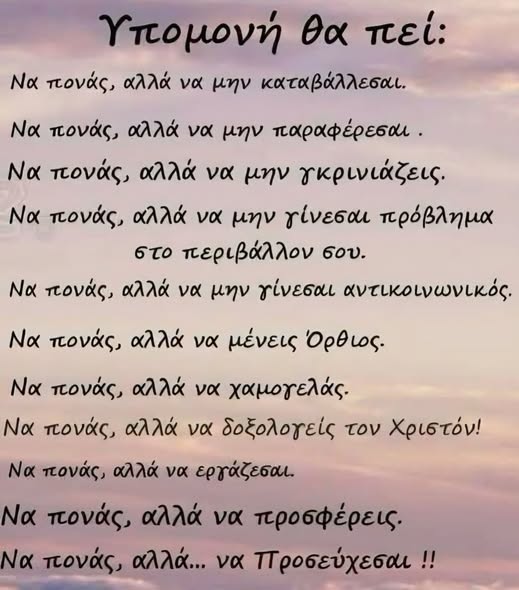
The post shares a Greek text describing the Orthodox understanding of patience (υπομονή) as active endurance rather than passive resignation. The text presents a series of contrasts: to suffer but not be crushed, not complain, not grumble, not become a burden to others, not withdraw from community. Instead, patience means remaining upright, smiling, glorifying Christ, continuing to work, offering to others, and praying. The opening greeting…

The post shares a Greek text describing the Orthodox understanding of patience (υπομονή) as active endurance rather than passive resignation. The text presents a series of contrasts: to suffer but not be crushed, not complain, not grumble, not become a burden to others, not withdraw from community. Instead, patience means remaining upright, smiling, glorifying Christ, continuing to work, offering to others, and praying.

The opening greeting wishes a good and blessed evening to all readers. The image text appears to be a spiritual saying or homiletic fragment, possibly from a contemporary Orthodox author or elder, though no attribution is given. The teaching reflects the Orthodox ascetic tradition that suffering, when met with prayer and love, becomes participation in the Cross rather than mere affliction.

The list moves from negative renunciations to positive actions, culminating in prayer as the final and encompassing response to pain.

  • Patience means suffering without despair, complaint, or grumbling
  • It refuses to become a burden or withdraw from others
  • The sufferer remains upright, smiles, and glorifies Christ
  • Work and offering to others continue despite pain
  • Prayer is the final and all-encompassing response

St. Gabriel of Georgia on Humility and the Cross

The post presents two sayings attributed to St. Gabriel of Georgia. The first states that the more a person humbles himself, the more God reveals Himself to that person, and that this is the mystery of the saints. The second recounts a question asked to the saint about which cross is better to wear.

He answered that the best cross is the one received at baptism, but if that is not available, it is better to wear a cross depicting the Crucified Christ. The post offers these teachings without additional commentary or discussion.

  • Humility leads to greater divine revelation.
  • The mystery of the saints is found in humility.
  • The best cross to wear is the baptismal cross.
  • If the baptismal cross is absent, a cross with the Crucified Christ is preferable.
Read more
☦️An Orthodox Blog☦️ Instagram

Sin as Missing the Mark: Hamartia and the Orthodox Path to Healing

The video presents the Orthodox understanding of sin as hamartia, a Greek term meaning to miss the mark like an archer who fails to hit the target. Rather than a legal infraction or debt owed to an angry judge, sin is a wound and a failure to reach the purpose for which humans were created: communion with God and theosis, participation in His life and energy. St. Athanasius taught that man was created for incorruption but turned away from God,…

The video presents the Orthodox understanding of sin as hamartia, a Greek term meaning to miss the mark like an archer who fails to hit the target. Rather than a legal infraction or debt owed to an angry judge, sin is a wound and a failure to reach the purpose for which humans were created: communion with God and theosis, participation in His life and energy.

St. Athanasius taught that man was created for incorruption but turned away from God, the source of all good, toward corruptible things. Sin is not God punishing from outside but a self-deprivation of the substance that gives life. Therefore the cure for sin is not a court of justice but the Incarnation and metanoia, true repentance understood as a change of the whole mind and heart (nous), returning to the original mark.

The video contrasts the common legalistic view of sin as broken rules requiring payment with the patristic vision of sin as a missed vocation and the healing offered through Christ's assumption of human nature and the transformative repentance that reorients the nous toward God. It emphasizes that metanoia is not merely regret but a fundamental change of the nous, the eye of the soul, restoring the trajectory toward the divine target for which humanity was fashioned.

The Incarnation is presented not as a legal transaction but as God entering human nature to heal the wound of separation and restore the possibility of theosis.

Key moments

  1. Most people think of sin as a crime, a broken rule, a debt owed to a just and angry judge, but that is not what the Church has always taught.
  2. The Greek word for sin is hamartia, which means missing the mark, like an archer who fails to hit the center of the target.
  3. We were made for the goal of communion with God, theosis, to participate in His own life and energy.
  4. Sin is not a legal infraction; it is a failure to hit the mark, a wound, not a verdict.
  5. St. Athanasius said man was created for incorruption, but by turning away from God, the source of all good, he turned toward corruptible things.
  6. Sin is not God punishing you from the outside; it is you depriving yourself of the substance that gives you life.
  7. That is why the cure for sin was never a court of justice; it was the Incarnation, it is metanoia, true repentance, a change of nous, of our whole mind and heart, returning to the original mark.
George Instagram discussion

Why promising never to sin again gives the devil power over you

The video explains that making absolute promises to never sin again is a trap because such promises rely on human strength rather than God. The devil then uses those promises against the person who made them. Peter's denial of Christ illustrates the point: he vowed he would never leave Jesus and would even die with Him, yet within hours he denied Him three times. His mistake was trusting his own resolve instead of Christ. Christ taught that…

The video explains that making absolute promises to never sin again is a trap because such promises rely on human strength rather than God. The devil then uses those promises against the person who made them. Peter's denial of Christ illustrates the point: he vowed he would never leave Jesus and would even die with Him, yet within hours he denied Him three times.

His mistake was trusting his own resolve instead of Christ. Christ taught that without Him we can do nothing. The alternative to grand promises is humility, admitting inability and asking God for help. That humility is where the devil has no power. Peter later warned in his epistle that the devil prowls like a roaring lion seeking someone to devour, so believers must stay humble and close to Christ, letting Him fight for them.

Key moments

  1. The devil gets you when you make a promise like "I will never sin again" because you are trusting yourself and not God.
  2. The devil then throws your own works back at you, challenging your strength.
  3. Peter told Christ he would never leave Him and would die with Him, but denied Him three times hours later.
  4. Peter's mistake was trusting his own strength instead of Christ.
  5. Christ said "without me you can do nothing."
  6. Instead of big promises, say "Lord, I can't do this alone. Help me."
  7. That humility is where the devil has no power over you.
  8. Peter later warned that the devil walks like a roaring lion seeking to devour, so stay humble and close to Christ, letting Him fight for you.
4 opinions in the discussion Yes, yes... and I have carried the weight of failing to keep that promise myself. I pray that God has brought your messages to me and that they are true, so I will hand my weakness and my… Read the discussion
Fr.TEDTalks with LogosCinema Instagram

Christ Needs Followers, Not Defenders

The video presents a teaching from Fr. Ted Talks, a series on Logos Cinema. The speaker, a priest, observes that many Christians invest energy in defending orthodoxy as an idea, the institutional church, their own priest, their personal choices, or their local parish. He notes that this defensiveness often carries anger, outrage, and criticism. In the midst of such arguments, the priest says, a fundamental point is missed: Christ does not need…

The video presents a teaching from Fr. Ted Talks, a series on Logos Cinema. The speaker, a priest, observes that many Christians invest energy in defending orthodoxy as an idea, the institutional church, their own priest, their personal choices, or their local parish. He notes that this defensiveness often carries anger, outrage, and criticism.

In the midst of such arguments, the priest says, a fundamental point is missed: Christ does not need human defense. The relationship is the reverse, Christ defends His people, and they are the ones who need His defense, guidance, support, and grace. The priest states plainly that Christ requires no one, not even those posting online, not even himself.

The proper Christian task, he explains, is not to act as though the Almighty were vulnerable and required protection. Instead, believers are called to preach the word, to live love, faith, and compassion, and to lead others to Christ. The talk contrasts a posture of combative defense with the calling of faithful witness and discipleship.

Key moments

  1. Everybody wants to defend orthodoxy, the church, their priest, their choices, or their parish.
  2. In all this defense and anger and outrage and criticism, we forget that Christ does not need us to defend him.
  3. He is the one who defends us; we need his defense, guidance, support, and grace.
  4. He does not need any of us, not even the people posting online, not even the speaker.
  5. We are supposed to do our best to preach the word and love and faith and compassion, and lead people to him, not try to defend him as if he is not all-powerful and cannot defend himself.
Read more

The Virgin of Ljeviš: King Milutin's cathedral, its frescoes, and survival

The Church of the Virgin of Ljeviš in Prizren was built by King Milutin between 1307 and 1309 on the foundations of a three-aisled basilica from the tenth and eleventh centuries. That earlier basilica was likely dedicated to the Virgin Eleusa and stood on an even older cult site. The basilica was partially renovated in the thirteenth century during the reign of King Stefan the First-Crowned, when the Prizren bishopric joined the autocephalous…

The Church of the Virgin of Ljeviš in Prizren was built by King Milutin between 1307 and 1309 on the foundations of a three-aisled basilica from the tenth and eleventh centuries. That earlier basilica was likely dedicated to the Virgin Eleusa and stood on an even older cult site. The basilica was partially renovated in the thirteenth century during the reign of King Stefan the First-Crowned, when the Prizren bishopric joined the autocephalous Serbian Church.

Inscriptions on the east facade, made in brick, record King Milutin's reconstruction carried out with the support of Prizren bishops Damjan and Sava, the latter later becoming Archbishop Sava III. The inscriptions also name the builder Nikola and the painter Astrapa as the Byzantine masters responsible for raising and decorating the episcopal seat in the fourteenth century.

The preserved frescoes in the church date from different periods. A fresco of the Virgin Eleusa with Christ the Nourisher was painted in the third decade of the thirteenth century. Two other frescoes from that time, the Wedding at Cana and the Healing of the Blind, are now kept in the Fresco Gallery of the National Museum of Serbia in Belgrade.

The remaining frescoes, created between 1307 and 1313, are the work of the renowned Thessalonian painter Michael Astrapas and his assistants.

Like many other Serbian Orthodox shrines, the Virgin of Ljeviš was desecrated during the pogrom of March 2004, carried out by Albanian extremists against the Serbian population and holy sites. Its frescoes were heavily damaged by fire but were fortunately preserved and restored in the second decade of the twenty-first century. The restoration was conducted by the Republic Institute for the Protection of Cultural Monuments.

The post also notes related frescoes from King Milutin's era in the monastery of St. John the Theologian in Poganovo.

  • King Milutin built the church 1307-1309 over a 10th-11th century basilica dedicated to the Virgin Eleusa.
  • Inscriptions name bishops Damjan and Sava, builder Nikola, and painter Astrapa.
  • Frescoes include 13th-century works (Virgin Eleusa, Wedding at Cana, Healing of the Blind) and 1307-1313 paintings by Michael Astrapas.
  • The church was severely damaged in the March 2004 pogrom by Albanian extremists and later restored by the Republic Institute for Protection of Cultural Monuments.
  • Some 13th-century frescoes are now housed in the National Museum of Serbia in Belgrade.
Read more

St. Gabriel Urgebadze's sister visits Samtavro and recalls 1986 vision

Julietta (Eugenia in baptism), sister of St. Gabriel Urgebadze, visited Samtavro Monastery on November 2, 2026 to venerate her brother's relics in the Transfiguration Church and the grave of their mother Barbara (Anna in monasticism). She recalled a 1986 visit to Meni Monastery in Senaki where, during morning services, she saw her brother's face and beard shining with light, years before his glorification. She remembered asking herself: "Why is…

Julietta (Eugenia in baptism), sister of St. Gabriel Urgebadze, visited Samtavro Monastery on November 2, 2026 to venerate her brother's relics in the Transfiguration Church and the grave of their mother Barbara (Anna in monasticism). She recalled a 1986 visit to Meni Monastery in Senaki where, during morning services, she saw her brother's face and beard shining with light, years before his glorification.

She remembered asking herself: "Why is he shining? Is my brother a saint?" The post presents this as a living example of faith, love, and humility.

Key moments

  1. The speaker acknowledges that one may feel overwhelmed, stressed, and anxious, and says it can be tough to navigate those feelings.
  2. The speaker recommends deep breathing, going for a walk, or listening to relaxing sounds as small actions that can make a real difference.
  3. The speaker advises being kind to yourself, remembering you are doing the best you can, and says everything will be all right.
Read more
Kyle YouTube

Orthodox Teaching on Authority, Pacifism, and Redemption Through Star Wars

Orthodox Teaching on Authority, Pacifism, and Redemption Through Star Wars 22:54

The video examines the Star Wars sequel trilogy from an Orthodox Christian perspective. It argues that the New Republic's fear of appearing authoritarian creates a vacuum the First Order fills, illustrating that evil resides in every human heart and no political system can eradicate it while fear, pride, and desire for control remain. Good intentions alone cannot prevent tyranny; faith, courage, and decisive action rooted in truth are required.…

The video examines the Star Wars sequel trilogy from an Orthodox Christian perspective. It argues that the New Republic's fear of appearing authoritarian creates a vacuum the First Order fills, illustrating that evil resides in every human heart and no political system can eradicate it while fear, pride, and desire for control remain. Good intentions alone cannot prevent tyranny; faith, courage, and decisive action rooted in truth are required.

From an Orthodox viewpoint, Christianity is neither absolute pacifism nor a justification of violence. War and violence are tragic concessions to a fallen world, and even justified killing carries spiritual harm requiring repentance. The Church acknowledges different vocations: monks renounce violence entirely, while laypeople may bear arms to protect the innocent as a last resort and never with pride.

Governments exist to restrain chaos, borders are legitimate, and law and order are necessary for peace, yet the Church does not identify with the state; the Byzantine double-headed eagle symbolizes church and state as distinct but united.

The saga's generational cycle appears in Luke's failure as a spiritual father, which leads Ben Solo to idolize a false image of Vader and become Kylo Ren, until sacrificial love and grace bring redemption. This mirrors the Christian teaching that lineage does not determine destiny; Rey and Kylo both confront their ancestors' sins but overcome them through repentance and grace, paralleling the genealogy of Jesus which includes sinners who repented.

The speaker compares the three trilogies to Christian traditions: the original trilogy embodies Orthodoxy's fullness, the prequels resemble Catholicism's formal expansion that loses the relational core, and the sequels mirror Protestantism's mechanical loss of essence. He concludes with a call to repentance and entry into the Orthodox Church.

Key moments

  1. 0:32 The New Republic's hesitation to exercise authority for fear of resembling the Empire creates a power vacuum that the First Order fills, showing that evil is not only external but dwells in every human heart.
  2. 1:04 No political system can eliminate evil as long as fear, pride, and the desire for control are rooted in the human person; excessive fear of authority in a revolution prevents decisive action and allows a new tyranny to emerge.
  3. 3:42 Christianity is not absolute pacifism nor a secret endorsement of violence; Orthodoxy views war and violence as tragic concessions to human weakness, not ideals, and holds that even justified killing wounds the soul and requires repentance.
  4. 5:20 Monks explicitly renounce violence as part of their vocation, while laypeople living in the world may bear arms to defend their families and serve in government, though such defense is permitted but not commendable.
  5. 8:01 Governments exist to restrain chaos, borders are legitimate, and law and order are necessary for peace, yet the Church does not identify with the state; the Byzantine double-headed eagle symbolizes church and state as distinct but united entities.
  6. 11:09 Luke Skywalker's momentary fear of killing his nephew Ben creates a self-fulfilling prophecy that drives Ben to the dark side, and Luke's subsequent withdrawal leaves the next generation without a spiritual father.
  7. 15:56 Rey's descent from Palpatine and Kylo Ren's descent from Vader parallel the genealogy of Jesus, which includes sinners who repented, showing that redemption comes through obedience and humility, not bloodline.
  8. 20:13 The original trilogy corresponds to Orthodoxy because it preserves the saga's essence and theosis, the prequels to Catholicism because they expand the universe but substitute form for lived grace, and the sequels to Protestantism because they become mechanical and lose the spiritual core.
Read more

Extinguishing the slava candle: custom, superstition, and prayer

The speaker responds to a viral video that his son sent him, which claimed to teach the correct way to extinguish the slava candle during a family feast day. The video stated that the candle must burn until the last guest departs, then be put out with blessed wine while the smoke is read to predict whether the coming year will be good or bad. The speaker rejects the practice of reading smoke as superstition without any foundation in the Church,…

The speaker responds to a viral video that his son sent him, which claimed to teach the correct way to extinguish the slava candle during a family feast day. The video stated that the candle must burn until the last guest departs, then be put out with blessed wine while the smoke is read to predict whether the coming year will be good or bad.

The speaker rejects the practice of reading smoke as superstition without any foundation in the Church, likening it to reading a Christmas log. He observes that customs differ by region: some people extinguish the candle with bread, others with wine. The speaker recommends dipping the wick in melted wax to extinguish the flame so that the candle can be relit later for prayer before the slava icon on subsequent days.

He notes that once the candle is extinguished with wine, water, or similar liquids, it cannot easily be relit. The speaker invites viewers to share how the slava candle is extinguished in their own area.

Key moments

  1. The speaker's son sent him a video asking whether its instructions on extinguishing the slava candle were correct.
  2. The video stated the slava candle must burn until the last guest leaves.
  3. The video instructed extinguishing the candle with blessed wine and then reading the smoke to determine if the year would be good or bad.
  4. The speaker says reading smoke has no basis in the Church and is plain superstition, like reading a Christmas log.
  5. Customs differ across villages and cities; some extinguish the candle with bread, others with wine.
  6. The speaker recommends dipping the candle in wax to extinguish it so it can be relit for prayer before the slava icon on subsequent days.
  7. Once extinguished with wine, water, or similar liquids, the candle cannot easily be relit.
  8. The speaker asks viewers how the slava candle is extinguished in their region.
16 opinions in the discussion God help you, father. We cross ourselves, blow, and put the candle out, the way it's supposed to be done. Read the discussion

A chance meeting with a children's poet who carried Christ in his eyes

The author recounts a chance encounter at a post office where an elderly man yielded his place with the words "Ladies have priority." His face radiated such warmth that the meeting lost any sense of randomness. She introduced herself as Jelena; he gave his name as Slobodan. Moved by his presence, she asked to record him to show friends a man who, in her words, carried Christ in his eyes. Slobodan spoke of his love for children, saying nothing…

The author recounts a chance encounter at a post office where an elderly man yielded his place with the words "Ladies have priority." His face radiated such warmth that the meeting lost any sense of randomness. She introduced herself as Jelena; he gave his name as Slobodan.

Moved by his presence, she asked to record him to show friends a man who, in her words, carried Christ in his eyes. Slobodan spoke of his love for children, saying nothing was more beautiful than a child's smile and that his whole life he wrote for the youngest. He mentioned living in Zabelje. The author listened with wonder, reminded of a Holy Mountain ascetic, a person whose presence does not seek attention yet leaves an indelible trace.

She sent the recording to close friends, who saved it. Recently they sent it back to her with the news that Slobodan Bećo Došljak, a children's poet who gave his books to children, had reposed. The ordinary day became a memory whose value she now feels more deeply. She thanks God for the meeting, prays that his verses continue to live in children's hearts and that his memory remains in the souls of those who met him, and ends with the prayer for eternal memory and the Kingdom of Heaven.

  • The author meets an elderly man at a post office who greets her with unusual warmth.
  • He introduces himself as Slobodan and speaks of his lifelong work writing poetry for children.
  • The author senses a spiritual depth in him, comparing his presence to a Holy Mountain ascetic.
  • She later learns he was Slobodan Bećo Došljak, a known children's poet who gave his books to children.
  • She offers a prayer for his eternal memory and the Kingdom of Heaven.

Orthodox exclusivity and responding to opposition with charity

The speaker explains that Christianity is inherently an exclusive religion. He observes that non-Orthodox Christians have no difficulty declaring Christianity true and other worldviews false, but they react negatively when Orthodox Christians apply that same exclusivity within Christianity itself. He notes that when someone pursuing Orthodoxy answers honestly about what the Church teaches, the definite and exclusive nature of the response often…

The speaker explains that Christianity is inherently an exclusive religion. He observes that non-Orthodox Christians have no difficulty declaring Christianity true and other worldviews false, but they react negatively when Orthodox Christians apply that same exclusivity within Christianity itself. He notes that when someone pursuing Orthodoxy answers honestly about what the Church teaches, the definite and exclusive nature of the response often scandalizes the questioner.

The speaker advises that the important thing is to pursue peace without compromising the faith. This means not turning every disagreement into an argument, but also not softening Church teaching to make people comfortable. He shares that his only negative experiences with Holy Orthodoxy have come from people who do not know him well.

He does not feel the need to force his faith into every conversation, and his theological beliefs do not determine who he can maintain relationships with. For those whose close friends or family take issue with Orthodox exclusivity, he advises being charitable and patient but not ashamed of believing that truth is actually true. He quotes Saint Jude to contend earnestly for the faith which was once for all delivered to the saints, and says every interaction, whether encouraging or difficult, is an opportunity to reflect Christ well.

Key moments

  1. Christianity is inherently an exclusive religion.
  2. Non-Orthodox Christians have no problem declaring Christianity true and other worldviews false, but they become offended when Orthodox Christians apply that same exclusivity within Christianity.
  3. When someone pursuing Orthodoxy answers honestly about what the Church teaches, the definite and exclusive nature of the response often scandalizes the questioner.
  4. The important thing is to pursue peace without compromising the faith, not turning every disagreement into an argument but also not softening Church teaching to make people comfortable.
  5. The speaker's only negative experiences with Holy Orthodoxy have come from people who do not know him well.
  6. He does not feel the need to force his faith into every conversation, and his theological beliefs do not determine who he can maintain relationships with.
  7. For those whose close friends or family take issue with Orthodox exclusivity, he advises being charitable and patient but not ashamed of believing that truth is actually true.
  8. He quotes Saint Jude to contend earnestly for the faith which was once for all delivered to the saints, and says every interaction, whether encouraging or difficult, is an opportunity to reflect Christ well.
6 opinions in the discussion Objective truth is always exclusive. Does 2+2 exclusively equal 4? They hate truth and exclusivity because the truth is ultimately Christ. Read the discussion
radioimlemesou Instagram

Metropolitan Athanasios: Salvation Comes from God's Grace, Not Ourselves

Metropolitan Athanasios of Lemesos teaches that salvation does not originate from human effort but primarily from the grace of God. He explains that whoever desires salvation must turn to God as Savior, ask for salvation, and God grants it. Citing the Fathers, he says: "Give your intention to God and you receive power from Him." The Metropolitan offers a concrete prayer: "My God, I want to be saved. I may not be able, or may not want as much as…

Metropolitan Athanasios of Lemesos teaches that salvation does not originate from human effort but primarily from the grace of God. He explains that whoever desires salvation must turn to God as Savior, ask for salvation, and God grants it. Citing the Fathers, he says: "Give your intention to God and you receive power from Him."

The Metropolitan offers a concrete prayer: "My God, I want to be saved. I may not be able, or may not want as much as I should, but I want to be saved. Since I want to be saved, I ask You for the power to save me."

He concludes that if this prayer comes from the heart and the desire is genuine, salvation is attainable.

Key moments

  1. Salvation does not originate from oneself but mainly from the grace of God.
  2. Whoever wants to be saved flees to the Savior God and asks for salvation, and God gives it.
  3. Give your intention to God and you receive power from Him.
  4. Say to God: 'My God, I want to be saved,' even if you cannot or cannot want as much as you should.
  5. If your heart says it and you truly want to be saved, you can be saved.
Read more
George Instagram

God's love does not depend on our goodness

The post begins by quoting Romans 5:8: "But God demonstrates His own love toward us, in that while we were still sinners, Christ died for us." It emphasizes the phrase "while we were still sinners" to stress that Christ did not wait for human improvement before acting. The author then describes a common assumption: many believers quietly think God's love increases when they behave well and decreases when they fail, so each fall creates a feeling…

The post begins by quoting Romans 5:8: "But God demonstrates His own love toward us, in that while we were still sinners, Christ died for us." It emphasizes the phrase "while we were still sinners" to stress that Christ did not wait for human improvement before acting. The author then describes a common assumption: many believers quietly think God's love increases when they behave well and decreases when they fail, so each fall creates a feeling that God is pulling away.

The post counters this by citing 1 John 4:8, "God is love," arguing that God's love is constant because it flows from His unchanging nature. To illustrate, the author turns to the parable of the prodigal son in Luke 15:20: "But when he was still a great way off, his father saw him and had compassion, and ran and fell on his neck and kissed him."

The father's action precedes any word of repentance, showing that divine love meets the sinner before any apology. The post ends with a direct appeal: "Who do you know that needs to hear this today? Send it to them."

  • Romans 5:8 states Christ died for us while we were still sinners.
  • God's love does not rise with good behavior or fall with failure.
  • God's love is rooted in His nature: "God is love" (1 John 4:8).
  • The prodigal son parable shows the father's compassion before any apology (Luke 15:20).
  • The author urges readers to share this message with someone who needs it.
Read more

St. John Chrysostom on Heresy and Judging Others

The post shares a saying attributed to St. John Chrysostom that distinguishes between doctrine and personal conduct. The first part urges believers to flee from anyone who holds a heretical doctrine, even if that person were an angel from heaven. The second part cites Christ's command "Judge not, that you be not judged" and applies it to matters of life, not to matters of the Faith.

The quote thus separates the obligation to reject false teaching from the prohibition against judging another's way of life.

  • The quote attributes to St. John Chrysostom a distinction between heresy and personal conduct.
  • Believers are told to flee from those who hold heretical doctrine, even angels.
  • Christ's command "Judge not" applies to matters of life, not to matters of faith.
  • The post presents the saying without additional commentary or source reference.

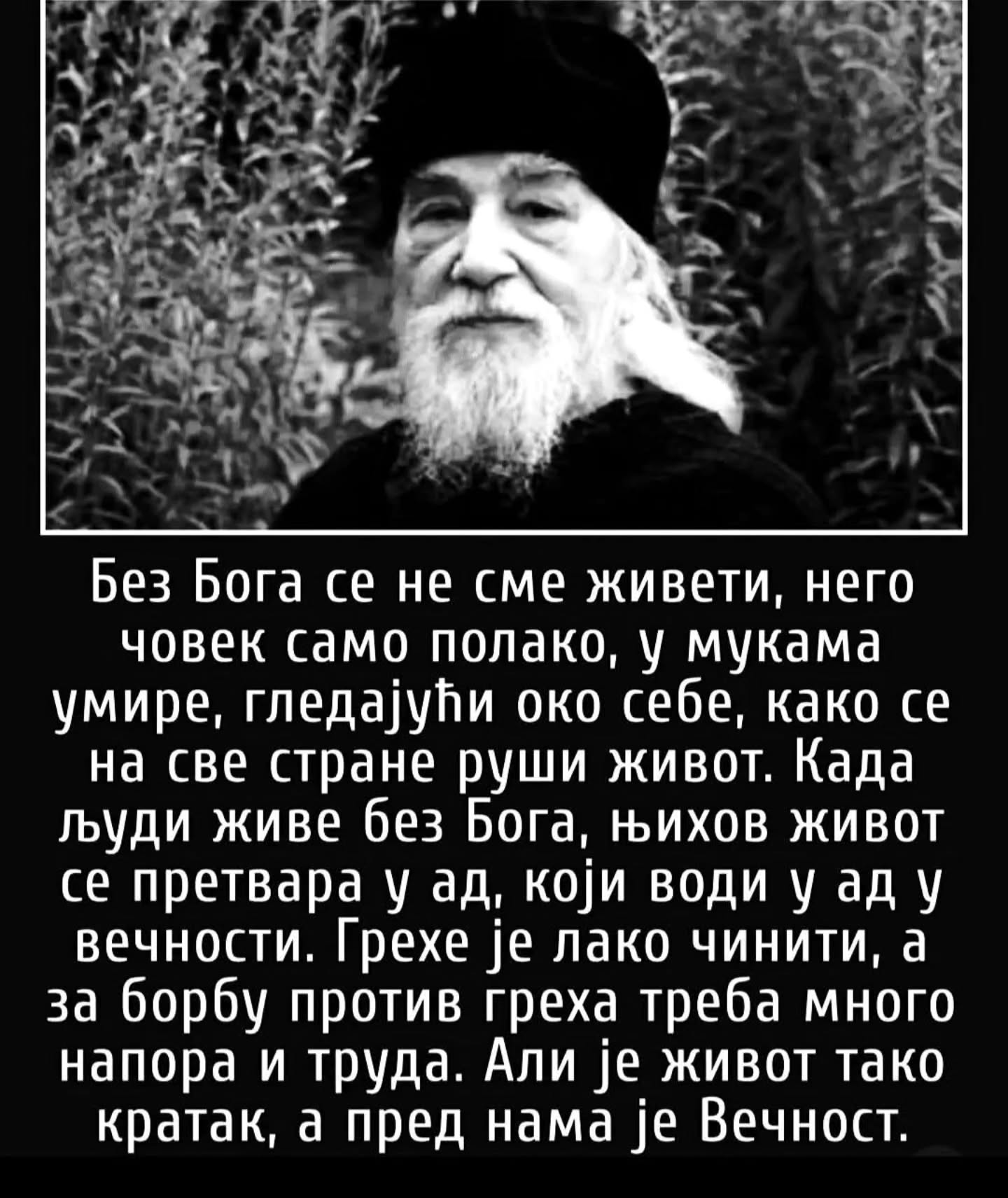
Life without God leads to hell now and in eternity

The text states that a person cannot live without God but only dies slowly in torment while watching life collapse on all sides. When people live without God, their life becomes hell on earth and leads to eternal hell. Sin is described as easy to commit, while the struggle against sin requires great effort and labor. The author contrasts the brevity of human life with the eternity that lies ahead.

  • Without God human life becomes a slow death in torment
  • Life without God turns into hell on earth and leads to eternal hell
  • Sin is easy to commit but struggling against it requires great effort
  • Human life is short while eternity lies ahead
Read more
CHRISTIANITY UNITED Instagram

Christ is the Resurrection and the Life: Lazarus Saturday and the defeat of death

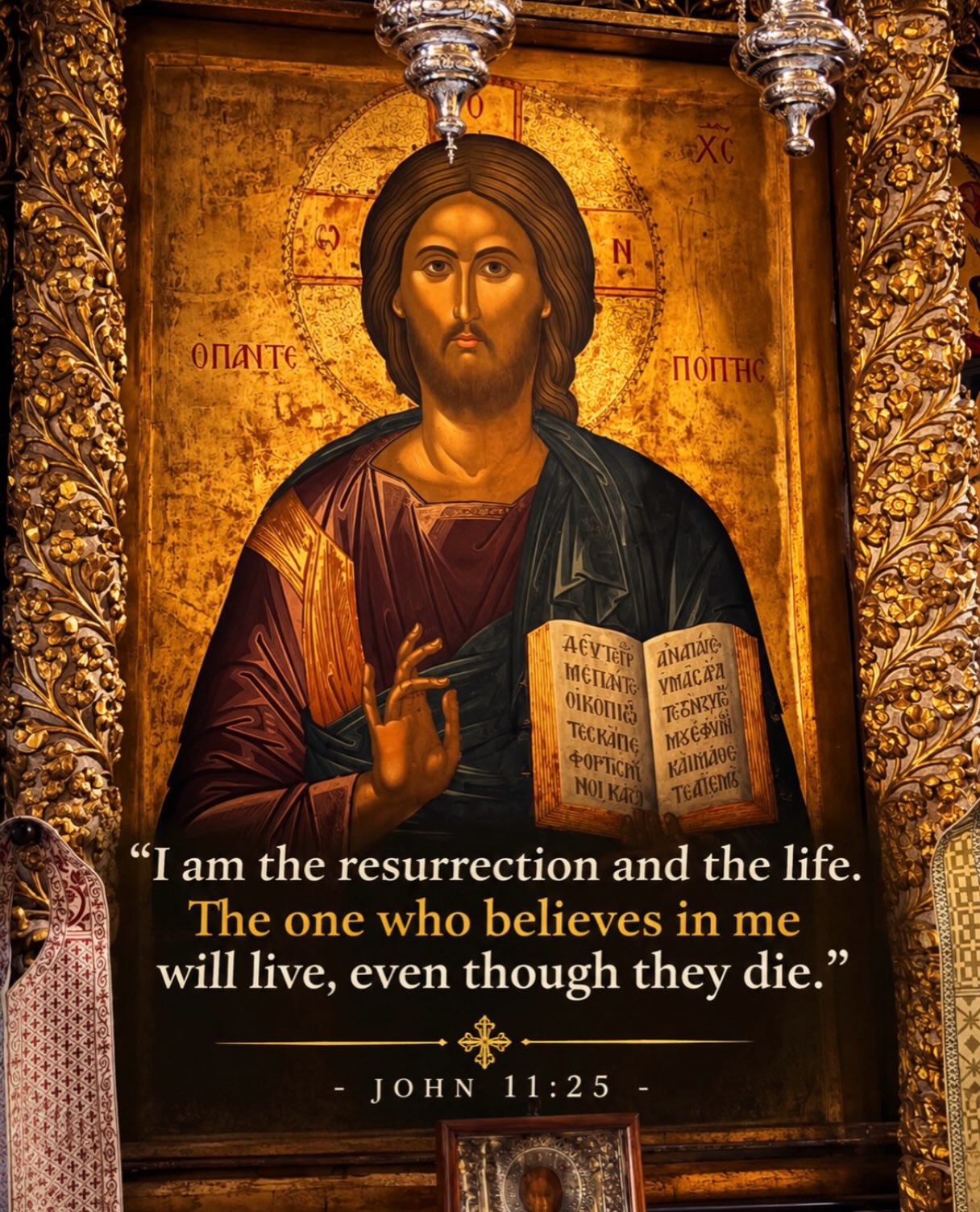
The post centers on Christ's words to Martha in John 11:25: "I am the resurrection and the life. The one who believes in me will live, even though they die." The author explains that Jesus spoke these words after the death of Lazarus, Martha's brother. Although Martha believed in the general resurrection on the last day, Christ revealed that the Resurrection is a person, Himself, standing before her. He then raised Lazarus, who had been dead…

The post centers on Christ's words to Martha in John 11:25: "I am the resurrection and the life. The one who believes in me will live, even though they die." The author explains that Jesus spoke these words after the death of Lazarus, Martha's brother.

Although Martha believed in the general resurrection on the last day, Christ revealed that the Resurrection is a person, Himself, standing before her. He then raised Lazarus, who had been dead four days, as a sign of His own coming victory over death through the Cross and Resurrection. The Orthodox Church commemorates this event on Lazarus Saturday, the day before Holy Week.

The post notes that Christians are not forbidden to grieve; Christ Himself wept at Lazarus' tomb. But grief is not without hope, because Christ has opened the way to eternal life. The grave is no longer the end of the story, and those who belong to Christ are called to share in His victory over death.

The author cites the Paschal troparion: "Christ is risen from the dead, trampling down death by death, and upon those in the tombs bestowing life!" The message concludes that faith rests on a living Savior who conquered the grave, so death is not the end of life.

  • Christ's declaration in John 11:25 that He is the Resurrection and the Life
  • The raising of Lazarus after four days as a sign of Christ's victory over death
  • Lazarus Saturday in the Orthodox calendar, observed before Holy Week
  • Christian grief is real but not without hope because of the Resurrection
  • The Paschal troparion proclaims Christ trampling down death by death
Read more

Saint Gabriel Urgebadze: the monk who burned a portrait of Lenin for Christ

The post tells the life of Saint Gabriel Urgebadze, born in Tbilisi, Georgia, in 1929, when open belief in God could bring persecution. As a child he loved the Gospel, prayer before icons, and monasteries, and at twelve he left home to dedicate his life to God. In 1955 he became a monk and priest with the name Gabriel. During Soviet persecution he built a small church with his own hands and gathered icons that others had abandoned out of fear.…

The post tells the life of Saint Gabriel Urgebadze, born in Tbilisi, Georgia, in 1929, when open belief in God could bring persecution. As a child he loved the Gospel, prayer before icons, and monasteries, and at twelve he left home to dedicate his life to God. In 1955 he became a monk and priest with the name Gabriel. During Soviet persecution he built a small church with his own hands and gathered icons that others had abandoned out of fear.

The turning point came on May 1, 1965, during a communist celebration in Tbilisi, when Father Gabriel publicly burned a large portrait of Lenin, proclaiming that glory belongs to Jesus Christ, Who conquered death. The crowd attacked him; he was beaten, arrested, and confined to a psychiatric hospital, but he refused to deny Christ or betray the Church.

He later took up the struggle of foolishness for Christ, enduring mockery and misunderstanding while hiding his spiritual gifts. At Samtavro Monastery he lived in poverty, prayer, and humility, welcoming all who came seeking comfort, and was remembered for his compassion toward suffering people. He died on November 2, 1995, was glorified as a saint in 2012, and his relics are venerated at Samtavro Monastery.

  • Saint Gabriel Urgebadze was born in Tbilisi in 1929 and at twelve left home to give his life to God; he became a monk and priest in 1955.
  • During Soviet persecution he built a small church with his own hands and collected icons others had abandoned out of fear.
  • On May 1, 1965, he publicly burned a portrait of Lenin in Tbilisi, was beaten by the crowd, arrested, and confined to a psychiatric hospital without denying Christ.
  • He embraced foolishness for Christ and lived at Samtavro Monastery in poverty, prayer, and humility, welcoming all who sought comfort.
  • He died on November 2, 1995, was glorified in 2012, and his relics are venerated at Samtavro Monastery in Georgia.
Read more
Prayer Orthodoxy ® Instagram

Do Orthodox Christians Worship Icons? The Distinction the Seventh Ecumenical Council Made

The post answers the accusation that Orthodox Christians worship icons and sets out the case for icon veneration from Scripture, theology, and church history. It explains that worship (latreia), meaning adoration and the offering of one's whole life, belongs to God alone, while veneration (proskynesis) is the honor shown to an icon, which passes to the person depicted: Christ, the Theotokos, or a saint. Orthodox Christians do not believe wood…

The post answers the accusation that Orthodox Christians worship icons and sets out the case for icon veneration from Scripture, theology, and church history. It explains that worship (latreia), meaning adoration and the offering of one's whole life, belongs to God alone, while veneration (proskynesis) is the honor shown to an icon, which passes to the person depicted: Christ, the Theotokos, or a saint.

Orthodox Christians do not believe wood and paint are gods. On the biblical side, the post notes that Exodus 20:4-5 forbids idols made to be worshiped as gods, while Exodus 25:18-20 commands cherubim on the Ark of the Covenant, so Scripture condemns idolatry rather than holy images. Icons are grounded in the Incarnation: because the Word became flesh, as John 1:14 says, Christ can be depicted, while the invisible Father is not portrayed in human form.

Kissing icons is described as a gesture of love and reverence, and icons are called windows into the Gospel that call us to prayer, repentance, and holiness. The historical argument runs through Nicaea II in 787, where the Seventh Ecumenical Council affirmed the veneration of icons, to their restoration in 843, still celebrated on the Sunday of Orthodoxy.

The post adds that the united Church of East and West venerated images for over a thousand years, and that only after the Protestant Reformation of 1517 did some reformers reject the practice, which the Orthodox view as a later innovation. The post closes that icons proclaim the Incarnation, teach the faith, and direct honor to Christ and the saints.

  • Worship (latreia) belongs to God alone; veneration (proskynesis) is honor shown to an icon that passes to the person depicted.
  • Exodus 20:4-5 forbids idols, while Exodus 25:18-20 commands cherubim on the Ark, so Scripture condemns idolatry, not holy images.
  • Icons rest on the Incarnation (John 1:14): Christ took visible human nature and can be depicted, unlike the invisible Father.
  • The Seventh Ecumenical Council at Nicaea II in 787 affirmed icon veneration; icons were restored in 843, celebrated on the Sunday of Orthodoxy.
  • After the Reformation of 1517 some reformers rejected images; from the Orthodox view this was a later innovation, not the ancient Church's practice.
Read more