WeOrthodox
EN UA

Orthodox posts, videos and discussions

We follow Orthodox channels, communities and blogs across the web, summarise every post and video, and highlight the conversations with real substance.

Prayer Orthodoxy ® with Holy Orthodoxy Instagram

St. Isaac the Syrian: Not every quiet man is humble, but every humble man is quiet
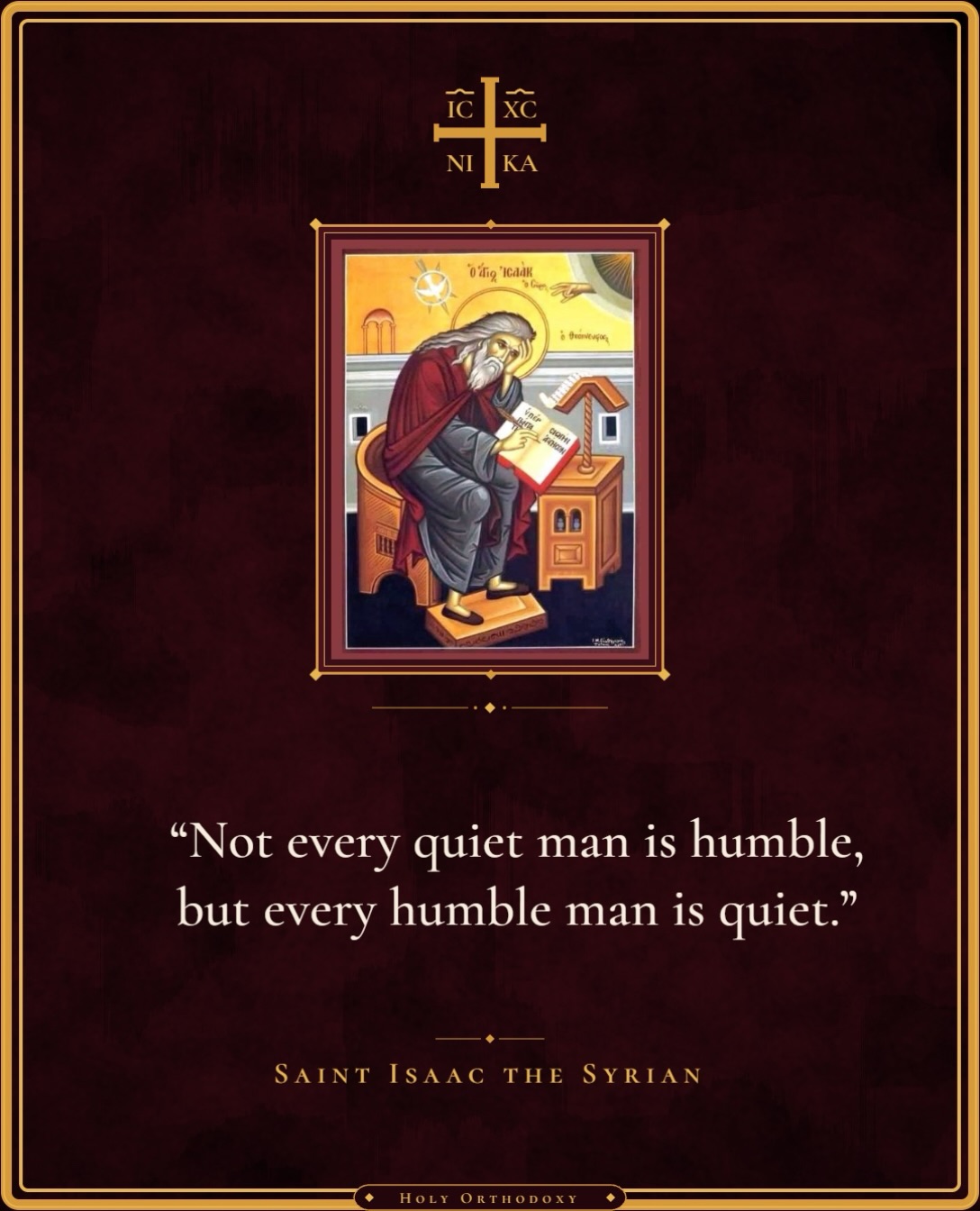
The post shares a saying attributed to St. Isaac the Syrian that distinguishes between mere silence and true humility. The author notes that silence alone is not a virtue because a person can be outwardly quiet while inwardly judging, resentful, or proud. Genuine humility, however, naturally produces a stillness that removes the need to prove oneself, win arguments, or have the last word. The post concludes with a request for the saint's…

The post shares a saying attributed to St. Isaac the Syrian that distinguishes between mere silence and true humility. The author notes that silence alone is not a virtue because a person can be outwardly quiet while inwardly judging, resentful, or proud. Genuine humility, however, naturally produces a stillness that removes the need to prove oneself, win arguments, or have the last word.

The post concludes with a request for the saint's prayers. The accompanying image displays the same saying in Greek and English alongside the saint's title and the phrase "IC XC NI KA."

  • Silence by itself is not a virtue; inner disposition matters.
  • A quiet person may still harbor judgment, resentment, or pride.
  • True humility brings an inner stillness that ends the need to prove oneself or win arguments.
  • The saying is attributed to St. Isaac the Syrian.
  • The post asks for the saint's intercession.
Read more

St Nicholas relic destroyed in France; theology of relic veneration explained

A small bone fragment of St Nicholas of Myra, approximately 1-2 cm long, was stolen from a display beneath his statue at the Basilica of Saint-Nicolas-de-Port in France and reportedly burned and crushed. The principal relics, including the arm-shaped reliquary, remain intact. The thief has been identified, arrested, confessed, and is expected to face trial in December 2026. The post traces the journey of St Nicholas' relics: the saint died in…

A small bone fragment of St Nicholas of Myra, approximately 1-2 cm long, was stolen from a display beneath his statue at the Basilica of Saint-Nicolas-de-Port in France and reportedly burned and crushed. The principal relics, including the arm-shaped reliquary, remain intact. The thief has been identified, arrested, confessed, and is expected to face trial in December 2026.

The post traces the journey of St Nicholas' relics: the saint died in 343 in Myra (modern Turkey); in 1087 Italian merchants from Bari took the relics from the monks who guarded them, despite local inhabitants begging for at least a small portion; some relics were later distributed regionally, including to France. The primary relics remain in the crypt tomb at the Basilica di San Nicola in Bari, where Orthodox services are held every Tuesday and Thursday, making it a significant site for Catholic-Orthodox dialogue.

The post explains Orthodox veneration of relics through the theology of theosis. Salvation is attained not by works or moral laws but through humility and repentance uniting us to God. At the Second Coming, Christ resurrects the dead in body and soul for judgment, so the body plays an equal role in salvation.

Those who lived in holiness receive grace that does not separate from their bodies after death. Archimandrite George Kapsanis of Mount Athos, citing St Gregory Palamas, writes that the grace of theosis preserves saints' bodies incorruptible; grace first unites with their souls, then takes up residence in their bodies, graves, icons, and churches.

This is why Orthodox Christians venerate and kiss relics, icons, graves, and churches, all retain something of the grace the saint possessed through union with God. The post also mentions relics at St Nicholas Monastery in Cyprus (4th century), a relics cabinet at St John's Monastery on Patmos containing part of St Nicholas' head, and the intact body of St Savvas in Kalymnos, Greece, with items in Sydney that exude myrrh.

  • A small relic fragment of St Nicholas was stolen and destroyed in France in 2026; the thief was arrested and confessed
  • St Nicholas' relics traveled from Myra (343) to Bari (1087) and were later distributed to France and other regions
  • Primary relics remain in Bari's Basilica di San Nicola, a site of Catholic-Orthodox dialogue with regular Orthodox services
  • Orthodox veneration of relics is grounded in theosis: grace remains in saints' bodies after death and extends to their graves, icons, and churches
  • The body is essential to salvation; at the Second Coming Christ resurrects body and soul for judgment
Read more
Prayer Orthodoxy ® Instagram

The Asterisk: Star of Bethlehem Over the Diskos

The post explains the asterisk, a small metal frame placed over the bread on the diskos during the Proskomide. Its two curved bands cross to support the veil so it does not touch the bread. The word asterisk means "little star." As the priest places it, he recalls the Gospel account of the star that stood over the place where the Christ Child lay. The star above the diskos represents the Star of Bethlehem that guided the Magi to Christ. This…

The post explains the asterisk, a small metal frame placed over the bread on the diskos during the Proskomide. Its two curved bands cross to support the veil so it does not touch the bread. The word asterisk means "little star." As the priest places it, he recalls the Gospel account of the star that stood over the place where the Christ Child lay.

The star above the diskos represents the Star of Bethlehem that guided the Magi to Christ. This action connects the preparation of the Holy Gifts with the birth of the Savior. The Child born in Bethlehem is the same Lord who offered Himself on the Cross and rose from the dead.

The bread beneath the star is prepared for the Eucharist, in which the faithful receive His true Body and Blood. The asterisk draws attention to the unity of Christ's saving work from His birth to His sacrifice and Resurrection. The teaching is presented in both English and Greek, emphasizing the continuity between the Nativity and the Divine Liturgy.

  • The asterisk (ἀστερίσκος) is a small metal frame placed over the bread on the diskos during the Proskomide.
  • Its crossed bands support the veil so it does not touch the bread.
  • The name means "little star" and symbolizes the Star of Bethlehem that guided the Magi.
  • The priest recalls the Gospel account of the star when placing it, linking the Nativity to the preparation of the Holy Gifts.
  • The asterisk signifies the unity of Christ's saving work from His birth to His sacrifice and Resurrection, as the same Child born in Bethlehem is received in the Eucharist.
Read more
Orthodox Life Instagram

Saint John the Merciful: Patriarch of Alexandria and Almsgiver

The post commemorates Saint John the Merciful, Patriarch of Alexandria, on his feast day of November 12. Born around 552 in Amathus, Cyprus, to a wealthy governor, John lived as a layman, married, and raised a family. After his wife and children died, he gave away his entire estate to the poor and devoted himself to prayer and asceticism. His reputation for holiness led the people and clergy of Alexandria, along with Emperor Heraclius, to…

The post commemorates Saint John the Merciful, Patriarch of Alexandria, on his feast day of November 12. Born around 552 in Amathus, Cyprus, to a wealthy governor, John lived as a layman, married, and raised a family. After his wife and children died, he gave away his entire estate to the poor and devoted himself to prayer and asceticism.

His reputation for holiness led the people and clergy of Alexandria, along with Emperor Heraclius, to request he become their Patriarch around 610. Though reluctant, he accepted and immediately reformed the local church, eliminating corruption among officials, opposing theological heresies, and expanding the number of orthodox churches in the city from seven to seventy.

John treated the impoverished as his "lords and masters." Upon taking office, he ordered a registry of all the needy in Alexandria, identifying over 7,000 people, and guaranteed them daily food and provisions from the church treasury. Twice a week he sat outside his cathedral to hear grievances, settle disputes, and distribute alms, while visiting hospitals three times a week.

During Persian invasions that devastated Jerusalem and sent refugees into Egypt, John emptied the church coffers and borrowed large sums of gold to feed the displaced, build hospices, and ransom Christian captives. He resisted imperial officials who tried to confiscate church wealth for war efforts, insisting the funds belonged to God and the poor.

When Persian forces advanced on Alexandria around 619, John fled to Cyprus, where he reposed shortly afterward.

  • Born c. 552 in Amathus, Cyprus; gave away estate after family's death
  • Elected Patriarch of Alexandria c. 610; expanded churches from 7 to 70
  • Registered over 7,000 poor; provided daily food from church treasury
  • Emptied church coffers and borrowed gold to aid Persian war refugees
  • Fled to Cyprus c. 619 during Persian advance; reposed there
Read more
Prayer Orthodoxy ® with Prayer Orthodoxy® Instagram

St. Paul on affliction and the light of Christ in 2 Corinthians 4

The post presents a reflection on the fourth chapter of St. Paul's Second Letter to the Corinthians. The English text states that though we are afflicted, we are not crushed, and the light of Christ continues to shine through every trial. It notes that human weakness does not prevent God's power from working within us, and that as we carry our cross, the life of Jesus should be revealed in our patience, faith, and love. A Greek translation…

The post presents a reflection on the fourth chapter of St. Paul's Second Letter to the Corinthians. The English text states that though we are afflicted, we are not crushed, and the light of Christ continues to shine through every trial. It notes that human weakness does not prevent God's power from working within us, and that as we carry our cross, the life of Jesus should be revealed in our patience, faith, and love.

A Greek translation follows the same points. Three images contain scriptural quotations attributed to St. Paul. The first quotes 2 Corinthians 4:6: God who commanded light to shine out of darkness has shone in our hearts to give the light of the knowledge of the glory of God in the face of Christ. The second quotes 2 Corinthians 4:8-10: we are afflicted in every way but not crushed, perplexed but not driven to despair, persecuted but not forsaken, struck down but not destroyed, always carrying in the body the death of Jesus so that the life of Jesus may be manifested in our bodies.

The third quotes 2 Corinthians 4:11: while we live we are always being given up to death for Jesus' sake, so that the life of Jesus may be manifested in our mortal flesh. Each image bears the label "PRAYER ORTHODOXY" and the Greek abbreviation for Saint Paul.

  • Reflection on 2 Corinthians 4 with English and Greek text
  • First image: 2 Corinthians 4:6 on light shining in our hearts
  • Second image: 2 Corinthians 4:8-10 on affliction without crushing
  • Third image: 2 Corinthians 4:11 on carrying Christ's death to manifest his life
  • Theme: human weakness as vessel for divine power
Read more

The Evening Prayer to the Theotokos: 'It Is Truly Meet' and a Supplication for Mercy

The post presents the text of a prayer to the Theotokos used in the Orthodox evening prayer rule. It begins with the hymn "It is truly meet" (Достојно је), which honors the Virgin Mary as more honorable than the cherubim and more glorious than the seraphim, the Mother of God who gave birth to God the Word without corruption. The hymn confesses that she is truly the Theotokos because she bore God the Word incarnate. The text continues with a…

The post presents the text of a prayer to the Theotokos used in the Orthodox evening prayer rule. It begins with the hymn "It is truly meet" (Достојно је), which honors the Virgin Mary as more honorable than the cherubim and more glorious than the seraphim, the Mother of God who gave birth to God the Word without corruption. The hymn confesses that she is truly the Theotokos because she bore God the Word incarnate.

The text continues with a personal supplication addressing the Theotokos as the blessed Mother of the King, the all-pure and blessed Theotokos Mary. It asks her to pour out the mercy of her Son and our God upon the speaker's sinful soul, and through her prayers to guide the speaker to good works. The petition asks that the remaining time of life be spent without blemish and that the speaker find paradise through her, addressing her as the Virgin Theotokos, the only pure and blessed one.

The post identifies this combination as part of the evening prayer rule read before sleep. The text is given in Serbian Cyrillic.

  • The hymn "It is truly meet" glorifies the Theotokos as Mother of God and surpassing the angelic orders.
  • A personal supplication follows, asking the Theotokos to intercede for mercy and guidance.
  • The prayer asks to live the remaining time of life without blemish and to find paradise.
  • The post notes this is part of the Orthodox evening prayer rule read before sleep.
  • The text is provided in Serbian Cyrillic.
Read more
Disgruntled Docs with Trust God ☦︎︎︎ Instagram

Saint John Chrysostom on Medicine and Faith

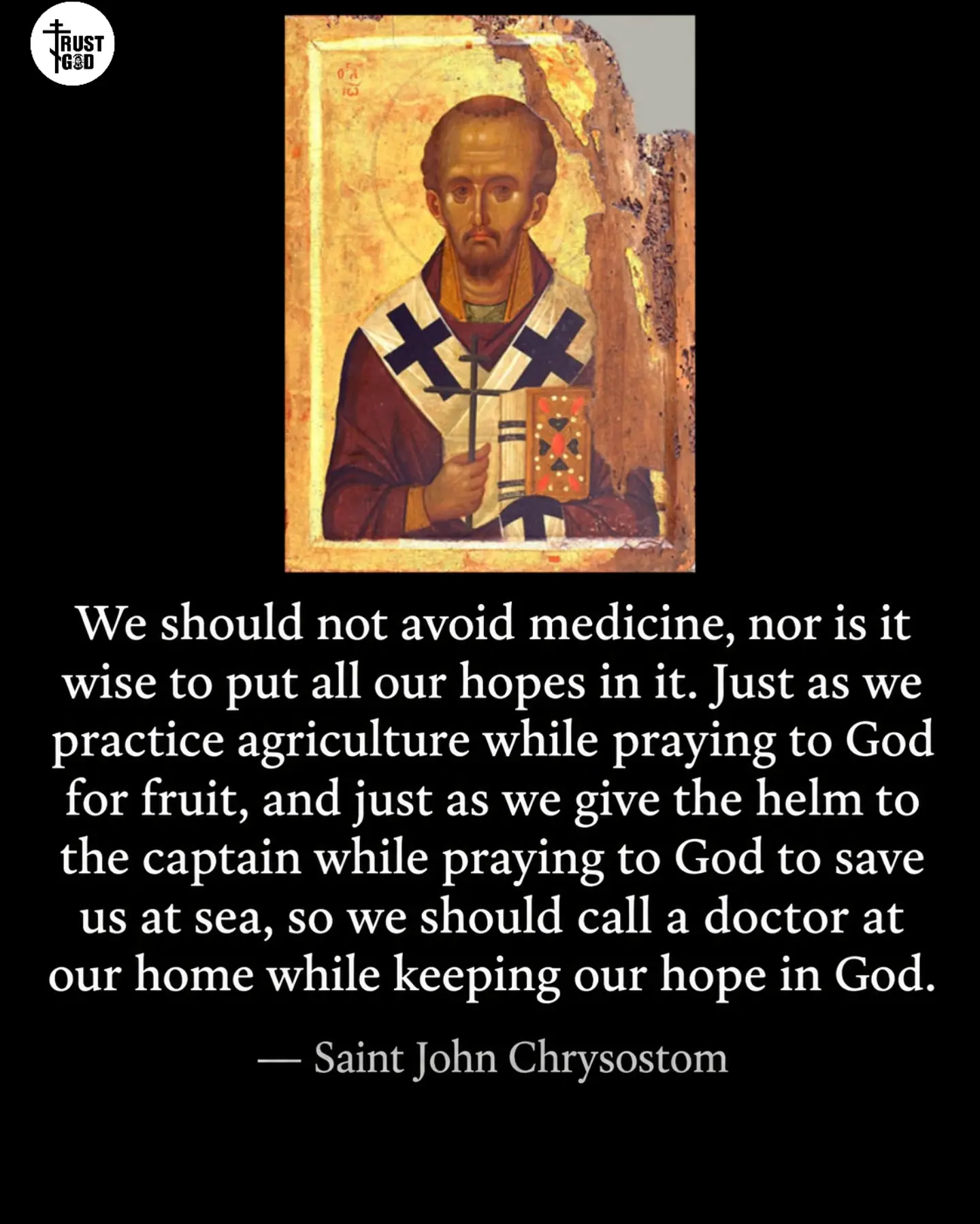
The post shares a quotation from Saint John Chrysostom addressing the relationship between medical treatment and Christian faith. The saint teaches that seeking medical help does not indicate a lack of faith. He illustrates this with two analogies: just as farmers cultivate the land while praying to God for fruit, and just as sailors entrust the helm to a captain while praying for safety at sea, so Christians should call a doctor while keeping…

The post shares a quotation from Saint John Chrysostom addressing the relationship between medical treatment and Christian faith. The saint teaches that seeking medical help does not indicate a lack of faith. He illustrates this with two analogies: just as farmers cultivate the land while praying to God for fruit, and just as sailors entrust the helm to a captain while praying for safety at sea, so Christians should call a doctor while keeping their hope in God.

The text states that medicine may treat the body, but our deepest hope belongs to God alone. It encourages doing what is within one's power, praying, and entrusting everything else to Him.

  • Saint John Chrysostom teaches that using medicine does not contradict faith
  • The saint compares medical treatment to agriculture and navigation, human effort alongside prayer
  • Christians should seek medical help while keeping ultimate hope in God
  • Medicine treats the body, but spiritual hope remains in God alone
  • The teaching encourages practical action combined with prayer and trust
Read more
Saint Wisdom Instagram

St. Cyril of Jerusalem on Christ's Two Comings

The post presents a teaching from St. Cyril of Jerusalem on the two comings of Christ. The saint contrasts the first coming, marked by patience and humility, with the second coming in glory wearing the crown of a divine kingdom. He observes that everything about the Lord comes in twos, with the second greater than the first, and urges preparation for Christ's return.

Key moments

  1. Christ is coming back.
  2. The first time he came in patience and humility.
  3. The second time he comes in glory wearing the crown of a divine kingdom.
  4. Everything about our Lord comes in twos and the second is greater than the first.
  5. So be prepared.
Read more
Orthodox Life Instagram

Saint Theodore the Studite: Monastic Reformer and Defender of Icons

The post recounts the life of Saint Theodore the Studite (759-826), a Byzantine monk, abbot, and theologian who shaped Eastern Christian monasticism and defended the veneration of icons. Born into a wealthy, educated family in Constantinople, he renounced his privileges around age twenty-two to enter the monastery founded by his uncle, Plato of Sakkoudion. In 798 Theodore became abbot of the Stoudios Monastery, transforming it into the most…

The post recounts the life of Saint Theodore the Studite (759-826), a Byzantine monk, abbot, and theologian who shaped Eastern Christian monasticism and defended the veneration of icons. Born into a wealthy, educated family in Constantinople, he renounced his privileges around age twenty-two to enter the monastery founded by his uncle, Plato of Sakkoudion.

In 798 Theodore became abbot of the Stoudios Monastery, transforming it into the most influential religious center in the Byzantine Empire. Under his leadership the community grew to hundreds of monks and its scriptorium preserved countless classical and Christian manuscripts. Theodore drafted the Studite Typikon, a strict monastic rule emphasizing poverty, obedience, manual labor, and liturgical prayer that became the blueprint for later Orthodox monasticism, including Mount Athos.

His life was marked by three exiles resulting from resistance to imperial interference in church affairs. The first clash came during the Moechian Controversy when he publicly condemned Emperor Constantine VI for unlawfully divorcing his wife to marry his mistress; Theodore endured imprisonment and banishment until the emperor's downfall.

His most famous theological battle opposed the second wave of Byzantine Iconoclasm under Emperor Leo V the Armenian, who banned the veneration of religious images. Theodore argued that denying the depiction of Christ in icons was equivalent to denying Christ's full humanity and incarnation. Despite severe floggings, harsh imprisonment, and prolonged exile in Asia Minor, he rallied monks and laypeople through hundreds of letters, keeping the iconophile resistance alive. Theodore reposed in exile on November 11, 826.

  • Born in Constantinople, entered monastic life at twenty-two under his uncle Plato
  • Became abbot of Stoudios Monastery in 798, expanded it into a major center with a renowned scriptorium
  • Authored the Studite Typikon, the foundational rule for Eastern Orthodox monasticism
  • Exiled three times for opposing imperial overreach, including the Moechian Controversy and Iconoclasm
  • Defended icon veneration against Leo V, arguing icons affirm Christ's incarnation; died in exile in 826
Read more

Luke 7: Faith, humility, mercy, and repentance

The post presents a thematic spiritual overview of Luke chapter 7, drawing on the Gospel text and the commentary of Blessed Theophylact of Ohrid. It examines four episodes. First, the Roman centurion whose servant Jesus heals after the centurion says he is not worthy for Jesus to enter his house but asks only for a word; Jesus marvels at his faith, greater than any in Israel. Second, Jesus meets a widow at Nain mourning her only son, has…

The post presents a thematic spiritual overview of Luke chapter 7, drawing on the Gospel text and the commentary of Blessed Theophylact of Ohrid. It examines four episodes. First, the Roman centurion whose servant Jesus heals after the centurion says he is not worthy for Jesus to enter his house but asks only for a word; Jesus marvels at his faith, greater than any in Israel.

Second, Jesus meets a widow at Nain mourning her only son, has compassion, tells her not to weep, and raises the young man. Third, Jesus affirms John the Baptist as the greatest prophet born of women, calling for steadfastness in truth and spiritual vigilance. Fourth, a sinful woman washes Jesus' feet with tears and anoints them with myrrh in a Pharisee's house; the Pharisee judges her past, but Jesus sees her repentance and love, declaring her many sins forgiven and sending her in peace.

The post concludes that Luke 7 calls believers to cultivate faith, humility, mercy, and repentance, not to judge by past or status, and to remember that God knows the heart's depth. Source cited: Holy Gospel according to Luke 7:1-50; Blessed Theophylact of Ohrid, Commentary on Luke, chapter 7, Belgrade: Obraz svetacki, 2018.

Key moments

  1. Light a kandilo, extinguish the flame, and let the soul shine with light.
  2. Pray for health and salvation in the name of Jesus Christ, stand before an icon, keep the soul pure, pray only to Jesus Christ, and light frankincense each day.

St. Mark the Ascetic: Trials as Unexpected Affliction Leading to God

The post presents a saying of St. Mark the Ascetic on the nature of temptation. He writes that since no one pleases God without undergoing temptation, believers should thank God for everything that befalls them. He illustrates this with three biblical examples. Peter's successful catch by day followed an unsuccessful night of fishing (Luke 5:5). Paul gained spiritual sight only after being struck with bodily blindness (Acts 9:8). Stephen saw the…

The post presents a saying of St. Mark the Ascetic on the nature of temptation. He writes that since no one pleases God without undergoing temptation, believers should thank God for everything that befalls them. He illustrates this with three biblical examples. Peter's successful catch by day followed an unsuccessful night of fishing (Luke 5:5).

Paul gained spiritual sight only after being struck with bodily blindness (Acts 9:8). Stephen saw the heavens open and beheld God only after being falsely accused as a blasphemer (Acts 6:13-7:36). St. Mark concludes that just as action in accordance with God is called virtue, so unforeseen affliction is called temptation.

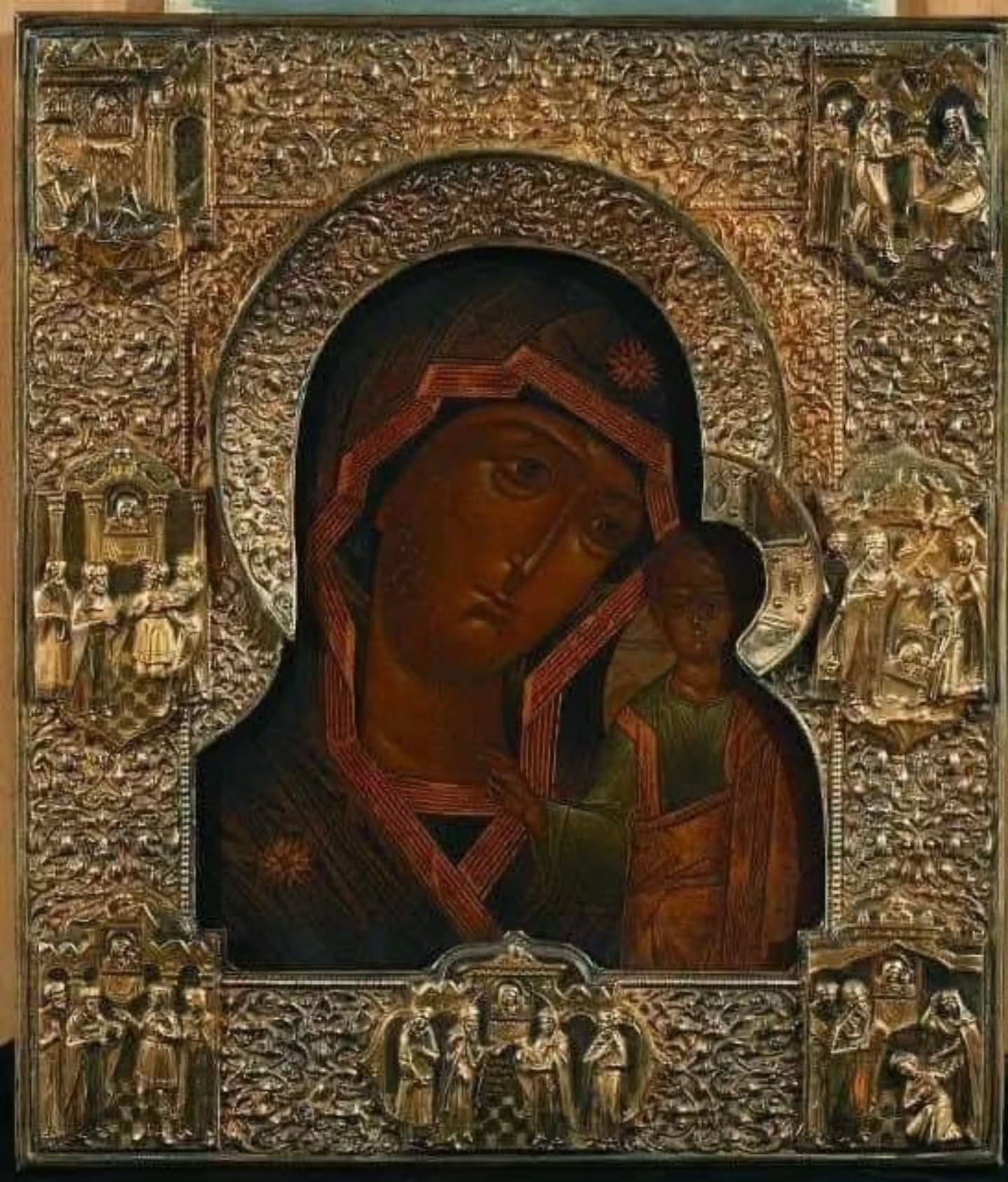
The accompanying image shows an icon of the Virgin Mary and the Christ Child framed by embossed scenes.

  • St. Mark the Ascetic teaches that no one pleases God without temptation.
  • Believers should thank God for all that befalls them.
  • Peter's daytime catch followed a fruitless night (Luke 5:5).
  • Paul received spiritual vision after physical blindness (Acts 9:8).
  • Stephen saw heaven open after being slandered (Acts 6:13-7:36).
Read more
Orthodox Health Instagram

Illness as a Means to Spiritual Awakening

The post summarizes Episode 86 of the Orthodox Health Podcast with Dr. Zachary Porcu. Dr. Porcu presents an ancient Christian understanding of illness: suffering can become a means by which we wake up spiritually. He clarifies that physical suffering is not good in itself, but health, comfort, and longevity were never meant to be the highest goods of human life. He tells two stories from confession. A woman tells her priest that everything in…

The post summarizes Episode 86 of the Orthodox Health Podcast with Dr. Zachary Porcu. Dr. Porcu presents an ancient Christian understanding of illness: suffering can become a means by which we wake up spiritually. He clarifies that physical suffering is not good in itself, but health, comfort, and longevity were never meant to be the highest goods of human life.

He tells two stories from confession. A woman tells her priest that everything in her life is going well, her business thrives, her family is healthy, yet she is distressed because she believes God has forsaken them. Another man, preparing for death, tells his priest he is ready because all his passions are gone. This contrasts two ways of measuring health: one focused on worldly flourishing, the other on spiritual readiness.

Dr. Porcu proposes a thought experiment: imagine receiving a terminal diagnosis and sit with it for ten minutes. In that light, worldly concerns vanish because the Kingdom is coming and real life is coming. One must be ready with a wedding garment and healed passions.

He asks whether one wants a pleasant dream that never ends or a frightening dream that wakes you to real life, comparing it to dying in the womb or being born.

Key moments

  1. 0:00 God sends illness to heal us and our soul; illness is an opportunity for healing.
  2. 0:00 If God lets you flourish with nothing bad happening, you are probably in trouble.
  3. 0:00 A woman in confession tells a priest her life is going well but she is distressed because God has forsaken them.
  4. 0:00 Another person tells the priest he is ready and all his passions are gone.
  5. 0:31 The speaker proposes a thought experiment: imagine receiving a diagnosis and sit for ten minutes.
  6. 0:31 After that, everything said before doesn't matter because the kingdom is coming and real life is coming.
  7. 0:31 One needs to be ready, needs a wedding garment, and wants passions healed.
  8. 0:31 He asks whether you want a dream that goes well but never wakes you, or a dream that scares you awake, comparing it to dying in the womb or being born.
Read more

Archbishop Elpidophoros honors veterans, cites Kennedy on God-given rights

Archbishop Elpidophoros of America issued a Veterans Day statement honoring those who have served to defend the United States Constitution. The Archbishop quoted President John F. Kennedy's inaugural address, noting Kennedy's reminder that "the rights of man come not from the generosity of the state, but from the hand of God." Kennedy was a Navy veteran of World War II. The Archbishop expressed gratitude and said the Church lifts up veterans and…

Archbishop Elpidophoros of America issued a Veterans Day statement honoring those who have served to defend the United States Constitution. The Archbishop quoted President John F. Kennedy's inaugural address, noting Kennedy's reminder that "the rights of man come not from the generosity of the state, but from the hand of God." Kennedy was a Navy veteran of World War II. The Archbishop expressed gratitude and said the Church lifts up veterans and their families in prayer.

The post included a note about a photo exhibit from the Clergy-Laity Congress 2026 showing a mosaic of the American flag composed of many small images of buildings.

  • Archbishop Elpidophoros issued a Veterans Day statement
  • He quoted Kennedy on rights coming from God, not the state
  • The Church prays for veterans and their families
  • Kennedy noted as a World War II Navy veteran
  • Photo from Clergy-Laity Congress 2026 mentioned
10 opinions in the discussion Yeah I don't know, I just wish he'd stuck to praying for veterans instead of partly glorifying a country. It's not that I can't see the political and social reasons for it, and I'm not… Read the discussion

Sacraments as Christ's Medicine for Healing and Salvation

The speaker addresses a claim that sacraments are a way for the church through the priest to have control over people in the most important times of their life. The opposing view states that God's word says you don't need sacraments, you only need Jesus. The speaker counters that the sacraments are gifts from God, given to us for our healing and salvation. He points out that Christ commanded baptism, instituted the Eucharist, and gave his…

The speaker addresses a claim that sacraments are a way for the church through the priest to have control over people in the most important times of their life. The opposing view states that God's word says you don't need sacraments, you only need Jesus. The speaker counters that the sacraments are gifts from God, given to us for our healing and salvation.

He points out that Christ commanded baptism, instituted the Eucharist, and gave his apostles authority to forgive sins. Citing St John Chrysostom, the speaker describes the church as a hospital, not a court of justice. In this framework, sin is a sickness, Christ is the physician, and the sacraments are the medicine through which God heals us and unites us to himself.

The church is the body of Christ. To reject the church's mysteries is to reject the very means of healing and salvation Christ has given us. The discussion turns on whether the sacraments are human inventions for ecclesiastical control or divine gifts for salvation. The speaker argues that Christ himself established these mysteries, and the fathers of the church, such as St John Chrysostom, understood them as therapeutic means by which the sickness of sin is healed.

The church as the body of Christ is the context in which these mysteries operate, and separation from them means separation from the healing presence of Christ the physician.

Key moments

  1. The opposing view states that sacraments are a way for the church through the priest to have control over people in the most important times of their life.
  2. The opposing view states that God's word says you don't need sacraments, you only need Jesus.
  3. The sacraments are gifts from God, given to us for our healing and salvation.
  4. Christ commanded baptism, instituted the Eucharist, and gave his apostles authority to forgive sins.
  5. St John Chrysostom said the church is a hospital, not a court of justice.
  6. Sin is a sickness, Christ is the physician, and the sacraments are the medicine through which God heals us and unites us to himself.
  7. The church is the body of Christ.
  8. To reject the church's mysteries is to reject the very means of healing and salvation Christ has given us.
Read more

Dragan Bogavac on shifting from physical strength to spiritual wealth

Dragan Bogavac describes a change in his life priorities and measures of value. He states that he realized success is not found in what a person possesses but in what he carries in his soul and in the relationship he builds with God. He contrasts his former condition: physically strong but spiritually weak, thinking he had everything while actually having nothing.

The post presents a personal testimony about the reorientation of life toward spiritual substance rather than material or physical achievement.

  • Success redefined as inner spiritual state and relationship with God
  • Contrast between physical strength and spiritual weakness
  • Recognition that material possession does not equal true wealth
  • Personal testimony of a shift in life priorities
Read more

Former Red Star footballer Dragan Bogavac: true victory is spiritual, not worldly

Former professional footballer Dragan Bogavac, who played for Red Star Belgrade and the Montenegro national team, shares his testimony that the most important encounter in a person's life is with God. He writes that human transformation does not depend on social position, material wealth, popularity, or professional achievements. One can win titles, gain recognition, and have a successful career yet still lack true peace. When a person opens his…

Former professional footballer Dragan Bogavac, who played for Red Star Belgrade and the Montenegro national team, shares his testimony that the most important encounter in a person's life is with God. He writes that human transformation does not depend on social position, material wealth, popularity, or professional achievements.

One can win titles, gain recognition, and have a successful career yet still lack true peace. When a person opens his heart to God, a different measure of life begins to appear: faith, humility, repentance, and love for neighbor. Bogavac emphasizes that the greatest victory is not on the sports field nor in competition with others, but the spiritual victory obtained through repentance, humility, and the struggle against one's own passions by God's grace.

The greatest transformation is not a change of external circumstances but a change of the human heart, its return to God. In a video summary, Bogavac adds that he came to the church not only through suffering but by a call from the Lord. He recalls that playing for Red Star and being loved by the players was beautiful, yet the glory carried him away and he did not reflect on who he was.

He describes how hard it was to bear the fans chanting his name and surname, yet he thanks God for all of it.

Key moments

  1. I came to the church not only through suffering, but by a call from the Lord.
  2. Playing for Red Star and being loved by the players was beautiful, but the glory carried me away and I did not think about who I was.
  3. It was hard to bear the fans chanting my name and surname, and I asked myself if I really experienced that.
  4. Nevertheless, I thank God for all of it.

Overcoming Evil with Good: St. Maximus and St. Basil on Loving Enemies

The post presents three texts on the Christian response to evil and hostility. It opens with Romans 12:21: "Do not be overcome by evil, but overcome evil with good." The author notes this is not weakness but the difficult path of Christ overcoming evil without allowing evil to enter the heart. The first patristic quote comes from Saint Maximus the Confessor, who explains that Christ commanded love for enemies, doing good to those who hate you,…

The post presents three texts on the Christian response to evil and hostility. It opens with Romans 12:21: "Do not be overcome by evil, but overcome evil with good." The author notes this is not weakness but the difficult path of Christ overcoming evil without allowing evil to enter the heart.

The first patristic quote comes from Saint Maximus the Confessor, who explains that Christ commanded love for enemies, doing good to those who hate you, and prayer for those who persecute you. He asks why Christ commanded these things and answers: so that he might free you from hatred, sadness, anger and grudges, and might grant you the greatest possession of all, perfect love, which is impossible to possess except by the one who loves all equally in imitation of God.

The second quote is from Saint Basil the Great, On the Human Condition, page 84. He addresses the situation of being insulted in anger and advises stopping the evil by silence. He warns not to become a mirror of the one prone to anger, showing the likeness of that person in yourself. The selections together illustrate a consistent patristic teaching: the response to evil is not retaliation or passive absorption but active good, silence, and prayer, aimed at preserving the heart from the passions and conforming it to divine love.

The author frames the scriptural verse as a summary of the patristic wisdom that follows, showing how the command to overcome evil with good is worked out in the spiritual life through freedom from hatred and the refusal to reflect anger.

  • Romans 12:21: overcome evil with good, not weakness but Christ's path.
  • St. Maximus the Confessor: Christ commands love for enemies to free from hatred and grant perfect love imitating God.
  • St. Basil the Great: when insulted in anger, stop evil by silence; do not become a mirror of anger.
  • The selections show a patristic pattern: active good, silence, and prayer preserve the heart from passions.
Read more
Mount Athos Legacy Facebook

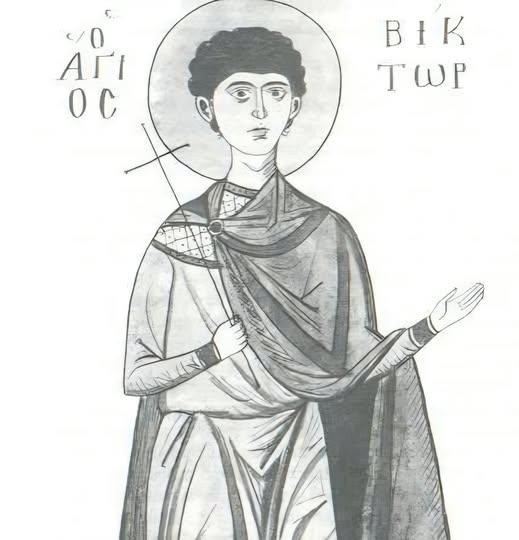
Saint Victor the Great Martyr, martyred under Antoninus in Italy

The post commemorates Saint Victor the Great Martyr, who lived in the second century after Christ during the reign of Emperor Antoninus (160 AD). He belonged to the company of martyrs who watered the life-giving tree of the Christian faith with their blood. Victor carried out his ministry for the Gospel in Italy, traveling to various cities and sowing the word of salvation. He was arrested for this activity and pressured to offer sacrifice to…

The post commemorates Saint Victor the Great Martyr, who lived in the second century after Christ during the reign of Emperor Antoninus (160 AD). He belonged to the company of martyrs who watered the life-giving tree of the Christian faith with their blood. Victor carried out his ministry for the Gospel in Italy, traveling to various cities and sowing the word of salvation.

He was arrested for this activity and pressured to offer sacrifice to idols. When he refused to yield, his eyes were gouged out and he was hanged upside down. In this manner he surrendered his noble and holy soul.

  • Commemorated today as a Great Martyr of the second century.
  • Ministered in Italy under Emperor Antoninus (160 AD).
  • Arrested for preaching the Gospel and refused idol sacrifice.
  • Tortured by having his eyes removed and being hanged upside down.
  • Died surrendering his soul to God.

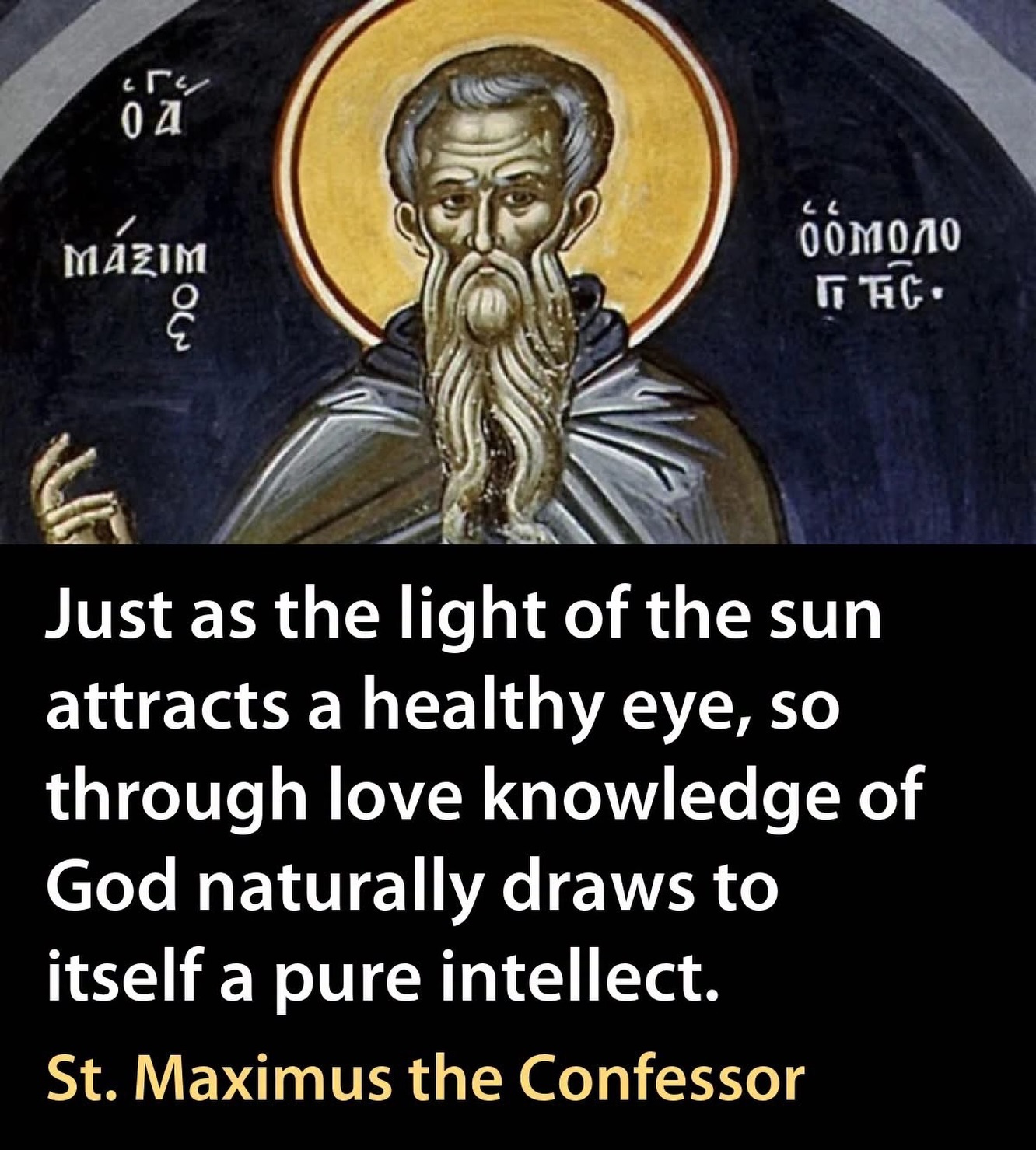
St. Maximus the Confessor on love and knowledge of God

The post presents a prayer to St. Maximus the Confessor and a quotation attributed to him. The quotation states that just as sunlight naturally draws a healthy eye, so through love the knowledge of God naturally draws a pure intellect to itself. The Greek text in the image gives the original wording of the saying.

  • Prayer to St. Maximus the Confessor
  • Quote comparing divine knowledge to sunlight attracting the eye
  • Love as the means by which knowledge of God draws the pure intellect
  • Greek text of the saying shown in the image

Orthodox Ethical Discernment Requires Humility, Not Certainty

Orthodox Ethical Discernment Requires Humility, Not Certainty 12:25

Fr. Sampson Nash, a professor at the University of Ohio, explains that Orthodox ethical discernment begins with humility before Christ rather than rigid certainty. He illustrates this with a clinical ethics case from the COVID Delta wave: a 26-year-old pregnant woman on ECMO developed irreversible pulmonary fibrosis and was not a candidate for lung transplant. Her care team debated whether to withdraw ECMO support to save a transplant-eligible…

Fr. Sampson Nash, a professor at the University of Ohio, explains that Orthodox ethical discernment begins with humility before Christ rather than rigid certainty. He illustrates this with a clinical ethics case from the COVID Delta wave: a 26-year-old pregnant woman on ECMO developed irreversible pulmonary fibrosis and was not a candidate for lung transplant.

Her care team debated whether to withdraw ECMO support to save a transplant-eligible patient. The team never withdrew the machine; she delivered her baby, held it, and then died. Nash contrasts this concrete suffering with theoretical debates at his seminary about government overreach, public health guidance, and whether resistance showed lack of faith.

An older seminarian wept during the presentation, and that relational encounter shifted the student conversation. Nash argues that Orthodox ethics cannot be reduced to an algorithm or a set of abstract rules applied from a distance. It is a royal pathway that avoids both rigorism and self-will, requiring prayer, community, spiritual authority, factual expertise, and willingness to encounter the person rather than reduce them to a theoretical case.

He acknowledges many COVID overreaches but advises listening to bishops unless they violate dogmatic truth. The royal path between antinomies is not the Aristotelian mean but the path of Christ, as Father George Florovsky writes about the antinomies of empire and desert. Askesis is not only putting off a good for a time but also the particular cross each person bears.

Orthodox ethics is personal, mindful of the weaker brother, and includes absolute prohibitions that must never be crossed. Even the most advanced artificial intelligence cannot produce Orthodox discernment, ethos, or phronema.

Key moments

  1. 0:30 At the seminary, COVID controversies were debated on a theoretical level: the extent of government overreach, whether public health guidance was evidence-based, and whether resisting it showed lack of faith in God's healing grace.
  2. 1:01 The speaker was consulted during a six-hour drive about a 26-year-old pregnant woman on ECMO (extracorporeal membrane oxygenation) whose lungs had developed severe pulmonary fibrosis during the Delta wave; she was not a candidate for lung transplant.
  3. 2:02 The woman delivered her baby and held it, yet she was still not expected to survive, and the ethics question was whether to withdraw ECMO to save a transplant-eligible patient.
  4. 3:37 An older seminarian wept during the presentation, and this relational account shifted the conversation among students.
  5. 4:39 The speaker acknowledges many COVID overreaches but advises listening to bishops unless they violate dogmatic truth, and respecting episcopal authority.
  6. 6:46 The royal path between antinomies is not the Aristotelian mean but the path of Christ; both desert fathers and saints engaged in complex urban life are glorified, as Father George Florovsky writes in the antinomies of empire and desert.
  7. 7:47 Orthodox ethics cannot be systematized or turned into an algorithm; even the most advanced artificial intelligence cannot produce Orthodox discernment, ethos, or phronema.
  8. 10:59 Askesis is not only putting off a good for a time for soul improvement but also the particular cross each person bears; Orthodox ethics is personal, mindful of the weaker brother, and includes absolute prohibitions that must never be crossed.