WeOrthodox
EN UA

Mount Athos Legacy

Facebook ↗ 30 discussions

Αυθεντικά χειροποίητα προϊόντα από μοναχούς του Αγίου Όρους Original handmade products by monks of Mount Athos in Greece

Mount Athos Legacy Facebook

The Theotokos: Panagia, All-Holy, and Ever-Virgin according to St. Gregory Palamas
The post presents a concise theological explanation of the titles attributed to the Virgin Mary in Orthodox Christianity. It opens with the designation Panagia, All-Holy, and supports it with a phrase from St. Gregory Palamas: she is the summit and perfection of every saint. The author asserts that Mary committed no sin throughout her life. From the age of three until fifteen, when she conceived Christ by the Holy Spirit, she lived in the Holy…

The post presents a concise theological explanation of the titles attributed to the Virgin Mary in Orthodox Christianity. It opens with the designation Panagia, All-Holy, and supports it with a phrase from St. Gregory Palamas: she is the summit and perfection of every saint. The author asserts that Mary committed no sin throughout her life.

From the age of three until fifteen, when she conceived Christ by the Holy Spirit, she lived in the Holy of Holies and reached theosis. Consequently she is called Achrantos, meaning spotless and pure from every sin and thought in both body and soul. The title Hyper-eulogemene, supremely blessed, indicates that she received great grace from the fullness of God's grace.

Endoxos, glorious, signifies that she is filled with the glory of God, a glory manifested also in her Dormition. Despoina and Kyria, Mistress and Lady, derive from her giving birth to the Lord of all; therefore her intercession and prayers possess strong power and she is the Protection of Christians. Theotokos, God-bearer, is used because she did not bear a simple human being but the Second Person of the Holy Trinity who is God.

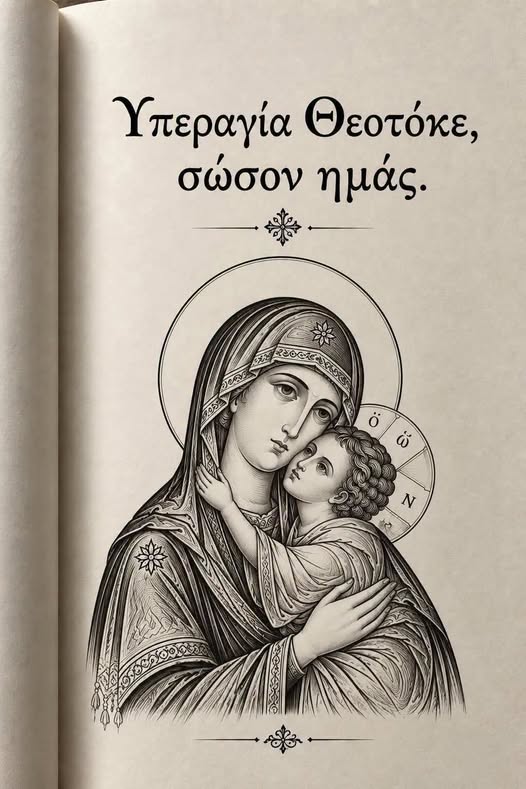
Finally, Aeiparthenos, Ever-Virgin, affirms her virginity before, during, and after childbirth, a reality depicted in holy icons by three stars on her forehead and shoulders. The image accompanying the text shows an icon of the Virgin holding the Christ Child with the inscription "Most Holy Theotokos, save us."

  • Mary is called Panagia because she is the summit and perfection of all saints (St. Gregory Palamas).
  • She lived without sin from childhood in the Holy of Holies until the Annunciation, achieving theosis.
  • Her titles, Achrantos, Hyper-eulogemene, Endoxos, Despoina, Kyria, Theotokos, Aeiparthenos, each express a facet of her holiness and role.
  • As Theotokos she bore the Second Person of the Trinity, not a mere man.
  • Her perpetual virginity before, during, and after birth is depicted in icons by three stars.
Mount Athos Legacy Facebook

St. Nektarios: Excessive sorrow conceals pride and hinders spiritual progress

St. Nektarios writes that excessive sorrow hides pride within it. Because of this, it is harmful and dangerous, and the devil often provokes it to cut off the path of the spiritual athlete. The road that leads to perfection is long. He urges prayer to God for strengthening. One should face falls with patience and, after rising quickly, run forward and not stand in the place where one fell, weeping and lamenting inconsolably like children. One…

St. Nektarios writes that excessive sorrow hides pride within it. Because of this, it is harmful and dangerous, and the devil often provokes it to cut off the path of the spiritual athlete. The road that leads to perfection is long. He urges prayer to God for strengthening.

One should face falls with patience and, after rising quickly, run forward and not stand in the place where one fell, weeping and lamenting inconsolably like children. One must keep vigil and pray so as not to enter into temptation. One should not despair if one falls repeatedly into old sins.

Many of these sins are by nature strong and rooted in habit. With the passage of time, however, and with careful attention, they are conquered. Nothing should cause despair.

  • Excessive sorrow conceals pride and the devil uses it to halt spiritual progress.
  • The path to perfection is long; pray for strength and meet falls with patience.
  • Rise quickly after a fall and continue running, not lingering in grief.
  • Keep vigil and pray to avoid temptation.
  • Do not despair over repeated falls into habitual sins; time and care overcome them.
Mount Athos Legacy Facebook

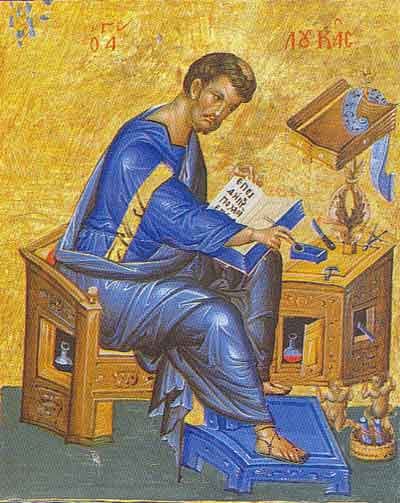
Saint Luke the Evangelist commemorated today

The post marks the commemoration of Saint Luke the Evangelist. It states he originated from Antioch of Syria and was Greek by nationality. By profession he was a physician and also skilled in the art of painting. Tradition attributes to him the first icons of the Theotokos holding the infant Christ, one of which remains at the Mega Spileo Monastery, as well as icons of the Apostles Peter and Paul. He was catechized in the Christian faith by the…

The post marks the commemoration of Saint Luke the Evangelist. It states he originated from Antioch of Syria and was Greek by nationality. By profession he was a physician and also skilled in the art of painting.

Tradition attributes to him the first icons of the Theotokos holding the infant Christ, one of which remains at the Mega Spileo Monastery, as well as icons of the Apostles Peter and Paul. He was catechized in the Christian faith by the Apostle Paul, whom he met in Thebes, and thereafter devoted himself to preaching the Gospel. His travels took him to Dalmatia, Italy, Gaul, Achaia, Boeotia, and other regions.

He authored the third Gospel of the New Testament and the Acts of the Apostles. Accounts of his death differ: some say he suffered a martyr's death, others that he died peacefully at age eighty. In the year 357 his relic was translated to Constantinople and placed in the Church of the Holy Apostles.

  • Born in Antioch of Syria, Greek nationality
  • Physician and painter; credited with first icons of the Theotokos and Apostles Peter and Paul
  • Catechized by Apostle Paul in Thebes; traveled widely preaching the Gospel
  • Authored the Gospel of Luke and Acts of the Apostles
  • Death accounts vary: martyrdom or peaceful death at age eighty; relic translated to Constantinople in 357
Read more
Mount Athos Legacy Facebook

An autumn morning on Mount Athos, with one repeated phrase: 'Look at the sea. How beautiful'

The post is titled 'An autumn morning on Mount Athos' in Greek. The video it accompanies carries a single spoken line throughout its whole length, in Portuguese: 'Olha o mar. Que coisa linda', which means 'Look at the sea. How beautiful'. The phrase is said over and over from the beginning to the end. There is no other narration, teaching, or spoken content in the transcript. The title places the scene on Mount Athos in autumn, and the repeated…

The post is titled 'An autumn morning on Mount Athos' in Greek. The video it accompanies carries a single spoken line throughout its whole length, in Portuguese: 'Olha o mar. Que coisa linda', which means 'Look at the sea. How beautiful'.

The phrase is said over and over from the beginning to the end. There is no other narration, teaching, or spoken content in the transcript. The title places the scene on Mount Athos in autumn, and the repeated line draws attention to the sea, which surrounds the peninsula of the monastic republic.

The viewer is left with the sound of the phrase itself, spoken again and again, over whatever the video shows of that morning. The discussion adds nothing beyond this: the transcript contains only the one phrase, and the summary records no other content. The card therefore rests on two facts from the source, the Greek title naming the place and season, and the Portuguese line that fills the audio from start to finish.

Key moments

  1. 0:05 The phrase 'Olha o mar. Que coisa linda' ('Look at the sea. How beautiful') begins and repeats throughout the video.
Read more
Mount Athos Legacy Facebook

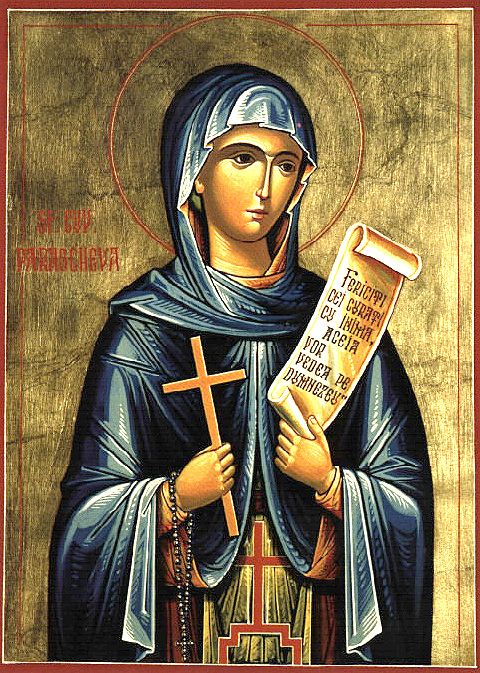
Saint Paraskevi the New of Epivates commemorated today

The post commemorates Saint Paraskevi the New, known as the Epivatini, who originated from Epivates near Selymbria in Thrace. From childhood she performed good works. As an adult she left her parental home and traveled to Constantinople to venerate the holy relics of the saints. From there she went to Heraclea of Pontus, where she undertook the care of a church for five years. She then departed for the Holy Places and settled in a women's…

The post commemorates Saint Paraskevi the New, known as the Epivatini, who originated from Epivates near Selymbria in Thrace. From childhood she performed good works. As an adult she left her parental home and traveled to Constantinople to venerate the holy relics of the saints. From there she went to Heraclea of Pontus, where she undertook the care of a church for five years.

She then departed for the Holy Places and settled in a women's monastery, where she practiced virtue for several years. Later she returned to Constantinople and then went to Kallikrateia in southeastern Thrace, where she remained for two years at the church of the Holy Apostles and reposed there peacefully. The liturgical service for her feast was composed by Syrigos Meletios, and her life was written by Euthymios, Archbishop of Tornovo.

  • Born in Epivates near Selymbria, Thrace
  • Traveled to Constantinople to venerate holy relics
  • Cared for a church in Heraclea of Pontus for five years
  • Practiced virtue in a women's monastery in the Holy Places
  • Reposed in Kallikrateia at the church of the Holy Apostles
Mount Athos Legacy Facebook

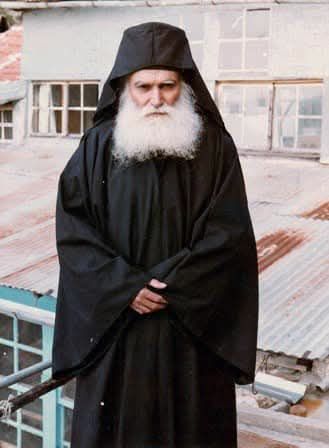
Saint Ephraim of Katounakia on the prayer rope and the Jesus Prayer

The post shares a saying attributed to Saint Ephraim of Katounakia concerning the komboskini, the knotted prayer rope used in Orthodox practice. The saint states that the prayer rope will guide the person who uses it to places they do not know and to higher levels. He advises that one should pray for God to give patience rather than to take away trials, because those trials lead to paradise. The text instructs the reader to learn to work the…

The post shares a saying attributed to Saint Ephraim of Katounakia concerning the komboskini, the knotted prayer rope used in Orthodox practice. The saint states that the prayer rope will guide the person who uses it to places they do not know and to higher levels. He advises that one should pray for God to give patience rather than to take away trials, because those trials lead to paradise.

The text instructs the reader to learn to work the prayer rope. It then gives the words of the Jesus Prayer: "Lord Jesus Christ, have mercy on me." The saint adds that when a person has a problem, they should say this prayer.

The source consists of this single statement; no further discussion or commentary is included in the provided text.

  • The komboskini guides to unknown places and higher spiritual levels
  • Ask God for patience, not for removal of trials
  • Trials lead to paradise
  • Learn to use the prayer rope
  • Say the Jesus Prayer "Lord Jesus Christ, have mercy on me" for any problem
Mount Athos Legacy Facebook

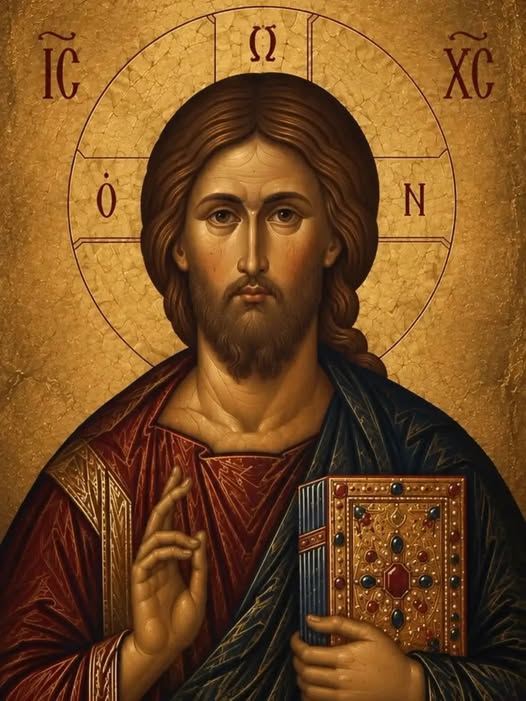
Elder Joseph's prayer to Christ as Savior, Light, Truth, and Love

The post presents a prayer attributed to Elder Joseph addressed to Jesus Christ. The prayer opens by naming Christ as Lord, God, Bridegroom of the soul, and Redeemer. The author declares love for Christ because he is the Savior who wills, knows, can, and saves from every danger of body and soul, from the sinful self, from the hateful devil, from evil people, and from eternal death that comes from persistent sin. The prayer continues by naming…

The post presents a prayer attributed to Elder Joseph addressed to Jesus Christ. The prayer opens by naming Christ as Lord, God, Bridegroom of the soul, and Redeemer. The author declares love for Christ because he is the Savior who wills, knows, can, and saves from every danger of body and soul, from the sinful self, from the hateful devil, from evil people, and from eternal death that comes from persistent sin.

The prayer continues by naming Christ as the Light, true, sweet, life-giving, that shines within and around, beautifies the formation and the faces of loved people, and gives the ability to walk with safety, to run, to climb, to compare, to prefer. Christ is then named as the Truth, pure, honorable, hopeful, life-giving, redemptive, the truth for all things yesterday, today, tomorrow, and into the ages.

Finally, Christ is named as Love, greatest, warmest, wisest, strongest, truest, most personal, the Love that was crucified for the author. The text is a direct devotional address structured in four movements, each beginning with "I love you, my Christ, because you are" followed by a title and a series of descriptors and effects. There is no discussion or commentary accompanying the prayer in the source.

  • Prayer attributed to Elder Joseph addresses Christ as Lord, God, Bridegroom of the soul, and Redeemer
  • Christ loved as Savior who delivers from dangers of body and soul, sinful self, devil, evil people, eternal death
  • Christ loved as Light that shines within and around, beautifies creation and loved ones, enables safe movement and discernment
  • Christ loved as Truth that is pure, honorable, hopeful, life-giving, redemptive for all time
  • Christ loved as Love that is greatest, warmest, wisest, strongest, truest, most personal, crucified for the author
Read more
Mount Athos Legacy Facebook

Unbelief Comes from Pride: St. Silouan the Athonite on Knowing God

The post quotes St. Silouan the Athonite on the origin of unbelief and the way God is known. According to the quote, unbelief comes from pride. The proud person claims he will know everything through his mind and through science, but the knowledge of God remains unreachable for him, because God is known only through the revelation of the Holy Spirit. The Lord reveals Himself to humble souls. To them He shows His works, which are incomprehensible…

The post quotes St. Silouan the Athonite on the origin of unbelief and the way God is known. According to the quote, unbelief comes from pride. The proud person claims he will know everything through his mind and through science, but the knowledge of God remains unreachable for him, because God is known only through the revelation of the Holy Spirit.

The Lord reveals Himself to humble souls. To them He shows His works, which are incomprehensible to our mind. With our natural mind we can know only earthly things, and even these partially, while God and all heavenly things are known through the Holy Spirit. The post presents this teaching as a single short passage attributed to the saint, without further commentary or discussion.

It sets pride against humility, and natural human knowledge against knowledge given by the Holy Spirit, and names humility as the condition in which God reveals Himself.

  • St. Silouan the Athonite teaches that unbelief comes from pride.
  • The proud person claims he will know everything by his mind and by science, but the knowledge of God stays unreachable for him.
  • God is known only through the revelation of the Holy Spirit.
  • The Lord reveals Himself to humble souls and shows them His works, which the mind cannot grasp.
  • The natural mind knows only earthly things, and partially, while God and all heavenly things are known through the Holy Spirit.
Mount Athos Legacy Facebook

Pride Blocks the Knowledge of God: St. Silouan on Faith and Revelation

A quotation from St. Silouan the Athonite on the origin of unbelief. He says unbelief comes from pride. The proud person claims he will know everything through his mind and through science, but the knowledge of God remains unreachable for him, because God is known only through the revelation of the Holy Spirit. The Lord reveals Himself to humble souls. To them He shows His works, which are beyond the grasp of our mind. With our natural mind we…

A quotation from St. Silouan the Athonite on the origin of unbelief. He says unbelief comes from pride. The proud person claims he will know everything through his mind and through science, but the knowledge of God remains unreachable for him, because God is known only through the revelation of the Holy Spirit. The Lord reveals Himself to humble souls. To them He shows His works, which are beyond the grasp of our mind.

With our natural mind we can know only earthly things, and even those partially, while God and all heavenly things are known through the Holy Spirit. The post presents this teaching as a single attributed quotation, with no further commentary or discussion attached. It sets two ways of knowing side by side: the natural mind, which reaches earthly things in part, and the Holy Spirit, through whom God and the things of heaven are known.

It also names pride as the obstacle and humility as the condition in which the Lord reveals Himself and shows His works, which the mind cannot contain.

  • St. Silouan the Athonite says unbelief comes from pride.
  • The proud person claims he will know everything by his mind and by science, but the knowledge of God stays unreachable for him.
  • God is known only through the revelation of the Holy Spirit.
  • The Lord reveals Himself to humble souls and shows them His works, which our mind cannot grasp.
  • The natural mind knows only earthly things, and partially, while God and all heavenly things are known through the Holy Spirit.
Mount Athos Legacy Facebook

The Burning Vigil Lamp Cries 'Have Mercy' to God for the One Who Lit It

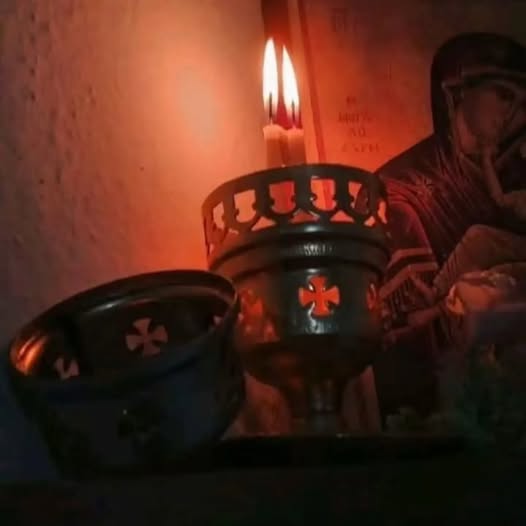
Elder Ephraim of the Skete of St Andrew teaches that a lit vigil lamp is itself a prayer. For as long as the lamp burns, it cries 'Eleison, Eleison, Eleison', that is, 'Have mercy', to God for the person who lit it. The elder says the devil knows this, and so he plants logismoi, tempting thoughts, in people's minds, suggesting that keeping a lit lamp poses a danger of fire. The elder also speaks about the oil. He says we should always put the…

Elder Ephraim of the Skete of St Andrew teaches that a lit vigil lamp is itself a prayer. For as long as the lamp burns, it cries 'Eleison, Eleison, Eleison', that is, 'Have mercy', to God for the person who lit it. The elder says the devil knows this, and so he plants logismoi, tempting thoughts, in people's minds, suggesting that keeping a lit lamp poses a danger of fire.

The elder also speaks about the oil. He says we should always put the best oil in the vigil lamp. Then he adds a humble qualification of his own: he would say, humbly, that a person may put in whatever oil he can afford. What matters is that he offers the best oil of his heart together with whatever oil he can manage at the time, so that he keeps at least one vigil lamp burning.

Such a lamp, he writes, is 'presves eleous', an intercessor of mercy, toward Heaven. The saying ends with the signature of the elder himself, Gerontas Ephraim of the Skete of St Andrew. The whole text rests on two points: the burning lamp prays for the one who lights it, and the enemy attacks this practice with thoughts of danger in order to stop it.

The elder's answer to the temptation is to keep the lamp lit, with the best oil one has, and above all with the oil of the heart.

  • A lit vigil lamp cries 'Eleison' ('Have mercy') to God for as long as it burns, for the person who lit it.
  • The devil knows this and plants thoughts that a lit lamp is a fire hazard, to make people stop keeping one.
  • The best oil should always be put in the vigil lamp.
  • The elder humbly adds that one may use whatever oil he can afford, as long as he offers the best oil of his heart with it.
  • Keeping even one lamp burning makes it an intercessor of mercy toward Heaven.
Read more