
 Mount Athos Legacy
Facebook
The Theotokos: Panagia, All-Holy, and Ever-Virgin according to St. Gregory Palamas
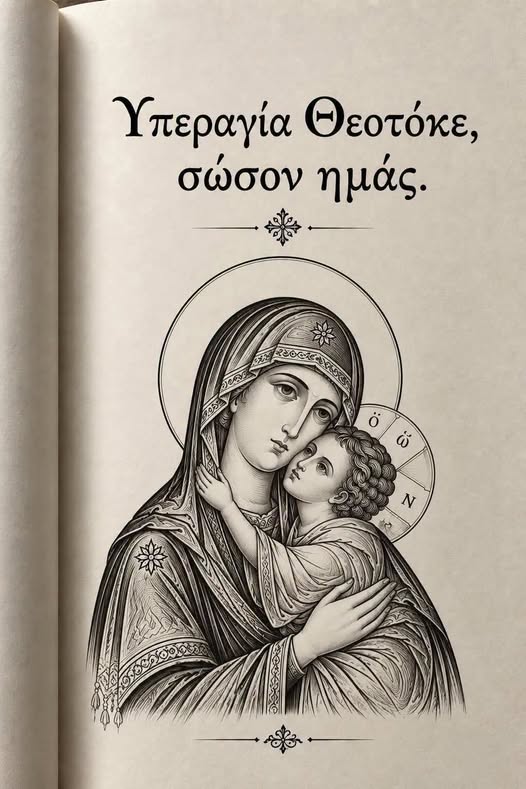
The post presents a concise theological explanation of the titles attributed to the Virgin Mary in Orthodox Christianity. It opens with the designation Panagia, All-Holy, and supports it with a phrase from St. Gregory Palamas: she is the summit and perfection of every saint. The author asserts that Mary committed no sin throughout her life.
From the age of three until fifteen, when she conceived Christ by the Holy Spirit, she lived in the Holy of Holies and reached theosis. Consequently she is called Achrantos, meaning spotless and pure from every sin and thought in both body and soul. The title Hyper-eulogemene, supremely blessed, indicates that she received great grace from the fullness of God's grace.
Endoxos, glorious, signifies that she is filled with the glory of God, a glory manifested also in her Dormition. Despoina and Kyria, Mistress and Lady, derive from her giving birth to the Lord of all; therefore her intercession and prayers possess strong power and she is the Protection of Christians. Theotokos, God-bearer, is used because she did not bear a simple human being but the Second Person of the Holy Trinity who is God.
Finally, Aeiparthenos, Ever-Virgin, affirms her virginity before, during, and after childbirth, a reality depicted in holy icons by three stars on her forehead and shoulders. The image accompanying the text shows an icon of the Virgin holding the Christ Child with the inscription "Most Holy Theotokos, save us."
Main points
- Mary is called Panagia because she is the summit and perfection of all saints (St. Gregory Palamas).
- She lived without sin from childhood in the Holy of Holies until the Annunciation, achieving theosis.
- Her titles, Achrantos, Hyper-eulogemene, Endoxos, Despoina, Kyria, Theotokos, Aeiparthenos, each express a facet of her holiness and role.
- As Theotokos she bore the Second Person of the Trinity, not a mere man.
- Her perpetual virginity before, during, and after birth is depicted in icons by three stars.