WeOrthodox
EN UA

CHRISTIANITY UNITED

Instagram ↗ 58 discussions

☦️ Christians United in Christ ✝️ Orthodox faith • Saints • Scripture 🎥 New journey begins soon 👕 Apparel supports people in need ⬇️ Shop / support

CHRISTIANITY UNITED Instagram

Metropolitan Athanasios on Monasticism: A Life Given Entirely to God

The post presents Metropolitan Athanasios of Limassol's teaching on monastic life. Born in Limassol, Cyprus, in 1959, he spent many years on Mount Athos before becoming Metropolitan of Limassol in 1999. He explains that monasticism is not merely leaving possessions, comfort, or ordinary life, but a decision to give one's entire life to God. A monk leaves behind things most people pursue, not because marriage, family, or work are evil, but…

The post presents Metropolitan Athanasios of Limassol's teaching on monastic life. Born in Limassol, Cyprus, in 1959, he spent many years on Mount Athos before becoming Metropolitan of Limassol in 1999. He explains that monasticism is not merely leaving possessions, comfort, or ordinary life, but a decision to give one's entire life to God.

A monk leaves behind things most people pursue, not because marriage, family, or work are evil, but because of a special calling to dedicate himself completely to Christ. The monk seeks communion with God, not wealth, recognition, or worldly success. The inner life of a monk is described as a lifelong journey of prayer, repentance, humility, and growing closer to Christ.

The metropolitan notes that this inner life is known by God alone and cannot be fully described; it is an inconceivable mystery. A monk journeys continually, dynamically, and unceasingly toward God alone. Although most people will not become monks, the lesson applies to all: families, jobs, and responsibilities should not take the place of God in the heart.

Christ calls every person to holiness, whether in a monastery or in the world, as expressed in Luke 18:22. The greatest lesson of monasticism is that a person can leave behind almost everything the world considers important and discover the One who matters most. A life completely given to Christ is never wasted.

Key moments

  1. The inner life of a monk is known by God alone.
  2. What transpires in the soul of a man who loves God can only be truly known by a beloved God.
  3. It is neither possible nor easy to speak about these things.
  4. The journey of a man who devotes his life to God is an inconceivable mystery.
  5. A monk is he who in his entire being journeys continually, dynamically, and unceasingly towards God and God alone.
Read more

Troparion of Saint Demetrios the Myrrh-Streamer performed by Melethis choir

The post presents the troparion of Saint Demetrios the Myrrh-Streamer in Romanian, as sung by the Melethis vocal group from the Orthodox Theology Faculty in Cluj-Napoca. The hymn addresses the saint as a great champion found by the world in perils, a victor over the pagans. It recalls how he humbled the pride of Lyaios and gave courage to Nestor in the stadium.

The faithful ask the martyr to intercede with Christ God for great mercy. The post includes the full Romanian text of the troparion and an English summary of its meaning.

Key moments

  1. The world found in Saint Demetrios a great champion in perils, the victor over the pagans.
  2. He quelled the pride of Lyaios and gave courage to Nestor in the stadium.
  3. The faithful ask the great martyr Demetrios to pray to Christ God to grant them great mercy.
Read more
CHRISTIANITY UNITED Instagram

St. Paul's Call to Be a Good Soldier of Christ

The post reflects on Saint Paul's exhortation to Timothy to be a good soldier of Christ, applying it to the spiritual life of Orthodox Christians today. It explains that Christian life involves struggle against unseen battles: lust, pride, anger, greed, laziness, jealousy, resentment, and constant distractions that pull the heart from God. The greatest enemy is often the passions allowed to grow within. The author clarifies that Saint Paul's…

The post reflects on Saint Paul's exhortation to Timothy to be a good soldier of Christ, applying it to the spiritual life of Orthodox Christians today. It explains that Christian life involves struggle against unseen battles: lust, pride, anger, greed, laziness, jealousy, resentment, and constant distractions that pull the heart from God.

The greatest enemy is often the passions allowed to grow within. The author clarifies that Saint Paul's warning against entanglement in the affairs of this life does not mean abandoning family, work, or responsibilities, but refusing to let worldly desires surpass one's relationship with Christ. The Orthodox Church provides the necessary weapons for this warfare: prayer, fasting, Confession, the Holy Eucharist, Scripture, and the guidance of the Holy Fathers.

The post emphasizes that a soldier of Christ is not someone who never falls, but someone who gets back up, repents, and continues fighting against sin within, not against other people. Perseverance through difficulty, not perfection, defines the faithful soldier.

  • Saint Paul's words to Timothy urge endurance in spiritual struggle
  • The battle is against inner passions and distractions, not external enemies
  • Worldly entanglement means misplaced priorities, not neglect of duties
  • Orthodox spiritual tools include prayer, fasting, Confession, the Eucharist, Scripture, and the Fathers
  • A soldier of Christ persists through failure by repentance and return to the fight
Read more
CHRISTIANITY UNITED Instagram

The Beauty of Orthodox Worship: Turning Hearts to God

The post reflects on the experience of entering an Orthodox church, describing the sensory elements, incense, candles, icons, quiet prayers, sunlight, that create a space removed from worldly noise. It explains that these elements are not merely decorative but serve to turn hearts toward God: icons remind worshippers of Christ, the Theotokos, and the saints; candles represent prayers and self-offering; incense symbolizes prayers rising to…

The post reflects on the experience of entering an Orthodox church, describing the sensory elements, incense, candles, icons, quiet prayers, sunlight, that create a space removed from worldly noise. It explains that these elements are not merely decorative but serve to turn hearts toward God: icons remind worshippers of Christ, the Theotokos, and the saints; candles represent prayers and self-offering; incense symbolizes prayers rising to heaven.

At the center is Jesus Christ, calling all to repentance, prayer, and communion. The author notes that people come with hidden burdens, to give thanks, seek forgiveness, or stand in silence, and that silent prayer before an icon can be a starting point when words fail. The reflection cites Hebrews 13:8 on Christ's unchanging nature.

The accompanying video presents a series of spiritual maxims on humility, prayer, and salvation. One saying urges keeping the head low but the soul close to God, being active in deeds while at peace with people as the way to salvation. Another advises humbling the heart and reproaching oneself, for the monk sleeps but sin watches.

The maxims warn that if one does not hear others' groans, neither fasts nor prostrations will help, and that God values truthfulness and honesty over outward appearance. They caution against judging others, laughing at another's need, and attachment to the world, while extolling a pure heart as a spring useful to all and reliance on God as the path to salvation.

The discussion turns on the connection between external worship and inner disposition, and the priority of compassion and humility over ritual performance.

Key moments

  1. Keep your head low but your soul close to God; be active in deeds but at peace with people as the way to salvation.
  2. Humble your heart and reproach yourself, for the monk sleeps but sin watches.
  3. If you do not become a people-pleaser, you will become pleasing to God.
  4. If you do not hear others' groans, neither fasts nor prostrations will help you.
  5. People care about appearance, but God cares about truthfulness and honesty.
  6. Whoever prays to God will not be put to shame; do not laugh at another's need lest you not escape your own trouble.
  7. He who reproaches others forgets his own sins; a humble person is a priceless diamond.
  8. A pure heart is like a spring, useful to all; the world deceives those attached to it, but God saves those who rely on Him.
Read more
CHRISTIANITY UNITED Instagram

Cats in Samarkand cathedral recall saints' compassion for animals

1:00

The author describes a family of cats living in St. Alexius Orthodox Cathedral in Samarkand, Uzbekistan. Kittens play and rest beneath the icons while worshippers pray and light candles. The author connects this scene to the tradition of Orthodox saints showing kindness to animals, citing Saint Seraphim of Sarov's friendship with a bear and Saint Gerasimos of the Jordan's friendship with a lion. These examples illustrate that a heart growing…

The author describes a family of cats living in St. Alexius Orthodox Cathedral in Samarkand, Uzbekistan. Kittens play and rest beneath the icons while worshippers pray and light candles. The author connects this scene to the tradition of Orthodox saints showing kindness to animals, citing Saint Seraphim of Sarov's friendship with a bear and Saint Gerasimos of the Jordan's friendship with a lion.

These examples illustrate that a heart growing closer to God becomes more compassionate toward creation. The post also outlines the cathedral's history: built in the early 20th century during the Russian Empire, it suffered during the Soviet period but later returned to religious use. Today it remains an active Orthodox parish in Uzbekistan, where Christians are a small minority. The author reflects that God's creation sometimes offers simple reasons for joy.

Key moments

  1. The speaker says "I will get it out."
Read more

The Church as Hospital and Heaven: Chrysostom and Germanus on Orthodox Worship

The post presents two patristic quotes and a brief explanation of Orthodox worship. Saint John Chrysostom describes the Church as a hospital for souls rather than a courtroom. The author notes that every icon proclaims the Gospel, every candle represents prayer, and every act of worship draws the faithful closer to Christ.

Saint Germanus of Constantinople teaches that the Church is an earthly heaven in which the heavenly God dwells and walks. The same content appears in Greek translation.

  • Saint John Chrysostom: the Church is a hospital for souls, not a courtroom
  • Icons proclaim the Gospel, candles symbolize prayer, worship draws us to Christ
  • Saint Germanus of Constantinople: the Church is an earthly heaven where God dwells and walks
  • The text is given in English and Greek
Read more
CHRISTIANITY UNITED Instagram

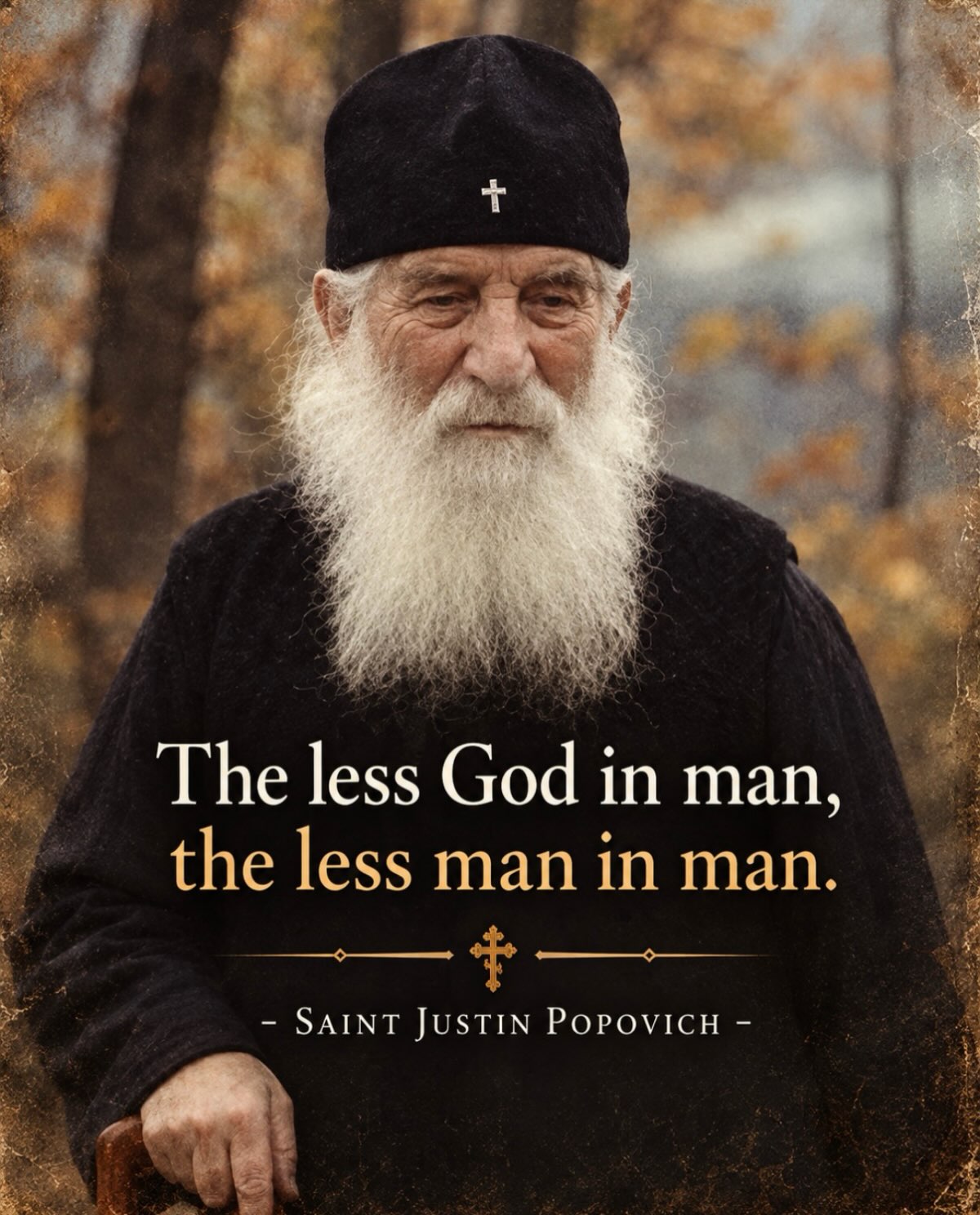
Saint Justin Popović: The less God in man, the less man in man

The post presents a reflection on a saying by Saint Justin Popović: "The less God in man, the less man in man." It explains that humans were created for communion with God, not merely for worldly success. The author notes that even when people achieve wealth, recognition, or comfort, they may still feel empty because the soul's purpose is to grow in holiness and become like Christ. The further one moves from God, the more pride, selfishness,…

The post presents a reflection on a saying by Saint Justin Popović: "The less God in man, the less man in man." It explains that humans were created for communion with God, not merely for worldly success. The author notes that even when people achieve wealth, recognition, or comfort, they may still feel empty because the soul's purpose is to grow in holiness and become like Christ.

The further one moves from God, the more pride, selfishness, greed, anger, and hatred can take hold. The post clarifies that this does not mean non-believers are less human; every person bears God's image and deserves love and dignity. Rather, the fullness of humanity is found in Jesus Christ. Biographical details are given: Saint Justin Popović (1894-1979) was a Serbian Orthodox monk, priest, and theologian born in Vranje, Serbia.

He spent much of his later life at Ćelije Monastery, devoted to prayer, spiritual guidance, and writing. He taught that Christ, the God-Man, reveals what humanity was meant to become. He was glorified as a saint by the Serbian Orthodox Church in 2010.

The post ends with a question for self-examination: whether one is becoming more like Christ or allowing the world to pull away from Him. The discussion in the comments likely centers on the quote's meaning, the saint's theology of the God-Man, and practical application of his teaching to daily spiritual life.

  • Saint Justin Popović's saying: "The less God in man, the less man in man."
  • Humans created for communion with God, not worldly success.
  • Moving from God leads to emptiness and passions like pride, greed, anger.
  • Every person bears God's image; fullness of humanity found in Christ.
  • Saint Justin's life: Serbian Orthodox monk, priest, theologian (1894-1979), glorified 2010.
Read more
CHRISTIANITY UNITED Instagram

A Call to Surrender Life to Christ Through Daily Prayer

The author shares a message from Bishop Mar Mari Emmanuel urging believers to surrender their lives to Christ. The bishop belongs to an independent Syriac Christian church, not the Eastern Orthodox or Coptic Orthodox churches, and the author notes that sharing the message does not imply agreement with all his teachings. The author begins by describing a common human struggle: we make plans, chase opportunities, and try to control the future,…

The author shares a message from Bishop Mar Mari Emmanuel urging believers to surrender their lives to Christ. The bishop belongs to an independent Syriac Christian church, not the Eastern Orthodox or Coptic Orthodox churches, and the author notes that sharing the message does not imply agreement with all his teachings. The author begins by describing a common human struggle: we make plans, chase opportunities, and try to control the future, convincing ourselves we know what is best.

Years of following our own desires may bring no peace. The hardest prayer, the author says, is to admit, "Lord, I have tried doing things my way. Teach me to live according to Yours." In the Orthodox spiritual life, surrender does not mean abandoning responsibilities or expecting God to make every decision. It means putting aside pride, repenting of sins, and no longer insisting that everything happen according to our will.

The author then presents the bishop's prayer as a model. The bishop urges the listener to kneel in their room tonight and say, "Lord, all my life I've done it my way." The prayer confesses failure, calling it miserable failure, and pleads for God to take over because the speaker can no longer do it alone. The author links this to Christ's prayer in Gethsemane, "Nevertheless, not My will, but Yours, be done" (Luke 22:42).

The post concludes by reminding readers that surrender is a daily choice, not a single event, and encourages a sincere heart over perfect words.

Key moments

  1. The speaker begs the listener to kneel in their room tonight and say, "Lord, all my life I've done it my way."
  2. The speaker models a prayer of total surrender, giving God their life and whole being.
  3. The prayer admits, "Lord, I tried it my way and I failed. Failed, Lord. I failed."
  4. The speaker emphasizes the failure as miserable: "Not only I failed, but miserably I failed."
  5. The prayer concludes with a plea for God to take over: "Lord, take over. I can't do it anymore. I don't want to do it anymore."
Read more
CHRISTIANITY UNITED Instagram

Father Spyridon Bailey on worldly dependence and trust in God from Matthew 6

The post presents Father Spyridon Bailey's teaching on the tension between caring for earthly needs and depending on God. The priest explains that Christ in Matthew 6 places a question before believers: at what point does providing for families and fulfilling responsibilities become dependence on those things more than on God. The danger begins when hearts attach to money, possessions, clothes, food, comfort, security, and tomorrow's plans so…

The post presents Father Spyridon Bailey's teaching on the tension between caring for earthly needs and depending on God. The priest explains that Christ in Matthew 6 places a question before believers: at what point does providing for families and fulfilling responsibilities become dependence on those things more than on God. The danger begins when hearts attach to money, possessions, clothes, food, comfort, security, and tomorrow's plans so that losing them feels like losing everything.

Peace becomes measured by financial security rather than relationship with God. The Orthodox Fathers teach that attachment to earthly things is dangerous not because creation is evil but because anything placed above God becomes a master. The priest contrasts time spent worrying about tomorrow with time spent preparing souls for eternity.

Seeking first the Kingdom of God does not mean abandoning responsibilities but putting them in proper place: work without worshiping money, plan without becoming a slave to fear, enjoy gifts without forgetting the Giver. The video summary adds that Jesus teaches anxiety about food, clothing, and tomorrow reveals dependence on worldly things disrupting relationship with God.

He calls for freedom from anxiety, not an end to planning. Venerating saints honors the image of God restored in them through freedom from worldly dependence. This veneration should challenge believers to examine whether they suppress God's image through dependence and corruption or allow Him to restore it. Eternal needs are met only in God, not in the material world.

Key moments

  1. Jesus says we must question our dependence on the things of this world, citing Matthew's Gospel.
  2. Anxiety about food, clothing, and tomorrow reveals a dependence that disrupts our relationship with God.
  3. Jesus is not forbidding planning or care, but forbidding anxiety and dependence on material things.
  4. We venerate saints because they have become pure by breaking dependence on this world and avoiding what corrupts the mind.
  5. Veneration should challenge us to ask whether we have aspired to freedom from anxiety and dependence.
  6. We must examine how far we suppress God's image through dependence and corruption, or allow Him to restore it.
  7. Healing comes by remembering that our eternal needs are met only in God, not through clothes, food, or the material world.
Read more
CHRISTIANITY UNITED Instagram

Whatever Controls You Becomes Your Master: On Slavery to Sin and True Freedom

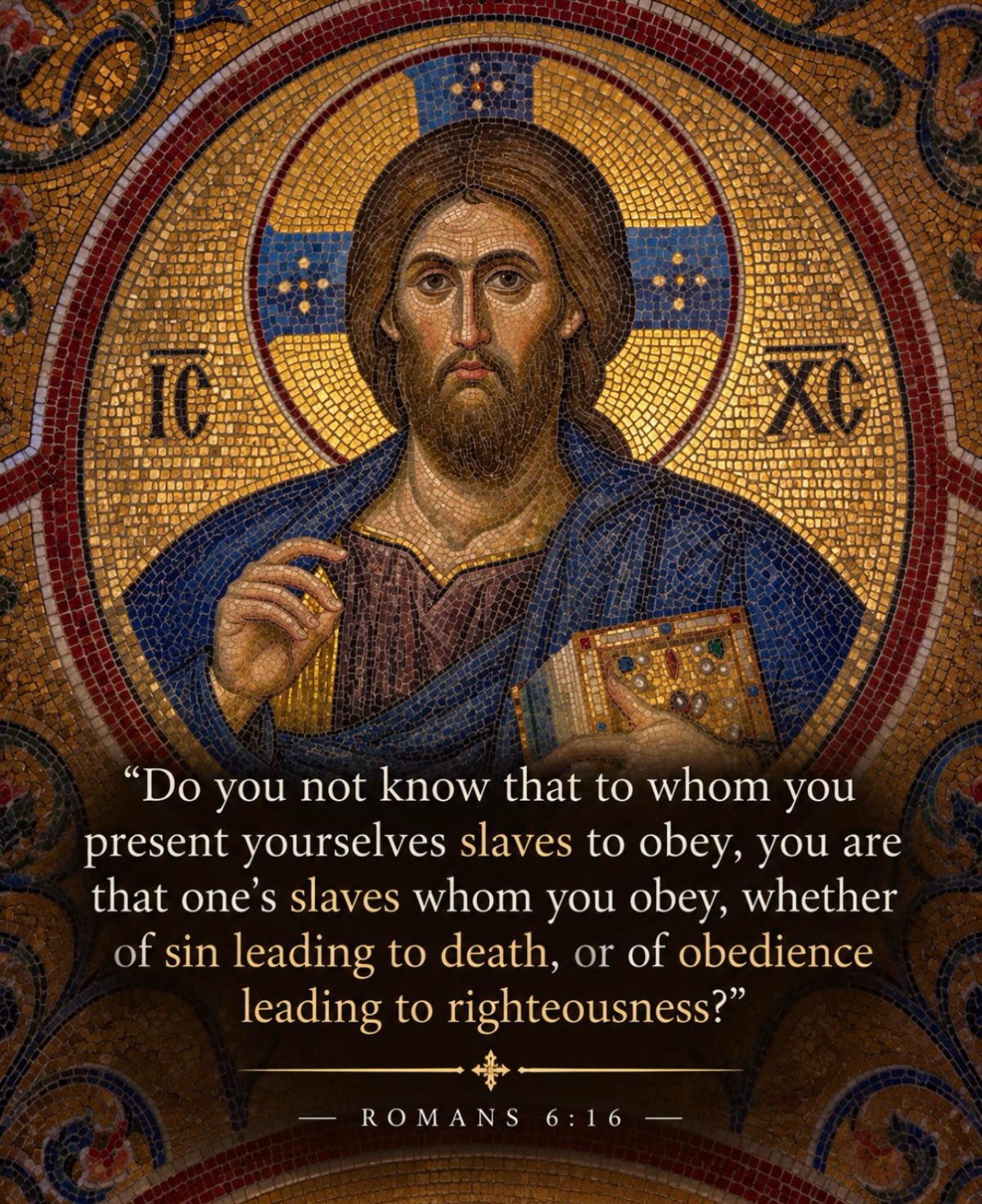
The author reflects on Saint Paul's warning that not everything we choose freely leaves us free, a truth many people grasp only after years of struggling with sin. A habit can begin with lust, pornography, alcohol, gambling, greed, anger, jealousy, or the constant need to satisfy our own desires. At first we believe we are in control and can stop whenever we want, but gradually a choice becomes a habit, and the habit can become something we feel…

The author reflects on Saint Paul's warning that not everything we choose freely leaves us free, a truth many people grasp only after years of struggling with sin. A habit can begin with lust, pornography, alcohol, gambling, greed, anger, jealousy, or the constant need to satisfy our own desires. At first we believe we are in control and can stop whenever we want, but gradually a choice becomes a habit, and the habit can become something we feel powerless to resist.

This is the slavery to sin that Saint Paul warns about, referenced with Romans 6:16. The author explains that in the Orthodox Church these disordered desires are called passions, and the more we feed them, the stronger their hold on our hearts becomes. Christ did not come merely to say that sin is wrong; He came to free us from its power.

The author names the means of this freedom: prayer, fasting, Confession, the Holy Eucharist, and a sincere effort to change our lives, through which we turn away from what enslaves us and return to God. The struggle is not easy. Some habits take years to overcome, and we sometimes fall back into the very sins we are trying to leave.

But falling does not mean surrender. True freedom is not doing everything our desires demand; it is no longer being ruled by them. The author closes with a question for the reader: am I controlling my desires, or are my desires controlling me? A prayer asks Christ to give us strength to break free from everything that separates us from Him.

  • Saint Paul's warning: not everything we choose freely leaves us free; a free choice can become a habit and then slavery to sin.
  • Habits can begin with lust, pornography, alcohol, gambling, greed, anger, jealousy, or the constant need to satisfy our own desires.
  • In the Orthodox Church these disordered desires are called passions; the more we feed them, the stronger their hold on our hearts.
  • Christ came to free us from sin's power through prayer, fasting, Confession, the Holy Eucharist, and a sincere effort to change our lives.
  • Falling does not mean surrender: true freedom is no longer being ruled by our desires.
Read more
CHRISTIANITY UNITED Instagram

Father Lazarus El Anthony: The World Is Our Cross, and How We Carry It

A post shares a teaching from Father Lazarus El Anthony, a Coptic Orthodox monk of the Monastery of Saint Anthony in the Egyptian desert, on what it means to carry one's cross. The post quotes Christ's words from Matthew 16:24: "If anyone desires to come after Me, let him deny himself, and take up his cross, and follow Me." It lists the difficulties people face: illness, family problems, loneliness, financial worries, disappointment, and pain…

A post shares a teaching from Father Lazarus El Anthony, a Coptic Orthodox monk of the Monastery of Saint Anthony in the Egyptian desert, on what it means to carry one's cross. The post quotes Christ's words from Matthew 16:24: "If anyone desires to come after Me, let him deny himself, and take up his cross, and follow Me." It lists the difficulties people face: illness, family problems, loneliness, financial worries, disappointment, and pain caused by people they once trusted.

It notes that we often spend our time asking God to remove these things and forget Christ's command. Carrying the cross, the post says, does not mean pretending suffering does not hurt, and it does not mean staying silent in the face of abuse or injustice. It means facing unavoidable difficulties without letting them separate us from Christ.

The post recalls Father Lazarus's own path: born in Australia, he left a comfortable life to become a monk in Egypt, following the tradition of the Desert Fathers. It adds that a cross is not always something extraordinary; it can be an illness, a person we struggle to forgive, or daily responsibilities. Not every suffering is sent by God, and we may not understand why things happen, but hard circumstances can become an occasion for prayer, patience, humility, and a closer relationship with Christ.

In the video itself, Father Lazarus says the world itself is our cross: we are hurt by other people, by sickness, by death, and by temptations, and turned from the right path in every way. He recalls his own suffering before monastic life, from nature, from snow and fire, from people who betrayed and disappointed him, and from his own foolishness and wrong decisions.

Part of the answer, he says, is to become better and learn from mistakes, the worldly wisdom that you do not put your hand twice in the fire. There is another lesson: suffering can be accepted, embraced, and remade.

Key moments

  1. As Christians we must carry our cross, and the world is our cross: we are hurt by others, by sickness, by death, by temptations.
  2. Suffering is not good while you endure it, and everyone suffers.
  3. The monk recounts his suffering before monastic life: from nature and the elements, from people who betrayed and disappointed him, and from his own foolishness and wrong decisions.
  4. Part of the solution is to become better and learn from mistakes, the worldly wisdom that you do not put your hand twice in the fire.
  5. There is another lesson: suffering can be accepted, embraced, and renovated, renewed, remade.
Read more
CHRISTIANITY UNITED with Prayer Orthodoxy ® Instagram

He Was There All Along: A Return Through Mercy

The speaker recounts a period of many years during which they turned away from God to follow their own will, ignoring God's voice. Throughout that time, God's mercy continued to follow the speaker through every choice, waiting patiently. Eventually the speaker reached a place of brokenness and cried out for a single miracle. God answered that cry. The speaker fell into tears, weeping from a sense of unworthiness over the years of wandering.…

The speaker recounts a period of many years during which they turned away from God to follow their own will, ignoring God's voice. Throughout that time, God's mercy continued to follow the speaker through every choice, waiting patiently. Eventually the speaker reached a place of brokenness and cried out for a single miracle.

God answered that cry. The speaker fell into tears, weeping from a sense of unworthiness over the years of wandering. Although the speaker had walked away, God had remained present and strong the entire time. God filled the speaker's heart, restored the speaker's soul, and returned the speaker's son, who came back from fear's dark hold.

The cross revealed God's love to the speaker. The speaker now declares that every breath belongs to God, who never moved even in the speaker's sorrow and cry. The testimony concludes with a quotation from Saint Paisios the Athonite: "As long as a person does not despair, God will help him."

Key moments

  1. The speaker turned away from God for many years, chasing their own will and ignoring God's voice.
  2. God's mercy followed the speaker through every choice, waiting patiently.
  3. The speaker cried out in brokenness, asking for one miracle.
  4. God answered, and the speaker fell in tears, crying in unworthiness over the years of wandering.
  5. Though the speaker walked away, God stayed strong and was there all along.
  6. God filled the speaker's heart, restored their soul, and gave back the one they had lost.
  7. The speaker's son returned from fear's dark hold.
  8. God showed love through the cross, and now every breath belongs to God, who never moved even in the speaker's sorrow and cry.
Read more
CHRISTIANITY UNITED Instagram

Orthodoxy as right faith and right worship rooted in Greek and Slavic terms

The author explains that the word Orthodox comes from Greek orthos meaning right or correct and doxa meaning both belief and glory. In Slavic languages the term Pravoslavlje expresses right glory. The text states that for Orthodox Christians faith is not simply believing God exists or knowing Scripture but living that faith through prayer repentance fasting the Holy Mysteries and worship of the Holy Trinity. What we believe and how we worship…

The author explains that the word Orthodox comes from Greek orthos meaning right or correct and doxa meaning both belief and glory. In Slavic languages the term Pravoslavlje expresses right glory. The text states that for Orthodox Christians faith is not simply believing God exists or knowing Scripture but living that faith through prayer repentance fasting the Holy Mysteries and worship of the Holy Trinity.

What we believe and how we worship cannot be separated. The Orthodox Church has preserved the apostolic faith through centuries of persecution political changes theological disputes and attempts to alter Christian teaching. The same faith confessed by the Apostles was defended by the Holy Fathers proclaimed by the Seven Ecumenical Councils and continues to be celebrated in the Divine Liturgy today.

The author writes that truth should not change because the world changes. Defending Orthodoxy should not become an excuse for pride hatred or looking down on others. There is no point in defending truth with words if we refuse to live it with humility and love.

The calling is to know the Orthodox faith live it preserve it and pass it on to the next generation.

Key moments

  1. Orthodox means it has two meanings. One means the right opinion, the right the truth.
  2. But it's interesting that when it was translated into the Greek word, orthodox was it's a Greek word. Was translated into Slavic, they translated it from a Slavic which meant "right glory".
  3. Because doxa in Greek could also mean glory.
  4. So it means opinion and glory. So it's like right worship or right faith, that's that's what it means.
Read more
CHRISTIANITY UNITED Instagram

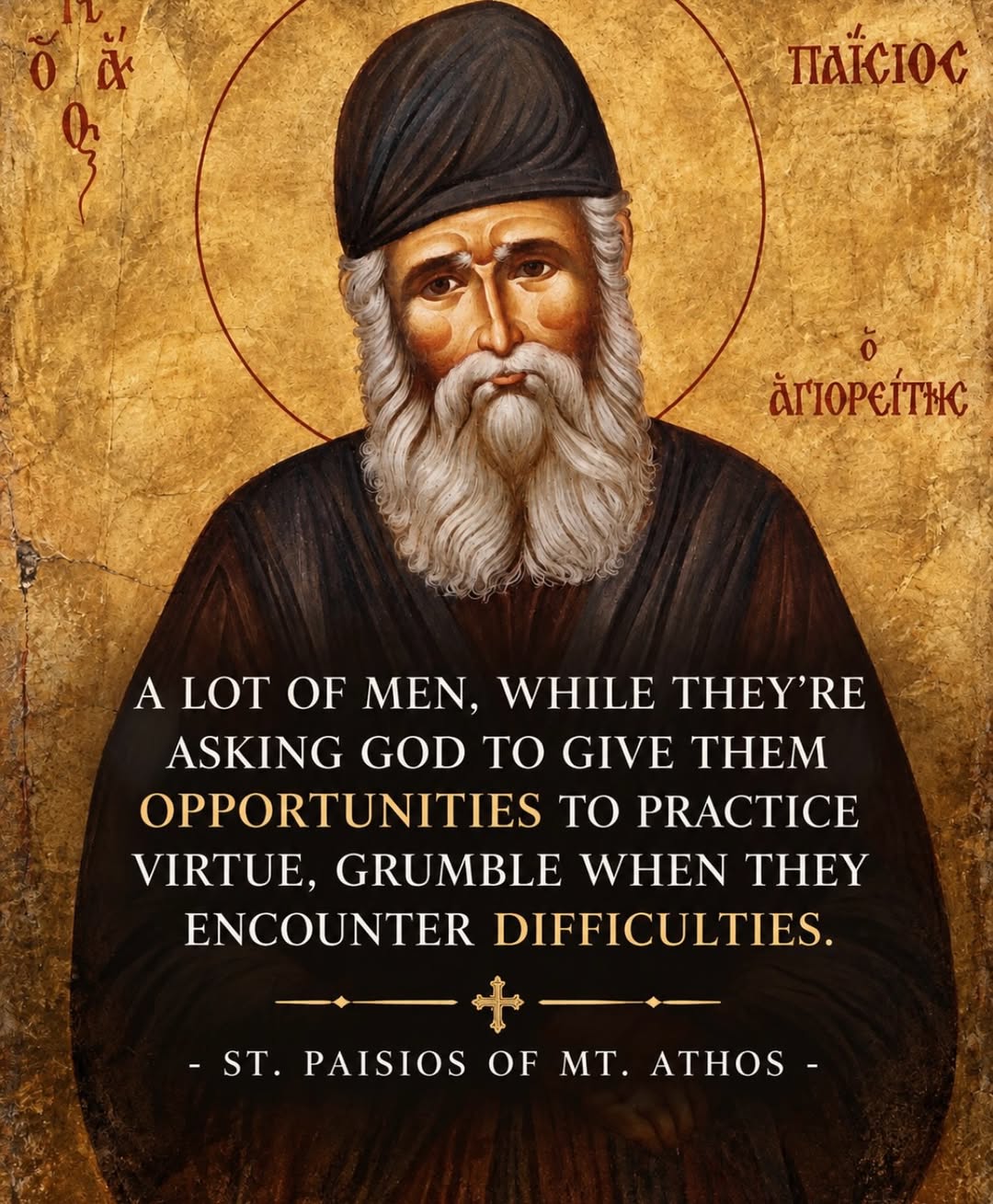
Saint Paisios on how difficulties answer prayers for virtue

The post presents a reflection attributed to Saint Paisios the Athonite (1924-1994), who was born in Farasa, Cappadocia, and spent much of his life as a monk on Mount Athos. He is described as known for his humility, compassion, and spiritual wisdom, having guided countless people toward repentance and a deeper relationship with Christ. The reflection notes a common pattern: people pray for patience, humility, forgiveness, and stronger faith,…

The post presents a reflection attributed to Saint Paisios the Athonite (1924-1994), who was born in Farasa, Cappadocia, and spent much of his life as a monk on Mount Athos. He is described as known for his humility, compassion, and spiritual wisdom, having guided countless people toward repentance and a deeper relationship with Christ.

The reflection notes a common pattern: people pray for patience, humility, forgiveness, and stronger faith, yet become angry, offended, or unwilling to forgive when tested. Saint Paisios reminds readers that the difficulties encountered can become the very opportunities prayed for. The text states that virtue is not developed simply by reading about it or wishing for it; patience is learned by practicing patience, forgiveness by forgiving, and humility by putting aside pride.

The post adds a qualification: this does not mean every hardship comes directly from God or that abuse and injustice should be accepted. However, even in difficult circumstances, God can help a person grow spiritually if the response is made with faith. The spiritual life, according to Saint Paisios, is not about avoiding every difficulty but learning to face life's struggles with prayer, patience, and trust in God.

The post concludes by suggesting that the next time something tests patience or challenges pride, one should remember what has been prayed for, since the opportunity to become more like Christ may arrive disguised as something one would rather avoid.

  • Saint Paisios taught that difficulties can be the opportunities we pray for to grow in virtue
  • Virtue comes through practice, not only reading or wishing
  • We ask for patience, humility, forgiveness but resist the situations that require them
  • Not all hardships come from God; abuse and injustice should not be accepted
  • God helps us grow spiritually when we respond to struggles with faith and prayer
Read more
CHRISTIANITY UNITED Instagram

Adam's Lament and the Way Back to Paradise

The post presents the Orthodox chant "Adam's Lament" (O Adame, spune nouă…) and its theological meaning. The chant portrays Adam sitting outside the gates of Paradise, weeping not for the lost garden but for the broken communion with God. That loss of closeness is described as the real tragedy of the Fall. Humanity was created for communion with God, yet through disobedience sin and death entered human life. Saint Silouan the Athonite…

The post presents the Orthodox chant "Adam's Lament" (O Adame, spune nouă…) and its theological meaning. The chant portrays Adam sitting outside the gates of Paradise, weeping not for the lost garden but for the broken communion with God. That loss of closeness is described as the real tragedy of the Fall.

Humanity was created for communion with God, yet through disobedience sin and death entered human life. Saint Silouan the Athonite (1866-1938), a Russian monk on Mount Athos, wrote about Adam's sorrow as a mirror of the human soul searching for happiness apart from its Creator. In his writings, Adam's tears are not only about the past; they remind us of our own souls seeking fulfillment in everything except the One who made us.

The hymn itself calls on Adam to describe how he loved the Lord while in Paradise among the living souls, and addresses "my gentle love" who created the speaker to behold divine light through uncreated grace. These phrases repeat to emphasize the longing for that light. The video includes Romanian and English subtitles for the chant.

The post connects Adam's lament to Great Lent, when the Church calls the faithful to repentance, fasting, prayer, and preparation for the Resurrection. Jesus Christ, the New Adam, opens the way back through His Cross and Resurrection. The gates of Paradise are opened, and humanity is called to return to communion with God.

Adam wept because he had lost Paradise; Christians repent because Christ has opened the way home.

Key moments

  1. O, Adam spune-ne cum pe Domnul Îl iubeai când erai în Rai cu Dânsul și printre suli-viețuiai
  2. când erai în Rai cu Dânsul și printre suli-viețuiai
  3. O, iubirea mea cea lină ce pe mine m-a creat ca să văd a sa lumină prin harul cel necreiat
  4. ca să văd a sa lumină prin harul cel necreiat
Read more
CHRISTIANITY UNITED Instagram

Georgian girl venerates icons, continuing 1,600-year faith

The post describes a young girl in Georgia who approaches an icon of the Most Holy Theotokos, makes the sign of the Cross, kisses the icon, and continues to a stone Cross where she brings flowers to a small chapel. The author observes that this simple display shows how children absorb faith by watching their parents pray, make the sign of the Cross, kiss icons, attend the Divine Liturgy, and show respect for holy places. These actions gradually…

The post describes a young girl in Georgia who approaches an icon of the Most Holy Theotokos, makes the sign of the Cross, kisses the icon, and continues to a stone Cross where she brings flowers to a small chapel. The author observes that this simple display shows how children absorb faith by watching their parents pray, make the sign of the Cross, kiss icons, attend the Divine Liturgy, and show respect for holy places.

These actions gradually become part of the children's own lives. The author notes that Georgia has preserved its Christian faith since the fourth century, when Saint Nino preached the Gospel in the ancient Kingdom of Iberia, and that more than 1,600 years later the same faith continues through children like this girl. The post explains that in the Orthodox Church icons are venerated, not worshipped, and that the honor given to an icon passes to the holy person represented; kissing an icon of the Theotokos expresses love and reverence for the Mother of Jesus Christ.

The author expresses hope that the girl will one day teach her own children the same practices, showing how faith survives from generation to generation through daily example as well as words. The post concludes with a prayer asking the Most Holy Theotokos to protect the girl and all children and to lead them closer to her Son, Jesus Christ.

  • Girl in Georgia venerates icon of Theotokos and brings flowers to chapel
  • Children learn faith by observing parents' prayer and reverence
  • Georgia's Christian tradition dates to Saint Nino in fourth century
  • Orthodox veneration of icons honors the person represented, not the object
  • Faith passes through daily example across generations
Read more
CHRISTIANITY UNITED Instagram

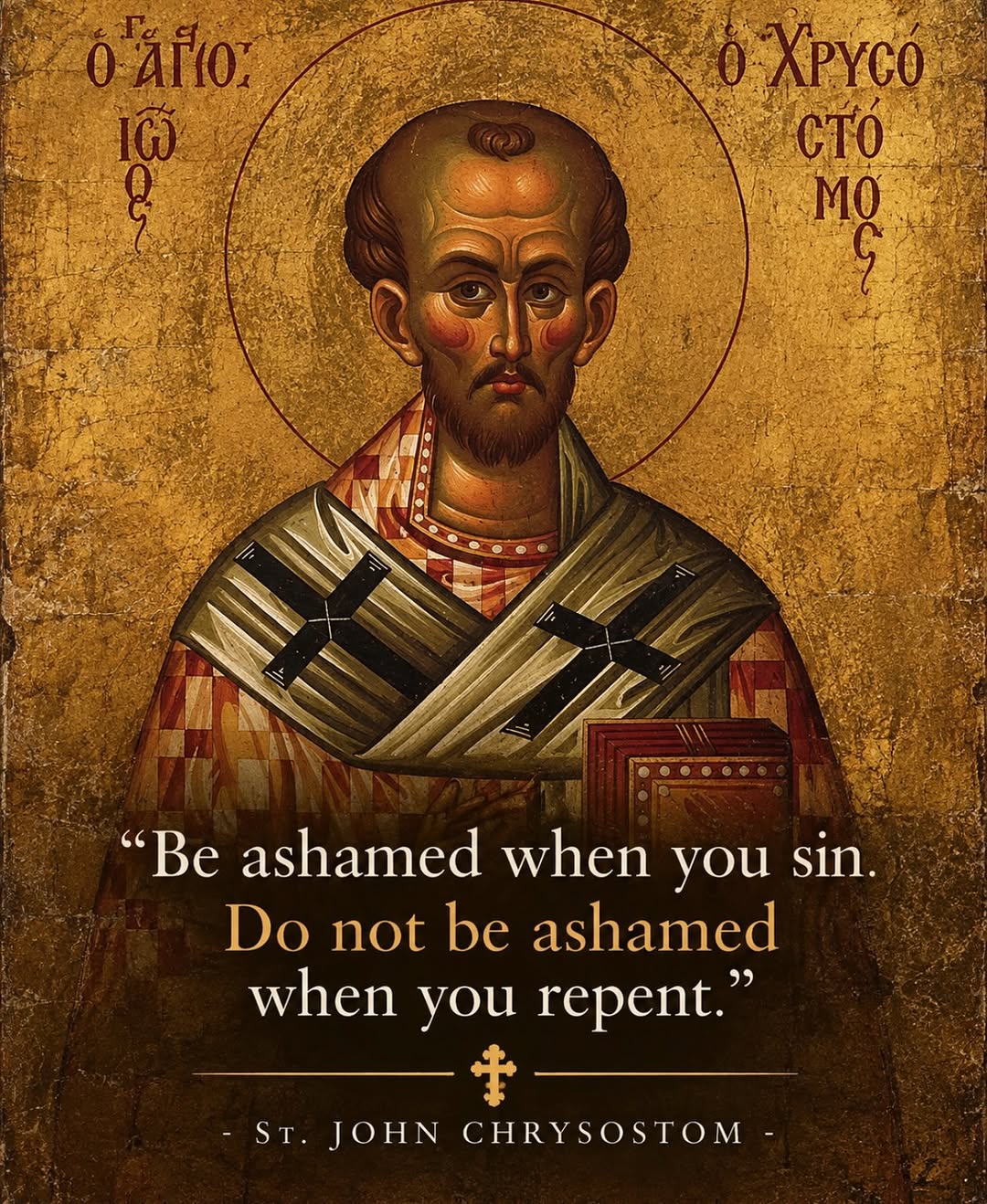
Saint John Chrysostom on shame and returning to God

The post describes a teaching attributed to Saint John Chrysostom about the role of shame in sin and repentance. It states that the devil makes a person feel no shame while committing a sin but fills them with shame when it is time to confess. A person may repeat the same mistakes for months or years, hide them, and convince themselves the actions are not serious. When the moment comes to stand before God and admit the wrongdoing, embarrassment,…

The post describes a teaching attributed to Saint John Chrysostom about the role of shame in sin and repentance. It states that the devil makes a person feel no shame while committing a sin but fills them with shame when it is time to confess. A person may repeat the same mistakes for months or years, hide them, and convince themselves the actions are not serious.

When the moment comes to stand before God and admit the wrongdoing, embarrassment, fear, and a sense of unworthiness arise. Chrysostom, who lived from approximately 347 to 407, was born in Antioch and became Archbishop of Constantinople; his name means Golden-Mouthed because of his preaching gift. He spoke against corruption and injustice and constantly called people to repentance, mercy, and a life centered on Christ.

The post uses the Parable of the Prodigal Son: after wasting his inheritance and falling into misery, the son could have remained in shame but instead rose and returned to his father, who ran to embrace him. This illustrates God's love toward a sinner who sincerely repents. In the Orthodox Church, Confession is presented not as a means of humiliation but as a place of healing where wounds are brought before Christ.

The post concludes by urging anyone with a burden on their conscience not to keep running from God, to be sorry for sin, but never to be ashamed of returning to Christ, and ends with the invocation "Saint John Chrysostom, pray to God for us."

  • The devil removes shame during sin but adds it at confession
  • Chrysostom teaches sin should trouble the conscience, repentance should give hope
  • The Prodigal Son returns to his father who runs to embrace him
  • Orthodox Confession is a place of healing, not humiliation
  • The post urges the reader to return to Christ without shame
Read more
CHRISTIANITY UNITED with Blessed To Be Orthodox Instagram

Video features 11-minute 'Om Namah Shivaya' chant

0:17

The post includes the Orthodox prayer "Great is Thy mercy, O Lord" with a cross symbol alongside a video that consists entirely of the Hindu mantra "Om Namah Shivaya" repeated continuously for eleven minutes. The chant begins immediately and continues without variation or interruption for the full duration. No additional commentary, music, or visual changes accompany the repetition.

The source does not explain the relationship between the Orthodox prayer text and the Hindu chant video.

Key moments

  1. 0:00 The chant "Om Namah Shivaya" begins and continues without interruption.
Read more
CHRISTIANITY UNITED Instagram

Father Lazarus on falling, repentance, and not abandoning God

The post shares a message from Father Lazarus El Anthony, an Australian-born Coptic Orthodox monk who left his former life to live in the Egyptian desert following the ancient monastic tradition of prayer, solitude, and repentance. He teaches that falling into sin is inevitable for everyone except God, but falling and giving up on God are two different things. The devil does not only want people to fall; he wants them to believe that after…

The post shares a message from Father Lazarus El Anthony, an Australian-born Coptic Orthodox monk who left his former life to live in the Egyptian desert following the ancient monastic tradition of prayer, solitude, and repentance. He teaches that falling into sin is inevitable for everyone except God, but falling and giving up on God are two different things.

The devil does not only want people to fall; he wants them to believe that after falling there is no point in getting back up, that they have disappointed God too many times, or that they are beyond forgiveness. God knows human weaknesses better than people know them themselves. He sees struggles, failures, and shame, yet continues to call to repentance.

Father Lazarus reminds readers of what the Desert Fathers understood: holiness is not about pretending we never fall. It is about humbling ourselves, repenting sincerely, and continually returning to Christ. The post urges never to become comfortable with sin but never to let sins convince one to abandon God.

If you fall today, get back up, confess your sins, ask for His mercy, and continue. As long as you are alive, do not give up on repentance. Christ has not stopped calling you home. The accompanying video summary adds that the speaker teaches getting up and facing forward is what matters.

By the end of life, judgment becomes a greater blessing because one has fallen forward rather than given up. Jesus taught that all evil comes from within, not from external circumstances. External temptations may cause falls but cannot destroy a person; only refusing God can do that.

The advice is to fight inner battles and trust that each time one falls, gets up, and turns again to the Lord, forgiveness is given.

Key moments

  1. Blaming yourself for falling is appropriate because you will fall and always fall; the battle never makes you the victor unless you are God.
  2. Most people simply fall down, but getting up and facing forward means you are doing all you can.
  3. By the end of life, judgment becomes a greater blessing because you have fallen forward.
  4. Jesus said all evil comes from within, not from the earth; external fights do not make you evil.
  5. Temptations around you might make you fall but they will not destroy you.
  6. You can only destroy yourself by accepting or refusing God; if you do not refuse God, you will not be destroyed.
  7. You might fall and will fall, but you will not be destroyed.
  8. The advice is to fight inner battles and believe that even when you fall, getting up and facing the Lord again brings forgiveness.
Read more
CHRISTIANITY UNITED with Prayer Orthodoxy ® Instagram

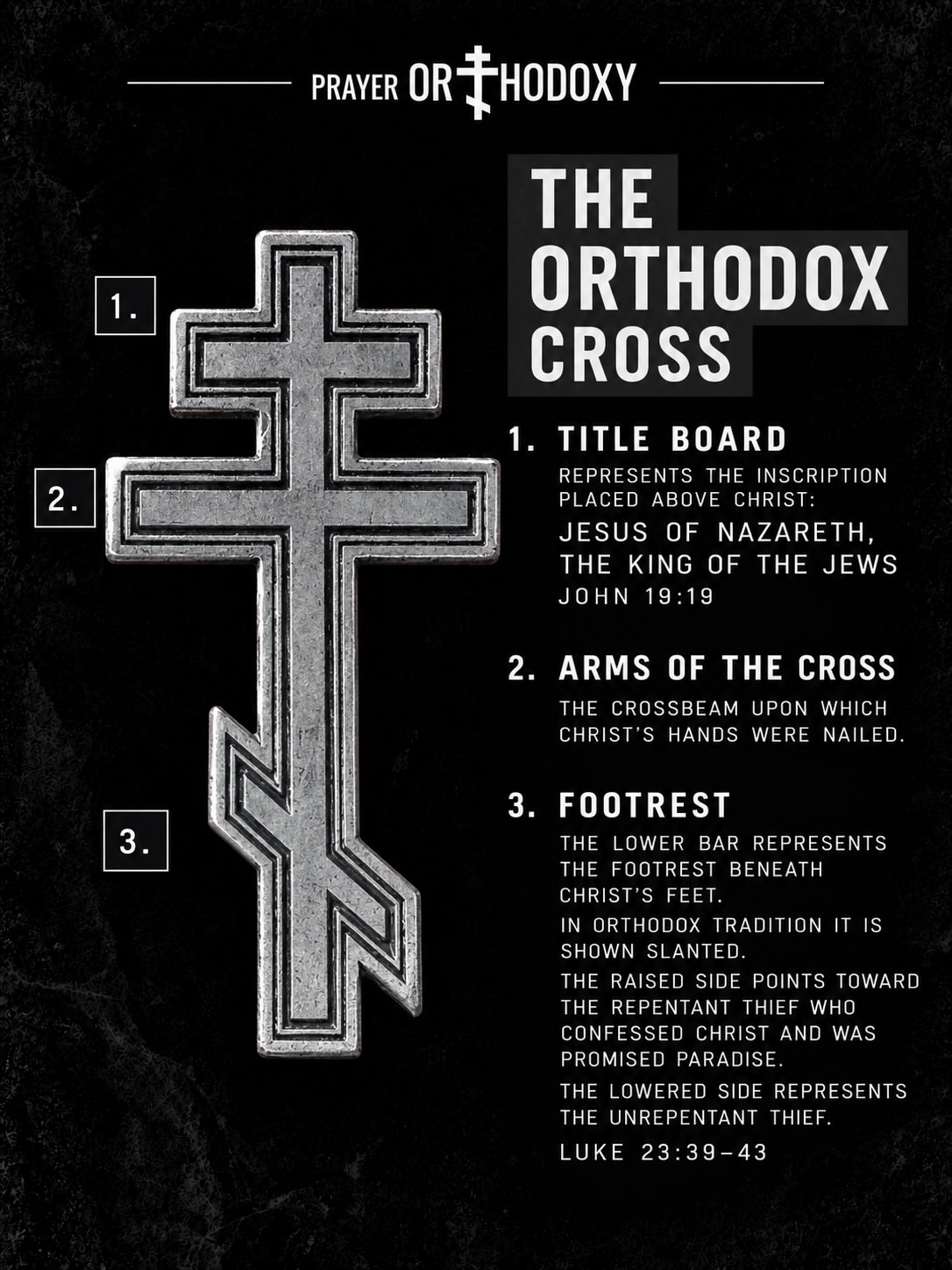
Why Orthodox Christians wear the cross: confession, remembrance, call to follow Christ

The post explains the reasons Orthodox Christians wear a cross. It states the cross serves as a visible confession of belonging to Christ. It reminds the wearer of Christ's Crucifixion and Resurrection, of Baptism into His death and new life, and of His command to take up one's own cross and follow Him. The cross also functions as a constant call to repentance, humility, prayer, and faithfulness. A section titled "THE CROSS BEFORE US" expands…

The post explains the reasons Orthodox Christians wear a cross. It states the cross serves as a visible confession of belonging to Christ. It reminds the wearer of Christ's Crucifixion and Resurrection, of Baptism into His death and new life, and of His command to take up one's own cross and follow Him.

The cross also functions as a constant call to repentance, humility, prayer, and faithfulness. A section titled "THE CROSS BEFORE US" expands that the Orthodox Cross calls to a life of repentance, humility, sacrifice, and hope. It reminds that suffering is never the final word. Through Christ, the Cross became the path to life, victory, and the Kingdom of Heaven.

To venerate the Cross is to remember what Christ has done and to ask whether one is willing to carry one's own cross faithfully. The same content appears in Greek. The post is attributed as an original production of Prayer Orthodoxy.

  • The cross is worn as a visible confession of belonging to Christ.
  • It recalls Christ's Crucifixion, Resurrection, and the wearer's Baptism into His death and new life.
  • It represents Christ's command to take up one's own cross and follow Him.
  • It serves as a constant call to repentance, humility, prayer, and faithfulness.
  • Venerating the Cross means remembering Christ's work and examining one's willingness to carry one's cross faithfully.
Read more