WeOrthodox
EN UA

Anthony’s Cell

YouTube 8 discussions · Open the original

Welcome to Anthony’s Cell — a quiet corner for the words, wisdom, and reflections of the Orthodox Christian faith. Here you’ll find readings from the Church Fathers, Orthodox clergy, theologians, writers, and faithful from throughout the Orthodox world, alongside commentary on Holy Scripture, the…

Anthony’s Cell YouTube

Ancestral Sin: What We Inherit From Adam, and What We Do Not

Ancestral Sin: What We Inherit From Adam, and What We Do Not 4:39

This audio reading presents the article on Ancestral Sin from the Orthodox Study Bible. It begins with God creating mankind, establishing paradise, and commanding Adam not to eat from the tree of the knowledge of good and evil, saying that on the day he ate from it he would die by death (Genesis 2:16-17). Since Adam and Eve did not physically die that day, the words 'you shall die' point to a spiritual death through separation from God, the…

This audio reading presents the article on Ancestral Sin from the Orthodox Study Bible. It begins with God creating mankind, establishing paradise, and commanding Adam not to eat from the tree of the knowledge of good and evil, saying that on the day he ate from it he would die by death (Genesis 2:16-17). Since Adam and Eve did not physically die that day, the words 'you shall die' point to a spiritual death through separation from God, the source of life.

Ancestral sin is Adam's willing disobedience, by which he fell from God's path to perfection. The reading lists the consequences of the fall: mortality, an inclination toward sin, and the fall of the divine image in man, along with sweat, toil, hunger, thirst, weariness, sorrow, pain, suffering, sickness, tribulations, tragedy, and tears.

It draws on Saint Gregory the Theologian, who says death cuts off sin so evil may not be everlasting, turning God's punishment into a mercy. On the question of guilt, the article states that we are not guilty because of Adam's sin but because of our own. Yet because mankind fell from God's grace through Adam's disobedience, people now have a propensity toward sin, since sin enters through fear of death.

The divine image in man is fallen but not totally corrupted or obliterated. Human nature remains inherently good, and people are still capable of doing good, though bondage to death and the devil can dull their perception of what is good. The intellectual, desiring, and irascible aspects of the soul remain natural and neutral after the fall; they can be used for good or harm, like iron made into a plow or into a sword.

The reading closes with Christ's death and resurrection, by which he conquered the devil and death, freed mankind from the fear of death, and made possible communion with God in which people become partakers of the divine nature (2 Peter 1:4).

  • Adam's willing disobedience brought spiritual death, separation from God the source of life (Genesis 2:16-17).
  • We inherit mortality, a propensity toward sin, and fear of death, not personal guilt for Adam's transgression.
  • Saint Gregory the Theologian says death cuts off sin so evil may not be everlasting, making punishment a mercy.
  • The divine image is fallen but not obliterated; human nature remains good and capable of good.
  • Christ's death and resurrection conquered death and the devil, making us partakers of the divine nature (2 Peter 1:4).

Key moments

  1. 0:34 God created mankind, established paradise, and commanded Adam not to eat from the tree of the knowledge of good and evil, saying that on the day he ate from it he would die by death (Genesis 2:16-17).
  2. 1:04 Since Adam and Eve did not physically die the day they ate, the words 'you shall die' indicate a spiritual death through separation from God. Ancestral sin is Adam's willing disobedience, by which he fell from God's path to perfection.
  3. 1:34 The fall made mankind subject to mortality. Saint Gregory the Theologian says death cuts off sin so evil may not be everlasting, so God's punishment is changed into a mercy.
  4. 2:06 We are not guilty because of Adam's sin but because of our own. Yet because mankind fell from God's grace through Adam's disobedience, people now have a propensity toward sin, since sin enters through fear of death.
  5. 2:38 The divine image in man is fallen but not totally corrupted or obliterated. Human nature remains inherently good, and people are still capable of doing good, though bondage to death and the devil can dull their perception of what is good.
  6. 3:10 Adam's fall brought mortality and sin into the world, along with sweat, toil, hunger, thirst, weariness, sorrow, pain, suffering, sickness, tribulations, tragedy, and tears.
  7. 3:41 The intellectual, desiring, and irascible aspects of the soul remain natural and neutral after the fall. They can be used for good or harm, like iron made into a plow or into a sword.
  8. 4:13 Christ, by his death and resurrection, conquered the devil and death, freeing mankind from the fear of death and making possible communion with God in which people become partakers of the divine nature (2 Peter 1:4).
Anthony’s Cell YouTube

One God, Three Persons: How Scripture Reveals the Holy Trinity

One God, Three Persons: How Scripture Reveals the Holy Trinity 5:22

An audio reading presents an article from the Orthodox Study Bible titled 'The Holy Trinity: Creator and Savior,' read aloud with singing at the beginning and end. The reading explains that the Holy Trinity is one God in three persons, Father, Son, and Holy Spirit, distinct but not separate and not three gods, one in essence or nature. The Father is the unbegotten fountainhead of deity, the Son is eternally begotten of the Father, and the Holy…

An audio reading presents an article from the Orthodox Study Bible titled 'The Holy Trinity: Creator and Savior,' read aloud with singing at the beginning and end. The reading explains that the Holy Trinity is one God in three persons, Father, Son, and Holy Spirit, distinct but not separate and not three gods, one in essence or nature.

The Father is the unbegotten fountainhead of deity, the Son is eternally begotten of the Father, and the Holy Spirit proceeds from the Father. The article traces the Trinity's work in creating the world through Genesis: the Father made heaven and earth, the Spirit hovered over creation and co-created, and the Son as the Word of God made the light, all with creative power and equality.

In Genesis 1:26, the pronouns 'us' and 'our' reveal a plurality of divine persons operating in unity out of the one divine nature. The reading then shows how the Trinity saves the world: the Father is our redeemer, the Son inherits the people saved by him, and the words 'holy, holy, holy' in Isaiah 6 declare the three persons who save us.

Isaiah 44:3 shows the Father pouring out his Spirit like water on dry ground, and Isaiah 48:16-17 shows the Son declaring that the Father and the Spirit sent him to redeem the world. Although the Son alone became a man, all three persons save mankind. The New Testament affirms the Trinity in the Old Testament: the Word was with the Father at creation, Jesus identifies himself as existing before Abraham as 'I am,' appearing to Moses in the burning bush, and the Spirit's descent at Pentecost affirms his Old Testament presence.

Hebrews 1:8-10 affirms the Father speaking to the Son in the Psalms, acknowledging the Son as God and creator of the world. The incarnate Son fully reveals the Trinity: at the Annunciation the Holy Spirit overshadowed the Virgin Mary, and at the baptism in the Jordan the Father's voice was heard and the Spirit descended like a dove.

As the main hymn for Theophany says, when you, oh Lord, were baptized in the Jordan, the worship of the Trinity was made manifest.

  • The Holy Trinity is one God in three persons, distinct but not separate, one in essence: the Father unbegotten, the Son eternally begotten, the Holy Spirit proceeding from the Father.
  • The Trinity created the world: the Father made heaven and earth, the Spirit hovered and co-created, and the Son as the Word made the light; Genesis 1:26 uses 'us' and 'our'.
  • The Trinity saves the world: Isaiah 6's 'holy, holy, holy' declares the three persons, and Isaiah 48:16-17 shows the Son sent by the Father and the Spirit to redeem the world.
  • The New Testament affirms the Trinity in the Old: Jesus as 'I am' before Abraham, his appearance in the burning bush, and Hebrews 1:8-10 acknowledging the Son as God and creator.
  • The Trinity is fully revealed at the Annunciation and at the baptism in the Jordan, where the Father's voice was heard and the Spirit descended like a dove.

Key moments

  1. 0:33 The Holy Trinity is one God in three persons, Father, Son, and Holy Spirit, distinct but not separate, one in essence or nature. The Father is the unbegotten fountainhead of deity, the Son is eternally begotten of the Father, and the Holy Spirit proceeds from the Father.
  2. 1:04 The Trinity created the world: the Father made heaven and earth, the Spirit hovered over creation and co-created, and the Son as the Word of God made the light, all with creative power and equality.
  3. 1:36 In Genesis 1:26, the pronouns us and our reveal a plurality of divine persons operating in complete unity out of the one divine nature.
  4. 2:08 The Trinity saves the world: the Father is our redeemer, the Son inherits the people saved by him, and the words holy, holy, holy in Isaiah 6 declare the three persons who save us.
  5. 2:39 Isaiah 44:3 shows the Father pouring out his Spirit like water on dry ground, and Isaiah 48:16-17 shows the Son declaring the Father and the Spirit sent him to redeem the world. Although the Son alone became a man, all three persons save mankind.
  6. 3:09 The New Testament affirms the Trinity in the Old Testament: the Word was with the Father at creation, Jesus identifies himself as existing before Abraham as I am, appearing to Moses in the burning bush, and the Spirit's descent at Pentecost affirms his Old Testament presence.
  7. 4:12 Hebrews 1:8-10 affirms the Father speaking to the Son in the Psalms, acknowledging the Son as God and creator of the world.
  8. 4:42 The incarnate Son fully reveals the Trinity: at the Annunciation the Holy Spirit overshadowed the Virgin Mary, and at the baptism in the Jordan the Father's voice was heard and the Spirit descended like a dove. As the main hymn for Theophany says, when you, oh Lord, were baptized in the Jordan, the worship of the Trinity was made manifest.
Anthony’s Cell YouTube

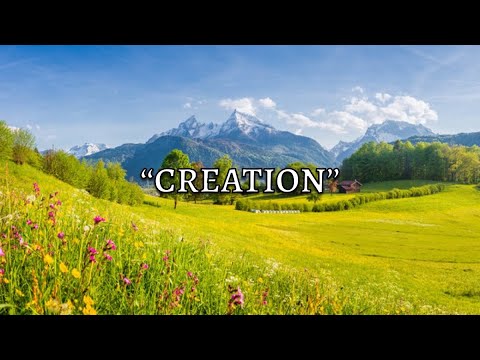
Creation Out of Nothing: The Orthodox Study Bible on Genesis and St. Basil

Creation Out of Nothing: The Orthodox Study Bible on Genesis and St. Basil 4:49

An audio reading from Anthony's Cell presents the article on Creation from the Orthodox Study Bible, drawing on Scripture and St. Basil the Great. The reading opens with the Nicene Creed's confession that the one true God is the maker of heaven and earth, of all things visible and invisible. St. Basil is quoted on Moses engraving the awesome name of God in our hearts as a seal and safeguard with the words 'In the beginning God created.' God was…

An audio reading from Anthony's Cell presents the article on Creation from the Orthodox Study Bible, drawing on Scripture and St. Basil the Great. The reading opens with the Nicene Creed's confession that the one true God is the maker of heaven and earth, of all things visible and invisible. St. Basil is quoted on Moses engraving the awesome name of God in our hearts as a seal and safeguard with the words 'In the beginning God created.' God was not forced to create; in his goodness and loving-kindness he freely chose to create the universe out of nothing, in contrast to the creation myths of surrounding ancient cultures.

The reading sets out the roles of Christ the Word, through whom all things were made according to John's Gospel, and of the Holy Spirit, shown in Genesis 1:2, Psalm 103:30, and Psalm 32:6. On the question of science, the reading states that the Orthodox Church has not dogmatized any particular view on the scientific accuracy of Genesis or on evolution.

What is dogmatically proclaimed is that the triune God created everything and that man alone is made in the image and likeness of God, citing Genesis 1:26-27. The Church Fathers affirm that each species came into existence instantaneously at God's command with its seed within itself, and that the development of life was not accident but the work of supreme intelligence and wisdom.

St. Basil, discussing the scientific theories of his day, counsels keeping admiration for the wisdom of God, the source of such perfect order, and recognizing that all that exists is sustained by the creator's power. The reading closes on the repeated 'And God saw that it was good' in Genesis 1, which shows the fundamental goodness of matter and the created order, the basis for a sacramental worldview, with creation's beauty and vastness intended to draw mankind to worship the creator.

  • The Nicene Creed affirms God as maker of all things visible and invisible; St. Basil quotes 'In the beginning God created' as a seal engraving God's name on our hearts.
  • God freely chose to create out of nothing in goodness and loving-kindness, unlike the creation myths of ancient cultures.
  • John's Gospel names the Word through whom all things were made; Genesis 1:2, Psalm 103:30, and Psalm 32:6 show the Holy Spirit's role in creation.
  • The Church has not dogmatized a view on Genesis's scientific accuracy or evolution; it proclaims the triune God created all and man alone bears God's image (Genesis 1:26-27).
  • The Fathers say each species appeared at God's command with its seed within itself, and 'And God saw that it was good' grounds the goodness of matter and a sacramental worldview.

Key moments

  1. 0:33 The Nicene Creed affirms the one true God as the source of everything that exists, both physical and spiritual, animate and inanimate.
  2. 1:04 Saint Basil the Great says Moses engraved the awesome name of God in our hearts as a seal and safeguard: 'In the beginning God created.'
  3. 1:34 God was not forced to create the universe; in his goodness and loving-kindness he freely chose to create out of nothing, in contrast to the creation myths of surrounding ancient cultures.
  4. 2:05 John's Gospel states that all things were made through the Word, and Genesis 1:2, Psalm 103:30, and Psalm 32:6 show the Holy Spirit's role in creation.
  5. 2:36 The Orthodox Church has not dogmatized any particular view on the scientific accuracy of Genesis or evolution; what is proclaimed is that the triune God created everything and man alone is made in the image and likeness of God (Genesis 1:26-27).
  6. 3:09 The Church Fathers affirm each species came into existence instantaneously at God's command with its seed within itself; development of life was not by accident but the work of supreme intelligence and wisdom.
  7. 3:39 Saint Basil the Great, discussing scientific theories of his day, says to keep admiration for the source of such perfect order, the wisdom of God, and to recognize that all that exists is sustained by the creator's power.
  8. 4:11 The repeated 'And God saw that it was good' in Genesis 1 shows the fundamental goodness of matter and the created order, the basis for a sacramental worldview, and creation's beauty and vastness are intended to draw mankind to worship the creator.
Anthony’s Cell YouTube

Elder Nazarius of Valaam: Why It Is Better to Fall Than to Judge Your Neighbor

Elder Nazarius of Valaam: Why It Is Better to Fall Than to Judge Your Neighbor 8:48

An audio reading from Anthony's Cell presents 'On Not Judging One's Neighbor' by Elder Nazarius of Valaam, an instruction on the spiritual danger of condemning others. The elder teaches that it is sometimes better to fall and rise oneself than to judge, because the sinner is led to repentance while the judge becomes hardened in pride. He calls every person to examine his own conscience, since all are conceived in iniquity and born in sins, and…

An audio reading from Anthony's Cell presents 'On Not Judging One's Neighbor' by Elder Nazarius of Valaam, an instruction on the spiritual danger of condemning others. The elder teaches that it is sometimes better to fall and rise oneself than to judge, because the sinner is led to repentance while the judge becomes hardened in pride.

He calls every person to examine his own conscience, since all are conceived in iniquity and born in sins, and no one can be justified before God by his deeds. God alone is the judge of all creation, and He judges each person according to his strength, station and circumstances. The reading recounts two stories from the Prologue. A holy man who judged a fallen brother was shown by an angel the soul of the one he judged and asked to decide whether it should be placed in the kingdom or in torment; scarcely forgiven, he spent his life in lamentation.

John the Sabayete, in a vision, heard Christ command that he be cast out as an antichrist because he judged his brother before Christ's judgment, and he wandered seven years in the desert until the Lord returned his mantle to him. The elder closes by urging readers to restrain themselves from judging even when they see a sin with their own eyes, to weep and pray for those who fall rather than rejoice over their fall, and to accuse themselves instead of others.

The recording runs just over eight minutes and is divided into chapters covering self-examination, the two Prologue accounts, and the call to prayer and weeping over one's own sins.

  • Elder Nazarius teaches it is sometimes better to fall and rise than to judge, since the sinner is led to repentance while the judge hardens in pride.
  • No one can be justified before God by deeds, so a sinner cannot presume to take the Creator's judgment on himself.
  • In the Prologue under September 27, a holy man who judged a brother was asked by an angel to decide that soul's fate and spent his life in lamentation.
  • John the Sabayete was cast out from Christ's presence in a vision for judging his brother and wandered seven years in the desert.
  • The elder urges readers to accuse themselves, pray and weep for those who fall, and leave judgment to the Son of God.

Key moments

  1. 0:34 It is sometimes better to fall oneself and rise than to judge one's neighbor, since the sinner is incited to repentance while the judge becomes hardened in pride.
  2. 1:07 Everyone has participated in sin, even a person who lived a single day, for we are conceived in iniquity and born in sins; test yourself whether you are guilty in great or small sins, in deed, word or thought.
  3. 1:39 No one can be justified before the Lord by his deeds; all are sinful and in need of God's aid and mercy, so how can a sinner presume to take the Creator's judgment on himself?
  4. 2:11 You cannot know your brother's thoughts or contrition, and you cannot forgive or punish eternally, so you cannot judge; Christ said, 'Judge not that ye not be judged' (Matthew 7:1-2), and the Apostle warns that God's judgment is according to truth (Romans 2:2-3).
  5. 3:16 In the Prologue under September 27th, a holy man who said 'this brother has done an evil thing' was shown by an angel the soul of the one he judged and asked to command whether it be placed in the kingdom or in torment; scarcely forgiven, he spent his whole life in lamentation.
  6. 4:47 John the Sabayete, in the Prologue under October 22nd, saw in a vision Christ command that he be cast out as an antichrist because he judged his brother before Christ's judgment; he wandered seven years in the desert until the Lord returned his mantle to him.
  7. 5:49 God alone justifies and judges His creation, judging kings, hierarchs, monks, ordinary people, the old, the young, the healthy and the infirm each in a different way according to their strength.
  8. 6:51 Restrain yourself from judging even if you saw the sin with your own eyes; do not rejoice over a neighbor's fall, for only demons rejoice at this, but pray, weep and lament over him who falls, and accuse yourself, 'do thou first confess thy transgressions that thou mayest be justified' (Isaiah 43:26).
Anthony’s Cell YouTube

Forgive Without an Apology: St. Seraphim of Sarov on Resentment and the Holy Spirit

Forgive Without an Apology: St. Seraphim of Sarov on Resentment and the Holy Spirit 10:13

An audio reading from Anthony's Cell reflects on why Christians must forgive, drawing on the teachings of St. Seraphim of Sarov and St. Nectarios. Forgiveness is presented as a mystery of the heart and an ascetic practice, not a social courtesy or a feeling. God causes his sun to rise on the evil and the good and grants life before we ask for it, so forgiving those who cannot ask is an imitation of God rather than of man. The reading cites St.…

An audio reading from Anthony's Cell reflects on why Christians must forgive, drawing on the teachings of St. Seraphim of Sarov and St. Nectarios. Forgiveness is presented as a mystery of the heart and an ascetic practice, not a social courtesy or a feeling. God causes his sun to rise on the evil and the good and grants life before we ask for it, so forgiving those who cannot ask is an imitation of God rather than of man.

The reading cites St. Seraphim's teaching that anger drives away the presence of the Holy Spirit from the heart, leaving no joy, light, or consolation. Resentment freezes the soul and binds us to the memory of injustice, while forgiveness is our own liberation, not the liberation of the other. Forgiveness does not mean forgetting, excusing, or allowing injustice to continue; it means removing the sin of the other from our heart.

Many people never ask for forgiveness because they cannot: their heart is wounded, darkened, or bound by passions, pride, and fear. Christ on the cross did not wait for his crucifiers to ask; he prayed for them because they did not know what they were doing, and forgiving them becomes a prayer for their enlightenment and healing.

St. Nectarios taught that the most subtle form of pride is wounded speech that pretends to seek justice while actually seeking vindication, and humility breaks these chains. The reading closes with the claim that forgiveness opens the path for the miracles of the heart: even if we never see a result, forgiveness is never wasted and is inscribed in the heart of the one who receives it.

The discussion follows the structure of the reading, moving from forgiveness as healing and imitation of God, through the danger of resentment, to pride and wounded speech, and finally to forgiving without an apology.

  • Forgiveness is our own liberation from bondage to the memory of injustice, not the liberation of the other.
  • St. Seraphim of Sarov taught that anger drives away the presence of the Holy Spirit from the heart, leaving no joy, light, or consolation.
  • Forgiveness is a decision and ascetic practice: it does not mean forgetting, excusing, or allowing injustice to continue.
  • Christ prayed for his crucifiers because they did not know what they were doing; forgiving those who cannot ask imitates this.
  • St. Nectarios called wounded speech that seeks vindication the most subtle form of pride; humility breaks these chains.

Key moments

  1. 0:32 Forgiveness is a mystery of the heart, an invitation from God to pass from darkness into light, and it is our own liberation rather than the liberation of the other.
  2. 1:36 God causes his sun to rise on the evil and the good and does not wait for us to ask before granting life, so forgiveness is imitation of God, not imitation of man.
  3. 2:08 Holding resentment freezes the soul; Saint Seraphim said anger drives away the presence of the Holy Spirit from the heart, leaving no joy, light, or consolation.
  4. 2:39 Forgiveness is a decision and ascetic practice: it does not mean forgetting, excusing, or allowing injustice to continue, but removing the sin of the other from our heart.
  5. 3:42 Many people do not ask for forgiveness because they cannot: their heart is wounded, darkened, or bound by passions, pride, and fear.
  6. 4:13 Christ on the cross did not wait for his crucifiers to ask; he prayed for them because they did not know what they were doing, and forgiving them becomes a prayer for enlightenment and healing.
  7. 5:14 Saint Nectarios said the most subtle form of pride is wounded speech that pretends to seek justice while actually seeking vindication; humility breaks these chains.
  8. 6:46 Forgiveness opens the path for the miracles of the heart; even if we never see a result, forgiveness is never wasted and is inscribed in the heart of the one who receives it.
Anthony’s Cell YouTube

While There Is Time: Bishop Augustinos on Spending Our Days for Salvation

While There Is Time: Bishop Augustinos on Spending Our Days for Salvation 13:03

An audio reading from Anthony's Cell presents the discourse 'While There Is Time' by Bishop Augustinos of Florina, built on Isaiah 49:8, 'In an acceptable time I have heard thee.' The bishop observes that people find time for passports, tickets, loans, studies and family duties, yet withhold time from God, who created them for salvation. He contrasts travelers who prepare documents and arrive on time, students who submit applications, and…

An audio reading from Anthony's Cell presents the discourse 'While There Is Time' by Bishop Augustinos of Florina, built on Isaiah 49:8, 'In an acceptable time I have heard thee.' The bishop observes that people find time for passports, tickets, loans, studies and family duties, yet withhold time from God, who created them for salvation.

He contrasts travelers who prepare documents and arrive on time, students who submit applications, and businessmen who pay lenders punctually with the neglect of the soul's preparation for eternity. God did not create us for travel, business, degrees, titles, dowries or weddings; the time of this life, whether twenty, forty, sixty or eighty years, is for salvation.

He addresses specific states of life: the young woman at the mirror, the young man in his car, the housewife at the malls, asking each to kneel and pray daily. He tells the husband buried in papers, TV and magazines to open the Bible with his wife and children. Of the week's 168 hours, God asks one or two for the Sunday liturgy, while people run to dark entertainment centers past midnight yet ask in church how much longer it will last.

Each year is like a komboskini with 365 golden beads, and he urges at least one day of holy confession, the spiritual clinic. He warns that death comes suddenly like a hawk among chickens, citing a mayor of Athens who died of a heart attack at his own birthday party before reaching the table. The discourse closes with the parable of the king's white and black flags: Christ raises his white flag of mercy through the cross, but the time will come when the gates shut and judgment arrives, so we must repent while there is still time.

  • The bishop preaches on Isaiah 49:8, 'In an acceptable time I have heard thee,' and contrasts our diligence in worldly affairs with neglect of the soul.
  • He asks for daily prayer, Bible reading with the family, weekly liturgy attendance, and yearly confession within the 365 days God grants each year.
  • Each year is like a komboskini with 365 golden beads; confession is the spiritual clinic, just as we run to doctors when health fails.
  • Death comes suddenly like a hawk among chickens; a mayor of Athens died of a heart attack at his own birthday party before reaching the table.
  • The parable of the king's white and black flags shows Christ's mercy through the cross and the coming time when the gates of mercy shut.

Key moments

  1. 0:32 The bishop takes his text from Isaiah 49:8, 'In an acceptable time I have heard thee,' and says those who comprehend it will become like lottery grand prize winners.
  2. 1:03 Travelers prepare passports and visas and arrive on time; students submit applications; businessmen pay lenders on time. We make time for all worldly duties.
  3. 2:34 God did not create us for travel, business, degrees, titles, dowries or weddings. The time of this life is for salvation, whether we live 20, 40, 60 or 80 years.
  4. 4:06 He addresses the young woman at the mirror, the young man in his car, and the housewife at the malls: set aside time each day to kneel and pray to God.
  5. 5:10 He tells the husband buried in papers, TV and magazines to open the Bible daily with his wife and children so their eyes may open.
  6. 5:41 Of the week's 168 hours, God asks one or two for the Sunday liturgy, from 'Blessed is the kingdom' to the final 'Amen.' People run to dark entertainment centers past midnight, but in church ask how much longer until it's over.
  7. 6:14 Each year is like a komboskini with 365 golden beads. Dedicate at least one day to holy confession, the spiritual clinic, just as you run to doctors when physical health fails.
  8. 8:48 This year, month, week or day may be our last. A mayor of Athens died of a heart attack at his own birthday party before reaching the table, and death strikes like a hawk among chickens, snatching the elderly and babies alike.
Read more
Anthony’s Cell YouTube

St. John of Damascus on Angels: Nature, Ranks, and Ministry

St. John of Damascus on Angels: Nature, Ranks, and Ministry 7:37

An audio reading from Anthony's Cell presents 'Concerning Angels,' a chapter from St. John of Damascus's An Exact Exposition of the Orthodox Faith. The reading follows opening singing and a Trisagion-style invocation, then works through the text in chapters covering the creation of the angels, their definition and incorporeal nature, free will and immortality by grace, communication without speech, their local limitation and manifestation to…

An audio reading from Anthony's Cell presents 'Concerning Angels,' a chapter from St. John of Damascus's An Exact Exposition of the Orthodox Faith. The reading follows opening singing and a Trisagion-style invocation, then works through the text in chapters covering the creation of the angels, their definition and incorporeal nature, free will and immortality by grace, communication without speech, their local limitation and manifestation to man, their guardianship of the earth, and the nine celestial orders.

St. John teaches that God created the angels out of nothing after His own image, as an incorporal race, 'a sort of spirit or immaterial fire,' citing David: 'He maketh his angels spirits and his ministers a flame of fire.' An angel is an intelligent essence in perpetual motion with free will, ministering to God, and only the Creator knows the form and limitation of its essence.

The angelic nature is rational and free but changeable, able to abide in goodness or turn toward evil; angels are immortal by grace rather than by nature, and they are not susceptible of repentance because they are incorporal. They communicate thoughts without words, created through the Word and perfected by sanctification of the Holy Spirit.

They are circumscribed, present in one place at a time, yet not hemmed in by walls, doors, bars, or seals, and they appear to the worthy in forms the beholders can perceive. They guard the divisions of the earth, are set over nations and regions, and behold God according to their capacity. Whether angels are equal in essence, God alone knows; they differ in brightness and position.

Following Dionysius the Areopagite, the text lists nine ranks in three groups: seraphim, cherubim, and thrones; dominions, powers, and authorities; rulers, archangels, and angels. Angels were created before man, and those who call them creators are 'the mouth of their father the devil,' for God alone is uncreated.

  • God created the angels out of nothing after His own image, as 'a sort of spirit or immaterial fire,' quoting David: 'He maketh his angels spirits and his ministers a flame of fire.'
  • Angels are intelligent essences with free will, immortal by grace rather than nature, changeable and not susceptible of repentance because they are incorporal.
  • They communicate without words, are not bound by walls, doors, bars, or seals, and appear to the worthy in forms they can perceive.
  • They guard the divisions of the earth, are set over nations and regions, and differ in brightness and position, though only God knows whether they are equal in essence.
  • Following Dionysius the Areopagite, there are nine ranks in three groups: seraphim, cherubim, and thrones; dominions, powers, and authorities; rulers, archangels, and angels.

Key moments

  1. 0:32 God is the maker and creator of the angels, bringing them out of nothing into being after His own image, an incorporal race, 'a sort of spirit or immaterial fire,' as David says: 'He maketh his angels spirits and his ministers a flame of fire.'
  2. 1:02 An angel is an intelligent essence in perpetual motion, with free will, incorporal, ministering to God; only the Creator knows the form and limitation of its essence, for only the deity is truly immaterial.
  3. 1:33 The angel's nature is rational, intelligent, and endowed with free will, but changeable, with power to abide in goodness or turn toward evil; angels are not susceptible of repentance because they are incorporal, and they are immortal by grace, not by nature.
  4. 2:36 Angels have no need of tongue or hearing but communicate their thoughts and counsels without uttering words; through the Word they were created and through sanctification by the Holy Spirit brought to perfection.
  5. 3:06 Angels are circumscribed: when in heaven they are not on the earth, and when sent down they do not remain in heaven; they are not hemmed in by walls, doors, bars, or seals, and they reveal themselves in a changeable form the beholders can see.
  6. 4:09 Whether angels are equal in essence or differ, God alone knows; they differ in brightness and position, and the higher share their brightness and knowledge with the lower.
  7. 4:40 Angels are guardians of the divisions of the earth, set over nations and regions by their Creator; with difficulty they are moved to evil, and now they are altogether immovable by grace and their nearness to the only good.
  8. 5:41 Following Dionysius the Areopagite, Scripture gives nine names for the heavenly essences in three groups: seraphim, cherubim, and thrones; dominions, powers, and authorities; rulers, archangels, and angels. Angels were created before man, and those who say angels are creators of any essence are 'the mouth of their father the devil,' for God alone is uncreated.
Anthony’s Cell YouTube

St. Cyprian Bars an Actor From Communion, Even if He Only Teaches

St. Cyprian Bars an Actor From Communion, Even if He Only Teaches 3:53

An audio reading presents Epistle LX.1, To Euchratius, About an Actor, by St. Cyprian of Carthage. The letter takes up a case of early Christian discipline: an actor settled among Euchratius' community persists in his art as a master and teacher, and Cyprian rules on whether he may remain in communion with the Church. Cyprian forbids an actor who continues in his disgraceful calling from communicating in the church. He rejects the excuse that…

An audio reading presents Epistle LX.1, To Euchratius, About an Actor, by St. Cyprian of Carthage. The letter takes up a case of early Christian discipline: an actor settled among Euchratius' community persists in his art as a master and teacher, and Cyprian rules on whether he may remain in communion with the Church. Cyprian forbids an actor who continues in his disgraceful calling from communicating in the church.

He rejects the excuse that the man no longer performs himself, since he substitutes others in his place, teaching how a man may be broken down into a woman and his sex changed by art. Teaching the art counts as practicing it. Cyprian also appeals to Scripture, noting that the law forbids men to put on a woman's garment and judges such offenders accursed, and he argues that the modesty and credit of the church should not be polluted by so disgraceful a contagion.

He says the actor instructs not for the salvation but for the destruction of boys. The letter also addresses an appeal to poverty. Cyprian answers that the actor's necessity can be assisted among those maintained by the support of the church, if he is content with frugal but innocent food. If the church at Euchratius cannot support him, the actor may transfer to Carthage and receive what is necessary for food and clothing.

Cyprian closes by urging Euchratius to recall the actor to the way of innocence and the hope of eternal life. The reading is divided into chapters covering the argument of the letter, Cyprian's greeting, the question of communion and teaching impure arts, the fallacy of giving up the stage while teaching others, provision for poverty, and the call to repentance.

  • Cyprian forbids an actor who continues in his calling from communicating in the church, and rejects the excuse that he no longer performs while teaching the art to others.
  • He cites the law that forbids men to put on a woman's garment and judges such offenders accursed.
  • The actor teaches not for the salvation but for the destruction of boys, and the church's modesty should not be polluted by such a contagion.
  • If the actor claims poverty, the church can supply his needs if he accepts frugal but innocent food.
  • If the local church cannot support him, he may transfer to Carthage for food and clothing, and Cyprian urges his recall to innocence and the hope of eternal life.

Key moments

  1. 0:32 The argument states that an actor who continues in his disgraceful calling is forbidden to communicate in the church, and he cannot excuse himself by saying he no longer practices the art while teaching it to others.
  2. 1:02 Cyprian writes to Euchratius about an actor settled among them who persists in the art as a master and teacher, instructing not for the salvation but for the destruction of boys.
  3. 1:33 Cyprian says the modesty and credit of the church should not be polluted by so disgraceful a contagion, since the law forbids men to put on a woman's garment and judges such offenders accursed.
  4. 2:05 He argues that a man cannot be said to have given up the theater while he substitutes others in his place, teaching how a man may be broken down into a woman and his sex changed by art.
  5. 2:36 If the actor alleges poverty, his necessity can be assisted among those maintained by the support of the church, if he is content with frugal but innocent food.
  6. 3:07 Cyprian urges Euchratius to recall the actor to the way of innocence and the hope of eternal life, and if the local church cannot support him, the actor may transfer to Carthage and receive what is necessary for food and clothing.