WeOrthodox
EN UA

Orthodox posts, videos and discussions

We follow Orthodox channels, communities and blogs across the web, summarise every post and video, and highlight the conversations with real substance.

Orthodox Life Instagram

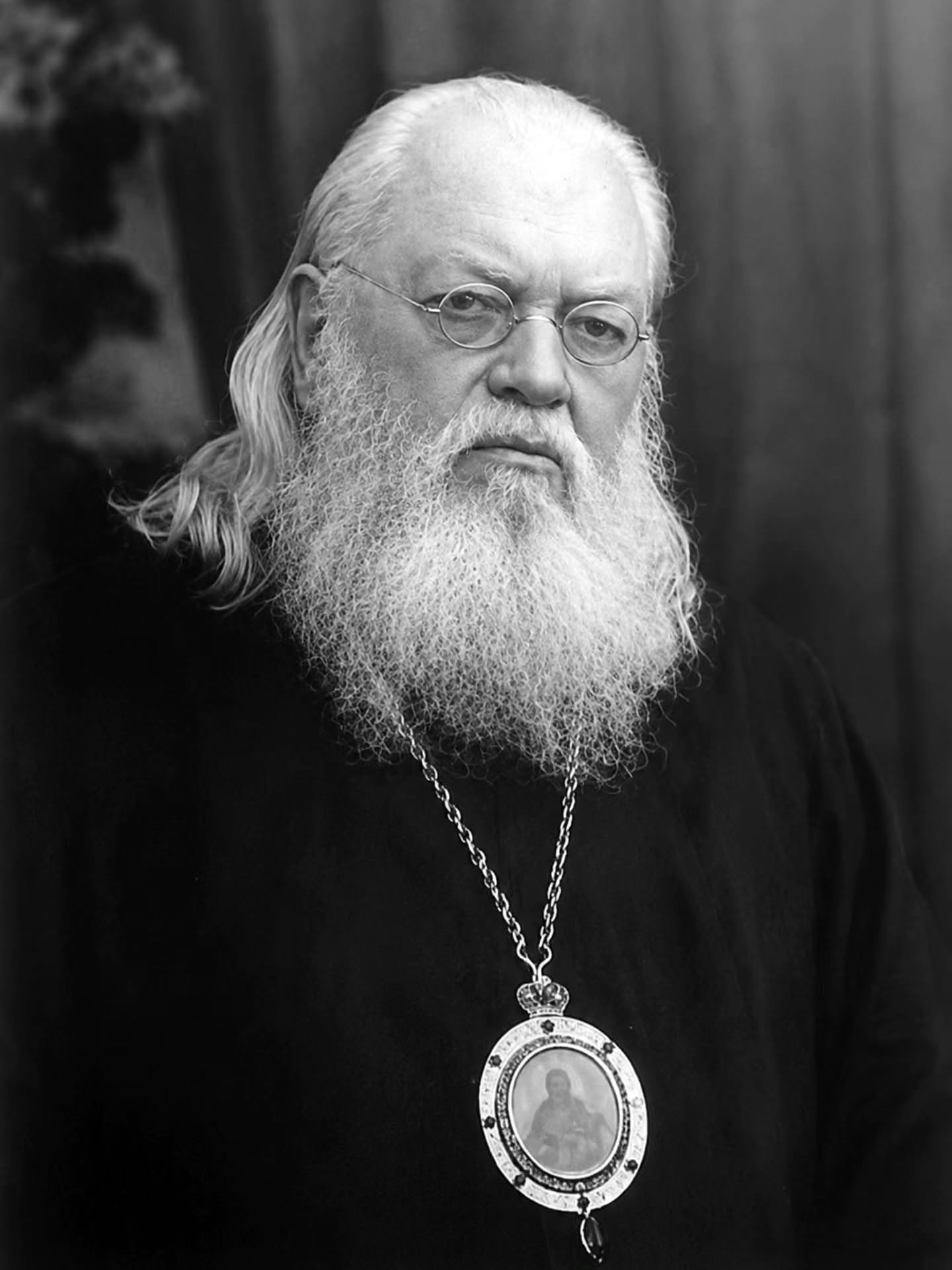
Saint John Kochurov: From American Missionary to Protomartyr of Russia

The post recounts the life of Saint John Kochurov, born July 13, 1871, in the Ryazan region of Russia into a pious priestly family. After graduating from the St. Petersburg Theological Academy in 1895, he was ordained into the priesthood and immediately sent to serve as a missionary in the United States. This assignment launched a dedicated period of early ministry focused on nurturing and establishing the growing Orthodox Christian community in…

The post recounts the life of Saint John Kochurov, born July 13, 1871, in the Ryazan region of Russia into a pious priestly family. After graduating from the St. Petersburg Theological Academy in 1895, he was ordained into the priesthood and immediately sent to serve as a missionary in the United States. This assignment launched a dedicated period of early ministry focused on nurturing and establishing the growing Orthodox Christian community in North America.

During his twelve years in America, Father John became a foundational figure for Orthodoxy across the Midwest. He served as the first permanent priest of St. Vladimir's parish in Chicago, where he oversaw the construction of the landmark Holy Trinity Orthodox Cathedral designed by renowned architect Louis Sullivan. He also organized the first All-American Church Council in 1907 and helped establish several new parishes across Illinois, New York, and Oklahoma.

In the summer of 1907, Father John returned to Russia, where he spent nearly a decade teaching catechism and religious law in Narva, Estonia. In November 1916, he was transferred to Saint Catherine's Cathedral in Tsarskoye Selo, a prominent suburb near St. Petersburg. There, his eloquent, heartfelt sermons and spiritual guidance earned him deep respect and a dedicated following during a period of intense political and social upheaval.

On October 30, 1917, as the Bolshevik Revolution spilled into the suburbs, Bolshevik forces began shelling Tsarskoye Selo. Seeking to calm the terrified population, Father John led the townspeople in a prayer procession for peace. Bolshevik soldiers falsely accused him of praying for an opposing Cossack victory, and on October 31, 1917, they arrested him, dragged him to the outskirts of town, and shot him, making him the first clergy martyr of the Russian Revolution.

In December 1994, the Council of Bishops of the Russian Orthodox Church officially glorified him as Saint John Kochurov, the Protomartyr of the New Martyrs and Confessors of Russia.

  • Born 1871 in Ryazan, ordained 1895, sent as missionary to United States
  • Served 12 years in Midwest, built Holy Trinity Cathedral in Chicago, organized first All-American Church Council 1907
  • Returned to Russia 1907, taught in Narva, then served at Tsarskoye Selo
  • Led prayer procession for peace during Bolshevik shelling Oct 30 1917, arrested and shot Oct 31 1917
  • Glorified as saint and protomartyr by Russian Orthodox Church in 1994
Read more
Holy Resurrection YouTube

Saint Ammon's Mercy and the Circle of Love

Saint Ammon's Mercy and the Circle of Love 5:36

The speaker recounts how Saint Ammon responded when brethren accused a brother of hiding a woman in his cell. Ammon understood the woman was concealed beneath a barrel, sat on it, ordered a search that found nothing, and said, "May God forgive you," shaming the accusers and teaching them not to believe accusations lightly. He then privately took the brother by the hand and said, "Take care of yourself, brother," which moved the brother to…

The speaker recounts how Saint Ammon responded when brethren accused a brother of hiding a woman in his cell. Ammon understood the woman was concealed beneath a barrel, sat on it, ordered a search that found nothing, and said, "May God forgive you," shaming the accusers and teaching them not to believe accusations lightly. He then privately took the brother by the hand and said, "Take care of yourself, brother," which moved the brother to compunction.

The speaker urges the acquisition of love and compassion to avoid the destructive sins of slander, judgment, and contempt, likening the community to a body where each member cares for the wounded rather than cutting it off. Citing Abba Zosimas, he notes that no one abandons their own member, not even because of its foul smell, but does everything to heal it, illustrating that we are obliged to suffer together and devise every means to heal each other.

He quotes the Apostle Paul: "So we, being many, are one body in Christ, and individually members of one another," and "If one member suffers, all the members suffer with it." The speaker describes cenobitic communities as one body: the superior is the head, those who watch and correct are the eyes, those who benefit by words are the mouth, those who listen are the ears, those who work are the hands, and the feet are those sent to carry out obediences.

Each member should serve according to his strength. Finally, he gives an example from the fathers: a circle with God at the center and the world at the circumference; the lines from circumference to center are the paths of men, so that the more the saints move inward toward God, the closer they come to both God and each other, and conversely, moving outward distances them from both.

Key moments

  1. Saint Ammon, when brethren accused a brother of having a woman in his cell, understood the woman was hidden beneath a barrel, sat on the barrel, ordered the cell searched, and when nothing was found said, "May God forgive you," shaming the accusers and teaching them not to easily believe accusations against their neighbor.
  2. After sending everyone out, Ammon took the brother by the hand and said, "Take care of yourself, brother," and the brother immediately felt shame and compunction, touched by the elder's compassion.
  3. The speaker urges acquiring love and compassion for our neighbor to be preserved from the destructive sins of slander, judgment, and contempt, and to help one another as members of one body.
  4. Quoting Abba Zosimas: "In a word, no one abandons it. No one turns away from his own member, not even because of its foul smell, but does everything to heal it," illustrating that we are obliged to suffer together and devise every means to heal each other.
  5. Citing the Apostle: "So we, being many, are one body in Christ, and individually members of one another," and "If one member suffers, all the members suffer with it."
  6. Describing cenobitic communities as one body: the superior is the head, those who watch and correct are the eyes, those who benefit by words are the mouth, those who listen are the ears, those who work are the hands, and the feet are those sent to carry out obediences.
  7. Each member should serve the body according to his strength, teaching, watching, speaking, listening, working, serving, and strive to help his brother by instruction, nourishing with the word of God, consolation in sorrow, or extending a hand for help.
  8. The speaker gives an example from the fathers: a circle with God at the center and the world at the circumference; the lines from circumference to center are the paths of men, so that the more the saints move inward toward God, the closer they come to both God and each other, and conversely, moving outward distances them from both.
Orthodox Life Instagram

100,000 Martyrs of Tbilisi: Choosing Death Over Apostasy in 1226

The post commemorates the 100,000 Holy Martyrs of Tbilisi, who are among the most revered saints in the Georgian Orthodox Church. In 1226, the Khwarazmian Sultan Jalal al-Din captured Tbilisi, the capital of Georgia. The city was plundered, and its Christian population faced a brutal ultimatum: abandon their Orthodox faith or face execution. To test their loyalty, the Sultan ordered the icons of the Theotokos and Jesus Christ to be taken from…

The post commemorates the 100,000 Holy Martyrs of Tbilisi, who are among the most revered saints in the Georgian Orthodox Church. In 1226, the Khwarazmian Sultan Jalal al-Din captured Tbilisi, the capital of Georgia. The city was plundered, and its Christian population faced a brutal ultimatum: abandon their Orthodox faith or face execution.

To test their loyalty, the Sultan ordered the icons of the Theotokos and Jesus Christ to be taken from the Sioni Cathedral and placed on the bridge spanning the Mtkvari River. The captured citizens were lined up and commanded to walk across the bridge, defiling and trampling the holy icons as a public sign of apostasy. Instead of compliance, the event became a profound demonstration of collective faith.

Men, women, children, and the elderly chose death over desecration. They walked onto the bridge not to trample the icons, but to venerate them, openly confessing Jesus Christ as their Lord and Savior. Enraged by their defiance, the Sultan's executioners beheaded the faithful one by one, throwing their bodies into the Mtkvari River.

Historical accounts describe the river turning red with the blood of the thousands who willingly laid down their lives. Today, the Georgian Orthodox Church commemorates these 100,000 martyrs annually on November 13 (October 31 according to the Old Calendar). They stand as a powerful symbol of spiritual endurance, and the Metekhi Bridge in Tbilisi remains a sacred site of pilgrimage where Orthodox Christians honor their memory.

  • The 100,000 Holy Martyrs of Tbilisi are commemorated on November 13 (October 31 Old Calendar).
  • In 1226, Sultan Jalal al-Din captured Tbilisi and ordered icons placed on the Mtkvari bridge.
  • Citizens were forced to trample the icons but chose to venerate them instead.
  • The faithful were beheaded and thrown into the river, which turned red with blood.
  • The Metekhi Bridge remains a pilgrimage site honoring their memory.
Read more
Athonite Audio YouTube

Evergetinos Hypothesis 35: Humility surpasses miracle-working

Evergetinos Hypothesis 35: Humility surpasses miracle-working 24:47

The third volume of the Evergetinos presents Hypothesis 35, which teaches that one who can work miracles should decline such power out of humility, and that a godly way of life is in no way inferior to miracle-working. St. Gregory the Dialogist tells Peter that many people equal the wonderworking fathers, and the proof of a godly life lies in good deeds, not miracles. Gregory argues that converting a sinner through preaching and prayer is a…

The third volume of the Evergetinos presents Hypothesis 35, which teaches that one who can work miracles should decline such power out of humility, and that a godly way of life is in no way inferior to miracle-working. St. Gregory the Dialogist tells Peter that many people equal the wonderworking fathers, and the proof of a godly life lies in good deeds, not miracles.

Gregory argues that converting a sinner through preaching and prayer is a greater miracle than raising the physically dead, because the soul is raised from the death of sin to eternal life, whereas resurrected flesh will die again. St. Anthony the Great teaches that one should not boast about casting out demons or working cures, but rejoice that names are written in heaven, for the Lord rejects those who boast of miracles done in His name while neglecting virtue.

The collection includes a visiting monk who stands on burning coals out of pride and is unburned through demonic cooperation, then falls into fornication and is burnt alive. Heretics challenge Pachomius to walk on water; he refuses, declaring his struggle is to understand God's will and overcome the passions, not to perform prodigies the devil could enable.

An elder who labored seven years for a spiritual gift receives it, but a great elder tells him to pray seven more years for God to take it away, for the gift profits nothing without humility. An anchorite who lived thirty years in the inner desert without revelations is told by an angel that his God-given patience and courage are a greater miracle than any external sign.

Key moments

  1. 0:01 Hypothesis 35 states that one able to work miracles should decline out of humility, that we should not aspire to or ask for spiritual gifts, that those with a godly way of life are in no way inferior to miracle workers, and that there are spiritual gifts superior to miracle working.
  2. 0:31 St. Gregory the Dialogist tells Peter that even now there exist many people equal to the wonderworking fathers, and the proof of a godly manner of life resides in the power of good deeds, not in miracles.
  3. 1:34 Gregory argues that converting a sinner by preaching the word of God and prayer is a greater miracle than raising the physically dead, because in the former the soul is raised from the death of sin to live forever, whereas the resurrected flesh will die again.
  4. 5:10 St. Anthony the Great teaches that one should not boast about casting out demons or working cures, but rejoice that names are written in heaven, for the Lord rejects those who boast of miracles done in His name while neglecting virtue.
  5. 7:16 A visiting monk stands on burning coals out of pride and is unburned through demonic cooperation; he is then deceived by a demon disguised as a woman, falls into fornication, and is eventually thrown into a bathhouse furnace and burnt alive.
  6. 11:00 Heretics challenge Pachomius to walk on water to prove boldness before God; he refuses, declaring his struggle is to understand God's will and overcome the passions, not to perform prodigies that the devil could enable to validate heresy.
  7. 15:10 An elder who labored seven years for a spiritual gift receives it, but a great elder tells him to pray seven more years for God to take it away, for the gift is of no benefit without humility.
  8. 23:26 An anchorite who has lived thirty years in the inner desert on wild berries without revelations is told by an angel that his God-given patience and courage are a greater miracle than any external sign, and he should endure and seek humility.
CHRISTIANITY UNITED Instagram

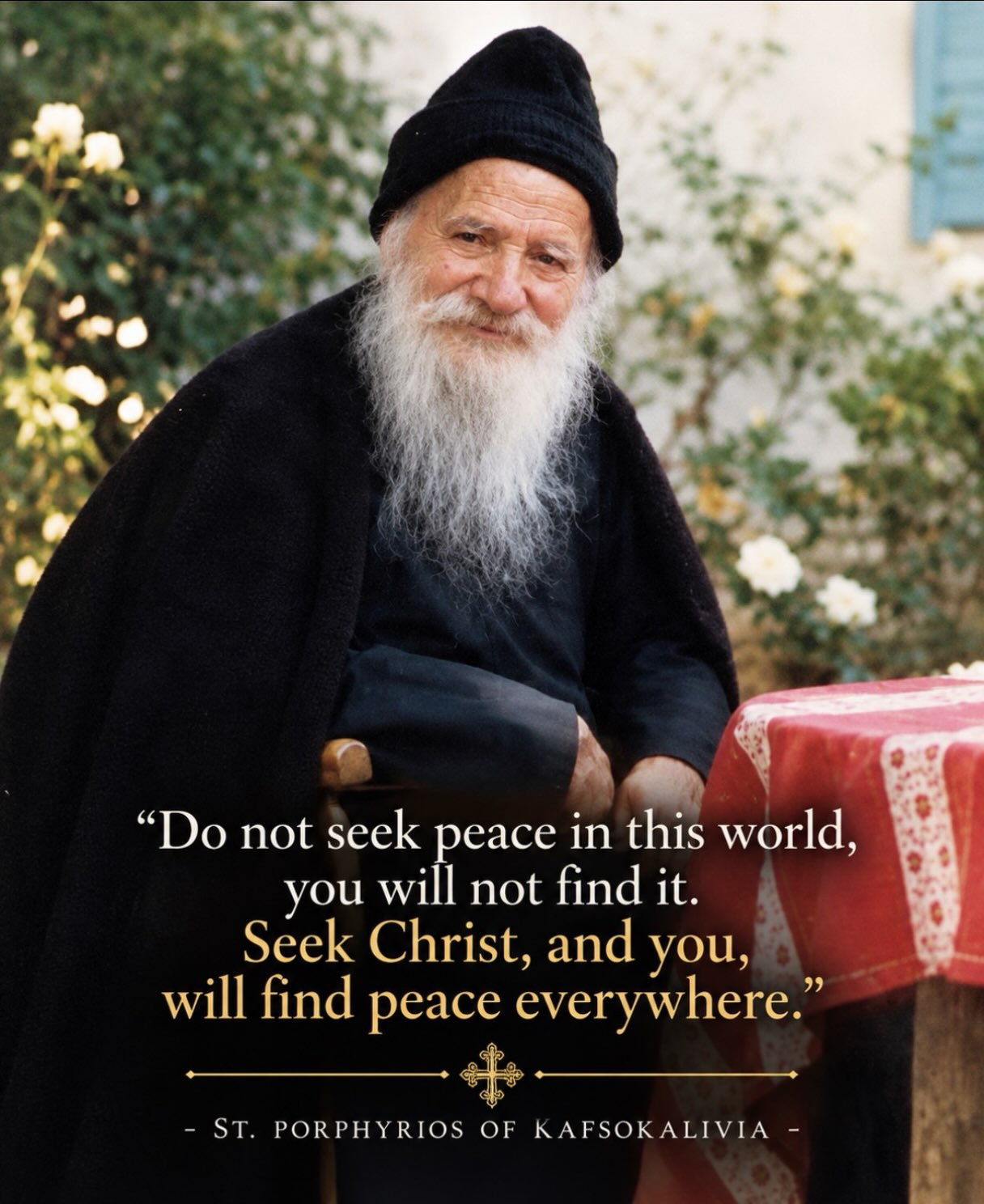
Saint Porphyrios on finding peace in Christ, not circumstances

The post presents a teaching from Saint Porphyrios of Kafsokalivia (1906-1991), canonized in 2013, on the nature of true peace. It opens with the elder's words: "Do not seek peace in this world, you will not find it. Seek Christ, and you will find peace everywhere." The author contrasts worldly peace, dependent on money, solved problems, relationships, or ease, with the peace Christ gives, citing John 14:27: "Peace I leave with you, My peace I…

The post presents a teaching from Saint Porphyrios of Kafsokalivia (1906-1991), canonized in 2013, on the nature of true peace. It opens with the elder's words: "Do not seek peace in this world, you will not find it. Seek Christ, and you will find peace everywhere." The author contrasts worldly peace, dependent on money, solved problems, relationships, or ease, with the peace Christ gives, citing John 14:27: "Peace I leave with you, My peace I give unto you: not as the world giveth, give I unto you."

The text explains that real peace does not rely on external conditions. Even those who appear to have everything can suffer loneliness and emptiness, while those with little can know extraordinary peace when their hearts are rooted in Christ. This does not mean Christians avoid sadness, fear, or suffering; the saints themselves endured persecution, illness, poverty, and rejection.

Yet they trusted God because His presence was greater than their circumstances. Saint Porphyrios emphasized loving Christ rather than being consumed by fear and spiritual anxiety. The post concludes by urging readers not to wait for life to become perfect before turning to God, but to seek Him now in struggles, uncertainty, suffering, and ordinary daily life, because peace is not the absence of problems but the knowledge that one is not walking through life without Christ.

  • Saint Porphyrios teaches that peace is found in Christ, not in worldly circumstances
  • John 14:27 contrasts Christ's peace with the world's peace
  • Saints endured suffering yet maintained peace through trust in God
  • Peace is not the absence of problems but the presence of Christ
  • The elder urged seeking God now, not waiting for perfect conditions
Read more
CHRISTIANITY UNITED Instagram

Monastic life on Mount Athos and the call to silence

The post describes a monk traveling the waters of Mount Athos, a peninsula that has hosted Orthodox monastic communities for over a thousand years. It contrasts the monastic pursuit of God through poverty, obedience, fasting, and unceasing prayer with the world's emphasis on possessions, recognition, and comfort. The author notes that monks withdraw not from lack of love for the world but to devote themselves more fully to God, interceding for…

The post describes a monk traveling the waters of Mount Athos, a peninsula that has hosted Orthodox monastic communities for over a thousand years. It contrasts the monastic pursuit of God through poverty, obedience, fasting, and unceasing prayer with the world's emphasis on possessions, recognition, and comfort. The author notes that monks withdraw not from lack of love for the world but to devote themselves more fully to God, interceding for all people.

The text then applies this witness to daily life: laypeople can create space for silence by setting aside phones and distractions, standing before an icon, and speaking to Christ from the heart. It closes with Psalm 46:10 and a prayer for the protection of Athonite monks and the guidance of all believers toward Christ.

  • Mount Athos has been a center of Orthodox monasticism for more than a millennium
  • Monks embrace spiritual struggle, obedience, fasting, repentance, and prayer
  • Monastic withdrawal serves deeper devotion to God and prayer for the world
  • Laypeople can imitate monastic silence by removing distractions and praying before icons
  • The post ends with Psalm 46:10 and a prayer for the monks and all Christians
Read more

Saint Luke of Crimea on guarding speech and spiritual armor

The post shares a passage from Saint Luke of Crimea urging believers to restrain their tongues from lies, slander, condemnation, quarrels, and backbiting. He writes that such restraint gradually purifies the heart, turning it from a dwelling of demons into a temple of the Holy Spirit. The saint then cites the armor of God from Ephesians 6, the breastplate of righteousness, helmet of salvation, shield of faith, and the sword of the Spirit which…

The post shares a passage from Saint Luke of Crimea urging believers to restrain their tongues from lies, slander, condemnation, quarrels, and backbiting. He writes that such restraint gradually purifies the heart, turning it from a dwelling of demons into a temple of the Holy Spirit. The saint then cites the armor of God from Ephesians 6, the breastplate of righteousness, helmet of salvation, shield of faith, and the sword of the Spirit which is the word of God, and stresses that our struggle is not against flesh and blood but against principalities, powers, and spiritual wickedness in heavenly places.

He asks why Christians would not use this divine armor and answers that it is obtained only through faith and prayer to the Lord Jesus Christ, unceasing practice of the virtues prescribed in His holy law, constant remembrance of this protection, and daily effort to fulfill and keep all His commandments.

  • Abstain from harmful speech: lies, slander, condemnation, quarrels, backbiting
  • Restraint of the tongue purifies the heart, making it a temple of the Holy Spirit
  • Spiritual warfare is against principalities and powers, not flesh and blood
  • The armor of God includes righteousness, salvation, faith, and the word of God
  • This armor is gained through faith, prayer, practice of virtues, and keeping the commandments

St. Sava on the Epiclesis: The Moment Heaven Descends

The text presents a teaching attributed to St. Sava of Serbia concerning the epiclesis in the Divine Liturgy. At the words "We hymn Thee, we bless Thee," the entire congregation, not only the clergy, is obliged to pray inwardly for the descent of the Holy Spirit upon the faithful and the offered Gifts. St. Sava specifies that each person should silently repeat three times the prayer: "Lord, Who didst send down Thy Most Holy Spirit at the third…

The text presents a teaching attributed to St. Sava of Serbia concerning the epiclesis in the Divine Liturgy. At the words "We hymn Thee, we bless Thee," the entire congregation, not only the clergy, is obliged to pray inwardly for the descent of the Holy Spirit upon the faithful and the offered Gifts. St. Sava specifies that each person should silently repeat three times the prayer: "Lord, Who didst send down Thy Most Holy Spirit at the third hour upon Thine Apostles, take Him not from us, O Good One, but renew us who pray to Thee!"

He insists that at this moment no soul should remain cold; all must be set ablaze with love for God. The faithful become like burning candles, censers of sweet incense, and fragrant smoke rising to heaven. This intensity is warranted because the awesome and life-giving Mystery is then accomplished: by the Holy Spirit the bread and wine are changed into the Most Pure Body and Blood of Christ, and God Himself appears upon the altar in the flesh.

  • The whole congregation must pray inwardly during the epiclesis, not only the clergy.
  • Each person should silently say the prayer for the Spirit's descent three times.
  • No soul should remain cold; all must be inflamed with love for God.
  • The faithful become like candles, incense, and smoke rising to heaven.
  • At this hour the Holy Spirit changes the Gifts into Christ's Body and Blood, and God appears on the altar in the flesh.
Anthony’s Cell YouTube

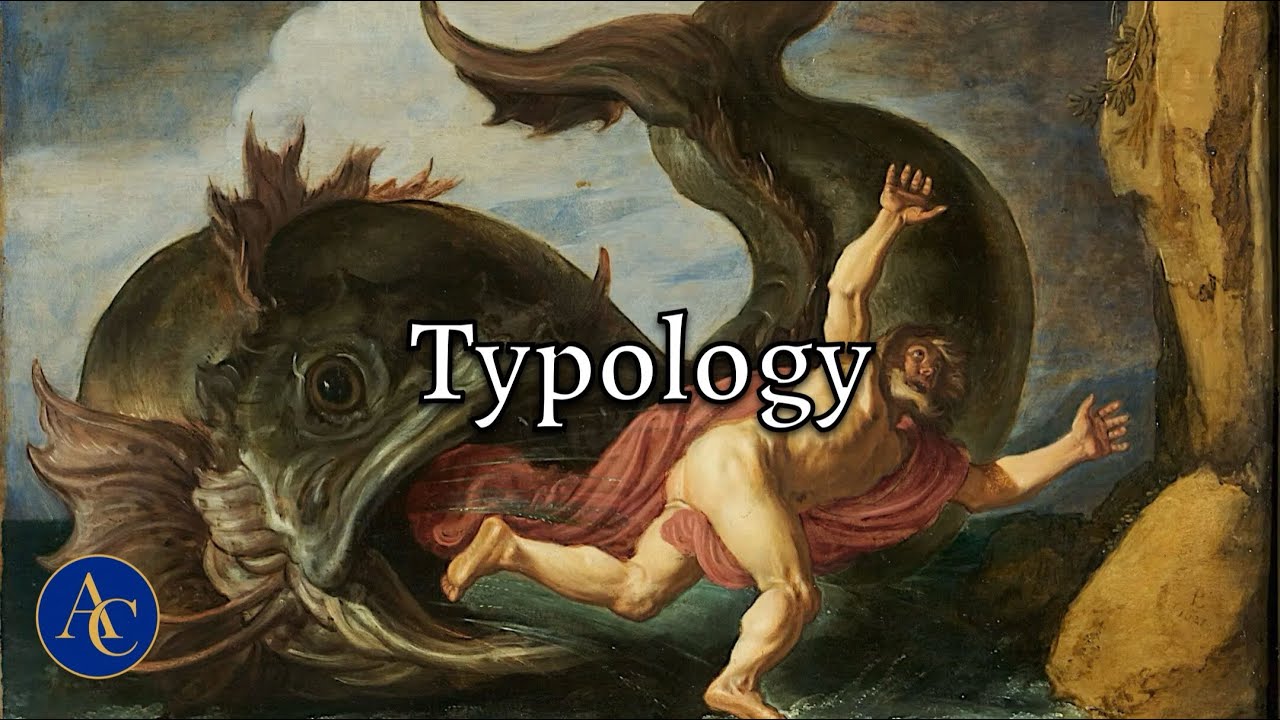
Typology: The Orthodox Lens Reading the Old Testament as Foreshadowing Christ

Typology: The Orthodox Lens Reading the Old Testament as Foreshadowing Christ 5:00

The audio reading presents an article from the Orthodox Study Bible on typology, the interpretation of Old Testament historical events, persons, and institutions as types that prefigure fulfillment through Christ's incarnation and ministry. Each type is linked to its antitype in a promise-fulfillment relationship. The article explains that typology functions as the primary patristic lens, used by Christ, the Apostles, and saints such as Irenaeus…

The audio reading presents an article from the Orthodox Study Bible on typology, the interpretation of Old Testament historical events, persons, and institutions as types that prefigure fulfillment through Christ's incarnation and ministry. Each type is linked to its antitype in a promise-fulfillment relationship. The article explains that typology functions as the primary patristic lens, used by Christ, the Apostles, and saints such as Irenaeus and John Chrysostom.

St. John Chrysostom describes types as patterns that anticipate and sketch out beforehand the dispensations accomplished under the new covenant. St. Irenaeus writes that the treasure hidden in Scripture is Christ, since he was pointed out by means of types and prophecies, and Christ came to fulfill in reality what was a shadow in the Old Testament.

Jesus himself confirmed that all things written in the Law, Prophets, and Psalms concerning him must be fulfilled.

The New Testament explicitly confirms typology: John the Baptist identifies Jesus as the Lamb of God linked to the Passover sacrifice; Abraham's offering of Isaac foreshadows the Father's offering of his only begotten Son. Christ, Paul, and Peter interpret Old Testament events, the bronze serpent in the wilderness, manna, Jonah's three days, Adam, Melchizedek, Noah's flood, as types pointing to Christ and the sacraments, particularly baptism.

Types are described as being in action what prophecy is in words, revealing truths about Christ, his mother, the church, the sacraments, and the kingdom of heaven.

Typology also shapes the Church's hymnography. The hymn for the Nativity of the Theotokos identifies the burning bush and the Babylonian furnace as prefiguring the Virgin receiving the divine fire in her material womb. St. Maximus the Confessor observes that the Old and New Testaments together form a single mystery in Christ.

Key moments

  1. 0:39 Typology interprets Old Testament historical events as types that prefigure fulfillment through Christ's incarnation and ministry, with each type linked to its antitype in a promise-fulfillment relationship.
  2. 1:09 St. John Chrysostom explains that types like patterns anticipated and sketched out beforehand the dispensations accomplished under the new covenant.
  3. 1:39 Types are in action what prophecy is in words, revealing truths about Christ, his mother, the church, the sacraments, and the kingdom of heaven.
  4. 2:10 St. Irenaeus writes that the treasure hidden in the scriptures is Christ, since he was pointed out by means of types and prophecies, and Christ came to fulfill in reality what was a shadow in the Old Testament.
  5. 2:41 John the Baptist's declaration "Behold the lamb of God who takes away the sin of the world" makes the first recorded public declaration linking Jesus with the Passover lamb sacrifice.
  6. 3:13 Abraham's offering of Isaac foreshadows in type the ultimate sacrifice of the only begotten Son of God.
  7. 3:46 Christ, Paul, and Peter interpret Old Testament events, the serpent in the wilderness, manna, Jonah's three days, Adam, Melchizedek, and Noah's flood, as types pointing to Christ and baptism.
  8. 4:18 The hymn for the Nativity of the Theotokos identifies the burning bush and the Babylonian furnace as prefiguring the Virgin receiving the divine fire in her material womb.

American Orthodoxy is not a culture anyone owns

I was recently banned from the ex-Orthodox subreddit after replying to a cradle Orthodox Christian who said converts are stealing her culture. I want to say this plainly, and I mean no offense to cradle Orthodox here, but the conversation needs to happen. American Orthodoxy is not new. The Church has been rooted in America for well over a century, with its own rich and often overlooked history shaped by generations of immigrants, their…

I was recently banned from the ex-Orthodox subreddit after replying to a cradle Orthodox Christian who said converts are stealing her culture.

I want to say this plainly, and I mean no offense to cradle Orthodox here, but the conversation needs to happen. American Orthodoxy is not new. The Church has been rooted in America for well over a century, with its own rich and often overlooked history shaped by generations of immigrants, their descendants, converts, parishes, monasteries, and communities. The current growth in converts does not erase that history.

I am tired of seeing cradle Orthodox take issue with converts who embrace the faith seriously and develop an interest in the cultures historically tied to Orthodoxy. Enjoying Greek food, taking an interest in Slavic traditions, or embracing Eastern European culture is suddenly treated as larping or heritage theft.

I am an ex-Muslim. My cultural background was shaped by Islam, but that does not mean I must preserve every aspect of my former life simply because I was raised in it. Nor should another convert be expected to approach Orthodoxy exactly as I do.

Let's be honest about the cultural argument. My people would say we invented baklava. Many cradle Orthodox from the Middle East would say the same. Does anyone actually own baklava? What about shawarma, plov, or the countless other foods and traditions that have crossed borders, been shared between neighboring peoples, and developed into regional variations over generations?

I have a Russian friend who owns a plov restaurant and is married to an Uzbek woman. I would not accuse him of larping as an Uzbek because he has embraced Uzbek food and culture. Cultures interact, influence one another, and become intertwined.

So why can Europeans, Eastern Europeans, and Middle Eastern communities share and adopt aspects of one another's cultures without constantly questioning authenticity, but when an American convert enjoys baklava, learns Slavic traditions, or takes an interest in Eastern European culture, the accusation of cultural appropriation appears?

The irony is that someone can grow up in America, live an entirely American lifestyle, eat American food, and have little personal experience with the countries they claim to protect, yet the moment someone else expresses genuine interest in those cultures, they are offended.

The argument becomes harder to take seriously when ordinary cultural exchange is framed as oppression or theft. There is a significant difference between genuinely disrespecting someone's heritage and simply appreciating, participating in, or adopting aspects of a culture you were not born into.

I say this as someone who has lived through a major religious and cultural transition. Becoming Orthodox does not mean I must completely abandon my previous cultural background, and I do not expect every other convert to do so either. Some converts will retain almost everything about their former lifestyle. Others will naturally develop new interests, habits, traditions, and cultural connections through their life in the Church.

That is perfectly fine.

Orthodoxy is not an ethnic inheritance that only certain people are entitled to participate in. It is the faith of the Church, and people from all backgrounds are called to embrace it. We should encourage people to take their faith seriously rather than scrutinize how they choose to live it.

You do not have to eat Greek food, drink Turkish coffee, learn Russian, celebrate Serbian traditions, or adopt any particular cultural practice to be Orthodox. But if someone genuinely enjoys those things, why should that bother you?

  • American Orthodoxy has over a century of history shaped by immigrants, descendants, converts, parishes, and monasteries
  • Cradle Orthodox accuse converts of cultural theft for enjoying foods and traditions historically tied to Orthodoxy
  • Cultures naturally share and adopt from one another across European, Eastern European, and Middle Eastern communities without authenticity disputes
  • Orthodoxy is the faith of the Church for all people, not an ethnic inheritance restricted to certain groups
  • Spiritual growth and serious practice of the faith matter more than cultural authenticity standards
57 opinions in the discussion I used to post regularly on that ex-Orthodox sub (from a different account). Whatever the topic, they'll twist it into another reason to trash the faith, including my own old posts there,… Read the discussion
Disgruntled Docs with Prayer Orthodoxy® Instagram

St. Seraphim of Sarov on acquiring the spirit of peace

The post presents a saying of St. Seraphim of Sarov: "Acquire the Spirit of Peace, and thousands around you will be saved." It explains that true peace begins in a heart surrendered to Christ, and that through humility, repentance, and prayer we become vessels of God's grace. The same text is given in Greek. An accompanying image displays Psalm 6:2 in English and Greek: "Have mercy on me, O Lord, for I am weak; heal me, O Lord, for my bones are troubled." The post is attributed to Prayer Orthodoxy.

  • St. Seraphim of Sarov's teaching on acquiring the spirit of peace
  • Peace begins in a heart surrendered to Christ
  • Humility, repentance, and prayer make us vessels of grace
  • Psalm 6:2 cited as a prayer for mercy and healing
  • Text provided in both English and Greek
Read more

Orthodox teaching on Halloween: rejecting darkness for Christ's light

The post presents an Orthodox Christian critique of Halloween, contrasting its emphasis on darkness, death, fear, demons, and witchcraft with the Christian movement from darkness to light. It cites Ephesians 5:8 and John 8:12 to affirm that believers are called to walk as children of light. The historical background notes that the Orthodox Church celebrates the Sunday of All Saints on the first Sunday after Pentecost, while the Western feast of…

The post presents an Orthodox Christian critique of Halloween, contrasting its emphasis on darkness, death, fear, demons, and witchcraft with the Christian movement from darkness to light. It cites Ephesians 5:8 and John 8:12 to affirm that believers are called to walk as children of light. The historical background notes that the Orthodox Church celebrates the Sunday of All Saints on the first Sunday after Pentecost, while the Western feast of All Saints moved to November 1 in the 8th-9th centuries, making October 31 All Hallows' Eve.

Saint John Chrysostom is quoted warning Christians not to imitate pagan customs, and Saint Paul's question "What fellowship has light with darkness?" (2 Corinthians 6:14) is invoked. A quotation from Fr. Seraphim Rose describes Halloween as a diabolic mockery of Christianity in which children dress as witches, devils, and ghosts.

The post also lists numerous practices, including yoga, horoscopes, tarot, and Halloween itself, as forms of witchcraft that lead to hell, and it cites Ephesians 5:11 on exposing unfruitful works of darkness. Saint Basil is cited saying the devil makes the road to hell attractive. The post includes a series of panels: one contrasts Halloween's themes with Christian realities (death to life, darkness to light, fear to faith, evil to good, the grave to the Resurrection, evil spirits to the Holy Spirit, fear of death to victory over death, playing with evil to rejecting evil, children of darkness to children of light, children of Satan to children of God).

Another panel juxtaposes a dismissive attitude toward Halloween decorations with biblical commands to abstain from every form of evil and not give place to the devil (1 Thessalonians 5:22; 3 John 1:11; Ephesians 4:27). A further panel lists a wide range of practices, white magic, shamanism, kabbalah, yoga, astrology, tarot, Ouija boards, and others, as witchcraft requiring repentance.

The overall argument is that Orthodox Christians must reject any glorification of fear, occult imagery, death, or demonic themes, even as entertainment, and instead celebrate Christ's victory over death and the light of eternal life.

  • Halloween's focus on darkness, death, fear, and demonic imagery contradicts the Christian call to walk as children of light (Ephesians 5:8; John 8:12).
  • The Orthodox Church celebrates All Saints on the first Sunday after Pentecost; the Western November 1 date made October 31 All Hallows' Eve.
  • Saint John Chrysostom and Saint Paul warn against adopting pagan customs and having fellowship with darkness (2 Corinthians 6:14).
  • Fr. Seraphim Rose calls Halloween a diabolic mockery of Christianity; the post lists numerous occult practices as witchcraft.
  • Saint Basil is cited on the devil making the road to hell attractive; the post urges celebrating Christ's victory over death instead.
22 opinions in the discussion Yeah, I don't think dressing up my kids as fruit and getting candy is participating in demonic energies. Read the discussion
Fr.TEDTalks Instagram

Peace comes from accepting we are not in control and trusting God

The post presents a core Orthodox spiritual insight: human beings are never truly in control of outcomes, and peace is found by accepting this reality and trusting in God's providence. The author illustrates this with concrete examples, studying for an exam yet failing, caring for health yet becoming sick, loving deeply yet facing rejection, making responsible decisions yet encountering circumstances that overturn life. These examples show that…

The post presents a core Orthodox spiritual insight: human beings are never truly in control of outcomes, and peace is found by accepting this reality and trusting in God's providence. The author illustrates this with concrete examples, studying for an exam yet failing, caring for health yet becoming sick, loving deeply yet facing rejection, making responsible decisions yet encountering circumstances that overturn life.

These examples show that eliminating external stressors does not remove the fundamental condition of human limitation. The spiritual struggle begins precisely at this point. The author notes that the first question people ask is how to prevent bad things from happening, but this is ironically the last question to pursue. The real question shifts to how to live faithfully in a world where suffering and unpredictability are inevitable.

This reframing moves the focus from control to faithfulness, from anxiety over outcomes to trust in God's care amid uncertainty. The teaching aligns with the Orthodox emphasis on surrender to divine providence and the ascetic practice of accepting what cannot be changed while remaining steadfast in prayer and virtue.

Key moments

  1. Even if we eliminate every unnecessary stressor from our lives, we will still have to confront the basic reality that we are not in control of anything.
  2. You can study for an exam and still fail, you can take care of your health and still become sick, you can love someone deeply and still experience rejection, you can make every responsible decision and still encounter circumstances that turn your life upside down.
  3. And this is where our spiritual struggle begins.
  4. The question is not simply how do I prevent bad things from happening to me; this is the first question people ask, ironically it is the last question we should be asking.
  5. The question becomes, how do I live faithfully in a world where bad things can happen?
Read more
Francesco Hasibra Instagram

Why Orthodox Christians Fast on Wednesdays and Fridays

The video explains the historical and spiritual reasons behind the Orthodox practice of fasting on Wednesdays and Fridays. An ancient Christian text, the Didache, established this rule. Wednesday was chosen because it marks the day Judas Iscariot agreed to betray Christ, and Friday because it marks the day of the Crucifixion. On these days, Orthodox Christians traditionally abstain from animal products, oil, and wine. The video also cites Saint…

The video explains the historical and spiritual reasons behind the Orthodox practice of fasting on Wednesdays and Fridays. An ancient Christian text, the Didache, established this rule. Wednesday was chosen because it marks the day Judas Iscariot agreed to betray Christ, and Friday because it marks the day of the Crucifixion.

On these days, Orthodox Christians traditionally abstain from animal products, oil, and wine. The video also cites Saint John Chrysostom, who taught that abstaining from food has little value if a person does not also abstain from sin. The presentation connects the external discipline of fasting with its inner purpose, showing how the weekly cycle of Wednesday and Friday fasts keeps the betrayal and the cross before the faithful throughout the year.

Key moments

  1. An ancient Christian text gave a rule to fast on Wednesdays and Fridays.
  2. Wednesday is observed because Judas agreed to betray Christ on that day.
  3. Friday is observed because Christ was crucified on that day.
  4. Orthodox Christians avoid animal products, oil, and wine on these days.
  5. Saint John Chrysostom taught that fasting from food means little if we do not also fast from sin.
Read more
George Instagram discussion

Orthodox teaching on birthdays: not sinful, but namedays come first

The video addresses the claim that birthday celebrations are satanic. It notes that Scripture records only two birthday feasts, Pharaoh's and Herod's, both ending in execution. Early Christian writers observed this pattern. The Satanic Bible designates one's own birthday as the highest holiday because Satanism centers on self-worship. The Orthodox Church has never condemned birthday celebrations as sinful and has no canon forbidding them. The…

The video addresses the claim that birthday celebrations are satanic. It notes that Scripture records only two birthday feasts, Pharaoh's and Herod's, both ending in execution. Early Christian writers observed this pattern. The Satanic Bible designates one's own birthday as the highest holiday because Satanism centers on self-worship.

The Orthodox Church has never condemned birthday celebrations as sinful and has no canon forbidding them. The danger arises only when the day becomes entirely self-focused. For this reason, Orthodox Christians often prioritize their nameday, the feast of their patron saint linked to baptism, over their birthday.

The Church commemorates saints on the day of their death, their birth into heaven. The speaker advises thanking God for another year of life when marking a birthday.

Key moments

  1. Many people online claim that celebrating birthdays is satanic.
  2. The Bible records only two birthday celebrations: Pharaoh's, where he hanged his baker, and Herod's, where he beheaded Saint John the Baptist.
  3. Early Christian writers noticed that both biblical birthday feasts ended in death.
  4. The Satanic Bible lists a person's own birthday as the highest holiday of the year because Satanism is oriented toward self-worship.
  5. The Orthodox Church has never declared birthday celebrations a sin and has no canon forbidding them.
  6. The spiritual danger lies in making the day solely about oneself rather than about God.
  7. In most Orthodox countries, the nameday, connected to one's patron saint and baptism, is celebrated more than the birthday.
  8. The Church honors saints on the day of their death, the day they were born into heaven, not on their earthly birthday.
27 opinions in the discussion Our priest tells us to celebrate the day we were baptised, not our birthday. And of course our name day too. Read the discussion

Commemoration of Five Apostles of the Seventy on October 31

The post marks the feast day of five Holy Apostles from the Seventy: Stakhys, Apelles, Amplias, Urban, and Narcissus, commemorated on October 31. A video summary accompanies the notice, describing a hymn that proclaims the outpouring of the Holy Spirit upon all flesh, proceeding from the Virgin Spirit. The hymn presents the worthy choir of the Apostles as partaking of this gift, while the grace of the faithful is embraced. The Spirit's powerful…

The post marks the feast day of five Holy Apostles from the Seventy: Stakhys, Apelles, Amplias, Urban, and Narcissus, commemorated on October 31. A video summary accompanies the notice, describing a hymn that proclaims the outpouring of the Holy Spirit upon all flesh, proceeding from the Virgin Spirit. The hymn presents the worthy choir of the Apostles as partaking of this gift, while the grace of the faithful is embraced.

The Spirit's powerful visitation is confirmed through new tongues that hymn and glorify God. The Holy Spirit purifies the noetic hearts of believers, grants steadfastness, and through Him souls are saved. The commemoration links these lesser-known apostles to the Pentecostal gift of the Spirit, whose presence is manifested in purification, confirmation, and salvation.

Key moments

  1. The Holy Spirit is poured out upon all flesh from the Virgin Spirit.
  2. The choir of the Apostles, deemed worthy, partakes of the Spirit, and the grace of the faithful is embraced.
  3. The Spirit's strong visitation is confirmed through new tongues that hymn and glorify God.
  4. The Holy Spirit purifies the intellectual or noetic hearts of believers.
  5. The Spirit grants steadfastness and confirmation to those who receive it.
  6. Through the Holy Spirit, the souls of the faithful are saved.

The Trinity as Biblical Doctrine, Not Catholic Invention

The speaker argues that the doctrine of the Trinity is rooted in Scripture rather than being a later Catholic development. The Bible presents one God existing in three distinct persons: the Father, the Son, and the Holy Spirit. This teaching appears in the Old Testament through several foreshadowings. God speaks in plural language, the angel of the Lord appears as God himself, and the Spirit of God is present from the creation account. These…

The speaker argues that the doctrine of the Trinity is rooted in Scripture rather than being a later Catholic development. The Bible presents one God existing in three distinct persons: the Father, the Son, and the Holy Spirit. This teaching appears in the Old Testament through several foreshadowings.

God speaks in plural language, the angel of the Lord appears as God himself, and the Spirit of God is present from the creation account. These elements indicate a plurality within the one God from the beginning. The speaker maintains that the Trinity represents the apostolic faith, preserved continuously by the church since the start of Christianity.

The argument counters the claim that the Trinity was invented by the Catholic Church, asserting instead that it is the original Christian understanding of God drawn from biblical revelation.

Key moments

  1. The Trinity is not a Catholic invention.
  2. The Bible teaches there is one God and three distinct persons: the Father, the Son, and the Holy Spirit.
  3. The Old Testament foreshadows the Trinity with God speaking in the plural, the angel of the Lord appearing as God, and the Spirit of God present from creation.
  4. The Trinity is the apostolic faith preserved by the church since the beginning of Christianity.
14 opinions in the discussion "For there are three that bear record in heaven, the Father, the Word, and the Holy Ghost: and these three are one." 1 John 5:7 Read the discussion
Mount Athos Legacy Facebook

Elder Ephraim Katounakiotis and the obedience that made him an angel

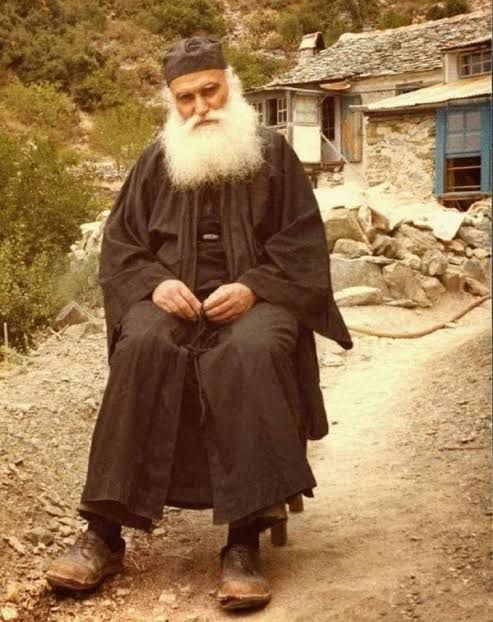
In 1933, at age twenty-one, Ephraim Katounakiotis left the world for Mount Athos and settled in the remote skete of Kausokalyvia under three notoriously harsh elders. They never used his name, insulted him constantly, and sometimes struck him. After years of silent endurance he nearly fled, but a spiritual father at Simonopetra Monastery told him: "If you want to be saved, leave; if you want to become holy, stay. Think and decide." He stayed for…

In 1933, at age twenty-one, Ephraim Katounakiotis left the world for Mount Athos and settled in the remote skete of Kausokalyvia under three notoriously harsh elders. They never used his name, insulted him constantly, and sometimes struck him. After years of silent endurance he nearly fled, but a spiritual father at Simonopetra Monastery told him: "If you want to be saved, leave; if you want to become holy, stay.

Think and decide." He stayed for forty-five years. The last elder, Fr. Nikephoros, was the most severe, especially in his final illness. Fr. Ephraim tended him day and night while continuing to accept abuse. In 1973, as Fr. Nikephoros lay dying, he called his disciple close, his face suddenly radiant, and said: "My child, you are not a man, you are an angel... bless."

He kissed Fr. Ephraim's hand and died in his arms. The account comes from Fr. Dionysios Anthopoulos, recording a narration by Elder Athanasios of Simonopetra to the brotherhood of the Holy Monastery of Panagia Dovra.

  • Ephraim Katounakiotis entered monastic life at twenty-one and submitted to three extremely harsh elders at Kausokalyvia.
  • He endured insults, beatings, and anonymity for decades without complaint.
  • A spiritual father at Simonopetra gave him the choice between salvation through flight and sanctity through staying.
  • He chose to remain and served his last elder, Fr. Nikephoros, through a final, agonizing illness.
  • At the moment of death Fr. Nikephoros recognized his disciple's holiness, calling him an angel and asking for his blessing.
Eastern Orthodoxy Daily He/Who/Is with Timothy Instagram

Gospel Differences Explained as Non-Contradictions

The speaker examines several alleged contradictions between Gospel accounts, including the birth narratives, Joseph's genealogy, the tearing of the temple curtain, the women at the tomb, the death of Judas, and the timing of the crucifixion. He argues that these are differences in selectivity, narrative arrangement, or ancient timekeeping rather than actual contradictions. For example, Matthew names two women at the tomb while Mark names three…

The speaker examines several alleged contradictions between Gospel accounts, including the birth narratives, Joseph's genealogy, the tearing of the temple curtain, the women at the tomb, the death of Judas, and the timing of the crucifixion. He argues that these are differences in selectivity, narrative arrangement, or ancient timekeeping rather than actual contradictions.

For example, Matthew names two women at the tomb while Mark names three and Luke mentions several plus others; this is only a contradiction if Matthew claimed there were only two, which he does not. Matthew's angel rolling the stone away and Luke's women finding it already rolled away can both be true. Judas hanging himself in Matthew and Acts describing what later happened to his body are not mutually exclusive events.

Matthew calls Joseph the son of Jacob while Luke calls him the son of Heli; ancient Christians understood one as legal descent and the other as biological descent through marriage. Mark's third hour (9 AM) and John's sixth hour (noon) for the crucifixion do not prove a contradiction because ancient timekeeping was often approximate and the Gospels were not written with modern timestamp precision.

The speaker contends that biblical inerrancy means Scripture does not affirm falsehood in what it teaches, not that all authors provide identical details with modern chronological precision. The burden is not merely to point out that different accounts differ, but to show that one biblical author affirms something another actually denies.

Key moments

  1. 0:00 The speaker lists several differences between Gospel accounts, Jesus' birth, Joseph's father, the temple curtain tearing, women at the tomb, Judas' death, and crucifixion timing, and questions who decides which errors matter, calling it a first domino in deconstruction.
  2. 0:34 The argument treats difference, selectivity, chronology, and contradiction as the same thing, but they are not; for example, Matthew names two women at the tomb, Mark three, Luke several plus others, which is only a contradiction if Matthew said there were only two, and he does not.
  3. 1:11 Matthew's angel rolling the stone away and Luke's women finding it already rolled away can both be true; Judas hanging himself in Matthew and Acts describing what later happened to his body are not mutually exclusive events.
  4. 1:46 Matthew calls Joseph the son of Jacob, Luke the son of Heli, ancient Christians understood one as legal descent and one as biological descent through marriage; Luke places the veil tearing differently in the narrative sequence, but a difference in arrangement does not necessitate a contradiction in fact.
  5. 1:46 Mark's third hour (9 AM) and John's sixth hour (noon) for the crucifixion do not prove a contradiction; ancient timekeeping was often approximate and the Gospels were not written with modern timestamp precision.
  6. 2:19 The burden is not merely to point out that different accounts differ, but to show that one biblical author affirms something another actually denies; biblical inerrancy means scripture does not affirm falsehood in what it teaches, not that all authors give the exact same details with modern chronological precision.
Read more
Kyle YouTube discussion

The idol of compassion and the Christian way forward

The idol of compassion and the Christian way forward 9:40

The speaker argues that modern society has made an idol of compassion detached from God and truth. This sentimentality produces crime without accountability, borders without order, rights without responsibilities, and inclusion without discernment. A soft totalitarianism enforces this false empathy through HR departments, universities, media, technology, social media, censorship, reputation destruction, and financial exclusion rather than police…

The speaker argues that modern society has made an idol of compassion detached from God and truth. This sentimentality produces crime without accountability, borders without order, rights without responsibilities, and inclusion without discernment. A soft totalitarianism enforces this false empathy through HR departments, universities, media, technology, social media, censorship, reputation destruction, and financial exclusion rather than police and armies, making people police themselves from fear of cancellation.

Unbounded empathy without boundaries, truth, or responsibility is suicidal; Christian agape differs by including truth and correction and is ordered toward life rather than self-destruction. Civilization is losing its will to live, shown by declining birth rates, because it has made an idol of compassion and left God. The reactionary right swings to anti-history, emphasizing security over equality and liberty, viewing history dialectically so that if the "good guys" were bad, the "bad guys" must be good, creating a mirror error to the left's total critique.

Both extremes collapse complexity into moral mythology: the left sees all institutions as inherently corrupt requiring destruction, while the right relabels past hierarchies as good and justifies real historical harms. Christianity offers a nuanced view, partial good plus real failure plus context-dependent judgment, rejecting both extremes with a stable moral vision where security is subordinate to justice, liberty bound to truth and love, equality rooted in the shared divine image.

The only exit is Christ; all other exits are blind alleys. Fixing society requires fixing ourselves by putting Christ first, serving others in a lowarchy where authority serves those below, and becoming holy through repentance, fasting, and the church.

Key moments

  1. 0:00 Modern society lives in an idol of compassion detached from God and truth, becoming sentimentality that creates crime without accountability, borders without order, rights without responsibilities, and inclusion without discernment.
  2. 0:30 This soft totalitarianism uses HR departments, universities, media, technology, social media, censorship, reputation destruction, and financial exclusion rather than police and armies, making people police themselves from fear of cancellation.
  3. 1:01 Unbounded empathy without boundaries, truth, or responsibility is suicidal empathy; Christian agape differs by including truth and correction, not just empathy, and is self-giving ordered toward life rather than self-destruction.
  4. 2:03 Civilization is losing its will to live and embracing civilizational suicide because it has made an idol of compassion and left God, shown by declining birth rates.
  5. 3:06 The reactionary right swings to anti-history, emphasizing security over equality and liberty, viewing history dialectically so that if the "good guys" were bad, the "bad guys" must be good, creating a total reversal mirroring the left's total critique.
  6. 4:08 Both extremes collapse complexity into moral mythology: the left sees all institutions as inherently corrupt requiring destruction (anarcho-tyranny), while the right relabels past hierarchies as good and justifies real historical harms.
  7. 5:11 Christianity offers a nuanced view, partial good plus real failure plus context-dependent judgment, rejecting both extremes with a stable moral vision where security is subordinate to justice, liberty bound to truth and love, equality rooted in shared divine image.
  8. 6:13 The only exit is Christ; all other exits (sexual rapture, political utopia, economic dependence) are blind alleys. Fixing society requires fixing ourselves by putting Christ first, serving others in a lowarchy where authority serves those below, and becoming holy through repentance, fasting, and the church.
5 opinions in the discussion Don't forget the idol of individualism. The accountability problems that come from it are also largely behind even the idol of compassion. Read the discussion