WeOrthodox
EN UA

Orthodox posts, videos and discussions

We follow Orthodox channels, communities and blogs across the web, summarise every post and video, and highlight the conversations with real substance.

Answering objections to saintly intercession

The video responds to the claim that Scripture nowhere commands prayer to saints or the Virgin Mary. The speaker points out that the biblical canon itself and the principle of sola scriptura are also absent from Scripture, exposing an inconsistency in the objection. He notes that prayers for the dead appear in 2 Maccabees, a book removed from the Protestant canon, and cites Christ's promise that whoever believes in him will never die. From this…

The video responds to the claim that Scripture nowhere commands prayer to saints or the Virgin Mary. The speaker points out that the biblical canon itself and the principle of sola scriptura are also absent from Scripture, exposing an inconsistency in the objection. He notes that prayers for the dead appear in 2 Maccabees, a book removed from the Protestant canon, and cites Christ's promise that whoever believes in him will never die.

From this he argues that the faithful in heaven remain alive in Christ and therefore continue to pray, so death does not silence their intercession.

Key moments

  1. The speaker asks where in the Bible it says to pray to saints or to Mary, stating they never saw such commands.
  2. The speaker calls it hypocrisy that a woman believes things the Bible does not explicitly say.
  3. The speaker asks where the canon of Scripture is found in the Bible and where the idea of sola scriptura is found in the Bible.
  4. The speaker says prayers for the dead appear in the Bible but Protestants removed that book.
  5. The speaker cites Christ declaring that those who believe in him will never truly die.
  6. The speaker argues that if believers never truly die, entering heaven would not silence their prayers.
20 opinions in the discussion She's absolutely right, there is literally no example of anyone praying to anyone other than God in the Bible. Read the discussion

Venerable Lazarus of Mount Galesius commemorated November 7

The post marks the commemoration of the Venerable Lazarus, Wonderworker of Mount Galesius near Ephesus, on 7 November. The accompanying video presents a chant based on Psalm 136, which gives thanks to the Lord for His goodness and enduring mercy. The chant calls to give thanks to the God of gods, praises Him who established the earth upon the waters, and praises Him who made the great lights alone, each verse followed by the refrain 'for His mercy endures forever, alleluia.'

Key moments

  1. Give thanks to the Lord for He is good, alleluia, for His mercy endures forever, alleluia.
  2. Give thanks to the God of gods, alleluia, for His mercy endures forever, alleluia.
  3. To Him who established the earth upon the waters, alleluia, for His mercy endures forever, alleluia.
  4. To Him who made the great lights alone, alleluia, for His mercy endures forever, alleluia.

The priest who feeds others must also be fed: Metropolitan Iakovos and Fr. Panteleimon

In the first episode of "Conversations," Metropolitan Iakovos of Mexico speaks with his spiritual father, Fr. Panteleimon, about the priesthood. They discuss the priest's position standing between two worlds, serving at the altar while knowing his own frailty. The metropolitan explains that a priest needs another priest to confide in, because there are matters only a priest can share with another priest. The central question arises: who feeds…

In the first episode of "Conversations," Metropolitan Iakovos of Mexico speaks with his spiritual father, Fr. Panteleimon, about the priesthood. They discuss the priest's position standing between two worlds, serving at the altar while knowing his own frailty. The metropolitan explains that a priest needs another priest to confide in, because there are matters only a priest can share with another priest.

The central question arises: who feeds the priest? The answer is the spiritual father. Their conversation reveals the gratitude of a son toward the one who taught him to love Christ, to trust in God's will, and to live the faith with an open heart. Metropolitan Iakovos notes that Christ gave fathers in the faith so that no one walks alone; the one who guides was guided, the one who blesses was blessed.

This is how the Church endures: through a love handed down from generation to generation. The episode gives thanks for spiritual fathers who, with patience and love, plant the faith in the hearts of their children, and for the metropolitan's reminder that all people, whatever their path, remain children before God.

Key moments

  1. The question is then who feeds the priest?
  2. The pastoral is he who feed. You have to be a hand that feeds, but you are also a mouth, but the priest needs another priest.
George Instagram discussion

Why Orthodox Christians Celebrate Christmas on Different Dates

The video explains the historical reason for the 13-day calendar gap between Orthodox churches. At Christ's birth the Roman Empire used the Julian calendar introduced by Julius Caesar, and the apostles and early fathers followed it. That calendar runs about 11 minutes long each year, so over centuries the error accumulated into days. In 1582 the Pope in Rome removed 10 days to create the Gregorian calendar now used worldwide. Because the…

The video explains the historical reason for the 13-day calendar gap between Orthodox churches. At Christ's birth the Roman Empire used the Julian calendar introduced by Julius Caesar, and the apostles and early fathers followed it. That calendar runs about 11 minutes long each year, so over centuries the error accumulated into days.

In 1582 the Pope in Rome removed 10 days to create the Gregorian calendar now used worldwide. Because the Orthodox Church had already separated from Rome, it kept the old calendar. For more than 300 years all Orthodox Christians remained on the Julian calendar until about a century ago when some churches, including Greece and Constantinople, adopted a revised calendar.

Others, including Russia, Serbia, Jerusalem, and Mount Athos, stayed with the original. Today the difference between them is 13 days. Both sides celebrate Christmas on 25 December; they simply count the days differently. The churches remain one church and almost all celebrate Easter on the same day because, as the video states, it is not the calendar that saves us but Christ.

The video traces the calendar from its Roman origin through the apostolic era, the gradual drift caused by the 11-minute annual excess, the papal correction of 1582, the Orthodox refusal to accept that correction, the unity of the Orthodox on the old calendar for over three centuries, the twentieth-century split when some local churches revised the calendar while others did not, and the present reality of a 13-day separation in fixed feasts alongside near-universal agreement on the date of Pascha.

Key moments

  1. The calendar at Jesus' birth was the Julian calendar instituted by Julius Caesar, used by the apostles, the first Christians, and all the church fathers.
  2. The Julian calendar was about 11 minutes too long each year, and over hundreds of years those minutes turned into days of drift.
  3. In 1582 the Pope in Rome cut 10 days out of the calendar to fix the drift, producing the Gregorian calendar that the whole world uses today.
  4. Because the Catholics and the Orthodox had already split, the Orthodox said no to the change and kept the old calendar.
  5. For more than 300 years all Orthodox Christians stayed on the old calendar until about 100 years ago when some churches like Greece and Constantinople decided to fix it too.
  6. Others like Russia, Serbia, Jerusalem, and Mount Athos decided to stay with the old one, and today the difference between them is 13 days.
  7. Both sides celebrate Christmas on the 25th of December; they just count the days a bit differently.
  8. The churches are still one church and almost all celebrate Easter on the same day because in the end it is not the calendar that saves us, it is Christ.
10 opinions in the discussion The introduction of the Revised Julian calendar in 1924 created an unprecedented liturgical paradox: the complete disappearance of the Apostles' Fast. Before the change, all Orthodox… Read the discussion
Orthodox Sound YouTube

How Orthodox Saints Address Anxiety and Intrusive Thoughts

How Orthodox Saints Address Anxiety and Intrusive Thoughts 16:00

The post presents an Orthodox Christian approach to anxiety, drawing on Scripture and the writings of the Church Fathers. It frames the Church as a spiritual hospital where Christ is the physician of souls and bodies, and emphasizes that the first task of pastoral care is to listen and validate suffering rather than offer quick fixes. Anxiety is understood as a symptom of a broken communion with God, yet the tradition distinguishes somatic…

The post presents an Orthodox Christian approach to anxiety, drawing on Scripture and the writings of the Church Fathers. It frames the Church as a spiritual hospital where Christ is the physician of souls and bodies, and emphasizes that the first task of pastoral care is to listen and validate suffering rather than offer quick fixes.

Anxiety is understood as a symptom of a broken communion with God, yet the tradition distinguishes somatic afflictions requiring medical treatment from spiritual passions such as excessive sorrow and despondency. St. Basil the Great's establishment of the Basiliad hospital complex in the fourth century illustrates that seeking physicians and medication is compatible with faith.

Christ's command "do not be anxious" (Matthew 6:25) calls for single-minded trust in divine providence, and the fear of God as reverential love casts out lower worldly fears. The Fathers teach nepsis, or watchfulness, over intrusive thoughts (logismoi) through a five-stage progression from assault to passion, allowing anxiety to be caught at its inception.

Practical remedies include St. Porphyrios's indirect method of ignoring intrusive thoughts and gently turning attention toward Christ, St. Paisios's scissors method of decisively cutting off evil thoughts the instant they arise, St. Silouan's endurance of fifteen years of inner darkness with the word "keep your mind in hell and despair not," and St. Tikhon of Zadonsk's teaching that saying "Lord, I cannot pray" is itself a true prayer.

The reflection cites a wide range of sources, including Holy Scripture (Matthew 6:25-34, Luke 12:22-31, Philippians 4:6-7, 1 Peter 5:7, 1 John 4:18, Psalm 26:1, Proverbs 29:25), the Holy Fathers (St. Basil the Great, St. Gregory the Theologian, St. Anthony the Great, Evagrius Ponticus, St. Maximus the Confessor, St. Philotheos of Sinai, St. Mark the Ascetic, St. Peter of Damascus, St. John Climacus, St. John Chrysostom), and later Orthodox saints and elders (St. Porphyrios of Kavsokalyvia, St. Paisios of Mount Athos, St. Silouan the Athonite, St. Tikhon of Zadonsk, St. Hesychios the Priest, St. Seraphim of Sarov).

Key moments

  1. 0:32 The church views herself as a spiritual hospital where Christ is worshipped as the supreme physician of souls and bodies, not as an institution of moral judgment.
  2. 1:34 When a soul comes burdened by anxiety, the first and most vital task of spiritual care is simply to listen, creating a sanctuary of safety where deep wounds can be unmasked without shame.
  3. 2:37 Anxiety and depression are symptoms of a deeper break in communion with God, yet the church approaches mental health through a holistic framework distinguishing somatic, psychological, and spiritual origins.
  4. 3:42 St. Basil the Great established the Basiliad hospital complex in the 4th century, teaching that God created the medical arts and that seeking physicians and medication is compatible with faith.
  5. 5:16 Christ's command "me merimnate" (do not be anxious) is an imperative addressing a divided, fragmented state of mind preoccupied with hypothetical future troubles that drag the soul from the present moment where God's grace resides.
  6. 8:22 The fathers teach nepsis or sober watchfulness over logismoi (intrusive thoughts), mapping a five-stage progression from assault to passion that allows catching anxiety at its inception.
  7. 10:56 St. Porphyrios teaches the indirect method: ignore intrusive thoughts entirely and gently pivot attention toward Christ, while St. Paisios teaches the scissors method of decisively cutting off evil thoughts the instant they touch the mind.
  8. 13:03 St. Silouan endured 15 years of inner darkness and received the word "keep your mind in hell and despair not," teaching honest facing of reality while refusing hopelessness, and St. Tikhon of Zadonsk taught that saying "Lord, I cannot pray" is itself a true prayer.
Prayer Orthodoxy ® with The National Herald Instagram

Israel Restores Access to Historic St. George Monastery Near Jericho

Israel has restored access to the historic Greek Orthodox Monastery of Saint George of Choziba near Jericho following nearly three years of restrictions. The restrictions were imposed after the Hamas-led attacks on Israel on October 7, 2023, when security barriers and electronic gates complicated travel along the approach road to the monastery's lookout. The monastery was founded in the fifth century by Christian hermits seeking solitude in the…

Israel has restored access to the historic Greek Orthodox Monastery of Saint George of Choziba near Jericho following nearly three years of restrictions. The restrictions were imposed after the Hamas-led attacks on Israel on October 7, 2023, when security barriers and electronic gates complicated travel along the approach road to the monastery's lookout.

The monastery was founded in the fifth century by Christian hermits seeking solitude in the Judean Desert. It later became associated with Saint George of Choziba, a revered Orthodox monk of the sixth and seventh centuries. Today, the monastery remains an active center of Greek Orthodox monastic life and an important destination for Christian pilgrims visiting the Holy Land.

The reopening concerns access to the lookout and the approach road rather than the monastery itself, which had remained active throughout the period. Although security procedures remain in place, the restored route makes one of the region's most distinctive Greek Orthodox landmarks more accessible to visitors.

  • Israel restored access to the Greek Orthodox Monastery of Saint George of Choziba near Jericho after nearly three years.
  • Restrictions began after the October 7, 2023 Hamas-led attacks, with security barriers and electronic gates blocking the approach road to the lookout.
  • The monastery was founded in the fifth century by hermits in the Judean Desert and later associated with Saint George of Choziba (sixth-seventh centuries).
  • It remains an active Greek Orthodox monastic center and a major pilgrimage site in the Holy Land.
  • The reopening applies to the lookout and approach road; the monastery itself stayed active, and security procedures continue.
Read more

Christ the Good Shepherd: Do You Recognize His Voice?

The post quotes John 10:14-15, where Jesus says he is the good shepherd who knows his sheep and his sheep know him, just as the Father knows him and he knows the Father, and that he lays down his life for the sheep. It then asks the reader directly: "Were you the lost sheep?" The words present the relationship between Christ and his followers as one of mutual knowledge rooted in the divine knowledge between the Father and the Son, and they…

The post quotes John 10:14-15, where Jesus says he is the good shepherd who knows his sheep and his sheep know him, just as the Father knows him and he knows the Father, and that he lays down his life for the sheep. It then asks the reader directly: "Were you the lost sheep?" The words present the relationship between Christ and his followers as one of mutual knowledge rooted in the divine knowledge between the Father and the Son, and they present his care as sacrificial.

The question turns the proclamation toward personal reflection, inviting the reader to consider whether they have been the sheep that strayed and was found.

  • Jesus identifies himself as the good shepherd who knows his sheep and is known by them
  • This mutual knowledge mirrors the knowledge between the Father and the Son
  • Jesus states he lays down his life for the sheep
  • The post asks the reader personally: "Were you the lost sheep?"
  • No additional teaching, commentary, or discussion is provided
Read more
Kyle YouTube

Healing the Soul Through Union with Christ

Healing the Soul Through Union with Christ 17:01

The speaker explains that man is fundamentally broken by separation from God yet retains an unquenchable yearning for communion with him. Christianity is not a moral system or ideology but the healing of the whole person through Jesus Christ, a process called theosis that purifies the heart through repentance, prayer, fasting, and the sacramental life of the Church. Every human system attempts to solve man's problem, but only Christ addresses…

The speaker explains that man is fundamentally broken by separation from God yet retains an unquenchable yearning for communion with him. Christianity is not a moral system or ideology but the healing of the whole person through Jesus Christ, a process called theosis that purifies the heart through repentance, prayer, fasting, and the sacramental life of the Church.

Every human system attempts to solve man's problem, but only Christ addresses the root: separation from God. The Orthodox life centers entirely on union with Christ out of love, not fear of punishment or desire for reward, and this transformation happens within the Church as a hospital for the soul. Baptism begins the lifelong struggle against the passions, and catechism trains believers for this spiritual warfare rather than merely preparing for a ceremony.

The greatest danger is postponement, delaying prayer, fasting, and repentance until comfort and distraction make life without Christ feel normal. Christian maturity moves from fear and servile motivation to agape love, where prayer, worship, and fasting become desires rather than obligations. Ultimately, salvation is not a legal transaction but the restoration of communion with God, and the time to begin this healing is now.

Key moments

  1. 0:00 Man is sick because sin has separated us from God, yet we still yearn for him because we were created for communion with him.
  2. 0:32 Christianity is the healing and transformation of the whole human person through Jesus Christ, theosis, not merely becoming moral or acquiring religious knowledge.
  3. 1:34 Every human ideology admits something is wrong with man and offers a solution, but Christianity claims man's deepest problem is separation from God, not economic, political, or psychological issues.
  4. 2:36 The Christian life is about healing the heart distorted by sin and passions; practices like prayer, fasting, and the sacraments are not arbitrary but for the restoration of communion with God.
  5. 3:38 Everything in Orthodoxy leads to Christ; the goal is union with Christ out of love, not like a slave avoiding punishment or a servant seeking reward.
  6. 5:11 Man hungers for happiness that does not disappear, meaning that cannot be destroyed, and love that does not end, but attempts to satisfy this eternal hunger with temporary things, making idols of them.
  7. 9:52 Baptism is the entrance into the arena of spiritual struggle, not the end; catechism is training for the lifelong Christian fight against passions and distraction.
  8. 11:24 The greatest danger is postponement, saying "I will pray tomorrow" until life without prayer, fasting, worship, and Christ becomes normal; repentance must become a continual way of life.
Read more

Saint James, Brother of the Lord: First Bishop of Jerusalem and Martyr

The post recounts the life of Saint James, known as the Brother of the Lord. According to Orthodox tradition, he was the son of Joseph, the betrothed of the Theotokos. When Joseph wished to give Jesus a share of his inheritance, his other sons objected, but James offered his own portion. From the beginning James was devoted to Christ and faithfully followed His teachings. He lived a life of extraordinary holiness, spending long nights in prayer…

The post recounts the life of Saint James, known as the Brother of the Lord. According to Orthodox tradition, he was the son of Joseph, the betrothed of the Theotokos. When Joseph wished to give Jesus a share of his inheritance, his other sons objected, but James offered his own portion.

From the beginning James was devoted to Christ and faithfully followed His teachings. He lived a life of extraordinary holiness, spending long nights in prayer and fasting, and because of his righteousness he became known as James the Just. After the Resurrection, Jesus Christ appeared to him personally, as the Apostle Paul records in 1 Corinthians 15:7. Saint James became the first Bishop of Jerusalem, guiding the Church for thirty years and bringing many Jews and Greeks to faith in Christ.

According to Holy Tradition, he also composed the ancient Divine Liturgy of Saint James. His holiness was respected even by many who did not believe in Christ. During a great feast in Jerusalem, certain religious leaders demanded that James publicly speak against Jesus before the gathered crowds.

Instead, standing upon the Temple, he boldly proclaimed that Jesus Christ was the Son of God, the risen Messiah, reigning in eternal glory. Enraged, his persecutors threw him from the Temple roof. Although terribly injured, he was still alive. One of his attackers then struck him upon the head, ending his earthly life.

Saint James received the crown of martyrdom at the age of sixty-three. The author notes that his life reminds us that true love for Christ is demonstrated through faithfulness, humility, sacrifice, and unwavering courage. He once offered to share his earthly inheritance with Jesus; in the end, he surrendered his very life for Him. The post concludes with a prayer to the holy apostle.

  • James was the son of Joseph, betrothed of the Theotokos, and offered his inheritance share to Jesus.
  • He lived a life of prayer and fasting, earning the title James the Just.
  • Christ appeared to him after the Resurrection (1 Corinthians 15:7).
  • He served as first Bishop of Jerusalem for thirty years and composed the Divine Liturgy of Saint James.
  • He was martyred by being thrown from the Temple roof and struck on the head after proclaiming Jesus as the Son of God.
Read more

Saint Aretas of Najran, 95, martyred with 4,000 Christians in 523

Saint Aretas was the Christian governor of Najran, a city in southern Arabia. In 523, at the age of ninety-five, he was martyred along with more than four thousand Christians, including priests, monks, nuns, women, and children. The region was ruled by King Dhu Nuwas, who persecuted Christians and sought to eliminate Christianity. He surrounded Najran with his army and demanded the inhabitants renounce Christ. The Christians refused, closed the…

Saint Aretas was the Christian governor of Najran, a city in southern Arabia. In 523, at the age of ninety-five, he was martyred along with more than four thousand Christians, including priests, monks, nuns, women, and children. The region was ruled by King Dhu Nuwas, who persecuted Christians and sought to eliminate Christianity.

He surrounded Najran with his army and demanded the inhabitants renounce Christ. The Christians refused, closed the gates, and resisted his attacks, choosing to remain faithful to their Savior. Unable to conquer the city by force, Dhu Nuwas promised that no one would be harmed if the gates were opened, claiming he only wished to collect taxes.

Trusting his word, the Christians opened the gates. The promise was broken. The elderly Saint Aretas, together with the clergy and leading citizens, was summoned and executed. A terrible massacre followed throughout Najran, and more than four thousand faithful Christians received the crown of martyrdom rather than abandon the Lord Jesus Christ.

When news of the persecution reached Emperor Justin, he appealed to the Ethiopian king Elesbaan, who defeated Dhu Nuwas and ended his rule. The surviving Christians later rebuilt their Church of the Holy Trinity and erected a church honoring Saint Aretas and the martyrs of Najran. The post includes a reflection that faithfulness to Christ is greater than fear, suffering, and even death, and notes that at ninety-five Saint Aretas had lived a long earthly life, yet his greatest testimony came through his final sacrifice.

It ends with the invocation: Holy Martyr Aretas and all the Martyrs of Najran, pray to God for us.

  • Saint Aretas, governor of Najran, martyred at age 95 in 523
  • King Dhu Nuwas besieged Najran and demanded renunciation of Christ
  • Christians resisted, then were tricked into opening gates; over 4,000 killed
  • Emperor Justin appealed to Ethiopian king Elesbaan, who defeated Dhu Nuwas
  • Survivors rebuilt the Church of the Holy Trinity and a church honoring the martyrs
Timothy Instagram discussion

Knowledge vs. Transformation in Orthodox Spiritual Life

The video addresses a common mistake among those entering Holy Orthodoxy: confusing the accumulation of theological knowledge with genuine spiritual growth. It acknowledges the value of studying the Church Fathers, the lives of the saints, the ecumenical councils, and the sacraments. However, it warns that one can begin measuring progress by how much theology is known, how many arguments can be answered, or how quickly flawed thinking is…

The video addresses a common mistake among those entering Holy Orthodoxy: confusing the accumulation of theological knowledge with genuine spiritual growth. It acknowledges the value of studying the Church Fathers, the lives of the saints, the ecumenical councils, and the sacraments. However, it warns that one can begin measuring progress by how much theology is known, how many arguments can be answered, or how quickly flawed thinking is identified in others.

The speaker proposes that real growth is defined by simpler, more personal questions: whether one is becoming more repentant, praying more, growing in humility, and showing love for Christ through treatment of other people, who bear His image. While studying the faith and defending its truth have their place, the ultimate aim is for Orthodoxy to change the person over time, not merely to expand the things they know.

Key moments

  1. One of the easiest mistakes when coming into Holy Orthodoxy is confusing the acquisition of knowledge with actually becoming more orthodox.
  2. It is easy to stay focused on learning a ton of new information, and there is a lot of value in that.
  3. You start reading the fathers, the lives of the saints, learning the councils, understanding the sacraments, and seeing all the things you feel like you have been missing out on.
  4. If we are not careful, we can start measuring our growth by how much theology we know, how many arguments we can respond to, or how quickly we can point out someone's flawed thinking.
  5. In reality, our growth should be defined by much more simple questions: am I becoming more repentant? Am I praying more? Am I more humble than before I discovered Holy Orthodoxy?
  6. Is my love for Christ being made manifest in how I treat his image bearers?
  7. There is value in studying the faith and wanting to defend its truth.
  8. But over time, I want Orthodoxy to actually change me and not just the things I know.
9 opinions in the discussion The Church's main purpose is to be a hospital for the soul. Real healing goes through purification, illumination, and deification. If it isn't healing you, something's wrong. Read the discussion

St. Paisios on Injustice and a Prayer for Faith and Sanctification

A saying of St. Paisios the Athonite states that those who wrong others ultimately wrong themselves for eternity, while those who accept injustice with joy will receive an eternal reward and great spiritual benefit. The accompanying video presents a prayer that asks the Lord to confirm the faith of those praying. The prayer addresses God as the one who made them worthy to participate in the holy mystery. It continues with a request to be…

A saying of St. Paisios the Athonite states that those who wrong others ultimately wrong themselves for eternity, while those who accept injustice with joy will receive an eternal reward and great spiritual benefit. The accompanying video presents a prayer that asks the Lord to confirm the faith of those praying. The prayer addresses God as the one who made them worthy to participate in the holy mystery.

It continues with a request to be established in God's sanctification. The final phrase speaks of meditating on the righteous or just things throughout the entire day.

Key moments

  1. The prayer opens by asking the Lord to confirm or establish the dogma or faith of the petitioners.
  2. It addresses God as the one who deemed them worthy to partake in the holy mystery.
  3. The petition asks to be established or strengthened in God's sanctification.
  4. The text concludes with a statement about meditating on the righteous or just things throughout the entire day.
Read more
Anthony’s Cell YouTube

Jesus Christ: Prophet, Priest, and King, Old Testament Fulfillment

Jesus Christ: Prophet, Priest, and King, Old Testament Fulfillment 5:17

The audio reading presents an article from the Orthodox Study Bible on Christ's threefold office. It explains how Old Testament prophets, priests, and kings prefigure the Messiah. Deuteronomy 18 promises a prophet like Moses; the New Testament identifies Jesus as this prophet, recognized by crowds after the feeding of the five thousand and cited by Peter in Acts. Psalm 109 (110) foretells a priest forever after the order of Melchizedek; Hebrews…

The audio reading presents an article from the Orthodox Study Bible on Christ's threefold office. It explains how Old Testament prophets, priests, and kings prefigure the Messiah. Deuteronomy 18 promises a prophet like Moses; the New Testament identifies Jesus as this prophet, recognized by crowds after the feeding of the five thousand and cited by Peter in Acts.

Psalm 109 (110) foretells a priest forever after the order of Melchizedek; Hebrews applies this to Jesus as eternal high priest who offers himself as both offerer and sacrifice, securing remission of sins, resurrection, reopening of paradise, sending of the Comforter, and eternal life. Jeremiah promises a righteous Branch from David; Isaiah and Zechariah foretell an eternal kingdom and a priest upon his throne.

Jesus enters Jerusalem humbly on a donkey, accepts the cross as King of the Jews, and will return as conquering King of kings. Psalm 2 and Psalm 21 affirm the Father's establishment of the Son over Zion and rule over nations; Isaiah includes Gentiles; Revelation names him King of kings and Lord of lords. The reading follows the article's structure: introduction on Old Testament offices, the prophet from Deuteronomy, the priest from Melchizedek and Hebrews, the king from Davidic prophecies and Palm Sunday, and conclusion on Christ reigning forever.

Scriptural references include Deuteronomy 18:15-19, Psalms 109:1-4, 2:6, 21:28, Hebrews 3:1, 8:1, 6:20, 8:3, Jeremiah 23:5, Isaiah 9:6-7, 62:2-3, Zechariah 6:13, 9:9, Matthew 21:1-7, 16:28, John 6:14, 7:40, 19:12-22, Acts 3:22-23, Revelation 19:16.

Key moments

  1. 0:33 The article from the Orthodox Study Bible introduces Jesus Christ as prophet, priest, and king, explaining that Old Testament figures in these offices prefigured the coming Messiah.
  2. 1:06 Deuteronomy 18:15-19 foreshadows Christ as the promised prophet like Moses from among the brethren, indicating the pre-incarnate Word taking human nature.
  3. 1:37 The New Testament identifies Jesus as this prophet: after the feeding of the five thousand the crowd calls him the prophet who is to come, and Peter quotes Deuteronomy 18:18-19 in Acts to show Jesus as the fulfillment.
  4. 2:07 Psalm 109:1-4 (LXX) foreshadows Christ as a priest forever after the order of Melchizedek, and Hebrews applies this to Jesus as the apostle and high priest of our confession seated at the right hand of the Majesty.
  5. 2:39 As eternal high priest Jesus freely offers himself on the cross as the perfect sacrifice, fulfilling atonement through remission of sins; he is both the offerer and the offering, and by this gift resurrection is promised, paradise reopened, the Comforter sent, and eternal life given.
  6. 3:10 Jeremiah records God's promise to raise up a righteous Branch for David who will reign as king and execute judgment and righteousness; Isaiah promises an eternal government from David's throne, and Zechariah 6:13 foreshadows a priest on his throne.
  7. 3:41 On Palm Sunday Jesus enters Jerusalem as a humble servant king on a donkey, willingly accepts the humiliation of the cross with the title King of the Jews, and at his second coming will appear as the all-conquering king of kings to execute judgment, destroy evil, and establish everlasting peace.
  8. 4:12 Psalm 2:6 declares the Father established his Son over Zion, Psalm 21:28 says the kingdom belongs to the Lord over all nations, Isaiah includes the Gentiles, Jesus promises the Son of Man coming in his kingdom, and Revelation gives him the title king of kings and lord of lords.

Father Danilo on Holiness and Saint Basil of Ostrog

Father Danilo (Ljubotina) speaks from a holy site where God manifested through the body of Saint Basil of Ostrog, a miracle-worker of great power. He explains that God gave humanity the possibility to become saints by perfecting the gifts He bestowed. A saint is one who has perfected these gifts and maximally strives to reveal himself before people as the true and eternal shepherd. This revelation occurs in Jesus Christ, the incarnate Logos, who…

Father Danilo (Ljubotina) speaks from a holy site where God manifested through the body of Saint Basil of Ostrog, a miracle-worker of great power. He explains that God gave humanity the possibility to become saints by perfecting the gifts He bestowed. A saint is one who has perfected these gifts and maximally strives to reveal himself before people as the true and eternal shepherd.

This revelation occurs in Jesus Christ, the incarnate Logos, who is both true man and true God. The teaching connects the veneration of Saint Basil's relics with the universal call to holiness, showing how the saint's life exemplifies the path of cooperating with divine grace to become a shepherd in Christ's image.

Key moments

  1. This is a holy place where the living God shone in the holy body of Basil of Ostrog, miracle-worker of great proportions, energy, and power.
  2. God gave the possibility for man to become a saint, meaning to be set apart.
  3. A saint is one who has perfected God's gifts and maximally strove to show himself before people as the true and eternal shepherd.
  4. This happens in our Lord Jesus Christ, the incarnate Logos, who is true man and true God.
Read more

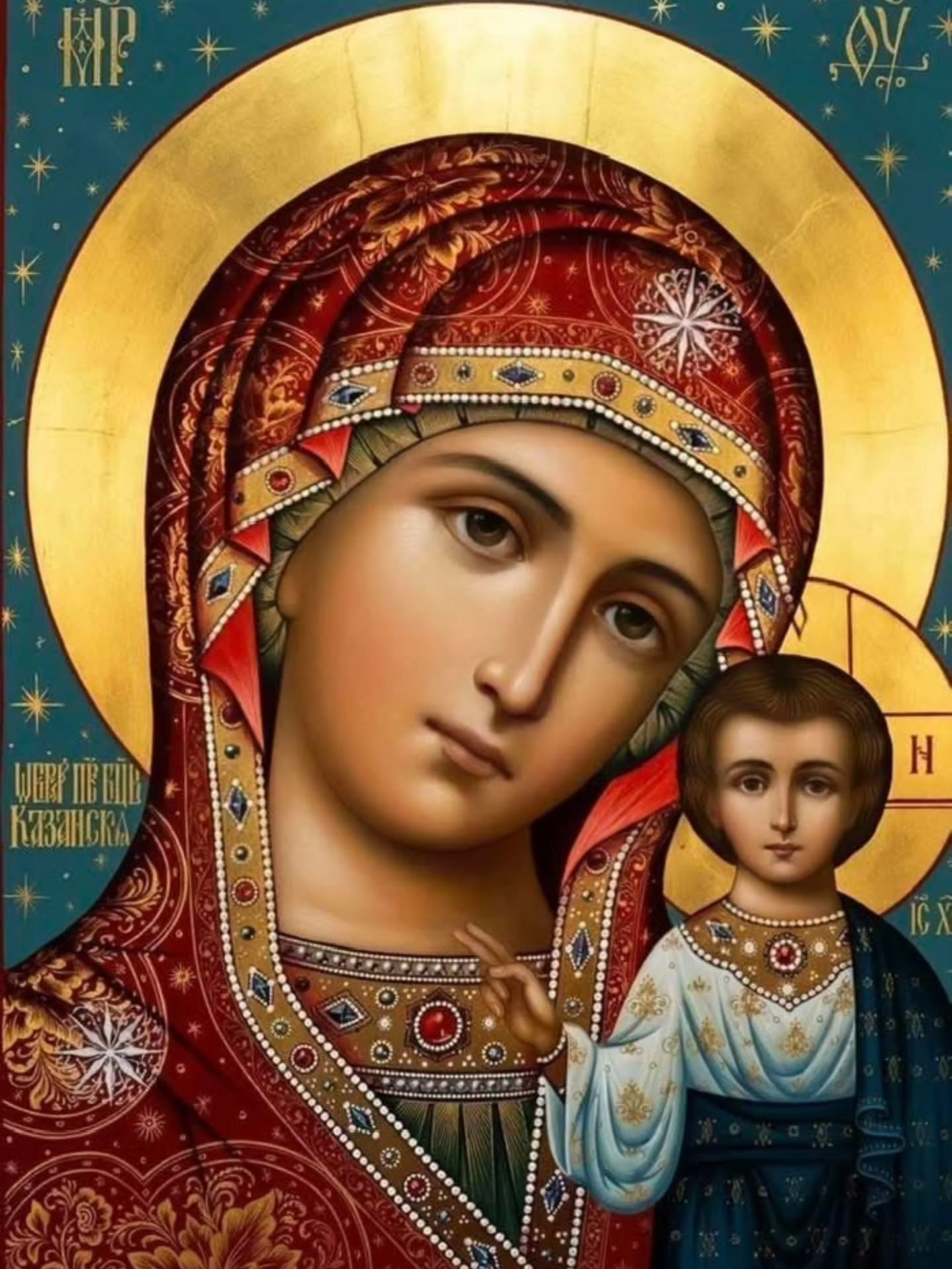
Elder Cleopa on the Theotokos as protectress and a daily prayer rule

The post shares counsel attributed to Elder Cleopa of Romania urging the faithful to keep an icon of the Theotokos at home with a burning vigil lamp. He advises taking her as protectress and helper, calling her Mother in heaven and on earth, Queen of heaven and earth. The recommended practice is to read an akathist to her each morning with the lamp lit and a supplicatory canon each evening. The elder states that those who do so will receive help…

The post shares counsel attributed to Elder Cleopa of Romania urging the faithful to keep an icon of the Theotokos at home with a burning vigil lamp. He advises taking her as protectress and helper, calling her Mother in heaven and on earth, Queen of heaven and earth. The recommended practice is to read an akathist to her each morning with the lamp lit and a supplicatory canon each evening.

The elder states that those who do so will receive help in life, at the hour of death, and on the Day of Judgment. The post adds a rhetorical question about the power of the Theotokos before the Throne of the Holy Trinity and remarks that without her intercession the world would have perished long ago. The image shows Church Slavonic abbreviations for Mother of God, faith, blessed, and Jesus Christ.

  • Elder Cleopa recommends a home icon of the Theotokos with a vigil lamp
  • Daily rule: morning akathist and evening supplicatory canon before the icon
  • Promise of help in life, at death, and at the Last Judgment
  • Emphasis on the Theotokos's intercessory power before the Holy Trinity
  • Image contains Church Slavonic abbreviations for Marian and Christological titles
Read more

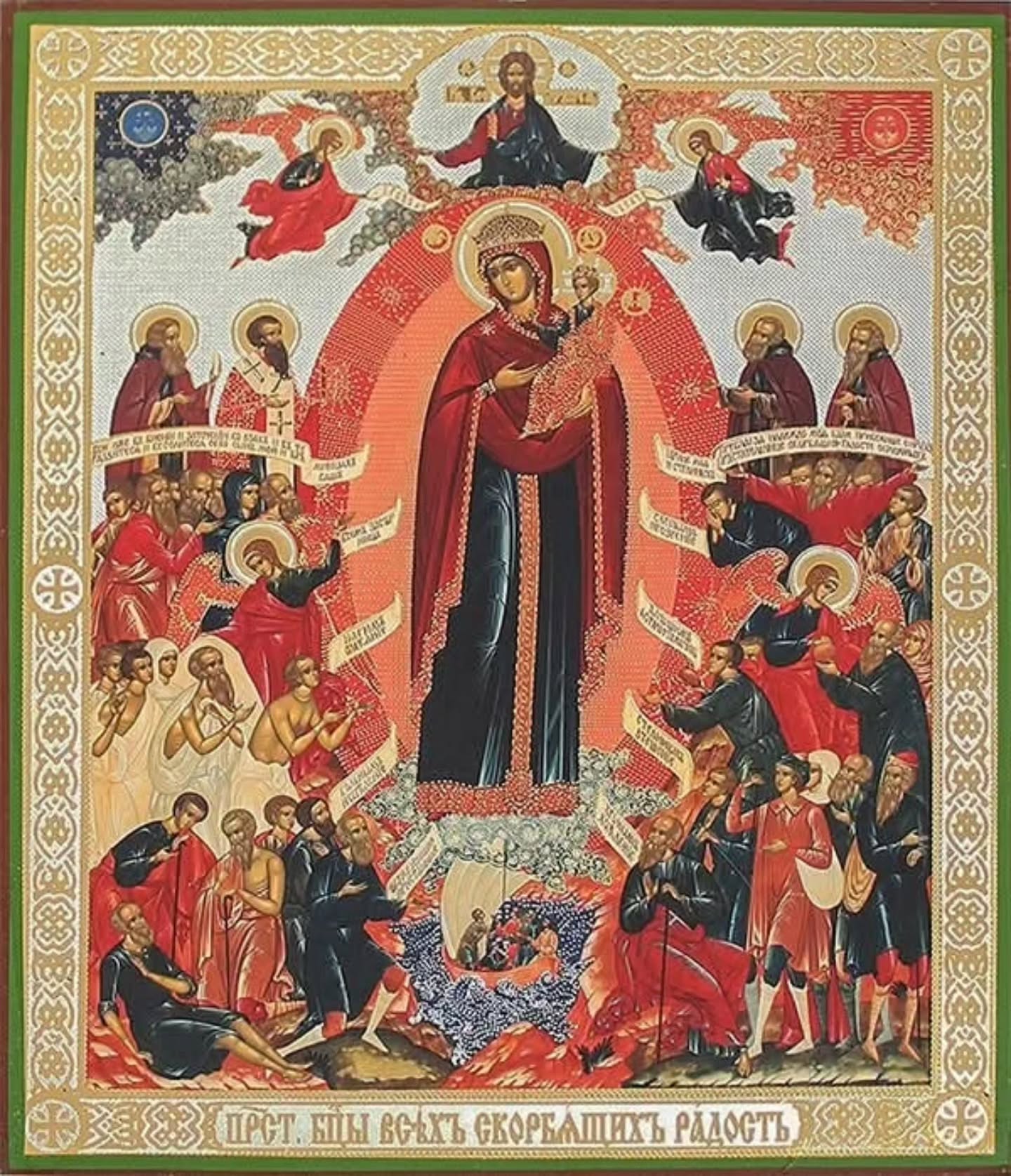
Theotokos 'Joy of All Who Sorrow': myrrh-streaming icon survived fire

The post focuses on the icon of the Most Holy Theotokos known as 'Joy of All Who Sorrow.' It describes moments when human words fail to console a heart worn out by sorrow, and the faithful turn with special hope to the Mother of God. Before her icon bearing this title, centuries of prayers have accumulated from those who suffer, grieve, and seek her intercession. The name carries a deep spiritual message: no human sorrow is unknown to the One…

The post focuses on the icon of the Most Holy Theotokos known as 'Joy of All Who Sorrow.' It describes moments when human words fail to console a heart worn out by sorrow, and the faithful turn with special hope to the Mother of God. Before her icon bearing this title, centuries of prayers have accumulated from those who suffer, grieve, and seek her intercession.

The name carries a deep spiritual message: no human sorrow is unknown to the One who loves us, nor is any tear outside His mercy. The text highlights a particular icon of this type preserved in Russia, which, according to church testimonies, has been streaming myrrh since 1995. It also notes that the icon remained untouched during a fire in the temple where it was housed.

The author invites readers to pray to the Most Holy Theotokos, remembering all who today carry the cross of illness, sorrow, loneliness, and life's temptations, ending with the invocation: 'Most Holy Theotokos, Joy of All Who Sorrow, pray to God for us!'

  • Theotokos as 'Joy of All Who Sorrow' offers comfort when human words fail.
  • The icon's title means no sorrow is unknown to God and no tear outside His mercy.
  • A specific icon in Russia has reportedly streamed myrrh since 1995.
  • The same icon survived a church fire unharmed, according to church testimonies.
  • The post ends with a prayer for those bearing crosses of illness, grief, loneliness, and temptation.
Read more

Priest advises silence and prayer in conflict

Protoiereus Vladimir Yeremin writes that in any conflict situation one should not rush to respond. It is better to remain silent when there is no good feeling within. The enemy seeks to sow discord among people, so it is important to turn to God in that moment. People often react negatively to remarks with phrases such as "Don't teach me," "I'll do it later," or "I know that without you." These reactions are what the enemy wants in order to…

Protoiereus Vladimir Yeremin writes that in any conflict situation one should not rush to respond. It is better to remain silent when there is no good feeling within. The enemy seeks to sow discord among people, so it is important to turn to God in that moment.

People often react negatively to remarks with phrases such as "Don't teach me," "I'll do it later," or "I know that without you." These reactions are what the enemy wants in order to provoke a quarrel. If one prays inwardly, a quarrel will not arise. The priest states that one must be silent, pray, and all evil impulses will pass. The main thing is to avoid unnecessary words. The Lord will arrange everything.

  • Do not rush to respond in conflict; silence is better when inner peace is absent
  • The enemy aims to sow discord through provoked reactions
  • Negative retorts like "Don't teach me" play into the enemy's aim
  • Inward prayer prevents quarrels and lets evil impulses pass
  • Avoid unnecessary words; the Lord will arrange the outcome
Read more

Saint Demetrius: Martyr and Protector of Thessaloniki

Saint Demetrius was born in Thessaloniki to noble and pious parents as their only child and was raised with great care. After his father died, the emperor appointed Demetrius proconsul in his father's place, giving explicit orders to persecute Christians. Demetrius disobeyed the imperial command and instead publicly confessed and preached Christ in Thessaloniki. The emperor summoned Demetrius and questioned him about his faith. Demetrius…

Saint Demetrius was born in Thessaloniki to noble and pious parents as their only child and was raised with great care. After his father died, the emperor appointed Demetrius proconsul in his father's place, giving explicit orders to persecute Christians. Demetrius disobeyed the imperial command and instead publicly confessed and preached Christ in Thessaloniki.

The emperor summoned Demetrius and questioned him about his faith. Demetrius confessed that he was a Christian and denounced the emperor's idolatry. The enraged emperor threw Demetrius into prison. After several days, the emperor sent soldiers to the prison.

They found Demetrius praying and pierced him with spears. Christians secretly took his body and buried it honorably. Fragrant myrrh flowed from his body and healed many sick people. As protector of Thessaloniki, Saint Demetrius appeared many times and saved the city from great danger on many occasions.

Key moments

  1. Saint Demetrius was born in Thessaloniki to noble and pious parents as their only child and was raised with great care.
  2. After his father's death, the emperor appointed him proconsul in his father's place, explicitly ordering him to persecute Christians.
  3. Demetrius disobeyed the emperor and instead publicly confessed and preached Christ in Thessaloniki.
  4. The emperor summoned Demetrius and questioned him about his faith; Demetrius confessed he was a Christian and denounced the emperor's idolatry.
  5. The enraged emperor threw Demetrius into prison.
  6. After several days, the emperor sent soldiers to the prison who found Demetrius praying and pierced him with spears.
  7. Christians secretly took and honorably buried his body, from which fragrant myrrh flowed and healed many sick people.
  8. As protector of Thessaloniki, Saint Demetrius appeared many times and saved the city from great danger on many occasions.
Read more
CHRISTIANITY UNITED Instagram

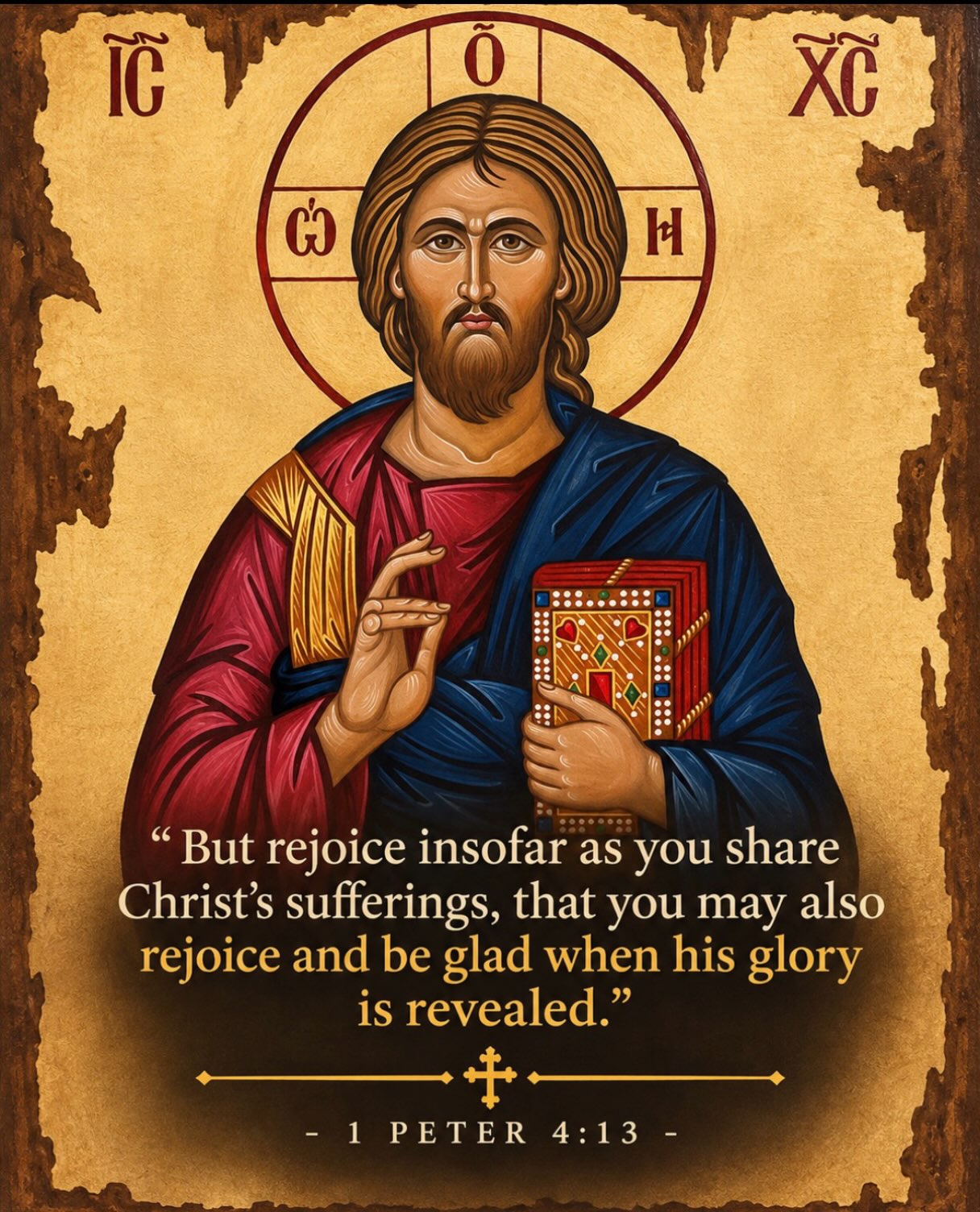
Rejoicing in Suffering for Christ: 1 Peter 4:13 and the Orthodox Martyrs

The post centers on 1 Peter 4:13, where Saint Peter urges believers to rejoice when they share in Christ's sufferings so they may also rejoice when His glory is revealed. The author explains that these words were written to Christians facing hostility and persecution for their faith, where confessing Christ could cost reputation, freedom, or life. The Orthodox Church remembers countless martyrs who endured imprisonment, torture, and death rather…

The post centers on 1 Peter 4:13, where Saint Peter urges believers to rejoice when they share in Christ's sufferings so they may also rejoice when His glory is revealed. The author explains that these words were written to Christians facing hostility and persecution for their faith, where confessing Christ could cost reputation, freedom, or life.

The Orthodox Church remembers countless martyrs who endured imprisonment, torture, and death rather than deny the Lord. Their joy came not from pain itself but from knowing that even death cannot separate them from Christ. The teaching distinguishes between general hardship and suffering specifically for Christ, such as rejection because of faith, struggle against sinful passions, or enduring difficulties while remaining faithful.

Christianity does not promise a life without suffering but promises that suffering and death will not have the final victory. Christ walked the path of the Cross before the glory of the Resurrection. The post concludes with a prayer for strength to remain faithful in every trial and a reminder that the Cross comes before the Resurrection, but the Resurrection is the victory.

  • Saint Peter calls believers to rejoice in sharing Christ's sufferings (1 Peter 4:13)
  • Orthodox martyrs endured imprisonment, torture, and death rather than deny Christ
  • Their joy came from union with Christ, not from pain itself
  • Suffering for Christ includes rejection for faith, struggle against passions, faithful endurance
  • The Cross precedes the Resurrection, but the Resurrection is the final victory
Read more

Gerontas Filimon: Blessed Are Those Who Grasp Vanity Early

Gerontas Filimon of the Holy Skete of the Prophet Elijah on Mount Athos recounts an anecdote about Lazarus. According to the elder, Lazarus did not rise and did not laugh until he witnessed a man stealing a jar. At that moment Lazarus remarked that the earth stole the earth, revealing the vanity of the world. The elder explains that this same vanity appears today in people who fall into depression because they lack the newest phone or because…

Gerontas Filimon of the Holy Skete of the Prophet Elijah on Mount Athos recounts an anecdote about Lazarus. According to the elder, Lazarus did not rise and did not laugh until he witnessed a man stealing a jar. At that moment Lazarus remarked that the earth stole the earth, revealing the vanity of the world.

The elder explains that this same vanity appears today in people who fall into depression because they lack the newest phone or because someone else has a Mercedes. He states that all such concerns are a lie. Gerontas Filimon emphasizes that blessed are those who understand this truth early, because everyone understands it eventually. However, if a person understands it late, their whole life is spent on vanities.

Key moments

  1. Lazarus did not rise and did not laugh until he saw a man steal a jar and remarked that the earth stole the earth.
  2. That moment showed the vanity of the world, which today we have in the mortar.
  3. People become depressed because they lack the newest phone or because someone else has a Mercedes, but all of that is a lie.
  4. Those who understand this early are blessed, because everyone understands it eventually, but if you understand it late your whole life goes, spent on vanities.
Read more