WeOrthodox
EN UA

Prayer Orthodoxy ®

Instagram ↗ 196 discussions

Prayer Orthodoxy® Orthodox Christianity Through Scripture, Tradition, and the Saints Deepen Your Understanding of the Faith

Prayer Orthodoxy ® Instagram discussion

Have you noticed the priest waving a veil over the Holy Gifts during the Creed?

Have you noticed the priest gently waving a veil over the Holy Gifts during the Creed? This is the aer, the large veil that covers the chalice and diskos. Its movement expresses honor toward Christ our King and carries symbolism connected with His Resurrection and the activity of the Holy Spirit. Have you observed the priest moving a veil gently above the Holy Gifts while the Creed is recited? It is the aer, the great covering of the Holy…

Have you noticed the priest gently waving a veil over the Holy Gifts during the Creed?

This is the aer, the large veil that covers the chalice and diskos. Its movement expresses honor toward Christ our King and carries symbolism connected with His Resurrection and the activity of the Holy Spirit.

Have you observed the priest moving a veil gently above the Holy Gifts while the Creed is recited?

It is the aer, the great covering of the Holy Chalice and the diskos. Its motion shows reverence to Christ, our King, and is linked symbolically to His Resurrection and the working of the Holy Spirit.
5 opinions in the discussion Keep in mind, you also have to picture them doing this in a dusty candle-lit room with 100 people who haven't bathed in a month and no AC and so on. So there were TONS of bugs flying… Read the discussion

Icons as Spiritual Reality: The Christological Basis from the Seventh Council

The speaker responds to an objection against icons that focuses on physical details in the depiction, such as an eye blemish and long hair, citing 1 Corinthians 11 where long hair is called a shame to a man. He explains that icons are not simply pictures or reminders of the saints but constitute a spiritual reality. This reality was affirmed by the Seventh Ecumenical Council, which established the veneration of icons as a christological issue.…

The speaker responds to an objection against icons that focuses on physical details in the depiction, such as an eye blemish and long hair, citing 1 Corinthians 11 where long hair is called a shame to a man. He explains that icons are not simply pictures or reminders of the saints but constitute a spiritual reality. This reality was affirmed by the Seventh Ecumenical Council, which established the veneration of icons as a christological issue.

Because Christ became man and took on flesh, matter can be sanctified. God indwells physical matter in icons to glorify Himself and to glorify the saints. The argument rests on the incarnation: the fact that God took on material flesh means that material things can become vessels of grace and presence.

The Council's teaching means that honor given to the icon passes to the prototype, and the icon becomes a means through which God works. The objection about physical appearance misses the theological point that the icon is not a mere likeness but a participation in the reality it represents.

Key moments

  1. The objection references an eye blemish and long hair, which 1 Corinthians 11 calls a shame unto a man.
  2. Icons are not simply pictures or reminders of the saints but a spiritual reality.
  3. The Seventh Ecumenical Council confirms this spiritual reality of icons.
  4. The Council makes icon veneration a christological issue: if Christ took on flesh, matter can be holy.
  5. God can indwell physical objects and matter, and does so in icons.
  6. God indwells icons to glorify Himself and to glorify the saints.
Read more
Prayer Orthodoxy ® with Holy Orthodoxy Instagram

St Nektarios of Aegina: Feast Day, Life, and Miracles

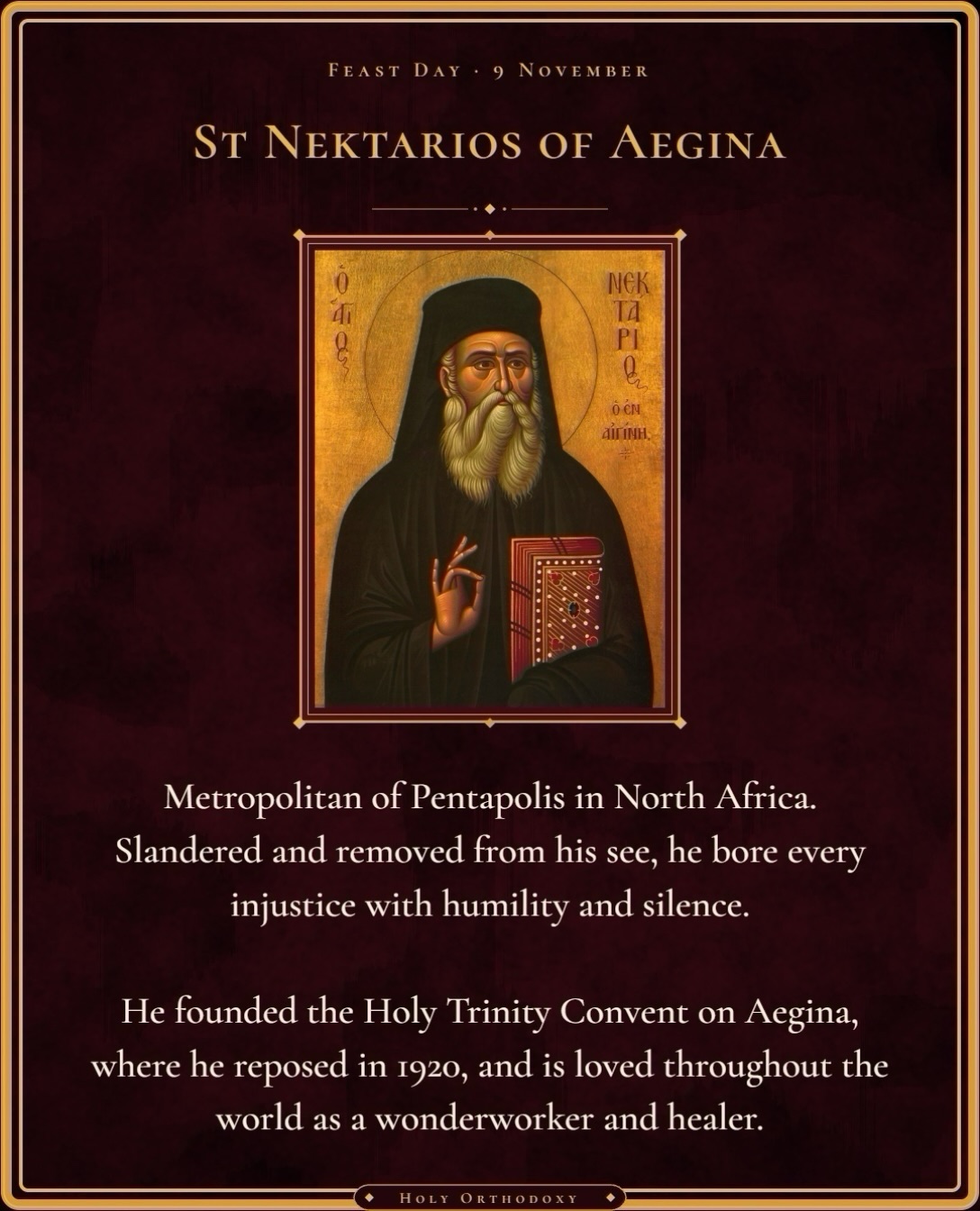
The post marks the feast day of St Nektarios of Aegina on 9 November. It recounts his birth in Thrace in 1846, his elevation to Metropolitan of Pentapolis in North Africa in 1889, and his removal from that see within a year due to envy and slander. The text notes that he never defended himself but bore the injustice with humility. In 1904 he founded the Holy Trinity Convent on the island of Aegina, where he spent his final years in prayer. He…

The post marks the feast day of St Nektarios of Aegina on 9 November. It recounts his birth in Thrace in 1846, his elevation to Metropolitan of Pentapolis in North Africa in 1889, and his removal from that see within a year due to envy and slander. The text notes that he never defended himself but bore the injustice with humility.

In 1904 he founded the Holy Trinity Convent on the island of Aegina, where he spent his final years in prayer. He reposed in 1920. Since then countless miracles have been attributed to his intercession, particularly the healing of those suffering from cancer. The post concludes with a prayer for his intercession.

  • Born in Thrace in 1846.
  • Became Metropolitan of Pentapolis in North Africa in 1889.
  • Removed from his see within a year due to envy and slander; he never defended himself.
  • Founded the Holy Trinity Convent on Aegina in 1904, where he lived in prayer until his repose in 1920.
  • Known as a wonderworker; countless miracles attributed, especially healing of cancer.
Read more

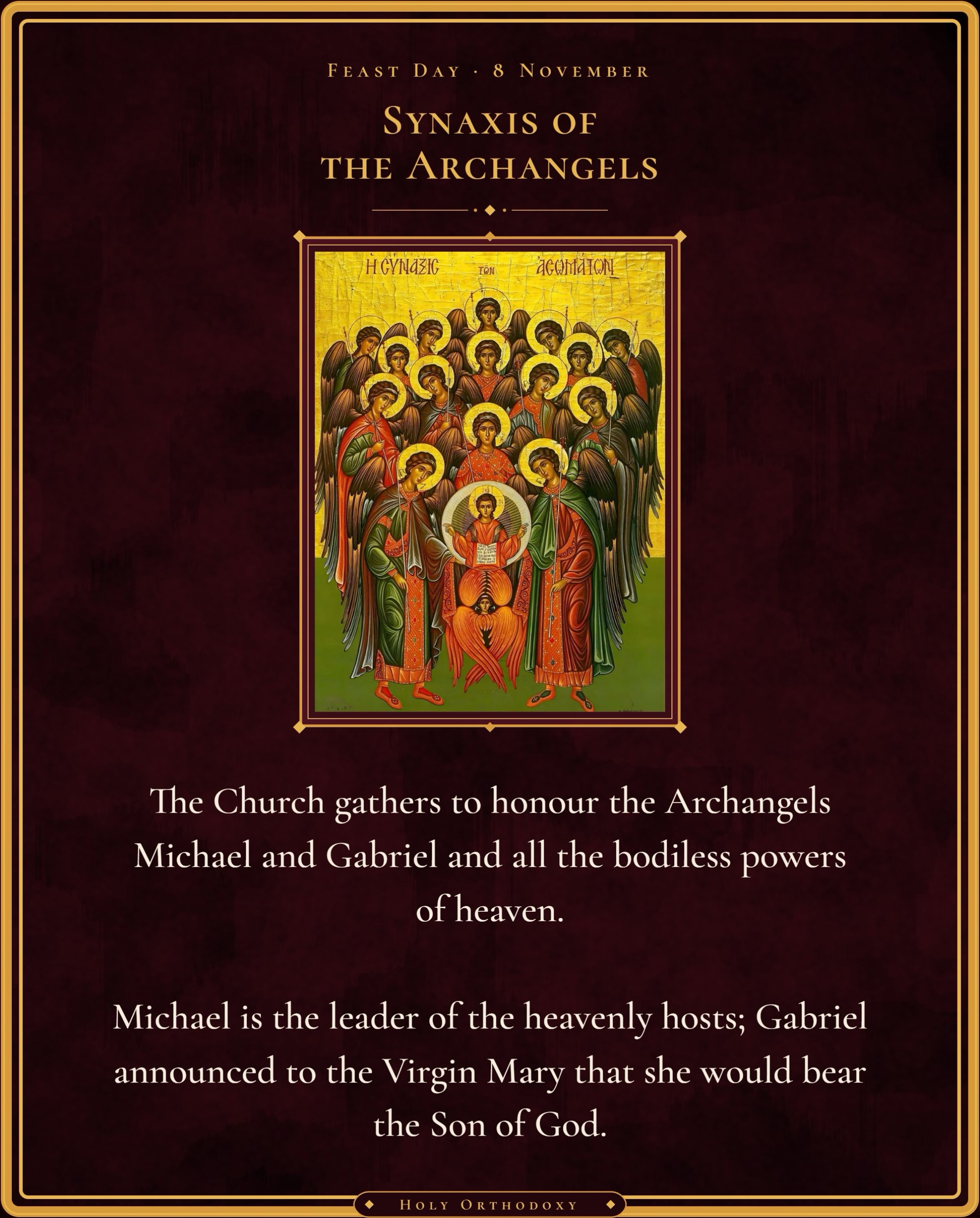
Synaxis of the Archangels Michael and Gabriel, 8 November

The post marks the feast of the Synaxis of the Archangels Michael and Gabriel and all the bodiless powers on 8 November. It explains that the Church gathers to honour the holy angels who stand before God's throne, guard the faithful, and carry His messages. Michael, whose name means "Who is like God?", is identified as the leader of the heavenly hosts. Gabriel is noted as the messenger who announced to the Virgin Mary that she would bear the Son…

The post marks the feast of the Synaxis of the Archangels Michael and Gabriel and all the bodiless powers on 8 November. It explains that the Church gathers to honour the holy angels who stand before God's throne, guard the faithful, and carry His messages. Michael, whose name means "Who is like God?", is identified as the leader of the heavenly hosts.

Gabriel is noted as the messenger who announced to the Virgin Mary that she would bear the Son of God. The post gives the reason for the date: November is the ninth month counting from March, the month of creation, recalling the nine ranks of angels. The Fathers call the Last Judgement "the eighth day", when the angels will come with Christ in glory.

The post concludes with a prayer to the holy archangels and a greeting to those celebrating their name day: Michael, Gabriel, Angelos, Angeliki, and Taxiarchis.

  • The feast honours Archangels Michael and Gabriel and all bodiless powers.
  • Michael means "Who is like God?" and leads the heavenly hosts.
  • Gabriel announced the Incarnation to the Virgin Mary.
  • The date 8 November reflects the ninth month from March (creation) and the nine angelic ranks.
  • The Fathers call the Last Judgement the eighth day, when angels accompany Christ.
Read more

Saint Paisios: From Civil War Radio Operator to Holy Mount Hermit

The post shows the path to Panagouda, the humble cell of Saint Paisios on Mount Athos, and includes a video summary of his life. Before monasticism he was Arsenios Hatzis, a radio operator in the Greek Civil War who repeatedly chose the most dangerous posts so that men with families could be spared. He bore the safety of others as a joy. Later he went to the Holy Mountain and took the name Paisios. Pilgrims climbed for hours to reach his small…

The post shows the path to Panagouda, the humble cell of Saint Paisios on Mount Athos, and includes a video summary of his life. Before monasticism he was Arsenios Hatzis, a radio operator in the Greek Civil War who repeatedly chose the most dangerous posts so that men with families could be spared. He bore the safety of others as a joy. Later he went to the Holy Mountain and took the name Paisios.

Pilgrims climbed for hours to reach his small hut, and he received each one, often naming their sorrow before they spoke. He gave his days to prayer and his heart to everyone who sought him. His counsel remains: guard the heart, forgive quickly, trust each care to God, and let humility open the way to joy. The post ends with a short prayer to Saint Paisios in English and Greek.

Key moments

  1. Arsenios Hatzis served as a radio operator in the Greek Civil War and repeatedly took the most dangerous posts so that men with wives and children might be spared.
  2. He carried the safety of others on his own shoulders and counted it a joy.
  3. He went to the Holy Mount and took the name Paisios.
  4. Pilgrims climbed for hours to reach his small hut and he received each one, often naming the sorrow before a word was spoken.
  5. He gave his days to prayer and his heart to everyone who sought him.
  6. His counsel: guard the heart, forgive quickly, trust each care to God, and let humility open the way to joy.
Read more
Prayer Orthodoxy ® with The National Herald Instagram

Metropolitan Athenagoras Enthroned as Metropolitan of New Jersey

Metropolitan Athenagoras was enthroned as Metropolitan of New Jersey on November 7 at the Cathedral of St. John the Theologian in Tenafly, New Jersey. The Holy Synod of the Ecumenical Patriarchate elected him on October 1, 2026, while he was serving as Bishop of Nazianzos. The election followed the elevation of Metropolitan Apostolos to Archbishop of Canada. Video from the service shows the congregation chanting repeatedly in Spanish and Greek:…

Metropolitan Athenagoras was enthroned as Metropolitan of New Jersey on November 7 at the Cathedral of St. John the Theologian in Tenafly, New Jersey. The Holy Synod of the Ecumenical Patriarchate elected him on October 1, 2026, while he was serving as Bishop of Nazianzos. The election followed the elevation of Metropolitan Apostolos to Archbishop of Canada.

Video from the service shows the congregation chanting repeatedly in Spanish and Greek: "Acción, acción, acción. Señor ten piedad, ten piedad, ten piedad. Kirieleison, kirieleison, kirieleison. ven, ven, ven, ven." The canonical election of the new ruling hierarch for the God-saved Metropolis of New Jersey was then proclaimed.

The people responded with the triple acclamation "Axios, axios, axios." A speaker addressed the newly elected hierarch, saying, "I want to hear your stories, share your worries and rejoice in what you have done. You have accomplished." The enthronement marks the beginning of Metropolitan Athenagoras's leadership of the Metropolis of New Jersey under the Ecumenical Patriarchate.

Key moments

  1. The congregation chants "Acción, acción, acción. Señor ten piedad, ten piedad, ten piedad. Kirieleison, kirieleison, kirieleison. ven, ven, ven, ven."
  2. The canonical election to be the ruling hierarch of the God-saved Metropolis of New Jersey is proclaimed.
  3. The people acclaim "Axios, axios, axios."
  4. A speaker tells the newly elected hierarch: "I want to hear your stories, share your worries and rejoice in what you have done. You have accomplished."
Read more
Prayer Orthodoxy ® Instagram

Five Greek Words That Draw Us Closer to Christ

The post introduces five Greek terms that the author identifies as central to drawing nearer to Christ. The list appears in English with a parallel Greek translation, and each term is given with its Greek spelling, a phonetic pronunciation guide, and a short definition. The first term, metanoia (μετάνοια, pronounced meh-TAH-nee-ah), is defined as repentance: a change of heart that turns a person away from sin and back toward God. The second,…

The post introduces five Greek terms that the author identifies as central to drawing nearer to Christ. The list appears in English with a parallel Greek translation, and each term is given with its Greek spelling, a phonetic pronunciation guide, and a short definition. The first term, metanoia (μετάνοια, pronounced meh-TAH-nee-ah), is defined as repentance: a change of heart that turns a person away from sin and back toward God.

The second, philotimo (φιλώτιμο, fee-LO-tee-mol), is rendered as love of honor, described as the grateful desire to do what is good by giving freely of oneself out of love for God and others. The third, nepsis (νήψις, NEEP-sees), means watchfulness: guarding one's thoughts and heart while staying attentive to what draws one toward Christ or away from Him.

The fourth, hesychia (ἡσυχία, ee-see-HEE-ah), is stillness: the quieting of the heart so that beyond the noise of the world one can attend to God. The fifth, theosis (θέωσις, THEH-oh-sees, with the 'th' as in 'think'), is union with God: sharing in God's life through His grace, becoming more like Christ while remaining His creation.

The post presents these five concepts as a faith that believers are called to live daily. The image reproduces the same five entries with their definitions. No additional commentary or discussion is included.

  • Metanoia (repentance) is a change of heart that turns a person from sin back to God.
  • Philotimo (love of honor) is the grateful desire to do good freely out of love for God and others.
  • Nepsis (watchfulness) means guarding thoughts and heart while attending to what draws one toward or away from Christ.
  • Hesychia (stillness) is the quieting of the heart to attend to God beyond worldly noise.
  • Theosis (union with God) is sharing in God's life through grace, becoming like Christ while remaining His creation.
Read more

Parable of the Sower: Heart Condition Determines Response to God's Word

The speaker introduces the parable by noting that not everyone who hears the word of God allows it to transform their life. He then reads the passage from Luke 8:4-15 where Jesus tells the crowd the parable of a sower scattering seed on four types of ground. Jesus later explains to the disciples that the mysteries of the kingdom are given to them while others hear in parables so they may not understand. The speaker reads the explanation: the…

The speaker introduces the parable by noting that not everyone who hears the word of God allows it to transform their life. He then reads the passage from Luke 8:4-15 where Jesus tells the crowd the parable of a sower scattering seed on four types of ground. Jesus later explains to the disciples that the mysteries of the kingdom are given to them while others hear in parables so they may not understand.

The speaker reads the explanation: the seed is the word of God; the wayside hearers lose the word to the devil, the rocky hearers fall away in temptation, the thorny hearers are choked by cares, riches, and pleasures, and the good-ground hearers keep the word and bear fruit with patience. From an Orthodox perspective, the speaker draws three lessons.

First, the condition of the heart matters; pride, resentment, and unrepented sin harden the heart so the word cannot bear fruit. Second, faith must develop deep roots through participation in the sacraments of the Church to persevere through suffering, rejection, and difficulties. Third, the cares, riches, and pleasures of life can choke spiritual life when they consume the heart and gradually push God out.

The Orthodox spiritual life calls for cultivating the heart through repentance, prayer, fasting, participation in the Holy Mysteries, and perseverance. Christ reminds the listeners that those who receive his word with a good heart and hold onto it will bear fruit with patience. The talk ends with Christ's question to every listener: what kind of soil is your heart?

Key moments

  1. 0:00 The speaker introduces the Parable of the Sower in Luke 8, explaining that the four soils represent the spiritual condition of the human heart.
  2. 0:30 The speaker reads Luke 8:4-10: a sower scatters seed on the wayside, rock, thorns, and good ground; Jesus tells the disciples the mysteries of the kingdom are given to them, while others hear in parables so they may not understand.
  3. 1:10 The speaker reads Luke 8:11-15: the seed is the word of God; the wayside hearers lose the word to the devil, the rocky hearers fall away in temptation, the thorny hearers are choked by cares, riches, and pleasures, and the good-ground hearers keep the word and bear fruit with patience.
  4. 1:40 From an Orthodox perspective, the speaker presents three lessons: first, the condition of the heart matters, pride, resentment, or unrepented sin harden the heart so the word cannot bear fruit.
  5. 2:14 Second, faith must develop deep roots through participation in the sacraments of the church to persevere through suffering, rejection, and difficulties.
  6. 2:45 Third, the cares, riches, and pleasures of life can choke spiritual life; when they consume the heart, they gradually push God out.
  7. 2:45 The speaker concludes with Christ's question to every listener: what kind of soil is your heart?
Read more
Prayer Orthodoxy ® with Hannah Porter Instagram

Three months Orthodox: humility replaces self-reliance

Three months after baptism and chrismation, the speaker describes Orthodox life as humbling yet deeply satisfying. As a former Protestant, the speaker could quote Scripture extensively but always felt ashamed of inadequate spiritual discipline and reliance on social media to cope. Those coping mechanisms no longer have any grip, which the speaker attributes to being held accountable and being rid of self-reliance. The Protestant mindset of being…

Three months after baptism and chrismation, the speaker describes Orthodox life as humbling yet deeply satisfying. As a former Protestant, the speaker could quote Scripture extensively but always felt ashamed of inadequate spiritual discipline and reliance on social media to cope. Those coping mechanisms no longer have any grip, which the speaker attributes to being held accountable and being rid of self-reliance.

The Protestant mindset of being one's own interpreter and sole accountability partner, without a prayer rule or set disciplines, made the speaker feel like their own worst enemy. Accepting that one knows nothing and that mysteries remain until death is relieving, removes self-pride, and makes dependence on Christ and his Church the healing path.

Key moments

  1. 0:00 It has been three months since baptism and chrismation into the Orthodox Church, and the experience is humbling but loved.
  2. 0:34 As a former Protestant, the speaker could quote Scripture extensively but always felt ashamed of inadequate spiritual discipline and reliance on social media to cope.
  3. 1:06 Those coping mechanisms no longer have any grip, which the speaker attributes to being held accountable and being rid of self-reliance.
  4. 1:44 The Protestant mindset of being one's own interpreter and sole accountability partner, without a prayer rule or set disciplines, made the speaker feel like their own worst enemy.
  5. 1:44 Accepting that one knows nothing and that mysteries remain until death is relieving, removes self-pride, and makes dependence on Christ and his Church the healing path.
Read more
Prayer Orthodoxy ® with The National Herald Instagram

Israel Restores Access to Historic St. George Monastery Near Jericho

Israel has restored access to the historic Greek Orthodox Monastery of Saint George of Choziba near Jericho following nearly three years of restrictions. The restrictions were imposed after the Hamas-led attacks on Israel on October 7, 2023, when security barriers and electronic gates complicated travel along the approach road to the monastery's lookout. The monastery was founded in the fifth century by Christian hermits seeking solitude in the…

Israel has restored access to the historic Greek Orthodox Monastery of Saint George of Choziba near Jericho following nearly three years of restrictions. The restrictions were imposed after the Hamas-led attacks on Israel on October 7, 2023, when security barriers and electronic gates complicated travel along the approach road to the monastery's lookout.

The monastery was founded in the fifth century by Christian hermits seeking solitude in the Judean Desert. It later became associated with Saint George of Choziba, a revered Orthodox monk of the sixth and seventh centuries. Today, the monastery remains an active center of Greek Orthodox monastic life and an important destination for Christian pilgrims visiting the Holy Land.

The reopening concerns access to the lookout and the approach road rather than the monastery itself, which had remained active throughout the period. Although security procedures remain in place, the restored route makes one of the region's most distinctive Greek Orthodox landmarks more accessible to visitors.

  • Israel restored access to the Greek Orthodox Monastery of Saint George of Choziba near Jericho after nearly three years.
  • Restrictions began after the October 7, 2023 Hamas-led attacks, with security barriers and electronic gates blocking the approach road to the lookout.
  • The monastery was founded in the fifth century by hermits in the Judean Desert and later associated with Saint George of Choziba (sixth-seventh centuries).
  • It remains an active Greek Orthodox monastic center and a major pilgrimage site in the Holy Land.
  • The reopening applies to the lookout and approach road; the monastery itself stayed active, and security procedures continue.
Read more

Christ the Good Shepherd: Do You Recognize His Voice?

The post quotes John 10:14-15, where Jesus says he is the good shepherd who knows his sheep and his sheep know him, just as the Father knows him and he knows the Father, and that he lays down his life for the sheep. It then asks the reader directly: "Were you the lost sheep?" The words present the relationship between Christ and his followers as one of mutual knowledge rooted in the divine knowledge between the Father and the Son, and they…

The post quotes John 10:14-15, where Jesus says he is the good shepherd who knows his sheep and his sheep know him, just as the Father knows him and he knows the Father, and that he lays down his life for the sheep. It then asks the reader directly: "Were you the lost sheep?" The words present the relationship between Christ and his followers as one of mutual knowledge rooted in the divine knowledge between the Father and the Son, and they present his care as sacrificial.

The question turns the proclamation toward personal reflection, inviting the reader to consider whether they have been the sheep that strayed and was found.

  • Jesus identifies himself as the good shepherd who knows his sheep and is known by them
  • This mutual knowledge mirrors the knowledge between the Father and the Son
  • Jesus states he lays down his life for the sheep
  • The post asks the reader personally: "Were you the lost sheep?"
  • No additional teaching, commentary, or discussion is provided
Read more
Prayer Orthodoxy ® with Orthodox News ® Instagram

Archbishop Anastasios of Albania's final reflection: infinity is love

The image shares a final spiritual testament from Archbishop Anastasios of Albania (1929-2025), presented in both Albanian and Greek. The text reads as a personal meditation offered with deep gratitude for the years he lived on earth, which he describes as a voyage on a wondrous cosmic ship traveling toward infinity. He addresses the Holy Trinity directly, thanking God for revealing to him that infinity is love. The Albanian version is signed…

The image shares a final spiritual testament from Archbishop Anastasios of Albania (1929-2025), presented in both Albanian and Greek. The text reads as a personal meditation offered with deep gratitude for the years he lived on earth, which he describes as a voyage on a wondrous cosmic ship traveling toward infinity. He addresses the Holy Trinity directly, thanking God for revealing to him that infinity is love.

The Albanian version is signed "Kryepiskop i Lumur Anastas" (Archbishop of Albania Anastas), and the Greek version bears the title "Ο Μακαριστός Αρχιεπίσκοπος Αναστάσιος" (The Blessed Archbishop Anastasios), indicating this was released after his repose. The message is brief, poetic, and theological: it frames a long life of service as a journey through creation toward the endless, and identifies the nature of that endlessness not as abstract space or time but as divine love.

No further commentary, discussion, or biographical detail accompanies the image; the post consists solely of this bilingual farewell statement.

  • Final message from Archbishop Anastasios of Albania (1929-2025) released after his repose
  • Written in Albanian and Greek as a personal meditation on life and eternity
  • Describes earthly life as a voyage on a cosmic ship moving toward infinity
  • Thanks the Holy Trinity for revealing that infinity is love
  • Signed with his titles in both languages: Archbishop of Albania and Blessed Archbishop Anastasios
Read more
Prayer Orthodoxy ® with The National Herald Instagram

Hellenic College Holy Cross Enrollment Reaches 486 with $1M Donation

At the Archdiocesan Council meeting on October 16 in New York, Interim President Fr. Michael Lambakis reported that combined enrollment at Hellenic College and Holy Cross Greek Orthodox School of Theology now stands at 486 students, including both online and in-person learners, with 114 seminarians. He also announced an anonymous donation of $1 million made in memory of Fr. Savas Constantinou, designated specifically for renovation of the Pappas…

At the Archdiocesan Council meeting on October 16 in New York, Interim President Fr. Michael Lambakis reported that combined enrollment at Hellenic College and Holy Cross Greek Orthodox School of Theology now stands at 486 students, including both online and in-person learners, with 114 seminarians. He also announced an anonymous donation of $1 million made in memory of Fr. Savas Constantinou, designated specifically for renovation of the Pappas Gymnasium on the Boston campus.

Lambakis described the institution's finances as moving in "a very positive direction." In a separate update, Manny Kratsios, a member of the Board of Trustees of St. Michael's Home, said construction of the new 109,000-square-foot facility in Uniondale, New York, is 80 percent complete, with an anticipated opening by the end of 2027.

  • Combined enrollment at Hellenic College and Holy Cross reaches 486 students, including 114 seminarians.
  • Anonymous $1 million donation announced in memory of Fr. Savas Constantinou for Pappas Gymnasium renovation.
  • Interim President Fr. Michael Lambakis reports finances moving in a very positive direction.
  • St. Michael's Home new facility in Uniondale, NY, 109,000 sq ft, 80% complete, expected opening end of 2027.
  • Updates presented at Archdiocesan Council meeting on October 16 in New York.
Read more

Athanasios Diakos: the deacon who chose death over denying Christ

Athanasios Diakos (1788-1821), born Athanasios Massavetas, entered monastic life young at the Monastery of Saint John the Baptist in Artotina. Around the age of seventeen he was ordained a deacon of the Orthodox Church, and from that rank he took the name Diakos, meaning deacon. He later left monastic life and took up arms against Ottoman rule, becoming one of the leading figures of the Greek War of Independence. At the Battle of Alamana on 22…

Athanasios Diakos (1788-1821), born Athanasios Massavetas, entered monastic life young at the Monastery of Saint John the Baptist in Artotina. Around the age of seventeen he was ordained a deacon of the Orthodox Church, and from that rank he took the name Diakos, meaning deacon. He later left monastic life and took up arms against Ottoman rule, becoming one of the leading figures of the Greek War of Independence.

At the Battle of Alamana on 22 April 1821, Diakos and his fellow Greek fighters faced a far larger Ottoman force commanded by Omer Vrioni and Kose Mehmet. As the Greek forces retreated, Diakos refused to flee. According to tradition, he kept fighting with just 48 men until his sword broke and he was captured, gravely wounded. Impressed by his courage, Omer Vrioni reportedly offered him a position of command in the Ottoman army if he renounced Christianity and embraced Islam.

Diakos refused, answering with the words that remain well known in Greek history: 'I was born a Greek, and I shall die a Greek.' On 24 April 1821 he was executed by impalement in Lamia. A man who had served as a deacon of the Orthodox Church chose death rather than renounce his Christian faith. His sacrifice became a symbol of courage, conviction and the struggle for Greek independence, remembered under the cry 'Freedom or death.'

Key moments

  1. At the Battle of Alamana in Epirus in 1821, Athanasios Diakos stood against the advancing Ottoman army while the Greek forces retreated.
  2. Diakos refused to flee and fought with only 48 men until his sword broke and he was captured, gravely wounded.
  3. Impressed by his bravery, the Ottoman commander offered Diakos a position of command in his army if he abandoned Christianity and embraced Islam.
  4. Diakos refused, declaring, 'I was born a Greek, I shall die a Greek.'
Read more

St. Gabriel Urgebadze on prayer as wings for the soul

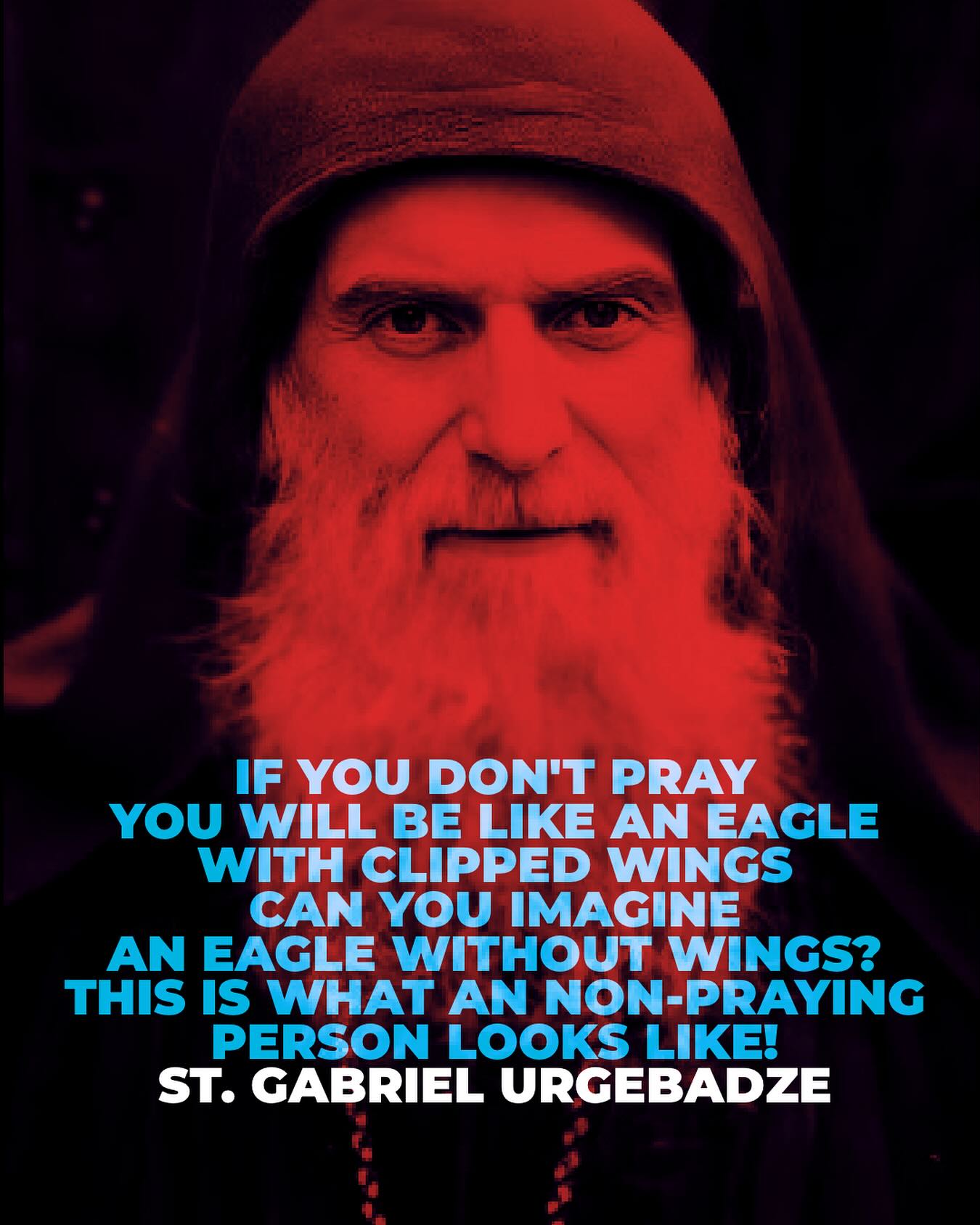
The post shares a saying attributed to St. Gabriel Urgebadze, a twentieth-century Georgian monk canonized in 2012. He compares a person who does not pray to an eagle with clipped wings, unable to fly. The image text repeats the comparison in capital letters. The surrounding text promotes the Orthodox Church as the original apostolic faith and encourages readers to seek catechesis at a local parish, but the core of the post is the saint's analogy about prayer.

  • St. Gabriel Urgebadze likens a non-praying person to an eagle with clipped wings.
  • The saint teaches that prayer is essential for spiritual flight.
  • St. Gabriel was a Georgian monk who died in 1995 and was glorified in 2012.
  • The post includes a general description of Orthodoxy as the apostolic church.
  • It invites readers to inquire about catechism courses at a local Orthodox parish.
Read more
Prayer Orthodoxy ® with Live Orthodox Instagram

God Is Love: Reflection on 1 John 4:8

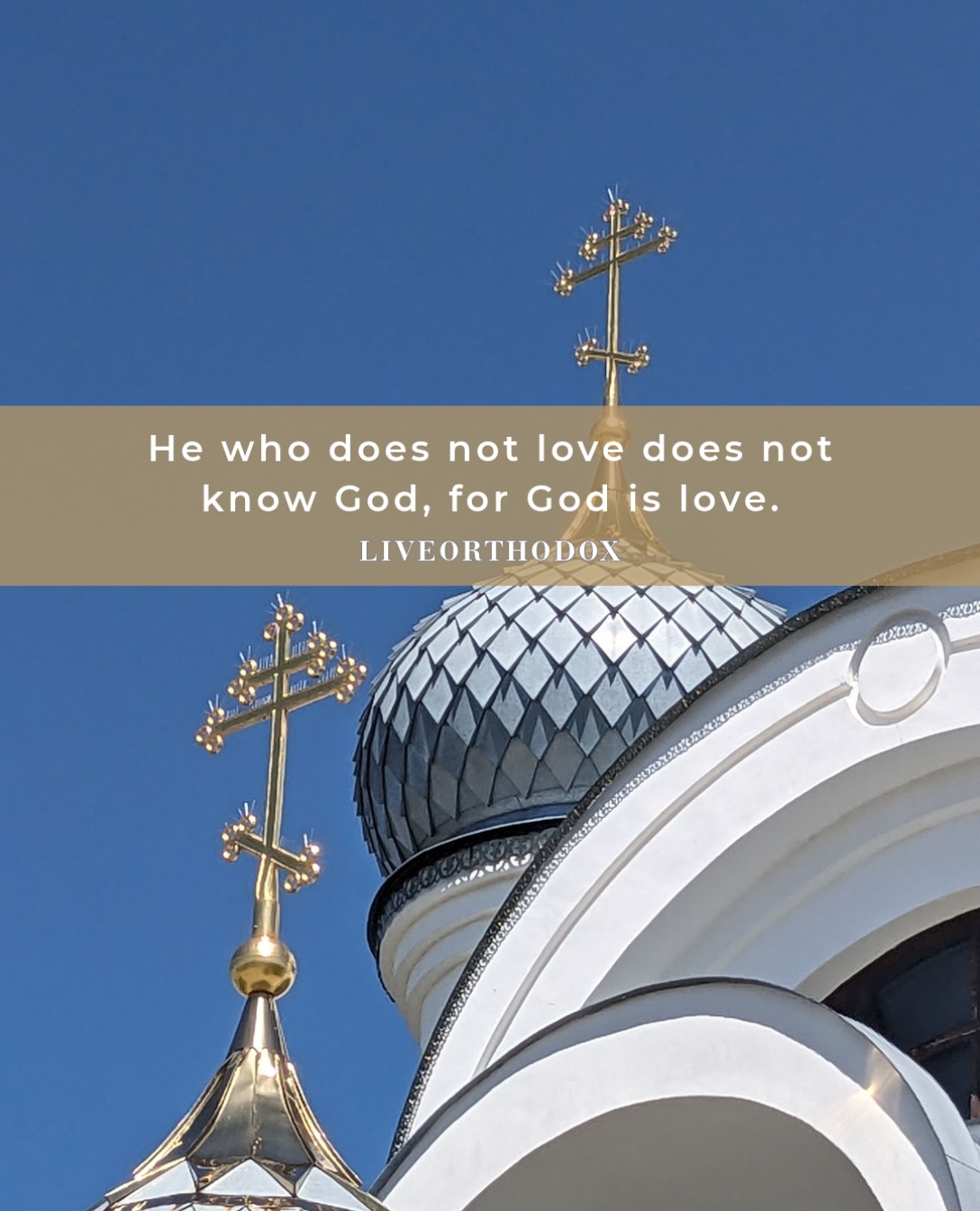
The post presents the verse "He who does not love does not know God, for God is love" from 1 John 4:8, followed by a reflection on its meaning. The author writes that love is not merely something we are called to give but a reflection of God's very nature. To know God is to strive to love as He loves, with patience, compassion, humility, and forgiveness. The reflection connects love for God with love shown to one another, and ends with a prayer…

The post presents the verse "He who does not love does not know God, for God is love" from 1 John 4:8, followed by a reflection on its meaning. The author writes that love is not merely something we are called to give but a reflection of God's very nature. To know God is to strive to love as He loves, with patience, compassion, humility, and forgiveness.

The reflection connects love for God with love shown to one another, and ends with a prayer that we may make His love known through words, actions, and hearts, concluding "Glory to God for all things."

  • The verse 1 John 4:8 states that God is love and those who do not love do not know Him
  • Love reflects God's nature, not just a command to follow
  • Knowing God means striving to love with patience, compassion, humility, and forgiveness
  • Love for God is reflected in love for one another
  • The post ends with a prayer to make God's love known through words, actions, and hearts
Read more
Prayer Orthodoxy ® Instagram

The Theotokos as Model and Mount Athos as Her Garden

The post presents the Orthodox tradition that honors the Most Holy Theotokos as the model of purity, obedience, and complete devotion to God for nearly two thousand years. According to ancient tradition, the Theotokos claimed Mount Athos as her inheritance, and it became known throughout the Orthodox world as the Garden of the Panagia. For more than a thousand years, monks have lived and prayed on the Holy Mountain beneath her protection,…

The post presents the Orthodox tradition that honors the Most Holy Theotokos as the model of purity, obedience, and complete devotion to God for nearly two thousand years. According to ancient tradition, the Theotokos claimed Mount Athos as her inheritance, and it became known throughout the Orthodox world as the Garden of the Panagia.

For more than a thousand years, monks have lived and prayed on the Holy Mountain beneath her protection, continually invoking her intercession with the prayer "Most Holy Theotokos, save us." The accompanying video summary adds that the Theotokos bore Christ physically, and all Christians are called to bear Him spiritually. It recounts the tradition that while traveling by sea, her ship was brought to Mount Athos; seeing the mountain, she asked her Son that it might become her inheritance, and Christ granted the request.

Since then, monks have offered their lives to Christ under the protection of His mother, and prayer has continued there from generation to generation.

Key moments

  1. The Theotokos is pure in heart, obedient to God, and wholly devoted to him.
  2. She was the first person to receive Jesus Christ.
  3. According to ancient tradition, the Theotokos was traveling by sea when her ship was brought to Mount Athos.
  4. Seeing the mountain, she asked her Son that it might become her inheritance.
  5. Christ granted her request and Mount Athos became known as the Garden of the Panagia.
  6. For more than a thousand years, monks have lived and prayed on the mountain, offering their lives to Christ beneath the protection of his mother.
  7. Prayer continues there from generation to generation.
Read more

Hieromonk Seraphim Rose: God expects more from Orthodox Christians

The post is a prayer asking Hieromonk Seraphim Rose to intercede, paired with a quotation from him. In the quoted passage he warns that Christians everywhere are tempted to take the easy path: to seek peace and security, to flee from pain and affliction, and to treat life as an occasion for enjoying earthly blessings. Against this he sets the Christian understanding of life as a time of trial in which our eternal destiny is to be decided. He…

The post is a prayer asking Hieromonk Seraphim Rose to intercede, paired with a quotation from him. In the quoted passage he warns that Christians everywhere are tempted to take the easy path: to seek peace and security, to flee from pain and affliction, and to treat life as an occasion for enjoying earthly blessings. Against this he sets the Christian understanding of life as a time of trial in which our eternal destiny is to be decided.

He states that God expects more than this from those who glory in the name of Orthodox Christians. The post is a short devotional item: a plea for his prayers together with his own words on how an Orthodox Christian should view earthly life. There is no further discussion in the post; it consists of the prayer, the quotation, and a note that the text is from a sermon of St. Peter.

  • The post asks Hieromonk Seraphim Rose to pray for us.
  • The quoted text warns against seeking peace, security and earthly enjoyment.
  • Seraphim Rose describes life as a time of trial in which eternal destiny is decided.
  • He says God expects more from those who glory in the name of Orthodox Christians.
  • The quotation is identified as coming from the sermon of St. Peter.

"Papouli, I Want to Be a Good Person": St. Paisios and a Child's Faith

The post shares a recorded scene with St. Paisios the Athonite. It begins to drizzle and an elder says he has lost his sight, telling him, "I cannot see you, geronda, I cannot see you." St. Paisios answers warmly that they can still be friends. He asks a child about school and learns that everything is fine and that the children have a very good teacher, Mrs. Sofia. He asks the children to say a prayer for her, because her husband died and she…

The post shares a recorded scene with St. Paisios the Athonite. It begins to drizzle and an elder says he has lost his sight, telling him, "I cannot see you, geronda, I cannot see you." St. Paisios answers warmly that they can still be friends. He asks a child about school and learns that everything is fine and that the children have a very good teacher, Mrs. Sofia.

He asks the children to say a prayer for her, because her husband died and she is very sad. He then asks a child what he wants to ask God for, and the child answers that he wants God to help him be a good child. The child affectionately calls St. Paisios "Papouli," meaning Grandfather, and with the innocence of a pure heart expresses his desire to become a good person.

Later, the elder recognizes someone by the sound of a komboskini, the prayer rope, saying "Is that you?", tells him to get up, and says "Thank our Christ." The post frames the scene as a reminder of the beauty of childlike faith, humility, and God's grace, quoting Luke 1:37: "For with God nothing will be impossible." The Greek text accompanying the post says that faith sees where the eyes cannot.

The post consists of the scene itself with this short reflection; there is no further discussion beyond the description of the encounter and the verse.

Key moments

  1. The elder says he suddenly lost his sight when it began to drizzle: 'I cannot see you, geronda.'
  2. He tells the child they can still be friends even though he cannot see him.
  3. A child reports that school is going well and that they have a very good teacher, Mrs. Sofia.
  4. The elder asks the children to pray for Mrs. Sofia, because her husband died and she is very sad.
  5. Asked what he wants from God, a child answers: 'To help me be a good child.'
  6. The elder recognizes someone through his komboskini, asks 'Is that you?', tells him to get up, and says to thank our Christ.
Read more
Prayer Orthodoxy ® with Holy Orthodoxy Instagram

The Nicene Creed: Confessed Word for Word for Over 1,600 Years

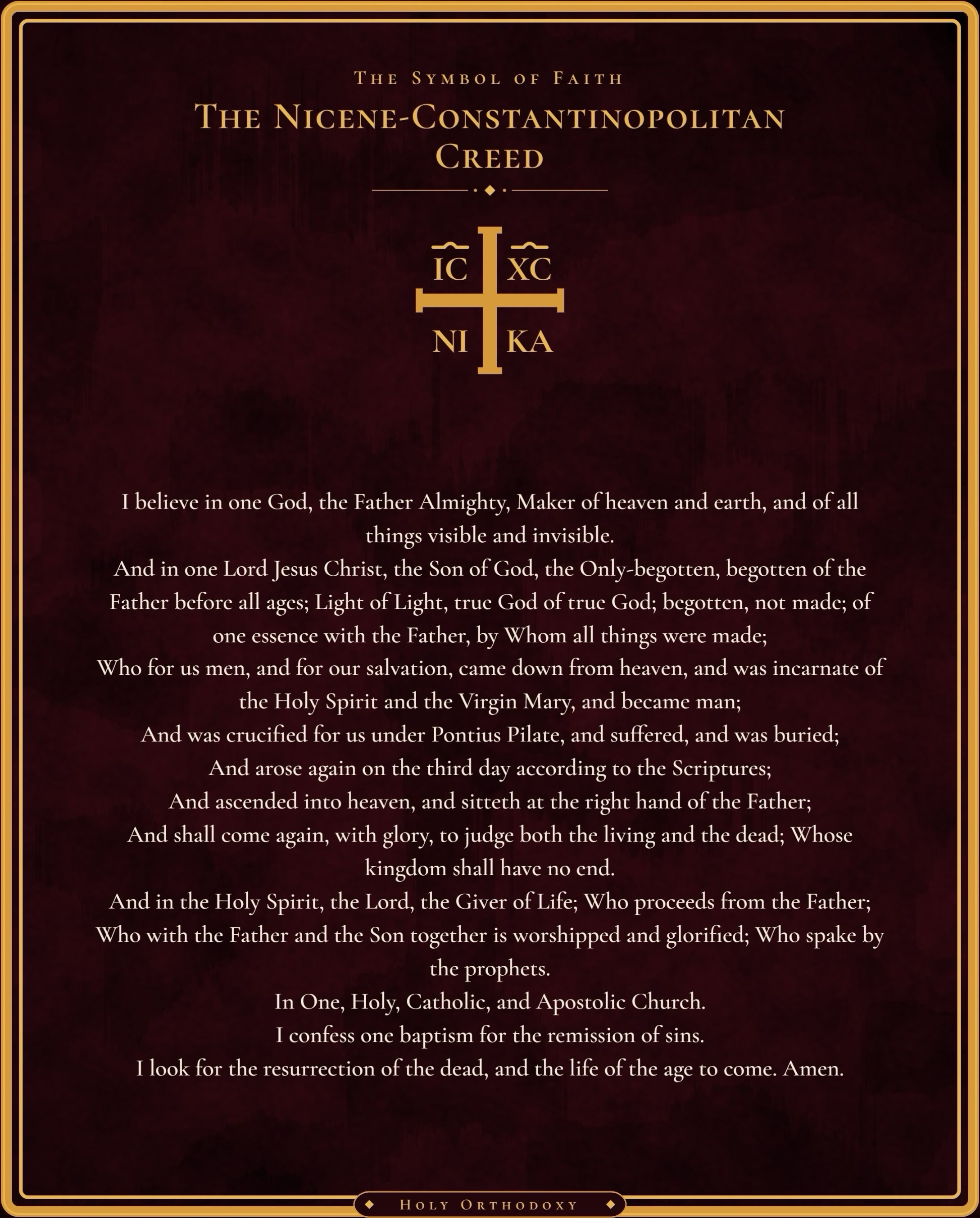
The post presents the full text of the Symbol of Faith, the Nicene-Constantinopolitan Creed, in the form the Orthodox Church uses. It notes that the Creed was begun at the First Ecumenical Council in Nicaea in 325 and completed at the Second Ecumenical Council in Constantinople in 381. For more than 1,600 years the Orthodox Church has confessed it word for word, exactly as the councils gave it, and it is said aloud at every Divine Liturgy and at…

The post presents the full text of the Symbol of Faith, the Nicene-Constantinopolitan Creed, in the form the Orthodox Church uses. It notes that the Creed was begun at the First Ecumenical Council in Nicaea in 325 and completed at the Second Ecumenical Council in Constantinople in 381. For more than 1,600 years the Orthodox Church has confessed it word for word, exactly as the councils gave it, and it is said aloud at every Divine Liturgy and at every baptism.

The post then prints the Creed in full. It opens with belief in one God, the Father Almighty, Maker of heaven and earth, and of all things visible and invisible, and in one Lord Jesus Christ, the Son of God, the Only-begotten, begotten of the Father before all ages, Light of Light, true God of true God, of one essence with the Father.

It confesses that Christ came down from heaven for us men and for our salvation, was incarnate of the Holy Spirit and the Virgin Mary, was crucified under Pontius Pilate, suffered and was buried, arose again on the third day according to the Scriptures, ascended into heaven, sits at the right hand of the Father, and shall come again with glory to judge the living and the dead.

The Creed continues with the Holy Spirit, the Lord and Giver of Life, Who proceeds from the Father, is worshipped and glorified together with the Father and the Son, and spoke by the prophets, followed by confession of the One, Holy, Catholic and Apostolic Church, one baptism for the remission of sins, the resurrection of the dead, and the life of the age to come.

The author suggests saving the text to learn it and sharing it with someone who has asked what Orthodox Christians believe.

  • The Creed was begun at the First Ecumenical Council in Nicaea (325) and completed at the Second in Constantinople (381).
  • The Orthodox Church has confessed it word for word for over 1,600 years.
  • It is said aloud at every Divine Liturgy and at every baptism.
  • The full text is given, from 'I believe in one God' through the resurrection of the dead and the life of the age to come.
  • The Creed names Christ as of one essence with the Father and the Holy Spirit as proceeding from the Father.
Read more