WeOrthodox
EN UA

Orthodox Life

Instagram ↗ 67 discussions

•ᴅᴀɪʟʏ ᴏʀᴛʜᴏᴅᴏx ɪᴄᴏɴᴏɢʀᴀᴘʜʏ, ᴘʀᴀʏᴇʀꜱ, ᴀɴᴅ ꜱᴘɪʀɪᴛᴜᴀʟ ʀᴇꜰʟᴇᴄᴛɪᴏɴꜱ ☦️ •ᴛʜᴇᴏʟᴏɢʏ ɪɴ ᴄᴏʟᴏʀꜱ 🎨 | ᴡɪɴᴅᴏᴡꜱ ᴛᴏ ʜᴇᴀᴠᴇɴ 🪟 •“ᴛʜᴇ ʙᴇᴀᴜᴛʏ ᴏꜰ ᴏʀᴛʜᴏᴅᴏxʏ”🕊️

Orthodox Life Instagram

Saint Philaret of Moscow: translator, catechist, and defender of Church autonomy

The post commemorates Saint Philaret, Metropolitan of Moscow, born Vasily Drozdov in 1782 in Kolomna to a clerical family. He excelled in seminary, took monastic vows in 1808 at the Holy Trinity-St. Sergius Lavra, was consecrated bishop in 1817, became Archbishop of Moscow in 1821, and was elevated to Metropolitan in 1826. During his forty-year leadership he defended the Church's spiritual autonomy from state interference and became known for…

The post commemorates Saint Philaret, Metropolitan of Moscow, born Vasily Drozdov in 1782 in Kolomna to a clerical family. He excelled in seminary, took monastic vows in 1808 at the Holy Trinity-St. Sergius Lavra, was consecrated bishop in 1817, became Archbishop of Moscow in 1821, and was elevated to Metropolitan in 1826. During his forty-year leadership he defended the Church's spiritual autonomy from state interference and became known for his eloquent preaching, earning the title "the new Chrysostom."

Saint Philaret spearheaded a fifty-year project to translate the Holy Scriptures into modern Russian, overcoming strong opposition so ordinary people could read the Word of God. He authored the influential 1823 Christian Catechism and supported the elders of Optina Monastery in publishing patristic texts. Known for deep humility, unceasing prayer, and quiet charity, he donated personal resources to orphans and impoverished clergy families.

He also contributed to Russian society by helping draft the 1861 manifesto emancipating the serfs. Having served the Divine Liturgy one final time, Saint Philaret reposed peacefully on November 19, 1867, at the age of eighty-five.

  • Born Vasily Drozdov in 1782, became Metropolitan of Moscow in 1826 after monastic vows at Trinity-Sergius Lavra
  • Defended Church autonomy from state interference for forty years, renowned for preaching
  • Led fifty-year translation of the Bible into modern Russian despite opposition
  • Authored the 1823 Christian Catechism and supported Optina elders' patristic publications
  • Helped draft the 1861 serf emancipation manifesto; reposed November 19, 1867 at age eighty-five
Read more
Orthodox Life Instagram

Saint Plato of Ancyra: Great Martyr Commemorated November 18

Today the Church commemorates Saint Plato the Great Martyr of Ancyra, a third-century preacher from Galatia. Born into a pious family, he was the brother of the Holy Martyr Antiochus the Physician. While still a youth, Plato traveled from city to city, using his knowledge of Greek learning and persuasive speech to preach the Gospel to pagans. His bold preaching led to his arrest by Roman authorities, who brought him before Governor Agrippinus at…

Today the Church commemorates Saint Plato the Great Martyr of Ancyra, a third-century preacher from Galatia. Born into a pious family, he was the brother of the Holy Martyr Antiochus the Physician. While still a youth, Plato traveled from city to city, using his knowledge of Greek learning and persuasive speech to preach the Gospel to pagans.

His bold preaching led to his arrest by Roman authorities, who brought him before Governor Agrippinus at the temple of Zeus. The governor attempted to persuade Plato through flattery, comparing his intellect to the philosopher Plato and offering his own niece in marriage if he would sacrifice to pagan gods. Plato rejected both offers, declaring that earthly wisdom and life are temporary compared to the eternal truth of Christ.

Enraged, Agrippinus ordered soldiers to beat Plato mercilessly and imprison him. Seven days later, Plato was brought before instruments of torture: boiling cauldrons, red-hot iron, and sharp hooks. Soldiers placed heated iron balls on his body and tore strips of skin from him; Plato urged them to torture him more harshly so his endurance for Christ would be seen more clearly.

After these tortures, guards locked Plato in prison for eighteen days without food or water. When his jailers marveled that he was still alive, he explained that while they were sustained by meat and wine, he was nourished by holy prayer and Christ, the True Vine. Seeing that nothing could break his faith, the authorities made a final offer to spare his life if he would say, "Great is the god Apollo."

Plato steadfastly refused to worship idols, and Agrippinus ordered his execution by beheading around the year 266. The post includes an image depicting a martyrdom scene with inscriptions in Greek and Slavonic.

  • Commemorated on November 18 as Great Martyr of Ancyra.
  • Youthful preacher from Galatia, brother of Martyr Antiochus the Physician.
  • Arrested and tortured under Governor Agrippinus for refusing to sacrifice to idols.
  • Endured eighteen days in prison without food or water, sustained by prayer.
  • Beheaded around 266 after refusing to proclaim Apollo as god.
Read more
Orthodox Life Instagram

Saint Matthew the Apostle and Evangelist: life, Gospel, and martyrdom

The post commemorates Saint Matthew on November 16. He was originally named Levi, a wealthy Jewish tax collector living in Capernaum. Because he worked for the Roman Empire, his countrymen despised him and viewed him as a public sinner. When Jesus Christ passed his customs booth and said, "Come, follow Me," Matthew immediately left his wealth to become one of the Twelve Disciples. He hosted a farewell feast where Christ ate with fellow tax…

The post commemorates Saint Matthew on November 16. He was originally named Levi, a wealthy Jewish tax collector living in Capernaum. Because he worked for the Roman Empire, his countrymen despised him and viewed him as a public sinner. When Jesus Christ passed his customs booth and said, "Come, follow Me," Matthew immediately left his wealth to become one of the Twelve Disciples.

He hosted a farewell feast where Christ ate with fellow tax collectors and sinners, demonstrating God's mercy and call to repentance. After Pentecost, Matthew preached the Gospel first among Jews in Palestine. According to Orthodox tradition, he was the first to write down the Gospel, composing it in Aramaic or Hebrew to prove that Jesus was the promised Messiah.

His missionary journeys took him through Syria, Persia, and Parthia to Ethiopia, where he founded churches and worked miracles. In the Ethiopian city of Myrmene, he converted many pagans to Christianity, angering the local ruler Fulvian. Matthew was placed in a pit of fire surrounded by twelve golden idols, but the flames did not harm him; instead they flared toward Fulvian while the idols melted like wax.

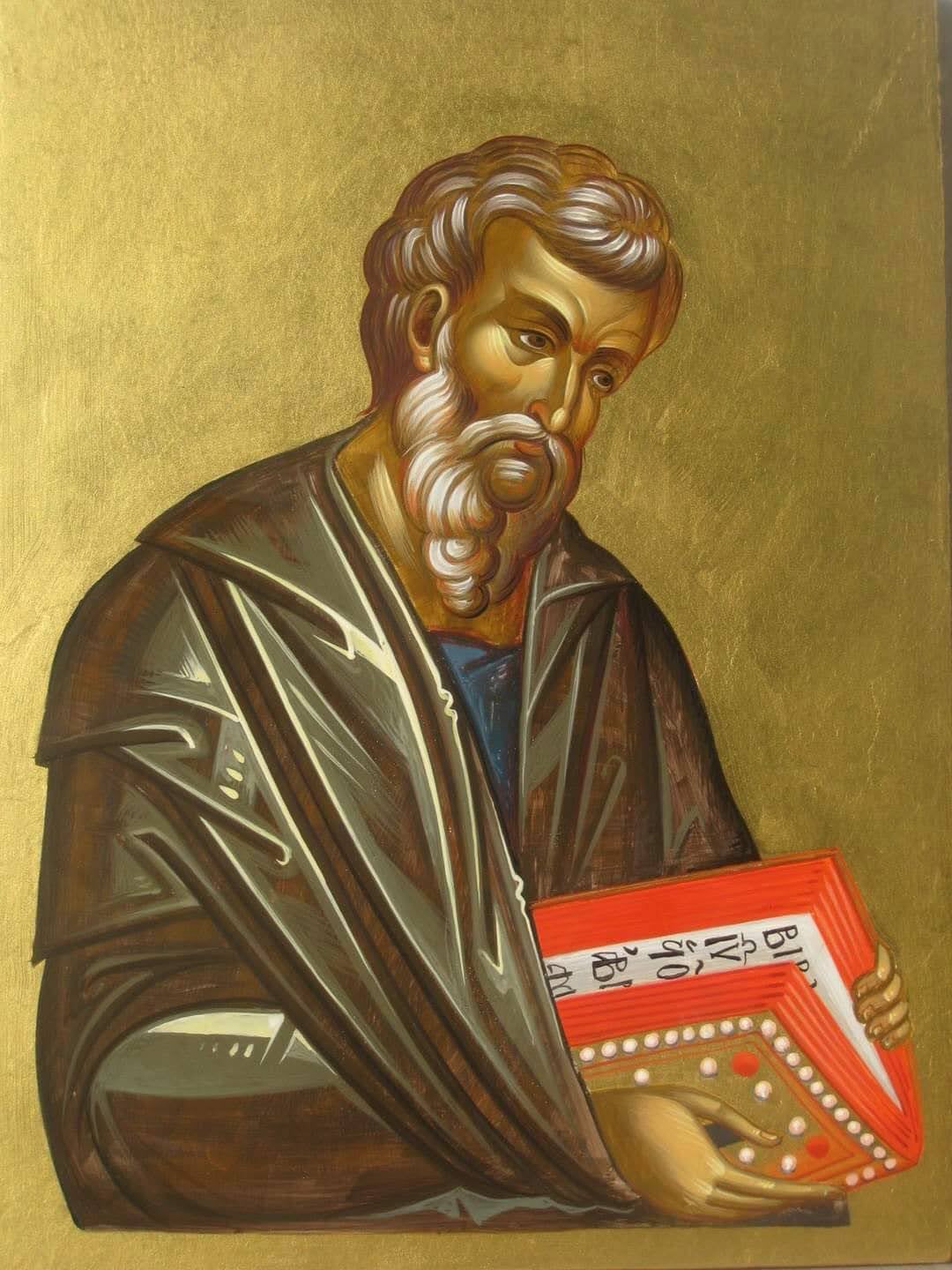
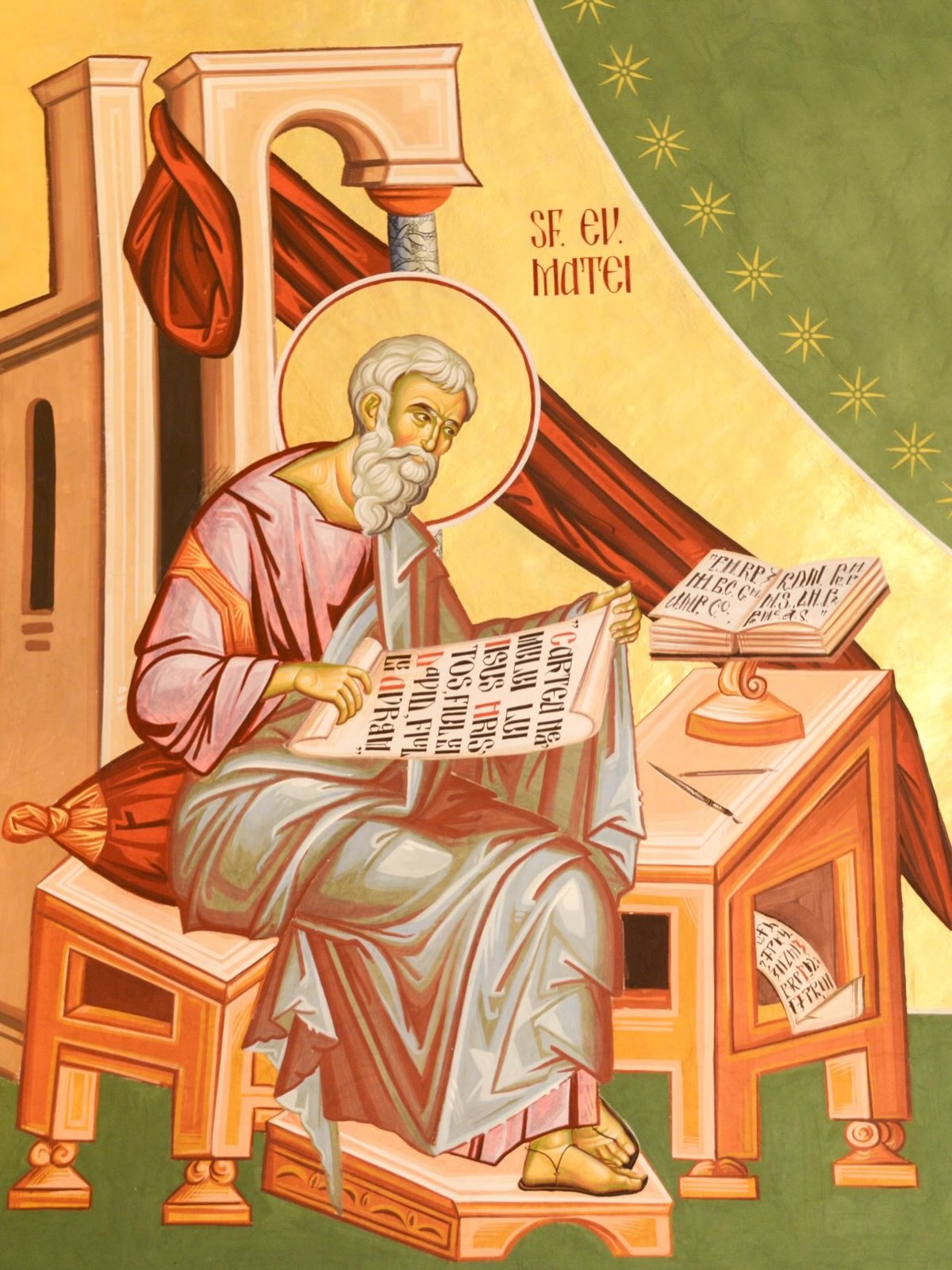
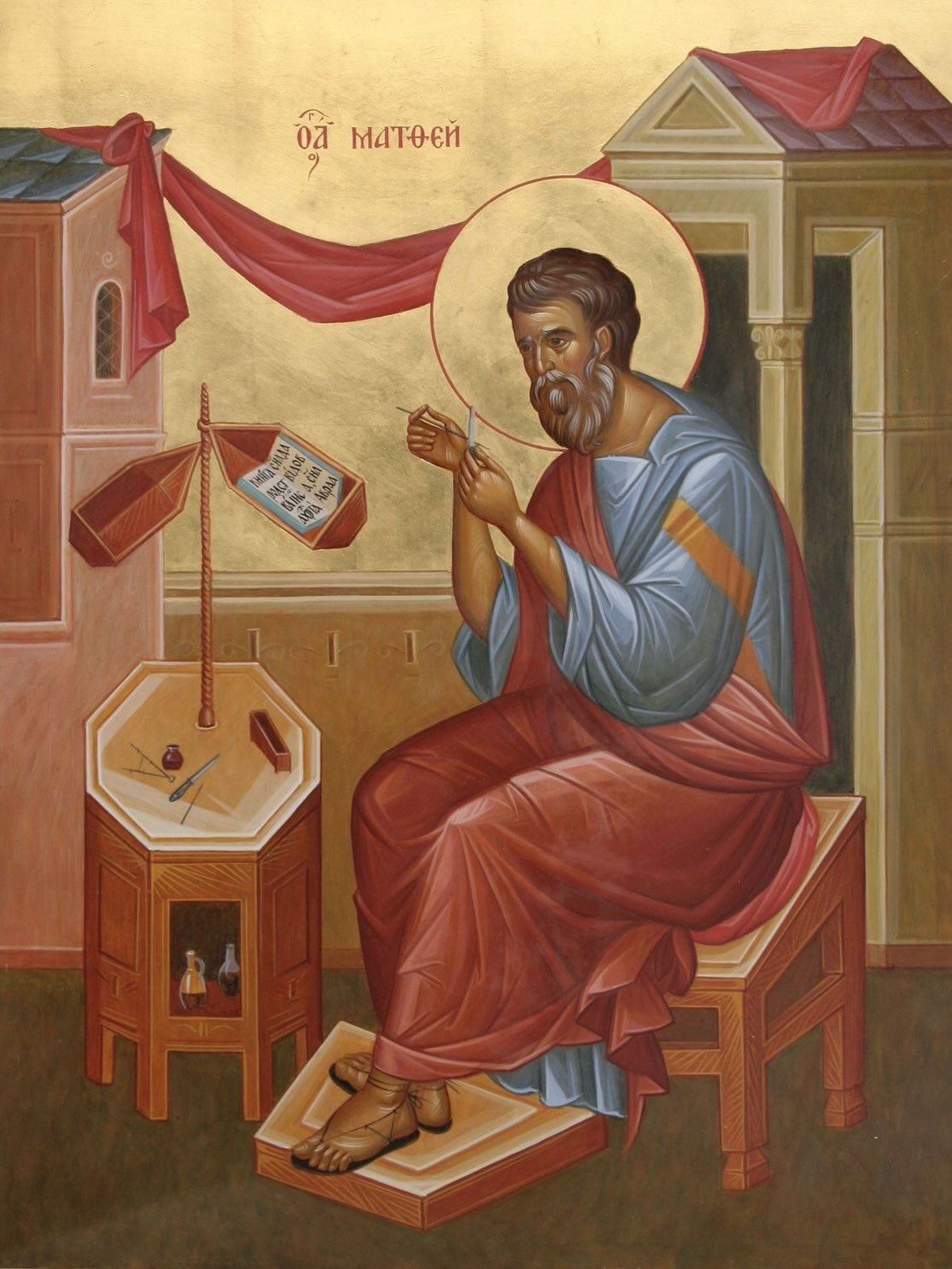
The frightened Fulvian begged Matthew for forgiveness, and by the martyr's prayers the flame went out. His body still unharmed, Saint Matthew surrendered his soul to the Lord. The commemoration is accompanied by icons bearing inscriptions in Greek, Church Slavonic, and Romanian, depicting the saint writing his Gospel, holding a Gospel book, and scenes of his burial and veneration.

  • Originally Levi, a tax collector in Capernaum, called by Jesus to follow Him
  • Hosted a feast where Christ dined with tax collectors and sinners
  • First to write the Gospel, in Aramaic or Hebrew, to prove Jesus as Messiah
  • Preached in Palestine, Syria, Persia, Parthia, and Ethiopia
  • Martyred in Myrmene, Ethiopia, surviving a fiery pit with idols and converting the ruler Fulvian
Read more
Orthodox Life Instagram

Nativity Fast Begins November 15: 40 Days of Preparation for Christ's Birth

The post announces the start of the Nativity Fast on November 15, a 40-day period leading to the Feast of the Nativity on December 25. It explains that this feast is the second Great Despotic Feast of the Orthodox calendar after Great and Holy Pascha. The Church calls the faithful to abstain from meat, fish, dairy products, olive oil, and wine, and to focus more deeply on prayer and almsgiving. This season mirrors a spiritual journey to the cave…

The post announces the start of the Nativity Fast on November 15, a 40-day period leading to the Feast of the Nativity on December 25. It explains that this feast is the second Great Despotic Feast of the Orthodox calendar after Great and Holy Pascha. The Church calls the faithful to abstain from meat, fish, dairy products, olive oil, and wine, and to focus more deeply on prayer and almsgiving.

This season mirrors a spiritual journey to the cave in Bethlehem, offering time to quiet the heart and prepare for the coming of Jesus. The fast was established to allow believers, through repentance, prayer and abstinence, to cleanse themselves in preparation for the Great Feast. As Christ came into the world to bring His glorious gifts and sacrifice, the faithful must prepare to bring Him a clean heart, soul, and body, and a desire to follow His teachings.

Rather than a commercial countdown, the fast is a period of intentional reflection and repentance. Orthodox Christians use these weeks to step away from everyday distractions and focus closely on the meaning of the Incarnation. The dietary guidelines involve abstaining from meat, dairy, and, on many days, fish, wine, and oil.

Fish, wine, and oil are typically allowed on weekends and certain weekdays during the first part of the fast, while the final days become more strict. Fasting of the body is always paired with fasting of the soul through deeper prayer, reading scripture, and acts of mercy. Families and individuals practice forgiveness, charity, and caring for others rather than treating the season like a simple grocery list.

The fast ends on December 24 (Paramony) with a day of strict observance before the fast is joyfully broken at the Nativity services. The post concludes with a call to be prepared for the birth of the Lord Jesus Christ and to remember the Incarnation that saves from death.

  • The Nativity Fast begins annually on November 15 and lasts 40 days through December 24.
  • Fasting includes abstaining from meat, dairy, fish, wine, and oil, with allowances on weekends and certain weekdays early in the period.
  • The fast is paired with increased prayer, Scripture reading, almsgiving, and acts of mercy.
  • It prepares the faithful for the Feast of the Nativity, the second Great Despotic Feast after Pascha.
  • The fast concludes on December 24 (Paramony) with strict observance before the Nativity services.
Read more
Orthodox Life Instagram

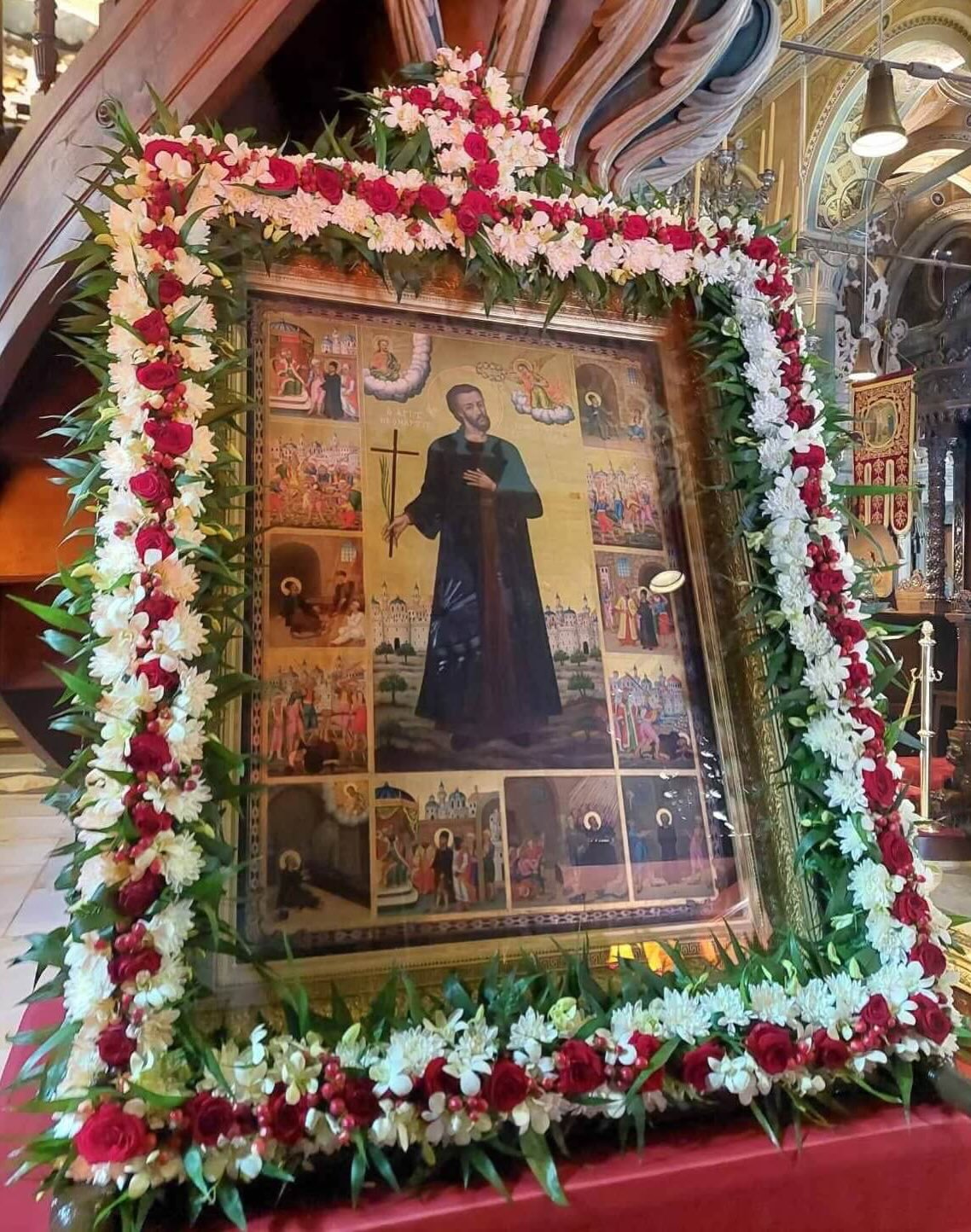
Saint Constantine of Hydra: Apostasy, Repentance, and Martyrdom

Saint Constantine of Hydra, a New Martyr commemorated on November 14, was born in the late eighteenth century to pious Orthodox parents Michael and Marina on the Greek island of Hydra. Driven by poverty and lack of work, he left home at eighteen for Rhodes to earn a living and support his family. There he entered the service of the local Ottoman governor, Hasan Kapetan. Through deceit and social pressure, he abandoned his Christian faith,…

Saint Constantine of Hydra, a New Martyr commemorated on November 14, was born in the late eighteenth century to pious Orthodox parents Michael and Marina on the Greek island of Hydra. Driven by poverty and lack of work, he left home at eighteen for Rhodes to earn a living and support his family. There he entered the service of the local Ottoman governor, Hasan Kapetan.

Through deceit and social pressure, he abandoned his Christian faith, converted to Islam, and took his master's name, Hasan. For three years he lived in comfort and enjoyed high honors in the governor's household. Overwhelmed by remorse for denying Christ, Constantine sought forgiveness and began giving alms to poor Christians.

When his own family and community rejected him for his apostasy, he traveled to Mount Athos. There he confessed to a spiritual father at the Iveron Monastery and prepared himself through strict fasting and prayer to atone for his sin through martyrdom. Constantine returned to Rhodes and boldly appeared before Hasan Kapetan, openly renouncing Islam and declaring himself a Christian.

Furious at his former servant's defiance, the governor had him thrown into prison and subjected to severe tortures. Throughout his ordeal, Constantine remained steadfast in his faith and prayed continually to God. By order of the Sultan, Constantine was executed by hanging in Rhodes on November 14, 1800, at the age of thirty.

His mother later recovered his relics and brought them back to Hydra, where he is venerated as the island's patron saint on his feast day, November 14.

  • Born on Hydra, left for Rhodes at eighteen to work for Hasan Kapetan
  • Converted to Islam under pressure, lived as Hasan for three years
  • Repented, confessed at Iveron Monastery on Mount Athos
  • Returned to Rhodes, publicly renounced Islam before the governor
  • Executed by hanging in 1800; relics brought to Hydra
Read more