WeOrthodox
EN UA

Mount Athos Legacy

Facebook ↗ 30 discussions

Αυθεντικά χειροποίητα προϊόντα από μοναχούς του Αγίου Όρους Original handmade products by monks of Mount Athos in Greece

Mount Athos Legacy Facebook

Saint Catherine of Alexandria: noblewoman, scholar, martyr
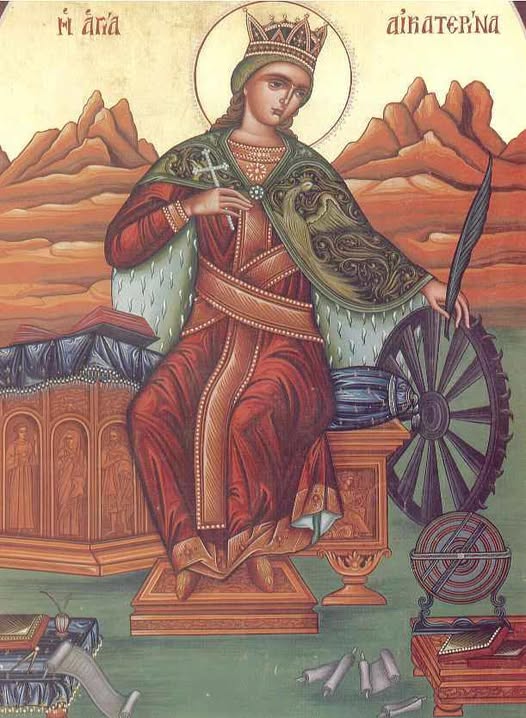
The post recounts the life of Saint Catherine, commemorated today. She was born into a noble family in Alexandria, described as the daughter of a ruler named Constus, and martyred in 304 AD under Maxentius. By age eighteen she had mastered Greek, Roman, and Latin literature and philosophy, knowing works of Homer, Virgil, Asclepius, Hippocrates, Galen, Aristotle, Plato, Philistion, Eusebius, Jannes, Jambres, Dionysius, and the Sibyl. She was also…

The post recounts the life of Saint Catherine, commemorated today. She was born into a noble family in Alexandria, described as the daughter of a ruler named Constus, and martyred in 304 AD under Maxentius. By age eighteen she had mastered Greek, Roman, and Latin literature and philosophy, knowing works of Homer, Virgil, Asclepius, Hippocrates, Galen, Aristotle, Plato, Philistion, Eusebius, Jannes, Jambres, Dionysius, and the Sibyl.

She was also well grounded in Christian doctrine. During persecution, she boldly proclaimed Christ as the only true God. The prefect tried to persuade her to renounce her faith through debate, but when she surpassed the rhetoricians of Alexandria in public disputation, some of them converted. The prefect then ordered severe torture, but she remained steadfast and was beheaded.

  • Born to noble family in Alexandria, daughter of Constus
  • Highly educated in classical literature, philosophy, medicine, and Christian doctrine by age eighteen
  • Publicly confessed Christ during persecution under Maxentius (304 AD)
  • Defeated Alexandria's rhetoricians in debate, leading some to convert
  • Tortured and beheaded after refusing to recant
Read more
Mount Athos Legacy Facebook

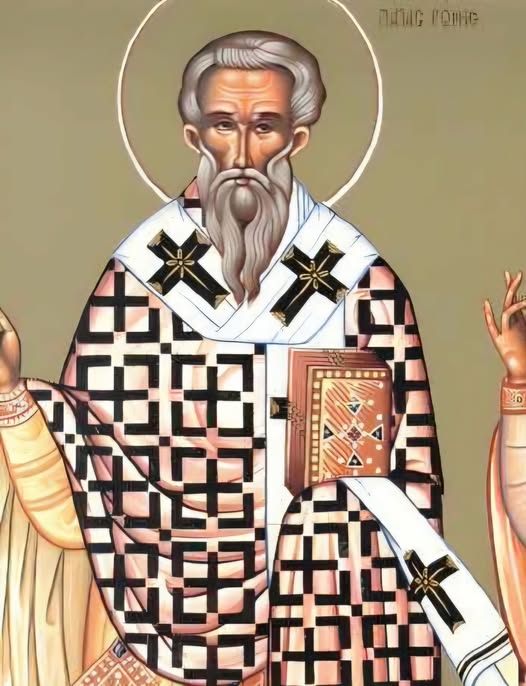
Saint Clement of Rome honored as hieromartyr and third bishop

The post marks the feast of Saint Clement the Hieromartyr, Bishop of Rome. It recounts his background as a Roman aristocrat of royal lineage, son of Faustus and Mattidia, who mastered Greek learning before meeting the Apostle Peter and receiving the true faith. He became a fervent evangelist and wrote several works. Around 92 AD he succeeded Anacletus as the third bishop of Rome and led the Church with great zeal during harsh persecutions.…

The post marks the feast of Saint Clement the Hieromartyr, Bishop of Rome. It recounts his background as a Roman aristocrat of royal lineage, son of Faustus and Mattidia, who mastered Greek learning before meeting the Apostle Peter and receiving the true faith. He became a fervent evangelist and wrote several works. Around 92 AD he succeeded Anacletus as the third bishop of Rome and led the Church with great zeal during harsh persecutions.

Arrested by Emperor Domitian, he was exiled to a desert city near Chersonesus. There an iron anchor was bound to his neck and he was thrown into the sea, surrendering his soul in 101 AD. The author adds that Clement was not only classically educated but embodied the Pauline ideal of being "wise unto good, innocent unto evil" (Romans 16:19).

  • Saint Clement was a Roman aristocrat converted by the Apostle Peter
  • He served as third bishop of Rome from approximately 92 AD
  • He shepherded the Church during intense persecution
  • Martyred under Domitian by being thrown into the sea with an anchor
  • Remembered for spiritual wisdom: "wise unto good, innocent unto evil"
Mount Athos Legacy Facebook

Monk Petrakis Katounakiotis and the Uncreated Light

The text presents a testimony by Elder Gerasimos the Hymnographer concerning Monk Petrakis, also known as Father Petros Katounakiotis, a hesychast of great stature on Mount Athos. Petrakis was small in stature, unlettered, and poor, yet he possessed unceasing prayer and frequently beheld the Uncreated Light, living in paradisiacal states. Gerasimos recounts that Petrakis cooked once a week and ate from that meal each day. On one occasion…

The text presents a testimony by Elder Gerasimos the Hymnographer concerning Monk Petrakis, also known as Father Petros Katounakiotis, a hesychast of great stature on Mount Athos. Petrakis was small in stature, unlettered, and poor, yet he possessed unceasing prayer and frequently beheld the Uncreated Light, living in paradisiacal states.

Gerasimos recounts that Petrakis cooked once a week and ate from that meal each day. On one occasion Petrakis came to Gerasimos's cell with a changed countenance, weeping. He told Gerasimos that while praying at night he had been encircled by a boundless white light and his cell had filled with fragrance.

He felt indescribable blessedness, sweetness, and peace, and did not know whether he remained in his cell. He asked Gerasimos, who was educated, whether this might be a delusion of Satan or something evil. As Petrakis spoke, all his words were of grace; he went out of himself and his face suddenly shone.

Gerasimos remained silent, letting him speak, and examined his words carefully, discerning no point of delusion. He then advised Petrakis to glorify God for the vision, because all such things come from God and are not delusion. Upon leaving, Petrakis begged Gerasimos not to reveal the event anywhere and to pray that God would have mercy on him so he would not be deceived.

Gerasimos describes Petrakis as a monk of noetic prayer, very humble and simple. The account indicates that this was the first such experience for Petrakis, but afterward he lived through many similar states, as he later revealed to Elder Paisios. He often saw the Uncreated Light, had ceaseless tears accompanying his unceasing prayer, and had surpassed the typical measures of ascetic practice.

The narrative is taken from the book "From the Ascetic and Hesychastic Athonite Tradition", published on Mount Athos in 2011.

  • Monk Petrakis (Fr. Petros Katounakiotis) was a simple, uneducated hesychast on Mount Athos with unceasing prayer.
  • He experienced a vision of boundless white light and fragrance during prayer, feeling blessedness and peace.
  • Elder Gerasimos the Hymnographer examined the account and found no sign of delusion, advising him to glorify God.
  • Petrakis asked for secrecy and prayer that he would not be deceived.
  • Later he frequently saw the Uncreated Light, had constant tears, and surpassed ordinary ascetic measures, as confirmed to Elder Paisios.
Read more
Mount Athos Legacy Facebook

The Entry of the Theotokos: Anna and Joachim dedicate Mary to the Temple

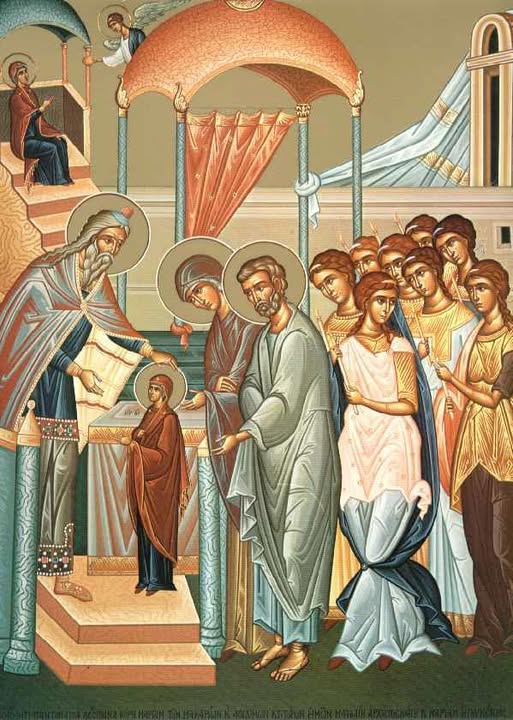
The post recounts the feast of the Entry of the Theotokos into the Temple. Anna, wife of Joachim, was barren. Both prayed fervently for a child and vowed to dedicate the child to God. God granted them a daughter, Mary, who would become the Mother of the Messiah, Jesus Christ. When Mary reached three years of age, her parents brought her to the Temple in Jerusalem and presented her to the high priest Zacharias. According to the tradition,…

The post recounts the feast of the Entry of the Theotokos into the Temple. Anna, wife of Joachim, was barren. Both prayed fervently for a child and vowed to dedicate the child to God. God granted them a daughter, Mary, who would become the Mother of the Messiah, Jesus Christ.

When Mary reached three years of age, her parents brought her to the Temple in Jerusalem and presented her to the high priest Zacharias. According to the tradition, Zacharias received the Virgin Mary and led her into the Holy of Holies, a place where no one entered except the high priest once a year. He did so because he knew through divine revelation the future role of the holy child in the incarnation of the Lord.

Mary remained in the inner parts of the Temple for twelve years. During this entire period the archangel Gabriel supplied her with heavenly food. She left the Holy of Holies when the time came for the divine Annunciation.

  • Anna and Joachim, childless, pray and vow to dedicate a child to God
  • God grants them Mary, the future Mother of the Messiah
  • At age three, Mary is presented to high priest Zacharias at the Temple
  • Zacharias leads her into the Holy of Holies by divine revelation
  • Mary stays in the Temple twelve years, fed by the archangel Gabriel
Mount Athos Legacy Facebook

Spiritual progress is humility, says elder; St. Theophan on surrendering to God's will

A brother asks an elder what constitutes spiritual progress according to God. The elder answers that progress is humility: the more a person descends into humility, the more he is raised in progress. The post also includes a quotation from St. Theophan the Recluse advising that the best course is to leave oneself in God's hands, to pray asking Him to place one on the path He deems best, and to wait patiently for the hour when He will speak. St. Theophan adds that God will speak through events.

  • An elder defines spiritual progress as humility: descent into humility corresponds to ascent in progress.
  • St. Theophan the Recluse counsels surrendering oneself to God's will through prayer.
  • One should ask God to set one on the path He considers best.
  • Patient waiting is required for God to speak.
  • God speaks through the events of life.
Mount Athos Legacy Facebook

Elder Gabriel of Mount Athos lists seven practices for God's blessing

Elder Gabriel of Mount Athos advises that for individuals, families, and nations to receive God's blessing, they should carefully observe seven practices. First, regular confession to a spiritual father. Second, regular church attendance. Third, frequent Holy Communion with the blessing of one's spiritual father. Fourth, fasting on Wednesdays and Fridays without oil, and on the other days appointed by the Church. Fifth, almsgiving to poor…

Elder Gabriel of Mount Athos advises that for individuals, families, and nations to receive God's blessing, they should carefully observe seven practices. First, regular confession to a spiritual father. Second, regular church attendance. Third, frequent Holy Communion with the blessing of one's spiritual father.

Fourth, fasting on Wednesdays and Fridays without oil, and on the other days appointed by the Church. Fifth, almsgiving to poor families and good works. Sixth, daily study of Holy Scripture, even if only five to ten minutes each day. Seventh, unceasing prayer, specifically the Jesus Prayer, "Lord Jesus Christ, have mercy on me", and the invocation "Most Holy Theotokos, save us."

The elder presents these as a comprehensive rule of life for spiritual growth and divine favor.

  • Regular confession and church attendance
  • Frequent communion with spiritual father's blessing
  • Fasting on Wednesdays, Fridays, and other church-appointed days
  • Almsgiving to poor families and good works
  • Daily Scripture reading and unceasing Jesus Prayer
Mount Athos Legacy Facebook

Saint Gregory Thaumaturgus: from 17 Christians to a Christian city

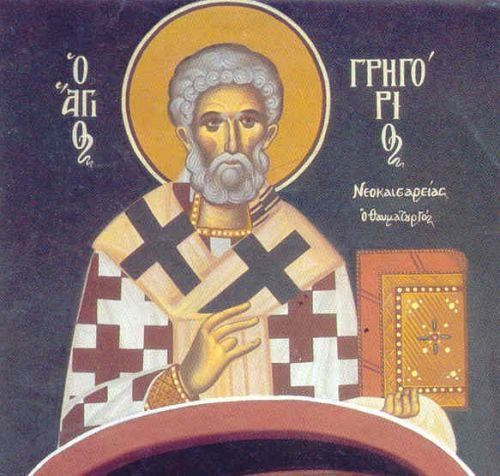
Saint Gregory of Neocaesarea, known as the Wonderworker, is commemorated today. He was born around 210 to 215 AD in Neocaesarea of Pontus. His given name was Theodore, and his parents were pagan Greeks who held high social position in the city. He relied on divine grace and the encouragement of his uncle Paul, who cited Second Timothy 2:1 in Greek: "Ἐνδυναμοῦ ἐν τῇ χάριτι τῇ ἐν Χριστῷ Ἰησοῦ", "Be strengthened by the grace that is in Christ…

Saint Gregory of Neocaesarea, known as the Wonderworker, is commemorated today. He was born around 210 to 215 AD in Neocaesarea of Pontus. His given name was Theodore, and his parents were pagan Greeks who held high social position in the city. He relied on divine grace and the encouragement of his uncle Paul, who cited Second Timothy 2:1 in Greek: "Ἐνδυναμοῦ ἐν τῇ χάριτι τῇ ἐν Χριστῷ Ἰησοῦ", "Be strengthened by the grace that is in Christ Jesus."

Through that grace, Gregory undertook a remarkable struggle and brought nearly the whole city to Christianity. When he assumed the episcopacy, only 17 Christians lived in the city; when he died peacefully at the end of 270 AD, only 17 pagans remained in his diocese. He exercised exceptional self-control in speech, so that no bad, superfluous, or idle word ever came from his mouth.

Because of this purity of speech, God granted him the gift of wonderworking. An image accompanying the commemoration displays the saint's name and title in Greek, broken into individual segments: "ὁ ἅγιος Γρηγόριος Νεοκαισαρείας ὁ θαυματουργός."

  • Born Theodore around 210-215 AD in Neocaesarea of Pontus to pagan Greek parents
  • Encouraged by his uncle Paul with the words of 2 Timothy 2:1
  • Converted nearly the whole city, from 17 Christians to only 17 pagans remaining at his death
  • Noted for extreme self-control in speech, uttering no idle or harmful words
  • Granted the gift of wonderworking by God
Mount Athos Legacy Facebook

Nativity Fast begins November 15, a 40-day preparation for Christmas

The post announces the start of the Nativity Fast, the second major fasting period in the Orthodox liturgical year after Great Lent. Known popularly as the Sarantameros (Forty Days), it begins on November 15 and concludes on December 24. The fast serves as a period of spiritual preparation for the feast of the Nativity of Christ. It lasts approximately forty days and is observed with less severity than the fast of Great Lent. The text notes the…

The post announces the start of the Nativity Fast, the second major fasting period in the Orthodox liturgical year after Great Lent. Known popularly as the Sarantameros (Forty Days), it begins on November 15 and concludes on December 24. The fast serves as a period of spiritual preparation for the feast of the Nativity of Christ.

It lasts approximately forty days and is observed with less severity than the fast of Great Lent. The text notes the dates and the character of the fast, emphasizing its role in readying the faithful for the celebration of Christ's birth.

  • The Nativity Fast starts on November 15 and ends on December 24.
  • It is the second long fast after Great Lent, called Sarantameros (Forty Days).
  • The fast lasts about 40 days as spiritual preparation for Christ's Nativity.
  • It is less strict than the Great Lent fast.
  • The post marks today as the beginning of this fasting period.
Mount Athos Legacy Facebook

St Gregory Palamas: from the imperial court to Mount Athos and the Second Sunday of Lent

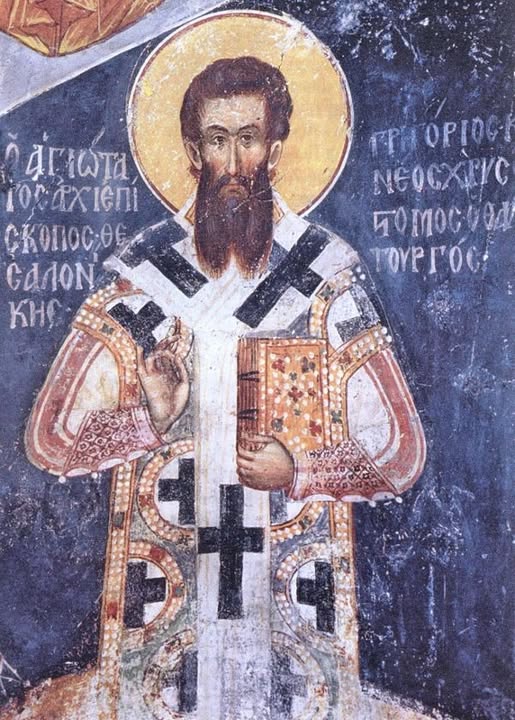
The post marks the feast of St Gregory Palamas, Archbishop of Thessalonica, on the Second Sunday of Great Lent. It recalls his life and veneration: he was a skilled theologian, orator and philosopher who in the first half of the 14th century served at the imperial court in Constantinople before withdrawing to Mount Athos for a quieter life, devoting himself to moral perfection and study. He died in 1360 and was honoured as a saint soon after.…

The post marks the feast of St Gregory Palamas, Archbishop of Thessalonica, on the Second Sunday of Great Lent. It recalls his life and veneration: he was a skilled theologian, orator and philosopher who in the first half of the 14th century served at the imperial court in Constantinople before withdrawing to Mount Athos for a quieter life, devoting himself to moral perfection and study.

He died in 1360 and was honoured as a saint soon after. Patriarch Philotheos wrote an encomium in his honour in 1376, together with a service, and set his liturgical memory for the Second Sunday of Great Lent. The post also notes that after his body was exhumed it was found incorrupt, giving off fragrance and working miracles.

  • St Gregory Palamas, Archbishop of Thessalonica, is commemorated on the Second Sunday of Great Lent.
  • He was a theologian, orator and philosopher who served at the imperial court in Constantinople in the first half of the 14th century.
  • He withdrew to Mount Athos for a quieter life, given to moral perfection and study.
  • He died in 1360 and was soon honoured as a saint; Patriarch Philotheos wrote an encomium and a service for him in 1376 and set his memory on the Second Sunday of Lent.
  • After exhumation his body was incorrupt, fragrant and wonderworking.
Mount Athos Legacy Facebook

Elder Joseph Vatopaidinis on Repentance and God's Mercy

The post shares a prayer attributed to Elder Joseph of Vatopaidi describing the movement of repentance. When a person sees his weaknesses and the sins he cannot overcome, he turns with deep humility to Christ, falling before His wounds. The prayer acknowledges personal responsibility for one's misery while confessing inability to conquer the passions. It appeals to God's paternal love, asking not for judgment but for healing, recalling Christ's…

The post shares a prayer attributed to Elder Joseph of Vatopaidi describing the movement of repentance. When a person sees his weaknesses and the sins he cannot overcome, he turns with deep humility to Christ, falling before His wounds. The prayer acknowledges personal responsibility for one's misery while confessing inability to conquer the passions.

It appeals to God's paternal love, asking not for judgment but for healing, recalling Christ's own words that He came not to judge but to save sinners, and that His blood cleanses from all sin. The elder's words present repentance not as despair but as persistent entreaty grounded in the certainty of divine mercy.

  • Repentance begins with seeing one's weaknesses and failures
  • The penitent falls before Christ's wounds in humility
  • The prayer admits personal fault while confessing powerlessness against passions
  • It appeals to Christ's mission to save sinners, not to judge
  • Persistence in entreaty is grounded in the promise of cleansing by Christ's blood
Read more
Mount Athos Legacy Facebook

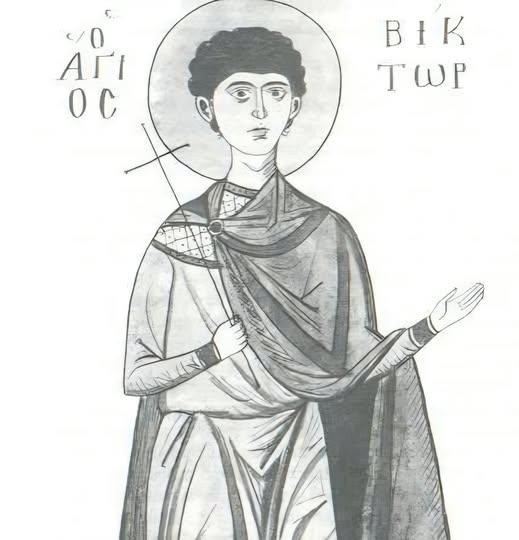
Saint Victor the Great Martyr, martyred under Antoninus in Italy

The post commemorates Saint Victor the Great Martyr, who lived in the second century after Christ during the reign of Emperor Antoninus (160 AD). He belonged to the company of martyrs who watered the life-giving tree of the Christian faith with their blood. Victor carried out his ministry for the Gospel in Italy, traveling to various cities and sowing the word of salvation. He was arrested for this activity and pressured to offer sacrifice to…

The post commemorates Saint Victor the Great Martyr, who lived in the second century after Christ during the reign of Emperor Antoninus (160 AD). He belonged to the company of martyrs who watered the life-giving tree of the Christian faith with their blood. Victor carried out his ministry for the Gospel in Italy, traveling to various cities and sowing the word of salvation.

He was arrested for this activity and pressured to offer sacrifice to idols. When he refused to yield, his eyes were gouged out and he was hanged upside down. In this manner he surrendered his noble and holy soul.

  • Commemorated today as a Great Martyr of the second century.
  • Ministered in Italy under Emperor Antoninus (160 AD).
  • Arrested for preaching the Gospel and refused idol sacrifice.
  • Tortured by having his eyes removed and being hanged upside down.
  • Died surrendering his soul to God.
Mount Athos Legacy Facebook

St. Augustine on Who Christ Is for Us

The post presents a series of questions and answers attributed to St. Augustine that describe Christ's identity in relation to human needs. Each line pairs a human condition with a title of Christ: the Physician for wounds, Peace for a troubled soul, Justice for injustice, Power for helplessness, Life for fear of death, the Way for those seeking heaven, Light for those who hate darkness, and Food for hunger. The accompanying image shows a halo…

The post presents a series of questions and answers attributed to St. Augustine that describe Christ's identity in relation to human needs. Each line pairs a human condition with a title of Christ: the Physician for wounds, Peace for a troubled soul, Justice for injustice, Power for helplessness, Life for fear of death, the Way for those seeking heaven, Light for those who hate darkness, and Food for hunger.

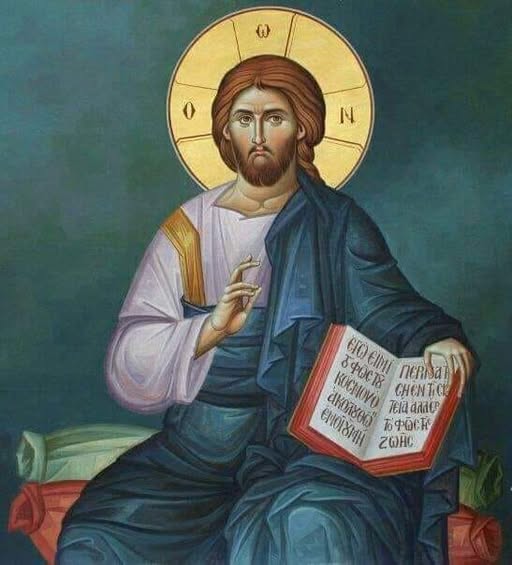
The accompanying image shows a halo inscribed with "Ο ΩΝ" (He Who Is) and an open book displaying John 8:12 in Greek: "I am the light of the world; he who follows me shall not walk in darkness but shall have the light of life." The text functions as a compact Christological catechesis, drawing on scriptural titles to show how Christ meets every spiritual lack. No further commentary or discussion is included in the source.

  • Attributed to St. Augustine
  • Eight pairs of human need and Christ's title
  • Includes Physician, Peace, Justice, Power, Life, Way, Light, Food
  • Image cites John 8:12 in Greek
  • No additional commentary or discussion present
Mount Athos Legacy Facebook

Saint Paul I the Confessor: Patriarch, exile, and martyrdom under Arian emperors

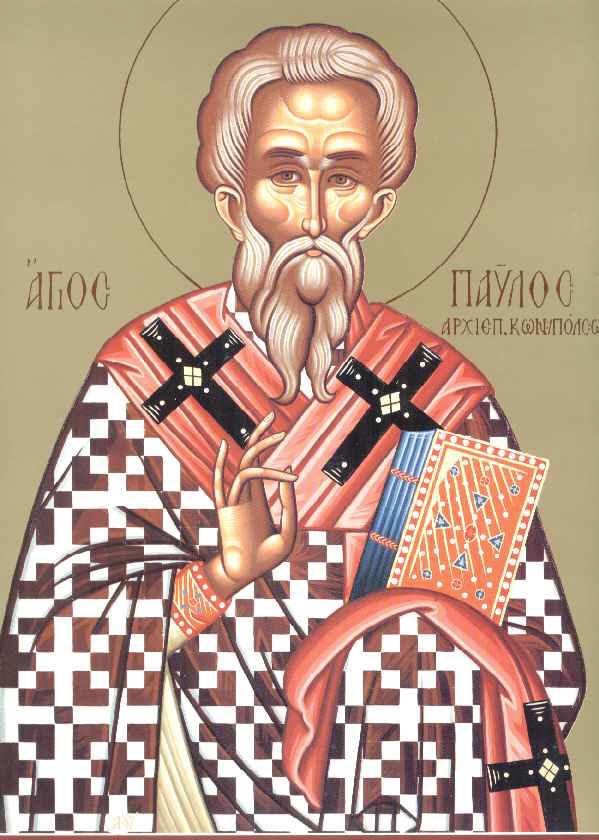
The post recounts the life of Saint Paul I, Archbishop of Constantinople, commemorated today by the Orthodox Church. Born in Thessaloniki in the early fourth century, he served as secretary to Patriarch Alexander. After Alexander's death in 377, Paul was elected patriarch. Emperor Constantius, an Arian supporter, deposed him and installed the Arian-minded Eusebius of Nicomedia. Paul fled to Rome where he found Saint Athanasius, also exiled by…

The post recounts the life of Saint Paul I, Archbishop of Constantinople, commemorated today by the Orthodox Church. Born in Thessaloniki in the early fourth century, he served as secretary to Patriarch Alexander. After Alexander's death in 377, Paul was elected patriarch. Emperor Constantius, an Arian supporter, deposed him and installed the Arian-minded Eusebius of Nicomedia.

Paul fled to Rome where he found Saint Athanasius, also exiled by Constantius. Emperor Constans, Constantius' brother, protested and secured their restoration. After Constans died, Constantius again deposed Paul and exiled him to Cucusus in Armenia.

While celebrating the Divine Liturgy, Arians attacked and strangled him with his own omophorion. The saint thus completed his life and gave his soul to the Lord.

  • Born in Thessaloniki early 4th century, secretary to Patriarch Alexander
  • Elected Patriarch of Constantinople in 377 after Alexander's death
  • Deposed by Arian Emperor Constantius, replaced by Eusebius of Nicomedia
  • Restored briefly after intervention by Emperor Constans
  • Exiled to Cucusus, Armenia, and martyred by Arians during Liturgy
Mount Athos Legacy Facebook

St. Peter counts Paradise's guests and finds the Virgin Mary bringing more

A story from Mount Athos recounts that each night St. Peter closed the gates of Paradise and counted how many had entered, writing their names beside those already inside. The next morning he counted again and discovered three more people than the ten he had recorded the previous evening. Puzzled, he went to Christ and asked for an explanation. Christ told him to keep watch. That night St. Peter obeyed and at dawn he had the answer. He reported…

A story from Mount Athos recounts that each night St. Peter closed the gates of Paradise and counted how many had entered, writing their names beside those already inside. The next morning he counted again and discovered three more people than the ten he had recorded the previous evening. Puzzled, he went to Christ and asked for an explanation. Christ told him to keep watch.

That night St. Peter obeyed and at dawn he had the answer. He reported to the Lord that in the evening, when Paradise was closed, the Virgin Mary climbed the walls and brought people in from there. The story illustrates the intercessory power of the Theotokos.

  • St. Peter nightly counts those entering Paradise and records their names.
  • He finds three more people in the morning than he counted the night before.
  • Christ instructs him to keep watch to discover the cause.
  • St. Peter sees the Virgin Mary climb the walls and bring people into Paradise.
  • The account is presented as a traditional story from Mount Athos.
Mount Athos Legacy Facebook

What Patience Means in Christian Suffering

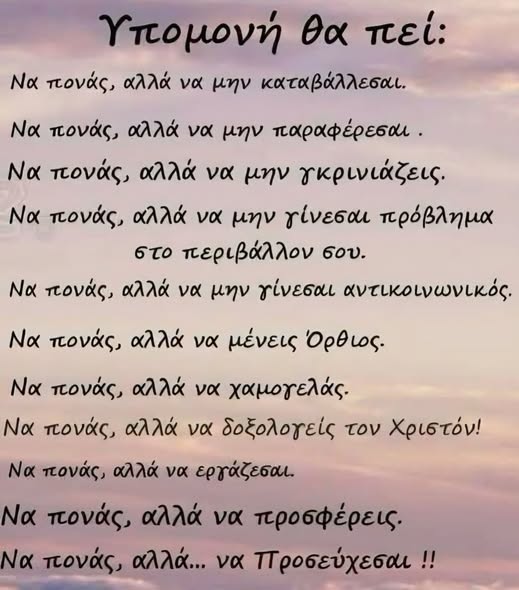
The post shares a Greek text describing the Orthodox understanding of patience (υπομονή) as active endurance rather than passive resignation. The text presents a series of contrasts: to suffer but not be crushed, not complain, not grumble, not become a burden to others, not withdraw from community. Instead, patience means remaining upright, smiling, glorifying Christ, continuing to work, offering to others, and praying. The opening greeting…

The post shares a Greek text describing the Orthodox understanding of patience (υπομονή) as active endurance rather than passive resignation. The text presents a series of contrasts: to suffer but not be crushed, not complain, not grumble, not become a burden to others, not withdraw from community. Instead, patience means remaining upright, smiling, glorifying Christ, continuing to work, offering to others, and praying.

The opening greeting wishes a good and blessed evening to all readers. The image text appears to be a spiritual saying or homiletic fragment, possibly from a contemporary Orthodox author or elder, though no attribution is given. The teaching reflects the Orthodox ascetic tradition that suffering, when met with prayer and love, becomes participation in the Cross rather than mere affliction.

The list moves from negative renunciations to positive actions, culminating in prayer as the final and encompassing response to pain.

  • Patience means suffering without despair, complaint, or grumbling
  • It refuses to become a burden or withdraw from others
  • The sufferer remains upright, smiles, and glorifies Christ
  • Work and offering to others continue despite pain
  • Prayer is the final and all-encompassing response
Mount Athos Legacy Facebook

Saints Cosmas and Damian, the Unmercenaries: healing without payment

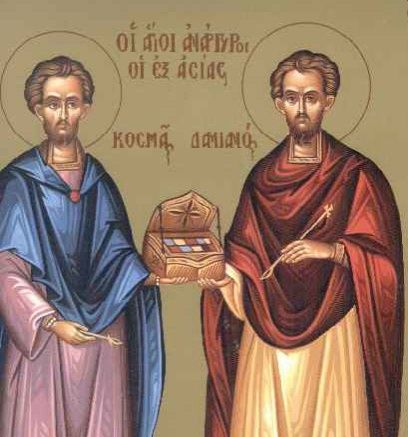
The Church honours Saints Cosmas and Damian, the Unmercenaries and wonderworkers, who came from Asia. Their parents were a model of Christian married life. When their mother Theodote was widowed, she devoted herself to raising her two sons in the Christian faith. The brothers showed great intelligence and diligence, studied many sciences, and took up medicine in particular. They practised medicine as an act of charity toward their neighbour:…

The Church honours Saints Cosmas and Damian, the Unmercenaries and wonderworkers, who came from Asia. Their parents were a model of Christian married life. When their mother Theodote was widowed, she devoted herself to raising her two sons in the Christian faith. The brothers showed great intelligence and diligence, studied many sciences, and took up medicine in particular.

They practised medicine as an act of charity toward their neighbour: they healed the sick, especially the poor, without taking payment, and so were called Anargyroi, those without silver. Many patients they healed wanted to thank them, but the saints refused thanks and answered with the words of Scripture: blessing and glory and wisdom and thanksgiving and honour and power and strength belong to our God for ever and ever (Revelation 7:12).

All praise, the post explains, belongs to God alone. The brothers served their neighbour in humility all their lives, died peacefully, and were buried at the place called Ferema.

  • Cosmas and Damian came from Asia and were raised by their widowed mother Theodote in the Christian faith.
  • They studied many sciences and practised medicine as charity, healing the poor without payment, which earned them the name Unmercenaries.
  • They refused thanks from healed patients, answering with Revelation 7:12, that all glory belongs to God.
  • They served their neighbour humbly all their lives, died peacefully, and were buried at Ferema.
Mount Athos Legacy Facebook

Elder Ephraim Katounakiotis and the obedience that made him an angel

In 1933, at age twenty-one, Ephraim Katounakiotis left the world for Mount Athos and settled in the remote skete of Kausokalyvia under three notoriously harsh elders. They never used his name, insulted him constantly, and sometimes struck him. After years of silent endurance he nearly fled, but a spiritual father at Simonopetra Monastery told him: "If you want to be saved, leave; if you want to become holy, stay. Think and decide." He stayed for…

In 1933, at age twenty-one, Ephraim Katounakiotis left the world for Mount Athos and settled in the remote skete of Kausokalyvia under three notoriously harsh elders. They never used his name, insulted him constantly, and sometimes struck him. After years of silent endurance he nearly fled, but a spiritual father at Simonopetra Monastery told him: "If you want to be saved, leave; if you want to become holy, stay.

Think and decide." He stayed for forty-five years. The last elder, Fr. Nikephoros, was the most severe, especially in his final illness. Fr. Ephraim tended him day and night while continuing to accept abuse. In 1973, as Fr. Nikephoros lay dying, he called his disciple close, his face suddenly radiant, and said: "My child, you are not a man, you are an angel... bless."

He kissed Fr. Ephraim's hand and died in his arms. The account comes from Fr. Dionysios Anthopoulos, recording a narration by Elder Athanasios of Simonopetra to the brotherhood of the Holy Monastery of Panagia Dovra.

  • Ephraim Katounakiotis entered monastic life at twenty-one and submitted to three extremely harsh elders at Kausokalyvia.
  • He endured insults, beatings, and anonymity for decades without complaint.
  • A spiritual father at Simonopetra gave him the choice between salvation through flight and sanctity through staying.
  • He chose to remain and served his last elder, Fr. Nikephoros, through a final, agonizing illness.
  • At the moment of death Fr. Nikephoros recognized his disciple's holiness, calling him an angel and asking for his blessing.
Mount Athos Legacy Facebook

Church of Greece moves Feast of Holy Protection to Ohi Day

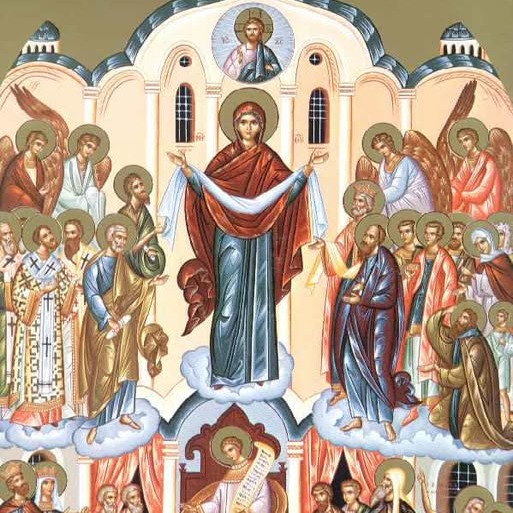
The feast of the Holy Protection of the Theotokos at Blachernae is traditionally observed on October 1. The Church of Greece transferred the celebration to October 28 to coincide with the national anniversary of the 1940 "Ohi," marking Greece's refusal to surrender to the Italo-German forces. The liturgical service for this combined observance was composed by the Athonite monk Gerasimos Mikragiannanites. The Holy Synod of the Church of Greece…

The feast of the Holy Protection of the Theotokos at Blachernae is traditionally observed on October 1. The Church of Greece transferred the celebration to October 28 to coincide with the national anniversary of the 1940 "Ohi," marking Greece's refusal to surrender to the Italo-German forces. The liturgical service for this combined observance was composed by the Athonite monk Gerasimos Mikragiannanites.

The Holy Synod of the Church of Greece approved the service and formally established the joint celebration on October 21, 1952. The decision is recorded in the Synodical Encyclicals, Volume B, Athens 1956, page 649.

  • Feast of Holy Protection at Blachernae normally on October 1
  • Church of Greece moved it to October 28 to coincide with Ohi Day
  • Service composed by Monk Gerasimos Mikragiannanites
  • Holy Synod approved service and joint celebration on October 21, 1952
  • Decision recorded in Synodical Encyclicals, Vol. B, 1956, p. 649
Mount Athos Legacy Facebook

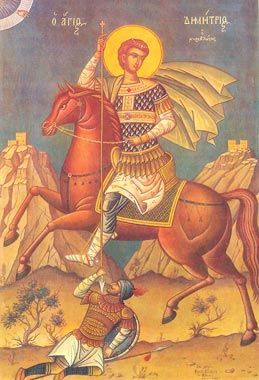
Saint Demetrios of Thessaloniki: soldier, martyr, myrrh-streamer

The Orthodox Church commemorates Saint Demetrios today. He was born around 280-284 AD into an aristocratic family in Thessaloniki. He rose quickly in the Roman army and held the rank of chiliarch by age twenty-two. Serving under the tetrarch Galerius Maximian during the reign of Diocletian, he became a Christian and was imprisoned in 303 AD for refusing to obey Diocletian's edict to renounce Christianity. Before his arrest he had founded a group…

The Orthodox Church commemorates Saint Demetrios today. He was born around 280-284 AD into an aristocratic family in Thessaloniki. He rose quickly in the Roman army and held the rank of chiliarch by age twenty-two. Serving under the tetrarch Galerius Maximian during the reign of Diocletian, he became a Christian and was imprisoned in 303 AD for refusing to obey Diocletian's edict to renounce Christianity.

Before his arrest he had founded a group of young people for the study of Holy Scripture. In prison he met a young Christian named Nestor, who was to face the feared gladiator Lyaios in single combat. Nestor asked Demetrios for help; the saint gave him his blessing.

Nestor defeated Lyaios, provoking the emperor's anger. Both Nestor and Demetrios were then sentenced to death. The most probable date of Demetrios's martyrdom is 306 AD. He is venerated as a myrrh-streaming martyr.

  • Born c. 280-284 AD in Thessaloniki to an aristocratic family
  • Reached rank of chiliarch at age 22 in the Roman army
  • Imprisoned in 303 AD for refusing to renounce Christianity under Diocletian's edict
  • Blessed Nestor before his combat with the gladiator Lyaios; Nestor won
  • Executed together with Nestor, most likely in 306 AD
Read more