
The Parable of the Vineyard: A Call to Spiritual Fruitfulness
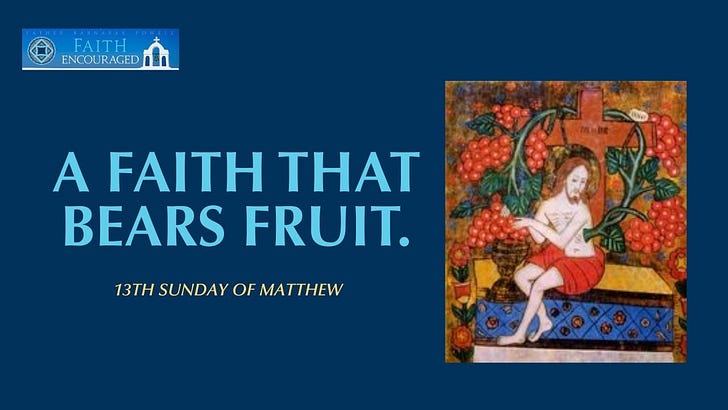
The post reflects on the Parable of the Vineyard as a lens for understanding the Christian vocation. The vineyard owner's expectation of a harvest becomes an image of God's call to His people: not merely to exist, but to bear fruit — lives progressively shaped by faith, repentance, love, and communion with Him. The author emphasizes that spiritual growth is not optional or decorative; it is the very purpose of the Christian life.
Just as a vineyard is cultivated for produce, the soul is tended by God for holiness. The reflection touches on the dynamic nature of this fruitfulness: it is not a static achievement but an ongoing process of transformation. Faith, repentance, and love are presented not as isolated virtues but as interconnected marks of a life rooted in Christ.
The piece concludes with a brief note about the publication, "Faith Encouraged," being reader-supported, inviting subscribers to sustain the work. There are no comments recorded, so the card reflects only the original article's content.
Main points
- The Parable of the Vineyard illustrates God's expectation of spiritual fruit in the Christian life.
- Fruitfulness means growth in faith, repentance, love, and communion with God.
- Spiritual growth is the purpose of the Christian vocation, not an optional addition.
- These virtues are interconnected and develop dynamically over a lifetime.
- The author's publication, Faith Encouraged, is reader-supported.