
St. Paul's imprisonment spreads the gospel to the praetorian guard
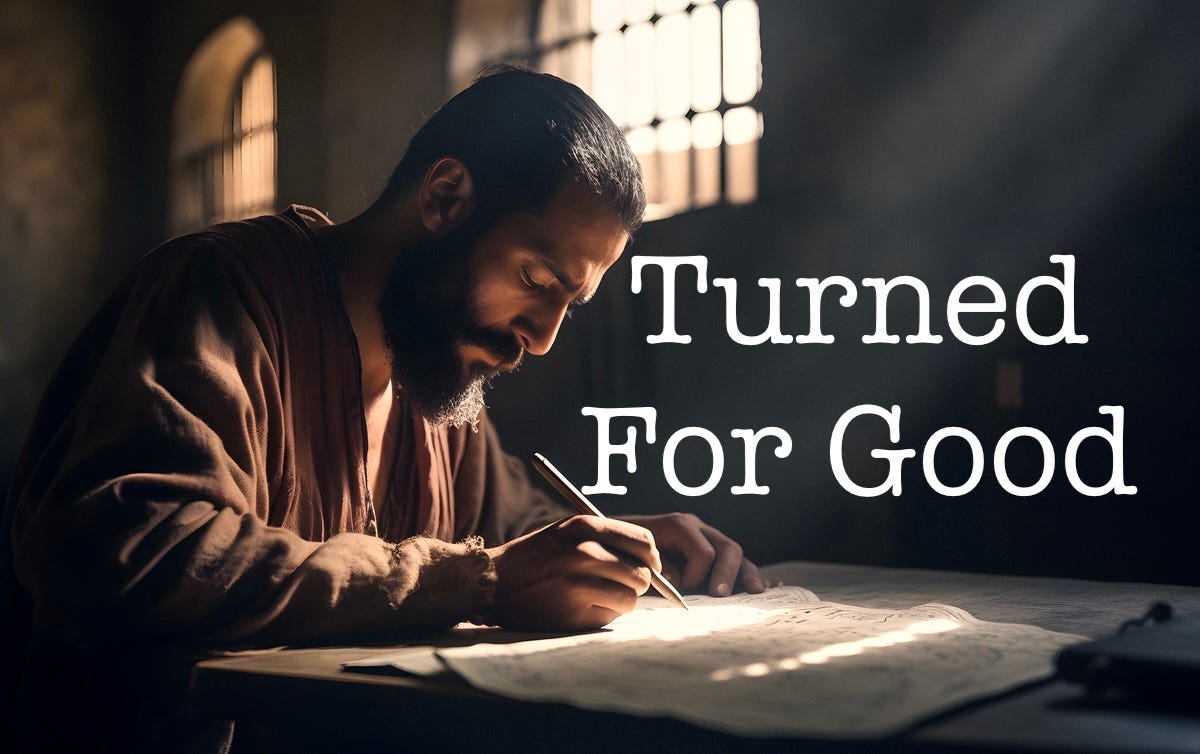
The author begins by contrasting days when every traffic light is green and a parking spot appears at the door with days when every light is red and everything takes longer. He then turns to Philippians 1:12-20, where St. Paul writes from prison that what has happened to him has served to advance the gospel. The passage reports that Paul's imprisonment became known throughout the praetorian guard and to all the rest as imprisonment for Christ, and that most of the brethren were made confident in the Lord and became much more bold to speak the word of God without fear.
Some preach Christ from envy and rivalry, others from good will, but Paul declares that in every way, whether in pretense or in truth, Christ is proclaimed, and in that he rejoices. The author draws three lessons. First, circumstances always invite a perspective check; an eternal perspective sees God's purpose in good times, bad times, and in-between times, and attentiveness to repentance as a change of perspective is at the heart of faithful Orthodox Christian life.
Second, hard circumstances test whether confidence is real; Paul cares not for his comfort, reputation, or retaliation, but only that Christ is proclaimed, and he expects deliverance through the prayers of the church and the help of the Spirit of Jesus Christ. Third, troubles become an opportunity for the whole community to grow in faith; Paul's imprisonment made the brethren bolder and he looks for deliverance through their prayers, showing that no one suffers alone and no suffering is wasted in the Body of Christ.
The post then commemorates Sts. Sergius and Bacchus, high-ranking Roman officers in the early fourth century who refused pagan sacrifice, were stripped of honors, paraded in women's clothing, and martyred, St. Bacchus beaten to death, St. Sergius beheaded at Resafa in Syria, yet their martyrdom became a great pilgrimage site, illustrating how God turns intended shame into blessing.
The author concludes with questions for personal reflection on how God might use present hardships.
Main points
- St. Paul's imprisonment made the gospel known throughout the praetorian guard.
- Most brethren grew confident and bold to speak the word without fear.
- Paul rejoices that Christ is proclaimed even by those preaching from envy.
- Hardship tests real confidence and calls the community to prayer and boldness.
- The martyrdom of Sts. Sergius and Bacchus became a pilgrimage site, showing God turns shame into blessing.