WeOrthodox
EN UA

Eastern Orthodoxy Daily He/Who/Is

Instagram ↗ 4 discussions

Scripture, Saints & Satire Left Rome for Home 📍Illinois USA📍 ╬☦️ Dyophysite Eastern Orthodox ☦️╬

Once a sheep of the world, now His: a short confession of faith

The author writes a short personal confession about leaving behind the desire to fit in with the crowd. They state that they no longer follow the crowd but follow Christ, and that they no longer seek acceptance from people but acceptance from Him. The author adds that they no longer live for this world but live for His Kingdom, and describes their former life as having been a sheep of the world, in contrast to belonging to Christ now. The post…

The author writes a short personal confession about leaving behind the desire to fit in with the crowd. They state that they no longer follow the crowd but follow Christ, and that they no longer seek acceptance from people but acceptance from Him. The author adds that they no longer live for this world but live for His Kingdom, and describes their former life as having been a sheep of the world, in contrast to belonging to Christ now.

The post closes with the word Amen and a set of symbols, including a cross. There is no discussion in the thread; the post is a single statement of personal commitment with no replies, questions, or further context given. The language is direct and declarative throughout, built on a series of contrasts: crowd versus Christ, acceptance by people versus acceptance by Him, this world versus His Kingdom, being the world's sheep versus being His.

  • The author no longer follows the crowd but follows Christ.
  • They seek acceptance from Christ rather than from people.
  • They say they no longer live for this world but for His Kingdom.
  • They describe their former self as a sheep of the world and now as belonging to Christ.
  • The post is a single statement of faith with no discussion or replies.
Read more
Eastern Orthodoxy Daily He/Who/Is Instagram

Fourteen Orthodox Churches and a Catechism That Isn't for Everyone

The speaker, an Orthodox Christian, opens by saying he is tired of a certain style of Catholic apologetics, which he calls papal slop apologetics. He then makes a structural argument about church organization. In his view there is no single Eastern Orthodox Church; there are 14, one for each patriarch, each with its own structure. He sets this against the Catholic side, where the Catechism of the Catholic Church, promulgated by John Paul II,…

The speaker, an Orthodox Christian, opens by saying he is tired of a certain style of Catholic apologetics, which he calls papal slop apologetics. He then makes a structural argument about church organization. In his view there is no single Eastern Orthodox Church; there are 14, one for each patriarch, each with its own structure.

He sets this against the Catholic side, where the Catechism of the Catholic Church, promulgated by John Paul II, functions as a common reference text. He argues that the book's title is misleading and that it should be called the catechism of the Roman Catholic Church, since it is written for Roman Catholic readers rather than for all Catholics.

The speaker anticipates the objection that Catholics are bound to accept the catechism as authoritative over other sources of teaching, and he answers that this is not how Catholics understand themselves or their own tradition. The discussion therefore turns on two questions: how the Orthodox churches are organized in relation to their patriarchs, and how the authority of a catechism works within Catholicism.

The speaker's point is that comparisons between the two traditions often misstate both sides, treating Orthodoxy as one centralized body and treating the catechism as a universal binding code, when in his account neither description matches the self-understanding of the traditions involved. The post is framed as a complaint about apologetics content that, in his view, keeps repeating these inaccuracies.

  • The speaker says he is tired of Catholic apologetics content, which he calls papal slop apologetics.
  • He states there is no single Eastern Orthodox Church but 14, one for each patriarch, each with its own structure.
  • He argues the Catechism of the Catholic Church, promulgated by John Paul II, should be called the catechism of the Roman Catholic Church because it is written for Roman Catholic readers.
  • He expects objections that Catholics must accept the catechism as binding over other authorities.
  • He responds that this is not how Catholics understand themselves.

Key moments

  1. 0:00 There is no single Eastern Orthodox Church; there are 14, matching the number of patriarchs.
  2. 0:00 The Catechism of the Catholic Church was promulgated by John Paul II and should be called the catechism of the Roman Catholic Church, since it is written for Roman Catholic readers.
  3. 0:00 The speaker expects objections that Catholics must accept the catechism over other things, and says that is not the Catholic self-understanding.
Read more
Eastern Orthodoxy Daily He/Who/Is Instagram

Unity Without Truth Is Not True Unity

The author argues that Christian unity cannot rest on doctrinal compromise or on the claim that all faiths and teachings are equally true. The Orthodox Church, in this view, is called to preserve the Apostolic Faith, uphold the truth of the Gospel, and remain faithful to what has been handed down through Holy Tradition. The post warns against treating love and unity as reasons to abandon the truth, and closes with the statement that unity…

The author argues that Christian unity cannot rest on doctrinal compromise or on the claim that all faiths and teachings are equally true. The Orthodox Church, in this view, is called to preserve the Apostolic Faith, uphold the truth of the Gospel, and remain faithful to what has been handed down through Holy Tradition. The post warns against treating love and unity as reasons to abandon the truth, and closes with the statement that unity without truth is not true unity.

The text is a short confessional statement rather than a discussion thread: it sets out a position on ecumenism and doctrinal relativism without citing specific events, documents, or dialogues. Its core claims are that truth and unity are inseparable, that compromise on doctrine is a false path to unity, and that fidelity to Holy Tradition takes precedence over agreement at any cost.

  • Christian unity cannot be built on doctrinal compromise or on the belief that all faiths are equally true.
  • The Orthodox Church is called to preserve the Apostolic Faith and the truth of the Gospel.
  • Fidelity to the teachings handed down through Holy Tradition is presented as a duty.
  • Love and unity must not become excuses for abandoning the truth.
  • The author concludes that unity without truth is not true unity.
Read more

Street evangelist Bryce Crawford tells a stranger what he 'senses' about his past

The post asks whether Bryce Crawford has always done what the poster calls the mind reading prophet thing, tagging it with orthodox, protestant, orthodoxchristian, apologetics and christianreels. The clip shows Crawford, a street evangelist, approaching a young man and telling him he senses in his heart that the man lost a friend between the ages of 8 and 10. He asks whether that is true, says he is going to check on him, calls him Tupac, and…

The post asks whether Bryce Crawford has always done what the poster calls the mind reading prophet thing, tagging it with orthodox, protestant, orthodoxchristian, apologetics and christianreels. The clip shows Crawford, a street evangelist, approaching a young man and telling him he senses in his heart that the man lost a friend between the ages of 8 and 10. He asks whether that is true, says he is going to check on him, calls him Tupac, and gives him a hug.

When the young man asks how he could know that, Crawford answers that he does not know, and that Jesus sees the man in his pain. He then asks the young man what he thinks about it. The question in the post invites viewers to weigh this style of evangelism: whether such statements about a stranger's private grief are a legitimate way of pointing someone to Christ, or a performance that borrows the language of prophecy.

The tags suggest the audience for the debate includes both Orthodox and Protestant Christians interested in apologetics, and the poster's phrasing hints at skepticism about the practice. The clip itself does not resolve the question; it only records the encounter and Crawford's own explanation, which attributes the knowledge to Jesus rather than to himself.

  • The poster asks whether Bryce Crawford has always done the mind reading prophet thing.
  • Crawford tells a young man he senses in his heart that the man lost a friend between the ages of 8 and 10, and asks if it is true.
  • He says he will check on the man, calls him Tupac, and gives him a hug.
  • Asked how he knew, he says he does not know and that Jesus sees the man in his pain.
  • He asks the young man what he thinks about this.

Key moments

  1. Bryce Crawford tells a young man he heard in his heart that the man lost a friend when he was 8 to 10 years old, and asks if it is true.
  2. He says he is going to go check on the man, calls him Tupac, and gives him a hug.
  3. Asked how he could know that, he says he does not know, and that it is because Jesus sees the man in his pain.
  4. He asks the young man what he thinks about this.
21 opinions in the discussion "When you were 8 to 10 years old". That's exactly how psychics and mediums work. A two-year window is not the kind of accuracy you see when the Holy Spirit actually operates. Read the discussion

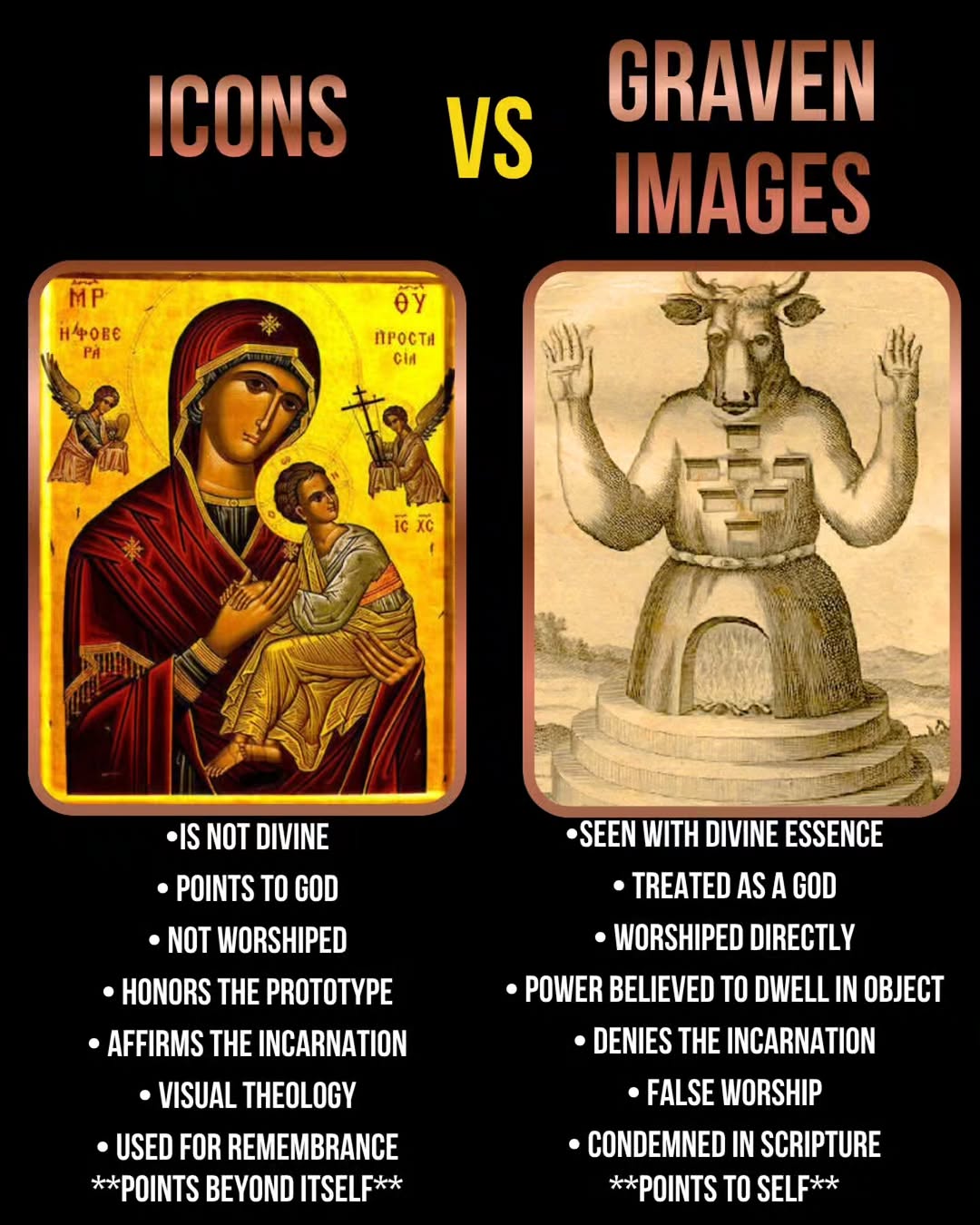
Kissing Icons in Athens: Answering the Charge of Shirk from Exodus

A man whispers inside a church in Athens, where people are praying, and takes up the objection that kissing icons violates Exodus 20:3-5, which forbids making images and bowing to them. He notes that the first thing Christians do on entering the church is kiss the icons. A Muslim caller had told him the practice is an innovation and shirk, and he answers the charge directly. His first argument is that Muhammad found images of Mary and Jesus in…

A man whispers inside a church in Athens, where people are praying, and takes up the objection that kissing icons violates Exodus 20:3-5, which forbids making images and bowing to them. He notes that the first thing Christians do on entering the church is kiss the icons. A Muslim caller had told him the practice is an innovation and shirk, and he answers the charge directly.

His first argument is that Muhammad found images of Mary and Jesus in the Kaaba and did not destroy them. He then turns to Scripture and cites Exodus 25, where God commands Moses to make images of cherubim and place them on the Ark of the Covenant. He reads Exodus 20 as a prohibition against idolatry rather than against images as such, and points to the golden calf episode in Exodus 32 as the example of what God condemned.

He adds a third biblical example: in Numbers 21 God told Moses to make a bronze serpent so that the people who looked at it would be healed. He says Jesus alluded to that serpent as a type of himself on the cross. The video moves quickly between the church setting, the caller's objection, and the biblical texts, keeping the focus on whether the command in Exodus 20 rules out the veneration Christians show to icons.

The examples from the Kaaba, the Ark, and the bronze serpent are the core of his case, and each one is meant to show a difference between honoring an image connected to God's work and worshiping an image as a god.

  • The speaker whispers in a church in Athens because people are praying there, and says the first thing one does entering the church is kiss the icons.
  • A Muslim caller calls the veneration of icons an innovation and shirk, appealing to Exodus 20:3-5.
  • The speaker answers that Muhammad found a picture of Mary and Jesus in the Kaaba and did not destroy it.
  • He cites Exodus 25, where God commands Moses to make images of cherubim for the Ark of the Covenant.
  • He reads Exodus 20 as a ban on idolatry, citing the golden calf in Exodus 32 and the bronze serpent in Numbers 21, which he says Jesus called a type of himself on the cross.

Key moments

  1. 0:00 The speaker is in a church in Athens and whispers because people are praying there; he quotes Exodus 20:3-5 forbidding images and worshiping them, and says the first thing one does entering the church is kiss the icons.
  2. 0:33 He answers a Muslim who calls the practice an innovation and shirk, saying Muhammad found a picture of Mary and Jesus in the Kaaba and did not destroy it.
  3. 1:06 He cites Exodus 25, where God commands Moses to make images of the cherubim and place them on the Ark of the Covenant.
  4. 1:46 He says Exodus 20 was a prohibition against idolatry, shown by God's displeasure with the golden calf in Exodus 32.
25 opinions in the discussion "I was an Orthodox Christian" **Proceeds to read Exodus and skip Orthodox History** Read the discussion