WeOrthodox
EN UA

Disgruntled Docs

Instagram ↗ 117 discussions

Doc posting memes ☦️ Reader Nektarios Veteran owned All my opinions are my own

St. Kosmas' Prophecies on Constantinople's Liberation Explained by Elder Paisios

The post presents a series of prophecies attributed to St. Kosmas Aitolos concerning the future liberation of Constantinople, accompanied by interpretations from Elder Paisios the Hagiorite. The text lists several specific prophecies: "The red vests will drive the Turks from the City," whose meaning remains unknown though some speculate about uniform colors; "There will be so much blood spilled in the City that a three-year-old calf could swim…

The post presents a series of prophecies attributed to St. Kosmas Aitolos concerning the future liberation of Constantinople, accompanied by interpretations from Elder Paisios the Hagiorite. The text lists several specific prophecies: "The red vests will drive the Turks from the City," whose meaning remains unknown though some speculate about uniform colors; "There will be so much blood spilled in the City that a three-year-old calf could swim in it," which Elder Paisios supplemented with a vision of a fierce battle between Russians and Europeans; "Armies will pass through the valley of Mouzini headed for Constantinople.

Let the women and children go to the mountains. They will ask you, 'Is the City far away?' Answer: 'It is near'. By answering that way, you will avoid much disaster." The Mouzini Valley is identified as located in Northern Epirus, now part of Albania but with a largely Greek population. Another prophecy states: "When you hear that a fleet is sailing in the Mediterranean Sea, know that the Constantinople question will soon be resolved," indicating naval involvement.

A further prophecy: "The armies will not even get halfway to the City when they will hear news that 'the desired' (Retaking Constantinople) has come." Elder Paisios also spoke about future events in Serbia and the division of Turkey, saying Europeans would create a Muslim state (Bosnia, Herzegovina) and later divide Turkey by supporting Kurdish and Armenian independence.

He referenced St. Arsenius of Cappadocia telling the faithful of Faras they would lose their fatherland but regain it. Another prophecy mentions a foreign army that does not know Greek but believes in Christ, asking "Where is the City?" Elder Paisios emphasized that Constantinople would be retaken without Greece's direct participation because the majority of Greek youth have become degraded, and God will arrange for others to take the City and give it to Greece. The post ends with a promotional offer for icons.

  • St. Kosmas Aitolos prophesied about the liberation of Constantinople with several specific sayings.
  • Elder Paisios interpreted and supplemented these prophecies, including a battle between Russians and Europeans.
  • Prophecies mention armies passing through Mouzini Valley in Northern Epirus, a Mediterranean fleet, and a foreign Christian army.
  • Elder Paisios predicted the division of Turkey and that Constantinople would be retaken without Greece's direct military action.
  • The post includes a promotional link for St. Kosmas icons.
4 opinions in the discussion Like St. Paisios said in the 10th slide and St. Justin Popović also said, both Serbs and Greeks have degraded themselves. To be worthy of the lands of Kosovo, Metohija, Kappadokia,… Read the discussion
Disgruntled Docs with ☦︎ICXC•NIKA☦︎ Instagram

Personal testimony of return to Christ and spiritual disciplines

The author shares a brief personal testimony of gratitude for God's mercy in bringing them back to the faith after many years away. They acknowledge not deserving this mercy and express lifelong indebtedness. The author mentions including personal spiritual disciplines that have helped them grow, though these are not detailed in the text. They emphasize they are not a teacher or clergy, but an unworthy servant, and urge readers to seek guidance…

The author shares a brief personal testimony of gratitude for God's mercy in bringing them back to the faith after many years away. They acknowledge not deserving this mercy and express lifelong indebtedness. The author mentions including personal spiritual disciplines that have helped them grow, though these are not detailed in the text.

They emphasize they are not a teacher or clergy, but an unworthy servant, and urge readers to seek guidance from their spiritual father. The post concludes with the doxology "Glory to God for all things."

  • Author testifies to God's mercy in returning to Christ after many years away
  • Expresses lifelong gratitude and sense of indebtedness to God
  • Mentions personal spiritual disciplines that aided growth (not detailed in text)
  • Clarifies they are not clergy or a teacher, but an unworthy servant
  • Advises readers to seek guidance from their spiritual father
Read more

Apostolic Succession Requires Unity of Faith, Not Only a Historical Chain

The video responds to a Protestant creator known as Redeemed Zoomer, arguing that a historical line of ordination does not by itself establish apostolic succession. It notes that mainstream Protestant ministers trace their orders through Reformation leaders such as Luther, Knox, and Zwingli, who were originally ordained as Catholic priests. However, the video contends that apostolic succession entails more than an unbroken chain of bishops; it…

The video responds to a Protestant creator known as Redeemed Zoomer, arguing that a historical line of ordination does not by itself establish apostolic succession. It notes that mainstream Protestant ministers trace their orders through Reformation leaders such as Luther, Knox, and Zwingli, who were originally ordained as Catholic priests.

However, the video contends that apostolic succession entails more than an unbroken chain of bishops; it requires the preservation of the apostolic faith within a unified church, as confessed in the Nicene Creed's description of the church as one, holy, catholic, and apostolic. Because Protestantism rejects that unity and the doctrine that undergirds it, the video concludes that Protestants cannot claim apostolic succession while separating it from apostolic unity and doctrine.

The argument also distinguishes mainstream Protestant bodies from non-denominational groups, which lack even a historical chain.

Key moments

  1. Apostolic succession requires an unbroken chain of bishops going back to the apostles.
  2. Mainstream Protestant ministers are ordained by other ministers tracing back to the apostles via the Catholic Church, because Reformation leaders like Knox, Luther, and Zwingli were originally ordained as Catholic priests.
  3. This does not apply to non-denominational groups.
  4. A nation alone does not establish apostolic succession.
  5. Claiming Protestants have apostolic succession while they remain divided in doctrine and communion undermines the entire idea.
  6. Apostolic succession is not just a historical chain of bishops; it requires preserving the apostolic faith within a church.
  7. The Nicene Creed identifies the church as one, holy, Catholic, and apostolic.
  8. Protestantism rejects all of that, so you cannot claim apostolic succession while separating it from apostolic unity and doctrine.
19 opinions in the discussion Numbers 3:10, Unauthorized persons are forbidden from assuming the priestly office. Numbers 18:7, The priesthood is given as a divinely appointed service. Ezra claims that you must trace… Read the discussion

Saint Nektarios of Aegina: Life, Miracles, and Spiritual Wisdom

The post presents a biographical sketch of Saint Nektarios (1846-1920), born Anastasios in Thrace. He studied in Constantinople, became a monk on Chios in 1876, and was ordained deacon in 1877, taking the name Nektarios. After theological studies he was ordained priest in Alexandria in 1886 and consecrated Metropolitan of Pentapolis in Libya in 1889. False accusations by envious clerics led Patriarch Sophronios to expel him from Egypt in 1890.…

The post presents a biographical sketch of Saint Nektarios (1846-1920), born Anastasios in Thrace. He studied in Constantinople, became a monk on Chios in 1876, and was ordained deacon in 1877, taking the name Nektarios. After theological studies he was ordained priest in Alexandria in 1886 and consecrated Metropolitan of Pentapolis in Libya in 1889.

False accusations by envious clerics led Patriarch Sophronios to expel him from Egypt in 1890. In Athens he could not obtain a bishopric and became director of the Rizarios Ecclesiastical School in 1894, where he wrote the hymn "Agni Parthene." Known for humility, sweeping floors and cleaning toilets, he founded the Holy Trinity convent on Aegina in 1904 and lived there from 1908 until his death from prostate cancer in 1920.

After his repose his undershirt healed a paralyzed man, and his funeral was conducted by Saint Savvas of Kalymnos. The post also collects eleven sayings attributed to Saint Nektarios on themes including being remembered in others' darkness, suffering as purification, prayer as the breath of the soul, happiness as a pure heart, vigilance against temptation, hope amid repeated falls, trust in God's unseen answers, and the purpose of temptations to reveal hidden passions.

  • Born in Thrace 1846; monk on Chios 1876; Metropolitan of Pentapolis 1889
  • Expelled from Egypt 1890 after false accusations; directed Rizarios School in Athens
  • Founded Holy Trinity convent on Aegina 1904; lived there 1908-1920
  • Posthumous miracle: undershirt healed a paralyzed man; funeral by Saint Savvas of Kalymnos
  • Eleven collected sayings on suffering, prayer, hope, temptation, and pure heart
Read more

St. Paisios on the Fall of the USSR and Turkey's Future

The post gathers several prophecies attributed to St. Paisios of Mount Athos, beginning with an episode from the Brezhnev era when the USSR seemed invincible. A visitor, Mr. D. K., told the elder that no one could break apart that enormous might; St. Paisios replied, "You'll see!" and foretold that the Soviet Union would dissolve within the visitor's lifetime. The elder also spoke of Turkey's future: a war lasting two periods would end with…

The post gathers several prophecies attributed to St. Paisios of Mount Athos, beginning with an episode from the Brezhnev era when the USSR seemed invincible. A visitor, Mr. D. K., told the elder that no one could break apart that enormous might; St. Paisios replied, "You'll see!" and foretold that the Soviet Union would dissolve within the visitor's lifetime.

The elder also spoke of Turkey's future: a war lasting two periods would end with Orthodox victory, though the Greeks might lose one or two islands while gaining Constantinople. The Turks would leave but later return to Hexamillia, where one third would perish, one third would come to believe in Christ, and one third would flee to Kokkini Milia.

In another encounter, St. Paisios addressed a distorted interpretation of St. Cosmas of Aitolias's prophecy about "six miles." He explained that the six miles refer to the continental shelf, a maritime boundary over which Greece and Turkey have contended, and that the Turks would advance only to that limit before meeting great calamities from the north.

He added that the Russians would eventually occupy Turkey, causing it to disappear from the map, with the same threefold division of the Turkish people. The post notes that many crypto-Christians exist among Turks today, with pilgrims reporting requests for icons, prayer books, and opportunities for confession and Communion. Concerning the phrase "two summers and two Paschalias together," the elder clarified that it pointed to the liberation of Northern Epirus, not a Turkish invasion of Greece, and he warned that explaining prophecies with human reasoning causes great harm and spreads false thinking. The post concludes with unrelated promotional material for an icon vendor.

  • St. Paisios predicted the dissolution of the USSR during the Brezhnev era despite its apparent strength.
  • He foresaw a war in which Turkey would break apart, with one third of Turks perishing, one third converting, and one third fleeing.
  • He interpreted St. Cosmas's "six miles" as a maritime boundary dispute, not a land invasion of Greece.
  • He said the Russians would occupy Turkey and the country would vanish from the map.
  • He explained "two summers and two Paschalias together" as referring to the opening of borders for Northern Epirus, and cautioned against private interpretations of prophecy.
Read more
Disgruntled Docs with Kara Mosher Instagram

St. Seraphim's Counsel: Acquire Peace to Save Souls

The author recounts repeated guidance from their spiritual father, who answers the question of how best to work for the salvation of loved ones by citing St. Seraphim of Sarov: "Acquire the Spirit of Peace, and a thousand souls around you will be saved." The post presents this teaching as a direct link between personal spiritual struggle and the broader salvation of others, framing the pursuit of inner peace as a means by which one's own…

The author recounts repeated guidance from their spiritual father, who answers the question of how best to work for the salvation of loved ones by citing St. Seraphim of Sarov: "Acquire the Spirit of Peace, and a thousand souls around you will be saved." The post presents this teaching as a direct link between personal spiritual struggle and the broader salvation of others, framing the pursuit of inner peace as a means by which one's own salvation becomes inseparable from the salvation of the world.

The message is offered on the feast of the Archangels and is sent from Holy Archangels Monastery, marking the occasion with a liturgical greeting.

  • Spiritual father consistently directs the author to St. Seraphim's words on acquiring the Spirit of Peace
  • The quote promises that a thousand surrounding souls will be saved through one person's peace
  • Personal salvation work is described as simultaneously working for the salvation of the world
  • The post is shared on the feast of the Archangels
  • The greeting originates from Holy Archangels Monastery
Read more

Quotes from Saints on Faith, Persecution, and the End Times

The post presents a collection of fourteen quotations from Orthodox saints and Church Fathers. St. John Chrysostom advises praying for those who laugh at one's faith, noting there will be no laughter on the day of judgment. Hieromonk Seraphim Rose appears several times: he says faith makes one look foolish and urges getting in the boat before the flood; he writes that everything passes away except God, and we must choose God over the world; he…

The post presents a collection of fourteen quotations from Orthodox saints and Church Fathers. St. John Chrysostom advises praying for those who laugh at one's faith, noting there will be no laughter on the day of judgment. Hieromonk Seraphim Rose appears several times: he says faith makes one look foolish and urges getting in the boat before the flood; he writes that everything passes away except God, and we must choose God over the world; he urges sharing Orthodoxy rather than keeping it private; and he states that suffering indicates another kingdom, for if Christianity meant happiness in this life we would not need heaven.

St. Justin Popovich declares that one who lives in faith within the risen God-man lives above death, and that European civilization built without Christ will inevitably collapse soon. St. Paisios the Athonite affirms that difficult and dangerous years will end with Christ's victory. Eugene (Fr. Seraphim) Rose contrasts Western Christendom, where God is dead and leaders prepare for Antichrist, with Orthodox Christians who know the living God and find salvation in the unchanging Orthodox path, not in ecumenical union with unbelievers.

St. Anthony the Great warns against communication with schismatics and heretics, urging unity with Christ and the saints. The Didache (chapter 1) commands blessing those who curse you, praying for enemies, and fasting for persecutors. St. Synkletike notes the great struggle and toil at the beginning of coming to God, followed by indescribable joy.

St. Gabriel Urgebadze says true faith is in the heart, not the mind; those with faith in the mind will follow the antichrist, while those with faith in the heart will recognize him. St. Theophan the Recluse describes the enemy waging war through the mind with doubt, despair, and distraction, urging believers to take every thought captive to Christ and make the heart a fortress of prayer.

The quotations are presented without additional commentary, forming a series of exhortations on faithfulness, spiritual warfare, and the last things.

  • St. John Chrysostom: pray for those who mock your faith; judgment will be no laughing matter.
  • Hieromonk Seraphim Rose: faith appears foolish to the world; choose God over the passing world; share Orthodoxy; suffering points to the Kingdom of Heaven.
  • St. Justin Popovich: life in the risen Christ transcends death; godless civilization will collapse.
  • St. Paisios and Fr. Seraphim Rose: Christ will ultimately win; salvation is found in the unchanging Orthodox path, not in ecumenical compromise.
  • St. Theophan the Recluse and St. Gabriel Urgebadze: spiritual warfare attacks the mind; guard the heart with prayer; true faith resides in the heart, not the intellect.
Read more

Scripture Is Tradition, but Tradition Is Not Limited to Scripture

The post presents the Orthodox understanding of the relationship between Scripture and Holy Tradition through a series of points. It states that Scripture and Holy Tradition are not competing authorities; rather, Scripture is the divinely inspired written expression of Holy Tradition, and both transmit the same apostolic faith entrusted to the Church through Christ and the apostles. Scripture exists within Tradition, not outside or independent…

The post presents the Orthodox understanding of the relationship between Scripture and Holy Tradition through a series of points. It states that Scripture and Holy Tradition are not competing authorities; rather, Scripture is the divinely inspired written expression of Holy Tradition, and both transmit the same apostolic faith entrusted to the Church through Christ and the apostles.

Scripture exists within Tradition, not outside or independent of it. Before the New Testament was written and compiled, the Church was already preaching, baptizing, celebrating the Eucharist, and transmitting apostolic doctrine. The apostles did not establish Christianity by handing out a completed Bible; they transmitted the faith through preaching, worship, oral instruction, and eventually written testimony.

The Church did not emerge from the New Testament canon; the New Testament emerged from the Church. St. Paul commands Christians to preserve the apostolic teachings transmitted both orally and in writing, citing 2 Thessalonians 2:15: "So then, brethren, stand firm and hold to the traditions which you were taught by us, either by word of mouth or by letter."

The Greek word παραδόσεις (paradoseis) means "that which is handed down" or "transmitted." St. Paul makes no distinction in authority between apostolic teachings delivered orally and those delivered through written epistles. The post also addresses the formation of the canon, noting that the New Testament did not arrive with an inspired table of contents labeling its own canon.

The Church received, preserved, and circulated the apostolic writings over centuries. The same Church that transmitted the apostolic faith also recognized its authoritative written testimony as Tradition. To accept the canon of Scripture is to acknowledge the historical process of its transmission through Church Tradition.

The final point reiterates: Scripture is Tradition, but Tradition is not limited to Scripture.

  • Scripture and Holy Tradition are not competing authorities; Scripture is the written expression of Tradition.
  • The Church existed and transmitted the faith before the New Testament canon was formed.
  • St. Paul commands holding to traditions taught both orally and in writing (2 Thessalonians 2:15).
  • The Church recognized the canon of Scripture over centuries through Tradition.
  • Scripture is Tradition, but Tradition is not limited to Scripture.
Read more
Disgruntled Docs with Holy Orthodoxy Instagram

The devil's aim is to stop repentance, not just cause sin

The post explains that the devil's primary goal is not merely to lead people into sin but to prevent them from repenting afterward. The speaker states that every fall can become a return to God, so the enemy works to fill people with shame, excuses, and despair to keep them from confession. The remedy is to run to confession and back to Christ. The post invites readers to share whether they have experienced this struggle.

Key moments

  1. The devil's main goal is to make you unrepentant so that after you sin, you do not repent at all.
  2. Leading you deep into sin and keeping you from Scripture are secondary goals, not the primary one.
Read more

Parable of the Sower: Heart Condition Determines Response to God's Word

The speaker introduces the parable by noting that not everyone who hears the word of God allows it to transform their life. He then reads the passage from Luke 8:4-15 where Jesus tells the crowd the parable of a sower scattering seed on four types of ground. Jesus later explains to the disciples that the mysteries of the kingdom are given to them while others hear in parables so they may not understand. The speaker reads the explanation: the…

The speaker introduces the parable by noting that not everyone who hears the word of God allows it to transform their life. He then reads the passage from Luke 8:4-15 where Jesus tells the crowd the parable of a sower scattering seed on four types of ground. Jesus later explains to the disciples that the mysteries of the kingdom are given to them while others hear in parables so they may not understand.

The speaker reads the explanation: the seed is the word of God; the wayside hearers lose the word to the devil, the rocky hearers fall away in temptation, the thorny hearers are choked by cares, riches, and pleasures, and the good-ground hearers keep the word and bear fruit with patience. From an Orthodox perspective, the speaker draws three lessons.

First, the condition of the heart matters; pride, resentment, and unrepented sin harden the heart so the word cannot bear fruit. Second, faith must develop deep roots through participation in the sacraments of the Church to persevere through suffering, rejection, and difficulties. Third, the cares, riches, and pleasures of life can choke spiritual life when they consume the heart and gradually push God out.

The Orthodox spiritual life calls for cultivating the heart through repentance, prayer, fasting, participation in the Holy Mysteries, and perseverance. Christ reminds the listeners that those who receive his word with a good heart and hold onto it will bear fruit with patience. The talk ends with Christ's question to every listener: what kind of soil is your heart?

Key moments

  1. 0:00 The speaker introduces the Parable of the Sower in Luke 8, explaining that the four soils represent the spiritual condition of the human heart.
  2. 0:30 The speaker reads Luke 8:4-10: a sower scatters seed on the wayside, rock, thorns, and good ground; Jesus tells the disciples the mysteries of the kingdom are given to them, while others hear in parables so they may not understand.
  3. 1:10 The speaker reads Luke 8:11-15: the seed is the word of God; the wayside hearers lose the word to the devil, the rocky hearers fall away in temptation, the thorny hearers are choked by cares, riches, and pleasures, and the good-ground hearers keep the word and bear fruit with patience.
  4. 1:40 From an Orthodox perspective, the speaker presents three lessons: first, the condition of the heart matters, pride, resentment, or unrepented sin harden the heart so the word cannot bear fruit.
  5. 2:14 Second, faith must develop deep roots through participation in the sacraments of the church to persevere through suffering, rejection, and difficulties.
  6. 2:45 Third, the cares, riches, and pleasures of life can choke spiritual life; when they consume the heart, they gradually push God out.
  7. 2:45 The speaker concludes with Christ's question to every listener: what kind of soil is your heart?
Read more

Orthodox view of family order: equal dignity, complementary roles, and feminism's challenge

The post presents Orthodox teaching on marriage and family structure, citing Scripture and Church Fathers. It argues that men and women are equal in dignity before God but have distinct, complementary roles: the husband as head who loves sacrificially like Christ, the wife who respects and submits, children who honor parents. It contrasts this with radical feminism, which it says inverts God's order by treating traditional roles as oppression,…

The post presents Orthodox teaching on marriage and family structure, citing Scripture and Church Fathers. It argues that men and women are equal in dignity before God but have distinct, complementary roles: the husband as head who loves sacrificially like Christ, the wife who respects and submits, children who honor parents. It contrasts this with radical feminism, which it says inverts God's order by treating traditional roles as oppression, encouraging conflict between sexes, and presenting sexualization as empowerment.

The post includes quotes from Elder Thaddeus on wives' obedience, Fr. Athanasios Mitilineos on feminism, and references to the Virgin Mary as the highest honor for women. It warns of a "spirit of Jezebel" in rebellious wives and cites 1 Timothy on modest dress. The discussion centers on whether Christian teaching degrades women or offers a path to holiness through mutual self-sacrifice under Christ.

  • Men and women equal in dignity before God, created with distinct complementary roles
  • Husband called to sacrificial love as Christ loved the Church; wife called to respect and submit
  • Radical feminism criticized for rejecting God's order, treating marriage as oppression, fostering division
  • Orthodox Church honors Virgin Mary as highest among humans, showing Christianity does not degrade women
  • True freedom found in submission to God's design, not rebellion; warnings against "spirit of Jezebel"
27 opinions in the discussion Why does this sound so protestant? Read the discussion

Answering objections to saintly intercession

The video responds to the claim that Scripture nowhere commands prayer to saints or the Virgin Mary. The speaker points out that the biblical canon itself and the principle of sola scriptura are also absent from Scripture, exposing an inconsistency in the objection. He notes that prayers for the dead appear in 2 Maccabees, a book removed from the Protestant canon, and cites Christ's promise that whoever believes in him will never die. From this…

The video responds to the claim that Scripture nowhere commands prayer to saints or the Virgin Mary. The speaker points out that the biblical canon itself and the principle of sola scriptura are also absent from Scripture, exposing an inconsistency in the objection. He notes that prayers for the dead appear in 2 Maccabees, a book removed from the Protestant canon, and cites Christ's promise that whoever believes in him will never die.

From this he argues that the faithful in heaven remain alive in Christ and therefore continue to pray, so death does not silence their intercession.

Key moments

  1. The speaker asks where in the Bible it says to pray to saints or to Mary, stating they never saw such commands.
  2. The speaker calls it hypocrisy that a woman believes things the Bible does not explicitly say.
  3. The speaker asks where the canon of Scripture is found in the Bible and where the idea of sola scriptura is found in the Bible.
  4. The speaker says prayers for the dead appear in the Bible but Protestants removed that book.
  5. The speaker cites Christ declaring that those who believe in him will never truly die.
  6. The speaker argues that if believers never truly die, entering heaven would not silence their prayers.
20 opinions in the discussion She's absolutely right, there is literally no example of anyone praying to anyone other than God in the Bible. Read the discussion

God became man so that man might become god by grace

The post presents the Orthodox teaching on theosis, the process by which humans participate in divine life through grace. The author explains that the Son of God assumed human nature without ceasing to be God, entering fallen humanity to heal and restore it through His death and resurrection. Christ did not come merely to forgive from a distance but to heal human nature and reunite humanity with God. What was separated through sin is reconciled…

The post presents the Orthodox teaching on theosis, the process by which humans participate in divine life through grace. The author explains that the Son of God assumed human nature without ceasing to be God, entering fallen humanity to heal and restore it through His death and resurrection. Christ did not come merely to forgive from a distance but to heal human nature and reunite humanity with God.

What was separated through sin is reconciled in Christ; what was wounded is healed; what was enslaved to death is brought into eternal life. The means of this union are Baptism, the Eucharist, repentance, prayer, and the life of the Holy Spirit. The author cites 2 Peter 1:4 on becoming "partakers of the divine nature" and clarifies that theosis does not mean becoming God by essence, God alone is God by nature, but by grace we share in His life and become conformed to Christ.

Salvation is not simply escaping punishment but healing, restoration, union with God, and eternal life in Christ.

The accompanying video summary argues for the necessity of Christ's full divinity. If the Son of God were a creature rather than truly God, humanity would remain mortal and never achieve true union with God. A creature cannot unite other creatures to God because it would itself require union with God, and no part of creation can save creation since it would itself need salvation.

Therefore, God sends His own Son, and the Son of God becomes the Son of man by taking created flesh. Since all were under the sentence of death, He, being distinct from all, offered His own body to death on behalf of all. The discussion turns on the theological logic that only the uncreated Word can mediate between Creator and creation, and that the Incarnation is the necessary means by which mortal humanity is joined to immortal life.

Key moments

  1. If the Son of God were a creature and not truly God, man would have remained mortal, never truly being united to God.
  2. A mere creature could not unite other creatures to God, since it would itself need to be united to him.
  3. Nor could one part of creation be the salvation of creation, for it would itself have needed salvation.
  4. Therefore, God sends his own son, and the son of God becomes the son of man, taking created flesh.
  5. Since all were under the sentence of death, he, being other than them all, offered his own body to death on behalf of all.
Read more

Jesus' Divinity and the Exact-Word Fallacy

The speaker addresses the claim that Jesus never said he was God, identifying it as an exact-word fallacy. In the Synoptic Gospels, Matthew, Mark, and Luke, Jesus does not utter the precise sentence "I am God." However, he refers to himself as the Son of Man over eighty times, a title the speaker connects to his identity. In the Gospel of John, the evidence becomes more explicit: Jesus states that he existed before Abraham, the apostle Thomas…

The speaker addresses the claim that Jesus never said he was God, identifying it as an exact-word fallacy. In the Synoptic Gospels, Matthew, Mark, and Luke, Jesus does not utter the precise sentence "I am God." However, he refers to himself as the Son of Man over eighty times, a title the speaker connects to his identity.

In the Gospel of John, the evidence becomes more explicit: Jesus states that he existed before Abraham, the apostle Thomas directly calls him God, and Jesus teaches that the Son is to be honored just as the Father is honored. The speaker concludes that the truth of Scripture is found in what the text teaches overall, not in whether a particular form of words appears.

Key moments

  1. The argument that Jesus never said he was God is based on an exact-word fallacy.
  2. In Matthew, Mark, and Luke Jesus never says the exact words "I am God."
  3. Jesus calls himself the Son of Man over eighty times, which the speaker says refers to humanity, not divinity.
  4. In John, Jesus declares that he existed before Abraham.
  5. Thomas addresses Jesus as God, and Jesus teaches that the Son deserves the same honor as the Father.
  6. The truth of Scripture is determined by what the text teaches, not by the words one demands.
5 opinions in the discussion In the beginning there was the Word and the Word was with God and the Word was God. Read the discussion

Passion Is Not Love Intensified: It Is Distorted Love

A teaching graphic on how to distinguish passion from love, framed as a spiritual exercise for the month of November. The author argues that not everything that feels like love is love. Passion wants possession, gratification and emotional fulfillment; love seeks communion, sacrifice and the good of the other. Love asks "What can I give of myself", while passion asks "What can this person give me". Love is measured not by emotional intensity but…

A teaching graphic on how to distinguish passion from love, framed as a spiritual exercise for the month of November. The author argues that not everything that feels like love is love. Passion wants possession, gratification and emotional fulfillment; love seeks communion, sacrifice and the good of the other.

Love asks "What can I give of myself", while passion asks "What can this person give me". Love is measured not by emotional intensity but by willingness to place another before oneself. The post stresses that Orthodoxy does not teach desire itself is evil: desire belongs to our created nature and is meant to be directed toward the good.

It becomes a problem when desire is governed by the passions, so that love is distorted by selfishness, attachment, jealousy and possessiveness. A person then loves the pleasure someone provides instead of recognizing the person as made in the image of God. On marriage, the author writes that it is not the fulfillment of romantic attraction or physical desire but a sacramental union in which husband and wife grow in holiness through humility, patience, forgiveness and self-sacrifice.

The crowns used in the Orthodox wedding service symbolize both honor and martyrdom, the voluntary dying to selfishness for the sake of another. The final contrast is about endurance: passion is sustained by pleasure, attraction and emotional intensity, and when these fade, what was mistaken for love disappears with them. Love endures through suffering, aging, illness, disappointment and sacrifice because its foundation is self-giving rather than gratification.

  • Passion wants possession and gratification; love seeks communion, sacrifice and the good of the other.
  • Love asks "What can I give of myself"; passion asks "What can this person give me".
  • Orthodoxy does not teach that desire is evil; desire becomes harmful when governed by the passions.
  • Marriage is a sacramental union; its crowns symbolize both honor and martyrdom, dying to selfishness for another.
  • Passion fades when pleasure fades; love endures suffering, aging and illness because it rests on self-giving.
Read more

Athanasios Diakos: the deacon who chose death over denying Christ

Athanasios Diakos (1788-1821), born Athanasios Massavetas, entered monastic life young at the Monastery of Saint John the Baptist in Artotina. Around the age of seventeen he was ordained a deacon of the Orthodox Church, and from that rank he took the name Diakos, meaning deacon. He later left monastic life and took up arms against Ottoman rule, becoming one of the leading figures of the Greek War of Independence. At the Battle of Alamana on 22…

Athanasios Diakos (1788-1821), born Athanasios Massavetas, entered monastic life young at the Monastery of Saint John the Baptist in Artotina. Around the age of seventeen he was ordained a deacon of the Orthodox Church, and from that rank he took the name Diakos, meaning deacon. He later left monastic life and took up arms against Ottoman rule, becoming one of the leading figures of the Greek War of Independence.

At the Battle of Alamana on 22 April 1821, Diakos and his fellow Greek fighters faced a far larger Ottoman force commanded by Omer Vrioni and Kose Mehmet. As the Greek forces retreated, Diakos refused to flee. According to tradition, he kept fighting with just 48 men until his sword broke and he was captured, gravely wounded. Impressed by his courage, Omer Vrioni reportedly offered him a position of command in the Ottoman army if he renounced Christianity and embraced Islam.

Diakos refused, answering with the words that remain well known in Greek history: 'I was born a Greek, and I shall die a Greek.' On 24 April 1821 he was executed by impalement in Lamia. A man who had served as a deacon of the Orthodox Church chose death rather than renounce his Christian faith. His sacrifice became a symbol of courage, conviction and the struggle for Greek independence, remembered under the cry 'Freedom or death.'

Key moments

  1. At the Battle of Alamana in Epirus in 1821, Athanasios Diakos stood against the advancing Ottoman army while the Greek forces retreated.
  2. Diakos refused to flee and fought with only 48 men until his sword broke and he was captured, gravely wounded.
  3. Impressed by his bravery, the Ottoman commander offered Diakos a position of command in his army if he abandoned Christianity and embraced Islam.
  4. Diakos refused, declaring, 'I was born a Greek, I shall die a Greek.'
Read more

Pagan Europe Was Not a Golden Age for Women: The Historical Record

The post answers a claim that pre-Christian European societies treated women better than Christianity did. It gathers classical sources and modern scholarship to argue the opposite. Tacitus describes how a Germanic husband punished an unfaithful wife by cutting her hair, stripping her, and flogging her through the village, with no second marriage possible for her. Julius Caesar reports that Gallic husbands held power of life and death over wives…

The post answers a claim that pre-Christian European societies treated women better than Christianity did. It gathers classical sources and modern scholarship to argue the opposite. Tacitus describes how a Germanic husband punished an unfaithful wife by cutting her hair, stripping her, and flogging her through the village, with no second marriage possible for her.

Julius Caesar reports that Gallic husbands held power of life and death over wives and children, and that a widow suspected in her husband's death could be tortured and burned. The post cites Dr. Larry Hurtado's point that worshipping female deities did not make a society equal for living women, since legal and domestic structures stayed male-dominated.

Early Irish and Welsh law, as discussed in Josef Weisweiler's study of women among the Celts, barred daughters from inheriting land except in a limited lifetime case. Girls were married at puberty, often at 12 to 14, because pagan marriage was a transfer between male heads of household. The post contrasts this with the medieval European Marriage Pattern documented by Hollingsworth and Hajnal, in which canon law required consent and capacity, and women commonly married in their late teens to mid-twenties.

It credits canon law, citing Pope Alexander III and Gratian, with making coercion grounds for nullity, so a woman could refuse an arranged marriage. The Church outlawed concubinage, polygyny, and unilateral divorce, citing Augustine and the Council of Trent. Under Roman and Germanic law women needed male guardians for legal acts, while Church courts let women sue for annulments and dowries, as Helmholz documented for medieval England.

The post closes with infanticide and infant exposure, permitted under pagan law, condemned by the Didache and the Council of Elvira, and notes that canon law allowed separation for domestic cruelty.

  • Tacitus and Caesar describe harsh punishments and life-and-death authority of pagan husbands over wives.
  • Hurtado and Weisweiler are cited to show goddess worship did not bring legal equality for women.
  • Canon law required consent for marriage, letting women refuse arranged unions and raising marriage age.
  • The Church banned concubinage, polygyny, and unilateral divorce, binding husbands to one wife for life.
  • Church courts gave women legal standing and condemned infanticide and child exposure as murder.
Read more

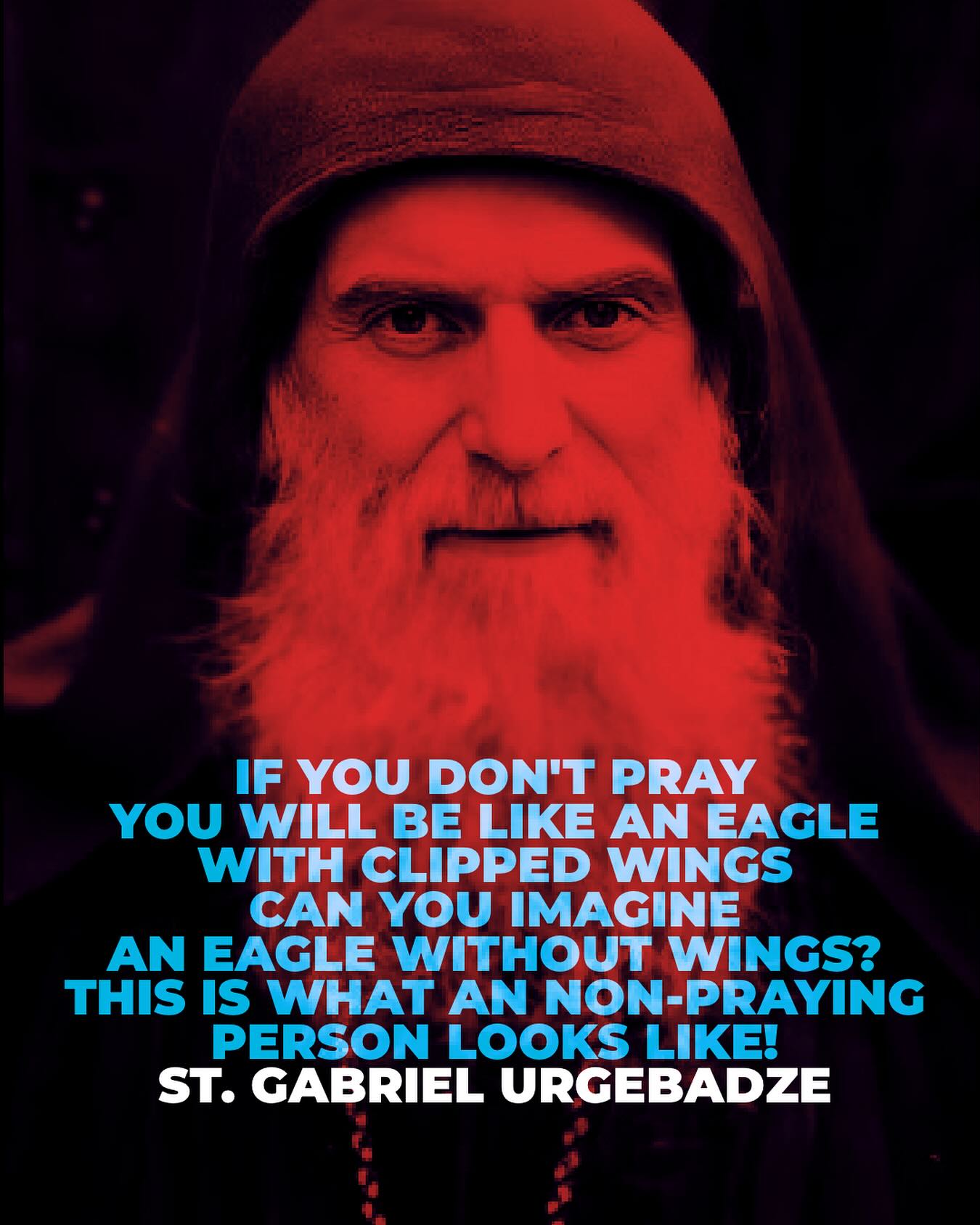
St. Gabriel Urgebadze on prayer as wings for the soul

The post shares a saying attributed to St. Gabriel Urgebadze, a twentieth-century Georgian monk canonized in 2012. He compares a person who does not pray to an eagle with clipped wings, unable to fly. The image text repeats the comparison in capital letters. The surrounding text promotes the Orthodox Church as the original apostolic faith and encourages readers to seek catechesis at a local parish, but the core of the post is the saint's analogy about prayer.

  • St. Gabriel Urgebadze likens a non-praying person to an eagle with clipped wings.
  • The saint teaches that prayer is essential for spiritual flight.
  • St. Gabriel was a Georgian monk who died in 1995 and was glorified in 2012.
  • The post includes a general description of Orthodoxy as the apostolic church.
  • It invites readers to inquire about catechism courses at a local Orthodox parish.
Read more
Disgruntled Docs with The Via Negativa Instagram

Niketas Choniates on the 1204 Sack of Constantinople

The post presents excerpts from Niketas Choniates, a Byzantine historian who witnessed the Latin sack of Constantinople in 1204. Choniates describes how the populace greeted the crusaders with crosses and icons, but the Latins were unmoved and began plundering immediately, seizing both private property and articles consecrated to God. He recounts the desecration of the Eucharist, the smashing of chalices and patens, and the use of sacred vessels…

The post presents excerpts from Niketas Choniates, a Byzantine historian who witnessed the Latin sack of Constantinople in 1204. Choniates describes how the populace greeted the crusaders with crosses and icons, but the Latins were unmoved and began plundering immediately, seizing both private property and articles consecrated to God.

He recounts the desecration of the Eucharist, the smashing of chalices and patens, and the use of sacred vessels as common tableware. The altar of the Great Church, fashioned from precious materials, was broken apart and divided among the looters. Pack animals were led into the sanctuary to strip silver and gold overlays; some slipped on the marble and were killed, defiling the floor with blood and excrement.

Choniates calls the crusaders forerunners of Antichrist and notes that they trampled the Cross they bore on their backs for gold and silver. He contrasts their conduct with the Muslims who took Jerusalem, observing that the Muslims allowed Christians to depart with their possessions after paying a ransom. The post also cites Steven Runciman calling the Fourth Crusade one of the most ghastly incidents in history, and Michael Whelton on the burning of libraries and destruction of manuscripts.

The discussion centers on the horror of Christians attacking fellow Christians and the lasting trauma of the event.

  • Choniates' eyewitness account of the 1204 Latin sack of Constantinople
  • Crusaders ignored crosses and icons carried by the populace and plundered indiscriminately
  • Desecration of the Eucharist, relics, icons, and the Hagia Sophia altar
  • Sacred vessels smashed or used as common tableware; pack animals brought into the sanctuary
  • Choniates contrasts Latin cruelty with Muslim restraint during the capture of Jerusalem
Read more

The Eucharist and Christ's Return: Augustine's Distinction

The speaker addresses a claim that the Catholic understanding of the Eucharist contradicts Christ's second coming by portraying Jesus as returning daily as a wafer to be re-sacrificed and worshipped. He states that Jesus ascended into heaven and sits at the right hand of the Father, and that his return will be in power and glory with angels. The Eucharist does not contradict the second coming because Christ promised to remain with his church…

The speaker addresses a claim that the Catholic understanding of the Eucharist contradicts Christ's second coming by portraying Jesus as returning daily as a wafer to be re-sacrificed and worshipped. He states that Jesus ascended into heaven and sits at the right hand of the Father, and that his return will be in power and glory with angels.

The Eucharist does not contradict the second coming because Christ promised to remain with his church until the end of the age. Saint Augustine explains this distinction: Christ is in heaven and also with us. The Eucharist is Christ truly present in his body and blood, while the second coming is his visible return in glory.

Christ's presence with his church fulfills his promise and does not contradict his future return.

Key moments

  1. The Catholic Jesus is described as returning everyday on an altar in the form of a wafer to be re-sacrificed, idolized, worshipped and consumed by humans.
  2. Jesus ascended into heaven and is currently seated at the right hand of the Father; when he returns from heaven it will be in power and great glory with angels.
  3. The Eucharist does not contradict the second coming; Christ himself promised to remain with his church until the end of the age.
  4. Saint Augustine addresses this distinction when he says Christ, while in heaven, is also with us.
  5. The Eucharist is Christ truly present in his body and blood; the second coming is his visible return in glory; Christ's presence with his church does not contradict his return but fulfills his promise.
Read more