WeOrthodox
EN UA

CHRISTIANITY UNITED

Instagram ↗ 58 discussions

☦️ Christians United in Christ ✝️ Orthodox faith • Saints • Scripture 🎥 New journey begins soon 👕 Apparel supports people in need ⬇️ Shop / support

CHRISTIANITY UNITED Instagram

Orthodox Car Blessings: Prayer and Responsibility on the Road

The post explains the Orthodox tradition of having a priest bless a vehicle with holy water. The author frames it with humor, contrasting trust in airbags or insurance companies with the practice of seeking a priest's blessing before driving. The blessing asks God to protect those who travel in the car, keep them safe from danger, and guide their journeys. The post makes clear that a blessing does not make a car accident-proof; the driver must…

The post explains the Orthodox tradition of having a priest bless a vehicle with holy water. The author frames it with humor, contrasting trust in airbags or insurance companies with the practice of seeking a priest's blessing before driving. The blessing asks God to protect those who travel in the car, keep them safe from danger, and guide their journeys.

The post makes clear that a blessing does not make a car accident-proof; the driver must still wear a seatbelt, obey the speed limit, and pay for insurance. It jokes that reckless driving should not be expected to please one's guardian angel. The tradition's purpose is to remind believers to place trust in God while also taking responsibility for their actions.

Before a journey, the faithful should make the sign of the cross, say a short prayer, and ask the Lord to guide them safely. The post ends with a prayer for safe travels for everyone on the road, offered for God's glory.

  • Orthodox Christians have priests bless cars with holy water to invite God's protection during travel.
  • The blessing asks God to keep travelers safe and guide their journeys.
  • A blessing does not replace practical safety measures like seatbelts, speed limits, and insurance.
  • The tradition reminds believers to trust God while taking personal responsibility.
  • Before trips, the faithful should make the sign of the cross and pray for safe guidance.
Read more

Sitting beside the destitute: when God becomes the only hope

The speaker asks to sit beside a person who is hungry and destitute, acknowledging the hardness of their situation. He says that in the midst of hopelessness, when the Lord becomes your only hope, you can feel His presence. The speaker calls the person brother and says he has been blessed to participate in their suffering.

He notes that others do not seem to care, but affirms that God loves us and offers a pair of something, saying he has another pair at home.

Key moments

  1. Can I sit next to you? It's hard to be hungry and destitute.
  2. There is nothing one can do but there's something in the midst of this hopelessness when the Lord becomes your only hope. It's then that one can feel his presence.
  3. I have been blessed lately to participate in your suffering, my brother.
  4. They are different than they are. They don't seem to care about me. They don't seem to care about me either.
  5. But the good news is God loves us. Don't ever forget that.
  6. Please take this, I have another pair at home.
Read more
CHRISTIANITY UNITED Instagram

Repentance, the Narrow Gate, and Friendship with the World

The post presents three Scripture passages, Luke 13:3, Matthew 7:13-14, and James 4:4, and explains their Orthodox meaning. The author states that following Christ requires repentance, obedience, and a change of heart, not merely belief in His existence. The wide gate and broad road lead to destruction; the narrow gate and difficult way lead to life, and few find it. Friendship with the world is described as enmity with God. The author clarifies…

The post presents three Scripture passages, Luke 13:3, Matthew 7:13-14, and James 4:4, and explains their Orthodox meaning. The author states that following Christ requires repentance, obedience, and a change of heart, not merely belief in His existence. The wide gate and broad road lead to destruction; the narrow gate and difficult way lead to life, and few find it.

Friendship with the world is described as enmity with God. The author clarifies that rejecting friendship with the world does not mean hating people or abandoning society, but refusing the sinful passions and values that separate us from Christ. In the Orthodox Church, repentance is a lifelong journey. Through prayer, confession, fasting, the Holy Eucharist, and God's grace, Christians struggle to overcome passions and draw closer to Him.

When they fall, they must rise again. The narrow path is not for those who never stumble, but for those who keep returning to Christ. God calls to repentance because He loves us and desires our salvation. The post ends with a call to examine the heart: what sins have become comfortable, what worldly attachments pull away from God, and a prayer for mercy and guidance toward repentance.

  • Three Scripture warnings: repent or perish (Luke 13:3), enter the narrow gate (Matthew 7:13-14), friendship with the world is enmity with God (James 4:4)
  • Following Christ requires repentance, obedience, and a change of heart, not only belief
  • Rejecting worldliness means refusing sinful passions and values, not hating people
  • Orthodox repentance is a lifelong journey through prayer, confession, fasting, the Eucharist, and grace
  • The narrow path belongs to those who keep returning to Christ after falling
Read more
CHRISTIANITY UNITED Instagram

Saint Xanthias on humility: a dog loves without judging

The post reflects on a simple encounter between an Orthodox monk and a dog that approaches him without hesitation, seeking only a little affection. The monk gently welcomes the animal, pets him, and shares a moment of genuine warmth. This scene brings to mind words attributed to Saint Xanthias: "A dog is better than I am, for he has love and does not judge." At first the comparison may sound strange, but behind it lies a lesson about humility.…

The post reflects on a simple encounter between an Orthodox monk and a dog that approaches him without hesitation, seeking only a little affection. The monk gently welcomes the animal, pets him, and shares a moment of genuine warmth. This scene brings to mind words attributed to Saint Xanthias: "A dog is better than I am, for he has love and does not judge."

At first the comparison may sound strange, but behind it lies a lesson about humility. Human beings are often quick to judge one another, noticing mistakes, criticizing weaknesses, remembering past sins, and sometimes considering themselves better than those around them, while rarely examining their own hearts with the same attention.

A dog does not care about wealth, reputation, or social position; it simply recognizes kindness and responds with affection. The Orthodox spiritual tradition teaches that humility begins when we stop placing ourselves above others and start recognizing our own need for God's mercy. Christ Himself warned: "Judge not, that ye be not judged" (Matthew 7:1).

This does not mean we should ignore sin or abandon discernment; it means we must never forget that we too are sinners in need of repentance. The saints did not become holy by looking down on others but grew in holiness through humility, prayer, repentance, and love. The reflection suggests that the moment with the dog is a reminder to be gentler, more forgiving, and less eager to judge.

Before judging another person's heart, we should first ask God to purify our own. The post concludes with a prayer: "Lord, teach us to love without pride and to show mercy as You have shown mercy to us. Lord, for Your glory, not mine."

  • A monk's gentle interaction with a dog recalls Saint Xanthias' saying that a dog is better because it loves without judging.
  • Humans often judge others while neglecting self‑examination.
  • Orthodox teaching holds that humility starts with recognizing one's own need for God's mercy.
  • Christ's warning against judgment (Matthew 7:1) calls for discernment without condemnation.
  • The saints attained holiness through humility, prayer, repentance, and love.
Read more

Christ the Good Shepherd: Do You Recognize His Voice?

The post quotes John 10:14-15, where Jesus says he is the good shepherd who knows his sheep and his sheep know him, just as the Father knows him and he knows the Father, and that he lays down his life for the sheep. It then asks the reader directly: "Were you the lost sheep?" The words present the relationship between Christ and his followers as one of mutual knowledge rooted in the divine knowledge between the Father and the Son, and they…

The post quotes John 10:14-15, where Jesus says he is the good shepherd who knows his sheep and his sheep know him, just as the Father knows him and he knows the Father, and that he lays down his life for the sheep. It then asks the reader directly: "Were you the lost sheep?" The words present the relationship between Christ and his followers as one of mutual knowledge rooted in the divine knowledge between the Father and the Son, and they present his care as sacrificial.

The question turns the proclamation toward personal reflection, inviting the reader to consider whether they have been the sheep that strayed and was found.

  • Jesus identifies himself as the good shepherd who knows his sheep and is known by them
  • This mutual knowledge mirrors the knowledge between the Father and the Son
  • Jesus states he lays down his life for the sheep
  • The post asks the reader personally: "Were you the lost sheep?"
  • No additional teaching, commentary, or discussion is provided
Read more
CHRISTIANITY UNITED Instagram

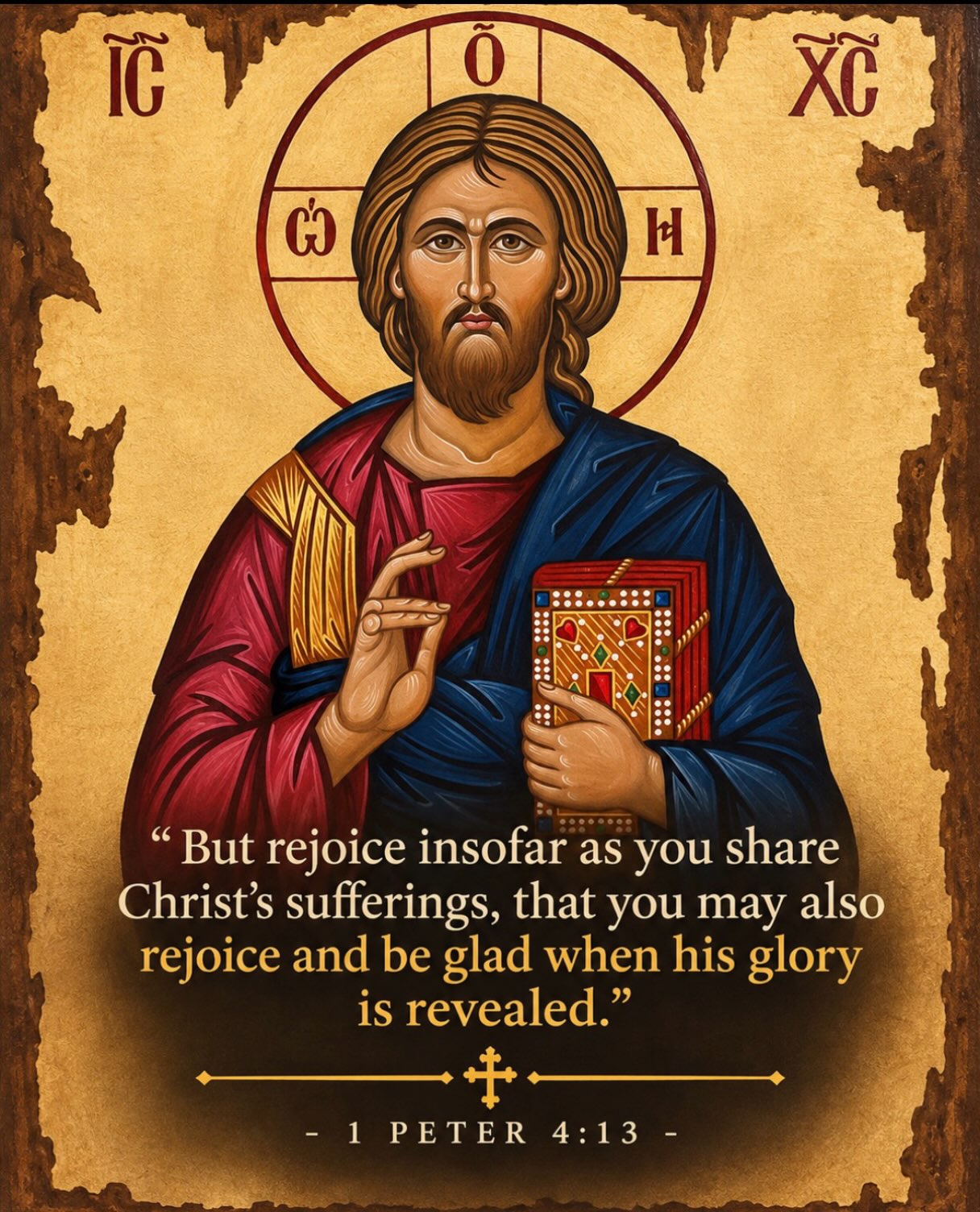
Rejoicing in Suffering for Christ: 1 Peter 4:13 and the Orthodox Martyrs

The post centers on 1 Peter 4:13, where Saint Peter urges believers to rejoice when they share in Christ's sufferings so they may also rejoice when His glory is revealed. The author explains that these words were written to Christians facing hostility and persecution for their faith, where confessing Christ could cost reputation, freedom, or life. The Orthodox Church remembers countless martyrs who endured imprisonment, torture, and death rather…

The post centers on 1 Peter 4:13, where Saint Peter urges believers to rejoice when they share in Christ's sufferings so they may also rejoice when His glory is revealed. The author explains that these words were written to Christians facing hostility and persecution for their faith, where confessing Christ could cost reputation, freedom, or life.

The Orthodox Church remembers countless martyrs who endured imprisonment, torture, and death rather than deny the Lord. Their joy came not from pain itself but from knowing that even death cannot separate them from Christ. The teaching distinguishes between general hardship and suffering specifically for Christ, such as rejection because of faith, struggle against sinful passions, or enduring difficulties while remaining faithful.

Christianity does not promise a life without suffering but promises that suffering and death will not have the final victory. Christ walked the path of the Cross before the glory of the Resurrection. The post concludes with a prayer for strength to remain faithful in every trial and a reminder that the Cross comes before the Resurrection, but the Resurrection is the victory.

  • Saint Peter calls believers to rejoice in sharing Christ's sufferings (1 Peter 4:13)
  • Orthodox martyrs endured imprisonment, torture, and death rather than deny Christ
  • Their joy came from union with Christ, not from pain itself
  • Suffering for Christ includes rejection for faith, struggle against passions, faithful endurance
  • The Cross precedes the Resurrection, but the Resurrection is the final victory
Read more
CHRISTIANITY UNITED Instagram

A Georgian Child's Simple Reverence Before an Icon

The post shares a video from Georgia showing a young girl in a traditional headscarf approaching an icon, bowing her head in reverence, and walking away. The author uses this moment to reflect on how Orthodox faith is passed to children through simple actions rather than complex theology. The text provides historical context: Georgia adopted Christianity in the fourth century through Saint Nino, Equal to the Apostles, and families have preserved…

The post shares a video from Georgia showing a young girl in a traditional headscarf approaching an icon, bowing her head in reverence, and walking away. The author uses this moment to reflect on how Orthodox faith is passed to children through simple actions rather than complex theology. The text provides historical context: Georgia adopted Christianity in the fourth century through Saint Nino, Equal to the Apostles, and families have preserved the faith through prayer, worship, fasting, and devotion to saints despite periods of persecution and hardship.

The author notes that a child may not understand the theology behind holy icons or the deeper meaning of the Divine Liturgy, but can learn to bow before an icon, make the Sign of the Cross, whisper a prayer, and recognize the church as a place of holiness. These small moments become the foundation of a lifelong relationship with Christ.

Children learn not only from what they are told but from what they see adults doing, when they see prayer, church attendance, reverence, and love toward others, they understand faith as something lived. The post cites Mark 10:14 about letting children come to Christ. It concludes that the future of the Church is being nurtured in moments like this.

  • Video shows a Georgian girl reverencing an icon with a simple bow
  • Georgia's Christian tradition dates to the fourth century through Saint Nino
  • Orthodox families have preserved faith through prayer, worship, and fasting despite persecution
  • Children learn faith by observing adult practice, not only through instruction
  • The moment illustrates Mark 10:14 on children and the kingdom of God
Read more
CHRISTIANITY UNITED Instagram

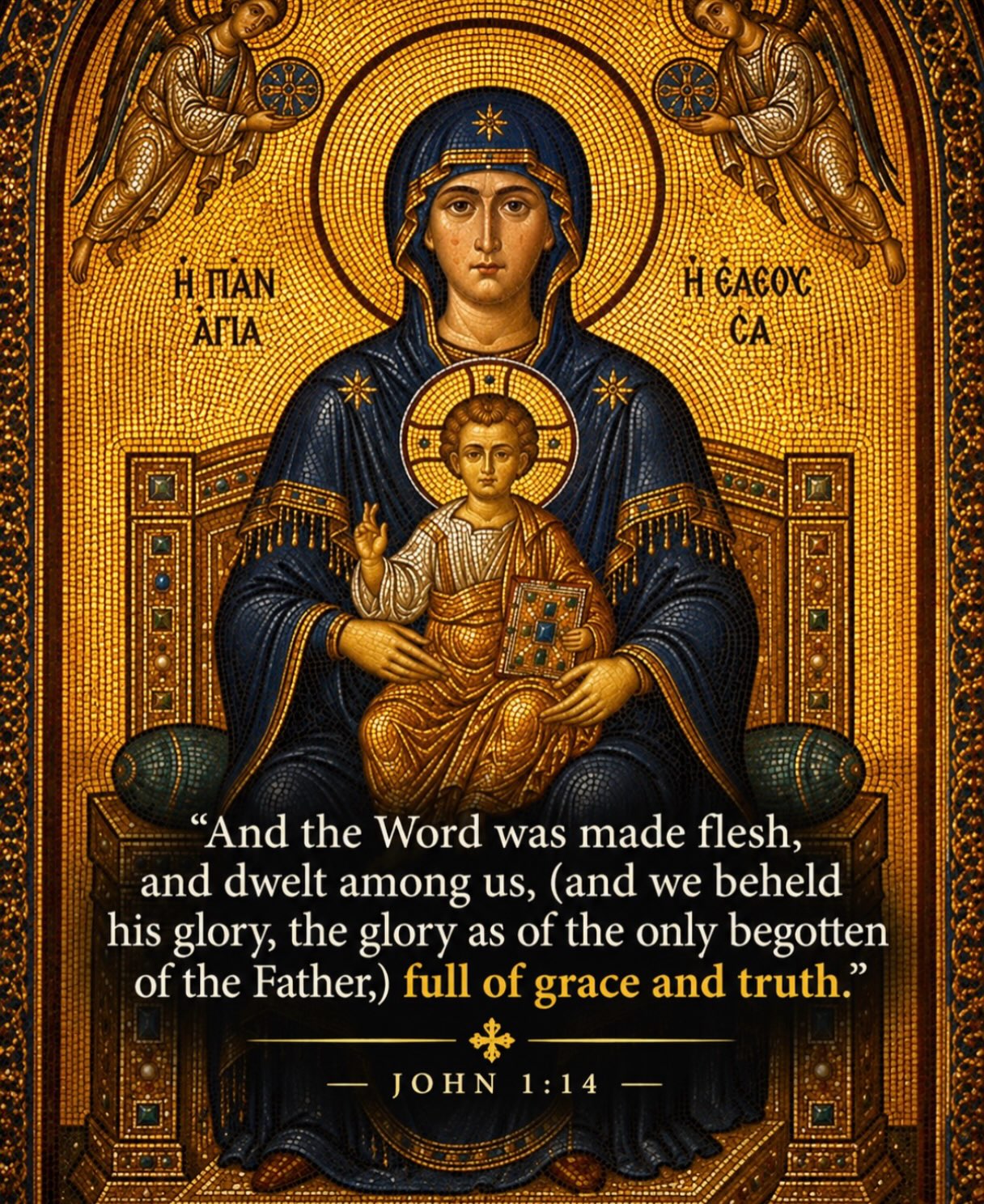
The Incarnation as the heart of Orthodox salvation and theosis

The post opens with the words of John 1:14, "And the Word became flesh, and dwelt among us", identifying this as one of the greatest mysteries of the Christian faith. It describes the eternal Son of God, through whom all things were created, entering the world He made. He came not as an earthly king with armies and riches but in humility: born in a manger, raised in an ordinary human family. The Creator became part of His creation without…

The post opens with the words of John 1:14, "And the Word became flesh, and dwelt among us", identifying this as one of the greatest mysteries of the Christian faith. It describes the eternal Son of God, through whom all things were created, entering the world He made. He came not as an earthly king with armies and riches but in humility: born in a manger, raised in an ordinary human family.

The Creator became part of His creation without ceasing to be God. The post lists what this entailed: the One who formed the heavens experienced hunger, thirst, exhaustion, sorrow, and suffering. He walked among ordinary people, touched the sick, welcomed sinners, and wept with mourners.

He became truly human while remaining truly divine, motivated by immeasurable love for mankind.

In the Orthodox Church, the Incarnation is central to salvation. God did not merely send instructions; He came Himself. Through His life, death, and Resurrection, Christ opened the way for humanity to be restored to communion with God. The post cites Saint Athanasius the Great: "For He was made man that we might be made god."

It clarifies that this does not mean humans become God by nature but that through grace we are called to participate in His divine life, the mystery the Orthodox Church calls theosis.

The post connects this to holy icons. Because the invisible God truly became visible in Jesus Christ, His human face can be depicted, proclaiming the reality of the Incarnation. Christianity is presented not as a collection of moral teachings or beautiful traditions but as the astonishing truth that God loved humanity so deeply He came to live among us, suffer for us, and conquer death for our salvation.

The post concludes: "The Word became flesh. And through Him, the way to eternal life was opened."

  • The eternal Son of God entered creation in humility, becoming fully human while remaining fully divine
  • Saint Athanasius the Great taught the Incarnation makes theosis possible, participation in divine life by grace
  • Holy icons are vindicated because the invisible God became visible in Christ
  • The Incarnation is the center of Orthodox salvation: God came Himself, not just instructions
  • Christ experienced human suffering, hunger, thirst, exhaustion, sorrow, out of love for mankind
Read more

The Theology Behind St. John the Baptist's Icon

The video explains the theological symbols in the icon of St. John the Baptist. His wings depict him as an angel of the desert, signifying his radical ascetic life, angelic purity, and role as a heavenly messenger sent to prepare the way of the Lord. An axe at the root of a cut tree recalls his Gospel warning that the axe is laid at the root of the trees and every tree that does not bear good fruit is cut down, an urgent call to repentance and…

The video explains the theological symbols in the icon of St. John the Baptist. His wings depict him as an angel of the desert, signifying his radical ascetic life, angelic purity, and role as a heavenly messenger sent to prepare the way of the Lord. An axe at the root of a cut tree recalls his Gospel warning that the axe is laid at the root of the trees and every tree that does not bear good fruit is cut down, an urgent call to repentance and metanoia.

The decapitated head on a plate shows his martyrdom within the same image, and the plate also represents the Holy Eucharist, indicating his witness spiritually feeds the Church; Christ blesses him from heaven above. He holds a cross and a scroll with his prophetic message, serving as the living bridge between the Old and New Testaments, the supreme Zeta who teaches preparation of the heart for the living God.

Greek letters at the top read "O Agios Ioannis O Prodromos," meaning St. John the Forerunner. His staff topped with a cross symbolizes his proclamation of Christ's sacrifice and his descent to Hades to announce the Messiah. He wears a rough camel-hair tunic and leather belt exactly as described in Matthew's Gospel: "And John had his garment of camel's hair," representing total renunciation of worldly luxury; his unkempt hair and beard reflect a life removed from urban comfort and convention, the visual mark of one who has died to the world's standards to live for God alone.

Key moments

  1. 0:00 The wings show him as an angel of the desert, not because he became incorporeal but to depict his radically ascetic life, angelic purity, and office as a heavenly messenger sent to prepare the way of the Lord.
  2. 0:31 The axe at the root of the cut tree quotes his own Gospel words: "The axe is already laid at the root of the trees. Every tree that does not bear good fruit is cut down," an urgent call to repentance and metanoia.
  3. 0:31 The decapitated head on a plate portrays his martyrdom within the same icon, and the plate also represents the Holy Eucharist, signifying that his martyr's witness spiritually feeds the Church.
  4. 0:31 Christ appears above blessing him from heaven, validating his ministry.
  5. 1:04 He holds a cross and a scroll with his prophetic message; he is the living bridge between the Old and New Testaments, the supreme Zeta who teaches preparation of the heart to receive the living God.
  6. 1:04 The Greek letters at the top read "O Agios Ioannis O Prodromos," meaning simply St. John the Forerunner.
  7. 1:36 His staff topped with a cross is not an ordinary shepherd's crook; it symbolizes his prophetic proclamation of Christ's coming sacrifice and serves as the herald's banner descending to Hades to announce the Messiah's arrival, according to patristic tradition.
  8. 2:13 He wears a rough tunic of camel skin and leather exactly as Matthew's Gospel states: "And John had his garment of camel's hair," representing total renunciation of worldly luxury; his unkempt hair and beard reflect a life completely removed from urban comfort, fashion, and convention, the visual mark of one who has died to the world's standards to live exclusively for God.
Read more

St. Gabriel of Georgia on Humility and the Cross

The post presents two sayings attributed to St. Gabriel of Georgia. The first states that the more a person humbles himself, the more God reveals Himself to that person, and that this is the mystery of the saints. The second recounts a question asked to the saint about which cross is better to wear.

He answered that the best cross is the one received at baptism, but if that is not available, it is better to wear a cross depicting the Crucified Christ. The post offers these teachings without additional commentary or discussion.

  • Humility leads to greater divine revelation.
  • The mystery of the saints is found in humility.
  • The best cross to wear is the baptismal cross.
  • If the baptismal cross is absent, a cross with the Crucified Christ is preferable.
Read more
CHRISTIANITY UNITED Instagram

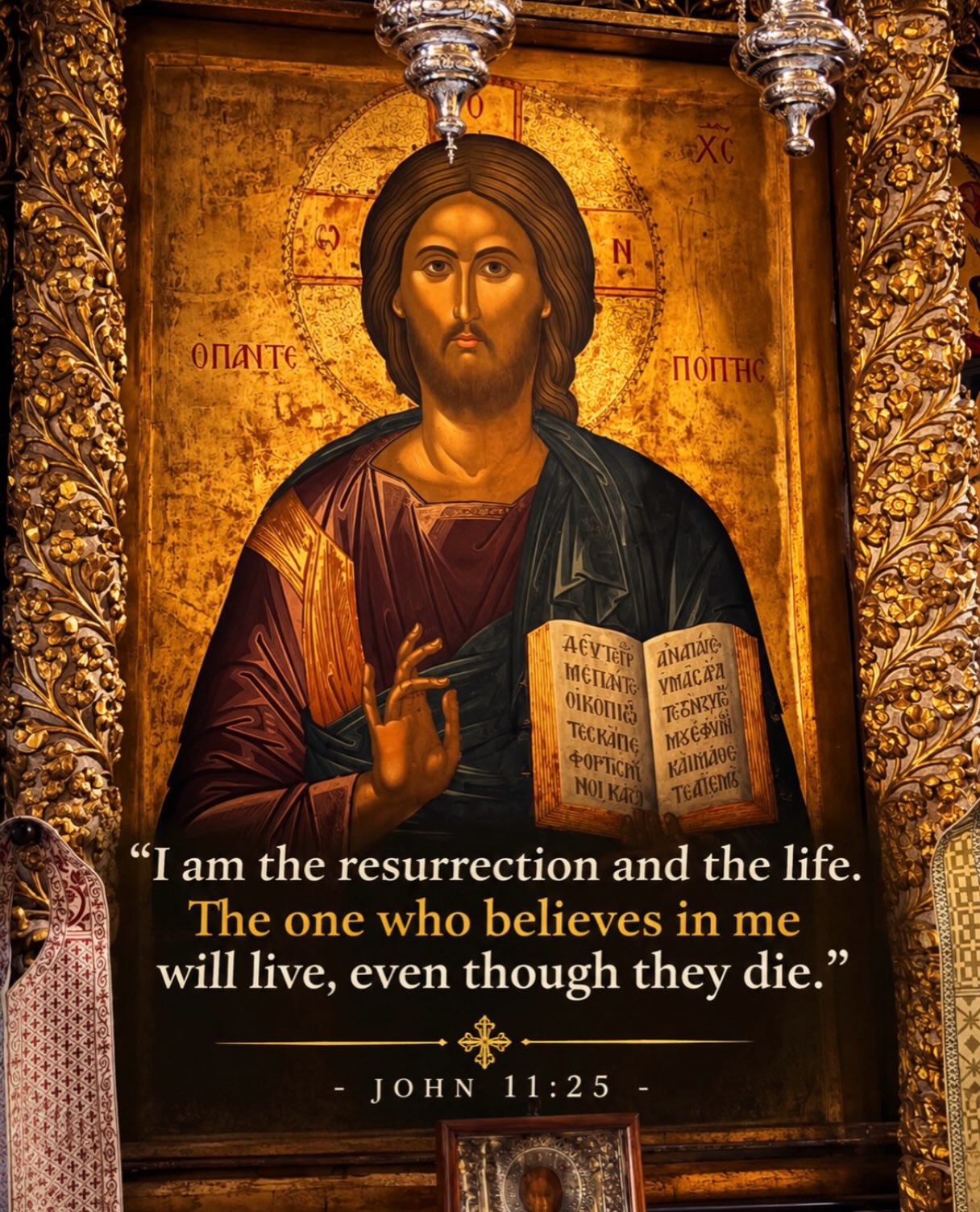
Christ is the Resurrection and the Life: Lazarus Saturday and the defeat of death

The post centers on Christ's words to Martha in John 11:25: "I am the resurrection and the life. The one who believes in me will live, even though they die." The author explains that Jesus spoke these words after the death of Lazarus, Martha's brother. Although Martha believed in the general resurrection on the last day, Christ revealed that the Resurrection is a person, Himself, standing before her. He then raised Lazarus, who had been dead…

The post centers on Christ's words to Martha in John 11:25: "I am the resurrection and the life. The one who believes in me will live, even though they die." The author explains that Jesus spoke these words after the death of Lazarus, Martha's brother.

Although Martha believed in the general resurrection on the last day, Christ revealed that the Resurrection is a person, Himself, standing before her. He then raised Lazarus, who had been dead four days, as a sign of His own coming victory over death through the Cross and Resurrection. The Orthodox Church commemorates this event on Lazarus Saturday, the day before Holy Week.

The post notes that Christians are not forbidden to grieve; Christ Himself wept at Lazarus' tomb. But grief is not without hope, because Christ has opened the way to eternal life. The grave is no longer the end of the story, and those who belong to Christ are called to share in His victory over death.

The author cites the Paschal troparion: "Christ is risen from the dead, trampling down death by death, and upon those in the tombs bestowing life!" The message concludes that faith rests on a living Savior who conquered the grave, so death is not the end of life.

  • Christ's declaration in John 11:25 that He is the Resurrection and the Life
  • The raising of Lazarus after four days as a sign of Christ's victory over death
  • Lazarus Saturday in the Orthodox calendar, observed before Holy Week
  • Christian grief is real but not without hope because of the Resurrection
  • The Paschal troparion proclaims Christ trampling down death by death
Read more
CHRISTIANITY UNITED Instagram

The Holy Mystery of Marriage in the Orthodox Church

The post explains the Orthodox Christian understanding of marriage as a Holy Mystery rather than a simple exchange of vows. It describes the wedding ceremony's key elements: the blessing of rings, which symbolize commitment and faithfulness, and the crowning of the bride and groom. The crowns carry a dual meaning, they represent the dignity of marriage and the sacrificial love to which husband and wife are called. This love is defined by…

The post explains the Orthodox Christian understanding of marriage as a Holy Mystery rather than a simple exchange of vows. It describes the wedding ceremony's key elements: the blessing of rings, which symbolize commitment and faithfulness, and the crowning of the bride and groom. The crowns carry a dual meaning, they represent the dignity of marriage and the sacrificial love to which husband and wife are called.

This love is defined by patience in difficulty, forgiveness when mistakes occur, and faithfulness when feelings change. The crowns also point to martyrdom, not because marriage is miserable, but because genuine love requires setting aside selfishness for the other. The couple does not undertake this journey alone; Christ is invited to the center of their home, struggles, joys, and future.

Through prayer, forgiveness, the Holy Eucharist, and shared life in the Church, spouses help each other grow closer to God. The post cites Saint Paul's words from Ephesians 5:31: "And they two shall be one flesh." It concludes with a prayer for God's blessing on Orthodox marriages, strength for those struggling, and guidance for those preparing to enter this Mystery, noting that a marriage rooted in Christ is a shared journey toward the Kingdom of Heaven.

Key moments

  1. The speaker says: 'Trudna subita dola łuczi, otok da senir, tuczi łuczi.'
  2. The speaker continues: 'Tuczi i łuczi, i łuja i bełno, czacze namsada.'
  3. The speaker repeats: 'zapoi se bro, zapoi se bro.'
  4. The speaker concludes: 'jeda po czirne, a ty na mij straj, po czini sine.'
Read more

Saint Ignatius the Venerable Martyr: Monastic Life and Martyrdom under Ottoman Rule

Saint Ignatius the Venerable Martyr was born in Stara Zagora, Bulgaria, a city known for producing many Orthodox ascetics, confessors, and martyrs. From youth he was drawn to God and the spiritual life. He traveled to Mount Athos and entered monastic life at the Skete of Saint John the Forerunner, where he devoted himself to repentance, humility, fasting, and prayer. During a period when confessing Christianity could lead to persecution, he…

Saint Ignatius the Venerable Martyr was born in Stara Zagora, Bulgaria, a city known for producing many Orthodox ascetics, confessors, and martyrs. From youth he was drawn to God and the spiritual life. He traveled to Mount Athos and entered monastic life at the Skete of Saint John the Forerunner, where he devoted himself to repentance, humility, fasting, and prayer.

During a period when confessing Christianity could lead to persecution, he voluntarily presented himself before Ottoman authorities to witness to his faith in Jesus Christ. Aware of the danger, he chose martyrdom out of love for Christ. On October 8, 1814, he was hanged in Constantinople. After his death, his relics became known for miraculous healings.

The post notes that his martyrdom became a testimony of unwavering faith and devotion to Christ. It states that Saint Ignatius reminds us that true love for Christ requires more than words, that it remains faithful through suffering, sacrifice, and even death, and that his witness continues to strengthen the faithful more than two centuries later.

His precious head is preserved at the Monastery of Saint Panteleimon on Mount Athos, where it is honored with reverence.

  • Born in Stara Zagora, Bulgaria
  • Monastic life at the Skete of Saint John the Forerunner on Mount Athos
  • Voluntarily confessed faith before Ottoman authorities
  • Hanged in Constantinople on October 8, 1814
  • Relics known for miraculous healings; head preserved at Monastery of Saint Panteleimon
Read more
CHRISTIANITY UNITED Instagram

Elder Dositheos warns parents: examine what your children watch before it is too late

Elder Dositheos, abbot of the Holy Monastery of Agia Skepi (Holy Protection) near Serres in Greece, addresses parents about the influences shaping their children's minds and hearts. He says parents are losing their children and may react too late. He urges them to look carefully at the programs their children watch, to examine their messages one by one, and to stop accepting things simply because modern society treats them as normal. He states…

Elder Dositheos, abbot of the Holy Monastery of Agia Skepi (Holy Protection) near Serres in Greece, addresses parents about the influences shaping their children's minds and hearts. He says parents are losing their children and may react too late. He urges them to look carefully at the programs their children watch, to examine their messages one by one, and to stop accepting things simply because modern society treats them as normal.

He states that all current programs are of the devil and challenges viewers to find in them any connection to God, faith, homeland, or family. He speaks from experience gained in the forest, not from theory. His advice is blunt: read the programs and throw them in the dirt, because once children are harmed it will be too late to act.

The accompanying text places this warning in the wider context of Orthodox parenting. Children today are surrounded by social media, entertainment, television, and the internet, which shape their sense of right and wrong before they can recognize what is harmful. Parents may provide food, education, and comfort while neglecting spiritual upbringing.

The task of Orthodox parents is to help children become faithful followers of Jesus Christ: teaching them to pray, bringing them to the Divine Liturgy, speaking openly about sin and repentance, and showing them the difference between what is popular and what is good. Children learn from what they see, so parents must themselves pray, forgive, and repent.

Protecting children does not mean raising them in fear of the world but preparing them to face it with wisdom, courage, and a heart rooted in Christ. The text closes with Proverbs 22:6: 'Train up a child in the way he should go: and when he is old, he will not depart from it.'

Key moments

  1. The speaker calls for loading God's things, not the devil's.
  2. All current programs are clearly of the devil.
  3. Challenge to examine programs one by one for any relation to God, faith, homeland, or family.
  4. Parents must react and take matters into their own hands.
  5. Parents are losing their children.
  6. This is not theory; people see and live it.
  7. The speaker knows these things from experience in the forest.
  8. Read the programs and throw them in the dirt; when children become abnormal it will be too late.
Read more
CHRISTIANITY UNITED Instagram

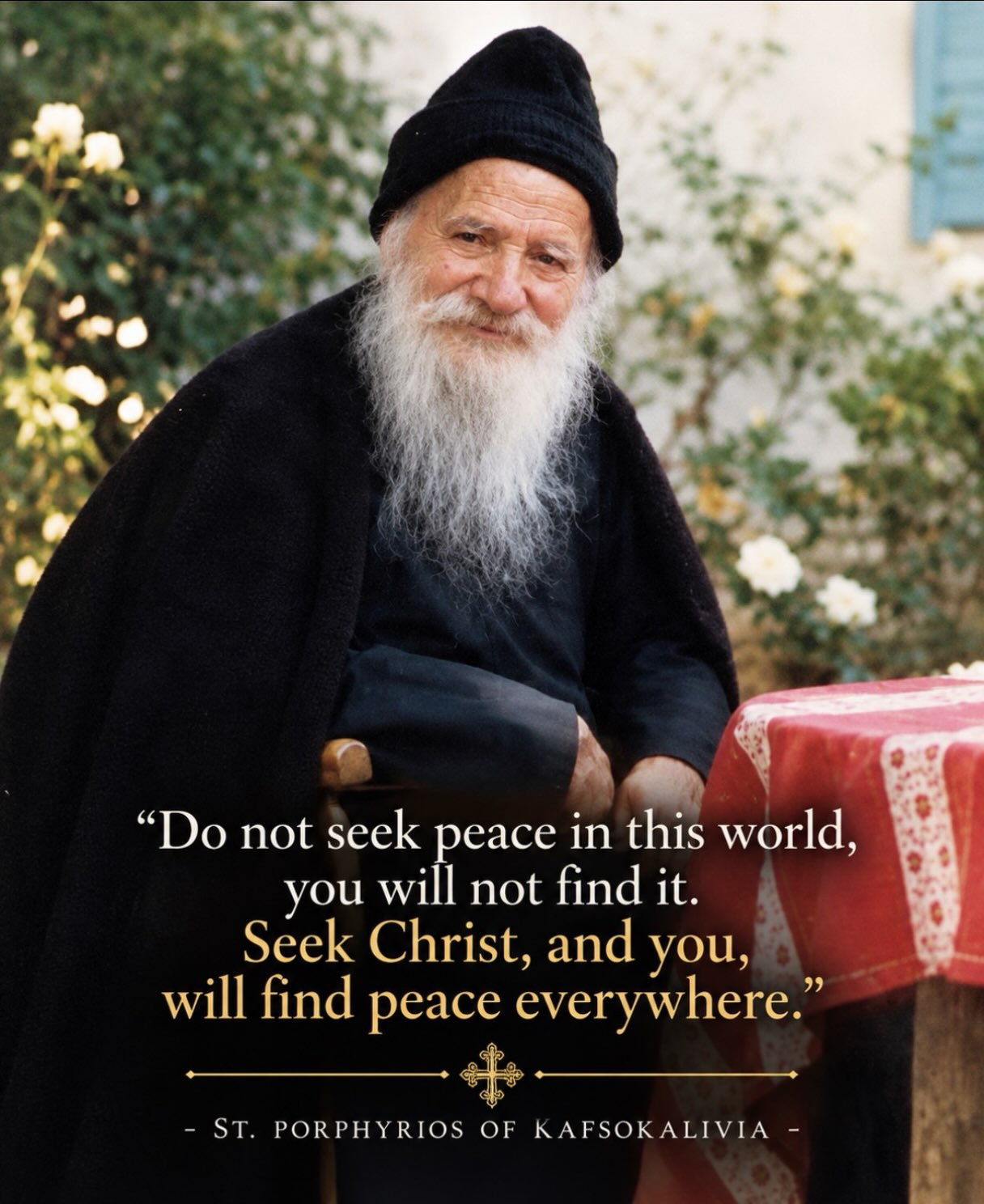
Saint Porphyrios on finding peace in Christ, not circumstances

The post presents a teaching from Saint Porphyrios of Kafsokalivia (1906-1991), canonized in 2013, on the nature of true peace. It opens with the elder's words: "Do not seek peace in this world, you will not find it. Seek Christ, and you will find peace everywhere." The author contrasts worldly peace, dependent on money, solved problems, relationships, or ease, with the peace Christ gives, citing John 14:27: "Peace I leave with you, My peace I…

The post presents a teaching from Saint Porphyrios of Kafsokalivia (1906-1991), canonized in 2013, on the nature of true peace. It opens with the elder's words: "Do not seek peace in this world, you will not find it. Seek Christ, and you will find peace everywhere." The author contrasts worldly peace, dependent on money, solved problems, relationships, or ease, with the peace Christ gives, citing John 14:27: "Peace I leave with you, My peace I give unto you: not as the world giveth, give I unto you."

The text explains that real peace does not rely on external conditions. Even those who appear to have everything can suffer loneliness and emptiness, while those with little can know extraordinary peace when their hearts are rooted in Christ. This does not mean Christians avoid sadness, fear, or suffering; the saints themselves endured persecution, illness, poverty, and rejection.

Yet they trusted God because His presence was greater than their circumstances. Saint Porphyrios emphasized loving Christ rather than being consumed by fear and spiritual anxiety. The post concludes by urging readers not to wait for life to become perfect before turning to God, but to seek Him now in struggles, uncertainty, suffering, and ordinary daily life, because peace is not the absence of problems but the knowledge that one is not walking through life without Christ.

  • Saint Porphyrios teaches that peace is found in Christ, not in worldly circumstances
  • John 14:27 contrasts Christ's peace with the world's peace
  • Saints endured suffering yet maintained peace through trust in God
  • Peace is not the absence of problems but the presence of Christ
  • The elder urged seeking God now, not waiting for perfect conditions
Read more
CHRISTIANITY UNITED Instagram

Monastic life on Mount Athos and the call to silence

The post describes a monk traveling the waters of Mount Athos, a peninsula that has hosted Orthodox monastic communities for over a thousand years. It contrasts the monastic pursuit of God through poverty, obedience, fasting, and unceasing prayer with the world's emphasis on possessions, recognition, and comfort. The author notes that monks withdraw not from lack of love for the world but to devote themselves more fully to God, interceding for…

The post describes a monk traveling the waters of Mount Athos, a peninsula that has hosted Orthodox monastic communities for over a thousand years. It contrasts the monastic pursuit of God through poverty, obedience, fasting, and unceasing prayer with the world's emphasis on possessions, recognition, and comfort. The author notes that monks withdraw not from lack of love for the world but to devote themselves more fully to God, interceding for all people.

The text then applies this witness to daily life: laypeople can create space for silence by setting aside phones and distractions, standing before an icon, and speaking to Christ from the heart. It closes with Psalm 46:10 and a prayer for the protection of Athonite monks and the guidance of all believers toward Christ.

  • Mount Athos has been a center of Orthodox monasticism for more than a millennium
  • Monks embrace spiritual struggle, obedience, fasting, repentance, and prayer
  • Monastic withdrawal serves deeper devotion to God and prayer for the world
  • Laypeople can imitate monastic silence by removing distractions and praying before icons
  • The post ends with Psalm 46:10 and a prayer for the monks and all Christians
Read more
CHRISTIANITY UNITED Instagram discussion

Orthodox perspective on Halloween and St. Luke's commemoration

The author urges Orthodox Christians to reconsider participation in Halloween, noting its historical connections to the Celtic festival of Samhain and Western Christian traditions around All Saints' Day. Modern imagery often centers on witches, demons, death, and the occult, which conflicts with teaching children to guard their hearts and follow Christ. On the Old Calendar, October 31 commemorates the Holy Apostle and Evangelist Luke, the…

The author urges Orthodox Christians to reconsider participation in Halloween, noting its historical connections to the Celtic festival of Samhain and Western Christian traditions around All Saints' Day. Modern imagery often centers on witches, demons, death, and the occult, which conflicts with teaching children to guard their hearts and follow Christ.

On the Old Calendar, October 31 commemorates the Holy Apostle and Evangelist Luke, the beloved physician and companion of Saint Paul; on the New Calendar, Saint Luke is commemorated on October 18. The author prefers to teach children about the courage of martyrs, the wisdom of the Holy Fathers, and the lives of saints rather than encourage a fascination with darkness.

A priest in an accompanying video states that Orthodox Christians do not participate in Halloween because it is a satanic holiday. He acknowledges that some may dress as saints if necessary, but insists they must not dress as witches, warlocks, or demons. The priest asserts that witches, warlocks, and demons are not make-believe but real, and that Halloween involves actual sacrifices by those who practice witchcraft.

He asks what parents are teaching their children by participating and concludes that this is not something Christians ought to do. The author adds that not every family celebrating Halloween has evil intentions, but not everything the world celebrates needs to become part of Christian life. Children can have joyful childhoods rooted in Christ, His Church, and the example of His saints, citing Ephesians 5:11: "Have no fellowship with the unfruitful works of darkness."

Key moments

  1. The priest received phone calls asking what to do about Halloween with families.
  2. The correct answer is that Orthodox Christians do not participate in Halloween because it is a satanic holiday.
  3. Some people might dress up as saints if they have to, but they must not dress as witches, warlocks, or demons because those are on the wrong team.
  4. Witches, warlocks, and demons are not make-believe; they are real.
  5. The priest asks what we are teaching our children by participating.
  6. Things are done on Halloween that people do not know about, including sacrifices made by witches, warlocks, and demonic people.
  7. This is not something Christians ought to do.
8 opinions in the discussion What's the harm in getting free candy? Some people use the day for witchcraft and sacrifices, but plenty of people just want some tasty treats. It's only a satanic holiday if you're doing… Read the discussion

Saint Paraskeva: Ascetic Life, Miraculous Relics, and Veneration in Iași

Saint Paraskeva, known as Saint Petka, was born in Epivates near Constantinople to wealthy and devout Christian parents. Her brother Euthymius became a monk and later a respected bishop. After the death of her parents, she left her family home and traveled first to Constantinople and then to the wilderness near the Jordan River. There she spent many years in fasting, prayer, silence, and spiritual struggle. Her life was filled with hardship,…

Saint Paraskeva, known as Saint Petka, was born in Epivates near Constantinople to wealthy and devout Christian parents. Her brother Euthymius became a monk and later a respected bishop. After the death of her parents, she left her family home and traveled first to Constantinople and then to the wilderness near the Jordan River.

There she spent many years in fasting, prayer, silence, and spiritual struggle. Her life was filled with hardship, demonic temptations, and the difficult battles of the ascetic life, yet she remained faithful to Christ. When she reached old age, an angel of God appeared to her and said: "Leave the wilderness and return to your homeland.

There you must surrender your body to the earth, while your soul will depart to the Lord." Obeying the heavenly message, Saint Petka returned to Epivates, where she spent another two years in constant prayer and fasting. There she peacefully surrendered her soul to God in the 9th century.

Her holy relics became a source of miracles and healing, and throughout the centuries they were carried to Constantinople, Tarnovo, Belgrade, and finally Iași in Romania, where they remain today. In Belgrade a holy spring dedicated to Saint Petka continues to be a place of prayer where many faithful seek healing and comfort through her intercessions.

The account concludes that Saint Petka reminds us that holiness is not found in wealth, recognition, or earthly success, but in humility, repentance, prayer, and complete devotion to Jesus Christ. Though she lived hidden from the world, God made her known to generations of Christians. The post ends with the invocation: Holy Venerable Mother Paraskeva, pray to God for us.

  • Born in Epivates to devout parents; brother Euthymius became a bishop.
  • Left for wilderness near Jordan River, lived ascetic life of fasting, prayer, and spiritual struggle.
  • Angel instructed her to return to Epivates; died peacefully in the 9th century after two years of prayer.
  • Relics transferred to Constantinople, Tarnovo, Belgrade, and Iași; spring in Belgrade remains a site of healing.
  • Presented as model of holiness through humility, repentance, and devotion to Christ.
Read more
CHRISTIANITY UNITED Instagram

Even if only twelve remain, we will not abandon the truth

The author reflects on the origins of Christianity, noting that Jesus Christ began His Church with a small group of ordinary apostles who left everything to follow Him. They faced persecution, imprisonment, beatings, and many gave their lives rather than deny what they knew to be true. They did not alter the Gospel to gain worldly acceptance. Almost two thousand years later, the Orthodox Church continues to confess the same Jesus Christ, the…

The author reflects on the origins of Christianity, noting that Jesus Christ began His Church with a small group of ordinary apostles who left everything to follow Him. They faced persecution, imprisonment, beatings, and many gave their lives rather than deny what they knew to be true. They did not alter the Gospel to gain worldly acceptance. Almost two thousand years later, the Orthodox Church continues to confess the same Jesus Christ, the same Holy Trinity, and the apostolic faith preserved through the Holy Fathers, the Ecumenical Councils, and generations of faithful Christians.

Throughout history, countless martyrs chose death rather than renounce Christ. Monks defended the faith during times of heresy. Bishops endured exile and imprisonment. Ordinary believers kept praying even when churches were closed and Christianity was persecuted.

They understood that truth is not determined by how many people believe it. Even if the whole world turns against the teachings of Christ, His words remain true. Defending the faith also means living it. There is no victory in arguing about Orthodoxy while allowing pride, hatred, and bitterness to rule the heart.

The truth must be defended with courage but lived with humility, repentance, and love. The Church does not need to become like the world to survive; it needs to remain faithful to Christ. Even if only a handful remained, the responsibility would be the same: never deny Christ, never trade the truth for acceptance, never abandon the faith handed down to us.

Key moments

  1. The speaker will defend the truth at all costs, even if reduced to just twelve again.
  2. The speaker addresses someone as a pagan and says they have seen it all.
  3. The speaker feels no pressure because their back has been secured.
  4. The speaker promises that the situation is nothing like before.
Read more
CHRISTIANITY UNITED Instagram

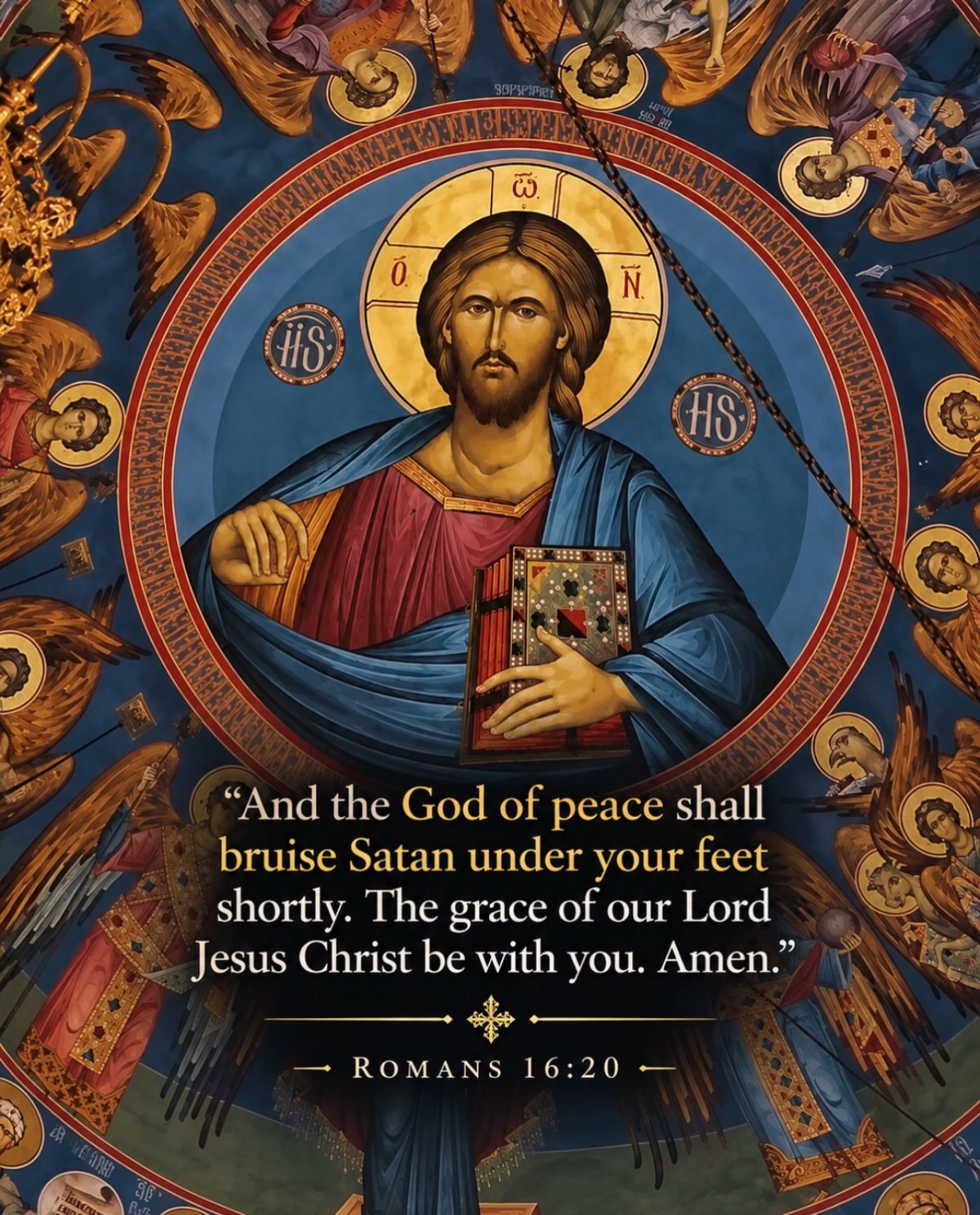
Saint Paul: God will crush Satan under our feet shortly

The post centers on Romans 16:20, where Saint Paul writes that the God of peace will bruise Satan under the feet of believers shortly. The author explains that while evil appears to prevail in the world and in personal struggles with temptation, sin, and fear, Scripture teaches that Satan's power is not eternal and his defeat is certain. The victory does not come through human strength, pride, or anger but through Jesus Christ, who conquered sin…

The post centers on Romans 16:20, where Saint Paul writes that the God of peace will bruise Satan under the feet of believers shortly. The author explains that while evil appears to prevail in the world and in personal struggles with temptation, sin, and fear, Scripture teaches that Satan's power is not eternal and his defeat is certain.

The victory does not come through human strength, pride, or anger but through Jesus Christ, who conquered sin and death by His Cross and Resurrection. In the Orthodox Church the spiritual battle is understood as real: the devil tempts, seeks to lead people away from God, and tries to fill hearts with despair. Yet he does not have the final word. Every sincere repentance, resistance to temptation, act of forgiveness, and turn to prayer instead of surrender to sin refuses evil's rule.

When believers fall, God's mercy is greater than their weakness. The same Lord who conquered death calls the faithful to remain steadfast until the end. The discussion turns on the distinction between divine action and human effort in spiritual warfare, the reality of demonic opposition, and the assurance that final victory belongs to Christ alone.

  • Romans 16:20 promises God will crush Satan under believers' feet
  • Victory over evil comes through Christ's Cross and Resurrection, not human strength
  • Orthodox spiritual warfare acknowledges real demonic temptation and attacks
  • Practical resistance includes repentance, forgiving others, and prayer instead of surrender to sin
  • God's mercy surpasses human weakness; final victory belongs to Christ
Read more