WeOrthodox
EN UA

Orthodox posts, videos and discussions

We follow Orthodox channels, communities and blogs across the web, summarise every post and video, and highlight the conversations with real substance.

Fr.TEDTalks with Ally ☦︎ Instagram

Conversion as lifelong transformation of the whole person in Orthodoxy

The post presents Orthodox conversion as a lifelong transformation of the whole person rather than a single moment or a change of belief alone. The author, a priest, describes conversion across four dimensions. Conversion of the heart is not simply feeling closer to God but learning to love what He loves through repentance, forgiveness, humility, and purity, so the heart is slowly softened and reordered toward Christ. Conversion of the mind…

The post presents Orthodox conversion as a lifelong transformation of the whole person rather than a single moment or a change of belief alone. The author, a priest, describes conversion across four dimensions. Conversion of the heart is not simply feeling closer to God but learning to love what He loves through repentance, forgiveness, humility, and purity, so the heart is slowly softened and reordered toward Christ.

Conversion of the mind means we stop asking the world to define truth, goodness, success, and freedom, and allow Christ to renew our understanding of them. Conversion of the soul means prayer becomes more than something we do when we need God; through the sacramental life, repentance, and communion with Him, our entire life begins to be directed toward union with God.

Conversion of the body acknowledges that the body is not separate from spiritual life: we fast, bow, make prostrations, guard our senses, and receive the Eucharist, worshiping God with our bodies because they belong to Him. The post concludes that Orthodoxy is not simply something you believe but something you become; the goal is not to look Orthodox but to be transformed into the likeness of Christ in heart, mind, soul, and body.

A quotation from St. Irenaeus of Lyons is included: "For the glory of God is a living man; and the life of man consists in beholding God." The author also notes that the accompanying photograph is a recent picture of himself.

  • Conversion is a lifelong transformation of heart, mind, soul, and body, not a single moment or mere belief change.
  • Conversion of the heart involves learning to love what God loves through repentance, forgiveness, humility, and purity.
  • Conversion of the mind means allowing Christ to renew our understanding of truth, goodness, success, and freedom.
  • Conversion of the soul directs one's entire life toward union with God through the sacramental life and prayer.
  • Conversion of the body includes fasting, bows, prostrations, guarding the senses, and receiving the Eucharist as worship.
Read more

Debate on Scripture's authority and the Church

0:23

A debate examines the foundation for knowing truth when discussing the canon of Scripture. One participant asks what foundational truth the other holds and how they know what is true. Another cites John 17:17 as the standard if the Church is rejected. A third argues that appealing to Scripture to prove Scripture is circular reasoning. A fourth counters that Jesus, as God, declares truth by his own authority, not by appealing to Scripture. The…

A debate examines the foundation for knowing truth when discussing the canon of Scripture. One participant asks what foundational truth the other holds and how they know what is true. Another cites John 17:17 as the standard if the Church is rejected.

A third argues that appealing to Scripture to prove Scripture is circular reasoning. A fourth counters that Jesus, as God, declares truth by his own authority, not by appealing to Scripture. The exchange centers on whether Scripture authenticates itself or requires the Church's witness, and whether Christ's divine authority makes his words self-authenticating.

Key moments

  1. The speaker asks what the other's foundational truth is and how they know what is true.
  2. Another speaker says that if the church is rejected, John 17:17 states what is true.
  3. A participant responds that this appeal uses scripture to prove scripture.
  4. Another replies that Jesus did the same.
  5. A different voice disagrees, stating that Jesus is God and his word is true because he is God, not because he appeals to scripture.
Read more

St. John Chrysostom on almsgiving and surplus

The post shares a quote from St. John Chrysostom's homily on fasting and almsgiving. He teaches that Christians are not called to voluntary poverty but to give their surplus to the poor, so that their abundance becomes a foundation for salvation.

  • St. John Chrysostom distinguishes between becoming poor and giving from surplus
  • Almsgiving transforms personal abundance into a means of salvation
  • The teaching comes from his homily on fasting and almsgiving
George Instagram discussion

The Liturgy as Journey: Why Arrival Time Matters for Communion

1:21

The video outlines the opening movements of the Divine Liturgy and explains a common pastoral teaching about late arrival. It begins with the priest's exclamation, "Blessed is the Kingdom of the Father, and of the Son, and of the Holy Spirit," which places the faithful at the doorway of God's Kingdom. The great litany follows, "In peace, let us pray to the Lord", where the congregation intercedes for the whole world, the sick, travelers, and all…

The video outlines the opening movements of the Divine Liturgy and explains a common pastoral teaching about late arrival. It begins with the priest's exclamation, "Blessed is the Kingdom of the Father, and of the Son, and of the Holy Spirit," which places the faithful at the doorway of God's Kingdom. The great litany follows, "In peace, let us pray to the Lord", where the congregation intercedes for the whole world, the sick, travelers, and all who suffer.

Then the Gospel book is carried out and read, and Christ speaks directly to the people. Many priests teach that arriving after the Gospel reading means one should not receive Holy Communion that day, because the Liturgy is a single journey from its beginning to the chalice, and hearing Christ's word precedes receiving His body and blood.

The video adds a pastoral note: those with small children, work obligations, or circumstances beyond their control should simply do their best, because God sees their situation.

Key moments

  1. The liturgy begins with the priest saying "Blessed is the Kingdom of the Father, and of the Son, and of the Holy Spirit," and from that moment the faithful stand at the doorway of the Kingdom of God.
  2. The great prayer of the church follows, "In peace, let us pray to the Lord", where the congregation prays for the whole world, the sick, travelers, and those who suffer as one family.
  3. The gospel book is carried out and the gospel is read, and Christ speaks to the people.
  4. Many priests say that if you come after the gospel, you should not receive communion that day because you have missed the part where we hear Christ before we receive him.
  5. The liturgy is a journey that the faithful work together from the beginning to the end, to the chalice.
  6. If you have little children, work, or something you cannot control, God sees that, so just do your best.
21 opinions in the discussion I grew up Lutheran and converted to Orthodoxy later in life. For me the thought of not being at liturgy from the beginning is unacceptable; also, the way people come and go during it is… Read the discussion

Christ in the Hungry and the Stranger

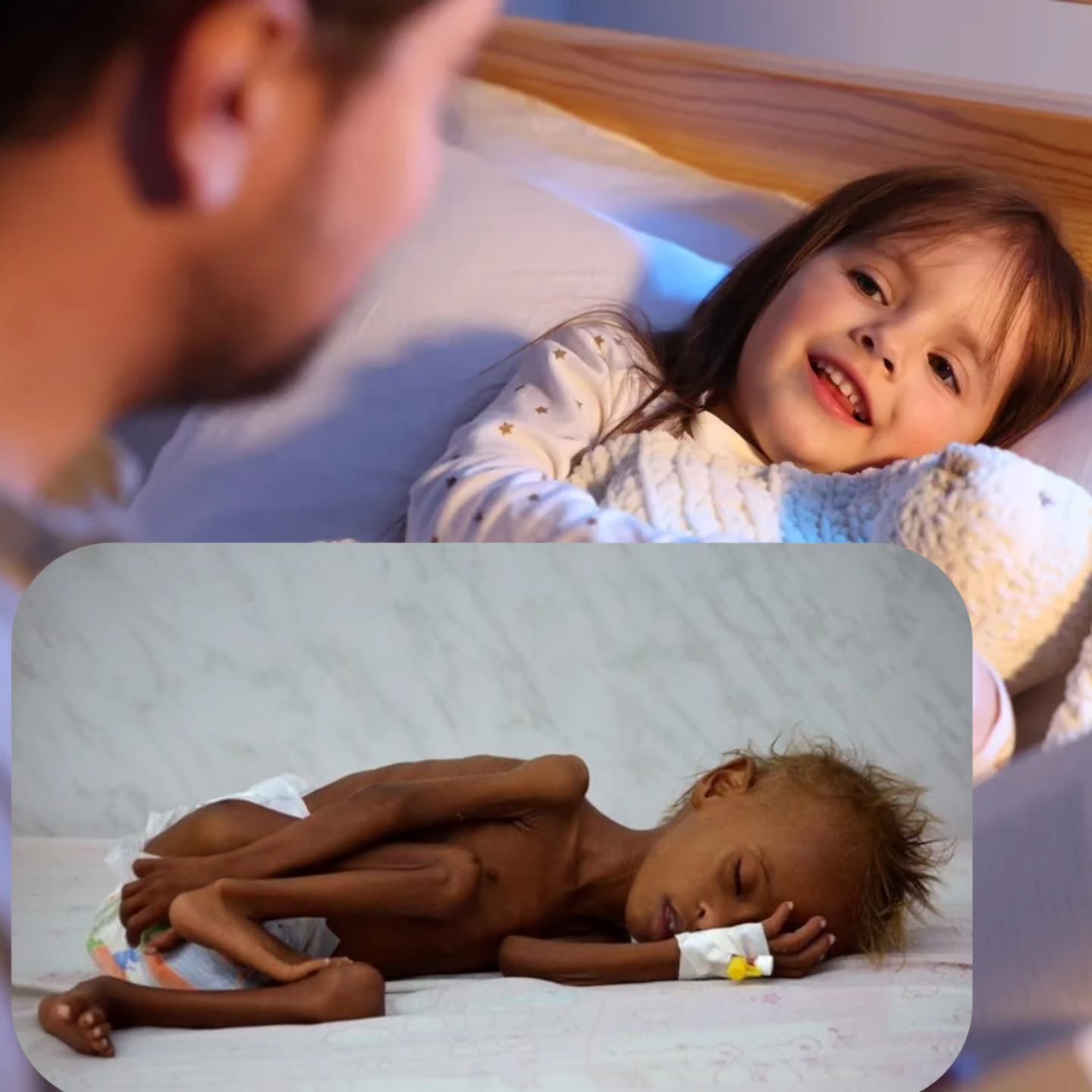
The post presents Matthew 25:35 in Serbian Cyrillic: "For I was hungry and you gave me food, I was thirsty and you gave me drink, I was a stranger and you welcomed me." The verse is Christ's description of the final judgment, where he identifies himself with those in need. The accompanying image description contrasts two scenes: a healthy child smiling in bed, and a severely malnourished child lying in bed.

This visual pairing illustrates the Gospel's call to recognize and serve Christ in the suffering and marginalized.

  • Matthew 25:35 quoted in Serbian Cyrillic
  • Christ identifies himself with the hungry, thirsty, and stranger
  • Two contrasting images described: healthy child and severely malnourished child
  • Visual illustration of the Gospel call to serve the needy
  • No additional commentary or discussion provided
Read more

Love means sharing what we need, not just our surplus

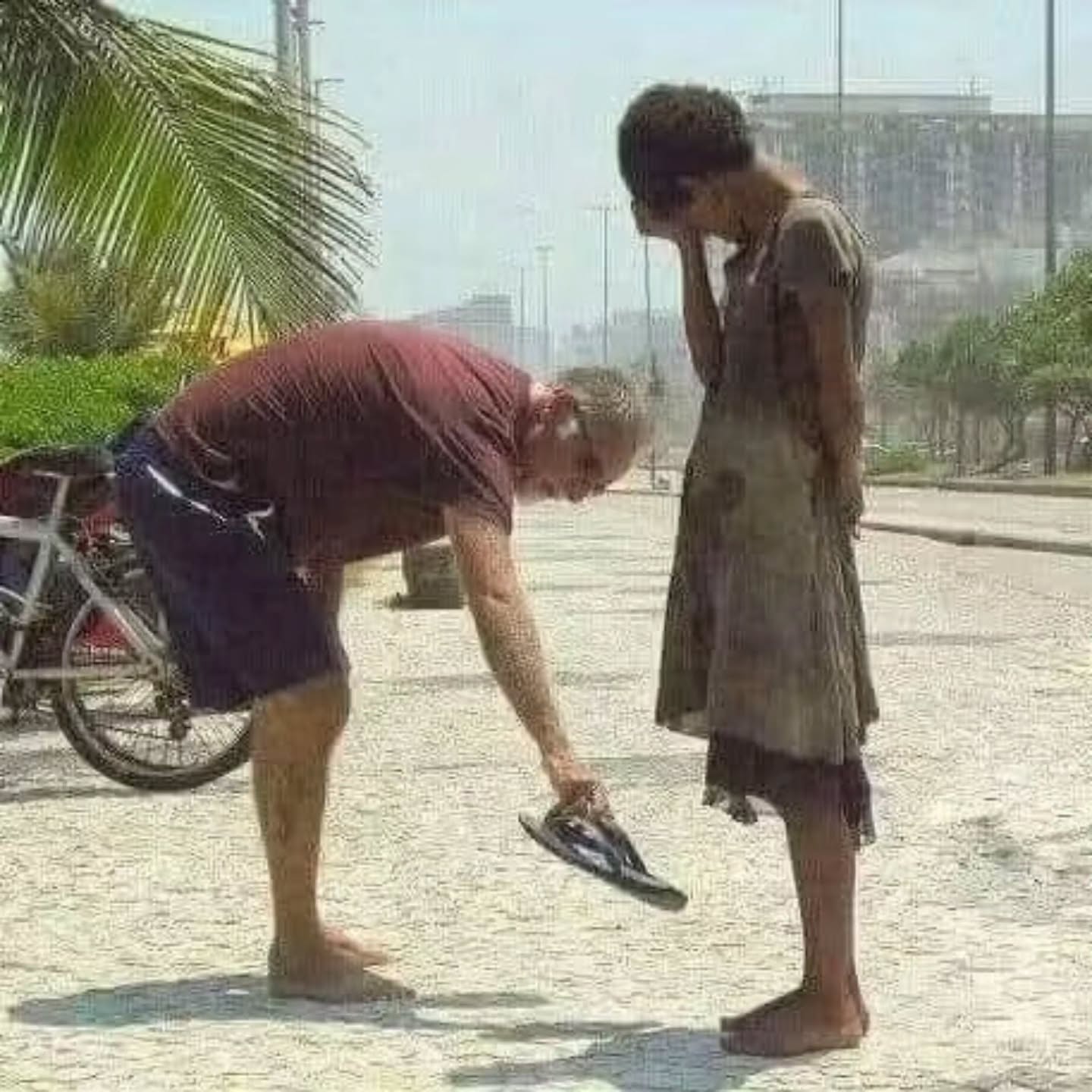
A quote states that love is not giving what is superfluous but being willing to share even what one needs oneself. An image shows a man offering a sandal to a person in need, illustrating the principle of sacrificial giving.

  • Love defined as willingness to share necessities, not just surplus
  • Image illustrates the principle with a man offering a sandal
Prayer Orthodoxy ® with Richard (Jonah) Instagram

Hagia Sophia Thessaloniki: 8th-century church history and architecture

0:16

The post presents historical and architectural information about the Cathedral of Hagia Sophia in Thessaloniki, drawn from the Byzantine Legacy website. The church was built on the ruins of the five-aisled episcopal Basilica of Saint Mark after its destruction in the early 7th century. Although the church now stands freestanding at the center of a city block, in the Middle Ages it was surrounded by buildings, including the putative remains of…

The post presents historical and architectural information about the Cathedral of Hagia Sophia in Thessaloniki, drawn from the Byzantine Legacy website. The church was built on the ruins of the five-aisled episcopal Basilica of Saint Mark after its destruction in the early 7th century. Although the church now stands freestanding at the center of a city block, in the Middle Ages it was surrounded by buildings, including the putative remains of the medieval episcopal residence to the north.

Scholars have proposed dates ranging from the mid-6th to the mid-8th century; comparative architectural analysis suggests construction in the third quarter of the 8th century, at the end of the First Iconoclastic period. In its current form, the building is a nearly square concrete cubic structure with a tripartite sanctuary projecting eastward.

The interior features a square cruciform nave measuring approximately 31 by 29 meters, covered by a large dome supported by four barrel vaults of unequal length and slightly different heights (14.75-15.00 meters). Lateral aisles and a narthex surround the nave, forming an ambulatory with three galleries above. The galleries are earlier than the west gallery, which was added in the 10th century.

Excavations in the north and west galleries uncovered building debris and amphoras used to raise the floor level without overloading the domed supports. Numerous lead seals bearing the names of bishops and ecclesiastical officials were found in the southwest corner of the west gallery, indicating that space served for church administration.

The post concludes with a verse from Psalm 64 (65):5 in the Septuagint: "Blessed is he whom You choose and help; He shall dwell in Your courts. We shall be filled with the good things of Your house; Holy is your temple, wondrous in righteousness."

  • Built on ruins of Basilica of Saint Mark after 7th-century destruction
  • Likely constructed in late 8th century, end of First Iconoclastic period
  • Nearly square cubic plan with tripartite sanctuary, cruciform nave, large dome on four barrel vaults
  • Ambulatory with galleries; west gallery added in 10th century; excavations reveal amphoras for floor leveling
  • Lead seals of bishops found in west gallery indicate administrative use
Read more

Saint Porphyrios on loving Christ as the path to holiness

The post presents the life and teaching of Saint Porphyrios of Kavsokalyvia (1906-1991), a monk of Mount Athos recognized as a saint in the Eastern Orthodox Church. From childhood he sought to give himself entirely to Christ. On Athos he pursued prayer, repentance, and humility while enduring physical illness. He devoted himself to spiritual guidance and comfort for many who came to him. The elder taught that Christians draw near to God not by…

The post presents the life and teaching of Saint Porphyrios of Kavsokalyvia (1906-1991), a monk of Mount Athos recognized as a saint in the Eastern Orthodox Church. From childhood he sought to give himself entirely to Christ. On Athos he pursued prayer, repentance, and humility while enduring physical illness. He devoted himself to spiritual guidance and comfort for many who came to him.

The elder taught that Christians draw near to God not by battling darkness directly but by turning the heart toward Christ, who is the Light. He said the Christian life should be rooted in love for Christ rather than fear of sin. Genuine repentance, prayer, and humility gradually transform the heart. He encouraged a living relationship with Christ through Scripture, the mysteries of the Church, and unceasing prayer, especially the Jesus Prayer.

Saint Porphyrios insisted that holiness comes not through pride, judgment, or outward appearances but through a heart filled with divine love. Love for Christ naturally overflows into love for every person. Prayer offered with faith and humility brings peace to troubled souls. He summarized his message: "The more you love Christ, the less you fear sin, and the more your heart is transformed by His grace."

The post includes nine direct quotations. Among them: "You won't become saints by hounding after evil. Ignore evil. Look towards Christ and He will save you." "Somebody who is Christ's must love Christ, and when he loves Christ he is delivered from the Devil, from hell and from death." "Whoever wants to become a Christian must first become a poet."

"With humility you attract the grace of God... even if you do all in the world, you achieve nothing if you haven't acquired humility." He described Christ as friend, brother, and everything good and beautiful. He taught that all created things, flowers, for example, are little loves through which we attain the great Love that is Christ.

He noted that what is not expressed often has greater power than words. The post also references the book "Wounded by Love: The Life and the Wisdom of Saint Porphyrios."

  • Saint Porphyrios (1906-1991) lived as a monk on Mount Athos and became a spiritual father to many despite chronic illness.
  • He taught that turning toward Christ as Light, not fighting darkness, is the path to God.
  • Love for Christ, not fear of sin, should root the Christian life; humility attracts divine grace.
  • The Jesus Prayer, Scripture, and the Church's mysteries nurture a living relationship with Christ.
  • Nine direct quotations illustrate his emphasis on love, humility, and poetic sensitivity to God's presence.
Read more