WeOrthodox
EN UA

Prayer Orthodoxy ®

Instagram ↗ 7 discussions

Prayer Orthodoxy® Orthodox Christianity Through Scripture, Tradition, and the Saints Deepen Your Understanding of the Faith

Once a sheep of the world, now His: a short confession of faith

The author writes a short personal confession about leaving behind the desire to fit in with the crowd. They state that they no longer follow the crowd but follow Christ, and that they no longer seek acceptance from people but acceptance from Him. The author adds that they no longer live for this world but live for His Kingdom, and describes their former life as having been a sheep of the world, in contrast to belonging to Christ now. The post…

The author writes a short personal confession about leaving behind the desire to fit in with the crowd. They state that they no longer follow the crowd but follow Christ, and that they no longer seek acceptance from people but acceptance from Him. The author adds that they no longer live for this world but live for His Kingdom, and describes their former life as having been a sheep of the world, in contrast to belonging to Christ now.

The post closes with the word Amen and a set of symbols, including a cross. There is no discussion in the thread; the post is a single statement of personal commitment with no replies, questions, or further context given. The language is direct and declarative throughout, built on a series of contrasts: crowd versus Christ, acceptance by people versus acceptance by Him, this world versus His Kingdom, being the world's sheep versus being His.

  • The author no longer follows the crowd but follows Christ.
  • They seek acceptance from Christ rather than from people.
  • They say they no longer live for this world but for His Kingdom.
  • They describe their former self as a sheep of the world and now as belonging to Christ.
  • The post is a single statement of faith with no discussion or replies.
Read more
Prayer Orthodoxy ® with Disgruntled Docs Instagram discussion

$uicideboy$ affiliate renounces nihilistic lyrics and affirms Orthodox faith

The post is a blessing sent to Ruby, an artist associated with the duo $uicideboy$, after a clip circulated in which Ruby, Cherry, and Scream say they have renounced their earlier dark nihilistic lyrics and cult affiliations. They identify as devout followers of Christ. One of them states a bucket list goal of saving 100,000 souls before death. On stage he thanks God for the chance to be alive that night rather than dead in a ditch, and he…

The post is a blessing sent to Ruby, an artist associated with the duo $uicideboy$, after a clip circulated in which Ruby, Cherry, and Scream say they have renounced their earlier dark nihilistic lyrics and cult affiliations. They identify as devout followers of Christ. One of them states a bucket list goal of saving 100,000 souls before death.

On stage he thanks God for the chance to be alive that night rather than dead in a ditch, and he credits his survival to the grace of Jesus Christ. He tells the audience he will speak about Jesus Christ whether or not the crowd agrees with him, and he acknowledges an Orthodox flag visible in the venue. He then recites prayer-like lyrics asking to have his soul washed clean in Christ's blood, to raise a sword against the enemy, to have his sins washed away by a mighty flood, and to be pressed out of chaos into righteousness.

The author of the post greets Ruby as a brother in Christ and asks the Lord to strengthen him to endure and remain steadfast in the faith. The post closes with the phrase Christ is in our midst and the Greek words Orthodoxy or death, followed by crosses and prayer bead emojis. The clip combines a public renunciation of the artists' former image with an unapologetic confession of faith before a crowd that may not share it.

  • Ruby, Cherry, and Scream renounce their former nihilistic lyrics and cult affiliations and identify as devout followers of Christ.
  • One artist states a bucket list goal of saving 100,000 souls before death.
  • He thanks God for being alive that night instead of dead in a ditch and credits the grace of Jesus Christ.
  • He says he will speak about Jesus Christ regardless of how the audience reacts, and he acknowledges an Orthodox flag.
  • The post's author blesses Ruby and asks God to strengthen him to remain steadfast in the faith.

Key moments

  1. The artists Ruby, Cherry, and Scream renounce their previous dark nihilistic lyrics and cult affiliations and identify as devout followers of Christ.
  2. A bucket list goal is stated: save 100,000 souls before death.
  3. Thanks God for the opportunity to be present tonight and not dead in a ditch.
  4. Credits survival to the grace of Jesus Christ, the Lord and Savior.
  5. Declares intention to talk about Jesus Christ regardless of whether the audience agrees.
  6. Gives a shout out to an Orthodox flag.
  7. Mentions a camera lighting adjustment.
  8. Recites a prayer or lyrics about washing the soul clean in Christ's blood, raising a sword against the enemy, asking for a mighty flood to wash sins away, and being pressed out of chaos into righteousness.
7 opinions in the discussion I was a big $B fan once, but as my faith got stronger I worried I'd eventually have to quit listening to them because of the blasphemous lyrics and all that. Then the new album dropped… Read the discussion
Prayer Orthodoxy ® Instagram

Ancestral Sin, Not Inherited Guilt: An Orthodox Distinction

A speaker in an interview explains the Orthodox understanding of ancestral sin by contrasting it with the Western idea of inherited guilt. To make the difference clear, he uses a stark analogy drawn from criminal justice. In the Western view, he says, if a father commits a heinous crime, justice would be carried out on his innocent child: the police demonstrate justice by shooting his 14-month-old daughter. He calls this madness. In the Eastern…

A speaker in an interview explains the Orthodox understanding of ancestral sin by contrasting it with the Western idea of inherited guilt. To make the difference clear, he uses a stark analogy drawn from criminal justice. In the Western view, he says, if a father commits a heinous crime, justice would be carried out on his innocent child: the police demonstrate justice by shooting his 14-month-old daughter.

He calls this madness. In the Eastern view, the father who committed the crime is shot dead himself, and his daughter lives on in a world with a dead dad. The daughter is guilty of nothing; she simply bears the consequences of her father's actions in a broken world. The speaker applies this analogy to the doctrine of original sin: Orthodoxy speaks of ancestral sin rather than inherited guilt.

On this reading, human beings are not born guilty of Adam's personal transgression, but they do live with the consequences of his fall, as children live with the aftermath of a parent's actions. The post itself is a short promotional clip announcing that the full interview is now available, with a link provided in the account's bio.

The account presenting the interview is the Hearts of Orthodoxy. The clip focuses on this single doctrinal contrast and does not develop other topics. The strength of the analogy and the fairness of its portrayal of Western theology are the points a viewer would weigh when watching; the speaker presents the two views as opposed answers to the question of what, exactly, passes from Adam to his descendants: guilt, or consequences.

  • The speaker contrasts Orthodox ancestral sin with the Western idea of inherited guilt.
  • His analogy: in the Western view, a father's crime is punished by shooting his innocent 14-month-old daughter, which he calls madness.
  • In the Eastern view, the father who committed the crime is punished himself, and his daughter lives on with a dead dad.
  • The daughter is guilty of nothing; she only bears the consequences of her father's actions.
  • The clip promotes a full interview now available through the link in the account's bio.

Key moments

  1. Orthodoxy speaks of ancestral sin rather than inherited guilt.
  2. The speaker illustrates the Western idea with an analogy: a father commits a heinous crime, and the police demonstrate justice by shooting his 14-month-old daughter, which he calls madness.
  3. In the Eastern idea, the father who committed the crime is shot dead himself, and his daughter lives on in a world with a dead dad.
  4. The daughter is guilty of nothing; she only bears the consequences of her father's actions.
Read more
Prayer Orthodoxy ® Instagram

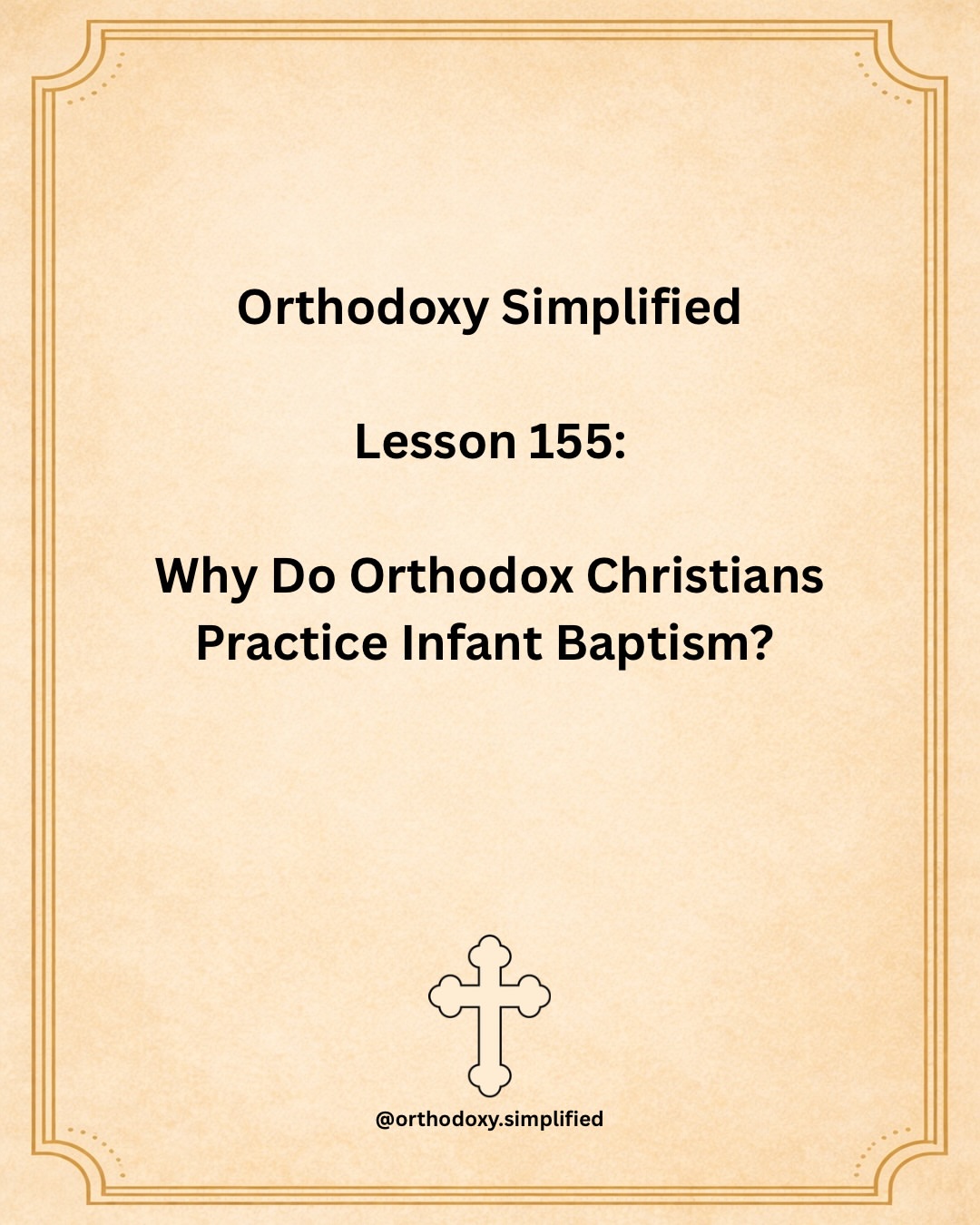
Why Orthodox Christians Baptize Infants

A lesson explains the Orthodox practice of baptizing infants. Baptism is described as the beginning of a new life in Christ and entrance into His Church, not a ceremony that waits for personal understanding or belief. Babies are welcomed into the Church and receive God's grace before they can understand the faith for themselves. The lesson states that Orthodox Christians do not baptize infants because the babies have personally sinned. Instead,…

A lesson explains the Orthodox practice of baptizing infants. Baptism is described as the beginning of a new life in Christ and entrance into His Church, not a ceremony that waits for personal understanding or belief. Babies are welcomed into the Church and receive God's grace before they can understand the faith for themselves.

The lesson states that Orthodox Christians do not baptize infants because the babies have personally sinned. Instead, every person is born into a fallen world marked by sin, corruption, suffering, and death, and Christ came to heal and restore humanity from this condition. Through baptism, chrismation, and Holy Communion, the child begins life in Christ, while parents and godparents take responsibility for raising the child in the faith.

The lesson connects infant baptism to the Church's belief that the life of Christ is a gift that should not be withheld until a person reaches a certain age. The baptized child is received as a true member of the Church and then grows into a conscious and personal faith through prayer, worship, repentance, the Sacraments, and the teaching of the Church.

From the beginning of life, the goal for every Christian is the same: to know Christ, become united to Him, and grow toward eternal life with God.

  • Baptism is the beginning of new life in Christ and entrance into the Church, not a ceremony that follows personal belief.
  • Infants are not baptized because they have personally sinned; all are born into a fallen world marked by sin, corruption, suffering, and death.
  • Christ came to heal and restore humanity from this fallen condition.
  • Through baptism, chrismation, and Holy Communion the child begins life in Christ, while parents and godparents commit to raising the child in the faith.
  • The baptized child grows into conscious faith through prayer, worship, repentance, the Sacraments, and the Church's teaching.
Read more
Prayer Orthodoxy ® Instagram

Theotokos fragment in the first mode from Petros Bereketis' eight-mode 'Agni Parthene'

A recording shares a fragment of Byzantine chant dedicated to the Mother of God, sung by Elder Damaschinenos (Gheronda Damaschin). The piece is the first verse in the first mode with a kratema (a melodic passage on syllables without words), taken from the eight-mode 'Theotoke Parthene' ('Agni Parthene') composed by Petros Bereketis. The post's title also carries the Romanian words 'Născătoare de Dumnezeu' ('Mother of God'), and the tags point to…

A recording shares a fragment of Byzantine chant dedicated to the Mother of God, sung by Elder Damaschinenos (Gheronda Damaschin). The piece is the first verse in the first mode with a kratema (a melodic passage on syllables without words), taken from the eight-mode 'Theotoke Parthene' ('Agni Parthene') composed by Petros Bereketis.

The post's title also carries the Romanian words 'Născătoare de Dumnezeu' ('Mother of God'), and the tags point to Byzantine chant, the Theotokos, and Mount Athos. The transcript of the recording itself contains only the repeated Greek prayer 'Kyrie eleison' ('Lord have mercy'), which continues from the beginning to the end of the recording with no other spoken text.

The post thus presents a short chant excerpt from Athonite monastic practice, attributed to a known composer of the piece and to a named elder as the singer.

  • The recording is a fragment titled 'Născătoare de Dumnezeu' ('Mother of God') sung by Elder Damaschinenos.
  • It is the first verse in the first mode with a kratema.
  • The verse comes from the eight-mode 'Theotoke Parthene' by Petros Bereketis.
  • Tags point to Byzantine chant, the Theotokos, and Mount Athos.
  • The transcript contains only the repeated prayer 'Kyrie eleison' ('Lord have mercy') from start to end.

Key moments

  1. 0:01 The prayer "Κύριε ἐλέησον" ("Lord have mercy") begins and is repeated many times.
  2. 0:31 The repetition of "Κύριε ἐλέησον" continues.
  3. 1:01 The repeated prayer continues to the end of the recording.
Read more
Prayer Orthodoxy ® Instagram discussion

What do you wish more people understood about Orthodoxy?

There are many misconceptions about the Orthodox Christian faith. Here is your chance to share something you wish others understood better about our worship, theology, traditions, or way of life. What would you tell them? Share your answer in the comments.

  • Many misconceptions exist about the Orthodox Christian faith
  • Readers are invited to share what they wish others understood about worship, theology, traditions, or way of life
24 opinions in the discussion Taking part in the Holy Sacraments with people of other denominations is a sin that requires confession and repentance. We are not united in one Church or one faith. We're called to love… Read the discussion
Prayer Orthodoxy ® Instagram

Four Chains, Twelve Bells: What the Orthodox Censer Means

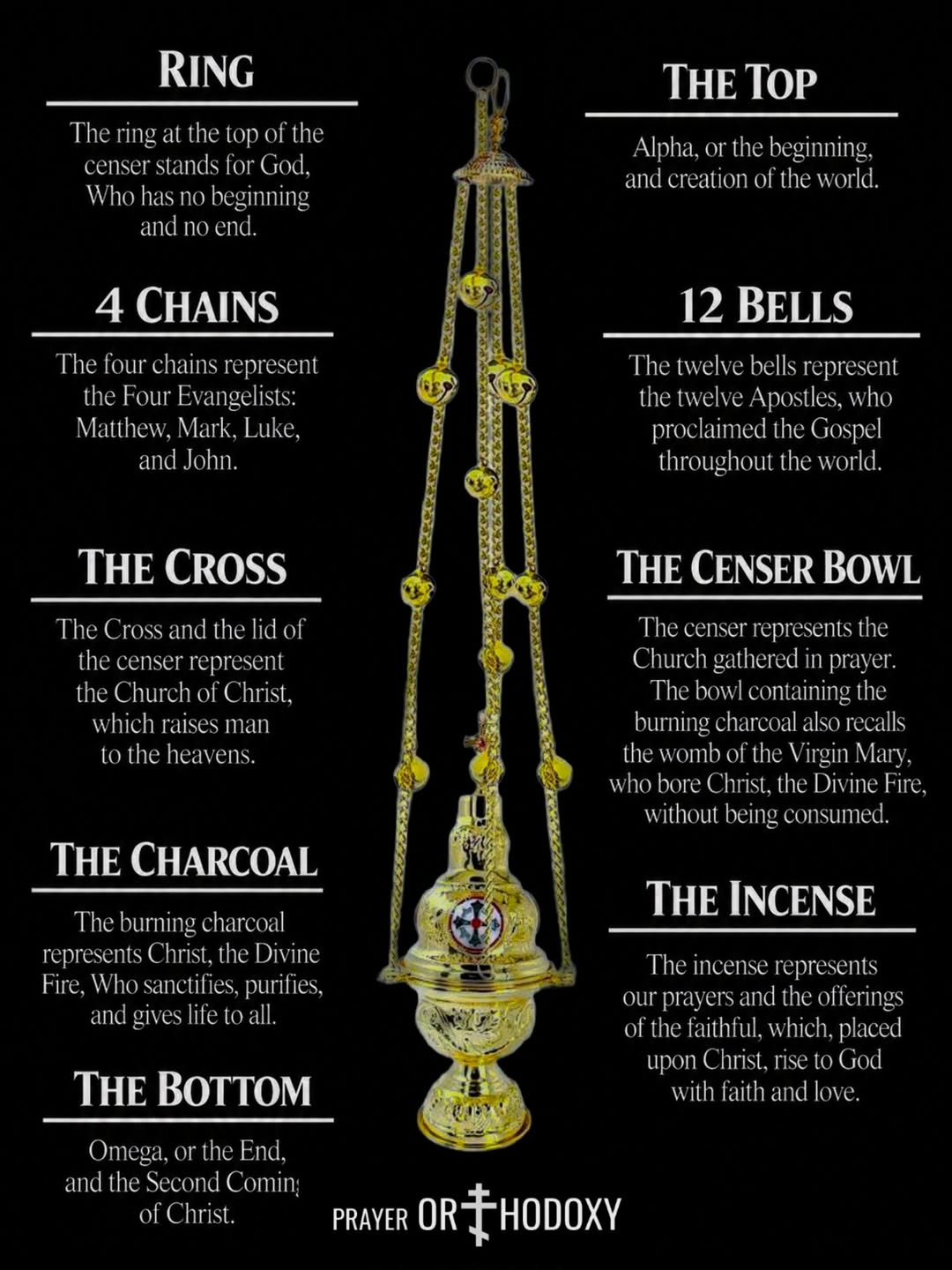
Four chains, twelve bells, a bowl, burning charcoal, and incense: the post assigns a meaning to each part of the Orthodox censer. It gives the explanation twice, first in English and then in Greek, and the two versions match sentence for sentence. Both open with the same claim: 'The Orthodox censer is filled with meaning.' In Greek this reads 'Ὁ ὀρθόδοξος θυμιατὸς εἶναι γεμάτος νόημα', where θυμιατὸς means censer. The author then goes through…

Four chains, twelve bells, a bowl, burning charcoal, and incense: the post assigns a meaning to each part of the Orthodox censer. It gives the explanation twice, first in English and then in Greek, and the two versions match sentence for sentence. Both open with the same claim: 'The Orthodox censer is filled with meaning.' In Greek this reads 'Ὁ ὀρθόδοξος θυμιατὸς εἶναι γεμάτος νόημα', where θυμιατὸς means censer.

The author then goes through the vessel part by part. The four chains symbolize the Four Evangelists. The twelve bells symbolize the Twelve Apostles. The bowl of the censer recalls the womb of the Virgin Mary; the Greek text uses the word μήτρα, womb, and calls her the Panagia. The post states the comparison in one line: Mary bore Christ, whom it calls the Divine Fire, without being consumed.

The Greek puts it as 'χωρὶς νὰ κατακαεῖ', without being burned. Two symbols complete the list. The burning charcoal represents Christ. The incense represents the prayers of the faithful, which rise to God.

The Divine Fire is the only image the post develops: it appears in the line about the Virgin Mary and again in the charcoal that represents Christ. The post keeps to this list. It cites no Scripture verse, no feast, and no church, and it does not describe how the censer is handled in services, when it is swung, or who carries it.

It gives no history of the vessel and no source for the symbolism. The numbers four and twelve are the only figures in the text. The post closes with the credit line 'An Original Production of Prayer Orthodoxy' and five tags: Orthodox, Censer, Incense, Prayer, Tradition.

The Greek version lists the symbols in the same order as the English: chains, bells, bowl, charcoal, incense.

  • The four chains of the censer symbolize the Four Evangelists; the twelve bells symbolize the Twelve Apostles.
  • The bowl recalls the womb of the Virgin Mary, who bore Christ the Divine Fire without being consumed.
  • The burning charcoal represents Christ; the incense represents the prayers of the faithful rising to God.
  • The same explanation appears in English and in Greek, with matching content in both.
  • The post cites no Scripture and describes no liturgical use; it ends with the credit 'An Original Production of Prayer Orthodoxy' and five tags.
Read more