WeOrthodox
EN UA

Prayer Orthodoxy ®

Instagram ↗ 196 discussions

Prayer Orthodoxy® Orthodox Christianity Through Scripture, Tradition, and the Saints Deepen Your Understanding of the Faith

Orthodox teaching on faith and works from James 2:26
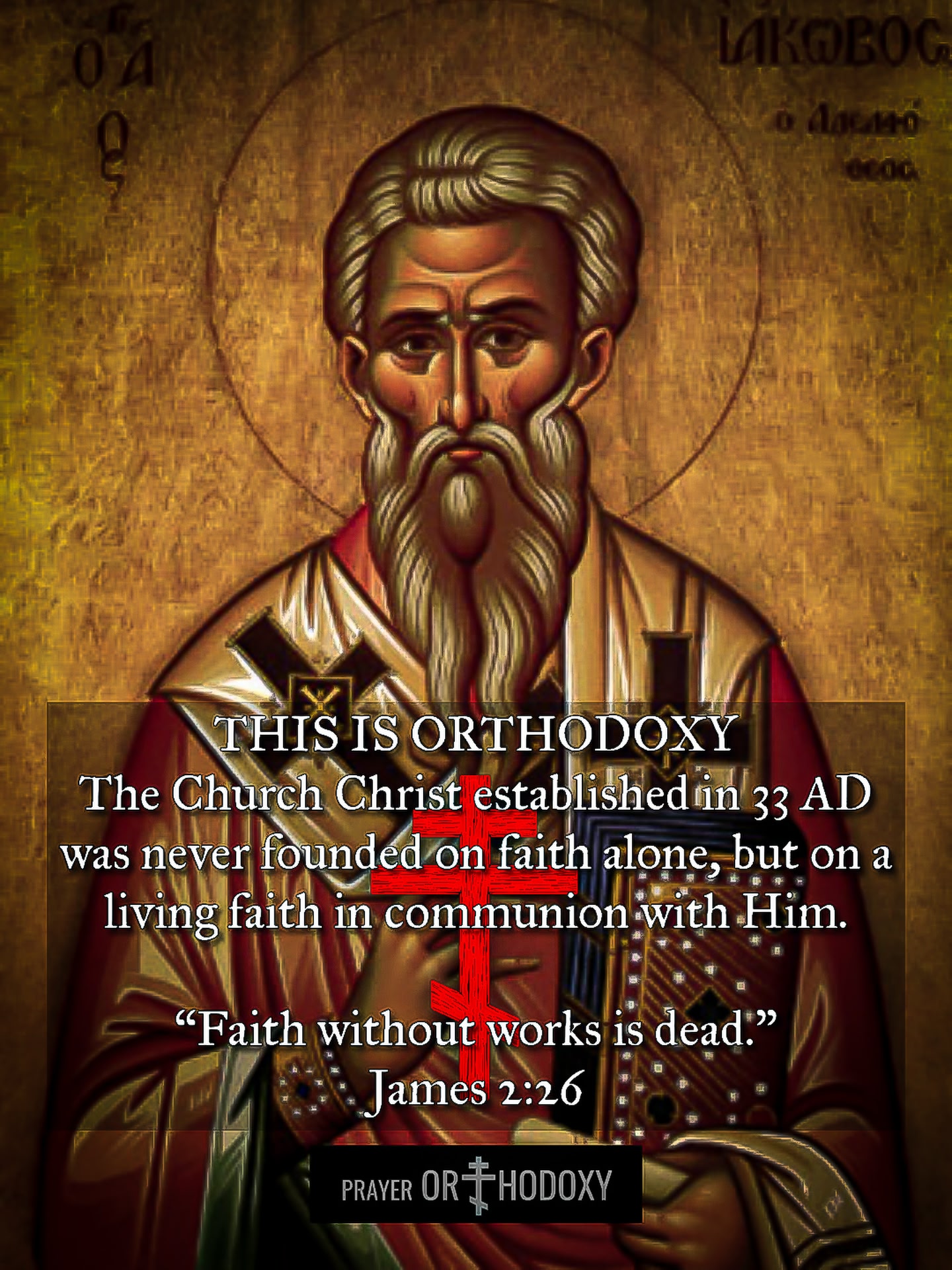
The post presents the Orthodox understanding of salvation through grace and living faith, citing James 2:26 that faith without works is dead. It states the Orthodox Church preserves apostolic teaching that salvation comes through God's grace and a living faith expressed in repentance, obedience, love, and good works. The image includes the same verse and the phrase "This is Orthodoxy" with the Prayer Orthodoxy branding.

  • James 2:26 cited: faith without works is dead
  • Orthodox Church preserves apostolic teaching on living faith
  • Salvation through God's grace and faith expressed in repentance, obedience, love, good works
  • Teaching presented in English and Greek
  • Church identified as established in 33 AD
Read more

Weekly Communion Was the Apostolic Practice, Not an Occasional Event

The speaker addresses the argument that communion should not be celebrated every week to prevent it from becoming a mindless routine. He rejects this reasoning by comparing it to the absurdity of ceasing prayer or church attendance for the same reason, noting that such logic undermines the necessity of constantly pursuing union with Christ. The speaker cites Acts 20:7, which records that Christians gathered on the first day of the week to break…

The speaker addresses the argument that communion should not be celebrated every week to prevent it from becoming a mindless routine. He rejects this reasoning by comparing it to the absurdity of ceasing prayer or church attendance for the same reason, noting that such logic undermines the necessity of constantly pursuing union with Christ.

The speaker cites Acts 20:7, which records that Christians gathered on the first day of the week to break bread, and references St. Justin Martyr's testimony in his First Apology confirming that the early church celebrated the Eucharist every Sunday. He concludes that the apostles treated communion as a regular, weekly practice rather than an occasional event, and that the contemporary church should follow this pattern.

The discussion centers on the frequency of the Eucharist, the scriptural and patristic evidence for weekly celebration, and the theological implication that regular communion sustains the believer's ongoing union with Christ.

Key moments

  1. The argument that communion is not held every Sunday to prevent rote practice does not logically follow.
  2. One would not stop praying or attending church simply because those actions might become routine.
  3. This reasoning undermines the necessity of constantly going after Christ and being united with him.
  4. Acts records that Christians gathered on the first day of the week to break bread.
  5. St. Justin Martyr confirms that Christians celebrated the Eucharist every Sunday.
  6. The apostles did not treat communion as an occasional event, so neither should we.
Read more