WeOrthodox
EN UA

Појединац, Породица и Друштво

Instagram ↗ 209 discussions

Ова страница је посвећена ПРАВОСЛАВЉУ и ДОБРОТОЉУБЉУ🫒

Obedience as the Church's foundation: Studenica abbot on the Archangel Michael's feast

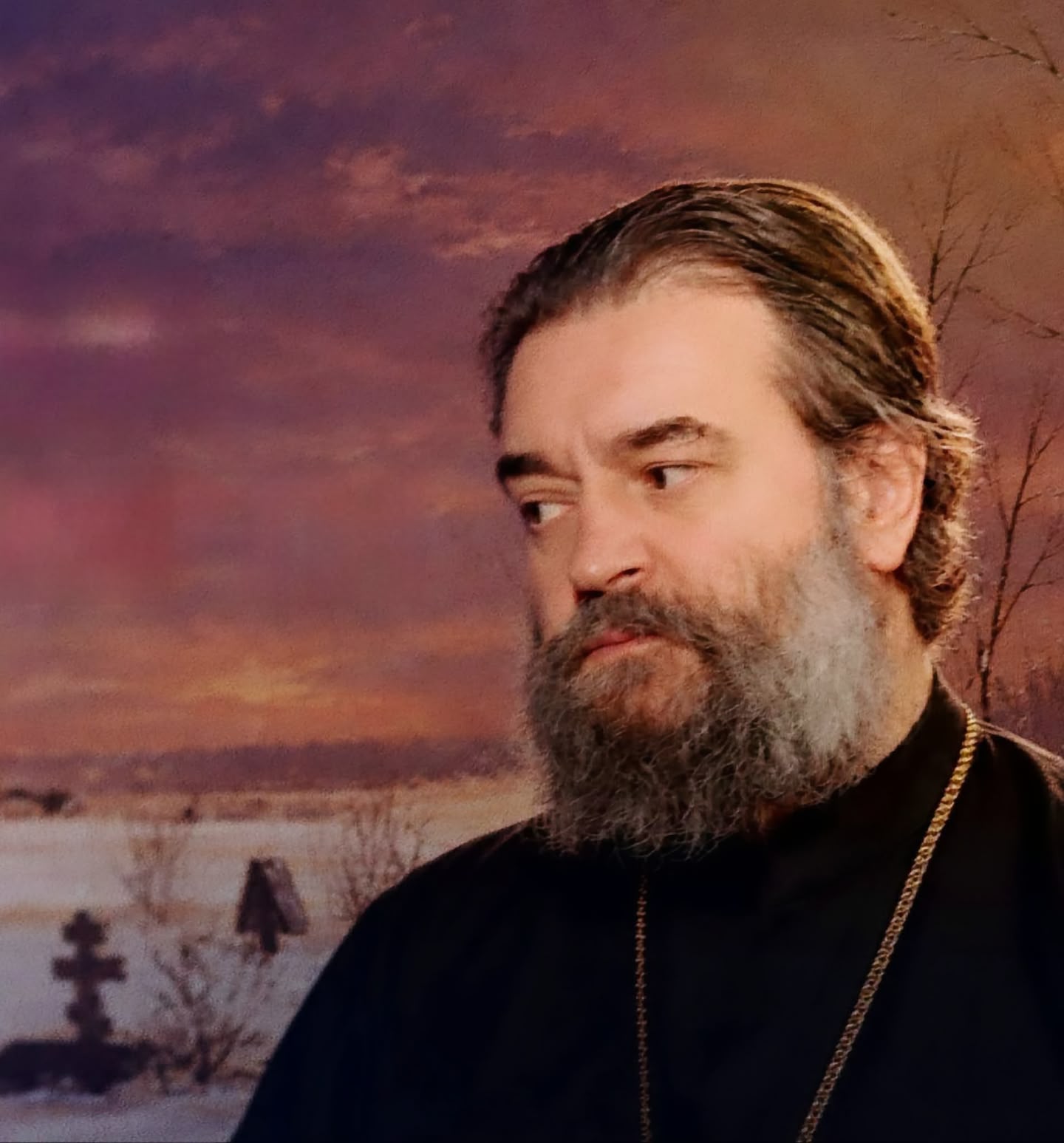
The abbot of Studenica Monastery delivered a talk on the feast of the Synaxis of the Holy Archangel Michael and the Bodiless Powers. He took the Gospel reading for the feast as his starting point. The reading contains the Lord's instruction on how the Church functions. The core principle is obedience. The Lord gave the Gospel teaching to his disciples, who passed it through their disciples in an unbroken chain to the present day. To obey that…

The abbot of Studenica Monastery delivered a talk on the feast of the Synaxis of the Holy Archangel Michael and the Bodiless Powers. He took the Gospel reading for the feast as his starting point. The reading contains the Lord's instruction on how the Church functions.

The core principle is obedience. The Lord gave the Gospel teaching to his disciples, who passed it through their disciples in an unbroken chain to the present day. To obey that chain is to obey Christ himself; to break it is not to listen to the Lord. This obedience comes easily to those who have love, humility, and awareness of their weaknesses.

It is impossible for the proud, the envious, the hateful, or those ruled by any passion. Christ thanks the Father for hiding these things from the wise and revealing them to babes. Those with love, humility, meekness, and virtues enter the heavenly kingdom.

Those who suppress virtues and are filled with passions contrary to the Gospel cannot fulfill obedience and thus remove themselves from the heavenly kingdom and from the Body of Christ, which is the Church. The abbot asked the Lord and the Holy Archistrategos Michael, celebrated with all the bodiless powers, to help the faithful remain among the simple ones to whom God reveals the path of salvation.

By remaining ready to obey, the faithful extend the chain received from their ancestors to the next generations until the end of history and are counted in the heavenly kingdom.
Key moments

  1. 0:00 The Gospel reading for the feast of the Holy Archangels and bodiless powers contains the Lord's instruction on how to live in the Church and how God's Church functions.
  2. 0:31 The essential principle is obedience: obeying the Lord who gave the Gospel teaching through his disciples, who passed it through their disciples in an unbroken chain to the present day.
  3. 1:01 If anyone in that chain does not listen, they do not listen to the Lord himself; if they listen, they listen to the Lord himself.
  4. 1:31 This obedience is easy for those who have love, humility, and awareness of their weaknesses, but completely impossible for the high-minded, proud, envious, hateful, or those ruled by any passion.
  5. 2:03 The Lord thanks the Father for hiding these things from the wise and revealing them to babes, so those with love, humility, meekness, and virtues enter the heavenly kingdom.
  6. 2:35 Those who suppress virtues and are filled with passions contrary to the Gospel cannot fulfill the principle of obedience and thus remove themselves from the heavenly kingdom and from the Body of Christ, which is the Church.
  7. 3:07 The speaker asks the Lord and the Holy Archistrategos Michael, celebrated today with all bodiless powers, to help the faithful remain among the babes to whom God reveals the path of salvation.
  8. 3:40 By remaining ready to obey, the faithful extend the chain received from their ancestors to the next generations until the end of history and are counted in the heavenly kingdom.
Read more

St. Gerasimos of Kefalonia: relics, monastery, and a teaching on offerings

The post opens with a quotation from Protoierey Rodion Putyatin. He writes that when a person brings a gift to the church, for candles, incense, or the adornment of the temple, the thought in the heart should be: "I offer this to God. May the Lord accept this sacrifice on His heavenly altar, grant me His grace, and remember all, near and far, living and departed, in His Kingdom." The post includes a photograph showing the veneration of the holy…

The post opens with a quotation from Protoierey Rodion Putyatin. He writes that when a person brings a gift to the church, for candles, incense, or the adornment of the temple, the thought in the heart should be: "I offer this to God. May the Lord accept this sacrifice on His heavenly altar, grant me His grace, and remember all, near and far, living and departed, in His Kingdom."

The post includes a photograph showing the veneration of the holy relics of Venerable Gerasimos of Kefalonia in his monastery on the island of Kefalonia in Greece. The remainder of the text describes the monastery. The saint himself founded it in 1560 in the Omala valley and gave it the name New Jerusalem. There he restored the church of the Dormition of the Most Holy Theotokos and established a women's monastic community.

In the monastery church the holy relics of St. Gerasimos are kept, placed in a reliquary above his grave. According to church tradition and the monastery record, after the second uncovering of his relics on October 20, 1582, they remained incorrupt and fragrant, for the veneration and spiritual benefit of the faithful. St. Gerasimos left a witness of humility, ascetic struggle, prayer, and love for neighbor.

Beneath the old monastery church a narrow cave where he labored in asceticism is preserved. His holy relics are solemnly carried out for veneration and for a litia on August 16 and October 20. The post concludes with the invocation: "Venerable Father Gerasimos, pray to God for us."

  • Protoierey Rodion Putyatin teaches that church offerings should be made with the intention of giving to God.
  • St. Gerasimos founded the New Jerusalem monastery on Kefalonia in 1560.
  • His relics were found incorrupt and fragrant after their second uncovering on October 20, 1582.
  • The saint's cave of ascetic struggle is preserved under the old church.
  • Relics are carried for veneration and litia on August 16 and October 20.
Read more

Blessed to stand at the Holy Sepulchre in Jerusalem

The author reflects on visiting the Church of the Holy Sepulchre in Jerusalem, the site where Jesus Christ was buried and rose from the dead. They describe the blessing of being present at this holy place where Christ conquered death and gave the world hope of eternal life. The author notes that words are too small to describe the feelings and grace of encountering one of the greatest shrines of the Christian world. The post conveys a personal…

The author reflects on visiting the Church of the Holy Sepulchre in Jerusalem, the site where Jesus Christ was buried and rose from the dead. They describe the blessing of being present at this holy place where Christ conquered death and gave the world hope of eternal life. The author notes that words are too small to describe the feelings and grace of encountering one of the greatest shrines of the Christian world.

The post conveys a personal spiritual experience at the site of the Resurrection, emphasizing the power of Christ's victory over death and the hope it offers to believers.

  • Visit to the Holy Sepulchre in Jerusalem
  • Christ's burial and resurrection at this site
  • Victory over death and gift of eternal hope
  • Personal experience of grace at the shrine
  • Words insufficient to describe the encounter
Read more

Prayer to the Theotokos for Deliverance from Sin, Death, and the Toll Houses

The text is a penitential prayer addressed to the Virgin Mary. The supplicant entrusts their life and hope of salvation to her, acknowledging countless sins and asking her not to turn away but to look on their sorrow and grant relief. They ask her to stretch out her hand, cleanse them from the impurity of evil deeds, and set them on the path of Christ's commandments. The prayer seeks deliverance from grievous sins and the gift of saving…

The text is a penitential prayer addressed to the Virgin Mary. The supplicant entrusts their life and hope of salvation to her, acknowledging countless sins and asking her not to turn away but to look on their sorrow and grant relief. They ask her to stretch out her hand, cleanse them from the impurity of evil deeds, and set them on the path of Christ's commandments.

The prayer seeks deliverance from grievous sins and the gift of saving repentance to offer to her Son. The Theotokos is called Inexpressible Light and asked to illuminate the soul's darkness where sins hide. The supplicant describes the multitude of invisible enemies, the weight of sins, the nearness of death, the accusing conscience, fear of the fiery place, the undying worm, gnashing of teeth, and the outer darkness of hell.

They cry out in despair and turn to her alone as the Deliveress of those who call from fierce hell. The prayer asks for help at the hour of death, from evil spirits, and from the aerial toll houses after death. It pleads for her to appear and show her most holy face, not to leave the supplicant without aid.

Finally, it asks her to intercede with Christ, who shed his pure blood on the Cross, that the supplicant may partake of his merits before the Father, receive forgiveness and eternal salvation, and glorify her inexpressible love and boundless intercession forever.

  • Entrusts life and salvation to the Theotokos while confessing multitude of sins.
  • Seeks cleansing, true repentance, and guidance to keep Christ's commandments.
  • Describes fear of death, judgment, demons, and the aerial toll houses.
  • Pleads for the Virgin's intercession at the hour of death and after.
  • Asks her to entreat Christ for forgiveness and eternal salvation.
Read more

Venerable Gabriel of Samtavro on prayer from the heart

The post presents a prayer to Venerable Gabriel of Samtavro, a Georgian saint known for his fool-for-Christ asceticism. The prayer asks his intercession for deliverance from every affliction, the destruction of demonic nets, the quenching of enmity, and the healing of illnesses. It notes that the river of God's wonders from his holy relics does not cease, nor does the stream of His mercy toward sinners who entreat him. The prayer recalls that…

The post presents a prayer to Venerable Gabriel of Samtavro, a Georgian saint known for his fool-for-Christ asceticism. The prayer asks his intercession for deliverance from every affliction, the destruction of demonic nets, the quenching of enmity, and the healing of illnesses. It notes that the river of God's wonders from his holy relics does not cease, nor does the stream of His mercy toward sinners who entreat him.

The prayer recalls that the saint was granted the great gift of love from the Lord, bearing the burdens of neighbors and shedding tears for sinners and sufferers, and asks him to bring the faithful's prayers and repentant tears to God's throne. The accompanying video summary conveys the saint's teaching that prayer should be constant, not limited to convenient times, and especially offered in moments of pain.

He advises against seeking beautiful words, urging instead to speak to God simply as a father, giving the example: "Lord, I understand nothing, but you are with me, help." Such sincere prayer, where words carry the soul, is described as stronger than a thousand formal prayers and as moving both heaven and earth.

Key moments

  1. Pray not when convenient but always, especially when it hurts, and speak to God as to a father without searching for beautiful words.
  2. A sincere prayer with the soul in the words, such as "Lord, I understand nothing, but you are with me, help", is stronger than a thousand formal prayers and causes heaven to hear and earth to humble itself.

Bread Is a Gift from God: Protoierey Andrey Tkachev on Sacred Daily Habits

Protoierey Andrey Tkachev teaches that bread is a divine gift, not mere fuel, and warns against treating food carelessly. He advises that uneaten bread be dried and given to birds rather than discarded. The table, as the place where bread is eaten, becomes a throne; in old Christian custom people kissed the table after meals to honor God's gift. He recounts a practice from eastern Poland where peasants cut a cross on the loaf with a knife and…

Protoierey Andrey Tkachev teaches that bread is a divine gift, not mere fuel, and warns against treating food carelessly. He advises that uneaten bread be dried and given to birds rather than discarded. The table, as the place where bread is eaten, becomes a throne; in old Christian custom people kissed the table after meals to honor God's gift.

He recounts a practice from eastern Poland where peasants cut a cross on the loaf with a knife and distributed the first crust to the father, then the eldest son, then the rest. Tkachev lists habits that keep a person close to God: not spitting in a well, not putting feet on the table, not mocking people with disabilities, sharing with the poor, attending church on Sunday, and respecting elders.

He argues that in today's plastic, concrete, and computer-driven civilization these simple but vital truths must be implanted in the soul before theology. He calls for protecting nature, trees, branches, flowers, birds, and children, as part of this foundational reverence.

  • Bread is a gift from God, not fuel; waste is forbidden.
  • Uneaten bread should be dried and given to birds.
  • The table is a throne when bread is on it; old custom kissed the table after meals.
  • Polish peasants cut a cross on the loaf and gave the first crust to the father, then eldest son.
  • Simple habits, reverence for food, nature, elders, and Sunday worship, keep one near God.

Saint David of Gareja and the Miraculous Spring on Mount Mtatsminda

Saint David of Gareja, one of the Thirteen Syrian Fathers, arrived in Georgia in the 6th century with the blessing of the Holy Theotokos and Saint Simeon the Stylite. He settled on Mount Mtatsminda, which means Holy Mountain, overlooking Tbilisi, and labored there in asceticism through prayer, fasting, and spiritual stillness. According to ancient tradition, a spring emerged at the site of his hermitage through his prayers. Known as "David's…

Saint David of Gareja, one of the Thirteen Syrian Fathers, arrived in Georgia in the 6th century with the blessing of the Holy Theotokos and Saint Simeon the Stylite. He settled on Mount Mtatsminda, which means Holy Mountain, overlooking Tbilisi, and labored there in asceticism through prayer, fasting, and spiritual stillness. According to ancient tradition, a spring emerged at the site of his hermitage through his prayers.

Known as "David's Tears," the spring has remained a place of prayer and spiritual consolation for centuries. The faithful visit to seek health, healing, and God's help, and women in particular come to ask for the gift of motherhood through the saint's intercession. The video shows the speaker at the hermitage describing how the wonderworking spring continues to work miracles today, drawing many Georgians and Orthodox faithful from around the world who gather there like bees to a hive to receive help.

Key moments

  1. The speaker is at the hermitage of Saint David Gareji.
  2. Saint David Gareji is one of the thirteen holy monk fathers who came from Syria.
  3. They came with the blessing of the Holy Theotokos and Saint Simeon the Stylite, their spiritual father.
  4. Saint David settled on Mount Mtacminda, which translates as Holy Mountain.
  5. He labored there for years at the site of his hermitage.
  6. A wonderworking spring emerged at that site and works miracles to this day.
  7. Many Georgians and people from the whole Orthodox world gather there like bees to a hive to receive help.

Human beings created to participate in eternal blessedness by following God's will

The post sets out the fundamental choice human beings face: to live according to God's will, which is the purpose of their creation, or to choose the opposite path. The philosopher Bora Knežević describes man as a being who can bring joy to God or shame to the devil. This formulation echoes Christ's question about what profit a man gains if he acquires the whole world but loses his soul, and what he can give in exchange for it. The discussion…

The post sets out the fundamental choice human beings face: to live according to God's will, which is the purpose of their creation, or to choose the opposite path. The philosopher Bora Knežević describes man as a being who can bring joy to God or shame to the devil. This formulation echoes Christ's question about what profit a man gains if he acquires the whole world but loses his soul, and what he can give in exchange for it.

The discussion emphasizes that a person should be conscious that he lives only once and must use that life in the best way, according to how God made him. God created human beings to participate in the blessedness of eternal life in His kingdom.

Key moments

  1. We can act as God wants, which is why He created us as human beings, or we can act contrary to His will.
  2. Philosopher Bora Knežević says man is a being who can make God rejoice and the devil be ashamed.
  3. This reflects Christ's words: what does it profit a man to gain the whole world and lose his soul, or what can a man give in exchange for his soul?
  4. A person should be aware that he lives only once and use that life in the best way, as God created him.
  5. God created us to participate in the blessedness of eternal life in His kingdom.
Read more

Elder Macarius of Optina: Sorrow Driven Away by Conversation with the Wise

The post shares a saying attributed to Elder Macarius of Optina. He states that when the heart is filled with sorrow, troubling thoughts can be dispelled through peaceful conversation with a skilled and virtuous person. The quote highlights the spiritual value of wise counsel in times of grief.

  • Elder Macarius of Optina says sorrowful thoughts can be driven away.
  • This happens through peaceful conversation with a skilled and virtuous person.
  • The post associates the elder with Orthodox asceticism and Russian literature.
Read more

Father Ostojа Knežević on God's boundless love for humanity

Father Ostojа Knežević teaches that divine love is the only boundless love. God created the world out of love and descended into it to restore humanity's lost sonship to God. This event reflects divine love and testifies that God is not indifferent to any tear, suffering, or injustice humans face. The priest explains that the event confirms every pain, wound, and tear will be healed before the Lord in His eternal, imperishable kingdom. The…

Father Ostojа Knežević teaches that divine love is the only boundless love. God created the world out of love and descended into it to restore humanity's lost sonship to God. This event reflects divine love and testifies that God is not indifferent to any tear, suffering, or injustice humans face.

The priest explains that the event confirms every pain, wound, and tear will be healed before the Lord in His eternal, imperishable kingdom. The teaching centers on God's active care for humanity motivated by love, from creation through incarnation to final restoration.

Key moments

  1. Divine love is the only boundless love.
  2. God created the world out of love.
  3. God descended into the world out of love to restore humanity's lost sonship to God.
  4. God cares for humanity out of love.
  5. This event is a reflection of divine love for creation.
  6. The event testifies that God is not cold to any tear.
  7. The event testifies that God is not cold to any suffering or injustice.
  8. The event confirms that every suffering, pain, wound of the heart, and tear will be healed before the Lord in His eternal and imperishable kingdom.
Read more