WeOrthodox
EN UA

Lives of the Saints 🙏

Instagram ↗ 49 discussions

Lives of the Saints 🔸 Daily Daily remembrance of the saints Their lives, witness, and holy example ☦️ All to the glory of God

Lives of the Saints 🙏 Instagram

Five Apostles of the Seventy: Erastus, Quartus, Rhodion, Sosipater, Tertius

The post recounts the lives of five holy men numbered among the Seventy Apostles: Erastus, Quartus, Rhodion, Sosipater, and Tertius. Each devoted his life to spreading the Gospel of Jesus Christ. Erastus first served as a steward of the Church in Jerusalem, caring for its needs and supporting its mission, and later became Bishop of Paneas in Palestine, where he faithfully guided Christians in their spiritual lives. Quartus became Bishop of…

The post recounts the lives of five holy men numbered among the Seventy Apostles: Erastus, Quartus, Rhodion, Sosipater, and Tertius. Each devoted his life to spreading the Gospel of Jesus Christ. Erastus first served as a steward of the Church in Jerusalem, caring for its needs and supporting its mission, and later became Bishop of Paneas in Palestine, where he faithfully guided Christians in their spiritual lives.

Quartus became Bishop of Beirut and endured many sufferings for the sake of Christ; despite persecution and hardship, his preaching brought many people to the Christian faith. Sosipater and Tertius served as bishops in Iconium: Sosipater became its first bishop, and Tertius later served as the city's second bishop. Rhodion, together with Saint Olympas, followed the Apostle Peter, and according to Holy Tradition both suffered martyrdom during Emperor Nero's persecution, being beheaded for their faith in Jesus Christ.

The text observes that these apostles lived in a world where proclaiming Christ could mean losing everything, yet neither persecution nor suffering could silence their witness. Through their missionary work, countless souls were brought closer to God, and the foundations of the early Church grew stronger. The author concludes that Christianity spread not through earthly power or wealth but through sacrifice, courage, prayer, and unwavering love for Jesus Christ.

Some gave their lives through martyrdom, while others spent their years tirelessly serving the faithful; all received the unfading crowns of heavenly glory. The post is structured as a hagiographical summary, listing each saint's specific ministry and fate, and then drawing a collective spiritual lesson. It emphasizes the historical reality of their service in the first century and the continuity of their witness with the life of the Church today.

The author does not provide sources beyond Holy Tradition but presents the accounts as received teaching. The tone is devotional, intended to inspire veneration and imitation of the saints' courage and love. The post closes with a prayer asking the holy apostles to intercede before God.

  • The five saints are numbered among the Seventy Apostles.
  • Erastus served as steward in Jerusalem and became Bishop of Paneas.
  • Quartus became Bishop of Beirut and suffered persecution.
  • Sosipater and Tertius served as successive bishops of Iconium.
  • Rhodion followed Peter and was martyred under Nero with Olympas.
Read more
Lives of the Saints 🙏 Instagram

Saint Matrona of Constantinople: 75 Years of Monastic Struggle

The post recounts the life of Saint Matrona of Constantinople, born in Perge, Pamphylia, in the fifth century. Married to Dometian, a wealthy man of Constantinople, she desired a life of prayer and devotion to Christ. She disguised herself as a man named Babylas and entered the Monastery of Saint Bassian in Constantinople. When her identity was discovered and her husband pursued her, she traveled to Emesa, Mount Sinai, Jerusalem, and Beirut…

The post recounts the life of Saint Matrona of Constantinople, born in Perge, Pamphylia, in the fifth century. Married to Dometian, a wealthy man of Constantinople, she desired a life of prayer and devotion to Christ. She disguised herself as a man named Babylas and entered the Monastery of Saint Bassian in Constantinople.

When her identity was discovered and her husband pursued her, she traveled to Emesa, Mount Sinai, Jerusalem, and Beirut before returning to Constantinople. She embraced monastic life at age twenty-five and spent seventy-five years in ascetic struggle, fasting, prayer, and humility. She became abbess of a monastery in Constantinople, guiding other women.

She reposed in 492 at age one hundred. The post concludes with a reflection on spiritual transformation through lifelong patience, perseverance, repentance, and devotion, and a prayer for her intercession.

  • Born in Perge, Pamphylia, fifth century; married to Dometian in Constantinople.
  • Disguised as a man (Babylas) to enter Monastery of Saint Bassian.
  • Fled persecution, traveled through Emesa, Mount Sinai, Jerusalem, Beirut.
  • Returned to Constantinople, lived 75 years as monastic, became abbess.
  • Reposed in 492; life exemplifies lifelong spiritual struggle.
Read more
Lives of the Saints 🙏 Instagram

Saint Nektarios of Aegina: Enduring injustice with forgiveness and becoming a wonderworker

Saint Nektarios was born on October 1, 1846, in Selymbria, Thrace, into a poor Christian family with six children. At fourteen he moved to Constantinople to work and continue his education. At thirty he entered monastic life and later completed theological studies at the University of Athens. In 1889 he was appointed Metropolitan of Pentapolis in Egypt because of his devotion and preaching. False accusations and jealousy led to his unjust…

Saint Nektarios was born on October 1, 1846, in Selymbria, Thrace, into a poor Christian family with six children. At fourteen he moved to Constantinople to work and continue his education. At thirty he entered monastic life and later completed theological studies at the University of Athens.

In 1889 he was appointed Metropolitan of Pentapolis in Egypt because of his devotion and preaching. False accusations and jealousy led to his unjust removal from that position. He endured the humiliation with patience, forgiveness, and trust in God.

Returning to Greece, he served as a preacher, teacher, and spiritual father. In 1904 he founded the Holy Trinity Monastery for women on the island of Aegina, where he eventually retired to a life of prayer and humility. During his final years he suffered serious illness and reposed in a hospital in Athens in November 1920 at the age of seventy-four.

After his death, his shirt was placed on a paralyzed man who was miraculously healed. Many more miracles followed, and he became one of the most beloved wonderworkers of modern Orthodox Christianity. He was officially glorified as a saint on April 20, 1961. His life teaches that being falsely accused, rejected, or humiliated does not mean God has abandoned us.

Saint Nektarios answered injustice with forgiveness, hatred with love, and suffering with prayer.

  • Born 1846 in Selymbria, Thrace; moved to Constantinople at 14
  • Entered monastic life at 30; studied theology at University of Athens
  • Appointed Metropolitan of Pentapolis in 1889; unjustly removed after false accusations
  • Founded Holy Trinity Monastery on Aegina in 1904; reposed in 1920
  • Glorified in 1961; numerous miracles attributed to his intercession
Read more
Lives of the Saints 🙏 Instagram

Synaxis of Archangel Michael and the Bodiless Powers

The Orthodox Church celebrates the Synaxis of the Holy Archangel Michael and all the bodiless powers of heaven. The post outlines Orthodox teaching on the angels: they are created beings who serve God, not gods themselves, and worship belongs to the Holy Trinity alone. Tradition lists nine angelic ranks: Seraphim, Cherubim, Thrones, Dominions, Virtues, Powers, Principalities, Archangels, and Angels. At the head stands the Archangel Michael,…

The Orthodox Church celebrates the Synaxis of the Holy Archangel Michael and all the bodiless powers of heaven. The post outlines Orthodox teaching on the angels: they are created beings who serve God, not gods themselves, and worship belongs to the Holy Trinity alone. Tradition lists nine angelic ranks: Seraphim, Cherubim, Thrones, Dominions, Virtues, Powers, Principalities, Archangels, and Angels.

At the head stands the Archangel Michael, whose name means "Who is like God?" According to Holy Tradition, when Lucifer rebelled and drew other angels into his fall, Michael stood before the faithful heavenly powers and proclaimed, "Let us stand aright! Let us stand with fear!" The heavenly hosts then united in glorifying the Lord with the hymn "Holy, Holy, Holy, Lord God of Hosts!"

The angels remained faithful to their Creator, united in perfect love, humility, and obedience to His divine will. The Church also teaches that God appoints guardian angels to watch over and guide the faithful; even when we believe ourselves alone, our lives are lived before God, who sees every thought, word, and deed. At the Last Judgment, the heavenly hosts will gather before the throne of Jesus Christ, the righteous Judge of all mankind.

The feast reminds the faithful that spiritual strength is not found in pride or earthly power but in humility, obedience, and unwavering faithfulness to God. Like the holy angels, Christians are called to stand firm against evil and glorify the Lord with their lives.

  • The feast honors Archangel Michael and all nine ranks of angels
  • Michael's name means "Who is like God?" and he led the faithful angels against Lucifer's rebellion
  • The angels proclaimed "Let us stand aright! Let us stand with fear!" and sang the Trisagion
  • God appoints guardian angels to watch over the faithful
  • The feast teaches that spiritual strength comes from humility, obedience, and faithfulness to God
Read more
Lives of the Saints 🙏 Instagram

Saint Valerius and Thirty-Two Martyrs of Melitene

The post recounts the martyrdom of Saint Valerius and thirty-two fellow Christians in the Armenian city of Melitene during the reign of Emperor Diocletian in the year 298. Imperial authorities, determined to suppress Christianity in Armenia and Cappadocia, sent two soldiers to find and execute those who refused to worship pagan idols. The soldiers carried out their orders by the sword. Although little is preserved about Valerius's personal life,…

The post recounts the martyrdom of Saint Valerius and thirty-two fellow Christians in the Armenian city of Melitene during the reign of Emperor Diocletian in the year 298. Imperial authorities, determined to suppress Christianity in Armenia and Cappadocia, sent two soldiers to find and execute those who refused to worship pagan idols.

The soldiers carried out their orders by the sword. Although little is preserved about Valerius's personal life, his witness stands as a reminder that holiness does not depend on earthly recognition or written records. Many martyrs left no writings or monuments, yet their faithfulness remains precious before God. The account concludes with a call to examine our own willingness to remain faithful to Christ when courage and sacrifice are required, and a prayer for the intercession of Saint Valerius and the thirty-two martyrs.

  • Saint Valerius martyred with thirty-two believers in Melitene, Armenia
  • Martyrdom occurred in 298 under Emperor Diocletian
  • Two soldiers sent to execute Christians refusing idol worship
  • Killed by the sword; few details of Valerius's life preserved
  • Account emphasizes faithfulness over earthly recognition
Read more
Lives of the Saints 🙏 Instagram

Patriarch Paul the Confessor Martyred at the Altar During Liturgy

The post recounts the life of Saint Paul the Confessor, Patriarch of Constantinople in the fourth century. As Patriarch Alexander approached death, the faithful asked whom they should choose as their next spiritual shepherd. He answered: "If you desire a patriarch who will teach you and shine with virtue, choose Paul." The people followed his counsel and elected Saint Paul. His appointment angered the Arians, who denied the full divinity of…

The post recounts the life of Saint Paul the Confessor, Patriarch of Constantinople in the fourth century. As Patriarch Alexander approached death, the faithful asked whom they should choose as their next spiritual shepherd. He answered: "If you desire a patriarch who will teach you and shine with virtue, choose Paul."

The people followed his counsel and elected Saint Paul. His appointment angered the Arians, who denied the full divinity of Jesus Christ, and Emperor Constantius, who supported their cause. Saint Paul was removed from his patriarchal throne and forced into exile. Together with Saint Athanasius the Great, he traveled to Rome, where Pope Julius and Emperor Constans welcomed them and supported their defense of the Orthodox Faith.

Through their intervention, Paul was restored to Constantinople. After the death of Emperor Constans, his opponents once again seized power and banished him to Cucusus in Armenia. Even in exile, Saint Paul continued serving Christ and defending the truth.

In the year 351, while celebrating the Divine Liturgy, he was attacked by Arians and strangled with his own omophorion, the sacred vestment of a bishop. Thus the holy patriarch received the crown of martyrdom while serving at the altar of God. His relics were transferred to Constantinople in 381 and later to Venice in 1236.

His faithful clerics, Saints Marcian and Martyrius, also suffered martyrdom. The post ends with a prayer: "Holy Hieromartyr Paul the Confessor, pray to God for us. Lord, for Your glory, not mine."

  • Patriarch Alexander recommended Paul as a virtuous teacher before his death.
  • Paul was elected but deposed by Arian opponents and Emperor Constantius.
  • He found support in Rome from Pope Julius and Emperor Constans, leading to his restoration.
  • After Constans' death, Paul was exiled to Cucusus in Armenia.
  • In 351, he was martyred by Arians while celebrating the Divine Liturgy, strangled with his omophorion.
Read more
Lives of the Saints 🙏 Instagram

Saints Galaction and Episteme: Betrothed Couple Chooses Monastic Life and Martyrdom

The post recounts the lives of Saints Galaction and Episteme, born in Edessa of Phoenicia in the third century. Galaction's mother Leucippe, after converting to Christianity, gave birth to him and raised him in the faith. His father also converted. After Leucippe's death, Galaction's father arranged his marriage to Episteme. Galaction shared the Christian faith with Episteme, and she was baptized. Both chose monastic life over marriage,…

The post recounts the lives of Saints Galaction and Episteme, born in Edessa of Phoenicia in the third century. Galaction's mother Leucippe, after converting to Christianity, gave birth to him and raised him in the faith. His father also converted. After Leucippe's death, Galaction's father arranged his marriage to Episteme.

Galaction shared the Christian faith with Episteme, and she was baptized. Both chose monastic life over marriage, withdrawing to Mount Puplion where Galaction entered a men's monastery and Episteme a women's monastery. They lived apart in prayer, fasting, obedience, humility, and love.

During persecution, both were arrested. As Galaction was beaten, Episteme wept and was tortured. Neither renounced Christ. Their hands and feet were cut off, and they were beheaded in 253. A monk named Eutolios, who had served Episteme's family, buried their bodies and recorded their lives. The post concludes with a prayer for their intercession.

  • Galaction born to pagan parents in Edessa; mother Leucippe converts and bears him after baptism.
  • Galaction's father arranges marriage to Episteme; both convert and choose monastic life on Mount Puplion.
  • They live separately in monasteries, exemplifying prayer, fasting, obedience, humility, love.
  • Arrested during persecution; tortured but remain faithful; beheaded in 253.
  • Monk Eutolios buries them and writes their lives.
Read more
Lives of the Saints 🙏 Instagram

Saint Joannicius the Great: Soldier, Monk, and Defender of Icons

Saint Joannicius the Great was born in the village of Marykatos in Bithynia to Christian parents named Myritrikios and Anastasia. As a young boy he worked as a shepherd, and even then his heart longed for God. While tending his flock he often withdrew into solitude, spending entire days in prayer and making the sign of the Cross over his sheep to protect them. Later he entered military service and became known for extraordinary courage,…

Saint Joannicius the Great was born in the village of Marykatos in Bithynia to Christian parents named Myritrikios and Anastasia. As a young boy he worked as a shepherd, and even then his heart longed for God. While tending his flock he often withdrew into solitude, spending entire days in prayer and making the sign of the Cross over his sheep to protect them.

Later he entered military service and became known for extraordinary courage, especially in battles against the Bulgarians. Despite his strength and military achievements, his soul desired something greater than earthly victories. After leaving the army he withdrew to Mount Olympus in Asia Minor and embraced the monastic life.

For more than fifty years he devoted himself to fasting, prayer, humility, and spiritual struggle. According to Holy Tradition, God granted him remarkable spiritual gifts: through his prayers the sick were healed, demons were driven away, wild animals became peaceful, and even serpents obeyed him. He also received the gifts of prophecy and other extraordinary miracles.

Yet despite his great physical strength and spiritual gifts, he remained deeply humble and gentle. During the controversy over holy icons he initially fell into the error of iconoclasm, but through repentance he returned to Orthodox teaching and became a courageous defender of the veneration of sacred icons. He was a close friend of Saint Methodius, Patriarch of Constantinople.

After ninety-four years of earthly life, Saint Joannicius peacefully departed to the Lord in 846. His miracles continued even after his repose. His life reminds us that holiness does not mean never making mistakes; it means humbling ourselves, repenting, and returning to the truth of Christ.

  • Born in Marykatos, Bithynia, to Myritrikios and Anastasia; shepherd in youth, devoted to prayer
  • Served as a soldier, noted for courage against the Bulgarians
  • Became a monk on Mount Olympus for over fifty years, practicing fasting, prayer, and humility
  • Granted gifts of healing, exorcism, authority over animals, and prophecy
  • Initially an iconoclast, repented and defended icon veneration; friend of Saint Methodius; died at 94 in 846
Read more
Lives of the Saints 🙏 Instagram

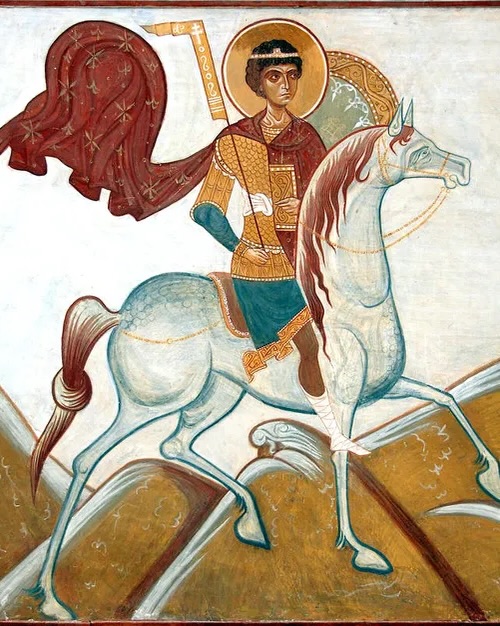
Transfer of Saint George's Relics to Lydda Commemorated

The Orthodox Church commemorates the transfer of the holy relics of Saint George the Great Martyr from Nicomedia to Lydda in Palestine. Saint George was a soldier who suffered martyrdom under Emperor Diocletian for refusing to abandon his faith in Christ. Before his death, he instructed his servant to take his body to Palestine, his mother's homeland, where his family property had been distributed to the poor. The servant fulfilled this wish.…

The Orthodox Church commemorates the transfer of the holy relics of Saint George the Great Martyr from Nicomedia to Lydda in Palestine. Saint George was a soldier who suffered martyrdom under Emperor Diocletian for refusing to abandon his faith in Christ. Before his death, he instructed his servant to take his body to Palestine, his mother's homeland, where his family property had been distributed to the poor.

The servant fulfilled this wish. Years later, during the reign of Emperor Constantine the Great, Christians in Lydda built a church dedicated to Saint George. At its consecration, his relics were solemnly transferred into the church and laid to rest with great reverence. According to Holy Tradition, many miracles and healings occurred through his sacred relics, revealing the grace of God working through His faithful servant.

Saint George became one of the most beloved martyrs of the Orthodox Church, honored throughout the Christian world for his courage, faith, and heavenly intercessions. His life reminds us that the true victory of a Christian is not found in earthly power or military strength, but in remaining faithful to Jesus Christ until the very end.

  • Commemoration of the transfer of Saint George's relics from Nicomedia to Lydda
  • Saint George's martyrdom under Diocletian for refusing to worship false gods
  • His burial request to be taken to Palestine fulfilled by his servant
  • Church built in Lydda under Constantine the Great; relics transferred at consecration
  • Miracles through his relics; honored as a great martyr and intercessor
Read more
Lives of the Saints 🙏 Instagram

Five Persian Martyrs Who Confessed Christ Before King Shapur

The post recounts the martyrdom of five saints in Persia during the reign of King Shapur in 355. Three royal servants, Akindynos, Pegasius, and Anempodistus, were accused of being Christians. When the king demanded their homeland, they answered that their life and homeland are the Most Holy Trinity. The king ordered them tortured, but they continued singing psalms and praying. Angels appeared to strengthen them, and Christ Himself appeared with…

The post recounts the martyrdom of five saints in Persia during the reign of King Shapur in 355. Three royal servants, Akindynos, Pegasius, and Anempodistus, were accused of being Christians. When the king demanded their homeland, they answered that their life and homeland are the Most Holy Trinity. The king ordered them tortured, but they continued singing psalms and praying.

Angels appeared to strengthen them, and Christ Himself appeared with a face shining like the sun. One tormentor, Aphthonius, witnessed molten lead failing to harm them and cried out, "Great is the God of the Christians!"; he was immediately executed. The king then sealed the three martyrs in leather sacks and threw them into the sea, but they were brought safely to shore.

Another official, Elpidiphorus, openly confessed Christianity and condemned the killing of innocent believers; he was executed alongside approximately seven thousand Christians. Finally, Akindynos, Pegasius, and Anempodistus were thrown into a blazing furnace with twenty-eight soldiers and the king's mother, who had also come to believe in Christ.

There they surrendered their souls to the Lord. The account concludes with a prayer to the holy martyrs of Persia.

  • Three palace servants confess the Trinity as their homeland before King Shapur
  • Angels and Christ appear during their torture; tormentor Aphthonius converts and is executed
  • The three survive being thrown into the sea in sealed sacks
  • Official Elpidiphorus and about seven thousand Christians are executed for confessing Christ
  • The three martyrs die in a furnace with twenty-eight soldiers and the king's mother
Lives of the Saints 🙏 Instagram

Saints Cosmas and Damian: Unmercenary Physicians and Wonderworkers

The post recounts the lives of Saints Cosmas and Damian, brothers by birth and faith, commemorated by the Orthodox Church as the Holy Unmercenary Physicians and Wonderworkers. They were born in Asia to a pagan father and a Christian mother named Theodotia. After their father's death, Theodotia devoted herself to teaching them the Christian faith, raising them to become men of compassion, humility, and prayer. Both brothers studied medicine, but…

The post recounts the lives of Saints Cosmas and Damian, brothers by birth and faith, commemorated by the Orthodox Church as the Holy Unmercenary Physicians and Wonderworkers. They were born in Asia to a pagan father and a Christian mother named Theodotia. After their father's death, Theodotia devoted herself to teaching them the Christian faith, raising them to become men of compassion, humility, and prayer.

Both brothers studied medicine, but their greatest gift was their unwavering faith in God. They traveled among the sick, healing those who suffered and offering their services completely free of charge. They lived according to Christ's commandment: "Freely you have received, freely give" (Matthew 10:8), never seeking wealth or recognition.

One day, a woman named Palladia, whom Saint Damian had healed, begged him to accept three eggs in gratitude. Damian accepted them only because she had solemnly invoked the name of the Holy Trinity. When Cosmas heard of this, he became upset, believing his brother had accepted payment for healing.

He even requested that they should not be buried together. Yet after their peaceful repose, God revealed that the brothers should rest beside one another, for Damian had not accepted the gift out of greed. Their miracles continued after their deaths. According to Holy Tradition, a servant suffering terribly after a snake entered his body was saved when he called upon the saints for help.

The post concludes that their lives remind us that the gifts God gives are not meant for selfish gain but for serving others, and that true Christian love does not ask what it can receive in return but gives freely because Christ first gave everything for us.

  • Brothers born in Asia to a pagan father and Christian mother Theodotia, raised in the faith.
  • Studied medicine and healed the sick without payment, following Matthew 10:8.
  • Damian accepted three eggs from Palladia only after she invoked the Holy Trinity; Cosmas objected and requested separate burial.
  • After their deaths, God revealed they should be buried together, confirming Damian's lack of greed.
  • Post-death miracles include healing a servant afflicted by a snake; their example teaches that God's gifts are for service, not selfish gain.
Read more
Lives of the Saints 🙏 Instagram

Six of the Seventy Apostles and their missionary labors

The post describes six of the Seventy Apostles chosen to spread the Gospel. Saint Stachys was a companion of Saint Andrew the First-Called, who appointed him Bishop of Byzantium. He established and guided the Church in Argyropolis for seventeen years before reposing in peace. Saints Amplius and Urban also labored alongside Andrew. Amplius became Bishop of Lydda in Judea, and Urban was appointed Bishop in Macedonia. Both preached Christ…

The post describes six of the Seventy Apostles chosen to spread the Gospel. Saint Stachys was a companion of Saint Andrew the First-Called, who appointed him Bishop of Byzantium. He established and guided the Church in Argyropolis for seventeen years before reposing in peace.

Saints Amplius and Urban also labored alongside Andrew. Amplius became Bishop of Lydda in Judea, and Urban was appointed Bishop in Macedonia. Both preached Christ faithfully and received the crown of martyrdom. Saint Narcissus was appointed Bishop of Athens by the Apostle Philip, continuing the spread of Christianity in Greece.

Saint Apelles served as Bishop of Heraclea in Thrace, shepherding the faithful and proclaiming the Gospel. Saint Aristobulus, the brother of the Apostle Barnabas, traveled as far as Britain to bring the Christian faith there before reposing peacefully. The post notes that these six apostles remind us that the Church was built through the faithfulness, sacrifice, and tireless prayers of countless servants of God.

Some received martyrdom, others completed their ministry in peace, but all shared the purpose of making Jesus Christ known. Their lives teach that worldly fame is not needed to accomplish something precious in God's eyes; only a willing heart, steadfast faith, and the courage to follow Christ's call are required. The post concludes with a prayer to the holy apostles for intercession.

  • Stachys: companion of Andrew, Bishop of Byzantium, led Church in Argyropolis for 17 years
  • Amplius and Urban: labored with Andrew; Amplius Bishop of Lydda, Urban Bishop in Macedonia; both martyred
  • Narcissus: appointed by Philip as Bishop of Athens, spread Christianity in Greece
  • Apelles: Bishop of Heraclea in Thrace, shepherded the faithful
  • Aristobulus: brother of Barnabas, brought faith to Britain, reposed in peace
Read more
Lives of the Saints 🙏 Instagram

Saints Zenobius and Zenobia: siblings who gave wealth to the poor and died as martyrs

The post recounts the lives of Saints Zenobius and Zenobia, brother and sister from the city of Aegae in Cilicia, who lived during the third-century persecution of Christians. Their parents left them two inheritances: the true Christian faith and great material wealth. Instead of keeping their riches, the two devoted their lives to Jesus Christ and distributed their possessions among the poor. Their generosity was so great that God blessed them…

The post recounts the lives of Saints Zenobius and Zenobia, brother and sister from the city of Aegae in Cilicia, who lived during the third-century persecution of Christians. Their parents left them two inheritances: the true Christian faith and great material wealth. Instead of keeping their riches, the two devoted their lives to Jesus Christ and distributed their possessions among the poor.

Their generosity was so great that God blessed them with the gift of working miracles. Saint Zenobius became known for healing people suffering from various illnesses simply by touching them with his hand. Because of his holiness and devotion to Christ, he was appointed Bishop of Aegae.

When persecution broke out, Zenobius was arrested and brought before the judge Lysias. The judge presented him with a choice: "Life if you worship the gods, death if you refuse." Saint Zenobius fearlessly answered: "Life without Christ is not life, but death.

And death for the sake of Christ is not death, but life." Enraged by his confession, the judge ordered him to be tortured. When his sister Zenobia learned of his suffering, she courageously appeared before the judge and declared that she too wished to suffer for Christ. She refused to abandon her brother or her Savior. Together, they endured terrible tortures, including fire and boiling pitch, yet remained steadfast in their faith.

Finally, around the year 285, both were executed by the sword, receiving the eternal crowns of martyrdom. An accompanying image displays the Greek and English titles: "Saints Zenobius and Zenobia the brother and sister who gave away their wealth and chose death for Christ." The account concludes with a prayer to the martyrs and a reflection that earthly riches cannot purchase eternal life, but a heart filled with love for Christ possesses a treasure that death itself cannot take away.

  • Saints Zenobius and Zenobia, brother and sister from Aegae in Cilicia, lived during the third-century persecution.
  • They distributed their inherited wealth to the poor and were granted the gift of miracles; Zenobius healed by touch and became bishop.
  • Arrested by the judge Lysias, Zenobius refused to worship the gods, declaring that life without Christ is death.
  • Zenobia voluntarily joined her brother in confession and both endured tortures including fire and boiling pitch.
  • Around 285 they were beheaded, receiving the crowns of martyrdom; the account closes with a prayer to them.
Read more
Lives of the Saints 🙏 Instagram

Saint Anastasia of Rome: Martyrdom under Emperor Decius

Saint Anastasia of Rome was born into a noble family in Rome and became an orphan at three years old. She was raised in a convent near Rome under Abbess Sophia, a woman of great spiritual wisdom and holiness. As she grew, Anastasia became known among Christians for her devotion to God, prayer, and ascetic life. Her beauty attracted the pagan governor Probus, who sent soldiers to bring her before him. Before her departure, Abbess Sophia spent two…

Saint Anastasia of Rome was born into a noble family in Rome and became an orphan at three years old. She was raised in a convent near Rome under Abbess Sophia, a woman of great spiritual wisdom and holiness. As she grew, Anastasia became known among Christians for her devotion to God, prayer, and ascetic life.

Her beauty attracted the pagan governor Probus, who sent soldiers to bring her before him. Before her departure, Abbess Sophia spent two hours strengthening her spiritual daughter, encouraging her to remain faithful through every temptation and suffering. Anastasia answered: "My heart is ready to suffer for Christ, and my soul is ready to die for my sweetest Jesus."

Standing before the governor, she openly confessed her faith in the Lord Jesus Christ. Neither promises nor threats could persuade her to deny Him. She declared: "I am ready to die for my Lord not once, but a hundred times if it were possible."

The governor ordered her to be humiliated and subjected to terrible tortures. During her suffering, Anastasia became desperately thirsty and asked for water. A Christian named Cyril showed her mercy and gave her something to drink.

For this act of compassion, he too was killed. According to her holy life, an angel of God appeared to Anastasia and strengthened her through her sufferings. Finally, she was executed by the sword outside the city. Her beloved Abbess Sophia recovered her body and buried it with reverence. Thus, during the reign of Emperor Decius, Saint Anastasia received the eternal crown of martyrdom.

The narrative concludes that true courage is not the absence of suffering but remaining faithful to Christ despite it, and that the sacrifice of Cyril teaches that even a simple act of mercy can become a powerful testimony of Christian love. The post also includes a Greek icon inscription identifying her as the young nun who chose martyrdom rather than deny Jesus Christ, and ends with a prayer to the Holy Venerable Martyr Anastasia.

  • Born noble, orphaned at three, raised by Abbess Sophia in a convent near Rome.
  • Governor Probus summoned her; she confessed Christ before him, refusing to deny Him.
  • Endured tortures; Cyril gave her water and was martyred for it; an angel strengthened her.
  • Executed by sword under Emperor Decius; Abbess Sophia buried her body.
  • The account emphasizes faithfulness amid suffering and the witness of simple mercy.
Read more
Lives of the Saints 🙏 Instagram

Saint Paraskeva: Martyr Who Gave Wealth and Life for Christ

Saint Paraskeva, also known as Saint Petka, was born in the city of Iconium to wealthy and deeply devout Christian parents. From her youth she loved Jesus Christ and desired to live according to His commandments. After the death of her parents, she inherited their possessions, but instead of seeking comfort and luxury, she began distributing her wealth to the poor, the sick, and those in need. Everything she gave, she offered in the name of…

Saint Paraskeva, also known as Saint Petka, was born in the city of Iconium to wealthy and deeply devout Christian parents. From her youth she loved Jesus Christ and desired to live according to His commandments. After the death of her parents, she inherited their possessions, but instead of seeking comfort and luxury, she began distributing her wealth to the poor, the sick, and those in need.

Everything she gave, she offered in the name of Jesus Christ. During the persecution of Christians under Emperor Diocletian, Paraskeva was arrested and brought before the local governor. When he demanded to know her name, she answered: "My name is Christian."

Angered, the governor asked why she refused to give her ordinary name. Saint Paraskeva replied: "I had to tell you first the name of eternal life, and only afterward the name of this temporary life." Her courageous confession enraged the governor, who ordered her to be brutally beaten and thrown into prison.

But the Lord did not abandon His faithful servant. According to her holy life, an angel of God appeared to her in prison, healed her wounds, and strengthened her spirit. Through her prayers, the idols in a pagan temple were destroyed, revealing the power of the living God. Despite prolonged and terrible tortures, Saint Paraskeva refused to renounce Jesus Christ.

Finally, she was executed by the sword, receiving the eternal crown of martyrdom. Her life reminds us that our greatest treasure is not what we possess in this world, but the faith we carry in our hearts. She gave her wealth to the suffering and her very life to Christ.

The account ends with the invocation: "Holy Martyr Paraskeva, pray to God for us. Lord, for Your glory, not mine."

  • Born in Iconium to wealthy Christian parents, she loved Christ from youth.
  • After her parents' death, she distributed her inheritance to the poor and needy.
  • Arrested under Diocletian, she confessed her faith with the words "My name is Christian."
  • An angel healed her in prison, and through her prayers pagan idols were destroyed.
  • She endured tortures and was executed by the sword, receiving the crown of martyrdom.
Read more

Saint Nestor defeats gladiator Lyaeus through faith

In 306, during the persecution under Emperor Maximian, a young Christian named Nestor lived in Thessaloniki. He was a disciple of Saint Demetrius the Myrrh-Streamer, from whom he learned the faith. The emperor staged public spectacles featuring a giant gladiator named Lyaeus, who challenged men to fight and threw the defeated onto spears beneath the arena. Many Christians were among the victims. Nestor, sorrowed by the cruelty, decided to…

In 306, during the persecution under Emperor Maximian, a young Christian named Nestor lived in Thessaloniki. He was a disciple of Saint Demetrius the Myrrh-Streamer, from whom he learned the faith. The emperor staged public spectacles featuring a giant gladiator named Lyaeus, who challenged men to fight and threw the defeated onto spears beneath the arena.

Many Christians were among the victims. Nestor, sorrowed by the cruelty, decided to challenge Lyaeus. He first visited the imprisoned Saint Demetrius and asked for a blessing. Demetrius made the sign of the Cross over him and foretold that Nestor would defeat Lyaeus but would suffer for Christ.

Strengthened, Nestor entered the arena, made the sign of the Cross, and cried out, "O God of Demetrius, help me!" Through God's help he overcame Lyaeus and threw him onto the spears. The crowd exclaimed, "Great is the God of Demetrius!" Enraged, Maximian ordered Nestor executed by the sword and Saint Demetrius pierced with spears.

Nestor received the crown of martyrdom in 306. The account emphasizes that true courage comes not from physical strength but from unwavering faith in Jesus Christ.

  • Nestor was a disciple of Saint Demetrius in Thessaloniki during the persecution of 306.
  • The gladiator Lyaeus killed Christians in public spectacles under Emperor Maximian.
  • Nestor received a blessing and prophecy from the imprisoned Saint Demetrius.
  • Nestor defeated Lyaeus in the arena after praying to the God of Demetrius.
  • Maximian ordered Nestor beheaded and Demetrius speared; both received martyrdom.
Read more

Saint Demetrius of Thessaloniki: Great Martyr and Myrrh-Streamer

The post recounts the life of Saint Demetrius of Thessaloniki. It states he was born in the city to noble and devout Christian parents who had long prayed for a child. After his father's death, Emperor Maximian appointed him governor of Thessaloniki. The emperor ordered him to persecute and destroy the Christians in the city, but Demetrius refused. Instead, he openly confessed Jesus Christ as the true God and fearlessly preached the Gospel…

The post recounts the life of Saint Demetrius of Thessaloniki. It states he was born in the city to noble and devout Christian parents who had long prayed for a child. After his father's death, Emperor Maximian appointed him governor of Thessaloniki.

The emperor ordered him to persecute and destroy the Christians in the city, but Demetrius refused. Instead, he openly confessed Jesus Christ as the true God and fearlessly preached the Gospel throughout Thessaloniki. When Maximian discovered this, he summoned Demetrius and demanded an explanation.

Standing before the emperor, Demetrius boldly declared that he was a Christian and refused to worship false gods. Enraged, Maximian ordered him imprisoned. Knowing martyrdom awaited him, Demetrius entrusted all his possessions to his faithful servant Lupus, instructing him to distribute everything among the poor. In prison, an angel of God appeared and said, "Peace be with you, sufferer of Christ.

Be courageous!" A few days later, soldiers entered his cell and found him praying. They pierced his body with spears, and Saint Demetrius surrendered his soul to Christ. Christians secretly recovered his body and buried him with reverence.

According to Holy Tradition, fragrant, healing myrrh later flowed from his holy relics, bringing healing to many who approached with faith. Among them was Leontius, who was healed of a serious illness and built a magnificent church in thanksgiving. Throughout the centuries, Saint Demetrius became known as the Myrrh-Streamer and the heavenly protector of Thessaloniki.

The post concludes that his life reminds us that no earthly position, wealth, or power is worth more than faithfulness to Jesus Christ, because he chose to serve the King of Heaven rather than an emperor.

  • Born in Thessaloniki to noble Christian parents; appointed governor by Emperor Maximian
  • Refused imperial order to persecute Christians; confessed Christ and preached the Gospel
  • Imprisoned after declaring faith; gave possessions to servant Lupus for the poor
  • Martyred by spears while praying; relics streamed healing myrrh
  • Venerated as Myrrh-Streamer and protector of Thessaloniki; example of choosing heavenly kingship over earthly power
Read more

Saints Marcian and Martyrius: Martyrs Who Rejected Bribes for the Faith

In the fourth century, as Arianism spread with imperial support, Patriarch Paul of Constantinople was exiled to Armenia and killed. His secretaries, the reader Marcian and the subdeacon Martyrius, refused to abandon Orthodoxy. Their persecutors offered bribes of wealth and honor, but both saints rejected every offer. When bribery failed, they were sentenced to death. Before their beheading in 355, they prayed: "Lord, we rejoice that we depart…

In the fourth century, as Arianism spread with imperial support, Patriarch Paul of Constantinople was exiled to Armenia and killed. His secretaries, the reader Marcian and the subdeacon Martyrius, refused to abandon Orthodoxy. Their persecutors offered bribes of wealth and honor, but both saints rejected every offer.

When bribery failed, they were sentenced to death. Before their beheading in 355, they prayed: "Lord, we rejoice that we depart this life by such a death. Make us worthy to share in eternal life, for You are our life!" They bowed their heads and were executed. Years later, Saint John Chrysostom built a church over their wonderworking relics.

Their lives show that true faith cannot be purchased and loyalty to Christ must not depend on earthly rewards.

  • Marcian was a reader and Martyrius a subdeacon, both secretaries to Patriarch Paul of Constantinople.
  • After Paul's exile and death, they refused bribes to betray the Orthodox Faith.
  • They were beheaded in 355 after rejecting all offers of wealth and honor.
  • Before execution they prayed, rejoicing in their martyrdom and asking for eternal life.
  • Saint John Chrysostom later built a church over their wonderworking relics.

Saint James, Brother of the Lord: First Bishop of Jerusalem and Martyr

The post recounts the life of Saint James, known as the Brother of the Lord. According to Orthodox tradition, he was the son of Joseph, the betrothed of the Theotokos. When Joseph wished to give Jesus a share of his inheritance, his other sons objected, but James offered his own portion. From the beginning James was devoted to Christ and faithfully followed His teachings. He lived a life of extraordinary holiness, spending long nights in prayer…

The post recounts the life of Saint James, known as the Brother of the Lord. According to Orthodox tradition, he was the son of Joseph, the betrothed of the Theotokos. When Joseph wished to give Jesus a share of his inheritance, his other sons objected, but James offered his own portion.

From the beginning James was devoted to Christ and faithfully followed His teachings. He lived a life of extraordinary holiness, spending long nights in prayer and fasting, and because of his righteousness he became known as James the Just. After the Resurrection, Jesus Christ appeared to him personally, as the Apostle Paul records in 1 Corinthians 15:7. Saint James became the first Bishop of Jerusalem, guiding the Church for thirty years and bringing many Jews and Greeks to faith in Christ.

According to Holy Tradition, he also composed the ancient Divine Liturgy of Saint James. His holiness was respected even by many who did not believe in Christ. During a great feast in Jerusalem, certain religious leaders demanded that James publicly speak against Jesus before the gathered crowds.

Instead, standing upon the Temple, he boldly proclaimed that Jesus Christ was the Son of God, the risen Messiah, reigning in eternal glory. Enraged, his persecutors threw him from the Temple roof. Although terribly injured, he was still alive. One of his attackers then struck him upon the head, ending his earthly life.

Saint James received the crown of martyrdom at the age of sixty-three. The author notes that his life reminds us that true love for Christ is demonstrated through faithfulness, humility, sacrifice, and unwavering courage. He once offered to share his earthly inheritance with Jesus; in the end, he surrendered his very life for Him. The post concludes with a prayer to the holy apostle.

  • James was the son of Joseph, betrothed of the Theotokos, and offered his inheritance share to Jesus.
  • He lived a life of prayer and fasting, earning the title James the Just.
  • Christ appeared to him after the Resurrection (1 Corinthians 15:7).
  • He served as first Bishop of Jerusalem for thirty years and composed the Divine Liturgy of Saint James.
  • He was martyred by being thrown from the Temple roof and struck on the head after proclaiming Jesus as the Son of God.
Read more

Saint Aretas of Najran, 95, martyred with 4,000 Christians in 523

Saint Aretas was the Christian governor of Najran, a city in southern Arabia. In 523, at the age of ninety-five, he was martyred along with more than four thousand Christians, including priests, monks, nuns, women, and children. The region was ruled by King Dhu Nuwas, who persecuted Christians and sought to eliminate Christianity. He surrounded Najran with his army and demanded the inhabitants renounce Christ. The Christians refused, closed the…

Saint Aretas was the Christian governor of Najran, a city in southern Arabia. In 523, at the age of ninety-five, he was martyred along with more than four thousand Christians, including priests, monks, nuns, women, and children. The region was ruled by King Dhu Nuwas, who persecuted Christians and sought to eliminate Christianity.

He surrounded Najran with his army and demanded the inhabitants renounce Christ. The Christians refused, closed the gates, and resisted his attacks, choosing to remain faithful to their Savior. Unable to conquer the city by force, Dhu Nuwas promised that no one would be harmed if the gates were opened, claiming he only wished to collect taxes.

Trusting his word, the Christians opened the gates. The promise was broken. The elderly Saint Aretas, together with the clergy and leading citizens, was summoned and executed. A terrible massacre followed throughout Najran, and more than four thousand faithful Christians received the crown of martyrdom rather than abandon the Lord Jesus Christ.

When news of the persecution reached Emperor Justin, he appealed to the Ethiopian king Elesbaan, who defeated Dhu Nuwas and ended his rule. The surviving Christians later rebuilt their Church of the Holy Trinity and erected a church honoring Saint Aretas and the martyrs of Najran. The post includes a reflection that faithfulness to Christ is greater than fear, suffering, and even death, and notes that at ninety-five Saint Aretas had lived a long earthly life, yet his greatest testimony came through his final sacrifice.

It ends with the invocation: Holy Martyr Aretas and all the Martyrs of Najran, pray to God for us.

  • Saint Aretas, governor of Najran, martyred at age 95 in 523
  • King Dhu Nuwas besieged Najran and demanded renunciation of Christ
  • Christians resisted, then were tricked into opening gates; over 4,000 killed
  • Emperor Justin appealed to Ethiopian king Elesbaan, who defeated Dhu Nuwas
  • Survivors rebuilt the Church of the Holy Trinity and a church honoring the martyrs