WeOrthodox
EN UA

Појединац, Породица и Друштво

Instagram ↗ 6 discussions

Ова страница је посвећена ПРАВОСЛАВЉУ и ДОБРОТОЉУБЉУ🫒

Elder Porphyrios on mental illness as demonic activity
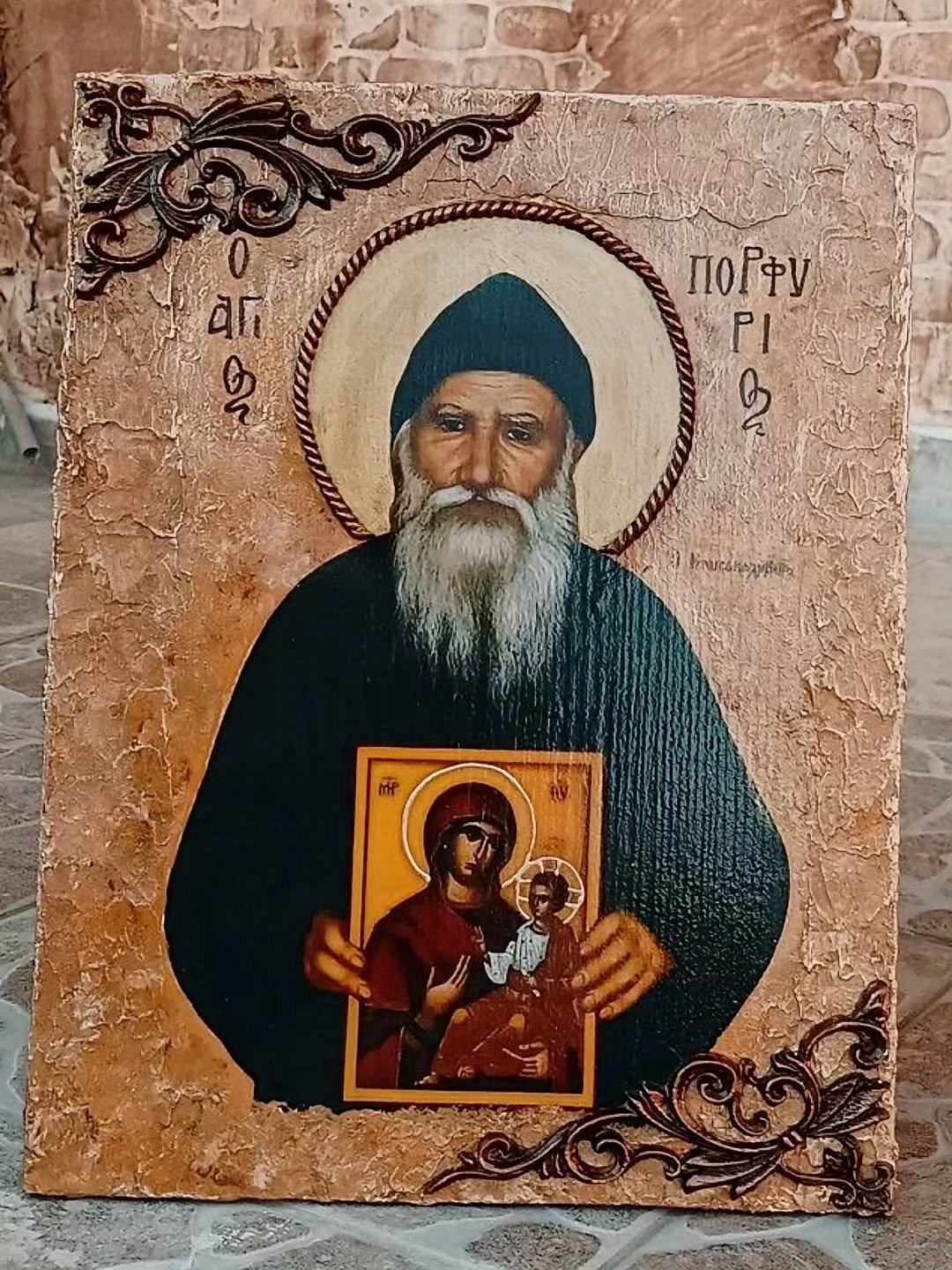
The text presents a teaching attributed to Saint Elder Porphyrios Kavsokalyvitis contrasting psychiatric and spiritual understandings of mental disorders. The elder states that what psychiatrists call mental illnesses are actually demonic operations originating from sin. He explains that acquiring holiness transforms a person and removes all mental traumas. When a person is filled with good and with God, evil and demonic powers come but find no…

The text presents a teaching attributed to Saint Elder Porphyrios Kavsokalyvitis contrasting psychiatric and spiritual understandings of mental disorders. The elder states that what psychiatrists call mental illnesses are actually demonic operations originating from sin. He explains that acquiring holiness transforms a person and removes all mental traumas.

When a person is filled with good and with God, evil and demonic powers come but find no place to remain. Psychiatrists, he says, do not understand these matters deeply; they can treat only disorders of neurological or biological nature, not those with spiritual causes. The devil has succeeded in making himself unnoticed so that people use his works without naming him.

Doctors diagnose neuroses, depression, and anxiety but do not accept that the devil gives power and movement toward egoism in a person. The devil exists as a spirit of evil, is mentioned in the Gospel, and is called Antichrist. The elder recounts seeing people held by demonic emotions, naming a demon of sorrow and a demon of fornication among others.

Demons drain spiritual batteries, turn them from good, redirect them, and these manifest as depression and similar disorders, what psychiatrists call mental illnesses. Consequently, people remain uncured. True healing of the soul comes only by God's grace and an evangelical life.

  • Mental illnesses are demonic operations from sin, not medical conditions
  • Holiness removes mental traumas; evil finds no place in a person filled with God
  • Psychiatrists treat only neurological disorders, not spiritual causes
  • The devil acts unnoticed, directing energy toward egoism and passions
  • True healing comes only by God's grace and evangelical life

Read more

Father Mihailo of Karulja on salvation, monasticism, and the fear of God

In a conversation on Mount Athos, Father Mihailo of Karulja answers whether laypeople can be saved without becoming monks. He rejects the idea that people in the world occupy a lower spiritual position than monastics, calling that view a great sin that creates divisions in the Church. He compares the monastic and worldly paths to streets, avenues, and alleys that all serve the same basic needs and lead to God. When God calls someone to…

In a conversation on Mount Athos, Father Mihailo of Karulja answers whether laypeople can be saved without becoming monks. He rejects the idea that people in the world occupy a lower spiritual position than monastics, calling that view a great sin that creates divisions in the Church. He compares the monastic and worldly paths to streets, avenues, and alleys that all serve the same basic needs and lead to God.

When God calls someone to monasticism, that person will become a monk; if everyone left cities for monasteries, monasticism itself would vanish. Asked if he ever regretted coming to the Holy Mountain, he answers certainly not, adding that no one survives there alone for a moment but only with God. When questioned whether he has seen God, he notes the question recalls Thomas who demanded to see before believing.

The greater miracle, he says, is that he, poor and wretched, lives as a monk in the desert. He points to the many young people arriving from America, Asia, and Europe, and to the educated who have come, as further miracles. To the question of what to do with such knowledge, he replies that the beginning of wisdom is the fear of the Lord, and that knowledge is useless if God does not dwell in the person.

  • Laypeople are not spiritually inferior to monks; all paths lead to God
  • Monastic vocation comes from God's call, not human preference
  • Life on Mount Athos is sustained only by God's presence
  • The arrival of young and educated people worldwide is a visible miracle
  • Knowledge without the fear of God and His indwelling is useless

Apostle John binds a demon on Patmos and silences the magician Kinops

The post recounts an episode from the life of the holy apostle John the Theologian on the island of Patmos. John stays with Myron, the father of a local ruler. A magician named Kinops has lived on the island for many years, consorting with unclean powers. The islanders regard him as a god because of the apparitions he produces. Kinops sends one of the lords of evil demons to take John's soul. The demon enters Myron's house and stands where John…

The post recounts an episode from the life of the holy apostle John the Theologian on the island of Patmos. John stays with Myron, the father of a local ruler. A magician named Kinops has lived on the island for many years, consorting with unclean powers. The islanders regard him as a god because of the apparitions he produces.

Kinops sends one of the lords of evil demons to take John's soul. The demon enters Myron's house and stands where John is. John sees the demon and says: "In the name of Christ I command you not to move from this place until you tell me why you have come to me." Bound by John's word, the demon remains and explains: "The priests of Apollo came to Kinops and cursed him to go to the city and send death to you, and he sent me to take your soul."

John asks: "Has he ever sent you to take a human soul and bring it to him?" The demon answers: "All the devil's power is in him and he has a contract with our rulers, and we obey him and he obeys us." John then commands: "I, the apostle of Jesus Christ, command you, evil spirit, not to enter human houses and not to return to Kinops."

  • John the Theologian arrives on Patmos and lodges with Myron
  • The magician Kinops, served by demons, is worshipped as a god by islanders
  • Kinops sends a demon lord to take John's soul
  • John binds the demon with a command in Christ's name and questions it
  • The demon reveals Kinops' pact with demon rulers; John forbids it from entering houses or returning to Kinops

St. John the Theologian at the Last Supper and the Cross

The post marks the feast of St. John the Theologian. At the Last Supper, the young John rested his head on the Savior's chest. In that moment, through the quiet and rhythmic beating of Christ's heart, his soul was filled with the fire of divine love, love that casts out every fear. Because of this, when all the others fled, when the night of Gethsemane brought darkness and fear, John did not retreat. He followed his Teacher all the way to…

The post marks the feast of St. John the Theologian. At the Last Supper, the young John rested his head on the Savior's chest. In that moment, through the quiet and rhythmic beating of Christ's heart, his soul was filled with the fire of divine love, love that casts out every fear. Because of this, when all the others fled, when the night of Gethsemane brought darkness and fear, John did not retreat.

He followed his Teacher all the way to Golgotha. He stood beneath the Cross, looked upon Christ's wounds, and received the greatest testament, the Most Holy Theotokos as his own mother.

  • John leaned on Christ's chest at the Last Supper and heard the divine heartbeat
  • His soul was filled with divine love that casts out fear
  • He did not flee when the other disciples abandoned Christ in Gethsemane
  • He followed Christ to Golgotha and stood at the Cross
  • From the Cross he received the Theotokos as his mother
Read more

Feast of St. John the Theologian: the Apostle of Love

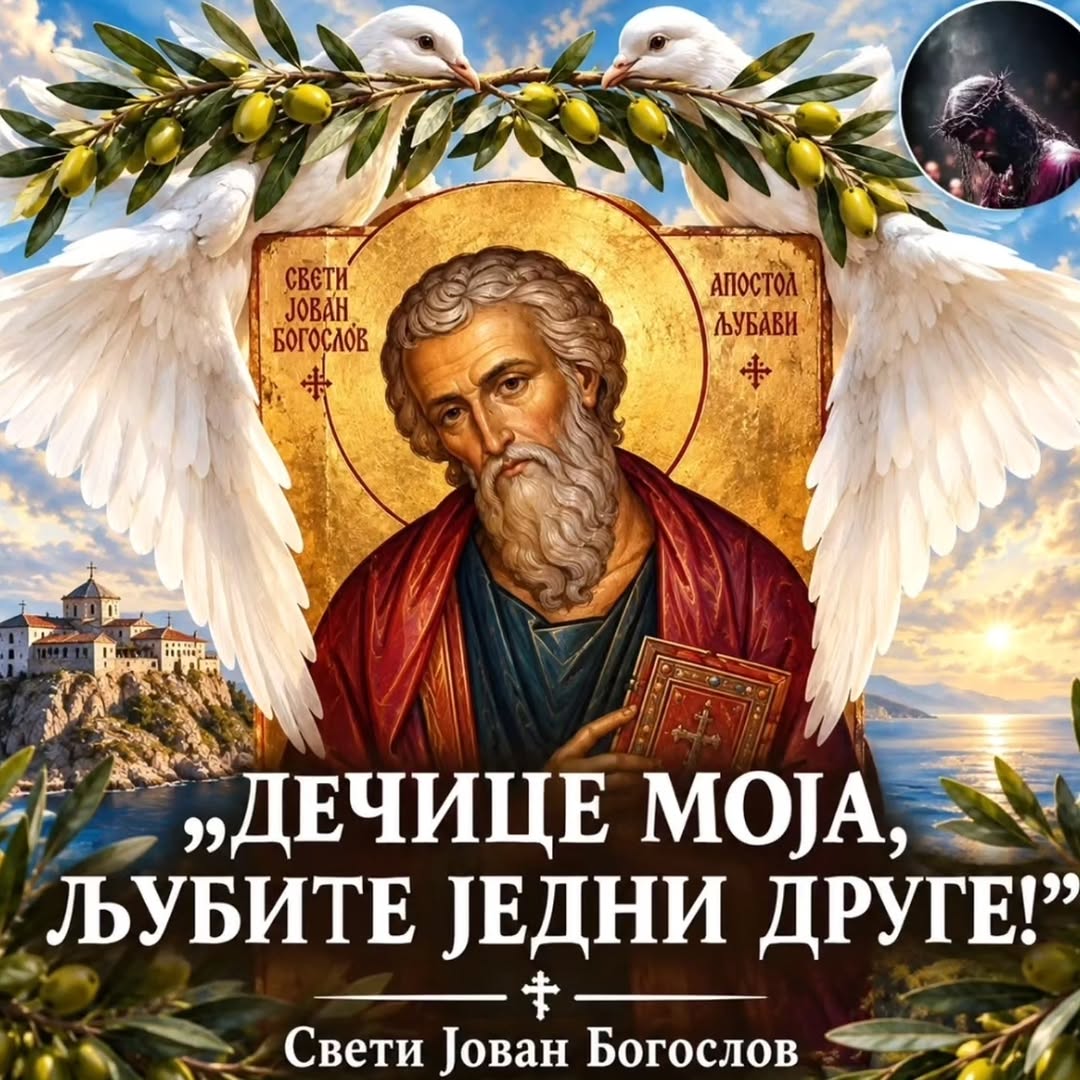
The post marks the feast of the Holy Apostle and Evangelist John the Theologian, called the Apostle of Love. It recalls that at the Last Supper the young John leaned his head on the Savior's breast, and through the quiet beating of Christ's heart his soul was filled, as the author writes, with the fire of divine love, a love that casts out fear. Because of this, when the other disciples fled in the darkness and fear of Gethsemane, John did not…

The post marks the feast of the Holy Apostle and Evangelist John the Theologian, called the Apostle of Love. It recalls that at the Last Supper the young John leaned his head on the Savior's breast, and through the quiet beating of Christ's heart his soul was filled, as the author writes, with the fire of divine love, a love that casts out fear.

Because of this, when the other disciples fled in the darkness and fear of Gethsemane, John did not turn back. He followed his Teacher to Golgotha, stood beneath the Cross, looked upon His wounds, and received the greatest legacy: the Most Holy Theotokos as his Mother. Filled from the source of life, John in his Gospel does not deal with dry chronologies.

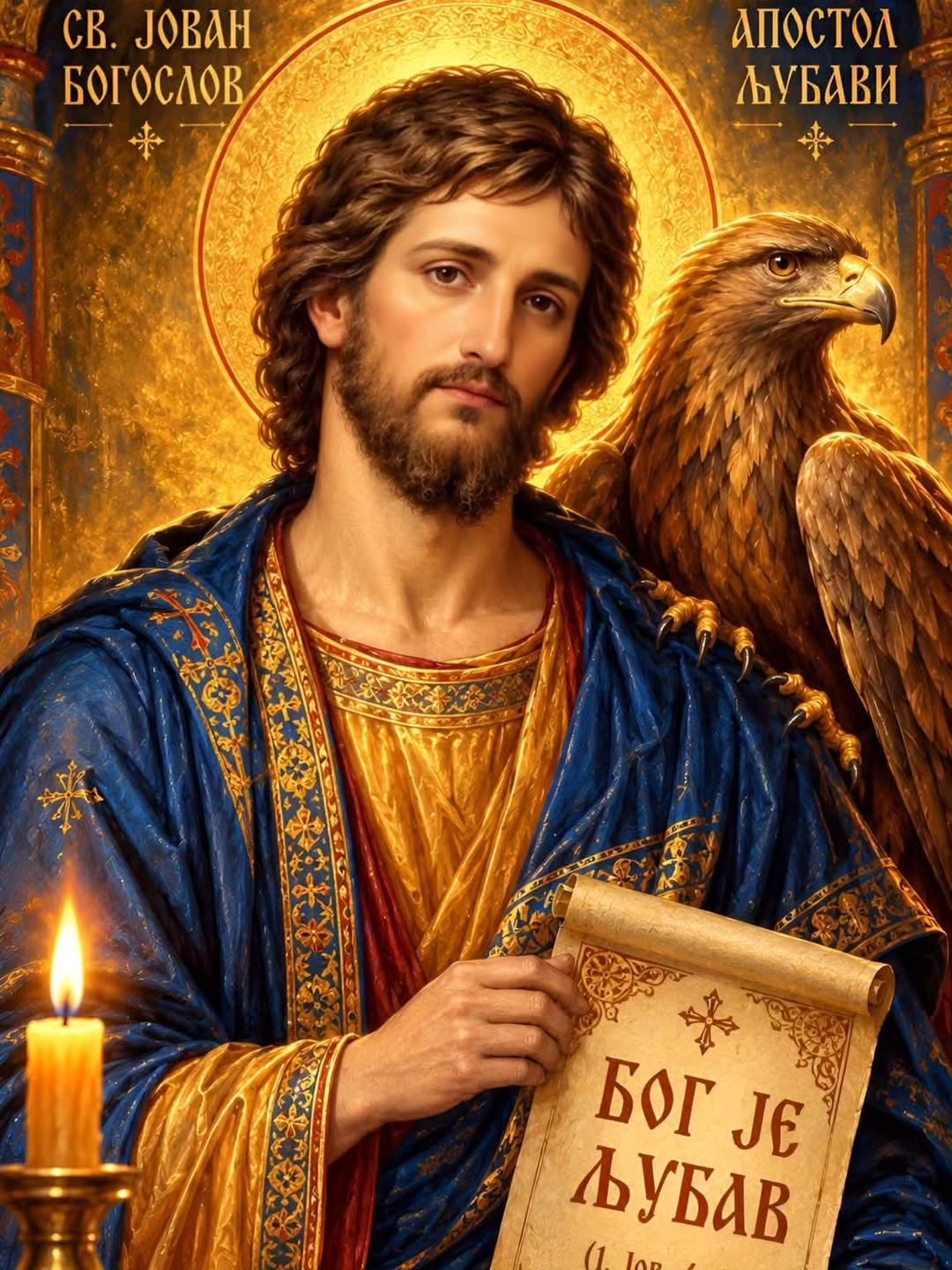
Like a spiritual eagle, he rises at once to the highest heavenly heights and cuts into eternity with the words: 'In the beginning was the Logos (the Word), and the Logos was with God, and the Logos was God.' The author quotes his reminder of the essence of everything: 'God is Love, and whoever abides in love abides in God, and God in him' (1 John 4:16).

When John was very old and too weak to hold long sermons, his last words to his disciples were simple and contained the whole Law and the Prophets: 'Little children, love one another!' The post closes with a prayer that St. John, the Son of Thunder, might intercede for a heart able to hear Christ, for love that does not fail, and for peace that surpasses every mind, and it wishes readers a blessed feast.

  • At the Last Supper John leaned his head on Christ's breast and his soul was filled with divine love, which casts out fear.
  • Unlike the other disciples who fled, John followed Christ to Golgotha and stood beneath the Cross.
  • Beneath the Cross he received the Most Holy Theotokos as his Mother.
  • His Gospel opens with 'In the beginning was the Logos' and teaches 'God is Love' (1 John 4:16).
  • In old age his last words to his disciples were: 'Little children, love one another!'
Read more

God descends to meet each person in their suffering

The video presents a message about Christ as the God-man who descended from heaven to earth for every person. It states that God is not a weak man who gives up, but the God-man who comes to each one where they are, in their daily work and suffering without results. The Lord arrives when a person gives up, and then miracles happen.

The presentation emphasizes that every person is that important to God, and He meets them in their specific circumstances of labor and fruitless struggle.

  • God is the God-man who descended from heaven for each person
  • He comes to people in their daily work and suffering without results
  • The Lord arrives when a person gives up, and miracles follow

Key moments

  1. 0:00 God is not a weak man who gives up; He is the God-man who descended from heaven to earth for you.
  2. 0:00 Every person is that important to God, and He comes to each one where they are, in their work and suffering without results.
  3. 0:34 The Lord comes when you give up, and then miracles happen.
Read more